Javier Milei: profile of an outsider
Javier Milei took office as president of Argentina on 10 December 2023, at the start of a four-year term. It is safe to say he is not a typical product of the country’s long standing political establishment. He had only become a full-time politician two years earlier in 2021 when he became a deputy for the city of Buenos Aires. The son of a bus driver, he had an unhappy childhood but was very close to his younger sister Karina, who remains one of his key political advisers. In his youth he played fourth-division football for Chacarita Juniors and was a member of a rock band which performed Rolling Stones covers in the Palermo neighbourhood of Buenos Aires.
An economics graduate from Universidad de Belgrano, he studied postgraduate economic theory at think tank IDES and at Universidad Torcuato Di Tella. He went on to teach economics at various universities where many students found him to be an abrasive and sometimes provocative figure. Among other jobs he worked as an economist for HSBC and for AFJP Máxima, a private pension fund. From 2010 onwards he began an important side-career as a media economist known for his radical free market positions and his frequent attacks on lax fiscal policies. Ideologically he aligned himself against Keynesianism and in favour of monetarism, particularly of the Austrian school. He self-defined himself as a “libertarian Austrian, based on mathematics and specialising in money and growth”. More pithily has also called himself an “anarcho-capitalist”.
During the 2023 campaign Milei adopted a dramatic persona, brandishing a chainsaw as a symbol of his intention to cut state spending and bureaucracy (in speeches he said he would slash government spending by as much as 15% of GDP). The candidate also defended socially conservative positions, for example by opposing abortion and gender politics. He described Argentina’s political establishment as a self-serving “caste” which had mired the country in corruption and economic stagnation. On the long term he also promised to usher in other radical reforms such as dollarisation and the closure of the Central Bank. Broadly speaking, economists shared his focus on the need to eliminate the country’s perennial fiscal deficit but were much more sceptical on dollarisation and his defence of extreme forms of laissez faire.
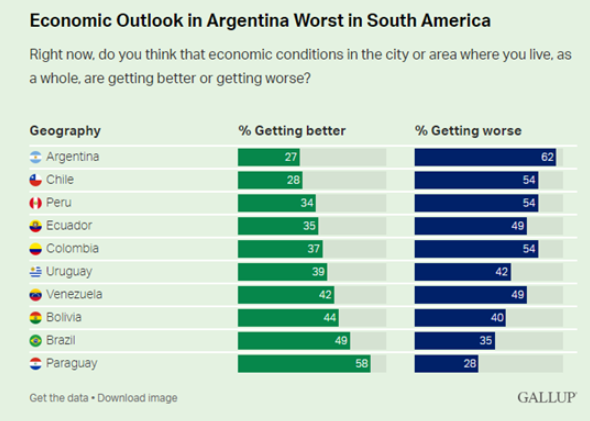
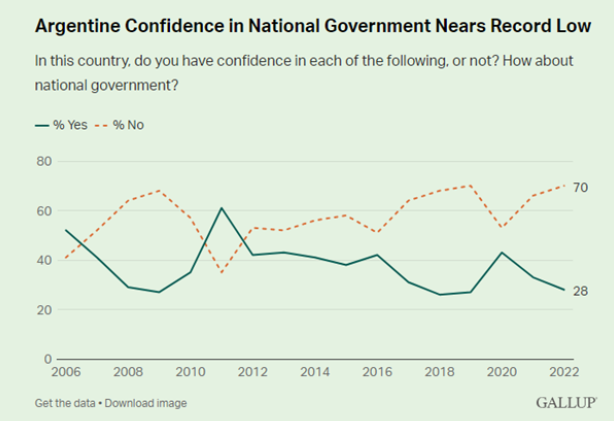
It has been argued that Milei’s angry, critical persona, including his expletive-rich speeches, was highly functional to winning the elections. He tapped into a sense of rage. Many voters, and particularly young males, remain deeply alienated over the economy and the weakness of the country’s institutions. A survey conducted in December by a group of academics found that Milei’s core voters are conservative young men with strong pro-market preferences, opposed to the pace of change on gender issues, abortion, and gay marriage. They also believe taxes cause job losses and social welfare programmes should be restricted. The survey revealed that male voters aged 18-25 are now more conservative than those in any other age group.
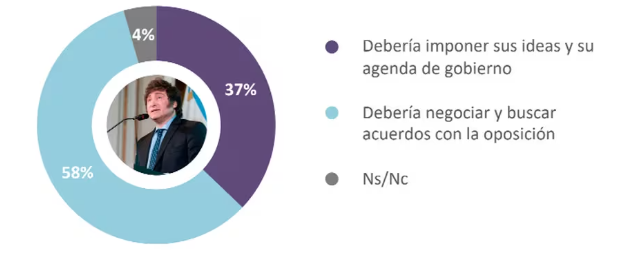
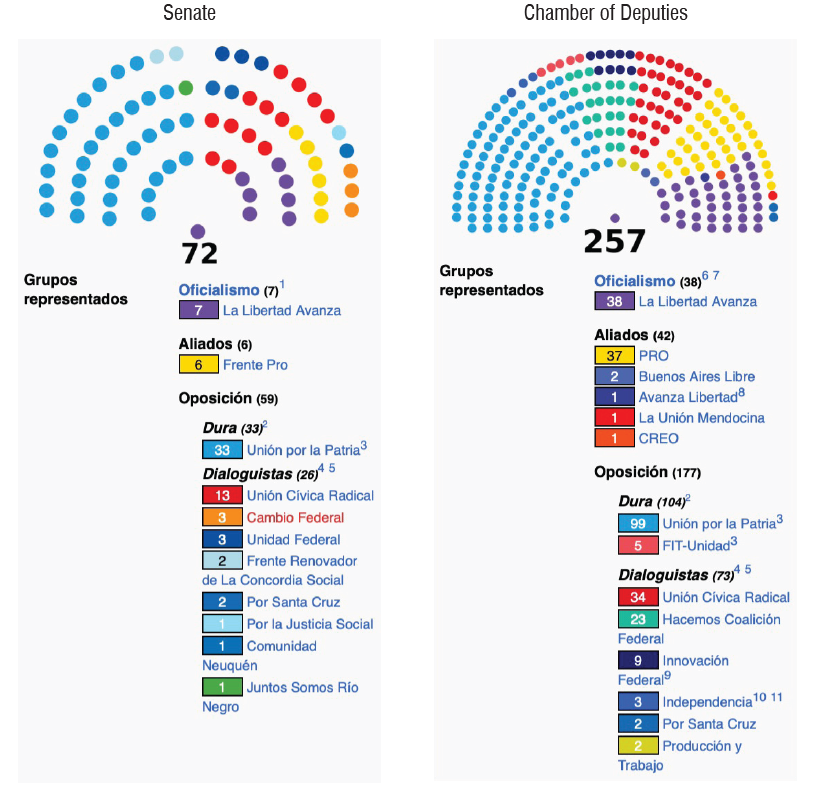
When considering the new president’s first 100 days in office, a number of analysts have questioned whether the qualities that helped him win the election will be an asset or a liability as he confronts the rather different task of running the country. Indeed, Milei won the elections on a largely negative campaign, accusing the government and the establishment of destroying the economy. Now in office, particularly given his lack of a congressional majority, some believe the president needs to build bridges and coalitions to make the changes he has promised. As we shall see, there is a belief that Milei has erroneously continued in full adversarial election mode – denouncing and criticising not only opponents but also his potential allies.
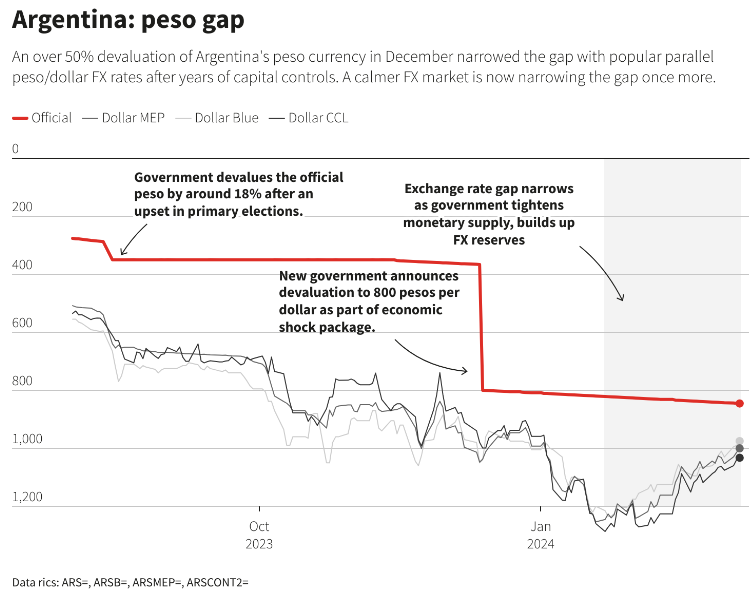 Source: Reuters
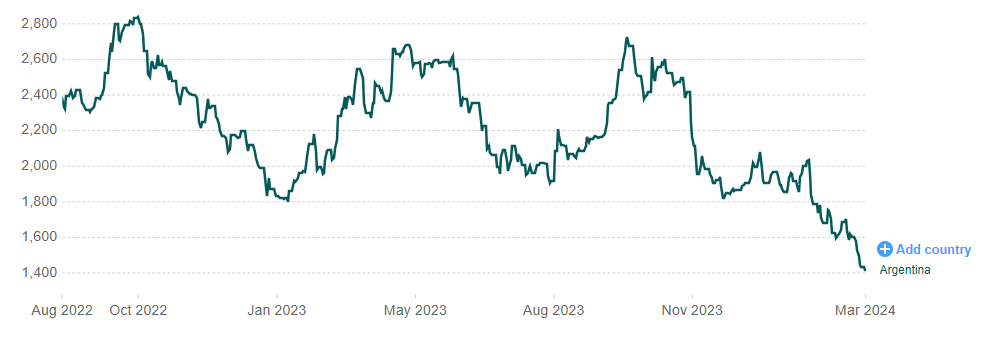 Source: Alphacast