Conflicting demands magnified by climate change

Items

  • Introduction

    Patrick de Courcy 14 January 2025 Hits: 4576

    All too often taken for granted by those with easy access to clean supplies, water is increasingly a source of anxiety for households, policymakers and business leaders. 

    Changing precipitation patterns due to climate change, such as prolonged periods of drought, make water supplies less predictable and decrease availability, while demand continues to increase due to population growth and economic development. 

    Water stress, defined as the ratio of total water demand to available renewable surface and groundwater supplies, is increasing as a result. This disrupts transport, industrial activity, energy supplies, and agricultural production, impacting economic growth and food security as well as increasing the risk of social unrest as households find access to water increasingly limited.

    Chile is the most water-stressed country in the region and ranks 16th in the world, according to a water stress index published by US-based non-profit organisation World Resources Institute (WRI). Mexico is second in the region and 26th in the world, followed by Peru (32nd), El Salvador (72nd), Argentina (77th), and Uruguay (78th).

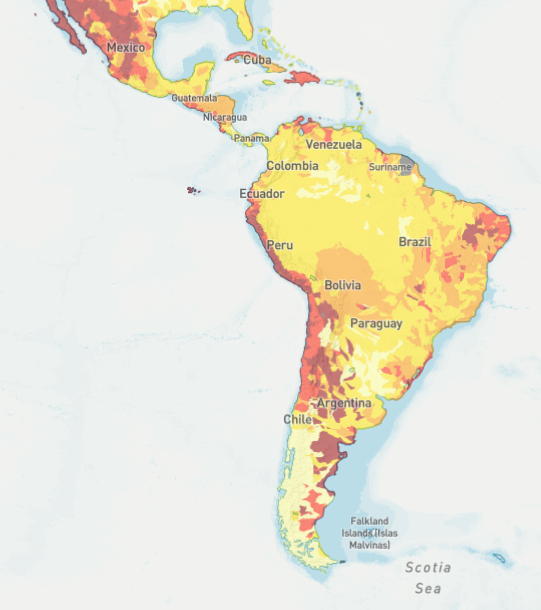
    There are also important variations in water stress within countries, as shown in Figure 1. One example is the Central American Dry Corridor, a belt of arid land that runs along the Pacific Coast through parts of Guatemala, El Salvador, Honduras, Nicaragua, and Costa Rica. Another is the coastal desert of Peru, which runs almost the entire length of the country and is home to around a third of the country’s population, including the capital city Lima. And while much of north and central Mexico is dry, the south and southeast of the country experiences much lower water stress. The same is true in Chile, where the north and centre of the country suffer high levels of water stress, but the south doesn’t. However the population of both countries is concentrated in areas of higher water stress: in Chile, 90% of the population lives in the middle third of the country around Santiago.

    Figure 1. Overall water risk
    Dark red denotes highest water risk, lightest yellow denotes lowest water risk

    Source: World Resources Institute

    Chile’s position at the top of the ranking for water stress hasn’t stopped officials from pushing to expand water-hungry industries such as agriculture and mining, nor has it dissuaded them from planning the development of green hydrogen plants and data centres, which also use significant amounts of water. Even in those countries with low levels of water stress, such as Panama (118th), inadequate management of the available resources is impacting operations of key economic drivers such as the Panama Canal, as well as affecting water availability for farmers and households.

    Here we examine how water availability has been affected by changing weather patterns and the effects this has had on existing infrastructure and industries, as well as future plans for new economic sectors, looking in depth at both issues at the Panama Canal and Chile’s aim to build dozens more data centres.

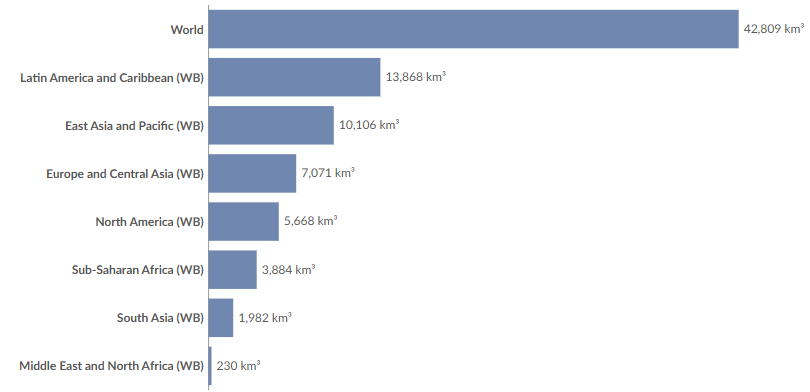
    Figure 2. Internal renewable freshwater resources by region, 2020
    Renewable internal freshwater resources refers to the quantity of internal freshwater from inflowing river basins and recharging groundwater aquifers.

    Source: Our World in Data using data from the World Bank

  • ​Climate change and water availability

    Patrick de Courcy 14 January 2025 Hits: 2518

    Although LAC has more water resources than any other world region, as shown in Figure 2, changing weather patterns and increasing climate variability linked to climate change, combined with the impact of human activity and poor management, are contributing to growing issues with supplies.

    Climate change has disrupted weather patterns, making precipitation less predictable and causing more extreme weather events, such as prolonged periods of drought followed by intense rains that then cause flooding. 

    Increasing temperatures have seen Andean glaciers retreat significantly in recent decades, threatening the water security of communities that rely on meltwater, and also increasing evaporation from lakes and reservoirs.

    Both of these issues are affecting Peru, where concerns over a lack of water in the country’s coastal desert were punctuated by a battering from Cyclone Yaku last year. President Dina Boluarte declared a state of emergency in 17 of the country's 25 regions as torrential rains caused flooding, which also affected the capital Lima, a desert city which usually receives little rain. At the time, housing minister Hania Pérez de Cuellar admitted that “Lima is not prepared for rain,” and the perceived failure of the government to improve infrastructure, such as adequate drainage systems, is one of many reasons for Boluarte’s rock-bottom approval ratings.

    Climate change is also linked to longer and more intense episodes of weather phenomena such as El Niño and La Niña, and this increased variability makes it harder for authorities to manage water supplies. 

  • How is water affecting transport and trade

    Patrick de Courcy 14 January 2025 Hits: 2432

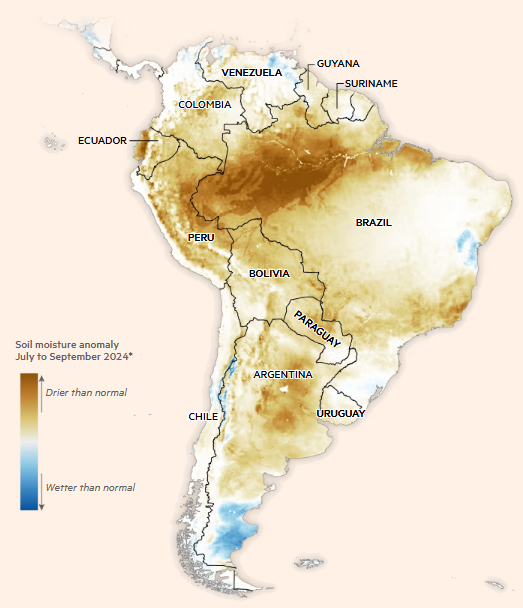
    As shown in Figure 3, much of South America had drier soil than normal in July-September this year compared to the 1991-2020 long-term average, with only a few small areas recording wetter than normal soil. 

    In recent years much of the region has suffered periods of prolonged drought, from the ongoing 14-year megadrought in Chile to an exceptional drought that has been affecting the Amazon Basin since 2023. 

    Figure 3. Much of South America is experiencing drought conditions

    Source: Financial Times

    Given the vast size of the basin, which covers parts of Bolivia, Brazil, Colombia, Ecuador, Guyana, Peru, Suriname, and Venezuela, the drought affects a significant proportion of South America.

    Drought leads to low water levels in navigable rivers that limit the movement of goods and people, causing economic and social damage. 

    In Brazil, for example, the worst drought in 75 years has seen key rivers fall to their lowest ever levels, halting river-borne shipments that provide a lifeline to remote villages in the Amazon region. 

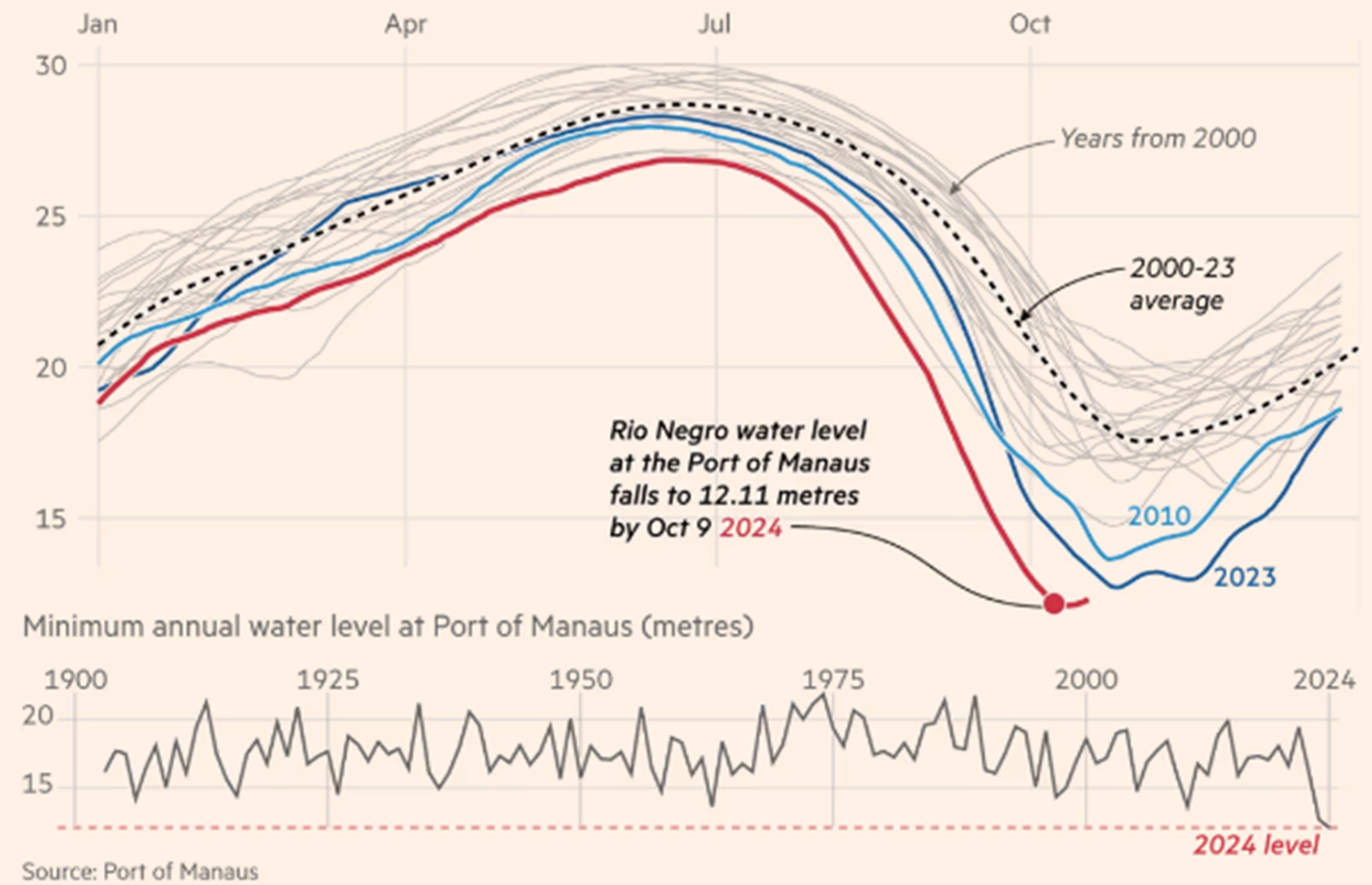
    The Brazilian port city of Manaus, which sits on the Rio Negro, a large tributary of the Amazon, recorded its lowest water level since records began in October, as shown in Figure 4.

    Figure 4. Daily water level at Port of Manaus since 2000 (metres)

    Source: Financial Times

    And its not just the Amazon: drought is also increasingly affecting shipping on the Paraná and Paraguay rivers, which are used to transport grains and oilseeds from Paraguay, Argentina, and Brazil. 

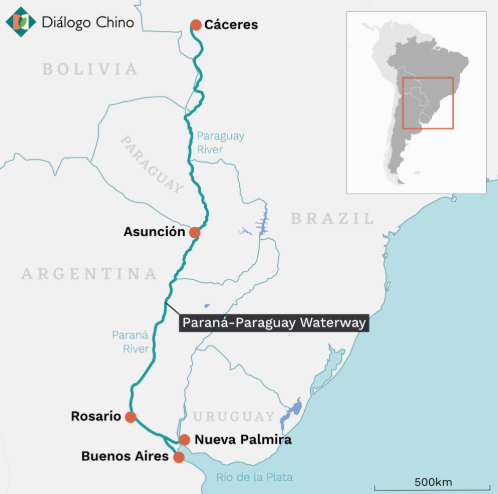
    The Paraguay river reached a record low and ships have had to limit loads in order to pass through shallower channels, increasing transportation costs and driving up prices. This is particularly damaging for landlocked Paraguay (see Figure 5) as almost 80% of the country’s international trade passes along the Paraguay river, and there is a risk that the country could become isolated from international markets for long periods. This would affect broad swathes of the economy, from fuel to food, and on 4 October President Santiago Peña warned that the country was facing a water crisis that is “unprecedented, the worst of the worst in 120 years of records.”

    Figure 5. Paraná-Paraguay Waterway

    Source: Dialogue Earth

    Another example is the Panama Canal, where less rain has led to restrictions on the number of ships that can pass through the canal, creating a bottleneck for global trade and causing concerns over the future viability of a key driver of the Panamanian economy.

    Lakes throughout the region have also been losing water. In Chile, Lake Aculeo, just south of Santiago, disappeared completely in 2018, as did Bolivia’s Lake Poopó, the second-largest in the country, in 2016. Lake Colhué Huapí in Argentina has almost completely dried up, and even Lake Titicaca, the largest in South America, has seen a slow and steady decline in water levels in recent years.

  • How is water affecting electricity generation

    Patrick de Courcy 14 January 2025 Hits: 2442

    Drought has also exposed vulnerabilities in the region’s energy matrix. For decades policymakers have invested in hydroelectric dams, which have become a significant contributor to electricity generation capacity in many countries.

    One example is Ecuador, which gets more than 90% of its electricity from hydropower, using water reservoirs along the country’s plentiful rivers to feed generators. This year the country is suffering its worst drought in more than 60 years after the dry season started two months earlier than normal.

    Hydroelectric facilities at the Mazar reservoir in Cañar province, which supplies three hydroelectric plants that in the rainy season have previously met 30% of Ecuador’s electricity demand, were declared inoperational on 18 April. As a result power generation plummeted and there have been scheduled power cuts lasting for up to 12 hours per day, disrupting industrial operations and seriously impacting the economy.

    The drought also depleted reservoirs in neighbouring Colombia, which was no longer able to export excess energy that it usually sells to Ecuador. Water levels at the Regadera and Chuza reservoirs that supply Bogotá with water fell to their lowest in three decades.

    In an attempt to boost electricity supplies, Ecuador signed a contract for a Turkish power ship which will add 100MW in generating capacity. This is part of a wider trend in which the decreasing reliability of hydroelectric dams means that officials are forced to turn to dirtier thermoelectric power plants, releasing more emissions that then contribute to climate change. 

    Similar issues have also affected Honduras, where the electricity system operator (CND) declared a state of emergency on 9 May, and Costa Rica, which narrowly avoided introducing electricity rationing after a period of heavy rain replenished reservoirs. President Rodrigo Chaves highlighted the regional nature of the problem, claiming that attempts to boost supplies by buying energy from neighbouring countries had failed due to the fact that those nations had also been struggling to meet demand. This meant that they had restricted energy exports, increasing prices in Central America’s regional electricity market. With much of the region highly reliant on hydropower, these issues are likely to persist, increasing tensions over the functioning of the regional market and the interconnected electricity network. These issues are compounded by higher temperatures due to climate change, which increase demand for electricity as more people use fans or air conditioning.

    Increasing pressure on water supplies has also led to rationing for households in a number of cities.

    Residents of Colombia’s capital Bogotá have been living with scheduled daily water rationing for much of the year as part of measures to eke out supplies in reservoirs that reached record lows following a severe drought. Under the rationing system, which began in April, neighbourhoods have their water supply cut off on a rotating basis for 24 hours once every nine days. Although city mayor Carlos Fernando Galán announced that rationing would be suspended over the festive period, he said it would restart on 7 January. Rationing means that there are 18.8m cubic metres more water in the city’s Chingaza reservoir system than there would have been without it, said Galán, but the Chingaza system was only 53% full at the end of November.

    In Mexico City significant restrictions were imposed on the amount of water pumped from reservoirs after falling precipitation levels, extended dry periods, and higher temperatures combined to increase water stress to critical levels. Tight restrictions were introduced on the times at which residents of a number of neighbourhoods had access to tap water, and overexploitation of the city’s subterranean aquifers has led to decreasing water quality. In April, demonstrators blocked a key road in the city to protest the contamination of the drinking water supply in parts of the capital, and the issue has become increasingly politicised. This follows stringent water saving measures in the city of Monterrey, Nuevo León state, which limited water access to just six hours per day in June 2022, with water stress now affecting large parts of the centre of the country in addition to the historically arid northern states.

    And in Montevideo, Uruguay, a prolonged drought meant that authorities declared a water emergency in June. Public water utility OSE started mixing fresh water with brackish water from the Rio de la Plata estuary in order to make supplies last longer, raising concerns over the health effects of water containing higher levels of chlorides and salt and highlighting inequalities between those who could afford to buy bottled water and those who had no choice but to keep drinking from the tap.

    Figure 6. Renewable freshwater resources per capita
    Renewable internal freshwater resources flows refer to internal renewable resources (internal river flows and groundwater from rainfall) in the country.

    Source: Our World in Data using data from the World Bank

  • Water issues surrounding existing industries

    Patrick de Courcy 14 January 2025 Hits: 2416

    At the same time as water availability is decreasing due to climate change, demand is increasing due to population growth in urban areas and the expansion of economic sectors such as agriculture and manufacturing.

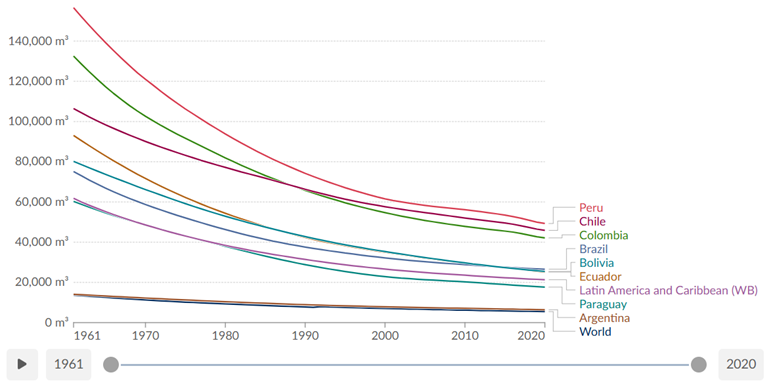
    This means more competition for resources between households and industrial users, increasing social conflicts. As shown in Figure 6, the amount of water resources per capita has declined significantly in the region since 1961, at a faster rate than the global average, and countries such as Peru, Colombia, and Chile have seen particularly steep declines.

    Agriculture is a massive economic engine for the region and the industry has expanded hugely in recent decades with the proliferation of large scale intensive farming. Water use has increased dramatically as a result, with consumption for agricultural irrigation representing between 35% and 86% of total available water in the region, according to a 2022 study. 

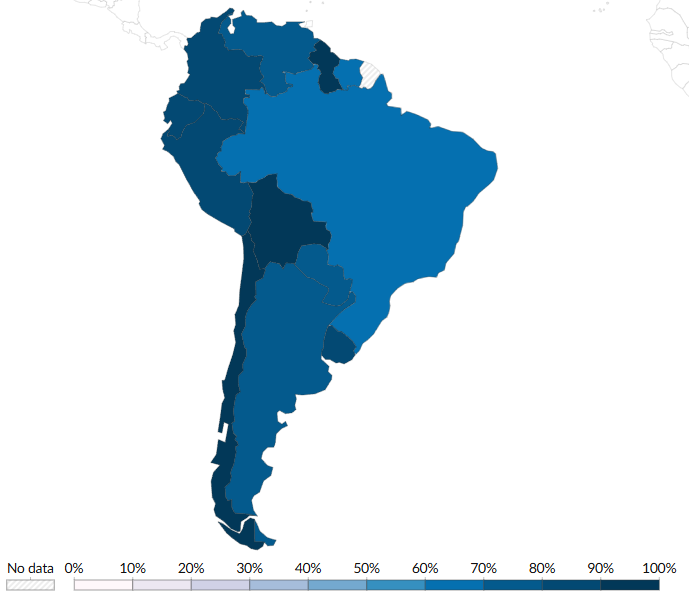
    In Mexico, for example, the agricultural sector uses 76% of available water, compared to 15% for households. As shown in figure 7, in some countries in South America that proportion is even higher. Bolivian agriculture represents 92% of total water withdrawals, and that figure is only slightly less in Chile (90.9%). Agriculture uses 86.6% of water withdrawals in Uruguay, 86% in Colombia, and 85.1% in Peru.

    Figure 7. Agricultural water as a share of total water withdrawals, 2020
    Agricultural water withdrawals as a percentage of total water withdrawals (which is the sum of water used for agriculture, industry and domestic purposes). Agricultural water is defined as the annual quantity of self-supplied water withdrawn for irrigation, livestock and aquaculture purposes.

    Source: Our World in Data using data from the World Bank

    Some increasingly popular crops such as avocados, which are grown in large and growing quantities in Mexico, Colombia, and Peru, are particularly thirsty. Avocado harvests have increased massively in recent years to keep up with a spike in global demand for the fruit, and Latin America accounts for 75% of global production. Flower agribusiness is also a growing source of tension, with the successful expansion of rose farming in Ecuador and Colombia also creating issues with local communities.

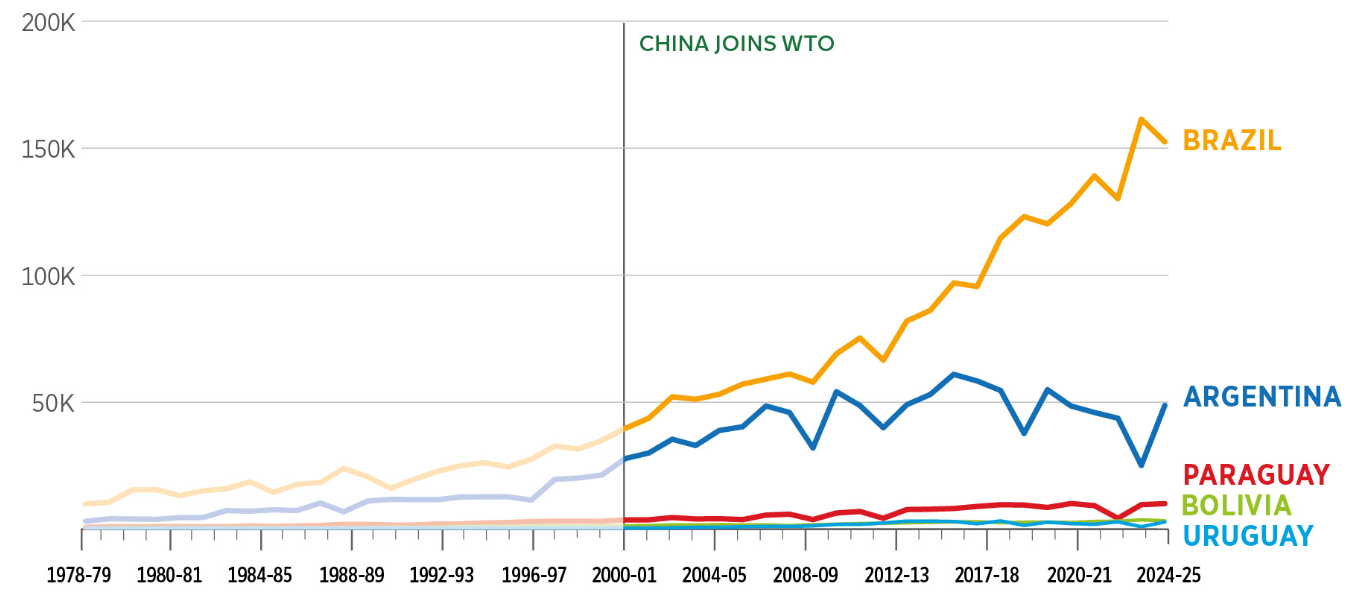
    And the massive expansion of soybean farming in South America, which now produces around half of the global supply of soy, commonly used as livestock feed, has transformed the landscape in large parts of the continent in recent decades. Figure 8 shows how production has skyrocketed, particularly in Brazil.

    Figure 8. Soybean production by harvest, thousands of metric tons

    Source: Americas Quarterly using data from USDA

    While the development of agriculture increases water demand, producers are also being affected by drought. In Uruguay, the 2023 drought led to a 60% reduction in agricultural yields, and in Argentina production of soybean, corn, and wheat was 45% lower in 2023 compared to the previous year. In the western Chaco region of Paraguay, drought has forced ranchers to move nearly 1.5m head of cattle further east in hopes of better conditions there.

    As well as affecting the power supply in countries reliant on hydropower, water shortages also affect many industrial facilities that require significant amounts of water as part of processes such as washing, diluting, fabricating, cooling, or transporting products, and these demands add to pressure on supplies.

    This can lead to social conflicts, particularly in areas suffering from drought, as local communities struggle to secure water for household use. Significant examples include drinks manufacturers in northern Mexico, where companies such as Coca Cola and Heineken are facing growing criticism from locals who say that industry is being prioritised over their needs. In August 2022, then President Andrés Manuel López Obrador floated the possibility of halting beer production in the north of the country due to water shortages, instead proposing that companies set up operations in the southern states where there is more water available.

    Tensions between household and industrial use has also been a flashpoint in Uruguay, where protests erupted after authorities asked households to reduce their water consumption during the drought in 2023, while allowing industry to continue as normal. In recent decades Uruguayan authorities have worked hard to encourage the expansion of agriculture and industries such as paper manufacturing. This involves the development of vast plantations of thirsty eucalyptus trees that are grown to provide raw materials to pulp mills, which themselves use significant amounts of water.

    Mining, another key industry for mineral-rich Latin America, can also be extremely water intensive. Copper production, which uses significant amounts of water to process ore, is threatened by concerns over water supplies, particularly as large deposits are found in some of the driest places on earth.

    In 2021, UK miner Antofagasta revised its production targets down citing drought, and authorities have taken action to limit water use by miners. For example in 2021 a court ordered BHP Group to suspend groundwater pumping at the Cerro Colorado copper mine due to worries over the effects on a subterranean aquifer. The miner ultimately decided to scale down operations at the facility due to the ruling.

    Miners in Chile have also been forced to look for new sources of water due to stringent new regulations designed to limit consumption, with some choosing to invest in desalination plants that make seawater usable for industrial processes. While industry heavyweights such as Antofagasta Minerals and Anglo American are committed to reducing freshwater use as part of efforts to improve sustainability, these efforts add to operating costs. 

    Increasing water scarcity also increases the risk of more stringent rules in a growing number of jurisdictions in a bid to head off social unrest. In Peru, among the most mineral-rich nations globally and the second-largest producer of silver, copper, and zinc in the world, mining operations have been severely disrupted by protests linked to water.

    Waste produced by agriculture and industry also affects remaining water supplies. Mining operations are also associated with water pollution as chemicals enter the water table, and poorly protected tailings leak. Intensive farming methods common in large monoculture plantations of crops such as soya use significant amounts of herbicides and pesticides, which run off into rivers and streams leaving toxic contamination. Industrial processes also produce waste products, and in many countries lax or unenforced regulations mean that they find their way into remaining water sources. This impacts water quality, meaning that it has to be treated more intensively in order to be fit for human consumption, adding to the costs of providing potable water.

  • Effects on plans to develop new industries

    Patrick de Courcy 14 January 2025 Hits: 2492

    Concerns over water are also affecting Latin America’s efforts to benefit from global trends such as the energy transition and the increasing adoption of AI.

    The region is home to significant reserves of critical minerals that will be needed to make the transition to clean energy a reality, but mining them will require huge amounts of water. For example, lithium is a key component in batteries that are used in products such as phones, laptops, and increasingly electric vehicles, which are a vital part of the energy transition.

    Some 56% of global reserves are found in South America’s Lithium Triangle, which straddles Argentina, Bolivia, and Chile, representing a potential economic bonanza for the trio. However extracting one ton of lithium requires around 500,000 gallons of water, and the reserves are found in some of the driest places on earth. Critics say that operations alter the water table, affecting traditional agricultural practices as well as impacting flamingo populations in these areas. 

    In Chile, which has been extracting lithium since 1984, growing awareness of the environmental impact of lithium extraction has led to protests that have blocked access to existing operations, which is easy to do as facilities are in isolated areas, and impacted plans to expand the industry. 

    Activists have also appealed government approvals of new projects, such as the Minera Salar Blanco in the Maricunga salt flat, around 100 miles northeast of the city of Copiapó, further slowing project development. President Gabriel Boric has attempted to find a way to encourage mining without causing widespread environmental damage, publishing a roadmap in April 2023 that includes the proposed use of more efficient technologies, but the country is at risk of losing out to competitors in the space. 

    Efforts to expand lithium mining in Argentina have also caused concerns among local communities worried about the impacts on freshwater supplies, such as depleting water sources or contaminating them with pollutants. Their arguments have also convinced judges to halt project development. In March, the supreme court of Catamarca province ordered the provincial government to suspend new mining permits in the Los Patos stream area pending an environmental impact study. 

    Although President Javier Milei is keen to attract investment in the sector, and his government signed a memorandum of understanding (MoU) with the US to promote critical minerals exploration in August, local opposition could dissuade miners due to the threat of disruption from protests.

    Various countries in the region, including Brazil, Chile, Colombia, and Uruguay, are also working on building up a green hydrogen industry, an emerging fuel that can be used to store energy from renewable sources and is therefore an enabler of the energy transition.

    In August, Brazilian President Luiz Inácio Lula da Silva promulgated a law to create a regulatory framework for the production and distribution of low-carbon hydrogen fuel in the hope of attracting investment in the sector. Under the new regulations, green hydrogen is defined as hydrogen fuel created by splitting water molecules through electrolysis using renewable energy, such as solar or wind power. The fuel can be certified as ‘green’ if the production process emits up to and including 7kg of carbon dioxide equivalent per kilogram of hydrogen produced.

    Brazil is not alone in harbouring green hydrogen ambitions: Chile published a preliminary version of its National Green Hydrogen Action Plan at the end of 2023, and Uruguay also released its Green Hydrogen Roadmap last year. 

    The country’s first green hydrogen plant is scheduled to start operations in 2026, and in February the country signed an MoU with Chilean firm HIF Global for the construction of a US$6bn green hydrogen plant in Paysandú department, which is the largest investment deal in the country’s history. The aim is to benefit from global net-zero ambitions and become a source of low-carbon fuel that can replace fossil fuels, taking advantage of plentiful renewable energy resources.

    According to the International Energy Agency (IEA), Latin America "is well placed to thrive as clean energy transitions move forward and to contribute to global energy security and climate goals," and could play “an outsize role in the new global energy economy". However producing green hydrogen involves the use of vast amounts of water, and many projects that have been announced will be located in areas that are already experiencing water stress.

    One solution is to expand the use of desalination plants, which turn sea water into fresh water, but the time it takes to build out more capacity could mean that the region misses its opportunity to benefit from the expansion of the green hydrogen industry, as other countries around the world such as Australia, China, and the US are also developing capacity.

    Local opposition to the plans, such as the formation of a new civil society organisation in the Magallanes region of southern Chile, mooted to be the centre of the country’s green hydrogen industry, could also slow development. The Citizen Panel on Hydrogen in Magallanes has accused President Boric of failing to uphold Chile’s commitments under the Escazú Agreement, a United Nations-backed environmental treaty. The allegations could complicate potential future exports as the industry will likely develop certification schemes to reassure buyers that hydrogen has been produced sustainably. Uncertified hydrogen is unlikely to be bought by buyers from markets such as the European Union, which has been working to improve supply chain sustainability in recent years.

    The region has also become increasingly popular as a home for data centres, which house the servers necessary to process, store, and communicate the massive and growing amount of data sent and received by internet users. While demand for data centre capacity has grown steadily as more of the global population has come online, the recent boom in artificial intelligence adoption has driven rapid growth in data centre construction in recent years.

    The servers that they contain have to be cooled to prevent them from overheating. Air conditioning used to be the most commonly used cooling method, but worries over the carbon emissions from the electricity that powers these systems meant that many tech firms switched to water-based cooling systems. The vast majority of these systems are fed by public utilities, meaning that they draw supplies from the same water sources as households and other industrial users. 

    With the facilities able to process data from around the world, tech firms are able to choose to operate in those locations that offer the best conditions, and governments keen to attract investment provide incentives and work hard to build out the necessary infrastructure such as data cables and mains water connections. This has led to the development of data centre clusters in areas such as Querétaro state in Mexico and the Chilean capital Santiago (see CASE STUDY), where the existence of multiple similar facilities in a small geographic area exacerbates their impact on water supplies.

    Local communities are increasingly protesting the facilities both in the street and in the courts. In Querétaro state, activists say that officials are approving more data centres despite increasing pressure on water supplies amid a drought that has impacted agricultural output and impacted the tourism sector. They allege that authorities prioritise industrial water users over households, which is a common complaint in many social conflicts linked to water.

    In some cases tech firms have responded by updating plans. In Uruguay, for example, Google said that a planned data centre in Canelones, Canelones department, would use air conditioning, rather than a water-based cooling system, following an outcry. Air conditioning brings its own issues, such as higher electricity consumption and more carbon emissions. A better solution is to use closed-loop water cooling systems, in which the same water is used repeatedly instead of being pumped out into sewers or emitted as steam. While this is technically possible, tech firms are unlikely to use such systems unless required to do so by regulators, who commonly fail to keep up with the rapid pace of developments in the sector.

  • Other issues surrounding water

    Patrick de Courcy 14 January 2025 Hits: 2318

    It is hard to overstate the importance of water and the role it plays in many of the key issues facing Latin America today.

    Take the persistent gap in access to safe water and sanitation services: Although the region has made significant strides in improving access, there are still 166m people without safe water and 443m without safe sanitation, according to the World Bank. This feeds into growing concerns over the proliferation of mosquito-borne diseases such as malaria, dengue fever, and chikungunya, which have seen an increasing number of cases in a larger geographical area in recent years. While this can be partly explained by increasing temperatures due to climate change, a lack of mains water connections in the region’s informal urban settlements also plays a role.

    Without access to running water, people tend to store supplies in open containers such as buckets, providing the perfect breeding ground for mosquitoes that then transmit disease. A lack of sewage connections adds to the problem, as inadequate waste disposal methods leave stagnant pools where mosquitoes can also lay eggs. 

    Untreated waste also finds its way into water sources, impacting water quality and increasing the risk of health issues such as cholera. This is also true of the mercury used by illegal gold miners, which has been linked to the increasing prevalence of birth defects and neurodevelopment problems in children from villages in the Brazilian Amazon. As a result, the provision of water infrastructure should be considered a public health issue. 

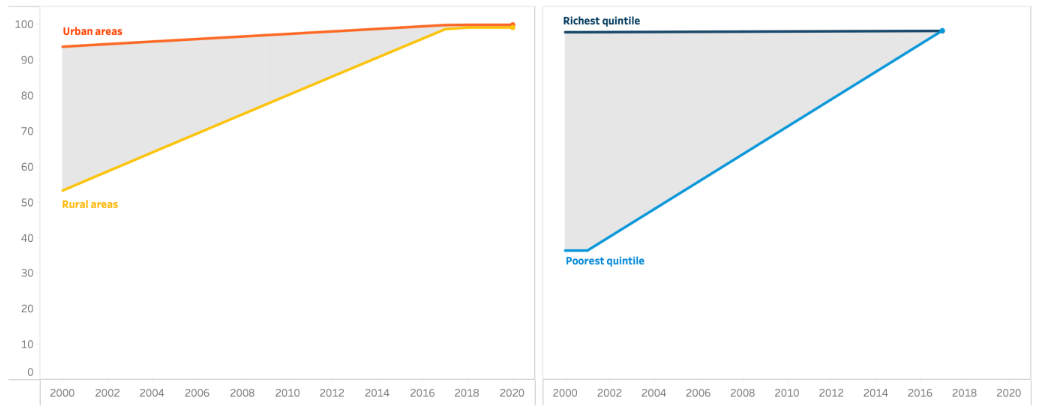
    One leading example is Paraguay, which closed gaps in water access in the two decades from 2000-2020 and now has almost universal access, as shown in Figure 9. This was the result of efforts to improve water governance using new legal frameworks, boosting state capacity and updated models of engagement with local communities, according to the United Nations Development Programme.

    Figure 9. Share of Paraguayan population with access to at least basic drinking water services (%)

    Source: UNDP using data from WHO/UNICEF Joint Monitoring Programme for Water Supply, Sanitation and Hygiene

    Inadequate infrastructure also leads to inequities in access to water. In Mexico City, for example, residents of wealthier neighbourhoods can build large water storage systems which they can draw on when supplies are restricted. However poorer households are forced to rely on deliveries from tanker trucks, which increase their prices during periods of high demand. As a result, poorer households spend a higher proportion of their income on securing access to water, leaving less money for other necessities such as food.

    Groundwater is also being overexploited, depleting subterranean aquifers. The effects of this overexploitation are not fully understood in many cases, but in Mexico City the effects are clear to see: the city is sinking at a rate of multiple inches per year in some areas, among the fastest subsidence rates in the world. This increases the risk of structural damage to buildings, as well as the likelihood of broken water pipes, wasting water and further increasing pressure on supplies. In the Chilean capital Santiago, the depletion of subterranean aquifers increases the risk of subsidence and landslides as the city is in one of the most seismically active subduction zones in the world.

    Overexploitation also contributes to declining water quality, which means that remaining resources have to be treated more harshly to remove sediment and pollutants in order to make them fit for human consumption. Poorer quality water is more expensive to treat as it requires more purifying chemicals and more electricity to operate treatment plants.

    In other parts of the region, a lack of access to water drives people to leave their homes altogether. In Central America’s Dry Corridor, a belt of arid land that includes parts of Guatemala, El Salvador, Honduras, Nicaragua, and Costa Rica, persistent drought has encouraged people to migrate, both to nearby urban centres and north to the US. Many of those that remain are subsistence farmers that rely on rain to water staple crops such as beans and basic grains, and they face decreased food security and higher rates of malnutrition as agricultural output falls.

    Water issues also increase the risk of conflict between local communities and nation states that share the management of lakes and rivers. One example is Lake Titicaca, whose watershed is managed by both Peru and Bolivia. Declining water levels at the lake mean that existing cooperation and management systems need to be updated and strengthened in order to better deal with shared issues and prevent tensions from increasing. 

    The region is also home to several major shared river basins, including the Amazon and the Rio de la Plata basin, which includes the Paraná, Paraguay, and Uruguay rivers and covers parts of Argentina, Brazil, Paraguay, Uruguay, and southeastern Bolivia. Mexico and the US also share the Rio Grande, which forms part of the border between the two countries, running from Ciudad Juárez, Chihuahua state, to the Gulf of Mexico.

    Increasing pressure on water supplies ramps up competition for resources as well as tensions linked to their equitable distribution, such as the renegotiation of water allocations for hydroelectric dams that impact irrigation systems downstream. 

    One example is the Paraná river. Landlocked Paraguay needs the river to remain navigable, Brazil prioritises electricity generation, and Argentina uses it for water consumption, competing interests that can lead to tensions. Human activity such as the building of dams and the development of industries such as agriculture, as well as population growth in towns and cities along the river, have increased these issues. 

    Dealing with transboundary water management requires strong cooperation and a long-term strategic approach that can be difficult for politicians concerned about public perceptions around national sovereignty or the impact of negotiations in electoral cycles. 

    There is also little incentive to commit significant resources to projects whose impacts may not be appreciated until long after a government has left office. This has led to a lack of long-term planning in much of the region and left officials reliant on emergency measures, increasing the cost to the public purse and in many cases not dealing with the root causes. 

    At the same time, executing necessary projects such as building new reservoirs and aqueducts or investing in water distribution systems, is both expensive and politically difficult with public budgets stretched in many parts of the region.

  • Recent developments in water governance

    Patrick de Courcy 14 January 2025 Hits: 2496

    One factor that feeds into many issues surrounding water is governance, which is fragmented and controlled by weak institutions in many countries.

    This makes it difficult to develop and act upon plans that cover large geographical areas such as river basins as well as further limiting the prospects of international cooperation. Weak institutions and a limited state presence in many remote areas also limits regulatory enforcement and increases corruption risks. This weakness also leaves state institutions vulnerable to lobbying by powerful vested interests keen to maintain the status quo, such as water-hungry industries like agriculture and mining. However improving water governance has taken on a new urgency as supplies are increasingly stretched and decades of mismanagement and underinvestment have come home to roost.

    One interesting case study is Chile, the only country in the world where water rights are considered private property separate from ownership of land under the 1981 national water law adopted under former dictator General Augusto Pinochet. This allows water rights to be bought and sold, and it has resulted in their accumulation by large companies as well as speculation among water traders. A system of strong property rights combines with a weak regulatory system: there is no centralised government agency responsible for developing a water strategy. This has led to accusations that industrial users have been allowed to overexploit available resources, particularly during the ongoing drought that has lasted more than a decade.

    While efforts to overhaul water governance as part of an attempted constitutional reform ultimately failed, there have been some changes in recent years. For example, water was declared a public good for human use as part of a reform to the water code published in April 2022. The government has also proposed reforming the General Environmental Law (Ley 19.300) in order to boost the involvement of local communities in environmental impact assessments. The idea is to reduce political influence over the process and balance the interests of communities and investors, but no one seems satisfied by the proposals. Businesses worry that it could make it easier for activists to challenge project approvals in court, and campaign groups have rejected the proposal, arguing that it will tilt the balance further in favour of business interests by reducing government control.

    This debate shows the difficulty of balancing competing interests by tinkering with existing systems, when experts, including the OCDE, recommend wholesale changes to water governance. However if such efforts appear to have failed in Chile, they are being pursued with fresh vigour in other countries in the region.

    One example is Mexico, where new President Claudia Sheinbaum, who took office on 1 October, has laid out plans to overhaul the water sector during her six-year term. As things stand, water is provided by a huge number of small water companies which are frequently bankrupted by low water prices, leaving gaps in provision. The existing system of water concessions also means that agricultural and industrial users compete with households for supplies and use drinking water rather than treated wastewater in their processes. 

    Sheinbaum made securing water supplies a key manifesto promise, publishing a water plan that includes updated governance. The president has proposed a new water law to “protect the human right to water”; more powers for the national water commission (Conagua); and a systematic review of water concessions to reduce hoarding and unregulated sales. Sheinbaum is also aiming to boost the number of water quality monitoring stations from 2,000 to 10,000, as well as increasing wastewater treatment from municipal and industrial discharges.

    Sheinbaum made water issues a focus of her time as mayor of Mexico City (2018-2023) and appears committed to enacting change nationwide. She has already proposed a new water plan for central Mexico, covering Mexico City (CDMX), Estado de Mexico (Edomex), and Hidalgo state, and the dominance of her Morena party in national and state legislatures gives her a good chance of passing reforms. Sheinbaum is also likely aware of the political risks of not dealing with increasingly severe water problems, given recent protests in Mexico City and their emergence as an issue on the campaign trail.

    However attempts to reform the water law in years past have faced intense pushback from industry associations such as the Coparmex business association and the CNA farm lobby. Although both bodies have reacted positively to Sheinbaum’s plans to reform water governance, it is unlikely that they would accept any measures that imposed extra costs on their members or affected their ability to do business. For example, Sheinbaum is targeting the agricultural sector and plans to update irrigation systems to improve efficiency, and digital technology such as AI monitoring could help, but who will pay for this to happen is not clear. 

    Even if new rules are introduced it will be difficult to enforce them across Mexico’s vast territory, particularly given pervasive corruption and the weak presence of the state in many areas.

    Another country to watch is Argentina, where President Javier Milei is stripping back the state’s role in managing water supplies as part of his radical austerity programme. In November Milei ordered the closure of the Ente Nacional De Obras Hídricas De Saneamiento (ENOHSA), which was responsible for monitoring water quality and managing sanitation infrastructure, as well as announcing plans to award a 30-year concession to a private firm for the management and maintenance of the Paraguay-Paraná waterway.

    And in October, the country’s supreme court ended its oversight of cleanup efforts in the Ricahuelo River in Buenos Aires, 16 years after a landmark decision that made the state responsible for restoring the hyper-polluted 40-mile waterway. The 2008 decision was seen as a historic ruling which set the tone for environmental law, and activists worry about the wider effects of the latest ruling, which comes after Milei said that “a company can pollute a river all it wants” during his presidential election campaign.

  • CASE STUDY: Water issues threaten Panama Canal

    Patrick de Courcy 14 January 2025 Hits: 2523

    Decreasing water availability is causing concerns over the continued viability of the Panama Canal, a key artery of global trade and a significant driver of the Panamanian economy.

    In recent years, prolonged periods of drought have led to declining water levels in the Alhajuela and Gatún Lakes that feed the canal and provide water to around 50% of the country’s population. 

    Each transit requires 51m-55m gallons of water to move ships through a number of locks at up to 26 metres above sea level, with larger ships requiring more water. As a result the Panama Canal Authority (ACP) introduced a series of increasingly severe restrictions on the number of ships that can transit the canal each day, as well as how much cargo they can carry. This led to delays as ships queued to pass through the canal, encouraging some shippers to use alternative routes. In fiscal year 2024 (October 2023-September 2024), transits of the largest ships were down 21% compared to fiscal year 2023. 

    Although the ACP reported total revenues of US$4.99bn for fiscal year 2024, a 1% increase compared to the previous year, water shortages that threaten the functioning of the canal are a massive cause for concern for the Panamanian government as the canal contributes billions to the public purse: the ACP budget for 2025 estimates that it will pay US$2.79bn to the state, up from US$2.47bn in this year’s budget.

    In some ways it is remarkable that the canal can’t get enough water as Panama is one of the most water-rich countries in the world. It is home to 52 watersheds and a huge network of rivers, and it receives the fifth highest amount of precipitation per year of any country in the world on average.

    However the issue is the management of these considerable resources, with climate change, population growth, and urbanisation exacerbating issues linked to poor governance and inadequate infrastructure. Efforts to resolve these issues have stepped up in recent years, with a national water security plan published in 2016, and the creation of the national meteorological and hydrological institute (IMHP) under former president Laurentino Cortizo (2019-2024) in 2021. The ACP has also introduced water-saving measures, such as cutting hydroelectric generation at the dams it manages and improving efficiency by stepping up maintenance at the canal locks.

    Increasing pressure on water supplies has made for growing competition for resources, causing unrest among households and agricultural producers that have been left with reduced access to drinking water. 

    President José Raúl Mulino has said that he will work with the ACP to safeguard the future of the canal, with one mooted solution a new dam and reservoir on the Rio Indio. Long discussed, the project moved a step closer in July with a ruling from Panama’s supreme court (CSJ) which will allow the canal to expand outside its traditional watershed. Some of the water stored here could potentially be used to supply households and agriculture too, meaning that there is a strong consensus around the project outside those communities that would be displaced by the dam. Nonetheless, it would take an estimated six years to build the dam, in which time the effects of climate change are expected to intensify.

    Repeated waves of transit restrictions during periods of drought could encourage a further reordering of supply chains away from the canal. Other countries in the region are attempting to capitalise on these issues by building out alternative transoceanic routes. For example, Mexico is pouring resources into the interoceanic corridor of the Isthmus of Tehuantepec, and Honduras is seeking investment to build its own coast-to-coast railway. Nicaragua has also revived plans for its own canal and signed a contract with Chinese firm CAMC for the construction of a deepwater port in Bluefields, which sits at the Atlantic end of the proposed route. 

    In Panama, Mulino has also pledged to improve access to drinking water, which is a key social issue. He has promised to build a new water purification plant in Bayano which would boost supplies in the east of Panama City, and said he would prioritise infrastructure projects such as the North Water Ring, a system of storage tanks and pumping stations that will provide water to an estimated 200,000 people that live in areas to the north of Panama City. This would go some way to alleviating tensions between the needs of the canal and those of households that don’t have access to water.

    ACP chief Ricaurte Vásquez is also exploring ways to maintain the canal’s relevance to global trade, and its revenues. One proposal involves building grain storage silos on the Pacific side of the canal in order to boost shipments of the grain, which have been badly affected by traffic restrictions, while Vásquez also announced that officials are evaluating plans for a gas pipeline between the Pacific and Atlantic coasts as part of plans to diversify operations beyond ship crossings.

  • CASE STUDY: Chile’s national data centre plan risks inflaming tensions over water supplies

    Patrick de Courcy 14 January 2025 Hits: 2316

    President Gabriel Boric has published a plan that aims to attract US$2.5bn in investment to build 28 new data centres, despite mounting concerns over the environmental impact of existing facilities.

    The national data centre plan was announced at the end of May and released for public consultation at the end of October. It contains seven key measures: a digital tool to enable sustainable planning of data centres; a public-private monitoring committee to evaluate investment opportunities and potential social and environmental impacts; standardised environmental impact guidelines to promote transparency; a guide to necessary permits to streamline investments; agreements between investors and government to ensure efficient use of water and energy resources; regional AI clusters in areas with good access to renewable energy supplies; and efforts to secure advanced computational equipment for these clusters.

    Targeting more data centres is part of Chile’s plan to become a digital hub in South America and diversify its economy. It has already had some success in this regard. There are already more than 20 data centres operating in the country, mostly in the Santiago metropolitan area, which has become one of the largest data centre hubs in Latin America.

    In 2015 Google inaugurated its first data centre in the country and named it as its regional hub in 2018. The company has highlighted Chile’s “ideal combination” of strong telecommunications infrastructure, skilled workforce, and good regulatory environment. Chile also benefits from a strategic geographic location, which grants access to South America, Antarctica, and the Asia-Pacific region. 

    And there are projects in the pipeline to take advantage. A consortium of companies, including Google, is working on a new subsea connection linking the country with Australia, called the Humboldt cable, and EdgeUno, a connectivity provider headquartered in Miami, is building a new fibre optic route between Santiago and the Argentine capital Buenos Aires. Telecoms regulator Subtel has also reportedly received four offers to start a feasibility study for the first subsea cable between Chile and Antarctica. Another plus point is that Chile is a renewable energy powerhouse, which will help tech companies meet their commitments to reduce carbon emissions. 

    Proponents say that the data centre plan will create thousands of direct and indirect jobs, as well as spurring the growth of businesses supplying goods and services to the new facilities. However there is a growing awareness of the environmental impact of data centres, particularly their water use. This is a huge concern in Chile, which suffers the highest level of water stress of any country in Latin America and is living through an ongoing megadrought that has lasted more than a decade.

    These issues have affected Google’s plans for a US$200m data centre in Cerrillos, Santiago. The facility would reportedly have required 7.6m litres of water per day, roughly equivalent to the daily water usage of 44,000 typical city residents. Following opposition from local communities, an environmental court ordered a halt to the project and Google later said it would redesign the facility using air conditioning rather than water-cooling systems.

    While the minister of economy, development and tourism, Nicolás Grau, said the announcement showed that the country’s policies were succeeding in attracting investment while protecting the environment, these tensions could complicate other planned projects and put off potential investors.

    Water is likely to remain front of mind for many Chileans as climate change is forecast to bring less rainfall to large parts of the country in the coming years, with the average annual flow in certain rivers set to fall by as much as 50%. Higher temperatures will also mean that the Andean glaciers that provide fresh water will continue to shrink, encouraging the further overexploitation of subterranean aquifers. 

    Coupled with the creeping desertification of arid areas of the centre and north of the country, the effects of climate change are set to become increasingly visible to a growing number of Chileans, spurring opposition to water-hungry projects. 

    Regulations that mandate the use of air conditioning systems would be one potential solution to concerns over water usage, but they would present their own issues. Heavy use of air conditioning would increase carbon emissions and could jeopardise Chile’s commitments under the Paris climate agreement. 

    Initiatives such as the European Union’s Climate Neutral Data Centre Pact lay out measures such as regulations forcing companies to delete waste data from servers, thereby freeing up space and reducing pressure to build new data centres, but an expansion of the industry on the scale laid out in the national plan would likely face opposition due to the large amount of land taken up by each data centre, particularly as the industry tends to develop in clusters. 

    While Chile’s national data centre plan does contain some good ideas on paper, it is hard to see how officials will manage to make data centres both profitable and environmentally friendly, as President Boric has said.

  • What comes next?

    Patrick de Courcy 14 January 2025 Hits: 4236

    Water scarcity, defined as a composite measure of baseline water stress, seasonal variability, interannual variability, ground water table decline, and drought risk, is forecast to increase in the coming years as climate change intensifies, with higher temperatures and longer periods of drought interspersed with periods of very heavy rainfall that cause flooding and other issues. 

    In the Andes, higher temperatures will mean glaciers shrink further, reducing supplies from meltwater, while in Central America dry areas are forecast to get drier, while wet areas become wetter.

    This will affect crop yields, impacting the economy in those countries with large agricultural export sectors, and encouraging migration in areas where subsistence farmers rely on rain-fed agriculture to produce staple crops. 

    One example is the Dry Corridor in Central America, where the Economic Commission for Latin America and the Caribbean (Eclac) estimates production losses of up to 22% of agricultural GDP by 2100. 

    Migration will increase as crop yields decrease, driving people to move to urban areas as well as heading north to the US. More urbanisation will concentrate demand for water in cities, and many new arrivals will end up living in informal settlements without access to running water or sanitation services, exacerbating health risks due to diseases such as dengue fever.

    Decreasing water availability will also make hydroelectric dams increasingly unviable, with significant implications for energy security. This is particularly true in Ecuador, Panama, and Paraguay, where hydropower provides more than 70% of electricity needs, as well as Brazil, Venezuela, Uruguay, and Peru, where that proportion is more than 50%, according to the International Energy Agency (IEA). In Ecuador, for example, studies project that hydropower generation will fall between 39% and 55% from 2000-2071.

    Although it will be tempting to recommission existing thermoelectric power plants in order to secure supplies, doing so while meeting climate commitments will mean that governments need to build out new generating capacity from renewable sources such as solar and wind.

    However the output from these variable renewable sources fluctuates depending on wind speeds or the amount of sunlight, meaning that electrical grids must be flexible and robust enough to deal with these peaks and troughs. This will require significant investment in electricity grids, which are complicated and expensive to upgrade, although improvements in battery technology could also help.

    These issues will result in further debates over the role of state-owned energy companies, which have flared up throughout the region. In Brazil, for example, disagreement over how much profit should be used to pay dividends or be reinvested in ambitious diversification plans led to the ousting of the CEO of the state oil company Petrobras in May, triggering a sell-off of the company’s shares that shaved over US$11bn off its market value. 

    On the demand side, population growth and the expansion of water-hungry industries such as mining and agriculture will increase pressure on resources as water demand is forecast to increase by 43% by 2050, the second-largest increase of any world region.

    Demand for the region’s critical minerals will continue to grow as the energy transition progresses, encouraging the development of more mines. Many reserves are found in dry areas such as northern Chile and northern Argentina, increasing the impact of operations on the local environment. 

    High global gold prices will also encourage mining, both legal and illegal. Nicaragua is one country to watch in this regard, with President Daniel Ortega granting myriad mining concessions to Chinese companies after formalising diplomatic relations with Beijing in 2021. Another is El Salvador, where President Nayib Bukele has said that he will lift a ban on metals mining introduced in 2017 in order to exploit the country’s gold deposits.

    Government plans to build out industries such as green hydrogen will exacerbate water issues, as will the increasing adoption of AI, which will drive demand for more data centres, and greater industrial use of water will increase contamination and impact water quality, increasing the cost of water treatment services.

    These issues will increasingly place households in competition with industrial water users, and increase awareness of the environmental impacts of certain economic sectors. Water will become a key political issue in an increasing number of countries, with the potential to spark social unrest.

    Some attempts will likely be made to impose stricter regulations on water use through updated governance, but sweeping reform processes will face stiff opposition from sectors that benefit from the status quo.

  • Conclusion

    Patrick de Courcy 14 January 2025 Hits: 2060

    With water availability decreasing and demand increasing, better management of resources is necessary to ensure equitable access while safeguarding key economic sectors.

    There are myriad challenges, but one proposed solution is the implementation of integrated water resources management (IWRM), which is defined as “a process which promotes the co-ordinated development and management of water, land, and related resources, in order to maximise the resultant economic and social welfare in an equitable manner without compromising the sustainability of vital ecosystems.”

    While IRRM has been promoted for decades in the region, implementation has been slow. Improving this would help countries implement overarching water management strategies by increasing data collection and monitoring; modernising institutional frameworks; and empowering and strengthening river basin institutions. 

    These newly strengthened institutions would then be able to collaborate with each other to better manage transboundary water resources, however such efforts are likely to be hindered by a lack of technical capacity.

    The region also requires large investments in water storage systems, such as new reservoirs; water reuse capacity, such as wastewater treatment plants; and distribution, including maintenance to prevent water losses. However there are both financial and technical constraints.

    Funding investments will be difficult as public budgets are stretched, and improving water connections is a complex process. This is particularly true in informal settlements that normally lack other basic services, meaning that many aspects of the built environment need to be upgraded at the same time, necessitating significant investment and the involvement of various institutions. 

    Given the importance of water to development goals, multilateral lenders could step in to provide funding and expertise for specific projects. At the same time, there is room for more private sector involvement. In Brazil, for example, a new legal framework mandating that near universal access to drinking water and sanitation must be achieved by 2033 has opened the water market for public-private partnerships and increased the pace of investment.

    As set out here, water feeds into myriad challenges facing the region. It could lead to a new era of prosperity if governments can figure out ways to secure supplies for industrial users that drive growth, or it could contribute to social unrest and conflict if households, communities, and nations feel that their right to water is being violated.