Covid-19 in Latin America: one year on

Items

  • An epicentre of the global pandemic

    LatinNews 31 March 2021 Hits: 3197

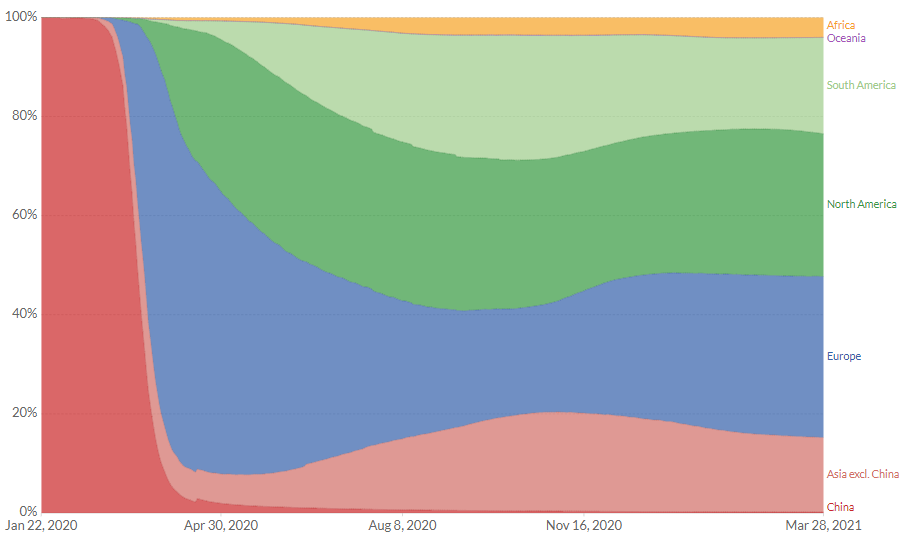
    The Covid-19 pandemic has been a catastrophe for the world, not least for Latin America and the Caribbean (LAC). One year after the first cases, the Americas – north and south together - have between them been especially hard hit by the coronavirus, with LAC deeply disrupted in humanitarian, social, political, and economic terms. As of 12 March this year, the global pandemic had claimed 2.63m lives, but although the outbreak started in China, its toll, in terms of total deaths, has been much higher in the Atlantic region than in the Pacific. As of 12 March, Europe accounted for the largest share of cumulative deaths, totalling 32.3%, followed by North America (defined to include Mexico) at 29.4% and South America with 18.7%. However, at the peak Latin America (South America plus Mexico and the Caribbean) accounted for nearly 40% of total deaths. By individual countries, the top three highest death tolls in the world have been registered in the United States, followed by Brazil and Mexico.

    Cumulative confirmed COVID-19 deaths

    Source: Johns Hopkins University CSSE COVID-19 Data

    The first cases of Covid-19 in LAC were detected in February/March 2020, which means that the region is now marking one year since the beginning of the outbreak. The story is far from over, but the one-year point does provide an opportunity to look back at how governments and society have tried to manage the virus, how they have been forced to change, and how this may affect the future. This report will look in particular at the challenges facing the public health systems of Latin America but will also take in the way the virus has changed the region’s politics and economics. In addition, it will touch briefly on what has been described as the “new normal” – the emerging post-pandemic period.

  • Weakness before the black swan

    LatinNews 31 March 2021 Hits: 1753

    All countries are at risk of disaster and should do what they can to prepare. The problem of course is that exactly what they are preparing for, and when it is likely to happen, are both unknown. Some disasters are relatively predictable. In any given year it can be said that Latin America will experience some combination of hurricanes, flooding, drought, contagious disease, violent political protests, and major accidents such as oil spills or the collapse of tailings dams in open cast mining. There is evidence that climate change is increasing the frequency of some of these disasters. But the intensity and exact probability of these events cannot be known beforehand. Matters are further complicated because some disasters – with the Covid-19 pandemic notably among them – have been classified as ‘black swan events’ - in other words, high profile, high impact, yet hard-to-predict and extremely rare events beyond the realm of normal expectations. Importantly the probability of a black swan event is ‘non computable’.

    While this suggests that in Latin American no country could have reasonably been expected to predict or fully anticipate Covid-19, a separate question is still relevant. This is to ask how prepared the region’s health and social protection systems were, in general terms, for the outbreak of any kind of communicable disease. The answer is that they were not really well prepared at all. Research by Sergio Litewka and Elizabeth Heitman suggests that before Covid-19 the region’s public healthcare systems were already overburdened and under-funded, and that state-run hospitals were “overstressed by continuous demand for treatment of vector-borne diseases and community-acquired infections, as well as high rates of non-communicable diseases.”

    The background is one of high rates of poverty, unequal distribution of income, and high levels of informality in the labour force, all of which make a significant proportion of the population vulnerable to communicable diseases. The authors say that, in March 2020, the beginning of the southern hemisphere autumn, public health systems were already struggling to cope with a seasonal surge in dengue, chikungunya, and yellow fever cases, on top of tuberculosis (TB) and high levels of non-communicable conditions such as diabetes, hypertension, pulmonary disease, and cancer.

    To present an accurate picture, it should also be acknowledged that some countries had built up significant expertise in communicable diseases and had reacted well to prior outbreaks. Among them, in 2009 Mexico had dealt with an outbreak of the H1N1 influenza virus, with well-coordinated containment measures and a high level of consensus between medical experts and political leaders. However, the scale of that threat was small when compared to the subsequent coronavirus crisis (at the end of the H1N1 outbreak in 2009, 187 deaths and around 1,000 hospital admissions were reported).

    It should also be noted that the general health status of the region is not a stark black and white picture. Despite difficulties, some countries had achieved notable improvements in the health of their populations. Between 2000 and 2017 average life expectancy increased by five years, infant mortality fell by 35%, and maternal mortality was down 26%.

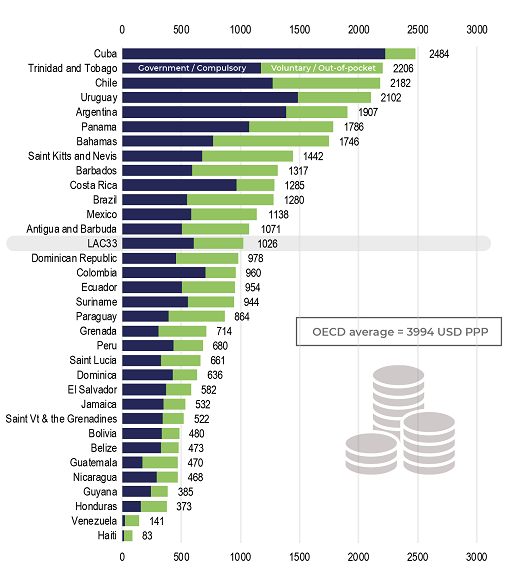
    Nevertheless, structural weaknesses in health care systems have played an important role. According to the UN Economic Commission for Latin America and the Caribbean (Eclac) in 2018 16 Latin American countries dedicated less than 4% of their GDP to health care. In a later joint report the World Bank and the OECD calculated that total health spending in Latin America and the Caribbean (LAC) was around US$1,000 per person in 2017, about a quarter of what was spent on average by the OECD countries. In addition, it found evidence of inefficiency in health spending in LAC.

    Total health spending across the LAC countries was 6.6% of GDP, compared to 8.8% in the OECD countries. Spending varied from a low of 1.1% of GDP in Venezuela to 11.7% in Cuba and 9.2% in Uruguay. Government health spending represented just over half the total, with the rest coming from private sector health systems and insurance schemes.

    Health Spending in Latin America & the Caribbean

    Total health spending per capita, public & private, USD PPP, 2017 or latest year.
    Source: WHO Global Health Expenditure Database 2020

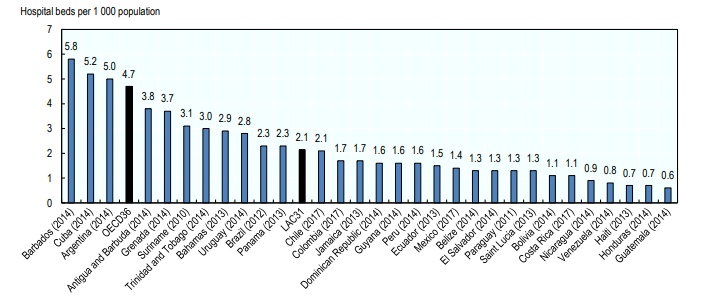
    By contrast, government health spending in the OECD countries represents three quarters of total spending. One consequence of this is that LAC health systems are highly reliant on “out of pocket spending” by households. Taken as a whole, the LAC has an average of two doctors per 1,000 inhabitants, compared to the OECD average of 3.5 per thousand. The average number of hospital beds in the region is 2.1 per thousand inhabitants, below half the OECD average of 4.7. Regional countries with the highest beds-to-population ratios include Barbados, Cuba, and Argentina; those with the lowest include Guatemala, Honduras, Haiti, Venezuela, and Nicaragua. The availability of intensive care unit (ICU) beds (which was later to prove critical for Covid-19 patients) was much lower. There was an average of only 9.1 ICU beds per 100,000 inhabitants in 13 LAC countries, compared to 12 per 100,000 in the OECD.

    The World Bank/OECD report also noted the quality of health care in LAC is often low. Twelve out of 33 LAC countries fail to meet World Health Organisation (WHO) immunisation levels recommended for diphtheria, tetanus, and pertussis (90% of the target population) and 21 of them fail to meet it for measles (95% of the target population). On various criteria the LAC population is particularly vulnerable to poor health. These risk factors include high obesity rates, smoking, and alcohol consumption, all of which, it was later shown, can increase vulnerability to Covid-19.

    Number of hospital beds in LAC countries and OECD average, latest year available
    Source: OECD Health Statistics 2019, World Bank World Development Indicators 2019

  • How the outbreak hit the region

    LatinNews 31 March 2021 Hits: 1669

    The first known case of Covid-19 infection in Latin America was detected in Sao Paulo in Brazil on 26 February last year. A year later around 21m Latin Americans had tested positive for the virus and some 700,000 had died from it. The virus spread throughout the region at bewildering speed. There were ebbs and flows, some of them superimposed on two major waves (the initial one peaking in the second quarter of the year, with the second rising in late 2020 and in some countries gaining pace into Q1 2021. Despite a range of lockdown and quarantine measures, intermittent travel bans, and ‘circuit breakers’ designed to slow down the rate of transmission, the virus, carried by international travellers and transmitted within communities, took hold in the region’s major cities and from there began to spread out into the countryside.  

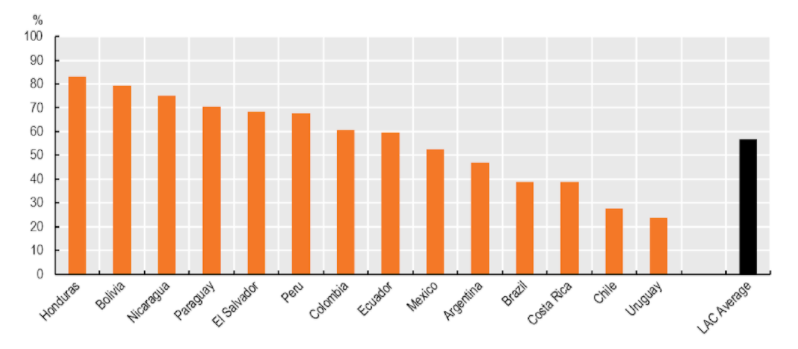
    A report by the OECD published in November last year assessed the region-wide response to the pandemic. It said that many governments reacted “swiftly and pre-emptively” to the spread of Covid-19, but that they struggled to contain it due to the prevalence of informal employment and the pre-existing limitations of health infrastructure and social protection systems. The countries covered by the report (Argentina, Brazil, Chile, Colombia, Costa Rica, Dominican Republic, Ecuador, El Salvador, Guatemala, Honduras, Mexico, Panama, Paraguay, Peru, and Uruguay) had on average 60% informal employment which made it in many cases “impossible to respect social distancing”. In May 2020, taking into account that nearly 40% of the world’s Covid-19 deaths were concentrated in the LAC area, the World Health Organisation (WHO) declared it to be one of the epicentres of the global pandemic. The OECD says that approximately 140m people in the region’s informal sector receive no state support, and therefore must “work to live”. This means they may be forced to ignore social distancing guidelines, purely as a matter of day-to-day survival.

    Percentage of informal employment in selected Latin American countries, 2018 or latest available year

    Source: OECD

    At the economic level, the report says Latin America was already experiencing slow or negative growth before the pandemic hit, and that governments also had limited fiscal space (available budget funds or borrowing capacity) to respond to a major shock such as the pandemic. Sectors such as travel and tourism were particularly hard hit, reducing household income and private consumption. Falling commodity prices led to a sharp downturn in regional markets and currencies. The IMF had initially predicted average economic growth of 1.6% of GDP in 2020, but it rapidly cut that down to an expected contraction of 8.1% (in the October 2020 edition of the World Economic Outlook). This represented the worst recession in the past century, a downturn that would exceed in severity the Covid-19 recessions induced in other parts of the world such as the Middle East, Africa, and Asia.

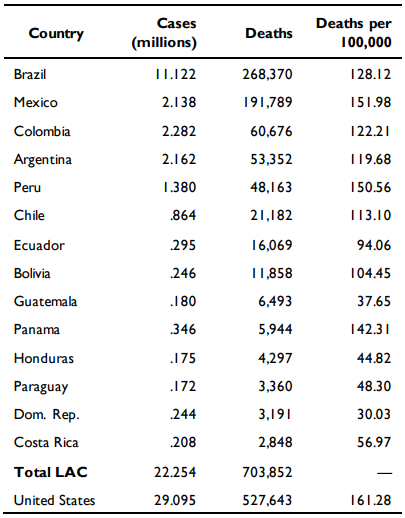
    COVID-19 Cases, Deaths, and Mortality Rates in Latin American/Caribbean (LAC) Countries (countries with more than 2,000 deaths, as of March 9, 2021)

    Source: Johns Hopkins University School of Medicine, Coronavirus Resource Center

  • Brazil: The ‘little flu’ takes over

    LatinNews 31 March 2021 Hits: 1604

    Brazil stands out as one of the world’s major epicentres of the Covid-19 pandemic, as well as a country where the political and policy response to the virus has been notoriously poor. By early March 2021 over 10m cases and over a quarter of a million deaths had been recorded as a result of the virus. Both numbers are almost certainly underestimates. Experts say the real number of infections could be two to three times higher. Brazil has the second largest number of reported deaths in the world after the United States.

    Right wing populist President Jair Bolsonaro consistently downplayed the danger from Covid-19, notoriously describing it in March 2020 as no more than “a little flu”. The president has repeatedly broken social distancing guidelines and failed to use or encourage others to use a face mask. Throughout much of 2020 he made a point of attending political rallies without a mask and embracing his supporters at close quarters. He consistently argued against lockdown and quarantine measures, which he said would be bad for the economy. This remained the case even after the president tested positive for the virus in July. No restrictions were placed on international travel. The only quarantine measures imposed in the country were as a result of interventions by state governors, often against the advice and urgings of the federal government.

    The government’s popular minister of health at the outset of the pandemic, orthopaedist Luis Henrique Mandetta, was forced to resign in April 2020 after he insisted on the need for social distancing. He was replaced by oncologist Nelson Teich, who lasted only 28 days in the job, and who resigned after refusing presidential pressure to recommend an unproven drug, chloroquine, for Covid treatment. He was replaced by an army general, Eduardo Pazzuelo, with no previous medical experience. Pazzuelo is currently under investigation by state prosecutors who accuse him of failing to fulfil his duties to save lives during the second wave of infections in Manaus, the capital of Amazonas state, where patients have died because of a lack of oxygen supplies in overcrowded hospitals. He too was replaced in March 2021, with Marcelo Queiroga becoming the fourth health minister appointed during the crisis. He took office amid a new surge of contagion and deaths.

    Brazil Cumulative Cases Cumulative Deaths Deaths per million
    15 March 2021 11.44mn 278,229 1,303

    In addition to the failure to promote consistent social distancing or quarantine measures, the government also brought a highly politicised approach to vaccination programmes, which began in early 2021. João Doria, the governor of São Paulo state, and a potential adversary to Bolsonaro in the 2022 presidential elections, signed an agreement to secure supplies of CoronaVac, an anti-Covid vaccine manufactured by Sinovac of China. The deal was severely criticised by the president who, despite himself being ambiguous on immunisation, chose to throw his support behind the AstraZeneca vaccine (Covishield) being acquired by Rio de Janeiro state as part of what appeared to be a fundamentally electoral calculation.

    Medical experts have been extremely critical of Brazilian government policies. Alexandre Naime, head of infectious disease at São Paulo university (Unesp) said the government had chosen a “populist model” promoting medicines “not recognised as effective” by the international community. He also accused the administration of using an “anti-vaccination discourse”, noting that the president had said he would not himself take the vaccine and warned of the impact of unspecified side effects.

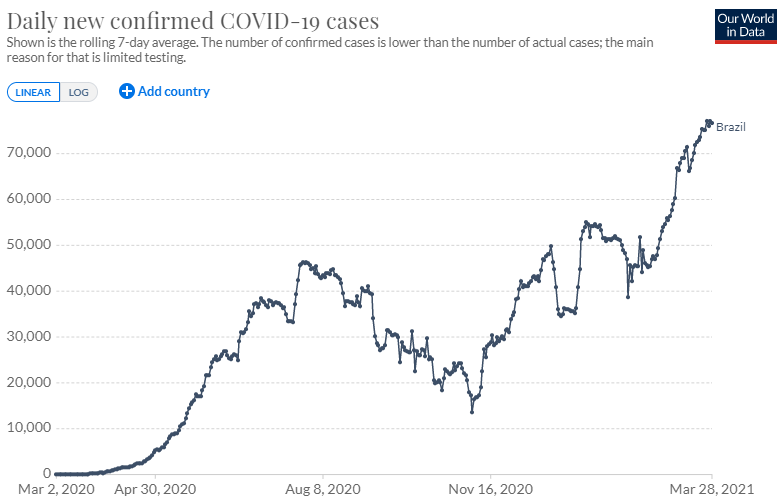
    As a result of the failure to take properly coordinated prevention or containment measures, the spread of the virus has been rapid, with the country experiencing two big infection waves, the first peaking in July-August 2020 and the second developing from November 2020 onwards and rising into the early months of 2021. By March 2021 the public health system was again nearing collapse with ICU occupancy rates close to 100%. Of particular concern was the emergence and spread of new coronavirus variants, including a strain known as P1. Health officials said that, according to their initial findings, the P1 strain was three times more contagious than earlier types of the virus.

    One positive aspect of Brazil’s approach to the pandemic, however, was the adoption of a generous programme of emergency payments to the poor. The so-called ‘Coronavirus voucher’ programme involved monthly payments to poor households and informal workers initially set at BRL600 (US$110). The programme was in place for nine months in 2020. The payments were tapered down and ceased at the end of the year. However, in early 2021 the government was seeking to restart a version of the programme expected to pay the equivalent of around US$45 a month. At its peak, the payments reached 60bn poor Brazilians (out of a total population of 212m). They totalled around US$56.5bn or 4.5% of GDP.

    Brazilian GDP contracted by 4.1% in 2020, the worst performance in decades, but significantly lower than the contractions experienced in Mexico (8.2%) and Argentina (10%). President Bolsonaro said: “People expected us to fall 10%. What made the economy move, in part, was the emergency aid.”

  • Mexico re-opens too soon

    LatinNews 31 March 2021 Hits: 1756

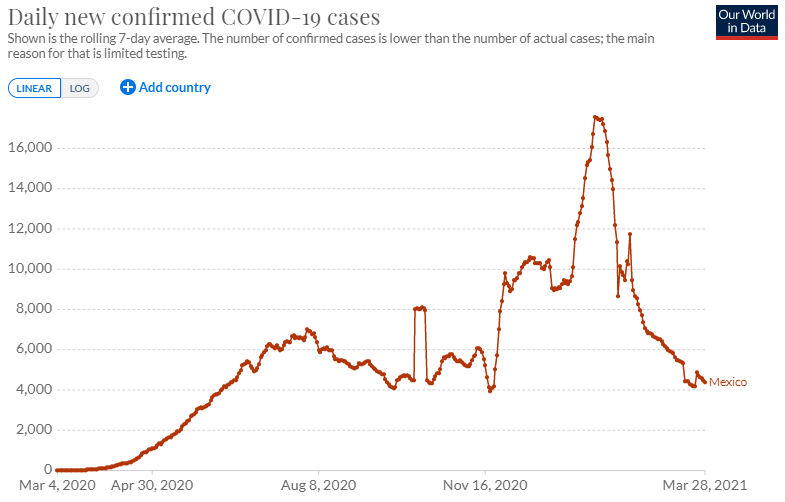
    The first known Covid-19 case was detected in Mexico on 28 February 2020: the carrier was a locally based Italian citizen who had recently returned from a European trip. As in other Latin American countries the virus spread very rapidly in the first months of the outbreak. Just over a year later the country had reported over 2m cumulative cases and 190,000 fatalities. This death rate was the third largest in the world, behind the United States and Brazil.

    The immediate response from President Andrés Manuel López Obrador (Amlo), a left-wing populist, was very similar to that of President Bolsonaro in Brazil, a right-wing populist. Ideology aside, Amlo’s first instincts, just like Bolsonaro’s, were to minimise the impact of the virus, passing it off as no more than a type of flu, and to refuse to set an example by changing his own behaviour, for example by observing social distancing or by wearing a mask. At one of his early press conferences on the pandemic, the Mexican president proclaimed: “There are those who say that because of the coronavirus you should not hug. But you must hug, nothing will happen.”

    In fact, in the initial months the president continued to travel around the country using economy class on domestic flights (part of his trademark routine of presenting himself as an austere ‘man of the people’). He also shook hands and embraced supporters at rallies. Like Bolsonaro, although albeit it at a later date (January 2021), Amlo himself contracted the virus, having to self-isolate for a period. So too did a number of ministers, but this did not change his thinking. Like his Brazilian counterpart, or indeed like President Donald Trump in the US (2017-2021), Amlo railed against the economic costs of shutdowns and quarantine measures, most of which were left to the state authorities to administer. Between March and May 2020, a national ‘safe distance’ policy urged citizens to avoid close contacts, as well as closing down schools and nonessential activities. A fully national lockdown was, however, never enforced.

    The pandemic’s first wave peaked around June 2020, triggering a rapid removal of restrictions and an opening up of the economy known as the ‘new normal’. The government introduced a ‘traffic light’ system allowing different levels of restriction on a state-by-state basis. With the benefit of hindsight, however, it is clear that the relaxation was too early and went too far. The R rate (reproduction rate) rose in various cities across the country throughout the second half of the year and into the first quarter of 2021, although it later eased back by February/March. In December, Mexico City re-imposed tighter restrictions, which began to be relaxed again in February. 

    Mexico consistently underestimated the severity of the crisis. In April 2020, as the first wave of quarantine measures came into effect, the deputy health minister said the maximum death toll from the disease was likely to be about 8,000, around 23 times lower than the toll of fatalities that was reached after the first year. Mexico entered the pandemic already in economic recession, and the damage to activity levels was extreme. Unlike Brazil, Mexico implemented only very limited levels of fiscal stimulus, offered modest emergency help for the poor, and did not provide financial help for companies to run furlough schemes or other employment-protecting measures. Partly as result, the economy contracted by 8.2% in 2020, roughly double the downturn experienced in Brazil, as well as double the contraction in the United States, Mexico’s main economic partner and strategic neighbour.

    A vaccination campaign was launched in December 2020 but got off to a slow start given some delays in vaccine supply. Mexico signed a range of agreements for the Sputnik V, AstraZeneca, Pfizer, and CanSino vaccines. However, delays in delivering the Russian-made Sputnik V doses meant that immunisation of health workers, one of the first priority groups, had to be paused, and immunisations for those aged 60-plus did not start until February. Mexico has been acquiring vaccines directly but also through the WHO-supported Covax programme. In a speech to the UN, Amlo criticised rich countries for putting themselves at the top of the queue for vaccines, while not doing enough to support immunisation for poorer countries.  

    Mexico Cumulative Cases Cumulative Deaths Deaths per million
    15 March 2021 2.16mn 194,710 1,508

  • Argentina’s vaccine jumpers

    LatinNews 31 March 2021 Hits: 1647

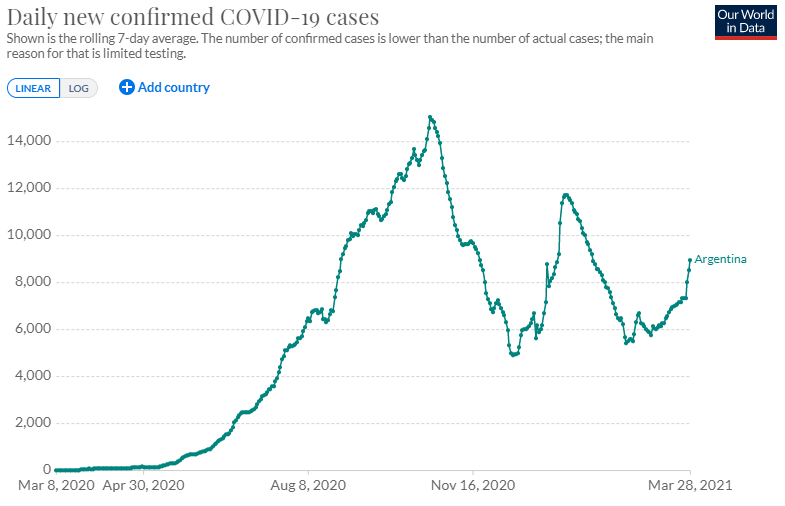
    One year on, Argentina can be classified among the countries that were harder hit by the virus, reporting over 2m confirmed cases and 50,000 deaths. In terms of deaths per 100,000 inhabitants (as measured in mid-March 2021) Argentina, with 120, showed slightly lower mortality than either Brazil (128) or Mexico (152).

    The first cases in the country were detected at the beginning of March 2020. Unlike either Brazil or Mexico, the centre-left government of President Alberto Fernández did not minimise the seriousness of the pandemic and was quick to take scientific advice. The administration responded by introducing a stringent nationwide lockdown, described as a regime of “social, preventive, and obligatory isolation” effective from 20 March. This initial phase lasted until late April, when it was replaced by a policy of “geographic segmentation” with restrictions tailored to the severity of the outbreaks in different parts of the country. Restrictions in the Greater Buenos Aires area were comparatively severe since in the early stages it accounted for 90% of positive cases detected. The threat of an early collapse in the public health system was avoided, with the government successfully acquiring 4,000 new intensive care unit (ICU) beds and 3,300 respirators and building 12 emergency field hospitals.

    Argentina Cumulative Cases Cumulative Deaths Deaths per million
    15 March 2021 2.19mn 53,670 1,186

    The peak of the first wave of infection was reached in October 2020, but a second wave made itself felt in January 2021 and in the immediately subsequent months. According to immunologist Jorge Geffner from the University of Buenos Aires (UBA) the second or ‘rebound’ wave reflected a general relaxation of health protocols. A significant part of the population did not use face masks and ignored social distancing protocols. The period between the two peaks was also marked by frequent pro- and anti-government street demonstrations, as well tightly packed crowds to mourn the death of football super-star Diego Maradona.

    Already before the arrival of the pandemic Argentina had been struggling with an economic and foreign debt crisis. The virus therefore intensified an already bad situation. Economic activity dropped by a record 10% in 2020, with inflation remaining high at 36.1% and the proportion of the population living in poverty rising to 40.9%.

    New hopes were raised with the launch of a coronavirus vaccination programme in late December, with an initial target of covering 25% of the population during the southern hemisphere summer (December-March). However, the programme suffered initial setbacks with delays in deliveries of the Russian-made Sputnik V vaccine, and a corruption scandal. It was found that a number of friends and supporters of the government had jumped to the front of the queue for vaccine deliveries. The media called it the ‘VIP Vaccines’ scandal. President Fernández was forced to demand the resignation of health minister Ginés González García, who was replaced by his deputy, Carla Vizotti.   

  • Colombia counts the cost of lockdown

    LatinNews 31 March 2021 Hits: 1620

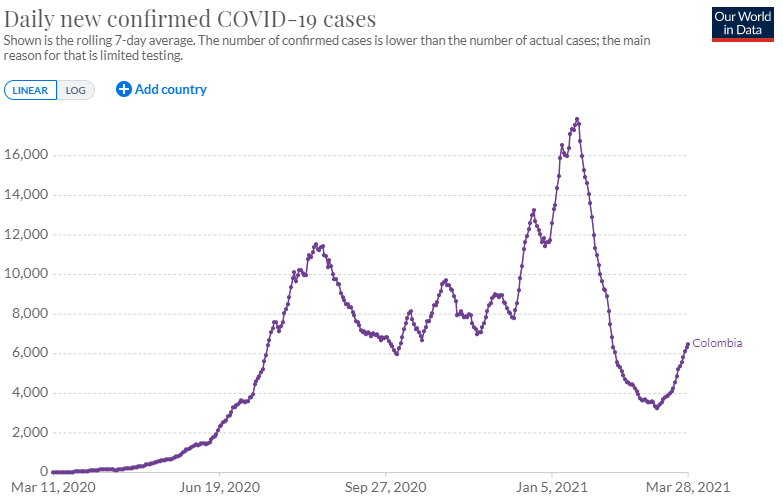
    Colombia’s first known Covid-19 case was detected on 6 March 2020; the virus spread rapidly from that point onwards. A year later, by mid-March 2021, over 2.26m coronavirus cases had been confirmed, with over 60,000 deaths reported, placing the country 12th in the world by total number of deaths. “Sixty-thousand deaths is obviously a very big, a serious number” says Víctor Muñóz, head of the department of the presidency in the right-wing government of President Iván Duque. However, Muñoz highlights what he says are the government’s achievements in dealing with the pandemic. He notes that the country was able to double the number of ICU beds from 5,700 to over 12,000. It also boosted its capacity to conduct PCR (polymerase chain reaction) tests, transitioning from having only one PCR-enabled laboratory at the start of the outbreak, to 165 one year later. PCR testing is considered a key a tool in testing and tracking the virus.

    A strict national lockdown regime was introduced in late March 2020, and continued for nearly six months, running up to 1 September, at a high economic cost. According to the Bogotá Chamber of Commerce, around 53,000 businesses in the capital city were forced to close down. A separate study in October suggested that 10% of the country’s small businesses had closed, while six out of ten of them said they lacked working capital to maintain normal operation. Unemployment peaked at 21% in April, but as quarantine restrictions began to be lifted it fell back to 13.4% in December 2020.

    Overall, the government calculates it paid out subsidies and emergency help programmes totalling US$4.16bn. These included programmes for poor households and the elderly. Hardship was nevertheless widespread; before the outbreak began 37.5% of the population, just over one in three households, was living below the poverty line. Shaken by the lockdowns, Colombia’s normally resilient economy contracted by 6.8% in 2020. However, the government is focusing on achieving a 5% recovery in 2021 through over 500 infrastructure, energy, housing, road building, and digital-access investment projects.

    In the first quarter of 2021, having experienced two big waves of contagion with peaks in August and January, the Bogotá government was focused on launching a national vaccination programme, aiming to reach 35.2m people, or 70% of the total population. As in other countries there was a rather slow start with delays in vaccine delivery, as the government initially prioritised health workers and adults over the age of 80.

    Colombia Cumulative Cases Cumulative Deaths Deaths per million
    15 March 2021 2.3mn 61,143 1,199

  • Peru’s perfect storm

    LatinNews 31 March 2021 Hits: 1677

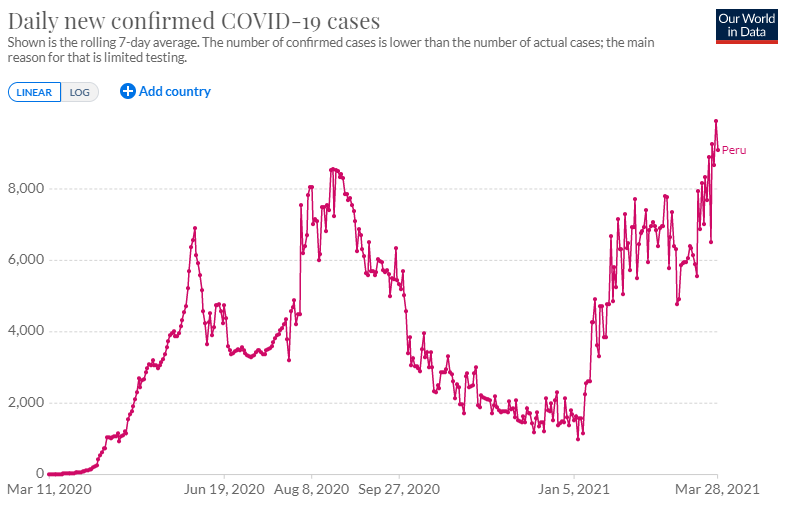
    Some analysts believe the first year of Covid-19 in Peru has also brought with it the most intense ‘perfect storm’ of problems experienced by the country in at least the last two decades. By the time the pandemic hit in March 2020 the country had already been dealing for several years with a long-running political, constitutional, and corruption crisis. In January new congressional elections had been held, raising hopes that a deadlock between the executive and legislative branches of government could be resolved. President Martin Vizcarra won early praise for the speed and decisiveness he showed after the first case was detected on 15 March, moving rapidly to impose a draconian quarantine regime. Although initially intended to last two weeks, this lockdown was repeatedly extended and ended up lasting three and a half months. To the government’s consternation, however, the lockdown triggered a dramatic economic collapse while failing to deliver the desired flattening of the curve of new Covid-19 cases and deaths.

    Almost half the economy ground to a halt (second quarter GDP fell by nearly 40%). For the year as a whole GDP slumped by 11.1%, the worst recession in three decades. Government attempts to offset these falls with counter-cyclical stimulus measures were significant (amounting to US$18.25bn worth of emergency payments and aid to companies) but ultimately ineffectual. The evidence suggests that this stimulus helped hold poverty in check but did not prevent the loss of 6m formal jobs at the peak of the first wave. It was also evident that the high level of informality in the labour market meant that many people were forced to keep on working to survive, and to do so in crowded street markets and shanty towns where living conditions meant quarantine and social distancing rules were regularly ignored.

    Peru experienced a major breakdown in its public health system. The country has one of the lowest numbers of ICU beds relative to population, and state-owned hospitals were soon swamped with many victims of the virus opting to stay at home, with their relatives desperately seeking to acquire oxygen for respirator machines. Demand for oxygen tripled, and the black-market price for oxygen cannisters soared.

    As the first wave began to recede the political crisis gathered pace. In one week in November the country had no less than three presidents. In that week Vizcarra was impeached, but the appointment of Manuel Merino, from a conservative opposition party, as an interim successor, triggered violent nationwide protests and forced congress to select Francisco Sagasti instead, who formed a transitional administration to cover the period running up to new elections in April 2021. Sagasti took office just as a second wave of infection began to gather pace, once more overrunning hospital capacity. The beginning of a vaccination campaign did not ease the political pressure on the new president, who was hit by the so-called ‘Vacunagate’ scandal, the revelation that around 100 government officials were secretly vaccinated ahead of the launch of the public immunisation programme (the beneficiaries included former President Vizcarra, former ministers, and members of their families).

    Peru Cumulative Cases Cumulative Deaths Deaths per million
    15 March 2021 1.4mn 48,841 1,475

  • Chile bets on mass vaccination

    LatinNews 31 March 2021 Hits: 1636

    One of the features of the global pandemic has been that government responses have been erratic, confounding predictions, with both unexpected successes and unexpected failures in the different phases of the crisis. Chile is a case in point, struggling to cope in the lockdown phase but suddenly becoming much more effective during immunisation phase. Although Chile scores well in terms of per capita income levels, and has an above-average health system and low labour informality, the country nevertheless entered the first phase of the pandemic in a weakened state. In October 2019, six months before the start of the pandemic, intense street protests and riots had spread across the country supporting demands for major social and political reforms. Protests continued intermittently after the start of the pandemic.

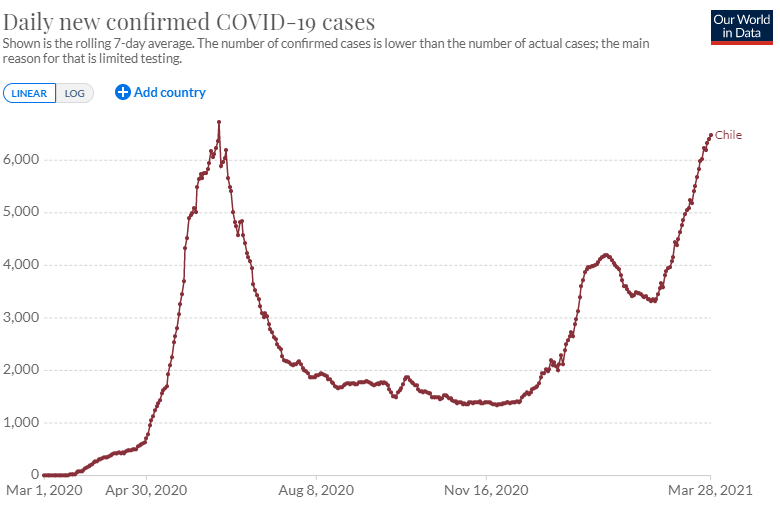
    The right-wing government of Sebastián Piñera was slow to respond to the first positive cases of Covid-19 in March. It was not until mid-May that it declared a quarantine in the capital, Santiago, where 7m of the country’s 19m inhabitants live. The public health system came under pressure but continued operating even during the first peak in June and July 2020 when daily new coronavirus cases rose above 7,000. In June the health minister had resigned amid claims the government was under-reporting the true extent of the pandemic. Enrique París, the new minister, admitted “we’ve made mistakes, among them by saying that the pandemic wasn’t going to be that strong”. In early 2021 París acknowledged Chile was undergoing a second, although smaller wave, aided by a relaxation of health protocols and increased mobility triggered by the southern hemisphere summer holidays.

    What does appear to be changing the picture in Chile is the initial success of its vaccination plan, launched in early February 2021. In little over a month mass vaccination took the proportion of the population that had received a jab from near-zero to 18%. This catapulted Chile into fourth place in the global immunisation ranking, behind Israel, the United Arab Emirates (UAE), and the UK. By 17 March Chile had immunised 40.7% of its population, overtaking the UK (39.8%) and leading across all of Latin America. The mayor of La Florida, a neighbourhood of Santiago, said the authorities had deliberately set out to emulate the Israeli approach, converting football stadiums and other accessible locations into mass vaccination centres. Chile also pursued a pragmatic, non-ideological approach to buying vaccines, which were acquired from a number of laboratories including China’s Sinovac. The government aims to have vaccinated 15m people by June, and health minister París says he hopes the population will have acquired a degree of herd immunity by mid-year, an achievement which should flatten the curve of infection.

    Chile Cumulative Cases Cumulative Deaths Deaths per million
    15 March 2021 0.88mn 21,674 1,128

  • Uruguay tests the limits of ‘responsible freedom’

    LatinNews 31 March 2021 Hits: 1615

    Uruguay stands out as one of the countries in the region where the virus arrived late and had a comparatively smaller impact. This has been attributed to a number of factors including the government’s quick action to close frontiers and set up tracking, tracing, and isolation procedures. Uruguay may also have benefited because only a small proportion of the labour force is informal, and because it has a comparatively small and geographically spread-out population (the population is 3.5m and average population density is under 20 per square km).

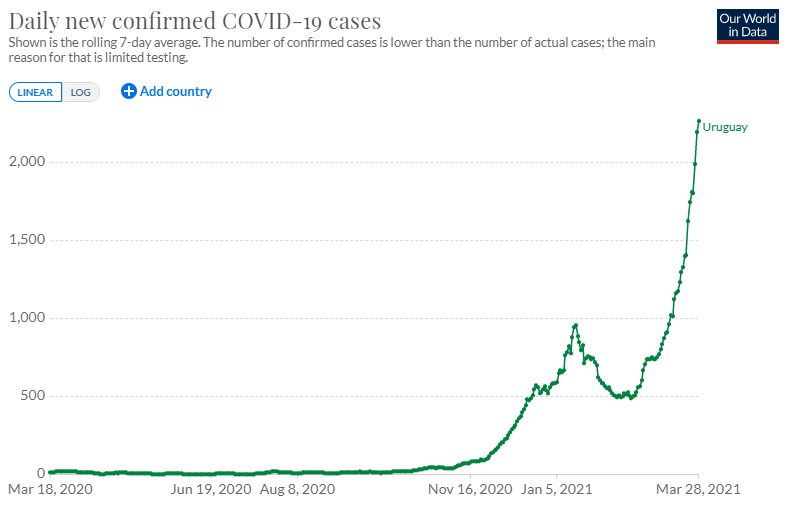
    According to the economy minister, Azucena Arbeleche, GDP contracted by around 4.5% in 2020 (a final figure was expected before the end of March). Under centre-right President Luis Lacalle Pou, who took office on 1 March 2020, just as the pandemic began, a policy called ‘responsible freedom’ was introduced using tight border controls along with tracking and tracing protocols. It relied on the population to follow voluntary social isolation rules. Aided by a good public health system, the infection and mortality rates have been very low (respectively, 64,000 and 658 as of 10 March). However, the number of cases rose sharply in January and March 2021, suggesting that further measures could be required, potentially delaying economic recovery. The government has begun a vaccination programme and has secured contracts for 3.8m doses from US company Pfizer and from China’s Sinovac, with a further 1.5m due from UK-based AstraZeneca through the Covax platform.

    How the virus plays out will be very important for the economy this year. Health minister Daniel Salinas hopes that by southern hemisphere spring (September) a combination of immunisation and herd immunity will have allowed a degree of normality. Controlling the pandemic would also allow the government to promote Uruguay internationally as a safe tourist destination, just ahead of the summer holiday season (starting in December).

    Uruguay Cumulative Cases Cumulative Deaths Deaths per million
    15 March 2021 0.07mn 712 200

  • Looking back: Some lessons from the pandemic

    LatinNews 31 March 2021 Hits: 1607

    A review of the first year of the pandemic in LAC suggests various conclusions.

    Governments lacked the right tools. The first general point is that governments were unprepared and, in the early stages of the outbreak, had few effective tools with which to fight the pandemic. This problem was of course not exclusive to LAC but was shared around the world. With the benefit of hindsight, it is clear that tools were developed on the hoof and eventually grew to include a significant range of policies and medical know-how, including testing and tracing, closing borders, promoting medical protocols (washing hands, using face masks, keeping social distancing), enforcing various types of quarantine, lockdown and curfew measures, and, eventually, developing vaccines in record time and launching mass vaccination programmes. However, most LAC governments were unable to combine all of these elements in a joined-up, coordinated, and effective manner. Most notably they relied heavily on what could be called blunt instruments - quarantine and lockdown measures - which had a major negative effect on economic activity, but which were frustratingly inefficient as far as flattening the curve of contagion was concerned.

    Structural factors played a major part. One reason why the available tools were less effective was due to deeply rooted structural factors in Latin American society. One of the most important of these is the prevalence of informal employment, poverty, and high-density living conditions in urban shanty towns. Informal employment rates of around 60% in many countries mean that the majority of the labour force pays no taxes and receives no social protection (such as health and pension provision). This significant section of the population cannot therefore afford to shelter at home. For lack of alternatives, many people are forced to break lockdown rules, continuing to work as street sellers, domestic servants, taxi drivers, and many other high-contact, high-mobility roles that increase virus transmission.

    The politics was unhelpful. Right and left-wing wing populism in the two largest countries in the region (respectively Brazil and Mexico) as well as elsewhere, had a range of negative effects. In remarkable similarity to Donald Trump’s outgoing administration in the US, presidents Jair Bolsonaro and Andrés Manuel López Obrador consistently minimised the severity of the pandemic, played down or ignored scientific advice, and sought to blame others for shortcomings in the response to the crisis. All three presidents opposed lockdowns and shifted political responsibility for management of unpopular restrictions to state and municipal authorities. Vaccine policy in Brazil was politicised, with the president criticising vaccines from Chinese laboratories in an attempt to score points against the governor of São Paulo state, a potential rival in the 2022 presidential race. Significantly, and in sharp contrast, Chile’s right-wing government adopted a very different approach, pursuing a non-political and pragmatic vaccine procurement policy. Many governments, whether populist or not, focused excessively on short term political priorities – such as how to win the next elections – at the expense of longer-term thinking. Many governments were reluctant to take scientific advice.  

    The pandemic vindicated inclusive public health policies. The LAC region has a wide range of public health systems, including private or public-sector dominated models, and a variety of employer subsidised health plans. The evidence from the pandemic is that countries with more inclusive health coverage systems and a record of significant investment in the sector – as measured by per capita health spending, health spending as a proportion of GDP, availability of hospital beds and physicians among other metrics - all tended to better manage the pandemic. Countries where significant sectors of the population have no real health coverage performed poorly. A longer-term lesson is therefore that inclusive health care can benefit not only the poor but also society as a whole, including the middle classes and the rich who benefit from a reduction in their own contagion risks.  

    The crisis created new interest in emergency cash transfer programmes. Where there were sharp falls in economic activity, governments experimented by introducing a range of emergency payments and cash transfer schemes intended to help poor households, informal workers, and other vulnerable groups. On the whole these programmes were successful. In Brazil, the so-called ‘coronavirus voucher’, which at its height paid out around US$112 per month to poor families, reduced poverty and reached an estimated 67m people (32% of the population), softening the economic impact of the pandemic. Ironically it can be argued that through this mechanism the right-wing government of Brazil ended up doing more than the left-wing government of Mexico to help the poor. Throughout the region, however, differing versions of these emergency payments stimulated interest in their future potential. In Colombia, for example, there was interest in the concept of a universal basic income scheme. Early on in the pandemic Eclac called on governments to consider paying a basic emergency income (BEI) worth ‘one poverty line’ or the cost of basic necessities in each country.

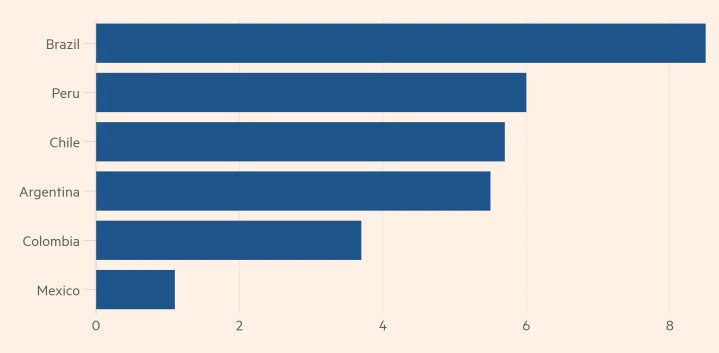
    Deficits and debt went up everywhere. Also of interest is the fact that different governments sought to inject vastly different levels of counter-cyclical fiscal stimulus into their economies in an attempt to offset falls in activity caused by Covid-19. To some extent this was to be expected, given that the different countries in the region entered the pandemic with different degrees of fiscal vulnerability. But the stimulus adopted did not correlate to pre-existing fiscal strengths or weaknesses, or necessarily with the left-right policy divide. Fiscal stimulus measures were highest in countries like Brazil and Peru, in the region of 6%-8% of GDP, and lowest in Mexico and Colombia (1%-4% of GDP). Overall, it is clear that this extra spending raised public debt to high and unsustainable levels in relation to GDP.


    Mexico spends least among major Latin American economies on pandemic stimulus efforts

    Fiscal stimulus as % of GDP

    Source: UN Economic Commission for Latin America and the Caribbean

  • Looking forward: What will happen next?

    LatinNews 31 March 2021 Hits: 1690

    It’s not over yet. Some early thoughts about the post-pandemic world are also worth considering, the first of which is that it’s not over yet. The rapid deployment of Covid-19 vaccines has led in some countries to promising signs that contagion and mortality rates are at last reducing. But, not for the first time, there is a danger that countries can become over-confident and complacent. While mass immunisation does appear to offer a solution, there are still many unknowns, including the emergence of new and more aggressive strains of the virus. Immunisation will take longer and be less affordable for poorer countries. For many, recovery will not come in 2021, with the pandemic stretching into 2022 and even 2023.

    Poor disaster planning. Among the lessons learned is the revelation that there are gaps and weaknesses in Latin America’s disaster planning systems. In fact, the tendency has been to consider disasters as fundamentally exceptional events. However, at both national and regional level, climate change, natural disasters, and medical pandemics are becoming more frequent. While hopefully events like the Covid-19 pandemic will remain once-in-a lifetime ‘black swans’, lower impact events happen every year and require more effective coordination between governments, policy makers, and scientific experts.

    ‘Building back better’. Improving the region’s shaky finances and heading off a new foreign debt crisis will require multi-year efforts by a variety of key players without, at this stage, any guarantee of success. It is clear that LAC governments need a medium-term plan to increase their fiscal resources and to restore depleted financial reserves. This will be needed in part to ‘build back better’, particularly in infrastructure, but also to strengthen resilience to future external shocks. Health spending-to-GDP ratios need to be increased with significant new investment going into public health. International financial institutions and wealthier countries will also need to consider financial assistance and debt reduction or write-off schemes to help the poorest and most heavily indebted countries in LAC avoid defaulting. 

    Unhelpful politics. Politicians in a number of LAC countries have fallen short of voter expectations, and even in optimistic scenarios for the future this will continue to be a problem. The current wave of populist leaders largely failed to take scientific advice, failed to understand the severity of the pandemic, and continued to seek short-term political advantage, blaming others for any setbacks.

    The optimistic scenario. The optimistic scenario for LAC in the next few years is that mass immunisation will force the pandemic to recede, while a strong economy in China, coupled with an exceptional recovery in the US and a slower revival in Europe, will lead to a new period of global growth. Already the prices of key regional export commodities (copper, soya, petroleum) are picking up, and the idea of a new ‘roaring twenties’ may not be too far-fetched. If that happens the region will have a unique opportunity to recover and invest in more inclusive and sustainable growth. The danger is that, as in the previous commodity boom, politicians will focus instead on short-term consumer booms and prestige projects. How the region manages post-pandemic recovery will be one of the key issues of the decade.