Gustavo Petro and the pursuit of ‘total peace’ for Colombia

Items

  • Introduction

    Patrick de Courcy 24 August 2022 Hits: 1814

    Gustavo Petro, a left-wing politician and former guerrilla, was sworn in as the country's new president on 7 August. His four-year presidential term - the first time the country will have been ruled by a left-winger in a generation - is awakening intense expectations, hopes, and fears. While the incoming president has a wide policy agenda including tax reform, redistribution of income, and a green transition agenda (designed to reduce the country's reliance on fossil fuels) the main focus of this report is on peace. The blunt question is this: can Petro negotiate a settlement with the country's assorted armed rebels, ranging from Marxist guerrillas through to right-wing paramilitaries, that have condemned the country to seemingly never-ending cycles of violence for more than half a century?

  • A brief history of Colombian violence

    Patrick de Courcy 24 August 2022 Hits: 1252

    All Latin American countries have suffered some kind of violence in the 122 years spanning across both the twentieth, and the early-twenty first centuries, including violence associated with revolutions, civil wars, guerrilla campaigns, and repressive dictatorships. However, Colombia stands out from the crowd because it seems to have experienced more of these things, more intensely, and more closely bunched together over time, than many of its neighbours.

    One starting point might be la violencia, the decade of civil war that followed the assassination of Liberal Party presidential candidate Jose Eliécer Gaitán in 1948. The killing of Gaitán, a popular reformist politician, led to a violent social explosion known as the bogotazo, and to a civil war between Liberals and Conservatives. Much of the war involved rival armed politicians seizing prime farming land from each other. The violence was pervasive - historians estimate that up to 2% of the population lost their lives, killed in action during that decade.

    While the war came to an end under a power-sharing agreement in 1958, many of its participants kept on fighting along the same fault-lines and refused to demobilise. One of the most famous - or notorious - was alias Tirofijo (aka Manuel Marulanda Vélez), who had been a Liberal Party military leader, then converted to Marxism-Leninism, and then became a founding member of the Fuerzas Armadas Revolucionarias de Colombia (Farc) in 1964. Inspired by the Cuban revolution other guerrilla groups also emerged, such as the Ejército de Liberación Nacional (ELN created in 1965), the Ejército Popular de Liberación (EPL, 1967), and the Movimiento 19 de Abril (M-19, 1974). The M-19 eventually signed a peace agreement in the 1980s, laying down its arms and becoming a political party. The EPL demobilised in the 1990s but has subsequently re-appeared as a small fighting force.

    A range of criminal organisations, linked to drug trafficking and right-wing paramilitaries also emerged, particularly in the 1970s and 1980s. The Medellín and Cali cartels grew in power and formed shifting alliances with politicians and the leftist guerrillas, who themselves began growing and selling illicit drugs to fund their operations, giving rise to the term 'narco guerrillas'. The most prominent cartel leader was Pablo Escobar, head of the Medellin cartel who was shot dead in an army operation in December 1993. Paramilitaries involved in the Autodefensas Unidas de Colombia (AUC) targeted the Farc and the ELN. Many later demobilised in 2005 under agreements reached with the right-wing government of President Álvaro Uribe (2002-2010).

    During Uribe's time in office the Colombian army and security services, with significant support from the United States, under the ‘Plan Colombia” programme, made major gains in their counter-insurgency operations against the Farc, presiding over a significant reduction in violence across the country, and over a falling homicide rate. Uribe's successor, Juan Manuel Santos (2010-2018), saw an opportunity to negotiate from a position of strength and began peace talks with the Farc, and later with the ELN. Negotiations with the Farc took almost four years and led to a comprehensive settlement in November 2016.

    Uribe and Santos, who had been close political allies, fell out bitterly over the question of peace. Uribe, still influential after the end of his term in office, felt that too many concessions were being made to the Farc guerrilla leaders and radically opposed the agreement. He campaigned successfully for a popular referendum, which rejected the terms of the agreement; the Santos government eventually secured congressional approval for a revised agreement, which met some, but not all of Uribe's objections. Santos's successor in the presidency, Iván Duque (2018-2022), a close ally of Uribe, was unenthusiastic, seeking further modifications and dragging his feet on implementing the Farc agreement. He refused to resume talks with the ELN.

    As a result of this political impasse, the Farc agreement had a difficult beginning. Supporters say it broke new ground with an innovative approach including the creation of a Truth Commission and a Transitional Justice system (Jurisdicción Especial para las Paz - JEP). Guerrilla and army leaders who accepted their responsibility for war crimes and expressed contrition were allowed to escape without prison time (this did not, however, apply to genocide or other crimes against humanity). Provisions were made for the roughly 10,000 Farc members to demobilise and rejoin civilian life.

    However, the agreement had many weaknesses. Some 2,000 Farc members refused to lay down their arms and opted to continue fighting (although various rival groups have emerged, they are known generically as ‘Farc dissidents’). On the other hand, many former Farc members who opted for peace were exposed to murderous attacks by paramilitary groups. The government failed to honour its commitments in the agreement to bring essential services to the former conflict zones or to support land reform and crop substitution to reduce dependence on drug production. Perhaps most damaging, the security services failed to occupy the former Farc-controlled zones, allowing rival groups such as the ELN or the Gulf Clan (also known as Autodefensas Gaitanistas de Colombia - AGC) easily to move in and fill the vacuum. The net result is that six years on after the Farc agreement, levels of violence and territorial control are not much reduced on where they were in 2016.

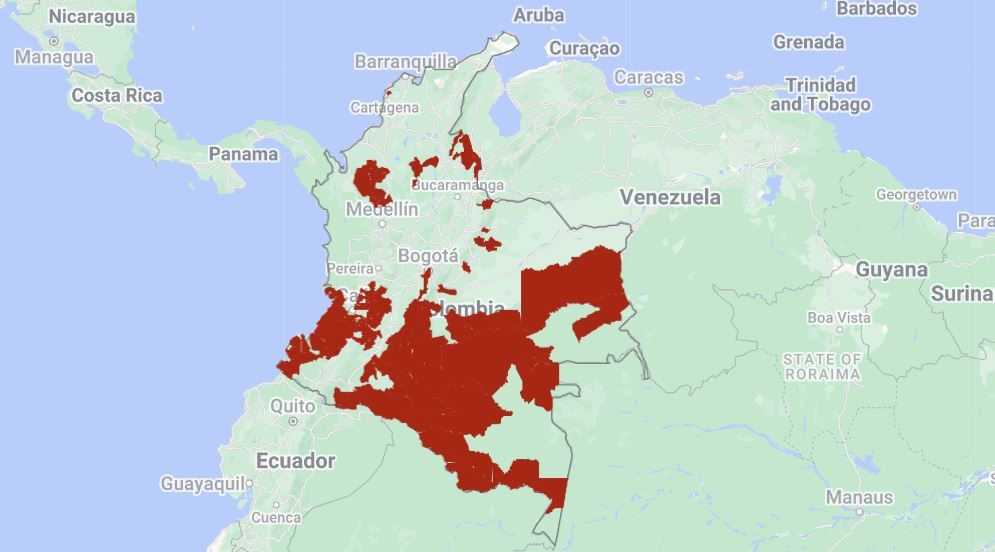
    Farc activity, 2020
    The Farc dissidents refused to accept the 2016 peace agreement and continued military operations. They are fragmented into rival groups, some of which have bases in Venezuela. They are thought to have some 2,000 fighters but this could be an overestimate.

    Source: Indepaz

    A report by the United Nations Human Rights Office in Colombia, published in July 2022 said homicides in rural areas decreased after the 2016 agreement with the Farc, but began increasing against in the last two years. It said that last year, 2021, 100 human rights defenders were murdered across the country, compared to the lower figure of 61 in 2016. The forced displacement of civilian communities because of fighting between rival armed groups has also increased. According to Juliette de Ribero, the representative of the UN High Commissioner for Human Rights, some rebel groups in southwestern Colombia are so well established that they are issuing ID cards to control civilian movements in their areas. The UN says the government needs to boost the land reform programme that forms part of the 2016 agreement, as well as developing programmes designed to encourage local farmers to stop growing coca and to opt instead for legal crops.

    Other metrics also suggest that the gains made in 2016 have begun to slip away. In the year of the peace agreement, the Farc (at that point the most powerful rebel group in the country), along with all other guerrilla and paramilitary groups, was assessed as being present in around 300 of Colombia’s 1,122 municipalities. But by 2022, six years later, and taking into account the breakdown of other peace negotiations involving the ELN and the AGC, the government’s Ombudsman for Human Rights assessed that 290 municipalities were experiencing “extreme risk of abuse by armed groups disputing territorial control”. Monitoring bodies such as the United States Institute for Peace (USIP) calculated that, as the Farc withdrew from conflict zones, the AGC and the ELN more than doubled their territorial presence to 241 and 183 municipalities respectively.  In short, progress towards real peace has been deeply disappointing.

  • Truth Commission takes a critical view

    Patrick de Courcy 24 August 2022 Hits: 1212

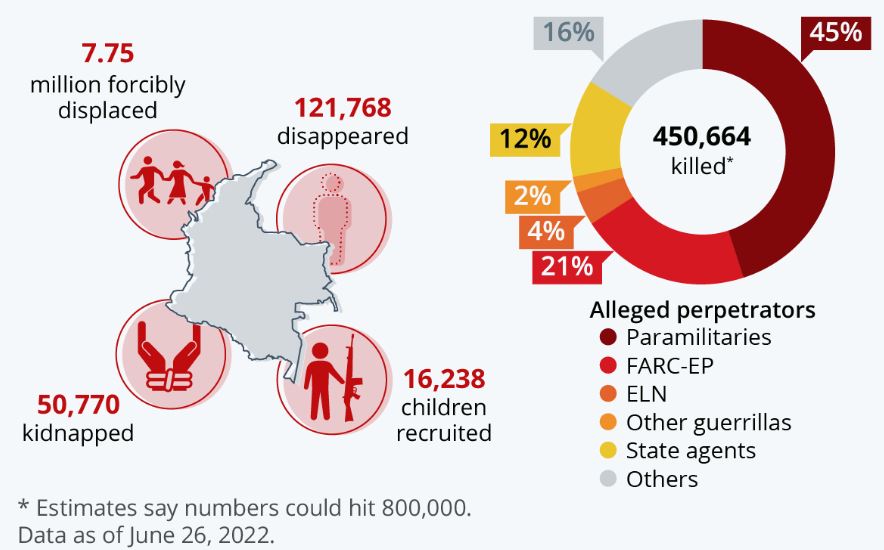
    Colombia's Truth Commission, an independent body set up under the terms of the 2016 Farc agreement, presented some of its findings on 21 July 2022, covering the period between 1958 and 2016. In an 896-page report one of the notable points was the assessment of people killed in that period, which at 450,000 was almost double previous estimates. The report was highly critical of the security 'model' followed by the Colombian military during that long period, which it said treated much of the population as “internal enemies”. The US-backed ‘war on drugs’ was also severely criticised for disastrous social and environmental effects, and also for turning poor farmers into ‘enemies’. This, the report said, led to a “hardening of the conflict in which the civilian population has been the main victim of the violence”. The report also documented extrajudicial killings committed by the armed forces, many of them known as ‘false positives’ (the killing of innocent civilians who were passed off as left-wing guerrillas supposedly killed in action).

    The Truth Commission report-leader Francisco de Roux, a priest, said the list of victims is “unending and the accumulated pain is unbearable”. He noted that the political landscape remains deeply polarised, with some believing the military was complicit with war crimes, while others blame the left-wing guerrillas for the country’s trauma. The report was released during the last few days of the Duque presidency, but the outgoing president chose not to attend the publication ceremony or to comment. The right-wing Centro Democrático (CD) political party, of which both Uribe and Duque are prominent members, said the report should be seen as an ‘interpretative truth’ rather than as a ‘definitive and dogmatic’ one. President-elect Petro did attend the ceremony where he said he hoped the report could help “end definitively the cycles of violence” in the country but that would only happen if it was not used as a weapon for vengeance.

    The toll of Colombia’s armed conflict
    Number of victims between 1985 and 2018

    Source: Colombia Truth Commission’s final report

    The Commission made a range of proposals for the future. These include increased civilian oversight and accountability for the police and army; a reorganisation of the security service that would remove the police from the control of the military-dominated defence ministry; civilian, rather than military court jurisdiction for crimes committed by members of the armed forces; and an end to current arrangements whereby large companies can hire and pay police and soldiers to protect key installations such as oil fields and pipelines.

    The Commission was also able to access archives of confidential documents, many of which showed a degree of collusion between the armed forces and different armed groups. One report obtained by a US-based non-profit, the National Security Archive, was written by the CIA in 1988 and says a wave of assassinations of “suspected leftists and communists” was the result of a “joint effort” between the intelligence chief of the Colombian army fourth brigade and members of the Medellín cartel. Other documents showed that oil companies were paying paramilitaries for protection. 

  • Starting point for the Petro team

    Patrick de Courcy 24 August 2022 Hits: 1280

    Petro took office on 7 August, having appointed a 17-strong ministerial team. Although there will likely be future cabinet reshuffles down the road, the political and personal nature of this opening team will have a direct bearing on prospects for peace. Turning to Petro himself, the new president is something of an outsider – in other words, not a member of political parties that form the traditional Colombian political elite – but also an experienced politician. Aged 62 on taking office, Petro has been politically active for over four decades. At an early age (17, according to some accounts) he joined the April 19th (M-19) guerrilla movement, an armed group that had been formed following allegations of fraud in the 1970 elections. In 1985 he was arrested by the army and accused of illegal possession of firearms, for which he served an 18-month prison sentence. During his time in prison, he is believed to have moved away from the idea of armed struggle towards favouring peaceful political engagement as a pathway for change. In the late 1980s the M-19 took part in peace talks with the government and eventually disbanded. Petro was subsequently active in a number of left-wing parties, including the M-19 Democratic Alliance (an early political successor to the guerrilla movement), Via Alterna, and Polo Democrático Alternativo (PDA). He was an active member of congress, becoming a senator in 2006 and taking part in various polemics, including those concerning the ‘parapolitics’ affair, which focused on the alleged paramilitary links of establishment politicians including then-president Alvaro Uribe.

    Petro ran for the presidency in the 2010 elections, representing the PDA, and coming fourth with 9.1% of the first-round vote. He subsequently left the PDA to create another party, Movimiento Progresistas, which was later to be renamed Colombia Humana.  At the head of this party, he was elected mayor of Bogotá in 2011, winning with 32.2% of the votes. In his new role he introduced a ban on carrying arms, which was credited for a reduction in homicides (although critics said other forms of crime such as robberies and muggings went up). Other initiatives included expanding water supply and community food packages for the poor as well as a range of environmental, health, and urban transport policies.

    However, the new mayor ran into trouble over a contract which gave responsibility for all waste collection in the city to a private company, Aguas de Bogotá. The company misjudged the predicted workload and in late 2012 over 10,000 tons of waste piled up on the streets of the capital, forcing the mayor to import new waste-collecting trucks to be operated directly by the city. Various legal cases were initiated for related losses and damages, and the mayor and other officials faced fines for mismanagement. In 2013 the alleged mismanagement of the waste contract was cited by Petro’s political opponents to initiate a recall referendum. The prosecutor general ruled in favour of the mayor’s dismissal, banning him from holding public office for 15 years. He was replaced as mayor in March 2014, even though higher court decisions reversed the earlier rulings, cleared him of wrong-doing, and ordered that he be paid his salary for the full mayoral term, as compensation for unfair dismissal.

    Petro was a candidate in the 2018 elections where he attracted the concentrated fire of the country’s right-wing parties, being described by the successful candidate, Iván Duque, as an agent of ‘castro-chavismo’ after Fidel Castro and Hugo Chávez, two of the most prominent bête noires of the Colombian right. But he did well compared to 2010, coming second in the first round with 25.1% of the vote, and losing in the second-round run-off with 41.8% (which meant he was 12.2 percentage points behind Duque, the winner).

    With such a long political career, Petro naturally attracts both ardent fans and bitter detractors. Supporters highlight his consistent, multi-decade campaigning for social justice and reform. Many of his detractors have been ideologically motivated, going as far as claiming he will bring communism to Colombia or follow a Venezuelan path to economic ruin. Some say he can be argumentative and stubborn and harbour personal grudges. From this point of view, he may be portrayed as a divisive figure, who splits opinion rather than builds consensus. However, there is also evidence that Petro can be a consensus builder, and, as we shall see below, that his plan is to appeal across a wide spectrum of the country.

    The 2022 elections, in which Petro was victorious, highlighted several important trends. In the first round Petro was ahead with 40.3% of the vote, going on to win the second round with 50.4%, defeating Rodolfo Hernández, a right-wing populist, by a margin of 3.1% percentage points. One of the stand-out features of these elections is that Colombia’s traditional centre-right establishment took what can only be described as an electoral beating. The violent repression of widespread street protests in 2019, 2020, and 2021, the government’s apparent disdain for peace talks, and the privations and job losses associated with Covid-19 pandemic lockdowns all contributed to rising disapproval and even anger among voters.

    On the right, the candidate of the once-powerful Centro Democrático (CD) could not muster more than low single-digit percentage point support, and eventually stood down before election day. Significantly it was not someone from the traditional elite but another outsider, the populist anti-corruption campaigner Rodolfo Hernández who provided some kind of home for disoriented conservative voters. There was a similar implosion among parties of the centre which, despite fielding multiple candidates, proved unable to find a charismatic leader. The paradox is that while surveys show a large proportion of Colombians describe themselves as political centrists, they found it particularly difficult in 2022 to find any centrist candidates they actually liked. Tellingly, perhaps, Sergio Fajardo, a prominent centrist, gained only 4.2% of the popular vote in the first round in 2022, massively down from the 23.8% he achieved in the first round four years earlier.

  • The Gran Acuerdo Nacional

    Patrick de Courcy 24 August 2022 Hits: 1344

    One assessment is that Petro pulled off a remarkable feat during the 2022 elections. Coming from the left, he was able to present himself as a pragmatist and consensus builder, someone who could deliver centrist policies better than the centrist parties themselves. The process of building a new consensus began during the campaign itself, was developed during the political transition as a Great National Agreement (Gran Acuerdo Nacional – GAN), and took more concrete shape with the appointment of the first ministerial cabinet.

    Central to the GAN is a major congressional realignment. According to the conventional wisdom, immediately after the second-round run-off, Petro had a convincing presidential mandate but his proposed reforms were likely to be impeded or otherwise held back because he lacked a working majority in congress. Technically this remains correct. Petro’s Pacto Histórico group controls only 28 out of 188 seats in the Chamber of Deputies, and only 20 out of 63 seats in the Senate. It is in a clear minority – a position of weakness.

    But the incoming president has been extraordinarily successful in bringing other parties on board, with the promise of a say in government and often a seat in cabinet. As of early August, through a network of alliances, the government could count on outright majorities of 114 seats out of the 188 in the lower chamber, and of 63 out of 108 in the upper chamber. Under congressional rules which govern the composition of standing committees, parties must define themselves in one of three ways: as members of the governing coalition, as independents, or as members of the opposition. The stampede to align with Petro has been so great that parties representing only 19 seats in the Chamber of Deputies and 14 in the Senate have auto-identified as forming part of the opposition. In both chambers Centro Democrático (CD) could be described as the small core of opposition to the Petro government. 

    The turn-around in the president’s position in congress can also, in part, be attributed to the negotiating skills of three veteran politicians and close associates: Roy Barrera, Armando Benedetti, and Alfonso Prada. Barrera is president of the Senate and played a key role in building wider legislative support for the incoming president. Prada played an important role in the election campaign and becomes the new minister of the interior. Benedetti has been chosen as the new Colombian ambassador to Venezuela with a brief to normalise relations.  

    Petro also benefits from the media-friendly charisma of his vice president, Francia Márquez, the first ever Colombian black woman to reach such a high office. Márquez has a powerful life story. Brought up in poverty she worked as a domestic servant before becoming a lawyer, social leader, environmental activist, human rights defender, and feminist. She has received the US-based Goldman Prize for environmental activism and has opposed large-scale mining projects. It is clear that she will go beyond the largely ceremonial and traditional functions of a vice president. Petro has indicated he will seek congressional approval for the creation of a ‘ministry of equality’ a position that would be held by Márquez

    Further details of the GAN began to emerge as Petro shaped his team. His first two key appointments were José Antonio Ocampo for the finance ministry, an economist who served as agriculture minister during the Liberal Party government of César Gaviria (1990-1994), and Álvaro Leyva for foreign minister, a Conservative Party politician with a long history of involvement in peace negotiations going back to the 1980s. Ocampo’s appointment appears to have been designed (mainly successfully) to reassure the financial markets. Petro made it clear that Leyva would be playing a prominent role in peace negotiations.

    In an unprecedented step, breaking the adversarial traditions of Colombian politics, Petro met former President Uribe on 29 June, describing their talks as part of the desired cross-party understanding. The meeting lasted two hours. At the end Uribe said he hoped it would serve to open “a canal of dialogue” between the two men. Referring to his CD party he said it would happily collaborate with the new government where it could. Where there were disagreements, he said the new president would be able to count on CD to render “reasonable opposition”. Uribe added that areas for collaboration might include pension provision and solutions to poverty to be achieved “without impacting the private sector”. Petro later commented by Twitter that he and Uribe had covered issues of both agreement and of disagreement, adding “there will always be a dialogue between the government and the opposition”.  

    Following a subsequent meeting with Rodolfo Hernández, his defeated right-wing populist presidential adversary, Petro said “we are heading for a national agreement” and promised to consider the views of regional politicians and lobby groups. Hernández said he would support a “national agreement leading to a real change in Colombia”.  An early win for the incoming president came in mid-July when the Liberal Party announced it would become part of the government block in congress. The Conservative Party also announced it would support Petro’s legislative agenda. The centrist Alianza Verde – Coalición Esperanza, along with the Partido de La U - also followed suit.

    The president-elect also seemed well-placed to defy the expectations of those who have seen him as a divisive figure, unable to reach out beyond his base of loyal left-wing supporters. An Invamer poll conducted in July showed his approval rate soaring by 22 percentage points on the previous month to reach 64%, well ahead of a 22% disapproval rate. To some extent this was a natural post-election ‘bump’, with all major politicians (including the unpopular outgoing president Duque and regional mayors) seeing an increase in their favourability ratings. This has been attributed to a generalised post-election feel-good factor.

    But the incoming president’s popularity was also significant in at least two other respects. This was a personal record for Petro, who for much of his career has experienced net disapproval (rejection rates higher than approval rates). Petro’s July approval rate was the highest ever achieved in his career. It was also the highest post-election approval rate for any incoming Colombian president. For comparison, after winning the elections in 2018, Duque had achieved a less impressive 40% approval rate.

    The big Petro bounce
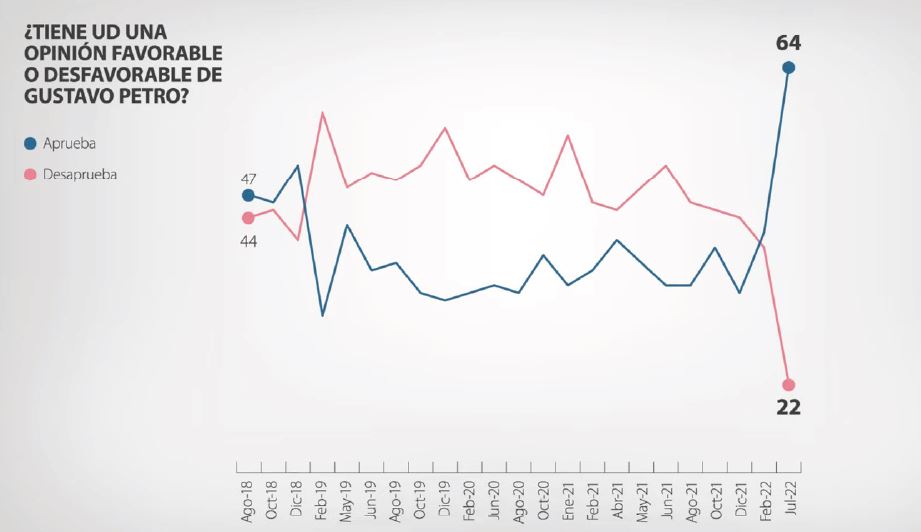
    Note: Blue: approve of Petro; Red: disapprove of Petro
    Source: Invamer

    Left-wing president, establishment cabinet

    The full 18-strong ministerial team selected by Petro brings together a lot of establishment politicians, combined with some left wingers and some more independently minded figures. It is a gender-parity team: nine of the ministers are women and nine are men. The average age is 60, with the oldest in their late 70s, and the youngest (health minister Corcho) aged 39.

    Alfonso Prada, interior minister. Prada is a lawyer, university professor, and career politician with a long history in the Liberal Party. He was appointed secretary general to the presidency in 2017 (a ministerial-level position) during the government of Juan Manuel Santos (2010-2018).

    Álvaro Leyva Durán, foreign minister. Since the 1980s, and for successive governments, Durán has been involved in peace negotiations with various armed groups. He was private secretary to President Misael Pastrana (1970-1974) and held multiple subsequent government positions, including serving as mining minister in the 1980s. He is seen as a key figure in Petro’s ‘total peace’ strategy and is expected to negotiate both with armed groups and with the Venezuelan government (which has allowed some Colombian guerrillas to maintain bases on the Venezuelan side of the common border.

    José Antonio Ocampo, finance minister. A graduate of Yale, Ocampo was a founding member of Fedesarrollo, an influential Colombian economic think tank. He served as minister of agriculture during the presidency of César Gaviria (1990-1994) and as finance minister under Ernesto Samper (1994-1998). He also was executive secretary of the UN’s Economic Commission for Latin America and the Caribbean (Eclac). Ocampo is seen as a market-friendly economist who will reassure the business lobby and pursue Petro’s goals of tax reform and poverty alleviation in a responsible and balanced manner.

    Néstor Osuna Patiño, justice minister. Patiño comes from a Liberal Party background and is a lawyer and academic who is viewed as a constitutional expert. He has served as a judge on a committee of the Consejo Supremo de la Judicatura, responsible for disciplinary matters affecting lawyers and judges.

    Iván Velásquez Gómez, defence minister. The appointment of Velásquez can be seen as one of the more audacious first moves by the new president. The new minister has no military or defence experience but has a very strong record on the defence of human rights and combatting corruption. As a Supreme Court magistrate, he coordinated the ‘parapolitics’ investigation in the 1990s which investigated illicit links between legislators and paramilitaries, and eventually led to the sentencing of over 50 members congress, many from former-president Álvaro Uribe’s Centro Democrático (CD) party. In 2012-2019 he served as the UN’s head of the International Commission Against Impunity in Guatemala (known by its Spanish acronym CICG) which brought many high-profile corruption cases to court before it was eventually closed by the Guatemalan government.

    Cecilia López Montaño, agriculture minister. López Montaño is an economist with social-democratic credentials and Liberal Party connections. She has served as agriculture minister before, and in various other roles including director of planning. Her top priority is expected to be land reform, which is a key part of the wider peace discussions.

    Carolina Corcho, health minister. At 39 Corcho is one of the younger members of the ministerial team. A medical doctor, psychiatrist, and political analyst, she favours reducing the private sector presence in the health system, currently delivered through medical insurance programmes run by Entidades Promotoras de Salud – EPSs - in favour of a greater public health role.

    Gloria Inés Ramírez, minister of labour. A politician and trade unionist, unlike many of the other ministerial picks, Ramírez is a long-term left winger, a former congresswoman, defender of LBGTI rights and a member of the Colombian Communist Party.  

    Irene Vélez, minister of mines and energy. This is also seen as an audacious appointment since Vélez, a geography graduate from Copenhagen University, has no direct experience of the mining and energy sectors but is known as an activist on issues such as food security, agrochemicals, and mercury pollution, and will lead the administration’s plans to boost the green economy and reduce reliance on key fossil fuel exports such as oil and coal.

    Germán Umaña Mendoza, minister for trade, industry, and tourism. Mendoza is an academic and an engineer from Universidad Nacional and is currently executive president of the Colombia-Venezuela Chamber of Trade. He is expected to support efforts to re-establish trade with Venezuela. On other trade issues he may follow a more protective line: he was a critic of Colombia’s free trade policies in the 1990s and has also criticised the free trade agreement with the United States.

    Alejandro Gaviria, minister of education. Gaviria, an economist, academic, and politician, was one of the various competing centrist pre-candidates who failed to prosper in this year’s presidential race. He has held many official positions, including national director of planning during the Álvaro Uribe government, and minister of health during the Juan Manuel Santos administration. During his time as health minister he defended private sector participation, attracting the criticism of the left, including from Carolina Corcho who is now a fellow member of the ministerial team.

    Susana Muhamad, minister of the environment. Muhamad has a master’s degree in sustainable development and has worked closely with Petro for more than a decade. She advised him during his three presidential campaigns (2010, 2018, and 2022); she served as general secretary of the environment in Bogotá when Petro was mayor. She has also served as president of his party, Colombia Humana. She will be charged with implementing the government’s plans to move forward towards a green economy.

    Catalina Velasco Capuzano, minister of housing. An economist and policy expert who has worked with left-leaning authorities in Bogotá, Capuzano was involved in Ciudad Usme, a left-wing experiment in affordable housing and urban reform for low-income sectors in a neighbourhood in southern Bogotá. She also served on Empresa de Energía de Bogotá, a city-owned energy provider.

    Mery Gutiérrez Cabezas, minister for ICT. The proposed new minister for information and communications technology (ICT in English, TIC in Spanish) has held a variety of positions in public enterprises. Along with some other women in the party she supported Hollman Morris, the controversial Colombia Humana 2019 candidate for the mayoralty of Bogotá, who was accused of threatening and violent behaviour against his wife, and of refusing to pay alimony. Her appointment has however been put on pause since she is the partner of a company involved in a legal dispute with the government, and there are potential conflict of interest issues to be resolved.  

    Guilermo Reyes, minister of transport. Possibly the most controversial cabinet appointment, Reyes come from a Conservative Party background and served as deputy minister of justice in 2006-2010, during the government of President Álvaro Uribe, an outspoken ideological opponent of the new administration. He has also been resisted by some members of Petro’s inner circle, who note he has been investigated for plagiarising the work of Juan Fernando Jaramillo, a specialist in electoral law. Reyes admits an “editorial error” but says the issue is now closed; his critics say the issue is ongoing.

    Patricia Ariza, minister for culture. An artist, poet, and theatre director, Ariza is seen as a long-standing cultural activist. This is her first public appointment. She says she wants to use the position to challenge preconceptions about Colombia’s long war.

    María Isabel Urrutia, minister for sport. Urrutia, an Afro-Colombian, won a weightlifting gold medal at the 2000 Olympic Games, the first Colombian in any sport to win Olympic Gold. She has also twice run as candidate for mayor in Cali.

    Arturo Luna, minister for science. Luna, a biologist with a research background in biotechnology, micro-biology, immunology and bio-chemistry, will be asked to help develop plans for a transition to a low-carbon economy. 

  • The total peace concept: how could it work?

    Patrick de Courcy 24 August 2022 Hits: 1270

    There is a widespread belief that the peace talks model created in the 2016 agreement with the Farc is insufficient to meet today’s challenges. One major deficiency concerns the time and effort required to negotiate. It took no less than four years to reach the Farc agreement, with negotiations spread out over two presidential terms. Given the number of armed groups still in existence, repeating the formula sequentially would be deeply problematic. If negotiations are approached in that way, it could take as much as eight years or even more to finalise settlements with the ELN and AGC (extending beyond Petro’s four-year term in office), and in the interim old organisations and trouble spots might re-arm and re-ignite. In many senses this would be a familiar and depressing Colombian story. Since the 1990s Colombian governments have reached separate peace deals with no less than six different armed groups. None of those deals has been able to achieve a sustainable end to armed conflict.

    Recognising this difficulty, the proposed ‘total peace’ approach has five complementary components:

    1. Farc: Rescuing and strengthening the 2016 agreement with the Farc, and in particular delivering on as-yet-unmet government commitments to land reform and substitution of illicit crops.
    2. ELN: Resuming peace talks with the ELN after a four-year hiatus. This will imply easing the Duque government’s preconditions for talks, which required the release of all hostages and demobilisation before addressing the substantive issues.
    3. Dissidents: Engaging with the guerrilla and paramilitary ‘refuseniks’ who rejected earlier agreements, refusing to lay down their arms. This group includes the Farc dissidents who rejected the 2016 accord, many of whom have continued to operate in the border area close to Venezuela. It also encompasses right-wing paramilitaries in the AGC, who rejected a 2015 government demobilisation offer. These groups would be offered collective surrender and plea-bargaining benefits.
    4. National Accord: The disparate armed groups who agree to lay down their arms will be offered full participation in the Gran Acuerdo Nacional (GAN) debate. The GAN is designed to reach fundamental cross-party points of agreement on the country’s future, to which Colombia’s traditional economic and political elites, who have shunned earlier peace attempts, will now be required to sign up.
    5. Education for Peace: To secure real change the new government says it will make major investments in ‘education for peace’ which will involve appeals for tolerance and reconciliation through initiatives to be delivered across a range of programmes and institutions.

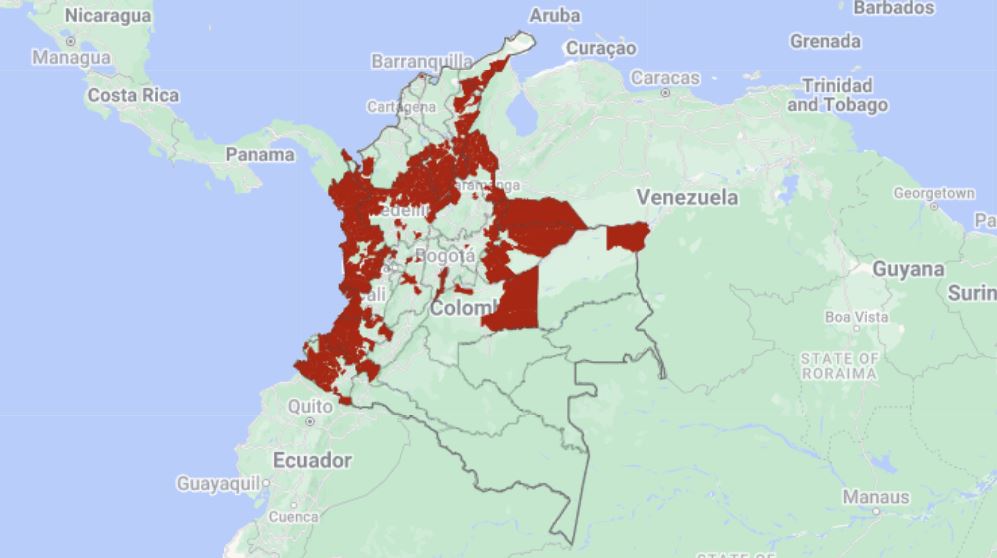
    ELN activity, 2020
    The ELN is Colombia’s major remaining Marxist guerrilla movement, with an estimated 2,000-plus armed members mainly operating in isolated rural areas. It has frequently targeted oil infrastructure.

    Source: Indepaz

    The country’s different armed groups have responded in various ways to the new government’s proposals. All rebel groups have signalled a willingness to engage, but there is also a significant degree of caution and a desire to seek maximum advantage ahead of talks.

    ELN favours resumed talks. At the beginning of July ELN leader alias ‘Antonio García’ (real name Eliécer Herlinto Chamorro) issued a press statement saying his movement was “ready to resume peace conversations with the new government, to achieve peace and social justice for all Colombians”. Previous rounds of negotiations, conducted with international observers, had commenced in 2017 in Quito and continued later in Havana, but were broken off in 2018 at the beginning of the Iván Duque presidency. García emerged as the group’s top leader after poor health led his predecessor, alias ‘Gabino’ (Nicolás Rodríguez Bautista) to step down. The ELN ‘Central Command’ (known by its Spanish acronym COCE) had also issued a statement favouring peace talks. The talks have been hosted by Cuba with the Norwegian government acting as guarantor.

    Negotiations with the ELN have traditionally been difficult because it is a highly decentralised organisation with field commanders in its different areas of operation having a large degree of autonomy. Agreements reached by COCE may not necessarily be supported by the on-the-ground commanders. The breakdown in talks in 2018 came after the Duque government demanded preconditions such as the release of all hostages held by the ELN and a cessation of military and criminal operations. Prospects for a resumption in negotiations were also dealt a major blow as of January 2019 when the ELN bombed a police training academy in Bogotá, killing 22 people and injuring 60. That attack pretty much killed off any remaining chance of negotiations during the Duque administration.

    Nevertheless, in August 2022, only days after Petro took office, a Colombian government delegation, led by Foreign Minister Leyva, High Commissioner for Peace Danilo Rueda, and Senator Iván Cepeda (a veteran of earlier peace talks) travelled to Cuba for exploratory discussions with the ELN leadership. Referring to the peace commissioner, President Petro said: “Danilo is authorised to make contacts, that is his job and function. We are going to weigh this up, there are many rumours, communiques, statements in favour of a cease-fire, but we need to confirm the position”. The governments of Chile and Spain have also offered to support negotiations and to host them should Cuba want to stop doing so.

    Paramilitaries set out their position: On 21 July the Clan del Golfo (AGC) and other right-wing paramilitary and criminal organisations signed a joint letter to then president-elect Gustavo Petro, offering a cease fire on condition that none of their members be required to serve prison sentences or be extradited to the United States. The document was signed by the AGC and some 30 other criminal groups including Los Rastrojos, Los Caparros, Los Shottas de Buenaventura, and Los Mexicanos de Quibdó. It said these groups could not be “indifferent” to “the clamour of the Colombian people and the democratically elected President” to achieve “peace with social justice” and were ready to be “an active part of this project”. The letter also said these groups were ready to disarm and apologise “at the appropriate point in time” and to seek truth and reparations, while undertaking not to repeat criminal acts.

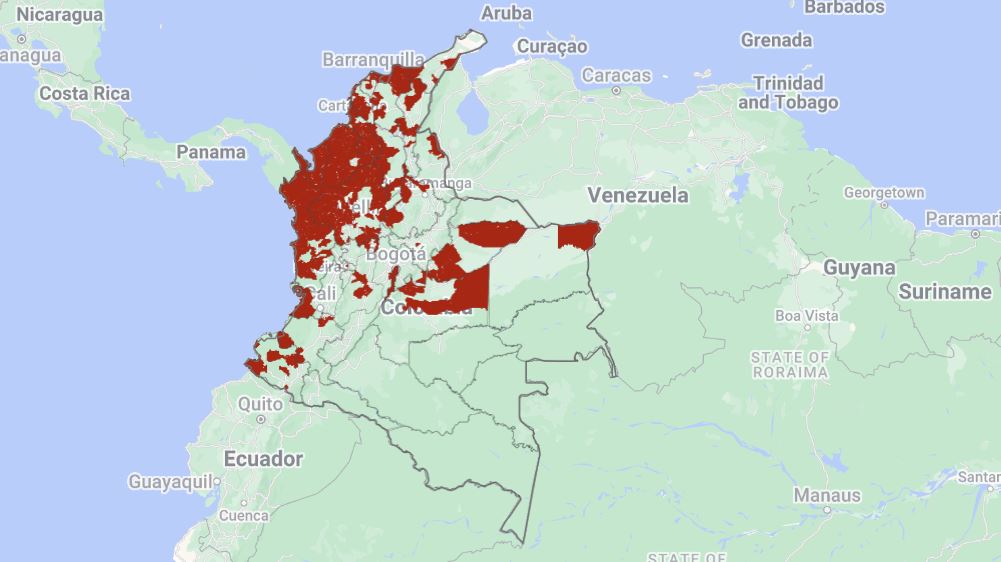
    The AGC/Clan del Golfo activity, 2020
    The AGC Clan del Golfo is the largest criminal group with paramilitary connections in Colombia. It is estimated to have between 3,000 and 7,000 members. It includes dissident former members of Autodefensas Unidas de Colombia (AUC) which demoblised in 2003-2006.

    Source: Indepaz

    The letter made no mention of a surge in AGC attacks on the police in the last days of the Duque government, part of a paramilitary offensive known as an ‘armed strike’ and a separate so-called Plan Pistola. The origins of this wave of bombing attacks can be traced back to October last year when an army operation led to the capture of the Clan del Golfo’s top commander, alias ‘Otoniel’ (Dairo Antonio Úsuga David), who was extradited to the United States in May. At the time of the extradition the ‘armed strike’ consisted of around 300 acts of violence around the country. In all, around 30 police were reported killed as part of the Clan del Golfo offensive. Responding to the letter the incoming foreign minister, Álvaro Leyva, reiterated the new government’s position that it was prepared to talk to all armed groups, including the Clan del Golfo, who were genuinely prepared to lay down their arms. Left wing Senator Iván Cepeda condemned the attacks on the police, insisting a cease-fire was necessary to “end violence, ensure these crimes are not repeated, and achieve total peace”.  

    On inauguration day, the AGC/Clan del Golfo announced it was observing a “unilateral cease fire” relating to “offensive operation” to enable an investigation of “roads to peace”. One reason why government officials are eager to achieve an early peace deal with the paramilitary groups is that they are seen as a key component of the cycle of violence. The paramilitaries are seen as largely responsible for threats, armed attacks, and assassinations targeting demobilised former Farc members, community and indigenous leaders, and human-rights defenders. These attacks undermine the wider peace process and potentially intensify a cycle of reprisals.

  • Reasons for caution, even pessimism

    Patrick de Courcy 24 August 2022 Hits: 1318

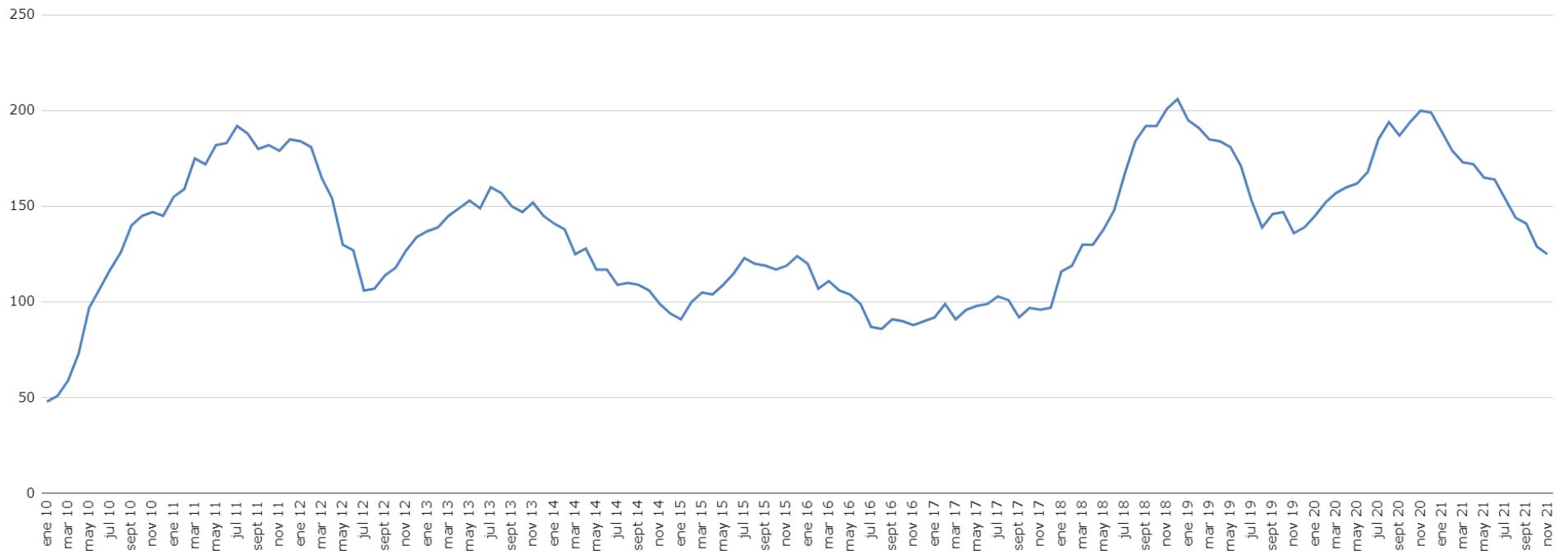
    A striking feature of the plan for “total peace” and an important cause for caution, and even for pessimism, is that it is extremely ambitious and forms a sub-set of a wider programme of government which is also highly ambitious. There is therefore a real danger of overstretch. As previously mentioned, it took the government of Juan Manuel Santos (2010-2018) more than four years to negotiate a politically difficult peace settlement, with only one armed group, the Farc, which was then followed by another six years (2016-2022) of a difficult and partial implementation process. During the stops and starts of that long drawn out process, levels of violence dipped but then came back up. Although it hasn’t made hard-and-fast promises on the time scale, the new Petro government appears to be aiming to sign peace deals with two major rebel groups, the ELN and the Clan del Golfo/AGC , and a multitude of smaller regional groups including Farc dissidents and various criminal gangs, within a four-year presidential term that runs from 2022 to 2026.

    Put bluntly, a multitude of things may go wrong. The government’s negotiating teams will come under time and resource pressures as they attempt to manage parallel talks. Almost certainly the different rebel groups will each want to negotiate tailor-made deals. While some flexibility may be achievable, considerations of equity and fairness mean that the government will come under intense popular pressure not to grant to one group what it may seek to deny to another. That would suggest that the ultimate objective is some kind of common over-arching peace agreement, with international monitoring and uniform treatment of transitional justice, criminal responsibilities, and crimes against humanity. While that could ultimately offer a way forward, securing agreement from very disparate political and criminal groups will be a major challenge. Individual groups may be tempted to take intransigent positions to gain advantage over rivals and exert leverage over the entire negotiating process. From previous experience as many as 10-15% of rebel fighters may refuse to lay down their arms and seek to move in on drug cultivation and trafficking routes abandoned by their former comrades-in-arms.

    Complicating matters is that the peace process depends at least in part on the success of Petro’s wider programme of government. A special report by local consultancy Colombia Risk Analysis says that, apart from pursuing peace, the new president’s wider aims include increasing economic productivity and transitioning to a less carbon-intensive and more-diverse and sustainable economy. It notes that “Petro’s governance style, the composition of his cabinet, and his relationship with congress will be influential, at times even determining how expansive Petro’s ambitions can realistically be.”  On top of these aims the new president is looking to “mend relations with estranged neighbour Venezuela, bolster the energy transition and renewables sector, wean the country off the extractive sector, address unforeseen food insecurity and poverty, and promote rural development and interconnectivity”.

    Colombia Risk Analysis takes the view that the new government will fail to meet some of its early objectives. Tax and pension reforms, one of the top priorities, are likely to meet opposition in congress. The promised move to replace fossil fuels with more sustainable energy, banning new oil exploration and fracking, is also likely to run up against economic difficulties, since Colombia is so dependent on oil and coal exports, likely forcing some backtracking on campaign promises. Land reform is also likely to run into a degree of resistance from commercial farmers and established elites. The promised move to universal health provision is also likely to generate private-sector resistance. In a variety of ways, difficulties on these fronts could complicate the peace process. One example: the lesson from the 2016 Farc agreement is that the state needs to invest in former conflict areas to ensure provision of basic infrastructure, health, medicine, and education services. If congress dilutes tax reform, the state will lack the resources to make these investments, which are critical to the success of the peace process.

    These are not the only obstacles to the desired ‘total peace’. Below, we briefly discuss three major challenges to a comprehensive peace settlement in Colombia. They are first, the role of the army and police, second Colombia’s relationship with neighbouring Venezuela, and third global trends in consumption and demand for illicit drugs.

    Up and down: deaths caused by political violence in Colombia
    12-month rolling total

    Source: CERA

  • Three major challenges for peace

    Patrick de Courcy 24 August 2022 Hits: 1316

    Can the Colombian military adopt a different approach?

    The Colombian armed forces have played a central role in counter-insurgency operations for at least half a century. Given the views of successive right-wing governments over that period, together with the anti-communist and Cold War components of national security doctrines at the time, there was a strong emphasis on hard-line military action against rebel forces, over and above any alternative strategies (such as ‘hearts and minds’ persuasion or support for social reforms). The Colombian army became one of the most battle-hardened forces in Latin America but was still unable to enforce a military defeat on the rebels.

    Rather, a form of strategic deadlock was achieved, with military control of urban areas coexisting with ‘no-go’ isolated rural areas where rebel groups effectively set up an alternative government. By some calculations up to 30% of national territory was held by rebel forces. Starting from 2000 onward the US financed the major multi-year military aid and training programme known as Plan Colombia, designed to defeat the rebels and eradicate coca production and trafficking. During the Álvaro Uribe presidency (2002-2010), and supported by Plan Colombia, the army did become significantly more efficient and was able to reduce levels of rebel violence (for example there was a significant fall in homicide rates in that decade, and a reduction in violent attacks).

    However, evidence from multiple sources indicates that corruption has remained a significant issue, and that the security forces frequently violate human rights. A sign of both these negative trends has been the ongoing scandals over ‘false positive’ cases, where army units have killed innocent civilians and passed them off as guerrillas killed in action (KIA). This practice has existed because high guerrilla KIA rates attracted bonus payments and promotion for commanding officers. The Transitional Justice authorities (JEP) have estimated that there were 6,402 ‘false positive’ killings at the hands of the army in 2002-2008, with the practice continuing past that period.

    Days after taking office Petro announced a new military and police leadership, stating that he had specifically chosen officers who had not been accused of corruption or human-rights violations. He also announced an overt change in performance assessment stating that “the concept of human security means that success lies not in the number of dead, but in substantially reducing deaths, massacres, and increasing substantially peoples’ liberties and rights”.

    The new military high command consists of General Helder Fernan Giraldo (armed forces commander), General Luis Mauricio Ospina (army commander), Vice Admiral Francisco Hernando Cubides (navy commander), General Luis Carlos Cordoba (air force commander), and General Henry Armando Sanabria (national police commander). The Petro government is also promising reforms to bring the police under civilian, rather than military, control and to make changes to Esmad, the urban riot police notorious for its brutality.

    With Iván Velásquez as the newly appointed minister of defence, it is clear that a major re-think of security policy is on the cards. Much will depend on whether Velásquez can establish a good working relationship with the new military commanders. This will not be an easy process as decades of military thinking are unlikely to change overnight. In the worst-case scenario, the military might undermine or resist the peace talks.

    The relationship with Venezuela

    For almost all of the 21st century to date, Venezuela, governed by an authoritarian left-wing regime, and Colombia, governed by a succession of elected centre-right and right-wing administrations, have shared a sense of deep animosity, mutual suspicion, and mistrust. Given the deep economic crisis in Venezuela, Colombia has found itself hosting large numbers of Venezuelan migrants and political refugees – in mid-2022 the total was estimated at around 2.5m.

    In 2015, Venezuela’s President Nicolás Maduro closed the 2,200km joint border to all vehicular traffic. In 2019, after Colombia recognised Venezuelan opposition leader Juan Guaidó as the legitimate president of the country, Maduro cut off diplomatic relations. Successive Colombian governments have accused Venezuela of providing a haven for Colombian ELN and dissident Farc guerrillas, who are allowed to set up camps on the Venezuelan side of the border from where they have launched cross-border raids back into Colombia.

    On taking office Petro announced he would seek a re-set of relations with his country’s eastern neighbour. Diplomatic relations are being restored with the appointment of new ambassadors. Plans are progressing to-reopen border crossings and bridges. Bilateral trade, which exceeded US$7bn in 2008 and which subsequently collapsed to around US$200m after the border closures, is being re-established and there are hopes that it will begin a strong recovery in regional economies.

    It is reasonable to expect that the Petro government will also seek to improve bilateral security and will call on the Caracas administration to support the peace process. However, progress on this issue may not be easily achieved. Multiple sources confirm that elements of the Venezuelan armed forces allow Colombian guerrillas and criminal groups to traffic drugs and other illicit products (including gold and rare metals) across the border, while charging a commission. These local-level relationships are complex and sometimes break down. In 2021 there was heavy fighting across Arauca department (Colombia) and Apure State (Venezuela) between the Venezuelan military and the dissident ‘10th Front’ of the Colombian Farc, reflecting disagreements over territorial control and the management of drug-trafficking revenues.

    The danger is that, despite desiring a partial normalisation of relations with Colombia, the Venezuelan government may still refuse to cut off its support for rebel groups such as the ELN. It is even possible that after a successful peace agreement and demobilisation in Colombia, ELN dissidents or ‘refuseniks’ will simply move to Venezuela to continue cross-border military and criminal activity there. That would essentially be a repeat of what happened with the Farc after 2016: many of the dissidents, who refused to accept the peace settlement, simply moved across the frontier into Venezuela. At a national level the Venezuelan government, battling against the impact of US economic sanctions, may not be prepared to lose revenue from the Colombian rebel groups, who are also a potentially valuable future negotiating chip.

    A never-ending war on drugs?

    Hypothetically, if Colombia could by art of magic sign instant and simultaneous peace agreements with all armed groups in the country there would still be an underlying problem. Basically, existing rebel groups survive and prosper because of what could be called their proven criminal business model. A central part of that business model is that they are serving voracious international demand for cocaine and other drugs, and for illicitly mined products such as gold and rare metals. In particular, demand for drugs, largely but not exclusively from the United States, is price-inelastic, meaning it remains strong even when prices go up. That kind of demand and profitability is likely to call forth the supply it requires. In other words, even if today’s AGC, ELN, Farc dissidents, and many others become no more than footnotes of history, a new crop of guerrilla rebels and criminal cartels is likely to come forward to fill the supply gap. In many ways that is the story of the last half century in Colombia: the fate of armed organisations and cartel kingpins have ebbed and flowed, but the criminality and the drug trafficking have remained constant across the years.

    In his inauguration speech Petro admitted some of this reality. He said peace in Colombia would only be possible if there were changes in international anti-narcotics policies, and if the wealthier nations followed stronger policies to control and reduce drug consumption. The incoming president also described the long running ‘War on Drugs’ as a failure saying its repressive nature had led states to commit crimes and to what he called “an evaporation of the horizons of democracy”. He asked rhetorically “are we going to wait for another million Latin Americans to be murdered or for 200,000 people to die of drug overdoses in the United States?”. He went on to call for a new international approach to anti-drugs policies. In this context associates of the new president have expressed interest in legislation to decriminalise consumption of some drugs.

    The fact that global demand for illicit drugs is likely to remain high for years to come places an obvious limit on how far or how fast the country can be pacified. That is a directly pessimistic message for those hoping for change under Gustavo Petro. However, another consideration offers a more optimistic perspective. The question should perhaps be not whether violence can be eliminated, but whether it can be reduced in a meaningful way. Persuading rebels to lay down their arms and participate in a more inclusive and democratic Colombia could offer a clearly more promising way forward.