Latin America’s cryptocurrency and fintech wave

Items

  • Introduction

    Patrick de Courcy 11 May 2022 Hits: 2474

    Money is changing in Latin America. A range of different forces are reshaping traditional banking, currencies, payments systems, shopping, and investments. Financial technology, known as fintech, coupled with e-commerce and increasingly ubiquitous smart phones have opened new and rapidly shifting business and financial opportunities. Cheque payments and cash transactions are on the way out. Old banks and their big 'bricks and mortar' branch networks are dying. A new and confusing wave of innovative financial products, including cryptocurrencies and other digital assets such as non-fungible tokens (NFTs) are on the way in.

    An improbable coalition of social and political lobbies is driving forward this wave of change. They include traditional bankers, millennial start-up entrepreneurs, anti-government libertarians, populist politicians, and an entire underworld of programmers, hackers, drug cartels, rogue states, and devotees of the dark web. Mixed in with them are genuine reformers who believe that the new digital payment systems can help generate greater transparency, reduce corruption, and increase the financial inclusion of women, of the poor, of minority groups, and of informally employed and otherwise overlooked citizens.

  • Blockchain and Bitcoin

    Patrick de Courcy 11 May 2022 Hits: 1527

    The fintech and crypto currency story has many potential starting points, but perhaps the best way 'in', for the purpose of this report, is to explain the emergence of two related things: Blockchain and Bitcoin. Adding mystery to the story, Blockchain was developed in 2008 by one Satoshi Nakamoto, a computer programmer who may or may not exist, or who could be a manufactured identity for a team of anonymous developers. The software he, or they, developed is a list of records, known as blocks, that are linked together in a chain using cryptography, a way of coding messages so that they can only be read by their intended recipients. Each block reproduces the previous one, adds additional transaction data, and contains a time stamp. Because of this, Blockchain has been likened to a secure, decentralised, and unbreakable open ledger, where, once recorded, data in any given block cannot be altered retroactively without altering all subsequent blocks.

    Blockchain was created to provide a decentralised, peer-to-peer network to allow trading in Bitcoin, a digital currency or ‘electronic cash’ unit created by Nakamoto in 2009. A certain number of Bitcoins were created at launch, but the system also provided for the creation of new units. Users who provided their own computer processing power to validate the creation of new blocks and transactions are rewarded by earning new Bitcoins. The process is called ‘Bitcoin mining’. Validation of new blocks requires an energy-intensive problem-solving process known as proof-of-work (PoW).

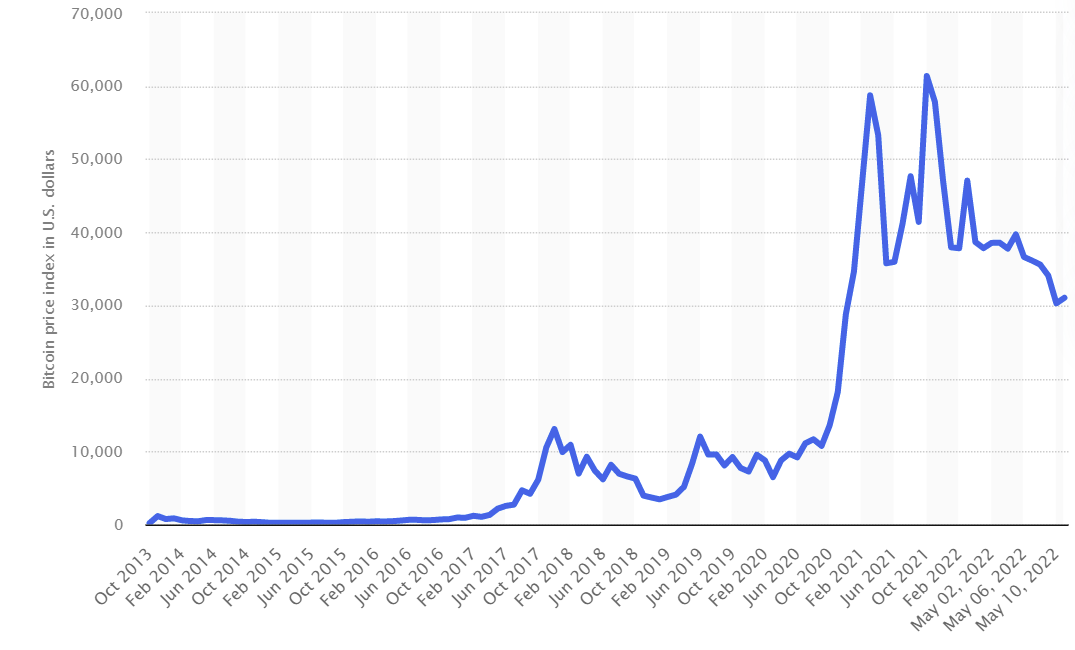
    Bitcoins initially began to be used as a payments unit in online black markets such as the Silk Road. Like any financial asset, the value of Bitcoins is determined by supply and demand. The first Bitcoins traded at around US$0.30 per unit in 2011. They proved to be highly volatile, but rose steadily to US$770 at the start of 2014, and to US$13,412 in 2018. From 2019 until March 2021 the Bitcoin price steadily accelerated, reaching a peak of over US$60,000. However, it then almost halved in value to US$31,500 in July 2021, rallied once more to US$64,000 in November of that year, and sunk back to just over US$40,000 by March 2022. In Latin America Bitcoins became a popular payments system particularly in countries suffering from hyperinflation and tight currency controls (such as Argentina and Venezuela). In the region and in other parts of the world blockchain technology also became attractive as a secure and verifiable database for official documents (such as land deeds or even geological data used by oil and gas companies) as well as a for a wide range of payments systems, sometimes run as in-house transaction services.

    The Bitcoin (BTC) roller coaster (daily price)

    Source: Statista data

    The EE380 overview

    Cryptocurrencies attract vocal supporters and perhaps equally intense detractors. The debate about their economic and social impact remains sharply polarised. One interesting and highly critical overview was recently presented by David Rosenthal, an experienced California-based programmer who in December 2021 was called in at short notice to fill a gap in Stanford University's EE380 course, a colloquium on computer science about crypto. He was not complementary. By his calculations Bitcoin mining alone consumes as much electricity as the Netherlands. Along with an estimated 10,000 other crypto currencies it enables a proliferation of ‘pump and dump’ schemes (the pursuit of profit by artificially stimulating the price of a crypto currency and then engineering its collapse) and wash trading (self-buying and selling, also to manipulate prices) as well as enabling ransomware attacks. His daming indictment is that cryptocurrencies “are responsible for a massive crime wave including fraud, theft, tax evasion, funding of rogue states such as North Korea, [and] drugs smuggling”.

    Rosenthal cited a paper by Igor Makarov and Antionette Schoar which concludes that “90% of transaction value on the Bitcoins blockchain is not tied to economically meaningful activities but is the by-product of the Bitcoin protocol design as well as the preference for many of the participants for anonymity”. While the paper tends to minimise the role of illegal transactions, it says most Bitcoin trading is conducted through exchanges and tends to be speculative in nature.

    He also suggests that the much-vaunted decentralisation of the Bitcoin trading system is something of a mirage. In his view it took only six years for Bitcoin to fail Nakamoto's decentralisation promise, with a group of five Bitcoin mining pools controlling most of the mining power. Bitcoin mining enjoys benefits of scale, meaning the larger miners have lower costs and higher profits, and are therefore likely to maximise their market share. Six out of the top ten main mining pools are registered in China. The top 10% of miners control nearly 50% of mining capacity.

    Rosenthal also notes that there are in fact two different types of blockchain. ‘Permissioned’ blockchains do have a central authority, which controls which nodes can add blocks to the chain. This means that comparatively less computing power is required than in ‘permissionless’ blockchains. To guard against various forms of cyber-attack and to reward miners, decentralised permissionless chains require significantly more computing power, as well as convertibility to allow miners to be paid in fiat currencies. As he puts it, “a permissionless blockchain requires a cryptocurrency to function, and the cryptocurrency requires speculation to function”.

    Bitcoin used massive amounts of electric energy, for both operating (opex) and capital (capex) expenditure. The Cambridge Bitcoin Energy Consumption Index (CBECI) estimates that Bitcoin electricity consumption is currently 117TWh pa (terra-watt hours per annum). It is also claimed that Bitcoin has a “growing e-waste problem”, caused by the rapid replacement of computer hardware. In theory these problems may be resolved if Bitcoin mining is powered by electricity generated from renewable sources such as wind, solar, or geothermal.

    But progress on this front has been slow, with many miners indulging in “greenwashing” during the interim period. Luxxfolio, a crypto miner, has committed itself to using 100% renewable energy, but appears to see no contradiction in also announcing that it is buying 15 megawatts of coal-fired power from the Navajo Nation in the state of New Mexico in the US. There is also a credible argument that there should be other, higher priorities for the use of renewables as part of an energy transition to a less carbon-intensive world. The Chinese government has banned crypto currencies entirely, according to some accounts because of concern over their effect on limited electricity supply and the potential for capital flight. Again, there may be computing solutions to provide less energy-intensive alternatives to ‘Proof of Work’, but current pilots have hit several practical and technical problems.

    Also looming on the horizon are significant legal problems. The process of blockchain validation means that mining pools may be providing “money transmission services” as defined under US law. Any entities doing so in the US are required to follow anti-money-laundering/know your customer (AML/KYC) rules, but none currently do so, because most of the Bitcoin community rejects the idea that any government should restrict the operation of the system to legal transactions only.

    While blockchain technology with its ‘unbreakable’ or immutable record of transactions, has the theoretical ability to completely prevent certain types of fraud and cyberattack, the practical reality is that crypto-currency fraud has continued occurring in significant volumes. No system is perfect. In some cases, immutability even makes it difficult to correct past errors, such as unwinding erroneous transactions. The specialised crypto press is full of accounts of various types of currency theft. Rosenthal lists misallocation of funds, often described as ‘oopsies’ at Bitinfex, Indexed Finance, MonoX, and Compound, adding up to over US$200m, which “left the perpetrators pleading with the beneficiaries to return the loot”.

    Even larger amounts of money are being stolen through online digital games which are popular both globally and particularly so in a number of high inflation Latin American countries. In March 2022 it was reported that Ronin Network, a subsidiary of Vietnam-based Sky Mavis, which runs the platform for the online Axie Infinity computer game, had lost US$615m through a hacking attack. The game invites players to fight cartoon pets called Axies, collecting non-fungible tokens (NFTs) as prizes and winning payment in cryptocurrencies. The game is very popular in the Philippines, but also in Argentina, Brazil, and Venezuela. It is part of a group of so-called ‘play-to-earn’ crypto games where, at times of high local inflation and rising cryptocurrency values, players can earn more money from the game than from full-time employment in the real-world.

    In this case Ronin Network said that a hacker had been able to fraudulently transfer US$540m worth of cryptocurrency to themselves. By the time the hack was discovered, due to rising cryptocurrency valuations, the value of the stolen funds had increased to US$615m. Ronin said it had taken its website offline and was “working with law enforcement officials, forensic cryptographers, and court investors to make sure all funds are recovered and reimbursed”. The attack had commenced the preceding November when there was a suspicious and unsustainably large increase in player numbers which led to “immense user load”. To maintain operating capacity the company had eased its security procedures, in effect inadvertently providing a ‘backdoor’ for the hackers to attack.

    Frances Coppola, an economist, told the BBC “We've seen so many hacks and exploits caused by - to be blunt - frank carelessness and lack of concern for the safety of peoples' funds. Crypto companies are sometimes so anxious to make ‘loadsamoney’ or simply to accommodate high demand, that they put out badly designed and tested code, compromise security, or place too much reliance on infrastructure.” Another specialist, Tom Robinson of Elliptic, said crypto companies were “huge honey pots” for hackers, regarded as “low hanging fruit”. He added that “crypto transactions are irreversible, so if a hacker gets their hands on it, it is very difficult for anyone to retrieve it”. According to Elliptic the top five largest cryptocurrency hacks in 2014-2022, including the Ronin attack, involved the theft of just under US$2.5bn.

  • El Salvador: real crypto king or false profit?

    Patrick de Courcy 11 May 2022 Hits: 1464

    Since mid-2021 the small Central American republic of El Salvador has placed itself at the vanguard of Latin America's experimentation with cryptocurrencies. How well - or how badly - the experiment works in a country with a population of 6.5m is being closely watched by regional giants such as Brazil (population of 212m) and Mexico (129m). By way of background, it is important to note that in February 2019 Nayib Bukele, a populist and self-declared political outsider, achieved a sweeping victory in the presidential race, gaining 53% of the vote, which made a second-round run-off unnecessary.

    The big losers in the elections were the parties of the traditional right and left that had dominated national politics since the civil war (1979-1992). Although Bukele, a former mayor of San Salvador, had been a member of the left wing Frente Farabundo Martí de Liberación Nacional (FMLN), by the time of the election he had severed ties, creating his own movement through the Nuevas Ideas (NI) political party. In power since June 2019 the president, a millennial (he was 39 when he first took office), displayed increasingly authoritarian behaviour.

    In 2020 he orchestrated the so called 9F crisis (for 9 February) when, at his bidding, a group of army soldiers invaded the Legislative Assembly to intimidate deputies to vote through an enlarged security budget. His hard line on security matters and his repeated attacks on the corruption of the traditional parties were wildly popular. In the February 2021 legislative elections Bukele's new party won a landslide, taking 66.5% of the vote and 56 of the 84 seats. His enhanced majority in the legislature gave him sweeping powers. Bukele used this support to push through initiatives to tighten his control of the judiciary and to restrict press freedoms. Under his rule El Salvador's populist and authoritarian policies attracted increasing criticism from the Joe Biden administration in the United States.

    This was the background for the country's big cryptocurrency experiment. Like a handful of other Latin American countries (including Panama and Ecuador) El Salvador has a dollarised economy. On 5 June 2021 President Bukele announced that, alongside the US dollar, El Salvador would now also use Bitcoin as legal tender. A briefly worded bill with 16 articles outlining the change was approved by 62 out of the 84 deputies, requiring the new dual-currency monetary regime to come into effect within 90 days.

    The president used various arguments to defend the move into crypto. He said it would give Salvadorans access to a secure and efficient global payments system. This would be particularly important for the estimated 2m Salvadoran expatriates living in the United States, who would be able to send remittances home without having to pay large commissions and fees (remittances play a key role in the local economy, representing US$5.9bn or 20% of GDP in 2020). Bukele also claimed that adopting Bitcoin would boost financial inclusion for the roughly two-thirds of the population that is poor and unbanked. And in an early response to environmental concerns over energy-intensive Bitcoin mining, the president said El Salvador could use its volcanoes to generate renewable geothermal energy to do the job.

    At this stage there was already an early foreshadowing of some of the macro-economic problems involved in the shift to crypto. With a heavy foreign debt burden the Salvadoran government was at that stage negotiating a US$1.3bn, three-year IMF extended fund facility (EFF) with the IMF. Such a financial support package was seen by both sides as essential to avoid a foreign debt default and to engineer a gradual reduction in the country's fiscal deficit. But on 10 June the IMF warned that adopting Bitcoin as legal tender would have macroeconomic, financial, and legal risks that would require careful analysis. Other critics pointed to Bitcoin's volatility and its potential use for the purposes of tax evasion and money laundering.

    Bitcoin became legal tender in El Salvador on 7 September 2021. All Salvadorans were encouraged to download the Chivo or 'cool wallet' app that came pre-loaded with US$30 worth of Bitcoin credit to encourage adoption. The launch was troubled by a series of technical glitches, with the app crashing at various points. While Bukele remained popular, public opinion surveys suggested that up to 70% of respondents opposed the idea of Bitcoin as a new national currency. However, according to officials, one month after launch, an estimated 3m out of the population of 6.5m had downloaded the Chivo app

    Using illicitly obtained ID and contact deals, fraudsters were able to steal a number of the pre-loaded US$30 Chivo balances. The government announced the creation of a US$200m fund to underpin crypto currency risks, but the IMF described this as insufficient. The Fund also noted that allowing individuals and companies to pay taxes in highly volatile Bitcoin currency would make it much more difficult for the government to reliably predict its revenues or to set out a credible fiscal plan. Other criticisms included the lack of government transparency over its own Bitcoin trading accounts, or over the progress being made to instal Bitcoin-enabled ATMs around the country. Critics of the government noted that the company running the Chivo programme had been chosen without any competitive tendering.

    It became evident that there were serious obstacles to reaching an agreement with the IMF, and that the country's adoption of crypto was one of them. In October 2021 Douglas Ramírez, vice-president of the central bank (Banco Central de Reserva), said he hoped the country would “soon” sign the US$1.3bn agreement with the IMF. His comments came after 11 civil society organisations, including the national private sector organisation ANEP and human rights lobby Cristosal, published an open letter to the IMF requesting that any loan to the country be made conditional on measures to restore democracy and the rule of law. In the same month there were protest demonstrations against the government in general, but also specifically against the introduction of Bitcoin.

    In November the IMF appeared to take a step back, saying that discussions with El Salvador did not “currently” include any talks on a financial assistance package. While it praised the government for its handling of the economic impacts of the Covid-19 pandemic, and for presiding over a strong economic recovery in 2021, it highlighted risks posed by a larger fiscal deficit, low currency reserves (expected to dip below three months' worth of imports) and unsustainable public debt (reaching 85% of GDP). The Fund also highlighted “unaddressed regulatory and supervisory gaps related to the use of Bitcoin”.

    In December diplomatic tensions between El Salvador and the US increased, with the Washington government saying it was sanctioning Carolina Recinos, Bukele's cabinet chief, for alleged corruption and bribery in Covid-19 procurement. Other officials were later to become the subject of similar sanctions.

    By January 2021 the government was following a new tack, fleshing out earlier plans to issue a 10-year US$1bn Bitcoin-denominated bond, to be known as a ‘Volcano bond’. The bond would be launched on the Liquid platform operated by Blockstream and would carry a 6.5% coupon, a much lower interest rate than available on other sovereign bonds and loans (which, reflecting rising risk premiums at the time, had soared to as much as three times higher). However, it would also include a share of the eventual proceeds of Bitcoin appreciation. Finance minister Alejandro Zelaya said the bond would be launched in February or March.

    The minister suggested that the government still had a number of funding options including the IMF, the traditional international bond market, investment and development banks, and the new crypto currency markets. Zelaya later was more specific, suggesting the bond would be issued between 15 and 20 March, but that window was missed. The finance minister then said the country remained ready to launch the Bitcoin bond but was waiting for better market conditions and the go-ahead from President Bukele. Zelaya also suggested the bond would be issued after El Salvador completed plans for pension reform, which were also running behind schedule.

    Many analysts reached the conclusion that the Bitcoin bond would at best be delayed until late 2022, and in a worst-case scenario might never actually materialise. Zelaya insisted that there was zero possibility of El Salvador defaulting on its foreign debt. However, amid strongly rising risk premiums on the country's debt, analysts were suggesting there could be a crunch point in January 2023, when the country would be required to make a US$800m Eurobond repayment.

    After six months most analysts are giving El Salvador's Bitcoin experiment mixed reviews. Despite extensive media coverage, the physical network of Bitcoin ATMs has expanded slowly. Many users simply downloaded the Chivo app, changed the US$30 incentive into dollars, and continued as normal without Bitcoin becoming a regular, ongoing part of their daily financial lives. People without smartphones (including many of the elderly living in rural areas), and those without internet connections, have remained out of the loop. Even in El Zonte - the seaside resort known as 'Bitcoin Beach', where cryptocurrencies were first introduced to the country, many traders continue to prefer cash.

    A major disincentive for adoption has been the volatility of Bitcoin - a fall in its price versus the dollar in late 2021 caused many to experience currency losses. The government points to the fact that just under 4m people have downloaded the Chivo app - well over half the population - as a sign of success. A report by Ark Investment Management was also optimistic, saying that 3.8m had downloaded the app “suggesting an 84% adoption rate among eligible citizens”. Ark also said more people now have Bitcoin wallets (3.8m) than traditional bank accounts (1.9m), and the Chivo wallet is being used for 12% of remittances sent home by Salvadoran expatriate workers in the US. However, critics say the number of app downloads with a US$30-per-account incentive cannot really be taken as synonymous with full adoption.

    Indeed, supporting a more pessimistic view, a March 2022 survey by the Chamber of Commerce and Industry of El Salvador found that 86% of businesses had never conducted any transactions in Bitcoin at all, with 91.7% saying the switch to crypto had not influenced their business in anyway, positive or negative. A survey conducted just before launch by the Central American University found that 67.9% of respondents disagreed with making Bitcoin legal tender, nine out of ten lacked a clear understanding of Bitcoin, and eight out of ten said they had no confidence in its use.

    Bitcoin City: the next big thing?

    In November 2021, Bukele announced another big crypto initiative, the idea of a 'Bitcoin City', to be built in the south-eastern region of La Unión, at the base of one of El Salvador's volcanoes. The city perimeter would be round, representing the shape of a large coin. It would use geothermal energy from the Conchagua volcano for Bitcoin mining. The president said it would “include everything...residential areas, commercial areas, services, museums, entertainment, bars, restaurants, an airport, port, rail - everything devoted to Bitcoin”. The president also said no income or other taxes would be levied in the city, apart from VAT, which would be used to help cover the construction costs. Bukele gave no dates for construction or completion of the city.

    The president and his officials also said half the proceeds from the planned US$1bn Bitcoin or ‘volcano bond’ would go towards funding construction of the city. The other half - US$500m - would be used to add to the government's stock of Bitcoin holdings, with a pledge not to re-sell for five years.

    The idea of building a Bitcoin city appears to have been any least partly taken from a recent project in Kazakhstan to attract crypto-currency investors by offering cheap electricity for Bitcoin mining. A Kazakhstan-registered company, Bitfinex Securities, was reportedly approached by the Salvador government about the project. However, unlike Kazakhstan, El Salvador currently has an electricity supply deficit, importing 22% of its total electric power needs from its neighbours in Central America. As of the time of writing it appears no feasibility studies have yet been commissioned for either the city or for the necessary expansion of generating capacity, whether geo-thermal or from any other source.

    Bitcoin City could end up as the flagship project for Bukele's entire five-year presidential term, with its success or failure forming a critical part off his legacy. Ricardo Castaneda, an economist at Instituto Centroamericano de Estudios Fiscales (Icefi), has argued that the fate of the Volcano bond will impact on the president's entire political project. Castaneda says that if the government can launch the bond successfully, “it can laugh at the multilateral financial agencies, because it will have found an alternative source of funding...and will not be troubled by issues of transparency, fiscal responsibility, or democracy”. But if the Volcano bond fails the Bukele government will have to retreat, perhaps negotiating a deal with the IMF where Bitcoin loses its newly acquired role as legal tender.       

    The awkward audit questions

    Hanging over the entire debate over Bitcoin in El Salvador is a significant lack of financial transparency. It is for example proposed that the country's Bitcoin bond will be sold on the Bitfinex platform, which has suffered previous hacking attacks and does not have regulatory approval in the US. As of the time of writing, no prospectus had been issued. In addition, unlike traditional sovereign bonds, which are usually governed by New York law, the bond is to be governed instead by El Salvador law. This is a serious issue for investors, particularly since the Bukele administration has controversially (and according to the opposition, illegally) appointed a majority of pro-government magistrates to the Supreme Court. It is their opinion that will count in any dispute over investment terms.

    In addition, and despite any initial expectations, the plan is for the bond to be issued not by the sovereign, but instead by La Geo, a small, state-owned thermal energy company. La Geo is responsible for generating around 22% of El Salvador's electricity and in 2021 had revenues of UDS$136m and profits of US$36m. Its cash flow and collateral appear insufficient to manage such a large bond (it already has had to defer payments on US$200m worth of pre-existing debt because of the impact of the pandemic). Frank Muci, an economist at London School of Economics (LSE), has argued that issuing the bond through La Geo many be a move to protect the Bitcoin City project if El Salvador should in future default on its more traditional bonds. In an alternative scenario he notes it could also protect traditional bond funding in the event that the Bitcoin City project fails.

    Some crypto enthusiasts have hailed the plan as a way of allowing El Salvador “to bypass the Wall Street banks and international institutions that have held a century-long choke hold on loans to developing economies” but Muci says too much of the small type is unclear. Muci’s unanswered questions include whether there is insurance against hacking attacks; and whether interest on the bond will be payable in US dollars, Tether (USDT), or Bitcoin. Muci's conclusion (in March 2022) was that “we are expected to be hyped about this ‘historic opportunity’ even though the legal framework that will govern the instrument still hasn't gone through El Salvador's congress, and no draft versions of the laws have been made public”.

    Another area of concern is the government's own Bitcoin trading. Under the legislation approved by Congress the government can itself transact Bitcoin through a trading account at Bandesal, a state-owned development bank. However, there is no obligation to make public the details of buy/sell operations in this account. What details are known have been revealed by the president himself on Twitter.

    Many of the transactions appear to have been executed directly by the president on a smartphone, raising potential security and conflict of interest concerns. As of January 2022, and according to public announcements, it appeared that the government had spent US$71m to acquire 1,391 Bitcoins. Since Bitcoin prices had been falling since the previous November, it was likely that the country had made a net loss of US$10m on these operations. Whether the president was using public funds to pursue any documented short-, medium-, or long-term trading strategy was also unclear.

  • Brazil follows a different road

    Patrick de Courcy 11 May 2022 Hits: 1584

    In some ways the contrast between Brazil and El Salvador could not be greater. Brazil's population is nearly 33 times larger than El Salvador's, and the value of its economic activity is 55 times greater. Despite this, there are important similarities (among them high levels of informal and unbanked workers). In the specific areas of cryptocurrency and fintech, there are also interesting contrasts. To put it bluntly El Salvador has done little to change traditional banking or payments systems, but, as we have seen, has championed a radical and high-risk shift to crypto. Brazil, on the other hand, has approached crypto in a highly cautious manner, while being much more radical about fintech.

    One sign of the rapid transformation of Brazilian banking has been the meteoric rise of Nubank, a fintech which launched a highly successful IPO on the New York stock exchange (NYSE) in December 2021, raising US$2.6bn in new capital and valuing the company at around US$48bn. Founded as recently as 2013, from an almost standing start, Nubank has rapidly grown to become Latin America’s highest-value financial company. The IPO was the fifth largest in the US in 2021. The resulting valuation turns Nubank into Brazil’s third largest listed company, behind oil giant Petrobras and mining conglomerate Vale. Nubank has also soared ahead of two of its natural rivals, the country’s biggest traditional banks, Itaú and Bradesco. According to company sources the IPO was up to eight times oversubscribed.

    Nubank offered its first credit card in 2014. The company’s basic concept is to provide zero-charge credit cards and digital accounts, with a simple customer-friendly and online-only presence. Now operating in Brazil, Mexico, and Colombia, it is an alternative to the traditional, bureaucratic, and high cost/ high interest rate banks, which must cope with managing many physical branches. One of the Nubank founders, chief executive David Vélez, has described the company’s pioneering story so far as follows: “First they ignore you, then they laugh at you, then they fight you, then you win”. Vélez, a Colombian executive, first saw an opportunity when he moved to Brazil and found that opening a bank account there was a bureaucratic nightmare. He thought an online neo-bank could do much better. Accordingly, Nubank began recruiting consumers dissatisfied with traditional banks. It now has 48m customers.

    Japan-based Softbank Group, one of Nubank’s institutional investors, says that over the next five years the customer base could reach 150m taking combined revenues up to US$300bn. Nubank is well positioned to benefit from the growing continent-wide digitalisation of payment systems. The nearly two years of the Covid-19 pandemic may have helped accelerate online banking and strengthened the business model. Goldman Sachs analysts say, “The company has shown good historical asset quality trends, given its extensive use of artificial intelligence, data analytics and behavioural science.”

    Nubank’s business model allows for revenue growth through cross-selling. At present the average customer uses just one or two company products, a number that could expand to six or seven over time. The company now offers credit cards, deposit accounts, personal loans, insurance, and investment products. It also offers incentives and discounts in association with major e-commerce companies. It conducts research to present a friendly, simple, and 'low friction' user experience. According to the prospectus, Nubank receives an average of 269 complaints per million customers: the industry average is 1,420 per million.

    Public sector innovation: the Pix story

    What the Brazilian experience shows is that there is ample scope to introduce a more efficient, nationwide electronic payments system and to sharply reduce transaction charges without necessarily having to rely on an El Salvador-style shift into crypto as legal tender. In fact, while Nubank is an example of how it can be done by the private sector within a single bank, Pix is an example of how it can be done nationwide as a piece of public sector-led innovation.

    Pix was launched in November 2020. It is a payments system that allows fast, largely free, smartphone-based transfers from bank accounts or digital wallets. It has grown rapidly. By October 2021 it was estimated that BRL500bn (US$92bn) worth of payments had been made through the app, around 30 times more than handled by its nearest rival electronic payments platform. About nine out of every ten bank transfers are now made through Pix. In its first year, the user base has more than doubled to 104m people, representing 62% of the country’s adult population, according to the BCB. About 6bn transactions were made in the platform’s first year in operation. Brazil now registers more instant transfer transactions than the US.

    Pix came into being as the Covid-19 pandemic forced more people to work from home and transact business remotely. It was also helped by a surge in the gig economy, with more start-ups of self-employed contractors and small businesses. Now, Pix payments are widely accepted in bars, by public utilities, in restaurants, and on e-commerce sites. Brazil-based journalists say even some street-sellers and beggars are ready to receive money via Pix. “Send me a Pix” has entered the language as shorthand for requesting a payment.

    The idea for Pix came from central bank president Roberto Campos Neto, who hired Carlos Eduardo Brandt, a private sector bank executive, to implement the system. The initial brief from Campos Neto was to create a more competitive alternative to existing payments systems including cash, bank transfers, credit/debit cards, ATMs, and the boleto (a cash voucher payment system widely used across Brazil). Enthusiasts say Pix offers 24x7 availability, virtually instant transactions, convenience, versatility, and safety. By offering a close-to-zero transaction cost it aims to encourage greater efficiency across the Brazilian economy. For those making payments Pix is free; companies receiving money pay a small transaction charge. By using Pix to reduce the country’s reliance on cash, the BCB seeks to reduce financial crime and corruption. One interesting by-product attributed to Pix is that in the first ten months of 2021 cash in circulation dropped by 10.5% or BRL40bn (US$7.1bn). Because of the combined effect of the pandemic and the growth of electronic payments, in 2020 as a whole, the use of cash at points of sale dropped by 25%.

    To make payment through the platform, users need to have downloaded the app and to know the payee’s Pix alias or key, which can be an ID number, mobile phone number, e-mail, randomly generated alpha-numeric string, or QR code. Individuals are allowed to create up to five keys for each account they own, while companies can create up to 20 keys. The instant payments system (SPI) within Pix works so that money sent to a Pix key is transferred immediately into the payee’s underlying bank account which can be a current, savings, or pre-payment account.

    Pix has been praised as a way to increase financial inclusion and reach the unbanked, estimated to be roughly 30% of the Brazilian population. However, it is not yet clear whether this will be achieved. Pix users still need to have a bank account, and opening a bank account remains a complex procedure, difficult for the poor and those without regular employment or income. Liliana Rojas-Suárez, Latin American director at the Washington-based Centre for Global Development, says achieving financial inclusion is a complex task that goes beyond the payments system itself and includes the need to overcome regulatory obstacles and low levels of trust in the financial system.

    Like other payments systems, Pix is also not immune to risks of fraud and cyber-crime. Criminal groups have been quick to learn how they can manipulate the system to their advantage. They have for example updated their approach to ‘express kidnappings’. Before the spread of e-payments the gangs were known for kidnapping a victim and, under the threat of violence, taking him or her to different ATMs to withdraw and hand over cash, up to the daily credit or debit card limit. Under the modified version of express kidnappings ATMs are no longer involved: the victims are simply seized in a variety of locations and forced to make large Pix ransom payments. In an attempt to mitigate this risk, the BCB has introduced a night-time upper limit of BRL1,000 (US$177) on payment values, since most express kidnappings happen in the evening. Pix accounts are traceable, but the criminals are thought to use identity theft, opening accounts in other people’s names to transfer ransom funds.

    Data theft is also a growing issue. In January 2022 a data breach at Acesso, a large and high-profile online bank, led to the exposure of the personal data of 160,000 customers who use the Pix system, the central bank (BCB) reported. Information leaked included customers’ usernames, taxpayer IDs, and other banking information, but passwords and bank balances were not compromised. This was the second major data leak involving Pix. In September 2021, data from 400,000 customers at Banese, a bank in the north-eastern state of Sergipe, was exposed, in what the bank said was a phishing attack against Pix by online criminals.  

    At a time when Pix is spreading rapidly, there have also been fears that it might face other threats, such as a restriction of service due to industrial relations problems. The issue came up in April 2022 amid strike action in defence of a wage claim by employees at BCB, the central bank. While Pix continued operating, unions halted work on various new Pix projects and functionalities, including automatic debit payments. Union representatives also said that, during the strike, out-of-hours Pix support would be reduced.

    According to a report by Brazilian fintech EBANX, e-commerce in countries like Brazil and Mexico is likely to grow steadily at around 30% per annum, in part because of the growth of e-wallets and instant payment systems like Pix. EBANX says the average order value of products purchased via Pix is 35% higher than those purchased via credit cards or the boleto. The report estimated that Brazilian instant payments, now dominated by Pix, would total US$9.5bn in 2021, about 6% of all digital commerce volume, putting it ahead of debit and credit cards. João Del Valle, EBANX ceo, says: “The rise of real-time payments such as Pix and digital wallets is transforming Latin America’s relationship with digital commerce and creating a race in terms of better shopping experiences, expanded payment options, and even impacting logistical prowess and financial innovation.”

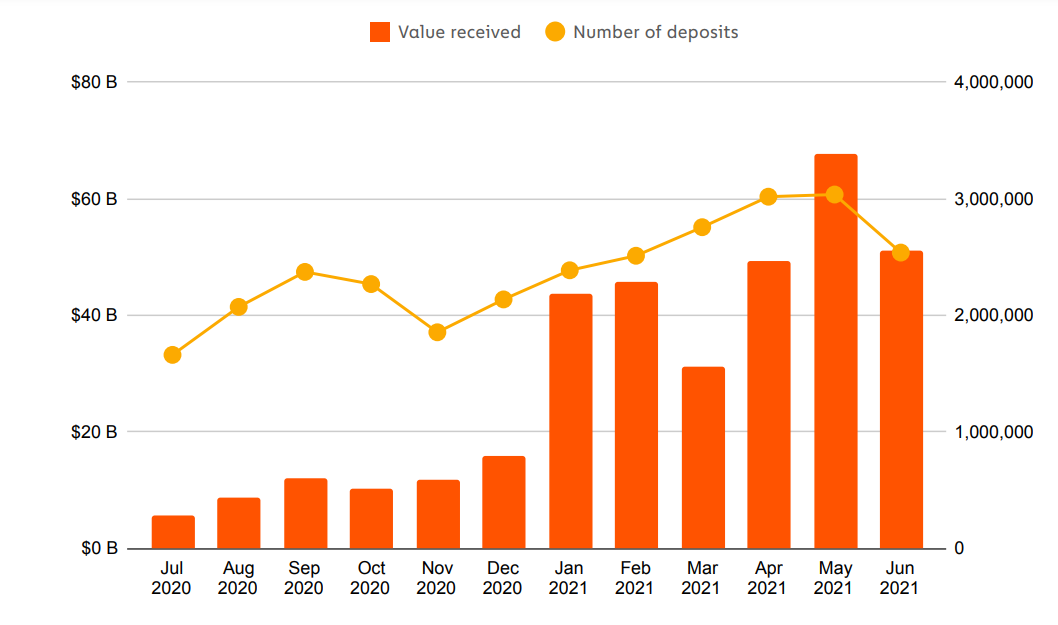
    Cryptocurrency value received and transfers to Latin America
    July 2020 – June 2021

    Source: Chainalysis

    Caution on the crypto front

    Brazil's approach has been to welcome cryptocurrencies but to do so in a phased and cautious manner. Contrasting with El Salvador, Brazil has not tied itself to Bitcoin which is after all just one particular and notoriously volatile cryptocurrency. Regulations approved in 2018 allowed investment funds to deal in cryptocurrencies. In 2021, crypto exchange-traded funds (ETFs) were launched. Top exchanges now include Mercado Bitcoin (part funded by Softbank), Binance, and Coinbase. Singapore-based Crypto.com is also opening in Brazil.

    Facing rising inflation Brazilian investors have shown a preference for stablecoins, or cryptocurrencies which are pegged in various ways to other asset classes (such as the US dollar) to reduce volatility. In the first eleven months of last year trading in stablecoins on Brazilian exchanges totalled US$11.4bn, about three times the amount in 2020. There is another strong incentive to use stablecoins - under current Brazilian regulations purchasing them is tax-free, unlike the purchase of US dollars, which attracts IOF, the financial transactions tax which ranges between 1% and 6.4%. According to a Central Bank (Banco Central do Brasil - BCB) estimate in August last year Brazilians held US$50bn in crypto, compared to US$16bn held in US stocks. It has also been estimated that Brazil has as many as 3.1m crypto traders registered with the exchanges.

    Separately, the Brazilian authorities are also working on a potential Central Bank Digital Currency (CBDC). Unlike the decentralised anonymity of Bitcoin, a CBDC by definition is controlled by the Central Bank which will have the power to establish operating parameters and protections against money laundering and the funding of terrorism (AML/CFT) measures). In March this year the BCB said it had selected nine CBDC pilot projects from 47 proposals. The successful bidders include lending platform Aave, Brazilian cryptocurrency exchange Mercado Bitcoin, bank federation Febraban, German payments company Gieseck + Devrient, and traditional Brazilian banks such as Santander and Itaú. Depending on the progress of lessons learned from these pilots, a CBDC could be launched in 2024.

    Separately, on 24 February this year, a Senate committee approved a new bill to regulate the cryptocurrency market. It defines crypto assets as “digital representations of value that can be traded or transferred electronically and used for payment or investment purposes”. It also seeks to define the role of crypto exchanges and service providers. Tax incentives are offered to crypto mining when powered by renewable energy. According to bill sponsor Senator Irajá Abreu “the intention of the project is to curb or restrict illegal practices such as money laundering, tax evasion and many other crimes. There is a market which is licit, and legal, which represents the vast majority, but there are exceptions.” Under the current text of the bill the government must choose whether the market will be regulated by BCB or CVM, the securities and exchange commission. Irajá envisages regulation leading to crypto payments eventually being accepted in Brazilian supermarkets, shops, and car dealerships. Brokers say the bill, which will eventually be debated in the lower house, will face the challenge of achieving the right level of regulation: too-heavy rules will increase bureaucracy and admin costs; too light will increase risks of fraud.

  • The light touch in Argentina

    Patrick de Courcy 11 May 2022 Hits: 1442

    Unlike Brazil, Argentina has a largely unregulated crypto market, which is nevertheless developing rapidly. In Brazil most of the trading is done through regulated exchange. In Argentina most is done on an online peer-to-peer basis (P2P) which is more open to abuse. A big driver for crypto take-up in Argentina has been high domestic inflation and low confidence in the national currency. According to Anthony Pompliano, a crypto specialist, “Argentines don't trust their central bank, they want money that can't be degraded by anyone. They want to be able to access monetary value without having to ask for permission. They want to be able to send and receive money without anyone getting in the way between them and their counter-party.”

    Another analyst, Santiago Pontiroli, at the Chilean branch of cyber-security company Kasperky, says the big driver for crypto in the region has been the combination of high fiat currency inflation and economic crisis. According to the global index of cryptocurrency adoption published by Chainalysis, the top Latin American crypto economies are Venezuela (ranked 7th in the world) followed by Argentina (10th in the world), Colombia (11th), and Brazil 14th. Chainalysis ranks countries by looking at various factors relative to the wider economy including value and volume of crypto trading. Consultancy Finder on the other hand, using different methodology, says Argentina and Mexico are leaders in crypto adoption in the region, measured in terms of penetration as a proportion of the population. In Argentina 15.2% of the population is said to own crypto, with the most popular currencies being Bitcoin, Ethereum, Dogecoin, Solana, and Ripple.

    Like El Salvador, Argentina has faced warnings from the IMF that an unregulated crypto boom could increase financial risk. The text of the March 2022 US$45bn debt rescheduling and economic stabilisation agreement with the IMF commits the government to “discourage the development of cryptocurrencies” as a way of combating “money laundering, informality and dis-intermediation”. The Argentine crypto-community reacted angrily saying crypto currencies are helping the country develop technology and protect citizens from a weak fiat currency.

  • Drug cartels cast a shadow over Mexican crypto

    Patrick de Courcy 11 May 2022 Hits: 1573

    At least four trends are at work in the Mexican crypto and fintech environment. These are, first, a strongly conservative approach by the monetary authorities to adopting a crypto-currency as legal tender; second, and despite this, a lively a political debate on adoption; third, a willingness to experiment with various fintech and crypto-linked payment schemes; and finally, in fourth place, concern over the use of crypto by the country's powerful drug smuggling cartels.

    Mexican officials closely followed the adoption of Bitcoin as legal tender in El Salvador. In June 2021, after the Salvadoran government had announced its decision to go ahead with adoption, the Mexican Central Bank (Banxico), the finance ministry (SHCP), and the bank superintendency (CNBV) issued a joint statement stating that crypto assets are not legal tender in Mexico and are unlikely to become so. “The financial authorities reiterate their warnings...on the risks inherent in the use of so called ‘virtual assets’ as a means of exchange, as a store of value, or as another form of investment” the statement said, adding that financial institutions “are not authorised to offer to the public, operations with virtual assets, such as Bitcoin, Ether, XRP, and others”. Finance minister Arturo Herrera said under current rules cryptocurrencies could not be used in the Mexican financial system.

    Banxico governor Alejandro Díaz de León subsequently reinforced the message saying Bitcoin was more like a means of barter than what he called “evolved” fiat currencies. He said, “Whoever received bitcoin in exchange for a good or a service, we believe that transaction is more akin to barter because that person is exchanging a good for a good, but not really money for a good”. He added: “Bitcoin is more like a dimension of precious metals than daily legal tender”. He also highlighted bitcoin's volatility, adding “people will not want their purchasing power, their salary, to go up or down by 10% from one day to another”. The Mexican government has taken steps to regulate crypto. A 2018 law, primarily focused on fintech regulations, requires all crypto currency trading platforms registered in the country to report any trades exceeding MXN56,000 (US$2,759). The law also set up a cyber investigations unit (UICOT) with the federal attorney general’s office (FGR), to track and, if necessary, investigate any large-value crypto transfers.

    While the monetary authorities are strongly opposed to any use of cryptocurrency as legal tender, the political debate about that possibility remains very much alive. Ricardo Salinas Pliego, Mexico's third-largest billionaire, and a close ally of President Andrés Manuel López Obrador (AMLO), has emerged as a strong pro-crypto lobbyist. In June last year he said Banco Azteca, part of his financial conglomerate, was considering whether to accept crypto currencies. In December of that year Elektra, a supermarket chain that also forms part of his Grupo Salinas, said it would accept Bitcoin as payment for purchases. At a Bitcoin conference in Miami in April 2022 Salinas issued a dramatic warning, claiming that a new wave of global inflation was imminent, accusing the US Federal Reserve of “making fake currency out of thin air” and recommending that his listeners should “buy Bitcoin and sell those coins...say no to fiat fraud”. Senator Indira Kempis, a member of the centre-left Movimiento Ciudadano, has meanwhile claimed she is preparing a bill to make Bitcoin legal tender, similar to the approach taken by El Salvador.

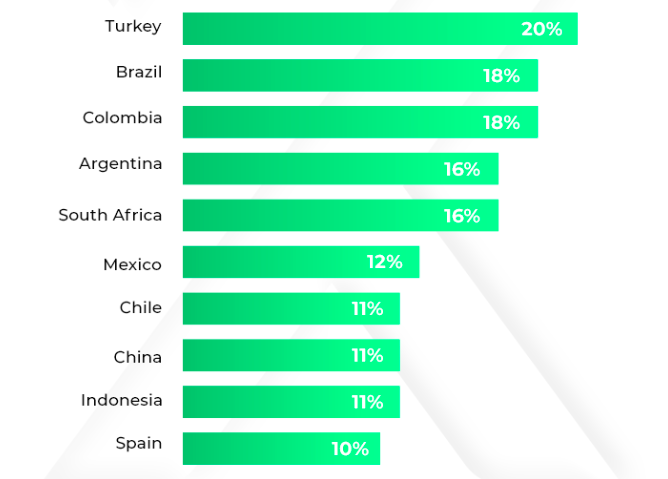
    Top ten countries with the most cryptocurrency users

    Source: Statista data

    Despite official opposition to formal crypto adoption, trade in crypto currencies has grown strongly. Mexican airline Volaris has said it will accept payment in Bitcoin from its El Salvador-based customers. Rappi, the Colombia-based delivery app, has said it is launching a pilot project under which its customers in Mexico will be able to pay for services in cryptocurrency. E-commerce giant Amazon says it will launch a digital currency pilot in Mexico. Although details have not been formally announced, the company is recruiting developers and other staff for what it states will be a new product to “enable customers to convert their cash into digital currency which [they] can enjoy using for online services including shopping for goods and services like Prime Video”.   

    A major concern in Mexico is the connection between crypto adoption and crime. A report by the UN International Narcotics Control Board (INCB) in March 2022 said that cyberspace and cryptocurrencies have become the “new frontier” for drug trafficking organisations (DTOs) and other criminal groups in the country. It estimated that DTOs in Mexico launder around US$25bn a year, and increasingly see crypto currencies as a useful way of diversifying and concealing these illicit money flows.

    While, as we have seen, the government does not encourage crypto, it has tolerated the spread of crypto currency exchanges, such as Bitso (a home-grown financial start-up), as well as allowing operations by US-based exchanges such as Coinbase Global. In February 2022 Coinbase Global ran a free pilot programme allowing cryptocurrency recipients to convert their funds directly into Mexican pesos. The pilot ran until end-March, continuing thereafter as a paid-for service for a nominal fee. Functionality is set up in such a way that individuals resident in the US can send remittances to Mexico in Mexican-peso convertible cryptocurrency, without the bureaucracy normally associated with traditional cross-border payments.

    According to the INCB, drug cartels have evaded scrutiny of high value transactions set out in the fintech law by a technique known as ‘smurfing’ - sending multiple lower value crypto transfers. In 2020 Santiago Nieto, the then-head of the federal Financial Intelligence Unit (UIF), said the Covid-19 pandemic had helped accelerate a shift towards cyber-crime. Separately blockchain data platform Chainalysis said in its 2022 Global Cryptocrime report that 2.4% (US$57m) of the US$2.4bn worth of cryptocurrency received by Mexico in the year to June 2020 was illicit. Likewise, it calculated that US$39m or 1.6% of crypto flows out of the country was illegal. Rather than being reassuring, these relatively small percentages suggest there is a significant potential for growth in crypto-based money laundering.

  • Venezuela’s path from crisis to crypto

    Patrick de Courcy 11 May 2022 Hits: 1461

    Venezuela is often cited as an example of the negative case for crypto adoption, where a perfect storm of an extreme economic crisis, hyperinflation involving an almost complete collapse in the value of the Bolívar, the national currency, a massive fall in living standards, government capital and currency controls, and US economic sanctions have all driven the country towards crypto. Since 2015 the country has lost around two thirds of its GDP.

    On paper at least, the Venezuelan government was one of the early movers on the cryptocurrency front. In December 2017, nearly five years ago, the government of President Nicolás Maduro launched the ‘petro’, a cryptocurrency which it claimed was backed by oil reserves. However, little has been heard of the petro since. Because of government controls, it is arguably more of a Central Bank Digital Currency (CBDC) than a decentralised crypto currency; it has been used intermittently for some pension and administrative payments, and for subsidised petrol. However, it appears to have had limited utility as a way of evading US economic sanctions.

    Despite scepticism over the Petro, since 2018 and against a background of dollarisation and domestic economic liberalisation, there has been a surge of interest in crypto currencies among the public at large. In 2021 Venezuela ranked seventh in the Global Cryptocurrency Adoption Index. A significant number of businesses in Caracas and some other cities accept payment in crypto currencies. Payment platforms such as Binance Pay, Reserve, and Valiú operate in the country. Businesses accepting crypto include Simón Bolívar International Airport, Bio Mercados (a supermarket chain), and SimpleTV (a cable TV service). Church’s Chicken, a fast-food chain, says it is paying bonuses to its employees in DASH Coin.

    Venezuelan economist Aarón Olmos says purchases of various crypto assets have grown, mainly through peer-to-peer (P2P) exchanges. “In a difficult economic situation crypto asset have started to become attractive to many Venezuelans” he says. In 2018 the government created a regulatory body, the Superintendencia de Criptoactivos (Sunacrip), which along with the central bank issued rules governing currency trading and mining.

    The authorities want to promote crypto mining as a new business, but although Venezuelan electricity tariffs are among the lowest in the world, electricity supply is extremely unreliable and there are frequent power cuts. A report by Cambridge University ranked Venezuela as one of the world’s top ten cryptocurrency mining countries. Criptoavila, a company set up in 2021 to sell computers and other equipment to crypto miners, says current rules prohibit mining in residential areas (to avoid spikes in electricity demand that could trigger a shutdown in the grid). It hopes to promote crypto-enabled ATMs which would significantly expand crypto use.

    To some extent Venezuela’s uniquely difficult conditions are favouring fintech innovations just as much, or even more than crypto. US based mobile payment apps like Zelle and Venmo have prospered locally, helped by various trends. One is the increasing informal dollarisation of the Venezuelan economy. By mid 2021, for example, polls showed that as much as 70% of all Venezuelan domestic transactions were conducted in US dollars. Another is the sheer scale of emigration – over 5m Venezuelans have left the country. Many of them send some of the dollars they earn in neighbouring countries like Colombia, Peru, and Ecuador to family back home. The presence of large numbers of Venezuelans in the US is also helpful since to function mobile cash apps often require a US telephone number or bank account details. Opinion polls suggest that about 8% of adult Venezuelans have a US bank account or access to an e-wallet. The real coverage of these payment platforms is thought to be much higher, since individuals often transact on behalf of a wider group of friends and family.

    Venezuela has also seen rapid growth in people playing computer games for prize money, such as Axie Infinity (mentioned above). One of the most popular games in Venezuela is RuneScape, a massive online medieval role-playing game. According to an article in Investment Monitor, in late 2021 average Venezuelan wages were the Bolivar equivalent of US$25 a month. However, by putting in up to 12-hour computer shifts, Venezuelan game players could earn between US$2 and US$7 a day.  Victor Hugo Rodríguez, chief executive of financial services company LatAm Alternatives, commented: “These people are finding new ways to make money, new ways to utilise digitalisation, a new way to deploy their capabilities to provide for their families. I applaud the way these people are thinking, and I believe it shows the potential technology could have in changing the landscape of the country over the next ten to 20 years.”

  • Conclusion: course set for convergence and turbulence

    Patrick de Courcy 11 May 2022 Hits: 1358

    A snapshot of the state of cryptocurrencies and fintech in mid 2022 suggests various conclusions. Perhaps the most important is that both are demonstrating explosive growth and are likely to move towards some kind of underlying convergence. It is clear that in future money will be transacted even more digitally than it is today, on mobiles and other devices, at greater speed and convenience, and with greater multi-currency convertibility. In five years’ time the region’s financial architecture will be unrecognisable. However, there is uncertainty over how this will play out. The transition will be turbulent – some cryptocurrencies and some payment platforms are likely to fail or to be absorbed by others as the new world begins to emerge.

    Old problems will change but not disappear. In some ways digital money reduces cash-based corruption; in other ways it creates new opportunities for cyber-crime. The threat from money laundering by major drug-trafficking cartels will remain substantial. The challenge for regional governments will be to update regulations rapidly to keep up with technological change. Likewise, the fact that a greater proportion of the region’s population has a mobile phone than owns a bank account provides an opportunity to raise financial inclusion. But without a programme of targeted public education and other reforms such as a reduction in red tape, financial inclusion will not rise on its own.

    Perhaps most importantly, the hopes of a number of governments that cryptocurrencies can become some kind of silver bullet, able to magically sidestep economic sanctions or deflect the fiscal austerity demands of multilateral lending agencies such as the IMF, look unrealistic. Digital payments systems will in the long-term help increase economic efficiency and competitiveness, but in the short to medium term will not resolve the complex headaches posed by fiscal and monetary policy challenges.