Latin America swings left

Items

  • Introduction

    Patrick de Courcy 29 June 2022 Hits: 2181

    In a grossly simplified account of a complex process, Latin America swung decisively to the left in the first decade of this century, in a movement that became known as the ‘pink tide’. By the latter half of second decade, however, that move had lost impetus. The tide was swept back by advancing right-wing administrations, some of which adopted their own versions of the populist style of US President Donald Trump (2017-2021). However, in the late twenty-tens and the early twenty-twenties things are on the move again. Left-wing electoral victories in Mexico, Honduras, Chile, and Colombia, among others are being described as a second wave of the pink tide. What will it be like?

  • What did the first pink tide achieve?

    Patrick de Courcy 29 June 2022 Hits: 1572

    There are many views and disagreements over what the first pink tide really was in Latin America, and over what it achieved. Put at its simplest the pink tide was a collective turn towards more 'progressive' political positions, by a significant group of the region's countries starting around the turn of the century and continuing for roughly a decade. It largely coincided with what has been called the commodities super cycle or extended boom in the global economy, caused by rising demand for raw materials from China which, despite a sharp recession in 2008/2009, continued until 2012-2013. The surge in Latin American export revenues in that decade-plus was an important factor in the politics of the time, allowing many pink tide governments to redistribute income in favour of the poor and the emerging middle classes.

    Inevitably the pink tide played out in different ways according to the countries in question. In many ways Venezuela played a vanguard role when in 1999 its electorate delivered a landslide victory for the recently retired army Colonel Hugo Chávez, a rebellious and politically radical military officer who attracted all those who were disenchanted and disaffected with a narrow and entrenched political class, which, while democratically elected, was also closely identified with sharp inequalities of income and high levels of corruption. Chávez, a charismatic and populist figure, dominated the country until his death from cancer in 2013, handing power to his handpicked successor, Nicolás Maduro, who remains the current incumbent.

    Venezuela's ‘Bolivarian revolution’ became an important outlier during the first pink tide. To put it simplistically, Venezuela became more red than pink. Most of the other countries that moved to the left remained democratic, to the extent that they were broadly free to swing back again to the centre or to the right when, and if, public opinion so decided. Chavismo, however, would not tolerate any swing back towards the centre. While there was initially genuine popular support for Chávez it was to become clear that his rule was essentially authoritarian. Control of the armed forces, the media, the Supreme Court, and the legislature was established to ensure there could be no swinging back to more moderate political positions. Democratic checks and balances were swept aside. The creation of the Partido Socialista Unido de Venezuela (PSUV) after 2007 moved Venezuela closer to becoming a de facto one-party state.

    Elections continued to be held but were largely a form of window-dressing: they cannot reasonably be described as free and fair. In terms of socio-economic results Venezuela’s catastrophic performance also set something of a negative marker for the rest of the region: for over two decades it has been an extremely polarised, conflictive, and volatile society. Mismanagement, together with the collapse of oil prices (Venezuela’s main export) since 2014 has destroyed more than three quarters of its economy by value, and forced at least 5m Venezuelans to flee their country as migrants.      

    The swing to the left was a very different affair in other parts of the region. As the largest Latin American country (whether measured by the value of its economy, the size of its population, or the extent of its territory) Brazil played a key role in moving the centre of gravity of the region to the left. In notable contrast to Venezuela this was done by scrupulously democratic means led by the Partido dos Trabalhadores (PT) of Luiz Inácio Lula da Silva, a long-standing campaigner for trade union rights. A serial presidential candidate (1989, 1994, 1998 - before finally winning in 2002) Lula adopted a moderate stance, particularly in his first term (2003-2007), and slightly less so in the second (2007-2011). He was nevertheless credited with achieving strong economic growth and, through programmes such as Bolsa Familia (the payment of conditional cash transfers, where poor families received funding in return for ensuring school and health clinic attendance), with carrying out significant pro-poor redistribution of income.         

    Brazil's turn to the left nevertheless ran into trouble during the latter years of Lula's presidency and those of his PT successor Dilma Rousseff. The end of the commodity boom introduced tougher economic conditions, while the government failed to bring the fiscal deficit under control, creating serious economic imbalances and slowing economic growth. The emerging new middle class saw its expectations of prosperity frustrated. It became evident there was massive corruption within the government, with two gigantic scandals (the mensalão case during Lula's presidency, and the lava jato case when Rousseff was in office). Seismic changes in political affiliations were underway. Public opinion turned back to the right. Rousseff was impeached in 2016 (accused of breaking budget accounting rules) and, with rising crime also an important factor, voters became increasingly disenchanted.

    Other important countries in the first pink tide include Argentina, where centre-right rule by President Fernando de La Rua (1999-2001) collapsed amid riots that followed a disastrous foreign debt default, devaluation, and financial meltdown in the summer of 2001/2002. This enabled a return to rule by the populist/nationalist Peronist movement (Partido Justicialista - PJ) first through the election of Néstor Kirchner (2003-2007) and then, after his death, through the presidencies of his widow, Cristina Fernández de Kirchner (2007-2015). Both enjoyed the political benefits of a forced reduction in the country's foreign debt burden, which enabled a period of growth and redistribution. But economic growth ultimately turned out to be unsustainable. Argentina's break with international capital markets severely limited inward investment. Under Cristina's rule there were also signs of rampant corruption and authoritarianism, particularly an attempt by the government to control the appointment of judges. However, in contrast to Venezuela, the country's system of checks and balances ultimately did its job. The pendulum did swing back. Cristina lost the 2015 elections to a centre-right rival and accepted, however grudgingly, the consequences of defeat in a free and fair contest.

    The pink tide varied in intensity and duration. In Uruguay both traditional parties, the Blancos (Partido Nacional) and the Partido Colorado were in effect pushed aside by a new and rising third force, the left-wing Frente Ample coalition, which won three consecutive five-year terms in office, in 2005, 2010, and 2015. Uruguay has benefited from very strong institutions, and even the most radical of the Frente Amplio presidents, José Mujica (2010-2015), scrupulously respected the independence of the other pillars of the state, the legislature and the judiciary. Chile also appeared to benefit from strong institutions, restored after the end of the military dictatorship in 1990. For the next two decades the country was governed by a succession of moderate and market-friendly left-wing presidents. This eventually morphed into an apparently stable alternation between presidents of the right and of the left, starting in 2010 with the election of the right-wing Sebastián Piñera.

    In Bolivia the rise of indigenous leader and left-wing politician Evo Morales brought unusual stability to a notoriously fragile and historically coup-prone political system. Elected in 2006 with the support of his Movimiento al Socialismo (MAS) political party, Morales increased taxes and social spending and sought to reduce poverty and inequality, supporting land reform and income redistribution. A period of strong economic growth underpinned his popularity. A close ally of the Chávez government in Venezuela and an outspoken critic of US imperialism, Morales did seem prepared to try and remain in power indefinitely, through successive re-elections, emulating the position taken by Chávez in Venezuela. But this was, in time, to lead to a major political crisis. Despite having lost a referendum on his eligibility to seek a fourth term, Morales insisted on standing again in 2019. Amid violent protests and claims of widespread fraud Morales eventually resigned and left the country claiming he had been forced out by a military coup.   

    In Ecuador Rafael Correa was in office for a decade after 2006. Like other members of the pink tide he rejected neoliberal economic policies recommend by the US and the IMF. Also, like other left-wing leaders, he initially benefited from rising oil export revenues, which enabled his government to reduce poverty and redistribute income. However, his authoritarian style brought him into conflict with many domestic lobby groups, the media, and indigenous communities. The fall in international oil prices after 2014 put the government on the defensive. The ruling coalition nominated Correa’s vice president, Lenín Moreno, as its candidate for the presidential elections in 2017. After emerging victorious Moreno broke ties with Correa and moved the country back toward the centre-ground.

    Several other Latin American leaders can be described as members of the original pink tide. If rather arbitrarily, we focus on political forces that advanced in the first decade of the 21st century, it would also include the two consecutive left-wing presidents of El Salvador (Mauricio Funes, who took office in 2009, and Salvador Sánchez Cerén who succeeded him in 2014). Others include social democratic Martín Torrijos in Panama (2004-2009), Fernando Lugo in Paraguay (2008-2012), and Daniel Ortega, another authoritarian leftist in Nicaragua after 2007.

    Map of Latin America shows countries with members of the São Paulo Forum ruling parties (red) and non-São Paulo Forum ruling parties (blue) in 2011 (left), 2018 (center), and 2022 (right)
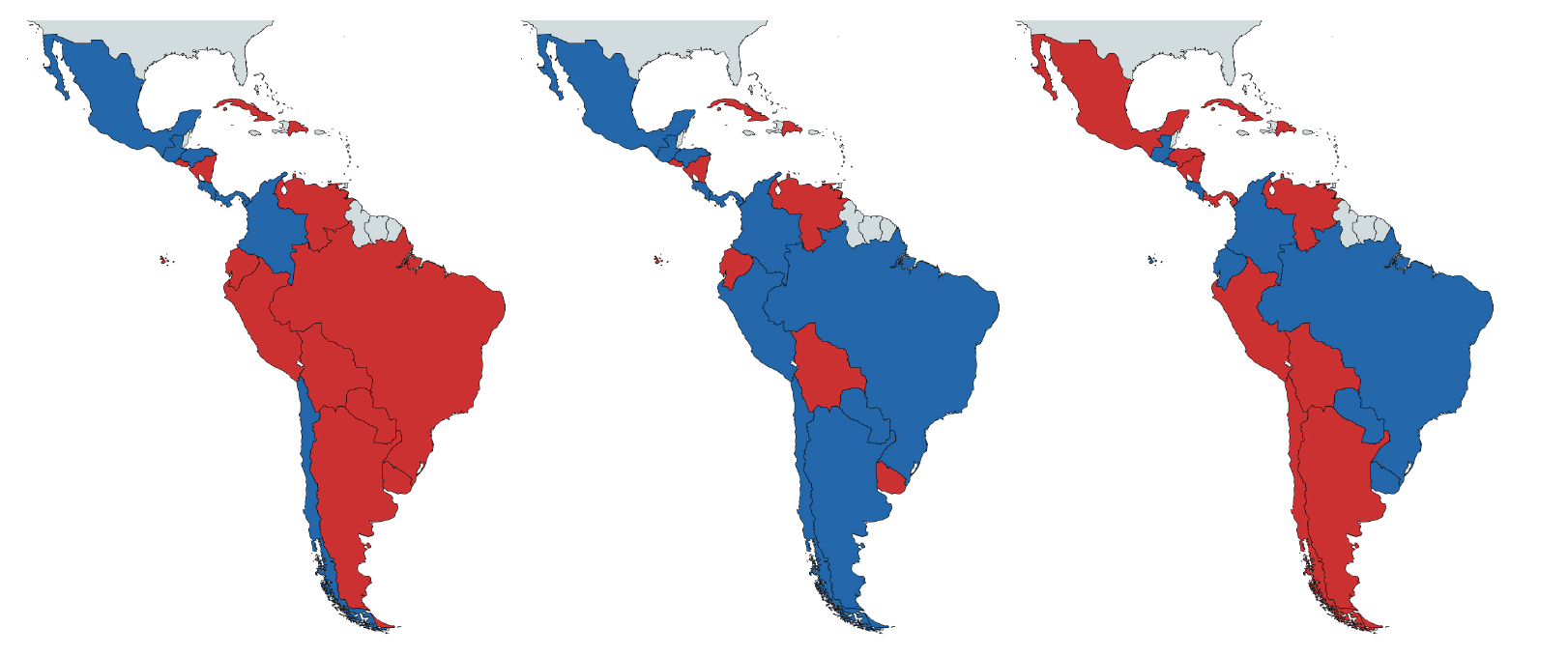
    Note: The São Paulo Forum is a conference of left-wing political parties and movements founded by Brazil’s Partido dos Trabalhadores (PT) in 1990.

  • The debate about the pink tide

    Patrick de Courcy 29 June 2022 Hits: 1647

    Writing in April 2022, Jorge Castañeda a former Mexican foreign minister and now an academic at New York University, said that a second pink tide may have begun in 2018 with the election in Mexico of Andrés Manuel López Obrador (AMLO) followed by the election of Alberto Fernández in Argentina (2019), the election of Luis Arce in Bolivia (2020), Pedro Castillo in Peru (2020), and Gabriel Boric in Chile (2021). In his view the paradigm shift that this represented could spread further if left winger Gustavo Petro were to win in Colombia (something that happened in June 2022) followed by a further victory for Luiz Inácio Lula da Silva in Brazil (where polls are due October 2022). Supporters of the idea of a second wave of the pink tide believe it can re-focus governments on the need to reduce poverty and inequality after the devastation and regression caused by the Covid-19 pandemic in 2020 and 2021. Critics of the pink tide tend to see it in Cold War terms, as a renewed geopolitical challenge to the United States at a time when Russia and China are both trying to raise their profile in the region.

    Castañeda argues, however, that the process is much more complex than a simple swing to the left might imply. In earlier comment he had identified two separate Latin American leftist traditions: one that is “modern, democratic, cosmopolitan, pro-market and social democratic” while the other is deemed to be “nationalistic, authoritarian, statist, populist and anachronistic”. Castañeda has now updated this view further, talking of “three lefts”. In this taxonomy there is first, a modern left, second, a nationalist and authoritarian one, and in third place a dictatorial one. The third group is formed by what he calls a “trio of dictatorships” - Cuba, Nicaragua, and Venezuela. He notes that since 2018 all regional left wingers have been democratically elected in countries that enjoy basic freedoms, market economies, and cordial relations with the US government. But Cuba, Nicaragua, and Venezuela remain the notorious exceptions to this rule.

    Concerning the first, more-modern left wing, Castañeda makes the interesting argument that while its coalitions often include more radical groups (such as the Communist Party), its leaders, including Lula in Brazil, Boric in Chile, and Fernández in Argentina, are fundamentally social-democratic and closer to the political centre than to the hard left, because they have emerged from multi-round electoral systems “in which victory requires reaching beyond one's political base”. In contrast to this the second group of "pink tide" leaders tends to govern more narrowly for its political base. A typical case is AMLO in Mexico, who has constantly attacked the country's independent institutions, including the electoral authorities, the media, and civil society organisations.

    Indeed, Castañeda believes AMLO's leftism is fundamentally old fashioned and populist in nature. “With energy policies that are not only environmentally regressive, but also highly statist and nationalist, AMLO has been harking back to the era of powerful, corrupt, and inefficient state oil and power monopolies” Castañeda writes. He goes on to argue that framing the debate about Latin American politics in terms of a new pink tide is of limited use. All Latin American counties have been adversely affected by the deep, pandemic-related recession of 2020, and all are struggling to respond to rising poverty and inequality. To do this, left wing governments are adopting a diverse range of policies. “There is no new pink tide in Latin America. Rather there is a diversity of governments and movements that rely on similar rhetoric, but whose substantive differences are more significant than their similarities,” he concludes.

    Another analyst, Benjamin N Gedan, looks at the idea of the pink tide from the US perspective. He said that the swing to the left in the region was undeniable and would continue gathering pace if leftists were to win in Colombia and Brazil. However, he then made various qualifications. First, there was little sign of a “durable ideological shift”. He noted for example that there are important exceptions to the trend. Guillermo Lasso, a conservative, won the Ecuadorean elections in 2021, while another right winger, Luis Lacalle Pou, remains highly popular in Uruguay. Both the ruling left-wing coalitions in Argentina and Mexico lost ground in last year's midterm elections.

    Second, he suggests the left's current “winning streak” is unlikely to last very long. While the first wave was backed by the commodities boom, the second is troubled by recession, heavy debt, and rising inflation. Third, US fears that hard left governments in Cuba, Venezuela, and Nicaragua may spread revolutionary unrest across the continent appear ill-founded. Gedan says that in reality the rulers of those countries are presiding over collapsed states, struggling to ensure adequate food supplies, and facing significant domestic protest movements.

    Some of these trends have been highlighted by reactions to the Russian invasion of Ukraine in late February 2022, and to the subsequent war. The left-wing leaders of Argentina and Mexico, together with the right-wing leader of Brazil (Jair Bolsonaro) were reluctant to condemn Vladimir Putin's military adventure. More generally however, Gedan says “it has become clear that Putin has few friends in Latin America, including among leftist governments. No country in the region voted against the most recent United Nations General Assembly resolution condemning the Russian invasion”. While countries in the region can be expected to continue pursuing trade and infrastructure investment opportunities backed by China, Gedan concludes that the region is not prepared to jettison its commitment to democracy, human rights, and the rule of law to be in the good graces of the Kremlin.

  • Between the waves (1): the rise of green politics

    Patrick de Courcy 29 June 2022 Hits: 1477

    A new factor that evolved between the first and second waves of the pink tide is that environmental or ‘green’ concerns have risen much higher up the political agenda. This is in line with a global context in which climate change issues have become much more pressing. In some cases, the resource nationalism of the first wave (a focus on gaining more control and higher value from the extraction of raw materials) is being replaced in the emerging second wave by a much wider set of green policies designed to protect the environment and create a pathway towards a net carbon-zero economy at some point near the middle of this century. There is a widespread perception that action to prevent continued global warming is increasingly urgent.

    Despite that, in the early 2020s pink tide political leaders have far from united around the desirability of green policies. As we have seen, Mexican President López Obrador places a much higher priority on using the country’s fossil fuels to achieve energy self-sufficiency. He has therefore promoted increased oil and gas production by Pemex, the state-owned oil company, as well as backing the construction of new refining capacity, and the use of fossil fuels in domestic electric power generation. AMLO has also called for the nationalisation of lithium mining.

    In stark contrast, during his election campaign in Colombia, left wing candidate Gustavo Petro promised to stop all new oil exploration and to focus instead on renewable energy sources. Petro has said: “We have to move from an extractive economy to a productive one. The energy transition is a decision that can be made on day one. Foreign exchange from oil can be replaced with tourism, and that means jumping from 5m to 15m tourists annually.”

    Significantly, Petro appointed a charismatic Afro-Colombian environmental campaigner, Francia Márquez, as his vice-presidential running mate. Márquez has noted that “both the left and the right are fomenting a policy of extractivism, when humanity faces the challenge today of transitioning from this extractivist economy to a sustainable economy. Life isn't possible without our planet.”

    in Brazil left-wing presidential candidate Lula has tried to adopt a mid-way position arguing that the country must continue producing oil and gas until renewable capacity rises sufficiently to provide a sustainable alternative. In Lula's first wave presidency oil and gas production (particularly from pre-salt offshore oil fields) played a key part in the extended commodities super-cycle and in the associated economic boom. Put bluntly, extractivism was an integral part of Lula's initial political success.

    Lula, in fact, has a mixed record on the environment. His two previous administrations are credited with achieving a major reduction in Amazon deforestation. But these years also saw the building of the Belo Monte hydroelectric plant, notorious for causing environmental damage in the Xingu region. In current circumstances, with international attention focusing on the danger posed by deforestation in the Amazon, Lula has been keen to shift towards a somewhat greener position. Senator Humberto Costa, a close ally of the presidential candidate. has said that if Lula is elected, there will be a faster energy transition, with accelerated development of wind, solar, and bio-mass energy. Costa also says that only “self-sustaining development” will be allowed in the Amazon rainforest. Some of the candidate's advisers recommend a Brazilian version of the Green New Deal or ‘green pact’ advocated in the US.

    The new government of Gabriel Boric in Chile is led by a younger generation of activists who are much more sensitive and attuned to environmental issues. They are for example supporting new legislation that would make carbon neutrality obligatory by 2050. Boric appointed Maisa Rojas, a prominent climate scientist, as his minister for the environment. Even in Bolivia, with a long history of resource nationalism, the leftist government of President Luis Arce now says it is prepared to tap outside expertise in the development of natural gas and lithium deposits.

    Some experts, such as Mathias Alencastro of the Brazilian Centre for Analysis and Planning, argue that extractivism was a key part of the first move to the left. He says, “the first wave, which ran from 2003 to 2014, coincided with a major commodity cycle that totally defined these government’s successes and failures”. A repeat of that long boom is highly unlikely, but Alencastro believes that, in itself, is a reason for optimism. “Climate policy is precisely what differentiates the first and second wave”, he says, adding “without a positive commodities cycle, the left will be forced to be more daring. The green economy fills that void.”

  • Mexico joins the tide

    Patrick de Courcy 29 June 2022 Hits: 1504

    There was one notable absence from the first wave of the pink tide: Mexico. The second largest Latin American country (by size of population and value of the economy) was at the time following a different political pathway. For decades national politics had been dominated by a virtual one-party state: the Partido Revolucionario Institutional (PRI), which combined authoritarian top-down political control, rigged elections, social and economic conservatism, and, in foreign relations, left-wing anti-US nationalist rhetoric. 2000, the start of the new millennium, was a major turning point in Mexican history since for the first time in decades the PRI was defeated in free elections. Instead, voters turned to Vicente Fox, of the right wing Partido de Acción Nacional (PAN), who was in office between 2000 and 2006. Felipe Calderón, another PAN leader, won the following presidency in 2006-2012. It can therefore be held that while the rest of the continent was swinging left, Mexico under the PAN’s leadership was in fact moving in an entirely opposite direction.

    Calderón was followed in 2012-2018 by Enrique Peña Nieto at the head of a somewhat reformed and centrist PRI. During this entire cycle the left, led by defectors from the old PRI, struggled unsuccessfully to gain political power. One of its top leaders, Andrés Manuel López Obrador (AMLO), claimed he too was the victim of electoral rigging, particularly in 2006, when for months he refused to accept his defeat in the presidential contest. Presenting himself as an outsider, AMLO at last achieved victory in the 2018 elections, winning by a comfortable margin and securing a majority in congress for his party, the newly created Movimiento de Renovación Nacional (Morena).

    Mexico's role in the pink tide narrative is very important. It seems reasonable to contend that the larger and more populous countries can achieve greater momentum by putting their critical mass behind any given swing of the regional political pendulum. The first wave of the pink tide was spearheaded by big-population countries such as Brazil, Argentina, and Venezuela. The second wave going into the 2020s could end up with much greater force, as it may gather not only Brazil, Argentina, and Venezuela, but also Mexico and Colombia. This is not only a question of relative influence and soft diplomacy. Acting together, left-wing governments can alter or at least influence the direction of a wide range of multilateral organisations including the Organisation of American States (OAS), the IMF, and the InterAmerican Development Bank (IDB). A second wave of the pink-tide, actively supported by the two Latin American giants, Brazil and Mexico, could have unprecedented force.

    And yet there are reasons to query whether that type of coordination will be possible or even likely. The central issue is that progressives in the different countries face different political contexts, and they are likely to come up with different policies and styles. Centre-left coalitions do not now, and will not necessarily in future, see eye-to-eye. AMLO in Mexico is a case in point. In many senses he has departed from the traditional left-wing blueprint. For a start, while constantly criticising the neoliberal, market-oriented economic policies of his predecessors, he has himself followed a drastic domestic policy of fiscal conservatism. Despite its claims to the contrary, the government has invested relatively little in social programmes, and the publicly promised battle against poverty has been limited by disappointing economic growth.

    A further difference is that AMLO has largely remained faithful to the resource-based economic nationalism of the 1970s, prioritising the exploitation of fossil fuels (oil and gas) in the Mexican energy sector, at the expense of renewable energy (mainly wind and solar). He has sought to roll back the market share of green energy, and to revise the pro-market liberalising energy sector reforms of his predecessor. This has placed him sharply out of step with left wing leaders in other parts of the region, many of whom have forged a new commitment to fight climate change.

    On a wide range of social policies AMLO is more of a conservative than a progressive. While refusing to reveal his personal position on abortion, AMLO supports ‘family values’ and has repeatedly clashed with the country's feminist movement. Another important difference involves the role assigned to the security services to maintain public order and combat the country's violent drug cartels. Before taking office, and on a par with other leftists, AMLO was deeply critical of Mexico's military, accusing it of over-reacting to public protests and regularly violating the human rights of suspects. He insisted that excessive militarisation of the war on drugs was ill-advised and counterproductive.

    However, while still seeking to use social programmes as a way of tackling the underlying causes of violence in the country, AMLO has presided over the creation of a new, largely militarised force, the Guardia Nacional (GN), which he wants to be placed under the military hierarchy at the ministry of defence, rather than under civilian control. For many critics of AMLO there has therefore been no change in what is a fundamentally flawed security policy.

  • Between the waves (2): lessons of the pandemic

    Patrick de Courcy 29 June 2022 Hits: 1464

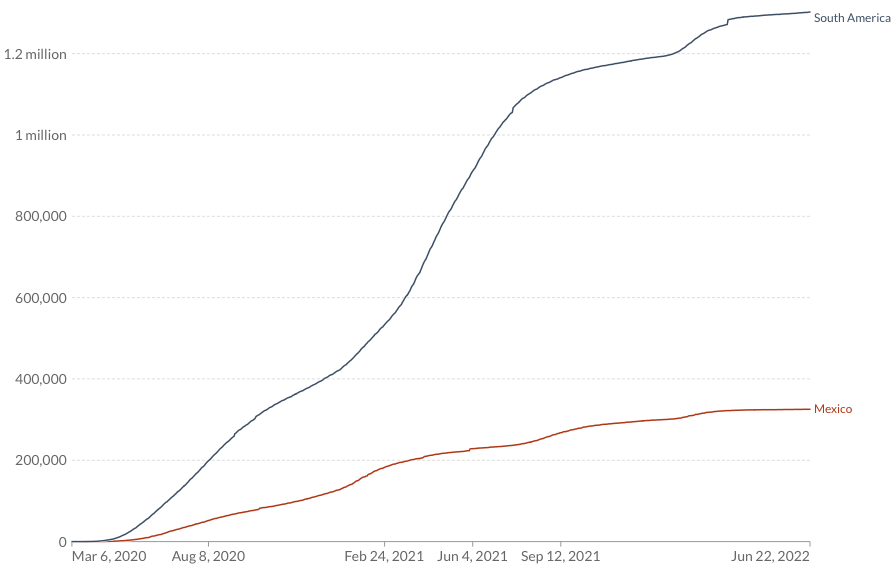
    Starting in March 2020 the global Covid-19 pandemic hit Latin America hard, mainly impacting the following two years (although tail-end effects are likely to continue for some time). The pandemic has been called a ‘black swan’ - a high profile, high impact, and hard to predict event, often something that is experienced only once in a generation. As of May 2022 - just over two years after the original outbreak - Covid 19 was responsible for over 1.19m deaths in Latin America, of which 623,000 were in Brazil.

    The pandemic forced Latin American governments of different political colours to take wide-ranging emergency measures. These included obligatory social distancing, stay-at-home rules and curfews, obligatory use of face masks, the locking down of non-essential businesses, and the interruption of passenger transport links. Public health services were put under immense strain. As vaccines were developed, governments scrambled to acquire the necessary number of doses, and to distribute them rapidly to the population.

    Cumulative confirmed COVID-19 deaths

    At one level the virus was ideologically blind. It attacked and infected populations under dictatorships and democracies, and equally those ruled by right-wing or left-wing political regimes. All governments were subject to intense pressures, and many mis-managed their response to the emergency, stoking up popular anger and fear. It can be argued that whoever was in power in nearly 2020 was, thanks to the pandemic, likely to experience a major subsequent erosion of popularity. In fact, sharp and sustained criticism was directed against the right-wing government of Jair Bolsonaro in Brazil and the left-wing governments of AMLO in Mexico and Alberto Fernández in Argentina. That said, responses to the pandemic varied. The Brazilian president's constant attempts to deny and minimise the threat to public health, and his promotion of unproven remedies and anti-vax conspiracy theories stands out as particularly irresponsible.

    The pandemic had effects that both helped and hindered the emerging second wave of the pink tide. The economic impact was arguably a major negative. According to updated IMF estimates, Latin American GDP fell by 7% in 2020, recovering by 6.8% in 2021, with growth of 2.5% predicted for 2022. In other words, it would take two years or more to regain pre-pandemic levels of output. In addition, millions of jobs were lost, with predictions of an equally slow recovery in employment levels. Informal workers were particularly hard hit by the pandemic. What this means is that the region's emerging second wave of left-wing governments are likely to face significant economic obstacles. They are inheriting weakened economies with reduced future growth rates. In this context of economic constraints, it will be more difficult to reduce poverty or redistribute income.

    On the other hand, the pandemic can also be seen as re-affirming some long-held views of the Latin America left. Right-wing politicians have long claimed the pursuit of market-based economic growth with minimal government intervention should be a higher priority than poverty reduction or income re-distribution. But the pandemic showed that the lack of universal health care, or the existence of crowded and insalubrious shantytowns, posed a direct risk of contagion to the entire population, regardless of income levels. The moral and practical argument for across-the-board free vaccine distribution was overwhelming.

    It is not surprising therefore that during the pandemic a range of social and health ideas more closely aligned with the left gained credibility. Governments of both right and left launched emergency cash payments to the poor. In Colombia demands for the introduction of a universal basic income received a more sympathetic hearing than in the past. In Brazil the right-wing president took a cash transfer programme for the poor that had been originally designed during the first Lula presidency under the name ‘Bolsa Familia’ and rebranded and relaunched it under the name ‘Auxilio Brasil’. Likewise, the case for increased government spending on health - long resisted by politicians of the right who have favoured fiscal austerity - was powerfully reinforced. In short, although the outcome is still somewhat unclear, the impact of the pandemic may have weakened right wing, neoliberal thinking, the long-standing bete noire of left-wing movements.

  • Chile: the new face of the left?

    Patrick de Courcy 29 June 2022 Hits: 1481

    For many analysts Gabriel Boric is the perfect example of a generational change among Latin America's left-wing leaders. He took office as Chile's youngest president, at 36, in March 2022. His age meant he had not directly experienced the period of repressive military rule in 1973-1990 (he was only four years old when General Augusto Pinochet was forced to step down after losing a referendum). It meant he grew up and became a student activist in the post dictatorial era, when Chile was mainly governed by moderate, pro-market centre-left governments. On many issues Boric was in opposition to those administrations since he accused them of not doing enough to challenge ongoing poverty and inequality.

    Boric and many other radical student leaders refused to accept the Chilean status quo, at least in the form it had reached by the twenty-tens, as a result of continuing evolution. For much of that decade establishment politics consisted of an alternation between moderate left and quite strongly right-wing governments, both ultimately wedded to a free market-first type of approach, often described as neoliberalism. Boric came to international attention during the first right-wing government of Sebastían Piñera in 2010-2014, as a leader of university student protests in 2011-2012. By 2012 he was head of Fetch, the university student federation, close to other student radicals including Camila Vallejo (now his presidential spokeswoman) and Giorgio Jackson (now secretary-general to the presidency). The three opposed Piñera's highly commercialised approach to tertiary education, based on the promotion of student loans to fund education fees. This policy led to higher fees, greater student debt, and an expansion of the number of graduates, alongside what seemed to be a downgrade in the value of degrees in the employment market. Many students incurred heavy debts to fund a degree that did not get them the job they wanted.

    Dissatisfaction with the swing to the right under Piñera helped return socialist Michele Bachelet to a second four-year term in office in 2014-2018. To some degree she sought to incorporate the ideas of the new radicals emerging from the earlier student movement. She supported gay marriage and abortion rights, tightened some environmental regulations, and committed to increase corporate taxation to fund free, not-for-profit university education. Yet her reforms were criticised as being too little, too late. The ban on for-profit activity in the university system was only partial, and Chile's Constitutional Court struck down some of her reform proposals as discriminatory.

    As a result, when Piñera won a second term in 2018-2022, there was already a powerful undercurrent of social tensions in the country, not only around student issues but also over inequality, low-pay-out privatised pensions, a high cost of living, and a deep sense of frustration with the political class and the institutions of democracy. Set off by a student protest over fare increases on the Santiago Metro system, mass protests broke out in October 2019 and lasted into early 2020. Over 26 people died in clashes between protestors and the security services, with widespread reports of the latter committing serious human rights violations. Faced with an almost existential threat, the Piñera administration eventually chose to seek a negotiated way out of the crisis. In November 2019 Chile's major political parties agreed that the intensity of the institutional crisis required Chile to open a debate on a new constitution, to replace the text of 1980, written under military rule.

    In theory at least, after it experienced that deep social crisis in 2019-2020, a combination of events had placed Chile on course that would take it decisively to the left, with a whole range of new and more radical policies. In May 2021 a new 155-strong Convención Constituyente (CC) was elected with a marked presence of left-wing and independent members. In the first round of presidential elections in November, the parties of the old centre-left coalition fragmented. Boric's new-left coalition won most votes - 25.8% - and he went on to triumph in the second round with 55.8%, comfortably ahead of the far-right challenger, José Antonio Kast (44.1%).

    Boric took office in March 2022, on what appeared to be the crest of a left-wing wave. But the new president almost immediately ran into political difficulties. Faced by continuing violence by Mapuche indigenous activists in the Araucanía region in the south, the government performed a U-turn, extending a regional state of emergency, something it had promised it would not do, and which it had criticised the Piñera administration for doing. The economy began to slow with the post-pandemic recovery losing momentum and inflation gathering pace.

    At the same time public opinion seemed to be turning against the new draft constitution. According to a Cadem poll in late May, Boric's disapproval rating surged by seven percentage points on the previous month to reach 57%, while his approval rating fell by two points to reach 36%. Support for the president fell across most categories of measurement (it dropped to 38% for “authority and leadership”, to 39% for “having a good governing team”, to 32% for “maintaining public order”, to 32% for “managing immigration issues”, and to 25% for “managing the conflict in Araucanía”). The survey also confirmed earlier polls that a majority of respondents (45% to 37%) are inclined to reject the new constitution when it is put to a referendum in September.

    There are various ways of interpreting the difficult start to Boric's presidency. One view is that after swinging to the left in 2019-2020 Chilean public opinion is simply moving back towards the centre. Another is that Boric is constrained by the lack of a congressional majority. In fact, the combined forces of both the old-left and the new-left parties in the legislature control 67 seats out of 155 seats, against 53 held by the right-wing opposition and a further 20 held by so-called ‘out-of-coalition’ parties. The net result is that, despite winning the presidential elections on the promise of radical reforms, Boric finds himself having to negotiate difficult-to-achieve agreements across a wide political spectrum. He may show the political expertise and negotiating skills to overcome these challenges, but his initial difficulties show that in Chile and elsewhere the success of a second wave of the pink tide is far from guaranteed.

  • Between the waves (3): economic weakness darkens the horizon

    Patrick de Courcy 29 June 2022 Hits: 1443

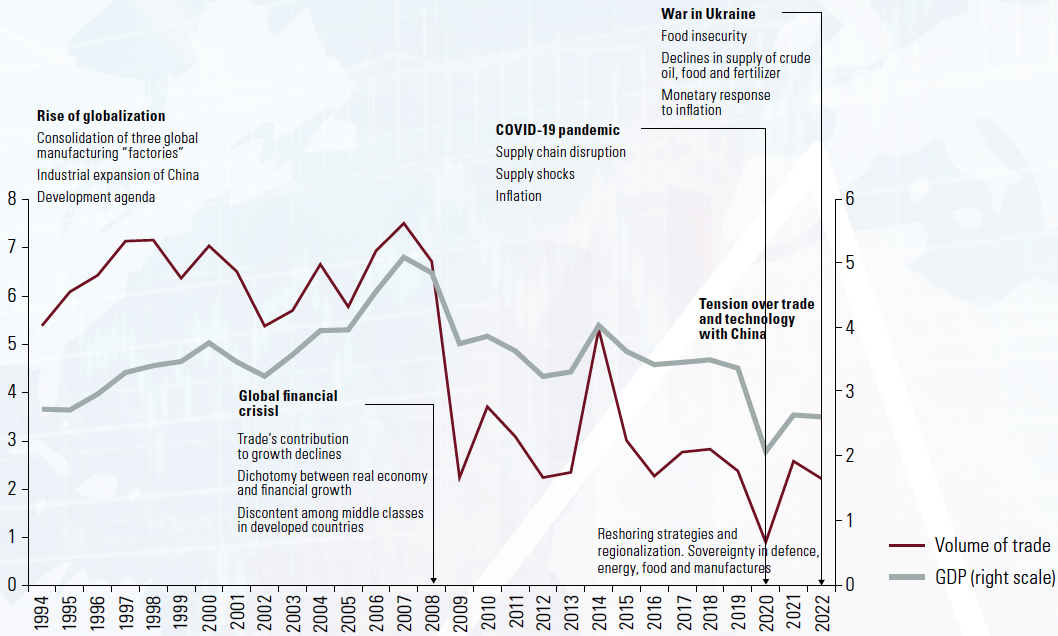
    The first wave of the pink tide was enabled by the extra revenues generated by the global commodity boom in the 2000s and the early 2010s. A repeat of that boom looks unlikely in the 2020s. On the contrary, in general terms the region's economic outlook is now more troubled, as countries struggle to respond to the negative shocks caused first by the pandemic, second by global economic tensions between the US and China, and third by the war in Ukraine. While some analysts see a positive side to the current difficulties, arguing that the absence of any easy economic solutions will increase the chances of genuine reforms being implemented to enhance competitiveness, the reality is that any current or future left-wing administrations face potentially daunting challenges.

    Global headwinds blow stronger
    Annual change in world GDP and volumes of international trade, 1994-2022 (Percentages and five-year moving averages)

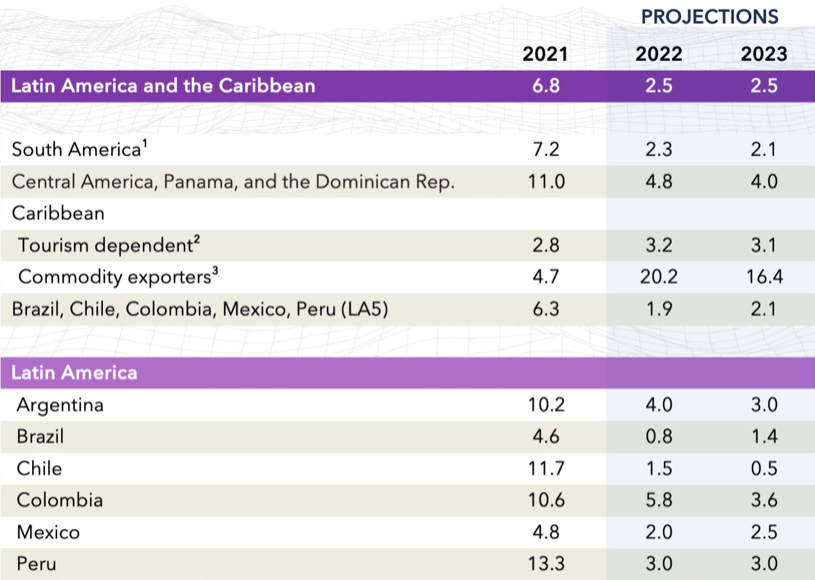
    A study by the UN's Economic Commission for Latin America and the Caribbean (Eclac) published in June 2022 concludes that the changed international environment caused by the war in Ukraine will lead Latin America to experience economic deceleration, higher inflation, the slow and incomplete recovery of labour markets, and an increase in extreme poverty and food insecurity. It predicts that 7.8m people will join the 86.4m whose food security is already at risk. After achieving 6.3% growth in 2021, Eclac says growth will slow in 2022 to 1.8%.

    Most significantly, it predicts that the region will subsequently return to the average growth rate it experienced in 2014-2019, of only 0.3% per annum, which means that GDP per capita will be contracting. It is also worth noting that the base period used in the comparison, the five years to 2019, was politically turbulent with major street protests erupting in Chile, Ecuador, and Colombia, rising evidence of crime and corruption across the region, and presidents being impeached in two countries, Brazil and Peru. While history does not repeat itself, this does suggest dissatisfaction with insufficient economic growth will be a destabilising factor in the next five years, running to 2025.

    Accompanying the disappointing outlook for economic growth, there will be a rise in inflation (the region's average 12-month rate jumped from 6.6% at the end of 2021 to 8.1% by April 2022). Factoring in these elements of stagflation, Eclac concludes that the proportion of the population living in poverty will rise to 33.7% (1.6 percentage points above end-2021), while extreme poverty will rise to 14.9% (up by 1.1 points). The net effect of higher commodity prices, increased transportation costs, and international supply chain disruption caused by the Ukraine war will be negative. Eclac says pro-growth fiscal and monetary policies will be required, which will require steps “to reduce evasion, re-orient tax expenditures and bolster the progressiveness of the tax structure”. The UN body calls for extra measures to improve food and energy security, including more rapid development of renewable energy sources. It makes the wider point that the world is experiencing a “breakdown in globalisation” and a process of regionalisation. This has led to a new emphasis on sovereignty objectives in defence, energy, food, and key industrial sectors.

    Economic forecasts: Latin America and Caribbean
    Real GDP growth (percentage)

    Other multilateral financial institutions are broadly in line with Eclac's pessimistic projections. The World Bank expects regional growth to dip to 2.5% this year and to 1.9% in 2023 “reflecting tightening financial conditions, weakening external demand for growth, rapid inflation, and high policy uncertainty in some countries”. The IMF has predicted growth will slow from 6.8% in 2021 to 2.5% both in 2022 and in 2023. Interestingly the IMF has toned down its traditional neoliberal pro-fiscal austerity position to one which is more supportive of ‘pro-poor’ fiscal stimulus. In a recent blog the IMF said that “to ensure social cohesion and reduce the risk of social unrest, governments should provide targeted and temporary support to low income and vulnerable households, while allowing domestic prices to adjust to international prices”. It also defended what it called “inclusive consolidation” which would prioritise spending on social programmes, health, education, and public investment, while implementing tax reforms (including raising personal income tax) in a sustainable manner. 

  • Brazil – the debate over Lula’s policies

    Patrick de Courcy 29 June 2022 Hits: 1424

    Such is Brazil's size and influence that if Luiz Inácio Lula da Silva, who was in office for two consecutive terms in 2003-2011, wins a third term in elections due next October, the second wave of the pink tide will be deemed to have gathered a lot of critical momentum. Social democrats have long praised Lula as a pragmatic politician with strong negotiating skills. Although he and his administration have been accused of corruption, at a personal level, court convictions against him have been overturned after being judged to have been biased against him. Unlike the incumbent Jair Bolsonaro, Lula is also widely considered to have accepted democratic checks and balances, and to have respected the rule of law.

    Yet none of this necessarily suggests a third, centre-left Lula presidency will be successful. Some analysts say there were ‘two Lulas’ during the first wave of the pink tide. ‘Lula 1.0’, most in evidence during his first presidency, was pragmatic, reformist, and market friendly. Looking back on that period, he himself has highlighted that there was an economic boom, around 250 corporate IPOs, a reduction in Brazil's debt-to-GDP ratio, and a sharp increase in foreign currency reserves. Critics say this was all possible because of the commodities boom. As record export revenues began to subside, however, a less market friendly ‘Lula 2.0’ is said to have emerged. The president and his successor Dilma Rousseff (2011-2016) tolerated corruption, failed to control a widening fiscal deficit, subsidised energy prices in an unsustainable manner, and presided over bureaucracy and rising costs that made Brazil less internationally competitive.

    It is not yet clear if there will be a ‘Lula 3.0’ and if so what he will be like. While the candidate continues to have a commanding lead in the opinion polls, there is still some doubt over what his policies will be. A first 90-point draft manifesto has been submitted to the parties backing Lula's candidature, which will be subject to further negotiations. The document contains a general commitment to economic recovery, to increasing employment and wages, and to achieving a reduction in inflation, by expanding access to food, fuel, and energy. There is a call for massive investment in infrastructure, but no details on how the money needed would be raised. There is also talk of reviewing the 2017 labour reform law, which left wingers believe gave too much negotiating power and flexibility to employers. Trade unions say the extra jobs that the 2017 law was supposed to create never materialised. The current draft of the manifesto suggests a new piece of legislation may be proposed to stimulate employment.

    Investors may also be worried over what the manifesto does not say. Ahead of the 2002 elections, ‘Lula 1.0’ wrote an open letter to the business community promising there would fiscal responsibility and no abrupt changes in policies. In contrast, ‘Lula 3.0’ has yet to make any similar commitment. He has also spoken of lifting the fiscal spending cap (which prohibits raising government spending by more than the rate of inflation), causing some concern over a possible move to an unchecked policy of tax and spend. The business community is also wary of the suggestion of government intervention in specific economic sectors to achieve growth targets.

    The document does promise tax reform. Given Brazil's massively complex and regressive tax system most economists believe tax reform is essential, but there is not necessarily an agreement on what the details should be. It is also unclear where a Lula government would introduce a tax on dividends, which is opposed by the business community. As expected, the manifesto opposes privatisations and indicates that a Lula government would consider reversing the divestment of power company Eletrobras and postal company Correios, both of which are in their final stages.

    To some extent the ambiguity of the document is deliberate, as Lula is still in the process of negotiating more specific deals with the parties in this coalition and seeking to attract centrist voters. But it also underscores the major challenges the presidential hopeful will have to confront if he is to get the economy growing again and overcome the deep divisions in Brazilian society.

  • Between the waves (4): a weakened political system

    Patrick de Courcy 29 June 2022 Hits: 1404

    A further difference between the first and second waves of left-wing administrations in Latin America is that, in general terms, during the gap between the two, political systems and institutions have been weakened, and as a result are now more fragile than they were two decades ago. Up to a point this is a subjective opinion, but it is also supported by various studies and survey-based data.

    The context is that many governments, including the left-wing administrations of the first wave, failed to provide lasting solutions for the problems experienced by the voters. Issues of poverty and inequality persisted, despite some gains in the early years of the first wave. Crime rates seemed to be moving relentlessly upwards. Corruption also appeared to be getting out of control. Even the new middle class, a group that owed its emergence at least in part to the redistributive efforts of progressive administrations, became deeply disaffected. One of the slogans used by the protest movements that swept through Brazil in 2015-2016 encapsulates the mood. The Brazilian government it said, was levying first-world taxes on the population but providing it with third-world services.

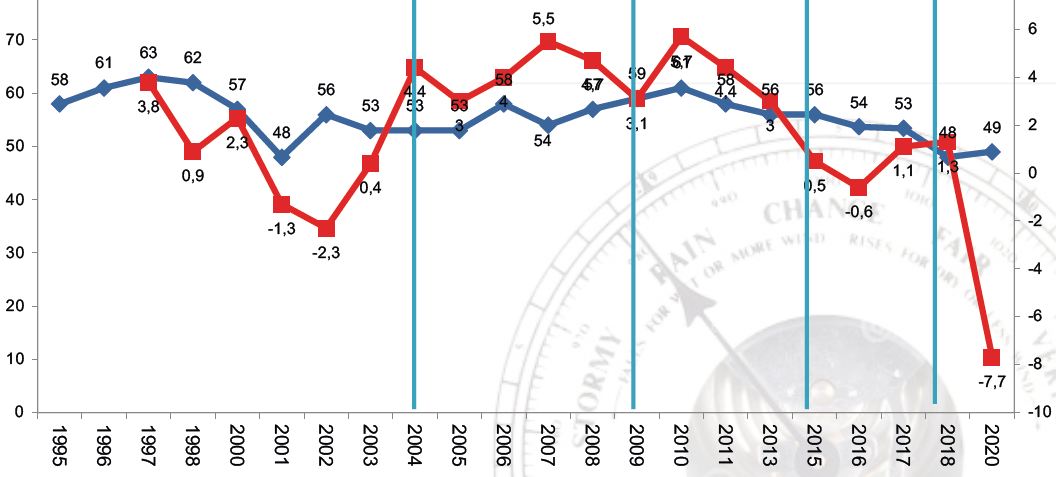
    The regular two-yearly Latinobarómetro polls, covering 18 countries in the region, have given a telling account of what could be called a period of sustained institutional decay. Support for democracy was at 61% of respondents in 2010, but it ebbed consistently during the following decade, dipping to 49% by 2020. Interestingly, overall levels of support for democracy broadly seem to have followed changes in GDP per capita. GDP per capita has been on a downward trend since 2010. The proportion of respondents who were indifferent to the system of government also rose from 16% to 27% in the decade to 2020, and those favouring authoritarian governments stayed broadly constant, dropping from 14% to 13%.

    Support for democracy eroded by falling GDP per capita

    Blue: % of those surveyed who support democracy; Red: GDP growth

    In some of the largest and most influential countries, such as Brazil and Mexico, support for democracy plunged further, down to 40% (Brazil) and 43% (Mexico). Other signs of democratic decay include falling levels of trust in key institutions. By 2020, 44% of respondents trusted the armed forces, 32% trusted the president, 27% trusted the government, 25% trusted the judiciary, 20% trusted the legislature, and only 13% trusted politicians. The fact that in many countries nearly nine out of ten voters do not trust the politicians they elect points to a major crisis of representation.

    A wide range of factors is behind this political malaise. The pandemic clearly had a big impact, placing an unforgiving focus on multiple cases of mismanagement and corruption during the health crisis. A sign of the pandemic's intensity is given by the fact that Latin America and the Caribbean account for 8.4% of the global population but suffered 32.1% of global Covid-19 deaths. Up to 20m jobs were destroyed by the pandemic

    The rise of a new re-invigorated form of populism in the ‘in-between years’ also played a part. Many Latin American countries had already seen the development of powerful populist movements during the earlier part of the 20th century, but a new, rejuvenated, and somewhat unexpected form was brought back to the fore by the presidency of Donald Trump in the US (2017-2021). Put bluntly, Trump-style populism offered a whole new toolbox of rhetorical tricks and techniques to governments that were essentially failing to deliver real and measurable change. The list included an appeal to a supposed former period of national greatness or exceptionalism; distrust of foreigners; a complete rejection of expert opinion; the use of fake news techniques; and an underlying authoritarianism resulting in frequent threats to democracy. Many Latin American politicians have recently tried to adopt what can be called the Trump playbook.

    Recent years have shown that politicians of both the right and the left can adopt populist tactics. Indeed, left wing AMLO and right-wing Bolsonaro, respectively in Mexico and Brazil, have many points in common. The key point however is that whatever its ideological colour, a government that constantly uses populist tactics has a toxic effect on politics and on its successors, often increasing levels of polarisation and narrowing the scope for cross-party collaboration to resolve complex and deeply embedded problems.

    According to a regional review of political risk prepared by Chile's Centro de Estudios Internacionales de la Universidad Católica (CEIUC), volatility and political uncertainty will remain high in the region thanks to the continuing presence of populism, anti-elite sentiment, and xenophobic nationalism. Another think tank, Instituto Internacional para la Democracia y la Asistencia Electoral (IDEA), says that at least half the countries in the region are suffering democratic erosion.

    José Miguel Vivanco, a Chilean lawyer and former head of the US-based Human Rights Watch (HRW) says the region is suffering from three main destabilising trends. These are, first, the idea that once democratically elected governments are then perfectly free to exercise power and govern in an extremely authoritarian manner. A second destabilising trend is what he calls “electoral regression”, including attacks on electoral courts and unsubstantiated claims of fraud. A typical example of that damaging approach is Trump's continuing refusal to accept he was democratically defeated in the November 2020 elections in the US. Vivanco cites a third worrying trend - the continuing and expanding military presence in activities that have been traditionally controlled by civilian authorities.

  • Petro’s victory heralds battle over reforms in Colombia

    Patrick de Courcy 29 June 2022 Hits: 1386

    As this issue went to press leftist Gustavo Petro won the second round of Colombia’s presidential race with 50.55% of the vote, against right-wing anti-corruption candidate Rodolfo Hernández, who received the backing of 47.3% of the voters. The vote is considered a watershed for various reasons. One is that for the first time in more than a generation Colombia’s second-round presidential contest was a battle between two anti-establishment candidates. A late surge for Hernández pushed out Federico ‘Fico’ Gutierréz. It is likely that this reflects deep-seated demands for change, in line with the impact of the pandemic and the surge of street protests over poverty and inequality in 2021. Another indicator of change is that Petro becomes the first-ever elected socialist president in Colombian history. Because of the country’s decades long experience of violent Marxist guerrilla movements, and the perceived threat from socialist Venezuela, the electorate has long been wary of voting for a socialist. Again, the fact that it finally did so in 2022 indicates the strength of underlying pressures for change.

    Petro starts out with an ambitious agenda. Colombia is the second-most unequal country in Latin America after Brazil, and the president-elect is proposing sweeping land reform, and a wealth tax on the country’s 4,000 private fortunes, which is expected to bring in US$10bn a year. The extra money raised is to be used to fund free higher education and a minimum wage for 1.3m people. Petro also seeks a ban on oil exploration, open-pit mining, and fracking, with resources being re-directed to manufacturing, agriculture, and tourism. Petro must not only face the challenge of achieving a more inclusive economy; he must also tackle the thorny issue of the country’s rural violence, more intense than anywhere else in the region and led by deeply embedded left-wing rebels and right-wing paramilitary forces. This will mean adjusting and relaunching some of the reforms promised, but never fully delivered, in the 2016 peace agreement with the FARC (Fuerzas Armadas Revolucionarias de Colombia) guerrillas.

    Petro’s victory was quickly welcomed by other left-wing presidents in the region, such as those from Mexico, Chile, and Argentina. But the new president will face difficult obstacles. The business community is concerned over higher tax rates and may postpone investment and send capital abroad, weakening the peso and thereby fuelling inflation and slower growth. The parties of the political establishment are still strong in congress (those allied to Petro control only 15% of the seats). As Boric has found in Chile, the new president may find himself swamped with simultaneously occurring crises, reducing his short-term political options. Like Boric, Petro (who takes office in early August) could see an initial drop in his approval ratings.

  • What is the prognosis for the left?

    Patrick de Courcy 29 June 2022 Hits: 1429

    The second wave of the pink tide is a reality and, as we’ve mentioned, there is a strong possibility that Brazil will add momentum by electing Lula in October of this year. Yet the outlook for the second wave is at best mixed. This is because in Latin America, as a rule, it is easier to win elections than to govern effectively. In addition, there is a fundamental disconnect of time scales. Most of the key problems – from poverty and low competitiveness, through to corruption, high crime rates, and low-quality education – will require persistent attention over the medium to long term, most likely measured in decades. Yet political leaders get elected between every four and six years, and, including mid-terms, elections occur roughly every two years. As a result, politicians face an enormous temptation to adopt populist approaches, using misinformation and ‘post truth’ marketing techniques.

    A core forecast therefore is quite pessimistic. This is that governments composing the second wave of the pink tide during the 2020s will perform less well than did those in the first wave. Crudely put, this is because they are taking office in a less supportive international context. These governments will also face bigger problems (for example not just demands for greater equality of opportunity but also the simultaneous need to pursue a wide-ranging climate change agenda). Unlike with the first wave, there is unlikely to be a new commodities boom to give them some extra fiscal room for manoeuvre. And unlike with the first wave, the rise of a new form of populism and political polarisation will make it more difficult to build consensus around much needed reforms, which will also be held back by the traditional political elite.

    This is not to say that all will fail. The governments with stronger institutions are likely to do better, together with those leaders able to build consensus, think on a more long-term basis, and who are also able to spot and exploit innovative trade and investment opportunities.