
Mexico and Central America
Mexico and Central America loom large in US policy towards Latin America, for various reasons. Mexico is particularly important because it is the second largest economy in Latin America (after Brazil) with the added factor that it shares a long border with the US and is closely integrated into the North American supply chain. Over the last three decades links between the two countries have intensified. Mexico has a population of 126m, but as we have seen there are an electorally important additional 37m people of Mexican descent living in the US. Issues of drug trafficking and migration also loom large in the relationship between Central America, Mexico, and the US.
Mexico: annual trade with US and China US$bn
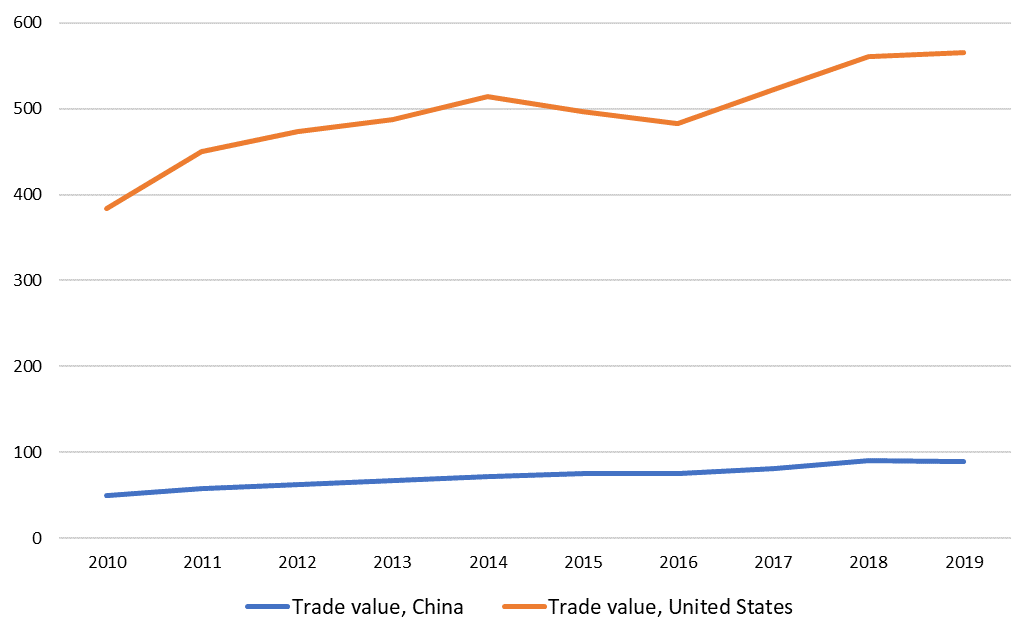
Source: International Trade Centre (ITC)
US presidents have four-year terms in office, while Mexican presidents serve six years, known as a sexenio. This means that every Mexican president must expect to deal with more than one US administration. Amlo took office in December 2018 nearly two years after Trump had moved into the White House. The political chemistry between the two men has been complex. They are at opposite ends of the political spectrum but there are many nuances (Amlo for example is also a social and fiscal conservative).
Both are populists with a cavalier attitude to expert opinion. Both have managed the Covid-19 crisis poorly. Both are climate change sceptics and enthusiasts for fossil fuels. Surprisingly perhaps, the relationship between the two has been relatively amicable. This is largely because Amlo has gone out of his way to avoid confrontation, and yielded to US demands, for example over the “remain in Mexico” Migrant Protection Protocols. He has also remained low-key on President Trump’s build-a-wall rhetoric. This accommodative position may reflect Amlo’s relative lack of interest in foreign policy, and his overriding focus on domestic issues.
Traditionally, Mexican presidents have tended to find a Democratic Party-occupied White House easier to deal with than a Republican one. That might lead to an expectation that if Biden wins the US election, the US-Mexico bilateral relationship might in some senses improve. This may in fact prove true, but a number of points of friction are likely to remain. Illegal migration and drug trafficking are complex and ongoing issues. The Obama administration (2009-2017), during which Biden served as vice-president, failed to get congressional support for major immigration reform and ended up deporting nearly 3m undocumented migrants, a higher annual rate than during the subsequent Trump administration.
Under a Biden presidency there will also be continuing potential for trade and environmental disputes, within the framework of the USMCA, particularly because both countries will be trying to recover from Covid-linked record levels of recession and unemployment. While adopting a different tone and approach, Biden too will want to be seen as protecting US jobs from the perceived threat of offshoring.
Of particular importance to the Central American countries will be Biden’s promise of a more joined-up approach to the problem of illegal migration. The Democratic Party candidate, who was involved in negotiations with the Northern Triangle countries during the tail-end of the Obama administration, has outlined a US$4bn proposal which would focus on attacking the root causes of illicit migration, mobilising private investment, improving security and the rule of law, addressing endemic corruption, and prioritising poverty reduction and economic development.
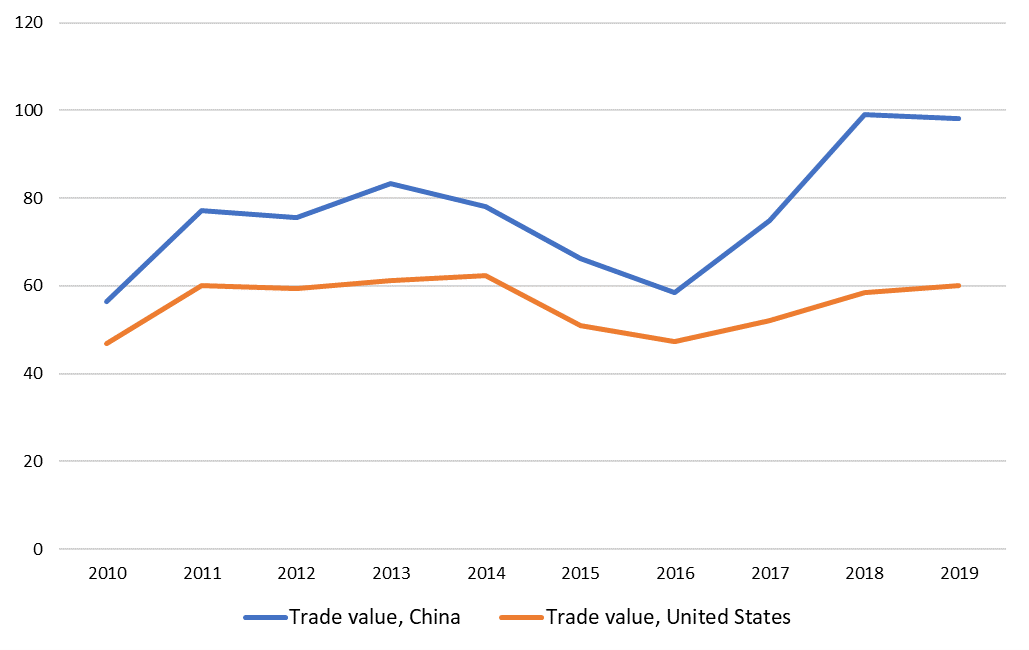 Source: International Trade Commission (ITC)