The energy transition in Latin America and the Caribbean

Items

  • Tough times for fossil fuels

    LatinNews 11 June 2021 Hits: 2812

    Is it ‘game over’ for fossil fuels and if so, what are the implications for Latin America and the Caribbean (LAC)? The ‘end of oil’ has frequently been predicted but seems unlikely in the short term. What does seem clear is that a relatively gradual process of energy transition is under way, involving a shift away from polluting fossil fuels such as a coal, oil, and gas towards cleaner renewable energy such as hydro, wind, and solar. But opinions are split on the speed, shape, and duration of that transition. Some believe peak oil – defined as the maximum production point for oil and gas – may have already occurred in 2019, the year before the start of the Covid-19 pandemic. Others believe the peak is still to come and could happen any time between now and 2040. When, how, and if it happens, peak oil has major implications for net oil exporting and oil importing LAC countries. Their patterns of energy use are shifting, with consequences for the pace and quality of economic growth and employment.

    Major international oil companies (IOCs) are already experiencing the transition. Europe-based IOCs are busy re-defining themselves not as narrow oil and gas companies, but as wider energy companies, diversifying into alternative and renewable energy sources. Under political pressure, they are also setting targets to reduce carbon emissions from their operations. The US-based IOCs have been slower to acknowledge the need for this change but are beginning to address the threat to their traditional business model. The reaction of national oil companies (NOCs) has also been diverse. Some, like Norway’s Equinor, are in full transition to renewables including offshore wind power. Others, like Mexico’s Pemex, are choosing to retain their focus on traditional fossil fuels like oil and gas.

    In late 2020 and early 2021 there were many signals of this unfolding upheaval in global energy. After reporting significant losses, in August US oil giant ExxonMobil was ejected from the Dow Junes Industrial Average, replaced by Salesforce, a software company, in what analysts saw as symbolic of changing economic times. In September 2020 BP released its annual Energy Outlook in which it argued that global demand for oil could well have peaked the previous year and that the Covid-19 crisis was likely to have a “significant and persistent” impact on global economic activity.

    In December Royal Dutch Shell told its investors that it would probably never again produce as much oil as it did in 2019, with future output likely to fall by an average of 1%-2% a year. In the same month the authorities in New York said the state’s US$226bn pension fund would sell shares in oil and gas companies that failed to move fast enough to reduce their emissions. In January 2021, Joe Biden was sworn in as president of the United States and committed to deliver a “green agenda” to develop clean energy and address climate change risks. In May, shareholders at Chevron, another US major, voted to support tighter emission controls (targeting so-called Scope 3 emissions, those that come from the burning of its hydrocarbon products). Also in May, a Dutch court ruled that Shell needed to do more to cut emissions to protect future human rights.
  • ​Energy transition scenarios

    LatinNews 11 June 2021 Hits: 1779

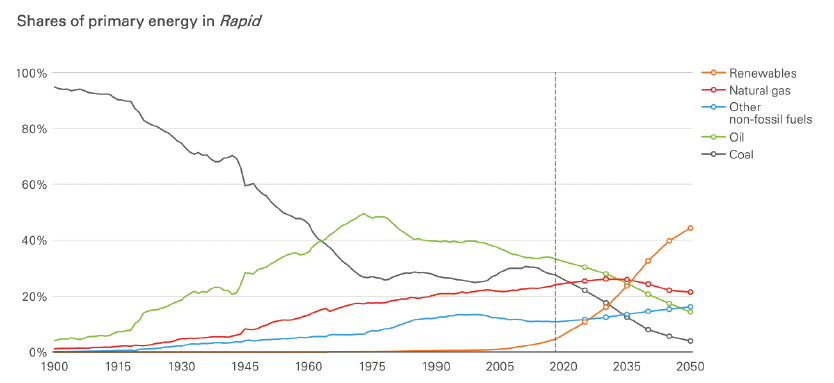
    BP’s Energy Outlook published in September 2020 notes that the era of coal dominance (measured by its share of primary energy usage) ran from before 1900 to around 1960. Since 1960 we have been living in the era of oil, with natural gas also playing a prominent role. In the next 30 years, however, BP expects a big shake-up with renewable energy rising to the top from around 2035 onward.

    Low-carbon transition leads to a fundamental shift in the global energy system
     
    Source: BP
     

    To understand what the future may hold, the Energy Outlook outlines three alternative scenarios, as follows:

    • Rapid Transition. In this scenario government policies and other measures are consistent with limiting the rise in global temperatures to below 2 degrees Celsius by the end of this century. Carbon prices rise sharply. CO2 emissions from energy use fall by around 70% by 2050.
    • Net zero scenario. This is a more radical alternative where the Rapid Transition policy measures are “added to and reinforced by significant shifts in societal behaviour and preferences which further accelerate the reduction in carbon emissions”. This puts society on track to limit the rise in temperatures by the end of the century to 1.5 degrees celsius. Global carbon emissions to 2050 fall by 95%.
    • Business as usual (BAU). This is the least effective in terms of carbon emission reduction. It assumes government policies, technologies and social preferences “continue to evolve in a manner and speed seen over the recent past”. Carbon emissions peak in the mid-2020s, but little headway is made in reducing emissions from energy use, which by 2050 are only 10% lower than in 2018.  

    The report has many implications for LAC energy producers. In both the Rapid and Net Zero scenarios, carbon prices will increase sharply, to US$250/tonne of CO2 in 2050 in the developed economies and to US$175 in the emerging economies. This will incentivise gains in energy efficiency. In all scenarios the share of fossil fuels in primary energy use drops, while the shift towards greater use of electric power pushes up reliance on renewable energy sources. The share of hydrocarbons in primary energy falls from 85% in 2018 to 20%-70% in 2050 (depending on scenario). The share of renewable energy rises to 20%-60% by 2050.

    One of the significant implications of the changes under the Rapid scenario is that for the next 20 years the global fuel mix will be much more diversified that in the past, with oil, natural gas, renewables, and coal all providing material shares of world energy. The report suggests that as a result the fuel mix will be driven more by consumer choice than by the simple availability of fuels. There will also be increasing demands for integration across fuel and energy services. Technological change will favour increasing use of electricity and hydrogen. Because they are more expensive to transport than fossil fuels, energy markets could become more localised. The peak and subsequent decline in coal, oil, and natural gas consumption could trigger greater competition within individual fuels. Consumer negotiating power will be stronger relative to upstream energy producers.

    Many analysts have been content to envisage a market-based future where different types of energy vie fairly freely for market share based on price signals and gradual regulatory change in the direction of decarbonisation. But a May 2021 report by the International Energy Agency (IEA) took a surprisingly hard and more interventionist line, saying that energy companies must begin stopping new oil and gas exploration projects virtually immediately – from this year - if global warming is to be kept in check. The report says massive investment in renewable energy will be needed, and that coal demand will fall 90% by mid-century, with gas down by 50% and oil down by 75%. The report is all the more surprising because the IEA has traditionally been seen as close to the fossil fuels industry. “I don’t think anyone expected this from the IEA. It is a huge turnaround on their part”, commented Dave Jones from climate consultancy Ember, adding: “It has been very pro-fossil, so to come out with something like this is amazing…this is truly a knife in the fossil fuel industry.”   

  • The contrarian view

    LatinNews 11 June 2021 Hits: 1621

    Despite this, some analysts question whether the energy transition will really be as important as expected. Those in this camp hold a range of different views. At one extreme are those who still deny the reality of climate change, and therefore minimise the need for a transition to cleaner fuels. They see no reason to believe that the age of fossil fuels, the internal combustion engine, mass motor car ownership, and widespread plastic products usage is coming to an end. Others, however, fully accept that climate change is real and will require a response, but, rather like BP’s ‘business as usual’ scenario, are sceptical about society’s ability and political will to rapidly change its patterns of energy use. There is clearly a long way to go: in 2018, 81% of the world’s energy still came from fossil fuels.

    Business-focused analysts, some of whom take “contrarian” positions on energy issues, are particularly interesting because they provide additional perspectives of some of the forces that may be at work. One example is a US$100bn-plus investment fund, BlackRock Energy and Resources Income (BERI), which has switched from a 50-50 split between its energy and mining investments to a 40-30-30 split between mining, traditional energy, and ‘transition’ energy stocks. Fund managers Mark Hume and Tom Holt say they invested heavily in the early stages of rising global interest in renewable energy, but as asset prices eventually heated up and became more volatile, they called a pause, reinvesting their profits back into the more traditional energy companies which rallied as the launch of coronavirus vaccines in late 2020 raised expectations for economic recovery. Their view, in short, is that there is still money to be made in fossil fuels.

    Hume says there had been an “evaporation of capital” going into the traditional IOCs, which created investment opportunities that were too compelling to ignore. As he put it, “there’s still life in the old dog yet”. In BERI’s analysis, new and renewable does not always trump traditional and fossil. A lot depends on individual investment projects. The investment managers gave as an example a highly competitive Spanish solar power auction in early 2021 which implied returns on capital of around 3% per annum. But at early 2021 price levels, they believed some traditional and somewhat overlooked energy sector projects could be found offering much higher returns of up to 30%.

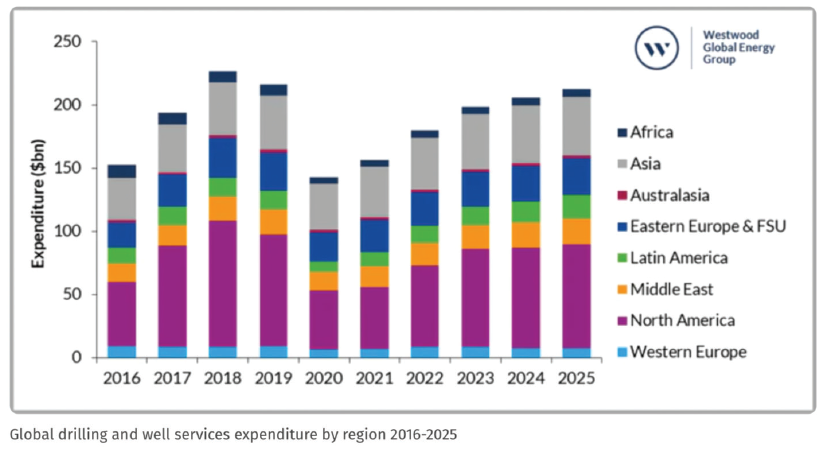
    A rapid energy transition might imply falling interest in traditional oil and gas exploration, for fear that hydrocarbons might become a “stranded asset” – one that no longer offers long term profitability. But consultancy Westwood Global Energy Group said in May that exploration drilling over the next five years is likely to remain broadly in line with levels over the preceding five years. Westwood’s Dr Keith Myers argues that drilling is likely to remain closely linked to oil price movements, as it has in the past. “The higher the price, the more cashflow that is available, along with perceived higher returns on exploration”, he says. The time scale between exploration and production can be around 10 years. Of the total oil discoveries made in 2010 around 81% are now in production, led by Johan Sverdup in the North Sea and Búzios in the Santos offshore basin in Brazil. Dr Myers expects that relationship to broadly continue, arguing that even if global warming is kept to under 1.5 degrees celsius, there will be “plenty of take-up for oil discoveries made in 2026”.

    Not stopping yet

    Source: Westwood Global Energy Group

    Westwood does acknowledge that the energy transition will have various significant effects on traditional oil and gas exploration. One effect may be to convince oil companies that they need to prioritise the deposits which can be profitable at international oil prices of around US$40 a barrel as well as identifying those that are more “resilient”, have a shorter life cycle, and which can be exploited with lower or even with net zero carbon emissions. Dr Myers says, “There is no point discovering something that could take 20 years to produce, so [explorers] will be targeting five years to production and 10 years to break-even.” As it happens a significant number of these deposits are likely to be in the LAC region. According to Westwood’s calculations Latin and Central America has accounted for around half the 170 high-impact exploration wells drilled or planned between 2021 and 2023, with most in the Suriname-Guyana basin, Gulf of Mexico, and Brazil. Brazil’s state-owned Petrobras is expected to drill more than 160 subsea wells in 2021-2025. Guyana will see a high number of wells drilled by ExxonMobil, concession holder in the Stabroek offshore block.

    James F Park, chief executive of GeoPark, Colombia’s second largest oil producer (after majority state-owned Ecopetrol), is another industry participant who sees a long-term future for oil. The first thing to understand, he told publication LatAm INVESTOR, is that against a background of long term economic and population growth, oil is not going to disappear. He cites an IDB prediction that, by 2040, Latin America’s total energy demand will have grown by 80%, and he adds: “It is fantastic that tech advances and policy decisions have helped renewables become more affordable and reliable to provide a greater share of our energy needs, but even the most optimistic scenario still shows oil and gas providing 40% to 45% of the energy mix in 2050. That’s about 120m barrels per day (mbpd) of oil equivalent that needs to be produced.”

    A similar position is taken by Carlos Fernando Emanuele, CEO of Ecuadorean oil company Orion Energy. Given Ecuador’s dollarized economy and high debt levels, he says the country can only grow by “importing dollars” achieved mainly by exporting oil. “In that context it is hard to see how a president could ban the oil industry and in one sweep remove 7% of the country’s GDP. It would also lead to a loss of US$2.5bn in fiscal revenue, which is about 10% of the government’s budget,” he says.

  • Who is ready for the transition?

    LatinNews 11 June 2021 Hits: 1783

    Over the last decade significant progress has been made to develop renewable energy at a global level. As recently as 2011, with crude oil prices at around US$100 a barrel, solar and wind energy were still uncompetitive compared to fossil-fuel electricity generation. Wind and solar generating capacity was relatively small. But in 2011-2019 global solar capacity grew seven-fold while wind capacity tripled. There were major technological changes in the design and operation of wind turbines and solar panels. Both energy sources are now materially more price-competitive than fossil-fuel electricity, even in a context where the oil price has come down to US$40 a barrel. The levelised cost of energy (LCOE – which accounts for fluctuations and intermittency) fell by 81% to US$0.07kWh for solar and by 38.3% to US$0.053/kWh for onshore wind in 2010-2019. This means that on a level playing field, renewables can now compete without the need for subsidised feed-in-tariffs. Global investment in the energy transition has surged from under US$300bn per annum in 2011 to over US$500bn in 2020. Eight out of ten of the world’s largest economies have committed to achieving net-zero emissions by the middle of the century. Cumulative electric vehicle (EV) sales surged from 0.5m in 2010 to around 10m in 2020.

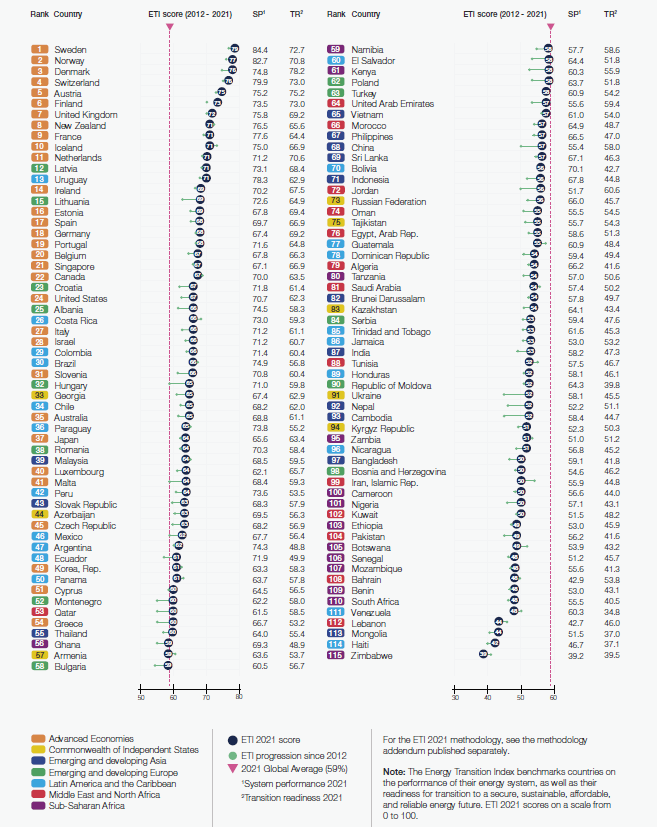
    Over the last decade the World Economic Forum (WEF) has developed an Energy Transition Index (ETI) which seeks to measure countries’ readiness to move to renewable energy. The ETI is composed of two equally weighted sub-indices. One assesses energy system performance across what it calls the “energy triangle” - the ability, first, to support economic development, secondly to provide access to secure and reliable energy supply, and thirdly to achieve environmental sustainability across the energy value chain. The other sub-index assesses the enabling environment, which includes factors like political commitment, regulatory structures, incentives for investment and innovation, consumer awareness, and new technology adoption. Countries are scored on a total of 39 indicators on a scale of 0 to 100.

    In the 2021 report the WEF notes that more than 70% of tracked countries have made progress on energy access and security, but only 13 out of 115 countries have managed to achieve consistent improvements over the past ten years, thereby underlining the need for greater resilience. “With the energy transition moving beyond the low hanging fruit, sustained incremental progress will be more challenging due to the evolving landscape of risks to the energy transition”, says Roberto Bocca, Head of Energy and Materials for the WEF. There had been little measurable progress in the economic development and growth dimension of the “energy triangle”. This was attributed to fiscal difficulties, labour market dislocations, and affordability challenges. Yet, during the Covid-19 pandemic renewables have shown significant resilience. Despite an initial pandemic-related fall, global emissions have since rebounded, highlighting the need to accelerate progress in the shift away from fossil fuels.

    Globally, the top ETI scoring countries are Sweden, Norway, and Denmark. The top-scoring LAC country is Uruguay, placed 13th world-wide, followed by Costa Rica (26th), Colombia (29th), and Brazil (30th). Other strong LAC performers include Chile (34th), Paraguay (36th), Peru (42nd), and Mexico (46th). The least energy transition-ready include Honduras (ranked 89th worldwide), Nicaragua (96th), Venezuela (111th), and Haiti (114th). The LAC region scores well for environmental sustainability, partly because of its significant hydroelectric generating capacity. But relative to the rest of the world an obstacle to the energy transition is that electricity prices (measured on a purchasing power parity basis) remain high. The WEF also notes that although LAC has achieved near-universal access to electricity, the quality of supply in many countries remains poor. The report calls for further diversification of the LAC energy mix to improve energy security. ­­­­

    ETI 2021 results table

    Source: World Economic Forum

  • The hydrogen opportunity

    LatinNews 11 June 2021 Hits: 1695

    Globally, there is growing interest in developing green hydrogen, since it can work simultaneously as a zero-emission fuel, but also as a store of energy, useful in smoothing out the intermittent power supply from renewable energy sources (which have downtimes when winds are not blowing or the sun is not shining). ­­Green hydrogen (H2) can be split out from sea water (H2O) using a process of electrolysis powered by renewable energy (for example, by offshore wind farms).

    Currently the world’s largest green hydrogen project under development is the 26GW solar and wind powered complex at East Pilbara in Western Australia, owned by InterContinental Energy and Asian Renewable Energy Hub. Environmental approval has been granted for the first 15GW phase, with first production and exports due to start in 2027-28. The consortium is targeting hydrogen production costs of US$2/kg. It will sell both green hydrogen and green ammonia derived from the hydrogen. Ammonia is easier to transport by ship since it has greater energy density per unit volume and does not require such low temperatures to store in liquid form as hydrogen does. The Pilbara project will initially target buyers in the utility and fertiliser sectors in Japan and South Korea, which are facing pressure to reduce their emissions.

    What is happening in East Pilbara is particularly interesting to LAC countries. Intercontinental wants to follow a strategy of large-scale green hydrogen/ammonia production from sites which have surplus renewable energy so as to maximise economies of scale. In the main it is looking at coastal deserts with plenty of wind and sun. Sacha Thacker, the company’s chief strategy officer, says it is looking to develop mega-plants in three regions of the world that meet its criteria: Australia, the Middle East, and Latin America. “If you want to import on the seaborne market, you are likely to import from a low-cost exporter, and those low-cost exporters are likely to be focused in these three regions” he says. The company also believes green ammonia may be able to displace fuel oil and diesel as a marine fuel. Hydrogen takes up too much space to act as a shipping fuel, battery electric propulsion is also impractical, and while natural gas is “cleaner” than diesel it still pollutes. Thacker argues that natural gas “is quite helpful for your 2030 [decarbonisation] ambition but is grossly insufficient for your 2050 ambitions”. The International Energy Agency (IEA) says that ammonia, biofuels, and hydrogen could meet more than 80% of shipping fuel needs by 2070, using about 13% of the world’s hydrogen production. Latin America might be able to carve out a place in an emerging global hydrogen economy.

  • Uruguay – ready to go?

    LatinNews 11 June 2021 Hits: 1541

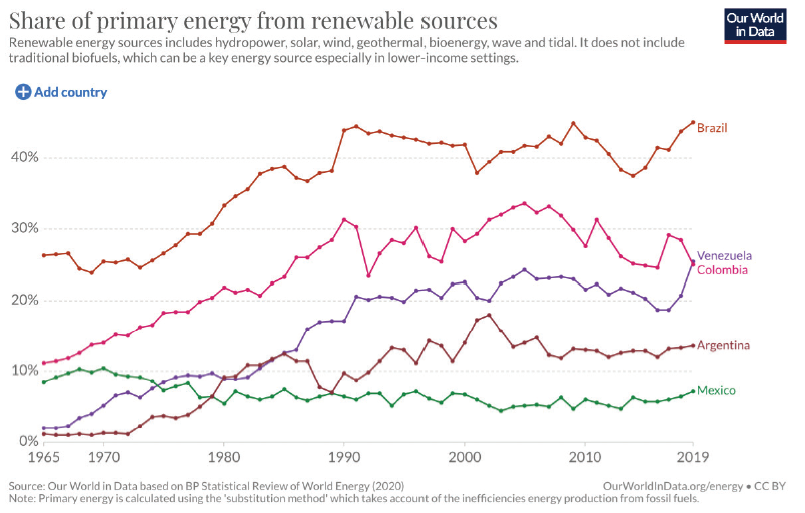
    Uruguay’s good ETI score reflects over a decade of government policies focused on developing renewables. In October last year, for example, Uruguay produced 36% of its electricity from wind and solar energy, ranking it fourth in the world (behind Denmark, Lithuania, and Luxembourg). If hydropower is included, renewable energy jumps up to account for 97% of total electricity demand. This is a sharp contrast to the situation 20 years earlier when the country primarily used fossil fuels and had a heavy oil import bill (about 30% of total imports by value), as well as having to import electricity from neighbouring Argentina.

    Energy diversification began during the left-wing presidency of José Mujica (2010-2015) with wind turbines and solar farms seen as a way of cutting power generation costs. Development was encouraged through competitive auctions, investment guarantees, transparent rules and regulations, and strong public-private partnerships (PPPs). To date, investment in renewables is estimated at around US$7bn (equivalent to 15% of GDP). Greenhouse gas (GHG) emissions were cut by 88% in 2017, relative to the 2009-2013 average.

    The current centre-right government of President Luis Lacalle Pou has continued enabling the energy transition but is now looking to take it to another stage, focusing on decarbonising the transport sector. In terms of primary energy, 37% still comes from fossil fuels, and roughly two-thirds of that is consumed in the transport sector. The government has said it seeks to develop battery-powered electric vehicles (EVs) for short distances, to be followed at a later stage by green hydrogen powered freight and long-distance transport. Among various policy initiatives under consideration are tax incentives to favour EV take-up and plans to develop a country-wide charging infrastructure. Energy minister Omar Paganini said the government is interested in forming a private sector partnership to develop a green hydrogen pilot project, with a hydrolysis plant and a fleet of H2-powered vehicles. Uruguay has announced its intention to become carbon neutral by 2050, although the authorities say they may also propose new “nationally determined contributions” (NDCs) under the terms of the Paris climate agreements

  • Mexico – heading the wrong way?

    LatinNews 11 June 2021 Hits: 1707

    Mexico currently stands out as a country that rejects the need for an energy transition and, instead, wants fossil fuels to remain at the centre of its energy mix. While many Mexicans have reservations about this approach, the policy is being driven forward by President Andrés Manuel López Obrador (Amlo) who took office in December 2018. Amlo comes from Tabasco, an oil and gas state, and spent much of his early political career in the 1970s and 1980s as a member of the Partido Revolucionario Institucional (PRI) which was at the time known for its energy nationalism and its defence of state monopolies in the sector, such as oil and gas company Pemex and electricity generator and distributor Comisión Federal de Eletricidad (CFE).

    In subsequent decades the PRI ended up moving towards more centre-right energy positions while Amlo shifted further left. During the PRI presidency of Enrique Peña Nieto (2012-2018) major energy reforms were introduced, ending the Pemex/CFE monopolies, and opening the sector to private sector investment through regular auctions for oil and gas exploration blocks. The government also offered competition for long-term power purchase agreements (PPAs) to international renewable electricity suppliers such as wind and solar developers. Peña Nieto’s strategy implicitly recognised that after more than a decade of dwindling production, and with heavy levels of debt, Pemex lacked the financial capital and technical skills needed to reverse the fall in oil production. While his focus remained on attracting new investment from the oil majors into Mexican fossil fuels, he opened the door to greater diversification into renewables.

    In contrast, Amlo has been described as “firmly committed to dirty energy”. He is pursuing new hydrocarbons projects to the detriment of wind and solar. He accuses Peña Nieto of using clean energy contracts as a pretext to hand out unwarranted subsidies to private companies. In February 2021 the president said: “We need to strengthen Pemex and the CFE, we need to rescue them, because deliberate moves have been taken to destroy them, so that the energy market could be left in the hands of private, national, and above all foreign companies.” Amlo passed two new laws through Congress, both designed to increase Pemex and CFE market shares. The electricity industry reform law, for example, specifically states that fossil-fuel and hydroelectric energy should be given priority in power despatches to the national power grid, a change in existing rules which prioritise the lowest priced power, and which therefore tend to favour renewable energy sources. However, both laws have been temporarily suspended by the courts, who have ruled that they may be in violation of constitutional rules on free competition. Following mid-term Congressional elections (June 2021) López Obrador is expected to redouble efforts to push through these pro-fossil fuel changes even though, in the electricity sector, renewables offer cleaner power at more competitive prices.

    Despite the existence of cheaper alternatives, Amlo is supporting the construction of a major new refinery at Dos Bocas in his home state of Tabasco, at an initial cost of US$8.9bn (but already there are reports of budget overruns that could add US$3.5bn to the price tag). The emphasis on fossil fuels means that targets set out in the Energy Transition Law, approved in 2015 by Peña Nieto, are unlikely to be met. The law established that, by 2024, 35% of domestic electricity supply should come from renewables, including hydro and nuclear. In 2020, 24.5% of Mexican electricity came from clean sources, but as a result of Amlo’s policies the proportion is expected to drop over the next few years. Also at risk is Mexico’s Paris Agreement commitment to reduce CO2 emissions by 22% by 2030. Daniel Chacón of the Iniciativa Climatica de Mexico (ICM) lobby group told website Equal Times: “If you don’t at least have decarbonised electricity, it is going to be very difficult to decarbonise everything else.”

  • Brazil – looking behind the bad press

    LatinNews 11 June 2021 Hits: 1606

    Brazil is widely seen as an environmental “bad boy” in the international press, some would say deservedly so, because of its current government’s refusal to take more active measures to try and halt or roll back deforestation in the Amazon. Deforestation is certainly a serious risk to any energy transition process, since it increases net CO2 emissions across all economic sectors. However, there are also a number of long-standing factors at work in Brazil which can be seen as positive for the energy transition, including the country’s abundance of hydro-electric energy, decades of experience in the production of biofuels (including the use of ethane from sugar cane), and, unlike Mexico, a broadly supportive policy towards other renewables such as wind and solar. As the largest economy and biggest oil producer in Latin America, Brazil is also able to capture significant economies of scale as it develops sustainable fuels.

    While maintaining a right-wing nationalist opposition to what he sees as international meddling in the Amazon, President Jair Bolsonaro has moderated his rhetoric, partly for short-term political reasons as he adapts to the new Joe Biden administration in the United States, which places great importance on multilateral collaboration to limit climate change. In April this year, during a virtual summit of world leaders convened by Biden, Bolsonaro said Brazil would aim to achieve carbon neutrality by 2050, ten years earlier than previously planned. He also said his country would bring illegal deforestation in the Amazon to an end by 2030 (a commitment that is likely to move to the in-box of future presidents since Bolsonaro’s term in office has only 18 months left to run). Government officials suggested meeting the zero net carbon target by the middle of the century would require energy transition investments of around US$10bn a year. Preliminary discussions have been held on various schemes where international government and private sector entities might invest in green or carbon bonds, which would be used to conserve the Amazon rainforest and offset global emissions. However, progress is expected to be slow, since investors want to see reductions in deforestation before they commit their money, while Brazil seeks up-front payments.

    The reality is that Brazil has already done significant groundwork on the energy transition. And the current or, more likely, future post-Bolsonaro governments may be able to pick up the pace of change. Responding to recent calls from the International Energy Agency (IEA) to halt new fossil fuel projects, energy and mines minister Bento Albuquerque said his country would not stop fossil fuel development, but he also said it still had “all the conditions” in place to become a net zero carbon economy by 2050, as well as becoming a future hydrogen exporter. Talking to journalists, Albuquerque said: “In Brazil we will keep on with our exploration and mainly production programme of our hydrocarbons reserves, and we will keep on in parallel with the expansion of our energy matrix, making it more and more clean and renewable”. The minister said the electricity grid would be “90% clean and renewable” by 2030, with hydro’s share falling to 49% (compared to 65% now) and with wind and solar between them rising to 25% (from 12% now).

    Brazil was the world’s eighth-largest oil producer last year, according to US data, and is preparing a new auction of offshore exploration and production licences in the Sepia and Atapu blocks in December 2021. State owned Petrobras has reduced its overall debt levels and retrenched around its core upstream oil and gas activities. Unlike European IOCs it has not re-labelled itself as an ‘energy company’ or diversified into renewables. However, Eletrobras, the state-owned power company that is due to be privatised, has expressed interest in playing a key role in the energy transition.

    The country is also positioning itself for the development of green hydrogen as an important new sustainable fuel. The country’s National Energy Plan 2050 describes green hydrogen as a “disruptive technology” that can change the energy market, and it cites green hydrogen fuel cells as a potentially key technology to decarbonise the transport sector. The state of Ceará has announced a US$5.4bn pilot project, in partnership with Enegix Energy of Australia, to create a green hydrogen hub in Pecém port, which will include an electrolysis plant. Also under consideration is a project in Porto do Açu, in the state of Rio de Janeiro, involving Eletrobras, Siemens, and research centre CEPEL to study the green hydrogen technology cycle from production to consumption.

  • Venezuela – stranded assets in the Orinoco?

    LatinNews 11 June 2021 Hits: 1795

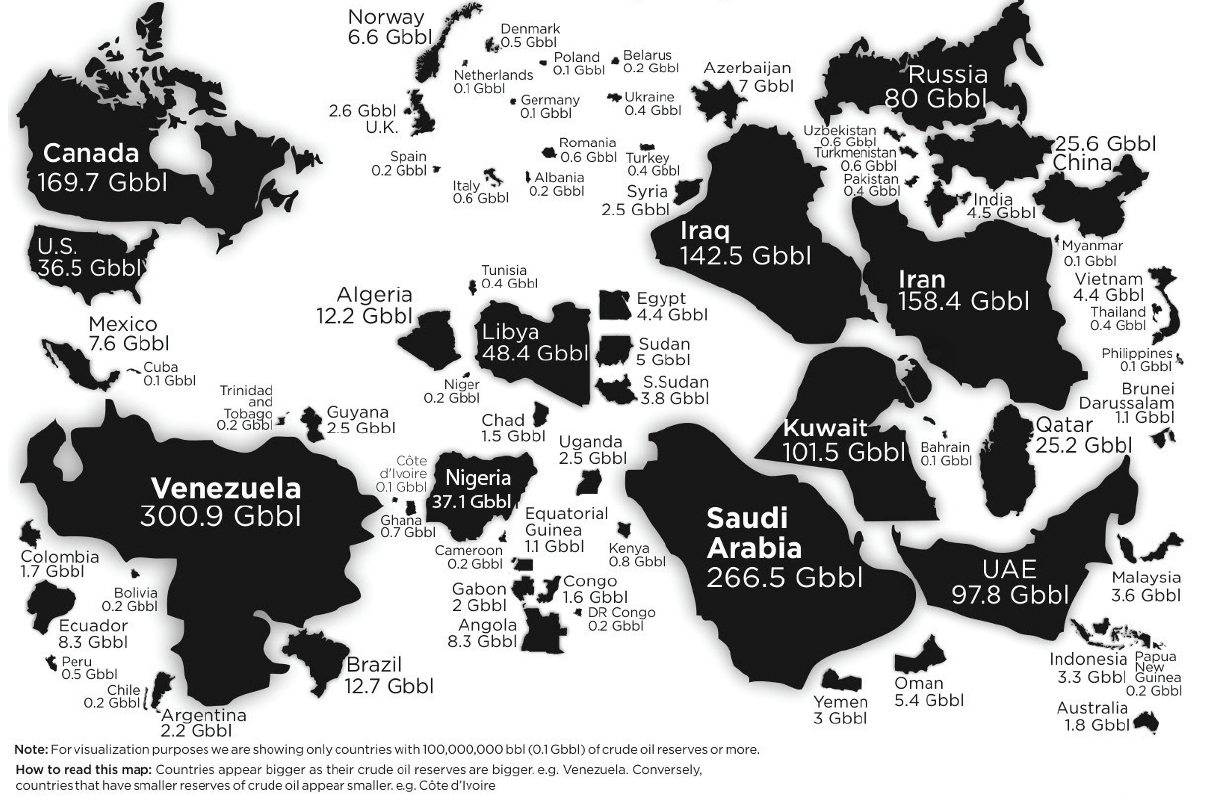
    Venezuela, which has the largest hydrocarbons reserves in the world, could potentially be one of the biggest losers from the energy transition in Latin America. The danger, in a nutshell, is that the country, already having endured years of economic crisis, will remain locked into fossil fuel dependence at a time when the value of these assets may be beginning to decline. The country’s vast reserves, including those in the Orinoco tar sands, could potentially end up as stranded assets and never be developed.

    In some ways Venezuela faces energy transition problems like those of Iraq. Iraqi finance minister Ali Allawi has said he faced a crisis last year when, as a result of the Covid-19 pandemic, oil demand and prices tumbled sharply. The Baghdad government receives 90% of its revenues from oil sales and spends 45% of its budget on state sector salaries and pensions. The net result was that it ran out of cash and was forced to borrow heavily from international banks. GDP shrank by 11% and poverty increased. The crisis raised awareness of the need for sweeping economic reforms – but the political appetite for those reforms faded quickly once international oil prices began to recover. Allawi says that if his country remains oil-dependent at a time when the rest of the world is accelerating the energy transition, the results could be “catastrophic”.

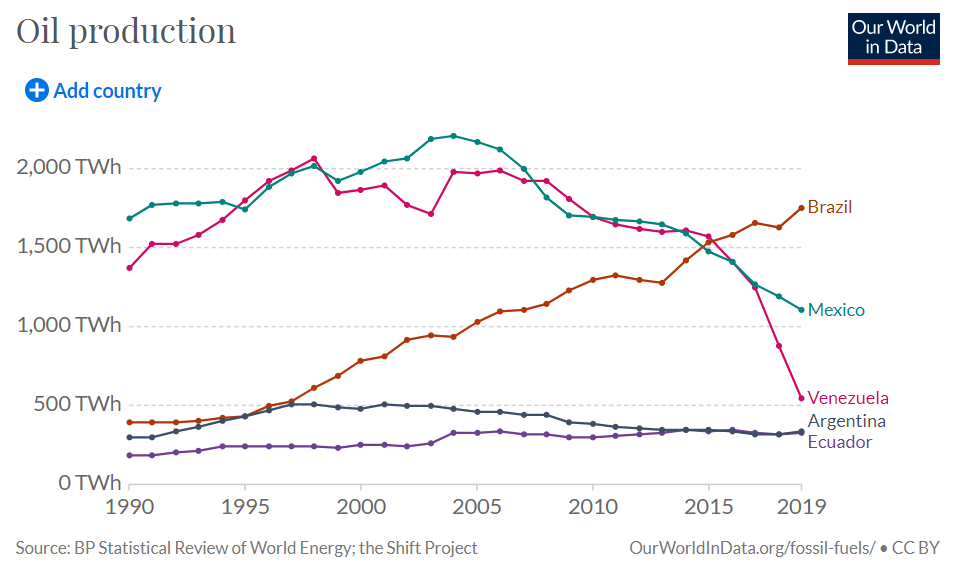
    Today’s Venezuela has several similarities with Iraq. Both can be described as ‘petro states’ with high dependency on oil (in Venezuela’s case oil represents over 90% of exports and most government revenue). In both, political institutions are weak and there is widespread corruption. Venezuelan oil production peaked in the 1990s and has been falling since then. There has been little or no meaningful effort to diversify the economy. Venezuela’s access to international credit is more restricted than Iraq’s. Since 2014 Venezuelan GDP has contracted by more than two-thirds. Poverty and net migration have soared. The IMF estimates that the economy contracted by 30% in 2020 and will fall by a further 10% this year.

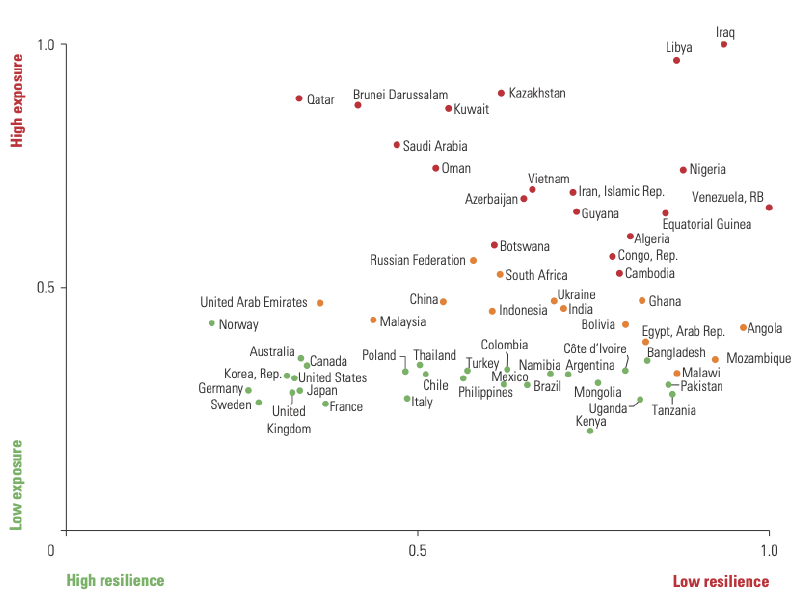
    Research by the World Bank into what it calls fossil fuel dependent countries (FFDCs) groups both Iraq and Venezuela together among countries that are highly exposed to hydrocarbons (measured by the share of fossil fuels in total exports) and at the same time experience low resilience (meaning management of fossil fuel revenues has been poor). The other LAC country in this high exposure/low resilience quadrant is Guyana. Other big LAC producers such as Brazil, Mexico, and Colombia fall into the low exposure/low resilience quadrant. Tellingly, there are no LAC countries in the low exposure/high resilience quadrant, which is best situated for the energy transition (however on this analysis Chile is close to this group).

    Preparedness for a low carbon transition

    Source: World Bank Group (2020). Diversification and Cooperation in a Decarbonizing World

    Analysts have been discussing how Venezuela might emerge from its current economic crisis. Some pose the question in the context of a political change, such as a return to democracy and a removal of the current authoritarian regime led by President Nicolás Maduro. These discussions all tend to assume that for the short term at least the oil and gas sector will need to provide the main route to recovery, simply because a radical and near-instantaneous re-invention of the country’s economic model and energy mix is not viable.

    Turning around the shattered fossil fuels sector in the country will be extremely difficult. In 1994 Venezuela produced 3m barrels per day and state oil company PDVSA was the second largest oil company in the world. In the following quarter of a century, in a context of relentless mismanagement and corruption, production dropped to average only 400,000 bpd last year. Analysts have calculated that if production could be increased to 1.5m bpd, and if oil prices average US$64 a barrel, then government revenue could rise to US$100m a month – enough to reduce the worst pockets of poverty and begin to kick start a small economic recovery. A report by the Baker Institute at Rice University in Houston says it might be feasible for Venezuela to boost oil production to 1m bpd in the short term and back to 2.5m-3.0m bpd within a decade.

    Francisco Monaldi, a specialist at the Baker Institute, says enough infrastructure is still in place to take production up to 1m bpd, but to get to 3m bpd will require investment of up to US$110bn over 7-10 years. There is of course uncertainty over what oil prices will be within a decade, and therefore over the likely rate of return on fossil fuel investment, and how this might compare with renewables.

    Monaldi sees three big obstacles to an oil and gas sector recovery: first, a negative local investment climate in which PDVSA requires a majority share in all exploration and production; second, international oil companies’ lack of confidence in the current Venezuelan government; and, third, the continuing presence of US led-international sanctions against Venezuela.

    There is nothing to prevent a future Venezuelan government from pursuing a twin-track policy of fossil fuel recovery coupled with action to diversify the economy and develop cleaner and greener energy sources. But what the preceding discussion shows is that Venezuela is at least 10 years behind other regional countries on the energy transition timeline. In addition, the country is starting out from a more difficult point characterised by high exposure and low resilience. Innovative solutions to this deep dilemma may yet be found, but progress will require time and a supportive political environment.  

    Crude oil reserves in billion barrels (Gbbl)


    Source: howmuch.net, CIA

  • Colombia – making the diversification play

    LatinNews 11 June 2021 Hits: 1715

    Although the Colombian economy is more diversified than its neighbour Venezuela, it is still vulnerable to any sustained global move away from fossil fuels. In 2019, for example, 48.6% of its total exports were fossil fuels (crude and refined petroleum, 39.4%, coal and coke 9.2%). In pursuit of a promised 51% cut in CO2 emissions by 2030, the national government and energy companies are seeking to strike some kind of balance between maintaining fossil fuel production and nudging the energy mix towards greater reliance on renewables. Some elements of that balance are sharply criticised by environmentalists. With low conventional oil reserves (representing about seven years of production), Colombia has for example given the go-ahead to the drilling of pilot fracking wells by ExxonMobil in the department of Santander in the northeast of the country. It has also invested in upstream exploration in the Permian basin in Texas.

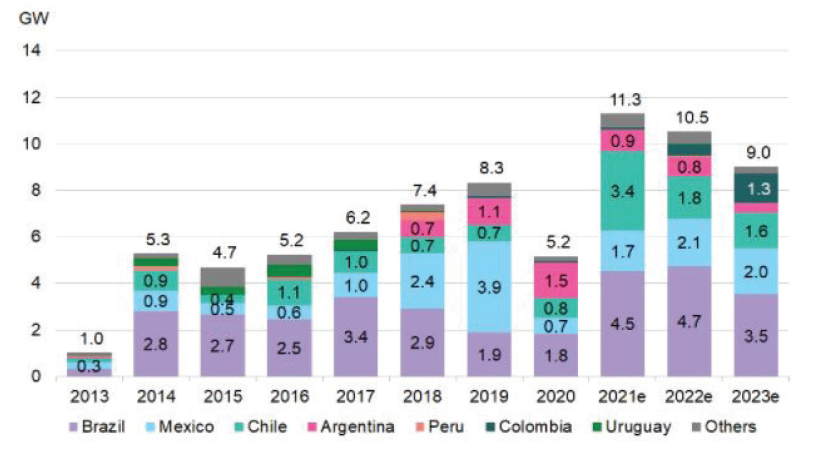
    The authorities are backing several green initiatives. The city of Bogotá has signed a contract with Enel X of Italy and BYD of China to operate a fleet of 401 electric-powered, zero emission buses. Although Colombia had a late start developing wind and solar generation, the government has promised to increase renewable capacity substantially. Currently 70% of domestic electricity supply comes from hydroelectric sources, with non-hydro renewables (wind and solar) accounting for only 1%. However, the government says it aims to increase renewable capacity to 2.2GW by 2022, up from 1.5GW. The National Energy Plan 2050 calls for non-hydro renewables to account for 10% of electricity supply by 2028. 

    In sharp contrast to Pemex and Petrobras in Mexico and Brazil, majority state-owned Ecopetrol has strongly indicated its intention to diversify its energy mix. At the beginning of 2021 it launched a US$4bn bid to buy a controlling stake in electricity transmission company Grupo Isa. If the bid succeeds it would give Ecopetrol a stake in transmission businesses not only in Colombia but also in Peru, Chile, and Brazil. Ecopetrol has also announced measures to reduce wasteful natural gas flaring. In 2018 the company built a solar farm to power one of its oilfields and says that by 2023 it will have 400 MW of renewable capacity, enough to cover half its energy needs. For some analysts the switch to invest in electricity transmission businesses is too abrupt a change and could backfire. But Lisa Viscidi, director of energy at lobby group Inter-American Dialogue, told the Financial Times that oil companies “can’t really address climate change just by reducing their own emissions, so diversification into power generation is part of their climate strategy.”

    Latin America solar and wind annual net additions by country

    Source: BloombergNEF
    Note: Solar additions do not include small-scale PV
     

    Ecopetrol CEO Felip Bayón has said his company has chosen to act boldly. He says it needs to continue investing in the core oil and gas business “because the world is going to need petrol, diesel, and jet fuel for at least another 20 years”. Bayón says Ecopetrol will also aim to lift its lower emission natural gas activities from 22% to 35% of total hydrocarbons production.  

    James Park, chief executive of GeoPark, the country’s second largest oil producer after Ecopetrol, recently observed: “We have cut gas flaring, we are changing from diesel to gas feedstocks and in Colombia we are joining an electricity grid that is 60% renewable. We are also investing in green infrastructure – for example, we built a 40km pipeline, which has replaced 205 daily truck journeys.”

    Colombia is one of Latin America’s largest coal producers and will be affected by falling global investment interest in coal mining, now seen as deeply harmful to the environment. Colombia’s coal exports remain significant. Much of the coal is produced by the Cerrejón open-cast mine, one of the largest in the world owned in three equal shares by BHP, Anglo American, and Glencore. The company was severely hit by the Covid-19 pandemic, with production sharply reduced in 2020. It also faces troubled labour relations and opposition from local indigenous groups who are complaining over poor air quality. Under pressure from shareholders both Glencore and BHP have said they will consider scaling down their coal operations. It is therefore possible that the mine (which employs 4,000 workers) may be sold or closed down in the medium term, forcing a potentially painful process of economic and social re-adjustment.

  • Chile – cleaning up after coal

    LatinNews 11 June 2021 Hits: 1609

    On various criteria Chile is at the forefront of the LAC energy transition. It is one of the highest placed countries in the World Economic Forum (WEF) energy transition index (ETI). In addition, in 2020 it attracted more foreign investment into its renewables sector than either Brazil or Mexico, both of which had led the ranking for the preceding five years. The IEA has described Chile as a “world class” destination for solar and wind developers. Under the country’s National Energy Policy 2050, originally launched in 2015, it aims to generate 70% of its electricity from renewable resources by 2030. This is to be achieved by maintaining the contribution of hydroelectricity at the current 45% while boosting non-hydro renewables (mainly wind and solar) to 25%.

    Relative to the rest of LAC, Chile has some advantages, as well as some specific difficulties to overcome. Among the advantages are that the country has one of the world’s highest irradiation rates in the Atacama Desert in the north, and strong winds in the Magallanes region in the south, meaning the potential for solar and wind energy is massive (theoretical solar potential is 1,800GW, with wind at 37GW). However, the country’s geography - long and thin, running along the Andes mountains - means it must invest heavily in electricity transmission and energy storage. That is one of the factors creating strong interest in green hydrogen which can be used as an energy store.

    Various aspects of the Energy Policy 2050 have been singled out for their positive effect. One is that Chile opted for technology-neutral power auctions, which allowed renewables to compete directly with conventional fossil fuels and, because of their reduced cost, has lowered average prices from over US$100/MWh in 2012 to around US$30MWh in 2017. Another important development is that Chile was able to interconnect its north and south electricity grids in 2017, allowing for more efficient trading of renewables across the country. In third place, the policy has emphasised an ambitious green hydrogen goal of 25GW by 2030. In pursuit of that development agency CORFO is making US$50m worth of investment support available for renewable hydrogen projects.

    One challenging area will be how successive governments meet the target of phasing out around 38 coal-burning power plants by 2040. Replacing these polluting plants will be a key step to meet the overall zero-carbon target by 2050. The plants dominate five areas of the country known as ‘sacrifice zones’ because of high pollution levels and negative impacts on public health. The eight oldest coal-burning plants are due to be closed by 2024, but no specific closure dates have been set for the remainder in 2025-2040. Some believe the government is being too cautious, since a total of six privately owned coal generators have announced earlier than expected voluntary closures. Congress is also considering a bill that would shut down all coal-fired plants much earlier, in 2025. With up to 20,000 potential job losses involved, the government needs to consider retraining, alternative employment, and consultation with local communities. The need to replace old fossil fuel jobs with new ‘cleaner and greener’ sources of employment could become an important theme across the entire region.

  • Looking for the green recovery

    LatinNews 11 June 2021 Hits: 1611

    One interesting theme for governments and energy industry players is the concept of a post-pandemic green recovery. The essential idea is that long term investment in green infrastructure will help societies recover from the short-term disruption and lob losses caused by Covid-19, while at the same improving society’s ability to deal with the threat of long-term climate change. Various politicians have sought out slogans to encapsulate the idea, such as ‘build back better’ or ‘build back greener’. While they may not always get it right (since uncertainty over both the pandemic and the way climate change will evolve remains high) the data suggests green investments could play a highly positive role in the LAC region over the next decade.

    According to an IDB report, investing in the energy transition could make a significant difference. The report calls for more private investment, decarbonisation, decentralisation and digitalisation, and for more renewable energy contract auctions. It says fossil fuel subsidies should be reduced and carbon pricing should be used to encourage the transition. Fossil fuel energy subsidies are estimated to total around US$171bn a year in LAC, or 4.5% of GDP. They are considered regressive as they tend to favour wealthier energy users, who benefit proportionally more than the poor from price controls on oil, gas, electricity, and coal. The IDB says that modernisation of hydroelectric plants could help them provide roughly 50% of the region’s electricity. There are also gains in efficiency to be harvested from updating equipment and infrastructure, and from policies designed to boost storage and battery technology.

    The report cites the IMF, which has calculated that in roughly the first nine months of the pandemic governments around the world paid out US$11tn in emergency funding, half to cover direct losses and expenses, and half in fiscal stimulus through public sector injections of capital and loans. The IDB says: “These stimulus measures are expected to generate investments in renewables and other technologies related to the energy transition, worth US$2tn in 2021-2023, and they will achieve an annual investment of US$4.5tn until 2030. The IDB calculates that for every US$1m invested, 25 jobs in renewables and 10 in efficiencies will be created. There are however obstacles holding back the desired investment in renewables, particularly in LAC economies, namely high levels of foreign debt.

  • A world of competing energies

    LatinNews 11 June 2021 Hits: 1959

    Predicting the exact shape of the energy transition in Latin America is difficult, as so many factors of uncertainty are involved. For the big fossil fuel reliant countries in particular it is hard to pinpoint a ‘peak oil’ moment after which returns on investment in hydrocarbons may begin to become less attractive. What can be said with more certainty, however, is that the world, including Latin America and the Caribbean, has now entered a possibly unique period marked by the co-existence of multiple energy sources. For the next two to three decades, the period running between 2020 and 2050, the energy matrix is going to shift, but in ways that are not yet fully known. This creates both opportunities and risks. The opportunities include the chance to achieve a lower cost, cleaner, energy matrix and to avert the most harmful aspects of climate change. The risks include opting for unproven technologies which fail to deliver hoped-for benefits, as well as the conservative option of remaining locked into a fossil-fuel heavy mix of energy sources which will ultimately trigger financial losses and global warming effects.