The political transition in Mexico

Items

  • Introduction

    Patrick de Courcy 04 November 2024 Hits: 879

    Mexico is midway through a 12-year cycle. In 2018 Andrés Manuel López Obrador took office at the start of a six-year term as president at the head of a newly created left-wing party, the Movimiento de Renovación Nacional (Morena). AMLO, as he is widely known, promised what he called the “4th transformation” of the country (the preceding three being independence and liberal reform, both in the 19th century, and revolution in the early 20th century). His successor Claudia Sheinbaum, who won this year’s election with a landslide, becoming Mexico’s first woman president, is committed to continue the 4th transformation, for a further six years to 2030. This report seeks to assess where Mexico stands at this midway point: how successful have AMLO’s policies been, and, bearing them in mind, what course will Sheinbaum now follow?

  • Claudia and Andrés: is the chemistry, right?

    Patrick de Courcy 04 November 2024 Hits: 766

    On 1 October this year AMLO stepped down as president of Mexico after a highly popular if controversial six years in office. He handed the reins of power to Claudia Sheinbaum who has become the country’s first woman president. Both are members of the left wing Movimiento de Renovación Nacional (Morena). Although Morena followed a formal candidate selection process it is also clear that Sheinbaum was AMLO’s personal top pick. As leader of Mexico City’s government (2018-2023) she has been a close AMLO ally for years. She won a landslide victory in the June presidential elections. In that poll Morena and its allies captured a two-thirds majority in congress. There are some differences between the two. Sheinbaum, as a climate scientist, is greener in outlook than AMLO. She also speaks up for women’s rights in contrast to AMLO’s more socially conservative stance. That said, both claim to see eye-to-eye on major policy issues. Sheinbaum expressed support for AMLO’s last package of reforms, including the much-criticised direct elections of judges. Mexico, it might be argued, as the 12th largest economy in the world, and the US’s top trading partner, is now poised for a period of stable economic growth and strongly rising living standards.

    This report will look at likely scenarios for the next six years – including as well as the positives ones, things that are going wrong and might go worse. One starting point is the state of the personal relationship between these two pivotal politicians. AMLO has said that after stepping down he will return to his farm and take no active political role. If true, that would be extremely helpful to Sheinbaum. But it may not be true, and even if it is, supporters of the former president in congress may indulge in factional behaviour causing trouble for Sheinbaum.

    Duncan Wood, an expert on US-Mexico relations (and currently CEO of the Pacific Council on International Policy) doubts that AMLO really will depart. “I don’t think this is a man who could retire” he says asking rhetorically “Will he have his morning conferences from his rancho? Who knows?” Wood thinks AMLO can essentially force Sheinbaum to go along with his ideas and even, in-extremis, turn the party against her if he needs to. In the worst-case scenario of a serious AMLO-Sheinbaum rift, it is worth reminding ourselves that earlier in his term AMLO amended the constitution to introduce revocación de mandato, a recall referendum which could allow a president to be replaced half-way though his or her six-year term. Sheinbaum has already said she will voluntarily submit herself to a recall referendum at the mid-way point in her six-year term.

    According to Wood, a journalist asked Sheinbaum whether she always did what the boss asked her. Sheinbaum replied “There are certain gender dimensions to that question which are quite insulting. Listen, just because I believe the same things as Andrés Manuel López Obrador, this does not mean I am not my own woman. I’m doing what I believe.” In Wood’s assessment Sheinbaum is genuinely more left-wing than AMLO on some issues, but perhaps also more aware than him of the need to attract foreign investment.

    At the time of writing, in the first days of the Sheinbaum presidency, the most likely outcome is that the new president will retain AMLO’s support and opt for a balanced policy of continuity and change maintaining some of AMLO’s policies but introducing some of her own. She is for example under pressure to bring the fiscal deficit under control and to try and re-assure investors who have been put off by the proposed reforms of the judiciary. We think the odds are against an early cooling off in her relationship with AMLO. But tensions could emerge, and it is worth considering the many precedents in Mexican history of a falling out between outgoing and incoming presidents.

  • Historical context for the 2024 political transition

    Patrick de Courcy 04 November 2024 Hits: 730

    History does not repeat itself or allow for easy predictions of the future. However, in the context of this discussion about the nature of the Mexican political transition in 2024, there are various historical events which are worth noting, because they are deeply embedded in the country’s culture and psychology and can influence the way people think about issues of leadership and power today.

    One of these relates to the rise and fall of the Partido Revolucionario Institucional (PRI). After nearly two decades of upheavals triggered by the Mexican revolution of 1910, the PRI emerged in the late 1920s as the dominant party of the revolution. It used revolutionary and nationalist rhetoric and professed to represent the interests of peasants and workers. But as its name also suggested, it sought stability and a rules-based political system. For seven decades stretching from the late twenties until 2000 the PRI won all federal and almost all state elections, using fraud and strong-arm tactics where necessary, prompting the long-standing joke that the PRI might not always win the vote, but would always win the count. Still, Mexico in this period was not a dictatorship or fully blown one-party state, but a country run by a hegemonic party. The difference between the two is that in a one-party state all opposition activity is banned, and the ruling party has near-total control. In a state run by a hegemonic party, on the other hand, lip service is paid to democracy while opposition groups and civil society organisations are allowed to operate with a limited degree of freedom.

    For the first time, and after decades of campaigning for genuine democracy, fully fair and free elections were held in Mexico in 2000. They were won by Vicente Fox of the right wing Partido de Acción Nacional (PAN) who held office in 2000-2006. He was succeeded by another PAN politician, Felipe Calderón, who was in office in 2006-2012. In the 2012 elections the PRI, now in a more centre-right reincarnation, made a come-back and its victorious candidate, Enrique Peña Nieto, was voted into office for the 2012-2018 term. Then AMLO, at the head of the Movimiento de Renovación Nacional (Morena), a newly formed breakaway from the old PRI and other parties of the left, won election and held office for the 2018-2024 period. Claudia Sheinbaum, his personally selected successor, also supported by Morena, won the 2024 election and will be in office for 2024-2030 as Mexico’s first woman president.

    One of the questions raised by this rudimentary timeline of presidents is what it tells us about how Mexico’s parties are evolving. In 1929-2000 the PRI was the clearly hegemonic party. The two PAN presidencies and Peña Nieto’s stint in office in 2012-2018 raised the question of whether the country was now moving towards a stable, two-party (PRI and PAN) alternation in power. But Morena’s subsequent double victories and its backsliding on democratic checks and balances suggests that it may be aspiring to become the new hegemon. The fact that AMLO and many of his colleagues started their political careers within the ranks of the PRI suggests they are familiar with, and may even wish to emulate, some of its more authoritarian practices. Sheinbaum takes office with an effective two-thirds majority in the new congress, meaning that if she can control the party, she will become the most powerful president of a generation.

    Also worth considering is the way the political transition has worked between incoming and outgoing presidents of the same party. The old PRI had developed a complex nomination system based on the dedazo (the finger) where the outgoing president would in effect be the only real primaries elector, pointing his finger at his successor. Potential candidates for the succession were known as the tapados (covered ones); at the right moment one among them would be destapado – uncovered as the true political heir. The system worked in such a way to ensure that the anointed heir would repeatedly promise loyalty to the outgoing president but once in office might turn on him. Famously Plutarco Elías Calles, former president, military strongman, founder of the PRI, and power behind-the-throne, supported Lázaro Cárdenas as the PRI candidate in 1934. Cárdenas, who wanted to follow his own more radical policies, responded by taking office and immediately disowning Calles, his one-time mentor, forcing him and his supporters into humiliating exile.

    Perhaps more than any other Latin American country, Mexico in the 20th and 21st century has been deeply opposed to any president who seeks to extend his term in office, or to exert undue influence over his or her successor. This is in part a reaction to the long dictatorship of Porfirio Díaz (1884-1911) but also a reaction to men like Obregón, who was president in 1920-1924, remained extremely powerful behind the scenes, and engineered his own re-election in 1928 (he was assassinated before he could take office). For many years, official documents carried the slogan Sufragio Efectivo, No Reelección (Effective suffrage, no re-election).

  • The AMLO story: (partly) reassuring business

    Patrick de Courcy 04 November 2024 Hits: 601

    When he took office in late 2018 many in the business community were nervous and anxious about AMLO’s plans for the economy. The new president had, after all, a reputation as a left-wing populist firebrand. He was coming to office after at least three decades of centre-right administrations that had focused on fiscal tightening at the expense of the working classes and the poor. Business groups feared a lurch to the left, perhaps with recklessly expansionist tax and spend policies, nationalisations, and claims that private sector elites were deeply mired in corruption and cronyism.

    But what Mexico received in the six years of AMLO’s administration was something much more nuanced. Unexpectedly the new administration announced a programme of “republican austerity” restraining and re-allocating spending. The public sector deficit was limited to 3.9% of GDP in 2023 (however a subsequent surge in spending related to the 2024 elections is expected to have widened this year’s deficit to almost 6% of GDP). Fiscal controls were kept in place despite the extra demands placed on the economy by the Covid-19 pandemic in 2020-2021. The government respected the independence of Banxico, the central bank, which tightened interest rates to squeeze out inflation. The peso gained strength for much of AMLO’s term.

    In December 2023 in its regular Clause IV report on the economy the IMF reflected the general sense of business optimism, stating that “the Mexican economy is in the midst of a broad-based expansion. Growth is expected to be led by robust private consumption and investment, with notable strength in services and construction sector, and in auto production. The unemployment rate has fallen to 2.7 percent. Proactive monetary policy and a decline in global commodity prices are facilitating disinflation.” The upbeat report predicted however that growth would slow in 2024 with capacity constraints and tight monetary policy offsetting the election-related fiscal stimulus.

    If AMLO’s sexenio – his six-year term in office – was less traumatic than initially feared for the business community, there were also genuine reasons for concern. The new populist president intervened directly in business matters, presented himself as an opponent of an entrenched private sector establishment, and attacked some entrepreneurs while praising others. AMLO also criticised the country’s system of democratic checks and balances, creating uncertainty over the rule of law in business.

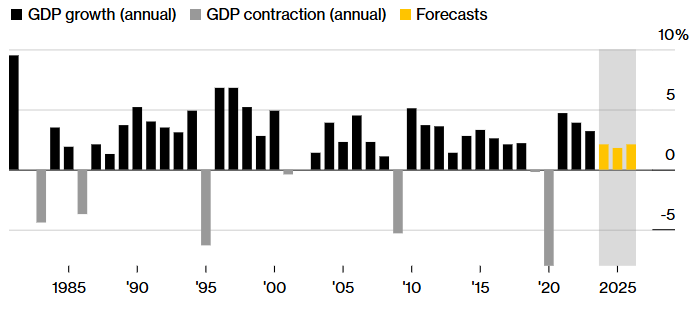
    Most importantly, AMLO was unable to break the cycle of low economic growth that had bedevilled his neo-liberal predecessors. In the three decades before he took office in 2018 annual GDP growth averaged only 2.0%-2.5%. During the election campaign the new president promised to push that up to 4%. In fact, the six-year 2018-2024 average is now expected to be of the order of only 0.7% (admittedly, the Covid-19 pandemic played a big part in such a low number). The new president cancelled a much-needed new Mexico City airport project (started by his predecessor) claiming without substantiation that it was corrupt and replacing it with a less flexible expansion of two existing airports. AMLO redirected resources to fund his own prestige projects such as a new refinery at Dos Bocas and the Mayan tourist train, despite concerns of overspending and poor value for money. In addition, the armed forces were given a much larger economic role, frequently without competitive tendering, which involved them directly in everything from building bridges to running ports and banks.

    Mexico’s economy seen slowing for third and fourth years
    Post-pandemic cooling may extend through 2025 before 2026 uptick

    Source: National Statistics agency, Bloomberg
    Note: Forecasts via median estimates of economists surveyed by Bloomberg News

  • AMLO made significant gains in poverty reduction

    Patrick de Courcy 04 November 2024 Hits: 681

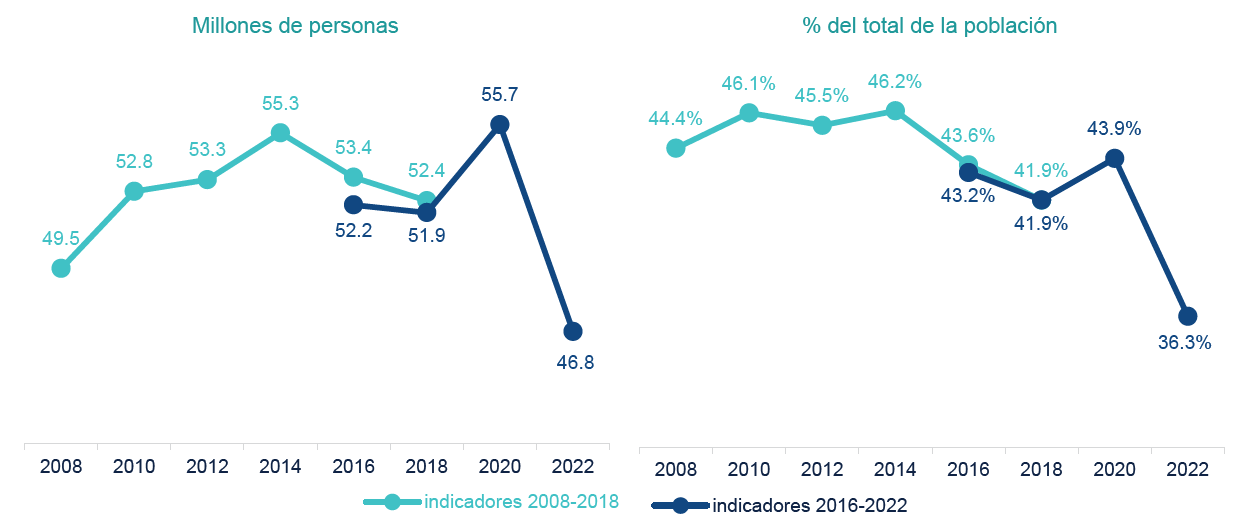
    AMLO took office in 2018 proclaiming “for the good of all, first the poor”. Up to a point, he did in fact deliver what could be called pro-poor policies. The government funded but autonomous Consejo Nacional de Evalucación de la Política de Desarrollo Social (CONEVAL) which carries out household incomes surveys every two years, has reported that the population in ‘multi-dimensional poverty’ has dropped from 51.9m (41.9% of the total) to 46.8m (36.3% of the total) between 2018 and 2022. The period covers the first four or AMLO’s six years in office. CONEVAL uses the concept of multi-dimensional poverty to take into account factors such as access to education and health, as well as a financial measure of poverty.

    Population in poverty in Mexico, 2008-2022

    Source: BBVA Research based on Coneval data

    CONEVAL also found however that the proportion of the population experiencing extreme poverty edged up from 7.0% to 7.1% over the same period. Because of population growth the total number of people in extreme poverty jumped up from 8.7m to 9.1m. The 2022 survey also found those lacking adequate access to health services more than doubled to 39.1%; those lacking access to education rose to 19.4%. Worsening access to health may have been caused by disruption linked to the Covid-19 pandemic. Persistent geographic inequality was also a continuing feature, with the southern states of Chiapas, Guerrero, Oaxaca, Puebla, and Tlaxcala having the highest poverty rates.

    A number of factors may help explain these results. Economic growth played only a small part in poverty reduction (as we have seen GDP growth was low in this period). Much more important was the role of higher-than-inflation annual increases in the minimum wage (which was more than doubled in nominal terms during AMLO’s time in office). Also helpful for poverty reduction has been the government’s massive increase in universal state pensions. Remittances sent home by expatriate Mexican workers, mainly in the US, also nearly doubled from US$33.5m in 2018 to US$60bn in 2023.

    The incoming AMLO government terminated a long-running, targeted conditional cash transfer (CCT) programme known as Prospera. The aim of this was to reduce poverty by offering cash payments to households that sent their children to school or for check-ups at medical clinics. Similar programmes have been highly successful elsewhere in Latin America. But the AMLO government dismissed Prospera as clientelist, bureaucratic, and vulnerable to systematic corruption. Instead, the government switched to programmes that are not means tested. It launched a big increase in state pensions, an apprenticeship programme called Youth Building the Future, and a further programme called Sembrando Vida which pays farmers to plant and maintain trees.

    According to Manuel Martínez, a researcher at science and technology agency Conacyt, AMLO’s policies have improved conditions for many poor households, but not for the very poor. He believes the growth in extreme poverty is in part due to the end of the Prospera programme. The fact that many of those in extreme poverty work in the informal labour market also means they do not benefit directly from the higher minimum wage.

    Looking forward, Sheinbaum has formally committed herself to continue-with the higher-than-inflation increases in the minimum wage. Legislation has been approved making if obligatory for the government to announce an annual minimum wage increase in real terms. Given the low starting point for minimum wage levels (currently they stand at 16,777 pesos or US$865 a month) she will have some headroom to keep these year-on-year increases going, but the new law restricts her room to manoeuvre at a time when the government’s fiscal deficit is already a case for concern. Martínez warns that pension spending is a bigger problem: “In the short term, it’s a time bomb because it is going to generate problems because it isn’t fiscally sustainable” he told news agency Associated Press (AP). 

  • The sting in the tail: reform of the judiciary

    Patrick de Courcy 04 November 2024 Hits: 745

    Financial markets, the Mexican business community, and the US government have all been unpleasantly surprised by the government’s plans to reform the judiciary, announced in February 2024 as part of a package of 20 reforms to be undertaken at the tail end of the AMLO presidency. The bulk of the reforms were rushed through congress between 1 September and 1 October. The significance of these dates is that effective from 1 September the new congress was sworn in, reflecting the new two-thirds majority obtained by Morena and its allies that resulted from the June elections. That gave the outgoing government a window in which to approve most of the reforms before AMLO officially handed power to Sheinbaum on 1 October. Up to a point, the reforms were presented to the incoming president as a fait accompli (Sheinbaum has nevertheless insisted whenever asked that she agrees with them.) The legitimacy of the operation was called somewhat into question when it emerged that the government had used strong-arm tactics, threatening an opposition senator to get him to change sides and deliver the necessary two-thirds majority for the reform.

    Under the terms of the reform around 1,600 federal judges, including those on the Supreme Court, are to be replaced with directly elected successors. Supreme Court membership will be reduced from 11 to nine years. Terms in office will also be reduced from nine to six years, thereby coinciding with the six-year presidential terms. Critics say this will make the judges more vulnerable to political influence. A new elected Judicial Disciplinary Tribunal, whose decisions are unappealable, will have the power to replace judges. Judges’ salaries will be linked to, but will not be allowed to exceed, the salary of the president. In addition to these changes, a total of seven autonomous regulating bodies, including the National Electoral Institute (Instituto Nacional Electoral – INE) are to be closed, with their functions absorbed by government.

    Both the US and Canadian governments, Mexico’s partners in USMCA, have been critical of the reforms. US ambassador Ken Salazar was outspoken, saying “I believe popular direct elections of judges is a major risk in the functioning of Mexico’s democracy”, adding “Direct elections would also make it easier for cartels and other bad actors to take advantage of politically motivated and inexperienced judges”. AMLO retorted that such comments were “disrespectful” to Mexico and announced an embassy-level “freeze” in relations.

    The proposed reforms will have an impact on business. If they go ahead, new judges will be elected in 2025 and 2027; they could therefore be ruling on business cases as early as next year. The new judges are likely to lack specialised legal knowledge in areas of special importance to business – energy, telecommunications, and intellectual property (IP) among others. As expressed by Salazar, many believe the new judges will be more vulnerable to political influence and lobbying, to corruption, and to organised crime.  

    The private sector is concerned. Discussion of the reforms has already had a negative impact on Mexican assets: the once strong peso has depreciated by 13% against the US dollar since the June elections, while stock exchange prices have wobbled. Civil society organisations say the reforms are a setback for democratic checks and balances. Various business groupings, including the Consejo Coordinador Empresarial (CCE) and the Confederación Patronal de la República Mexicana (Coparmex) have called on the government to reconsider the reforms, particularly those relating to the elimination of the autonomous regulatory agencies.

    Fitch Ratings said, “We believe these reforms [will], overall, negatively affect Mexico’s institutional profile”, although it added that it was still too early to measure their severity. Investment bank Morgan Stanley said the reforms would increase risk, add greater risk premia to financial instruments, and limit investment at a time when the nearshoring wave is running into bottlenecks. Morgan Stanley shifted its recommendation for Mexican shares to “underweight”.

    Gabriela Siller, director of economic studies at Grupo Financiero Base, commented “the approval of the judicial reform could quickly deteriorate the business environment and push the Mexican economy into recession, as happened in 2019, following the cancellation of the construction of the Mexico City airport”. By her estimate the judicial reform could cost the country an amount equivalent to 1.9% of GDP due to a slowdown in new investment, falling reinvestment of profits, and a domino effect on companies.

    Gerardo Pérez Guerra, head of Mexico’s Wind Energy Association (AMDEE), said companies in the sector are planning some US$30bn worth in investment between now and 2030 but will be likely to delay or reduce these commitments because of the reform. He was particularly concerned by the planned abolition of the energy regulator (Comisión Reguladora de Energía – CRE) and the competition regulator (Comisión Federal de Competencia Económica - Cofece). He said it was not clear what bodies would take over the work these agencies are currently doing, and that this increased business uncertainty.

    Damian Fraser a former executive at UBS Mexico, argues that investors have more than the reform to think about. He cites “a high fiscal deficit, an economy that is slowing down, and poor-quality policies, leading to wasteful spending on a refinery and a tourist train” (a reference to AMLO’s Dos Bocas and Tren Maya prestige projects).

    AMLO was quick to shrug off these warnings, describing them as a form of “politicking”. The outgoing president said a downgrade of Mexico’s credit rating, if it came, would have very little effect since Mexico’s debt levels are low and foreign currency reserves are high. Currently, Mexican public debt stands at 47.6% of GDP. Contrary to the pessimists, AMLO claimed the economy is enjoying a “stellar” moment.

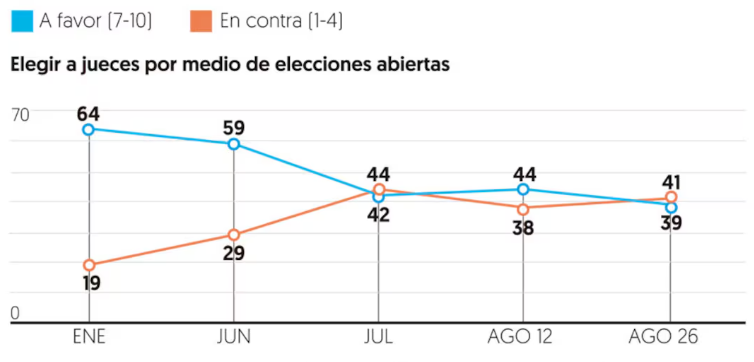
    Opinion polling on the reform revealed that many respondents were unclear on how judges are currently appointed. In an El Financiero poll published in September only 41% said they understood what was being proposed in the reform of the judiciary. However, opinion had clearly shifted from January this year, when 64% favoured the election of judges and 19% opposed it, to August, when only 39% favoured the idea, against 41% who opposed it. The numbers suggest that the opposition campaign against direct election had made some headway.

    Election of judges
    On a scale of 1 to 10, where 10 means you are completely in favour and 1 means you are completely against, where would you place yourself in the following issues?

    Source: El Financiero, Bloomberg
    Note: It does not add up to 100% because the neutral position (5-6, 11%) or the “don’t know” option (9%) are not show

  • Integration with the US: from Nafta to USMCA

    Patrick de Courcy 04 November 2024 Hits: 715

    AMLO insists there was and is a sharp distinction between Morena governments and what went before them. As mentioned Morena’s governments offered a “4th transformation” of the country. In contrast the conservative, neo liberal predecessors (at least in his rhetoric), offered no more than corruption and austerity. The reality however is that there has been a significant element of continuity between pre- and post- AMLO rule, at least as far as integration with the US economy is concerned.

    In 1994 Mexico, Canada, and the United States signed the North American Free Trade Agreement (Nafta). Nafta eliminated most tariffs on goods traded between the three countries, with a focus on agriculture, textiles, and automobile manufacturing. The agreement also regulated intellectual property (IP), created a mechanism for handling investment disputes and, through side-agreements, established some protections for labour and the environment. Nafta was widely seen as successfully boosting trade and integration between its three member countries, at a time when globalisation seemed to be a dominant trend affecting the international economy. Trilateral trade more than tripled in Nafta’s first two decades, from US$290bn to over US$1.1trn.

    It also attracted political criticism. In the US Donald Trump described Nafta as “the worst trade deal ever made” arguing it was leading to job losses in the US. Given that Mexico’s per capita income is 30% of the level in the US, presidential candidate Ross Perot claimed in 1992 that trade liberalisation would lead to a “giant sucking sound” as US jobs flowed down south of the border. In contrast Nafta had the bipartisan support of US presidents George HW Bush (1989-1993) and Bill Clinton (1993-2001). Mexico’s President Calos Salinas de Gortari (1988-1994) said Nafta would help modernise the Mexican economy and allow it to “export goods, not people”. Economists continue to debate the exact impact Nafta has had on jobs and on the wider economies of its members.

    The political reality however was that Trump, elected in 2016 on an America-first policy, was committed to preventing further job losses in the US automobile industry and in ‘rust belt’ states. By applying new tariffs on steel and aluminium imports from Mexico in 2018, Trump in effect forced a renegotiation of Nafta, which was re-named USMCA.

    At the heart of the new deal were additional protections for the US auto industry. Rules of origin were tightened, requiring 75% of local content for vehicles to gain tariff free access to the US market, up from 62.5% previously. In addition, 40% of each vehicle’s components needed to come from factories paying a minimum of US$16 an hour. This provision was acceptable to Mexico because AMLO stood to gain politically from higher wages. Labour and environmental protections were further enhanced, leading US union body AFL-CIO to support the pact, as did congressional Democrats. A lighter-touch disputes procedure was put in place. USMCA formally came into force in July 2020. The trade pact comes up for renewal in 2026, with negotiations to extend or modify it expected to start in 2025.

  • The war on drugs: a long-term negative

    Patrick de Courcy 04 November 2024 Hits: 699

    On 1 December 2006 Felipe Calderón took office as Mexico’s new president. Ten days later he metaphorically declared war on the drugs cartels and put the army at the centre of a major security clampdown. Calderón’s decision to militarise the fight on drugs was one of the most consequential, and some would say, the most catastrophic taken by any recent Mexican government. Put bluntly, he claimed that in the six years of his term in office he would improve citizen security and reduce the murder rate, and he failed. Each of the two subsequent presidents, Enrique Peña Nieto in 2012 and Andrés Manuel López Obrador (AMLO) in 2018, made the same promise and achieved the same terrible result: failure.

    Now, on 1 October 2024, Claudia Sheinbaum has become the fourth consecutive president to make the same promise. Solely based on crude numerical probability the risk is that she too, like her predecessors, will fail. Certainly, security will be one of the top yardsticks for measuring her government’s performance since it cuts across so many other issues such as the economy, migration, public health, human rights, and the rule of law. A sense of the severity of the problem is given by the fact that since 2006 when the ‘war’ started, 431,000 Mexicans – nearly half a million - have died from the violence. In 2012, Calderón’s last year in office, the annual homicide rate was 25,967, more than double when he started. In 2018, the last year of Peña Nieto’s term, it had risen further to 36,685. Final numbers for 2024, AMLO’s last year in office, have yet to be published, but are expected to be over 30,000. More people will have died under AMLO than any other Mexican presidency. The ratio of murders per 100,000 inhabitants stands at 24.0. one of the highest rates in Latin America.

    Number of homicides nationwide, 1990-2023 (total)
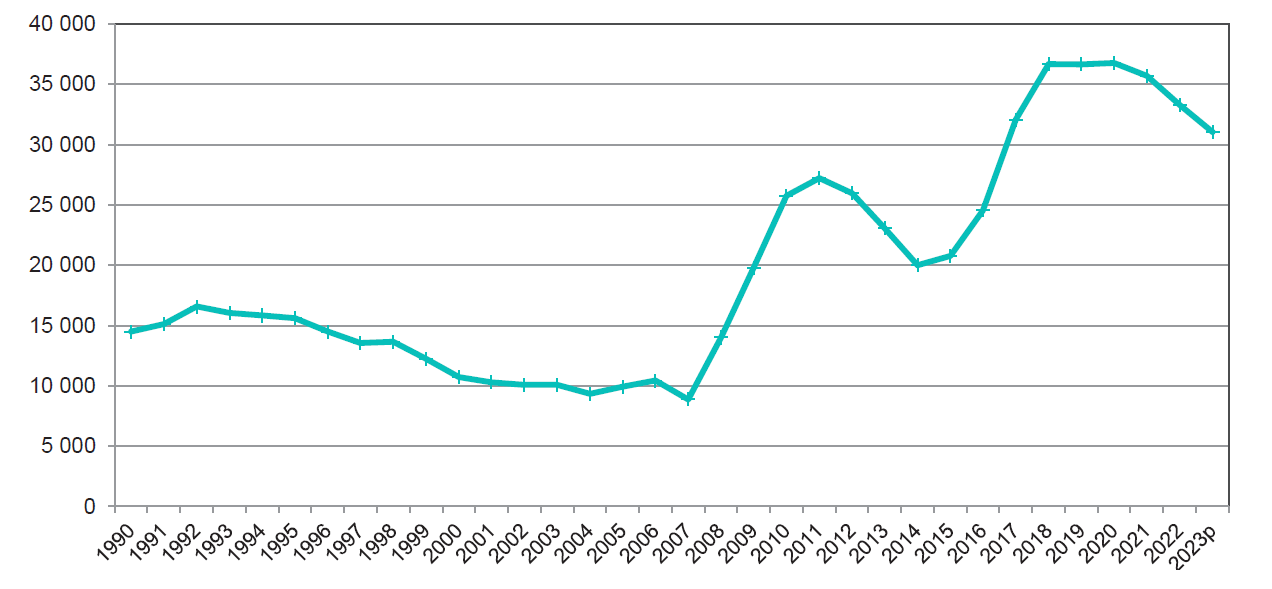
    Source: Source: Inegi
    Note: Preliminary figures (January to December 2023), with a cut-off date of July 24, 2024, because the processes have not yet concluded generation of Registered Death Statistics

    It should be noted that for multiple reasons drug-related violence is extremely difficult to eradicate, whichever government is in power. The cartels, often described as drug trafficking organisations (DTOs), smuggle cocaine, fentanyl, heroin, marijuana, and methamphetamines into the United States as well as running other illicit businesses including extortion and people trafficking. US demand for drugs is massive and price inelastic. One research team found that US citizens spent an estimated US$153bn on illicit drugs in 2017. With such massive demand, when a particular DTO is broken up or neutralised by law enforcement, other sources of supply quickly come into play. The DTOs appear to be in constant flux battling between themselves to control supply, trafficking routes, and distribution networks. Violence tends to spike when rival groups are contesting control of specific geographical areas, and to ebb when a single cartel is dominant.

    During the Calderón presidency tens of thousands of army troops were deployed across the country to engage the cartels. The president deliberately avoided using state and municipal police who he regarded as corrupt. Partly at the suggestion of the US he followed a kingpins strategy focused on capturing or killing the top leaders. In fact, 25 of the top 37 drug kingpins were neutralised in this way, but new leaders rapidly emerged. Peña Nieto on the other hand sought to place greater emphasis on protecting civilians and intelligence-gathering. But he too relied heavily on the military and the Federal Police. He began a process designed to create a new gendarmerie. While homicides fell during the first years of Peña’s sexenio, they then picked up intensity again. Security experts have suggested that this was a reaction to the kingpin strategy, with fragmentation and turf wars now being fought by a new generation of criminal leaders.

    In 2018 AMLO offered a new approach. The key policy of his incoming government was described as ‘abrazos, no balazos’ (hugs not bullets) and was focused on social spending and job creation. The idea was to provide alternative sources of livelihood for young men who would otherwise be recruited as sicarios (paid killers) for the cartels. In effect this was an attempt to tackle the socio-economic root causes of the drug war. There was also initially talk of legalising some drugs and offering possible amnesties to lower-ranking cartel members. However, these were not pursued. In addition, the military appear to have been instructed to remain in barracks and not to pro-actively confront the cartels. These left certain areas of the country completely unprotected. In a notorious incident in October 2019 the security forces seized Ovidio Guzmán López, a senior leader of the Sinaloa cartel, only to release him when surrounded by cartel gunmen with superior fire power.

    There was also a major change in the new president’s thinking. As a left winger, for most of his career AMLO had opposed the use of the army in the fight against drugs, accusing it of terrorising rural communities and causing human rights violations. But in the years immediately prior to his election AMLO seems to have had a change of heart. He ordered the creation of a new force, the National Guard, which was initially staffed by the military and by members of the armed forces and was to be focused on fighting the cartels. Despite complaints from civil society and opposition groups AMLO insisted on reforming the constitution to place the National Guard under military control (via the national security ministry Sedena) which is led by the army’s commander in chief.

    Although the homicide rate did dip a little at the tail end of AMLO’s administration, he failed to achieve a sustainable reduction. Various factors were in play. The hugs-not-bullets policy, by its very nature, would take many years to have an effect. The National Guard was at the time still in formation and was partly diverted to other duties – among them, increasing northern and southern border patrols in response to US pressure to reduce migrant transits through Mexico. Security cooperation with US law enforcement deteriorated after various incidents, including the arrest in the US on drug and money laundering charges of former Mexican defence minister General Salvador Cienfuegos in October 2020. As a result of all these factors the AMLO administration was widely seen as being passive and purely reactive to the spread of cartel-linked violence.

    In the first week of her presidency Sheinbaum and her security minister Omar García Harfuch set out the new government’s security policy, which they said would be based on four pillars: these were first, to address the root causes of crime; second to consolidate the National Guard; third to strengthen intelligence and investigation; and, fourth to achieve absolute coordination between state and federal authorities.

    The fist pillar appears to be a continuation of AMLO’s hugs-not-bullets approach, with Harfuch saying the government would focus on supporting vulnerable families, reducing poverty and inequalities. The National Guard, currently numbering 133,000 members, will now report directly to the army commander (who is also defence minister). It is likely to be further strengthened. As Harfuch put it, the Guard will be a “police institution” that nevertheless follows “military doctrine” and “military discipline”. President Sheinbaum said she did not intend to return to the war on drugs or to extrajudicial killings, saying that her government would rely on “prevention, focusing on the root causes, intelligence and presence”.

    The new government says better intelligence will allow law enforcement not just to react to crimes but to anticipate them as well. The aim, Harfuch said, was to “analyse data, identify criminal patterns, and understand the dynamics in the areas with the highest incidence of crime”. A new intelligence division would be created within the security ministry.

    Looking forward, Sheinbaum faces an unenviable task. As noted, the relentless demand for illicit drugs from the US will continue to fuel the cartel wars. In fact Sheinbaum has taken office amid a surge of fighting between rival internal factions of the Sinaloa cartel. Whether Donald Trump or Kamala Harris win the US election, a difficult re-set of US-Mexico security collaboration will be required. An ongoing deficit in security policy is the weakness of state and local police forces, and the wider criminal justice system which currently lacks the ability to efficiently investigate, capture, bring to trial, and sentence the country’s narco-criminals. The already weak criminal justice system may be thrown into further disarray by the reform of the judiciary and the introduction of inexperienced elected judges.

  • The mañaneras: a PR victory?

    Patrick de Courcy 04 November 2024 Hits: 646

    In terms of the overall achievements of the six-year AMLO presidency, there is a school of thought which believes his performance was mediocre at best. Despite all the 4th Transformation rhetoric, drug-related violence continued to rage, the economy was flat, the quality of Mexican democracy deteriorated, and corruption indicators remained high. Admittedly there was progress in the reduction of poverty and an improvement in living standards for some sectors (such as those who benefited from higher-than-inflation increases in the minimum wage). But, it can be argued, AMLO’s overall score was nothing out of the ordinary.

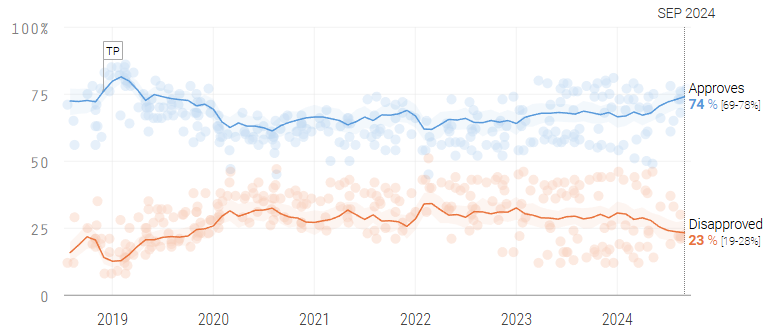
    What cannot be contested however is that AMLO turned out to be one of the most consistently popular presidents of contemporary Mexico, and indeed of Latin America. According to a poll of polls by Oraculus, in December 2018 as he took office, AMLO had a 76% approval rate which six years later, in September 2024, was virtually unchanged at 74%. There had been some smallish ups and downs along the way but AMLO’s aggregated approvals never fell below 60%,

    AMLO’s approval rating (poll of polls)

    Source: Oraculus

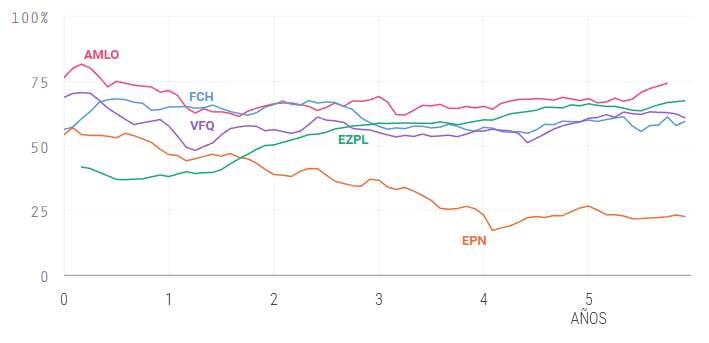
    AMLO also takes first place in the popularity stakes when compared to previous Mexican presidents. Ernesto Zedillo (EZPL) - a member of the Partido Revolucionario Institucional (PRI) who was president in 1994-2000, and is remembered as the architect of Mexico’s return to full democracy, came in second place with 67% approval at the end of his term. Next came Vicente Fox (VFQ), of the right wing Partido de Acción Nacional (PAN) who was in office in 2000-2006 and ended up with a 62% approval rating. Below him came Felipe Calderón (FCH) also a member of the PAN, who was president in 2012-2018 and achieved a 58% approval rate at the end of his six years. Enrique Peña Nieto of the PRI was something of an outlier, affected more than his peers by allegations of corruption, ending his 2018-2024 term with an approval rate of only 23%.

    AMLO’s approval ratings compared to previous Mexican presidents across their terms

    Source: Oraculus

    Part of AMLO’s popularity maybe be attributed to his exceptional communication skills and to a specific device he brought with him to do the job – the mañanera or morning show. This was a daily press conference in the National Palace, starting at 6 or 7 am and usually lasting two-to-three hours when AMLO held forth on the issues of the day. The mañaneras were broadcast on live television, streamed on social media, picked up by pro-government social influencers, and widely commented upon by radio news programmes. They were used by AMLO to communicate directly with his voters and to set the news agenda for the rest of the day.

    By one measure in the first four and a half years of his presidency there were 1,124 editions of the programme, equivalent to 4.8 a week, basically one for every working day of the week. A rough approximation is that during the course of his sexenio, AMLO pumped out over 3,000 hours of running commentary on Mexican politics, attacking his rivals, promoting his friends, and highlighting government achievements. This was a major change on the past. Traditionally, Mexican presidents have been rather remote figures, almost imperial in style, speaking at set-piece events in formal Spanish. In the 1970s presidents hardly gave any media interviews at all. AMLO turned that on its head being ever present, using colloquial language, telling jokes, and even singing songs.

    According to journalism professor Raúl Cortes “there is no other example in the world of this radio show” which has represented “an essential element in [AMLO’s] popularity”. Erwin Neumaier of Churubusco film studios told French newspaper Le Monde "There is no doubt that the mañanera has entered households. Previously, the presidential discourse was never heard, but now it's everywhere." Francisco José de Andrea Sánchez of LatAm Journalism Review has described the mañaneras as the “cornerstone” of the president’s communications.

    The mañaneras were also used as a vehicle for AMLO’s more authoritarian instincts. The guests and the narrative were tightly controlled; the president often ignored sensitive questions or suggested they were the work of conspiratorial conservative pressure groups. In February 2024 the president ‘doxed’ (released private details, including the mobile phone number) Natalie Kitroeff, a New York Times journalist. He was at that point involved in a dispute with the NYT, which had reported alleged government-drug cartel links. This led the Committee to Protect Journalists to issue a statement calling on the president to “refrain from publicising the personal information of journalists and respect privacy laws in the most dangerous country for journalists in the Western Hemisphere”. AMLO has also used the mañaneras to publish the salaries and tax details of journalists he disliked or wished to discredit.

    According to the 2023 annual report of lobby group Article 19, the organisation recorded at least 62 cases of stigmatisation, criminalisation, information blocking, and publication of information without consent during these press conferences. Political consultancy SPIN claimed that in a two-and-a-half-year period AMLO made 56,000 false or misleading statements in the mañaneras, including the assertion that the drug cartels “respect citizens and only fight among themselves”.

    President Sheinbaum has decided to continue with her own version of the mañaneras. With a scientific, data-driven background, her performance is likely to be different to that of AMLO, her mentor. She is unlikely to replicate his folksy tone, or to tell many jokes. AMLO’s core working class voters may be disappointed by the switch to a less sensationalist show. On the other hand, floating voters may welcome a more rigorous and transparent approach to information. The mañaneras may change in tone and structure, but Sheinbaum seems committed to maintain the element of direct communication that they represent.

  • Nearshoring: a long term positive?

    Patrick de Courcy 04 November 2024 Hits: 648

    There is a strong argument to be made that in the last five years or so a global economic trend has emerged called nearshoring and that Mexico is one of its main beneficiaries. Broadly speaking the hypothesis is that globalisation – a world-wide movement to open up economies by reducing tariff and non-tariff barriers to trade - has run its course. At its peak globalisation brought millions out of poverty, expanded the global middle classes, and lifted living standards for large numbers of people.

    But some of the drawbacks also came into sharp focus. Politicians in rich Western countries feared that manufacturing jobs were moving to the developing world while migration surged – this prompted the rise of a new brand of populist nativism, with leaders like Donald Trump reaching the presidency of the US (2017-2021) on the slogan America First. The Covid -19 pandemic highlighted globalism’s vulnerabilities and the need to re-impose some restrictions on free movement. Above all the rise if super-power rivalry between the US and China caused governments to favour a more cautious stance on their choices of assembly plant location.

    US-owned and other international companies that had moved major assembly plants and investments to China to benefit from globalisation now feared heightened political risks and began to reconsider. Some brought operations back to their home markets – a process known as reshoring. Nearshoring on the other hand refers to bringing production back somewhere closer to home, reducing transport costs, benefiting from stabler government policies, the rule of law, and competitive labour costs.

    Mexico, with its 3,000kms long border with the United States and multiple freight links seemed the ideal location for nearshoring investment. Under the terms of the USMCA agreement companies operating in Mexico can export goods tariff-free to the US market. According to a 2022 study by the InterAmerican Development Bank (IDB) nearshoring could boost Latin America’s exports of goods and services by US$78bn each year, of which the lion’s share (US$35.2bn) would come from Mexico.

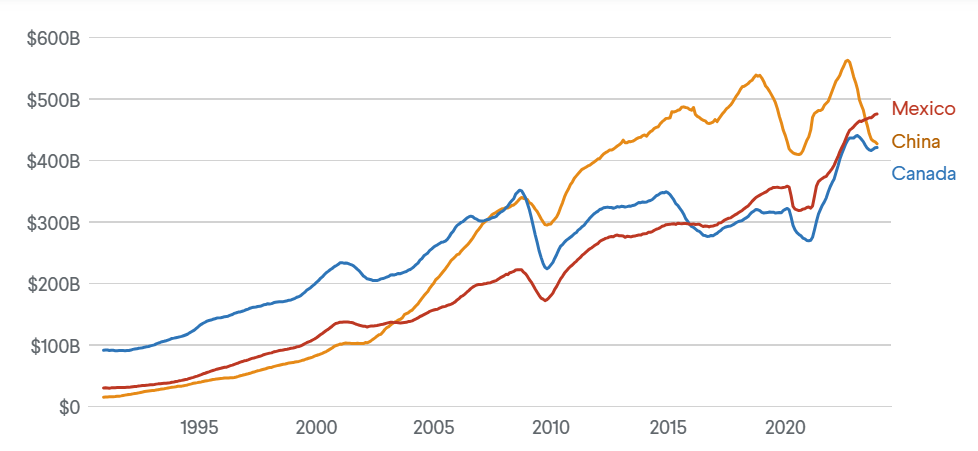
    Mexico passes China as lead source of U.S. Imports
    U.S. imports for the twelve-month period ending each month

    Source: Council on Foreign Relations using data from U.S. Census Bureau
    By late 2023 Mexico surpassed China to become the largest source of imports into the United States. Many factors contributed to this. With the Covid-19 slump in the automobile sector now finally over, there has been a surge in exports of vehicles from Mexico to the US. Meanwhile the average US tariff on products imported from China has risen to 18%, a significant disincentive, although Chinese companies are partly evading those tariffs by having products part-assembled and shipped to the US via third countries such as Vietnam, Malaysia, and Thailand. Despite US-China friction, China’s global exports are still rising.

    The outlook for Mexican trade with the US remains strongly positive. Traditional automobile exports will be enhanced by the switch to electric vehicles (EVs). Under USMCA rules Mexican-made EVs and batteries qualify for US subsidies under the Joe Biden administration’s Inflation Reduction Act (IRA). Mexico’s role as an oil and gas exporter to the US is waning and it is now buying in more energy from the US. However, this is being offset by growing Mexican sales of automobiles, autoparts, and other manufactures.

    It is clear that nearshoring is going to play a very consequential role in the next six years of the Sheinbaum presidency. That said, there are questions about its relative weight. In one narrative the Mexican government’s failure to control criminal violence, its vulnerability to corruption, and its backsliding on democratic checks and balances will be sufficient to cancel out the benefits of nearshoring. In short, Morena’s left wing and nationalist hostility to business will kill off the Golden Goose of nearshoring.

    But there is a strongly opposing view which states that the nearshoring wave, like shifting tectonic plates, is a more powerful force than Mexico’s less-than-perfect operating environment for business. In this view, companies will continue investing in Mexico because of the unique gateway it offers into the US market, seeking to manage and mitigate the associated political risks. Whichever of these two narratives proves to be correct, Sheinbaum’s ability to attract new investment and balance her government’s relationship with business and the wider electorate will be critical to the success or failure of her presidency.

  • Will Sheinbaum turn Mexico green?

    Patrick de Courcy 04 November 2024 Hits: 818

    Words are important, and Rosanety Barrios, who worked for over a decade at the Mexican energy regulatory commission (Comisión Reguladora de Energía – CRE), told Associated Press news agency in early October that she had noticed a change. In her first speeches in office the new president, Claudia Sheinbaum, was using the terms “sustainability” and “renewable energy” a lot. Her predecessor AMLO, in contrast, hardly ever used those words at all. In short, Sheinbaum is an enthusiast for clean energy; AMLO was much more of a fossil-fuel advocate kind of guy, an exponent of old-fashioned oil and gas-based energy nationalism.

    AMLO made things difficult for foreign energy companies wishing to invest and produce in Mexico. The programme of auctions allowing private sector participation in oil and gas exploration and production, and for clean energy power contracts, that had been introduced by his predecessor, was abruptly stopped. In the power sector state-owned Comisión Federal de Eletricidad (CFE) was instructed to give priority to fossil fuel-based generators over and above cleaner and cheaper alternatives. The previous government’s clean energy certificates programme, designed to encourage a reduction in companies’ carbon footprint was also stopped. Many of these measures, which involved unilateral changes to existing power contracts, have been challenged in the courts and referred to arbitration within the USMCA treaty, which calls for equal treatment of investment across the three countries.

    Sheinbaum has been careful to stress a degree of continuity with AMLO’s energy policies. For example, she has supported a bill giving CFE a majority market share of 54% of electricity generation. She has promised to “strengthen Pemex” and has never criticised AMLO’s pet project, the hyper-expensive Dos Bocas refinery, designed to help achieve help self-sufficiency in petrol, a goal that many experts believe is now a distraction from the bigger energy transition challenges facing the country.  

    But Sheinbaum has used her first speeches to highlight some big changes. For a start, she used the words that AMLO avoided. She said “We are going to boost renewable energies. The goal is that by 2030, they will have a 45% share of total electricity production” (in 2023 the share was 24%). The president said that she was preparing to unveil an “ambitious energy transition programme”. It was clear that Sheinbaum intends to bring Mexico back into line with the commitments to fight global warming it made under the umbrella of the 2015 Paris Agreement. According to lobby group Climate Action Tracker, Mexico’s efforts so far in this regard have been “critically insufficient”.

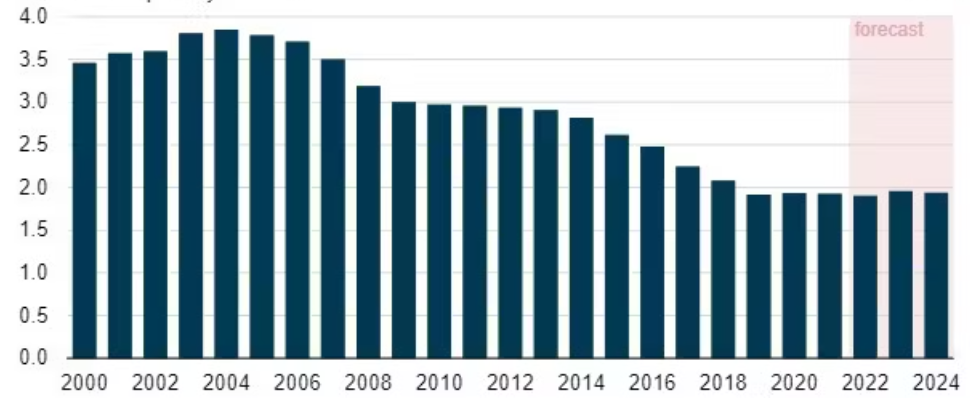
    In her first speech to congress Sheinbaum said she would introduce the country’s first ever upper cap on oil production which would be set at 1.8m barrels per day (mbpd). This is below the 3mbpd targeted as part of the liberalising energy reforms under the presidency of Enrique Peña Nieto (2012-2018). It is also well below the 2.6mbpd set as a target by AMLO in 2018 at the start of his efforts to revive Pemex. Taking into account the long-term stagnation of oil output, current production of 1.9-2.0mbpd is already at the level of the cap. Given that Mexican oil reserves are depleted, and that increasing output would require massive investment in fracking or deep-water exploration, the cap seems to be an acknowledgment that it is time to look to renewable alternatives.

    Annual total petroleum and liquid fuels production in Mexico (2000-2024)
    Million barrels per day

    Source: EIA

    Early signs are that Sheinbaum will lead a much more technical (and less political) approach to state companies CF and Pemex. Her pick for the CFE is Emilia Esther Calleja, who has a degree in electronic engineering as well as 21 years of technical experience in the company. At Pemex the new chief executive is Victor Rodríguez Padilla, a well-regarded left-leaning academic, who can boast over 40 years of hydrocarbons research at national university UNAM.

    The message to Rodríguez is that he must save Pemex, a wounded and heavily indebted company that is big enough to drag down Mexico’s sovereign credit rating and pose a major financial headache for Sheinbaum’s new administration. At his first press conference Rodríguez felt driven to tell journalists that “Pemex is not dead nor in as bad a state as you may imagine”. He admitted however that Pemex is still the world’s most indebted oil company, with total debt standing at US$99.4bn (down from UDS$130bn at the beginning of AMLO’s presidency) and that it has been repeatedly bailed out through government subsidies and tax relief. The company reported US$13.6bn in first half losses this year. It also owes suppliers around US$19bn in unpaid bills. Losses in part reflect AMLO’s expensive programme to seek energy self-sufficiency by buying the Dear Park refinery in Texas and building the Dos Bocas refinery in Tabasco (the latter at a cost of US$16bn, twice the amount originally budgeted). The new chief executive now says further growth in energy demand from current levels will be covered with increases in renewables rather than fossil fuels.

  • First chore for every president: the deficit

    Patrick de Courcy 04 November 2024 Hits: 709

    Some economists believe Sheinbaum inherited Mexico’s biggest budget black hole since the 1980s, at an expected 5.9% of GDP this year. She aims to reduce it by over two percentage points, down to 3.0%-3.5% in 2025, but, since she has also promised not to increase taxes, it is hard to see exactly how this will be achieved. Finance minister Rogelio Ramírez de la O, who Sheinbaum is keeping in post (he previously served under AMLO), has sought to reassure the markets by saying that this year’s big deficit largely reflects one-off spending to complete the outgoing government’s big infrastructure projects such as the Olmeca (Dos Bocas) refinery, the AIFA airport in Mexico City, and the Mayan tourist train. Sheinbaum herself has been quick to reassure investors saying, “We are going to maintain a responsible equilibrium between debt and GDP, and we are not going to increase the debt”. The country’s current public debt-to-GDP ratio is 45.5%, low compared to many other countries in the region.  

    A report by think tank Centro de Investigación Económica y Presupuestaria (CIEP) says, however, that completing the big infrastructure projects will free up resources next year equivalent to only about 0.5 percentage points of GDP. It also assumes that lower international interest rates will cut the cost of servicing public debt. But it is not clear what else the government can do to secure total savings of over two percentage points of GDP next year. Sheinbaum has explicitly ruled out tax increases, which her predecessor also avoided and which many analysts say are overdue. Under AMLO, welfare programmes, the minimum wage, and state pensions were all increased. It is hard to see how a left-wing government which won the election defending these social programmes could now reverse its position. The new government will have another headache: the poor financial state of Pemex increases the burden on the treasury.

    Sheinbaum says her government is considering other deficit-reducing measures. She has hopes for digitalising the public sector and the tax collection agency SAT, which, she believes could significantly reduce operating costs. Revenues from ports and customs could also be increased. However, BBVA Mexico chief economist Carlos Serrano takes a bearish view. He says that in the medium term, Mexico must find a sustainable way to reduce the fiscal deficit to around 2% of GDP. If it fails to do this, towards the end of Sheinbaum’s six-year term the debt-to-GDP ratio could rise to around 60%, increasing the possibility that Mexico may lose its investment grade status with the international ratings agencies.

  • Outlook for Sheinbaum

    Patrick de Courcy 04 November 2024 Hits: 735

    It is too early to judge the Sheinbaum presidency, which at the time of writing has been less than a month in power. But it is clear that perhaps five or six big building blocks will help shape the new administration. They include macro-economic and fiscal management, cartel violence, government communication strategy, the energy transition, and poverty alleviation. Uncertainty over the US elections, the future of USMCA, and US-China tensions also form part of the mix. Sheinbaum’s decisions over the next few months will cast more light on the fate of the 4th Transformation.