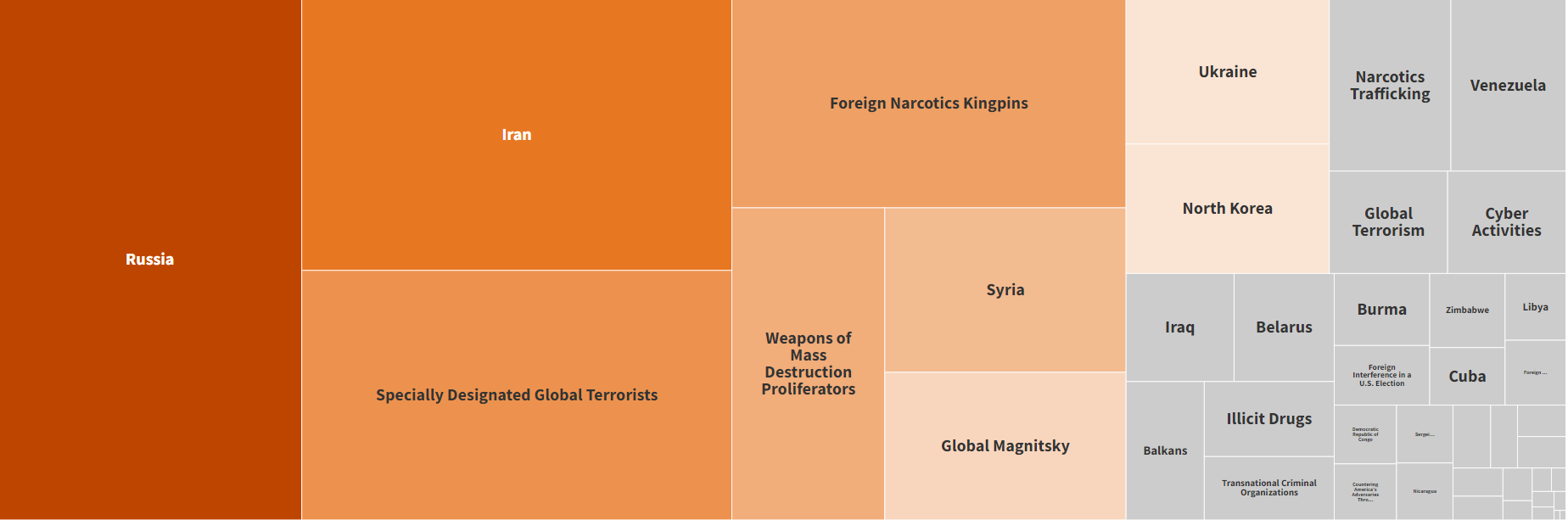
According to Castellum.AI, a security risk and compliance data company, Latin America and the Caribbean is one of the most-sanctioned regions of the world. Using official lists of designees (persons, companies, or groups targeted by sanctions) as of October 2021, it found there were 1,990 sanctions in place against entities in Latin America and the Caribbean, of which 1,897 or 95% were put in place by the United States. This put the LAC region ahead of Iran in the most-sanctioned ranking (1,672 global designations) and also ahead of North Korea (899 global designations).
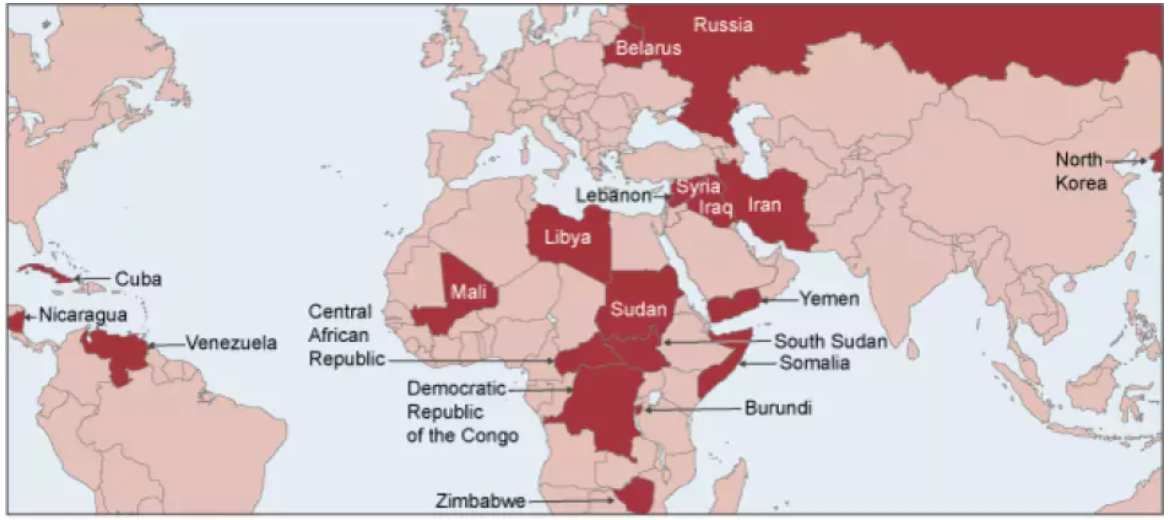
Politically the three most prominent country targets for US sanctions within LAC are Cuba, Venezuela, and Nicaragua. However, looking at the weight of numbers Castellum says that the top US sanctions priority in the LAC region is represented by narcotics traffickers who are the targets of 85% of total US sanction actions. This explains the large numbers of designees in countries like Mexico and Colombia. In Cuba, Venezuela, and Nicaragua comprehensive sanctions are imposed largely due to those country’s authoritarian governments which remain locked in political conflict with the US. The comparatively high number of sanctions directed against entities in Panama and the British Virgin Islands (BVI) reflects the use of those jurisdictions as tax havens and money-laundering centres.
Global Sanctions Against Latin-America-located Designees (95% US actions)
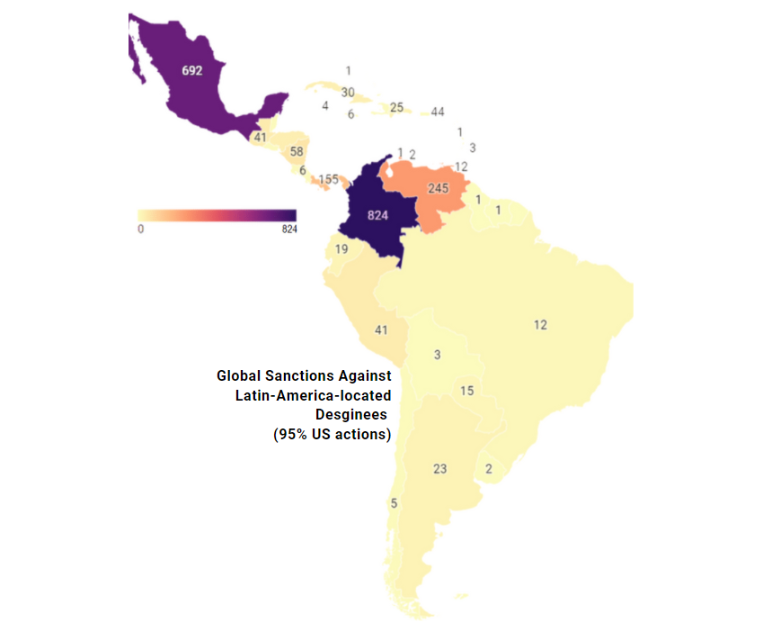
Source: Castellum.AI
Castellum AI raises two further interesting points. The first is that only three out of the 35 countries in North and South America publish sanctions lists: they are the United States, Canada, and Argentina. This is in line with the fact that only about one-fifth of counties worldwide utilise autonomous sanctions lists geared to country specific national security concerns independent of global or regional lists maintained by the likes of the UN and EU.
The US lists, published by OFAC, contain by far the largest number of entries and are seen as the most comprehensive. Canada’s list, set up by the Special Economic Measures Act (SEMA), is said to be constrained somewhat by poor data quality. Argentina’s Registry of Persons and Entities Linked to Acts of Terrorism (RePET) is deemed to be well-structured and of good quality but in some respects difficult to access. Most Latin American governments do not actively impose sanctions and hence do not maintain lists of designated entities or persons. Argentina is the exception because of the 1994 bombing of AMIA, the Jewish community centre in Buenos Aires, which killed 85 people and led the government to set up the dedicated watch list. In fact, Argentina was the first country in Latin America to designate Hezbollah as a terrorist organisation.
The second point is that despite the OFAC list’s size and sophistication it lacks some important functionalities. While it contains press releases and FAQs issued by the sanctioning office, it does not link them directly to sanctions. As a result, it can be difficult to understand why some entity or person is being listed in the database. This is important since the Washington government relies on US companies and citizens not to trade with sanctioned entities. If information on them is hard to access, corporate due diligence becomes more costly and less effective.
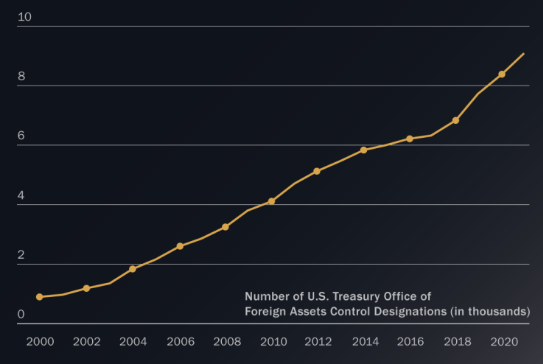
In April 2024 Theodore Khan, a director at political risk company Control Risks, assessed the impact of Ukraine war-related growth in sanctions and export controls on the LAC region. He noted a two-year surge in sanctions against Russia, particularly affecting government and military officials, financial institutions, and specific companies in the energy, technology, and manufacturing sectors. With the US also targeting Iran, OFAC had added nearly 5,000 new designees to its lists in 2022-2023. In Kahn’s view the knock-on impact in the LAC region was relatively limited. With the exception of Costa Rica, most LAC countries chose not to enforce US sanction rules.
Latin American trade with Russia meanwhile averaged US$1.8bn a month in the year to October 2023, slightly higher than in the 12 months preceding the invasion. Trade included vehicle and nuclear components that could be deemed to have dual use capabilities (in other words to have both military and civilian use). Kahn warned that Latin American companies doing business with Russia “thus face reputational damage and potential enforcement actions if their commercial partners are linked to sanctioned entities”.
In recent years sanctions enforcement has clearly become a growth industry. Kahn says that over the past two years “targeted entities have used an ever-growing ecosystem of shell companies, transhipment routes, and complex transactions to evade sanctions and maintain access to restricted goods and financial assets”. While he acknowledges that much of this evasive activity occurs in sanctioned countries like Nicaragua and Venezuela which have close political ties with Russia, he says large economies like Brazil and Mexico will be scrutinised by OFAC and other US agencies, because they are used as transhipment hubs for trade with Russia. More generally, the presence in those countries of weak anti-money laundering (AML) controls, strong organised crime groups, and illicit gold mining are all factors that assist sanctions-busting efforts.
In recent times there has been significant expansion of US export controls restricting the shipment of sensitive products to both Russia and China. Among others they affect electrical equipment, nuclear reactors, plastics, and chemicals. In March this year the US Bureau of Industry and Security (BIS) tightened restrictions on exports with potential military use to Nicaragua, citing concerns over the Managua government’s security cooperation with Russia. At first glance, and since they are a third party, Latin American companies should not be affected by such controls. But the detailed text of the relevant regulation establishes that the export controls imposed by the US also apply to foreign companies that use inputs, software, or technology that originates in the US.
US Sanctions Designations and Delistings, 2009–2022
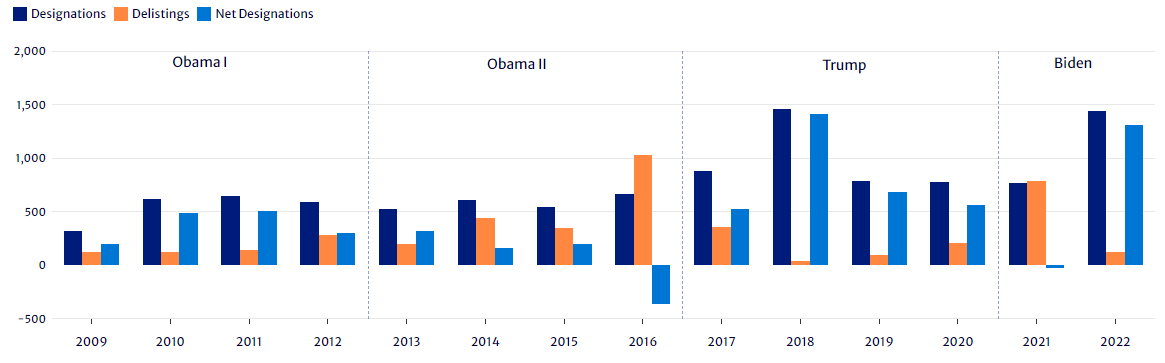
Source: Centre for Economic and Policy Research (CEPR)