The risks and opportunities

Items

  • Rare earths and critical minerals - what are they?

    Abbi Dicker 14 May 2026 Hits: 3147

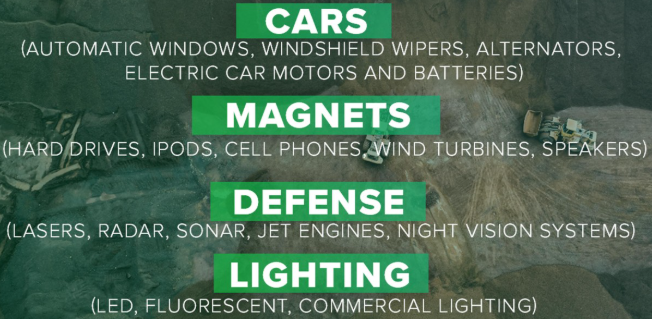
    Perhaps the first question to ask about rare earth elements (REE) and critical minerals is what are they are and where they are? The US Geological Survey identifies around 50 “critical materials” judged to be essential for renewable energy projects, defence systems, and advanced manufacturing. REEs are a sub-set of this bigger group which are also used in applications such as mobile phones and wind turbines. Critical minerals also include lithium, copper, and nickel.

    Rare earths themselves are a distinct set of 17 silvery-white and soft heavy metals. The REE label is normally applied to a main group known as lanthanides, plus scandium and yttrium. There are an estimated 110m tonnes of REEs in the Earth’s crust. Compounds containing REEs have a range of applications in electronics, lasers, semi-conductors, magnetic materials, and industrial processes. Gadolinium is used in nuclear power reactors, scandium in vehicle fuel cells, and neodymium in magnets. REEs are distinct from critical minerals although there is also a category known as “rare earth minerals” which are minerals that contain one or more rare earths.

    Latin America's strategic mineral endowment
    Source: Discovery Alert

    Geologists say the term rare earths is actually a misnomer since these metals are not actually scarce. They are rare however in the sense that they are only found in chemical compounds and are difficult to isolate and purify. Doing so requires processing large volumes of raw ore which is costly and energy intensive. It is also worth noting that REES are sometimes found in association with radioactive mining materials such as thorium and uranium.

    Critical materials in modern weaponry systems
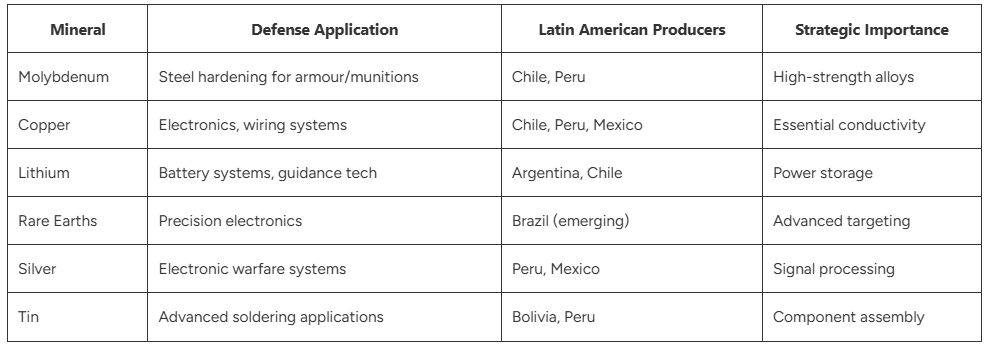
    Source: Discovery Alert

    Military applications of REEs are closely watched because of their direct role in the performance and cost of advanced weapons systems. It is estimated that a single advanced jet fighter requires over two tons of copper for its electrical systems. REEs are also key to the functioning of precision-guided munitions. Researchers say that typically there is an 18-month lag between the outbreak of military conflict and procurement increases. Molybdenum demand for steel defence systems typically spikes 40%-60% above normal during the 24-36 months following the outbreak of an armed conflict. Electronic warfare systems have created new demand for REE. Electronic components now represent 30%-40% of total material costs of defence systems, up from 15% traditionally. It is therefore possible that the current wars in the Middle East may step up demand for Latin American minerals.  

    What are rare earths used in?
  • Where are they?

    Abbi Dicker 14 May 2026 Hits: 1456

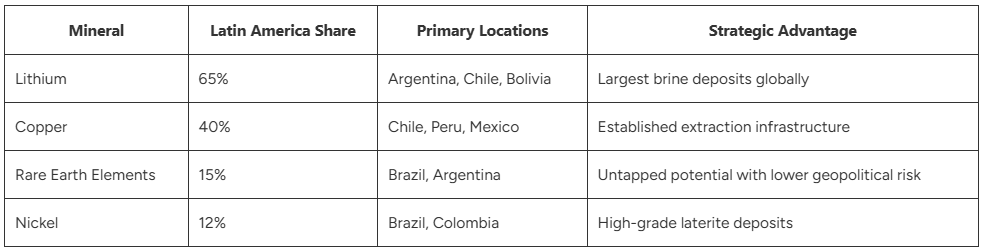
    The global distribution of REEs and critical minerals – an accident of nature and geology - has been favourable to Latin America. The region is believed to control 65% of global lithium reserves, 40% of global copper deposits, and around 15% of REEs. In Argentina alone the assessment of lithium reserves has increased by a potential 40% thanks to recent geological exploration. Latin American countries with significant REE and critical minerals reserves include Brazil, Bolivia, Chile, Peru, and Argentina.

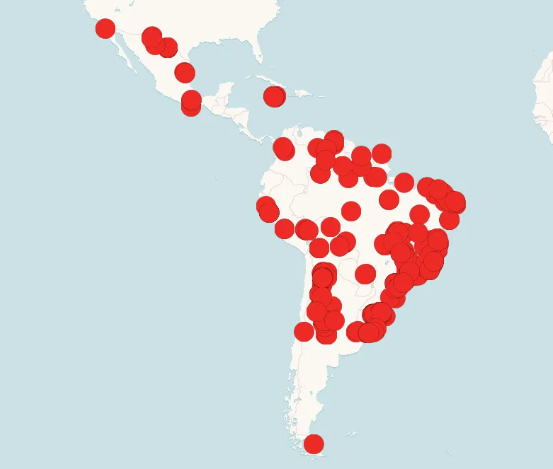
    Rare earth element deposits in Latin America and the Caribbean

    Source: Newsweek. Based on U.S. Geological Survey data

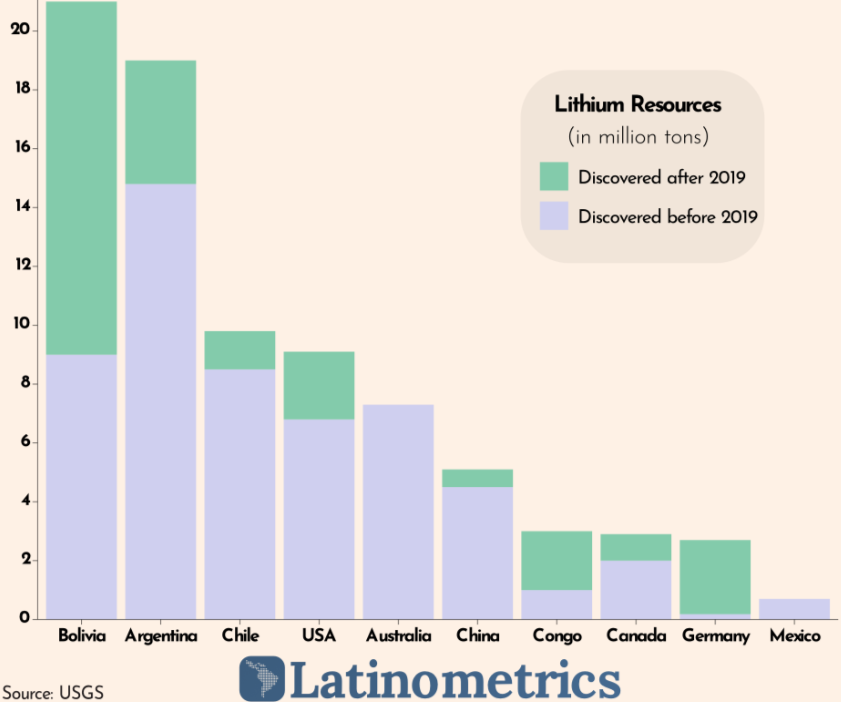
    The ratio of reserves to extractive capacity is also interesting and suggests there is room for serious output growth. Chile, a country with well-developed mining expertise built up over decades, is extracting a relatively modest 180,000 tonnes of lithium a year from reserves of 9m tons. Neighbouring Bolivia, with much less expertise in extractive capacity, is sitting on reserves of 21m tonnes.

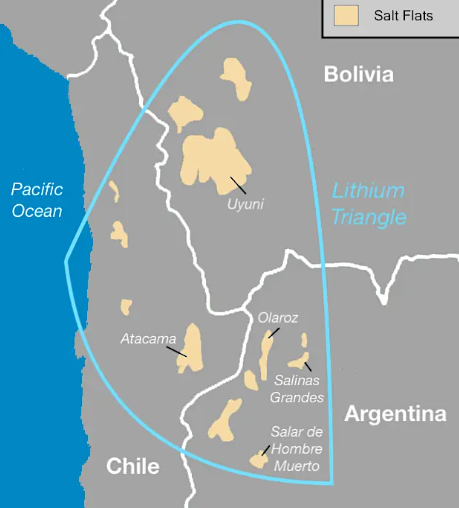
    While Latin America has its share of political risk and volatility, some mining analysts argue that it is comparably more stable than some locations in Africa and Asia. In the contrast to the current Middle East conflict, Latin American REE and critical minerals can be shipped directly without hindrance to North American and European markets , either through Pacific or Atlantic shipping routes. Important mineral-rich clusters give producers negotiating leverage. Forty-five per cent of known global lithium reserves are to be found in the lithium triangle that straddles Argentina, Bolivia, and Chile. Chile and Peru together are responsible for 30% of global copper output.

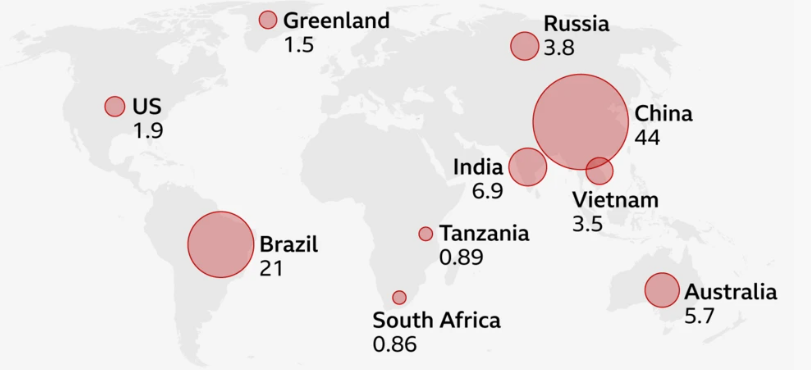
    Top 10 countries for global rare earth reserves
    In million tonnes, 2025

    Source: BBC

    Another Latin American location advantage is that mining projects in the region require as much as 18-24 months less development time than those in other countries before they come onstream (although producers still complain of red tape and bureaucracy).

  • What is the outlook for demand?

    Abbi Dicker 14 May 2026 Hits: 1330

    Across a range of mining sector analysts there is agreement that a global boom in demand for critical minerals has been taking shape in recent years. Lithium demand, based on the high-powered batteries that are needed by the world’s growing fleet of electronic vehicles (EVs), is expected to surge by 400%-500% over the next ten years. Copper use in renewable energy could jump by 300%. Achieving the UN’s global carbon net zero target by 2050 could require a six-fold increase in critical mineral inputs by 2040. The underlying economic model suggests that every US$1bn invested in upstream mining generates US$3bn-$4bn in downstream manufacturing.

    It needs to be stressed that, however promising, REEs and critical minerals development in Latin America are at a very early stage and starting from a small base. It is predicted that regional REE production could grow at a compound annual rate of 7.4% in 2025-2030, but the value of production in 2030 will be only around US$32m. At the other extreme there are claims that the regional mining/refining value chain could eventually reach a value of US$154bn.

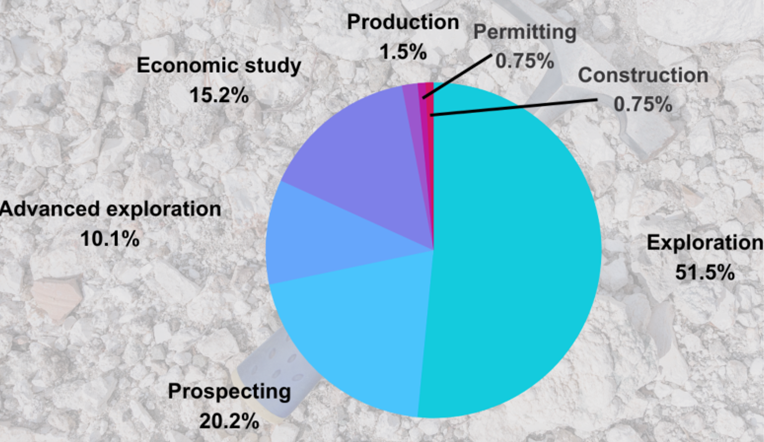
    Stages of rare earths projects across the Americas

    Source: The Northern Miner

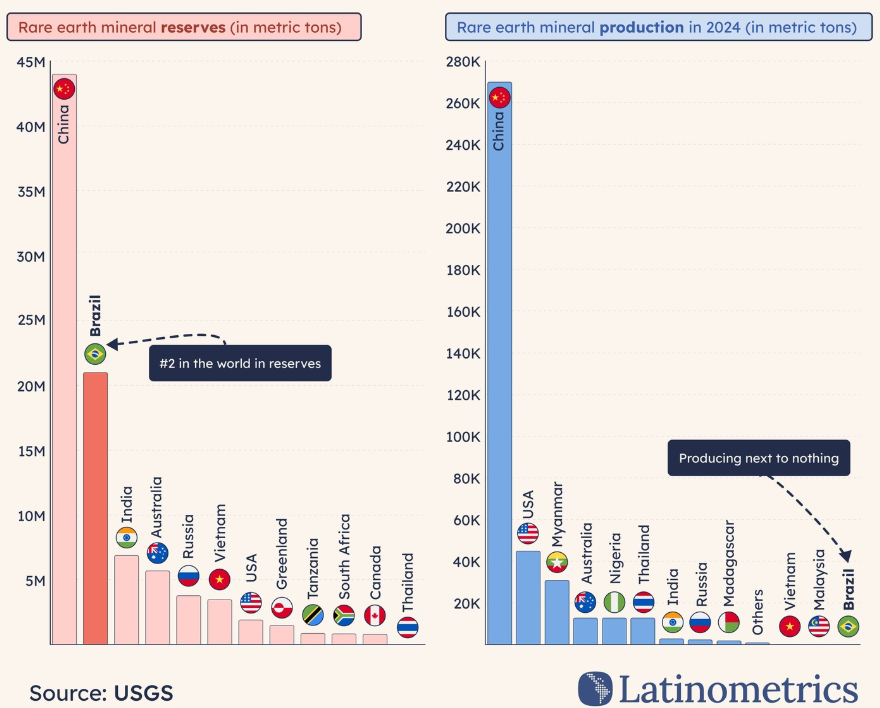
    Brazil, Latin America’s economic powerhouse, has set itself some super-ambitious targets. It currently accounts for 0.02% of global REE supply and wants to boost that to a 5%-8% market share by 2030, relying on integrated mining and processing. To help make that possible it has promised the equivalent of US$500m in investment in transport infrastructure, including railways and ports.

  • The US-China stand off

    Abbi Dicker 14 May 2026 Hits: 1283

    It is widely believed that China has dominated the growing REE industry, and that it was much quicker than the United States to understand its strategic value. By 2019 China was supplying around 90% of global demand for the 17 REE powders. It also currently controls 70% of global rare earth processing capacity.

    Since as early as 2010, the Beijing government has placed restrictions on its REE exports. By 2025, when the US began a trade and tariff war with China, the US and Australia had become the world’s second and third largest REE producers. While lower down the production ranking, Brazil is also seen as an REE powerhouse, since it has the world’s second largest REE reserves.

    The US was hard hit in 2025 when China imposed export restrictions on metals, machine parts, engineers, and rare earths. A one-year truce was agreed in November but by then many US and European factories had been forced to limit production levels.  

  • Washington plays catch up

    Abbi Dicker 14 May 2026 Hits: 1240

    According to a report by law firm White & Case the US government, responding to the challenge from China, has channelled more than US$1bn into Latin American REE and critical mineral projects since the start of 2025. The money has been earmarked for lithium, copper, and rare earths, and is designed to strengthen supply chains and defence priorities. Key destinations for this funding support include Brazil and Argentina.

    Since the start of Donald Trump’s second term in office in January 2025 the US has been more pro-active and open about its intent to gain preferential access to REE across Latin America. Projects in both Brazil and Argentina have attracted direct financial support via loans, equity stakes, and offtake agreements (the latter based on using future output to raise capital). Transition Security Project, a UK-US research project, says the Pentagon has been stockpiling critical minerals for use in military equipment, and has earmarked “several billions” to invest in additional projects.

    There have been a number of recent deals. The InterAmerican Development Bank (IDB) has lent US$100m to back a US$2.5bn lithium project in Argentina, while the US Development Finance Corporation (DFC) was reported to be considering a US$465m contribution to expand Serra Verde’s mining operations in the Brazilian state of Goiás. (Serra Verde was subsequently acquired by a US rival). These loans are being made within a changing policy environment. Washington is now seeking to align Latin American supply chains with US strategic interests, ensuring that production enters friendly supply chains, in other words those that support US manufacturing and defence requirements. The US has also applied new conditions in loans and financing agreements to ensure alignment. DFC for example, provides loan guarantees and equity investment, turning to private partners for technical and operational expertise. Projects typically attract 30% public funding, 50% private investment, and 20% host country contribution.

    In the new context, corporate behaviour in the mining sector is beginning to change as efforts continue to align with Trump policies and secure long term supply contracts. However, most Latin American countries feel it is unwise to align exclusively with the US and to shut the door on China; the reality is that they will need to negotiate continuously with both superpowers and walk something of a tight rope to balance both their interests. Political risk considerations – always present in mining – are being expanded to cover regulatory issues, merger controls, and wider geopolitical tensions.

    Rebecca Campbell, global head of mining at lawyers White & Case, commented to business news site BNAmericas that “From a global perspective, over the last four to six years there has been a growing perception of structural change in various critical minerals. Initially, the narrative was centred on the energy transition, but it has evolved to include energy security, economic security, and defence supply chains. More recently, this awareness has accelerated, particularly with the renewed focus of the US government on securing critical mineral supply chains. This has driven both political support and financing, which is now having a tangible impact on Latin America.”

  • The European perspective

    Abbi Dicker 14 May 2026 Hits: 1235

    The European Union (EU) is part of the wider global rush to secure rare earth supplies and has expressed interest in working with Latin American countries to reduce their dependence on China. Brussels has identified 34 critical raw materials (CRMs) most of which have to be imported. Twenty-five of those on the list can be found in South America. EU documents stress the fact that CRMs are strategically sensitive since they are essential for modern industry, car manufacturing, mass communications, weaponry, and many other applications. But they also make the case for CRMs as essential to improve European competitiveness.

    In 2023 the EU signed a Memorandum of Understanding (MoU) with Chile and Argentina on sustainable commodity value chains. In 2024 the EU ratified its Interim Trade Agreement (ITA) with Chile, pointing out that this was its first trade agreement to include a separate chapter on energy and raw materials. The EU has also signed a trade agreement with the Mercosur countries (Argentina, Brazil, Paraguay, and Uruguay) that should enable increased trade in critical minerals. Most of the CRMs entering Europe from South America come from Brazil, but 79% of the EU’s refined lithium comes from Chile.

    According to the International Energy Agency (IEA) demand and prices for lithium (along with nickel, cobalt, and copper) will surge as the energy transition develops between now and 2050. In a speech to the EU parliament in November 2024 EC President Ursula von der Leyen identified three policy pillars – closing the innovation gap; developing a common plan for decarbonisation and competitiveness; and strengthening EU economic security. Officials say the third pillar involves achieving stable and secure supply chains, especially for CRMs.

    The wider context is a three-way struggle for global influence and security between the US, China, and Europe. For the last two decades Chinese trade with Latin America has been increasing. At present the US remains Latin America’s top trade partner, followed by China in second place and the European Union in third. China-Latin America trade has surged from US$12bn in 2000 to US$315bn in 2020. In critical raw materials alone China is now Latin America’s top trade partner.  

  • Brazil leads the charge

    Abbi Dicker 14 May 2026 Hits: 1154

    There is a broad consensus that Brazil is emerging as the Western Hemisphere powerhouse for rare earths, based partly on the fact that the country holds one-fifth of known global REE reserves (and that only about a third of Brazilian territory has been mapped geologically, meaning reserves may be greater). The state of Minas Gerais has attracted around US$2bn in REE investment and has been dubbed a “rare earth valley” capable of rivalling some of China’s key sites. As already mentioned above, Brazil plans to raise its share of global rare earth output from virtually nothing to 5%-8% by 2030. To help this happen the government has committed itself to carrying out US$500m worth of infrastructure improvements including rail connections and ports.

    Brazilian-owned mining giant Vale has announced a US$5.4bn-US$5.7bn investment plan for critical minerals, focusing on nickel, copper, and rare earths, the largest investment yet seen in the sector.

    In early 2026 media reports suggested that the centre-left government of President Luiz Inácio Lula da Silva was considering whether to set up a state-owned rare earth company. The news came amid worries that without intervention, Brazil might face a critical gap in its rare earth midstream processing capacity. Successive Brazilian governments have favoured moderately nationalist positions on mining while at the same time seeking to offer the predictability and stability that foreign investors welcome.

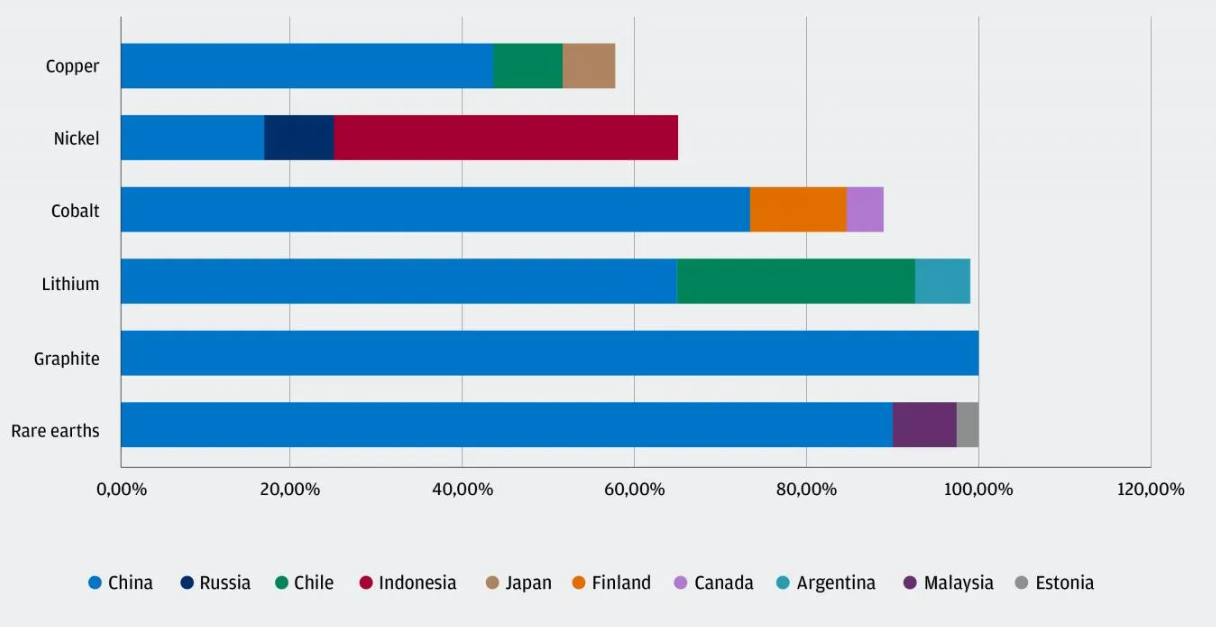
    Monica de Bolle, a Brazilian specialist at the Petersen Institute for International Economics (PIIE), says there has been a disproportionate focus on upstream mining in the race for rare earths: “The real chokepoint in global supply chains lies not in what exits underground” she says, “but in the capacity to transform these resources into usable materials across the supply chains of multiple products and sectors. In other words, the chokepoint is not concentrated upstream, but in the midstream and downstream of supply chains. These are the stages that China dominates globally.”

    Percentages of the top three producing countries in processing of copper, nickel, cobalt, lithium, graphite and rare earths.

    Source: IEA

    Brazilian officials are eager to see the country building capacity in higher value midstream separation, refining, battery and magnet production, rather than being restricted to exporting lower-value ores for processing elsewhere. Sources said the Lula administration was split on the issue, with the Office of the Presidential Chief of Staff favouring the idea of a state company, while the ministry of mines and energy preferred a more market-led response.

    André Pereira César, a political analyst at Hold Consultoria, commented: “The decision to create or not a state-owned company to operate in rare earths is not such a simple decision and is part of a political calculation. In general, the population tends to criticise the creation of yet another state-owned company, but rare earths is a very particular segment, since we are seeing governments of all countries talking about how important these elements are for sovereignty, so we have to consider that this has become a very relevant geopolitical issue.”

    Brazil is the sleeping giant of minerals

    With presidential elections due this October in Brazil rare earths are on the political agenda. The main electoral battle is likely between Luiz Inácio Lula da Silva, the centre-left incumbent, and senator Flavio Bolsonaro (son of far-right former-president Jair Bolsonaro 2019-2023). Among the other presidential candidates is Ronaldo Caiado, former governor of Goiás state who has promised close collaboration with the US on REE research and development.

    Given public anger over punitive tariffs on Brazilian products imposed by Trump last year, candidates may be wary. César of Hold Consultoria says national sovereignty over rare earths will be discussed on the campaign trail, noting that “Candidates who appear too close to the United States may have difficulty attracting votes from undecided voters, who will be the ones to really decide the election.” For his part President Lula da Silva has insisted that “We are not going to be exporters of critical minerals. Anyone who wants them will have to industrialise in our country, so that our country can earn that money.”

    Looking at the longer term, Brazil has the ability to position itself as a strategic rare earths partner for both the US and the European Union (EU). This is because it not only has the necessary REE reserves but also a power grid that is almost 90% renewable, meaning that it can process and refine rare earths with a relatively small carbon footprint. However, according to PIIE, to fully seize the REE opportunity Brazil will have to eliminate institutional, infrastructural, and financial bottlenecks. For mining to leap forward there needs to be “a supporting industrial eco-system with skilled labour, logistics, technology transfer, and stable regulatory frame works”.

  • USA Rare Earth makes its move in Brazil

    Abbi Dicker 14 May 2026 Hits: 1002

    USA Rare Earth, a Nasdaq-listed company, said on 20 April 2026 that it has agreed to pay US$2.8bn to acquire Brazil’s Serra Verde. Serra Verde is the only producer of all four magnetic rare earths outside of Asia. Through this acquisition, the US company is buying a mine in the state of Goiás that began commercial production in 2024, extracting REEs from ionic clay deposits. Serra Verde is ahead of the game; other rare earth mines in Brazil are not expected to come on stream until 2028.

    The US government has been interested in Serra Verde for some time. In February his year the US International Development Finance Corporation (IDC) closed a US$565m financial support package to help the company develop, taking output up to 6,400 tonnes per annum of rare earth oxides by 2027. The agreement also leaves open the possibility that the US government might take a minority stake in the company. A further feature is a 15-year offtake agreement under which 100% of output is pre-sold at guaranteed minimum prices. This covers the four magnetic rare earth elements: neodymium, praseodymium, dysprosium, and terbium.

    USA Rare Earth has itself received government support since before its purchase of Serra Verde. In January this year the Washington administration said it had provided US$1.58bn in debt and equity financing through the Commerce Department. Some of this has been controversial since Cantor Fitzgerald, a company involved in the fundraising for USA Rare Earth, was previously led by Commerce Secretary Howard Lutnick and is now controlled by his sons. They have rejected suggestions of insider training within the Lutnick family.

    The company’s newly acquired Brazilian facility is particularly attractive to investors because the Pela Ema deposit it controls is rich in heavy rare earths, dysprosium and terbium, used for high-performance magnets in electric vehicles, wind turbines, drones, and defence systems. In addition, Pela Ema’s soft clay deposits mean that as production ramps up, operating costs will be lower than for rare earths extracted from hard rocks. Outside of China there is minimal processing capacity for these rare earths, so the US and EU are seeking to fill that gap in the production chain. USA Rare Earth chief executive Barbara Humpton commented “Serra Verde’s Pela Ema mine is a one-of-a-kind asset and the only producer outside Asia capable of supplying all four magnetic rare earths at scale.”

    Commenting on the acquisition of Serra Verde, Brazilian investment bank BTG Pactual said that it “may mark the beginning of a larger wave of transactions in the sector, with early stage companies increasingly becoming acquisition targets as projects advance towards production”. The Brazilian government reacted to news of the acquisition with surprise and some concern, given its reluctance to see such a strategic asset controlled and part-funded by a foreign government.

    Left wing political party PSOL asked the attorney general’s office to investigate if the deal poses a risk to the country’s “economic sovereignty”. On social media platform X, Lula said that critical minerals should become instruments of economic and social development and that Brazil should avoid becoming a “mere exporter” of mineral commodities. He added that his government favoured international cooperation as long as it involved developing value added and technology transfer.

    USA Rare Earth director general Ricardo Grossi had earlier told newspaper O Globo that “there are 17 rare earth elements, and we are focusing on the top 15, those with higher atomic weight, which have over 200 applications”. He added “we are estimating market growth at 8%-10% per annum until 2035. We have an advantageous position thanks to our operating base and portfolio of competitive products.”

  • Concern over REE preferential access

    Abbi Dicker 14 May 2026 Hits: 1303

    Additional US proposals to develop critical minerals in Brazil have also triggered worries over national sovereignty according to news outlet Brasil 247. In March It cited Brazilian officials saying the proposed terms would give US companies and investors preferential access to strategic minerals. US companies were said to “expect the first opportunity to invest, in accordance with domestic laws, in critical mineral assets that may be sold in Brazil, or by a company headquartered or incorporated in Brazil”.

    The officials worried that this might lead to an undesirable concentration of foreign investment in certain parts of the country. They also noted that a similar agreement between the US and Australia restricted preferential access to companies investing over US$1bn, but that there was no similar threshold in drafts of a similar US-Brazil agreement. As we have seen President Luíz Inácio da Silva favours foreign investment in rare earths, but only if the processing also occurs in Brazil.

  • Argentina: the lithium RIGI story

    Abbi Dicker 14 May 2026 Hits: 816

    Over the last decade Argentina has become a major player in the lithium sector. This is largely due to the immense salt flats in the country’s northwest which serve as mining hubs. There are production centres at Fénix, Olaroz, Cauchari-Olaroz, Centenario-Ratones, and Mariana. In contrast to some other lithium-mining jurisdictions, Argentina has been able to build a substantial pipeline of diverse projects at different stages of development. In 2024 total lithium production reached 240,000 tonnes, more than double the 107,000t reported in 2023.

    The US Geological Service USGS estimates global lithium reserves at around 30m tonnes, with 4m tonnes held by Argentina, equivalent to 13% of the current world total. Other key producers are Australia, China, and Chile.

    Under the right-wing pro-market government of President Javier Milei, Argentina has been eager to attract large-scale investment in critical minerals. In mid 2024 the government launched the Incentive Regime for Large Investments (RIGI), which offers tax, customs, and foreign exchange stability for projects worth US$200m or more. One incentive: the promise of tax stability for 30 years. Mining giant Rio Tinto became the first company to benefit from RIGI in May 2025 with the launch of a US$2.5bn lithium project in Salta province. Argentina’s lithium output capacity rose from 75,000 tonnes per annum in 2023 to 186,000t in 2025; the government is targeting 658,000t by 2030.

    At least 19 rare earth deposits have been found in Argentina. An environmental impact study by Litica Resources (a subsidiary of oil company Pluspetrol) may pave the way for start-up of rare earth mining in the country’s northwestern provinces. According to the national geological and mining service (Segemar), nine of the 19 known deposits are located in Salta province, with the most prominent being Rangel, La Barba, El Ucu, and Platería Sur y Norte. Rangel is estimated to contain 35,000 tonnes of yttrium, and 25,000 tonnes of thorium, as well as zirconium, niobium, uranium, and gold.

    Segemar says REE resources likely represent “hundreds of thousands” of tonnes but lacks the data necessary to estimate a credible figure for commercial reserves. Some analysts have however speculated that commercial, proven reserves could be close to 200,000 tonnes. Over the next few decades Argentine developments in the critical minerals sector are likely to be driven by lithium. Together with Chile and Bolivia, the country forms part of the lithium triangle, one of the world’s largest concentrations of lithium reserves. Significantly much of the lithium in the triangle is contained in liquid brine which has production costs of around US$3,500-US$4,000 per tonne, compared to US$6,000-US$8,000 for Australian spodumere and US$5,000-US$7,000 for Chinese processing.

    The Lithium Triangle region

    Source: Yale Environment

    Segemar also reports that several cobalt projects are in development. These include Las Águilas in San Luis province with 4.6m tonnes in nickel and cobalt deposits; King Tut in La Rioja province with 0.02m tonnes in gold, cobalt, and silver; and La Niquelina-Esperanza in Salta province containing gold, nickel, lead, and cobalt.  

    Argentina is increasingly seen as playing a strategic role in global rare earths/critical minerals, enabling diversification and reducing dependence on China. In February this year US secretary of state Marco Rubio said, “Argentina has the capacity in terms of natural resources…not just for the United States, but for the world”. Recognition of that strategic importance has come despite the very early stages of sector development: the country has no reliable estimates of commercial reserves, no functioning rare earth mines, and no rare earth separation plants. It does however have a track record as a copper and base metals miner, with some degree of transferrable skills.

    This year the government expects US$14bn worth of investment coming in through the RIGI scheme, mostly connected to big copper projects. More widely the Buenos Aires government is seeking to reconcile US and Chinese interests: while Argentina is ideologically close to Donald Trump, China offers a larger export market. In 2023 Argentine exports to the US were US$8.6bn, but exports to China were substantially higher at US$14.5bn.

    Argentine mining expert Julio Theaux says the main rare earth deposits currently attracting attention include Rodeo de los Molles in San Luis province which has 2.1% ore grades; Distrito Rangel in Jujuy and Salta province, Jasimampa (Santiago del Estero) and Barker (Buenos Aires province). The last-named is seen as particularly attractive because the rare earths are embedded in soft ionic clays, likely reducing extraction costs compared to hard rocks. Theaux says that in developing the REE sector Argentina must avoid a series of potential traps. These include investing too much in exports of low value-added ores; depending too much on any single source of financing; and failing to ensure significant technology transfer. Theaux recommends signing long term mining contracts, lasting 20-30 years, and minimising adverse environmental impacts.

  • New Chilean government eyes value added

    Abbi Dicker 14 May 2026 Hits: 1355

    In April 2026 Chile and the United States signed a memorandum of understanding (MoU) designed to accelerate exploration, production, and processing of critical raw materials and rare earths. Foreign minister Francisco Pérez Mackenna said the aim was to consolidate a government policy to strengthen resilient and secure supply chains, so as to generate increased value added. The minister - a member of the new right-wing government that took office a month earlier - said his administration was particularly eager to attract new foreign investment into the sector. He also saw it as an opportunity for technology transfer and for the development of human capital and downstream capacity.

    Chile’s rare earth reserves have been topped up as exploration and geological surveys progress. An earlier development under the previous government was the launch of a Strategic Lithium Plan, which seeks to balance resource sovereignty and international/private sector cooperation. The law was challenged in an appeal to the Constitutional Council, which ended up endorsing the combination it had proposed between state ownership of the metal, combined with openness to private sector technology partnerships and downstream processing investments. Foreign companies can form joint ventures with state entities as well as signing technology licensing agreements.

    As in Brazil, there are worries in Chile over a potential rare earths processing and refining capacity gap. Mining consultant Constantine Karayannopoulos says Chile has “probably one of the best” rare earth resource endowments, but that it should avoid what he sees as the “mistakes” made by Australia and Canada. “Their economies grew largely on the basis of extraction of raw materials, but they did not capture the added value that the Chinese, the Koreans, and the Japanese – and to a lesser extent the Europeans – did.”

    Ayaz Alam, director of the Geological Society of Chile (SGC), acknowledges that there is interest in increased value-added production, but that it is “important to be realistic” since “projects have been delayed for years”. According to Alam: “Some companies planned to start operating in 2026 or 2027, but there are unresolved environmental issues, technologies that are not yet consolidated, and pending conflicts with local communities.” Another analyst, Juliana González Jáuregui at the Latin American Faculty of Social Sciences (FLACSO), says it is necessary to balance investment and political risk: “The balance is not ‘with or without China’, but how to insert oneself into the global system without further deepening historical vulnerabilities.”

  • Peru seen as player with “high geological potential”

    Abbi Dicker 14 May 2026 Hits: 882

    Like Chile, its southern neighbour, Peru has a long history of mining production and expertise. A recent report from consultancy KPMG says Latin America is emerging as a supply-side challenger to Chinese rare earth dominance in production and refining. By KPMG’s assessment Brazil has rare earth proven reserves of approximately 21m tonnes, followed in second place by Argentina with 3.3m tonnes, and Peru as a player with “high geological potential”. Juan Carlos Mejía, energy and natural resources lead for KPMG Peru, says the challenge isn’t just to exploit rare earth reserves, but to “transfer their role within the value chain”.

    “Peru has an opportunity to stop being just a base metal exporter, transforming itself into a strategic hub for global technology security”, he says, adding that the real transformative impact of REEs will depend on the country’s ability to build and operate refineries and avoid ending up with a narrower role solely as an exporter of unprocessed mineral ore. He adds that companies working with raw earths will have to meet ESG principles (environment, social, and governance) and be open to scrutiny. It would be advisable to create a view of rare earths as “green and ethically produced”, he suggests. Mejía adds that rare earth demand will outstrip supply in 2026-2030, presenting Peru with an opportunity to enter the expanding market.

    Initial finds in the regions of Junín and Puno are said to be promising, but much will depend on a favourable regulatory framework and on political and tax stability to reassure would-be investors. In September 2025 Ingemmet, Peru’s geological survey, said it had found rare earths in deposits in Chanchamayo, Junín, with a TREO (total rare earth oxide) ore concentration of 1.09%-5.03%. Exploration in the Capacsaya project in southern Perú has revealed the presence of rare earths in association with minerals like monazite. Exploration has indicated the presence of both light rare earth elements (LREEs) and heavy ones (HREEs); – the latter are less plentiful and tend to be more valuable. TREO ore grades are considered promising at around 3%.

    Peru’s opportunity is not without significant challenges. New mine development may be opposed by local farming communities who have suffered from undesirable side effects in the past, including water shortages and mercury, arsenic, and lead poisoning. Protests could delay the permitting process. Large mining operations also require adequate freight transport infrastructure which may be expensive and slow to put in place.

  • 2023 mining law holds Mexico back

    Abbi Dicker 14 May 2026 Hits: 1014

    Despite significant rare earth/critical mineral resources, Mexico is seen as making a slower start in attracting foreign investment into the sector, placing it behind Brazil and Argentina. State control of lithium, along with underdeveloped mining regulations and underexplored deposits are imposing some restrictions and delays. Industry sources say the 2023 mining law amendments have created uncertainty and slowed or discouraged exploration and development of rare earths. This could cause projects to be postponed at a crucial time. The problem is accentuated because most rare earth projects are complex and can take up to ten years or more between conception and coming on stream. In terms of refining and processing, Mexico still lacks large scale separation plants, advanced refining capacity, and magnet manufacturing facilities.

    A recent report by the Inter American Development Bank (IDB) says GDP growth this year will be a modest 1.3% and suggests that developing the critical minerals sector would be one way to inject greater dynamism into the economy.  

    Mexico either produces or has development potential for 13 critical minerals including lithium, copper, graphite, rare earths, antimony, barite, bismuth, fluorite, lead, manganese, phosphate, silver, titanium, and zinc. As we have seen, demand for some of these minerals is booming. Global lithium demand is expected to grow by between 470% and 800% by 2050, depending on the pace of the energy transition and the take-up of electric vehicles. Demand for copper is likely to double.

    Lithium is a particularly promising opportunity. Mexico has lithium reserves of roughly 1.7m tonnes spread across 82 deposits in 18 states. The state of Sonora leads with 13 deposits, followed by Puebla with 12 and Oaxaca with nine. But there is a sense that Mexico may be slipping behind. “While Mexico debates state control of lithium, the global automotive industry is already securing supply contracts elsewhere, leaving the country out of the investment race for batteries and electric vehicles,” says Armando Alatorre of CIMMGM, the mine engineering college.

    Mexico’s rare earth sector is at a very early stage of development. There is little production, limited exploration, and no significant domestic refining capacity. The country is dependent on rare earth imports particularly in downstream sectors such as automobiles and electronics. At present only one private sector company, Monumental Mineral, is developing a rare earth mining project in Jemi, Coahuila state, which is said to contain magnetic rare earths such as neodymium, praseodymium, and terbium among other elements such as tantalum and niobium. The company says that to date it has surveyed only 5% of the available area.

    In a recent interview CIMMGM president Raul García says that despite the presence of plentiful rare earth ores, private sector companies are held back since under the law exploration can only be carried out by SGM the state-owned geological service. Referring to the global rare earth boom García says “We could have a slice of that pie, but SGM has not yet started the exploration of rare earths, which will be crucial for nearshoring and the supply chain of which Mexico will be a part.” He also says the mining law does not give private companies sufficient legal certainty. Unless changes are made, García says Mexico will be forced to rely on imports to meet its rare earth needs.

    That said, if these issues can be fixed, the opportunities are significant. One is nearshoring – the integration of Mexican and US production value chains. As the US seeks to reduce its dependence on China, Mexico may be increasingly seen as a rare earths strategic partner within the USMCA trade pact (formed by the US, Mexico, and Canada). Arguably this may help Mexico fill the eventual mid-stream rare earth processing capacity deficit. Mexico could position itself as a regional supplier of critical minerals and processed materials. The fact that Mexico already has a well-developed manufacturing base, including in high-tech sectors such as automobiles, aerospace, defence, and electronics, may help.

    Given its relatively low base, Mexico is not currently an upstream rare earth producer, but it could become a significant midstream or integrated player. Whether it does so or not will depend on whether it can leverage its USMCA advantages, including integrated supply chains, reduced logistics costs, and strengthened supply security. Given low levels of exploration it is also possible that there may be new discoveries going forward. That said, USMCA is being renegotiated this year, and President Trump, whose relationship with both Canada and Mexico has been tense, may seek to move further in the direction of protectionism, which could limit some of the positive effects of supply chain integration. Political risk will be a significant issue influencing investor views.

  • Bolivia moves away from state-led industrialisation

    Abbi Dicker 14 May 2026 Hits: 753

    Among regional countries Bolivia presents one of the sharpest contrasts between a potential critical minerals/REE boom on the one hand, and almost non-existent current mine production levels on the other. Since 2010 exploration has gathered pace. Deposits have been discovered in Cochabamba, Potosí and Santa Cruz, with particularly attractive finds in Cerro Manomó and Rincón del Tigre in eastern Bolivia. Metals and minerals detected include rubidium, cesium, tantalum, tungsten, and REEs. However geological service SERGEOMIN talks about the looser concept of “resources” but still feels unable to give a hard number for proven commercial “reserves”.

    During the roughly two decades of left-wing rule which ended last year, Bolivian governments sought to develop partnerships with like-minded countries and state-owned mining companies. They favoured state-led industrialisation, hoping for example to host lithium-ion battery manufacturing. In 2023 the administration selected CATL-CMOC of China for an investment of over US1bn in direct liquid extraction (DLE) of lithium and possible battery production. A similar agreement was signed with the Russian company, Uranium One. (Bolivia is considered to hold the world’s largest lithium resources at 21m tonnes). However, little progress has been made, with the contracts subject to litigation over environmental impact and the new, more market-friendly government looking elsewhere for investment in new mining projects.

    Luis Losada Siom-Ricart, of business risk consultancy Aperio Intelligence says that the new government is “likely to audit, revise, and potentially renegotiate these contracts” as well as seeking to create a more business-friendly working environment. It will also seek to attract other international mining firms, specially from North America and Europe.  

    Bolivia is sitting on a “White Gold” mine

    Although political instability and the lack of lithium/rare earth expertise and processing capacity have restricted Bolivia’s ability to develop the sector, some analysts remain optimistic. Specialist website Rare Earth Exchanges says Bolivia has taken a number of necessary early steps including mapping resources and setting up regulatory institutions, adding that “if it can pair its mineral wealth with investor-friendly frameworks, modern processing technology and durable community agreements, it could emerge within 10-15 years as a meaningful supplier of rare earths and critical materials”.

  • Corporate moves in critical minerals and REEs

    Abbi Dicker 14 May 2026 Hits: 1362
    • Vale, Brazil’s largest mining company, has announced conditional interest in critical minerals and raw earths. The company says it faces weakening demand for its core iron ore offering and is “repositioning” towards metals needed for the energy transition including copper, nickel, lithium, and rare earths. The company has a US$14bn investment programme for the 2025-2030 period and aims in that time to achieve 20%+ growth in mineral resources. It says it will focus on nickel (for electric vehicles), copper (for electrification), and cobalt (as a by-product).

    Vale is not for the moment prioritising lithium or rare earths but is investing indirectly. Along with investment bank BNDES it holds a 25% stake in Brazil’s Strategic Minerals Investment Fund which is focused on lithium and REEs. Vale is broadly aligning itself with Brazilian government policy for rare earths which favours increasing production, building domestic processing capacity, and reducing reliance on imports. Although plans are at an early stage, Vale could play an important role in building integrated supply chains and closely linking mining to refining operations. Company officials say they want to avoid a short-term rush into rare earths. A longer term and somewhat more cautious approach is required they say, because rare earths involve complex metallurgy, very high capital expenditure, and long timelines.

    • UK-Australian mining company Rio Tinto has also been performing something of a strategic pivot, moving away from diamonds to expand investment in copper and borrowing US1.2bn to support its lithium project in Argentina. The total cost of the Rincón lithium development is put at US$2.5bn. In April this year the company said it was seeking a full-scale realignment of its portfolio towards materials essential for the energy transition.

    A central role in the change of focus is the Rincón mine in northern Argentina, which is expected to produce 60,000 tonnes per year of battery grade lithium carbonate. An initial 200 tonnes consignment has already been shipped to Shanghai. In 2024 Rio Tinto had invested US$6.7bn to acquire another miner active in Argentina, Arcadium Lithium.

    • In Chile Canada’s Aclara Resources has formed a partnership with local Chilean steel conglomerate CAP to develop the Penco Module near Concepción in the south of the country, which from 2027 is set to produce 811 tonnes per annum of rare earth oxides. Initial investment is estimated at US$158m. This project will focus on dysprosium and terbium, with a leaching process that uses recycled water. The companies claim it will not produce any tailings at all (wastewater) and have committed to reforest the 600 hectares of mining area. Tailings have been highly controversial in Latin America since man-made reservoirs containing them have collapsed causing flooding and landslides.

    In March 2026 Aclara, a subsidiary of Hochschild Mining, opened its rare earths separation unit in Virginia, USA; it is also working on another at Port Vinton, Louisiana, due for completion in 2027. The company says it will import rare earth from Brazil and Chile, using them to produce its first separated light rare earth oxides in May, and heavy rare earths oxides in August. Aclara chair Eduardo Hochsild said that separation was especially significant since “Aclara has the heavy rare earth ionic clay deposits to supply the process, delivering a sustainable and reliable source of these critical materials to the Western Hemisphere.”

    • In March 2025 Brazilian Rare Earths (BRE) announced positive rare earth drill results at its Pelé project in Bahía state, 60kms southwest of its Monte Alto project in the same state. Monte Alto is an early-stage hard rock discovery with exceptionally high ore grades. BRE is also exploring a third site, Sulista. The Pelé site contains rare earths, niobium, scandium, tantalum and uranium.
    • Australian mining company Viridis, in partnership with investment funds Régia Capital and ORE Investments is developing a project called Colossus in Poços de Caldas, Minas Gerais state, in Brazil. The project is described as mining what are among “the highest-grade IAC (ionic absorption clay) projects in the globe”. Project reserves are estimated at 201m tonnes.
    • Sociedad Química y Minera de Chile (SQM) is one of the world’s leading lithium producers. Set up in 1968, with headquarters in Santiago, it operates mainly in northern Chile where it extracts lithium from brine deposits in the Atacama desert. In the Salar de Atacama there are high concentrations of brine and dry weather conditions that allow for evaporation-based extraction. SQM refines the extracted material into lithium carbonate and lithium hydroxide, essential for electric vehicle (EV) batteries. The company has been increasing production due to booming global demand but has also been criticised for generating harmful environmental impacts such as water depletion and contamination.
    • China Non-Ferrous Metal Mining Group acquired the Brazilian-owned Taboca Mining in 2024, for BRL2bn (US$396m) gaining access to rare earth assets. Taboca mines uranium, tin, cassiterite, niobium, and tantalum in the Amazon region.
    • Australian-owned Meteoric Resources owns the Caldeira deposit in Minas Gerais, Brazil, which is considered one of the world’s largest ionic clay deposits. A pre-feasibility study concluded in 2025 put the pre-tax, net present value of Caldeira at US$3.3bn. In April 2026 Meteoric said it was raising US$30m in additional funding for its US$450m investment in rare earths in Brazil. The company said it was completing a feasibility study, running a pilot plant, carrying out additional drilling, and carrying out environmental impact studies.
  • Rare earths and the environment

    Abbi Dicker 14 May 2026 Hits: 1051

    While rare earths are used for technologies – such as renewable wind and solar energy – that are expected to help reduce global carbon emissions, their mining, extraction, and processing can also be quite ‘dirty’ and have harmful side-effects; governments must strike a balance between the two.

    Many rare earths are extracted through open pit mining, in which the ore is crushed and ground, and then chemically treated with acids or alkalis to dissolve the REEs, using solvents. The process requires intensive use of water. There are risks that local communities may suffer water scarcity, chemical leaks, contamination, and harmful air pollution. However, Francisco Valdir Silveira, of Bazil’s geological survey (SGB), told Dialogue Earth, an environmental lobby group, that “if environmental and sustainability protocols are followed, the impacts will be much less and can be recovered in a short period of time. There are ways to prevent them.”

    Some specialists favour in-situ leaching, where injecting solutions into clay deposits reduces soil and solid waste making large-scale excavation unnecessary. Trials of this approach are underway in Brazil, but it applies only to some kinds of deposits and may cause unwanted side-effects such as soil acidification.

    The Chinese Academy of Sciences has recommended an electrokinetic technique where electric currents are used to mobilise and recover rare earths, reducing chemical waste. It is claimed that it can reduce chemical agents by as much as 80%. However, the process still requires large volumes of water and there are other issues to resolve before it can become commercially viable.

  • Conclusion – the coming boom

    Abbi Dicker 14 May 2026 Hits: 484

    By way of conclusion, it is worth making four main points. First, the global economy is moving into a new phase, much more intense in its use of rare earths and critical minerals. Increased demand for these materials is likely to be a question of decades, not years.

    Second, the available (but still limited) geological data indicates that after China, Latin America has an above average endowment of these critical minerals making an exploration, production, and export boom likely, with the US, China, and Europe all competing to win a slice of the action

    Third, this basic imbalance between demand and supply will drive prices and investment upwards. Billions of dollars will be channelled into the industry, benefiting countries like Brazil, Argentina, Chile, and Peru. The boom will not be unconditional however. The countries in the region will have to offer a degree of economic security and predictability, a favourable macroeconomic environment, an attractive tax regime, and suitable infrastructure. Without those elements the boom will be short-lived.

    The fourth point is of great importance: these are very early days in a nascent industry. Uncertainty is large. The commercial viability of reserves has yet to be widely tested. Refining techniques are new and evolving. While Latin America wants to maximise domestic value added, many technological uncertainties