On 10 January Ecuador returned to market with its second bond issue in a month (and its fourth in less than a year), raising US$1bn through a fresh tap of its 2026 bond. Like Brazil – whose state-controlled oil giant Petrobras successfully issued US$4bn the previous day – the cash-strapped Andean country took advantage of an upturn in capital markets ahead of the inauguration of the business-friendly administration led by US president-elect, Donald Trump.
This latest issue, which came barely a month after a US$750m ten-year issue on 8 December, means that the left-wing government led by President Rafael Correa has now raised US$3.75bn via dollar bond sales in the last six months alone.
As in December, the latest issue was oversubscribed at US$2.2bn, allowing the sovereign to offer a slightly lower yield of 9.125%, in from an initial price of 9.25% (+/- 1.8%). Despite Ecuador’s high risk profile (based on its record as a serial defaulter), the strong investor appetite likely reflects the rise in oil prices on the back of the new global output agreement between the Organisation of Oil Exporting Countries (OPEC) and other leading producers including Russia; and possibly also some expectations of a shift toward a more investor-friendly policy stance after the mid-February general election, even if the ruling Alianza Pais (AP) retains power for another four years.
The AP’s candidate to replace Correa, his former vice president Lenín Moreno (2007-2013), is considered a little more pragmatic than Correa, who has taken a very antagonistic stance towards the private sector. The right-wing opposition is also expected to make legislative gains, which could push the AP towards the centre (albeit a fractured legislature also risks paralysis).
Nonetheless, the case remains that no matter who wins the election, the new government due to take office in May will inherit a sizeable fiscal deficit (stuck at over 5% of GDP for the past three years) and a deteriorating debt profile.
Technically, the Correa government is correct when it insists that Ecuador’s debt stock is not high. In September last year, the treasury put it at just under the constitutional cap of 40% of GDP (albeit this does not include mounting accumulated arrears to suppliers, or off-balance sheet oil-backed financing deals with China). In October, President Correa moved to decree a change in the public debt methodology to exclude from the headline calculation the government debt burden owing to state entities, thereby reducing the overall public debt ratio to 26% of GDP. While this has clearly allowed for additional borrowing ahead of the 2017 election, the move was criticised by opposition economists.
Debt obligations are set to increase sharply from 2017, at a time when the budget position remains weak. With recent new issues carrying average maturities of 5-6 years, the next government may therefore have to do some deft renegotiation/reprofiling once it takes office, in order to reduce and spread these near-term commitments.
All of last year’s debt issues were put towards the 2016 budget, including a sizeable reconstruction bill for a severe earthquake in April (estimated at US$3bn). At the outset of 2016, the-then finance minister, Fausto Herrero, put budget financing needs at US$6.6bn. Over the course of the year, that doubled to some US$13bn.
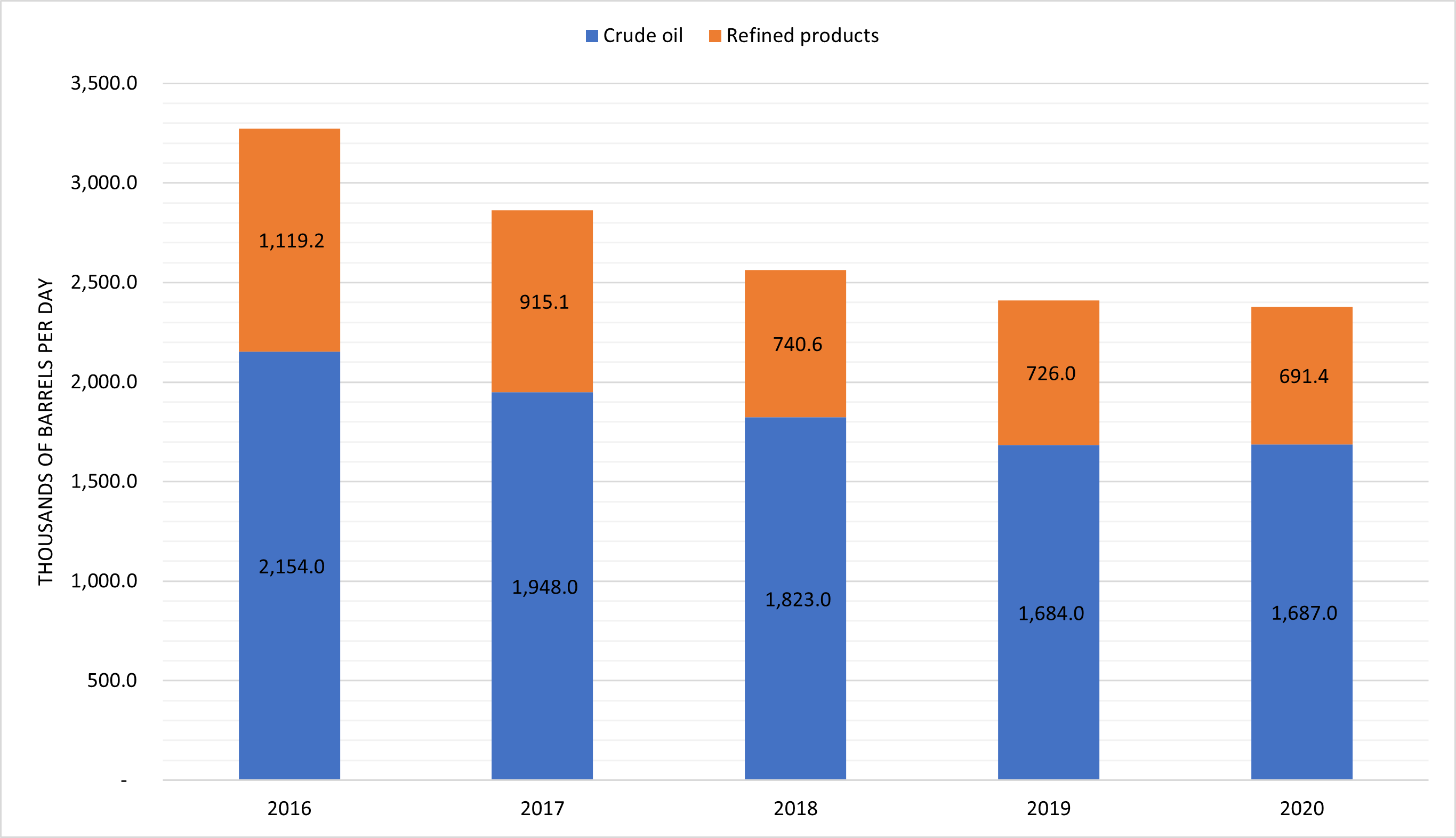
Ahead of the February election, the treasury has been coy about 2017 financing needs. There will not be a 2017 budget until the newly-elected government takes office (ahead of a general election, the previous year’s budget is rolled over), but in late October, the-then minister for economic policy, Patricio Rivera (who subsequently took over Herrero’s role in a cabinet reshuffle), put financing needs for public spending and debt payments in 2017 at US$5.3bn, about 5.5% of GDP. On paper, this would be down by over 50% on previous years. In part, this owes to the fact that a lengthy period of public investment (including in cost-saving hydro-electricity plants built with Chinese support) is complete. It is also the case that the government expects oil earnings to rise in 2017, as the new reserves come on-stream and global oil prices recover. The 2016 budget was based on an oil price forecast of US$35/barrel (/b). West Texas Intermediate (WTI) oil was trading at about US$51/barrel in mid-January. (Ecuador’s Napo and Oriente crude trades a discount of about US$5-7 to the WTI barrel).
Despite the oil price recovery, the government’s fiscal position remains uncomfortable and with that in mind private economists still put this year’s gross financing needs at around US$10bn – and suggest that up to half of that would have to be raised externally, adding to the growing debt pile.
Talking up the economy
Announcing the latest debt issue, Finance Minister Rivera also talked up the real economy, stating that investors, perceiving the “palpable signs of economic recovery in the country” had “ratified their support for our economy”.
President Correa and the new economic policy minister Diego Martínez (formerly the central bank president) have likewise been loudly touting “a strong recovery” in late 2016. While admitting to a contraction in 2016, Correa in early January insisted that the full-year 2016 result would be no more than -1.7%. He called out the IMF, which having previously amended its initial 2016 forecast from a stark -4.5% to -2.5%, was still way off, he noted. The central bank now projects real annual GDP growth of 1.4% in 2017. Private economists are more cautious, expecting only a mild recovery, amid continued fiscal constraints, doubts about the oil price recovery and investor uncertainty around the direction of economic policy under a new administration.
There was a small rise of 0.5% in quarterly growth in June-September, following a rise of 0.7% in the preceding three months. The government is confident that the economy has hit bottom and is now on the upturn. On the 12-month comparison however, real GDP contracted by 1.6% year on year in the third quarter, with continued sharp falls in investment (-6.9%), government consumption (-4.4%) and imports (-3.2%).