
All Categories

Subcategories

  • The crime issue

    Patrick de Courcy 27 March 2024 Hits: 1823

    Rising concern over crime has presented the new government with both a challenge and an opportunity. The promise of a major crackdown on drug trafficking and other criminal activities figured prominently in Milei’s election campaign. Patricia Bullrich, the unsuccessful Juntos por el Cambio (JxC) first round presidential candidate and a former security minister, had also promised tough new anti-crime measures as part of her campaign. Her decision, alongside others in her PRO party, to form a coalition with Milei’s LLA and once more become the security minister, therefore set the scene for a new approach.

    The initial focus of concern has been a surge of gang violence in Rosario, Argentina’s third largest city, located in Santa Fé province. Rosario is home to the Los Monos drug cartel. In what appears to have been a deliberate public relations exercise governor Maximiliano Pullaro (UCR) posted a photograph showing senior gang members stripped to their underwear, with their hands handcuffed behind their backs in Piñero prison, 25kms out of Rosario. The photograph resembled those published on social media by Nayib Bukele, president of El Salvador, who has launched a policy of mass incarcerations of suspected gang members, many of whom are held in a new mega-prison. The policy and the way it has been executed, has been widely criticised by international human rights groups but has nevertheless led to sharp reductions in homicide rates and more peaceful neighbourhoods. In El Salvador, as a result of falling crime rates, Bukele’s approval ratings have soared; many politicians elsewhere in Latin America have been keen to emulate his response.

    In the case of Rosario, the governor had been seeking to highlight an improvement in security, with the murder rate falling to seven in February, down from 33 in the same month a year earlier. Apart from publishing the photographs, the authorities restricted family visits and communications in an attempt to prevent gang leaders running their criminal networks from inside prison. However, this clampdown appears to have been counter-productive, at least on the short term. The gangs responded by saying they would murder “innocents” in response to government action, including transport workers and refuse collectors. In the week following the publication of the photographs two taxi drivers, a trolleybus driver, and a petrol station attendant were all shot dead.

    A note was left at the scene of one of the killings for the governor and for provincial security minister Pablo Cococcioni, threatening further deaths. Many schools and other services were forced to close. Bullrich, along with other federal security officials, visited Rosario and promised to send more federal security reinforcements to the city, after an initial group of 450 was despatched. She also said that the government was working on a new anti-mafia law to be sent to congress. She claimed that, had the omnibus reform law been passed, the government would have been able to respond more rapidly. Milei said his government was “declaring war on narco-terrorism” adding “we are not prepared to give an inch; it is us or them.”

    On reflection, the new government’s hard line anti-crime policies appear to be very high risk. The pursuit of a Bukele-style anti-crime crackdown may be ill-advised. It is still not clear whether the improvement in security achieved in El Salvador will prove to be sustainable, or indeed capable of being exported to other countries. Pacification in El Salvador has in any case been achieved at an extraordinary high cost: by jailing around 2% of the adult population – one of the world’s highest incarceration rates - and by suspending key civil rights such as the right to fair trial and to legal representation. Such an authoritarian clamp-down would likely be strongly resisted by civil society in Argentina, and rejected by opposition parties in congress (where, unlike El Salvador, they hold a significant degree of power and influence). It is also worth bearing in mind that pursuing the El Salvador security model does not mean Argentina will necessarily turn it to its advantage. There are many and much less attractive Latin American security models that the country could find itself inadvertently following. Argentina could, for example, find itself saddled with a less desirable Mexican model, where the militarisation of the war on drugs in 2006 has been followed by nearly two decades of persistent and relentless drug cartel-related violence.
  • The problem - and opportunity - facing civilian politicians

    Patrick de Courcy 10 November 2021 Hits: 1123

    A recurring theme in this report is that anti-democratic interventions by the armed forces, whether fully-fledged ‘old-school’ coup d’etats, or the more recent phenomenon of more limited or stealth interventions, have all been carried out at the request and invitation of different civilian factions. In short, the military have almost always been ‘invited in’ by civilians.  The ‘military problem’ is, at the end of the day, a civilian problem.

    An interesting analysis of this issue is offered by María Victoria Murillo and Steven Levistky, writing in Nueva Sociedad, and focusing on the Bolivian military coup of 2019 as well as some other case studies They argue that some kind of prior failure of the civilian political system lies at the root of military intervention. In Bolivia’s case this was the failure to resolve the dispute around the legitimacy of President Evo Morales’ controversial attempt to get himself re-elected. In their view there are broadly two different types of situations: one, where the option of military intervention is absent, and civilians are therefore forced to reach some kind of negotiated solution to the problem at hand. In the second scenario, when military interventions do go ahead, the net result seems to be negative with political and social polarisation actually increasing (something which was present during the rapid escalation of the Bolivian crisis).

    “Without the military option” Murillo and Levitsky write, “politicians have no short cuts and are forced to negotiate with the tools that the political system gives them. Although the absence of a military option cannot avoid the existence of political crises, it does create incentives to search for and find negotiated solutions to them.” They suggest one example of this happening in practice was Argentina, where after decades of military rule, defeat in the South Atlantic war with Britain effectively removed the military as a viable option of government. As a result, when the country faced the subsequent upheavals of the 2001/2002 default and devaluation crisis, its political class was forced to negotiate a cross-party civilian response, including the appointment of an interim government and a call to new elections. Similarly, the praetorian National Guard in Panama, which had dominated local politics for three decades, was dismantled as a result of the US invasion of 1989. Deprived of this card to play, the authors say, “Panamanian politicians were forced to turn to electoral mechanism as a way of resolving their differences”.

    The alternative scenario, where military rule is present as an option, and interventions do go ahead – often against populist governments – tends to have fundamentally negative results, the authors suggest. “Coups against populist governments elected by big majorities, even if those governments had showed authoritarian tendencies eroding democracy, generally cause polarisation, provoke repression, generate further political instability and instal leaders who pursue revanchist attacks on their predecessors” they warn.  A classic example is the Argentine coup of 1955 which set the scene for decades of violently pro- and anti-Peronist governments and bitter partisan division. Some of those features were also present during the Bolivian coup, where the interim government of Jeanine Áñez launched violent repression against supporters of Morales who were accused of sedition and terrorism. Another example cited is the 2009 coup in Honduras, which as we have seen also increased polarisation, failed to lay foundations for a stable democracy, and intensified the authoritarianism of the existing conservative political establishment.

  • The big AI obstacle in LAC: labour informality

    Abbi Dicker 16 May 2025 Hits: 2458

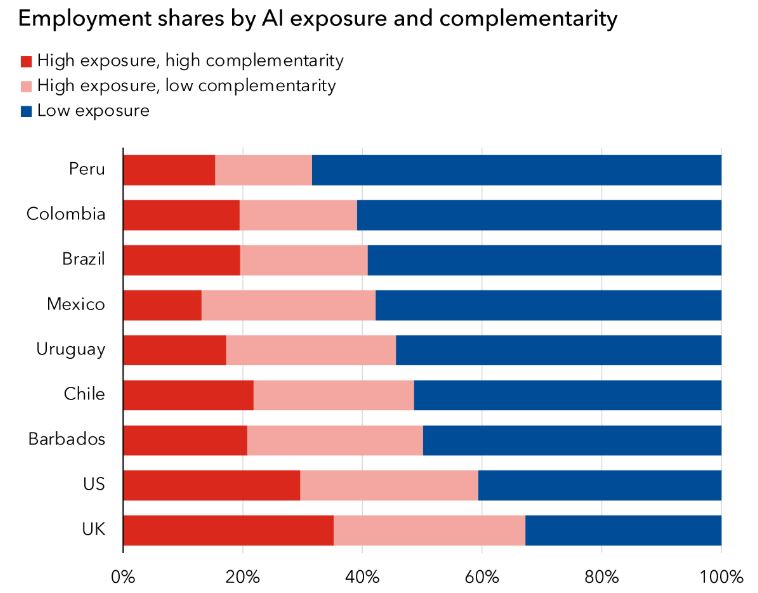
    In a recent blog IMF economists identify labour sector informality as one of the major obstacles to AI take-up in Latin America and the Caribbean. A large part of the regional labour force operates entirely outside the formal economy. Typically, they work on their own or in small and medium sized enterprises, paying no taxes and receiving no social security benefits. These companies often struggle to survive and are less likely to attract investment in new technologies such as AI. According to the IMF less than half of the region’s jobs will be impacted by AI. This will protect the individuals and companies involved from the short-term disruption caused by the arrival of AI. But in the longer term it will also shut them out from the pro-growth benefits of the new technology.

    Labour informality is highest in countries like Bolivia, Peru, and Honduras. By job categories those in healthcare are likely to gain from AI-enhanced productivity gains without major job losses. However, those currently in call centres are more likely to be displaced by AI machines. It follows, according to the authors, that governments interested in long-term development should seek to formalise employment, by extending financial support, reducing licensing restrictions, and providing improved education, training, and social safety nets.

    Latin America has fewer jobs highly exposed to AI, partly due to its large informal sector

    Source: Werner, Alejandro, and Carolina Villegas-Sanchez. “How Artificial Intelligence Can Boost Productivity in Latin America.” IMF Blog, 20 March, 2025.

  • Region: Mercosur-EU deal – still uncertain

    LatinNews 07 April 2017 Hits: 430

    Ahead of a new round of talks with the European Union (EU), foreign ministers from the Southern Common Market (Mercosur) – excluding Venezuela – met in Argentina on 9 March to discuss the ambition to finally close the long-awaited Mercosur-EU free trade by the end of this year.

    The ministers from Argentina, Brazil, Paraguay and Uruguay expressed optimism about sealing a deal, in the pipeline for almost two decades now. They stressed the need to boost trade at a time when economic protectionism appears to be on the rise. “In a world with many uncertainties, the government has one certainty: being closed off to the world has not brought us good results”, remarked Argentina’s foreign minister, Susana Malcorra. She added that for Mercosur “it is necessary to be open to opportunities and to react quickly”.

    Mercosur’s current pro-trade stance chimes with the EU’s outward-looking approach. In a meeting on 10 March, the president of the European Council (EC), Donald Tusk, told the council that Europe was “very committed to international trade” despite “protectionist sentiments reappearing”. However, Mercosur’s timeline for closing a deal with the EU this year could be overly ambitious. This year will be a busy one for the EU, which is also analysing negotiating trade deals with Mexico and Japan. Furthermore, the EU is also preoccupied with the UK’s exit the bloc (‘Brexit’), as well as with important elections in France This means that it might be “too soon” to anticipate a final EU-Mercosur agreement and, moreover, there still are “many areas that require further negotiation”, an EU official told the Spanish daily El País.

    The Mercosur-EU talks first began back in 1999, but have subsequently been on-off. After a lengthy period on ice, talks finally resumed in 2015, with a formal exchange of offers in May 2016. Talks on the agriculture chapter have probably been the most difficult over the years, with Argentina and Brazil demanding that the EU to reduce its restrictive tariffs on beef and other meat imports. Led by France, and backed by the likes of Ireland and Poland, the powerful EU agriculture lobby resisted for years. And it is not clear if these sticking points can be fully resolved, as EU farmers continue to resist.

    Meanwhile, in a blow to Brazil, the EU ordered a temporary ban on Brazilian meat products on 21 March, amid concerns about health and safety standards, prompted by scandal in Brazil’s food processing export industry. The incident was dealt with fairly rapidly by the Brazilian authorities, resulting in a gradual removal of the bans imposed by Europe, China, Russia and elsewhere, nonetheless it reinforced the fact that any future trade deal will also have to include a “chapter on regulatory requirements and food safety standards for agriculture imports”, a delegate from the European Commission stressed.

    On 3April, the EU Commissioner for Agriculture and Rural Development, Phil Hogan, said that Brazil’s food scandal should have no bearing on the EU-Mercosur talks. Hogan stressed that the Brazilian scandal was “a separate issue”. “It affects Brazil. It doesn’t affect all of the other Mercosur countries, so it would be quite unfair to link them”, he stated.

    Nonetheless, Hogan, himself Irish, signalled that a final deal with Mercosur was some way off, and that the EU was in no hurry to dance to Mercosur’s more urgent tune at this stage. “They’ve been quite slow, and so there is no reason to be concerned that we are going to come to a speedy resolution – unless there is a considerable lowering of ambitions on the part of the Mercosur countries” he concluded, in comments relayed by European media.

  • TRINIDAD & TOBAGO: Kamla’s unpopularity to help PNM in quest for third term

    Patrick de Courcy 28 January 2025 Hits: 2119

    Date: By August 2025.

    Election type: General election for 41-seat House of Representatives. The leader of the party controlling a majority will be asked by the president to form a government and become prime minister.

    Main contenders: People’s National Movement (PNM); United National Congress (UNC).

    The ruling PNM under Prime Minister Keith Rowley won the August 2020 election in a close contest with the opposition UNC led by former prime minister Kamla Persad-Bissessar (2010-2015). The PNM won 22 of the 41 seats in parliament, one less than it obtained in the 2015 general election.

    The PNM will go into the 2025 election under a new leader, Stuart Young, who is of Chinese descent and the first non Afro-Trinidadian to lead the PNM, and he will have a difficult legacy to defend. Following the 9.1% contraction in 2020, growth did not turn positive until the lacklustre 1.5% uptick in 2022. This was followed by further less-than-stellar growth figures in 2023 (2.1%) and 2024 (2.4%). At the same time crime has continued to worsen with an unprecedented 623 murders recorded in 2024, or 41.3 per 100,000 inhabitants, leading to the imposition of a state of emergency at the turn of the year.

    Despite all this, though, the PNM remains favourite to win the 2025 general election. A poll from the North American Caribbean Teachers Association (Nacta), released in September 2024, suggested that the PNM could even increase its 22-19 majority. A key factor appears to be the unpopularity of opposition leader Persad-Bissessar.

  • Panama: Government seeks to loosen the purse strings

    LatinNews 10 October 2018 Hits: 453

    The government submitted a request to the National Assembly in late September to modify fiscal responsibility legislation in order to allow a US$300m increase in spending. A commission from the finance ministry gave its initial approval on 1 October, but debate has continued in the legislature on the issue. If the bill is approved by the National Assembly, the fiscal deficit ceiling will rise to 2% of GDP this year, significantly above the legally-mandated ceiling of 0.5% under the current fiscal responsibility legislation.

    The Panamanian government has a mixed record in complying with the fiscal responsibility legislation that came into effect from 2009. That law established a maximum deficit ceiling of 1% of GDP, but aside from an initial success in cutting the deficit to 0.9% of GDP in that year, the authorities missed the target in the following few years. Recognising this slippage, the fiscal framework underwent modifications in 2012, with new legislation establishing new and looser targets, envisaging a consolidation from a deficit of 2.9% of GDP in 2012 back to 1% of GDP in 2017, after which the reform targeted a reduction in the deficit to 0.5% of GDP. Since then, the authorities have managed to reduce the deficit, using funds from the Panama Canal Authority and the sovereign wealth fund to keep budget shortfall under control. However, the authorities have indicated that they will miss this year’s target by a wide range, talking recently about a deficit level of 1.6%-1.7% of GDP.

    Deficit ceiling set to be adjusted upwards

    The government argues that changes are necessary to the legislative framework to allow greater flexibility when domestic economic growth slows. However, opposition parties have criticised this justification, stating that the original fiscal responsibility legislation provides adequate provisions for an easing of deficit targets when GDP growth slows, or in times of national emergency (for example following severe weather damage, with flooding in the past lifting government spending). The proposed changes to the fiscal responsibility law would mean that the deficit ceiling would rise to 2% of GDP this year, falling to 1.75% of GDP in 2019 and 1.5% from 2020 onwards.

    Upward revisions to the permitted fiscal deficit will place continued pressure on public debt levels. Although as a share of GDP this is not particularly onerous (around 40% of GDP), this ratio has risen in recent years as public debt has risen sharply in nominal terms. According to the finance ministry, the public debt stock stood at US$24.7bn in August 2018, up over US$7bn since President Juan Carlos Varela took office in July 2014. Public debt stocks also rose sharply under his predecessor, Ricardo Martinelli, with a US$6.8bn increase during his five-year term in office. The danger is that continued persistent fiscal deficits will require financing, meaning that the public debt:GDP ratio will rise further.

    GDP growth is slowing

    This comes at a time when domestic economic growth is decelerating, albeit to still-strong levels. According to the authorities, real GDP growth has decelerated steadily from a rate of 6.1% in the first quarter of 2017 to 3.1% in the second quarter of 2018. The slowdown has been broad-based across many sectors, but weaker activity in the transport & communications sector (which includes Canal activity and accounts for 12% of GDP) has undoubtedly contributed to this trend. The sector is still growing, but more weakly (from 10.6% in the first quarter of 2017 to 5.2% in the first quarter of 2018, before a slight rebound in the second quarter). The construction sector is a similar size and has also witnessed a weakening in growth, from 6.6% in the first quarter of 2017 to a contraction of 1.2% in the second quarter of 2018. The financial services sector (which includes both national retail banking and offshore services and accounts for around 6% of GDP) has also registered slowing growth rates.

    The second-quarter results mean that average real GDP growth stood at 3.7% – a far cry from the 6% envisaged in the 2018 budget bill. This is likely to be having an impact on budget revenue inflows, as a result of below-target tax earnings, which in turn will partly explain the larger-than-anticipated budget deficit. The danger is that economic growth momentum is clearly slowing, making the government's projected 5.9% GDP growth target that next year’s budget is based on look equally ambitious. Assuming that the government’s proposals related to fiscal responsibility legislation pass, there will be somewhat of an extra boost from government consumption, but this is unlikely to fully compensate for signs of decelerating growth elsewhere.

  • Politics: Restoring ties with Cuba

    LatinNews 29 October 2015 Hits: 3

    Mexico’s newly appointed foreign minister, Claudia Ruiz Massieu [RM-15-08], went to Cuba on 19 October for her first official trip abroad. Upon taking office in December 2012 at the helm of the traditional Partido Revolucionario Institucional (PRI), one of President Enrique Peña Nieto’s declared foreign policy objectives was to restore Mexico’s historically close relationship with Cuba. Ties had deteriorated dramatically in the two preceding administrations (2000-2012) led by the conservative Partido Acción Nacional (PAN).

    During her one-day visit, Ruiz met with her Cuban counterpart, Bruno Rodríguez, and Cuba’s first vice-president, Miguel Díaz-Canel. According to a statement by the Mexican foreign ministry (SRE), Ruiz and her Cuban hosts discussed the strengthening of “historical ties between the two countries”. The talks covered areas including bilateral trade, technical and scientific cooperation, cultural affairs and the promotion of Mexican investments in Cuba. They also discussed the process of updating the Cuban economic model and the renewed interest of Mexican companies in participating in the business opportunities on the island.

    The SRE noted that nine Mexican investment proposals had been submitted for Cuba’s new Special Economic Development Zone of Mariel (ZEDM), located at the revamped deepwater port of Mariel, 40kms west of Havana. In February the Cuban government gave one of these approval (Richmeat, a food processing company), followed by another in June (paint manufacturer Devox General Paint).

    Mexico is Cuba’s sixth largest trade partner. Bilateral trade is worth about US$500m a year, with the balance favouring Mexico. In 2013, the Peña Nieto government wrote off 70% of Cuba’s outstanding debt with Mexico and re-profiled the rest on favourable conditions. Much like their US counterparts, Mexican businesses are interested in securing market access to Cuba (pop 11m) as the government led by President Raúl Castro gradually opens up the state-run economy to private and foreign participation.

    In exchange for such access, Mexico has offered political support for Cuba’s rapprochement with the US and appears willing to come out more strongly in support of Cuba’s calls for the removal of the US economic embargo on Cuba, now a half-century old. On 20 October, after Ruiz’s visit, the Mexican federal senate took the unusual step of issuing a “respectful” call on its US counterpart on Capitol Hill to lift the embargo, and called on the Peña Nieto government to launch an international campaign in support of this. In a statement, the senate urged the federal government to “deploy all convenient diplomatic actions to convince the international community….to demand the immediate removal of the embargo”. As per its usual stance, Mexico on 27 October voted in favour of the United Nations’ annual resolution demanding an end to the embargo.

    • Castro visit confirmed

    The SRE also said that President Raúl Castro will conduct a brief official visit to Mexico before year-end, most likely in November. This will be the first visit by a Cuban head of state to Mexico since former president Fidel Castro attended the Special Summit of the Americas held in Monterrey, Nuevo León on 12-13 January 2004.

  • Conclusion: ESG here to stay in Latin America

    Patrick de Courcy 05 June 2024 Hits: 1148

    Briefly, a number of conclusions can be drawn from this discussion.

    • Global and Latin American countries will face growing ESG requirements in the coming years.
    • High levels of informality in the region’s economies and labour markets will limit take-up to larger companies and be the source of a degree of ‘greenwashing’.
    • A Trump victory in the US presidential elections this year, coupled with deregulation efforts by some centre right-governments in the region such as Argentina and Ecuador, could slow, but not reverse, the ESG wave.
    • ESG-related financing including green or sustainability linked bonds is increasing rapidly and will require risk management.
    • As an emerging sector ESG has widely different regulatory frameworks and metrics which will need to be consolidated.
    • The EU Deforestation Regulation, EUDR, which comes into full effect in January 2025, is likely to be an important milestone and test case for supply-chain regulation
    • Labour-protection ESG initiatives like the Mexico-US use of a Rapid Response Labour Mechanism (RRM) may spread to other parts of Latin America
    • Latin American governments face the dilemma that wealthier partners such as the EU and US may use costly ESG compliance and reporting requirements as a form of back-door trade discrimination.  
  • How fast will the transition be?

    Patrick de Courcy 09 March 2023 Hits: 2484

    There is no doubt that the energy transition is underway in Latin America and the Caribbean. Also beyond doubt is that the LAC region has some important advantages relative to the rest of the world. Excluding hydropower, where the region is already strong, the share of renewables in primary energy consumption is 33% in Latin America, well ahead of the rest of the world on 18%. Investment in renewables such as solar and wind has maintained a strong upward path. The Ukraine war and global economic headwinds have caused disruption, but the net effect seems to have accelerated the search for alternatives to fossil fuels.

    That said, there is widespread uncertainty over possible twists and turns on the road to decarbonisation. A useful way of framing the issue was presented by Sumant Sunha, chief executive of ReNew Power, one of India’s largest renewable power companies, who was attending the WEF forum in Davos at the start of this year. In an approach that could also apply to Latin America, Sunha warned of a “bumpy road” ahead, saying: “There’s not going to be a case where one (oil and gas) dials down and one (renewables) dials up, there is going to be lots of volatility in that whole process. There is not going to be one single entity managing the transition”. Sunha added that oil and gas are still needed today, but the speed of the “dialling down” is still unknown.

    Taking that approach to Latin America suggests one should expect significant political and economic crosswinds during a transition that will take at least 10-20 years. Among them the oil and gas industry can be expected to lobby hard against being written out of the picture prematurely. Alfonso Blanco, secretary general of the Latin American Energy Organisation (OLADE), recently commented: “Budget revenues from oil exports in Brazil reach 20%, in Venezuela more than 40%, and in some years they reach 60%, while in Colombia and Mexico this figure is 10% and 13% respectively. Therefore, a one-time rejection of oil is, in fact, a rejection of budget revenues, a rejection of our development opportunities.”

    While public opinion is generally favourable to the idea of the energy transition, it also has some interest in maintaining parts of the status quo such as benefiting from subsidised fossil fuel prices (a practice followed by many Latin American governments) or being employed in fossil-fuel intensive industries. A successful transition therefore requires facing many challenges. In just one example weaning governments off their dependence on oil revenues will require far-reaching tax reform, and depending on how it is presented that may, or may not, be welcomed by voters. The shift to clean energy manufacturing, electric vehicles, and green hydrogen will also require wide-ranging government-led planning and investment in national infrastructure. Achieving a successful energy transition will not be the work of one government, but, given the time scales involved, will require the attention of several, with likely politically determined chops and changes in direction.

  • Colombia security snapshot

    Abbi Dicker 22 October 2026 Hits: 25

    Colombia has been the world’s top cocaine exporter for decades. The government-Farc peace agreement opened rebel-controlled territories and drug trafficking routes which were quickly seized by a wide range of groups including Farc dissidents, the ELN, and the Clan del Golfo. While some are ideologically motivated, the insurgents are also deeply involved in profitable drug production and distribution, illegal mining, migrant smuggling, arms trafficking, money laundering, contraband, and extortion. Criminal groups are rapidly adopting new technology, such as the use of drones. The prison system is plagued by corruption and overcrowding. The Colombian armed forces, with around half a million members, are one of the largest and most experienced in Latin America.  However, given the nature of the terrain and the financial resources they can call upon, most military experts believe that the army can push back and weaken the rebels, but that it is unable to completely eradicate them. As things stand there is a war of attrition, with low probability of the government winning a conventional military victory.      

    Abelardo de la Espriella opted to start his presidency publicising and promoting an “iron fist”. He ordered bombing raids against rebel guerilla camps, and had himself filmed walking past body bags said to contain the corpses of rebels killed in action. The new president began publishing daily death counts.

    Colombia’s system of constitutional checks and balances also came into early operation. The courts highlighted as unacceptable the death of children in the bombing raids; a judge ordered that a ban on aerial fumigation of drug crops, which the president had attempted to lift, should remain in place to avoid environmental harm. In September, Colombia’s ombudsman stated that the president should not pose with corpses and should not “compete with the armed groups over who instils the most fear, who humiliates the enemy most, or who turns death into a display of power”. Further tension between De la Espriella and the judiciary is likely.

    The new president moved quickly to end his predecessor’s “total peace” programme switching instead to a declaration of “all-out war” on armed groups and organised crime. He also sought closer links with the US. US Secretary of State Marco Rubio visited Colombia in September, promising closer intelligence, equipment, and training cooperation, including assistance with drones and radar.  Colombia is joining the US-led Shield of the Americas security coalition.

    Initial opinion polls show De la Espriella’s hard line is, so far at least, well received. An AtlasIntel/Bloomberg poll at the end of August found 51.8% approved of his performance, while 43.2% disapproved. Furthermore, 54% had a positive image of the new president and 52.8% said the government’s performance was “good” or “excellent”. Political analysts said this reflected an initial “political honeymoon” for the president. Yet there were at least two reasons for caution. One was that De la Espriella is less popular than his left-wing predecessor, Gustavo Petro, was at the starting point of his presidency back in 2022. The other is that De la Espriella scores poorly among young voters. AtlasIntel found that among 18-24-year-olds, only 29.7% approved of the new president; among those aged 45-59 the approval rate was a much higher 61.4%.

    Security analysts acknowledged early gains. Esteban Gálvez told radio station Caracol Radio in September that the new government had “neutralised” eight criminal kingpins (out of a 90-day target of 10), made 15,400 arrests, and seized 71 tonnes of drugs. Coca eradication was running at double what was being achieved during the Petro presidency. But security analyst Hugo Acero told the same radio station that a promise to deploy more police at municipal level would come up against capacity and budget constraints. Acero also made the point that military operations on their own are insufficient to reclaim territory; local government and other institutions must do their part to fill the vacuum. Peace lobby group Indepaz points out that the terms of the 2016 Farc peace treaty continue to be violated. It says that between the new president taking office and early October, multiple community leaders, 2016 peace agreement signatories, and residents have been killed. Former president Juan Manuel Santos (2010-2018) has called for full implementation of the 2016 agreement, since it addresses rural poverty, drug trafficking, and violence, all of which remain highly relevant today.

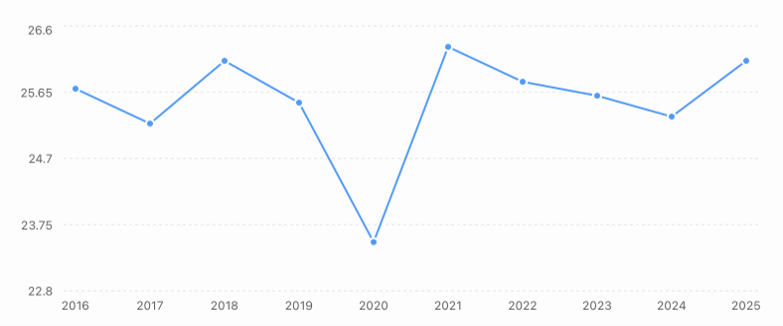
    Colombia: annual homicide rate, 2016–2025

    Intentional homicides per 100,000 inhabitants, using the Police National/DANE series.

    Source: Police National/DANE; rates compiled in Universidad Externado de Colombia's 2016–2025 comparison.

  • Chile: Growth forecast up, but Moody’s still downgrades

    LatinNews 03 August 2018 Hits: 648

    There was a mix of good and bad news for Chile in July. On 10 July the government said it was boosting this year’s economic growth forecast to 3.8%, up from 3.5% before. But on 26 July US-based agency Moody’s Investors Service announced it was downgrading Chile’s credit rating; there are also worries over the impact of a potential trade war between the US and China.

    In a speech to congress finance minister Felipe Larraín said the increased growth forecast for this year reflected the momentum of the local economy and improved international copper prices (copper is the country’s largest export). If confirmed, this would represent the country’s highest growth rate since 2014, when GDP expanded by 4.0%. He expected copper prices to average US$3.12/lb, significantly above the assumption of a US$2.88 average that had been built into the 2018 government budget. Larraín said Chile remained a very open economy, exposed in three distinct ways: to global economic growth, to the international price of copper, and to any volatility of global financial markets. Larraín also made some small adjustments to his ministry’s other forecasts: domestic demand is now expected to grow 4.8% this year (up from 4.1% previously), while inflation will rise to 2.9% (up from 2.8% before).

    The improved outlook was not enough, however, to prevent Moody’s from announcing later in the month that it was cutting Chile’s credit rating to A1, down from Aa3, and shifting the outlook from negative to stable. Moody’s said the change reflected “the gradual but broad-based deterioration in Chile’s credit profile”. It noted that the debt-to-GDP ratio had increased by more than 15 percentage points to 23.6% in the 2010-2017 period. While acknowledging “near term improvements” the agency said it did not anticipate a quick recovery of the earlier rating. It cited a persistent deterioration in the country’s fiscal position, lower income levels from commodity exports, and a medium-term GDP growth average which it expected to fall to around 3%. The downgrade follows similar ratings decisions late last year by Fitch Ratings and by S&P.

    The government was clearly irked by the decision. Larraín said he was “surprised” by the downgrade, coming “just as the Chilean economy is accelerating and fiscal revenues are exceeding market expectations”. President Sebastián Piñera also weighed in, saying the downgrade reflected policies associated with the previous centre-left government. As he put it, “Chile is paying the consequences for the fiscal deterioration and slow growth over the past four years.” The president had met Moody’s in April and June, but appears to have been unsuccessful in his attempts to head off the downgrade. It seems clear that the agency has its doubts about Chile’s future economic performance. In its statement it had said “Debt metrics are likely to stabilise, but a reversal in the deterioration of fiscal and debt metrics is unlikely.”

    Another factor that could take some of the shine off Chile’s current recovery is the possibility of a trade war between the US and China. Only days after Larraín had lifted his copper price forecast to US$3.12/lb, the state copper commission (Cochilco) cut its own forecast from US$3.06 /lb down to US$3.0/lb citing the potential disruption to global trade. Copper accounts for over 50% of Chile’s total exports, and it has been calculated that a one US cent change in the annual average price can add or subtract US$45m worth of government revenue and US$92m worth of balance of payments financial flows.

  • The performance debate about Costa Rica

    LatinNews 28 August 2018 Hits: 466

    Writing for the Harvard International Review in 2015 María José Sada described Costa Rica as Latin America’s success story, with high levels of economic growth, foreign direct investment, and literacy. Sada noted that on some indicators the country performed better than developed countries (in 2000 the World Health Organisation ranked Costa Rica’s universal health care system as better than that of the United States). Costa Rica also had ranked first in recent editions the Happy Planet Index, which combined life expectancy, wellbeing, and ecological data to calculate sustainable wellbeing.

    A significant part of this successful trajectory was attributed to the decision to abolish the army. Although the decision itself reflected narrow political interests (Figueres wanted to prevent new challenges to his rule) Sada said it led to “tremendous, if accidental benefits”, adding “Without a military to fund, Costa Rica’s government has found itself with a surplus of funds to finance social programmes, from high quality healthcare services to universal education, all of which helped strengthen Costa Rica’s workforce and laid the foundation for substantial economic growth.” Growth was later enhanced in the 1990s with the country’s move into high-tech industry, attracting companies like Intel, Microsoft, and Hewlett-Packard. As a result exports have now diversified beyond agricultural goods to include computer components and software. In addition, the country has been able to brand itself as a major eco-tourism destination. Costa Rica is now the most-visited country in Central America, with net revenues of over US$1.2bn.

    Sada noted however that Costa Rica suffered threats to its prosperity derived in part from its geographical location close to major drug- and people-smuggling routes. It has responded with a policy of strengthening its border controls and police patrols. Sada’s conclusion was that “Good governance, or a lack thereof, will determine whether the country will continue to receive millions of dollars in foreign direct investment and will set the stage for the country’s future in tourism, both areas which have fuelled Costa Rica’s impressive economic boom in the past decade.”

    In an article published in May this year US economist Joseph Stiglitz praised Costa Rica for its many achievements, but warned that it faced two key problems: a persistent structural fiscal deficit and a gridlocked political system. Of the two, he considered the first to be relatively easier to fix. It required a combination of boosting economic growth, raising taxes, or lowering expenditure. The newly elected government should avoid the temptation of reducing spending on infrastructure, Stiglitz argued, but instead should reform the tax system, enhancing its progressive nature and perhaps introducing a carbon tax on cars to encourage a transition to electric vehicles. Stiglitz praised the new president for his attempts to break the deadlock between existing parties, but warned that in the absence of cooperation across the political divide “deficit and debts can explode, with no path towards resolution”.

    Some locally-based analysts detect a sense of malaise, or at least one of looming new challenges to the country’s continuing prosperity. Jorge Vargas Cullell, of think tank Programa Estado de la Nación, says that in the second half of the twentieth century the country achieved three things that no one believed could be done simultaneously: first, it grew the economy and boosted productivity; second, it created a welfare state; and third, it consolidated a political democracy, something which at the time was considered a rich country ‘luxury’. Now, however, Cullell argues that there are important imbalances. One is that the export sector has diversified and modernised but has failed to transform sectors focused mainly on the internal market. In some ways there is a dual economy. He describes the export sector as a locomotive that has not been securely fixed to the train carriages representing the domestic economy. The resulting imbalances have led to a widening fiscal deficit and higher debt. Just as in the 1950s, he argued that Costa Rica must now try and do things that few believe can be done simultaneously: reducing spending and boosting growth.

  • 2011 GDP Figures

    LatinNews 23 February 2012 Hits: 2564

    Comparisons 2011 GDP figures

                                     PPP GDP        Nominal          per cap

    Costa Rica                   US$50bn         US$40bn      US$11,000

    Panama                      US$45bn         US$30bn      US$12,600

    El Salvador                  US$45bn         US$22bn      US$7,500

    Guatemala                   US$25bn         US$46bn      US$5,000

    Honduras                    US$15bn         US$17bn       US$4,000  (IMF)

    Nicaragua                    US$17bn         US$7bn         US$3,000 (IMF)

    Belize                         US$3bn           US$1.4bn      US$9,500

    Source: LAEB

  • CASE STUDY: Water issues threaten Panama Canal

    Patrick de Courcy 14 January 2025 Hits: 2522

    Decreasing water availability is causing concerns over the continued viability of the Panama Canal, a key artery of global trade and a significant driver of the Panamanian economy.

    In recent years, prolonged periods of drought have led to declining water levels in the Alhajuela and Gatún Lakes that feed the canal and provide water to around 50% of the country’s population. 

    Each transit requires 51m-55m gallons of water to move ships through a number of locks at up to 26 metres above sea level, with larger ships requiring more water. As a result the Panama Canal Authority (ACP) introduced a series of increasingly severe restrictions on the number of ships that can transit the canal each day, as well as how much cargo they can carry. This led to delays as ships queued to pass through the canal, encouraging some shippers to use alternative routes. In fiscal year 2024 (October 2023-September 2024), transits of the largest ships were down 21% compared to fiscal year 2023. 

    Although the ACP reported total revenues of US$4.99bn for fiscal year 2024, a 1% increase compared to the previous year, water shortages that threaten the functioning of the canal are a massive cause for concern for the Panamanian government as the canal contributes billions to the public purse: the ACP budget for 2025 estimates that it will pay US$2.79bn to the state, up from US$2.47bn in this year’s budget.

    In some ways it is remarkable that the canal can’t get enough water as Panama is one of the most water-rich countries in the world. It is home to 52 watersheds and a huge network of rivers, and it receives the fifth highest amount of precipitation per year of any country in the world on average.

    However the issue is the management of these considerable resources, with climate change, population growth, and urbanisation exacerbating issues linked to poor governance and inadequate infrastructure. Efforts to resolve these issues have stepped up in recent years, with a national water security plan published in 2016, and the creation of the national meteorological and hydrological institute (IMHP) under former president Laurentino Cortizo (2019-2024) in 2021. The ACP has also introduced water-saving measures, such as cutting hydroelectric generation at the dams it manages and improving efficiency by stepping up maintenance at the canal locks.

    Increasing pressure on water supplies has made for growing competition for resources, causing unrest among households and agricultural producers that have been left with reduced access to drinking water. 

    President José Raúl Mulino has said that he will work with the ACP to safeguard the future of the canal, with one mooted solution a new dam and reservoir on the Rio Indio. Long discussed, the project moved a step closer in July with a ruling from Panama’s supreme court (CSJ) which will allow the canal to expand outside its traditional watershed. Some of the water stored here could potentially be used to supply households and agriculture too, meaning that there is a strong consensus around the project outside those communities that would be displaced by the dam. Nonetheless, it would take an estimated six years to build the dam, in which time the effects of climate change are expected to intensify.

    Repeated waves of transit restrictions during periods of drought could encourage a further reordering of supply chains away from the canal. Other countries in the region are attempting to capitalise on these issues by building out alternative transoceanic routes. For example, Mexico is pouring resources into the interoceanic corridor of the Isthmus of Tehuantepec, and Honduras is seeking investment to build its own coast-to-coast railway. Nicaragua has also revived plans for its own canal and signed a contract with Chinese firm CAMC for the construction of a deepwater port in Bluefields, which sits at the Atlantic end of the proposed route. 

    In Panama, Mulino has also pledged to improve access to drinking water, which is a key social issue. He has promised to build a new water purification plant in Bayano which would boost supplies in the east of Panama City, and said he would prioritise infrastructure projects such as the North Water Ring, a system of storage tanks and pumping stations that will provide water to an estimated 200,000 people that live in areas to the north of Panama City. This would go some way to alleviating tensions between the needs of the canal and those of households that don’t have access to water.

    ACP chief Ricaurte Vásquez is also exploring ways to maintain the canal’s relevance to global trade, and its revenues. One proposal involves building grain storage silos on the Pacific side of the canal in order to boost shipments of the grain, which have been badly affected by traffic restrictions, while Vásquez also announced that officials are evaluating plans for a gas pipeline between the Pacific and Atlantic coasts as part of plans to diversify operations beyond ship crossings.

  • ECONOMIC OVERVIEW: COSTA RICA

    LatinNews 08 February 2012 Hits: 2079

    Exports: According to official figures from the ministry of foreign trade (Comex), exports in 2011 reached US$15.37bn, representing an 11% increase on the US$13.66bn exported in 2010. In total, 2,412 companies sold 4,307 products to 145 destinations worldwide, with the industrial sector as the largest exporter. The industrial sector represented 74.5% of all exports and the agricultural sector, 23.1%. The main destinations for Costa Rican products were: the US (US$3.99bn); The Netherlands (US$737.7m); China (US$710m); and Panama (US$572.56m).

    Air connectivity: In January Panama’s Copa Airlines announced it will begin operating a flight between Panama City and Liberia, Guanacaste province, on 24 June. Similarly, the Peruvian airline Taca secured the government’s permission to increase the frequency and destination of its long-haul flights, including those to Central America. Currently Taca operates some 50% of all flights arriving and departing from San José’s Santamaría Airport.

  • Venezuela case study: to what extent will the oil industry recover its former glory?

    Abbi Dicker 09 July 2026 Hits: 412

    Venezuela’s oil industry is a shadow of its former self after years of mismanagement and corruption, but the removal of former President Nicolas Maduro in January, followed by the rapid rapprochement with Washington under his successor President Delcy Rodriguez, has increased expectations in some quarters that the country will once again become a significant oil exporter.

    With proven oil reserves estimated at 303bn barrels, Venezuela has the largest oil reserves of any country in the world. However production fell from a peak of more than 3m bpd in the late 1990s to just 800,000bpd in January, when Maduro was captured by US troops.

    Less than a month later, the Rodriguez government pushed through a significant reform to Venezuela’s Hydrocarbon Law designed to encourage investment in energy projects, and the world’s biggest oil companies quickly moved to explore their options. 

    For example, Chevron has signed agreements to expand its presence in the country, and Shell has also signed five deals with the government. BP has signed a memorandum of understanding for two projects, while Eni has struck a deal to relaunch production at the Junín-5 field and Repsol signed an agreement to expand production at the Petroquiriquire joint venture it operates alongside Venezuela’s state-oil company Pdvsa. Some of these agreements aim to boost gas production as well as oil, with Shell granted a licence to explore the Loran gas field, which Venezuela shares with Trinidad and Tobago, on 11 June. 

    Venezuela’s oil exports hit 1.25m bpd in May, a 61% year-on-year increase and a seven-year high, and officials reactivated a pipeline that enables LPG exports to neighbouring Colombia. US control of the country’s oil exports has been key, with Washington easing sanctions on Venezuela’s oil sector and removing sales restrictions. The US reopened its embassy in Caracas at the end of March, and Jarrod Agen, Executive Director of the White House's National Energy Dominance Council, has said that officials are talking to their Venezuelan counterparts “multiple times a day” to advance business-friendly reforms and convert MoUs into contracts. Further evidence of Venezuela’s volte-face under Rodriguez came in April, when the IMF and the World Bank announced that they would restart engagement with the country after a seven-year pause.

    However, despite this flurry of activity, some are still sceptical about the prospects for Venezuela’s energy sector. Many energy companies left Venezuela in recent years, meaning it will take time to staff operations again, and the fact that the country’s crude is very heavy adds to production costs and technical difficulties. These companies will also need to feel confident that the current political situation will hold before they commit to long-term projects, and even then the sums are eyewatering, with consulting firm Rystad Energy estimating that US$183bn in capital spending by 2040 would be needed to boost production back to 3m bpd.

    However significant investment outside of specific joint ventures is unlikely to materialise without credible progress on a debt restructuring programme announced in May, when the government announced plans to restructure an estimated US$150bn-200bn in sovereign and Pdvsa debt. 

    With the country in default since 2017 and still subject to some US sanctions, this is expected to be one of the largest and most complex debt restructuring operations in recent history. Its success is itself dependent on increasing oil production, as creditors will want reassurances that oil revenues will be sufficient to cover repayments on any new agreements, which will already likely involve a significant haircut. “A credible economic plan tied to oil output recovery, combined with sound fiscal and monetary policies, is key for successful debt restructuring,” wrote credit rating agency S&P Global in a statement published 27 April.

    Venezuela finds itself in something of a trap, with oil recovery and debt restructuring mutually dependent: Venezuela could increase production to around 1.5m bpd if current dynamics persist, but securing the level of investment required to rebuild upstream infrastructure necessary to go beyond that will require debt restructuring. But with most of Venezuela’s debt made up of bonds issued in New York, it is technically impossible to restructure the debt without sanctions relief, which may require progress on difficult questions such as political reform in Venezuela.

    As a result, there is a ceiling on the extent to which fossil fuel production can regain previous levels without simultaneous progress along parallel tracks, in a risky process that is likely to take years.

  • Under attack in Mexico

    Patrick de Courcy 09 March 2022 Hits: 1762

    Andrés Manuel López Obrador (AMLO) a veteran politician of the Mexican left, took office on 1 December 2018, at the start of a six-year term. With his background as a long-standing critic of previous centrist and right-wing governments, as a supporter of human and migrant workers’ rights, and as a critic of heavy-handed militarised policing, there were reasons to believe his presidency might open up new opportunities for mutually beneficial collaboration between the government and civil society. As a presidential candidate AMLO had promised to expand social programmes to help the vulnerable. Yet for a variety of reasons the relationship between government and civil society worsened dramatically after he took office. In part this may have been due to what could be called the president’s pre-existing support for an authoritarian, populist, illiberal form of democracy. In part also, AMLO changed his own positions after coming to power – for example he moved to support the kind of militarised public security interventions that he had previously criticised. Policy failings by Mexico’s NGOs and quangos may have also had some degree of responsibility for the rapid cooling of the relationship.

    As early as February 2019 relations became strained when the new president stated that his government would no longer fund NGOs. This was an important policy shift. A succession of previous governments had funded NGOs in effect as sub-contractors to deliver social programmes through a variety of mechanisms including donations, subsidies, work agreements, and social co-investment programmes, often coordinated by a government body, the National Institute for Social Development (Indesol). Government departments such as the ministry for the environment and natural resources (Semarnat) also traditionally worked closely with NGOs.

    According to AMLO the new policy was designed to cut out all intermediaries. NGOs, he argued, harboured their own commercial interests, tended to misuse public resources, and were linked, through conservative and neo-liberal interests, to a right-wing agenda. An excessive number of intermediaries, in any case, were seen as creating opportunities for adding on costs, profiteering, and corruption. Instead, money would be distributed directly to individual beneficiaries and vulnerable groups. NGO activists noted that this approach - with cash sometimes handed out in brown envelopes to intended beneficiaries - could itself be vulnerable to similar or even greater risks of inefficiency, corruption, and politicisation. Coupled with this decision, and as part of the president’s commitment to budget austerity, the new government also began to cut the funding available for quangos, such as environmental protection agencies the National Commission for Forests (Conafor), the National Commission for Natural Protected Areas (Conanp), and the National Fund for Natural Disasters (Fonden), all of which suffered severe funding reductions.

    The policy had some immediate downsides. There was insufficient federal support to fight a series of wildfires which broke out in natural reserves including La Encrucijada in Chiapas and the Sian Ka’an Reserve in Quintana Roo. The government however prioritised new high-profile multi-billion-dollar projects such as the Mayan Tourist Train (designed to help develop the impoverished south of the country but cutting through ancestral indigenous lands) and a massive new petrol refinery at Dos Bocas in Tabasco. Considering the negative impacts of these projects Greenpeace concluded that environmental protection was simply “not a priority” for the AMLO administration.

    In early 2019 Juan Martin Perez, of REDIM, the Network for Infant Rights in Mexico, said that aid organisations helping low-income communities, the homeless, prisoners, and those with medical conditions had been “forgotten by the government”. Given the funding cuts he added “there is a risk that some NGOs may stop operating since the support granted by the state was completely vital for the continuation of their work”. Overall, the cut in government funding for NGOs was estimated at around US$321m per annum. NGOs responded by seeking out alternative funding streams, but the abrupt change nevertheless forced many to suspend some of their activities.

    The government’s ‘go it alone’ approach to social programmes earned it some additional direct criticism. One of AMLO’s signature programmes, called Sembrando Futuro (Seeding the Future), pays farmers in southern Mexico to plant and maintain trees in recently deforested areas. The idea is that by being paid a regular income to replant trees, the farmers will be drawn away from illicit drug cultivation and membership of criminal cartels. The programme is therefore seen as simultaneously reducing poverty and conserving the environment. Total funding is reportedly in the vicinity of US$3bn, and AMLO has been arguing that his programme could be extended, with US assistance, to the Northern Triangle countries of Central America where it would help reduce illegal migration flows heading north to Mexico and ultimately to the United States. However, there have been numerous reports that the programme is not sufficiently monitored and from a technical point of view is poorly designed. Some of these reports suggest that, in a completely counterproductive manner, some farmers have been cutting down their forests, so that they can qualify to receive the re-planting subsidy.    

    The AMLO government took further action to squeeze NGO finances. In the federal budget ‘miscellany’ law for 2022 income tax regulations were modified to limit tax relief on donations by individuals to charities. Whereas before the rules allowed 15% of income used for certain personal expenses to be tax deductible, with an additional amount of up to 7% of revenue reserved for tax-free charity donations, the new approach sets an upper limit of 15% of income for both types of tax-free contributions. As a result, it is estimated that over 5,000 Mexican NGOs may see their income fall in 2022. NGOs say they are now suffering a form of financial asphyxiation as government officials have asked them to raise at least 50% of their income from private sources, but at the same time are making it more difficult for them to raise income from donations.

    Also as part of the 2022 budget cutbacks the AMLO government decided to close down Indesol, since its main role, to distribute funds to NGOs, was deemed no longer necessary or required. Announcing the closure AMLO claimed, without producing any supporting evidence, that there had been waste and duplication and that most NGOs in Mexico and elsewhere do not produce auditable accounts (a claim denied by most). Indesol had been set up in 1994. The abrupt closure put a number of ongoing social programmes in doubt, including a programme designed to help women victims of domestic violence, to promote gender inclusion, and to train social workers. 

    At the political level, AMLO has been consistently outspoken in his attacks on NGOs. In May and June 2021, he focused on US-funding for Mexico based NGOs. “You cannot receive money from another country for political purposes. It is treason to your country. It’s interference, interventionism, and it is in favour of a coup” the president said in one of his daily press conferences. The foreign ministry formally asked the United States government to freeze funding for the investigative website Mexicanos Contra la Corrupción y la Impunidad (MCCI) and for Article 19, an international NGO which has a Mexico office and that campaigns in defence of press freedoms.

    Pro-government media outlets have taken anti-NGO positions and identified leading civil society figures as political opponents. Among them there has been a particular focus on Claudio X González, a member of the MCCI NGO board who has led various civil society campaigns, including some criticising AMLO’s newly created National Guard and his project to build a new airport in Mexico City. AMLO has singled out González for criticism partly because he was a member of the preceding government of Enrique Peña Nieto (2012-2018).

    News outlet SinEmbago, aligned with the government, has claimed that NGOs are controlled by a group of intellectual and business leaders close to the five presidents who preceded AMLO’s term in office. Alejandra Sala-Porras, a pro-government academic at state university UNAM, has asserted that Mexican NGOs are positioning themselves to become a direct alternative to AMLO’s government “because existing electoral alternatives are looking very weak”. She also claimed NGOs were close to taking political control in various states, building an alternative power network and seeking to thwart the government by challenging its actions in the courts and by securing obstructive injunctions.

    The government has reacted with hostility to NGO and media criticism, particularly around issues such as corruption, which may explain why it has targeted MCCI and other anti-corruption campaigners so intensely. An example came in February 2022 when MCCI published two reports which directly angered AMLO. One stated that, mid-way through the AMLO presidency, eight out of ten government procurement contracts were still being awarded directly, without competitive bidding, increasing the risk of corruption and contradicting a specific electoral promise made by AMLO to reduce that proportion.

    In association with investigative news outlet Latinus, MCCI also claimed that AMLO’s elder son, José Ramón López Beltrán, had been living in a luxurious house in Houston, owned by an executive at oil services company Baker Hughes, which in turn had multi-million-dollar contracts with Pemex, Mexico’s state oil company, therefore suggesting at least the possibility of a conflict of interest. Other members of the president’s family have also been implicated in potential improprieties. His brother, Pío López Obrador, continues under investigation after videos appeared showing him receiving stacks of cash during the 2018 election campaign. Following other press reports the government has also said contracts awarded by Pemex to a company linked to AMLO’s cousin, Felipa Obrador, have been cancelled after separate suggestions of a conflict of interests. AMLO responded by delivering a sharp personal attack on the prominent Latinus journalist Carlos Loret de Mola, who the president described as a “coup monger, corrupt, mercenary, without principles and without ideals”. Responding to negative stories by attacking journalists that report them is a regular feature of presidential press conferences 

  • Conclusion

    LatinNews 17 May 2019 Hits: 408

    For governments, there is a pressing need for education reform that provides young people with the skills they need to find work in the formal sector, especially given the demands of the fourth industrial revolution.

    In addition to formalisation programmes, states need to focus on boosting labour market participation among young people and women, especially rural indigenous women. As a region, Latin America can offer plenty of opportunities for the private sector. The challenge is ensuring that the right conditions are in place when making an investment. That could mean looking to standout performers such as Costa Rica and Uruguay, small countries that are attractive to niche investments, or partnering with national governments in larger markets, such as Mexico, on public-private training schemes. Shaping the curriculum of these training schemes is important, whether in partnership or through more effective communication of private sector needs. Significant productivity growth is possible in Latin American markets, and companies that proactively seek and create opportunities will be best placed to benefit.

  • Ecuador: Moreno looks to turn over a new page

    LatinNews 12 January 2018 Hits: 2831

    In removing his vice president, President Lenín Moreno has made a definitive break with the radical faction of the ruling Alianza País (AP) that remains loyal to his predecessor, Rafael Correa (2007-2017). This will anchor the government closer to the centre in economic policy terms, albeit with a strong focus on social justice and equality.

    Jorge Glas, the face of the Odebrecht scandal in Ecuador, had refused to resign his elected position. Glas had been stripped of his official vice-presidential duties by Moreno in August, and while he nominally remained in his elected post, he was replaced in his duties by an interim. In October, Glas was jailed pending his trial. In December, he was found guilty of taking US$13.5m in bribes from Odebrecht and sentenced to the maximum of six years in jail, on charges of illicit association (with further charges and additional sentencing still possible). Yet even after that ruling, Glas still refused to step down.

    On 3 January, Moreno declared the post vacant under the constitution, on the grounds that Glas had been unable exercise his vice-presidential duties for a period of 90 days. Days later, the interim, María Alejandra Vicuña, a staunch Morena loyalist, was confirmed as the new VP by the national assembly.

    Vicuña’s confirmation was another political goal for Morena. He managed to obtain a majority in the assembly to secure Vicuña’s appointment, despite the opposition of the Correísta faction. Upon her confirmation, Vicuña promised to combat corruption and work for “unity, dialogue, and democracy”, starting with the upcoming 4 February referendum on constitutional reform. 

    Glas’s removal may be the final straw for the Correístas, with a formal split in the AP almost certain now. Of the AP’s 74 deputies, 46 are Morenístas, 23 are Correístas, and five are unaligned. While Moreno would lose majority control of the national assembly with an AP rupture, he is likely to forge a working coalition deal with the opposition after the February referendum.

    Correa, meanwhile, is seeking to make an early return from his political career-break in Belgium. He had pledged to sit out this term to spend time with his family in Europe, but Moreno’s unexpected break with his predecessor prompted Correa to end his self-imposed political exile. At an unofficial AP convention in Ecuador on 3 December, Correa proposed a new political party bearing his initials, Revolución Ciudadana (RC) and he was due to return back to the country for a second time in mid-January to lead the ‘no’ campaign against Moreno’s referendum.

    Public support for Correa, however, has fast dissipated since he left office in May with his record tarnished by the mounting allegations of corruption at the very highest levels of government. He bequeathed a weak and indebted economy, as well a depleted labour market. To huge surprise, however, Moreno immediately moved – in decisive fashion – to disassociate himself from Correa. Heavily criticising his former mentor and close ally, he pledged a new, more open, transparent and politically-inclusive administration. A furious Correa branded him a traitor to the left-wing ‘Citizen’s Revolution’.

    Undettered, Moreno has gradually ejected Correístas from his cabinet, which has allowed the president to strengthen his leadership. Ahead of the Glas sentence, Moreno lost two ministers: his chief of staff, the leftist Nicaraguan Eduardo Mangas; and social minister Iván Espinel, who quit, apparently in solidarity with Glas. Moreno previously had removed Correístas including Patricio Rivera and Diego Martínez.

    Among its chief reforms, the 4 February referendum most notably seeks to re-impose a two‑term presidential limit, which would prevent Correa from running again in 2021. It would also impose heavier sanctions for corruption, including the confiscation of property and other assets and the stripping of civic rights – a clear response to the Glas case. Finally, it would also reform the Council for Citizen Participation and Social Control, a powerful state entity – currently Correísta-controlled – that oversees judicial and other senior appointments. After the referendum, which according to most opinion polls has strong public support, a newly legitimised Moreno may also look to reform the controversial 2013 Communications Law, which Correa used to silence critical media and attack his opponents.

    Moving forward, the referendum result could allow Moreno to embark on a more pragmatic economic policy agenda that, if successful, could see him re-elected in 2021 for another term. Already, foreign investor sentiment has revived. An economic recovery, while still tentative and uneven, is also boosting domestic sentiment and expectations.

    Nonetheless, the fact remains that dollarised Ecuador remains a cash-strapped petro state, with severe competitiveness problems. Moreno inherited a fiscal deficit of well over 5% of GDP but has been unwilling to contemplate a severe adjustment, instead pledging a gradual programme financed by external debt. Importantly for the government’s political base, Moreno has pledged that social spending will be ringfenced.

    As such, the 2018 budget remains expansionary, with the deficit unlikely to shift much and the oil price recovery insufficient to Ecuador’s revenue needs. In keeping with his pledge to shield Ecuadoreans from a harsh adjustment (and in support of the still-fragile domestic economy) Moreno has sanctioned only very moderate tax changes in support of deficit reduction. Along with continued external indebtedness therefore, the cash-strapped administration may also consider privatisations and asset sales this year in a bid to raise some extra income.

    In 2017, Ecuador borrowed almost US$7bn from external sources, a record, of which a full US$5.5bn was in bond issues. Since Ecuador returned to international capital markets in 2014 (it was shut out of international markets for some seven years after Correa selectively defaulted on some US$3bn in bonds in late 2008) it has issued US$11.8bn in sovereign bonds in total. The public debt/GDP ratio has breached the 40% ceiling set under the constitution and looks set to rise again this year. This rising burden will weigh on financing costs for the government – which may encourage it more towards the privatisation option.

    This appears good news for investors – especially those with an interest in the country’s mining sector, for example. Mining had been identified as an investment priority by the Correa administration from 2014 as it looked for alternative revenue sources to oil, but despite reforms to the mining regulatory framework investors remained wary. That sentiment has now improved, with Ecuador latterly touted as one of the most interesting mining prospects by international industry forums. Other potential assets that could be offered include the national airline TAME and Banco Pacífico.

    Moreno appears keen to avoid another available financing option – a lending program from the IMF – not only because he rejects the Fund’s typically stringent conditions, but also because an IMF ‘bailout’ would be politically damaging. However, much will depend on the economic performance this year and were Moreno to forge a formal coalition with the centre-right opposition, for instance, the IMF option might be put on the table.

    Dollarisation

    The big question in Ecuador is always over dollarisation, which tamed inflation after the major financial crisis of 2000, but it has eaten away at competitiveness. Domestic manufacturers simply are unable to compete with cheap imports, while non-oil exporters equally find themselves undercut on international markets.

    Moreno has pledged to maintain dollarisation. Recovering oil export revenues – and renewed foreign investment – should replenish central bank reserve levels, allowing the government to row back from its recent reliance on balance of payments safeguards to protect dollar liquidity. These import tariffs have caused tensions with the European Union and other trading partners.

    • Oil

    As the major new Amazon jungle fields come on-stream, the Moreno government aims to increase oil production to 700,000 b/d by 2021 from an annual average of around 540,000 b/d in 2017.

  • Case Study: Mercado Libre

    LatinNews 21 November 2019 Hits: 388

    Mercado Libre, or Mercado Livre in Brazil, has come to be known as the ‘Latin American eBay’ thanks to its importance in the region’s ecommerce ecosystem.

    The company was founded in Argentina in 1999 by Marcos Galperin, who has overseen the phenomenal growth of Latin America’s first ‘unicorn’ start-up and remains CEO to this day.  What started as a simple online marketplace has expanded to include millions of goods and services, and after 20 years in business Mercado Libre is the largest ecommerce platform in Latin America with operations in 19 countries. In 2018 the company made US$1.4bn in revenue from US$12.5bn in total transactions (with the number of purchases increasing 23.9% year-on-year), and employs 9,000 people across the region. This has made it the most valuable Argentinian company in the world, and it boasts more than 300m users.

    As a result, comparisons with Amazon are inevitable, and Mercado Libre has proven as innovative as its US rival. For example the company invested in developing its MercadoPago payments business, which processed US$6.5bn in payments in Q2 2019. This represents a 90% growth rate compared with the same period in 2018. However, building the platform has made a huge hole in the balance sheet, with the company making US$16.2m in profit in Q2. This compares with a US$11.5m loss for Q2 2018. 

    When it comes to the marketplace aspect of the business, Jaime Ramírez, senior director for the Andean Region, told Colombian news outlet Dinero that Mercado Libre welcomes competition with Amazon and OLX. By normalising online purchases, the rival companies are all in fact benefiting each other by making consumers more comfortable using ecommerce platforms.

    Mercado Libre is also tapping into growing consumer demand for green products with a new vertical that focuses on sustainability. Mercado Libre Sustentable operates in conjunction with the Environment Ministry in Colombia, which verifies online businesses to see if their products qualify for the sustainable marketplace. 

    The company has also signed a deal with logistics company Andreani to deliver products in electric vehicles. Launched in November 2018, the deal remains a small pilot project in Argentina and Brazil. However, it shows a willingness to respond to consumer demands, similar to the launch of a new marketplace category for gender neutral fashion.