All Categories

Subcategories

  • TRACKING TRENDS

    LatinNews 03 May 2018 Hits: 1507

    BRAZIL | EU pledges aid for Venezuelan immigrants in Brazil. The European Union (EU) will donate R$10.6m (US$3m) to help Venezuelan citizens seeking refuge in Brazil. Currently, most Venezuelan immigrants cross the border to Boa Vista, capital of the northern state of Roraima or Pacaraima in the same state. However, these cities are struggling to cope with the influx of refugees, with around 500-700 immigrants arriving per day according to Roraima governor Suely Campos. Last month, Campos’ petition to close the border temporarily was rejected by the Brazilian government, which argued that Brazil had a humanitarian duty to help those coming from Venezuela.

    The additional funds will be available from June according to the EU’s ambassador to Brazil, João Cravinho. “We can overcome this challenge if the federal and state government, army, police, United Nations, civil society and other bodies all join forces. We are playing our part,” he tweeted.

    ARGENTINA-BRAZIL-CHILE | New era for diplomatic relations. Chile’s President Sebastián Piñera visited Argentina and Brazil last week. Piñera’s first port of call on 26 April, just over a month after he was sworn in for a second term, was Buenos Aires where he met his Argentine peer Mauricio Macri, with whom he shares a good rapport, both men having been successful businessmen before entering politics. They signed several accords on trade liberalisation, energy, and migration.

    Piñera met his Brazilian peer Michel Temer on the following day at the Itamaraty Palace. Discussions mostly centred on economic matters and the leaders signed two bilateral accords: the first to create a Brazil-Chile public procurement agreement, and the second to draw up a protocol making it easier to invest in the financial institutions of both countries.

    Three days later, a more low-key meeting took place in Chile’s congress between leftist leaders, Chile’s former president Michelle Bachelet (2006-2010; 2014-2018) and the Partido dos Trabalhadores (PT) party president Gleisi Hoffman, representing Brazil’s former president Lula da Silva (2003-2011). Hoffman has launched an international campaign for Lula’s release so he can run in October’s election. Bachelet expressed solidarity with his cause.

  • ECUADOR: Further uncertainty in electoral preparations

    LatinNews 24 September 2020 Hits: 3530

    Ecuador’s electoral council (CNE) issued its official call for elections on 17 September, confirming that voting will take place on 7 February 2021. In practice, the contest was already well underway, with the field of candidates narrowing significantly even before the final registration process began on 18 September [WR-20-36]. However, with less than five months to go until the vote, there is still much to be resolved, and the chaos caused by the coronavirus (Covid-19) pandemic looks set to leave its mark on this campaign.

    The budget for this election is still to be finalised, as the cash-strapped economy & finance ministry objected to the CNE’s proposed total of US$114.3m, in particular demanding that remuneration be reduced for members of provincial electoral boards (JPEs), who are responsible for processing candidate registrations. CNE member José Cabrera condemned this “clear interference in the electoral process”, and threatened to file a complaint against the economy & finance minister, Richard Martínez, with the electoral disputes tribunal (TCE).

    • Richard Martínez

    CNE president Diana Atamaint echoed José Cabrera’s criticisms, accusing the economy & finance ministry of “hindering” the organisation of elections, and reminding Richard Martínez that the CNE acts independently of government. In response, Martínez pledged to “work together closely so that the process operates smoothly”, but appealed for “sensitivity to the complex economic situation in the country”.

    The CNE has made enemies, even in the early stages of this electoral process, and it confirmed on 16 September that four political parties – most notably the Fuerza Compromiso Social (FCS), aligned with former president Rafael Correa (2007-2017) – had been denied registration. Correa-backed presidential candidate Andrés Arauz had prepared for this eventuality by pre-emptively registering with another party, Centro Democrático (CD), but he still condemned the decision as an attempt to exclude him from the election, after Correa himself was ruled out as a vice-presidential candidate earlier in the month.

    Arauz announced on 16 September that journalist Carlos Rabascall would replace Correa as his running mate, but further complications may yet arise. While a party is entitled to replace a registered candidate excluded from running, opponents of Correa claim that, as the CNE never accepted his registration, both Arauz and Rabascall should be barred from taking part. Aspiring presidential candidates have until 7 October to finalise their registration.

  • Dead end street for Paulo Guedes?

    LatinNews 17 December 2020 Hits: 468

    When Paulo Guedes was appointed Brazil’s ‘super minister’ of the economy in January 2019, friends and foes alike thought he would launch sweeping pro-market economic reforms. Nearly two years later, constrained by President Jair Bolsonaro and by the national congress, his superpowers appear to have waned.

    Guedes’ major achievement was last year’s pension reform, but on almost all other fronts he has made limited progress. In addition, together with President Bolsonaro, Guedes is now riding a tiger of his own creation, the so-called ‘corona-voucher’ programme of emergency payments to informal workers and the poor which was implemented to help them ride out the coronavirus (Covid-19) pandemic. When it launched, the minister had been thinking of a temporary R$200 (US$40) monthly payment to eligible households, but under political pressure from congress and the country’s populist president, he agreed to a much higher R$600 amount.

    The larger payment, paid from April to September, proved to be wildly successful. It reduced financial hardship, limited the economic recession, eclipsed the earlier Bolsa Família conditional cash transfer programme, and reached over 60m people.

    Significantly, it boosted Bolsonaro’s approval ratings, particularly in the poor northeast of the country. With his eye on potential re-election in 2022, the president wants more from where that came from. But there is a problem. The programme has been costing as much as US$10bn a month, adding to the country’s already unsustainably large fiscal deficit and to its rapidly increasing public debt. This year’s deficit will be of the order of 12% of GDP, and the country’s debt-to-GDP ratio is expected to exceed 100%. 

    • Bolsonaro’s popularity waning?

    President Bolsonaro saw his popularity surge in August, partly a reflection of the success of the emergency handouts to around a third of the population. But the payments have already been cut back and are due to stop completely at the end of the year, and there are signs that this may be beginning to erode the president’s earlier popularity gains – a PoderData poll in late November showed Bolsonaro’s approval dropping to 42%, down from 48% four weeks earlier and a high of 52% in August and October.

    Guedes and the wider government therefore face a potential end of year cliff edge. Fiscal rules, notably a constitutional spending cap and the so-called ‘golden rule’ – a law which establishes that total government spending cannot grow year-on-year in real terms – have been put on pause this year because of the coronavirus emergency, but they will come back into full force at the beginning of 2021.

    In theory, the emergency payments could be scaled down as the economy begins to recover. Guedes has already begun that process, cutting the monthly payment to R$300 for the last three months of this year. The government remains undecided over what happens next year; Guedes had spoken of maintaining more limited cash payments as part of a new social programme known as ‘Renda Brasil’, which would have involved cutting back some existing benefits programmes deemed inefficient. But Bolsonaro quelled this plan in September, saying he would not “take away from the poor to give to the poorest”. There have since been few details given of the plan’s mooted replacement, ‘Renda Cidadã’.

    Challenges lie ahead. For a start, the pandemic is not over; there are warnings that Brazil is already seeing a second wave of infections, which would generate even greater fiscal pressures. In theory Guedes could unwind complex constitutional amendments that mandate spending levels, simplify the tax system, and raise revenue through privatisations. But such moves have been resisted by both the president and congress.

    Fiscal reform requires painstaking coalition-building for which Guedes shows little appetite. Guedes has constantly talked up his privatisation plans but in 22 months in office not a single state-owned company has been privatised. Some analysts attribute this to entrenched resistance from politicians; under Brazil’s clientelist political system, politicians gain leverage by controlling appointments and influencing budgets and spending by the large state-owned enterprises.

    It is not clear whether Guedes has become a busted flush or is simply biding his time. After the resignation of two key advisers in August, there were rumours of his departure. This month he told the Wall Street Journal “We know we are going into the jungle for a while, but we will be back”. Critical observers say Guedes’ repeated promises of grand projects, always about to materialise “next week”, have undermined his credibility. Maílson da Nóbrega, a former finance minister (1988-1990), commented “I think the minister excessively elevates his role as someone who needs to shape expectations, this idea that he needs to send wonderful signals, to animate the market. It tends to fall into disrepute if it doesn’t materialise”.                  

  • ECONOMIC HIGHLIGHTS

    LatinNews 18 June 2021 Hits: 4511

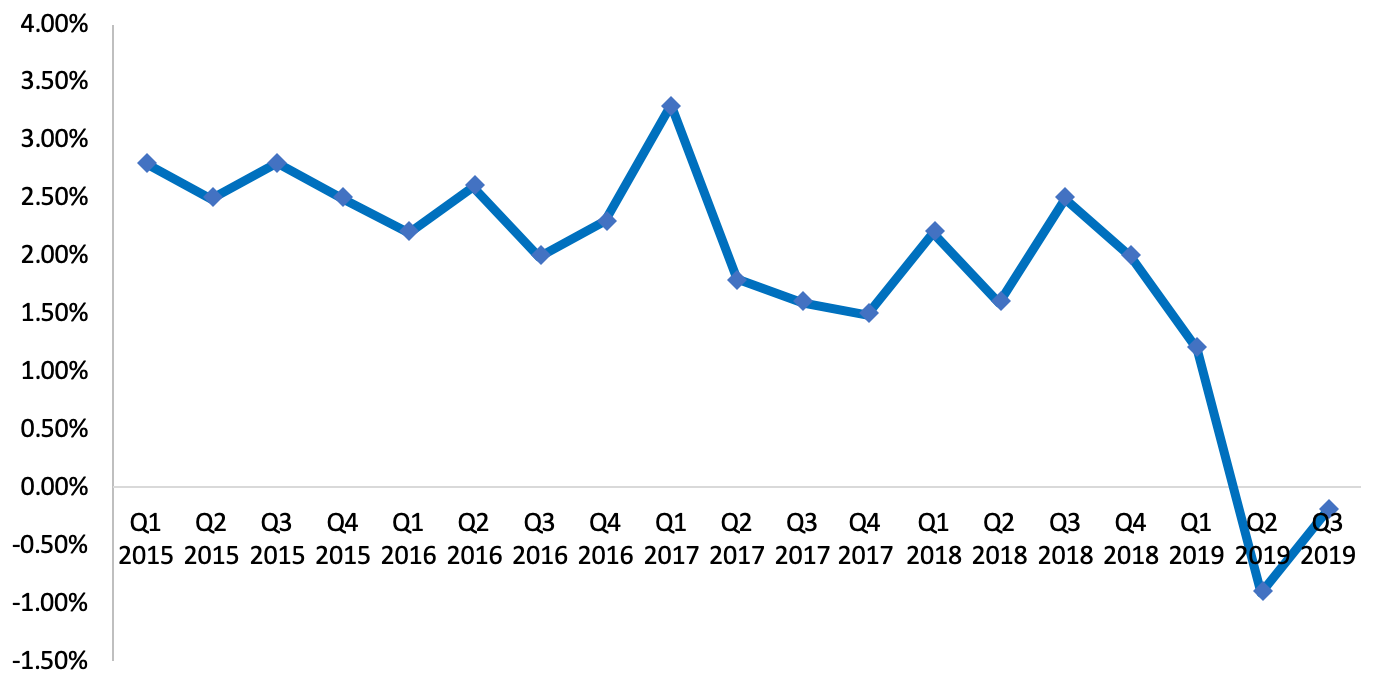
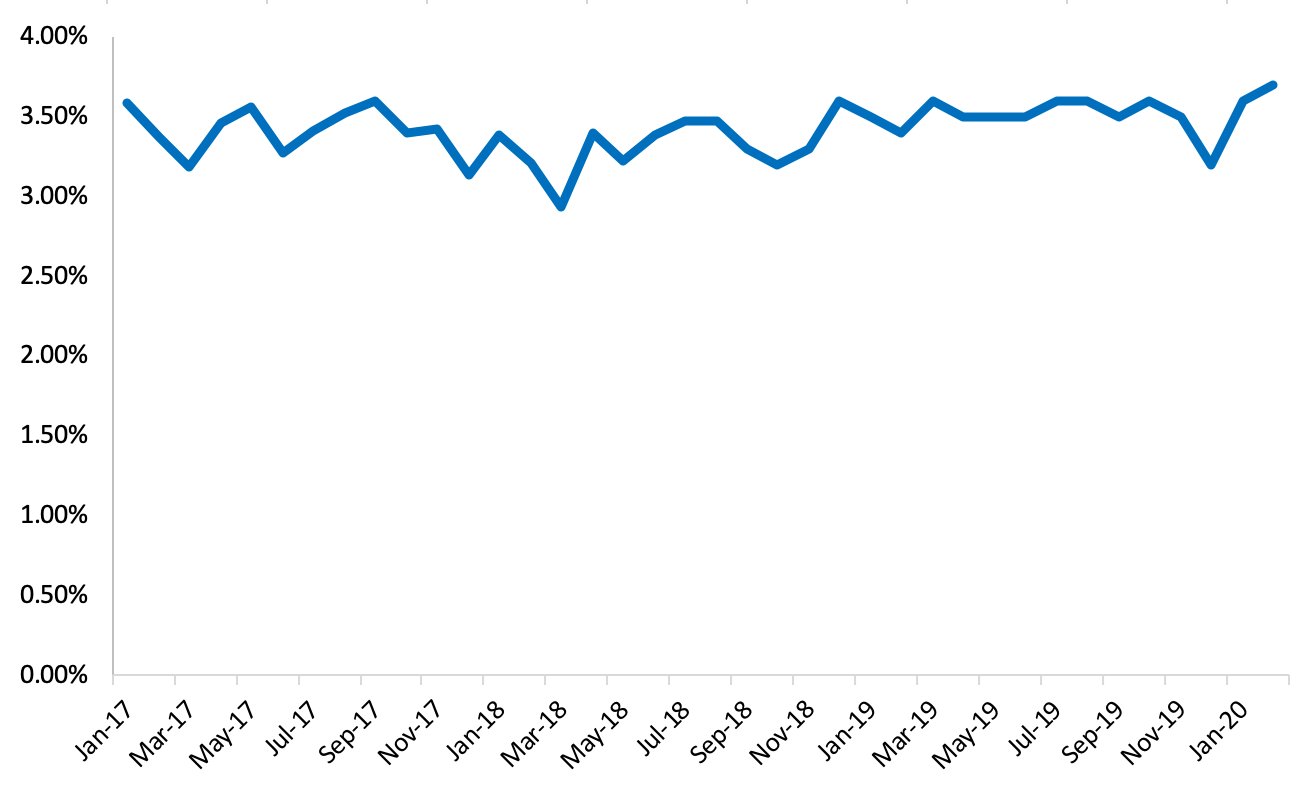
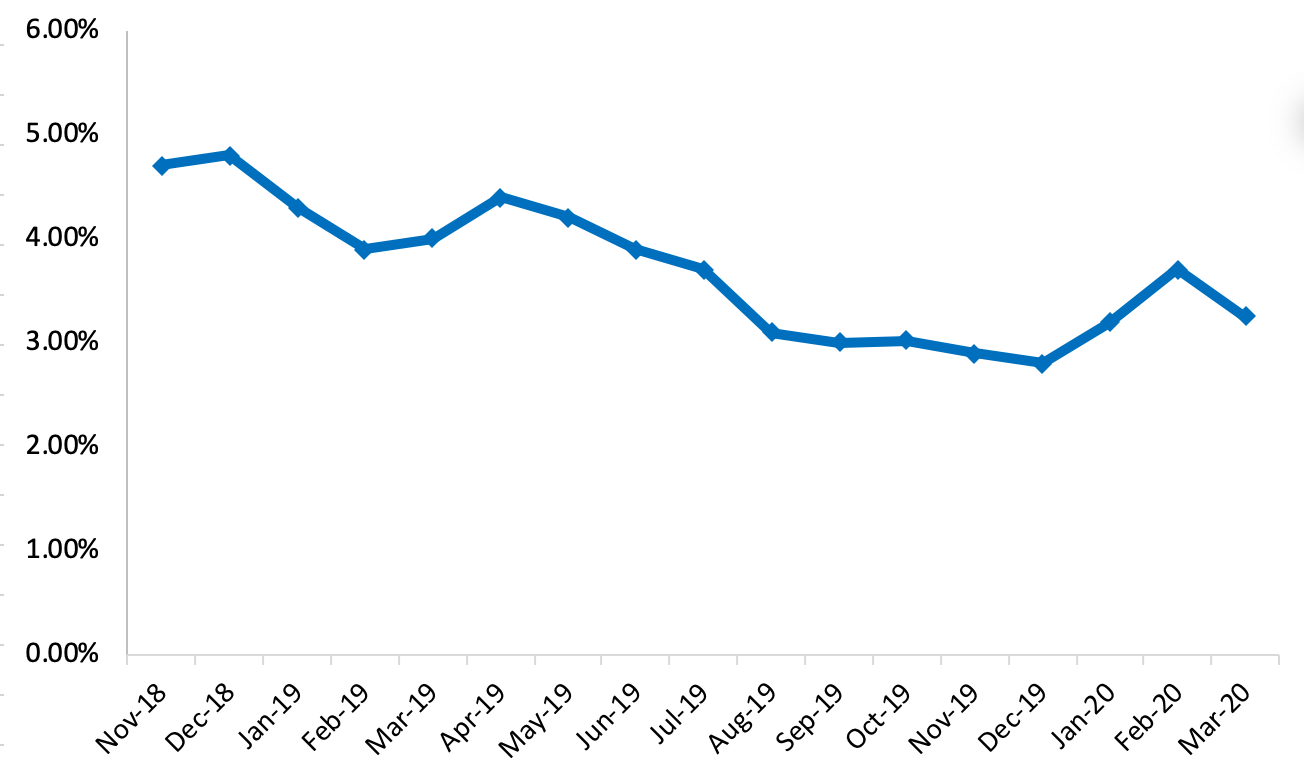
    MEXICO| Growth forecast. On 2 June Mexico’s central bank (Banxico) released its latest quarterly report in which revises up its GDP growth forecast for the year to between 5% and 7% up from the previous projection of between 2.8% and 6.7%. Mexico’s economy contracted by 8.5% in 2020 as result of the coronavirus (Covid) pandemic. But it is expected that Mexico’s economy will rebound this year as the global economy starts to return to normality. The Banxico report says that the improved forecast is the result of better-than-expected performance in the first quarter of the year, as well as the expectation that the economic recovery will speed up in the second quarter due to increased external demand, particularly from the US, thanks to its major fiscal stimulus package. Deputy finance minister, Gabriel Yorio, has said that if Mexico succeeds in in vaccinating around 1m people a day, it would be possible to fully reopen the economy again in September. Yorio said that this would enable a return to pre-pandemic levels of economic activity towards the end of the year. It would potentially also lead to a significant recovery of formal employment, though Yorio admitted that informal employment will take longer to recover. According to the Banxico report the growth scenario would lead to the creation of between 350,000 and 570,000 formal jobs, higher than the previous estimates of at least 250,000 jobs. Despite these optimistic forecasts, inflation will continue to be a challenge for Banxico, as it reached its highest level for three years in April with 6.8%. Banxico estimates that it will reach 4.8% by the end of 2021due to supply shocks and pressure on the prices of agricultural products and energy.  However, Banxico Governor Alejandro Díaz de León said that high levels of inflation would only be temporary. For 2022 Banxico estimated that the economy will grow by between 2% and 4%. With regards to job creation, the expectation is that between 390,000 and 590,000 formal jobs will be created, unchanged from the previous quarterly report. 

    Mexico: GDP Growth
    Percentage variation (year-on-year)

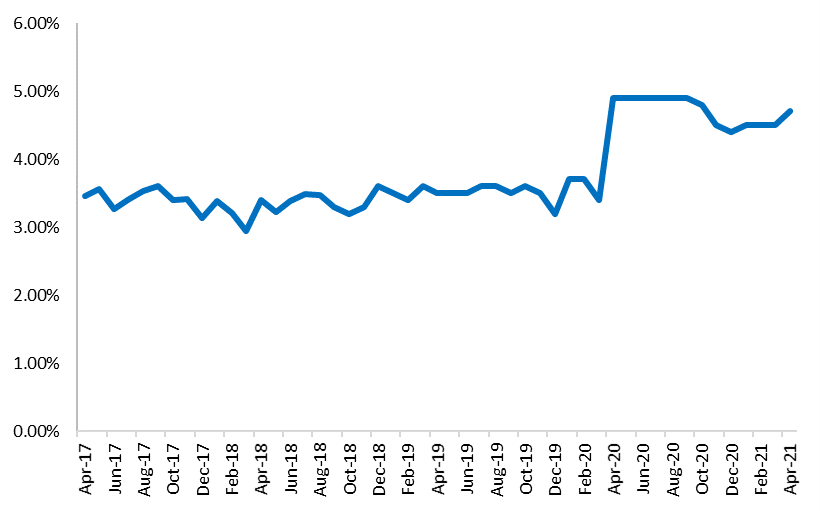
    Mexico: Unemployment Rate
    Econimically active population

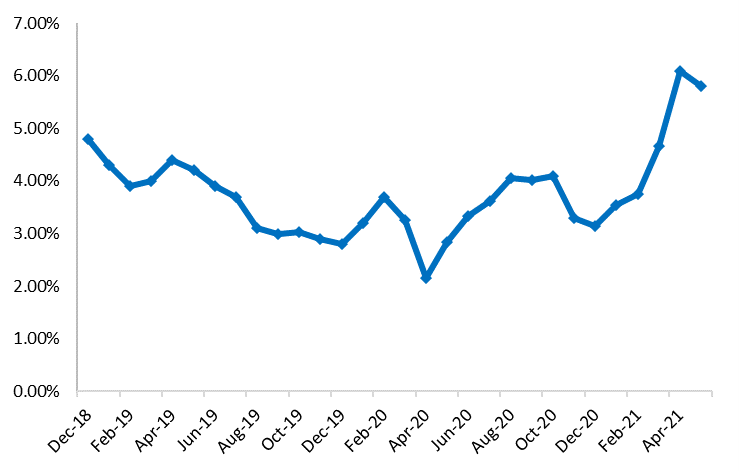
    Mexico: Inflation Rate
    Percentage variation (year-on-year)

  • RASTREANDO TENDENCIAS

    LatinNews 03 October 2011 Hits: 471

    ARGENTINA | Apostando a la agricultura. El más grande productor de equipamientos para la agricultura, Deere & Co, construirá una planta de US$100m en la provincia central de Santa Fe para producir tractores y cosechadoras. Actualmente, Argentina importa la mayoría de sus equipamientos para la agricultura. Representante de Deere se reunieron con la Presidenta Cristina Fernández el 26 de setiembre y le presentaron un plan de inversión para 2015 para ampliar su fábrica en Santa Fe, proveer 300 empleos directos y 1.000 indirectos, y producir cuatro modelos de tractores y cuatro diferentes cosechadores, todos estos son ahora importados. El sector agrícola ha estado con buena salud en años recientes, pero Argentina es altamente vulnerable a una declinación en la demanda y una caída en los precios. El anuncio de Deere es un estímulo para la administración Fernández; aunque ella luce segura de ser reelecta, con menos de un mes para las elecciones generales, Fernández ha sido acusada de fracasar en la diversificación; una sobre-dependencia de las exportaciones; y una alta factura de importación de bienes de capital e insumos intermedios.

    ARGENTINA | Abriendo nuevos caminos. El candidato del gobernante Frente para la Victoria (FPV), Carlos Soria, triunfó en el bastión durante 28 años de la Unión Cívica Radical (UCR) en la provincia sureña de Río Negro el 25 de setiembre. Fue una situación donde se ganaba o ganaba para la Presidenta Cristina Fernández. Soria derrotó confortablemente al candidato de la UCR, César Barbeito, que fue el candidato elegido por el gobernador en funciones, Miguel Saíz, un aliado de Fernández. Soria fue alcalde de General Roca, un pueblo en el noroeste de de Río Negro, una provincia de 633.000 habitantes, dos tercios de los cuales son elegibles para votar. Fernández ganó por poco más del 60% en la votación en Río Negro durante las elecciones primarias abiertas el 14 de agosto.

  • ECONOMIC OVERVIEW: COLOMBIA

    LatinNews 20 February 2013 Hits: 2192

    Labour unrest and allegations of environmental abuses severely impacted Colombia’s coal exports in early February. On 7 February thousands of workers at Cerrejón, a joint venture between BHP Billiton, Anglo American and Xstrata, went on strike, the first in two decades, after failing to reach an agreement over wages and benefits. Cerrejón produced 34.6m tonnes (t) of coal last year, 4% more than expected. It exported 32.8m t, 2.5% above its goal, in 2012.

    The strike follows the suspension of activity at Drummond, the second-largest exporter, after photos emerged showing the company dumping around 500t of coal into the sea. President Santos said that the temporary suspension of Drummond’s coal loading licence was imposed “to set a precedent”, so that no local or foreign companies would contravene environmental regulations. He said that the measure would remain in place until Drummond presented a contingency plan. Drummond, the second-largest coal producer in Colombia, produces about 29% of country’s total coal output.

    In total, about 85% of Colombia's daily coal production has been shut down as a result of the suspension of Drummond’s licence and the strike at Cerrejón. Coal has become the second most important of Colombia’s exports after oil and accounts for more than three times what the country has earned from its traditional coffee exports. Revenues from coal exports reached US$8bn in 2012.

    Slowing growth: Further interest rate cuts are being actively considered by the central bank following signs of slowing growth. In January, the board reduced its overnight lending rate to 4%, but with inflation still at the lower end of the bank’s target, some members have been calling for a steeper cut. Colombia grew by 2.1% in the third quarter of 2012 and 4.9% in April to June 2012. The finance ministry says that it expects better growth in the final quarter of 2012.

    Weak third-quarter numbers set off alarms that the global crisis had hit Colombia harder than previously thought and was damaging the nation's economic drivers. The central bank expects full-year 2012 growth of between 3.3% and 3.9%.

    In a quarterly presentation on 8 February, central bank chief, José Darío Uribe, said that inflation this year would likely come in below 3% versus 2.44% last year with 2013 economic growth of between 2.5% and 4.5%.

  • RASTREANDO TENDENCIAS

    LatinNews 09 October 2015 Hits: 303

    ECUADOR | Esperando un crecimiento insignificante en el 2015. La economía creció solamente un 1% año en año en el segundo trimestre, informó el Banco Central de Ecuador (BCE) el 30 de septiembre. Este es el resultado trimestral más débil para el país desde el 2007. La contracción del 0,3% trimestre en trimestre comparado con el primer trimestre del año ha llevado al BCE a revisar hacia abajo su pronóstico de crecimiento económico para el año de un 1,9% (hecho en junio) a un insignificante 0,4%. Este último pronóstico contrasta austeramente con el crecimiento de 3,7% que Ecuador informó en el 2014, y muestra hasta qué extensión la dolarizada economía ha sido afectada por la caída en los precios internacionales del petróleo y la rápida apreciación del dólar de EU este año.

    Aún así, los funcionarios del gobierno, incluido el Presidente Rafael Correa, han buscado darle un giro positivo en las decepcionantes cifras. Diego Martínez, el presidente del BCE, dijo que aunque es claro que la economía ecuatoriana está experimentando una marcada desaceleración, la misma continúa creciendo, registrando cifras de crecimiento positivas año en año por los 22 trimestres consecutivos. Martínez también dijo que la contracción trimestral es explicada totalmente por la caída del 4,3% año en año en la actividad del sector petrolero. Martínez señaló que la actividad en el sector no petrolero se incrementó un 2,4% en el segundo trimestre con el respaldo del incrementado consumo de hogares, gastos del gobierno y exportaciones.

    En su transmisión semanal de TV y radio, el 3 de octubre, el Presidente Correa admitió que mientras que el 215 está probando ser un año económico “muy difícil” para Ecuador, el país registraría un crecimiento económico positivo este año, con relación a otras economías regionales, tales como Brasil, que se espera que se contraigan. Correa dijo que la proyección de crecimiento del 0,4% en este punto, es incluso mejor que el promedio regional, ahora que la Comisión Económica para América Latina y El Caribe (Cepal) de la ONU, ha dicho que espera que la economía de la región se contraiga un -0,3% este año. Correa también se mostró firme en que su gobierno aseguraría que los pobres resultados económicos no afecten a los pobres de Ecuador. “Hemos estado creando mecanismos todos estos años para asegurarnos de que nuestras dificultades económicas […] no afecten a la gran mayoría.” Dijo Correa.

    • La inflación sube en Colombia

    El 5 de octubre el banco central de Colombia (Banrep) difundió sus últimas cifras de inflación. Banrep informó que la inflación en septiembre llegó al 0,72%, más elevada de lo anticipado, y llevando la tasa de inflación acumulada en los últimos 12 meses al 5,35%, por encima del rango de meta del Banrep de 2% - 4%. Después de la difusión de las cifras, Banrep reconoció que con la inflación acumulada en los primeros nueve meses del año, habiendo alcanzado el 4,76%, era muy improbable que la inflación para final de año la vuelva a caer dentro de su rango meta. El año pasado, la inflación acumulada fue del 3,66%, acercándose al tope del rango de la meta. Desde entonces, las presiones inflacionarias han continuado.

  • CHILE: Bachelet faces more mining problems

    LatinNews 15 September 2016 Hits: 413

    The centre-left Nueva Mayoría coalition government led by President Michelle Bachelet is having to deal with mining problems on various fronts. This comes as Finance Minister Rodrigo Valdés was recently forced to admit “unease” with the latest growth figures released by the central bank (BCCH), caused in large part by the ongoing slump in international prices of copper – the country’s main export – which accounted for 8.1% of its GDP in 2015.

    On 9 September workers at the open-pit copper and molybdenum mine Los Bronces, owned by the multinational mining firm Anglo American, went on strike after the company refused to agree to remuneration-related demands. The national daily La Tercera reported that the decision to strike at the mine – which produced 401,715 tonnes (t) of fine copper in 2015 (out of Chile’s total 5.76m t) – was made after 85.3% of its 1,725 workers rejected an offer from the company of a Cl$9m (US$13,223) bond; an additional Cl$1m (US$1,469) bond conditional on market conditions (if copper prices remain at US$2.5 per pound [/lb] for a six month period); and a Cl$3m soft loan credit line for workers. A report issued on 7 July by Chile’s copper commission (Cochilco) cites Mining Minister Aurora Williams and Cochilco’s executive vice-president, Sergio Hernández, as saying that they expected copper prices would remain at US$2.15/lb this year, rising to US$2.2/lb in 2017.

    The unrest at Los Bronces – which at the time of writing was ongoing – came on the heels of a four-day strike (also pay-related) by workers from a division of the El Salvador mine (which, owned by Chile’s state-owned copper mining firm Codelco, produced 49,000t of fine copper in 2015). The strike ended on 9 September but not before protesting workers cut off all access to the mine, undermining its operations and causing some US$3m in losses on media reports.

    It also came weeks after Codelco’s CEO, Nelson Pizarro, warned that there was “no money” left in the company. With a Codelco report released at the end of May 2016 noting that in the first quarter of 2016 copper prices fell 20% compared with the same period in 2015, indicative of the impact of falling prices, the company posted losses of US$97m in the first half of the year, despite a rise in production (to 906,000t, up 1.4% on the same period in 2015).

    Pizarro’s remarks – which he made at a seminar held on 23 August entitled ‘The contribution of mining to Chile’s development’ – also came despite measures announced last year by Codelco such as layoffs saving about US$48m a year and a further US$4bn reduction in its long-term investment programme. This in turn had led the Bachelet government to announce a US$600m cash injection into the company last year.

    Yet more problems

    Further compounding problems for the mining sector, at the end of last month, the national geological & mining service (Sernageomin) was compelled to halt operations briefly at two mines – Codelco’s massive Chuquicamata mine and Freeport-McMoran Inc’s El Abra mine – after workers died in separate accidents.

    On 30 August two workers were killed at the Chuquicamata mine, which produced 309,000t of fine copper in 2015, after the vehicle that they were driving collided with a giant mining truck. The same day, El Abra (which is 51% owned by Freeport and 49% owned by Codelco, and which produced 147,000t of fine copper in 2015) announced that a worker had died following an accident at its acid unloading terminal.

    • Growth

    On 5 September Chile’s central bank (BCCH) released its latest monthly economic activity index (Imacec), a GDP proxy measure, which showed an increase of just 0.5% year-on-year in July, well below market expectations (1.2%).

  • REGION: Northern Triangle remittance inflows suffer sharp fall

    LatinNews 21 July 2020 Hits: 704

    Global remittances have been hit hard by measures taken around the world to stop the spread of coronavirus (Covid-19) and Central America is already suffering a decrease in inflows.

    Remittances will fall by about 20% globally in 2020, according to the World Bank (WB), which estimates that Latin America and the Caribbean will suffer a 19.3% decline compared to last year. “The projected fall, which would be the sharpest decline in recent history, is largely due to a fall in the wages and employment of migrant workers, who tend to be more vulnerable to loss of employment and wages during an economic crisis in a host country”, said the WB in a report published at the end of April, blaming the decrease on an economic crisis caused by the pandemic and lockdown measures.

    For Central America’s ‘Northern Triangle’ countries - El Salvador, Honduras, and Guatemala - the situation is particularly worrying given the percentage of GDP made up by remittances (see sidebar). While remittances have been increasing for all three countries since 2012, according to WB figures, the first few months of this year have seen significant reductions in transfers. A 15 June report from El Salvador’s central bank (BCR) shows remittances for the first five months of the year totalled US$2.015bn, 11.6% less than the same period in 2019. Honduras’s central bank (BCH) has not published recent figures, but a June 2020 report from the Latin American centre for monetary studies (Cemla) said remittances received during the month of April this year were worth 28.5% less than April 2019. Remittances to Guatemala have so far proven more resilient, with figures from Guatemala’s central bank (Banguat) showing total inflows of US$3.916bn for the first five months of the year, a 3.2% decrease compared with the same last year.

    While Guatemala may have so far recorded a smaller drop than its neighbours, that may not last. In April Jonathan Menkos, the director of the Guatemala-based think-tank Central American institute of fiscal studies (Icefi) warned remittances could fall 20% this year compared with 2019. Menkos also suggested that Guatemala's GDP could contract by between 0.9% and 1.2% in 2020, in part due to the fall in remittances. Honduras and El Salvador GDP figures are also likely to be affected, adding to negative economic forecasts for the Northern Triangle.

    In the short-term there will also be a rise in hunger as those who depend on remittances to buy essential supplies have to get by on less or make do without transfers from relatives abroad. With so many Central American migrants working in the US – an estimated 3.5m in 2017, according to the Migration Policy Institute, a US-based research organisation - the fate of those who receive remittances is tied up with that of the US economy, and the Donald Trump administration’s apparent unwillingness to combat the coronavirus means that the disruption could be prolonged, as the disease continues to circulate.

    Perversely this could also drive a new wave of migration north as deteriorating conditions at home inspire would-be migrants to try their luck in the US. However not only are migrants among the first to lose jobs in an economic downturn, they are among the last to regain them according to Manuel Orozco of the US-based think tank Inter-American Dialogue. New arrivals could struggle to find work. Back in Central America, those left behind will have less money to spend, driving down household consumption, which is a major source of income in national economies, Orozco added. As a result, it appears that Central America is in for a rough ride for the rest of the year, and the effects will be felt into 2021.

    • The importance of remittances

    According to the latest (2018) WB figures, remittances accounted for 20.7% of El Salvador’s GDP, 19.9% of Honduras’s GDP, and 12.0% of Guatemala’s GDP.

  • URUGUAY: Corruption allegations force cabinet reshuffle

    Patrick de Courcy 12 January 2024 Hits: 3365

    In mid-November Uruguay’s main trade union organisation Plenario Intersindical de Trabajadores-Convención Nacional de Trabajadores (PIT-CNT) staged anti-government protests over the issue of corruption. The demonstrations were in response to a scandal involving a passport obtained in 2021 by Uruguayan drug trafficker Sebastián Marset, whose whereabouts are unknown, which forced President Luis Alberto Lacalle Pou to reshuffle his cabinet in November, replacing the ministers implicated.

    Corruption is not considered to be as serious an issue in Uruguay as compared to other South American countries. The most recent Capacity to Combat Corruption (CCC) index published jointly by Americas Society/Council of the Americas and Control Risks in late June 2023, for example, ranked Uruguay as the Latin American country with the highest resilience against corruption, with a CCC score of 6.99 out of 10 for 2023.

    However, a long-running corruption scandal has hit two high-profile ministers, the now-former foreign minister Francisco Bustillo (2020-2023) and now-former interior minister Luis Alberto Heber (2021-2023), whose roles are key to the Uruguayan government’s efforts to tackle transnational organised crime. Bustillo resigned on 1 November, three days before Lacalle Pou conducted a cabinet reshuffle in which Heber was replaced.

    Already back in August 2022 the two were questioned by senators about how Marset had been able to obtain a Uruguayan passport from the country’s consulate in Dubai, United Arab Emirates, in November 2021. Heber claimed that the government “acted within the legal framework”, as neither Interpol nor Uruguayan law enforcement had issued an arrest warrant for Marset at the time of the passport’s issuance. Legislators affiliated with the left-wing opposition Frente Amplio (FA) coalition called for the ministers to be impeached, but the right-of-centre ‘multicolour’ ruling coalition, which has a majority in the senate, declared the ministers’ explanations in the hearing were satisfactory.

    In December 2022, Carolina Ache was sacked as Bustillo’s deputy foreign minister in relation to the scandal. Evidence subsequently emerged which suggested that Bustillo might have been involved in attempts to cover up how Marset obtained the passport. Bustillo resigned soon after the local media leaked audio recordings of voice notes that he sent to Ache suggesting she should “lose” her phone, possibly as a way to prevent investigators from accessing messages between her and (then) deputy interior minister Guillermo Maciel, whose resignation was accepted on 6 November in relation to the scandal.

    Marset himself gave an interview to Uruguayan TV news programme Santo y Seña on Canal 4, which was broadcast on 26 November, and in which he commented on the passport scandal. In the pre-recorded interview conducted in an undisclosed location in Paraguay, the drug kingpin stated that “Uruguay is the least corrupt country in South America” and claimed that he did not bribe any officials to obtain the passport in Dubai in 2021.

    Authorities are continuing their search for Marset in Paraguay, although potential corruption within law enforcement organisations may complicate the manhunt. As of 28 November, 17 agents and the head of Interpol’s Paraguay office, which is tied to the Paraguayan national police (PNP), were dismissed due to their suspected involvement in a possible obstruction to the Marset investigation, as the Interpol arrest order for Marset’s wife was deactivated in the PNP’s systems.

    Dent in popularity

    According to local pollster Equipos Consultores, the Marset scandal caused the personal approval ratings of Lacalle Pou to drop in November. The president’s approval decreased from 48% in October to 45% in November, while his disapproval rating rose from 32% to 36%.

  • ECONOMIC HIGHLIGHTS

    Abbi Dicker 23 February 2024 Hits: 2294

    PERU | Finance minister replaced. On 13 February Peru’s President Dina Boluarte carried out a cabinet reshuffle, replacing four ministers including economy & finance minister Álex Contreras. Also leaving the government are defence minister Jorge Chávez, energy & mining minister Óscar Vera, and environment minister Albina Ruiz. Contreras, who had faced mounting criticism over Peru’s poor economic performance, was replaced at the economy & finance ministry by José Arista Arbildo. Arista returns to a position he previously held for just five days in 2020; he also previously served as agriculture minister for several months in 2018. Chávez has been replaced as defence minister by retired general Walter Astudillo Chávez. The energy & mining brief has been taken over by Rómulo Mucho Mamani, an engineer who previously served as deputy energy & mining minister from 2005-2006. The new environment minister, Juan Carlos Castro Vargas, was previously the head of Peru’s national water authority (ANA)

    BOLIVIA | Lithium tender announced. On 27 January Bolivia’s state-owned lithium company Yacimientos de Litio Bolivianos (YLB) announced a new international tender for lithium projects on seven salt flats in the southwestern departments of Potosí and Oruro. YLB’s president, Karla Calderón, said that the government is seeking bids to develop pilot lithium plants across “the whole productive chain”. Hydrocarbons & Energy Minister Franklin Molina said that there has been investor interest from the European Union, China, Russia, Brazil, and other countries. The salt flats where the proposed projects are located are Uyuni, Coipasa, Pastos Grandes, Capina, Cañapa, Chiguana, and Empexa.

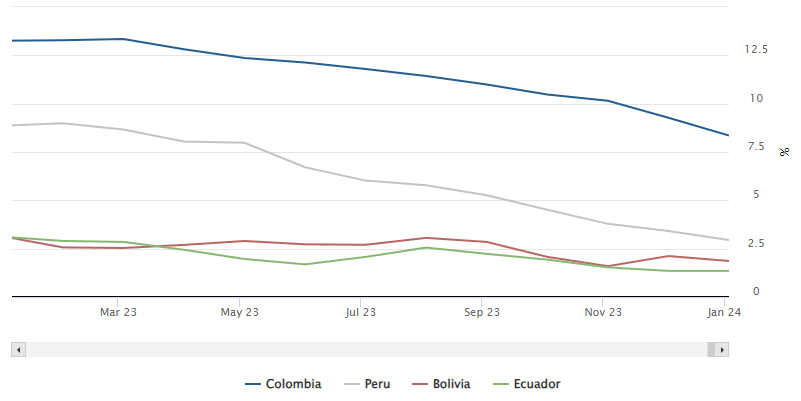
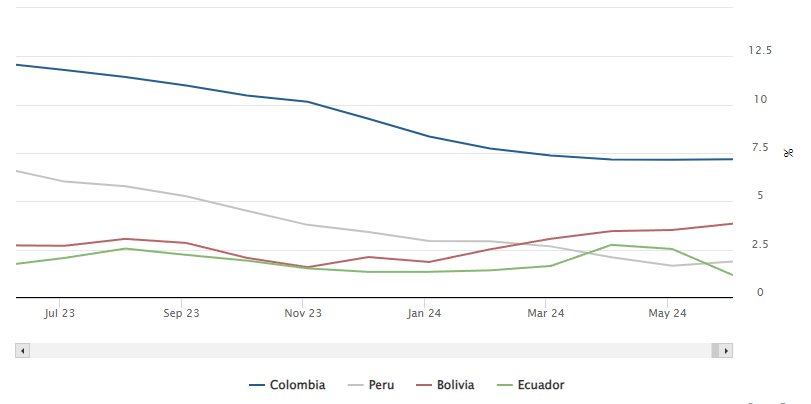
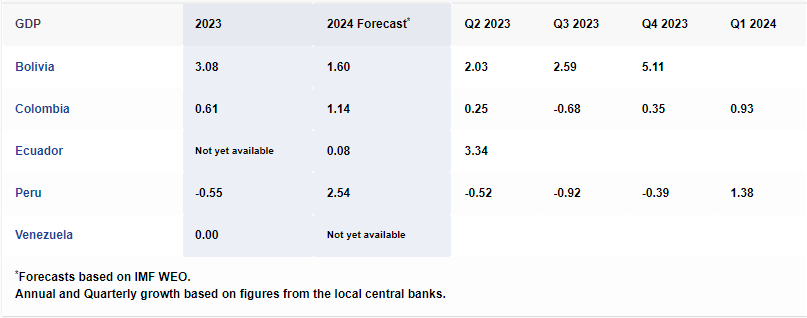
    COLOMBIA | Interest rate lowered. On 31 January Colombia’s central bank (Banrep) lowered its benchmark interest rate by 25 basis points to 12.75%. This was the second consecutive reduction in the interest rate following a previous 25 basis point reduction in December. Banrep noted that annual inflation fell for the ninth consecutive month in December to 9.28%, and that analysts surveyed by the bank are now forecasting this rate to fall to 5.2% by the end of 2024 – down from the previous month’s estimate of 5.7%. However, it noted that a higher-than-expected increase to the minimum wage in 2024 could influence inflation, and highlighted ongoing risks posed by the El Niño weather phenomenon.

    Andean countries: inflation rate
    Percentage variation (year-on-year)

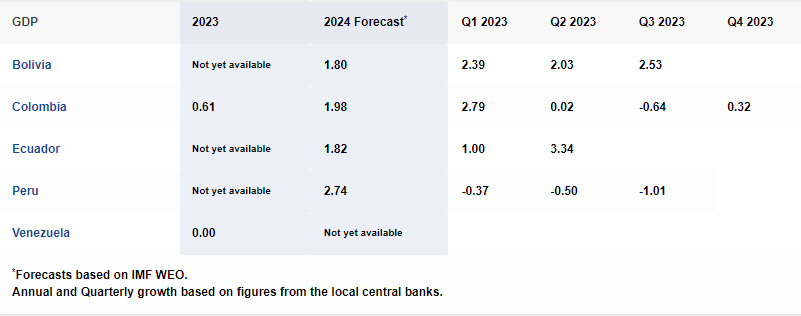
    Andean countries: GDP growth (%)
    Quarterly figures are year-on-year growth


  • PERU: Still growing well

    LatinNews 30 March 2012 Hits: 2094

    In January GDP grew 5.4% year-on-year. The finance minister, Miguel Castilla, is now forecasting GDP growth of 5.7% in 2012, up from 5.5% at the beginning of the year.

    The economy has now been growing, year-on-year, for 29 consecutive months. In the 12 months to February 2012, real GDP growth was 6.5%. This growth is being led by the services sector, particularly the hospitality industry (restaurants and hotels) and financial services, which both are growing at double-digit rates. Construction is growing at only a 4.4% annual clip.

    According to the national statistics institute (Inei), in the three months from December 2011 to February 2012 inclusive, 200,900 people found jobs in Lima. There are now 403,000 people looking for work in Lima. The labour market is clearly tightening: hourly paid underemployment dropped 2.2% in the quarter while monthly paid under-employment fell 7.4%.

    Domestic monetary policy and high international metal prices are helping to keep the economy humming. On 8 March the central bank held interest rates at 4.25% a year. Rates have now been unchanged since May 2011, even though inflation has surged beyond the central bank’s target of a rate of between 1% and 3% to 4.2% for the 12 months ending in February.

    In January 2012 export receipts jumped 35% year-on-year.  In February business confidence jumped to its highest level for a year.

    Reserves: The country’s foreign currency reserves are rising at a rate of around US$3bn a month. On 13 March they stood at US$54.77bn. The central bank said it purchased US$1.1bn worth of US dollars in the first 13 days of March. So far this year, it has bought US$5bn worth of dollars. The bank is now hoping that the brighter economic news from the US economy will prompt an end to the US Federal Reserve’s quantitative easing policy and lead to a natural appreciation in the dollar, on the expectation that US interest rates will rise.

    Metal production: Output of gold and silver increased in January, while production of the country’s main base metals, copper and zinc, fell, according to mining & energy ministry data. Gold production was up 13% in January to 15.1t, while silver production rose 5% to 309t. Copper production was down 4.8% to 97,765t, while zinc production tumbled 16% to 102,290t.

  • TRACKING TRENDS

    LatinNews 06 September 2012 Hits: 2310

    COLOMBIA | Brazil to help build Colombia’s largest hydroelectric project. On 28 August a committee of Colombia’s state-owned firm, Empresas Públicas de Medellín (EPM), awarded the construction of the Ituango hydroelectric project to the Colombo-Brazilian consortium, CCC. The Ituango project is to be Colombia’s largest hydroelectric project expected to produce 2,400 megawatts of electricity by 2018.

    EPM is Colombia’s largest utility services and it opened a tender process back in October for parties interested in the construction of the dams, the hydroelectric turbines and other works associated with the US$5.5bn megaproject located on the Cauca River 171kms west of Medellín, the capital of Antioquia department. According to an EPM statement it received bids from companies from Spain, Italy, Brazil and Colombia, but in the end it decided to settle for the joint bid presented by Brazilian construction firm, Camargo Correa, and the Colombian Conconcreto and Coninsa Ramón H.S.A. The three companies make up the CCC consortium in which Camargo Correa has a 55% stake, Conconcreto 35%, and Coninsa Ramón H.S.A. 10%.

    According to EPM, CCC will not only be in charge of the construction but also for providing the necessary equipment and financing to build the challenging project, which envisions the construction of a 220-metre-high dam that will create a 16 million cubic feet reservoir. The Ituango project has been in the pipeline since the 1970s but EPM has struggled to find partners capable of executing as well as securing financing for its completion.

    PERU | 2013 budget presented. On 4 September Peru’s prime minister, Juan Jiménez Mayor, formally presented the government’s proposed 2013 budget to congress. Jiménez Mayor said that the total budget of PEN108.42bn (US$41.38bn), was 13% larger than the previous year as the administration of President Ollanta Humala looks to increase social spending by 39%. According to Jiménez Mayor, the majority of this increase - US$1.02bn - will be destined for the government’s poverty alleviation programmes such as Pensión 65, a non-contributory pension scheme for poor Peruvians over the age of 65; and Cuna Más, which looks to assist poor children and their mothers.

    The second most important increase is in capital spending, which will see a 16% increase compared to last year. Importantly Jiménez Mayor pointed out that under this category US$11.4bn would go to regional and local governments so that they could invest in their preferred transport, water treatment, health and education projects.

    The Humala administration has been criticised for placing too much of its focus on promoting the country’s economic development and not concentrating enough on promoting the necessary social development. Some regional presidents have also complained that the national government has been more concerned with promoting investment programmes that benefit certain areas while neglecting investment in poorer regions. The government’s budget will now be analysed by congress before its publication in the official gazette.

    ECUADOR | Investing in cities. Ecuador’s heritage minister, María Fernanda Espinosa, has launched the ‘Cities with identity’ project, which aims to invest over US$900m over the next four years to improve the image of 73 Ecuadorean cities. Espinosa explained that urban development in Ecuador has long been neglected and as a result “we must recognise that our cities are becoming increasingly ugly and unfriendly”.

    Espinosa said that the government of President Rafael Correa has decided to launch the programme which aims to improve urban aesthetics, transport and security. In particular, Espinosa said that the project seeks to spark an urban re-conversion process by recovering the architectural heritage of Ecuadorean cities. She pointed out that the loss of this heritage has led to an accelerated process of “loss of identity in our cities”. According to Espinosa the programme is not a way for the government to hide misery, but to substantially improve the living conditions of the local population by helping them re-discover their heritage.

    • Chávez on inflation

    On 5 September Venezuela’s President Hugo Chávez demanded that the local daily, Ultimas Noticias, rectify the information it had published on Venezuela’s August inflation figures. Ultimas Noticias reported that the increase in inflation in August confirmed that the cost of living in Venezuela continued to increase. According to Venezuela’s central bank, inflation in August increased by 1.1%, but this was lower than the 2.2% registered in the same month last year. As a result, Chávez said that the “bourgeois” paper had to issue a correction. “In August 2011 inflation was 2.2%; in August 2012 it was 1.1%, exactly 50% lower... hopefully Ultimas Noticias tomorrow will say ‘we made a mistake’… all I ask for is the truth,” Chávez said.

  • ECONOMIC HIGHLIGHTS

    LatinNews 24 April 2020 Hits: 1464

    USMCA ratification: On 15 March Mexico’s President Manuel López Obrador welcomed Canada’s ratification of the US-Mexico-Canada Agreement (USMCA). The regional trade agreement was approved by Canada’s House of Commons and Senate after months of deliberation. The Governor General of Canada has also signed the Royal Consent, thereby concluding the legislative process. According to a press release by Mexico’s foreign ministry (SRE), Canada is Mexico’s third largest trading partner, with bilateral trade exceeding US$37bn. Amidst global economic uncertainty caused by the coronavirus (Covid-19) pandemic and the fall in international oil prices, López Obrador said that Canada’s ratification will “help us a lot with the economic uncertainty. What we have agreed guarantees that we will maintain our economic relations with the strongest market in the world”. According to the SRE press release, the three governments “will work to implement the agreement, including lists of panellists for the dispute settlement mechanism and the rapid-response labour mechanism and uniform regulations, among other tasks”.

    Currency swap: On 30 March Mexico’s central bank (Banxico) announced that it will hold the first auction for up to US$5bn in the local currency market on 1 April as part of a US$60bn currency swap mechanism established with the US Federal Reserve (Fed) on 19 March to ensure the supply the of US dollars in Mexico’s financial markets. Banxico said the funds from the swap mechanism would be used to carry out credit auctions in US dollars with domestic credit institutions. The announcement came as the Mexican peso continued to face significant downward pressure and breached the US$25/US$1 threshold for the first time ever in late March and has hovered around that rate since.  

    Mexico: GDP Growth
    Percentage variation (year-on-year)

    Mexico: Unemployment Rate
    Econimically active population

    Mexico: Inflation Rate
    Percentage variation (year-on-year)


  • BRAZIL: Paralysis in congress threatens budget

    LatinNews 05 November 2020 Hits: 5303

    Throughout the month of October, Brazil’s lower chamber of congress did not vote on a single bill or presidential decree. The president of the chamber, Rodrigo Maia from the Democratas (DEM) party, has warned that this paralysis, the result of obstruction from both opposition and government-supporting parties, is causing delays to the approval of the 2021 national budget – a process already affected by the coronavirus (Covid-19) pandemic and the federal government’s unclear economic and fiscal priorities.  

    President Jair Bolsonaro’s government submitted a draft budget to congress on 31 August, just within the end-of-August deadline. However, the draft budget is yet to be discussed at committee-stage, as the setting up of the mixed budgetary committee (CMO) has been delayed amid disputes over the appointment of its head. An agreement reached in early 2020, according to which federal deputy Elmar Nascimento of the DEM would be elected to preside over the CMO, is being challenged by parties from the ‘centrão’ bloc – the group of ideologically flexible parties which currently props up the Bolsonaro administration in congress, and with which the DEM broke ties in the lower chamber in July [WR-20-30] – who want Flávia Arruda, a deputy from the Partido Liberal (PL), to head the CMO.

    At stake for the centrão is the presidency of the lower chamber. Maia’s term comes to an end in February 2021 and he cannot seek re-election in the same legislature (although his counterpart in the senate, Davi Alcolumbre, also from the DEM, would be keen to find a way around this rule). The CMO is the most important and influential parliamentary committee, and the election of its president is considered an indication of who will go on to win the leadership of the lower chamber for the next two years.

    Maia has criticised this political manoeuvring and the impact it has on the legislative agenda and, by extension, on the government. In comments on 27 October, he noted that most of the obstruction of the chamber’s voting agenda has come from the government base, that is to say, the centrão (as part of the rapprochement between the government and the centrão, a member of the bloc, Ricardo Barros, from the Partido Progressista [PP], was appointed leader for the government agenda in the chamber). Maia also called on political parties to respect the agreement regarding the CMO president (if lack of consensus continues to obstruct the setting up of the CMO, congressional rules allow for the budget to be directly submitted to a vote in the plenary).

    “I’ve heard they’re trying to block my agenda in the chamber, but the truth is they are disrupting the government’s agenda,” Maia said of the centrão’s obstructionism during an online event organised by business daily Valor Econômico on 2 November. In Maia’s view, it will be difficult to approve the budget for next year without first passing a constitutional amendment, dubbed the ‘emergency PEC’, which would allow for various cost-cutting measures should the federal, state, or municipal governments be at risk of breaking fiscal rules.

    The emergency PEC was tabled in November last year as part of Economy Minister Paulo Guedes’ ‘Mais Brasil, Menos Brasília’ reform plan, but has not been submitted to voting in congress, despite the urgency suggested in its name. With the municipal elections further slowing down the congressional agenda in November, Maia is sceptical of the PEC being approved by the end of 2020. He expects to have to suspend the January recess for there to be any hope of approving first this PEC, and then the budgetary guideline law (LDO) within the first month of 2021. 

    • Budget timeline

    The Lei de Diretrizes Orçamentárias (LDO), which the government must submit to congress by mid-April, is the law which outlines the budgetary guidelines for the following year. Congress is usually bound to approve it before the July recess, but it failed to do so this year due to the coronavirus pandemic’s impact on congressional activity (mixed committee meetings were suspended). For the first time ever, the government submitted a draft budget (PLOA) in August without the LDO having been approved. In October, the treasury secretary, Bruno Funchal, warned that the government would be forced to suspend expenditures, including pensions and benefits payments, if the LDO was not approved by the start of 2021. “They [congress] have to vote, there’s no other way,” he said.  

    Economic uncertainty

    Maia’s criticisms also extend to the Bolsonaro government, whose lack of clarity and consensus on its economic and fiscal plans casts further uncertainty over next year’s budget – particularly in light of the costs generated by the Covid-19 pandemic. In recent months, the government has see-sawed over the creation of a new social programme and how it might be financed [WR-20-39], while failing to present a cohesive line on its commitment to fiscal rules. “We don’t know what the government wants, what the government will propose,” Maia said during the Valor event. He added that Guedes is “almost alone” in government in defending the constitutional spending cap.  

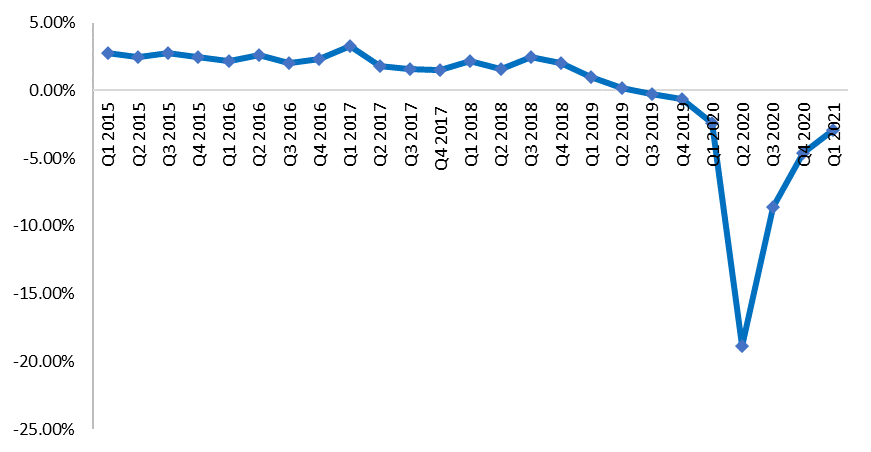
    Maia also said that he feels more pessimistic about Brazil’s economic outlook now than he did in July. GDP forecasts for this year have improved since then – to around -5%, far less catastrophic than initially predicted – leading Guedes to stress that Brazil is on track for a ‘V-shaped’ recovery from the pandemic-induced economic crisis. But other indicators, to which Maia refers, paint a gloomier picture. Gross government debt rose to 90.6% of GDP in September, the central bank reported on 30 October, while the public sector deficit rose to almost 14% of GDP in the 12 months to September. Meanwhile, unemployment reached a new high of 14.4% in the June-August rolling quarter, as more working-age Brazilians rejoined the workforce in search of employment.

    With the government’s pandemic-related stimulus measures – including the monthly ‘emergency basic income’ handout which was credited with mitigating GDP contraction in the second quarter and keeping millions out of poverty – due to come to an end in December, there are concerns over a slowdown in the recovery and a potential social collapse. Even the International Monetary Fund (IMF) recommends that the G20 economies “keep spending” next year, although it admits that fiscal constraints are a concern, which calls for the “re-prioritisation of spending” – something which is difficult for Brazil under its strict budget rules.

    World Bank loan

    On 29 October, the World Bank (WB) announced that it had approved a US$1bn loan to Brazil, to go towards expanding the Bolsa Família conditional cash transfer (CCT) programme. According to the WB, the loan will allow the programme to reach a further 3m people, adding 1.2m families to the existing 13m beneficiaries. The WB cites citizenship minister Onyx Lorenzoni as saying that the expansion of Bolsa Família is part of the government’s efforts to mitigate the effects of the coronavirus pandemic. Most Bolsa Família beneficiaries have been receiving the emergency basic income during the pandemic (a monthly sum equivalent to around three times the average Bolsa Família transfer), but this handout is due to end in December.

  • TRACKING TRENDS

    LatinNews 27 May 2021 Hits: 4135

    ECUADOR | Cacao boom on the horizon. Tanlly Vera Mendoza, a former legislator for the ruling right-of-centre Movimiento Creo sitting on the food sovereignty commission, was appointed agriculture minister this week. President Guillermo Lasso’s plan of governance is focused on sustainable development to reactivate the agriculture sector.

          On the same day as Lasso announced Vera’s appointment, on 18 May, Ecuador announced record cacao exports. The Asociación Nacional de Exportadores e Industriales de Cacao del Ecuador (Anecacao) reported exports of 101,605 tonnes in the first four months of 2021, up 10.7% on the same period last year. This is on course to break the record for annual cacao exports set in 2020, in the midst of the coronavirus (Covid-19) pandemic, of 345,000 tonnes, which generated some US$850m. This was due primarily to an increase in area under cultivation, up from 470,000 hectares (ha) in 2018 to just over 600,000 ha in 2020, according to the agriculture ministry, with the largest increases in Vera’s native province of Manabí and neighbouring Esmeraldas.

            Time is running out for Ecuador to reach the ambitious 10-year target set in 2013 to double annual cacao exports from some US$600m to US$1.2bn, but they are expected to top US$1bn by 2023. Cacao has become an attractive crop for small farmers as it commands stable high prices, especially high-quality cacao: Ecuador’s native Arriba Nacional cacao variety is among the most prized cocoa beans in the world; low-yield, but rich.

         Ecuador was the world’s leading exporter of cacao in the 19th century before crops were decimated by plant disease and market fluctuations, but it is undergoing a renaissance due to the ever-increasing global demand for single-origin chocolate.

  • ECONOMIC HIGHLIGHTS

    Abbi Dicker 19 July 2024 Hits: 2680

    VENEZUELA | Rising oil production. The Organization of the Petroleum Exporting Countries (Opec) released its latest monthly oil market report on 10 July, in which Venezuela claimed to have produced 922,000 barrels per day (bpd) of crude in June – up from 910,000 bpd in May. Opec’s own estimate, based on secondary sources, put Venezuela’s oil production in June at 851,000 bpd, up from 830,000 bpd in May.

    COLOMBIA/VENEZUELA | Ecopetrol planning to buy Venezuelan gas. Ricardo Roa, the president of Colombia’s state oil company, Ecopetrol, said on 27 June that the company expects to begin importing natural gas from Venezuela next year in order to guarantee supply on the Colombian market. Roa said that Ecopetrol and Venezuela’s state oil company, Petróleos de Venezuela (Pdvsa), have been discussing the launch of Venezuelan gas flows along the Trans-Caribbean pipeline, also known as the Antonio Ricaurte pipeline. He said that it would take 10-14 months for Colombia to begin receiving gas imports from Venezuela.

    ECUADOR | Protests against fuel subsidy cuts. Protests were held in cities across Ecuador on 4 July in rejection of the phasing out of petrol subsidies by President Daniel Noboa’s government. The elimination of the subsidies, which began on 28 June, was a risky move from Noboa, as attempts by previous governments to cut the subsidies have sparked major unrest. The protests, organised by the umbrella trade union Frente Unitaria de Trabajadores (FUT), were widespread but mostly drew only moderate crowds. Demonstrators clashed with police in the capital Quito, with at least two protesters arrested. Roads were partially blocked and tyres set alight in Guayaquil, the capital of Guayas province, while smaller demonstrations took place in provinces including Chimborazo, Cotopaxi, Tungurahua, Bolívar, Pastaza, and Cañar.

    Andean countries: inflation rate
    Percentage variation (year-on-year)

    Andean countries: GDP growth (%)
    Quarterly figures are year-on-year growth

  • In Brief - Andean

    LatinNews 07 February 2012 Hits: 1042

    Peru| Chinese investment. On 6 January Peru’s ambassador to China, Gonzalo Gutiérrez Reinel, said that a Chinese information technology and communications firm, Huawei, could soon set up a plant to produce high-tech products in Peru. According to Gutiérrez, Huawei directors for Latin America have told him that the company is ready to expand its operations in Peru and that the Bank of China, among others, is already looking into setting up operations in the Peruvian market.

  • Risk pointers

    LatinNews 20 June 2012 Hits: 599

    *** Al-Qaeda speaks to Egypt.  Al-Qaeda’s new leader Ayman al-Zawahiri has just sent his 10th message to Egypt since assuming the leadership of al-Qaeda after the killing last year of Osama bin Laden.  Al-Zawahiri is Egyptian born, and in April 1995 he wrote a pamphlet entitled The road to Jerusalem passes through Cairo.

    In his latest message, a 47-minute audio posted on jihadi websites on 17 June, al-Zawahiri urged Egypt to cancel its peace treaty with Israel and to establish Islamic rule.  He also said that a priority goal was to prevent Israel turning Jerusalem into a Jewish city.

    *** Israel looking for increased pressure on Iran.  On the eve of the latest round of talks between Iran and the major powers, held in Moscow on 18-19 June, Israel called for more pressure from the international community to “make clear there is a credible military option”.  Speaking on 17 June, an Israeli official said that the Iranians are “not yet convinced that when the US or others say that ‘all options are on the table’ they actually mean it”.  The official said that there was need for “greater specificity” when saying that all options are on the table.

    However, nothing in Iran’s approach to the latest round of inconclusive talks suggests that this message has got through.  It is continuing to insist that its right to enrich uranium be recognized and that sanctions be removed in return for cooperation with the International Atomic Energy Agency (IAEA).  After the talks, Russia’s Deputy Foreign Minister Sergey Ryabkov admitted that “the differences are very substantial”.  The next stage will be an experts’ meeting in Istanbul on 3 July.

    In the meantime, those in Israel who fear that the West might in the end prefer to opt for living with a nuclear Iran rather than risk another Middle East war will have had their fears reinforced by the main article in the latest issue of Foreign Affairs in which a US academic argues that a nuclear Iran would be stabilizing, not destabilizing.  Kenneth N Waltz argues that “by creating a more durable balance of military power in the Middle East, a nuclear Iran would yield more stability, not less”.

    Of course, there is no chance of this becoming official Western policy, but it does emphasize a point about which Israel feels strongly, namely that the perspective from Washington (which is 10,000km from Tehran) is entirely different from Jerusalem’s.  It is this that makes Israel so anxious about allowing Iran to prevaricate and delay until its nuclear facilities are in the ‘zone of immunity’, by which it means until the point when they become invulnerable to Israeli attack but not to attack by the United States.

  • Risk pointers

    LatinNews 03 April 2013 Hits: 362

    *** 35th intrusion by Chinese vessels.  On Monday (1 April) three Chinese maritime surveillance vessels crossed into Japan’s territorial waters around the disputed Senkaku/Diaoyu Islands for about five hours.  This was the first such intrusion since 18 March, but the 35th since September, when Tokyo purchased a large part of the disputed islands from a private owner.

    On the same day, the director of China’s State Oceanic Administration (SOA), Liu Cigui, said: “China will maintain regular patrols in the Yellow Sea, the East China Sea, and the South China Sea.”

    *** Russia’s ageing Pacific Fleet.  On 28 March, a spokesman for Russia’s Far Eastern Shipbuilding and Ship Repair Centre (DTsSS) was quoted as saying: "Currently, of about 80 ships and submarines in active service in the Pacific Fleet, about two-thirds are being used past their service life, some ships and submarines are not past their designated service life but past their inter-repair service life." 

    The spokesman said that the fleet’s support ships are in a similar condition, with “more than two-thirds” being past their service life.  He added that the number of ships in Russia’s Pacific Fleet has decreased by more than 50% since 1991.

    *** Japan’s PM not to visit war shrine.  It was announced on 29 March that Japan’s Prime Minister Shinzo Abe will not visit the Yasukuni war shrine during the three-day spring festival that starts on 21 April. 

    The reason given was to ensure that there is no further deterioration in relations with China.  However, a Chinese foreign ministry spokesman seemed unimpressed.  When asked to comment, Hong Lei responded by saying: “Only when Japan faces up to the past can it embrace the future.”

    It is not yet known whether Abe will visit Yasukuni on 15 August, the anniversary of Japan’s surrender to Allied forces in 1945.  Abe refrained from visiting the shrine after he became prime minister for the first time in September 2006, unlike his predecessor Junichiro Koizumi, who infuriated China with his repeated visits. 

    However, Abe did visit the shrine as leader of the opposition during last year’s autumn festival.  He has also said that it was “extremely regrettable” that he could not visit the shrine during his previous term as premier.