All Categories

Subcategories

  • ECONOMIC HIGHLIGHTS

    Patrick de Courcy 17 March 2022 Hits: 2254

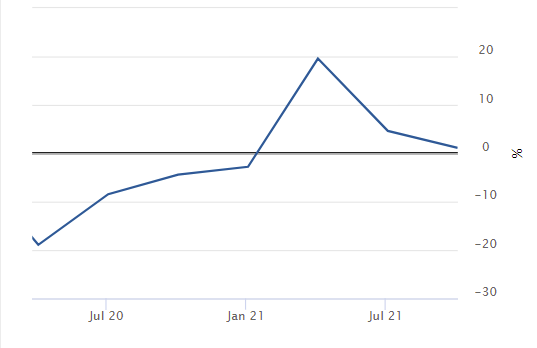
    MEXICO | Private sector lowers 2022 growth forecast. On 3 March, Mexico’s central bank (Banxico) released its monthly survey of private sector economists, who have reduced their 2022 GDP growth forecast for Mexico to 2.04%, from a previous forecast of 2.27%. The survey also found that the private economists predicted inflation of 4.78% at the end of 2022, an increase on the 4.42% they predicted in last month’s survey. This follows the release of minutes from a Banxico meeting, in which the central bank’s board of directors warned of a general lowering of GDP growth forecasts and increasing of inflation forecasts for Mexico in 2022. Banxico currently forecasts GDP growth of 2.27% in 2022 and inflation of 4% at the end of 2022.

    MEXICO | Pemex reduces yearly losses. On 28 February, Mexico’s state-run oil company Pemex released its 2021 financial results, which show that the company made a net loss of M$224.4bn (US$10.9bn) in 2021, a reduction of 55.9% compared with losses of M$509.1bn in 2020. Pemex CEO Octavio Romero Oropeza said royalty payments continued to put pressure on net results. However, Romero said Pemex had a “very good year” in terms of crude oil production. Production of liquids, mainly crude oil and condensates, totalled 1.736m barrels per day (bpd), a 2.9% increase on the previous year.

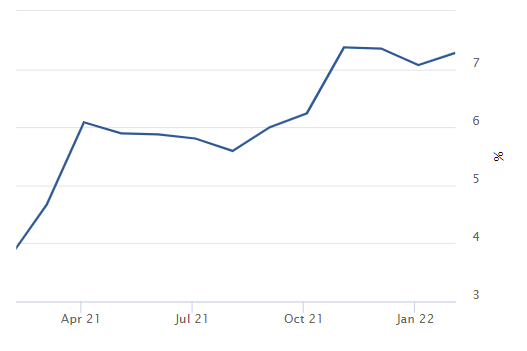
    MEXICO | Central bank raises interest rates again. On 10 February, Mexico’s central bank (Banxico) raised its benchmark interest rate by 50 basis points to 6.0%, in another attempt to rein in inflation. This was the sixth consecutive rate hike, following an increase of 50 basis points in December and increases of 25 basis points in November, September, August, and June. Banxico said in a statement that the decision was taken in response to inflationary pressures, after Mexico registered annual inflation of 7.07% in January, well above Banxico’s 3% +/-1 inflation target range for 2022. 

    Mexico: GDP growth
    Percentage variation (year-on-year)

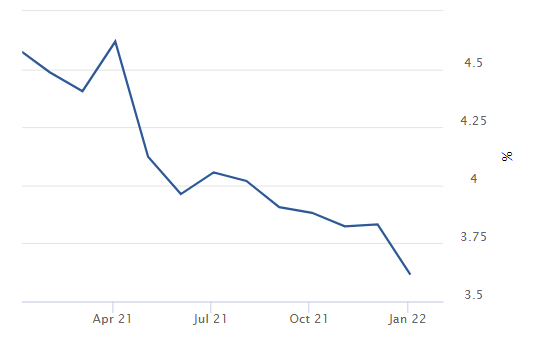
    Mexico: unemployment rate
    Economically active population

    Mexico: inflation rate
    Percentage variation (year-on-year)

  • COSTA RICA: Chaves promises economic recovery

    Sarah Sheldon 23 May 2022 Hits: 969

    Costa Rica’s new president Rodrigo Chaves has started to lay out his plans to kickstart the country’s troubled economy after winning the presidential run-off on 3 April, but details remain thin on the ground.

    Chaves boasts an economics background as a former World Bank (WB) official who briefly served as finance minister (2019-2020), but he faces a difficult situation after taking office on 8 May. Costa Rica’s GDP rebounded from the effects of the coronavirus (Covid-19) pandemic, growing 7.6% in 2021 after declining by 4.1% in 2020, but poverty and unemployment remain high, at 23% and 14.4% in 2021, respectively.

    On the other hand, the fiscal deficit came in at 5% of GDP in 2021, which marks an improvement from 8% in 2020. This follows the implementation of a 2019 fiscal reform under his predecessor Carlos Alvarado (2018-2022), whose government reached a US$1.78bn Extended Fund Facility (EFF) agreement with the International Monetary Fund (IMF). On 25 March the lender hailed the work of Alvarado’s government, saying that “the Costa Rican authorities have made important progress under their economic reform programme supported by the IMF over the last year”.

    In addition, on 11 March international credit ratings agency Fitch also revised up Costa Rica’s outlook to stable from negative, citing “better-than-expected improvements in the fiscal position and economic activity”. Despite these positive pronouncements, Chaves has pledged to renegotiate the agreement with the IMF. Since his victory Chaves has described the deal as “indispensable,” but said it would need to be adapted to “global dynamics, the Costa Rican economy, and the new government’s priorities".

    These priorities include reducing the cost of household goods, with Chaves promising to do so via executive decree. Other pledges include reviving economic growth by promoting a more business-friendly environment and reducing bureaucracy to attract more investment. “We will let you work, without getting in the way,” reads his manifesto. The document also proposes “radical digitalisation of the state” and promoting access to the banking system, as well as facilitating female involvement in the labour market by improving access to childcare. Chaves also pledges to boost tourism, citing medical tourism and digital nomads in particular. Other proposals include implementing bilingual education in schools and colleges and fighting corruption, as well as using public-private partnerships to improve infrastructure. Chaves also promises to apply the 2019 fiscal reform “without exception” and end tax exemptions for the wealthy.

    His manifesto also includes a section on pension reform which calls the current system “unsustainable.” Chaves proposes that the state pay the same contribution to every pension scheme; strengthen voluntary and obligatory pensions; and crack down on so-called “luxury pensions,” which pay out more than their previous salary to former civil servants such as judges or university professors. This is a topic which regularly makes news in Costa Rica, although there are only around 4,000 people who receive them, according to a 2018 analysis by local media outlet Nación.

    Chaves ran on an outsider ticket and has promised to shake up the existing power structures in Costa Rica. However, he may face some difficulties enacting his plans as his conservative Partido Progreso Social Democrático (PPSD) will have only ten of the 57 seats in the new unicameral legislature. The traditional right-of-centre opposition Partido Liberación Nacional (PLN) will have 19 seats, while the other traditional right-of-centre opposition party, Partido Unidad Social Cristiana (PUSC), will have nine seats. The rest of the legislature will be made up of seven lawmakers from the Christian conservative Partido Nueva República (PNR), six from the liberal Partido Liberal Progresista (PLP), and six from the left-wing Frente Amplio (FA).

    Chaves did meet with the PLN’s 2022 presidential candidate, former president José María Figueres (1994-1998), in the days following the run-off, and said that the pair had “agreed to agree on the most important projects for the country” without providing further details. Suspicions have also been raised about the new president’s commitment to existing political rules: for example, his manifesto pledges to expand “direct democracy” along with populist rhetoric have invoked comparisons with authoritarian leaders such as El Salvador’s President Nayib Bukele, raising questions about Chaves’ commitment to Costa Rica’s institutions. If Chaves does attempt to circumvent democratic processes it will create further problems for the economy as investors and ratings agencies reassess the country’s prospects.

    The fiscal deficit looks set to dominate the economic conversation as it has in recent years in Costa Rica, and on 28 April Chaves met with all 57 legislators to lay out his proposals. Eliécer Feinzaig, PLP leader, told Nación following the meeting that Chaves did not put forward plans to cut public spending but instead focused on combatting tax exemptions and evasion.

    Chaves has said that he wants to make changes to the public employment law, a key part of the deal with the IMF which was approved by the legislative assembly on 7 March. He believes that the law, which would introduce a single pay scale and eliminate other salary components, doesn’t fix the problem of public spending on salaries, and he wants to pass a reform in his first year in office. In a statement dated 10 February Fitch said it believes that the existing measures “are important to keep meeting the primary fiscal targets,” but moving ahead with the law could spark street protests, like those which greeted the news that the bill had passed its first debate in the legislative assembly in June 2021. 

    Chaves inherits a sticky situation, and it seems likely that he will struggle to resolve it, just like his predecessor. Inequality has increased in recent years and the trend worsened during the coronavirus (Covid-19) pandemic, while social unrest, including street protests against fiscal reform in recent years, are threatening Costa Rica’s image as the Switzerland of Central America. The new president will have to balance demands for social spending with the IMF programme on which the country’s attractiveness to investors largely hinges. His vaguely populist proposals may have been enough to win the election, but Chaves will now have to deal with the realities of governing in a fragmented political system.

  • ARGENTINA: Schoklender turns on the fan

    LatinNews 19 September 2011 Hits: 818

    The Argentine weekly Noticias shook-up local politics last week when it published an exclusive 10-page interview with Sergio Schocklender, the former right-hand man of Hebe de Bonafini (head of Madres de Plaza de Mayo) and main suspect in the so-called ‘viviendagate’ [WR-11-23]. Schoklender’s interview is significant both for the numerous accusations he levies against members of the current administration, including President Cristina Fernández’s running-mate in the fast-approaching 23 October general election, Minister of Economy Amado Boudou, and the insight it gives on the widespread belief that rampant corruption in public works contracts is a standard part of doing business with the state. Some of Schoklender’s claims were implicitly confirmed by the actions of Federal Judge Norberto Oyarbide.

    One of the most damaging claims levied by Schoklender against Fernández’s government was his theory that Oyarbide has put the case on hold following the directives of Chief of Cabinet Aníbal Fernández until the October elections had taken place. “In democracy it is better for explanations to be given before the elections and not afterwards”, said Schoklender with the clear intent of throwing a low blow against Cristina Fernández’s democratic credentials. “Oyarbide is the small doll of Aníbal Fernández, who wants to delay [progress in] this case until after the elections”, he went on.

    The problem for the government is that after weeks of no progress in the investigation, Schoklender appeared to have hit a nerve as Oyarbide ordered raids on some 20 companies that could be involved in the scandal, just a few hours after the online version of the magazine had been published on Friday – it only hit the new stands on Saturday. Whether the government had any involvement in this decision is a moot point because Oyarbide gave the impression that it did by taking action as soon as a politically damming allegation was picked up by the mainstream press.

    Arguably, Oyarbide may have been trying to protect himself, as Schoklender also said he had given the judge an envelope containing details of illegal campaign contributions to Bodou’s (unsuccessful) bid to run for the mayoralty of Buenos Aires City. According to Schoklender, Madres de Plaza de Mayo paid AR$1.5m (US$356,663) for campaign posters, some printed at the NGO’s press, and for other campaign expenses. He also claimed to have submitted receipts from the consultancy, Doris Capurro, which was in charge of measuring voting intentions for the Boudou-Abel Fatala ticket before Fernández decided who the Frente para la Victoria (FPV) would nominate for the capital city’s top job. This allegation has allowed the constitutional committee of the Argentine chamber of deputies to call Schoklender to make a formal statement since this would constitute a breach of campaign financing rules.

    Finally, Schoklender’s declarations were significant because they appeared to back up the widespread belief that paying bribes is the only way to secure government contracts in Argentina, which ranked 105th in Transparency International’s 2010 Corruption Perception Index (CPI). “To fix [pay a bribe] is to fix, and it is how public works [contracts] are handled worldwide”, said Schoklender before clarifying that the political protection of former president Néstor Kirchner (2003-2007) had helped Madres avoid paying bribes. However, he says problems began when Kirchner got involved in his wife’s 2007 campaign and José López, the secretary of public works, was left in charge of liaising with Madres. “I understand that senior civil servants in whatever ministry don’t live off their nominal salary... [but you shouldn’t] take the money from where it’s most needed [i.e. social housing programmes]”, he said. Regardless of how the case is resolved, Schoklender has stated what the common Argentine believes, but with the added authority that first-hand knowledge confers.

    • Menem, innocent of arms trafficking

    This week Argentina’s third oral tribunal on criminal economic matters (Tope 3) pronounced former president Carlos Saúl Menem (1989-1999), and all other 17 people charged, not guilty of all charges in relation to the sale of 6,500 tonnes of weapons to Croatia and Ecuador between 1991 and 1995. Menem is still facing charges in at least nine cases, with accusations ranging from fraud and cover-up to illicit enrichment.

  • TRACKING TRENDS

    LatinNews 15 December 2011 Hits: 3284

    COLOMBIA | Drug GDP down. The contribution of coca cultivation and cocaine production to the Colombian economy fell to 0.3% of GDP from 1.4% between 2001 and 2009, according to a report presented in Bogotá by the UN Office on Drugs and Crime (Unodc). “The exhibition of power and riches (by the cartels) overstated (the cocaine trade’s) economic impact and distorted our understanding of it,” the report’s author Ricardo Rocha said. He argued that the emergence of Mexican cartels and tighter controls on money laundering had significantly reduced cocaine revenue flowing into Colombia. “The golden age, when the (Colombian) drug cartels monopolised the wholesale market, is over. Now those profits are being appropriated by Central America, Venezuela and Mexico,” he claimed.

  • TRACKING TRENDS

    LatinNews 19 September 2013 Hits: 991

    REGION | Paraguay ‘de-Mercosurises’. On 16 September Paraguay’s President Horacio Cartes and his Chilean counterpart Sebastián Piñera signed a new agreement aimed at boosting bilateral trade and investment. The deal was signed during Cartes’s two-day first official visit to Chile, his second State visit since he assumed power last month. It is a boon for Cartes, who is focused on rebuilding Paraguay’s relations with its regional neighbours, which were ruptured after the June 2012 impeachment of former president Fernando Lugo (2008-2012).

        That Cartes sealed a deal with Piñera, after his inaugural State visit to Argentina last week failed to yield concrete results, suggests that under Cartes Paraguay will continue to shift out of the orbit of the Southern Common Market (Mercosur), from which it was temporarily politically suspended after Lugo’s impeachment, and move closer to the rival Pacific Alliance group, of which Chile is a leading member. Ever since left-leaning governments consolidated themselves in Mercosur, the trade bloc has become increasingly politicised and has lost its economic drive. By contrast, the Pacific Alliance (comprising Chile, Peru, Colombia and Mexico) has proved to be more pragmatic and focused, allowing it to emerge quickly as a viable regional economic integration project to challenge Mercosur.

        During Paraguay’s temporary suspension from Mercosur, the interim government led by former president Federico Franco (2012-2013), applied for and gained observer status at the Pacific Alliance (the first step to becoming a member). This prompted speculation that Paraguay was preparing to exit Mercosur altogether. Cartes, who unlike Lugo is not identified with the Left, stressed that while his government would seek to rebuild relations with Mercosur, it is also interested in exploring other options so as to reduce its dependency on Mercosur, or as Cartes put it “to ‘de-Mercosurise’ Paraguay’s foreign relations”. This has been taken to mean that under Cartes Paraguay will seek to modify Mercosur’s rules so as to allow individual members to negotiate trade deals with third parties and not to have to do it as bloc, which often complicates negotiations.

        While Cartes accepted Argentina’s President Cristina Fernández’s personal invitation to make Argentina (Paraguay’s second largest trade partner) his first official trip abroad, so that the two could discuss bilateral relations and Paraguay’s full rehabilitation in Mercosur, he pointedly chose Chile (Paraguay’s seventh largest trade partner, fourth in the region) as his second destination, ahead of a trip to Brazil (Paraguay’s main trade partner) scheduled for the end of the month (he has pencilled in another trip to Uruguay in October). In a joint press conference Piñera said that under the new deal Chile would help Paraguay take full advantage of a 1968 Chilean provision allowing Paraguayan imports and exports to use the Chilean port of Antofagasta without paying any tariffs or duties. Paraguay has never fully taken advantage of this provision, in part due to the fact that most of the goods destined for/coming from Paraguay tend to pass through the Chilean port of Iquique, located 419kms north of Antofagasta and which enjoys better transport connections to Paraguay. In fact, the leaders explained that they had agreed to convene a bilateral physical integration commission in the next three months that will be tasked with carrying out a study to determine the current situation of the physical links between the two countries and to determine the steps necessary to improve the connectivity.

        Piñera said that the new deal could help “quadruple” bilateral trade from US$700m currently, and also help Paraguay increase its exports not just to Chile but to the Asia-Pacific region. Meanwhile, Cartes recognised that Paraguay has for decades lagged behind its infrastructure development but pointed out that this meant that there was “enormous potential” to develop ports, airports and roads which “could attract Chilean investment”. Mindful of his upcoming visit to Brasília Cartes added the new deal would benefit not only Paraguay but also “other countries, such as Brazil, which could take advantage of improved access to the Pacific via Paraguay”.

        Cartes and Piñera also expressed an interest in promoting greater energy integration between the two countries. Significantly, Paraguay, which shares large hydroelectric dams with Brazil and with Argentina, is a net energy exporter while Chile is a net energy importer. The idea of Paraguay being able to sell some of it is surplus energy to Chile has been around for a while. However, it has been stalled largely due to the lack of appropriate infrastructure and the fact that both Brazil and Argentina (which currently buy most of Paraguay’s surplus energy) have indirectly blocked Paraguay’s attempts to sell its share of the energy produced at the bilateral dams to Chile by refusing to provide their energy grids to deliver the energy.

    • Argentine protectionism

    On 18 September Brazil’s development, industry & trade minister, Fernando Pimentel, told Brazil’s chamber of deputies that Argentina has “intensified” its protectionist measures, “affecting Brazil’s exports”. During his presentation of the latest (disappointing) export figures to congress, Pimentel said that “We are experiencing a seasonally difficult situation with our Argentine brothers. The protectionist measures there have intensified, there is a lag in the approval of import licenses for Brazilian products… this has to do with Argentina’s need to obtain a more robust trade balance. As we are their main trade partner and the [bilateral] trade balance is favourable to Brazil, we end up being the most affected”. Pimentel complained that “every year it is the same story”.

  • ARGENTINA: Advancing with debt renegotiation strategy

    LatinNews 27 February 2020 Hits: 2132

    After securing the support of the International Monetary Fund (IMF) for its plans to seek a write-down of the debt owed to Argentina’s private creditors [WR-20-07], the government led by President Alberto Fernández is stepping up efforts to try to secure a debt renegotiation deal. Fernández and his economy minister, Martín Guzmán, have been busy flying around the world to talk to the IMF and foreign bondholders about their debt restructuring proposals. A general agreement appears to have been reached with the IMF. But it is far less clear that an agreement can be reached with bondholders to ensure that Argentina avoids another debt default.

    The Fernández government’s debt renegotiation strategy appears to consist of first reaching a deal with the IMF over the US$44bn it owes to it as part of the Stand-By Arrangement (SBA) signed under the Mauricio Macri administration (2015-2019) in order to secure its backing in the separate negotiations it will need to engage in with foreign bondholders. The Fernández government calculates that if it can convince the IMF that it will get back the money that it has lent to Argentina, it can then ask it to pressure foreign bondholders to accept write-offs based on the argument that Argentina is currently in no position to honour these debts.

    • Working with the IMF

    According to the Argentine press, the Fernández government has reached a general agreement with the IMF over how to resolve Argentina’s debt problems. This would involve allowing the IMF to conduct an Article IV consultation of the country’s finances to show just how precarious these are in a bid to convince foreign bondholders that the government is not playing hardball with them in demanding write-offs but that these demands are based on a justified need. The Article IV consultation, which has not taken place in Argentina since 2015, would also allow IMF officials to determine what sort of repayment extension plan could be offered to Argentina. 

    As part of this strategy, Fernández has been holding discussions with the heads of state of key IMF member countries in recent weeks to explain the plan. This appears to have paid dividends as the Fund has accepted his government’s argument that Argentina’s current debt levels are unsustainable and that creditors should forgive part of it. However, the IMF itself has been clear that due to internal rules it cannot forgive the debt principal it is owed and the best it can offer is to adjust the debt repayment schedule. But IMF Managing Director Kristalina Georgieva has been clear that in order to reach an agreement with the IMF and bondholders the Fernández administration must negotiate in good faith and make reasonable offers.

    Georgieva warned the Fernández administration against using its self-imposed deadline to conclude the debt renegotiations by the end of March to pressure its creditors into reaching a deal. Georgieva’s comments came ahead of the 22 February summit of G-20 finance ministers in Riyadh, Saudi Arabia, where she was scheduled to meet Guzmán to discuss the debt renegotiation efforts. Guzmán is the man in charge of leading the debt negotiations and, like Fernández, he has embarked on various international trips since January to present Argentina’s negotiating position to IMF officials and foreign bondholders. In fact, after his meeting with Georgieva at the G-20 summit, Guzmán travelled to the US to hold yet more meetings with IMF officials in Washington DC and with bondholders in New York City.

    The speculation in Argentina was that Guzmán’s trip to the US was a sign that significant progress had been made in the meeting with Georgieva and that he was seeking to make headway in negotiations with bondholders. From the US, Guzmán himself said that a “critical moment” had been reached. However, since returning to Argentina on 25 February Guzmán has not made any announcements. This has led the Argentine media to speculate that Guzmán’s talks with bondholders did not go as well as expected and that the government’s confidence that the IMF’s call for a debt write-off would facilitate the negotiations with bondholders had been misplaced. Guzmán is expected to unveil Argentina’s debt renegotiation offer in the second week of March, when a clearer picture of the state of the negotiations should emerge.

  • Abiding US suspicions of China - Stratint Review, 13 March 2008

    LatinNews 06 September 2011 Hits: 4

    The latest annual report to Congress by the US Secretary of Defence on the “Military Power of the People’s Republic of China” reinforces an impression of continuing US suspicion about China’s rise. The following is an abridged version of an assessment first published in SIR’s associated Asia Intelligence Service (in the March issue of AsiaInt North Asia Review).

    The media coverage of the latest Pentagon report on China’s military power has focused mainly on allegations of Chinese cyber-spying, on the true level of Chinese military spending along with its rate of increase (17.6% this year), and on the development of weapons and jammers to prevent the use of space-based systems at times of conflict or crisis. The report said that China is “exploring satellite jammers, kinetic energy weapons, high-power lasers, high-powered microwave weapons, particle beam weapons, and electromagnetic pulse weapons for counter-space application”.

    These points are a good reflection of US concerns about China. However the most interesting part of the Pentagon report is the section on “understanding China’s strategy”, for it is this section that reveals US views about China’s long-term intentions rather than just its present capabilities and activities.

    The section begins with the well known quote from Deng Xiaoping known as the “24 character strategy”. Deng’s injunction was to “Observe calmly; secure our position; cope with affairs calmly; hide our capacities and bide our time; be good at maintaining a low profile; and never claim leadership.” This “24 character strategy” is seen as suggesting a strategy “to maximize future options”, and, according to the Pentagon report, President Hu Jintao’s “Harmonious World” theory, endorsed at the October 2007 17th Party Congress, “does not overturn or supersede Deng’s ’24 character strategy’”.

    The Pentagon goes on to argue that the CCP has come to rely on economic performance and nationalism “as a substitute for the failure of communist ideology to unify the population and mobilize political support”. The danger is that if economic growth falters, an even higher reliance on nationalism will be necessary.

    It also clearly believes that economic performance will indeed falter because of underlying weaknesses such as non-performing loans, inefficient state-owned enterprises, and economic disparity between urban and rural areas. The report warns: “Economic shocks, setbacks, or even modestly slower growth could lead to higher unemployment, inflation, and significant unrest, potentially giving rise to greater reliance on nationalism to maintain popular support for the CCP.”

    One interesting point the Pentagon report makes on a potential economic crisis is the fact that China’s leaders have limited experience in dealing with a correction or recession in a complex market economy, and “it is not certain whether their responses would ease or exacerbate temporary dislocations”.

    In addition to the danger of a recourse to nationalism, the Pentagon report points out that China has legitimate national interests that are pushing it towards a greater military capability, particularly in the area of energy security given that its oil consumption will rise from 7.58m barrels of oil per day to 10m-12m bpd by 2015. At current levels of consumption it is already importing 53% of its oil, with slightly over half coming from the Middle East and a quarter from Africa.

    The Pentagon notes that currently China is not capable of using military power either to secure its foreign energy investments or of defending critical sea lanes against disruption, but it then argues that China may seek to close this gap by “developing extended-range power projection, including aircraft carrier development; expeditionary warfare; undersea warfare; anti-air warfare; long-range precision strike; maritime C4ISR; expeditionary logistics and forward basing; training and exercises, especially in open water; and a more activist military presence abroad.”

  • REGION: Wanted: action on innovation, science and ICT

    LatinNews 16 July 2014 Hits: 2724

    Much of the recent debate on the sluggish growth rates in Latin America and the Caribbean leads onto the subject of low productivity, and from there to the region’s relatively poor record on innovation, science and ICT (information and communications technology). There is limited hard data on this: but what is available does give cause for concern.

    In June, the Economic Commission for Latin America and the Caribbean (ECLAC, also known for its Spanish/Portuguese acronym CEPAL) held its first regional conference on science, innovation and ICT in Santiago, Chile. Addressing the meeting, Chile’s foreign minister, Heraldo Muñoz, noted that countries in the region invest only 0.67% of GDP in research and development (R&D), compared to a global average of around 1.8%. “If we want to seriously face the challenges of economic development we have to recognise that we have been lagging for some time” he added, noting that there is not one Latin American higher education institute in the ranking of the world’s top 100 universities (see sidebar). To improve, Muñoz called for greater collaboration between the public sector, universities and business groups.

    ECLAC’s executive secretary, Alicia Bárcena, said that governments needed to start by increasing science and technology budgets. She estimated that average public spending on these budgets is in the region is around 0.6% of GDP, while the average for developed economies in the Organisation for Economic Co-operation and Development (OECD, which includes Mexico and Chile) is 2.5% of GDP. She called on delegates to “formulate proposals for regional integration of science and technology policies”. The conference also issued a statement calling on ECLAC member countries to “favour complementarity between innovation and education systems, to meet the demand of production and to develop long term policies”.

    In some ways, the region is only now beginning to come up with a diagnosis of the severity of the problem. Gathering reliable data is difficult. But at least one attempt, the ‘Global Innovation Index (GII)’ compiled by the World Intellectual Property Organisation (WIPO) with partners Johnson Cornell University and the INSEAD business school, confirms the ‘must do better’ verdict. This approach involved creating a GII based on a mix of hard data and opinion surveys across innovation ‘pillars’ intended to measure factors such as institutions, human capital and research, infrastructure, market sophistication and business sophistication - these six innovation ‘input’ pillars to be assessed alongside two further pillars of innovation ‘outputs’, namely knowledge and technology outputs and creative outputs.

    Not surprisingly perhaps, the resulting GII ranking for 2013 showed wealthier countries at the top end, although there was no direct mechanical correlation between GDP per capita and innovation. The ranking was led by Switzerland, with score of 66.59 on a 0-100 scale, followed by Sweden, the UK, the Netherlands, the US and Finland in that order. The highest Latin American and Caribbean countries in the ranking were Costa Rica, Chile, Barbados, Uruguay, and Argentina in that order.

    Latin America & Caribbean Innovation Rankings
    Country Score Global Ranking
    1.  Costa Rica 41.54 39
    2.  Chile 40.58 46
    3.  Barbados 40.48 47
    4.  Uruguay 38.08 52
    5.  Argentina 37.66 56
    6.  Colombia 37.38 60
    7.  Mexico 36.82 63
    8.  Brazil 36.33 64
    9.  Peru 35.96 69
    10.Guyana 34.36 78
    Source: The Global Innovation Index 2013 – WIPO, INSEAD, Johnson Cornell University.

    A study carried out jointly in Brazil by the Instituto Paulo Montenegro (linked to the market research company Ibope) and lobby groups Ação Educativa and Instituto Abramundo yielded some worrying results. After interviewing just over 2,000 respondents aged 15-40 with at least four years of primary school education, it concluded that 64% of them lacked or had only basic scientific aptitudes. They struggled, for example, to describe the road-holding qualities of cars with worn tyres in wet and dry conditions. Only 12% of people in managerial roles demonstrated adequate knowledge. The majority had difficulty in explaining criteria their companies should use to invest, to select appropriate technologies, or to reduce negative environmental impacts. According to Ricardo García, the president of Abramundo, respondents demonstrated “a tendency to replicate, to copy what already exists, instead of innovating”.

    Clearly, ICT has an important part to play alongside educational improvements and greater R&D spending. Better access to the Internet can play a role in making the region more connected, increasing efficiency, and providing opportunities for innovation and entrepreneurship. The story here is mixed, with some important advances, but still a long way to go.  According to a recent study by US Media Consulting, Internet penetration in Latin America will have reached 60% of the population by 2015 (which of course means that 40% still remain on the wrong side of the ‘digital divide’). The consultancy says that greater access has in part been delivered by the spread of smartphones, particularly in Chile and Mexico.

    • Brazilian unis fare the best

    In the QS World University Rankings 2013/14, compiled in association with the UK’s Times Higher Learning, the University of São Paulo (USP) was the best ranked, yet it fell outside the top 100 at no. 127. In the QS Latin American University Rankings 2014, six of the top 10 were Brazilian, two Chilean, two Mexican and one Colombian. The Catholic Pontifical University of Chile (UC) was ranked the best, followed by the USP, University of Campinas (São Paulo), the Federal University of Rio de Janeiro (UFRJ) and Universidad de los Andes, Colombia.

  • TRACKING TRENDS

    LatinNews 11 July 2019 Hits: 3672

    PERU | Tía María. On 9 July mining firm, Southern Perú Copper Corporation (SPCC), a subsidiary of Grupo México, announced that it had received authorisation from the Peruvian government to go ahead with its plans to develop the ‘Tía María’ copper mining project. The US$1.4bn project has been in the pipeline since 2009 but it was suspended in 2015 following violent protests (that produced some fatalities) by members of the local community, who complained that the mine would use up all local water sources and negatively impact the local agriculture-based economy.

    The protests led the Peruvian authorities to demand that a new environmental impact assessment of the Tía María project be carried out to determine if it is viable. This process was recently concluded and, according to SPCC, it has now received the green light from the government to advance the project. However, in its statement the firm said that it would not start work until “all the concerns are cleared up, and the local population has the guarantees that it needs”.

    Peru’s energy & finance minister, Francisco Ísmodes, has previously said that the Tía María project is a priority for the country. It could generate over 9,000 jobs during its construction stage, and the government also estimates that, once operational, the mine, which is slated to produce 120,000 tonnes of copper a year, will contribute S/5bn (US$1.5bn) a year to the state through royalties and the ‘canon minero’ tax for the next 20 years. It is also backed by the Sociedad Nacional de Minería, Petróleo y Energia (SNMPE) business lobby, which has said that development of the project will help to reactivate private investment in the country. But in a sign that the project still faces considerable opposition, the local community has sent a letter to President Martín Vizcarra rejecting its approval and threatening to stage more protests starting from 15 July.

  • TRACKING TRENDS

    Patrick de Courcy 07 April 2022 Hits: 3279

    ARGENTINA | Food subsidies expanded. Faced with growing inflationary pressures, the Buenos Aires government on 6 April announced a 50% increase in the monthly food subsidies offered to 2.4m low-income households. Effective from May, the Tarjeta Alimentar card, currently paying Ar$6,000 (US$54) a month for food purchases, will be increased.

    The decision comes as the 12-month inflation rate, which stood at 50.9% last year, is expected to accelerate further to as much as 60% by the end of this year. According to official data, 37.35% of the urban population is living in poverty.  


    ARGENTINA | Car industry maintains growth. Figures released on 5 April by Argentina’s association of automobile manufacturers (Adefa) show that 105,058 cars were produced in Argentina in the first quarter of 2022, up 17.7% on the same period in 2021. According to Adefa, 53,945 cars were exported in Q1 2022, up 9.3% year-on-year. National car production was up 29.4% in March on the previous month and 12.9% year-on-year with 48,746 vehicles produced. Exports for the month of March increased 23% in monthly terms and 10% year-on-year, with 24,623 vehicles exported.

    Adefa’s president, Martín Galdeano, said “The level of industrial activity in March continues in the upward trend that we have observed over the past year”, while noting that despite this “positive trend in demand for locally produced models, we are aware of the evolution of some issues that pose a major challenge for the industry.” 

    These issues include the ongoing global semiconductor supply shortage and changes in foreign payment conditions recently introduced by Argentina’s central bank (BCRA), which he said could affect growth projections.


    PARAGUAY | Inflation rises sharply. On 4 April Paraguay’s central bank (BCP) published the consumer price index for March, revealing a 0.8% monthly inflation rate which brings the annual rate to 10.1%. The figures show a steep year-on-year acceleration, with the monthly rate up from 0.1% in March 2021, and the annual rate up from 2.4%.

    In a statement, the BCP noted that there were price increases “in nearly all categories”, and especially in food and fuels. In an interview with Paraguayan daily La Nación published earlier this week, BCP’s chief economist, Miguel Mora, said that the bank’s target range for inflation in 2022 was 4% +/-2.

  • HONDURAS: Much-needed energy reform unsettles investors

    Sarah Sheldon 17 October 2022 Hits: 553

    President Xiomara Castro’s leftist Partido Libertad y Refundación (Libre) government plans to dedicate a huge share of public spending to the energy sector under its proposed 2023 budget, as authorities prioritise getting a handle on the parlous state of the country’s state-owned electricity company Empresa Nacional de Energía Eléctrica (ENEE).

    The government owned and operated power company will be designated L58.7bn (US$2.4bn), three times more than the combined funds destined for the ministries of security and defence, underlining how fundamental energy is to Castro’s strategic plan for the country. The budget was approved by the government on 13 September, but it still needs to be ratified by congress.

    As things stand ENEE has accumulated huge debts, and its losses are impacting public finances. Castro highlighted the crisis in the company soon after coming to power in January, while in March Energy Minister Erick Tejada told the media that losses of US$1bn are forecast for this year. Fraud and non-technical failures are responsible for the majority of losses, meaning ENEE is one of the least efficient energy providers in Latin America. A government press release dated 8 February 2022 highlights that the company has debts of over L75bn. According to the latest US State Department investment climate statement on Honduras, published in July 2022, ENEE loses more than US$30m every month and its debts are equal to more than 10% of the country’s GDP. To blame are mismanagement, corruption, and exorbitant prices paid to private electricity generators.

    In May, the national congress approved a law that designates access to electricity a “public good of national security and a human right,” empowering the Honduran state to take action in the energy sector. The law aims to reduce electricity costs by renegotiating contracts with private generators, and it raises the possibility of terminating the contracts if an agreement cannot be made.

    It also calls for the disbanding of the regulating body Comisión Reguladora de Energía Eléctrica (CREE), which will be replaced by a national control centre. Hailing the decision on her Twitter account, Castro wrote: “ENEE is now in public hands for the benefit of the people, they corrupted and indebted it. We will rescue it!”

    The CREE released a statement in support of the reform, in which it called for more transparency in the energy sector and the strengthening of the ENEE.

    While some sectors such as the national public university Universidad Nacional Autónoma de Honduras (UNAH) came out in favour of the law, others expressed alarm. In an article published 10 May Jesús Humberto Medina Alva, managing partner at local law firm Central Law, told Santiago-based online business news service BNamericas that while energy prices were indeed high, the law was a “setback” for the sector. “When those prices were agreed upon, there was an emergency situation and the generators agreed to quite high prices, they definitely need to be reviewed, but to go from that to a possible termination of the contractual relationship if the generators don't agree with the government … we're already entering into the issue of nationalisation or expropriation,” said Medina, who believes that government control of the grid coordinator Operador del Sistema (ODS), a private company, would be “serious”.

    Also in May, US law firm Clifford Chance issued an advisory note warning that the law “does not provide any variables to calculate the compensation in the case of nationalisation of the assets,” and the fact that it “contemplates that the compensation will be paid with government bonds raises potential concerns”. The law could “potentially jeopardise the investments made by domestic and foreign companies in the renewable energy sector,” added the note, which reminded investors that bilateral investment treaties and free trade agreements typically protect against nationalisation. 

    According to the US State Department investment climate statement: “The law provides no guarantee of future payment, stipulates that new energy investment must be majority state-owned, and all but eliminates private trade in energy. As a result of the new law, several private energy companies have discontinued planned projects in Honduras and are exploring investment opportunities in other countries in the region.”

    The law also “damaged perceptions of commercial rule of law in Honduras, increasing state control of the sector and leaving many investors wondering which other sectors will be subjected to government coercion and threats,” according to the statement.

    US ambassador to Honduras Laura Dogu sparked a minor spat in criticising the new energy law on 3 May, raising concerns about negative effects on foreign investment and the independence of the energy regulator. In response Honduras’ foreign minister, Enrique Reina, called her comments “misguided,” adding that pronouncements on Honduras’ domestic affairs “do not contribute to good relations with the US”.

    Perhaps to ease tensions, US Under Secretary for Economic Growth, Energy, and the Environment Jose Fernandez said on 4 May that Washington was ready to “work closely” with Honduras on necessary reforms. “Taking time to sort out this complicated sector will pay huge economic dividends in the near term,” said Fernandez. 

    ODS issued a statement which said that the law addresses issues of national interest such as rescuing ENEE. “However work must also be done to rescue the national electricity sector as a transversal pillar of the economy and this is achieved by promoting investment in generation, transmission and distribution, the legal certainty of which the operation of the system and the administration of the market carried out objectively and transparently is a fundamental part,” it said.

    Since the law was passed, the ENEE has signed pre-contract agreements for 12 updated contracts with eight private electricity generators, of a total 28 contracts that are to be renegotiated, as outlined by an article published 26 August by national daily El Heraldo.

    Miguel Aguilar, president of the ENEE workers’ union, welcomed significant resources for the energy sector promised in the 2023 budget and called for the money to be invested in electricity systems and better working conditions. Funding improvements to the electricity system is a real challenge for the Castro administration, given that international donors have previously seen millions of dollars in funding lost to corruption. However on 26 September the Central American development bank (BCIE) approved US$450m in loans destined to reduce losses at ENEE and subsidise energy prices.

    Tejada has spoken of preliminary discussions with countries such as Japan, Germany, and the US over further financial aid for the energy sector but nothing concrete has emerged as yet. Tejada has also said that the government is working on a new regulatory framework “that provides clear rules, promotes transparency in the relationship with the government and local communities, and that the relationship is beneficial for both parts without any asymmetries, as happened in the past”. He also plans to support the development of biomass and wind projects, while ending hydropower mega-projects that cause social conflicts.

    Sorting out structural problems in the energy sector will take years, and the Castro government will be wary of moving too far, too fast so as not to spook international investors and affect the business climate. This could be possible if private energy companies recognise that deep and lasting reforms are also in their interest and contracts can be renegotiated successfully without any expropriations. The early signs are encouraging in this regard, but there remains a lot of work to be done.

  • PARAGUAY: Cartes responds to US sanctions

    Patrick de Courcy 09 February 2023 Hits: 4552

    Paraguay’s former president Horacio Cartes (2013-2018) has responded to US sanctions on him and companies that he owns or controls by announcing his intention to “cease all shareholding participation, direct or indirect”, according to his lawyer. It remains to be seen whether this is an electoral stunt, with presidential and congressional elections being held on 30 April and opinion surveys indicating widespread disillusionment with official corruption.

    The US Department of the Treasury’s Office of Foreign Assets Control (Ofac) sanctioned Cartes on 26 January for “involvement in the rampant corruption that undermines democratic institutions in Paraguay”,  along with four companies he owns or controls within Grupo Cartes: Tabacos USA Inc, Bebidas USA Inc, Dominicana Acquisition SA, and Frigorifico Chajha SAE [WR-23-05]. Grupo Cartes issued a statement on 6 February saying that, in response to the US sanctions, Cartes would sever links with his companies completely in order “to preserve the integrity of the group and to normalise its operations”.

    There is some concern within the ruling Asociación Nacional Republicana-Partido Colorado (ANR-PC) that the sanctioning of Cartes, who assumed the party leadership last month after his triumph in internal elections in December, could provide a significant boost for the opposition in April’s presidential and congressional elections. Cartes loyalist Santiago Peña is running for president on the ANR-PC ticket.

    Abdo Benítez accused

    Former president Cartes’ lawyer, Pedro Ovelar, accused President Mario Abdo Benítez of being behind the US sanctions. Ovelar alleged in an interview on local radio that the US government’s decision to sanction Cartes for corruption was the culmination of a process that began in Paraguay with “Paraguayan actors and institutions controlled by the president”.

  • HONDURAS: Supreme court defiance

    LatinNews 26 October 2011 Hits: 476

    On 19 October Supreme Court Chief Justice Jorge Rivera Aviles dismissed a case taken by the public prosecutor against the former heads of the Honduran military for abuse of authority and violation of the 1982 constitution for forcibly spiriting Manuel Zelaya out of the country on 28 June 2009. The supreme court had ordered Zelaya’s ‘detention’ over his efforts, against the wishes of the other institutions of state, to hold a non-binding national ‘survey’ to gauge public support for a constituent assembly. The court (backed by congress) had ruled that survey illegal. In July 2011, a Truth Commission found that Zelaya’s removal amounted to a coup d’état.

    The public prosecutor’s office took its case against the now former military chiefs: General (rtd) Romeo Vásquez Velasquez (chief of staff), Venancio Cervantes (deputy chief of staff), Carlos Antonio Cuéllar (army general), Miguel Ángel García (air force commander); Luis Javier Prince (naval commander) and Juan Pablo Rodríguez (armed forces inspector).

    In their defence, Vásquez Velasquez and the others did not deny that they took Zelaya out of the country of their own volition, but they claimed that it was out of necessity. Vásquez Velasquez has always argued that as head of the armed forces, he took the fateful decision so as to prevent violence and bloodshed in the country. The conservative magistrate Rivera Aviles, who was also supreme court president at the time of Zelaya’s ouster, accepted that argument and moved to dismiss the charges.

    The public prosecutor appealed to the supreme court’s constitutional chamber, which voted 4 to 1 to uphold Rivera Aviles's decision. As that was not unanimous, the prosecutor appealed again, this time to the full supreme court. According to local press reports, the chamber voted 12 to 3 to uphold the original decision. That final decision cannot be appealed.

    Aviles later said that his move to drop the charges was based on the fact that the decision to fly Zelaya to Costa Rica had “prevented many deaths”. He argued that not only was Zelaya’s life in danger, but also those of others, given that there had been violent (pro and anti Zelaya) protests in the run-up to the president’s proposed ‘survey’.

    Vásquez Velasquez was shuffled out of his position in March 2010 by President Porfirio Lobo, who made him president of the state telecoms firm Hondutel by way of compensation. The former general has indicated his interest in running for president in the next scheduled general election in November 2013, under the banner of the Alianza Patriótica Hondureña (APH), which describes itself as a “military-civic” organisation.

    Zelaya said he wasn’t in the least surprised by the ruling. He noted that the full court session that heard the final appeal was presided over by Judge Tomás Arita, who, Zelaya suggested, had handed down the original detention order against him in June 2009. “We Hondurans knew that the ruling was going to go that way, but it’s irritating that those that carried out that coup are protected. We don’t want revenge because I forgive them and wish them the best of luck”

    Constitutional court

    The Lobo government, which has tried and failed on several occasions to put pressure on the hardline supreme court, is now touting the idea of creating a separate constitutional court to deal solely with constitutional matters. The project is being drafted by the president of the congress and Lobo’s preferred nominee to succeed him in 2014, Juan Orlando Hernández, along with a deputy, Oswaldo Ramos Soto, of the ruling Partido Nacional (PN).

    However, there is some opposition to the initiative, with the likes of Teodoro Bonillo, the head of the Honduran Association of Judges and Magistrates, suggesting that the government wants to undermine the supreme court and is threatening the independence of the judiciary and the separation of powers.

    Constitutional courts are not unusual – there is one in Guatemala, for instance, with five members elected for five year terms and a rotating president. However, the selection of the slate of candidates for the court is often tinged with suspicions of political interference. In other countries, like Spain, members sit for life terms.

    The PN has a comfortable majority of 71 in the 128-seat congress, although it has really splintered into two rival factions led by Hernández and his main rival for the PN’s nomination in 2014, Ricardo Alvarez, the PN party president and mayor of the capital, Tegucigalpa.

    • Salvador Nasralla

    On 24 October the local celebrity, TV sports presenter and 2013 presidential aspirant, Salvador Nasralla submitted a petition to the national electoral court to register his Partido Anticorrupción (PAC). Nasralla claimed to have collected 60,000 signatures, well above the required 43,000, from 296 of the country’s 298 municipalities. Nasralla said the PAC statutes call for “an assault on corruption at every level”.

    • Airport shoot-out another PR disaster

    A fatal shoot-out between two rival drug gangs in a car park at the Ramón Villeda Morales international airport in the country’s second city and business hub San Pedro Sula on 14 October was a new PR disaster for Honduras, which is already gaining international notoriety for its shocking murder rate, running at 20 a day on latest official figures. The target of the airport attack was Olvin Francisco Castro Guevara, a gang member who had just arrived from Miami with his wife and two children. Apparently, 10 masked gunmen carried out the attack in just two minutes, opening fire on four luxury SUVs as they left the car park. The gangster’s wife and children survived.

  • RASTREANDO TENDENCIAS

    LatinNews 08 October 2012 Hits: 472

    BRASIL | Importante recuperación de la producción industrial en agosto. Los datos del instituto nacional estadísticas de Brasil (Ibge), difundidos el 2 de octubre, muestran que la producción industrial en el país en agosto se incrementó un 1,5% comparado con julio, la mayor expansión en los últimos 15 meses. Ibge señala que con el resultado de agosto, la producción industrial de Brasil ha exhibido tres meses consecutivos de incrementos, después del incremento del 0,3% en mayo y uno del 0,5% en julio. Esto significa que la tasa acumulada se incrementó en los últimos tres meses ha sido del 2.3%, que casi iguala la caída acumulada del 2,8% registrada entre febrero y abril. Pero aún así, en términos anualizados, la tasa de producción de agosto fue 2,0% menor que en el mismo periodo del 2011. Como expresa Ibge, “la producción industrial doméstica en agosto, continuó la trayectoria hacia la baja que se inició en octubre del 2010 (cuando había acumulado un incremento del 11,8% año en año) y registró su peor resultado negativo desde enero del 2010 (cuando acumuló una contracción del 5% año en año)”. Más alentadoramente, Ibge señala que sus datos de agosto mostraron que 20 de los 27 sectores manufactureros exhibieron un desempeño positivo comparado con el mes anterior, encabezado por crecimiento del 3% en el sector automotriz, gracias en gran parte gracias a las recientes exenciones fiscales introducidas por el gobierno de la Presidenta Dilma Rousseff.

    CHILE | Acuerdo bilateral de cooperación farmacéutica con México. El 30 de septiembre, el ministerio de salud de Chile anunció que había firmado un acuerdo de cooperación farmacéutica con México, que permitirá que las medicinas y vacunas registradas en un país sean automáticamente aprobadas y vendidas en el otro. Una declaración emitida por el ministerio de salud explica que desde ahora, el instituto de salud pública de Chile, y la comisión federal de protección de riesgos sanitarios de México, podrán intercambiar la información técnica necesaria para permitir que las medicinas aprobadas ingresen “directamente” en los mercados de cada país. La declaración agrega que el acuerdo representa una “hito histórico” para la industria farmacéutica nacional de Chile, que le permitirá ganar el acceso a un importante mercado. Además, la declaración destaca que el acuerdo será beneficioso tanto para “los consumidores como para la industria farmacéutica en ambos países”. México y Chile son miembros fundadores de la Alianza del Pacífico, el último bloque regional de integración de América Latina, que fue formalmente lanzado el pasado junio. Su objetivo principal es la promoción del libre comercio y la integración económica entre todos sus países miembros, que también incluyen a Perú y Colombia.

    ARGENTINA | La firma Bunge, de nuevo suspendida. El 1 de octubre, la autoridad fiscal de Argentina (Afip) anunció que la subsidiaria local de la firma multinacional agrícola y de procesamiento de alimentos, Bunge Limited, fue suspendida del registro nacional de operadores de granos (ROG), un registro voluntario que permite a las autoridades monitorear las operaciones financieras de las firmas registradas a cambio de exenciones fiscales. Bunge es líder mundial en el comercio de la soja y tiene una importante presencia en Argentina, el segundo mayor productor de soja del mundo. Sin embargo, la Afip acusa a Bunge de utilizar una firma ‘pantalla’ basada en Uruguay entre el 2006 y el 2007 para evitar pagar impuestos en Argentina. Esta es la segunda vez que la Afip adopta este tipo de medida contra Bunge, que también fue suspendida en marzo del año pasado cuando la Afip afirmó que había descubierto que la firma había establecido subsidiarias falsas en el exterior a fin de asegurarse créditos fiscales que costaron a los contribuyentes argentinos AR$16m. La Afip ya había suspendido a Bunge en abril por su supuesta evasión fiscal, pero la firma apeló la decisión en las cortes locales, que dictaminaron que la Afip no había proveído suficiente evidencia ni observado el debido proceso en el caso. La Afip ha desafiado este dictamen, que se espera que llegue hasta la corte suprema. Al anunciar la suspensión, el presidente de la Afip, Ricardo Echegaray, dijo que las autoridades ahora tienen más evidencia de que Bunge ha realizado “operaciones de triangulación para desviar sus ganancias y evitar el pago de los impuestos correspondientes”. Echegaray estima que Bunge debe AR$435m (US$92,52m) en impuestos no pagados y explicó que la decisión de suspender a la compañía era una vía para recobrar lo adeudado, ya que “esto tiene un costo financiero para la firma porque significa que la tasa fiscal sobre sus ganancias se incrementará del 2% al 15%”. Además, Echegaray señaló que otras firmas agro-exportadoras, Beretti Cereales, Molinos, y Proydesa, también han sido suspendidas del ROG.

    • Paraguay preocupado por el recorte en las tarifas de electricidad de Brasil

    El 1 de octubre, el representante de Paraguay en el Parlamento del Mercado Común del Sur (Parlasur), Alfonso González Núñez, advirtió que la propuesta del gobierno brasilero de reducir las tarifas de electricidad en su sector industrial por hasta un 28% podría tener consecuencias negativas para Paraguay. González Núñez dijo que la medida, diseñada por el gobierno brasilero para elevar la competitividad, podría finalmente traducirse en precios más bajos pagados por la electricidad producida en la planta hidroeléctrica binacional de Itaipú. González agregó que aunque Brasil puede decidir lo que quiera hacer con sus tarifas de electricidad internas, no debe permitirse que esto afecte el precio que Brasil paga por la energía de Paraguay, y pidió al gobierno del Presidente Federico Franco, que asegure que esto no ocurra.

  • NICARAGUA: Talks begin on a new IMF agreement

    LatinNews 05 December 2012 Hits: 436

    An IMF delegation arrived in Managua in mid November to begin talks on new economic agreement with the left-wing government led by President Daniel Ortega.

    In October 2011, the IMF completed a seventh and final review of Nicaragua’s economic performance under a three-year Extended Credit Facility (ECF) arrangement, approved in 2007 and subsequently extended to allow Nicaragua to cope with natural disasters. A deal is likely and President Ortega is touting it as a sign of the Fund’s confidence in the ruling Frente Sandinista de Liberación Nacional (FSLN)’s economic management. Alberto Guevara, the head of Nicaragua’s central bank (BCN), recently projected real annual growth of 4.2% in 2012. This forecast is conservative when compared to the others including the UN Economic Commission for Latin America and the Caribbean (Eclac), which expects growth of 5.0% in 2012, up from 4.7% in 2011 and 4.5% in 2010. In Central America, this is second only to Panama’s projected 9.5% and is well above the 4.4% forecast average for the sub-region.

    The Ortega government has yet to comply with one of the main recommendations made in the (otherwise glowing) IMF report upon the conclusion of its Article IV consultation in late June – the need to address tax evasion and remove exonerations [EB-12-07/08].

    According to figures cited earlier this year by the weekly publication, Confidencial, in 2010 Nicaragua lost an estimated N$9.4bn/US$399m to tax evasion and N$10.5bn/US$447m to exonerations – roughly totalling N$20bn/US$846m, or 14.2% of GDP.

    The government has presented a tax reform proposal that currently is being discussed in the 92-member unicameral national assembly, but Ortega’s economics affairs adviser, Bayardo Arce, recently told reporters that existing exonerations would remain in place for another two years.

    This is indicative of the left-wing government’s reluctance to upset the influential local private sector lobby. Arce stressed that the latest reform before congress is not aimed at increasing collection – it will boost revenues by just 0.2% of GDP - but rather at strengthening tax administration via new mechanisms such as electronic billing.  The proposal also raises the income tax threshold for salaried workers to C$100,000 (US$4,165) from C$75,000 (US$3,124). As of fiscal year 2013, this would increase by C$5,000 annually until reaching C$120,000. Nicaragua’s tax take in 2011 was 19.4% of GDP.

  • TRACKING TRENDS

    LatinNews 15 January 2015 Hits: 4173

    CHILE | New investment promotion law.

    On 13 January Chile’s President Michelle Bachelet announced that her government would soon submit to the national congress a bill that will seek to enhance and promote foreign investment in the country.
    Bachelet made the announcement during an international foreign investment forum, organised by Chile’s foreign investment committee (CIE) and attended by 60 executives from 40 foreign companies interested in investing in Chile. The CIE is a government agency that deals with foreign investors and helps to position the country as an attractive destination for foreign investment and international business.
    Bachelet explained that the new bill would seek to establish “institutional capacities and a legal framework that allows us to maintain a leading position in terms of foreign investment”. If approved, the new bill will replace from 2016 onwards ‘Law 600’, which up to now has governed foreign investment in Chile and determined the tax regime that different projects fall under.
    Bachelet said that included in the initiative is the creation of a new State agency for attracting foreign investment commensurate with the country’s needs. Jorge Pizarro, the executive vice-president at CIE, said that the new agency would seek to “move from the passive policy of receiving investment to an active policy of attracting foreign investment”. Meanwhile Economy Minister Luis Felipe Céspedes noted that the aim of the initiative is to attract investment to economic sectors which are currently lacking in order to move forward in a process that “is key to our country, to diversify and add knowledge and value to the goods we produce”. The challenge is to generate a more productive economy, and “in terms of innovation, we will work to bring out all of our potential”, Céspedes said.
    According to figures from Chile’s central bank (BCCh), between January and October 2014 foreign direct investment (FDI) grew by 7% year-on-year to US$17.45bn, while between 2009 and 2013 total FDI amounted to US$100.86bn. During that period (2009-2013) the mining sector received 44.9% of resources (US$45.28bn), followed by the services sector with 17.6% (US$17.75bn), and the electricity, gas and water sector with 10.2% (US$10.3bn). However, Pizarro has pointed out that, beyond the numbers, what matters is that Chile is a strong market for foreign investment and business opportunity and that assurances are given to foreign investors.

    URUGUAY | Electricity tariff increase.

    On 14 January the Uruguayan government decided to increase electricity tariffs by 6.9%, a rate significantly higher than the initial rate of 3.9% proposed by the state-owned electric company, Administración Nacional de Usinas y Trasmisiones Eléctricas (UTE). The outgoing President José Mujica has not commented on the controversial decision that has been questioned by some in the opposition given that it comes at a time of falling oil prices that should lower UTE’s production costs. But Gabriel Frugoni, the head of the planning & budget office said that “a 6.9% increase is being proposed when inflation is at 8.3%. Let’s contextualize this and consider other increases that have been made, like pensions at 12% […] This is the context of comprehensive policies”.

    Deputy economy minister, Jorge Polgar, has also justified the decision, noting that public entities such as UTE have in recent years applied restrained price increases as a way to help “moderate inflation”.
    But this view was criticised by Partido Independiente (PI) Senator Pablo Mieres, who described it as “bad practice”. Mieres and other opposition politicians see the electricity tariff increase as inconsistent with the fact that domestic fuel prices have fallen by around 3.8% on the back of declining international oil prices. They argue that the decision to increase electricity tariffs at this time represents an attempt to implement a covert “fiscal adjustment” to shore up public finances.
    Industry Minister Roberto Kreimerman stated at a press conference that the increase also answered to the government’s efforts to promote the efficient use of energy. Kreimerman, nevertheless, added that it is expected that electricity tariffs will decrease by 20% by the end of 2015. An increase to water tariffs is also soon to be announced.

    • Argentina suspends Pesantar

    On 8 January the government of the Argentine province of Tierra del Fuego formally suspended the operating licence of Japanese-owned fishing company, Pesantar. The decision was announced by Argentina’s agriculture, livestock & fishing ministry, which said that Pesantar’s ‘Unidos del Sur’ ship stands accused of operating in the South Atlantic waters surrounding the Falklands/Malvinas. According to ministry sources, the decision stems from a formal complaint filed by a Pesantar employee last year, who said that while the firm had permission to operate in the Falklands from the British government, it had not sought permission from the provincial Tierra del Fuego government. A ministerial statement explained that the temporary measure was adopted while the case was investigated.

  • HAITI: Moving towards a transition government

    LatinNews 09 March 2016 Hits: 736

    Since Michel Martelly stepped down as president last month, in the absence of a successor following the cancellation of the 24 January presidential run-off [RC-16-02], efforts have been under way to put in place an interim government, whose key task will be to oversee the staging of the election. On 14 February, Jocelerme Privert left the post of senate president to take up the interim presidency of the country for a 120-day term following his election by the legislature. Twelve days later, he named Fritz-Alphonse Jean, a former head of Haiti’s central bank (BRH) (1998-2001) as interim prime minister. The appointment of Jean in particular - who has yet to appoint a cabinet - remains controversial and has been rejected by Martelly’s Parti Haïtien Têt Kalé (PHTK). This raises questions as to how far Privert will make good on his pledge to engage in dialogue with all sectors and hold the election by the 24 April deadline as per the deal to set up the transition government signed by Martelly, Privert and the head of the lower chamber, Cholzer Chancy, before Martelly’s departure from office.

    Privert is a former head of the tax authority (1995-2001) and was interior minister (2002-2004) under populist former president Jean-Bertrand Aristide (1991; 1994-1996; 2001-2004). He was elected to the senate in 2010 for Inité, the former party of ex-president René Préval (1996-2001, 2006-2011), and is now reportedly aligned with Préval’s new party, Plateforme Vérité. He was named interim president after defeating his main rival, Edgard Fils Leblanc (Organisation du Peuple en Lutte, OPL), a former senate president (1996-2000) who received the backing of the PHTK, in a two-round battle in the legislature.

    Welcomed by supporters of Aristide, who has remained popular locally since his return to Haiti in 2011, Privert’s election was also hailed by the international community. In a 15 February statement, UN Secretary General Ban Ki-Moon declared it a “crucial first step”. However, the process was not without controversy. As well as raising doubts over Privert’s candidacy given his involvement in the negotiations over the interim president, the political opposition also challenged the role of the new legislature in the process. Specifically, the opposition pointed to the fact that the 14 new senators (out of the 30-member senate, with six posts yet to be filled) and 92 new deputies (out of the 118-member lower chamber with contests pending for the rest) had all been elected in the same (allegedly flawed) October 2015 contest for the presidential first round which produced the run-off between the PHTK’s Jovenel Moïse and Jude Célestin (Ligue Alternative Pour le Progrés et l’Emancipation Haïtienne, Lapeh). Célestin’s refusal to participate in the run-off - citing the widespread fraud allegations – was undoubtedly a factor in the provisional electoral council (CEP)’s decision to cancel it.

    Another controversial appointment

    As well as Privert, the other crucial appointment is that of Jean, who was appointed by presidential decree on 26 February after the interim president held a consultation process with a range of sectors. Proposed by civil society and human rights groups, Jean’s appointment was rejected three days later by PHTK spokesperson Guichard Doré who complained that it was not legitimate and was in breach of the accord signed by Martelly, Privert and Chancy ahead of Martelly’s departure from office. Doré told reporters that as per the agreement, prior to appointing a new prime minister, the interim president had to secure approval for his selection from the national congress, a requirement that he claimed Privert did not meet. This opposition to Jean, which has been echoed by Chancy (a member of Ayiti An Aksyon, a Martelly-allied party), as well as outgoing prime minister Evans Paul, another Martelly ally, raises major questions over the future of the new interim prime minister who must still appear before parliament in order to secure a vote of confidence on his political programme.

    • Food security concerns

    On 9 February, the United Nations (UN) World Food Programme (WFP) issued a warning regarding increased food insecurity due to a current drought (Haiti’s third consecutive year), which has been exacerbated by the ‘El Niño’ weather phenomenon. In its warning, the WFP reported that 3.6m Haitians are facing food insecurity after the main harvests in 2015 fell below average, with losses of up to 70% in some areas. The WFP notes that this is worrying given that agriculture employs half of the working population in Haiti, and 75% of people live on less than US$2 per day. According to the WFP, in some areas of the country up to 70% of the population is facing hunger.

  • ARGENTINA: De la Rúa’s legacy still weighs heavy

    LatinNews 11 July 2019 Hits: 3981

    Argentina’s former president Fernando de la Rúa (1999-2001), who resigned shortly before the largest sovereign debt default in history, died on 9 July. The image of De la Rúa escaping by helicopter from the roof of the presidential palace Casa Rosada amid fatal riots is indelibly stamped upon the memory of Argentines who lived through the bitter economic and social turmoil, which still shapes Argentine politics to this day. His death comes in the run-up to general elections on 27 October which will pit against each other two distinct political visions for dealing with the socioeconomic ramifications of that day: the outward-looking, economically orthodox, centre-right Cambiemos coalition led by President Mauricio Macri, and the inward-looking, economically heterodox, leftist Frente de Todos coalition led by Alberto Fernández and former president Cristina Fernández (2007-2015).

    De la Rúa, 81, had suffered from cardiovascular problems for some time. He died on the 203rd anniversary of Argentina’s independence. President Macri, who participated in independence day celebrations in the north-eastern province of Tucumán where independence was declared and later on 9 de Julio avenue in the city of Buenos Aires, decreed three days of national mourning, with De la Rúa’s body lying in state in one of the halls of the federal congress. Macri, who paid his respects in person, described De la Rúa as “a well-intentioned and good person”. Cristina Fernández tweeted her condolences.

    De la Rúa recently expressed his profound regret at the repression during the social protests that forced him out of office, which claimed the lives of an estimated 39 people. But he was adamant that obstructionism by the opposition Partido Justicialista (PJ, Peronists) played a big part in the economic debacle that curtailed his presidency.

    Macri, whose coalition partner Unión Cívica Radical (UCR) was a mainstay in De la Rúa’s ruling coalition, is set to become the first elected non-Peronist president to serve a full term in the last 75 years, but he will be able to empathise with De la Rúa’s sentiment. Governing without Peronist support has complicated Macri’s time in power and there was a period after the peso collapsed and inflation soared last year when it seemed possible that he might suffer the same fate as De la Rúa and fail to see out his term.

    Macri’s decision to return to the International Monetary Fund (IMF), and the massive bailout package that followed, prompted a sense that history could be repeating itself. For many Argentines the IMF is toxic, blamed for the country’s post-2001 economic and social crisis. The Stand-By Arrangement (SBA) severely damaged Macri’s credibility and what looked like a reasonably comfortable re-election turned into a major struggle overnight. The Fernández duo have promised to seek a revision of the terms of the IMF accord, while Macri insists that, having shed its pariah status, Argentina now needs to grow as a stable, predictable, and reliable state.

    IMF approves financial assistance

    The acting managing director of the IMF, David Lipton, announced on 5 July that after the fourth review of the economic programme supported by the SBA, it has agreed to make available US$5.4bn in financial assistance to Argentina, subject to the approval of the IMF’s Executive Board.

    Although Argentina has been in a recession for over a year, there are signs that the economy is turning a corner. There has been a steady decline in monthly inflation, for instance, since March from 4.7% to 3.1% in May, the smallest increase in inflation since January. On 4 July, the cabinet chief, Marcos Peña, argued that “there is a mantle of doubt…about where Argentina is going”. He added that “the more rapidly we can clear up the political risk that this general election is generating, the more rapidly the economy will recover”.

    • Economic recovery

    “The economy, in the past couple of months, has experienced stronger stability that will help stabilise the exchange rate and inflation after a very tough year,” the cabinet chief, Marcos Peña, said this week. Upon the approval of the latest tranche of financial assistance, the acting managing director of the IMF, David Lipton, said “I fully support Argentina’s efforts to bolster confidence, lay the foundation for sustainable growth and protect the most vulnerable”. He added that “Argentina’s economic policies are yielding results”.

  • TRACKING TRENDS

    LatinNews 30 July 2020 Hits: 3756

    BRAZIL | Fiscal deficit. Brazil’s economy ministry predicted on 22 July that the federal government’s primary deficit will reach R$787.4bn (US$153.8bn) in 2020, which would be its highest level since 1997. The figure was published in the government’s bi-monthly report on income and spending and represents a 45% increase on the primary deficit forecast published in May.

    The report attributes the rising public deficit to the approval of extraordinary loans for the government and to reduced tax revenue resulting from the paralysis of economic activity due to the coronavirus (Covid-19) pandemic, and says that most of the increased spending has been on health services and measures to limit unemployment. The government had initially set a primary deficit target of R$124.1bn in its 2020 budget, but a state of calamity approved by the federal congress in March allows it to disregard this target, while separate legislation allows the government to bypass a constitutional spending cap for coronavirus-related expenses.

    BRAZIL | Banco do Brasil. The CEO of state-owned bank Banco do Brasil (BB), Rubem Novaes, announced on 24 July that he had tendered his resignation, effective from August, to President Jair Bolsonaro and Economy Minister Paulo Guedes. According to an official statement circulated in the media, Novaes’s decision to resign answers to his “understanding that the company needs renewal to confront coming times with innovations in the banking system”.

    Novaes was nominated to lead Latin America’s largest bank by Bolsonaro soon after he assumed office in January 2019. Novaes was considered to be a close ally of Guedes and supported his proposal for the BB to be privatised, a view that is not shared by Bolsonaro. There is speculation that the new broom is being carefully chosen by Bolsonaro.

  • PERU: Vote of confidence, state of emergency

    Abbi Dicker 23 October 2025 Hits: 719

    Peru’s interim government under President José Jerí has won a vote of confidence in congress and launched a state of emergency in Lima and Callao.

    Nearly two weeks after being sworn in on 10 October following the impeachment of Dina Boluarte (2022-2025), President Jerí is beginning to stabilise an otherwise volatile political situation. In Peru’s highly uncertain politics, comparisons have been drawn with the five-day interim presidency of Manuel Merino in 2020. He too came into office after the impeachment of a predecessor, yet he was forced to resign after the violent repression of anti-government demonstrators, two of whom were killed.

    Jerí has also faced initial protests – including the death of one demonstrator – and calls for him to step down, but has shown somewhat greater resilience, an ability to survive that is more likely to be measured in weeks and months, not days. Jerí has said that neither he nor his cabinet ministers will seek political office in the run-up to the April 2026 elections. He says he will serve the nine remaining months of Boluarte’s term in office and focus on achieving an orderly transition.

    On 22 October the conservative-dominated congress passed a vote of confidence in the new government led, under Jerí, by Prime Minister Ernesto Álvarez. A total of 79 deputies backed the motion, with 15 voting against and five abstentions.

    Ahead of the vote, Jerí had said his ministerial team would be marked by a commitment to “transition and reconciliation”. The government would “win the war against crime”, support economic growth, and “guarantee democratic elections” in 2026, he said.

    War on crime

    It looks as if President Jerí wants to use the battle against crime as the main tool to unite and strengthen political support for his transitional administration in Peru. But this could turn out to be a high-risk strategy: if the government fails to reduce crime as promised, it is likely, like its predecessors, to lose credibility.