The next wave of Latin American populists

Items

  • Introduction

    Abbi Dicker 22 October 2026 Hits: 186

    In late 2026 Latin America seems to be floating on a conservative tide. Populists of the right and far right have triumphed in multiple elections. If we use blue for conservatives and pink for leftists, in the space of 10-15 years the continent has changed its complexion, going from partially pink to almost entirely blue. A new and younger generation of voters has undisputably ticked the conservative box. Why it has done so is open to debate, but an angry reaction against crime, drug trafficking, and corruption appears to be an important part of the story.

    Some of this may also be about the projection of US President Donald Trump’s ideas due to his rhetoric (for example in favour of strong leaders, against migration, and pro economic protectionism). The fact is that politicians promising iron fist or ‘mano dura’ policies against drug cartels have been playing well with voters. There is also exasperation over the perceived inability of a liberal or left-leaning establishment to overcome red tape and excessive environmental regulation and unleash economic growth. On social matters the turn to a more conservative ideology is also evident, with abortion rights and same sex marriage under fire.

    Will the blue tide, like its predecessors, eventually lose force? Will the Latin American political pendulum swing back again to the centre left or to some new political positioning? Will the new presidents sworn in this year succeed in their campaign against crime and will voters acknowledge such a triumph as genuine? These questions are hard to answer. To try to understand the forces at play, this report proposes to look at four countries where newly elected populist presidents have recently taken office. They are Chile where José Antonio Kast took office in March this year; Costa Rica where Laura Fernández was sworn in in May; Peru where Keiko Fujimori took power in July; and Colombia, where Abelardo de la Espriella did so in August. In each case the intention is to look first at the electoral background; second at the campaign promises made; and third at each president’s performance running up to the first 100 days in office. That will give a sense of direction and some initial thoughts of where each of these countries is headed and what that may mean for the regional power base.

  • Costa Rica anti-establishment continuity?

    Abbi Dicker 22 October 2026 Hits: 32

    In many Latin American countries populist or “outsider” politicians have won votes by tapping into a feeling of popular anger with the establishment. They have benefitted from a strong anti-incumbent vote. As candidates, they have offered change, portraying their policies as a radical break with the past. However, this was not the case in Costa Rica in 2026. Laura Fernández, the conservative candidate, promised continuity with the policies of her predecessor, Rodrigo Chaves (2022-2026). It was Chaves, according to his supporters, who had provided the initial rupture with the liberal elite. The close alliance between the two was illustrated by the fact that Fernández had served successively under Chaves as minister for national planning, and as minister for the presidency. When Fernández became president she returned the favour, appointing Chaves minister of the presidency, minister of finance, and coordinator of the economic cabinet.

    An electoral strategy based on “continuity” made sense in 2026 because Chaves had been a popular president during the preceding four years. The economy was strong. Like other Latin American populists Chaves adopted a direct, confrontational communication style, frequently using coarse language and a mocking tone. For voters used to the blandness of mainstream politicians this was welcomed. According to Opol Consultores, in June 2026 Fernández and Chaves were the two politicians with the most positive public images in the country, scoring 66.06% and 56.14% respectively.  

    Country

    Costa Rica

    President

    Laura Fernández (representing right-wing Partido Pueblo Soberano, PPSO)

    Main 2026 electoral promises

    • A “war” on organised crime and drug trafficking
    • “Deep and irreversible” reform of the state and judiciary to accelerate the battle against crime
    • Construction of a mega-prison along the lines of El Salvador’s Cecot
    • Continuation of her predecessor’s macroeconomic stability, investment in infrastructure and tourism
    • Closer relations with the US
    • Tighter controls on abortion

    Round one election results (there was no second round)

    Fernández wins with 48.53% vs 33.65% for runner-up Álvaro Ramos, of the centre-left Partido Liberación Nacional (PLN)

    Date sworn in

    8 May 2026

    First 100 days in office reached on

    16 August 2026

    Situation in congress

    Ruling PPSO has 31 out of 57 seats in the single chamber legislature – an outright majority


    Several far-right political projects in Latin America began by capturing the presidency but have, initially at least, fallen short of winning an additional majority in the legislature. This has soured relations between the executive and the legislature and means that the new leaders often struggle to get support for the reforms that they seek. In addition, as new and emerging political movements they sometimes lack the negotiating skills or the knowledge of congressional procedures to get their bills approved.  

    However, the Fernández-Chaves political coalition differs from other Latin American far-right projects in this respect because it emerged from the 2026 election with an outright majority in the legislative assembly. The incumbent PPSO won 31 of the 57 seats. However, it fell short of the higher number of 38 seats – the two-thirds majority that is required for constitutional changes. The opposition in the assembly, led by the Partido Liberación Nacional (PLN, 17 seats), the Frente Amplio (FA, seven seats) and other smaller parties has agreed to work on joint initiatives, although reaching agreements with the government caucus has been difficult.

    In the first 100 days of the new Fernández administration the legislative assembly approved more than a dozen bills. They included legislation on the energy transition, a bill to eliminate registration fees for email addresses, support for the Puntarenas regional development zone, regulation of crypto assets, and action against money laundering. The government has criticised the opposition for a failure to agree changes to the electricity system (SEN) which it says would reduce charges and allow Costa Rican companies to become more internationally competitive. There has also been controversy over reforming the mining code to regulate exploration and production. This bill is regarded as a key move to crack down on illegal gold mining in the Crucitas area in the north of the country.

    Politically the executive has been involved in an intense and bitter quarrel with the judiciary, a conflict which has dominated its first months in office. The president blames the courts for allowing excessive impunity and inadequate convictions of criminals. The background is a deterioration of public security. In 2023 the country’s homicide rate reached a record 17.2 per 100,000 inhabitants, roughly twice the level of a decade earlier. Government officials say the judiciary is part of the problem, stating only around 38% of homicides result in convictions. The president has criticised the attorney general and supreme court magistrates. Notoriously Fernández has claimed that the judiciary has been infiltrated “to the core” by organised crime. But supreme court sources countered that by attacking the judiciary the government is making life easier for the criminals.

    The government has further increased tension by imposing a 42% reduction in operational spending by the courts. Officials claim this is needed as part of a fiscal austerity drive, but political analysts believe the judiciary is being targeted for essentially political reasons. Fernández’s government has additionally submitted a bill which would transfer the selection and appointment of the attorney general from the judiciary, as at present, to the legislative assembly (which, as we have seen, is controlled by the ruling party). Carlos Díaz, the current attorney general, has been critical of the government accusing it of curtailing citizen rights.

    There is also a conflict of powers over the appointment of nine substitute judges to sit on the constitutional chamber. Under the constitution the supreme court must propose a shortlist from which the legislature selects the successful nine candidates. But the legislature rejected the court’s list of 18 names, demanding an entirely new shortlist. The supreme court has refused to do this, extending instead the tenure of the existing alternates as a stop-gap measure. There is now a deadlock between the two sides over how to proceed. At the end of July, the president accused four magistrates of being “coup plotters” saying “this is nothing less than a coup d’état by a sector of the judiciary against the legislative assembly, the only body authorised to appoint and remove judges.”  

    In August 2026, in an interview with Spanish newspaper El País, the president set out her position on the judiciary. She argued that the welfare of the population is at risk because of the surge in insecurity. She said “I am doing my part as president and as head of Costa Rica’s police forces, taking a hard line against corruption in police units and carrying out many projects, but it’s harder if the judiciary does not give a clear account to the people of Costa Rica regarding impunity, case backlogs, and criminals who ought to be behind bars. There is an urgent need to modernise and reform our judiciary to restore swift and effective justice.” Fernández noted that judges currently enjoy what are de facto lifetime appointments, and it might be better to elect them for fixed terms.

    In the same interview the president was asked if there had been a change in security policies under her government, since her predecessor had initially favoured decriminalising marijuana to reduce gang influence and violence. She denied any change in approach, saying “the previous government also took a hard line against insecurity, but organised crime continues to worsen in the country, and that is why that hard line must continue.”

    Opinion polls conducted around Fernández’s first 100 days in office have been mixed, with signs that her popularity remains high, but has nevertheless come under some pressure. Some critics say bureaucratic delays and a perceived lack of urgency over security issues have taken a toll. According to a media-based study by the Observatorio de Comunicación Digital of ULatina (Universidad Latina de Costa Rica), the largest private university in Costa Rica, in August this year the president registered 41.6% positive comments, slightly below the 42.8% of critical comments; the remaining 15.6% were neutral.

    Another survey, released in September by the Centro de Investigación y Estudios Políticos (Ciep) of the public Universidad de Costa Rica (UCR) was more encouraging for Fernández. It found that 64% of respondents described her performance in the first 100 days as “good” or “very good” against 25% who called it “bad” or “very bad” and 11% who called it “average”. Analysts pointed out that despite this strong showing, Fernández was less popular at the end of her first 100 days than her predecessor had been at the same point in the presidential timeline. Four years previously, in August 2022, Chaves had a 79% approval rating, 15 points higher than Fernández’s 64% score in August 2026.

    The electorate clearly thinks that Chaves exerts exceptional influence over the current government. Roughly 84% of respondents say Chaves has either a “great deal” or “some degree” of influence over the government. Ciep says Costa Rica is experiencing what it calls “dual presidentialism.” An interesting point is that polarisation between pro- and anti-Chavista forces is relatively limited. Asked if they identified as pro- or anti-Chavistas, three out of four respondents said neither.

    Also interesting in the Ciep survey is a section where respondents were asked what could undermine the government’s current good level of support. Four scenarios were mentioned. One would be if it were to impose taxes on basic food basket goods. Second would be a failure to comply with a constitutional chamber ruling (taken as a sign of authoritarianism). Third would be a reduction in budget support for public universities, and the fourth scenario would be “a proven corruption case involving members of the government.”

  • Costa Rica security snapshot

    Abbi Dicker 22 October 2026 Hits: 43

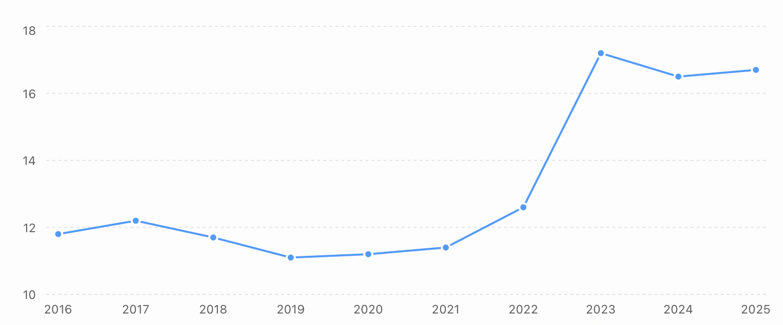
    Costa Rica has a long-standing reputation as a safe country with peaceful politics and strong, democratic institutions. However, this started to change as various drug cartels began increasingly using the country as a drugs transhipment point and rival gangs fought for control of territory and transport routes. The graph below shows that the annual homicide rate – used as a proxy for a broad range of criminal activities – reached a low of 11.1 per 100,000 inhabitants in 2019, rising sharply to 17.2 in 2023, before falling back to 16.7 in 2025. In recent years local crime groups have become more active. Organised crime has infiltrated several institutions and political parties. A sign of this was the arrest in 2025 of Celso Gamboa Sánchez, a former supreme court magistrate and security minister; he was accused of collaborating with the drug cartels.

    Costa Rica: annual homicide rate, 2016–2025

    Intentional homicides per 100,000 inhabitants. Annual OIJ figures.

    Source: Organismo de Investigación Judicial (OIJ), Poder Judicial de Costa Rica.

    The Fernández administration has tackled security issues with a number of hardline legislative initiatives. In June this year a package of six reforms was submitted to the legislature. They included more severe penalties for repeat offenders; making gang membership a criminal offence; attacking the use of clandestine airstrips to traffic drugs; introducing compulsory prison work; requiring stronger legal protection for police and victims of crime; and stepping up data protection in the criminal justice system. Further initiatives followed in July: there were bills widening extradition powers, introducing greater use of electronic monitoring, and establishing new measures against illegal mining. The government has also set up a Fuerza Élite to coordinate intelligence and police agencies. It continues to cooperate with US security agencies such as the Drug Enforcement Administration (DEA).

    New high-security prisons are being built. The government has acknowledged they are partly modelled on Cecot, El Salvador’s controversial Centro de Confinamiento del Terrorismo where thousands of prisoners are held without trial in conditions described as inhumane by human rights campaigners. The Costa Rican version of an equivalent maximum-security jail is under construction and is known as the Centro de Alta Contención de la Criminalidad Organizada, Cacco. It is intended to house around 5,000 prisoners, far fewer than the Cecot’s 40,000. President Fernández says that current overcrowded prison conditions allow imprisoned criminal leaders to “continue to run their businesses, commit frauds and order contract killings”.

    The government has also turned to technology to fight crime through a command-and-control centre known as C5. It links police and emergency calls, thousands of surveillance cameras, ANPR (number plate recognition), drones, traffic information, police databases, facial recognition, and AI. While promoted as an efficient use of data to fight criminal activity it has also been criticised by human rights group over privacy and civil rights concerns. Despite some parallels with measures used in El Salvador, President Fernández appears aware that El Salvador is an undemocratic state. Asked by Spanish newspaper El País in August whether her country is “heading towards a Bukele-style model” she was quick to state “there is no ‘Bukelisation’ here.”

    While hardline measures are welcomed by the population at large, expert opinion is more critical. According to the Ciep-UCR poll in September, 56.7% of the public rated the president’s handling of security issues positively. Security, crime, and prison policy were all mentioned as positives for the government. On the other hand, security experts had reservations – responses that might over time begin to erode the upbeat message from the opinion polls. The penal affairs commission of the Costa Rican bar association, for example, says several proposals have technical or constitutional problems. Increasing routine arrests could increase prison overcrowding. Some bills duplicate existing legislation or create conflicting definitions of criminal organisations. A recent scandal in which an intelligence report flagging alleged links between some 116 police officers and organised crime was not acted upon for four months also causes some to question the integrity and effectiveness of law enforcement agencies.

    Opposition parties such as the PLN and Partido Unidad Social Cristiana (PUSC) say they accept the need for stronger action against crime but want clearer constitutional safeguards and more focus on operational effectiveness. Claudia Dobles, an opposition deputy for Coalición Agenda Ciudadana, says the government over-emphasises increased punishment and sentences as a crime deterrent and should do more to tackle and monitor the finances of the criminal organisations. In her view “we are not going to be able to fight organised crime if we don’t tackle its assets and its source of income, and that is completely absent from [the president’s] agenda today.”

  • Chile – security tops the Kast agenda

    Abbi Dicker 22 October 2026 Hits: 25

    For over three decades Chile has been governed by a succession of mainly moderate centre-left and centre-right coalitions. Like Costa Rica in Central America, Chile in the South American context has a reputation for strong democratic institutions and low levels of political or criminal violence. Yet it is also the case that concerns over violence and crime have been increasing and that Chilean voters have become increasingly alienated from what they see as a self-serving political establishment. The election of the far-right José Antonio Kast in late 2025 is therefore seen as an important break with the past.

    It is important to remember that Kast’s election was preceded by six years of what, by Chilean historical standards at least, was a period of extraordinary political turmoil. The starting point was the Estallido Social that began in October 2019 when students demonstrating against transport fare increases triggered nationwide protests over inequality, pensions, healthcare, education, wages, and what were seen as the privileges of the embedded political elite. The protests swept the country leaving a death toll of over 30, along with thousands of injured.

    At the time, the right-wing government of President Sebastián Piñera had responded by declaring a state of emergency. It rapidly found itself, along with almost all the other major political parties, having to agree to a process of major constitutional reform. A new constitution was widely seen as a chance to revisit and rebuild basic rules of social co-existence and a shared understanding between all members of the community. There were in fact two attempts at fundamental constitutional reform, one led from the left (2022) and one by the right (2023). Both were ultimately failures, taking Chile back to square one and to reliance on the existing 1980 constitution, written during military rule but subsequently heavily amended.

    The first attempt at reforming the constitution by electing a constituent assembly was approved by 78% voters in an “entry referendum”. The elected assembly that later emerged was dominated by left-wing, environmental, and indigenous lobby groups. It produced a radical, “progressive” constitutional draft which in the end went much further than public opinion was prepared to travel. As a result, in the “exit referendum” of September 2022 a majority of 62% of the country’s voters rejected the new draft. The government reacted by repeating the entire process with shorter deadlines and different, tighter criteria for the election of constituents, and a greater role for constitutional lawyers and experts. A much more conservative draft constitution then emerged which this time also failed to convince public opinion. In the “exit referendum” of December 2023 this too was rejected, by 56% to 44% of the total vote. Many analysts have concluded that “middle Chile” turned away, losing its appetite for change. From this viewpoint constitutional reform is now likely to be off the Chilean political agenda for a decade or more.

    The complex and exhausting constitutional debate was played out in parallel with Chile’s familiar left-right political cycle. The coalition of right-wing parties, incumbent at the time of the Estallido Social experienced a sharp drop in popularity. By the same token Chile’s left-wing coalition seemed to be riding a wave of popular support. Indeed, the 2021 elections delivered victory for Gabriel Boric, a former left-wing student activist who became Chile’s youngest president. There were other important and contrasting developments. The Chile Vamos coalition of traditional right-wing parties, tainted by the memories of its mishandling of the Estallido Social, performed very poorly. Its nominated candidate, Sebastián Sichel, came fourth in the first-round ballot with 12.79% of the vote. Second, in what could be described as an early warning of an emerging change of mood in the country, Kast of the far-right Partido Republicano (PR) experienced an unprecedented surge of support to become the most-voted candidate in the first round, with nearly one third of votes cast (27.91%). Second place went to Boric with 25.82%, and third to Franco Parisi, a populist, with 12.81%.

    The scene was therefore set for Boric and Kast to fight the second-round ballot in late 2021. In this poll Boric emerged victorious with 55.87% of the vote, defeating Kast who received 44.13%. In short, the 2021 election confirmed the advance of the left while showing that an important repositioning was taking place on the right, with Kast presenting a new and more radical version of conservative “anti-establishment” thinking. In power, Boric’s popularity reached something of a high-water mark in the early stages of his presidency but deteriorated rapidly thereafter as his government struggled with internal disagreements, issues of crime and security, and disappointing economic growth rates. With the benefit of hindsight, the constitutional deadlock did not help him at all.

    It was only at the very beginning of Boric’s presidency that his approval rate exceeded those disapproving. By March 2025, the beginning of his last year in office, Boric had a 29% approval rate, which was dwarfed by a massive 64% disapproval rare, as measured by pollster Cadem.     

    Country

    Chile

    President

    José Antonio Kast

    Main 2026 electoral promises

    • Launch a plan against organised crime, drug trafficking, and violence
    • Strengthen Carabineros (military police) and introduce longer sentences
    • Build high-security prisons and restore state control of these facilities
    • Strengthen borders, make illegal immigration a criminal offence, deport undocumented immigrants
    • Reduce size of government, reduce bureaucracy, encourage investment and entrepreneurship
    • Cut government spending by US$6bn over 18 months
    • Reduce tax burden and eliminate property taxes for primary residences
    • Reform pensions, housing, and health
    • Pay Cl$2m (US$2,043) per newly born child in an attempt to increase the birth rate
    • Review and streamline government bureaucracy

    Round one election results

    Round one was held on 16 November 2025 and won by Jeannette Jara of the Unidad Por Chile centre-left coalition with 26.85% of the vote. Kast, at the head of the far-right Cambio por Chile coalition, came second with 23.93%. Third place went to Franco Parisis of Partido de la Gente (PDG) with 19.71% of the vote.

    Round two election results

    The second-round run-off was held on 14 December 2025 and was won by Kast, with 58.16% of the vote, while Jara gained 41.84%.

    Date sworn in

    11 March 2026

    First 100 days in office reached on

    19 June 2026

    Situation in Congress

    No parties or coalitions have an automatic majority in congress. There are 155 seats in the chamber of deputies and 78 are needed for a majority. Kast’s coalition has 42; the centre-left Unidad por Chile has 61, while the traditional right, gathered in Chile Grande y Unido, has 34. Some combinations of these coalitions are needed for the approval of any new legislation. Small parties such as the PDG (14 seats) may hold the balance.

    The senate has 50 seats; 26 are needed for a majority. Kast’s coalition has seven seats, the centre-left coalition has 20, and the traditional right has 18.


    Kast had a difficult start to his presidency. He came to office arguing that he needed to lead an emergency government focused on three priorities: security, immigration, and economic recovery. The new government did in fact claim progress in all three of those areas with short-term reductions in the homicide rate, new physical barriers built on the northern frontier (including a ditch), and a “mega reform” of economic policy approved in congress. Progress was also made on a new draconian security reform designed to give the government increased emergency powers.  

    Yet the administration also seemed at times disunited and disorganised. After only two months in office the new president was forced to conduct his first ministerial reshuffle, replacing his security minister who had publicly admitted that despite all the electoral promises made, the new government lacked an operational security plan. An abrupt removal of fuel subsidies along with the promised government spending cutbacks did not help the new president’s popularity. An ill-advised attempt to censure a former economy minister backfired and was rejected by congress. On the campaign trail Kast had promised to forcibly arrest and expel all undocumented foreigners in the country (estimated at around 360,000). In office, however, he said that such illegal immigrants would instead be “invited” to leave voluntarily and contribute to their travel costs.

    Opinion polls captured the critical mood. Since inauguration in March Kast’s approval rating plunged by 20 percentage points to 36% in May according to Cadem. After reaching his first 100 days in office Kast’s approval rate stood at 44% with a higher disapproval rate of 53%. Respondents were asked what his main campaign promise had been: 44% said it was tackling insecurity, while 30% said it was pushing back irregular migration. When asked if the government had a concrete security plan, 36% agreed while 64% disagreed. Support remained strong for the ‘Plan Escudo Fronterizo’ (Border Shield Plan) however, with 57% approving.

    Among political analysts there were mixed responses. Marco Moreno of Universidad Central de Chile, a private university, told Chilean current affairs radio programme ‘Palabras Sacan Palabras’ in June that the president’s initial political credit was beginning to run out. Kast, Moreno said, had promised order, decisiveness, and speed, but voters were questioning whether that was producing tangible results.

  • Chile security snapshot

    Abbi Dicker 22 October 2026 Hits: 37

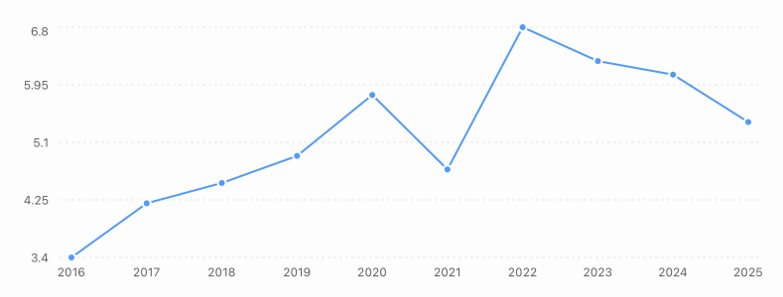
    Chile is widely recognised as one of the safest countries in Latin America, but domestic public opinion is focused on what it perceives to be sharply rising insecurity. The homicide rate in the chart below shows a multi-year upward trend, peaking at 5.8 per 100,000 inhabitants in 2020, and then dropping back sharply in 2021 (a fall widely attributed to the impact of the Covid-19 pandemic). The rate then rose again to reach a new record of 6.8 homicides per 100,000 in 2022. In the following three years (2023-2025) the murder rate fell year-by-year down to 5.4 in 2025. This presents something of a paradox. Compared to other Latin American countries with murder rates at 20-30 per 100,000 inhabitants, Chile is an outlier. The numbers also show that in a period of rapidly rising public concern over crime, including the years running up the 2025 elections, where security was arguably the single most important issue, the homicide rate was falling, not rising.

    Successive Chilean governments have had two major security concerns, one in the north and one in the south. In the north the big issue has been the large-scale arrival of undocumented immigrants, including victims of people trafficking who are manipulated by organised crime. The authorities have focused on transnational criminal organisations like the Tren de Aragua, originally from Venezuela, which is seen as infiltrating into northern Chile and developing business lines including drug and people trafficking and extortion. The second major concern is an armed insurgency in the south of the country led by radicalised members of the Mapuche indigenous community who demand the return of their ancestral lands. Successive governments have imposed states of emergency to try and control the violence; to date, attempts to start a dialogue have been unsuccessful.  

    Chile: annual homicide rate, 2016–2025

    Homicide victims per 100,000 inhabitants. The official Chilean consolidated series begins in 2018; 2016–2017 use the earlier intentional-homicide series.

    Source: Chilean Subsecretaría de Prevención del Delito / Centro para la Prevención de Homicidios.

    Experts are divided over whether Kast’s policies will improve the security situation. After the initial confusion, the government has put in place a plan which lists 65 measures aimed at recovering control of streets, neighbourhoods, borders, ports, and prisons, focusing initially on 50 high-risk areas. Seven task forces are being created to target contract killings, money laundering, cybercrime, and other illicit businesses, among others. There is to be increased reliance on the security forces under the umbrella of an agenda against organised crime and terrorism (Acot). Officials claim some signs of progress: homicides were down in the first half of 2026 (although drug and weapons offences were up).

    Among experts Catalina Droppelmann, a criminologist at the private Pontificia Universidad Católica de Chile, says Acot represents an expansion of police and military powers, not a technical advance in crime prevention policy. She argues that tougher enforcement does not address the way organised crime attracts recruits and gains control of territory. A similar point is made by Daniel Johnson, executive director of local think tank Fundación Paz Ciudadana, who says early prevention and reintegration policies are necessary for a sustainable reduction in crime. Richard Kouyoumdjian, director of public security think tank AthenaLab, says Acot is essentially a list of legislative measures, not a publicly articulated security strategy. Evan Ellis of US-based think tank Center for Strategic and International Studies (CSIS) highlights that Kast’s approach is to focus on the border dimension, linking insecurity to drugs, contraband, and irregular migration coming into the north of the country.

  • Peru: Fujimori makes an unsteady start

    Abbi Dicker 22 October 2026 Hits: 27

    There are many different ways of characterising modern Peru, but one evidence-based approach might be to classify it as an “unstable and imperfect democracy”. A dramatic illustration of that is that over the last 10 years the country has had no fewer than nine presidents. For most of the last decade there have been repeated clashes between the executive and legislative powers, with the latter often impeaching sitting presidents. None of the last nine Peruvian presidents have to date been able to complete their full five-year presidential terms in office.

    Country

    Peru

    President

    Keiko Fujimori

    Main 2026 electoral promises

    • Re-establishment of security under slogan “Perú con Orden”
    • “Frontal” campaign against organised crime, including 60-day state emergency and increased government powers
    • Greater reliance on armed forces, possibility of placing the military in charge of prisons
    • Unified anti-crime command
    • Enhanced use of intelligence and technology
    • More visible policing
    • Reform of the judiciary, possible withdrawal from Inter-American Court of Human Rights
    • Crackdown on extortion
    • Stronger border controls
    • Youth crime prevention programme

    Round one election results

    Highlighting the extreme fragmentation of Peruvian politics, no fewer than 35 presidential hopefuls stood in the first round on 12-13 April. This poll was won by Keiko Fujimoi of the right-wing populist Fuerza Popular (FP) party. Leftist Roberto Sánchez of the Juntos por el Perú coalition came second.

    Round two election results

    The second-round run-off was held on 7 June and won by Fujimori by the narrowest of margins, 50.13% against 49.87% for Sánchez.

    Date sworn in

    28 July 2026

    First 100 days in office reached on

    5 November 2026

    Situation in congress

    No party has a majority in congress. FP, Fujimori’s party, has 41 of the 130 seats in the lower house (66 are needed for a majority). The party also has 22 of the 60-seat senate (where 31 are needed for a majority)


    An example of the country’s endemic political chaos came during the 2021 elections which were narrowly won by Pedro Castillo, a previously little-known left-wing schoolteacher. He promised to reduce inequality, increase state sector involvement in mining, and to re-write the constitution. But his government was weakened by multiple internal divisions and confrontation with the conservative-dominated congress. In December 2022 Castillo announced he was closing congress and would rule by decree, a move described as an ‘autogolpe’ (self-coup). Congress responded by impeaching and imprisoning Castillo and appointing Vice President Dina Boluarte to replace him. That in turn led to widespread popular protests in impoverished rural areas of the country where support for Castillo remained strong. More than 50 people died amid the protests, including in violent clashes with the security forces.

    Boluarte survived as interim president until October 2025 when she too was impeached by congress, which accused her of “moral incapacity”, corruption, and of failing to deal effectively with a rise in extortion, killings, and organised crime. Her replacement, José Jerí (formerly president of congress) was himself removed from office in February 2026 amid allegations of illicit enrichment and improper links with a Chinese businessman. It was then left to veteran left-wing legislator José María Balcázar to serve as interim president during the 2026 elections.  

    The key issues in the 2026 elections were widely seen as being a conflict over institutional stability, security, and corruption. In some senses it was a replay of the long-running left-right split in the country, with the victorious Keiko Fujimori representing the populist right and the narrowly defeated Roberto Sánchez appealing to those on the left, particularly in southern rural areas, who supported Castillo. Crime and security led the agenda, with candidates highlighting extortion, murder, contract killings, illegal mining, drug trafficking, and attacks on transport workers and small businesses. According to an Ipsos survey in May 2026, 63% of respondents identified delinquency as one of the country’s top three problems, followed by corruption and the economy. On corruption, pollster Arellano Consultoría found in March that 70% of respondents say that having no record of corruption is the most important characteristic in a presidential candidate.

    During the election campaign Fujimori promised a 60-day emergency anti-crime programme, the use of AI and crime mapping, stronger police and intelligence, new prisons including one modelled on El Salvador’s Cecot, prison labour, and the deportation of illegal immigrants. Roberto Sánchez also promised a tough line on crime but combined it with reforms such as a new unit on financial and cybercrime.   

  • Peru security snapshot

    Abbi Dicker 22 October 2026 Hits: 36

    Political violence has been relatively low in Peru since the end of the long conflict with the Maoist Sendero Luminoso (SL) guerrilla movement in the 1990s. Illicit coca cultivation and trafficking remains a major security threat, however. Profits from drug trafficking, illegal mining, and logging have funded a small resurgence of SL and other groups in isolated areas of the country, including the VRAEM - the valley of the Apurímac, Ene, and Mantaro rivers. Domestic criminal groups work in collusion with Mexican and Colombian cartels.

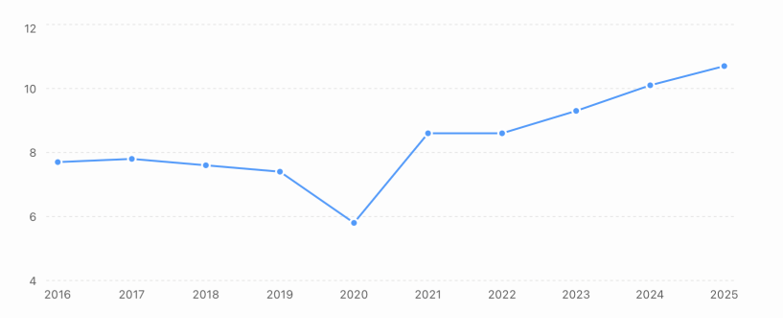
    Peru’s homicide data poses some questions. On paper, along with Chile, the country has one of the lowest murder rates in Latin America. Up to 2019, this rate was relatively stable at 7.4-7.8 per 100,000 inhabitants. In 2020 it dipped to 5.8, reflecting the extraordinary impact of the Covid-19 pandemic. Thereafter it rose steadily to reach an estimated 10.7 in 2025. A simple reading of the numbers might suggest Peru is more peaceful than many of its immediate neighbours. However, that could reflect under-reporting or other methodological problems. It is also true that from a low base there has been a strong underlying upward trend. It is natural to expect Peruvian voters to pay more attention to changes in year-on-year crime figures than to comparisons that may be made with other neighbouring countries. And the official data indicates that the homicide rate increased by 44% in 2016-2025, going some way to explaining the intensity of feeling about the subject in the 2026 elections.

    Peru: annual homicide rate, 2016–2025

    Intentional criminal homicides per 100,000 inhabitants. The 2025 figure is an estimate/provisional rate.

    Source: Peru INEI/CEIC.

    The Fujimori government’s record in its first months in office is mixed. The new president has acted on some of her promises. She has requested 120 days of delegated legislative powers from congress; proposed categorising criminal cartels as terrorist organisations; taken the first steps towards greater involvement of the military in internal security and prisons; declared the capital Lima and the neighbouring port city of Callao to be under state of emergency; and joined the US-led Shield of the Americas security alliance. A plus for Fujimori is that the economy has been doing relatively well. But on security issues the electorate appears disappointed by the gap between Fujimori’s announcements and actual levels of criminality and violence.

    According to a late September poll by Datum, 42% approved of the president’s general performance, down by a remarkable 18 percentage points during her first month in office. Her disapproval rate rose to 44%. Other pollsters announced similar results. In early September IEP reported that Fujimori’s approval rate had dropped to 37% against a 49% disapproval rate. According to that poll, most respondents - 52% - felt that on security issues her government was just offering “more of the same”. That sense of frustration may have been helped by news that there were 267 homicides between Fujimori taking office on 28 July and mid-September.

    Frank Casas, a security analyst, says the Peruvian homicide rate is heading to above 11 per 100,000, and argues that it is unrealistic to have expected any rapid improvement with the change in government. Criminologist Nicolás Zevallos has given qualified support to the government’s plans for increased use of the military but suggested it should be done in carefully selected geographic areas affected by drug trafficking and illegal mining. He also calls for the government to break up criminal infrastructure and networks.

    Various analysts say that the absence of prevention measures is a major weakness of a policy focused primarily on harsher punishment. During the election campaign Fujimori had announced proposals for investment in youth crime prevention, but nothing has been heard since. Former deputy public security minister Julio Corcuera has proposed targeting extortion, because it is closely linked to homicides, especially in Lima. Former police chief Eduardo Pérez Rocha has warned of insufficient budgets and staff: by his estimate there is a nationwide shortfall of 70,000 police.     

  • Colombia faces the biggest challenge

    Abbi Dicker 22 October 2026 Hits: 35

    Colombia stands out from its immediate neighbours for various reasons. One of the most important is the exceptionally high levels of violence the country has experienced for a long period. In fact, for more than half a century left-wing guerrillas, right-wing paramilitaries, and criminal cartels have been fighting for control of territory and drug trafficking routes. According to official data, a total of just over 450,000 people, mostly civilians, died because of the conflict in the 1985-2018 period. A military deadlock in the 1990s led to the conservative presidency of Álvaro Uribe (2002-2010), during which the army went on the offensive and kidnappings and homicides were sharply reduced. Uribe’s hardline security policies weakened the rebels and enabled his successor, Juan Manuel Santos (2010-2018), to launch peace talks with the largest guerrilla group, the Fuerzas Armadas Revolucionarias de Colombia (Farc). A peace deal, enabling guerrillas to lay down their arms and participate in peaceful politics, was reached in 2016, although Farc dissidents and other groups continued fighting.

    Country

    Colombia

    President

    Abelardo de la Espriella

    Main 2026 electoral promises

    • Iron fist security policy, terminate “total peace”, strengthen army and police, build 10 “mega-prisons”
    • Restore security cooperation with the US
    • Long-term 40% reduction in government spending
    • Reduce corporate taxes
    • Double oil and gas production, support fracking
    • Encourage mining
    • Reduce irregular migration, strengthen border controls
    • Relax gun controls
    • Support the family, traditional social values, Christianity

    Round one election results

    Elections held 31 May 2026. Far-right candidate Abelardo de la Espriella came first with 43.3%, while left-wing candidate Iván Cepeda came second with 40.5%, followed by Paloma Valencia (mainstream right) in third place with 6.9%, and Sergio Fajardo (former mayor of Medellín) coming fourth with 4.2%  

    Round two election results

    Second round held on 21 June 2026. Won by Abelardo de la Espriella with 49.66% of the votes, ahead of Cepeda on 48.70%

    Date sworn in

    7 August 2026

    First 100 days in office reached on

    15 November 2026

    Situation in congress

    The new congress has 103 senators and 183 members of the chamber of deputies. On paper, there is a government majority. By September 2026 parties representing 63 senators and 110 deputies had formally declared themselves to be part of a governing alliance supporting President De la Espriella. But there is no single governing party and congressional alliances tend to be weak and volatile. As a result, the new president will have to negotiate with a range of congressional groups to win their support for security, tax, social spending, and institutional reforms


    In 2022 and for the first time in a generation, a left winger, Gustavo Petro, was elected president offering social reforms and a “total peace” plan under which his government promised to open parallel and simultaneous negotiations with all illegal armed groups. The take-up of this offer was patchy, however and major groups such as the Ejército de Liberación Nacional (ELN) guerrilla group and the Clan del Golfo drug trafficking organisation did not commit to the process. An important distinguishing feature of the following election in 2026 is that it pitted Petro’s ally, the left-wing former senator Iván Cepeda against a true far-right “outsider”, Abelardo de la Espriella, a wealthy lawyer who had entered politics around a year earlier.

    In the 2026 campaign security, crime, and the role of armed groups dominated the agenda. According to pollster Invamer, 37% of voters said security was the country’s top problem in April, followed by meeting basic needs (17%) and unemployment (16%). De la Espriella said he would drop “total peace” and instead apply an “iron fist” against crime. Paloma Valencia, another first-round conservative candidate, also promised to boost military and security service budgets. On the left, Cepeda said he would extend the peace talks with armed groups. Many observers were critical of “total peace” noting that the armed groups had used it to regroup, re-arm, and recruit new members.

    On economic issues right-wing candidates proposed lower taxes, less regulation, reductions in the size of government, renewed oil and gas exploration, and policies to attract foreign investment. This contrasted with Cepeda’s promises of increased social spending and more progressive taxation. Also under discussion were reforms of the health system, pensions, labour rights, and the energy transition. Campaigners expressed concern over election-related violence. In 2025 a potential contender in the presidential race, Miguel Uribe Turbay, was assassinated at a political rally in Bogotá.  

  • Colombia security snapshot

    Abbi Dicker 22 October 2026 Hits: 26

    Colombia has been the world’s top cocaine exporter for decades. The government-Farc peace agreement opened rebel-controlled territories and drug trafficking routes which were quickly seized by a wide range of groups including Farc dissidents, the ELN, and the Clan del Golfo. While some are ideologically motivated, the insurgents are also deeply involved in profitable drug production and distribution, illegal mining, migrant smuggling, arms trafficking, money laundering, contraband, and extortion. Criminal groups are rapidly adopting new technology, such as the use of drones. The prison system is plagued by corruption and overcrowding. The Colombian armed forces, with around half a million members, are one of the largest and most experienced in Latin America.  However, given the nature of the terrain and the financial resources they can call upon, most military experts believe that the army can push back and weaken the rebels, but that it is unable to completely eradicate them. As things stand there is a war of attrition, with low probability of the government winning a conventional military victory.      

    Abelardo de la Espriella opted to start his presidency publicising and promoting an “iron fist”. He ordered bombing raids against rebel guerilla camps, and had himself filmed walking past body bags said to contain the corpses of rebels killed in action. The new president began publishing daily death counts.

    Colombia’s system of constitutional checks and balances also came into early operation. The courts highlighted as unacceptable the death of children in the bombing raids; a judge ordered that a ban on aerial fumigation of drug crops, which the president had attempted to lift, should remain in place to avoid environmental harm. In September, Colombia’s ombudsman stated that the president should not pose with corpses and should not “compete with the armed groups over who instils the most fear, who humiliates the enemy most, or who turns death into a display of power”. Further tension between De la Espriella and the judiciary is likely.

    The new president moved quickly to end his predecessor’s “total peace” programme switching instead to a declaration of “all-out war” on armed groups and organised crime. He also sought closer links with the US. US Secretary of State Marco Rubio visited Colombia in September, promising closer intelligence, equipment, and training cooperation, including assistance with drones and radar.  Colombia is joining the US-led Shield of the Americas security coalition.

    Initial opinion polls show De la Espriella’s hard line is, so far at least, well received. An AtlasIntel/Bloomberg poll at the end of August found 51.8% approved of his performance, while 43.2% disapproved. Furthermore, 54% had a positive image of the new president and 52.8% said the government’s performance was “good” or “excellent”. Political analysts said this reflected an initial “political honeymoon” for the president. Yet there were at least two reasons for caution. One was that De la Espriella is less popular than his left-wing predecessor, Gustavo Petro, was at the starting point of his presidency back in 2022. The other is that De la Espriella scores poorly among young voters. AtlasIntel found that among 18-24-year-olds, only 29.7% approved of the new president; among those aged 45-59 the approval rate was a much higher 61.4%.

    Security analysts acknowledged early gains. Esteban Gálvez told radio station Caracol Radio in September that the new government had “neutralised” eight criminal kingpins (out of a 90-day target of 10), made 15,400 arrests, and seized 71 tonnes of drugs. Coca eradication was running at double what was being achieved during the Petro presidency. But security analyst Hugo Acero told the same radio station that a promise to deploy more police at municipal level would come up against capacity and budget constraints. Acero also made the point that military operations on their own are insufficient to reclaim territory; local government and other institutions must do their part to fill the vacuum. Peace lobby group Indepaz points out that the terms of the 2016 Farc peace treaty continue to be violated. It says that between the new president taking office and early October, multiple community leaders, 2016 peace agreement signatories, and residents have been killed. Former president Juan Manuel Santos (2010-2018) has called for full implementation of the 2016 agreement, since it addresses rural poverty, drug trafficking, and violence, all of which remain highly relevant today.

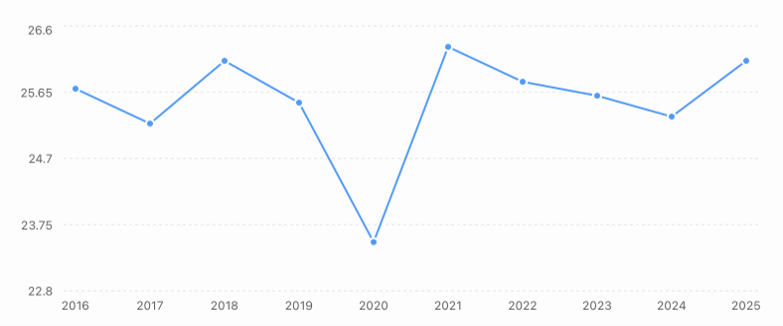
    Colombia: annual homicide rate, 2016–2025

    Intentional homicides per 100,000 inhabitants, using the Police National/DANE series.

    Source: Police National/DANE; rates compiled in Universidad Externado de Colombia's 2016–2025 comparison.

  • Shield of the Americas: a new opportunity?

    Abbi Dicker 22 October 2026 Hits: 34

    The fact that most Latin American governments have now swung to the right of the political spectrum, including the four we have highlighted here, could open doors to a more coordinated and cooperative response to the activities of criminal cartels, which have themselves been operating in cross-border fashion for decades. A potential vehicle for doing so is the Shield of the Americas, a crime and security coalition set up by the US in March of this year, and more formally known as the Americas Counter Cartel Coalition (A3C).

    As of August 2026, A3C has 19 members, including Colombia, Argentina, Ecuador, El Salvador, Costa Rica, Chile, and Peru. However, the two largest and most populous countries in the region, Brazil and Mexico, have not joined. At the time of writing both were ruled by centre-left governments but following Brazilian elections in October, that may well change. Nevertheless, under their current political alignments, Brazil and Mexico are both highly sensitive to any US intervention in their internal crime and security issues. The absence of the two countries is seen as limiting A3C’s effectiveness, particularly given the importance of the cross-border flow of illicit drugs from Mexico to the US.

    When initially set up, A3C was seen as a US-led military cooperation framework focused on sharing intelligence, strengthening border and marine security, disrupting drug trafficking and organised crime, coordinating the battle against the cartels, carrying out joint military and security exercises, and possibly using US military capabilities against cartel networks. US officials talk of A3C as providing “hard security” such as the US military attacks on presumed drug trafficking boats in the Caribbean and Pacific which since last year have killed over 200 alleged “narco-terrorists”. The operation, named as “Southern Spear” has been condemned by the United Nations (UN) as a form of extrajudicial execution.

    A3C continues to develop, and its leaders say they will finalise an operational plan by November. There are various possibilities, but analysts cite two in particular. One would be to step up cooperation with the “northern triangle” drug transit countries in Central America, formed by El Salvador, Honduras, and Guatemala. The other would be to develop and strengthen Colombia’s regional role. There is a long history of US-Colombia counter insurgency cooperation going back to the Plan Colombia unveiled in 1999. US Secretary of State Marco Rubio is on record promising a new joint security plan with Colombia, which would involve funding support of around US$1bn. In Washington Colombia is seen as an important partner, not least because its new president shares US President Donald Trump’s draconian approach to crime. De la Espriella may go as far as authorising US military strikes on guerilla camps.

  • Conclusion: some progress possible but major challenges ahead

    Abbi Dicker 22 October 2026 Hits: 26

    Most security experts make the point that crime is a multi-faceted phenomenon, caused by a combination of factors, more than any one single one, and depending on conditions that vary from country to country. Some add that anti-crime policies should be based on hard evidence rather than intuition or broad feelings among the voting public. Since the four countries we have focused on are all favouring iron fist policies it is useful to look at some of the pitfalls that have affected that approach elsewhere in Latin America.

    One troubling case study would be Mexico in 2006, at the beginning of the Felipe Calderón presidency (2006-2012). Faced by rising crime rates Calderón militarised the conflict, sending in thousands of soldiers and marines who took over key policing functions. The new approach had some short-term successes, with 25 out of the country’s 37 most-wanted cartel chiefs captured or killed. But violence increased sharply, as did human rights violations.

    During the six Calderón years there was a record of over 120,000 homicides, with the rate more than doubling from 9.7 to around 22 per 100,000 inhabitants. Rather than reducing violence the cartel decapitation strategy led to bloody battles to control the succession and associated drug routes, and to the fragmentation of rival criminal groups. Calderón and his successors found that having sent the army in, it rapidly became politically much more difficult to recall it back to barracks. Today, 20 years later, the Mexican armed forces are still bogged down in the fight against the drug cartels. Despite some recent improvements the record of the ‘war against drugs’ remains terrible: from 2006 to date an estimated over 460,000 Mexicans have died in a still-ongoing internal conflict.

    President Daniel Noboa of Ecuador has also had mixed results from ‘mano dura’ anti-crime policies. His government has deployed the military, seized over 300 tonnes of drugs, and extradited over a dozen crime bosses to the US. The number of extortion complaints is falling. But in contrast the murder rate has surged. In 2025 there were 9,216 homicides in the country, equivalent to an all-time record of 50.9 per 100,000 inhabitants. Analysts say that cartel fragmentation and battles for territory, like in Mexico, is one of the driving factors. The US-based non-profit Armed Conflict Location & Event Data (Acled) says that the number of identifiable gangs in the country increased by 54% in 2023-2024.

    The experience in El Salvador under President Nayib Bukele, on the other hand, is often cited as a powerful success story for ‘mano dura’ policies. The experiment began in March 2022 when, after a weekend of exceptionally high gang violence, the president declared a state of emergency (suspending civil rights) and began to implement a four-part programme consisting of 1) mass arrests of suspected gang members; 2) military and police saturation of previously gang-controlled neighbourhoods (known as the territorial control plan); 3) very long periods of detention without trial; and 4) mass incarceration in purpose built mega-prisons such as the Centro de Confinamiento del Terrorismo (Cecot). The results were dramatic. There was a steep fall in the homicide rate, from 53.1 per 100,000 inhabitants in 2018 to near-zero, 1.9 per 100,000 in 2024. Presidential candidates around the region have praised ‘Bukelismo’ and proposed building local versions of Cecot. Bukele has regularly featured in regional surveys as one of Latin America’s most popular politicians.

    And yet there are also important reasons why Bukelismo is unlikely to become a massively successful export. The evidence suggests that El Salvador’s statistics are under-reporting the local homicide rate (deaths in clashes with police or bodies found in mass graves, for example, are not counted in official data). Also, El Salvador has only two major gangs, not hundreds as in Colombia or Mexico. It is also the case that the country is paying a dramatically high social cost for safe streets. Around 90,000 people have been arrested since March 2022, mostly without trial; human rights groups say they have evidence of arbitrary detentions, disappearances, torture, and ill treatment. More than 5,000 prisoners are believed to have been wrongly arrested. El Salvador now has one of the highest incarceration rates in the world, with those in jail estimated at 118,000 or around 1.9% of the entire population, according to US-based NGO Human Rights Watch (HRW). The state of emergency appears to have become a permanent component of government policy. To put it bluntly, Bukelismo succeeds at least in part because it is applied by a police state. That is not to say that democracies cannot learn from El Salvador’s experience, but the struggle to fight crime while protecting civil liberties will remain complex.

    Turning back to the new governments we have been discussing in this report, it is evident that Colombia is one of the most consequential. The country has one of the biggest criminal violence problems in the region (its current homicide rate is among the highest). It is strategically located, linking illicit drug flows from the Andean region through Central America and Mexico into the US. Since August Colombia has been ruled by a true “outsider” president who is ideologically aligned with his US counterpart Donald Trump. This comes at a time when Trump has revived the interventionist Monroe Doctrine.

    The outlook for Colombia is mixed. After only weeks in office there has been a significant increase in violence, which was to be expected because of the new president’s tough rhetoric and his instructions to the military to engage the cartels. This increased violence could be a necessary and temporary stage in reasserting territorial control, which over time could stabilise the security situation and reduce the death rate. The danger however is that such an outcome might not happen, with Colombia, under an inexperienced president, instead following the unhappy Mexican example of 2006 and beyond: militarisation and escalation.

    The four cases we have looked at – Colombia, Costa Rica, Chile, and Peru – are also examples of how priorities shift during the electoral cycle. In the early stages of elections, candidates highlight the problem of crime and security in a simplistic fashion to a receptive electorate. In significant part this is performative, with the issue often presented in emotive terms. Between winning the elections and taking office these policies and promises then begin to be stripped down and made more realistic. During a president’s first 100 days in office that process continues; it is often only after this point that it becomes clear whether congress will support new legislation.

    We have already seen some examples. In Chile, President Kast began by promising the immediate forced deportation of over 300,000 undocumented migrants. But in the face of such a complex and costly task the president has backtracked, saying he had only been speaking hypothetically and that migrants would instead be asked to leave Chile “voluntarily”.  In Peru, new President Fujimori has promised further militarisation, including putting the army in control of prisons, but the funding is yet to be put in place. There is also a danger that the security agenda in Peru will be sidetracked by the new president’s low popularity ratings and a sense that on security issues, she is only offering “more of the same”.  In Costa Rica, President Fernández faces a sidetrack issue – her pursuit of a hardline security policy may draw her into a politically damaging conflict with the judiciary.

    Overall, in these four countries, presidential promises of early wins in the battle against crime will be hard to deliver. For a limited initial period, voters will give them the benefit of the doubt. A performative ‘mano dura’ approach will work with some segments of opinion, but in the absence of real improvements backed by evidence, the new governments will lose a degree of credibility and popularity because of their handling of crime and security.