All Categories

Subcategories

  • HONDURAS: Gov’t under pressure over women’s rights

    Patrick de Courcy 25 November 2022 Hits: 2232

    The inauguration in late January of Xiomara Castro as Honduras’s first female president stoked considerable hopes that her left-wing Libertad y Refundación (Libre) government would deliver on women rights. However, a recent hearing by a United Nations (UN) committee of experts highlights that there is considerable work to be done.

    On 19 October the UN Committee on the Elimination of Discrimination against Women (Cedaw) concluded its consideration of the ninth periodic report of Honduras, flagging up grave concern regarding violence against women. A Cedaw press release reporting on the hearing cites statistics highlighted by a Cedaw expert that every 23 hours there was one female death in Honduras, which in 2019 had the highest femicide rate in Latin America, while 60% of these women died at the hands of partners. A Cedaw expert also flags up as “alarming” the high numbers of more than 46,000 cases of domestic violence reported in 2021. Among other things, the panel highlighted reforms prohibiting abortion (currently outlawed in all circumstances) and which supported the prohibition of the emergency contraceptive pill although there are some efforts underway to address this latter point (see box). In March 2021, under the previous conservative Partido Nacional (PN) government led by Juan Orlando Hernández (2014-2022), congress approved legislation making it more difficult to legalise abortion which stoked considerable outcry [SSR-21-03].

    Headed up by Doris Yolany García Paredes, the head of Honduras’s national women’s institute (INAM), the Honduran government delegation which participated in the hearing acknowledged the need for a plan to combat femicide and the violent deaths of women. García also was cited by the panel as saying “the code of impunity would be amended”, and there was a “firm will to change impunity, which represented repression on the rights of women in Honduras”.

    While the situation facing women in Honduras remains dire, the government delegation highlighted some progress made. It said that after 70 days, INAM was granted ministerial status, which it described as an “historic decision”. It noted that the office became the governing body of women’s rights and public policies, and its budget was increased from L43m (US$1.74m) to L53m by 2022. The government delegation also underlined the installation of a high-level commission tasked with agreeing on a consensual version of the first comprehensive law against violence against women. It notes that the government was in the process of finalising the national action plan against violence against women from 2023-2033, and was in the process of establishing a plan for gender equality and justice during the same period. Among other achievements the government flagged up the fact that the first specialised national survey on violence against women and girls over 15 years of age was in the process of being prepared, coordinated with the national statistics institute, with support from the UN Development Programme.

    Other achievements

    In its report to Cedaw, the Honduran delegation cites as other achievements, the fact that the criminal code was being revised to “achieve significant changes in access to justice, especially for women” while under the gender policy of the national police, 70% of new leadership positions at the inter-departmental level were represented by female police officers. It cited as other signs of progress the creation of a draft law for the immediate search for disappeared women while for the first time, a budget for the national protection mechanism for human rights defenders (HRDs) had been allocated, and was currently dealing with 53 cases.

    Moving to legalise morning after pill for rape victims

    At the end of October Honduras’s health minister José Manuel Matheu said the ministry was looking to authorise the morning-after pill for rape victims although the complete ban on abortion would remain in place. During an event with women’s organisations on 31 October he was cited by reporters as saying “we are going to make the pill available for rape victims because it is not a contraceptive method”. The morning-after pill was outlawed in 2009. Matheu’s announcement has failed to impress women’s rights groups who continue to call for abortion to be legalised. According to a September 2022 document submitted by US-based NGO Human Rights Watch (HRW) to Cedaw, UN human rights experts estimate that the number of unsafe abortions in Honduras could be between 51,000 and 82,000 per year. According to HRW in 2021, the health ministry reported 10,233 hospital discharges for abortion, which may also include miscarriages classified as abortions.
  • ECONOMIC HIGHLIGHTS

    Abbi Dicker 16 July 2026 Hits: 530

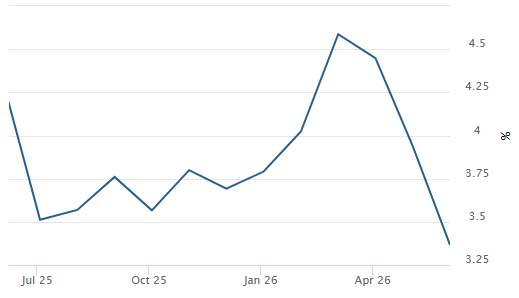
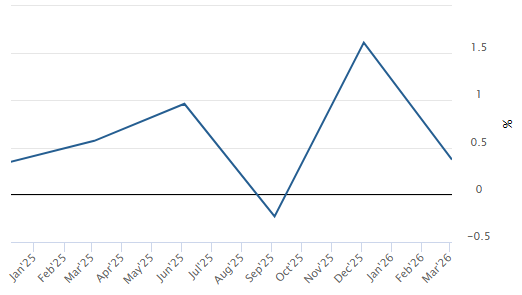
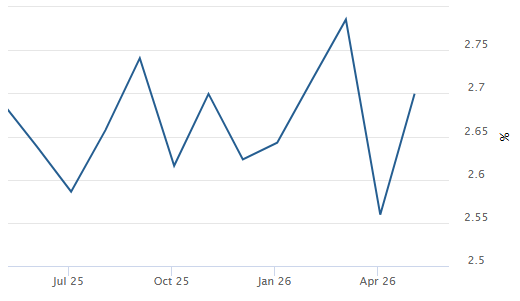
    MEXICO | Inflation slows further in June. On 9 July Mexico’s national statistics institute (Inegi) released new figures for its consumer price index, showing a monthly deflation rate of 0.27% in June, while annual inflation stood at 3.37%, remaining within the central bank (Banxico)’s target of 3% ± 1.0 percentage point. This compares to monthly deflation of 0.21% in May, when the annual inflation rate stood at 3.94%. The annual rate is the lowest since December 2020. Core inflation, which excludes volatile items such as food and energy, stood at 0.24% in monthly terms and 4.03% in annual terms.

    MEXICO | Vehicle exports, production down. On 7 July Mexico’s national statistics institute (Inegi) reported that exports and production of light vehicles dropped year-on-year in June, while sales increased. Exports were down by 9.2% year-on-year, with 301,009 units exported, while production dropped 1.9%, with 354,221 units produced. Sales were up 7.7%, with 126,902 vehicles sold in June. Sales and exports were also up in the first six months of the year as compared to the same period of 2025. Sales were up 5.3% with 754,518 units sold and exports up 1.4% to reach 1.7m. However, production was down 0.4% between January and June 2026 with 2.0m units produced.

    MEXICO | GFCF rises. On 6 July Mexico’s national statistics institute (Inegi) announced that gross fixed capital formation (GFCF) in April 2026 was up by 4.0% in monthly terms and by 5.1% in annual terms, according to seasonally adjusted figures. This follows a monthly increase of 0.6% in March while monthly decreases were recorded in February (-0.4%) and January (-1.0%). The annual increase in April was the first since August 2024. It was the result of an 8.8% rise in investment in construction while investment in machinery and equipment was up 0.9%. The monthly result was driven by a 6.5% increase in construction and a 2.0% rise in investment in machinery and equipment.

    Mexico: GDP growth
    Percentage variation (year-on-year)

    Mexico: unemployment rate
    Economically active population

    Mexico: inflation rate
    Percentage variation (year-on-year)

    Source (all graphs): National Statistics Institute (Inegi)

  • ECONOMIC OVERVIEW: ARGENTINA

    LatinNews 21 July 2011 Hits: 541

    The volcanic ash cloud generated by the Puyehue volcano in Chilean Patagonia, considered the biggest eruption in the area for the last 10,000 years, had cost the Argentine economy US$200m up to late June. Only a third of tourists with reservations in the ski centres are expected to turn up and flights to Bariloche, the area’s main resort, remain suspended as we go to press. The ongoing conflict with Santa Cruz teachers over salary increases had tripled the cost to the local economy (US$600m) since the protestors’ blockaded access to local oil fields, bringing the province’s main source of income to a complete halt.

  • Rousseff refuses to bend

    LatinNews 14 July 2011 Hits: 580

    The presidential palace confirmed the interim transport minister, Paulo Sérgio Passos, as permanent, in open defiance of the allied Partido da República (PR) on 11 July. Passos replaces Alfredo Nascimento (of the PR), who resigned last week over allegations that he oversaw a major corruption ring at the ministry involving kickbacks from private contractors for public works contracts. Rousseff had recently complained that the ministry, which has been controlled by the PR since 2003, was going through budget funds at an alarming rate.

    Passos is a serving career technocrat at the transport ministry. He gained the confidence of Rousseff when the two collaborated on infrastructure schemes under the federal government’s flagship Growth Acceleration Program (PAC), which was overseen by Rousseff in her former capacity as minister of the presidency. Passos joined the PR last year, but is not a party stalwart. Like other new cabinet appointees, his loyalty will be to Rousseff, not his party’s leadership.

    The PR is small but influential, with 40 (of 513) deputies and six (of 81) senators. The party president, Deputy Valdemar da Costa Neto, himself implicated (by the weekly Veja) in the corruption ring – had hinted that a group of 20 PR deputies might withdraw from the coalition in protest. The leading PR senator Blairo Maggi, who turned down Rousseff’s token invitation to head up the ministry, then appeared to encourage his associate Luiz Antonio Pagot, the also-implicated head of the national infrastructure and transport department, to point the finger in parliamentary testimony at key ministries run by Rousseff’s closest associates from the ruling Partido dos Trabalhadores (PT), including Paulo Bernardo, former planning minister under Lula and now Rousseff’s communications minister. Bernardo is also married to Gleisi Hoffman, who recently replaced Rousseff’s number two Antonio Palocci, who quit his post also shrouded in scandal.

    In the event, Pagot did nothing of the sort and even begged to keep his job. It seems that Rousseff, Hoffman and the new minister for institutional relations, Ideli Salvatti, make a formidable trio. Salvatti spelled out to the PR the realities of leaving the coalition (including giving up control over infrastructure projects in some 10 states) and the rebellious PR deputies (and a cowed Da Costa Neto) were back in line by the middle of the week. Pagot, meanwhile, is on his way out.

    BOX  - Heading for the fire?

    The economy is still roaring, there is near full employment in the country and most Brazilians, oblivious to the political mood in the capital, are on a massive consumption spree. Brazil is now importing some 4,500 BMW cars a month, surely making it one of the fastest growth markets in the world for the German luxury carmaker. A string of surveys by so-called ‘international consultancies’ have recently ranked Rio de Janeiro and São Paulo among the most expensive cities in the world. And not a day goes by without another addition to the UK’s Financial Times increasingly obsessive debate as to whether the local economy is overheating or not. Rousseff’s public approval rating, higher than Lula’s at a similar point in his first term, is extremely vulnerable to an expected economic slowdown towards year-end (and ahead of scheduled local elections in 2012).

    • New policy levers

    Efforts to steer the economy to a soft landing are proving tricky, amid the sticky combination of a red hot currency and wage-driven inflation. With the Real stuck at an uncomfortably high R$1.57/US$, and June’s annual inflation still above the target ceiling of 6.5%, the central bank again raised selected reserve requirements (on banks’ short dollar positions). The bank is intervening heavily, buying up dollars in an effort to weaken the Real, and the finance ministry has hinted at an extension of the tax on financial transactions to foreigners’ purchases of local currency futures contracts. However, much of the problem is external, in the form of the weak dollar and low international interest rates.

    • Brazil-US love in

    Foreign Minister Antonio Patriota welcomed a new policy report by the Council of Foreign Relations which recommends that the US should lend its “full support” to Brazil’s bid for a seat on a reformed UN Security Council. The report argues a formal endorsement “would greatly contribute to overcoming the permanent suspicion in the Brazilian government that the US promises of a more mature relationship between equals is for a large part rhetorical”. In Brazil this year, President Barack Obama was positive but non-committal on the issue, in contrast to his October 2010 declaration of support for India’s UNSC bid.

  • TRACKING TRENDS

    LatinNews 08 August 2013 Hits: 1332

    ECUADOR | Export sector concerns. On 6 August the Federación Ecuatoriana de Exportadores (Fedexpor), a private export sector lobby, called on the government led by President Rafael Correa to offer “effective and immediate” compensations to the sector to counteract its decision to renounce the import duty reductions on Ecuadorean products offered by the US government via the Andean Trade Promotion and Drug Eradication Act (Atpdea). Back in June the Correa government renounced Atpdea accusing the US government of using the agreement, originally set up to encourage Andean countries to carry out drug eradication and anti-drug trafficking efforts, to exert political “pressure” on Ecuador to do its bidding.

        In particular, at the time, President Correa was intent on showing that he would not in any way be influenced by the US over whether to grant political asylum to US National Security Agency whistleblower, Edward J. Snowden, who lifted the lid on the US’s global electronic spying programme. Although this sparked questions about whether Ecuador could unilaterally decide to renounce trade benefits it was offered as part of a bilateral deal, or whether it was nothing more than posturing by the Correa government given that ultimately the decision to apply full duties on imports into the US lies with the US authorities, the prospect of Ecuador losing its preferential deal with its main trade partner became a reality on 31 July after the US Congress failed to vote on Atpdea’s renewal allowing it to lapse.

        Since then the Correa government has said that it would offer compensation to local exporters for the loss of earnings resulting from Atpdea’s termination and even presented a bill in the national assembly to this effect. However, it appears that the private sector remains sceptical about this. In a statement Fedexpor president, Felipe Rivadeneira, expressed concerns that the government’s proposed measures to compensate exporters could end up falling short. In particular, Rivadeneira pointed out that the proposed bill stipulates that the level of compensation and the products that are to be covered are to be determined by the government and in accordance with its budget. According to Rivadeneira, this means that “a semi-automatic mechanism [Atpdea] will be replaced by measures based on a wide margin of discretion and subject to prior approval by the authorities”.

        In presenting the bill Correa estimated that the overall loss of earnings would amount to US$24m. However, according to Rivadeneira the figure is closer to US$35m. In addition Rivadeneira also said the government’s proposed compensations only represent “a temporary solution” and that long-term policy solutions to improve Ecuador’s competitivity, “including a new trade deal with the US”, are necessary. Rivadeneira’s concerns were supported by the latest Fedexpor data, released on 7 August, which showed that Ecuador’s exports in the first five months of the year were US$10.17bn, 4.6% less than in the same period last year. With imports totalling US$10.69bn, Fedexpor figures show that Ecuador’s overall trade balance was of a US$510m deficit.        

    VENEZUELA-COLOMBIA | Looking for ways to facilitate trade. On 6 August Venezuela’s finance minister, Nelson Merentes, held a meeting with his Colombian counterpart, Mauricio Cárdenas, in Caracas to discuss ways to facilitate bilateral trade. Trade between the two countries has suffered ever since bilateral relations broke down in 2010 amidst the mounting animosity between the Venezuelan government led by former president, Hugo Chávez (1999-2013), and his Colombian counterpart, Alvaro Uribe (2002-2010). Back in 2010 bilateral trade stood at US$48bn, and although Colombia’s President Juan Manuel Santos has worked hard to restore diplomatic relations, the precarious economic situation in Venezuela has prevented trade from returning to previous levels, with bilateral trade amounting to just US$3bn last year.

        One of the main hindrances to revitalising two-way trade is the scarcity of foreign currency (particularly US dollars) in Venezuela, which has resulted in many Venezuelan importers being unable to pay their Colombian business partners. In this context, after the meeting, Cárdenas said that he and Merentes had discussed the possibility of carrying out trade without having to “exclusively” resort to US dollars and instead use “our own currencies”. Cárdenas explained that the Santos government was interested in facilitating payments from Venezuela “because there are many Colombian products that could now be filling Venezuelan shops and supermarkets”, in allusion to the notorious scarcity of basic products in Venezuela. However, asked by reporters if this meant that Colombia would consider using the Sistema Unitario de Compensación Regional (Sucre) virtual currency exchange system set up by Chávez as a way to promote increased trade between members of his Alianza Bolivariana para los pueblos de nuestra América (Alba) regional integration project, pointedly Cárdenas said that “we have not specifically discussed the use of Sucre as an alternative means of payment, no”.    

    • ExpoPerú Centroamérica

    On 1 August Peru’s foreign trade & tourism ministry (Mincetur) announced that its newly appointed head, Magali Silva Velarde will visit Panama and Costa Rica between 12 and 16 August to attend the ExpoPerú Centroamérica business event. A Mincetur statement said that the ministry had decided to participate in the event organised by Peru’s export promotion agency, PromPerú, in a bid to boost foreign trade. PromPerú’s decision to hold the event in Panama and Costa Rica answers to the fact that since the Peru-Panama Free Trade Agreement (FTA) came into effect in May last year, exports to Panama have increased by 57.9% in the first five months of this year; and PromPerú expects that the Peru-Costa Rica FTA, which came into effect in June, will produce similarly positive results.

  • RASTREANDO TENDENCIAS

    LatinNews 24 January 2014 Hits: 994

    COLOMBIA | Emisión de bonos rompe récord. El 21 de enero el gobierno colombiano anunció que había colocado exitosamente US$2mm en bonos soberanos a 30 años en los mercados internacionales, la más grande emisión de bonos de esta clase por cualquier país latinoamericano en la historia. El resultado es una incuestionable gran ayuda para el gobierno liderado por el Presidente Juan Manuel Santos, pues sirve como evidencia de que la confianza de los inversionistas en el manejo económico del país es fuerte. De hecho, el hecho de que este voto de confianza llegue en momentos en que Colombia se prepara para celebrar elecciones legislativas el 9 de marzo y presidenciales el 25 de mayo, en la cual Santos se presenta para la reelección, es sorprendente. Sin embargo, la economía de Colombia está en buenas condiciones, promediando una tasa de crecimiento anual de más del 4% en el último par de años, y los inversionistas parecen creer que este continuará siendo el caso sin entrar a considerar quién ocupará la Casa de Nariño.

    La noticia de la emisión fue transmitida por el mismo Santos al llegar a España para una visita de dos días. Santos, quien convenientemente estaba programado para tomar parte en un foro en Madrid sobre ‘Invertir en Colombia’, el día siguiente, celebró el resultado afirmando que “Hoy los mercadlos internacionales han dado a la economía colombiana un gran voto de confianza”. Él explicó que originalmente el gobierno tenía la esperanza de reunir US$1,5mm con la emisión, a fin de invertir en la infraestructura y el desarrollo rural del país; pero que la respuesta de los mercados a la oferta de bonos por lejos excedió las expectativas del gobierno y, por lo tanto, decidieron incrementar la oferta por US$500m.

    De acuerdo con el ministerio de finanzas de Colombia los bonos que maduran en el 2044, ofrecen un rendimiento del 5,64% y un cupón del 5,625% –el más bajo ofrecido por Colombia en su historial– estuvieron sobre-suscritos, atrayendo unos US$4,2mm en órdenes de 229 inversores institucionales de EU, Europa, Asia y América Latina. El ministro de finanzas, Mauricio Cárdenas, se hizo eco de las palabras de Santos y dijo el resultado fue mejor de lo esperado demostrando que “la economía colombiana es percibida como una de las más sólidas economías en América Latina”. Santos estará entusiasmado en esparcir este mensaje en el Foro Económico Mundial en Davos, Suiza, este año, al cual él asistirá el 23 de enero.

    • Conversaciones Ecuador-UE

    El 21 de enero el Presidente de Ecuador, Rafael Correa, dijo que en su opinión ahora “no hay grandes diferencias” en las negociaciones sobre un acuerdo de asociación económica que su gobierno está conduciendo con la Unión Europea (UE). En el 2009, Ecuador decidió retirarse de las negociaciones que la UE lanzó con el bloque comercial de la Comunidad Andina (CAN), en desacuerdo con los términos del acuerdo. Sin embargo, desde entonces las dos partes han decidido relanzar las negociaciones este año, teniendo lugar la primera ronda en Bruselas el 13 de enero. Comentando sobre esto, Correa dijo a una estación local de radio que se han hecho “significativos progresos” en la primera ronda, y que “prácticamente todo está en su lugar” para llegar a un acuerdo en la primera mitad de este año.

  • HONDURAS: New anti-corruption mission announced in Honduras

    LatinNews 30 September 2015 Hits: 2150

    In response to a request by the government led by President Juan Orlando Hernandez for “support in the strengthening and reform of the Honduran justice system”, the secretary general of the Washington-based Organization of American States (OAS), Luis Almagro, on 29 September announced a new Mission to Support the Fight Against Corruption and Impunity in Honduras (MACCIH).

    Representatives for the civic protest movement known as Los Indignados immediately rejected the MACCIH, on the grounds that it will be “diagnostic” only, with no investigatory or prosecutory powers. The Indignados insist that they want an international anti impunity commission for Honduras similar to the United Nations (UN)-backed Commission Against Impunity in Guatemala (Cicig), which, in accordance with the laws of Guatemala, acts as a complementary prosecutor.

    Cicig, whose corruption investigations led to the resignation of Guatemala’s President Otto Pérez Molina in early September, can carry out criminal prosecutions or join prosecutions begun by the Guatemalan public prosecutor's office (MP) in cases related to crimes allegedly committed by members of criminal structures that fall under the commission’s mandate (which is “to eradicate illegal groups and clandestine security structures” affecting the Guatemalan State). This makes it possible for Cicig to cooperate with the MP in such cases and support the fact-finding process. Cicig can also request the performance and approval of investigative actions, pursuant to Guatemalan law.

    By contrast, the MACCIH looks to be solely an advisory body, with a mandate to guide, support and supervise measures to improve the Honduran judicial system. As such, the five areas of action of the Mission are:

    The MACCIH

    1. The establishment of a group of recognized international judges and prosecutors whose task is to supervise, advise and provide support to Honduran bodies charged with the investigation and criminal prosecution of crimes involving acts of corruption.

    2. The preparation of an assessment of the state of the justice system in Honduras by the Center for Justice Studies of the Americas (CEJA).

    3. Support in the implementation of the recommendations of the Follow-Up Mechanism for the Implementation of the Inter-American Convention against Corruption (MESICIC) in Honduras.

    4. Assistance in the implementation of the recommendations of the National System of Citizen Security (SNSC) made by the OAS.

    5. The creation of a Justice Observatory made up of Honduran academic organizations and civil society groups to follow-up and evaluate progress in the reform of the Honduran justice system.

    President Hernández on 30 September said he and Almagro had also discussed adding three further elements to the process, two of which are from the judicial reform package proposed by Hernández in June, the Sistema Integral Hondureño de Lucha Contra la Corrupción e Impunidad (SIHCIC). Hernández said that he would like the MACCIH to help also to establish a new special unit for the security of judges, prosecutors, their families and judicial installations, as well as a new system of business integrity setting out ‘best practices’ to deter private and public sector corruption. Thirdly, he suggested that the OAS could participate in a legislative initiative sent down by the executive to congress to regulate campaign financing.

    • “Worse than corruption is impunity”

    Luis Almagro said that the main objective of the MACCIH “is to strengthen institutions….so that the justice system can be an effective tool against impunity, that it wins the respect of the Honduran people and that this becomes an essential part of the democratic system”. “The eyes of the hemisphere will be on Honduras”, he added, “it is our job to make everyone equal before the law, and that the example set by Honduras becomes a definitive example for the entire continent”.

  • TRACKING TRENDS

    LatinNews 26 November 2015 Hits: 287

    COLOMBIA | Creating a state holding company. As part of its bid for entry into the Organisation for Economic Co-operation and Development (OECD), Colombia will create a holding company for state-owned businesses. Under the plan, announced by President Juan Manuel Santos, all 111 state companies will eventually enter the holding company, which will be run by an independent board and will be autonomous from the finance ministry.

    In the first phase, cabinet ministers will give up their seats on the boards of state-owned oil company Ecopetrol and the two state electricity companies Isagen and ISA. Santos said the plan would allow state companies to be run more efficiently and transparently.


    PERU | Restive Madre de Dios region goes on strike. Led by the regional president and long-time leader of local informal miners, Luis Otsuka Salazar, Peru’s region of Madre de Dios has gone on an “indefinite strike” to demand the repeal of new regulations seeking to end illegal logging and gold mining and formalise small scale miners in the area.

    President Ollanta Humala insists the regulations must remain. Delegates from protestors, grouped under the Alianza de Federaciones de Madre de Dios, were due in Lima on 26 November to meet members of congress in a bid for mediation.

  • ECUADOR: Moreno ducks presidential debate

    LatinNews 02 February 2017 Hits: 1569

    Lenín Moreno, the presidential candidate for the ruling Alianza País (AP), took a calculated risk last week by refusing to attend a televised debate with his seven rivals ahead of general elections on 19 February. President Rafael Correa never participated in debates with candidates from the political opposition which he routinely denigrated as the partidocracia throughout his 10-year term. Correa, who enjoyed a high level of popularity for much of that time, argued that through his ‘Citizens’ Revolution’ he could govern for, and relate to, the people directly. But, with a new face at the helm, there is an argument that the “citizens” in the revolution might need reacquainting with what it stands for. Opinion polls suggest that Moreno’s support remains short of 50% of the vote, or 40% plus a 10-percentage point lead over his nearest rival, required to win in the first round.

    Moreno pulled out of the presidential debate organised by the Guayaquil chamber of commerce, and broadcast on radio and television on 25 January, condemning “debates based on confrontation and conduct that devalues political truth as an instrument of ethical service to the country”. The seven presidential candidates who did attend presented their proposals on the labour market, macroeconomic and tax policy, corruption, freedom of expression, public security and drug consumption, governance, and social security.

    There were some barbed exchanges between Guillermo Lasso, the candidate for the centre-right opposition Movimiento Creo (Creando Oportunidades) and Cynthia Viteri, of the traditional Partido Social Cristiana (PSC), who are separated by little in the race for second place and a berth in a likely run-off against Moreno, but most of the candidates took aim at the Correa administration.

    Lasso promised to create a truth commission to investigate past and present corruption. On the economy, Lasso said he would provide tax breaks for the private sector to offer employment to more vulnerable sectors of society. Lasso, who has been slipping slightly in the polls and is in danger of being overtaken by Viteri, had previously focused on a proposal to abolish a dozen taxes to boost the private sector and drive GDP growth, with little in the way of social welfare policy, but has modified his approach, concerned that it could be seen as cold and clinical, while failing to reach out to the average Ecuadorean citizen.

    Viteri promised a popular referendum to “free the justice system”, something which Correa promised and delivered during his term, although detractors argue that the courts are less independent than ever, and subservient to the executive. She also promised to annul the controversial communications law. For his part, Paco Moncayo, of the left-wing coalition Acuerdo por el Cambio, the only other candidate who appears to have a chance of sneaking into the second round, proposed the creation of a civic anti-corruption commission and citizen oversight of the public sector. He also advocated a policy of public works construction to generate 285,000 jobs, and promised to change the country’s productive matrix by industrialising the agricultural sector.

    Fringe candidates made some populist gestures in a bid to appeal to the 35% of undecided voters. Iván Espinel advocated a ‘Ley bisturí’ (‘scalpel law’) against corruption, including 40-year prison sentences for misappropriation of public funds. Patricio Zuquilanda, the candidate of Partido Sociedad Patriótica (PSP), which brought Lucio Gutiérrez to power in 2005, said he would not accept a salary if he was elected. He advocated tribunals of faceless judges in corruption cases, and promised to end exploitation of oil in the Yasuní biosphere reserve, and to discontinue open-pit mining.

    • Correa in Spain

    Speaking at an event in Valencia, Spain, this week President Correa said that Ecuador had “shown resilience we could never have imagined 10 years ago”, and would grow by more than the regional average in 2017. Correa said that “migrants [who had left Ecuador for Spain] sustained the country until the Citizens’ Revolution came”. He touched upon the corruption scandals that have “tarnished the country in recent months”, but he sought to place the blame on previous governments. “Secret accounts have been discovered belonging to officials who formed networks [of corruption] that were functioning before our government,” Correa said. Correa said his government was totally committed to expunging corruption, and mentioned an investigation into alleged corruption in contracts awarded for the construction of the Quito metro.

  • Uruguay: Unhappy farmers take action

    LatinNews 13 February 2018 Hits: 690

    With unexpected speed, a series of protest meetings and ‘tractorcades’ have swept across different parts of the country, as Uruguayan farmers vent their anger against the centre-left government of President Tabaré Vázquez. An initial set of government concessions may not be enough.

    Farmers and cattle ranchers say they are facing major economic difficulties and that the government has been insensitive to their needs. Protests have been led not just by the traditional farming lobbies – such as the Asociación Rural del Uruguay (ARU) and the Federación Rural (FR) – but also by independent farmers known as the autoconvocados (the ‘self-convened’). One of the high points of the protest movement came on 23 January with a mass meeting in the central department of Durazno, attended by up to 10,000 farmers and billed as the largest farmers’ protest in more than a decade. By 30 January President Vázquez was offering an initial package of concessions. Farmers will be exempt from paying VAT on diesel fuel for a year; milk producers are to get help with their debts; rice farmers will get a 15% reduction in electricity tariffs for the next three months. These measures were quickly rejected as “insufficient” by the protestors, as both sides prepared for further negotiations. Senator Jorge Larrañaga of the opposition Partido Nacional (traditionally strong in the countryside) accused the administration of “once again turning its back on producers…they give everything to obtain foreign investment but never do enough for the Uruguayan producer”.

    Consultancy Blasina y Asociados has sought to sketch out the economic background to the farming crisis. It points out that the index of consumer prices, set at 100 in December 2010, reached 172.86 in December 2017. In other words, over a seven-year period inflation – including the operating costs that famers must pay – has totalled 72.86%. But in the same period the value of the US dollar – a key component of the export price they receive for their produce – has increased much more slowly, by 43%. In other words, because of an overvalued currency all farmers are being squeezed by production costs that are rising faster than the dollar-linked prices at which they sell their produce. By Blasina y Asociados calculations, the squeeze became particularly intense after February 2016. Movements in relative prices have also been unkind to farmers. Fuel oil prices rose by 59% over the last seven years, while petrol prices, linked to Brent crude, rose by only 2%. The farming lobbies are focusing their protests on three main issues: the exchange rate, the price of diesel, and the price of electricity.

  • TRACKING TRENDS

    LatinNews 11 July 2019 Hits: 3705

    DOMINICAN REPUBLIC | On the defensive over tourism. Foreign Minister Miguel Vargas Maldonado, declared on 3 July that the Dominican Republic was a safe tourist destination, while deploring the media campaign aimed at “damaging the political and economic order in the country”.

    In a meeting with the diplomatic and consular corps, Vargas addressed the death of at least eight US citizens in hotels across the country since January, defending its tourism sector and attributing the deaths to poor health. Vargas said that safety regulations in the tourism sector are a constant priority, with its success demonstrated by the “unstoppable increase in the number of tourists, who continue to return”.

    The Dominican Republic’s tourism development council (Confotur) is working to counter what the Dominican authorities have named a “disinformation campaign”. On 4 July, Confotur approved eight tourism development projects, with a total investment of US$467.5m, providing 2,212 new rooms across the country. This year, 33 of its projects have been approved, with a total estimated investment of US$2.87bn, which will add 14,669 new rooms and generate new jobs in construction and operation. The president of the civil aviation institute (JAC), Luis Ernesto Camilo, said there had been a 4.8% increase in passenger arrivals in the first half of 2019, totalling 7.5m.

  • ECONOMIC HIGHLIGHTS

    LatinNews 19 June 2020 Hits: 1274

    COLOMBIA | Public transport at risk. On 20 May, Bogotá Mayor Claudia López urged the national government to take action to subsidise Colombia’s public transport systems, in order to ensure their survival through the coronavirus (Covid-19) pandemic, and the resultant paralysis of economic activity. This came after Bogotá’s Transmilenio bus rapid transit system warned that without financial support, it will have to cease operations in August. López reported that Transmilenio’s income has fallen by 84% during the national quarantine, and that weekly losses of at least Col$31bn (US$8.1m) will continue for as long as bus capacities are limited to 35%, as per the social distancing recommendations that remain in place even as the economy is reopened. She warned that for any process of economic reactivation to be effective, the national government will have to finance public transport systems in cities across Colombia.

    PERU | Bleak forecast for GDP. On 8 June, the World Bank’s latest Global Economic Prospects report predicted that Peru’s GDP will contract by 12% in 2020 as a result of the coronavirus (Covid-19) pandemic. This is third largest predicted economic contraction in the world, behind only Belize and the Maldives, and well beyond the 7.2% average decline predicted for Latin America and the Caribbean, and the 5.2% globally. Carlos Arteta, the chief economist behind the report, attributed Peru’s particularly grave projection to the fact that the government’s comparatively high levels of emergency spending have not prevented it from experiencing one of the worst outbreaks in the region. President Martín Vizcarra has responded to the country’s worsening economic forecasts by placing a strong emphasis on economic reactivation in recent weeks, but such an approach risks exacerbating the problem by contributing to the spread of disease. The World Bank report goes on to forecast 7% GDP growth for Peru in 2021, leading Arteta to suggest that it will take at least two years for the economy to recover to pre-pandemic levels.

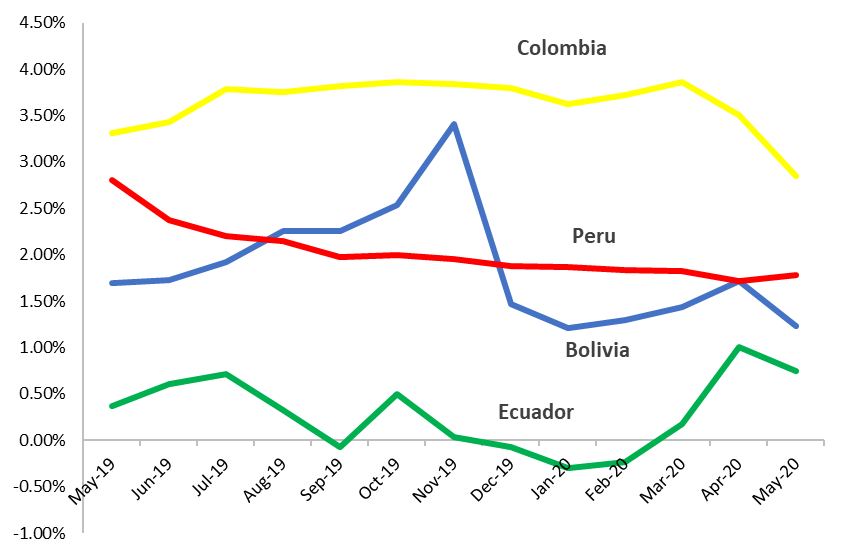
    Andean Countries: Inflation
    Monthly year-on-year figures

     Andean Countries: GDP growth (%)
    Quarterly figures are year-on-year growth
    GDP  End 2019 2020 forecast* Q2 2019 Q3 2019 Q4 2019 Q1 2020
    Bolivia 2.2 -3.0 2.6 2.2 1.1 Not yet available
    Colombia 3.3 -2.6 3.3 3.5 3.4 1.1
    Ecuador 0.1 -6.5 0.5 -0.3 -1.0 Not yet available
    Peru 2.2 -4.0 1.2 3.2 1.8 -3.4
    Venezuela -25.5 -18.0 No data No data No data No data
    *Figures from the United Nations Economic Commission for Latin America & Caribbean Apr 2020
    End 2019 and quarterly growth based on figures from the local central banks
  • COSTA RICA: More progress in clean energy efforts

    Patrick de Courcy 03 February 2022 Hits: 2826

    In December Costa Rica’s President Carlos Alvarado and Environment & Energy Minister Andrea Meza signed a decree which seeks to incentivise the use of hydrogen to boost the green economy. This comes amid other signs of Costa Rica continuing to shore up its green credentials.

    Signed on 15 December, the decree aims to promote and incentivise the use of hydrogen and boost the green economy. It seeks to establish guidelines to develop a regulatory framework for Costa Rica’s public services regulatory authority (Aresep) which would make it easier for distribution companies to take advantage of surpluses in the national electricity system (SEN). In particular, the objective is to end the transport sector’s dependence on oil derivatives.

    According to a government press release, “sustainable hydrogen is considered an option to transform the transport sector” and “decarbonise electricity consumption in the industrial sector”. It notes that while Costa Rica generates over 99% of its electricity from renewable sources, electricity accounts for 26% of energy consumed in the country while the transport sector, which is heavily reliant on fossil fuels, represents 64.5%. Ending the transport sector’s significant dependence on petrol derivatives, which generate 69% of the country’s greenhouse gas emissions (GHG), is thus key for the energy transition, according to the Alvarado government.

    Alvarado also highlighted a recent trip to the United Arab Emirates (UAE) where on 7 December he met Mohamed Jameel Al Ramahi, executive director of Masdar (Abu Dhabi Future Energy Company), one of the main developers of renewable energy projects in the Middle East, to discuss the development of green hydrogen. This is in line with a memorandum of understanding (MoU) signed in 2018 by Masdar and Costa Rica’s state electricity firm Instituto Costarricense de Electricidad (ICE) to promote renewable energy development.

    During his trip to Abu Dhabi President Alvarado also signed a partnership with Francesco La Camera, the director general of the international renewable energy agency (Irena), to strengthen Costa Rica’s decarbonisation plan and boost the financing of renewable energy projects. According to an Irena press release, during the meeting the two discussed the creation of an investment roadmap to complement Costa Rica’s national decarbonisation plan for 2018-2050. The plan will utilise Irena’s upcoming Renewable Energy Roadmap for Central America to identify financing opportunities for major national projects, and support decision making around technology and regulatory frameworks.

    ICI

    The 16 December presidential press release highlighted that according to the 2021 International Competitiveness Index (ICI) report, released in September 2021 by Instituto Mexicano para la Competitividad (IMCO), a think-tank based in Mexico City, Costa Rica’s energy matrix has the highest amount of energy from renewable sources of the 43 economies measured, while overall it ranked as the 28th most competitive economy.  

    Energy matrix

    According to preliminary figures from Costa Rica’s national electricity control centre (CENCE), part of the national electricity institute (ICE), 99.98% of the country’s energy came from renewable sources in 2021: hydroelectric production accounted for 74.12% of production, geothermal was 12.97%, wind power was 12.33%, and biomass and solar energy were 0.56%.

    A presidential press release dated 16 December cited ICE’s electricity manager Luis Roberto Rodríguez as saying: “The strength of our matrix enables us to, even during the [coronavirus] pandemic, achieve record numbers [in clean energy production], maintaining the quality and continuity of our services. Costa Rica is positioned as a world leader in the production of sustainable energy”. Costa Rica has obtained over 98% of its energy from renewable sources since 2015.

  • ECONOMIC HIGHLIGHTS

    Abbi Dicker 16 April 2025 Hits: 3638

    MEXICO | Vehicle exports drop in Q1. On 7 April Mexico’s national statistics institute (Inegi) reported that light vehicle exports fell by 6.04% in the first quarter of 2025, compared to the same period of the previous year. According to Inegi, 775,866 light vehicles were exported in Q1 2025, down from 825,707 in Q1 2024. However, in March alone, 296,964 light vehicles were exported, up 3.83% year-on-year. Inegi noted that the US remained the largest export market for Mexican vehicles in the first quarter, with 643,894 light vehicles exported to the country over the period, 83.0% of the total.

    MEXICO | GFCF continues to fall. On 3 April Mexico’s national statistics institute (Inegi) announced that gross fixed capital formation (GFCF) in January 2025 was down by 5.9% in annual terms, and by 1.5% in monthly terms. This followed an annual decrease of 4.4% and monthly drop of 2.8% in December 2024, and represents the fifth consecutive month of annual decreases. The annual decline in January was the result of a 9% decrease in investment in construction spending and a 2.3% drop in investment in machinery and equipment. The monthly drop was driven by a 1.4% decline in construction investment and a 1.8% decline in investment in machinery and equipment.

    MEXICO | Remittances drop. On 1 April Mexico’s central bank (Banxico) released new figures showing that Mexico received US$4.46bn in remittances in February 2025, down 0.8% year-on-year. This compares with US$4.66bn received in January 2025, which represented a 1.9% rise year-on-year. Total remittances to Mexico in 2024 amounted to US$64.75bn, up 2.3% on 2023. Gabriela Siller, the head of economic analysis at Mexican private bank Banco Base, attributed the fall to three factors: the deterioration of the US labour market; the depreciation of the Mexican peso; and reduced migration to the US due to the fear of being deported by the administration of US President Donald Trump.

    Mexico: unemployment rate
    Economically active population

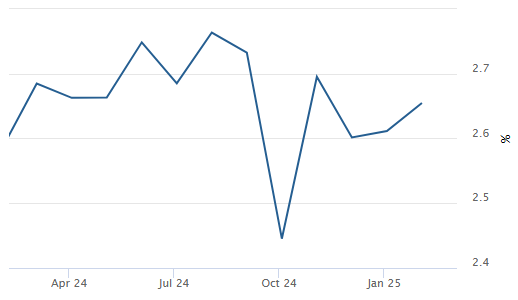
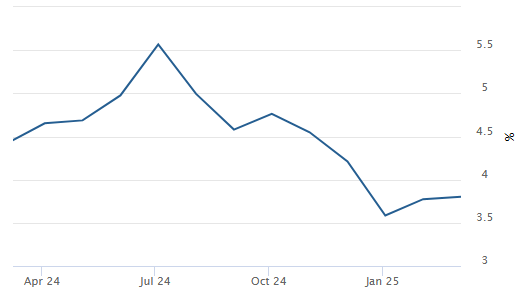
    Mexico: inflation rate
    Percentage variation (year-on-year)

    Source (all graphs): National Statistics Institute (Inegi)

  • CHILE: Migration set to play a key role in electoral showdown

    Abbi Dicker 04 December 2025 Hits: 612

    Will it be Kast or will it be Jara, the two presidential hopefuls who are battling to win the second-round ballot in the presidential elections due on 14 December? The vast majority of analysts are backing the former, the far-right José Antonio Kast, who they see as defeating the leftist Jeannette Jara, currently running 12-16 percentage points behind in the opinion polls.

    This year undocumented migration has been a big election issue in Chile. It is estimated that 1.9m migrants are living in the country, nearly 10% of the total population. Of those, 336,000 are believed to be undocumented, living in the country illegally. Since 2021 illegal migration has dropped by nearly half although it continues to trouble the resident population. A recent opinion survey by the local pollster CEP found that 55% of respondents feel there are points of difference and conflict between long-term residents and the new arrivals, 11 percentage points higher than two years ago.

    This week there has been a flare-up of controversy over the handling of migrants who are crossing Chile’s northern border from Peru. According to press reports migrants of various nationalities entered Chile on that route but faced by much tougher border controls in the south, had turned back, only to find their way initially blocked by Peruvian police. This group clashed with the police and temporarily blocked parts of the Panamerican South Highway.

    Over the weekend interim Peruvian President José Jerí - a conservative who like Kast calls for a hardline against crime and migration, entered the fray declaring a 60-day state emergency in various parts of the frontier region of Tacna. The army and police presence on the border will be increased. Jerí and outgoing Chilean President Gabriel Boric have set up a binational ‘Migration Control Committee’ and agreed a series of measures including information sharing and joint border patrols.

    Ahead of the second-round ballot, Kast has been stepping up promises of draconian action against migrants. He says all illegal migrants must leave immediately: “if someone doesn’t leave voluntarily and we have to find them and deport them, then they will never again be allowed to visit Chile”. He has also said deportees will be expected to pay their own air fares. Illegal immigrants facing trial or prison sentence will not be deported until these proceedings are completed.

    Jara has been critical of Kast’s policy, but her stance has itself become tougher as she sees the need to respond to public concern. Her approach is to create a national registry of migrant workers. After giving some time to put the system in place those workers who fail to register will be subject to deportation.

    Kast wants to make an initial impact on migration, but he could face legal challenges and other political obstacles. One fear is that ongoing tension between US President Donald Trump and Venezuela’s leader, President Nicolás Maduro could lead to new upheavals and a new ‘wave’ of Venezuela refugees coming down through the Andes and putting Chile’s resources under strain.

    Five centre and centre-left former foreign ministers have written an open letter criticising Kast’s approach saying, “it lacks logistical and financial support since the Maduro government says it will not receive deportees from Chile.” They also warn that such schemes risk dividing families, confining people in prison-like detention centres where their human rights may not be respected.

    Top police officer sentenced for corruption

    Héctor Espinosa, former head of the Policía de Investigaciones (PDI) was on 1 December sentenced to 17 years’ imprisonment for embezzlement of public funds, forgery of public documents, and money laundering. He was also required to pay Ch$145m (US$150,000) in restitution of damage caused to the public purse. An investigation found that he and his wife deposited funds in private banks 53 times in 2015-2017 when he was head of the PFI. Espinosa was accused of stealing the money from a PDI secret budget.   

  • In Brief- Colombia

    LatinNews 29 October 2013 Hits: 1372

    POLITICS| Petro takes Colombian State to IAHCR. On 28 October Bogotá’s leftist mayor, Gustavo Petro, presented a complaint against the Colombian State before the Inter-American Human Rights Commission (IACHR) for political persecution. Colombia’s attorney general Alejandro Ordóñez has begun disciplinary proceedings against Petro for various irregularities and alleged corruption relating to the award of public cleaning contracts by the Petro administration. The investigations could result in Petro being barred from holding political office. In his complaint, Petro, who is already facing a recall referendum promoted by his political adversaries, argues that his political rights and the right to judicial guarantees have been undermined by the actions of the conservative Ordóñez, who he claims is acting on the basis  of Petro’s political background. According to Petro’s complaint “The current attorney general Alejandro Ordóñez is well known for his [political] intolerance based on his extreme religious convictions” and it urges the IACHR to call on Ordóñez to cancel the disciplinary procedure and even demands that the Colombian government suspend his ability to ban individuals from holding public office. IACHR executive secretary, Emilio Alvarez, has confirmed that the complaint has been received and said that it will be analysed in the coming weeks.

  • RASTREANDO TENDENCIAS

    LatinNews 17 November 2013 Hits: 246

    BRASIL | No crecimiento. El 14 de noviembre el banco central de Brasil difundió datos que muestran que la actividad económica del país no ha crecido en septiembre y ha decaído en el tercer trimestre.

    El índice de actividad económica IBC-Br, un indicador de la actividad en los sectores agrícola, industrial y de servicios, se mantuvo en gran medida sin cambio en septiembre desde agosto. Cayó un 0,12% en el tercer trimestre, comparado con un incremento del 0,84% entre abril y junio. El IBC-Br es visto como un anticipo de los datos sobre el producto interno bruto.

    CHILE | Se encoge el superávit. Chile reportó un superávit comercial de US$1,08mm en los primeros 10 meses del año, apenas poco más de la mitad del superávit de US$2,02 registrado en el mismo periodo del 2012, de acuerdo con cifras difundidas por el banco central.

    Las exportaciones totalizaron US$64,65mm, o un 0,3% más que en el mismo periodo del año pasado, mientras que las importaciones fueron de US$63,57mm, subiendo un 1,9%. Las exportaciones de cobre totalizaron US$33,38mm, cayendo un 2,2% comparado con los primeros 10 meses del 2012.

    Sin embargo, en octubre el superávit comercial fue de US$241m comparado con un déficit de US$452m en el mismo mes en el 2012. Las exportaciones en octubre llegaron a US$7,04mm, cayendo un 5,4% año en año; las importaciones, por su lado, fueron de US$6,80mm, cayendo un 13,9% año en año.

    Las exportaciones de cobre sumaron más de la mitad de las exportaciones totales, llegando a US$3,89mm, pero esto es una caída de los US$4,52mm registrados en octubre del 2012, a pesar de la recuperación en el sector, como informó el banco central. Las exportaciones totales de minerales fueron de US$4,22mm, cayendo un 14% con relación a los US$4,90mm de exportaciones un año antes.

    URUGUAY | Conceden acceso al mercado del cordero en EU. El 13 de noviembre el subsecretario para marketing y programas regulatorios del departamento de agricultura de EU (USDA), Edward Avalos, anunció la apertura del mercado de EU para la importación de carne d cordero deshuesada de Uruguay.

    El anuncio fue hecho durante la visita de Avalos a las oficinas centrales del Ministerio de Ganadería, Agricultura y Pesca (MGAP), donde él dijo que comenzando el 29 de noviembre, la carne de cordero deshuesada ya no estará sujeta a cuotas de importación o tarifas en EU.

    Uruguay, el tercer mayor productor de carne de cordero del mundo, se convirtió en uno entre un puñado de países que disfrutan de libre acceso al lucrativo mercado de la carne de cordero de EU, de US$600m al año.

    Una declaración del MGAP explicó que la medida preferencial sólo se aplica a carne de cordero deshuesada –que representa solamente el 17% del mercado importador de carne de cordero de EU– pero no a los cortes de carne con huesos, que aún enfrentan algunas restricciones.

    De todos modos, el anuncio fue saludado por el MGAP que señaló que había sido el resultado de ocho largos años de negociaciones con el USDA. De hecho los intentos de asegurar el libre acceso al mercado de EU comenzaron formalmente en el 2005 bajo el gobierno encabezado por el ex presidente, Tabaré Vázquez (2005-2010).

    El anuncio también fue recibido con entusiasmo por los productores locales. José Costa, el presidente de la asociación uruguaya de la industria de alimentos congelados, dijo que el levantamiento de las restricciones comerciales de EU para la carne de cordero deshuesada era “una gran noticia” y representa una gran ayuda para una industria que emplea a 15.000 personas.

    Uruguay exportó 25.000 toneladas (t) de carne de cordero el año pasado y se estima que el pleno acceso al mercado de EU podría resultar en exportaciones adicionales de alrededor de US$20m al año. Además, como explicó Costa, la apertura del mercado de EU también podría facilitar el “acceso a otros mercados internacionales de alto potencial”.

    Por otro lado inmediatamente después del anuncio el titular del MGAP, Tabaré Aguerre,  entregó a Avalos un pedido oficial para comenzar el proceso de remover todas las restricciones sobre la carne de cordero con hueso.

    El éxito pronto podría replicarse en el sector de aves de corral de Uruguay. Hace pocos días, los productores uruguayos de aves de corral concluyeron una auditoría de su proceso de producción con vistas a cumplir con los estándares de importación de EU.

    El MGAP ha dicho que ya se iniciaron las negociaciones que apuntan a asegurar el libre acceso al mercado de EU para los productos uruguayos de aves de corral, con el ministerio diciendo que estaba trabajando en un análisis de riesgo de seguridad de alimentos que ayudará a identificar qué medidas necesitan ser adoptadas a fin de cumplir con las leyes y regulaciones de EU.

    • BQB se expande

    La firma de transporte Uruguayo-Argentina, Buquebus, anunció el 13 de noviembre que su aerolínea regional BQB, pronto comenzará a operar nuevos vuelos que unirán la capital de Chile, Santiago, con destinos en Uruguay, Brasil y Paraguay. El presidente de Buquebus, Juan Carlos López Mena, explicó que BQB tenía la esperanza de lanzar un nuevo vuelo Santiago-Montevideo a principios del 2014; y que esto permitiría a los pasajeros aprovechar la ventaja de las otras rutas de la aerolínea uniendo la capital de Uruguay con ciudades en Brasil y Paraguay. López Mena dijo que el objetivo de BQB era tener los nuevos servicios montados y en marcha antes de la Copa Mundial de futbol de la Fifa del 2014, de la que Brasil será el anfitrión.

  • ARGENTINA: Con un poco de ayuda de sus amigos

    LatinNews 28 March 2014 Hits: 834

    El 25 de marzo la corte suprema de EU reveló que México, Francia, y Brasil habían presentado una declaración de amicus curiae (tienen el objeto de ayudar a alguien sujeto de un proceso) en apoyo del caso de Argentina contra los tenedores de bonos ‘holdouts’. Otras siete peticiones más fueron ingresadas por organizaciones privadas y por individuos, incluyendo el economista ganador del premio Nobel, Joseph Stiglitz. El contenido de las peticiones alega que si no se revierte la resolución y Argentina se ve forzada a pagar a los tenedores de bonos que rechazaron la reestructuración de la deuda de Argentina después del default de la deuda en el 2001, esto podría establecer un precedente que haría futuras reestructuraciones de la deuda soberana más dificultosas y costosas, potencialmente comprometiendo la estabilidad de los mercados financieros globales y la soberanía de las naciones.

    Aunque el mismo gobierno de EU se abstuvo de enviar un pedido similar a la corte, los funcionarios argentinos ahora tienen la esperanza de que el apoyo de las dos mayores economías de América Latina, así como también de un miembro del G7 aumentarán las chances de que la corte suprema de EU solicite la opinión del procurador general de EU.

    La corte suprema de EU debe decidir si toma el caso para fines de mayo, después de que Argentina pidiera en febrero que revise una orden judicial de una corte menor en EU exigiéndole que pague US$1,33mm a los holdouts, liderados por el fondo especulativo, NML Capital, parte del fondo de inversión Elliot Management del multimillonario Paul Singer.

    Si la corte suprema acepta escuchar el caso, los analistas dicen que sería probable esperar una decisión durante el próximo término de la corte, que comienza en octubre y termina en junio del 2015. Si se solita que el procurador general dé su opinión primero, es más probable que el caso se extienda hasta el año próximo, cuando termina el mandato de la Presidenta de Argentina, Cristina Fernández.

  • REGION: Guatemala-Honduras customs union boosts bilateral trade; what of the region?

    LatinNews 16 May 2018 Hits: 669

    A Guatemalan-Honduran customs union that came into effect in June 2017 has led to a modest increase in bilateral trade. According to figures published by the Guatemalan and Honduran central banks, Guatemalan exports to Honduras in 2017 totalled US$914.9m, a 4.5% year-on-year increase, and Honduran exports to Guatemala totalled US$236.7m, a 0.2% year-on-year increase. The Honduras-Guatemala customs union is the first step towards achieving a Central American customs union loosely based on the European Union (EU) model, a project that has been discussed for decades but has made little progress due to instability and governance issues in the region.

    Initially agreed in 2015 to facilitate the movement of goods and people between the two states, the Guatemala-Honduras customs union came into effect on 26 June 2017 at an event held in the border post of Corinto and attended by Guatemala’s President Jimmy Morales and his Honduran counterpart, Juan Orlando Hernández.

    Three border crossings between Guatemala and Honduras – Agua Caliente, El Florido, and Corinto – were designated for the free flow of merchandise. Each of these border crossings has a counter for the 70% of goods exchanged between Guatemala and Honduras that are now tariff free. These products are traded using the Central American Invoice and Single Declaration (FYDUCA), an electronic document that records transfer (formerly known as exports) and acquisitions (formerly known as imports) of goods with free movement traded between Guatemala and Honduras. A second counter is used for the remaining 30% of goods that are still subject to tariffs.

    The statistics department of the Central American Economic Integration System (SIECA) told LatinNews that coordination between the different government bureaus responsible for managing the border posts, including customs and excise, immigration, the taxation superintendency, phytosanitary and animal health institutions, has been the greatest challenge. “Developing regulations was one of the most time-consuming items on the agenda and required the greatest effort,” the SIECA statistics department told LatinNews in a written statement.

    Despite such ‘teething problems’, in February this year, the World Bank, which has provided SIECA with technical assistance to launch the customs union, said that prior to the implementation of the customs union in June 2017, it took up to 10 hours to cross the Honduras-Guatemala border, but since the new system came into effect, the use of FYDUCA and the two separate counters for tariff-free and non-tariff free products has reduced this to 15 minutes.

    More efficient customs proceedings and the free flow of goods between the two countries have led to a modest increase in bilateral trade. According to figures published by the Guatemalan and Honduran central banks, in 2017, Guatemalan exports to Honduras totalled US$914.9m, a 4.5% year-on-year increase, and Honduran exports to Guatemala totalled 236.7m, a 0.2 % year-on-year increase.

    SIECA’s statistics department told LatinNews that a more significant increase in trade between the two countries is expected in the long term. “Central America’s intra-regional trade is recovering after falling over two consecutive years. Intra-regional exports between Guatemala and Honduras are not the exception; they have also started to recover (Guatemala’s Central American exports increased from 0.5% to 2.6% and Honduras’ increased from -2.5% to -0.4%), and the positive impact of regional integration will be seen in the long term,” says SIECA.

    Added to this, the United Nations (UN) Economic Commission on Latin America and the Caribbean (ECLAC) predicts that in the long term, the customs union could boost Guatemala’s GDP between 0.2% and 0.4% and Honduras’ GDP between 0.3% and 0.7%.

    “The Guatemalan economy is almost three times the size of the Honduran economy, so what we’re seeing are Honduran producers flocking to Guatemala to sell their products. They’re going to have a hard time though, because they’re competing for the same niches where Guatemalan producers are strongest. The Honduran market, on the other hand, is not the best option for Guatemalan producers, and most commercial opportunities have already been exploited,” says Guatemalan economist Hugo Maúl, of the National Centre for Economic Research (CIEN). He adds: “The customs union is useful in terms of facilitating the transit of finished products from Guatemala to Honduras’ industrial base, or facilitating the transit of raw materials from Puerto Cortés, in Honduras, to Guatemala. Rather than facilitating the exchange of manufactured goods, it will allow the integration of the textile sector, and other industries, in both countries.”

    Regional integration remains a distant goal

    On 20 October, El Salvador’s president Salvador Sánchez Cerén said El Salvador would join the customs union during a meeting with his Honduran and Guatemalan counterparts in the border post of El Amatillo, located on the border between Honduras and El Salvador. “Our border posts, far from representing an obstacle for trade and human mobility, should become tools to lead us to a deep integration,” Sánchez Cerén told the press. He added that a three-month deadline had been established to create the necessary infrastructure for El Salvador to join the customs union.

    Javier Gutiérrez, SIECA’s secretary general, predicts that if El Salvador goes ahead with plans to join the Guatemala-Honduras customs union, it could increase its trade volume by 76.9%. “El Salvador has a domestic market of 7.1m inhabitants. If it joins the customs union, it would have access to a market of 31.2m people,” he told the press in October 2017.

    “Things are a lot easier with El Salvador and a de facto integration is already taking place. The problem with El Salvador is political because the customs union isn’t a priority for the current administration in El Salvador. Added to this, VAT is significantly higher in El Salvador than in Guatemala, which could lead to product triangulation for tax reasons, and many Salvadoran products compete directly with Guatemalan products,” says Maúl. However, Maúl believes the region lacks the necessary infrastructure to contemplate the inclusion of other countries, such as Nicaragua and Costa Rica, in the customs union.

    “A customs union between Honduras and Nicaragua would be complicated for logistical reasons. Firstly, Honduras would have to invest far more in its roads to bring them up to the same standard as Nicaragua’s road network. And secondly, both countries have a very strong agricultural sector and there would be fierce competition between them,” Maúl told LatinNews.

    So far, Costa Rica remains sceptical about the customs union and says it is working on its own trade liberalisation model based on the models implemented in Singapore, Holland and South Korea. In September 2017, Costa Rica’s deputy minister for foreign trade, Jhon Fonseca, told Nicaraguan newspaper La Prensa: “What Guatemala and Honduras have done has been labelled a customs union but it isn’t. They have facilitated the transit of products they consider to be low risk. These countries have similar tax regimes so they don’t face the same problems as other countries.” Edgar Balsells, former president of the Central American Bank for Economic Integration (CABEI), told LatinNews that “Costa Rica’s position has always been the same” and that successive governments have been less than enthusiastic about regional integration.

    • Obstacles

    Former president of the Central American Bank for Economic Integration (CABEI) Edgar Balsells believes that rather than the inevitable technical issues that have arisen during the months after the Guatemala-Honduras customs union was implemented, the greatest obstacle to Central American integration is the political instability and governance issues faced by each of these countries’ governments, such as soaring crime rates in El Salvador as a result of gang violence, electoral fraud allegations in Honduras, and a string of corruption cases in Guatemala. “There’s a lot of conflict right now. Central American governments are looking inwards, rather than outwards,” says Balsells.

  • Cuba: Authorities explore liberalisation of railways

    LatinNews 07 September 2018 Hits: 498

    The publication of the Extraordinary Gazette No 42 on 22 August sets out possible changes to the management and operation of the national railways network. Combined with recent statements by officials, it appears that the government is open to the idea of foreign investors entering the sector, which until now has been entirely dominated by state provision.

    The publication of the Extraordinary Gazette has been accompanied by supporting legislation, in the form of the Decree Law 348, which was first outlined a year ago but is set to finally come into effect on 21 September. This allows for foreign participation in the railway network, both in terms of passenger and cargo freight, with firms having the right to bid for rights as sole providers, or in joint collaboration with the state railway provider, Ferrocarriles de Cuba (FCC). The authorities have given no indication of a preference, but given a long-running caution towards private investment and a desire to closely monitor the terms and progress of any deal, it is likely that the government may look more favourably on joint bids rather than foreign firms’ efforts to secure sole operator rights. Interested firms are required to submit data gleaned from feasibility studies, alongside a detailed business plan.

    The announcement forms part of broader efforts to upgrade the country’s dilapidated physical infrastructure. The railway network was once well-developed, with a large network of track serving both the needs of the sugar industry and passengers. However, severe underinvestment in recent decades has meant that much of the 11,000km of existing track is not operational. Even lines that do currently work face extremely low speed restrictions on the back of safety concerns related to poor maintenance. The Cuban government has reached agreements with both the Russians and the French to boost investment in the sector, but the latest announcement is clearly designed to open the sector to a larger number of participants.

    Any improvements will be some way down the line

    It is unclear whether this development will have a significant positive impact on the Cuban economy in the near term. The Cuban government has repeatedly stated its intention to welcome more foreign investment over the course of recent years, but often this has been followed by moves to rein in investors’ ability to operate. Even when this has not been the case, extremely drawn-out processes for receiving investment approvals – not to mention the ongoing existence of US economic sanctions – have deterred most investors. There are some signs of an acceleration, with a Guernsey-based firm remarking earlier in 2018 that they had managed to conclude negotiations with the authorities over a hotel construction process in just six months (which, according to the firm’s chief executive, marked “quite a record”). However, given the long lead times required for feasibility studies and construction for physical infrastructure projects, any noticeable improvements in the provision of railway services will take some time.