All Categories

Subcategories

  • GUATEMALA: Congress approves US$7.6bn budget

    LatinNews 02 December 2011 Hits: 463

    The outgoing congress approved a budget of Q$59.5bn (US$7.6bn) for 2012. The new president, Otto Pérez Molina, takes office on 14 January 2012.he has said that he wants to prevent NGO money being used to build infrastructure.

    Of the 2012 budget, US$4.9bn is destined for current expenditure and US$1.6bn on capital projects. The balance (US$1.1bn) has to go on debt service.

    The education budget, at US$1.4bn, is the biggest ministerial budget. Health gets US$567m and interior (which is responsible for security) gets US$505m.

    Trade : The country’s manufacturers expect to export US$3.2bn of goods in 2012. If that target is hit, the non-traditional exports will have doubled their exports in five years. In the first nine months of 2011 the central bank reported that non-traditional exports increased 25%.

    Inflation: In October consumer price fell by 0.04%. This brought the 12 month inflation rate down to 6.65%.

  • NICARAGUA: Nicaragua’s security success and challenges ahead

    LatinNews 14 March 2018 Hits: 533

    Central America’s Northern Triangle, comprising El Salvador, Guatemala, and Honduras, is the most violent region in the world (outside of war zones), an infamous distinction it has held for the past several years – as most recently highlighted by the Geneva-based NGO Small Arms Survey’s latest report, ‘Global Violent Deaths, 2017’. Yet, Nicaragua continues to boast among the lowest homicide rates in the region. Here we consider the reasons for this apparent achievement.

    Published in December 2017, the Global Violent Deaths report contained some disturbing findings, showing that in 2016 the global homicide rose for the first time since 2004. Of the 560,000 people who died violent deaths in 2016, approximately 385,000 (68%) were victims of intentional homicides, not related to conflict. While homicides rose, the global conflict death rate continued to decline. Three of the five countries with the highest homicide rates – El Salvador, Honduras, and Venezuela – are located in Latin America. The other two top-five countries, Syria and Afghanistan, are active conflict zones. The World Health Organization (WHO) defines a homicide epidemic as more than 10 homicides per 100,000 people.

    El Salvador has had the world’s highest homicide rate for the past few years, registering 81.2 homicides per 100,000 in 2016 (see the earlier article in this issue 'EL SALVADOR: The limits of mano dura' for discussion of how subsequent claims of progress have been subject to doubt). The Small Arms Survey’s report shows that in 2016 Honduras and Venezuela were tied for second place with a homicide rate of 59 homicides per 100,000 inhabitants. Brazil’s homicide rate is lower, but it has the highest number of violent deaths in the world, even when including those countries involved in conflict.

    A violent mix of transnational youth gangs, drug trafficking and other organised crime, and state repression have plagued Central America for more than a decade. The region’s violence is a leading cause of forced migration. The so-called child migrant crisis of 2014, when more than 70,000 children from El Salvador, Guatemala, and Honduras were apprehended at the US border, was driven primarily by this violence. Even in typically tranquil Costa Rica, the homicide rate has doubled since 2002 reaching 11.8 per 100,000 inhabitants in 2016. Costa Rican officials blame the increase in organised crime.

    By comparison, Nicaragua’s 2016 homicide rate was seven per 100,000 inhabitants, down from eight per 100,000 in 2015 and 13 per 100,000 in 2010. With only 460 homicides in the entire country in 2016, 65% of the country’s municipalities registered zero or one homicide for the year. In 2016, only Argentina (6.6), Ecuador (5.6) and Chile (3.6) had lower homicide rates than Nicaragua in Latin America. This is a remarkable accomplishment for the second-poorest country in the Western Hemisphere, where resources are often stretched thin. It’s even more remarkable when considering the country’s legacy of conflict and its shared border with two of the world’s most violent countries.

    Anecdotal evidence has previously put this relative lack of violence down to a result of the war and violence fatigue. Simply put, Nicaraguans were tired of violence. But, of course, Nicaragua’s neighbours also suffered high levels of violence during their civil wars and their populations were equally tired of violence. It’s clear that this fails to explain Nicaragua’s relatively low homicide rate.

    Analysts attribute much of Nicaragua’s success to its professionalised police force and community policing model, which enables citizens to have direct contact with the country’s police. Nicaragua’s police force is very much a legacy of the Sandinista revolution, which dismantled the repressive National Guard of the dictatorship led by the Somoza family (1936-1979) and replaced it with the Sandinista People’s Army and Sandinista Police. A reformed Nicaraguan National Police (PNN) emerged after the Frente Sandinista de Liberación Nacional (FSLN)’s 1990 electoral loss, but the organisation’s emphasis on community engagement and progressive ideology remained intact.

    While governments in Northern Triangle countries have adopted repressive policing measures, such as ‘mano dura’ (iron fist) in El Salvador and Honduras, the PNN has instead focused primarily on prevention. Neighbourhood watch groups interface with the police to help identify at-risk youths and potential sources of violence. Not only does this encourage high levels of trust in the police (PNN chief Aminta Granera has one of the highest approval ratings for a public official for years), but it enables police and communities to work together to identify and solve problems together. Nicaragua’s community policing model has been so widely regarded as successful that other countries have sought advice on how to implement it in their countries.

    Organised crime groups, particularly those that control territory, have been less of a threat in Nicaragua thanks to the country’s ‘firewall’ strategy that emphasises border security. That said, drug trafficking poses a major security threat to Nicaragua, particularly in the Caribbean Coast autonomous regions. High rates of poverty and unemployment, lower police presence, geographic isolation, and an extensive coastline have made the Caribbean Coast an ideal location for drug traffickers. Homicide rates are considerably higher in the Caribbean Coast regions than in the rest of the country. In 2016 the homicide rate in the South Atlantic autonomous region (Raas) was 33 per 100,000 inhabitants.

    Joint interdiction efforts between the US Coast Guard and the Nicaraguan Navy have been combined with demand reduction, vocational training, and drug treatment programs – again emphasising the proactive and preventative approach to security. But there also have been some revelations that government officials have worked with traffickers to mitigate levels of violence in the region. In 2012 a supreme electoral court (CSE) alternate magistrate, Julio César Osuna, was convicted of using his position to sell fake identity documents to drug traffickers, as well as money laundering and participating in organised crime. There were other allegations that the country’s judicial system has been penetrated by traffickers, as judges had either reduced sentences for or released those convicted of drug trafficking. Despite receiving a sentence of 23 years, Osuna was released in 2015 on the condition that he appear at prison once a month.

    Also indicative of these concerns, the most recent (2017) US State Department’s International Narcotics Control Strategy Report (INCSR) released in March 2017 highlights that in 2016 the national police’s internal inspection office publicised several cases of corruption within the police’s anti-drug unit in Managua that were under investigation. In Rivas department, three police officers were discharged and one prosecuted for drug-related charges. In both the Managua and Rivas cases, the incidents included collusion between officers and drug traffickers, tampering and concealment of evidence, and missing seized assets (money and equipment).

    • Police involvement?

    The most recent (2017) US State Department’s International Narcotics Control Strategy Report (INCSR) released in March 2017 notes that two former police officers publicly accused current members of the police of corruption in 2016, including stealing illegal drug shipments and money from drug traffickers. In addition, two senior police officials in the north-central region were killed under unclear circumstances – one in what appeared to be a targeted killing. Independent security analysts have noted that prosecution of police corruption cases has been isolated to low-ranked officers, despite allegations of involvement by higher ranking officials.

    Other factors

    While Nicaragua’s community policing strategy and philosophy has been an important factor in maintaining its low crime rate, there are also other important factors that set Nicaragua apart from some of its neighbours.

    First, unlike El Salvador and Honduras, Nicaragua has not suffered from transnational gang violence. This is largely due to differences in migration patterns. Unlike countries in the Northern Triangle, relatively few Nicaraguans migrated to the US during the 1980s and early 1990s. In fact, Nicaraguans make up only 7.6%, roughly 260,000, of the Central American migrant population in the US. Only 40% of Nicaraguan migrants emigrate to the US. Most have typically migrated south to Costa Rica, including during the Contra War in the 1980s.

    Additionally, Nicaraguans who came to the US in the 1980s typically settled in Miami, while Salvadorans favoured Los Angeles, where they encountered a violent gang culture that was later exported back to the isthmus.

    Finally, gun ownership is far lower in Nicaragua than in the Northern Triangle and a lower proportion of homicides in Nicaragua are committed with firearms. Only about 42% of violent deaths in Nicaragua involve firearms compared with more than 80% in El Salvador, Guatemala, and Honduras. Registering a firearm in Nicaragua is also a fairly complicated process, requiring a psychological evaluation, certification by both police and courts that there is no criminal record or prosecution in process, completion of a gun training programme, and authorisation from the local police.

    Additional problems

    While Nicaragua has one of the lowest homicide rates in the Americas, it has been less successful in combatting other forms of violence. Incidents of gender-based violence in Nicaragua are among the highest in the hemisphere and the issue was singled out in the most recent (February 2018) annual report by the international human rights NGO Amnesty International (AI). The AI report noted that gender-based killings became increasingly brutal, with 55 gender-based killings of women between January and December 2017, according to the NGO Catholics for the Right to Decide. AI also found that the killings were more brutal than in previous years and tended to be committed by perpetrators acting in groups.

    By some estimates, as many as half of all Nicaraguan women will experience gender-based violence in their lifetimes. Critics point to a heavily machista culture and a lack of political will and finances. Shortly after it was passed in 2012, key provisions of the Law Against Violence Against Women, Law 779, were struck down by the courts. The country’s women-only police stations, established in 1993 to encourage women to report gender-based violence, all closed in 2016 due to budget cuts.

    The AI 2018 report also highlighted that Nicaragua – where abortion remains banned in all circumstances – continued to have one of the highest teenage pregnancy and maternal mortality rates in the Americas region, according to the UN Population Fund (UNFPA). Almost 30% of Nicaraguan women give birth before the age of 18 – the highest teen and adolescent pregnancy rate in Latin America. Nearly half of those pregnancies occur in girls aged 10-14. Nicaragua’s 2014 teen pregnancy rate among 15-19 year-olds (89.63 per 1,000 girls) was significantly higher than the more violent El Salvador (65.65) and Honduras (65.56). The overwhelming majority of adolescent and teen pregnancies are the result of rape. According to Nicaragua’s Institute of Legal Medicine, most of the reports received in 2015 dealt with sexual violence against minors. Impunity for crimes committed against women and girls is high.

    Nicaragua’s impressive security record can be attributed to factors such as the success of its professionalised national police and its approach to community-based policing, historical migration patterns, low prevalence of firearms. But it is necessary to delve beyond the country’s homicide and drug interdiction data to get a true picture of the country’s success in combatting crime. As the data on gender-based violence suggest, there’s still much important work to be done.

    • Amending the law on femicide

    The February 2018 report by Amnesty International (AI) notes that in June 2017 the national assembly approved an amendment to the Comprehensive Law on Violence against Women; the amendment reduced the scope of the definition of femicide to the private sphere, limiting the crime to relations between spouses and partners. Critics said the new definition denied the reality of femicides, which were also committed in public places.

  • TRACKING TRENDS

    Abbi Dicker 09 January 2025 Hits: 3279

    CUBA-DOMINICAN REPUBLIC | Contrasting fortunes. A record 11m people visited the Dominican Republic in 2024, up from 10m in 2023, the tourism minister, David Collado, said on 29 December. Collado said that tourism contributes US$26bn to the country’s GDP, accounting for 20% of GDP, adding that the sector provided 949,000 direct and indirect jobs in 2024.

    By contrast, tourism in Cuba, once a mainstay of the economy, has plummeted. Cuba received just 1.85m visitors in the first 10 months of the year, down 6.5% on the same period in 2023. Tourism has now fallen by nearly 50% since 2017 and the prediction by the tourism minister, Juan Carlos García Granda, of 2.6m tourist arrivals in 2025, looks very ambitious, especially with US restrictions only likely to get tighter when Donald Trump takes up residence in the White House this month.


    EL SALVADOR | Fitch upbeat on El Salvador. On 7 January international credit ratings agency Fitch Ratings revised up its rating for El Salvador to ‘B-’ from ‘CCC+’, which it says reflects the “reduction in financing needs and easing of financing constraints supported by the regaining of market access” and the staff level agreement reached last month with the International Monetary Fund (IMF) for an Extended Fund Facility (EFF) programme worth US$1.4bn [WR-24-50]. Fitch highlights that while details are not yet available, the deal, which awaits approval by the IMF executive board, includes “a fiscal adjustment, legal changes to make [cryptocurrency] bitcoin acceptance by businesses voluntary rather than mandatory, and improving governance and transparency”.

    Fitch also notes that on fiscal policy, authorities agreed to a non-financial public sector (NFPS) primary balance adjustment of 3.5% of GDP over the next three years, with a front-loaded adjustment of 1.5 percentage points in 2025. Fitch estimates the NFPS deficit at 4.7% of GDP in 2024, unchanged from 2023. While noting high debt levels (Fitch estimates that NFPS debt reached 87.7% of GDP in 2024, from 84.9% in 2023), the credit ratings agency highlights that last year, El Salvador reduced short-term debt “substantially through liability management operations with local banks and improved financing sources”.

    • GDP growth

    Fitch projected that El Salvador’s real GDP growth would slow to 1.9% in 2024 from 3.5% in 2023 before rising to 2.3% in 2025.

  • ECONOMIC HIGHLIGHTS

    Abbi Dicker 21 May 2026 Hits: 2154

    ARGENTINA | Chevron to launch new oil project. Economy Minister Luis Caputo announced on 6 May that US oil company Chevron plans to invest US$10bn in a new project under the government’s incentive for large investments scheme (Rigi). Caputo made the announcement after meeting with Chevron’s chief financial officer, Eimear Bonner, and chief corporate affairs officer, Laura Lane, in Los Angeles, California. Media reports have highlighted the significance of the planned Chevron project for the development of Argentina’s Vaca Muerta shale oil and gas fields in Neuquén province. The US oil giant has already invested in Vaca Muerta oil infrastructure development, through a partnership with other firms such as Argentina’s state oil company Yacimientos Petrolíferos Fiscales (YPF). News website Bloomberg Línea has highlighted that, when the new Chevron investment is finalised, it would be the first US oil project in Vaca Muerta which is not tied to YPF’s Vaca Muerta Oleoducto Sur (VMOS) consortium.

    PARAGUAY | Income inequality edges down. The national statistics institute (INE) released new figures on 11 May showing that the Gini inequality index, which measures inequality on a scale from 0 to 1, decreased at the national level, falling from 0.439 in 2024 to 0.431 in 2025 – a decrease of approximately 1.7%. The INE report highlighted that urban areas maintained a lower Gini coefficient compared to rural areas, indicating that “income distribution is relatively more equitable in cities”. At the departmental level, there are significant differences, with the eastern departments of Caaguazú (0.605) and neighbouring Canindeyú (0.545) recording the highest levels of income inequality in 2025. In contrast, the departments of Central (0.359), Cordillera (0.362), and Ñeembucú (0.366), all in the west of the country, recorded the lowest levels of income inequality last year.

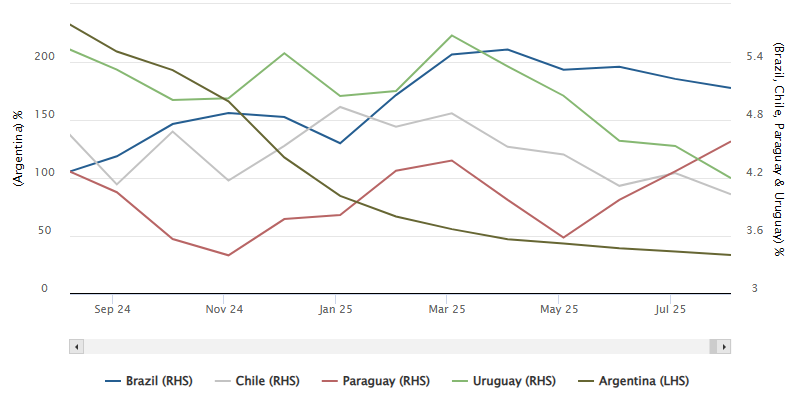
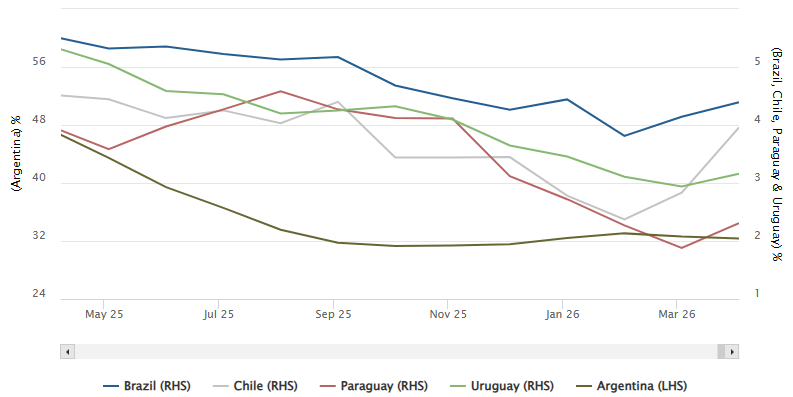
    Brazil & Southern Cone: inflation rate
    Percentage variation (year-on-year)

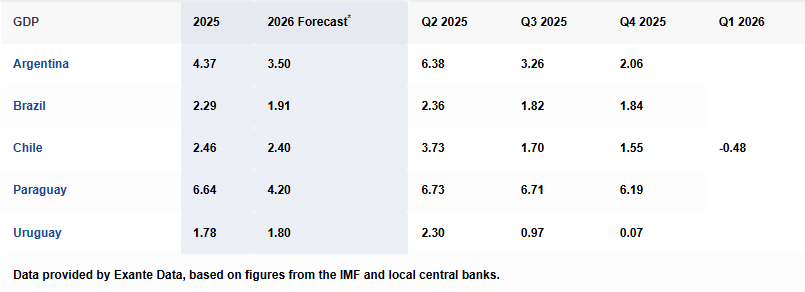
    Brazil & Southern Cone: GDP growth (%)
    Quarterly figures are year-on-year growth

  • HONDURAS: Energy reform passes with significant amendments

    Sarah Sheldon 20 October 2026 Hits: 37

    Honduras’ President Nasry Asfura has succeeded in pushing through a reform to shake up the country’s troubled energy sector, but only after accepting a number of changes to the original bill in order to garner sufficient support among lawmakers. 

    The reform was passed on 31 August after 29 opposition legislators joined 49 from Asfura’s right-wing Partido Nacional (PN) in voting in favour, following around three months of negotiations after the original bill was submitted in May. Known as the Ley de Justicia Energética, the new law, which Asfura sanctioned on 29 September, contains 37 articles which amend the Ley General de la Industria Eléctrica and the law governing the constitution of troubled state power company Empresa Nacional de Energía Eléctrica (Enee).

    The main changes include a temporary freeze of electricity prices for six months; the reorganisation of the Enee into three subsidiaries to manage generation, transmission and distribution separately; the creation of a new independent operator, the Operador del Sistema y del Mercado (OSM), to manage the electricity system and the market; and changes to the rules governing the buying and selling of energy. 

    Asfura, who took office in January, made the reform one of his flagship legislative proposals, aiming to overhaul the sector as Enee continues to suffer significant financial and energy losses despite repeated attempts to shore up operations under successive governments. His original bill sparked concerns over the privatisation of the sector, but the adoption of the centrist Partido Liberal’s amendments meant that the law received enough support to pass.

    Chief among those changes were assurances that Enee would remain in state hands, which PN lawmaker Marco Midence underlined following the passage of the reform. “The Enee will remain public and cannot be privatised or sold off,” he said following the vote. However, opposition lawmaker Hugo Noé Pino, of the left-wing opposition Partido Libertad y Refundación (Libre) party, said that the reform could still allow Enee to be privatised because the new legal entities are governed by the country’s commercial code and not as public entities.  “Privatisation is not just about who owns shares in Enee or its assets, it’s also about the privatisation of [regulator] Cree and the operator (OSM),” he added. 

    Despite generating political controversy among lawmakers, the reform has received significant support from civil society and internationally. Honduran NGO Asociación para una Sociedad más Justa (ASJ), the local chapter of anti-corruption NGO Transparency International, said that the reform was a positive step following decades of growing problems at Enee, but warned that it should be considered the start of a process. “This is not the goal, it’s a starting point,” the organisation said in a statement published 1 September.

    Key to turning the sector around will be attracting investment to shore up creaking infrastructure, and Honduran officials have already been talking up the potential effects of the reform. Enee manager Guillermo Peña Panting has also emphasised the potential boost to investment, claiming that the reform sends “a very strong message” to investors because the rules governing the sector are now clearer. And Asfura himself used his speech at the United Nations General Assembly in New York on 23 September to assure investors that “Honduras is renewing itself,” promising to improve the business climate to attract foreign direct investment in strategic sectors such as energy, infrastructure and mining. 

    Investment interest

    Juan Pablo Segura, the US Assistant Secretary of State for Western Hemisphere Affairs, also welcomed the reform in a social media post on 3 September. “Modern energy sectors open the door for US companies to bring capital, technology, and jobs, making our hemisphere more prosperous. A reliable energy sector makes Honduras a smarter bet for American investment,” he wrote.

  • TRACKING TRENDS

    LatinNews 18 July 2019 Hits: 3505

    PARAGUAY | Looking for innovation in beef industry. Exports fell by 9.8% in the first half of 2019 compared to the same period last year on the back of falling beef exports, Paraguay’s central bank (BCP) said in a report published last week. According to the report the value of frozen beef exports fell 49% (US$31.7m), while exports of all other beef products fell by 20.6% (US$124.2m). Production also diminished, dropping 11.7% (17,300 tonnes).

    Despite this fall in exports, beef remains Paraguay’s third largest export. This combined with the fact that exports to two of the main buyers of Paraguayan beef (Chile and Israel) increased this year means the beef industry remains a key sector for the Paraguayan economy. This is also reflected in the efforts by the industry to resort to innovation to try to increase beef production in the country. As part of this, on 15 July, at Paraguay’s annual Agricultural Expo, the UK-based firm, Agri-Epi Centre, announced the launch of the ‘Smart Farm’ pilot programme that aims to use new technology to promote more efficient beef production. The initiative, which is supported by the British Embassy in Paraguay and the UK Department of International Trade, seeks to facilitate the management of large beef cattle herds by developing new technologies to digitally gather and store data such as individual animal weight and general health, rather than record it manually. Agri-Epi Centre has reached an agreement with Paraguayan beef producers to set up a test facility in the country that will help it determine whether its data collection technology will, in practice, improve beef production in Paraguay.

  • Infrastructure

    LatinNews 03 December 2019 Hits: 467

    López Obrador’s main infrastructure projects are the Santa Lucia Airport and the Tren Maya. However, there has been limited progress in both cases.

    The construction of the Felipe Angeles Airport in Santa Lucia, where a military air base currently operates has been mired in legal disputes following successful appeals against the project by different groups that claimed it was problematic on numerous grounds, from representing a waste of public resources given the advance of the cancelled NAIM, to lacking environmental and social impact studies. There were 148 appeals submitted against the project which the government claims will cost less than 30% of the estimated cost of the NAIM. These appeals led to several suspensions issued by different courts. However, on 8 October one of these suspensions was revoked by a federal judge that ruled that construction should go ahead on grounds of national security, following an appeal by the Ministry of Defence (Sedena), and the rest followed, allowing López Obrador to announce the resumption of works on 17 October. Nevertheless, it remains unlikely the airport will be ready by 2021, as the government promised. Opponents of the project have said that they will ask the supreme court to intervene, so it could still face obstacles in the future.

    Although the Tren Maya, a project that it is estimated will cost M$120bn-M$150bn (US$6.2bn-US$7.7bn), has been less controversial than the airport, progress has also been slow. In his state of the nation address, López Obrador highlighted it as one of his campaign promises that he still has not delivered. The 1,525km-long railway is intended to run through Chiapas, Tabasco, Quintana Roo, Campeche, and Yucatán states, and the government seeks to have it in place by 2023. It is the core element of López Obrador’s tourism policy, as it will link more than 190 tourist sites, such as beaches, archaeological sites, museums, and locations that include Unesco heritage sites. However, it is unlikely to succeed in boosting tourism numbers as the administration has also reduced financial and human resources for tourism promotion, which is essential to attract high-income travellers and maximise tourism receipts at a time when competition from other destinations in the region is growing. Tourism has also been affected by crime, an issue which is far from solved.

    Crucially, around 90% of funds for the Tren Maya are expected to come from private sources through 30-year concessions. The basic engineering studies are expected to be ready in mid-December, so construction works will not start until well into 2020. Although there have been reports that foreign companies are interested in the project – in January local press reported that several German firms had voiced an interest in participating – investors will be wary about contractual insecurity in a project that will be technically, environmentally, and socially challenging.

  • HONDURAS: At least 13,000 Honduran children harboured in US facilities

    LatinNews 10 June 2014 Hits: 3252

    Some 47,000 Central American children – the vast majority from El Salvador, Guatemala and Honduras - have entered the US illegally on their own so far this year, almost double the number of last year, on official US estimates. So overwhelmed are local authorities that President Barack Obama in early June declared “an urgent humanitarian situation”.

    Unaccompanied children detained at the US border become wards of the state and the responsibility of the Department of Health and Human Services (HHS). With the HHS simply unable to cope, the US government has designated three military bases to provide temporary emergency housing for the minors and US media reports suggest that the White House is seeking some US$2.0bn for the HSS to handle the situation in fiscal 2015 (starting on 1 October), more than twice the US$868m appropriated this year. The Obama government has confirmed that it will also ask Congress for an additional US$560m to help the Department of Homeland Security cope with the influx.

    The Obama administration has strongly refuted opposition Republican suggestions that the wave of illegal child migrants might be related to legislation pending in Congress to amend US immigration policy. The White House director of domestic policy, Cecilia Muñoz, attributed the surge in child migration to the extreme violence in the three countries, noting a very high number of younger children arriving (under the age of 13), in particular girls, often fleeing domestic abuse or drug-related violence. In many cases, the children are seeking to reunite with a parent already in the US.

    According to the spokesperson for the Honduran embassy in Washington, Carol Escalante, the embassy estimates that there are “at least 13,000” Honduran children living in temporary accommodation as wards of the state in Texas, Arizona y Atlanta. ‘Coyotes’ are often involved in trying to cross the children over the border. Yolanda Oliva, the Honduran consul in Houston, Texas, told Radio América that the detainees include toddlers still in nappies that have become separated from their parents before crossing the border. Others may have come in with a parent. US migration law prevents the deportation of children and their mother when they are arrested together. After processing separately they are reunited, with temporary status to remain in the country. In some cases, however, the children are abandoned, simply left to the authorities.

    Commenting on the situation in some of the temporary shelters set up to accommodate the children, Olivia said consular officials had witnessed “a dramatic picture”…”these are children that have arrived looking for their parents, they only want to be reunited with their parents, but they have failed in their attempts” she said.

    Over 100 Honduran children killed in May alone

    According to Casa Alianza, the Honduran chapter of a UK-registered NGO dedicated to the defence and care of homeless children, 102 young people, minors and children under the age of 23 were killed in violent incidents in Honduras in the month of May 2014 alone, up from 82 in April. The NGO’s monthly report, Observatorio de Derechos de los Niños, Niñas y Jóvenes en Honduras, which compiles officially reported figures as well as screening local press reports, said 87 males and 15 females were killed in May, 75% of them by firearms, 8% by knives, and 4% by asphyxiation. The details are brutal, and the NGO notes that the suspected perpetrators include not only drug trafficking and street gangs but also members of the local police. Most - 92% - of the deaths were registered in five of the country’s 18 departments - Cortés, Francisco Morazán, Yoro, Colón and Santa Bárbara. In the first four months of 2014, according to Casa Alianza, 361 children and young people under 23 were the victims of arbitrary executions, compared to 112 in the same period of 2010.

    • Emergency shelters

    The three military bases designated as additional emergency shelters are Fort Sill in Oklahoma, Lackland air force base in San Antonio, Texas, and Ventura County naval base in southern California.

  • THE BAHAMAS: Central bank points to slow recovery

    Sarah Sheldon 17 August 2021 Hits: 1247

    At the beginning of August, John Rolle, the governor of The Bahamas’ central bank said that The Bahamas began a slow recovery in the first half of 2021. Rolle said: “The rebuilding in tourism has been most marked in respect of the second quarter of 2021, although on a year-to-date basis, the half-year outcome is still lower than in 2020.”

    The central bank is now projecting that the economy will grow by 2% in 2021, but Rolle pointed out that this is hardly world-shattering given that the comparison is with the dire year of 2020. He said: “The main determinant of how we do in regards to the GDP target is how much business the hotel sector is able to recover. Recall that for the hotel sector, anything that happens between now and the end of the year is compared to a period in 2020 when there was virtually no activity. So from that point of view 2% growth is not a high or an optimistic projection”.

    Rolle added that 2023 “is likely when we see a full restitution”. The issue is that there has been a 16% reduction in economic activity compared with 2019, and “the base of 2019 signals when you have recovered all of those drawbacks”.

    In the meantime, the government has revealed that it is to borrow US$892.4m from local markets and US$959.2m in foreign currency (the Bahamian dollar has a 1-to-1 peg with the US dollar). The details were published in the first Annual Borrowing Plan (ABP). The US$1.85bn in additional borrowing this fiscal year will be used to refinance maturing loans and securities and to cover the US$950m shortfall between revenue and expenditure in 2021/2022.

    On the publication of the ABP, Minister of State for Finance Kwasi Thompson said: “The publication of our medium-term debt management strategy every November and our annual borrowing plan every July will clearly articulate how we intend to eventually attain sustainability in our debt position”.

    • Corruption vulnerabilities

    The latest US Investment Climate Report published by the US Department of State on 21 July argues that The Bahamas continues to face problems with corruption. Although anti-corruption laws are in place, the report says that there is only a “limited enforcement of conflicts of interest related to government contracts”.

    The report warns: “The political system is plagued by reports of corruption, including allegations of widespread patronage, the routine directing of contracts to political supporters, and favourable treatment of wealthy or politically connected individuals”.

       The Free National Movement (FNM) government, which came to power in 2017, ran on a strong anti-corruption platform, and early in its term a number of former public officials were charged with corruption crimes, including extortion, bribery, theft through their employment, and defrauding the government.

       However, says the investment climate report, “the government reported no new cases of corruption in the executive, legislative, and judicial branches during 2020” despite the fact that three cabinet ministers had been forced to resign in the first three years of the administration under allegations of corruption

       The report argued that campaign finance needed better regulation, and that the procurement process “remains susceptible to corruption as it contains no requirement to engage in open public tenders”. 

  • TRACKING TRENDS

    Abbi Dicker 17 July 2025 Hits: 1558

    BRAZIL | Service sector posts slight monthly rise in May. The national statistics institute (Ibge) reported on 14 July that the volume of services provided in the country increased by 0.1% from April to May. This marks the fourth consecutive monthly rise in services volume, although it is a smaller increase compared to the 0.4% rise posted in April, 0.3% in March, and 0.9% in February. 

    Compared to May 2024, the volume of services was up 3.6% year-on-year, and the accumulated annual services volume in the 12 months until May 2025 was up 3.0% from the preceding 12-month period. Of the five categories of services measured by the Ibge, three posted monthly rises in volume. The greatest increases were registered by professional, administrative, and complementary services (+0.9%) and other services (+1.5%).

    BRAZIL | Coffee exports down. The national council of coffee exporters (Cecafé) reported on 16 July that a total of 19.41m sacks of coffee (one sack = 60kg) were exported in the first half of 2025. This marks a 20.5% decrease compared with January-June 2024.

    Regarding coffee varieties, arabica coffee exports fell by 12.3% from 18.19m sacks in the first half of last year to 15.95m sacks in the same period this year, while robusta exports fell from 4.28m to 1.49m, a year-on-year decline of 65.2%.

    Exports to Brazil’s top export destinations also registered year-on-year decreases during this period. Shipments to Brazil’s top destination, the US, totalled 3.32m sacks in January-June 2025 (-16.9%), followed by Germany with 2.39m sacks (-30.9%) and Italy with 1.56m sacks (-18.84%).

    BRAZIL | Signs of economic activity slowing down. The central bank (BCB) released its latest figures for its economic activity index (IBC-Br) on 14 July, which showed that activity in May decreased by 0.7% compared with April. This slump comes after four consecutive months of monthly increases in activity.

  • ECONOMIC OVERVIEW: PANAMA

    LatinNews 15 March 2017 Hits: 693

    Growth: On 20 February Panama’s economy & finance ministry (MEF) issued a report in which it forecast that the economy would grow by 5.8% this year, up from 5.2% for 2016. The MEF press release, which attributes this projected growth to dynamism in the sectors of construction, mining & quarrying; financial services; and electricity, gas & water supply, points out that this forecast is in line with the International Monetary Fund (IMF). The same press release cites the World Bank (WB) as forecasting growth of 5.4% for 2017 and the United Nations (UN) Economic Commission for Latin America and the Caribbean (ECLAC) as projecting 5.9% GDP growth.

    The MEF press release says that its estimate is also based on Panama Canal activity, following the inauguration of the expansion project in June 2016 [WR-16-25], along with substantial investment in both the public and private sectors.

    As regards investment projects in the private sector, the MEF highlights the construction of the country’s first liquid natural gas power plant in Colón province with a US$1.15bn investment. A subsidiary of US company AES, AES Panamá began work on the plant in May 2016. The MEF also highlights as other private sector investment projects, a US$5.9bn investment by Minera Panamá, a subsidiary of Canada’s First Quantum Minerals (FQM), in Cobre Panamá, a large open-pit copper development project in the district of Donoso, Colón province.

    In terms of public investment projects, these include the Atlantic Bridge (US$570m) over the north entrance to the Panama Canal and the Ciudad Esperanza construction project (US$137m), located near the village of Vista Alegre in the Arraiján district, which, once finished, will provide over 2,200 new houses alongside schools, sport facilities, and a new road. It also notes the construction of Metro Line 2 (US$1.86bn) to the east of the capital which is expected to be operational by December 2018 and will connect Panama City at the San Miguelito station with Tocumen international airport.

  • MEXICO: Gov’t efforts to rescue Pemex unlikely to be effective

    Patrick de Courcy 21 January 2022 Hits: 3103

    State-owned oil company Pemex announced on 1 December that it had created a new subsidiary that will focus on marketing its oil, gas, and petrochemical products within the national market. The company claims that the new subsidiary will not have a detrimental effect on its budget as it has been “created at costs offset by the current structure of the company’s commercial and supply areas”. This is part of the goal of President Andrés Manuel López Obrador’s administration to make Pemex the dominant player in the sector, after its role was diminished with the energy reform introduced by former president Enrique Peña Nieto (2012-2017) in 2013 that allowed private investment in areas that were previously a state monopoly.

    Other measures designed to strengthen Pemex were announced on 6 December. With the aim of improving its financial position - particularly the management of its liabilities (Pemex reported a debt of around US$113bn at the end of Q3 2021) - the company will receive a cash injection of US$3.5bn from the government. It will also issue a new debt in US dollar bonds called ‘new money securities’, which consist of unsecured Pemex obligations guaranteed by its subsidiaries Pemex Exploration and Production, Pemex Industrial Transformation, and Pemex Logistics.

    According to a Pemex statement, the new measures do not cover outstanding securities due to mature in 2022 and 2023 because the government has already allocated resources for these maturities. Proceeds will be initially used to fund a liability management transaction that include paying down obligations. Pemex intends to conduct partial exchanges of debt issues that will mature between 2024 and 2030, and any remaining proceeds will be allocated to make repurchase offers for debt maturing between 2046 and 2060.

    Industry specialists have pointed out that with these measures the government is increasing its control of the company through the finance ministry (SHCP). However, while the measures may improve Pemex’s financial position initially, it remains uncertain whether it can be effectively strengthened under its current business model. As previous administrations have been, the current government is almost exclusively focused on the financial problems of the company. As energy consultant John Padilla points out, there is no evidence that the measures address any of the underlying issues that affect Pemex.

  • ECONOMIC HIGHLIGHTS

    Abbi Dicker 19 September 2025 Hits: 1417

    CHILE | Chile hails signing of first special lithium operation contract. On 5 September Chile’s President Gabriel Boric announced the signing of the country’s first special lithium operation contract for the Salares Altoandinos project, in the northern region of Atacama. The government hailed the signing of the contract by state mining company Enami as “one of the most important milestones” of the national lithium strategy, which Boric unveiled in 2023 to boost state involvement in the lithium sector. Boric stated the project would generate more than US$15bn over its entire life cycle, saying “this is undoubtedly very good news for Chile”. The contract for the Salares Altoandinos project will last until 31 December 2060, consisting of an exploration and evaluation phase of up to nine years, with a single three-year extension; a construction phase of up to five years, with a single two-year extension; an operation and profit phase which is expected to begin between 2032 and 2034 and will last until the end of the contract; and the closure of operations. Enami will have an initial stake of 49% and will influence corporate governance and the most relevant decisions regarding the project, according to a government statement. Enami has selected Anglo-Australian mining giant Rio Tinto as its operating partner for the project. Estimated production projections indicate that 75,000 tonnes of lithium carbonate equivalent (LCE) could be produced annually from the project.

    BRAZIL | EU to resume poultry exports from Brazil. The Brazilian agriculture ministry announced on 4 September that the European Union (EU) has recognised that Brazil is free of avian influenza (bird flu) and will take steps to lift its suspension of poultry exports. The EU and dozens of other trade partners halted poultry shipments in May after Brazil registered a case of bird flu on a commercial farm. After a month of containing the spread of the disease and not registering any new cases, Brazil declared itself free of bird flu in June.

    Brazil & Southern Cone: inflation rate
    Percentage variation (year-on-year)

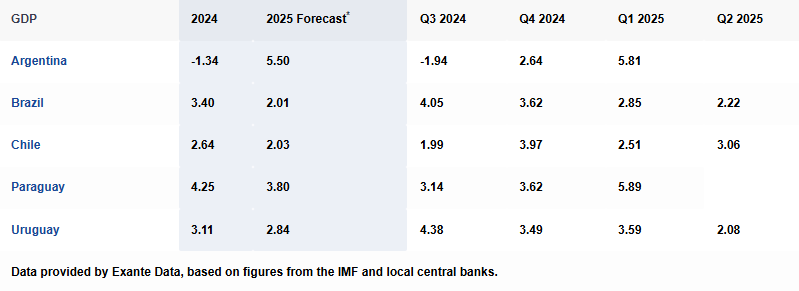
    Brazil & Southern Cone: GDP growth (%)
    Quarterly figures are year-on-year growth

  • BRAZIL ENVIRONMENT: Setting an example

    LatinNews 20 January 2016 Hits: 737

    The federal police on 13 January presented formal charges for environmental crimes against the mining firms Samarco and Vale following  the November 2015 dam burst in Minas Gerais state.

    Individual executives, including the president of Samarco, Ricardo Vescovi, and six others will also face charges. Vogbr, a consultancy firm contracted by Samarco to audit the dam’s safety, has also been indicted. Fourteen people were killed in the disaster, which caused a huge wave of toxic mud to flow down an 800km stretch of the Doce River, destroying much of the plant and animal life along the river. The incident was described by one cabinet minister as Brazil’s worst-ever environmental disaster. The charges were based on a law which criminalizes activities causing pollution that risks damage to human health, the death of animals, or the significant destruction of flora.

    The police indicated that further charges may follow in the course of the investigation. As the Doce River bed is considered a public good belonging to the Brazilian state, the federal police are involved. Investigations into the deaths of those near the dam at the time of its collapse are being carried out by the civil police of Minas Gerais.

    Samarco responded to the news in a note published in the Brazilian media, stating that “it did not agree with the charges against its executives because until now there has been no technical study to determine the cause of the accident”. Vale also defended itself, arguing there was no definitive proof showing why the dam had collapsed. “The assumptions of the federal police on the theoretical responsibility of Vale are based on assumptions that have no actual causal link to the accident, as will be demonstrated in a technical and timely manner by Vale”, the company stated.

    Vogbr, the consultancy firm, did not respond to requests for comments. In December, it was revealed that as well as being contracted to provide security assessments for the dam, the company was also hired to design an extension for the dam, a dual role prohibited by local legislation.

    Forest Fires rise by over a quarter in 2015

    According to the Instituto Nacional de Pesquisas Espaciais (INPE), the number of forest fires in Brazil increased by 27.5% in 2015 over the previous year.

    Over 235,000 fires were detected by the agency in 2015, a number surpassed only by the 249,000 recorded in 2010. Among the worse affected states were Pará, Mato Grosso and Maranhão. Researchers blame the vast majority of the fires on human activity, aggravated by a dry climate, a lack of effective, real-time monitoring, and poor oversight. After years in decline, deforestation in the Brazilian Amazon rose in 2015, reaching a seven-year high.

    According to Alberto Setzer, the coordinator of INPE’s monitoring programme, the rising price of meat has played a part in driving up the number of fires to create grazing land for cattle. “This is not about nature taking its course”, Setzer said. “This was caused by human action, whether deliberately or not”. In Matopiba, an area formed by parts of the states of Maranhão, Tocantins, Piauí and Bahia, forest fires were up 37.9%. The area produces large amounts of soya, corn, and cotton.

    One of the worst fires in 2015 took place in the Chapada Diamantina area of the state of Bahia. Around 51,000 hectares (ha) of land was devastated as the fire burned for 64 days. Without sufficient numbers of firefighters, the Bahia state government requested help from the armed forces and local volunteers. Elsewhere, in the state of Maranhão, half of the indigenous Arariboia territory burned for two months. The environmental NGO Greenpeace claimed the fire was the work of loggers retaliating against the indigenous community.

    • On 12 January, Samarco delivered, a day late, its emergency plan to deal with possible breaks at the other two dams at the site of the November accident which were damaged in the incident. Employees at the Fundão barrier went back to work in the New Year, tasked with clean-up operations. However, workers could be laid-off for three months from 25 January, while the investigation into the causes of the accident continues.
    • Though recent statistics have disappointed, agriculture remains one of the Brazilian economy’s more successful sectors. With many commodity prices still low, the cost of beef continues to rise, meaning there is little economic incentive for the government to do more to control forest fires in 2016.
  • TRACKING TRENDS

    LatinNews 07 September 2017 Hits: 493

    ECUADOR | New budget plan approved. On 31 August, Ecuador’s unicameral national assembly approved a new national budget plan for the remainder of the year, totalling US$36.8bn, of which 39% has already been spent. The assembly voted 75-22 with 34 abstentions in favour of the new budget proposal presented by the government led by President Lenín Moreno. An official statement said that the legislative economic commission has ensured that the project complies with the equation that permanent (regular and recurrent) income does not exceed permanent expenses. It added that the commission has also verified that there is an increase in the budget allocations in both the social area and other budget items linked to the attainment of the country’s development objectives such as education, health, peace & justice, and poverty eradication. The permanent income in the new budget plan is US$20bn while the permanent expenses are around US$19bn, which implies a US$1bn surplus, the president of the economic commission, Pabel Muñoz, said in statements published on the assembly’s website. However, the report on the new budget plan presented by Muñoz to the assembly plenary shows that while this stipulates a permanent fiscal surplus, this is not the case when it comes to ‘non-permanent’ income and expenses, where the projection is for a US$5.89bn deficit. This translates into a full (permanent plus non-permanent) fiscal deficit of US$4.79bn. This deficit was carefully scrutinised and approved by the assembly’s plenary, which is responsible for verifying that the budget plan complies with the national development plan and the government borrowing limits set by law. However, in its report, the assembly’s economic commission included recommendations such as maintaining a constant surveillance of the country’s trade balance, an aspect which is defined as Ecuador’s ‘Achilles’ heel’, since the exclusion of oil revenues from this balance leaves a deficit of over US$1bn. Meanwhile, Muñoz noted that the new budget plan forecast GDP growth of just 0.71% this year. In the last decade, Ecuador’s average annual economic growth was of 3.4%, above the average of 2.5% but such growth now looks out of reach for Ecuador.

  • BOLIVIA: Political rivalry shapes pandemic response

    LatinNews 23 April 2020 Hits: 5888

    Even in the midst of a pandemic, with the elections scheduled for 3 May still indefinitely suspended, there appears to be no issue of political significance in Bolivia that does not descend immediately into partisan rivalry. While interim president Jeanine Áñez’s political opponents have fiercely criticised her pandemic response strategy [WR-20-15], undoubtedly with at least one eye on the election, the interim government has itself blamed these rivals for several of its most pressing challenges, most recently in relation to the escalating tensions in Chapare, Cochabamba department.

    • Election date debate

    MAS officials have emphasised the need to prepare for rescheduled elections as soon as the public health risks have subsided, to allow a democratically elected government to take charge of the economic and social recovery. Senate president Eva Copa warned that failing to set at least a provisional alternative date by 3 May would represent a violation of the interim government’s mandate to administer new elections and pose a threat to democracy. The minister of the presidency, Yerko Núñez, accused the MAS of “thinking about politics, about how to return to power”, while the interim government prioritises its pandemic response.

    Chapare, a major stronghold for the opposition Movimiento al Socialismo (MAS), has been a thorn in Áñez’s side since she came to power. State security forces were expelled from the province in November 2019 after nine anti-government protesters were killed in the ‘Sacaba massacre’, and tensions were revived by the return of several police units on 15 April. Local leaders condemned the interim government for failing to consult them, warned that the police presence risked spreading coronavirus (Covid-19), and called for a withdrawal within 24 hours. The police units did not last long enough to respond, as crowds gathered quickly in several municipalities to force them out.

    Interior Minister Arturo Murillo accused MAS officials of orchestrating the demonstrations to “provoke confrontation”, and on 18 April he threatened to “encapsulate” Chapare in response, claiming that the protests posed a public health risk. MAS senate candidate Andrónico Rodríguez, from Chapare himself, denied that the party had any involvement in the “spontaneous protests” but criticised the interim government for its “deliberate provocation”. Murillo said that three MAS officials had been identified amongst the crowds and would be charged with sedition and crimes against public health.

    Local leaders reported on 20 April that the ‘encapsulation’ had involved closing banks and petrol stations, preventing the unemployed and vulnerable from accessing emergency government subsidies, and undermining the economic activities still allowed under quarantine. On 21 April, Rodríguez reported that the encapsulation had been reported to the United Nations (UN) and the Organization of American States (OAS) as a breach of human rights. Murillo insisted that these were necessary consequences of the protests, saying “it is time for people to recognise the damage that these leaders do”.

    An agreement to end the deadlock was reached on 22 April, after talks between the interim government and local leaders. Cochabamba police commander Franz Sellis reported that the units would return to Chapare, allowing banks and petrol stations to reopen. Rodríguez welcomed the agreement but emphasised that earlier consultation could have avoided the issue entirely, and he accused the interim government of punishing vulnerable communities in an effort to stigmatise and punish the MAS.

    Another ongoing spat between the interim government and the MAS, over the hundreds of Bolivians stranded in Chile since the border closed in March [WR-20-14], is edging closer to a resolution, as the 440 people held in the Tata Santiago quarantine camp were allowed to return home on 18 April, and a further 440 crossed the border to enter the camp. However, Defence Minister Fernando López stirred further controversy on 20 April with the announcement that emergency subsidies will only be paid to those who have lived in the country for the past two years, leaving the large number of Bolivians who have returned home after losing jobs abroad without any financial protection.

  • EL SALVADOR: Bukele doubles down but bitcoin difficulties become clearer

    Sarah Sheldon 21 June 2022 Hits: 973

    In mid-May, El Salvador’s President Nayib Bukele welcomed representatives from 44 countries to discuss the country’s adoption of cryptocurrency bitcoin as legal tender.

    The event was ostensibly an opportunity for other nations to learn about the rollout, after El Salvador became the first country in the world to adopt bitcoin as an official currency in September 2021. “Tomorrow, 32 central banks and 12 financial authorities (44 countries) will meet in El Salvador to discuss financial inclusion, digital economy, banking the unbanked, the bitcoin rollout and its benefits in our country,” tweeted Bukele on the eve of the event, on 15 May.

    But while Bukele continues to try and paint his bitcoin adventure as a success, the main lessons to be learned are in fact about the risks of adopting the cryptocurrency. Major financial institutions such as the International Monetary Fund (IMF) warned El Salvador about the effects of the volatility of bitcoin on the country’s already fragile public finances, and a recent collapse in its price has justified those concerns. After hitting a record high in excess of US$67,500 in November, bitcoin was trading at US$42,000 in mid-March, with the volatility having a knock-on effect on public finances.

    In the short-term, Bukele has also lost around US$40m on the country’s bitcoin holdings, according to an estimate from Bloomberg published 12 May. At the time, bitcoin was worth around 45% less than it was when Bukele first bought into the cryptocurrency, which meant El Salvador’s 2,301 bitcoins were worth around US$66m. The US$40m cumulative loss is almost equal to El Salvador’s 15 June coupon payment on foreign debt. While losses from bitcoin trading are unlikely to bankrupt a nation state, the experiment is diverting resources that could be put to much better use and affecting investor confidence.

    Perhaps the most important effect of the mid-March price crash is due to the fact that it came shortly before the planned issuance of a 10-year US$1bn bitcoin-denominated bond, known as a “Volcano bond,” and as a result the Bukele government decided to delay the bond issue. Finance Minister Alejandro Zelaya said that the government had a number of other options to raise money, and there was zero chance of the country defaulting on its foreign debt. However, analysts suggest there could be a crunch point in January 2023, when the country would be required to make a US$800m Eurobond repayment.

    Adding to concerns are a series of recent downgrades from international credit ratings agencies. On 1 June Standard and Poor’s (S&P) Global Ratings downgraded El Salvador’s long term sovereign credit ratings to CCC+ from B- with a negative outlook. S&P cited a high fiscal deficit, which it expects to remain around 4.5% of GDP between 2022 and 2024 and a high level of debt which it expects to remain at 80% of GDP between 2022-2025. It also cited fewer financing options, a situation widely attributed in part to the government’s decision to adopt bitcoin as legal tender and its fall-out.

    On 4 May, Moody’s downgraded the Salvadorean government's long-term foreign-currency issuer rating and long-term foreign-currency senior unsecured debt ratings to Caa3 from Caa1 (see sidebar) while in February Fitch Ratings downgraded the country’s Long-Term Foreign Currency Issuer Default Rating (IDR) to ‘CCC’ from ‘B-’. Fitch said that the downgrade reflects heightened financing risks stemming from increased reliance on short-term debt; the US$800m Eurobond repayment due in January 2023; a still-high fiscal deficit; limited scope for additional local-market financing; and uncertain access to additional multilateral funding and external market financing given high borrowing costs.

    This means that it has become much more expensive for El Salvador to borrow in order to finance its debt. “El Salvador’s fiscal problems don’t stem from bitcoin, but it is true that it [the bitcoin law] has contributed to the deterioration of the country’s risk profile,” Ricardo Castaneda, an analyst at Guatemala-based thinktank Central American institute of fiscal studies (Icefi), told local investigative media El Faro in a piece published on 13 May. “If El Salvador were to look to issue bonds now, assuming that somebody would buy, they would have to pay 25 to 26 percent interest,” Castaneda said, “whereas a year ago they would have paid around 7 percent.”

    One possible lifeline is a US$1.3bn three-year programme with the IMF which the two sides have been discussing for over a year. However, the adoption of bitcoin as legal tender has complicated negotiations. El Faro cites London-based financial research firm EMFI as saying that El Salvador’s bonds are already trading as if the country had announced a default, and, if no deal with the IMF is announced, the risk of insolvency in the next five years is 87%.

    Bukele has shown no signs of rowing back on his gamble on the cryptocurrency, continuing to tweet about “buying the dip” when bitcoin prices crashed. He remains popular, receiving a score of 8.34 out of 10 in a survey published on 25 May by the Universidad Francisco Gavidia in El Salvador. His continued popularity three years into his term is remarkable, particularly considering the anti-incumbent wave that has swept the region in recent years.

    “There are those in international finance who suspect that if Bukele is…re-elected in 2024 [a possibility following the controversial decision by the judiciary last year to overturn the ban on consecutive presidential re-election], he could unilaterally rewrite the terms of the debt, or decide not to pay altogether,” Salvadorean journalist and California State University, Fullerton academic Ricardo Valencia wrote for El Faro. “Bukele would have the perfect cast of scapegoats: multilateral financial organizations, the US government, and the political opposition.” But while some try to predict Bukele’s next move, the reality of strained public finances at a time of rising living costs is affecting ordinary Salvadoreans, a ticking time bomb could bring the whole house of cards tumbling down around Central America’s biggest bitcoin proponent.

    • Moody’s

    Moody’s said its decision to downgrade El Salvador “reflects an increased probability of a credit event – restructuring, distressed exchange, or default – with relatively high severity, as the sovereign faces a challenging debt amortisation schedule with bond maturities in 2023 and 2025 in a context of continued funding stress and persistently high financing needs”. At the same time the agency lowered El Salvador's foreign-currency country ceiling to Caa1 from B2 “to reflect the low predictability of institutions and government policies, weak policy effectiveness and the government's relatively large share in the country's total external debt”. 

  • HONDURAS: IMF to lend US$830m to support economic reform policies

    Sarah Sheldon 18 September 2023 Hits: 618

    On 11 August the International Monetary Fund (IMF) announced an US$830m arrangement with Honduras following a staff visit to the country from 5-16 June.

    The staff-level agreement for a 36-month arrangement under the IMF’s Extended Fund Facility (EFF) and Extended Credit Facility (ECF) aims to support Honduras’ economic reform policies but is subject to the approval of the IMF’s executive board. In a press release announcing the arrangement, the IMF highlighted the fact that “the Honduran economy has remained remarkably resilient to several shocks, both domestic and external, including the [Covid-19] pandemic, weather events (tropical storms and droughts), the impact of the war in Ukraine, and the global economic slowdown, which has impacted especially the country’s export sector”.

    Despite this resilience, the country “continues to face long-standing social and structural challenges, including high vulnerability to climate change,” it adds. “Addressing these challenges will require steadfast implementation of policies and structural reforms that promote economic diversification and social inclusion,” according to the IMF.

    The organisation goes on to highlight four key pillars in the reform programme. First, the aim is to preserve macroeconomic stability and debt sustainability while creating fiscal space for investment and social spending. In addition, opportunities for spending will be generated by improving public financial management, through measures such as strengthening tax and customs administration and improving budget transparency. Here the IMF underlines the “far-reaching tax reform” which is currently being considered in congress, which will support infrastructure investment and the construction of a social safety net by reducing exonerations from income tax.

    The third pillar is to strengthen the monetary framework, develop the local debt market, and safeguard financial stability. Honduran authorities will resume issuing treasury bonds and mobilise domestic savings through a medium-term debt strategy. Finally, the IMF will support efforts to improve governance and transparency, fight corruption, and enhance economic resilience. Key initiatives under this pillar include strengthening the Anti-Money Laundering framework, the repeal of the Secrecy Law, which was passed in January 2014 and restricted access to public information, in March 2022, and the repeal of Decree 116-2019, which allowed budgetary resources to be allocated through the Departmental Fund without proper scrutiny.

    While the agreement is good news for President Xiomara Castro, the economic panorama remains complicated. An IMF report published 16 June expects Honduras’s GDP growth to decline to around 3% in 2023 driven by lower remittances, a less supportive external environment, and drought, which is affecting agriculture and energy generation. The current account deficit is expected to widen to 5% of GDP after narrowing to 3.4% in 2022, and the IMF emphasises that “social conditions remain fragile, and downside risks to the near-term outlook are significant”.

    Other developments

    Other developments highlighted by the IMF include plans for a nationwide company registry which includes information on beneficial ownership, and an electronic asset declaration system for public sector workers. The IMF also underlines the importance of efforts to safeguard the sustainability of the energy sector, which is a major priority for President Xiomara Castro.

  • CUBA: Melissa adds to the crisis

    Abbi Dicker 11 December 2025 Hits: 627

    Countries with strong economies, robust infrastructure, and prudent levels of foreign currency reserves can rely on them to work as protective “shock absorbers” during national disasters. In the case of Cuba and Hurricane Melissa there has been much more of a hard landing.

    Melissa hit eastern Cuba on 29 October as a Category 3 hurricane with winds of 195 kmh. It brought torrential rains and storm surges that caused widespread flooding, landslides, and housing collapses in the eastern provinces of Santiago de Cuba, Guantánamo, Holguín, Granma, Las Tunas, and Camagüey. Initial estimates were that over 2m people had been affected. Critical infrastructure was disrupted affecting electricity, water supply, health, and education. Attempts to control a pre-existing outbreak of the dengue, chikungunya, and Oropouche viruses was also negatively impacted. According to the International Federation of Red Cross and Red Crescent Societies (IFRC) these factors “created a complex, multi-crisis situation in which affected populations face overlapping humanitarian needs”. Recovery work has been slow.

    The major issue is that Melissa struck at a time when the Cuban economy has been at its weakest. The United Nations (UN) Economic Commission for Latin America and the Caribbean (Eclac) predicts that Cuba’s GDP will fall 1.5% this year making it the worst performer in the region, with the exception only of Haiti. Over the last five years Cuba’s GDP dropped 11%, caused by the coronavirus (Covid-19) pandemic, mass outward migration, poor macroeconomic policies and the long-standing US trade embargo. Tourism revenues have dropped. Food supplies are scarce, power cuts frequent, public transport is erratic, inflation is high, and the fiscal deficit is widening. According to Spain-based NGO Observatorio Cubano de Derechos Humanos (OCDH) 89% of Cuban families “live in extreme poverty”.

    Electricity supply is a case in point. For six months before Melissa arrived, power cuts had been endemic. They are caused by repeated breakdowns in the country’s 16 power generators, and the lack of foreign currency to buy diesel and spare parts. Almost three weeks after the hurricane hit, roughly half a million residents in the affected area still had no electricity at all. In the rest of the island, rolling power cuts affected 58% of normal supplies. Private sources estimate that between US$8bn and US$10bn is needed to rebuild the electricity grid, money that the government does not have.

    Until now the government has shown itself to be slow-moving and conservative in its approach to the crisis. There is, however, a chance that Melissa will force something of a rethink. According to local media reports the impact of Melissa and the state of the economy will be the two top agenda issues in the upcoming Plenum of the Central Committee of the Partido Comunista de Cuba (PCC) due to be held in December. State newspaper Granma says it will discuss unifying the official exchange rate (set at 24 pesos to the US dollar) with the black-market rate (currently around 450 pesos).

    It is suggested the government is considering a move to some kind of exchange rate float to eliminate distortions and support economic recovery. Ian Pedro Carbonell, the director of macro-economic policy at Cuba’s central bank, says the institution is working “to create the operational, technological, and policy conditions necessary for an official, orderly, transparent and functional currency market”. Whether the government will actually reform the currency system in the immediate future remains an open question, however.

    • Currency system reform

    In December 2024 Cuba’s Prime Minister Manuel Marrero told Cuba’s national assembly (ANPP) that a single, publicly tradeable official exchange rate would be introduced. Nearly a year later, nothing has happened.