All Categories

Subcategories

  • REGION: Food security still a cause for concern

    Abbi Dicker 16 April 2025 Hits: 3786

    In February Guyana’s President Irfaan Ali, who also coordinates Caribbean Community (Caricom) initiatives on agriculture and food security, told a meeting of regional leaders in Georgetown that despite some progress Hurricane Beryl and global supply chain disruption was continuing to disrupt efforts to improve nutrition in the Caribbean region.

    The overall campaign to improve access to food and nutrition across the Caribbean goes by the name of “25 by 2025”. It was launched in 2022 proposing to reduce the US$6bn regional food import bill by 25% by the end of this year. Reliable data on progress made so far has yet to be compiled but Ali nevertheless spoke of significant advances.

    He said that during the period running from 2022 to October/November 2024 there had been a 24% increase in regional food production. He highlighted investment in infrastructure including cold storage, farm-to-market access roads, dryer facilities, bank loan approvals and the establishment of dairy facilities. He argued that the region was on the right track to build a resilient sustainable and competitive industry that would encourage participation by young people and women.

    A United Nations Food and Agriculture Organization (FAO) report on food security in Latin America and the Caribbean, published in January, offers some context. It notes that second only to Asia, nearly three-quarters of LAC countries are exposed to extreme weather events. In 2023 41m people in LAC suffered from hunger down by 6.6% on 2022. But there were big disparities between regions. The proportion of Caribbeans suffering hunger has increased over the last two years to 17.2% of the population, while it remained stable in Mesoamerica, at a much lower 5.8%.

    Hunger and food insecurity

    According to the United Nations Food and Agriculture Organization (FAO) report on food security in Latin America and the Caribbean, published in January, overall, the number of people living with hunger and food insecurity across LAC has fallen over the last two years. The UN attributes this to economic recovery, social protection programmes, and efforts to improve food access. Extreme weather, hurricanes, and limited fiscal room for manoeuvre nevertheless make it particularly difficult for Caribbean countries to tackle malnutrition.

  • TRACKING TRENDS

    LatinNews 19 September 2011 Hits: 1750

    ARGENTINA| Taxing foreign films. Argentina’s film industry, arguably the most developed in Latin America, is highly dependent on the domestic market and financing from the national institute of cinema and audiovisual arts (Incaa), which receives a percentage of the price of every ticket sold in screens to finance home-grown projects. This week, Incaa announced it will levy a tax on foreign films screening in the country to incentivise the consumption of locally produced features. The maximum fee will apply to movies shown in more than 161 screens simultaneously and will be equivalent to the retail price of 12,000 entry tickets, roughly AR$400,000 (US$95,000) at current ticket prices.

    BRAZIL | Embraer secures Honduran order. On 3 September the head of the Honduran armed forces, General René Arnoldo Osorio Canales, announced the purchase of four SuperTucano EMB-314 light attack aircraft from Brazil’s Embraer, at a total cost of US$40m (US$10m each). He said that the turboprops will be equipped with machine guns, ordnance, night vision equipment and a radar system. They will be used for anti-drug trafficking operations in Honduras. The order will be funded via a controversial new security tax recently approved by the Honduran congress. The expected turnaround time is two years, with a delivery date of 2013-2014. Honduras purchased 12 Embraer EMB-312 Tucanos, the predecessor to the Super Tucano, in 1984, but the model has since been retired. Honduras was originally after hard-to-find spare parts, but Embraer upsold the new model instead.

    URUGUAY | Minustah scandal. This week President José Mujica issued a formal apology to Haiti’s president, Michel Martelly, for the alleged rape of a Haitian man perpetrated by Uruguayan marines serving in the UN Stabilisation Mission in Haiti (Minustah). The alleged assault has triggered outrage both internationally and domestically. The Brazilian head of Minustah, Major General Luiz Eduardo Ramos Pereira, has also issued a statement “vehemently” condemning the act. However, the UN’s Secretary General Ban Ki-Moon, has remained silent. As we go to print, the defence and foreign relations ministers from the Latin America countries contributing troops to Minustah are meeting in Montevideo to analyse the situation in Haiti and Brazil’s defence minister, Celso Amorim, has reiterated Brazil’s determination to reduce its presence in Haiti.

  • URUGUAY: ECONOMIC OVERVIEW

    LatinNews 22 May 2013 Hits: 861

    Inflation slowed down for the third consecutive month in April, according to the national statistics institute (INE). Inflation was 0.45% in April bringing 12-month rate to 8.14%, down from 8.54% in March. This suggests the threat of double-digit inflation is receding, although the government target of between 4% and 6% annual inflation for 2013 remains optimistic. The monetary policy committee of the central bank pushed the reference interest rate up to 9.25% last December but left this unchanged in March. Uruguay closed 2012 with inflation of 7.48%.

  • TRACKING TRENDS

    LatinNews 06 December 2018 Hits: 746

    COLOMBIA | Exports up. Colombia’s exports increased by 15.8% year-on-year to reach US$3.79bn in October, according to figures released by the national statistics agency (Dane) on 3 December. The October export result brings the accumulated total export figure for the first 10 months of the year to US$35.1bn, a 14% year-on-year increase.

    According to the Dane report, the increase in exports in October was driven by the sales of hydrocarbon fuels and minerals, which increased by 27% year-on-year over this period on the back of the increase in international oil prices. Nevertheless, the report also notes that the export of manufactured goods posted double-digit growth (10.5%) in October and that this also contributed to boosting overall export levels.

    The trade, industry & tourism minister, José Manuel Restrepo, hailed the October export results noting that they show that Colombia’s export offer is becoming more diversified, “which will allow us to compete in the world and take advantage of the opportunities offered by [international] trade agreements”.

  • TRACKING TRENDS

    LatinNews 01 August 2019 Hits: 3767

    CHILE | Diesel spill in Patagonia. Compañía Siderúrgica Huachipato (CAP Steel) announced on 27 July that it had spilled 40 cubic metres of diesel off the coast of the Island of Guarello in Chile’s southernmost region of Magallanes while transferring it onto a transport vessel. CAP Steel, a subsidiary of Chilean holding company Compañía de Acero del Pacífico (CAP Group), insisted that it was taking every possible measure to ensure that the spill was contained and confirmed that it consisted entirely of diesel and not crude oil, implying a less intensive clean-up process.

    CAP Steel indicated that it had reported the incident to the Chilean navy who immediately came to assist in containing and cleaning the contaminated area. On 28 July, the navy announced that it had been successful in recovering 15,000 litres of contaminated water, and that wind patterns had helped contain the spill in the south of Guarello Island’s bay.

    Although CAP Steel has endeavoured to give the impression that it has the situation under control, it did not escape serious criticism for the incident as it occurred in an area of pristine wilderness. The environmental NGO Greenpeace released a statement calling the spill an environmental emergency with great risk to marine mammals. It also expressed concern that the spill had occurred in one of the least polluted areas in the country, and that its remote location (2,200 kilometres from Santiago), could delay a clean-up process that must happen quickly if it is to be effective.

    On 29 July Senator Guido Girardi, a member of the left-of-centre opposition Partido por la Democracia (PPD) and president of the upper chamber’s environmental commission, submitted a formal complaint to the attorney general’s office against those responsible for the spill which he described as “an extremely serious ecological disaster”. He said that no single individual could be blamed, but that companies could be pressured to improve preventative measures.

    CAP Steel is vital to CAP Group’s domestic mining production. The diesel spill is one of many recent mining-related incidents in Chile, including another spill, this time of oil, in the southern city of Osorno in Los Lagos region, by the Chilean water utilities company Essal contaminating a drinking water processing plant on 11 July [WR-19-30], and a surge in sulphur dioxide air pollution in the coastal commune of Quintero-Puchuncaví, prompting the declaration of a state of environmental emergency on 29 July by the region authorities of Valparaíso.

  • CUBA: Solar not shining brightly enough?

    Sarah Sheldon 28 May 2024 Hits: 904

    In April the Japan International Cooperation Agency (JICA) announced a US$20m donation to Cuba to help build a solar energy park in Isla de la Juventud, the second largest Cuban island (after Cuba’s mainland). Amid power cuts and fossil fuel shortages, investing in solar and other renewable energy sources could be the way forward for the country. But the evidence suggests there will be no quick solutions.

    Prime Minister Manuel Marrero launched work on the new solar park, which will include the installation of rapid-discharge lithium batteries to smooth out the intermittency of generation. One of Cuba’s big problems is that it is about 95% reliant on imported fossil fuels (mainly fuel oil and diesel) to run its ageing thermo-electric power plants. With foreign currency shortages limiting fuel imports, the Partido Comunista de Cuba (PCC) government has had to impose rationing through ongoing power cuts. So far this year the rotating cuts have at any one point in time represented a 20%-45% shortfall on normal consumption levels. The cuts are deepening the economic recession as well as increasing political tensions with the government, which remains fearful of new popular protests.

    In theory the JICA-funded project points the way forward to a solution to the Cuban energy crisis. Solar power is cost competitive. Although solar panels must be imported, renewable power running costs in foreign currency are less onerous. Authorities say that the JICA solar park will help take renewables up to cover 20% of electricity demand on Isla de la Juventud. At a national level the government has announced a target to have renewables cover 37% of the energy mix by 2030. In March, Energy Minister Vicente de la O Levy said two contracts had been signed with Chinese companies who over the next four years will build three solar parks in each province, adding 2,000MW of capacity. Spain has also offered to collaborate on a solar project. There are also plans to develop wind, hydro, and bioenergy projects.

    The problem however is that a modest shift to renewable energy may be “too little too late”. As a result of years of low investment, the national electricity grid is close to collapse. Thermo-electric generating plants are between 24 and 49 years old and are frequently breaking down or requiring hard-to-source spare parts. The government has had to hire floating power plants from a Turkish company to try and keep the lights on. At present six such floating powerships are in operation, providing around 14% of total electricity generation. Sustained investment and reconstruction of Cuba’s power sector is needed, but it is hard to see how the government might find the foreign currency required.

  • ECONOMIC HIGHLIGHTS

    Patrick de Courcy 19 June 2025 Hits: 3298

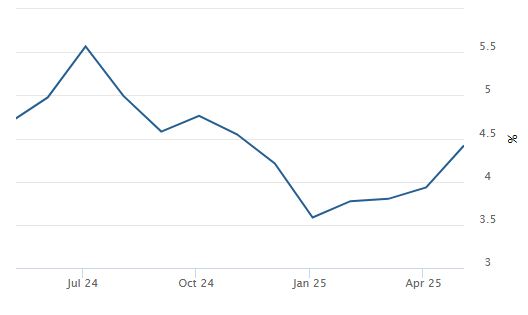
    MEXICO | Annual inflation accelerates, exceeds target range. On 9 June Mexico’s national statistics institute (Inegi) released the consumer price index (INPC) for May, reporting that monthly inflation stood at 0.28% in May, down from 0.33% in April. This brought the annual headline inflation rate to 4.42%, up from 3.93% in April, and above the upper end of the central bank (Banxico)’s target range of 3% +/-1. The annual figure was above the 4.38% expected by economists in a Reuters poll, and the 4.38% median estimate of economists surveyed by Bloomberg. Core inflation, which excludes volatile items like food and fuel, was 0.30% in monthly terms in May, down from 0.49% in April.

    MEXICO | More job losses recorded in May. On 5 June Mexico’s national social security institute (IMSS) reported that 45,624 jobs were lost in May, down from 47,442 losses in April. May’s job losses were attributed to seasonal agricultural factors. According to the same report, 133,655 jobs were created in Mexico from January to May 2025. This compares with 324,613 in the same period in 2024. As of 31 May 2025, the IMSS had 22.37m jobs registered, of which 87.2% are permanent and 12.8% are temporary.

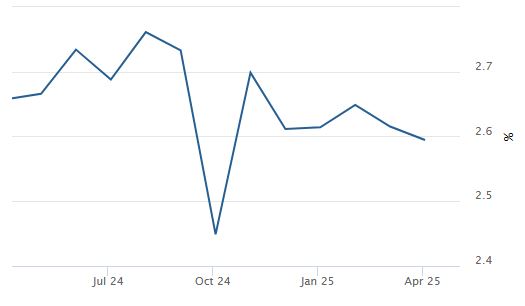
    MEXICO | Unemployment rate up in monthly terms. On 30 May Mexico’s national statistics institute (Inegi) reported that the unemployment rate of the economically active population stood at 2.5% in April 2025, compared to 2.6% in the same month of the previous year. This equates to 1.6m people, down 43,000 people year-on-year. The unemployment rate was up from 2.2% in March. In April the economically active population – meaning people aged 15 and over who are employed or actively seeking work – stood at 61.5m, up by 45,000 people as compared to April 2024. The informality rate in April was 54.7%, up from 54.6% in April 2024, with 17.4m people employed in the informal sector.

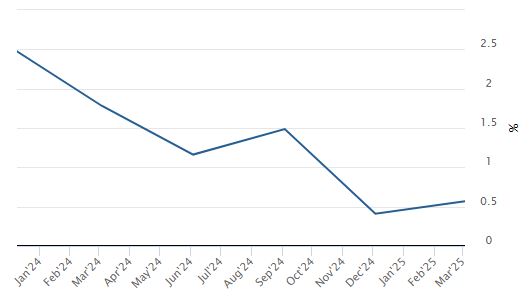
    Mexico: GDP growth
    Percentage variation (year-on-year)

    Mexico: unemployment rate
    Economically active population

    Mexico: inflation rate
    Percentage variation (year-on-year)

    Source (all graphs): National Statistics Institute (Inegi

  • BOLIVIA: Paz under pressure from vice president

    Abbi Dicker 04 December 2025 Hits: 660

    Since winning the 19 October election, Bolivia’s new President Rodrigo Paz has had a very public falling out with Vice President Edmand Lara, whose viral tirades against corruption on social media played a significant role in Paz’s victory. Given Lara’s popularity with the public, Paz’s poor relationship with his vice president could have political repercussions.

    President Paz claimed on 27 November that there are no “rough edges” that he needs to “smooth out” with Lara, his “only concern is the needs of the people”. However, the relationship between president and vice president has clearly undergone a sharp deterioration that began almost as soon as Paz was declared the winner of the election.

    Paz’s comments came after Lara claimed that he is not invited to cabinet meetings and effectively “is not part of this government”. Lara accused Paz of being “controlled” by the business magnate Samuel Doria Medina, who came third in the election and whose Unidad party supports Paz in congress. This dynamic, Lara claimed, was the reasoning behind the government’s elimination of a wealth tax on 25 November.

    • Budget and tax cuts

    Economy Minister José Gabriel Espinoza made several major fiscal announcements on 25 November, saying that the 2026 budget that was issued by the Luis Arce administration (2020-2025) would be recalled from congress and cut by at least 30%. He also announced the elimination of four taxes which he said discourage investment and cost more to collect than they raise in revenue. These are the wealth tax, the tax on financial transactions, and two gambling taxes.

    Chaos in the justice ministry has been another source of tension. Paz’s initial choice for justice minister, Freddy Vidovic, was apparently chosen by Lara, but was fired on 20 November after it emerged that he had been convicted of bribery in 2015. Vidovic’s replacement, Jorge Franz García, was instantly attacked by Lara who announced that the new minister is under investigation for multiple alleged crimes including rape, domestic violence, and bribery. García denied this and announced plans to sue Lara for defamation.

  • PANAMA: Growing speculation over major mine reopening

    Sarah Sheldon 21 September 2026 Hits: 14

    Government officials have visited the controversial Cobre Panamá mine as speculation over its potential reopening continues to grow.

    On 24 August, Panama’s environment minister, Juan Carlos Navarro, visited the huge copper mine alongside a team of officials, with the stated aim of checking whether its owner, Canadian firm First Quantum Minerals (FQM), is adhering to the terms of a management plan. Navarro also launched a water quality monitoring programme in 15 communities around the mine. His visit came two days after around a dozen technicians from the ministry inspected the mine installations as part of ongoing surveillance efforts.

    The open-pit copper mine is one of the largest in the world. It accounted for about 5% of Panama’s GDP and 2% of employment before it was shut down in 2023 under former president Laurentino Cortizo (2019-2024) following major unrest over a new contract, which the supreme court ultimately struck down [EB-23-12]. Rumours that the mine will reopen have intensified since President José Raúl Mulino took office in July 2024. FQM suspended arbitration against Panama over the mine last year, and in April this year President Mulino approved the removal, processing, and export of ore stockpiled at the mine before the suspension of operations.

    More recently, a government-commissioned audit of the mine released at the end of July concluded that it is “broadly compliant” with its environmental obligations, although independent analysis rejected its findings. Civil society groups, led by Panamanian NGO Centro de Incidencia Ambiental (Ciam), said they had identified “serious contradictions, a significant absence of data and analysis and risks or dangers for the project’s areas”. Ciam also questioned the independence of the audit, alleging that the vast majority of its findings are based on self-reported data from FQM.

    The government has also formed an interministerial commission to evaluate the mine’s performance, and media reports suggest that officials are exploring potential ways of reopening the mine while minimising public opposition. In one Reuters report published on 22 July, an unnamed former government adviser said “it is clear that the government wants to open the mine with First Quantum…But it still fears social unrest”. It also cited two people familiar with the development as saying Panama “is considering creating a state-owned mining firm to partner” with FQM to reopen the mine. 

    Negotiating a new contract between this new state-owned firm and FQM could allow Panama to capture more economic benefits from the mine, particularly as global copper prices have risen significantly since Cobre Panamá was shuttered. This could help to tamp down opposition to the mine in some quarters, particularly if the government is able to articulate a credible plan for how the money will be used to deal with demands for social spending.

    The economic case for restarting operations is easy to understand, with stockpile processing operations alone already adding around 1,000 jobs and Mulino keen to boost GDP growth and state revenue to shore up the country’s fiscal position. But the political risk is considerable, with controversy surrounding the mine a catalyst for some of Panama’s largest protests in decades. In addition, the country’s supreme court ruled that the contract governing the concession was unconstitutional. This means a new contract would have to be drawn up, but this could contravene a 2023 law which bans new mining concessions. The creation of a state-owned mining firm could help circumvent this ban, and legal experts such as former president of the national bar association, Juan Carlos Araúz, have said that the plan is “viable”.

    However, it would be likely to result in legal challenges, with those who oppose the mine already demonstrating a willingness to file court papers: in June, judges said they would consider a petition arguing that the government permit to process copper stockpiles should be cancelled because it could constitute a reactivation of the mine. There could also be challenges on environmental grounds, with the implementation of water quality monitoring showing that these issues remain unresolved.

    Mulino therefore faces a delicate balancing act. Restarting mine operations would bring clear benefits to the national economy and could remove a major source of legal uncertainty that appears to have had a chilling effect on foreign direct investment (FDI) inflows in recent years. However, any perception that the government is attempting to override the supreme court, or disregard public concerns over the mine’s environmental impact, risks social unrest that would have a negative economic impact at a time when Mulino is trying to rebuild investor confidence. This suggests that Mulino’s cautious and technocratic approach is likely to continue, making rapid progress towards a full reopening unlikely. 

    Stockpile

    In a report released on 28 July on its second quarter results, First Quantum Minerals (FQM) estimated the total stockpile at Cobre Panamá at approximately 38m tonnes of mineralised ore “at varying grades, containing approximately 70,000 tonnes of recoverable copper, sufficient to support twelve months of processing at current rates”. 

    Timeframe

    The interministerial commission is reportedly set to send its recommendation regarding the mine’s future to Mulino by the end of the year, and the president himself has said that a decision on the future of the mine will be technical, rather than political. "I firmly believe that everything that is done must be based on verifiable and valid information," he said in a speech at the beginning of July.

  • ECONOMIC OVERVIEW: CHILE

    LatinNews 15 February 2012 Hits: 712

    The central bank reported that the economy expanded by 5.3% in December 2011, according to the Índice Mensual de Actividad Económica (Imacec), which covers over 90% of the economy. This was over one percentage point better than the local economic consensus of 4.2% growth. The sectors which grew fastest were commerce, communications and mining.

    Dollar problems: The US dollar has fallen by about 10% against the Chilean peso this year to hit Ch$479 in mid February. Last year the central bank intervened heavily to prevent the peso soaring. Foreign exchange trades expect the central bank to introduce new measures if the dollar weakens to Ch$460.

    Trade: According to the economy ministry, 93% of the country’s exports now go to markets with which Chile has free trade agreements (FTAs). Chile has 21 such agreements with 58 countries. These deals cover 63% of the world’s population. China is now Chile’s biggest single market, accounting for 22% (or US$17.9bn) of its total exports. Export sales to China, however, were up just 3.3% in 2011. Mineral exports accounted for US$15.9bn of the sales to China.

    The European Union  (EU) is Chile’s second biggest export market, with 18%, followed by the US and Japan, with 11% each. Latin America accounted for US$14.5bn of Chilean exporst in 2011, up 14% year-on-year.

    Likewise, 89% of Chile’s imports come from countries with which Chile has a trade agreement. The US remains Chile’s biggest supplier, accounting for 20% of its imports. China is second with 17%, followed by the Mercosur with 16%.

    Drought: Water levels in the country’s dams are now at only 59% of their usual January levels, according to the Dirección General de Aguas.  The minister of public works, Laurence Golborne, noted that the county had been suffering from a drought since 2010. January is usually the peak month for the use of water for agricultural irrigation. Water levels at irrigation dams are 21% below their usual January levels, while levels at hydro-electric dams are only 9% down, he reported.

  • TRACKING TRENDS

    LatinNews 11 June 2015 Hits: 864

    CHILE | Stagnating in 2015?

    Chile’s economic activity increased by 1.7% in April compared to the same month in 2014, according to the country’s economic activity index (Imacec), a GDP proxy. This figure is almost identical to the 1.6% increase in activity recorded by the country’s central bank (BCCH) in March and well below the expectations of local economists, who had forecast it to come in at between 2.2% and 2.6%. According to the BCCH, the April Imacec result came on the back of an increase in activity in the services sector; but which was largely offset by a fall in wholesale trade.

    Chile posted real GDP growth of just 1.9% last year, its lowest economic growth rate in the past five years. Since then the government led by President Michelle Bachelet has said that it expects an economic recovery this year. But while the April Imacec figures show that economic activity is recovering, this is proving to be much lower than anticipated. In fact, the weaker-than-expected economic figures prompted the BCCH to revise down its economic growth forecast for the year by a quarter of a point to 2.25%-3.25%. Analysts have attributed the weakness in economic activity not to any fundamental economic factors but to the lack of confidence produced by the credibility crisis derived from the illegal campaign financing and other corruption scandals that have recently rocked Chile’s political establishment.

    Separately, and on a more positive note for the Bachelet government, on 8 June Chile’s internal revenue service (SII) and the national treasury reported that so far this year there has been an 8.2% increase in the tax take to US$12.97bn, compared to US$11.98bn reported at this stage last year. The boost in the tax take is principally explained by the one-point increase on the first category corporate tax rate (from 20% to 21%), introduced as part of the tax reform promoted by the government and approved by the national congress last year. In fact, the lion’s share of the tax take came from the first category corporate tax (applicable to large major mining firms as well as other large firms), which accounted for US$10.678bn of the total take. There was also an increase in the tax base with 3.22m taxpayers being registered this year, a 5.5% increase compared to last year – another product of the tax reform.

    PARAGUAY | Unprecedented fall in foreign trade

    On 8 June Paraguay’s central bank (BCP) published its latest trade figures, which show that the country’s trade surplus fell by a record 51.9% year-on-year in May. The result derives from a sharp decline in the value of Paraguay’s exports and imports from the fall in international prices of its commodity exports (primarily soya and beef). According to the BCP’s figures, total exports in the first five months of the year amounted to US$4.94bn, 19.1% less than in the same period last year, while imports were equal to US$4.27bn, 9.5% less than last year. These results leave Paraguay with a trade surplus of US$662.9m, compared to US$1.38bn last year.

    The BCP report points out that the fall in exports was driven by a 34.6% fall in the value of soya exports, Paraguay’s main export. Meanwhile beef exports, Paraguay’s second main export, fell by 4.8% year-on-year in the first five months of the year. According to the BCP, this was due to a fall in demand from Russia, currently the main consumer of Paraguayan beef, which imported 30.2% less beef from Paraguay this year compared to last year. On the positive side, exports of non-agricultural industrial goods increased by 5.5% to US$299.8m.

    The fall in the trade surplus once again highlights Paraguay’s overdependence on the agricultural sector and why President Horacio Cartes has been keen to promote the diversification of the economy by seeking to attract investment into the country during a two-day official visit to Spain on 8 and 9 June.

    URUGUAY | Rating raise from S&P

    On 5 June the ratings agency, Standard and Poor’s (S&P), raised its rating of Uruguayan sovereign debt from ‘BBB-’ in the long term (‘A-3’ in the short term) to ‘BBB’ (‘A-2’ in the short term) with a stable outlook. This decision, according to S&P’s report, is the result of Uruguay’s “increasing resilience to negative external trends in the region while maintaining economic stability and good access to international financial markets”.

    The report adds that S&P expects “continuity in key economic policies” and a timely and adequate policy response to potential adverse external development under the new government led by President Tabaré Vázquez.

    • Exporting poverty

    During his official visit to Spain, on 8 June, Paraguay’s President Horacio Cartes said that due to a lack of economic opportunities Paraguay has been “exporting poverty” to Spain in the form of thousands of migrants that left the South American country in recent years to seek a better life in Europe. Cartes pointed out that some 150,000 low-skilled Paraguayan workers currently live in Spain, while there are 13,000 skilled Spanish workers living in Paraguay. “We export poverty to Spain and receive skills [in return],” Cartes said before stating that his government would change this by improving the quality of education in Paraguay. Cartes’s unflattering remarks have earned him criticism among Paraguayans both in Spain and at home.

  • TRACKING TRENDS

    Patrick de Courcy 21 July 2022 Hits: 3199

    CHILE | Codelco makes big investment to conserve water. Chile’s state-owned copper mining company Codelco will invest US$1bn in constructing a desalination plant for its operations in Calama in the northern region of Antofagasta. It hopes to complete the work within three years.

    The president of Codelco, Máximo Pacheco, said that he was aware of “the urgency for the country”, in view of an extended decade-long drought, that “big copper mines stop using continental water for their processes”. He said the new plant would make “a fundamental contribution”.

    The desalination plant will be constructed in Tocopilla, a province in Antofagasta, and used for the operations of Chuquicamata, the largest open-pit copper mine in the world just outside Calama in the Atacama Desert. As part of Codelco’s sustainable development commitments, Pacheco said the firm would also improve efficiency of water usage elsewhere in its operations and reuse water from tailings deposits.

  • BRASIL: ‘Operação Lava Jato’ salpica indiscriminadamente

    LatinNews 21 November 2014 Hits: 544

    Durante la semana pasada al menos 23 de algunos de los más ricos y poderosos empresarios de Brasil fueron arrestados. Hasta ahora se han emitido 85 órdenes de captura durante el curso de la ‘Operação Lava Jato’, la investigación sobre el esquema de sobornos políticos en el gigante petrolero estatal, Petrobrás, la mayor compañía de América Latina. Hablando al margen de la reunión del G-20 en Australia, la Presidenta Dilma Rousseff dijo que la investigación tiene la capacidad de “cambiar a Brasil para siempre”.

    La tarde del 14 de noviembre fue bastante sombría para Petrobrás, la cual es un 54% controlada por el Estado. La compañía emitió un comunicado diciendo que no podía difundir su informe de ganancias del tercer trimestre debido a la investigación, descrita como “un momento único en la historia” de la compañía. Casi al mismo tiempo, 300 oficiales de la policía estaban allanando las oficinas centrales de la compañía en Rio de Janeiro y las de varios de sus contratistas. Incluidas algunas de las más grandes firmas de construcción de Brasil, como Odebrecht, Mendes Junior, y Camargo Corrêa.

    Todas las compañías que están siendo investigadas fueron importantes donantes a las campañas electorales de la Presidenta Rousseff, y su principal oponente, Aécio Neves, del Partido da Social Democracia Brasileira (PSDB). Más de US$720m en activos pertenecientes a las compañías e individuos, han sido congelados por la policía federal. Según el titular del tribunal de cuentas de la unión (TCU), el esquema de corrupción en Petrobrás puede haber llegado a R$4mm (US$1,6mm). La corte dijo que Petrobrás gastó R$30mm sin el adecuado proceso de licitaciones. Ocho de las 10 firmas de construcción más importantes de Brasil están siendo investigadas como parte de la ‘Operación Lava Auto’.

    En el centro del esquema están dos hombres que fueron arrestados a principios de este año: Alberto Yousseff, un operador de dinero en el mercado negro, y Paulo Roberto Costa, el ex director de abastecimiento en Petrobrás. De acuerdo con su testimonio, el 3% del valor de los contratos acordados entre Petrobrás y sus contratistas fueron canalizados al gobernante Partido dos Trabalhadores (PT), y sus aliados, el Partido do Movimento Democrático Brasileiro (PMDB) y el Partido Progressista (PP).

    Con el arresto de algunos de los hombres más poderosos de Brasil, el fiscal general, Rodrigo Janot, dijo que él esperaba que sus detenciones los alentará a testificar. Varios de ellos ya han acordado retornar millones de dólares a los cofres del Estado. Sin embargo, la naturaleza del gran alcance de la investigación ha alcanzado a algunas víctimas inocentes. El 18 de noviembre la policía federal informó a la prensa que Yousseff y Costa habían implicado al sucesor de Costa, José Carlos Cosenza. Inmediatamente, ministros del gobierno comenzaron a presionar para que sea removido de su cargo, a pesar de sus afirmaciones de inocencia. El día siguiente, 19 de noviembre, la policía admitió que habían cometido un error, y que Cosenza no estaba implicado de ninguna manera.

    A pesar de todo, el ex presidente Lula da Silva (2003-2011), hizo saber que él piensa que la presidenta (CEO) de Petrobrás, María das Graças Silva Foster, debería renunciar. Lula afirmó que Silva Foster, quien fue designada por Rousseff en el 2012, carece de la suficiente capacidad política para dirigir la empresa en este momento tan sensible. Sus aliados también han sido claros en que ella no ha hecho lo suficiente para proteger la reputación del PT. Jaques Wagner, un ex gobernador del estado de Bahia, ha sido nombrado como la opción preferida por Lula para dirigir Petrobrás.

    Si algo positivo puede desprenderse de la saga, es que es posible que dada la escala de la corrupción pueda, en el largo plazo, ayudar a los planes de Rousseff de promover una reforma política. Gran parte de la corrupción surgió de la necesidad de los partidos políticos de Brasil de pagar por sus costosas campañas electorales. Con la descomposición tan extendida como ahora parece ser, y Petrobrás convertida en una sombra de la compañía que fue en el 2008, el congreso ahora podría concluir que bloquear la reforma política lo podría del lado equivocado del debate.

    • Corrupción

    Hablando el 18 de noviembre, el abogado de Fernando Soares, un operador político también conocido por el nombre de ‘Fernando Baiano’, quien supuestamente actuaba como mediador para facilitar los pagos entre Petrobrás y el Partido do Movimento Democrático Brasileiro (PMDB), defendió a su cliente diciendo que “ninguna obra pública en Brasil se completa sin algún tipo de ‘arreglo’”.


  • TRACKING TRENDS

    LatinNews 05 May 2016 Hits: 1386

    BOLIVIA | Colquiri mining project. On 2 May Bolivia’s mining ministry released a statement in which President Evo Morales invited companies to present bids for the construction of a new zinc and tin processing plant. The plant is to be located in the Colquiri, La Paz department, and is to have an extraction capacity of approximately 2,000 tonnes (t) of metals per day.

    According to the statement, the government has a US$75m budget for the project, and it wants to award the contract to build the plant before 20 June. The statement was released after President Morales visited the Colquiri mine on 2 May and met with representatives from a local miners’ union to discuss the long-running dispute between state and cooperative miners operating in the mine that sporadically results in violent confrontations between the two groups, the latest of which took place last year.

    During the meeting, Morales told state and cooperative miners that they could only ensure the continuous exploitation of the mine by respecting each other and working together. “This has to stop… In order to work together, it is crucial to respect the different areas of labour, which is the solution to this problem”, Morales said.

    PERU | Copper production increases sharply. Peru’s energy & mining ministry (MEM) released a statement on 2 May showing that national copper production increased by 51.02% in the first quarter of 2016 compared to the same period in 2015, reaching 514,494 tonnes (t). In the statement, Marcos Villegas, the head of the MEM’s general mining directorate (DGM), said that this increase was due to new mining projects coming on-stream in the past few months such as the ‘Las Bambas’, ‘Constancia’, and ‘Toromocho’ mines, as well as the expansion of the ‘Antamina’ and ‘Cerro Verde’ mines.

    According to the statement, the southern Andean Arequipa region is the country’s leading copper producer, producing 25% of all the copper in Peru. Áncash region (west) and Cusco region (south) came second and third, accounting for 22% and 15% of national production respectively.

    Gold and silver production also increased during the first quarter of the year, according to the DGM report. Peru produced 38.1t of gold in the first quarter, 7.31% more than during the same period in 2015; while the country produced 1,071t of silver in the first quarter, representing a 13.95% increase compared to the first quarter of 2015. In contrast, zinc production fell by 5.74% year-on-year in the first quarter of the year to 320,000t, due to the lower yield in metals mines in central areas of the country.

    COLOMBIA | Santos signs ‘pro-youth’ bill. President Juan Manuel Santos this week signed the ‘Ley Projoven’ (pro-youth bill), which aims to “facilitate young people’s access to quality and formal labour”. Among other things, the bill abolishes the need for individuals to present their military passbook in order to have access to formal labour, as well as launching various programmes aimed at promoting youth employment in rural areas.

    After signing the bill into law, President Santos said that “Today in Colombia, young people represent a quarter of the country’s labour force, which shows how important they are as productive actors, however, they account for half of the country’s unemployed, which clearly highlights the challenge that we need to overcome”. Santos noted that his government has sought to improve this and managed to reduce unemployment among people under 28 years of age from 20% in 2010 to 15.3% in 2015.

    COLOMBIA | Ecopetrol signs exploration agreements. Colombia’s state-owned oil firm, Ecopetrol, announced this week that it had signed two agreements with the Canadian oil company Parex Resources Inc concerning the exploration and exploitation of the ‘De Mares’ and ‘Playón’ blocs in Colombia’s northern Magdalena Medio valley.

    According to the statement, Parex will assume a 50% stake in the two blocs for which Ecopetrol has a concession and has been conducting exploratory work for the past 10 years, after agreeing to finance the drilling of the ‘Coyote-1’ well in the De Mares bloc (estimated to cost US$3m) and the ‘Boranda-1’ well in the Playón bloc (US$7m). The statement adds that the deal, which is subject to approval by Colombia’s national hydrocarbon agency (ANH), is part of Ecopetrol’s strategy to seek alliances with other foreign firms in a bid to hedge risks, reduce investment costs, and generate more value for the state-owned firm.

    • Ecopetrol

    The announcement by Ecopetrol of the two accords with Canada’s Parex Resources Inc came a day before Colombia’s state-owned oil firm released its latest financial report, which showed that its earnings before interest, taxes, depreciation and amortisation (Ebitda) for the first quarter of the year fell by 13.5% year-on-year to Col$4.1bn (US$1.44bn) on the back of “the lowest hydrocarbon prices of the last 12 years”.

  • URUGUAY: Progress on diversification

    Patrick de Courcy 17 March 2022 Hits: 3479

    Export data for the first two months of the year suggests Uruguay is progressing with its diversification efforts.

    Provisional figures show Uruguayan exports broke through the US$1bn mark in February, totalling US$1.02bn. For the first two months of the year exports added up to US$1.862bn, up by 44% year-on-year. Successive governments have been seeking to diversify Uruguayan exports in terms of products (away from over-reliance on low value-added agricultural and livestock commodities) and markets (away from over-reliance on neighbouring Brazil and Argentina).

    The policy may be paying off. Export growth in the first two months was mainly due to beef, dairy products, drink concentrates, and automobiles. Beef sales to China increased sharply. Rice sales to Mexico, Brazil, and Belgium were also up. Wheat sales rose, mainly to Algeria, Chile, and Brazil. Butter sales to Russia were up (but could now be affected by sanctions). Automobile sales reflected increased shipments to Brazil and Argentina from the Ford-Nordex assembly plant in Uruguay, which produces the Transit model van. Cellulose exports from Uruguay’s large paper and pulp plants were also up.

    China remained Uruguay’s top export market (with a 31% share in the first two months) followed by Brazil (17%). Other key markets by order of importance include the European Union, the US, Argentina, and Mexico. In February President Luis Alberto Lacalle Pou dismissed press reports that Uruguay’s efforts to negotiate a free trade agreement (FTA) with China had become deadlocked.

  • TRACKING TRENDS

    Patrick de Courcy 17 August 2023 Hits: 2353

    BRAZIL | Threat of inflation. After Brazil’s national statistics institute (Ibge) registered a slowdown in inflation every month since March and even saw deflation in June (-0.08%), the month of July registered an inflation rate of 0.12%. The Ibge released July’s inflation figures on 11 August, which also showed that the accumulated inflation rate in the 12 months to July was 3.99%, up from the 3.16% in June.

    Of the nine categories of products and services measured for the index, five saw a monthly increase, with the transport category seeing the highest inflation (1.50%). The rise in prices for transport was mainly driven by gasoline (4.75%), the product which saw the highest inflation, while air travel (4.97%) was the service which saw the sharpest price increase. According to Ibge research coordinator André Almeida, the rise in fuel prices in July was mainly caused by the return of taxes, such as PIS/COFINS, which had previously been reduced.

    On 15 August Petrobras announced that it would increase its fuel prices, sparking concerns that overall inflation could rise again. The price of gasoline was raised to R$2.93 per litre, an increase of R$0.41, while the price of diesel was raised to R$3.80 per litre, marking a rise of R$0.78. At an event with members of congress on the same day as Petrobras’ announcement, the president of Brazil’s central bank (BCB), Roberto Campos Neto, stated that the oil giant’s decision would probably force the BCB to raise its annual inflation forecasts.


    BRAZIL | Eletrobras CEO steps down. Wilson Ferreira Junior, CEO of the Brazilian electricity company Eletrobras, which was privatised in June 2022, submitted his resignation on 14 August. The exact reasons behind Ferreira’s departure remain undisclosed, though media sources have suggested potential internal conflicts among Eletrobras leadership. He will be succeeded by Ivan de Souza Monteiro, who currently serves as the chairman of Eletrobras’ board of directors.


    BRAZIL | Rise in economic activity for June. Brazil’s central bank (BCB) released June’s IBC-Br index, used as a proxy to anticipate GDP, on 14 August. The month of June rebounded with a 0.63% rise in activity, following the contraction of 2.0% registered in May. This latest figure brought the accumulated growth for the first half of 2023 to 3.42%, and the 12 months to June saw a 3.35% increase compared with the previous 12-month period.

  • GUATEMALA: Regional court ruling will affect outlook for miners

    Sarah Sheldon 22 January 2024 Hits: 1095

    The Inter-American Court of Human Rights (Corte-IDH) has ordered Guatemala to adopt new laws on indigenous land rights in a ruling on the country’s massive Fénix nickel mine, which could have implications for other mining projects in the country and the region more widely.

    On 15 December the Costa Rican-based court ruled that the state of Guatemala had violated indigenous rights by allowing nickel mining on land in El Estor municipality, Izabal department, where members of the Maya Q’eqchi’ community ‘Agua Caliente’ have lived for centuries. The decision ordered that mining activity end immediately, that Guatemala begin awarding a land title to the community within six months, and that it also create a development fund.

    The mine is owned by Compañía Guatemalteca de Níquel (CGN), a subsidiary of Switzerland-based miner Solway Investment Group, which also owns refining company Compañia Procesadora de Níquel (ProNiCo). Solway said it agreed with the decision, but it stressed that the ruling does not impede mining on areas outside community lands. Delineating these lands is one responsibility of the Guatemalan government stipulated by the ruling. In response to the ruling, Oscar Pérez, vice minister for sustainable development at the energy & mining ministry (MEM), said that officials will analyse it in detail in order to decide next steps. It is worth noting that in July 2019, Guatemala’s constitutional court (CC) suspended the operating licence of the mine on the grounds that it violated the right to consultation with local communities. It then upheld its ruling in June 2020 [EB-20-07], before the MEM suspended the mine’s operating licence in February 2021. The mine was the cause of significant social unrest during that time [SSR-21-12], and tensions continue.

    Guatemala is a hotbed of mining activity and other projects have also run into controversy. For example, in September 2018 Guatemala’s CC upheld a ruling [EB-19-09] issued by the supreme court (CSJ) in July 2017 which suspended the licence of the Escobal silver mine, one of the largest in the world, which was owned by Canada’s Tahoe Resources. The CC agreed with the argument put forward by the defence that there had been a failure to adequately consult the local indigenous Xinca community as required by International Labour Organisation (ILO) Convention No 169 on the rights of indigenous and tribal peoples. Operations remain shuttered as work continues on a consultation with the Xinca community.

    Recent attempts to impose moratoria on new mining licences in order to draft a new mining law have failed. The first was made by former president Otto Pérez Molina (2012-2015) shortly after coming to power, while further attempts were made by the now defunct left-leaning Convergencia party in 2016 and the centre-left Movimiento Semilla (Semilla) party in 2022. With Semilla presidential candidate Bernardo Arévalo taking office on 14 January there could be a further attempt to update the mining law, but the new president faces a battle to govern which could push mining down his list of priorities.

    However, the impact of the ruling will be felt beyond Guatemala’s borders. Leonardo Crippa, a lawyer with the US-based legal advocacy organisation Indian Law Resource Center who represents the community, emphasised the far-reaching implications of the ruling. “All countries in Latin America are going to look at this decision,” Crippa told the Associated Press in an article published 17 December. “All courts will have to secure that any decision made on mining, on indigenous lands or titling of indigenous land, is done in a way that is consistent with what the court decided,” he added.

    Impact on region?

    Opposition to mining has been increasing throughout Central America, and the massive Cobre Panamá copper mine in Panama was shut down in 2023 following mass protests [EB-23-12]. The Corte-IDH’s latest ruling could embolden protest groups and further complicate operations for miners in the region.

  • RASTREANDO TENDENCIAS

    LatinNews 14 February 2014 Hits: 957

    PARAGUAY | Alentadoras noticias económicas. La agencia de ratings, Moody’s, elevó la semana pasada de grado de rating de los bonos soberanos de Paraguay de Ba3 a Ba2, con un panorama positivo citando el mejoramiento en las finanzas públicas, la incrementada estabilidad política, y la aprobación de significativas reformas económicas en los últimos meses.. De acuerdo con Moody’s, desde que asumió el poder el Presidente Horacio Cartes en agosto del año pasado, la deuda de Paraguay ha caído de un promedio del 18% del PIB entre 2003 y 2012, al 12,7% en el 2013. Moody’s dijo que esto es en gran medida el resultado de una transición sin problemas del gobierno al poder y la aprobación de un número de medidas económicas por el nuevo congreso, tales como la ley de responsabilidad fiscal, y una nueva ley de asociación pública-privada.

    La elevación de grado por Moody’s llegó una semana después de que otra agencia de ratings, Fitch, también elevara el grado de su rating de los bonos soberanos de Paraguay de BB- con un panorama estable, a BB- con un panorama positivo, el 31 de enero. Además de citar las recientemente aprobadas medidas económicas como base de su decisión, Fitch también destacó el impulso del crecimiento económico del país, señalando que este obtuvo una envidiable tasa de crecimiento del 13,6% el año pasado, y que el pronóstico oficial de crecimiento para este año, de alrededor del 5%, era “alcanzable”.

    Antes de todo esto, hubo otra noticia altamente alentadora para la economía paraguaya cuando el 26 de enero la firma petrolera con sede en Londres, President Energy, reveló que una auditoria independiente de tres de sus concesiones en el yacimiento Pirity, ubicado en la región del Chaco Paraguayo, había confirmado la existencia de reservas potenciales de 1mm de barriles. Esto es mucho más elevado que los 150m de barriles de posibles reservas citadas previamente por el ministerio de obras públicas.

    Paraguay actualmente no produce petróleo, y aunque en años recientes un número de diferentes firmas han estado haciendo prospecciones en busca de petróleo, perforando 49 pozos (43 de ellos en el Chaco), hasta ahora ninguna de ellas ha encontrado pozos con niveles comercialmente viables de reservas.

    URUGUAY | Continuada resistencia a Aratirí. El 10 de febrero cientos de activistas ambientalistas se manifestaron en la capital de Uruguay, Montevideo, en rechazo de la inminente firma de un acuerdo entre el gobierno uruguayo y la firma minera, Zamin Ferrous, que permitiría a la firma excavar una mina de mineral de hierro a cielo abierto, en las fronteras de los departamentos de Durazno, Florida, y Treinta y Tres, en el centro del país.

    El controversial proyecto minero Aratirí, de US$3mm, se ha estado tramitando desde el 2011, cuando el gobierno liderado por el Presidente José Mujica por primera vez anunció los planes, que incluyen la explotación de un terreno de 6.210 hectáreas, un conducto minero de 212kms y un nuevo puerto sobre el Atlántico. Sin embargo, el proyecto ha sido rechazado por la comunidad local, grupos medioambientales, y la oposición política, todos los cuales expresan preocupaciones acerca del negativo impacto medioambiental que tal clase de gran proyecto minero tendría sobre un área del país que es tradicionalmente dependiente de la agricultura. La preocupación que rodeaba al proyecto fue tal que forzó a la administración Mujica a suspenderlo temporalmente hasta que una nueva legislación regulando las operaciones mineras de gran escala sea aprobada por el congreso. Esta nueva legislación fue aprobada en septiembre del 2013.

    El gobierno alega que la nueva legislación provee suficientes salvaguardas medioambientales y asegura que el país será compensado apropiadamente por la explotación de sus recursos minerales. Sin embargo, los oponentes al proyecto permanecen escépticos, alegando que la adopción de una nueva legislación no cambia el hecho de que el desarrollo de un proyecto de tal envergadura impactaría severamente al medioambiente local y la vida de la comunidad local. Germán Parula, un vocero del grupo ambientalista- Asamblea Pachamama Uruguay- dijo que el desarrollo del proyecto en un área agrícola “fértil y productiva” podría producir un “inaceptable daño [medioambiental] que no puede ser compensado de  ninguna manera”.

    Los oponentes a Aratirí actualmente están recolectando firmas para celebrar un referéndum sobre la prohibición de minas a cielo abierto en Uruguay. Significativamente para los activistas, el directorio nacional del opositor Partido Nacional (PN, Blancos) ha dicho que apoyará la campaña del referéndum. En una declaración, el directorio del PN expresó su rechazo a otorgar un contrato de explotación a Zamin Ferrous, y pidió al gobierno que “respete todos los procedimientos en vigencia para evaluar y aprobar esta clase de proyectos […] y para garantizar que el público tenga acceso a las más amplia información disponible sobre una cuestión que es de interés de todos los ciudadanos en general”.

    • Salarios crecientes en Chile

    El 5 de febrero el Instituto Nacional de Estadísticas (INE) de Chile reveló que de acuerdo con su índice de salarios, los niveles salariales en el país se incrementaron un 5,5% en el 2013. INE dijo que el incremento general fue conducido por un incremento del 6,5% de los salarios de empleados de firmas pequeñas, seguidos por los de firmas medianas (6,2%) y grandes firmas (5,2%). El resultado no solamente destaca la resistencia del mercado interno de Chile, sino que también sugiere que los beneficios económicos producidos por su sostenido crecimiento están siendo transferidos a la población. Sin embargo, el 10 de febrero, la Universidad de Chile publicó un estudio que halló que a pesar del constante incremento en los niveles salariales en años recientes, la distribución de la riqueza de Chile permanece altamente desigual, con el 10% de los más ricos de la población ganando 5,6  veces más que el 10% más pobre.

  • TRACKING TRENDS

    Abbi Dicker 14 May 2026 Hits: 1302

    BRAZIL | Trade surplus rises in yearly terms. The ministry of industry, development, trade, and services released its latest monthly trade figures on 7 May, which showed a trade surplus of US$10.54bn. This marks a 37.5% increase compared with April last year. Brazil’s exports in April totalled US$34.15bn, up 14.3% year-on-year, while the monthly import value came to US$23.61bn, up 6.2%.

    BRAZIL | Industrial production stagnates. The national statistics institute (Ibge) released new figures on 7 May showing that the country’s industrial production rose by 0.1% from February to March. This slight rise in production is a smaller increase compared with the monthly rises of 2.1% in January and 0.9% in February.

    Of the 25 product categories measured by the Ibge, 16 posted monthly declines in production, one registered zero variation, and eight saw an increase. The greatest monthly drops were registered in furniture (-6.0%) and wood products (-4.4%), while printing and recording equipment (+5.8%) and chemical products (+4.0%) posted the greatest increases. The only category with negligible monthly change was metal products.

  • PARAGUAY: Rumoured deal to save ruling coalition

    LatinNews 21 July 2011 Hits: 512

    As we go to press Paraguay’s expectations are set on its possible entry into the Copa América’s football final; the government of President Fernando Lugo is possibly more excited than anyone else: as people and the local media concentrate on the team’s historic performance, his political advisors have time and space to manoeuvre in an attempt to resolve what appears to be the imminent rupture of the ruling coalition. With the so-called ‘Plan A’, an attempt to reform the constitution to allow for Lugo’s re-election, having failed, the local press has revealed the details of an alleged ‘Plan B’ that would both sideline Lugo’s main opponent within the coalition, his vice-president Federico Franco, and secure Lugo’s continuation in politics after 2013.

    The manoeuvring apparently includes a deal whereby a segment of the Partido Liberal Radical Auténtico (PLRA), the coalition’s main partner, would back the controversial swearing-in to the senate of the former president Nicanor Duarte Frutos (2003-2008) in exchange for the ruling Alianza Patriótica para el Cambio (APC)’s backing of the presidential candidacy of the PLRA’s president, Blas Llano. Furthermore, the deal would also stipulate Lugo’s inclusion as the top senatorial candidate for his left-wing outfit, Frente Guasú.

    The problem is that Lugo’s swearing in to congress could face some of the same constitutional hurdles blocking Duarte Frutos’s instatement – former Paraguayan presidents enjoy the benefit of becoming lifetime senators in congress, which is generally a symbolic position. Duarte Frutos, however, was also elected senator by popular vote, giving him a voice and vote in the upper chamber; he wants to keep both posts but legal experts consider this to be unconstitutional, even though the supreme court has authorised it. In order to secure ‘Plan B’ works out, Duarte Frutos would have to be sworn in for Lugo to use his case as an established precedent.

    It is possible that Lugo’s new plan is intended to save his relationship with at least part of the PLRA. During the president’s 1 July state of the nation address, there were not enough congressmen present to make quorum and Llano was one of those conspicuous for his absence, especially since he had been a steadfast Lugo ally until that very moment. Even though the general elections are still a long way away, it seems frictions and fractures within the ruling coalition will continue to deepen until the chess pieces of the new political game have fallen into place.

    • Brasiguayos ask for Brazilian mediation
      On 15 July, a group of so-called ‘Brasiguayos’ (Brazilians settled in Paraguay) met Alvaro Dias, a Brazilian senator from the opposition Partido da Social Democracia Brasileira (PSDB) to request official Brazilian mediation in the escalating land conflict in Paraguay. Dias has previously raised the issue in the Brazilian senate and pledged to do so again. Meanwhile, the local council of the border city of Foz do Iguazú has sent letters to the Brazilian foreign ministry, the congress and the minister of the presidency, Gleisi Hoffmann, requesting measures in favour of the ‘Brasiguayos’. The council has also authorised the ‘Brasiguayos’ to hold a summit with Brazilian authorities in the border town, which is expected to take place in late August or early September. Brazilian involvement could exacerbate a situation that is largely seen as a domestic affair.