All Categories

Subcategories

  • ECONOMIC OVERVIEW

    LatinNews 17 June 2015 Hits: 588

    FDI: In late May the United Nations (UN) Economic Commission for Latin America & the Caribbean (Eclac) released its annual report on foreign direct investment (FDI) in the region. According to the report, inflows to Chile were up 14% in 2014 to US$22.0bn, despite falling investment in the crucial mining sector (see sidebar). Eclac noted the acquisition by Spain’s Gas Natural Fenosa of Chile’s Compañía General de Electricidad for a total of US$3.3bn, making the Spanish company the largest player in the Chilean electricity market, with a 40% market share. Other noteworthy investments included: Abbott Laboratories (US), which announced a US$2.9bn takeover of CFR Pharmaceuticals, a Chilean pharmaceuticals company with assets in several Latin American countries. Brazil’s Itaú Unibanco acquired a controlling stake in Corpbanca for an estimated US$2.85bn, although the deal is still subject to regulatory approval. Alliance Boots, which is controlled by Walgreens and KKR (both of the US), acquired Farmacias Ahumada, which operates in both Chile and Mexico, for US$740m. Finally the acquisition of Bupa Chile by the British United Provident Association was valued at approximately US$497m.

    The electricity sector received several other large investments in 2014 – particularly in renewable energy. According to the Eclac report, some 982 megawatts (MW) of renewable energy projects came online in 2014, compared with 244MW in 2013, resulting in a total of 2,097MW of installed capacity. While wind energy accounts for the largest share of installed capacity with 836MW, solar power is the fastest-growing area, surging from 4MW at the end of 2013 to 402MW at the end of 2014. The foreign investments announced in this sector in 2013 included a US$1.4bn investment in wind and solar by Ireland’s Mainstream Renewable Power and a US$1.2bn investment in hydropower by US-based AES Corporation. In 2014 Spain’s Abengoa announced a US$750m investment in solar energy.

  • ARGENTINA: Football rocked by sexual abuse claims

    LatinNews 05 April 2018 Hits: 1958

    Some of Argentina’s most famous football clubs have been implicated in allegations concerning the sexual abuse of minors. Investigators say this could be the tip of the iceberg, with wider trafficking and prostitution networks yet to be uncovered.

    The first allegations were made on 21 March when a member of a youth division of Club Atlético Independiente, one of Argentina’s top football clubs, reportedly told a psychologist that he and another 19 boys were part of a child prostitution ring. Prosecutors began to investigate.

    In Argentina it is common for talent scouts to recruit promising young players from the provinces who are brought to the city of Buenos Aires in order to play in the junior divisions and live in premises provided by the clubs. Away from their families, the young players are dependent upon club officials for care and guidance.

    In the case of Independiente it has been alleged that some of the young players were regularly taken to private apartments in high-end residential districts where they were sexually abused by adult men in exchange for payment of Ar$1,000 (US$50) and gifts of sports equipment.

    On prosecutors’ orders, a total of six people were arrested (including a 19-year old player, a student, a lawyer, and a public relations specialist) who were accused of taking part in what was in effect a prostitution ring. All deny the charges. The senior management of Independiente has not been directly implicated and is cooperating with the enquiry.

    Similar allegations emerged concerning Club Atlético Temperley, a less prominent first-division football club. But they were then quickly followed by claims concerning Club Atlético River Plate, one of Argentina’s top clubs. River can claim to be the most successful football team in Argentina with 36 national titles, which puts it ahead of Club Atlético Boca Juniors (32 titles).

    According to Andrés Bonicalzi, a lawyer for anti-rape charity Asociación de Víctimas de Violación (Avivi), a medical surgeon at River knew of the abuse of children who lived at the club’s boarding facility for young players between 2004 and 2011, and is prepared to testify. According to Bonicalzi there are at least three cases, one of which involved a young girl on a volleyball team, the other two involving young boys on football teams. Public prosecutor María Soledad Garibaldi said, “We are investigating the testimony of provincial families whose children are victims of a paedophile network.”

    Because football is such a popular national sport, Argentina’s top teams have always been closely linked to major lobby groups, to governments, and to political figures of the day. This means that uncovering a sexual abuse scandal could have hard-to-predict political repercussions. Independiente’s president is Hugo Moyano, one of the most powerful trade union leaders in the country, currently under investigation on charges of using the club for money laundering purposes. President Mauricio Macri is himself a former president of Boca Juniors.

    Macri and the abortion debate

    Pro-life (anti-abortion) demonstrations were held across Argentina on 25 March, following a decision by members of Cambiemos, the ruling centre-right coalition, to sponsor a cross-party congressional bill that would decriminalise abortion. The demonstrations followed earlier pro-choice (pro-abortion) rallies in the country.

    Some commentators say President Macri has positioned himself carefully to get maximum political benefit from the issue. Macri has said he personally opposes abortion (something in line with the conservative Catholic inclinations he shares with many of his supporters) but that he favours a “mature and responsible” debate on the subject.

    It is argued that the debate may be politically useful to him: it could distract attention from some of the government’s current weak points (high inflation, criticism of ministers for using overseas tax havens and other matters). It could also embarrass his predecessor and opponent, former president Cristina Fernández (2007-2015), who, unlike many of her supporters, is also very conservative on this issue and opposes abortion.

    Opinion polls suggest that views in the country are evenly divided, with a narrow majority favouring decriminalising abortion. Hugo Alconada, an Argentine lawyer and journalist went as far as suggesting in an article for the New York Times that Macri’s ultimate calculation – and hope – is that the bill will be defeated in the federal senate, allowing him to embarrass his opponents without an outcome counter to his personal convictions.

    • Death threats

    María Elena Leuzzi, head of the anti-rape charity Asociación de Víctimas de Violación (Avivi), reported on 3 April that she had begun to receive death threats by telephone. One of them involved an anonymous caller who contacted the police to report her death. She said she suspected gangs of River supporters (known as the barra brava) to be behind the threats, suggesting, “they must be charging a fee to scare me”.

  • BARBADOS: A long road back for the DLP

    LatinNews 13 September 2018 Hits: 351

    The Democratic Labour Party (DLP), which went from government to zero representation in the House of Assembly in the 24 May general election, has begun the long haul back to political relevance by appointing a new leader: Verla De Peiza, a 46-year-old lawyer who became a DLP senator in 2012. She has twice stood unsuccessfully for the House of Assembly seat of Christ Church West.

    After De Peiza’s elevation, local pollster Peter Wickham gave an upbeat assessment of the selection and her prospects, saying: “She is young in politics…[and] I think the person who leads the DLP now has to be a youthful politician…because they may have to take a lot of knocks in the years to come. And I think she can weather that storm.” Wickham’s view is that De Peiza has sufficient distance between herself and the DLP stalwarts who were so roundly dismissed by the electorate on 24 May.

    Faced with a daunting task of rebuilding, De Peiza can take some comfort (in private if not in public) from the fact that the Barbados Labour Party (BLP) is no more likely to find a miracle cure for Barbados’s economic ills than did the DLP. In early August, Standard & Poor’s, the international ratings agency, gave its negative verdict with a second downgrade for Barbados since the May election. The local currency rating is now Selective Default (SD), and the 2019 and 2022 Global Bonds are now marked as ‘Default’.

    The downgrade stems from the government’s mini-budget in which it issued a moratorium on external debt payments and asked domestic creditors to roll over principal maturities pending a wider agreement with creditors.

    One of the immediate issues for De Peiza is the need to clear away the smell of corruption from the DLP, exacerbated by the early-August arrest in the US of Donville Inniss, former minister of Industry, International Business, Commerce and Small Business Development (2013-2018) on money-laundering charges. Of course, alleged instances of corruption during the DLP’s tenure in government are being played up by Mia Mottley’s BLP administration.

    Nevertheless, although De Peiza no doubt has an enormous mountain to climb (never before has a major party in Barbados lost all of its representation in parliament), history does show that the Barbados’ electorate has a tendency – helped by the first-past-the-post voting system – to swing significantly one way and then another.

    In 1986, for instance, the BLP went from government to having just three seats in the then 27-seat Assembly. Two elections later, in 1994, it returned to power with 19 representatives.

    Likewise, with the DLP. In 1999 it faced near electoral wipe-out, holding just two seats. Two elections later, in 2008, it was back in power with 20 seats in the by-then 30-seat assembly.

    So, large swings of fortune are far from unprecedented in the politics of Barbados, and while a return to power in 2023 for the DLP would seem to be near impossible, history would suggest that it can at least get back on the political map and then make a genuine challenge for power once again in 2028. By then, De Peiza would only be 56 and Barbados, it is not impossible to imagine, could be on the way to an International Monetary Fund (IMF)-supervised recovery.

  • BRAZIL: Education at risk?

    LatinNews 09 May 2019 Hits: 950

    Hundreds of secondary school and university students, as well as teachers, have taken to the streets this week in cities across Brazil to protest recently announced cuts to the country’s education system. There is concern that President Jair Bolsonaro and his education minister, Abraham Weintraub, are more focused on eradicating so-called ‘cultural Marxism’ and instilling military discipline in schools than on developing concrete policies aimed at effectively improving the country’s education system.

    Weintraub took over the helm of the education ministry (MEC) a month ago, and although he appears to have avoided the internal disputes which ultimately led to his predecessor Ricardo Vélez Rodríguez’s dismissal, his proposed policies have not been better received. On 7 May, Weintraub appeared before the federal senate’s education committee (CE) to clarify recent statements and measures deemed “polemical” by the CE, notably the 30 April announcement that federal universities will have their budgets cut by 30%.

    Weintraub had initially said that cuts would affect federal universities that did not perform to a satisfactory standard and made “a racket” by promoting and organising events of a politicised nature. Weintraub had singled out three universities, the Universidade de Brasília (UnB), the Universidade Federal Fluminense (UFF) in Niterói, Rio de Janeiro, and the Universidade Federal de Bahia (Ufba) in Salvador – public institutions which have previously been the site of demonstrations against Bolsonaro’s policies, but which are ranked amongst the country’s top 20 universities. Following a backlash, the MEC quickly clarified that all of Brazil’s federal universities would be affected by a 30% budget cut, and not just the three mentioned by Weintraub.

    The MEC as a whole has had R$5.8bn (US$1.46bn) of its budget frozen recently as the federal government tries to meet its spending cap, with more cuts expected. Public universities are the hardest hit, but the cuts will also affect funding for the areas the Bolsonaro administration has said it wants to focus on, namely pre-schools, primary and secondary education, and literacy programmes.

    Bolsonaro had earlier spoken of withdrawing funds from universities’ philosophy and sociology programmes. Last week, both Bolsonaro and Weintraub defended re-directing resources saved through cuts to higher education into primary education. This latter suggestion has been slammed by education experts, who note that it not only reveals an ignorance of how education funding works in Brazil, but also fails to acknowledge the added value that universities bring to the country, for example through academic research and teacher training.

    • Academics criticise proposed cuts to humanities

    President Bolsonaro’s suggestion to cut funding to sociology and philosophy to the benefit of courses that generate a more immediate return to taxpayers (such as veterinary science) has been condemned by researchers and academics around the world, who defend the importance of teaching humanities subjects. An open letter written by two graduate students in the University of Harvard’s sociology department, requesting that funding to sociology and philosophy in Brazil be maintained, has garnered thousands of signatories from over 800 institutions.

    Secondary school and university students protesting outside the UFF in Niterói on 8 May described the cuts as “absurd” and “an attack on democracy, on education”, according to news site G1. That same day, Bolsonaro maintained that he is committed to guaranteeing a good education to students, blaming the cuts on the economic situation inherited from past governments. “No one will cut education resources out of malice,” he said.

    Tabata Amaral, a Harvard graduate and 25-year old federal deputy for the Partido Democrático Trabalhista (PDT), is one of the lawmakers leading the charge for the defence of Brazil’s education system in congress. She is critical of the government’s approach. “This is a policy of war against education, an ideological war motivated by conspiracy theories and with little knowledge of reality,” Amaral told the Spanish newswire Efe.

  • Lagging on human-development indicators

    LatinNews 12 November 2019 Hits: 291

    Notwithstanding its relatively healthy position on debt, Guyana’s general lack of economic progress relative to the rest of the Caribbean is reflected, not surprisingly, in measures for human development, as monitored by the United Nations Development Programme (UNDP). In the world index, Guyana ranks just 125 out of 189 countries and territories, with an index score of 0.654. No other country in the English-speaking Caribbean has a score of below 0.7, and only Belize (106) ranks above 100 (with a score of 0.708).

    One of the starker areas in which Guyana lags is life expectancy at birth, which is 66.8. No other country in the English-speaking Caribbean has a life expectancy below 70, and some are in the high 70s. Guyana also has the lowest number of expected years of schooling, 11.4 against an average of 13.5.

      Life expectancy Years of schooling
    Antigua & Barbuda 76.5 13.2
    The Bahamas 75.8 12.8
    Barbados 76.1 15.3
    Belize 70.6 12.8
    Dominica 78 12.7
    Grenada 73.8 16.9
    Guyana 66.8 11.4
    Jamaica 76.1 13.1
    St Kitts & Nevis 74.4 14.4
    St Lucia 75.7 13.6
    St Vincent & the Grenadines 73.3 13.3
    Trinidad & Tobago 70.8 12.9


  • ARGENTINA: Rolling out social and anti-inflationary measures

    LatinNews 23 January 2020 Hits: 4157

    After completing a first month in power that was dominated by fiscal and monetary policy measures aimed at addressing the fiscal deficit and stabilising the peso [WR-20-02], the government led by President Alberto Fernández is starting to roll out economic initiatives aimed at reducing inflation and providing respite to those who have been feeling its effects the most. The government’s objective is for such popular measures to help ease any social discontent as it continues to try to solve myriad economic problems. But while the initiatives may provide short-term relief for some, resolving Argentina’s long-running inflation problem is another question altogether.

    Soon after assuming office, Fernández announced that his government would offer additional assistance to low-income households which, due to high inflation rates, are struggling to feed themselves. Part of this was said to involve the distribution of pre-paid cards to people that they could use to buy foodstuffs. The so-called ‘Alimentar’ cards were first distributed in the north-eastern province of Entre Ríos last month but it was only this week that the initiative was formally launched, with the cards being handed out in the province of Buenos Aires, Argentina’s most populous.

    Social Development Minister Daniel Arroyo was the person in charge of distributing the cards, into which Ar$4,000-Ar$6,000 (US$63-US$95) will be deposited every month and which can only be used to purchase food at certain shops. During a public event in the Buenos Aires municipality of Almirante Brown, during which he handed out 560,000 Alimentar cards, Arroyo explained that the cards would be distributed to women with children under six years of age, women who are in their third month of pregnancy, and to disabled people who are eligible to receive social assistance. According to Arroyo, the plan will be rolled out in 24 municipalities in Buenos Aires province over the course of the next four months and then gradually extended across the country.

    Arroyo said that the initiative was first and foremost a social programme aimed at making sure that “there is no hunger or malnutrition in Argentina” and in this way alleviating the “brutal” social problems that the economic crisis has produced. But he also said that a second aim of the initiative was to reactivate a domestic economy that is in recession. He explained that the initiative will stimulate consumption and help provide a boost to local small shop owners and small-scale farmers, which in turn will help to dynamise the wider national economy. “We are rebuilding it [the economy] from the bottom up,” Arroyo stated, noting that the federal government will inject Ar$2.8bn (US$44.4m) a month through the programme into the provincial economies.

    The Alimentar programme may help to counteract the significant loss in purchasing power that Argentines have experienced as a result of an inflation rate that has remained well above 20% for years. But it does not directly address the problem of soaring prices. Indeed, providing additional income to households is in itself inflationary.

    This is not the only social programme that the Fernández government has rolled out this month to address inflation. The government has launched a revamped version of the ‘Precios Cuidados’ programme that imposes controls on the prices of goods sold at major supermarkets, principally in Buenos Aires province [WR-20-02]. This programme has proved to be successful in keeping the price of the basic basket of goods in check, making it a popular measure with the general public.

    Seeking to capitalise on all of this, the Fernández government has said that it would expand the programme by including more products in it but also by extending it around the country. To this effect the federal production minister, Matías Kulfas, met with his provincial counterparts on 20 January.

    During the meeting the officials discussed plans to implement the Precios Cuidados programme around the country by establishing agreements between the provincial governments and local supermarkets and shops. Kulfas explained that this was all part of the plan to reduce the “inflationary inertia” in Argentina and set the conditions to find a long-term solution to fast rising prices based on a broad agreement between all actors in the production chain, from producers to distributors, supermarkets, and retailers.

    The Precios Cuidados programme may help to ease inflationary pressures temporarily. But, like Alimentar, it does not address the root causes of the problem. These are varied but a key factor in recent years has been the large salary increases that have been implemented following collective salary negotiations to try to satisfy trade unions. These increases were intended to make up for the erosion of the purchasing power of workers’ salaries. But rising salaries stokes inflation, producing a vicious cycle that has plagued Argentina. In a bid to try to break this cycle, the Fernández government has asked unions to temper their demands for salary increases in this year’s upcoming collective salary negotiations.

    Moreover, Fernández publicly called on the unions not to demand the inclusion of so-called ‘trigger clauses’ in the collective salary negotiations. The inclusion of clauses that trigger an additional increase to the one agreed for the year should the inflation rate exceed a certain level became commonplace during the previous administration of Mauricio Macri (2015-2019). They facilitated the collective salary negotiations but often ended up being triggered, further fuelling inflation. Pointedly, during a 21 January television interview, Fernández said that “the trigger clause is an indexation mechanism…one of the worst things that has happened to us is the indexation of the economy…we must un-index it”.

    ‘Political prisoners’

    The nonagenarian head of the Asociación Madres de Plaza de Mayo, Hebe de Bonafini, called on President Fernández last week to release all the “political prisoners” she claimed had been put behind bars in Argentina during the previous government led by Mauricio Macri. De Bonafini said that Fernández had to decide “what side he is on: with the judiciary, for the most part corrupt, or with the political prisoners”. Fernández has pointedly avoided the loaded term ‘political prisoner’, which evokes painful memories of Argentina’s military dictatorship (1976-1983), but he has been clear that, in his view, there were many “arbitrary arrests” under Macri, with the practice of pre-trial detention, in particular, being abused. His government is proposing a major judicial reform.

    Keeping an eye on Precios Cuidados

    The Precios Cuidados programme is in essence an agreement between the government and the private sector under which the latter agrees to contain price increases in exchange for government assurances that it will adopt measures that promote consumption. But ensuring that the agreement is respected can be problematic for the government. It relies on consumers reporting retailers that do not honour the agreement. In a bid to improve this oversight mechanism, the government has launched a new specialised app that allows consumers to check what prices of goods should be under Precios Cuidados and to report any discrepancies.

  • CENTRAL AMERICA: Costa Rica border restrictions throw regional trade into doubt

    LatinNews 15 July 2020 Hits: 1884

    Costa Rica and its neighbours faced the same dilemma as countries around the world in the face of the coronavirus (Covid-19) pandemic: how best to protect their populations while mitigating the economic effects of lockdown.

    As the virus spread, the members of the Central American integration system (Sica) regional organisation - Costa Rica, El Salvador, Guatemala, Honduras, Nicaragua, Panama, Belize, and the Dominican Republic - worked together on a contingency plan to deal with the virus. The plan was published on 15 March and covered five main areas, including trade. Its stated aim is to support measures enacted by Sica member states and “develop, in as short a time as possible, measures to deal with the imminent negative economic effects of the pandemic”.

    Intra-regional trade was worth US$19.8bn in 2018, according to the secretariat for Central American economic integration (Sieca) and protecting supply chains was a top priority to prevent shortages of goods. Sica recognised the importance of securing free movement of goods during the pandemic and vowed to prioritise the movement of critical products across borders. The plan also addressed the importance of coordination and collaboration between the various institutions that impose controls at national borders, such as health, sanitation and migration.

    However, Costa Rica threw a spanner in the works on 15 May by imposing unilateral sanitary measures. The country issued two decrees designed to minimise the number of foreign lorry drivers in the country at any one time. The measures were implemented after around 50 foreign drivers tested positive for Covid-19 at the border. Those that tested positive allowed to stay in Costa Rica for only 72 hours and ordered to hand over their cargo to local drivers at the border for distribution. While the government did not explicitly close the border, the drivers could not accept the changes for contractual reasons, such as not giving up their containers to Costa Rican drivers, and the border was effectively closed to freight traffic.

    While Dyalá Jiménez, Costa Rica’s minister for foreign trade, said that the borders were open and truckers could enter the country, traffic essentially stopped. While the aim was to slow the spread of coronavirus, it led to a build-up of as many as 1,500 trucks at the border, according to Sica, which reported queues of 25km on both sides of the border. Adán Aquino, president of Transportes Los Andes, a Guatemalan logistics firm, admitted that truckers blocked the border crossings in order to pressure the Costa Rican government into rolling back its measures. Nicaragua closed its border in protest, and Honduras later imposed reciprocal restrictions on freight from Costa Rica, as did Panama. Officials across the region complained about the chaotic situation and its huge costs to business, as did the private sector.

    Guillermo Jacoby, the president of the Nicaraguan association of producers and exporters (Apen), said Nicaragua exports US$2.5m worth of goods to Costa Rica each week, and imports US$9m per week. Jacoby also raised concerns about the development of a coronavirus hotspot at the border given the unsanitary conditions faced by the drivers. “There are worries over health as well as economic matters”, said Jacoby, who is also president of the Central American and Caribbean federation of export chambers and associations (Fecaexca).

    Nicaragua’s Vice President Rosario Murillo said that freight traffic is fundamental to the region and emphasised the destabilising effects of Costa Rica’s actions. “There are agreements between the Central American nations that can’t, and shouldn’t, be cancelled without consulting each of the countries”, said Murillo. Honduras’s economic development minister, María Antonia Rivera, said the measures had caused “chaos” in terrestrial freight transport in the region, with businesses transporting perishable goods among the worst affected. Fecaexca complained about the limits on intra-regional trade, which makes a significant contribution to regional economies. Costa Rica itself exported US$2.3bn worth of goods to neighbouring countries in 2018, according to figures from Sieca.

    However, Fanny Estrada, Fecaexca secretary, said Costa Rica was causing more damage to its own economy given the fact that it imports many raw materials that are used by industry then exported elsewhere. Laura Bonilla, president of Costa Rica’s export chamber (Cadexco) concurred that the measures had seriously hurt the Costa Rican economy, which relies on many products manufactured elsewhere in the region.

    The situation persisted for two weeks before the Sica members managed to negotiate a deal to get trade moving again on the condition that drivers complete a biosecurity protocol, including temperature checks, and stay in Costa Rica for a maximum of five days. Vinicio Cerezo, Sica general secretary and former president of Guatemala (1996-2001), hailed the deal for finding a balance between health and the economy, holding it up as evidence of the benefits of regional economic integration.

    From 1-8 June some 2,398 trucks crossed Costa Rica’s borders, according to Costa Rican government data. Guatemalan, Nicaraguan, and Salvadoran truckers have made the most crossings, in that order. Costa Rican authorities have also been tracking trucks using GPS to ensure they don’t circulate within the country and have also been organising caravans of foreign trucks that travel together.

    While the flow of cargo looks to be recovering, there is little doubt that the issue could prove to be a flashpoint again in the near future given differing approaches to combating the coronavirus among Sica nations. Costa Rica is prioritising its hugely important tourism industry and wants to reopen to foreign visitors as soon as possible, which means keeping case numbers low in order to convince people it is safe to return. But neighbouring Nicaragua continues to deny that Covid-19 is a problem and could prove to be a significant source of cases.

    Truckers from Guatemala and Honduras, which have also imposed limited lockdown measures, could also represent a transmission risk when they reach Costa Rica. Sica is doing its best to maintain regional unity, but the coronavirus will test member states’ commitment to integration and Costa Rica could be forced to make difficult decisions.

    At the same time there is no doubt that intra-regional trade is important, and Cerezo has emphasised that the regional market is the second most important for Central American economies after the US, and integration is key to driving growth in the region. Before the coronavirus struck, regional leaders had agreed that one of the main aims was to boost trade, and given that average tariffs have traditionally been low (around 2% according to the United Nations Economic Commission for Latin America and the Caribbean), reducing non-tariff barriers, such as administrative issues and a lack of infrastructure, is the focus.

    However, with coronavirus set to decimate regional economies it appears that belt tightening could threaten infrastructure spending. This would add to existing problems for Sica, which continues to battle for relevance as member states deal with more pressing issues. While Costa Rica may argue that the two decrees did not explicitly close its borders, its detractors complained that the measures showed a lack of consideration for its neighbours and trade partners and a willingness to put its own interests first over regional economic integration.

  • Democracy and human rights

    LatinNews 09 October 2020 Hits: 864

    For virtually the entire post-World War II period, successive US governments have formally supported democracy and human rights in Latin America. However, in practice and for motives of political expediency, Washington has a long record of supporting anti-democratic and dictatorial regimes and has been complicit in numerous military coups d’état. For many decades the logic of the Cold War led US administrations to support right-wing military dictatorships, prioritising their anti-communist credentials over and above respect for democracy and human rights.

    Formal democracy has spread throughout the region over the last four decades. Latin America and the Caribbean consists of 33 countries, ranging from small Caribbean island-states through to Brazil, the world’s fifth most populous country. In the early 1980s, 16 or nearly half of those countries were governed by authoritarian, mainly right-wing, and often military regimes. In 2020 by contrast, out of the 33 only three governments, those in Cuba, Nicaragua, and Venezuela, all considered left-wing, were classified as “authoritarian” or “not free” according to rankings compiled by the Economist Intelligence Unit (EIU) or Freedom House. That said, during the last ten years (the 2010-2020 period), as governments have struggled with increasing economic difficulties, corruption, and frustrated middle-class expectations, there have been signs of a deep malaise affecting the region’s democratic institutions. The 2018/19 Latinobarómetro survey of 16 countries found the proportion of respondents happy with how democracy was working in their regions averaged only 39.6%, the lowest level registered since 2004.

    The weakening of institutions – described by some as a form of “democratic diabetes” – a silent disease – has manifested itself in different ways. One has been the rise of populist leaders of both right and left, coupled with declining levels of trust in political parties, politicians, and legislatures. Another has been renewed reliance on the military, whose presence in government rose sharply. There was also a big rise in contested elections with increased claims of electoral fraud. Among them were allegations of widespread fraud in the Honduran elections of 2017; the exclusion of candidates in the Guatemalan elections of 2019; claims of fraud in the Bolivian elections in the same year; and irregularities in the Guyana polls, in March 2020. Other governance concerns include politicised judicial systems, corruption, high levels of crime and violence, and infiltration of state institutions by organised crime.

    The Trump administration has maintained formal US support for democracy and human rights, but in practice the approach has been tactical and transactional. US responses to anti-democratic threats including corruption have been low-key. Generally, Latin America has been seen as a low priority area for US foreign policy. It was not until 2018, well into the Trump administration’s four-year term, that the State Department produced a formal policy document which said US engagement with the region would focus on three pillars: 1) economic growth and prosperity, 2) security, and 3) democratic governance. A further strategy paper in August 2020 emphasized controlling migration and drug trafficking and countering the “malign political influence” of outside powers such as China. While this document also spoke of a commitment to democracy and the rule of law, it did so in the limited context of targeting leftist governments.

    The document spoke of “reaffirming the region’s commitment to democracy and the rule of law, which includes efforts to restore human rights and democracy in Nicaragua and Venezuela and enable a transition to democracy in Cuba”. While all three of these countries have been subject to tightened economic sanctions, the perception is that the Trump administration has soft-pedalled or lacked concern over corruption and human rights elsewhere in the region. The president’s rhetoric has portrayed Latin America as a source of almost entirely negative impacts on the US – illegal immigration, crime, and drugs. Perhaps as a consequence, Latin American public opinion has a predominantly negative view of the US president. A Gallup poll in 2019 in the Western Hemisphere showed that 51% of respondents disapproved of US leadership, while a significantly lower 34% approved.

    A Biden presidency would likely offer a more balanced approach to democracy and human rights concerns in Latin America, and therefore improve perceptions of the US in the region. However, change in this area would be limited. Democratic Party administrations, as well as Republican ones, have often found short term political expediency overrules or limits their commitment to broader principles in defence of democracy and human rights. The Obama administration, which included Joe Biden as vice-president, equivocated over the right-wing military coup in Honduras in 2009, and did not cut off foreign aid to the country, including ongoing support for the military and police.

  • COLOMBIA: Former paramilitaries weigh in on peace plan

    Patrick de Courcy 20 April 2023 Hits: 4207

    With its ‘total peace’ project at risk of unravelling, Colombia’s government has turned for advice to former commanders of the right-wing paramilitary group Autodefensas Unidas de Colombia (AUC), which demobilised in 2006. Peace commissioner Danilo Rueda met the AUC’s old guard to hear their account of the successes and failures of the paramilitary demobilisation, and he said that they had agreed to further such discussions. Three days later, President Gustavo Petro’s government received a significant boost when the Estado Mayor Central (EMC), the largest grouping of dissident units of the Fuerzas Armadas Revolucionarias de Colombia (Farc) guerrilla group, announced that it would participate in peace talks.

    The meeting with the former AUC commanders came at a moment when the Petro administration’s peace plans appeared to be on life support. Peace talks with the Ejército de Liberación Nacional (ELN) guerrilla group were very nearly torpedoed by an attack in Norte de Santander department on 29 March, which killed 10 soldiers [WR-23-14]. This followed Petro’s suspension of a ceasefire with the Clan del Golfo drug trafficking organisation (itself born out of the ashes of the AUC) in response to its alleged involvement in violent protests in Antioquia department in March [WR-23-11].

    Rueda’s office said in a statement that the former paramilitaries had agreed to participate in further “technical discussions” to analyse the AUC’s demobilisation and “the current state of this process”. The statement said that they offered “recommendations for the development of processes to build peace in the territories as part of the national government’s current policy of Total Peace”.

    The meeting brought together “most of the top commanders of the demobilised AUC”, according to the press release. Attendees included the AUC’s former second-in-command, Salvatore Mancuso, who appeared by video link from a US prison, Freddy Rendón Herrera (‘El Alemán’), Edwar Cobos Téllez (‘Diego Vecino’), Rodrigo Pérez Alzate (‘Julián Bolívar’), and Luis Eduardo Cifuentes (‘El Águila’).

    Most of these had signed an open letter to Petro on 29 March offering to assist with his peace plans. Mancuso had already issued a criticism of the government’s peace initiative in an 8 March letter to Petro, warning that its bill for armed groups’ ‘submission to justice’ [WR-23-08] would “demobilise armed organisations to then leave them at the mercy of legal and physical insecurity [and] extradition”.

    According to Rueda’s office, participants in the discussion raised issues such as “the legal insecurity felt by ex-combatants, the surrender of assets and reparations to victims, the violent deaths of over 4,000 ex-AUC members, and their reintegration and physical security”.

    Dissident Farc alliance agrees to talks

    The meeting was followed on 16 April with a much-needed boost for the total peace project, when the EMC grouping of dissident Farc units announced that peace talks with the Petro administration would begin on 16 May. The EMC groups together a large portion of the Farc units that rejected the 2016 peace agreement, although reaching a sweeping agreement on disarmament will be difficult – the EMC is a loose alliance at best, and with its members driven more by criminality than ideology the government will be able to offer only limited concessions in the talks.

    Iván Mordisco resurfaces

    The decision to enter negotiations was announced by the EMC’s top commander, Néstor Gregorio Vera Fernández (‘Iván Mordisco’), at a gathering of around 6,000 representatives from indigenous, campesino, and Afro-Colombian communities on the Yari plains, in the southern department of Caquetá. Mordisco, who had been mistakenly declared killed last year by the Iván Duque government (2018-2022) [WR-22-29], said that the EMC had “the conviction and hope that from here we can go on to build a road map to help Colombia eradicate the causes of the armed uprising”. He also argued for a ceasing of hostilities between the EMC and the ELN, saying that the EMC will do “what it can to find common ground from where we can better understand each other”.

  • ECUADOR: Yasuní contracts for sale ahead of landmark referendum

    Patrick de Courcy 13 July 2023 Hits: 2070

    The future of oil drilling in Ecuador’s Yasuní national park hangs in the balance ahead of a 20 August referendum on whether to outlaw it. Yasuní, one of the most biodiverse areas on Earth, is also home to one of Ecuador’s richest oil deposits – the Ishpingo, Tambococha, and Tiputini oilfields, collectively known as the ITT, or block 43. Despite the threat hanging over investment at the ITT, the government is pushing ahead with an auction for drilling rights in nearby blocks 16 and 67, which are in the Yasuní buffer zone but will not be impacted by the referendum.

    The referendum, which will be held alongside next month’s snap general election, has been heralded by environmentalists as a historic opportunity to preserve Yasuní’s unique ecology – the national park is one of the areas with the greatest biodiversity per square metre on the planet, according to the United Nations Educational, Scientific and Cultural Organization (Unesco). The environmental NGO Yasunidos has been fighting for a referendum on oil drilling in the national park since 2013, when former president Rafael Correa (2007-2013) lifted a ban on drilling in the Yasuní buffer zone that his own government had imposed in 2007.

    At the time the ban was lifted, Yasunidos gathered some 800,000 signatures demanding a popular consultation, but these were declared invalid by the national electoral council (CNE), which rejected the petition. Nine years later, in September 2022, the electoral disputes tribunal (TCE) ruled that the rejected signatures were indeed valid, paving the way for the coming vote.

    The extractive sector, led by state oil company Petroecuador, argues that a ban on oil drilling in the Yasuní would weaken Ecuador’s clout as an oil-producing country and would leave a gaping hole in the public finances. Petroecuador’s CEO, Ramón Correa, claimed in May that a ban would result in US$16.47bn in lost earnings over the next 20 years, resulting from US$13.80bn in lost income, US$1.95bn in sunk investments, US$467m in decommissioning costs, and US$251m in lost employment and social compensation.

    President Guillermo Lasso’s administration, which has failed to make any headway on its pledge to double oil production to 1m barrels per day, is now moving to ensure the continuation of oil drilling in other areas of the Yasuní buffer zone, regardless of the outcome of the referendum. On 10 July the mining and energy ministry announced that it is finalising the details of a tender process for blocks 16 and 67, which are being temporarily operated by Petroecuador.

    Violence erupted at these oil blocks in April as local communities called for the drilling concessions to be returned to the US energy company Petrolia, which they claimed gave better benefits to residents before the company’s drilling rights expired in December 2022. The unrest forced Petroecuador to declare a force majeure as its oil production plummeted by over 50% due to damage to oil installations [WR-23-15].

    The mining and energy minister, Fernando Santos, argued on 27 June that “the future of the country is at stake” in the referendum, saying that it would be “suicide” to ban drilling in the ITT. In contrast, Yaku Pérez, an indigenous presidential candidate currently vying for second place in the polls, said on 11 July that a ban would show that Ecuador is “an ecological power that defends life; that we’re willing to change the energy matrix; and that there’s hope for the future that we’re going to be resilient to climate change”.

    Campaign period extended

    Ecuador’s national electoral council (CNE) announced on 12 July that the campaign period for the 20 August presidential election has been extended by over a month and will now run from 13 July-17 August. Previously, the presidential campaign was due to take place over just 10 days from 8-17 August, which a number of political parties argued was insufficient. The campaign period for the legislative elections, which will be held on the same day, was unchanged.

  • TRACKING TRENDS

    Patrick de Courcy 30 May 2024 Hits: 1705

    MEXICO | US files new labour complaint. On 28 May US Trade Representative Katherine Tai announced that the US had asked Mexico to review whether a facility run by multinational car manufacturer Volkswagen in the central state of Puebla was denying workers’ rights to freedom of association and collective bargaining. While the request is reviewed, the US is temporarily suspending tariff benefits for vehicles and parts produced at the plant.

    The complaint is the 23rd filed under the US-Mexico-Canada Agreement’s (USMCA) rapid response labour mechanism (RRM) for alleged labour abuses in Mexico. Tai stated that the RRM has already benefited nearly 30,000 workers and their families, and the US was keen to work with Mexico to resolve the issues at the Volkswagen facility. Mexico has 10 days to agree to conduct a review and, if it agrees, 45 days to complete it. The outcome of this investigation will be critical in determining whether Volkswagen is violating workers’ rights and what corrective measures will be taken.

  • MEXICO: Boosting cooperation with Guatemala

    Abbi Dicker 21 June 2024 Hits: 2156

    Mexico’s President Andrés Manuel López Obrador and Guatemala’s President Bernardo Arévalo agreed to deepen cooperation on infrastructure and trade at a meeting on 17 May.

    The meeting, which took place in Tapachula, Chiapas state, was primarily concerned with migration, but the two leaders also discussed Guatemala’s desire to join two of López Obrador’s flagship rail projects – the Tren Maya tourist railway and the inter-oceanic Tehuantepec railway – both of which are in the south of Mexico close to the border with Guatemala. The Tren Maya connects tourist hotspots across Chiapas and the Yucatán peninsular, while the Tehuantepec railway will connect ports on Mexico’s Pacific and Caribbean coastlines.

    There were also discussions about modernisation works at two Guatemalan ports – Puerto Quetzal, in Escuintla department on the Pacific coast, and Santo Tomás de Castilla, in Izabal department on the Atlantic coast. Mexico’s foreign ministry (SRE) said that cooperation would “contribute to the integration of the Central American country with Mexico and the North American economy,” while López Obrador spoke of boosting tourism in northern Guatemala through a link with the Tren Maya. 

    Better infrastructure will also open nearshoring opportunities for southern Mexico, boosting economic growth. Driving development in the south of the country has been a long-term goal for López Obrador, and improving connectivity with Guatemala could be one way of doing so. However, there will be technical challenges in building railways and roads in an area of mountainous jungle, as well as financial challenges and concerns over environmental impacts.

    The leaders also agreed to develop infrastructure at three of the eight border crossings that they share: El Ceibo-El Ceibo, Ingenieros-Nuevo Orizaba, and Tecún Umán II-Suchiate II. According to the SRE, the aim is to boost trade and develop a more integrated border. Guatemalan officials will build new facilities at Ingenieros and modernise those at the other two crossings. Officials from both nations will also implement a pilot project – the Plan Piloto del Despacho Conjunto de Carga (DCC) – at the Suchiate II-Tecún Umán II crossing, where 80% of bilateral trade is registered.

    A similar plan is already in operation at the Mexico-US border and means that customs inspections are only carried out by one set of border officials. The aim is to streamline customs procedures, reduce logistical costs and improve security. Although the project was first agreed in May 2023, the two leaders have set a deadline of October this year for implementation and agreed to form a working group to track progress.

    Efforts to improve customs infrastructure may help to reduce flows of contraband between the two countries. Currently, contraband cigarettes from Asia and cattle from illegal ranches in Guatemala are moved north to Mexico, while tens of thousands of tonnes of food and household goods move in the opposite direction every year. Although there are many informal border crossings which will likely still be used to move smaller quantities of contraband, improving customs enforcement may help to prevent larger shipments. This could boost tax receipts as well as reducing profits for criminal groups, but pervasive corruption among border officials and law enforcement could limit its effects.

  • REGION: Fires rage across the Andean region

    Abbi Dicker 04 October 2024 Hits: 1401

    South America is on course for its worst ever wildfire season. Brazil, Bolivia, Guyana, Peru, Suriname, and Venezuela have all lost more land to fires than any year since 2012, according to statistics compiled by the Global Wildfire Information System (GWIS) – a European Union (EU) initiative. In the Andean region, states of emergency have been declared as governments come under mounting pressure to resolve the crisis.

    Brazil tends to dominate international coverage of Latin American forest loss. But the Andean region, which contains vast swathes of the Amazon rainforest as well as vital mountain ecosystems such as cloud forest and páramo tundra, has also suffered hugely in this year’s fires. Bolivia has been the most badly affected Andean country. As of late September the country had lost over 4m hectares (ha) to the fires since June, mostly in the eastern department of Santa Cruz and the northern department of Beni. Smoke from the Bolivian conflagrations has merged with that from fires across the Brazilian border and caused significant disruption in neighbouring Paraguay, where schools were closed in early September due to health concerns.

    Bolivia’s Defence Minister Edmundo Novillo declared a national emergency on 7 September, which he said would “allow us to have more agile and effective support from friendly countries”. However, the government has been urged to go further, with the acting Santa Cruz governor, Mario Aguilera, urging the administration led by President Luis Arce on 25 September to declare the more serious state of ‘national disaster’. Arce subsequently declared a national disaster on 30 September, issuing a decree enabling budget reallocations to fund the fire response. He has also ordered the deployment of troops to assist with evacuations from fire hotspots.

    The Peruvian government has also been accused of dithering in its response to the wildfires, which have destroyed 2.8m ha and killed at least 20 people as of late September. The spread of the fires has further undermined President Dina Boluarte’s weak government, which would collapse without the support of right-wing parties in congress. On 17 September congress voted to deny Boluarte permission to leave the country to address the United Nations General Assembly (UNGA) in New York, with legislators arguing that she must remain in Peru to lead the response to the crisis.

    The following day, Boluarte declared a state of emergency in the regions of Amazonas, San Martín, and Ucayali. Alluding to widespread criticism that the firefighting effort has been hindered by poor coordination between the national and regional authorities, Boluarte insisted that her government had reacted promptly despite the “limited logistical resources” of the armed forces. The situation has not been helped by the fact that Peru loaned some of its aerial firefighting equipment to Ecuador earlier this year.

    The fires in Ecuador, which began in July, leapt to the top of President Daniel Noboa’s agenda on 24 September, when a blaze began spreading within the capital Quito. Quito’s mayor, Pabel Muñoz, declared a state of emergency in response to the blaze, which began in the Guápulo neighbourhood of the city and quickly spread into the Parque Metropolitano and Cerro Auqui areas. Noboa returned early from the UNGA, skipping his planned speech to world leaders. Noboa said that anyone found to have started the fires intentionally would be charged with terrorism, after one person was arrested on 25 September on suspicion of arson.

    • Terrorism?

    Legal experts consulted by the Ecuadorean news website Primicias on 26 September argued that, despite President Noboa’s call for suspected arsonists to be charged with terrorism, this would not be legally possible. One man arrested in connection with the fires has been charged with the offence of ‘starting forest fires’, which carries a maximum sentence of 16 years in prison. The legal experts said that a terrorism conviction, which carries a maximum sentence of 26 years in prison, would require prosecutors to prove that the offender knew the extent of the damage that he would cause, which they argued is not possible in the case of fast-spreading forest fires that may have been started to clear land for agriculture.

    Colombia was badly hit back in January, when President Gustavo Petro requested international assistance to help tackle the conflagrations [SSR-24-02]. They returned in September after a lull, with 22 fires burning as of 19 September, according to the government’s disaster risk management unit (UNGRD). The fires, which claimed over 23,000 ha in September, are currently concentrated in the centre and southwest of the country, in the departments of Tolima, Huila, Cauca, Cundinamarca, Valle del Cauca, and Nariño.

    The risk of fires was significantly raised due to a massive drought which has affected much of the Andean region. Parts of Ecuador and Peru had not seen rainfall in three months as of September, with the Ecuadorean government describing the drought as the worst in 61 years. Aerial firefighting capabilities have been reduced by low water levels at reservoirs in Ecuador and Colombia, which have caused a year-long energy crisis in Ecuador that has forced the Noboa administration to order scheduled blackouts across much of the country. (See our sister publications, the Latin American Weekly Report and the Latin American Economy & Business Report, for more discussion of Ecuador’s energy crisis).

    Venezuela has largely escaped the current round of forest fires that is sweeping the Andean region, although the country was hit by a record number of wildfires back in April which since appear to have burned out. The Venezuelan rainforest research organisation Grupo de Investigaciones sobre la Amazonia (Griam) announced on 24 September that the country is currently “escaping the grave crisis of forest fires which is mainly affecting Brazil and Bolivia”.

    Amnesty International

    The international NGO Amnesty International (AI) wrote an open letter on 23 September to the presidents of Argentina, Brazil, Bolivia, Colombia, Ecuador, Paraguay, and Peru, in which it called for “unprecedented” regional cooperation to address the fires. AI outlined four broad steps that it said need to be taken: addressing the root causes of wildfires; ensuring the right to self-determination of indigenous peoples and traditional landowners, as well as their full involvement in policymaking; protecting activists from harassment, attacks, and murder; and taking immediate action to combat deforestation and extinguish wildfires.

  • BRAZIL: Far-right lawmakers lead demonstration in Brasília

    Abbi Dicker 29 January 2026 Hits: 1242

    Thousands of demonstrators gathered in the federal capital, Brasília, on 25 January to express support for former president Jair Bolsonaro (2019-2023) who was convicted in September last year for plotting a coup to stay in power after losing the 2022 election and began serving his prison sentence in November. Rather than a member of the Bolsonaro family, the march was led by federal deputy Nikolas Ferreira, a member of Bolsonaro’s right-wing Partido Liberal (PL), who appears to be seeking to use the former president’s imprisonment as a cause to galvanise the far right and shore up ties with the Bolsonaro family.

    The demonstration in Brasília was the final stop of a march that began on 19 January in Ferreira’s home state of Minas Gerais, Brazil’s second most populous state. Beginning in the municipality of Paracatu, Minas Gerais, Ferreira led far-right demonstrators to walk over 200km to arrive at Brasília on 25 January. On the day of their arrival in the federal capital, the Bolsonarista demonstrators totalled around 18,000, according to the attendance estimates of researchers tied to the Universidade de São Paulo (USP).

    Although the demand for Bolsonaro to be released from prison was one of the rallying cries of the far-right march, neither Bolsonaro’s sons nor his wife, Michelle Bolsonaro, attended the demonstration. Michelle and Senator Flávio Bolsonaro (PL), who is planning to run for president in the October 2026 elections, expressed support for Ferreira’s demonstration on social media. Flávio could not attend because he was away on a trip to Israel, but Michelle was in Brazil and she met Ferreira on the morning of 25 January to say a prayer with him before he entered the city proper. She did not join the demonstrations later that day though.

    This might perhaps seem like a missed opportunity for Michelle Bolsonaro, given that she is widely considered to be a strong contender to win one of the two senate seats up for grabs in the Distrito Federal, the capital region around Brasília, in the congressional elections which will also take place in October. Regardless of Michelle’s reasons for not attending, the absence of any member of the Bolsonaro family at a far-right rally in the capital allowed Ferreira to be the star of the event.

    In 2022 Ferreira emerged as a rising star of the Brazilian far right. With a significant online following, Ferreira was the federal deputy who won the most votes in the 2022 congressional elections. Given that Minas Gerais state is often a fiercely contested electoral battleground, Ferreira is likely to be a key asset for the far-right ‘Bolsonarismo’ movement as it seeks to drum up support in the major south-eastern state where President Luiz Inácio Lula da Silva narrowly won more votes than Jair Bolsonaro in the run-off of the October 2022 presidential race.

    Right-wing governor defects

    The governor of Goiás state, Ronaldo Caiado, who last year announced plans to run for president in the October 2026 elections, said on 27 January that he would leave União Brasil and join the Partido Social Democrático (PSD), a big tent party which now has several governors whose names have been floated in the press as potential right-of-centre presidential candidates. Aside from Caiado, the PSD’s Eduardo Leite, the governor of Rio Grande do Sul, and Carlos Massa Ratinho Júnior, the governor of Paraná, often appear on lists of pre-election polls. However, of the three conservative governors, Caiado is the only one who has clearly announced his presidential ambitions.

  • ECONOMIC HIGHLIGHTS

    Patrick de Courcy 20 February 2026 Hits: 707

    PANAMA | Gov’t hails record exports. On 3 February Panama’s trade & industry ministry (Mici) released new figures showing that the country’s exports (excluding from duty-free zones) totalled a record US$980.1m in 2025, which it described as a “historic” level over the past 16 years, and up 1.6% on 2024. According to the same figures, frozen shrimp was the leading export, accounting for 13.3% of the total followed by crude palm oil (7.7%). Bananas, historically Panama’s main export, accounted for 7.5% as a result of industrial activity in the sector as part of a nationwide strike last year. As regards sectors, overall, fish and shellfish accounted for 22.2% of the total, followed by fruit (11.3%), fats and oils (10.7%), and iron and steel foundry (6.5%), among others. The US remains Panama’s main export market, accounting for 15.0% of sales, followed by Taiwan (12.8%) and the Netherlands (7.4%). According to the same Mici figures, exports from duty-free zones totalled US$312.5m last year, down 5.3% on 2024.

    GUATEMALA | Rise in tourism. On 12 January Guatemala’s national tourism institute (Inguat) released new figures showing that total visitor numbers for December 2025 reached 370,164, up 16% on November, and 15% on the same month in 2024. This brings the total for the year to 3.36m, up from 3.04m in 2024. The same figures show that most (62%) of tourists came from Central America, followed by North America (26%), Europe (5%), and South America (3%).

    Central America & Caribbean: inflation rate
    Percentage variation (year-on-year)

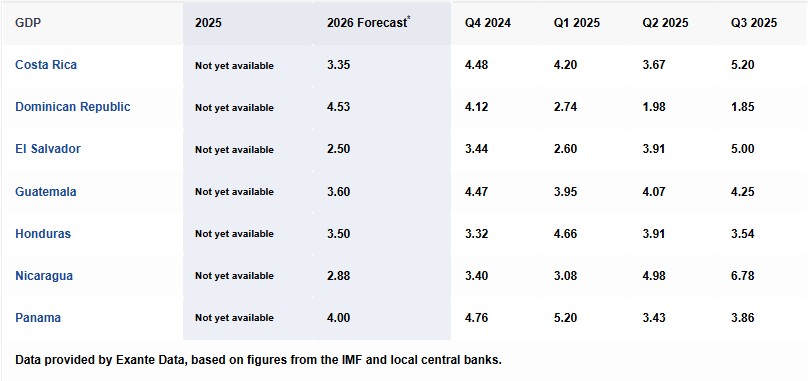
    Central America & Caribbean: GDP growth (%)
    Quarterly figures are year-on-year growth

  • Is Colombia ready for the FTA with the US?

    LatinNews 12 October 2011 Hits: 2432

    As we go to print on 12 October the eyes of Colombia are set on the US congress, which is expected to ratify the 2006 bilateral Free Trade Agreement (FTA) today; if Colombia’s expectations are met, President Barack Obama could sanction it as early as 13 or 14 October. However, the renewed impetus for the approval of the treaty in both countries begs the question of whether Colombia is ready for it to go into effect. According to Minister of Agriculture Juan Camilo Restrepo Salazar, the Andean nation isn’t ready for the implementation of the treaty; according to Human Rights Watch (HRW) neither are the mechanisms intended to address violence against trade union activists and leaders who are killed for their political activities on a regular basis.

    Restrepo warned that the dairy and rice industries are not ready to cope with the influx that cheap subsidized products from the US could have on their sectors, saying that the government has to ensure that “the cold shower they are about to get doesn’t turn into pneumonia”. HRW pointed out in a recent public letter to Colombia’s attorney general, Viviane Morales Hoyos, that Colombia is still the country with the highest number of trade unionists killed per year in the world and that there are “severe shortcomings in the scope of the sub-unit’s [of prosecutors that focuses exclusively on crimes against trade unionists] work and the investigative methodology that it employs”.  So far, Colombia has only convicted people responsible for only 10% of the 2,886 trade unionist killings recorded since 1986. Making matters worse, according to the local online publication La Silla Vacía, President Santos has yet to deliver on all the promises he made President Obama to get the FTA sent to congress [RA-11-05].

    Promise

    Action

    Hire 100 new labour inspectors

    20 inspectors have been hired; 30 more will begin work in late October; and 50 will be hired in November

    Set-up a phone line and internet complaints site to report labour law violations

    The line and website have been set up, but neither system works.

    Penal code reform to sanction with penalties of up to 5 years employers who obstruct workers’ rights

    The reform was approved on 25 June but the maximum penalty is of two years; there is also a fine of between 100 and 200 minimum salaries.

    Decree regulating article 63 of the Law of First Employment

    Decree was issued on 8 June.

    Define the use of collective agreements to prevent unionisation as a crime.

    The reform was approved in June and establishes sentences of one to two years in prison.

    Formal request to the WTO to strengthen its presence in Colombia

    A permanent World Trade Organisation (WTO) representative is yet to be named.

    Reform the committee that appraises security risks for trade unionists.

    The decree was issued on 13 September – this responsibility now falls on a committee comprising the police, the ministry of interior’s human rights director, the ministry of defence and a delegate from each of the following offices: social action, the attorney general, the prosecutor and the national ombudsman.

    Establishment of a trade union-private sector negotiating committee

    Decree was issued in June but has yet to be signed; in the event of a dispute, a committee has to be established within five days, it has up to 30 days to resolve the dispute and if it fails, the dispute goes to a labour tribunal.

    Source: La Silla Vacía – presentation is our own.

    • US has to catch up

    According to Michael McKinley, the US Ambassador to Colombia, the US has to catch up with the rest of the world with regards to the number of FTAs it has signed. “In Latin America there are 57 preferential trade agreements and a dozen more are being negotiated. In Asia [there are] 60, in the EU [European Union], 60 and the US only has 17”, he told the local daily El Tiempo in a recent interview.

  • Chávez – nine hours of “political pedagogy”

    LatinNews 16 January 2012 Hits: 1674

    Development: On 13 January President Hugo Chávez delivered his annual statement of accounts before the unicameral national assembly in a nine-hour speech broadcast live on state television.

    Significance: Wearing his full presidential paraphernalia, Chávez sought a statesman-like approach, taking a less aggressive tone with the political opposition and sending a message to the listening public that he is their protector, willing to listen and reach out. In that sense, the speech was pure pre-electoral theatre. One of the president’s main announcements was a new government ‘mission’ to tackle citizen insecurity and violence, identified by all voters as their number one concern. Chávez accused his opponents of politicising the issue.

    Critics countered that a president in office for over 12 years cannot shirk responsibility for the three most pressing voter concerns:  insecurity, entrenched inflation and unemployment. With the oil economy on the rebound, insecurity will likely shape the 2012 campaign.

    Key points:

    • Chávez began at 2.15pm and was still talking gone 10pm that night. In all, he spoke for nine hours and 27 minutes.  Ricardo Menéndez, the vice-president for the economic productive area, declared the speech “nine hours of absolute political pedagogy, of a comprehensive vision of how to construct a distinctive political model”. Henrique Capriles Radonski, the leading opposition candidate to take on Chávez in the 7 October election, suggested the speech was a “long farewell” by a president on his way out.

    • Chávez spent just 50 minutes addressing the security issue. He ticked off the opposition for using the country’s homicide rates for political ends and claimed that the opposition press deliberately confuses the issue by publicising distorted figures.

    • The monotony was broken after eight hours with a strong interjection by another opposition presidential contender, María Corina Machado, who stood up and accused the president of being a liar and a robber (in reference to the government’s record in office and its expropriation policy). Chávez refused to engage with her and, rather patronisingly, said that she should first win the opposition primary (scheduled for 12 February) before he would debate with her.  Yesterday (15 January), Chávez insisted that expropriations are contemplated under the (his) 1999 constitution, adding that his government has always paid a fair price.  Yesterday the energy minister, Rafael Ramírez, announced that Venezuela will leave the World Bank’s International Centre for Settlement of Investment Disputes (Icsid).

    • Chávez also announced the closure of the Venezuelan consulate in Miami, in the wake of the US expulsion of the consul. The opposition suggested that this too was electorally motivated, as the large Venezuelan expat population in Miami, the majority of which is anti-government, will now be obliged to travel to Houston, New York or Chicago in order to vote in October.

  • Risk pointers

    LatinNews 04 July 2012 Hits: 185

    *** Iran continues to harbour hopes of rapprochement with Egypt. In last week’s issue we noted that Egypt had denied that President Muhammad Mursi had told the Iranian Fars news agency that he was interested in developing better relations with Tehran. He had been reported as saying: “This will create a balance of pressure in the region, and this is part of my program”.

    The Fars news agency does indeed have a reputation for fabrication, nevertheless there is no doubt that Iran is making a concerted effort to build a relationship with the new Egypt and still hopes that this can be achieved.

    On 3 July, Ali Akbar Velayati, a senior adviser to Supreme Leader Seyyed Ali Khamenei, told a press conference: “The commonalities of Iran and the emerging Egypt are more than before; therefore this victory is considered as the dawn of a grand victory in the entire Arab and Muslim world.”

    Velayati added: “Throughout the contemporary history, Egypt has always been the forerunner of politico-ideological movements in the entire Arab world, therefore Egypt is of paramount importance.”

    There is, of course, enormous pressure on Egypt from the United States not to bolster ties with Iran. However, some well-placed sources believe that the strong animosity of the Gulf states to Egypt’s Muslim Brotherhood (particularly from Saudi Arabia and the United Arab Emirates) may yet prove to be counter-productive when it comes to preventing better relations between Egypt and Iran.

    *** Netanyahu responds to latest nuclear talks with Iran. On 2 July, Israel’s Prime Minister Binyamin Netanyahu told the Knesset Foreign Affairs and Defence Committee: “Iran is showing contempt for the whole world and plans to enrich [uranium] beyond 20%”.

    In Netanyahu’s view, Iran “does not see determination on the world powers’ part to stop the nuclearization”. He said that sanctions are damaging Iran’s economy, but they are “uncomfortable” rather than severe.

    Netanyahu also confirmed that Israel is preparing for the a deterioration in relations with Egypt. He said: “We must be ready for all possibilities.”

    *** Kim Jong-un continues his courting of the military. During the first half of 2012, North Korea’s new leader Kim Jong-un has devoted half of his time to the military. Out of 81 officially reported activities, 40 were related to the military.

  • PERU: Looking to diversify export markets

    LatinNews 21 September 2012 Hits: 511

    Peru’s current economic bonanza has allowed it to grow at an average rate of 6% in recent years, and that trend is expected to continue in the near future. Peru’s finance & economy minister, Luis Miguel Castilla, acknowledges that up to 50% of the country’s stellar growth in recent years has been the result of “favourable economic winds”, including record high international commodity export prices Castilla admits, however, that with a recession in Europe, a weak recovery in the US and slower growth in China it is necessary to diversify the economy and look for new markets.

    Castilla stated on 6 September that the country’s priority in the short-term is to diversify its export offer and markets.  “Peru’s bid is for openness... and our policies will look to deepen this openness, as the [global economic] recovery will be more vigorous when economies are not distorted by protectionist measures,” he said.

    The minister made his comments before leaving to attend the Asia Pacific Economic Cooperation (Apec) summit in Vladivostok, Russia (8-9 September). At the summit Peru’s foreign trade and tourism minister, José Luis Silva Martinot, revealed that the Peruvian government had approached Indonesia about talks on a bilateral free trade agreement (FTA). Silva Martinot highlighted that Indonesia is the largest country in Southeast Asia, with a market of 250m people. He added that the government would continue to seek new FTA negotiations with other countries.

    Exports to Malaysia on the up

    On 12 August CómexPerú reported that exports to Malaysia in the first half of 2012 were worth approximately US$8.0m, a significant annual increase of 196%. Just under 60% of Peru’s exports to Malaysia, or roughly US$3.0m, are non-traditional exports. Exports of chemicals (26%), non-metallic minerals (16%) and agriculture (14%) all registered double digit growth. The leading chemical export products were boric acid, worth US$921,000, and borax, worth US$218,000.

    The two main agricultural exports were cochineal carmine, worth US$698,000, and fresh grapes worth US$585,000. Cómex Perú noted that the figures are encouraging, as they show that Malaysia could become an increasingly important destination for non-traditional exports, helping the country diversify its exports markets and maybe even attract new investment.

    Cómex Perú added that Peru must take full advantage of the possibility to improve its trade relations with a fellow member of both the Asia-Pacific Economic Cooperation (Apec) forum and the Trans-Pacific Strategic Economic Partnership (TTP) trade promotion groups. Not only is Peru currently negotiating its entry into the TPP, but back in June, along with Mexico, Chile and Colombia, Peru created the Pacific Alliance, Latin America’s latest economic integration and trade promotion bloc, which was created with the aim of boosting trade between Pacific coast countries and promoting trade with Asia-Pacific.

    2013 budget

    On 4 September Prime Minister Juan Jiménez Mayor formally presented the government’s draft 2013 budget to congress. The total budget of PEN108.42bn (US$41.4bn) is up 13% year-on-year as the Humala government looks to increase social spending by 39%. According to Jiménez Mayor, the bulk of this increase - US$1.02bn - will be destined for the government’s poverty alleviation programs such as Pensión 65, a non-contributory pension scheme for low income Peruvians over the age of 65; and Cuna Más, which looks to assist low income children and their mothers.

    The second most important increase is in capital spending, projected to rise 16% in annual terms. Jiménez Mayor stressed that US$11.4bn would go to regional and local governments to invest in their preferred transport, water treatment, health and education projects.

    The Humala administration has been criticised for placing too much of its focus on rapid economic growth and not concentrating enough on promoting social development alongside that growth. Some regional presidents have also complained that the central Lima government has selectively promoted investment to the benefit of certain areas, while neglecting much needed investment in poorer regions.

    Long term bonds upgraded

    On 16 August ratings agency, Moody’s upgraded its rating of long term foreign and local currency denominated Peruvian government bonds from Baa3 to Baa2 with a positive perspective. Moody’s explained that the upgrade reflected a number of relevant factors such as: a reduction in political risk, a continuous and robust economic growth, a solid fiscal performance, improvements in the government’s debt indicators and a reduction in the country’s exposure to foreign denominated debt.

    The agency highlighted Peru’s real annual GDP growth of 6.9% in 2011, its fiscal surplus of 1.8% of GDP and a drop in the GDP/debt ratio to 21.2% as substantial improvements since 2009, the last time Peru’s rating was increased, when growth was 1%, the fiscal deficit was 1.5% of GDP and the GDP/debt ratio was 26%. Moody’s said that the perspective was positive as “investor confidence has recovered after it fell following the presidential elections and the country has managed to post a solid annualised growth rate of 6% in the first half of the year despite the deteriorating global economic environment”.

    It added that “although President Ollanta Humala has tried to increase the government’s focus on social inclusion, since he took office he has shown a commitment to maintaining prudent fiscal and macroeconomic policies… contrary to fears that his policies would lead to fiscal deterioration”. Moody’s said that the rating could be increased even further this year if, among other things, Peru is able to overcome important structural deficiencies linked to its weak institutions and strengthen its ability to resolve social conflicts constructively. These are the two main challenges on which the Humala administration must concentrate.

    Colombia signs deal to ship crude oil to India: On 15 August Colombia’s state-owned oil company, Ecopetrol, announced that it had signed a US$1.2bn contract to supply 12m barrels of crude to a private Indian refining firm, Essar. Under the terms of the 12 month contract, Ecopetrol will supply a total of 2m barrels of crude a month to an Indian port. The company said that the first shipment had already left from the port of Coveñas and would arrive at its destination in 35 days. According to Ecopetrol, the deal is advantageous as it ensures the systematic sale of crude at a pre-agreed price”; forms part of its commercial strategy of “supplying crude to final consumers” and will help diversify its client base. This is the first time that Ecopetrol will directly export crude to India and the company believes that it will help it consolidate its ability to operate long-haul crude oil transport routes in a bid to open new markets. Ecopetrol’s crude exports in the first half of the year were reported at US$9.77bn, up 23.3% on the same period last year.

    FDI continues apace: Colombia’s trade minister, Sergio Díaz-Granados, announced on 6 August foreign direct investment (FDI) inflows of US$9.33bn in the first six months of 2012, up 26.2% year-on-year. FDI into Colombia has surged again over last year, when it posted record growth of 92%;. On current trends, FDI reach US$15bn in 2012. Díaz-Granados said that the FDI ratified the good performance of the economy, adding that the government’s intention is to continue  to promote investor confidence in the country by seeking new strategic alliances. Colombia currently has investment agreements in place with Spain, Switzerland, Peru, China and India; it has inked new agreements with Japan and the UK and is negotiating others with Turkey, Kuwait and Singapore.

    • Peru - country risk rating falls

    Peru’s country risk rating was 134 basis points in August 2012, down from 216 basis points in August 2011, according to the central bank (BCRP). In a statement the BCRP said that Peru’s reduced borrowing costs “reflect the fact that despite the international turmoil, there are lower perceptions of risk in our economy, which continues to exhibit solid macroeconomic fundamentals, growth close to its potential, low inflation, a stable financial system, a good level of foreign reserves and a solid fiscal position”. Peru’s country risk rating is now well below the overall region score, which now stands at 372 (as of 21 August 2012), having fallen 83 basis points since December 2011.

    • Chávez moots a new Atlantic port

    On 20 August President Hugo Chávez of Venezuela called on his ministers to carry out the necessary studies for the construction of a new port on Venezuela’s Atlantic coast in order to facilitate trade with the Southern Common Market (Mercosur). Venezuela was admitted into Mercosur on 1 July and Chávez is keen to take full advantage of its membership. In a TV appearance Chávez said that a new Atlantic port below the Orinoco River would give Venezuela more access to ports in the South Atlantic, including those of Brazil, Argentina and Uruguay.

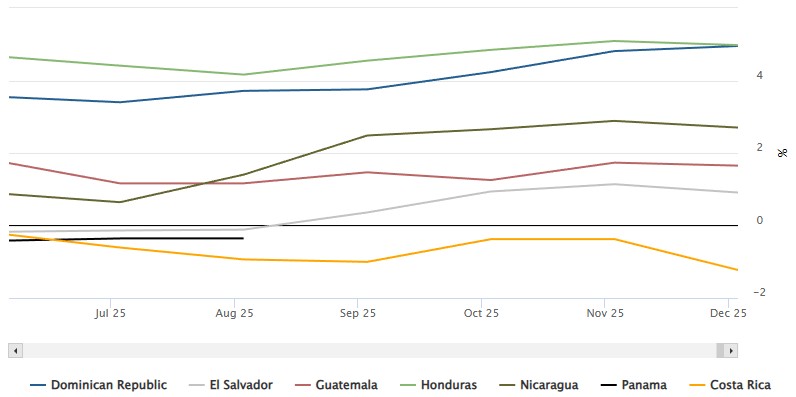
  • TRACKING TRENDS

    LatinNews 27 November 2014 Hits: 864

    PANAMA | Inching towards a debt deal with Venezuela. The Panamanian government led by President Juan Carlos Varela has announced a preliminary deal with Venezuela over the latter’s outstanding debt to Panamanian businesses, which reportedly totals some US$2bn owed to companies operating in Panama’s Colón Free Trade Zone (FTZ). The previous Panamanian government led by former president Ricardo Martinelli government (2009-2014) attributed the mounting debt to Venezuela’s official foreign currency controls that restrict the supply of US dollars available to Venezuelan companies for trading purposes. On 18 November Panama’s trade & industry ministry (Mici) issued a press release announcing that a preliminary pay arrangement had been reached with Venezuela. This came more than two weeks after meetings took place in Venezuela between Panama’s trade & industry minister, Melitón Arrocha, and Venezuela’s finance minister, Rodolfo Marco Torres. According to the Mici press release, the two ministers agreed to establish working tables to address the issue. Back in March, Panama’s then trade & industry minister, Ricardo Quijano, had said that Panama had presented “various protest notes” before the World Trade Organisation (WTO). Discussions regarding Venezuela’s debt with Panama were interrupted in March following a breakdown of diplomatic relations under the Martinelli government although these were fully restored in July after President Varela took office. At the start of the year, Panamanian media cited official figures which suggested that trade in the Colón FTZ reached US$28.9bn in 2013, down 9.4% on 2012. According to a report by Panama’s economy & finance ministry (MEF), re-exports to Venezuela from the FTZ were down 43.3% in 2013 compared with the same period in 2012, from US$3bn to US$1.7bn. The MEF report noted that on average, in 2009-2012 re-exports to Venezuela accounted for 17% of the total sales at the Colón FTZ, second only to Puerto Rico (19%).

    REGION | Lower tax takes. The latest report by the Guatemala City-based think-tank, Central American institute of fiscal studies (Icefi), released this month estimates that the average tax take as a percentage of GDP for the six Central American countries (Costa Rica, El Salvador, Guatemala, Honduras, Nicaragua and Panama) will reach 13.4% this year, slightly down from 13.5% registered in 2013. The individual forecasts for 2014 are as follows: Costa Rica, 12.8% (down from 13.3%); El Salvador, 15.1% (down from 15.8%); Guatemala, 10.9% (down from 11.0%); Honduras, 15.9% (up from 14.7%); Nicaragua, 14.5% (down from 14.6%); and Panama, 10.9% (down from 11.4%).