All Categories

Subcategories

  • CARIBBEAN POINTERS

    LatinNews 13 March 2014 Hits: 2294

    *** JAMAICA SAYS DEBT REDUCTION ON TARGET.  Jamaica’s finance minister, Peter Phillips, gave an update on the country’s economic reform programme (ERP) to stakeholders on 28 February in which he said that Jamaica’s debt-to-GDP ratio would be brought down to 139% of GDP by the year end from 147% last year.

    Reporting improved growth prospects, Phillips said: “Our growth in the June quarter of last year was flat; in the September quarter…growth was around 0.5%; and for the December quarter, IMF numbers had it at 1.4%.  We expect that momentum to continue through the March quarter and we should end the fiscal year with growth somewhere between 0.7% and 1%.”

    This improved outlook has been reflected in an upgrade from Fitch Ratings, which at the end of February upgraded Jamaica’s long-term foreign currency and local currency Issuer Default Ratings to B- from CCC.  The short-term foreign-currency rating was upgraded from C to B, and the Country Ceiling from B- to B.  The outlook was upgraded to ‘Stable’.

    Fitch gave as its reasons for the upgrade reduced financial risk due to fiscal consolidation and the lengthening of domestic debt repayments.


    *** POLITICAL DEADLOCK IN GUYANA.  Back in December we reported on the political deadlock that had prevented Guyana from passing an amended Anti-Money Laundering (AML) law that would have corrected deficiencies identified in the 2009 act by the Caribbean Financial Action Task Force (CFATF).  As a result, the CFATF issued a statement saying that Guyana had not made “sufficient progress” or complied with the Action Plan developed with CFATF.  Alarmingly for Guyana, the CFATF called upon member states “to consider implementing counter measures to protect their financial systems from the ongoing money laundering and terrorist financing risks emanating from Guyana”.

    Some might have considered this sufficient to galvanize the Guyanese political classes into action.  But the December 2011 general election produced a more or less tied result, and the animosity between the government and the opposition has been too great to produce the necessary compromise.  The problem is that the electorate awarded the presidency (and thus the power to govern) to the Peoples Progressive Party/Civic (PPP/C), but the two main opposition parties – A Partnership for Unity (APNU), which is itself a coalition led by the Peoples’ National Congress (PNC), and the Alliance for Change (AFC) – have a one-seat majority in parliament.  The opposition have used this one-seat majority to prevent the passing of the Anti-Money Laundering and Countering the Financing of Terrorism (AMLCFT) Amendment Bill.

    The problem now is that another deadline has passed with potentially serious consequences.  The CFATF had given 28 February as the deadline for the required changes to be implemented, after which it would recommend that Guyana’s case be submitted to the Financial Action Task Force International Corporation Review Group.  CFATF will consider this action at their May plenary session.

    • Complaints of opposition tactics - The Guyanese government’s complaint against the opposition is that it dallied for the 10 months that the Anti-Money Laundering and Countering the Financing of Terrorism (AMLCFT) Amendment Bill was in parliament and then at the last moment instead of proposing changes to the amendment bill, they made proposals to amend the original 2009 act.  President Donald Ramotar summed up his view of the opposition’s tactics by saying: “What they are doing is not right; it violates parliamentary democracy because what they want to amend is not the bill that is before them but the Act that was passed unanimously in parliament in 2009.”  He added that the opposition was behaving in an “unpatriotic manner”.
  • RASTREANDO TENDENCIAS

    LatinNews 18 July 2014 Hits: 570

    ARGENTINA | Problemas petroleros en Neuquén. Trabajadores de dos compañías petroleras en la provincia argentina de Neuquén –Petrolera Argentina y Renesa– cancelaron una huelga, que debía iniciarse el 11 de julio en oposición a los planes para despedir a 300 empleados, luego de la intervención del gobierno federal. Ambas compañías, que fueron formalmente fusionadas en enero del 2013, están enfrentando problemas por la caída en la producción y en las ventas.

    Jorge Capitanich, el jefe de gabinete, y Carlos Tomada, el ministro del trabajo, celebraron conversaciones en Buenos Aires el 8 de julio para reducir la tensión en el corto plazo, con Guillermo Pereyra, un senador del Movimiento Popular Neuquino (MPN) y líder del sindicato local de trabajadores petroleros (ver abajo); Miguel Galuccio, el jefe ejecutivo de la compañía petrolera estatal Yacimientos Petrolíferos Fiscales (YPF);  y el empresario Miguel Schvartzbaum, quien controla las compañías de Neuquén. Schvartzbaum acordó revocar las suspensiones de 77 trabajadores de la refinería Renesa la semana pasada. Ahora se ha establecido una mesa de diálogo para tratar de llegar a una solución definitiva al impasse.

    Se ha reportado que el gobernador de Neuquén, Jorge Sapag, buscó ayuda del gobierno federal en Buenos Aires para evitar los despidos. Sin embargo, el gobernador está al mismo tiempo involucrado en una disputa con el gobierno federal por el intento de éste de estandarizar el manejo de los impuestos y royalties petroleros en todas las provincias.

    Schvartzbaum dice que la propuesta de la nueva ley de hidrocarburos respaldada por el gobierno federal y Galuccio, está diseñada para exprimir a los actores en los mercados petroleros provinciales más pequeños, tal como él. Agregó que Galuccio era “el verdadero ministro de energía” y lo acusó de actuar como un ‘mafioso’.

    CHILE | Develan masivo plan de infraestructura. La presidenta de Chile, Michelle Bachelet, anunció un plan nacional de infraestructura de US$27,58mm para los próximos siete años, diseñado para impulsar la actividad económica y modernizar a Chile. Esto es equivalente al 3,5% del PIB (un punto porcentual más de lo que Chile actualmente invierte en infraestructura). El plan incluye US$18mm de inversión pública y US$9,58mm en nuevas concesiones para construir y operar.

    “Solamente nos desarrollaremos si invertimos fuertemente y de manera sustentable en la infraestructura pública”, Bachelet dijo mientras visitaba el aeropuerto internacional Arturo Merino Benítez en Santiago, el cual es sujeto a un plan de expansión de US$655, la primera concesión del proyecto.

    Están planeados un número de proyectos regionales, tales como el programa de US$3mm para mejorar la conectividad en el lejano sur y el lejano norte del país –el Plan de Conectividad Austral y el Plan Arica y Parinacota respectivamente– y para pavimentar carreteras rurales; la expansión de aeropuertos regionales; la construcción de dos plantas desalinizadoras en las regiones norteñas de Antofagasta y Atacama; y la construcción de siete grandes y 15 pequeños embalses para hacer frente a la sequía que afronta la región.

    • Guillermo Pereyra

    Guillermo Pereyra está aliado con Hugo Moyano, el líder disidente de la Confederación General del Trabajo (CGT). Pereyra ganó una banca en el senado federal en las elecciones del pasado octubre, aplastando a su rival más cercano del Frente para la Victoria (FPV) de la Presidenta Cristina Fernández.

  • TRACKING TRENDS

    LatinNews 27 November 2014 Hits: 677

    COLOMBIA| Tax reform bill formally enters congress. On 24 November Colombia’s national congress announced that it would start debating a proposed tax reform bill presented by the government led by President Juan Manuel Santos. The proposed tax reform, first unveiled by Finance Minister Mauricio Cárdenas last month, is proving highly controversial. Not least because after President Santos ratified Cárdenas in his post following his re-election in June, Cárdenas said that there was no need for a comprehensive tax reform ahead of the start of a new four-year presidential term but only for “minor adjustments”. However, after the Santos government presented a Col$216.2trn (US$99bn) draft 2015 budget to congress, Cárdenas announced that the government would have to find an additional Col$12.5trn (US$5.72bn) in tax revenues next year in order to finance the budget, that assigns significant funds to the various social and economic development programmes promoted by the Santos government in support of the peace negotiations that it is currently conducting with the country’s leftist guerrillas. Cárdenas said that as well as extending the highly unpopular ‘4 por mil’ financial transactions tax (a temporary measure first introduced in 1998) for another four years [WR-13-50], the government would also look at introducing a new form of ‘wealth tax’ (applicable to individuals or firms that have over Col$1bn [US$479.00] in liquid assets). All of this was heavily criticised by the local private sector, which complained that the Santos government was reneging on its promises to eliminate the ‘4 por mil’ and not to increase the tax burden on the sector, affecting its competitiveness. Such were the private sector complaints that Cárdenas met various sector representatives to discuss the proposals before submitting them to congress. After weeks of discussions, by mid-November Cárdenas announced changes to the original proposal which would make the new wealth tax a temporary measure to be replaced with gradual and progressive increases to the ‘business income tax for equality’ (CREE, paid on top of the 25% normal income tax rate) over the next four years. However the private sector has also rejected the new proposal, arguing that the increased tax burden (which according to its calculations will rise from 1.35% of GDP to 1.51%) on the sector will deter investment and affect productivity levels at a time of economic uncertainty in the region. As Javier Díaz, the president of the Consejo Gremial Nacional (CGN), a private sector lobby group, has said “We are concerned because as we increase taxes, Peru is lowering them to around 26% for income tax; while in Colombia we are looking at 43%”.

    PERU| Ilo energy pole project EIA approved. On 25 November Peru’s energy & mining ministry (MEM) announced the approval of the environmental impact assessment (EIA) presented by local consulting firm, Walsh Perú S.A., for the ‘energy pole project’ for the port city of Ilo in the southern region of Moquegua. The Ilo energy pole project, which is being developed by local firm Enersur, involves the construction of a new 500 Megawatt (MW) combined cycle diesel and natural gas fuelled thermoelectric power plant. It forms parts of the plans by the government led by President Ollanta Humala to establish an industrial and petrochemical hub in Ilo that is to be serviced by the Gaseoducto del Sur Peruano (GSP) 1,080km gas pipeline that is currently being built to bring natural gas from the Camisea gas fields located in central Peru to the country’s south-western coast [WR-14-26]. The GSP project is one of the most ambitious energy infrastructure projects in Peru, which once complete, President Humala has said will help to significantly reduce energy costs in southern Peru, aiding its economic development.  The approval of the energy pole project's EIA comes after the Humala government introduced a series of economic stimulus packages, which among other things seek to streamline the environmental approvals process for major investment projects, as part of its bid to shore up the slowing domestic economy. Such measures are controversial, with some sectors warning of negative environmental and social repercussions. But the government has defended its measures, arguing that they will reinvigorate the flagging economy. The latest figures from the national statistics institute (Inei) showed that year-on-year GDP growth in the third quarter was only 1.76%, much lower than the 5.2% registered in the third quarter of 2013.

    • Arequipa in top ten recommended tourist destinations

    A ranking of recommended tourist destinations compiled by hotel price comparison website, Trivago, published on 17 November, placed Peru’s city of Arequipa in the top ten of its 100 most recommended cities to visit in 2015. Arequipa, a United Nations Educational, Scientific and Cultural Organization (Unesco) world heritage site and capital of the eponymous southern region, was ranked 9th -the top ranked city in Latin America. Among Arequipa’s attractions, Trivago cites its astonishing colonial architecture and its cheap hotel prices. According to Trivago, the average hotel price per night in Arequipa is around €53 (US$66.14), which compares favourably with the average price of €49 (US$61.15) for spending a night in Mostar, Bosnia-Herzegovina, its top ranked destination.

  • POINTERS

    LatinNews 19 November 2018 Hits: 422

    BAHAMAS | More required on money-laundering. In late October, the UK added The Bahamas to its list of jurisdictions required to take more actions to strengthen their anti-money laundering regimes. Accordingly, the UK warned companies doing business in The Bahamas to take “appropriate actions to minimise the associated risks, which may include enhanced due diligence measures in high risk situations”.

    The UK has 11 countries on its watch list, but it is only following the advice of the Financial Action Task Force (FATF), which the UK announcement referred to as the “standard-setter”. The Bahamas, in response, said it was addressing the concerns of the FATF. Finance Minister Peter Turnquest said: “We have a very robust regulatory regime and we will continue to make enhancements necessary to make sure to demonstrate this to the international community.”

    For its part, the FATF has said that it considers The Bahamas to be committed to implementing its action plan for improvement.

    ST VINCENT & THE GRENADINES | Closing in on UN Security Council seat. SVG is hoping to serve as a non-permanent member of the UN Security Council for the 2020-2021 term, and Minister of Foreign Affairs Sir Louis Straker said on 5 November: “We are on the verge – we are not there yet – of sitting in the council…. We are on the verge of sitting with the mightiest…countries in the world.”

    Straker added: “I trust that we would go right through and by this time next year we would have been voted as a member of the Security Council.” However, a potential impediment may have arisen with the election of the right-wing Jair Bolsonaro as Brazil’s new president. Bolsonaro would not seem to be a natural supporter of SVG’s left-wing prime minister, ‘Comrade’ Ralph Gonsalves. So far, Brazil has said that it will support SVG’s bid, and Gonsalves must be hoping that this will not change.

    Perhaps in recognition of this potential difficulty, speaking at the same event as Straker, Gonsalves warned: “It is not over until it is over.”

    If successful, SVG would be one of the smallest countries ever to sit on the UNSC, and its success would reinforce once again the potential diplomatic importance of the small island nations of the Caribbean.

    ANTIGUA & BARBUDA | Turmoil over police chief. Antigua’s Commissioner of Police Wendel Robinson was suspended in April over allegations of sexual misconduct towards three male subordinates and related abuse of power when his advances were turned down. Late in October, the court ruled that Robinson should be reinstated and that the April suspension by the Police Service Commission (PSC) had been unlawful. The PSC immediately responded to the October court ruling by issuing a new suspension.

    The government is trying to stay out of the fray, although it has admitted to having concerns about morality in the police force. Melford Nicholas, the Minister of Information, Broadcasting, Telecommunications & Information Technology, responded to the second suspension by saying: “The Commission has its legal obligations, and these are uncomfortable areas having to deal with these types of issues on matters of law, on matters of discipline in the force. Yes, the government has some concerns about the whole morality in the force and what must happen, but I think that there is a process that is being engaged…. It is a matter for the courts to deliberate on…”

  • TRACKING TRENDS

    LatinNews 23 January 2020 Hits: 4001

    PERU | Recovering fast growth rate. Peru’s economy & finance minister, María Antonieta Alva, said on 20 January that the country would bounce back from “a complex year, with heightened global uncertainty” in 2019 and post 4% GDP growth in 2020. She said GDP growth in 2019 would probably come in at 2.2%. Alva stressed the importance, however, of completing the public spending allocated in the national budget (something Peruvian governments have consistently failed to do in recent years). She said that the protests in neighbouring Chile and Ecuador, as well as Colombia, served to show that “our priority as a government is to close the social gap as a matter of urgency”, which would require “moving into a different gear”.

    With this in mind, the director of the state-run private investment promotion agency ProInversión, Rafael Ugaz, this week outlined 23 infrastructure projects, representing total investment of US$5.35bn, to be carried out over the next 18 months leading up to Peru’s bicentenary of independence and the 2021 general election. These include the US$2bn construction of a Lima ring road, hospitals, and a US$227m railway stretching 128km between Huancayo, the capital of the region of Junín, and the eponymous capital of Huancavelica.

  • ECONOMIC HIGHLIGHTS

    LatinNews 15 July 2020 Hits: 2206

    CHILE| Problems in the mining industry. Despite hopes that Chile’s copper industry will contribute to the country’s economic recovery [EB-20-06], there are signs that the mining industry as a whole is suffering from the crisis caused by the coronavirus (Covid-19) pandemic. On 26 June, the state-owned copper mining company, Codelco, announced that it was temporarily closing the copper smelter at the Chuquicamata mine in Antofagasta Region, now operating at a third of its capacity due to a high concentration of coronavirus cases. Then on 6 July, Chile’s national mining association (Sonami) released a report revealing that employment in the mining sector fell by 15% in March-May 2020 compared with the previous year, with the loss of 35,500 jobs. With strict quarantine measures still in place in parts of the country, Sonami expects the situation to deteriorate further. The Sonami report does note, however, that the overall drop in employment across all sectors is more significant, at 16.5%. Unemployment figures released by the national statistics institute (INE) on 30 June put the national unemployment rate in March-May 2020 at 11.2%. This figure rises to 13.4% in Antofagasta Region, one of the mining regions in the north of the country.  

    ARGENTINA| A ‘final’ debt restructuring offer. The Argentine government led by President Alberto Fernández presented before the US Securities and Exchange Commission (SEC) an improved debt-restructuring offer on 6 July, which it described as its “maximum and final” renegotiation effort. The holders of US$66bn worth of Argentine sovereign bonds issued under international law now have until 4 August to reply to this latest offer, which includes significant concessions to bondholders by way of lower debt write downs, higher coupons, and shorter maturities for the proposed new bonds. The government has also said that it will consider reaching a partial debt restructuring deal with bondholders, if it fails to convince the required 75% of bondholders to accept the terms, thus sealing a ‘global agreement’.

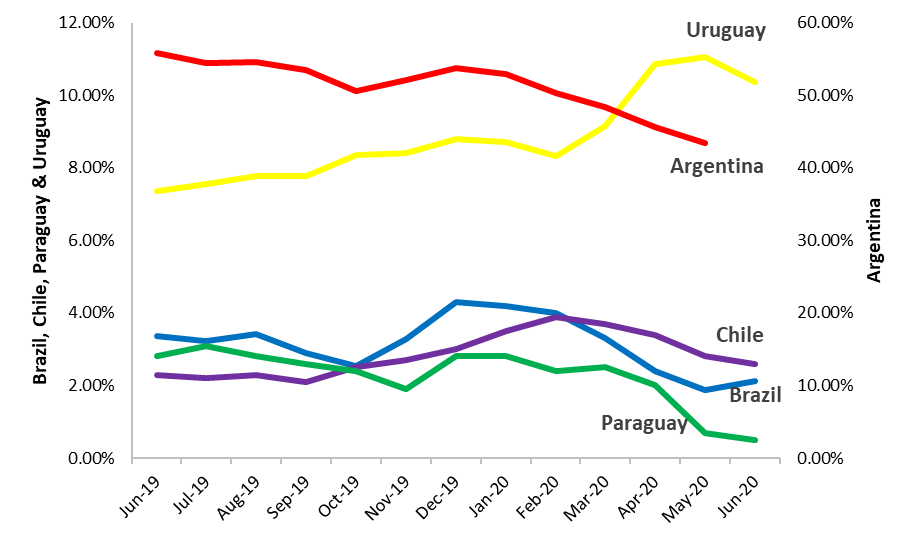
    Brazil & Southern Cone: Inflation
    Monthly year-on-year figures

    Brazil & Southern Cone: GDP growth (%)
    Quarterly figures are year-on-year growth
    Country End 2019  2020 forecast * Q2 2019 Q3 2019 Q4 2019 Q1 2020
    Argentina -2.2 -6.5 0.0 -1.7 -1.1 -5.4
    Brazil 1.1 -5.2 1.1 1.2 1.7 0.9
    Chile 1.1 -4.0 1.9 3.3 -2.1 0.4
    Paraguay 0.0 -1.5 -3.0 2.8 3.5 3.5
    Uruguay 0.2 -4.0 0.1 0.9 0.2 -1.4
    *Figures from the United Nations Economic Commission for Latin America & Caribbean Apr 2020
    End 2019 and quarterly growth based on figures from the local central banks


  • ECONOMIC HIGHLIGHTS

    Abbi Dicker 21 June 2024 Hits: 2307

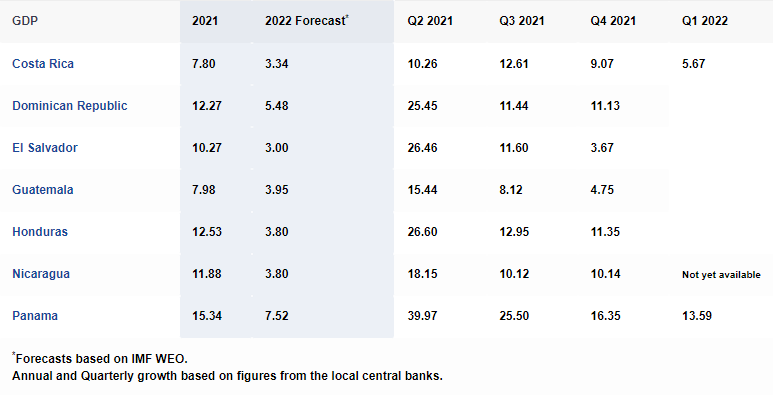
    REGION | Full entry into effect of Central America-European Union (EU) Association Agreement. On 1 May the Association Agreement which was signed in June 2012 by the European Union (EU) and the Central American states (Costa Rica, El Salvador, Guatemala, Honduras, Nicaragua, and Panama) took effect. The European Parliament gave its consent on 11 December 2012, and on 17 January 2024 the ratification procedures of the agreement by member states were finalised. On 12 April the European Council then adopted a decision to conclude it, paving the way for the agreement to take effect on 1 May. According to the EU, the agreement aims to “strengthen and consolidate the relations between the parties through an association based on three mutually reinforcing and fundamental parts: political dialogue, cooperation and trade”. The trade pillar of the agreement has been provisionally applied however since 1 August 2013 with Honduras, Nicaragua, and Panama, since 1 October 2013 with Costa Rica and El Salvador, and since 1 December 2013 with Guatemala. Among other things, under the agreement the EU removed tariffs for 73% of its agricultural tariff lines which correspond to around 64% of agricultural imports from Central America. Central America removed tariffs on 67% of its agricultural tariff lines, covering around 62% of agricultural imports from the EU. The Association Agreement also eliminates almost all tariffs on manufactured products and fisheries. The trade flow between the EU and Central America amounted to €22bn (US$23.8bn) in 2023 on figures from the EU statistics agency (Eurostat).

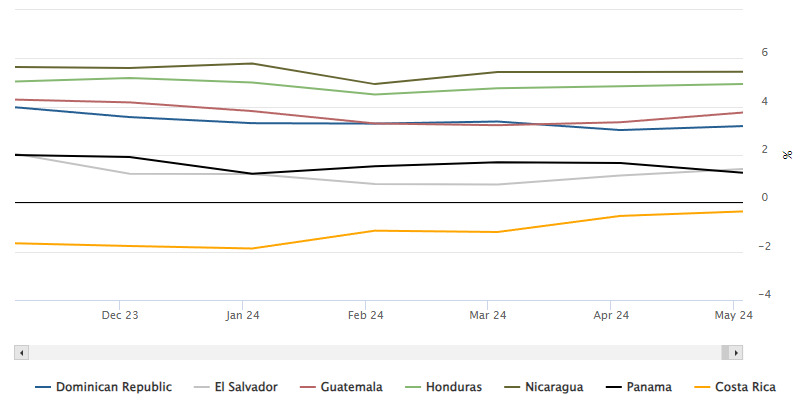
    Central America & Caribbean: inflation rate
    Percentage variation (year-on-year)

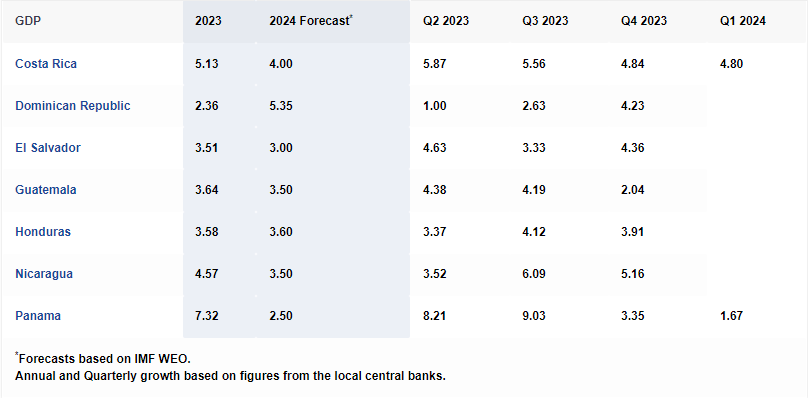
    Central America & Caribbean: GDP growth (%)
    Quarterly figures are year-on-year growth

  • TRACKING TRENDS

    LatinNews 04 July 2013 Hits: 2659

    ARGENTINA-BRAZIL | Auto trade liberalised. On 1 July the Brazilian government confirmed that a bilateral trade pact covering the automotive sector it had with Argentina had officially expired and that from now own bilateral trade in the sector would be fully liberalised.

        Although both Argentina and Brazil are members of the Southern Common Market (Mercosur) customs union, bilateral trade in the key automotive sector was partly restricted in 2006 after Argentina convinced its main Mercosur trade partner to introduce temporary limits on the level of Brazilian auto exports in order to allow Argentina time to ‘catch up’ with its neighbour and to develop a more competitive domestic auto industry. Originally it was agreed that the restrictions would be introduced for two years, but the agreement was extended for a further five years in June 2008.

        Auto trade accounts for 50% of all trade among South America’s two largest economies and the economically beleaguered Argentine government led by President Cristina Fernández was keen not only to extend the agreement for another five years, but also to secure even better terms. However, negotiations proved to be difficult, with Brazil refusing to consider introducing changes to the pact.

        Under the original terms of the pact, Brazil was allowed to export US$195 of vehicles and vehicle parts tariff-free to Argentina for every US$100 worth of auto exports that went in the opposite direction. Every additional dollar’s worth of Brazilian auto exports was slapped with Mercosur’s external product tariff.

        At the start of the year Brazilian negotiators had said that they were willing to extend the agreement on the current terms and that they would consider proposals to change the terms presented by Argentina. However, tensions between the Fernández administration and the Brazilian government led by President Dilma Rousseff have been steadily increasing, particularly when it comes to economic issues. Not only have the arbitrary general barriers to trade imposed by Argentina since 2011 resulted in Brazil’s overall exports to its neighbour to drop by 20% in 2012 but back in March Brazil’s mining giant, Vale, announced that it was cancelling a US$6bn potash miming project in Argentina due to the deteriorating economic climate in Argentina. This was followed by the Argentine government’s June decision to expropriate a railway concession held by Brazilian logistics firm America Latina Logística (ALL).

        Meanwhile Brazil’s state-owned oil firm, Petrobras, has recently confirmed its plans to pull out of Argentina and it is said to be currently considering the offers for its assets in Argentina. Given this difficult scenario the bilateral talks appeared to have completely stalled with no new deal reached before the 30 June deadline. Consequently, the Brazilian government has said that following the expiry of the pact bilateral auto trade should be “automatically liberalised”.

        The Argentine government has so far failed to comment on the issue but it is expected that Fernández will seek to address the issue with Rousseff during the next Mercosur heads of State summit scheduled to take place on 12 July.

    CHILE-PARAGUAY | Beef import restrictions lifted. On 3 July Hugo Idoyaga, the head of Paraguay’s national animal health service (Senacsa) revealed that he had been informed by Chile’s national agriculture and livestock service (SAG) that all restrictions on the import of Paraguayan beef to Chile have now been lifted. Chile, one of the main export markets for Paraguayan beef, introduced a number of restrictions on beef imports from Paraguay following an outbreak of foot and mouth disease (FMD) in January last year. Since then Senacsa has been working with the SAG in order to secure the full re-opening of Chile’s market [WR-13-15].

        Idoyaga explained that the decision came as a result of the SGA’s animal and food control service (Senasa)’s second audit of Paraguay’s beef industry in which it determined that sufficient measures had been adopted to ascertain that the outbreak had been controlled and that the disease had not spread. According to Idoyaga, the full opening of the Chilean market would allow Paraguay’s beef exports to Chile to quintuple, representing an additional US$250m, which could help the sector achieve some US$1.3bn in exports this year.

        Prior to last year’s outbreak Chile was the main destination for Paraguayan beef accounting for up to 45% of all exports. However, Idoyaga pointed out that year-end projected figures could be even higher if the European Union (EU) also decides to lift all import restrictions. Idoyaga explained that the EU has also concluded its audit of the local beef industry and that the Paraguayan authorities expected to receive the results from this in the coming days.          

    •  “Work a day for free if necessary”

    On 2 July Uruguay’s President José Mujica urged workers of the newly re-established Metzen y Sena ceramics firm to “work a day for free if necessary” in order to keep the company afloat. Metzen y Sena was forced to close in 2009 after running into financial difficulties resulting in some 753 employees losing their jobs. A number of these former employees then decided to found the Cooperativa de Trabajadores Céramicos (CTC) and sought the government’s assistance to revive the firm. CTC received US$10.8m in funding from the national development fund (Fondes) to repair the firm’s industrial facilities in Empalme Olmos, Canelones department. Speaking at its re-inauguration, Mujica said that keeping the project, which has created 340 jobs, alive would “not be easy”. He urged all those involved to do their best to make it a success.


  • ECONOMIC HIGHLIGHTS

    Patrick de Courcy 17 June 2022 Hits: 1445

    DOMINICAN REPUBLIC | New solar park inaugurated. On 31 May the Dominican Republic’s President Luis Abinader inaugurated the country’s newest solar park, El Soco, in Consuelo municipality, San Pedro de Macorís province. Constructed by Spanish firms Bas Corporation and Dominion with a US$93m investment, the new solar park will add 50MW to the grid. President Abinader said that since taking office in August 2020, US$800m has been invested in solar energy projects. He said that in 2021 and so far in 2022, contracts had been signed to install solar energy projects for a total of 620MW. He compared this with the contracts for four solar park projects worth 187.4MW signed under successive governments in the ten years prior to his taking office.


    PANAMA | Colón protesters end strike in Panama. On 29 May, Panama’s government led by President Laurentino Cortizo announced a deal with Coalición por la Unidad de Colón (CUCO), which groups various unions in Panama’s Colón province, ending a strike that had affected the province since 9 May. This was called by CUCO over demands that the government deliver on various promises announced in November 2021 related to infrastructure and construction projects as well as more general complaints over the high cost of living. The agreement stipulates that the government will carry out various public works worth US$900m in the province, including the construction of a new hospital, Manuel Amador Guerrero, and baseball stadium, Roberto Mariano Bula, and the construction of an arts and culture centre Colegio Abel Bravo and expansion. It also includes pledges regarding an employment scheme, an initiative to repair roads, as well as a national freeze on fuel prices for public transport – keeping it at US$3.95 per gallon which was announced on 27 May. The measure will last three months and cost the government US$100m.

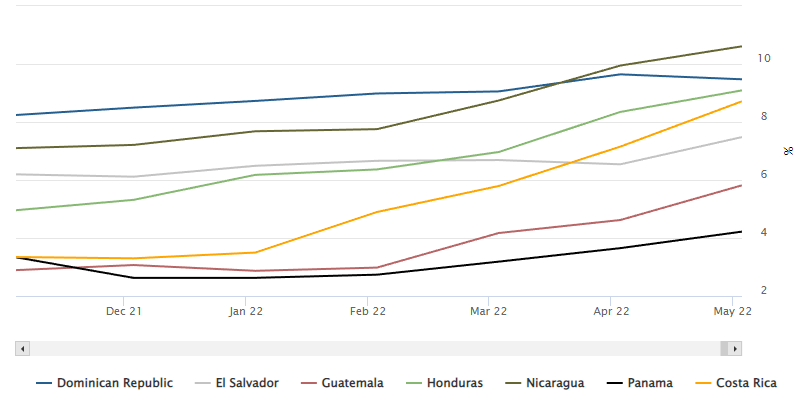
    Central America & Caribbean: inflation rate
    Percentage variation (year-on-year)

    Central America & Caribbean: GDP growth (%)
    Quarterly figures are year-on-year growth

  • URUGUAY: Casting disturbed glances across the River Plate

    LatinNews 20 February 2014 Hits: 1283

    Uruguay’s new economy and finance minister, Mario Bergara, has come under immediate pressure after the latest (January) inflation figure brought the 12-month rate up to 9.10%, perilously close once again to politically unpalatable double digits. Bergara said that part of the trouble in devising a policy to try and reduce inflation was that Uruguay was hostage to international developments, in particular the unfolding situation in Argentina, where there is huge uncertainty over economic policy direction.

    “Inflation of around 9% is not something which should satisfy us, not at all,” Bergara said on 10 February in his first interview, with local radio station El Espectador, since assuming his new role. “It is noticeably above what the authorities and society want, but,” he was careful to add, “it in no way constitutes a situation which implies a loss of control.”

    Bergara, who served as president of the Uruguayan central bank until taking over as economy minister in December, when Fernando Lorenzo resigned after facing legal action over the government’s handling of the bankruptcy of the state airline Pluna, added that “price stability requires our full attention”. Inflation has remained stubbornly high, and well above the government’s target range of 4%-6%, ever since President José Mujica came to power in 2010, and it looks like something he will bequeath his successor in March 2015.

    Bergara went on to explain that there were a number of factors for inflation picking up, such as higher international prices for Uruguayan exports, which were “very quickly” affecting domestic prices. But Bergara really opened up when it came to discussing Argentina, where the government of President Cristina Fernández is trying to rein in inflation after what was essentially a devaluation of the peso in January. Bergara said that the “loss of predictability” in Argentina was a real concern.

    Second-guessing what the Casa Rosada chooses to do, however, is not a sound basis for policy-making, and Bergara was keen to emphasise that it was important to avoid “going crazy taking measures in the macroeconomic field” pre-emptively. “It should not be Argentina which guides Uruguay’s macro [economic] decisions,” Bergara added. Maybe not, but the 2002 economic crisis in Uruguay, a direct result of the 2001-2002 economic and financial meltdown in Argentina, remains all too fresh in the memory: there was a run on Uruguayan banks by Argentine citizens after bank deposits in Argentina were frozen, prompting a plunge in the Uruguayan peso; a banking crisis; a sharp economic contraction; soaring inflation and unemployment; and the doubling of the external debt burden. Uruguayan businesses are also very concerned that the sharp devaluation in Argentina’s currency will prompt a sudden influx of cheap goods.

    First Lady and Senator Lucía Topolansky commented in a radio interview in late January that “when Argentina sneezes, we catch a cold”. For all of Uruguay’s attempts at diversification to build up immunity to viral contamination from Buenos Aires, when Argentina sneezes Uruguay does indeed still catch a cold. But this metaphor is too benign for the current circumstances and really needs to be extended: if Argentina has the flu, Uruguay is at risk of getting pneumonia too.

    Bergara made no secret of his frustration with Argentina in his compellingly candid interview. At one point he said, “There are many economic decisions which have certainly been a bit held up (in Argentina) because the direction is unknown; announcing one measure on one day, dismantling it the next day; it’s not clear who is in charge, or what the logic of the economic course being set is”.

    Bergara, a guileless technocrat rather than a politician more practiced at dissembling, paid a price for his sincerity in his first interview. Two days later Argentina’s cabinet chief, Jorge Capitanich, decried Bergara’s remarks as “inadmissible”. Capitanich went on: “We consider his comments unfortunate and an unwarranted interference in our sovereign affairs”.

    Bergara subsequently sought to defuse any tension his remarks might have caused during an appearance before the permanent commission of congress on 13 February. Bergara was summoned by congress to discuss the government’s plans for the state-owned Banco de la República Oriental del Uruguay (Brou), whose president was caught up in the Pluna scandal, but inevitably he was also quizzed about his remarks on Argentina.

    Bergara gave a somewhat scrambled defence. He said that he had meant to convey the need for Uruguay to analyse the present situation in relation to “links of a trade, finance and economic nature” because this was “vital as a diagnostic to evaluate Uruguay’s macro and micro policies”. He went on: “Just to clarify things, we were referring to the need to define our policies and in no way was any reference intended towards people or was any type of interference calculated. It would be extremely arrogant on our part to think that we have the capacity to influence or intervene in what happens in the processes of a neighbouring country.”

    The Uruguayan weekly Búsqueda suggested that the damage had already been done. It argued that for the government the comments “broke the atmosphere of rapprochement”. Búsqueda said that the government had made tentative moves towards improving ties after President Mujica met President Fernández in Cuba on the sidelines of the summit of the Community of Latin American & Caribbean States (Celac) on 28 January.

    Fernández granted Mujica a 40-minute meeting in Havana, the first between the two heads of state since the bilateral dispute over a Uruguayan pulp mill flared up once again shortly before Argentina’s legislative elections last October after Mujica decided to allow the Finnish owners of the pulp mill, UPM, to increase production. This prompted Argentina’s foreign minister, Héctor Timerman, to threaten a return to the International Court of Justice (ICJ) at The Hague, arguing that increased production would lead to additional pollution, contravening the terms of the original ruling.

    Timerman’s threat still hangs in the air. Mujica had said at the time that he would sit down with Fernández after the country’s legislative elections to discuss the matter, but she took extended medical leave at the tail end of last year and no such meeting could be agreed until Havana. Just a week prior to the meeting in Havana, Uruguay’s foreign minister, Luis Almagro, who attended it, had returned from a meeting with Timerman in Buenos Aires declaring that “relations with Argentina have reached rock bottom”.

    If the atmosphere between the two countries became sunnier after the Caribbean sojourn, no firm agreements were reached (see sidebar) and, pointedly, the ICJ threat was not removed. Timerman emerged from the meeting, saying merely that the two sides had agreed to set up a round table for dialogue, but there are no signs of compromise from either government and Timerman ratcheted up the pressure by saying that Argentina hoped to resolve the UPM issue by 2 April at the latest in order to avoid having to return to the ICJ. Bergara’s comments have caused fresh clouds to descend again over bilateral relations.

    • Buquebús

    In an incident that the Uruguayan press was quick to depict as symbolic of the friction between Uruguay and Argentina, the new high-speed catamaran cutting the journey time between Buenos Aires and Montevideo on 11 February broke its moorings in the harbour in the Uruguayan capital and hit the quayside, damaging the port side of the ship. Christened ‘Francisco’ in the Pope’s honour, the catamaran, owned by the binational maritime company Buquebus, was launched to much fanfare last September by Presidents Mujica and Fernández as a symbol of the two countries coming closer together.

    • Port dispute

    Another bone of contention discussed between Presidents Mujica and Fernández in Cuba was a resolution issued by Argentina’s national port authority last October stipulating that “export cargoes originated in Argentine ports can only be transhipped to other ports of Argentine jurisdiction or to ports from Mercosur and associate members which have cargo maritime transport agreements with Argentina”. Uruguay, pointedly, has no such maritime agreement. The Uruguayan government considers the resolution to be “arbitrary” and retaliation for its decision to allow an increase in pulp production. It is estimated that the Uruguayan ports of Montevideo and Nueva Palmira could lose US$100m a year to Argentine ports as a result of the measure.

  • CARIBBEAN POINTERS

    Sarah Sheldon 23 January 2023 Hits: 1376

    *** JAMAICA REIMPOSES STATE OF EMERGENCY. On 28 December, Jamaica reimposed a 14-day state of emergency (SOE) in eight parishes, including in Kingston and in some central and western parts of the country, enabling the police to arrest people and search buildings without a warrant. The SOE was declared on 15 November, and then again on 6 December. On 5 October, the US State Department had issued a level 3 travel advisory for Jamaica indicating that US nationals should “reconsider travel” to Jamaica because of the threat of crime. The advisory said that “violent crimes, such as home invasions, armed robberies, sexual assaults and homicides, are common” and that “sexual assaults occur frequently”. It added that “local police lack the resources to respond effectively to serious criminal incidents”.

    Reimposing the state of emergency on 28 December, Prime Minister Andrew Holness said: “While we have had reasonable success in controlling the number of murders leading up to and during the Christmas season, the threat levels for ongoing gang conflicts…[remain] elevated and extensive in scale.”

    The opposition People’s National Party (PNP), led by Mark Golding, has opposed the extension of the SOEs, but Holness responded by saying: “We will use this tool as long as there is a threat to life and property…and on so extensive a scale that they will deprive citizens of their rights and freedom…The government will continue to be relentless in our efforts to control murders specifically and crime in general. We will continue to use all measures available to us. We will use the SOEs when necessary. Criminals and criminal masterminds can take no comfort that the time for declaration is short. We are and we will continue to use all lawful powers within our means to control crime and to save lives.”


    *** NEW FERRY NETWORK PROPOSED FOR EASTERN CARIBBEAN. A study is being undertaken by the Economic Commission for Latin America and the Caribbean (Eclac) for the introduction of new ferry services to connect the Eastern Caribbean. Four routes are under consideration, namely: 1) Colombia, Aruba, Bonaire, Curaçao, Trinidad & Tobago; 2) Trinidad & Tobago, Guyana, and Suriname; 3) Puerto Rico, Antigua & Barbuda; Guadeloupe, and St Lucia; and 4) St Lucia, St Vincent & the Grenadines, Grenada, and Trinidad & Tobago. The latest study indicates that Route 2 (Trinidad & Tobago, Guyana, and Suriname) would have the best profit margins at 50% capacity. Route 4 would be important for the improvement of connectivity in the region, but it would require higher passenger transport capacity of at least 60% for the route. Route 1 (Colombia, Aruba, Bonaire, Curaçao, Trinidad & Tobago) “is not recommended in a first stage of implementation (pilot project) due to the long trajectory that it represents and its large time duration to be completed”.

    The study adds: “Further political integration would be critical to ensure the success of the ferry service implementation. First, the Chaguaramas Treaty, which established the Caribbean Community and Common Market (Caricom), should be revisited to identify opportunities for improvement, facilitating the entry of work vehicles (cargo trucks, etc) and ensuring free transit in the countries where the service would operate. Similarly, customs and immigration regulations for the flow of goods and people should be reviewed and improved to speed up the process and reduce transaction costs.” Port capacity is another key factor that needs addressing. The study warns about “the lack of efficiency in port infrastructure, measured in terms of availability of port equipment, labour, information systems, fluidity of the processing of ship arrival information, and registration of passengers and merchandise”. The study calls, as a next stage, for “an institutional consultation process with private sector representatives to specify the possible types of ships available, routes, and port improvements needed, as well as financing mechanisms”.

  • ECONOMIC HIGHLIGHTS

    Abbi Dicker 15 November 2024 Hits: 1287

    PARAGUAY | New universal pensions law. On 28 October President Santiago Peña promulgated a law that establishes a universal pension for senior citizens in Paraguay. The law had been approved by congress in September. Under the new law, adults over 65 who do not contribute to social security and do not receive a salary from the public or private sector will receive a monthly pension of no less than 25% of the current minimum wage. The law also establishes the same pension for adults with severe disabilities from the age of 60, and for indigenous community members from the age of 55. Peña stated that: “Today we took another step forward to protect and care for those who have given us so much….For me, ensuring the wellbeing of our senior citizens is not only a responsibility, but an act of gratitude to those who came before us and worked for the Paraguay we have today.”

    ARGENTINA | Catamarca province welcomes more lithium investment. Australian mining company Galan Lithium plans to invest US$200m in its Hombre Muerto Oeste (HMO) lithium project in northeastern Argentina under the national government’s incentive for large investments scheme (Rigi), the provincial government of Catamarca announced on 31 October. In its quarterly activities report released that same day, Galan highlighted that it is the first mining company to apply for Rigi, which was introduced by President Javier Milei to attract investments and requires companies to invest a minimum of US$200m over a determined period in exchange for incentives like lower corporate income tax. The HMO lithium project, in Catamarca’s Puno region, is currently under construction with Phase 1 46% completed, Galan said. The company said it hopes to start production in the middle of 2025, with an initial rate of 4,000 tonnes per annum (tpa) of lithium carbonate equivalent (LCE), to be increased to 5,400 tpa “when market conditions allow”. Earlier this year Galan received permission from the Catamarca provincial government to sell lithium chloride.

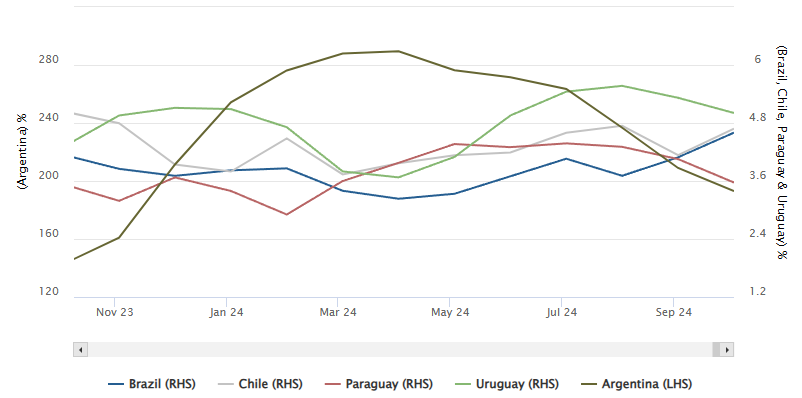
    Brazil & Southern Cone: inflation rate
    Percentage variation (year-on-year)

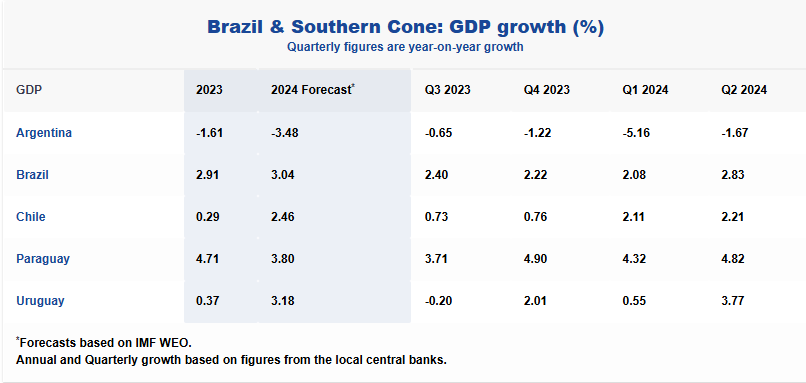
    Brazil & Southern Cone: GDP growth (%)
    Quarterly figures are year-on-year growth

  • TRACKING TRENDS

    Abbi Dicker 02 April 2026 Hits: 1132

    BRAZIL | Unemployment ticks up. The national statistics institute (Ibge) reported on 27 March that Brazil’s unemployment rate in the rolling quarter of December 2025-February 2026 stood at 5.8%, equivalent to 6.2m unemployed people. This marks an increase from the jobless rate of 5.4% in the November-January rolling quarter and from 5.2% in September-November, although it is down from 6.8% in the December 2024-February 2025 quarter.

    In a press release, the Ibge highlighted that the rate registered for the rolling quarter ending February 2026 is the lowest unemployment rate registered for the December-February period since 2012, the year the Ibge began recording the jobless rate under the current methodology.

    BRAZIL | Public sector posts lower primary deficit. The central bank (BCB) released new data on 31 March which showed that the public sector registered a primary deficit of R$16.4bn (US$3.2bn) in February this year, marking a decrease from the monthly deficit of R$19.0bn in the same month last year. The accumulated annual deficit for the 12 months through February 2026 stood at R$52.8bn, equivalent to 0.41% of GDP. The central government posted a monthly deficit of R$29.5bn and the total deficit of state-owned companies was R$568m. Meanwhile, regional governments posted a primary surplus of R$13.7bn.

  • TRACKING TRENDS

    LatinNews 27 March 2013 Hits: 1266

    PERU | Government orders Pluspetrol to clean up. On 25 March Peru’s environment minister, Manuel Pulgar-Vidal, announced that the government has ordered Argentine oil company, Pluspetrol, to clean up the Pastaza River basin, located near the border with Ecuador, and which local indigenous people complain has suffered from environmental damage following an alleged oil spill last year. According to Pulgar-Vidal, the Peruvian government has now declared a state of environmental emergency in the remote Amazonian region of Loreto, where it is suspected that Pluspetrol-operated wells have been contaminating the environment for years, so that experts could go to the area to corroborate the extent of the environmental damage.

        Speaking to a local radio station, Pulgar-Vidal said that the government is already preparing a sanitation and rehabilitation plan for the area, declaring that the State has now decided to intervene in the matter after confirming Pluspetrol’s lack of environmental standards in its operations in Peru. Pluspetrol has been exploiting wells in the Pastaza River basin since 2001, after it acquired the Peruvian assets of US firm, Occidental Petroleum. According to Pulgar-Vidal the company had already been warned about its careless environmental practices between 2003 and 2005 when Pluspetrol was asked to improve on this. Although the company agreed to conduct a voluntary complementary environmental plan (PAC), Pulgar-Vidal said that this had been “inadequately” carried out. The PAC required Pluspetrol to meet a series of requirements that would help to promote the environmental rehabilitation of the areas in which its oil concession were located, giving the firm until May 2009 to meet all this demands.

        After conducting an extensive review of Pluspetrol’s actions, Peru’s environmental and evaluation and audit agency (Oefa) found that the firm had failed to meet all the requirements spelled out in the PAC and as a result Oefa issued a PEN29m (US$11.37m) fine to Pluspetrol last January. Pluspetrol has recognised that it failed to implement all of the PAC provisions but it has refused to pay the fine arguing that it has asked the Peruvian government time and again to review the PAC’s requirements which it deemed to be too demanding.

        The Peruvian government’s latest decision suggests that its patience with Pluspetrol may have run out. So far the government’s decision to step in has caused different reactions with Sixto Shapiama, the president of the Quichua federation of Pastaza, a local indigenous organisation, hailing the declaration of the state emergency as a great achievement; others point out that it has taken too long for the government to take action.

        The Peruvian government has taken its time to recognise the severity of the situation and only recently decided to change its stance on Pluspetrol. In 2010 it tried to expel British religious activist, Paul McAuley, who raised awareness of the environmental damage that was being inflicted on the area and its inhabitants by Pluspetrol’s activities. The attempts to expel McAuley were dropped only after they elicited a global campaign in support of the activist and his cause.

    VENEZUELA | February unemployment figures released. On 25 March Venezuela’s national statistics institute (INE) revealed that unemployment in February stood at 7.6%, 1.6% less than February 2012. The result is an improvement on the unemployment rate for January, which stood at 9.4%. INE president Elías Eljuri attributed the fall in unemployment to “the fact that the dynamics shaping the Venezuelan economy are focused on the necessities of its population, rather than of its capital”. He also mentioned that “the changes that were made to the amount of credit available in the economy and the new exchange rate did not influence the Venezuelan economy’s capacity to employ the labour force”. According to the figures released by INE, during February formal employment made up 59.1% of the total amount while informal employment represented 40.9% of the total.

         The INE’s figure is derived from its monthly survey of 5,998 households. The size of Venezuela’s total labour force for 2012 has been put at 13.7m people out of a total population of 28.45m.

    BOLIVIA | YPFB-YPF joint exploration deal. On 26 March Bolivia’s state own oil & gas firm, YPFB, announced that it had signed a new memorandum of understanding with Argentina’s state-controlled oil firm, YPF, to conduct joint hydrocarbon explorations efforts in Bolivia. A YPFB statement said that the three-year agreement will allow both firms to take advantage of their joint “technical experience and know-how to promote the development of exploration and development projects in areas with the potential to exploit conventional and non-conventional hydrocarbon deposits.” According to Villegas, the agreement, will allow YPF to begin exploration efforts in three new blocs in Bolivia, although he failed to mention precisely where these would be located.

    • Fight for sunken treasure

    On 25 March James Delsordo, a lawyer representing US firm, Sea Search Armada (SSA), presented SSA’s arguments in favour of its claims over the treasure found in Spanish galleon, San José. The San José, which carried several tonnes of gold, silver, jewellery, and precious stones, was sunk by English pirates off Colombia’s Caribbean coast in 1703. The wreck was discovered by SSA in 1984; and the company secured a deal with the Colombian government led by former president, Belisario Betancur (1982-1986), allowing it to extract the treasure. However, Betancur’s successor, César Gaviria (1990-1994) decided to challenge SSA’s claim to the treasure. The dispute appeared to be resolved in 2007 after Colombia’s supreme court ruled that SSA should be awarded half of the treasure. However, the Colombian government has refused to heed the ruling prompting SSA to take its case to a US federal court that began reviewing it in 2011.

  • TRACKING TRENDS

    LatinNews 05 April 2018 Hits: 1974

    BRAZIL | Trade and diplomacy. Brazil’s industry & trade minister, Marcos Jorge de Lima, met the UK secretary for international trade, Dr Liam Fox, on 28 March and signed a series of bilateral accords to strengthen trade and investment. During a meeting in London for the UK-Brazil Joint Economic and Trade Committee (JETCO), ministers signed a Memorandum of Understanding (MOU) to boost bilateral trade, increase regulatory cooperation, and improve the participation of small-to-medium sized businesses (SMEs) in foreign commerce. The two ministers also stressed their support for the bilateral Patent Prosecution Highways (PPH) programme, which comes into effect this Autumn and aims to protect the intellectual property rights of UK and Brazilian businesses.

    Bilateral trade between Brazil and the UK was worth around US$5.15bn in 2017, but has already grown by 30% in the first two months of this year. This shows there is room for closer commercial relations, argued Jorge in a statement on Brazil’s industry & trade ministry (MDIC) website.

    With regard to multilateral trade, delegates from Brazil and the UK stressed the importance of upholding the World Trade Organization (WTO) framework outlined at the Buenos Aires Ministerial Conference in December 2017.

    • UK-Brazil ties

    Brazil also benefits from the UK government’s development programme, the Prosperity Fund, financed by the Foreign and Commonwealth Office (FCO). Between 2011 and 2016, Brazil received more than £14m (US$19m) from the Prosperity Fund, which was spent on projects to improve the business environment, attract new investment in infrastructure, and raise money for public-private partnerships. The British Deputy Head of Mission (DHM) in Brazil, Liz Davidson, and Brazil’s industry & trade minister, Marcos Jorge de Lima, signed a Memorandum of Understanding to build on this initiative in years to come, once the UK government approves it.

    As the UK prepares to exit the European Union (EU), it will look to Brazil as a ‘key partner’ to re-establish itself as an independent member of the WTO, read a statement on the UK government’s website. In turn, Brazil will call on the UK to support its bid to join the Organisation for Economic Co-operation and Development (OECD).

  • TRACKING TRENDS

    LatinNews 09 May 2019 Hits: 862

    CHILE | Piñera backs four day working week. Chile’s President Sebastián Piñera signed a labour reform bill on 2 May that will allow workers an improved, more flexible work-life balance. According to a government press release, the initiative included in the bill, which has now been sent to congress for debate, will implement several changes to the structure of the working day, most notably the individual’s right to choose how to distribute working hours throughout the week.

    The initiative proposes a total of 180 monthly working hours that can be apportioned on a weekly basis as four, five or six-day working weeks and flexible daily start and finish times. Labour Minister Nicolás Monckeberg commented that the changes have been proposed to allow individuals a better work-life balance “with family life, sports, culture, friends and whatever people want to do in their free time”.

    The bill will also standardise social protection for those offering services through digital or third-party forums, as well as putting in place systems through which workers can complete their education. In addition, disadvantages in the labour market for people with disabilities and for women will be addressed under the proposed bill, with plans to promote inclusion and gender politics, and stringent regulations will be imposed for the prevention and sanction of workplace bullying and sexual harassment. The bill will have to pass through congress before it can be implemented.

  • The struggle for power

    LatinNews 12 November 2019 Hits: 236

    To an extent, Guyana’s poor governance is a reflection of its heavily contested politics. Like Trinidad & Tobago, which with a score of 41 out of 100 is only just ahead of Guyana with its score of 37, Guyana has a society that is divided between those of East Indian origins and those of African origins. In Trinidad & Tobago, according to the 2011 census, the population is made up of 37.6% people of East Indian origin, 36.3% of African origin, and 24.2% mixed race. Those of Indian origin traditionally support the opposition United National Congress (UNC), with those of African origin mostly supporting the ruling People’s National Movement (PNM).

    In Guyana, there is a similar dynamic. The central fact of Guyanese politics, as with Trinidad, is the ethnic divide between those Guyanese of East Indian descent and those of African descent. The 2012 census figures showed that people of East Indian descent make up 39.8% of the population, those of African descent make up 29.2%, and the mixed-race population is 19.9% of the total. Amerindians add a further 10.5%.

    The People’s Progressive Party/Civic (PPP/C) is supported by the Indian community. The African community supports the People’s National Congress Reform (PNCR) of President David Granger, which is the main component in the ruling A Partnership for National Unity (Apnu). Apnu rules in a coalition with Alliance for Change (AFC) which was created to appeal across the ethnic divide.

    The recent electoral history of Guyana has been of desperately close elections. In 2011, the PPP/C won its fifth consecutive general election, but only by the smallest margin. It secured the presidency with 48.6% of the vote, but it lost control of parliament for the first time in 19 years, winning only 32 of the 65 contested seats. The other 33 seats were split between 26 for Apnu and seven for the AFC.

    In November 2014, faced with the prospect of losing a no-confidence vote, the PPP/C’s President Donald Ramotar prorogued parliament and subsequently called an early election for May 2015. On this occasion, the Apnu/AFC ran a combined campaign which enabled it to win the presidency with 50.29% of the vote and to retain control of parliament with 33 seats.

    The PPP/C was anything but magnanimous in defeat. It contested the results and began referring to the “de facto” government of President Granger. And, less than a month after the election, the PPP/C began to complain bitterly about what it said was a witch hunt against PPP/C supporters in the civil service.

    The PPP/C complained about “a general atmosphere of intimidation, fear, distrust, and uneasiness within the public service”. It said that “Guyanese nationalists and patriots” were being “cast aside, vilified, demonised, and destroyed professionally”. And it added: “The PPP will not stand idly by and allow the de facto Granger Administration to ride roughshod over the civil and political rights of Guyanese.”

    The trouble is that since the 2015 general election the ethnic divisions have, if anything, intensified, and the stakes have got much higher with the discovery of oil. The local elections in November 2018 showed that race-based voting remains an unshakeable component of Guyanese elections and is far more important than policy.

    But if race remains the unshakeable centrality of Guyanese politics, almost everything else is in flux, starting with the coalition. Apnu and AFC contested the November 2018 local elections separately rather than as coalition partners, and as a result the AFC revealed its political weakness by failing to make inroads into PPP/C strongholds (its main purpose as the multi-ethnic component of the coalition) and ended up losing ground in several constituencies where it had performed well in 2011.

    Then, on 21 December 2018, the coalition lost a no-confidence vote because an AFC member (Charrandas Persaud) switched sides to give the opposition their victory.

    The constitutionally mandated consequence of the 21 December 2018 no confidence vote was that an election should have been held within three months, but legal challenges and arguments over the readiness of the Guyana Elections Commission (Gecom) to hold an election led to a delay in calling the election until 2 March 2020, leaving President Granger presiding over a lame-duck administration without the legitimacy to take major decisions, including commercial decisions relating to the exploitation of Guyana’s oil wealth.

  • Migration

    LatinNews 09 October 2020 Hits: 928

    A central belief of the Trump presidency has been that it is necessary to reduce inward migration to the United States. During the 2016 election campaign, Trump accused Mexican migrants of being criminals, rapists, and drug traffickers, and vowed to keep them out of the US as a way of protecting US jobs. The background is that the US has experienced a significant increase in inward migration since the 1970s. The proportion of the population composed of immigrants rose from roughly 5% in 1970 to nearly 15% now. Inward migration from Mexico was initially dominant, but in the last two decades most migrants have come from elsewhere, from Asia, India, and China. The flow of immigrants coming from Latin America into the US has also become more diverse, including many originating from Central America, Venezuela, Cuba, and the Dominican Republic. Net migration from Mexico has meanwhile turned negative (in other words, more US citizens are moving to Mexico than the other way round).

    The total number of undocumented or illegal immigrants in the US is estimated at about 11.3m people, concentrated mainly in California, Texas, and New York. Of these it is estimated that around 6m are Mexico-born, and 1.5m are from Central America.

    Trump’s approach to try and roll back inward migration included plans to remove temporary protected status (TPS) visas from around 300,000 migrants from Haiti, El Salvador, Nicaragua, and Honduras. TPS is offered to migrants from countries that have suffered major difficulties such as armed conflict, an environmental disaster, or other extraordinary conditions. Withdrawing TPS would force many long-term migrants to leave the US voluntarily or be deported.

    Trump also sought to suspend the Obama-era DACA (Deferred Action for Childhood Arrival) initiative, which gives protected status to the children of undocumented immigrants. The attempt to end DACA was reversed by a Supreme Court ruling in 2019, on the grounds that the administration had failed to observe the necessary procedures.

    Government policy to separate families on arrival in the US – with children often held in detention centres as their parents are deported - has been highly controversial. The administration also launched “remain in Mexico” Migrant Protection Protocols (MPP) which require migrants and asylum seekers processed at the US-Mexico border to return to Mexico pending a US court ruling on their case. This was complemented with similar so-called third-country agreements with Guatemala, El Salvador, and Honduras allowing those seeking asylum in the US to be held in some of those countries rather than the US itself.

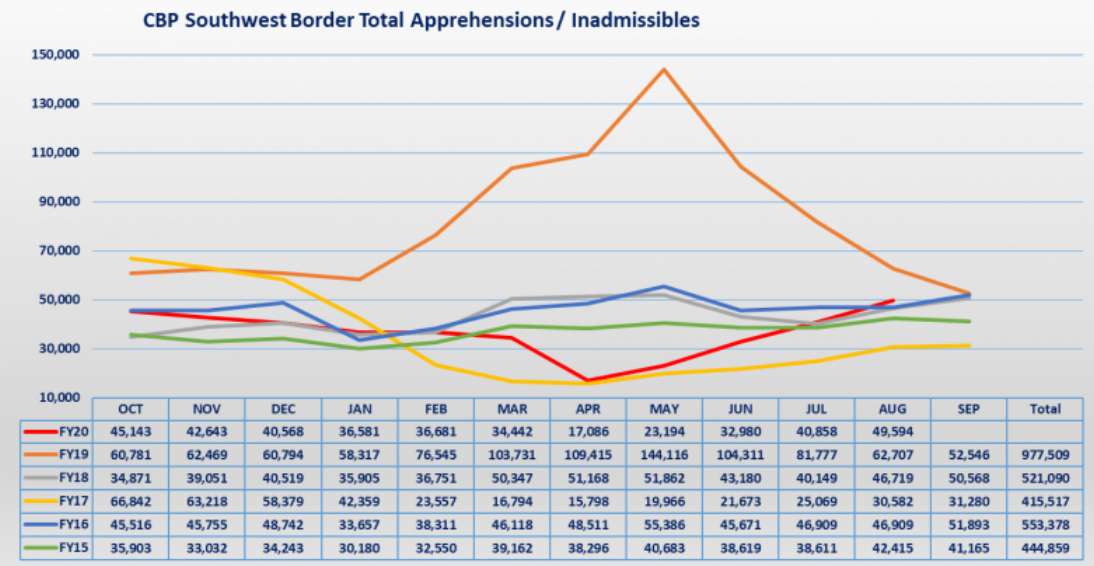
    As with anti-narcotics policy, the results of Trump’s anti-immigration policies have been mixed. Migrant apprehensions at the southwest border – the most widely used metric for illegal immigration - had been steadily declining, reaching a 50-year low before Trump took office. However, they began to rise in mid-2017. By FY2019 they reached a new peak of 977,509, almost doubling on the previous year. A majority of those arrivals were unaccompanied children and families from the Northern Triangle countries. However, in the first 11 months of FY2020 migrant apprehensions have declined relative to the previous year, with the Covid-19 pandemic playing an important role, as non-essential travel and asylum processing have been suspended. Under Title 42 CDC travel restrictions, more than 90,000 immigrants from Mexico and the Northern Triangle countries have been turned back.

    Southwest border migration fiscal year (FY) 2020

    Source: U.S. Customs and Border Protection

  • ECONOMIC HIGHLIGHTS

    Abbi Dicker 21 June 2024 Hits: 2084

    MEXICO | International tourism up. On 10 June, Mexico’s tourism ministry (Sectur) reported that international visitors brought in US$12.51bn in the first four months of 2024, reflecting an 8.2% increase from the same period in 2023 and a 36.8% rise from levels seen prior to the coronavirus (Covid-19) pandemic in 2019. The period saw 14.7m international tourists visit Mexico, a 6.4% increase from the same period in 2023 and 0.2% more than in the first four months of 2019.

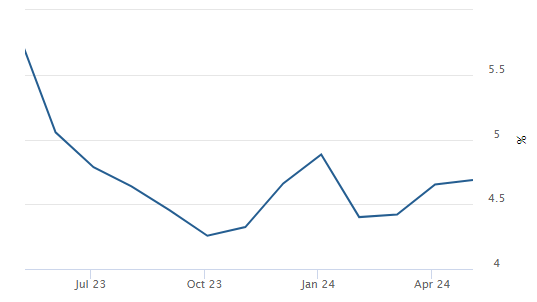
    MEXICO | Annual inflation continues to rise in May. On 7 June, Mexico’s national statistics institute (Inegi) released consumer price index figures for May, showing that Mexico’s annual inflation rate climbed to 4.69% in May 2024, marking the third consecutive month of annual increases. This increase, although slightly below market expectations, is up from 4.65% in April, 4.42% in March, and 4.40% in February. Despite the annual rise, the consumer price index (CPI) decreased by 0.19% in monthly terms, following monthly inflation of 0.20% in April.

    MEXICO | Production, sales, and export of vehicles up. On 6 June, Mexico’s national statistics institute (Inegi) announced that 119,985 light vehicles were sold in the domestic market in May, up 12.35% on May 2023. In the first five months of 2024, 585,721 light vehicles were sold in the domestic market, up 12.74% on the same period in 2023. According to the same report, 365,574 light vehicles were produced in May 2024, up 4.93% on the same month in 2023, while in the first five months of 2024, 1.65m light vehicles were produced, up 5.55% on the same period in 2023. As regards exports, 310,655 light vehicles were exported in May 2024, up 12.98% on May 2023, while in the first five months of 2024, 1.43m light vehicles were exported, up 12.33% on the same period in 2023.

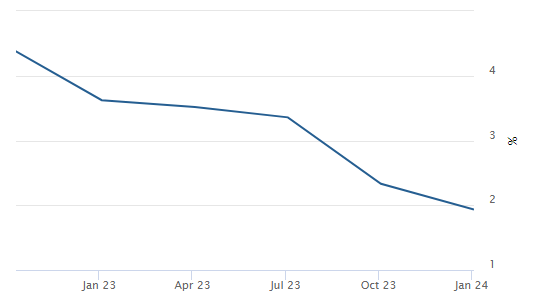
    Mexico: GDP growth
    Percentage variation (year-on-year)

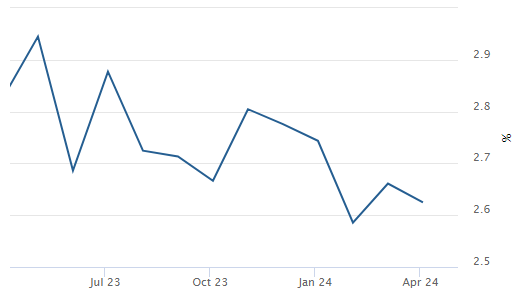
    Mexico: unemployment rate
    Economically active population

    Mexico: inflation rate
    Percentage variation (year-on-year)

    Source (all graphs): National Statistics Institute (Inegi)

  • URUGUAY: First abortion, next marijuana

    LatinNews 11 October 2012 Hits: 1626

    Uruguay will shortly become the first country in South America where abortion is legal. After a heated debate, the lower chamber of deputies voted by 50 votes to 49 in late September to legalise abortion. The remaining hurdles before the bill becomes law will be easy to leap. The next step for congress will be approving legislation submitted by President José Mujica in August to legalise state control and regulation of the importation, production, acquisition, commercialisation and distribution of marijuana in the country.

    Cuba is the only country in Latin America where abortions are accessible to all women during the first trimester of pregnancy. Under the legislation approved in Uruguay, women would have the right to a legal abortion during the first 12 weeks of pregnancy, and, in cases of rape, during the first 14 weeks. If the mother’s life is at risk or the foetus is too deformed to survive after birth women would also be entitled to a termination.

    The chamber made some fairly significant changes to the bill approved by the senate so it must now go back to the senate for the final seal of approval before it becomes law. The senate had approved an even more liberal version of the abortion measure so this step should be a formality. President Mujica, meanwhile, has already made clear that he has absolutely no intention of vetoing the law and will ratify it when he receives it.

    The day before the vote, a pro-life march took place in central Montevideo, and on the day of the vote itself, a pro-abortion demonstration took place outside the congressional building led by naked women with painted bodies.

    The final vote was split along party lines, although several deputies on both sides of the debate said they could not toe the party line in good conscience and let their alternates vote instead. The former president and current Senator for the traditional Partido Nacional (PN, Blancos), Luis Alberto Lacalle (1990-1995), said he was opposed to abortion on “philosophical, religious and scientific grounds”.

    Lacalle said that it was worth reading the explanation Mujica’s predecessor Tabaré Vázquez (2005-2010), an inveterate opponent of Lacalle’s except on this issue, had given for the presidential veto he issued over a similar law approved by congress in 2008.

    In his original veto message Vázquez, an oncologist, said “the legislation cannot ignore the reality of the existence of a human life in gestation, something that has clearly been revealed by science.” There was plenty of support for this viewpoint in the lower chamber and one PN deputy, Pablo Abdala, said he would promote a popular referendum to overturn the law.

    Even if Abdala succeeds in his bid to stage a referendum, polls suggest that Uruguayans are significantly less conservative than their political representatives: some 52% of respondents to a poll by Cifra conducted in September said they would vote to legalise abortion in a referendum, while just 34% said they would oppose it.

    How liberal is it really?

    President Mujica argued that the law approved by congress legalising abortion would result in fewer pregnant women going to backstreet clinics to have their pregnancies terminated in unsafe ways. He also argued that it would, paradoxically, lead to a reduction in abortions.

    Mujica was referring to measures added by deputies, diluting the law, which have angered abortion rights advocates. For instance, under the revised law, women seeking abortions will have to go through an intimidating process, which could deter many, consisting of justifying their request before a panel of at least three professionals - a gynaecologist, psychologist and social worker. They will be given advice about alternatives, such as adoption and support services, if they elect to keep the baby. If they still want to proceed with the abortion after this, they will have to wait a further five days “to reflect” on the consequences of their decision.

    The counter-argument to Mujica is that by requiring women to go through such bureaucratic and psychological barriers many might still prefer to get an abortion the ‘traditional’ and dangerous way. As many as 30,000 abortions are believed to be practised in Uruguay every year, which is high given that only 47,000 children are born each year.

    The leader of the women’s rights NGO Mujer y Salud en Uruguay (MYSU), Lilián Abracinskas, said the final law was not only more restrictive than the 2008 law vetoed by Vázquez, but was infused with a spirit actively discouraging women from having abortions, not to mention impractical: there is a dearth of qualified health professionals in the interior, meaning that some women might not have time to carry out all of the necessary administrative requirements. Abracinskas said this was neither the law for which she had campaigned nor the law that Uruguayans wanted.

    Mujica opens up on Argentina

    President Mujica has a long-established reputation for plain-talking - and he lived up to it in an interview with the national press in late September. He said Uruguay was “a half schizophrenic country: we suck the blood of the Argentines and then spit it out”.

    Mujica chose a football metaphor to demonstrate this. He said that in 2005, in the final group qualification game for the World Cup, Uruguay needed a draw to progress to a play-off with Australia to qualify for the World Cup the following year; Argentina had already qualified from the group, and there was a tacit agreement between the players not to try very hard as a friendly gesture to help Uruguay through - “but when Argentina played we were all Germany fans.”

    Mujica went on to argue, “Of course the policies being carried out by Argentina are enormously protectionist and they are creating problems everywhere. But, what do we do? Break off relations? Declare war? They (the opposition Partido Colorado [PC]) say we should be firmer, but what is ‘being firmer’?”
    There are other differences between Argentina and Uruguay, other than trade barriers, which are blocking Uruguayan exports in contravention of the free movement of goods enshrined in the founding treaty of the Southern Common Market (Mercosur). Foremost among these is the dredging of the bi-national Martín García canal.

    Mujica claims to have extracted assurances from his Argentine peer President Cristina Fernández to proceed with a project to deepen the canal from 32 to 34 feet. However, the protracted delay has infuriated opposition politicians: Juan Manuel Garino, a Colorado deputy, denounced that he had been offered a bribe of US$1m by Argentine officials from the bi-national administrative commission of the River Plate (Carp) to support a bid by the Dutch company Riovia to carry out the work to deepen the canal. The delay, and this allegation, has also strained bilateral relations, with harsh communiqués exchanged between both foreign ministries.

    Mujica, ever keen to play down the friction, said that the two governments were discussing establishing a bi-national dredging company. He explained that the canal will always require dredging and “it costs an arm and a leg” every time it needs doing.

    • Abortion

    Cuba decriminalises abortions in the first 10 weeks of pregnancy. Abortion is allowed in Argentina and Colombia in cases of rape or if the mother’s life is endangered. Abortions are also legal in the first trimester in Mexico City but not elsewhere in the country.

    • GDP growth

    Uruguay’s economy grew 3.8% year-on-year in the second quarter, having expanded by 4.2% in the first quarter. A severe drought affected electricity generation, lifting costs. The lack of rain also meant Uruguay had to import more energy from Argentina and Brazil.