Peru’s much anticipated recovery under the liberal economic new government led by the investment-banker turned president Pedro Pablo Kuczynski has failed to materialise. The minority and politically-novice Kuczynski administration got off to very slow start after taking office in late July last year, bitterly disappointing (admittedly-high) local private sector and foreign investor expectations. The country was then hit by two successive major shocks. The first of these was the Odebrecht bribery scandal, which has implicated the last three governments and prompted extreme investor nervousness. The second relates to the unprecedented heavy rains in northern coastal zones of the country starting in December last. Now in their fifth month, the rains, which have spread down as far as Lima province, have has caused over US$3bn in flood and landslide damages, on latest government estimates, and destroyed infrastructure in half of the country’s regions.
Interviewed at the presidential palace by the financial newswire Bloomberg in early April, Kuczynski admitted that the floods, the worst in two decades, would mean lower economic growth this year. Initially, the government had forecast a real GDP growth rate of 4.8% this year (from 3.9% in 2016), but now, in the wake of the Odebrecht scandal and the floods disaster, the president said that the government had reduced its forecast to a range of just 3%-3.5% this year, before rebounding in 2018 to about 4%-5%. Speaking on 4 April, Economy Minister Alfredo Thorne said in early April that first quarter GDP results looked “fairly weak”, at about 2% at best.
Thorne noted that this year’s El Niño Costero (a coastal version of the larger El Niño Pacific Ocean climatic phenomenon) had been weaker than those registered in Peru in 1983 and 1998. However, the destruction this time round was much more dramatic, not least because of the rapid economic growth in Peru in the last decade, including rapid and typically unplanned urbanisation, with the accompanying informal development of local infrastructure and services, much of which simply collapsed and washed away under the force of the flood water and landslides.
The extension of damage, Thorne said, reflected the fact that the Peruvian economy is about 10 times its size back in 1982-1983. As such, this year’s El Niño Costero destroyed 242 bridges, whereas in the 1982-1983 emergency, 47 bridges were lost. Likewise, 198,000 homes have been lost to date in 2017, compared to 111,000 in 1997-1998 and 94,000 in 1992-1993. Other reports, including the latest (31 March) update from the Centro de Operaciones de Emergencia Nacional (Coen), estimated that just over 205,000 homes have been lost. On Coen data, almost one million people in all in Peru have now been affected by the emergency (950,498), with 101 deaths to end-March.
On the other hand, Thorne noted, while 2,629km of roads have been destroyed to date this year, in the 1982-1983 floods, which were very severe, 2,600kms were lost. And in terms of cultivated areas, the losses will be smaller this year, he noted, albeit the country’s agricultural sector questions this (see sidebar). Thorne tried to minimise the concerns about the economic impact, emphasising that increased public spending would help the economy back on its feet in the second half of this yea. Like the president, he insisted that 2018 would see a much better result.
With 15,000 people forced out of their homes, the government’s immediate priority is to ensure adequate shelter for these people. Thorne has already pledged at least US$741m for reconstruction works. Kuczynski insisted that funds for the emergency and repair effort were not a problem, saying that the government would dip into its “substantial savings”, as well as taking on additional loans, to finance the reconstruction effort. Thanks to fairly prudent financial management over the successive governments, Peru has room for fiscal manoeuvre. The government could draw on the fiscal stabilisation fund (Fondo de Estabilización Fiscal, FEF), or alternatively (and perhaps preferably), on its contingency reserve, which holds about US$1bn. The government will also be eligible for preferential multilateral funds for reconstruction from the likes of the Inter-American Development Bank (IBD), the World Bank and the CAF-Development Bank of Latin America, which will also lend important technical support.
Kuczynski said he expected the budget deficit to increase by about 0.5% of GDP this year on the back of the reconstruction effort, potentially taking it to 3%, above the initially-targeted 2.5%. However, he stressed that he did not expect the public debt burden to exceed 24%-25% of GDP.
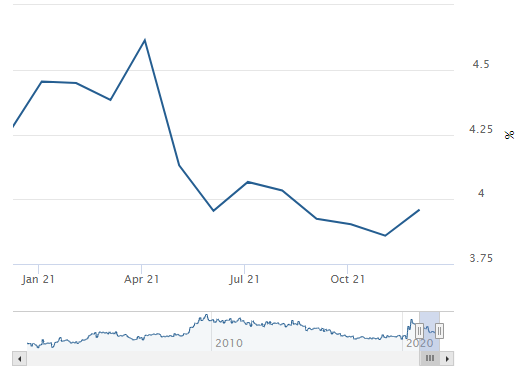
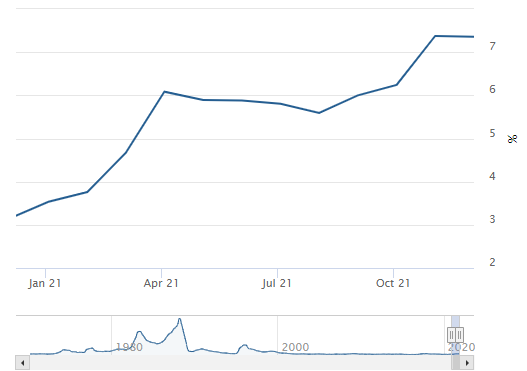
On 26 March, the central bank (BCRP) revised its growth and inflation forecasts for the year. The BCRP president, Julio Velarde, reported March inflation of 3.97%, up from 3.25% in February, due to a temporary price shock related to the flood emergency, which has severely disrupted supplies, including in the capital Lima (home to a third of the population). Velarde said the spike was transitory, and would subside. Nonetheless, the BCRP has increased its 2017 inflation forecast by one percentage point to 2.4%. Even so, this is still within the BCRP’s target range of 1%-3%, and is “still one of the lowest in the region”, he noted. Reflecting the inflation spike, the BCRP subsequently left the benchmark interest rates unchanged at 4.25%, where it has been for a year now. There had been hopes for interest rate reductions in support of investment this year, but that will now be delayed until inflation re-stabilises, which could take some months. The BCRP has revised down its real GDP forecast from 4.3% to 3.5%.
A local economic consultancy, Maximixe, has estimated the total flood damages to date at US$5bn, above that of another consultancy Macroconsult, which put it at just over US$3bn, similar to the government’s estimate. Maximixe calculated the damages in the northern region of Piura alone at US$1.7bn, putting the costs in Lima province at US$1.2bn and in the rest of the country at US$2.4bn. Still others put it higher again at US$6bn, which would be 3% of GDP.
Cited by the business daily Gestión, economist Carlos Casas of the Universidad del Pacífico (UP) noted that these damages should be understood as disinvestment, or negative investment, on the basis that the reconstruction effort, which could last 3-4 years, is effectively an effort to rebuild capital stock that existed as of December 2015. In that sense, the disaster will damage the economy’s growth capacity over an extended period, as it has lost vital inputs. Nevertheless, Casas agreed with the Thorne that the reconstruction effort would positively contribute to aggregate demand, amid increased public demand in infrastructure, with a boost to the private sector from the need for housing.
Macroconsult has now lowered its 2017 GDP forecast from 3.5% to just 2.9%, while Maximixe has cut its forecast from 3.8% a 3.1%, but with downside risk to a low of 2.45 should the rains extend out to May.
Ratings agency Moody’s Investors Service is less pessimistic, maintaining its 2017 growth forecast of 3.7%, with upside risk to 4% on the basis of the government’s planned fiscal stimulus. Also taking a positive view, the chief economist of BBVA Research, Francisco Grippa, emphasised that would be a ‘natural rebound from Q1 2018, as those sectors affected by the rains bounce back.
-
Steep agricultural losses
According to Héctor Carrasco, president of the Convención Nacional del Agro Peruano (Conveagro) and the Sociedad Peruana de Criadores de Alpacas y Llamas, estimated flood losses in the farming and livestock sector to date amount to some PEN2.1bn (US$640m). He noted that over 90,000 hectares of banana, cane, rice and other grains have either been destroyed or could not be harvested. Carrasco said that the government’s promised emergency payment for farmers of PEN1,000 per hectare (about US$308) was “insufficient”. The supply losses will keep food price inflation in Lima and elsewhere elevated until at least the third quarter, private economists estimate.