All Categories

Subcategories

  • REGION: New Oxfam report sheds light on cost of tax evasion

    Sarah Sheldon 28 May 2025 Hits: 1105

    A new report from international charity Oxfam has found that tax evasion costs Central American governments a combined US$17.5bn per year.

    Published on 25 March, the report, titled ‘Más Recursos para más Derechos’ (More Resources for More Rights) calls for a crackdown on tax evasion and tax avoidance schemes, such as profit shifting and the use of tax havens, in order to strengthen public finances and enable much-needed social spending.

    It also calls for an overhaul of existing tax systems, which it says reinforce the region’s high levels of poverty and inequality by relying more on indirect taxes, such as consumption taxes, than direct taxes, such as inheritance and capital gains, which are only paid by the wealthiest members of society. These efforts would help the region to deal with these long-term issues, which are being worsened by more recent developments such as climate change and rising global food prices, the authors say.

    To do so, the report’s authors recommend eight measures including a progressive tax of 2.5%-5% on fortunes of more than US$5m, which would bring in US$1.6bn per year or 0.59% of regional GDP, as well as getting rid of regressive tax breaks, which would raise US$2.1bn per year. Other recommendations include reducing tax evasion by 50%, raising US$8.7bn per year, and the introduction of a minimum rate of corporation tax on multinational companies of 25%, to raise a further US$1.2bn. In addition, Oxfam says that independent auditing capacity should be increased, as should regional coordination on tax policy.

    Pushback

    Efforts to improve tax collection in Central America have been stymied for decades by the power of regional elites, who have been able to maintain a status quo that is beneficial to their interests through lobbying and corruption schemes. To this day, regional governments have tended to avoid proposing reforms that will increase tax rates, instead focusing efforts on improving collection rates so as not to anger these powerful vested interests.

  • ECONOMIC OVERVIEW: URUGUAY

    LatinNews 14 September 2012 Hits: 374

    Uruguay’s exports increased by 15.1% in the first eight months of the year compared with the same period in 2011, totalling US$6.195bn, according to official statistics. Imports only increased by 0.6% over the same period, leaving Uruguay with a trade surplus of US$690m.

    Soya is the main export product, accounting for 22.2% of total exports over this period, the equivalent of US$1.373bn. Such is the rapid rise of soya exports that they now generate nearly twice the export revenues of beef, which amounted to 11.2% of total exports.

    Brazil remains the principal destination for Uruguay’s exports, taking 17.5% of the total, followed by the Nueva Palmira free zone (12.8%), and China (12.3%).

  • URUGUAY-ARGENTINA: Wheat inflames national pride

    LatinNews 18 July 2013 Hits: 3878

    Once as unthinkable as Cuba importing sugar, Argentina is faced with the prospect of importing wheat. And to rub salt into wounded national pride, Argentina, formerly dubbed the world’s bread basket, could need to turn to neighbouring Uruguay to replenish a near-empty basket. The Argentine government of President Cristina Fernández has reacted in belligerent fashion, blaming wheat producers for price speculation, and digging up a tough old law which would punish suspected hoarders with a prison sentence. Opposition legislators, however, claim that the government is allowing wheat contraband from Uruguay to enter the country in a desperate bid to push bread prices down ahead of key mid-term legislative elections in November.

    The Argentine government does not accept that there can be a wheat shortage in what was previously the world’s largest producer, and the powerful domestic trade minister, Guillermo Moreno, is refusing to countenance importing wheat from Uruguay: “not even if I were blind drunk would I allow the import of wheat,” he said bluntly. As one Uruguayan commentator put it in the national daily El Observador on 12 July “the very idea of importing wheat is seriously embarrassing. It would be a heavy blow for national self-esteem… something akin to Saudi Arabia all of a sudden having to import oil”.

    Bread prices in Argentina have risen to as much as Arg$20 (US$3.70) a kilo in recent weeks. The worry for the Fernández administration, with legislative elections looming in October, is that the high cost of bread could entail a higher political cost as those most affected are its working class support base. The government has launched a media campaign extolling the virtues of home baking in the face of the high bread prices and scarcity, even posting a recipe on a government website, but this is no palliative.

    As such, Moreno, the architect of inflation-massaging and state intervention in various markets (such as wheat, beef and milk), resorted to dusting off a strict pre-dictatorship law on 5 July which asserts as an overriding priority the need “to cover the needs of the Argentine people”. Moreno published the 1974 “law of shortages” in the official gazette. It empowers the government to intervene in an industry to apply tough sanctions when producers are suspected of not supplying the domestic market on purpose with the aim of causing social destabilisation, or speculating on rising prices.  This includes a six-month prison sentence.

    Moreno, on the one hand, describes the crisis as a media concoction designed to damage the government’s image, and, on the other hand, entertains the conspiracy theory that farmers are hoarding wheat to have an electoral impact. The government is deeply suspicious of the country’s four farming unions which united in protest against the government’s export tax targeting the agricultural sector five years ago, contributing to the government’s sub-par performance in the last legislative elections in 2009.

    The farming unions argue that there is a genuine wheat shortage because of the government’s policies, which have forced many farmers producing wheat out of business or to switch to more profitable alternatives. Domingo Capeloni, president of the Argentine pro-wheat association (Asociación Argentina pro Trigo) laid the blame full square on the government. He said state intervention and the export tax meant that it was no longer commercially viable to grow wheat and the surface area given over to wheat cultivation in the last harvest (2012-2013) was “the lowest in 110 years”.

    The president of the Sociedad Rural Argentina (SRA) union, Luis Miguel Etchevehere, said that before state intervention began, and the export tax was introduced, between 16m and 18m tonnes of wheat were being produced per year, with domestic consumption just 6m tonnes. But last year, with profit sucked out of the sector, and a poor harvest to boot, production fell to just 9m tonnes.

    “Today in Argentina, wheat costs some US$500 per tonne, twice that of Uruguay,” Etchevehere added. Uruguay also happens to possess stock of 690,000 tonnes of wheat; with domestic demand of just 200,000 tonnes before the next harvest, Uruguay will need to offload some of this surplus.

    Argentine Deputy Carlos Brown, of the opposition Frente Peronista, is convinced it is already doing so despite Moreno publicly having emphatically ruled out importing wheat. Brown denounced that contraband wheat from Uruguay was entering the country through ports in Entre Ríos and Buenos Aires with “the connivance of government officials”. He is demanding an investigation.

    • Wheat export figures

    On 10 July the Montevideo government revised down its export growth figures for 2013 by 3.2 percentage points from 8% to 4.85% on the back of a poor wheat harvest. Ironically, even though the annual export forecast was reduced, overall exports in the first half of the year were US$4.63bn, 6.4% higher in the first half of 2013 than the same period of 2012. This as Uruguayan exporters managed to find new markets in places such as Egypt, Tunisia and Greece for some other profitable agricultural exports such as soya beans, exports of which increased by 16% year-on-year in the first half of the year. End box

    Artigas felt Argentine

    As the Uruguayan media revelled in Argentina’s current wheat predicament, President Cristina Fernández appeared to try and prick Uruguayan national pride. Fernández insisted on more than one occasion in late June and early July that Uruguay’s national independence hero, José Gervasio Artigas, felt Argentine at heart.

    She claimed that Artigas began his testament by saying “I, Gervasio Artigas, Argentine, born in Banda Oriental.” Fernández said Artigas had wanted one big, united Argentina. She said it was important to “tell history as it really was”. Historians have cast doubt on the authenticity of this testament, and Uruguayan opposition legislators took to Twitter en masse to attack Fernández’s comments. “In history, as in politics, there is nothing worse – even if it is sometimes amusing – than caricature. Because it plays with reality, but deliberately deforming it,” former president Julio María Sanguinetti (1985-1990 and 1995-2000) said. He accused Fernández and her deceased husband and predecessor, Néstor Kirchner (2003-2007), of being past masters at this, while palpably failing to defend the separation of powers, which Artigas upheld.

    Abortion law stands

    On 23 June, Pablo Abdala of the centre-right Partido Nacional (PN) and other pro-life legislators recognised defeat in a national consultation on whether to hold a national referendum to repeal a controversial October 2012 law decriminalising abortion in certain cases. According to Uruguay’s electoral court, on 99.77% of the count, just 8.88% of the national electorate (of 2.6m) supported the proposal, far short of the 25% necessary to call a referendum. The result leaves intact the October 2012 law, which was promoted by the leftist Frente Amplio (FA), in government under President José Mujica.

    The 22 October 2012 ‘Sexual Health and Reproduction Law’ makes Uruguay only the third country in Latin America with abortion legislation in place (the others are Cuba and Guyana). Uruguay’s legislation permits abortions carried out before 12 weeks by a doctor, on the stipulation that a woman seeking to terminate her pregnancy receive appropriate counselling.

    • Inflation

    Inflation for the first half of 2013 reached 4.84%, according to the national statistics institute (INE), leaving the government just about on track to avoid the dreaded double-digit annual inflation. The consumer price index for June increased by 0.43%. Annualised inflation in June stood at 8.21%.

    • Medical tourism

    While there are no official figures on the number of abortions carried out to date under the new abortion legislation, in late March, the deputy public health minister, Leonel Briozzo, told reporters that “between 300 and 400 abortions” were taking place a month. Given that Uruguay’s total population is just 3.0m, that prompted speculation that women were travelling in from Argentina and Brazil to have abortions.

  • Region: A different kind of export growth

    LatinNews 27 October 2016 Hits: 2784

    The countries of Latin America and the Caribbean (LAC) are beginning to emerge from two years of negative or subdued growth. An export-led recovery is in prospect. But much will depend on what kind of exports are pursued, and on whether the first signs currently emerging of a global shift to more protectionist policies develop further. According to a new World Bank report entitled ‘The big switch: restoring growth through trade’, countries that are able to develop higher-value added exports are likely to perform better.

    Augusto de la Torre, the World Bank’s chief economist for the LAC area, observes that “The regional slowdown seems to finally be coming to an end, with average growth expected to turn positive in 2017. Now, we are emphasizing the need for a major switch of resources (workers, capital, entrepreneurial talent, financing) towards the production of goods and services that are traded in international markets – that is, towards tradable activities.” According to the report, consensus forecasts indicate that the combined GDP of the LAC economies will contract by 1.1% in real annual terms in 2016, but is set to recover by 1.8% in 2017. Not yet clear, however, is how strong – and sustainable – the recovery will be.

    The report argues that the commodities boom that dominated the first decade of the 21st Century is over, and is unlikely to resume with anywhere near its previous vigour. Future regional economic growth, therefore, will depend on the ability to develop more diversified exports, but this in turn will be challenged by slower growth in global trade. Just when the region seems ready to make the necessary effort to strengthen its presence in international markets, the world seems to be threatening to go in the opposite direction, with global trade flattening, import volumes into China and East Asia contracting, and signs of a policy shift towards more protectionist positions.

    Despite this concern over global headwinds, there is some good news. The World Bank says there is evidence that two necessary processes of change are progressing, although at a different pace in different countries. These are, first, a macroeconomic adjustment in response to the end of the commodities boom, typically to rebalance supply and demand by reducing fiscal and current account deficits, and second, structural changes and reforms to allow new, competitively-based export growth. The challenge is to try and achieve both these things either at the same time or in quick succession, and in a manner that stops one getting in the way of the other. De La Torre says the question is whether “the structural transformation required to make this shift in production is consistent with the process of macroeconomic adjustment that is still underway in many countries in order to adapt to the post-boom reality. To sustain growth, the adjustment process should avoid unduly sacrificing investment, so crucial to boost further growth”, he stresses.

    The report notes that these processes of change are most needed in South America (SA), which, on the whole, has been more dependent on the commodities boom than the sub-region of Mexico, Central America and Caribbean (MCC), which is a net commodities importer. Within SA, the World Bank singles out Peru, Chile and Paraguay as three countries that have completed their post-boom macroeconomic adjustment, and are now in a better position to focus on delivering longer-term growth, which will include boosting investment in education and infrastructure. It says that both the adjustment, and the switch of resources into the tradable sector, has been greatly facilitated by the use of flexible exchange rates. Currency depreciation has tended to help diversification of export products and export destinations.

    The World Bank additionally notes a range of issues holding back the adjustment process in other countries or sub-regional groups. Comparing the MCC sub-region to similar countries in other parts of the world, it identifies “a persistently lower growth rate which, given the relative stability of domestic demand, points towards supply-side factors”. This is most acute in the case of Mexico, which despite an impressive wave of structural reforms, and a close trading relationship with the US, is still experiencing slower growth throughout all phases of the economic cycle. In the case of SA, it highlights the problem posed by fluctuating domestic demand in countries with low domestic savings rates, particularly Argentina, Brazil, Colombia, Uruguay and Venezuela. The post-commodities-boom decline in domestic demand had led to large fiscal deficits (particularly acute in Argentina and Venezuela, where the deficits reflect a large primary imbalance). Adjustment is also difficult for dollarised or inflexible exchange rate countries like Ecuador and Bolivia (in the former, price and wage cuts are needed to achieve real exchange depreciation). The report produces a useful schematic representation of macroeconomic misalignments and policy adjustment priorities in the main SA economies. One way of reading it is as an indicator of “unfinished business” in economic policy.

    Macroeconoimic misalignments and policy adjustments for South American countries 
    Average savings rate Macro policies Countries Policy adjustments needed
    Exchange rate regime Fiscal Real exchange rate Fiscal Structural saving
    High More flexible Fiscal balance Chile      
    Peru      
    Paraguay      
    Less flexible Primary imbalance Ecuador X X  
    Bolivia X X  
    Low Venezuela X X  
    Argentina   X  
    More flexible Debt imbalance Brazil   X X
    Colombia   X X
    Uruguay   X X
    Source: World Bank          

    The report’s overall conclusion is that the necessary macroeconomic adjustment in Latin America and the Caribbean, while far from complete, is at least under way. The trade ‘switch’ is also judged to be in progress, in response to both push factors (higher competitiveness and the entrepreneurship of local exporters) and pull factors (described as “the demand from richer countries for upscale products”). The authors note, however, that how far and how fast these linked adjustments take place is open to question, as it will depend on the global environment and the strength and adequacy of the structural reforms undertaken within the region.

  • COSTA RICA: Foreign ministry scandal benefits opposition

    LatinNews 19 July 2011 Hits: 663

    According to President Laura Chinchilla, Costa Rican career diplomats refuse to take postings in faraway places. That was the official reason she gave as to why her foreign minister, René Castro, had appointed 40 people -with close links to the ruling Partido Liberación Nacional (PLN) - without holding the appropriate tendering process, to posts in the ministry of foreign relations and in Costa Rican embassies abroad.

    The scandal promised to reach such proportions that, soon after the opposition-led legislative assembly (AL) called Castro to give formal testimony explaining his actions, President Chinchilla ordered her minister to dismiss all 27 diplomats, whose appointments were allegedly due to nepotism and re-hire for the positions in a process open to all Costa Ricans. In fact, the foreign ministry scandal was in large part responsible for the media only mentioning in passing that the AL has already exhausted its budget for overseas travel in 2011. It appears then that Costa Ricans’ taste for travel, especially when bankrolled by the taxpayer, crosses the political divide but the opposition has somehow managed to avoid explaining how it went through ¢70m (US$86,762), spent during 38 trips for 22 legislators in the first six months of 2011.

    Public discontent with the Chinchilla government has been on the rise since the president was hit by several scandals last year; to be fair, however, most of them were linked to events that took place during the previous administration of Oscar Arias (2006-2010), but they did not come out in the open until his successor had taken power. Thus, it is not surprising that in the most recent Unimer poll for the daily La Nación, of the 80% (out of 1,202 respondents) who said they had read in the news of the opposition’s takeover of the AL [RC-11-05], 57% said it was a “positive” political development for the country. Even within the sub-group that voted for Chinchilla in 2010, 45% was in favor of an opposition coalition taking charge of congress. The reason is simple: 53% thought that by losing control of the AL, the PLN would be forced to put its internal divisions behind and be more productive in congress.

    What should be worrying the president is the fact that 44% of respondents said they would like to see the emergence of a coalition candidate to challenge the PLN’s hold on power in the 2014 general election; 25% of those polled said they would in fact vote for such a candidate. The opposition, however, is quite fragmented and it seems impossible, at least at this stage, that it would be able to overcome its differences to rally behind a joint candidate. Nonetheless, the reaction to the poll was rather promising with several leading coalition figures in congress saying it was an interesting idea that may “mature with time”.

  • Cuba: Nerves intensify over pro-embargo Trump advisors

    LatinNews 23 November 2016 Hits: 2815

    Along with Mexico, Cuba is facing some deep uncertainty about the future shape of US policy under the incoming administration to be led by President-elect Donald Trump. While Trump played to the hard-line Cuban-American Miami constituency in the election campaign, US business interests, including many that sit on the Republican side of the fence, are not at all aligned with the pro-embargo lobby. Moreover, while Trump might hope to simply draw his executive red pen through President Barack Obama’s various measures opening up trade and travel with Cuba, rolling these back, and demanding that US business deals done to date be ‘undone’, could prove more complicated than he expects. By way of example, these deals include dozens of new scheduled flights to Cuba from major US airports. These took a couple of years to negotiate, and involved the input of multiple US and Cuban agencies, as well leading US airlines like Delta and American Airlines, to name but two. Trump may need to put his ‘art of the deal’ skills to full use to find a compromise solution that would satisfy both the congressionally influential pro-embargo lobby and the expanding US corporate interests in Cuba.

    Trump’s attitude towards the historic US rapprochement with Cuba went from broadly supportive to heavily critical over the course of the 2016 election campaign. By the end, with the swing state of Florida heavily in play, he was pledging to roll back Obama’s changes and demand more of the Cuban government led by President Raúl Castro in return for any future cooperation, including the release of political prisoners and religious and political freedom for Cubans.

    As the new administration takes shape, there were few early signs of ‘compromise’ on this hardline stance. While it has not been officially confirmed, the conservative Washington Examiner reported that Mauricio Claver-Carone, a lawyer and executive director of the US-Cuba Democracy Political Action Committee (USCD-PAC), and head of a non-partisan organisation known as ‘Cuba Democracy Advocates’, had been appointed to the Trump transition team for the US Department of the Treasury, which has overseen and implemented most of the recent White House changes to Cuba policy. Claver-Carone was an attorney-adviser in the Treasury Department until November 2003, according to a profile in the Miami Herald.

    Noting that Claver-Carone Cuba was one of the loudest opponents of the Obama government’s Cuba policy, Cuba observers immediately suggested that his appointment signalled a hawkish tone from the Trump camp. Otto Reich, a conservative former US diplomat known in particular for his hardline views on Venezuela (where he once served as ambassador) told the Spanish language El Nuevo Herald, that the appointment “is a clear signal … that the president-elect will carry out the promise he made to the Cuban American community. In my opinion, not many other people know as much about Obama’s mistakes on Cuba policy, and how to change them, as Mauricio.” Indeed, writing in the Miami Herald in mid November, just before his apparent appointment to the Trump transition team, Claver-Carone was clear that under the Obama government, US policy towards Cuba “has gone from what it initially portrayed as a noble purpose to pure sycophancy in pursuit of ‘historic firsts’.”

    In several articles in the wake of the Trump victory, the Miami Herald has examined the options for Trump to reverse Obama’s executive orders and regulatory changes and the possible repercussions of an abrupt change in US policy for US business interests.

    On the legal side, it suggested that Trump could do as follows:

    • Downgrade the newly restored US Embassy in Havana, returning it back to an Interests Section, or even close it.

    • Instruct the Republican-controlled senate not to approved Obama’s choice for the new US ambassador to Cuba, Jeffrey DeLaurentis (currently chief of mission in Havana). Obama nominated DeLaurentis in September, but senate confirmation is still pending.

    • The US president has broad discretionary power over Cuban immigration and travel policy. Trump could, for example, tighten the Cuban Adjustment Act, which allows Cubans to apply for permanent residency in the US after a year (even if they arrived illegally) by ordering the US attorney general not to grant discretionary parole to arriving Cubans. Likewise, the president may also unilaterally limit or expand US travel permits for Cuba.

    • In October, Obama issued a 12-page presidential policy directive aiming to institutionalise his changes toward Cuba. According to the ‘Herald, it was intended “as a manual to help guide federal agencies in their future relations with Cuba”. However, it noted, “such presidential directives generally aren’t made public and can be changed from one administration to the next”.

    Robert Muse, a Washington lawyer, told the paper that any move by Trump to undo the Obama government’s Cuba policy “is a bigger decision than it might appear…The weakness of executive branch action is that what one president does another can easily undo. Trump can rescind the executive orders, but I think it’s unlikely that he would do a wholesale repeal of Obama’s executive actions,” he was quoted as saying.

    As the daily observed, since the US-Cuba rapprochement began in December 2014, “a Miami-based cruise line has begun to sail to Cuban ports, U.S. telecom companies have established roaming agreements with Cuba, commercial airlines are flying from U.S. cities to Cuba, Marriott has entered into a joint venture to manage some Cuban hotels, and Cuba has become Airbnb’s fastest growing market. A pharmaceutical joint venture is about to begin clinical trials in the United States, and other U.S. companies are in various stages of trying to close deals with Cuba”. US travel has also risen exponentially to Cuba (in the first six months of this year, 136,913 Americans visited Cuba, up 180% from the same period of 2015), while reports have noted a surge in US trademark registrations in Cuba. Famously, the US giant Netflix is also serving the island, and Google and Cisco are also doing business there, including to expand Internet provision.

    Muse warned that “because these companies struck deals in good faith based on existing U.S. regulations, they could be entitled to compensation or would need to be grandfathered-in to new policies”. “That interpretation is based on a provision of the Fifth Amendment that says no one can be deprived of property ‘without due process of law; nor shall private property be taken for public use, without just compensation’. These companies have expended real time and money on these deals,” he noted.

    In other words, Trump would have to weigh up some fairly hefty political costs in seeking to play only to the Cuban-American lobby. And these costs could be most keenly felt in those mid-western US agricultural states that already sell produce to Cuba and have been among the strongest advocates of the outright removal by congress of the US economic embargo.

    One stakeholder from the mid-west, Charlie Serrano, managing director of the Chicago-based Antilles Strategy Group, told the ‘Herald that he was optimistic that Trump would take a more pragmatic approach. “What I hope as a Republican and as someone who has been involved with Cuba for 24 years is that Trump would look at the potential for business with Cuba and fast-track things”, he told the daily, suggesting that Trump might even see fit to speed things up in the name of US interests. “Some of this stuff is not moving fast enough…I think Trump will be interested in getting Cuban policies to a place where the United States benefits more. My hope is he will look at things from a business point of view. Cancelling out everything that Obama has done would not be a good thing; it wouldn’t be wise for American business”, he commented.

    The question, the ‘Herald mused, “is whether Trump the businessman or Trump the politician will prevail when it comes to Cuba policy”.

  • ECONOMIC HIGHLIGHTS

    LatinNews 19 March 2020 Hits: 1144

    ARGENTINA| Agricultural tariffs cause tensions. Argentina’s ministry of livestock, agriculture & fisheries announced on 3 March that it would be bumping up taxes on soya exports from 30% to 33%. Tariffs on soya, soya flour and soya beans had already been raised from 24.5% when President Alberto Fernández took office in December 2019. Agriculture Minister Luis Basterra met with representatives from the Mesa de Enlace grouping of farmers unions to announce the increase in tariffs and highlight concessions made in the form of lower tariffs for smaller producers, ranging from 30% for farmers whose crop came in at below 1,000 tonnes (t) but above 500t last season, to 20% for farmers harvesting under 100t; and decreases in taxes on exports of some types of regional produce, such as sunflowers. Basterra also assured that the state would not benefit from the extra tax revenue but use it to compensate smaller producers. Unions have not been convinced, and on 5 March, the Confederaciones Rurales Argentinas (CRA) announced that it would be going on strike for four days, withholding grain sales. Fellow members of the Mesa de Enlace – Sociedad Rural Argentina, Federación Agraria Argentina, and Coninagro – subsequently joined CRA’s strike action.

    BRAZIL| Coronavirus causes currency turmoil. Brazil’s real is one of the worst-performing emerging market currencies in 2020, having fallen 16% in value against the US dollar as of 12 March. Domestic factors, notably uncertainty surrounding Brazil’s economic outlook and the government’s reform programme, have been compounded since mid-February by the coronavirus (Covid-19) pandemic, which has wreaked havoc in the markets and driven the real to repeated record lows. Latin America’s largest economy suffered a particularly bad day on 12 March, when the real fell below the R$5/US$1 mark for the first time ever, as the São Paulo stock exchange (Bovespa) recorded its worst session this century for the second time in four days, with two circuit breakers and closing on a 14.78% drop. The situation remains extremely volatile.    

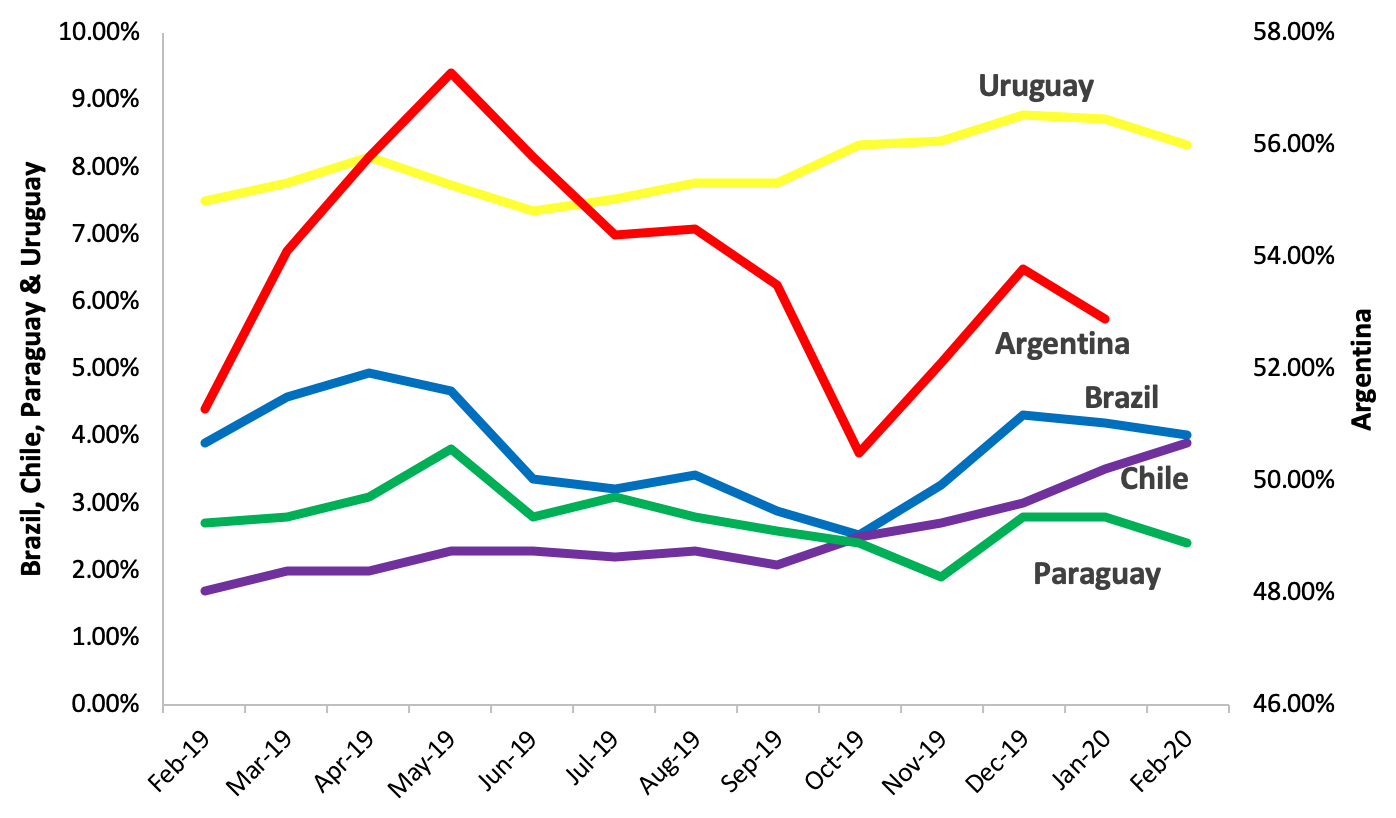
    Brazil & Southern Cone: Inflation
    Monthly year-on-year figures

    Brazil & Southern Cone: GDP growth (%)
    Quarterly figures are year-on-year growth
    Country End 2019 forecast* 2020 forecast * Q1 2019 Q2 2019 Q3 2019 Q4 2019
    Argentina -3.0 -1.3 -5.8 0.0 -1.7 Not yet available
    Brazil 0.8 1.7 0.6 1.1 1.2 1.7
    Chile 1.8 2.3 1.5 1.9 3.3 Not yet available
    Paraguay 0.2 3.0 -2.0 -3.0 2.8 Not yet available
    Uruguay 0.3 1.5 -0.2 0.1 0.9 Not yet available
    *Figures from the United Nations Economic Commission for Latin America & Caribbean Dec 2019
    Quarterly growth based on figures from the local central banks
  • REGION: Paraguay leaps to defence of Mercosur-EU deal

    LatinNews 01 October 2020 Hits: 3646

    The Paraguayan government is the only member of the Southern Common Market (Mercosur) to have come out in defence of the trade agreement that the bloc signed with the European Union (EU) in June 2019 following the threat by the French government not to ratify it unless Mercosur members show greater commitment to protecting the environment [WR-20-38]. With Mercosur heavyweights Brazil and Argentina seemingly unwilling to champion an agreement that neither of their presidents particularly likes, it appears that it is up to the government led by President Mario Abdo Benítez to sing the praises of an accord that many consider crucial for Mercosur. This is a tall order that the Abdo Benítez government will struggle to deliver unless it can convince all Mercosur partners to present a common front.

    France’s President Emmanuel Macron had warned last year that his government could veto the ratification of the agreement in the European Parliament unless all Mercosur members, but in particular the Brazilian government led by President Jair Bolsonaro, showed that they are committed to protecting the Amazon and upholding the Paris Agreement on Climate Change. Macron’s warnings came after the Bolsonaro administration was widely criticised for not doing enough to stop the major forest fires that ravaged the Brazilian Amazon last year. With fires once again devastating the Amazon this year, as well as the Pantanal wetlands, the issue is back again in the spotlight.

    But it was after the commission of independent experts convened by Macron to analyse the environmental impact that the agreement would have presented its report on 18 September that the Macron administration threatened to veto the ratification of the agreement. The French government issued a statement saying that the commission had found that the agreement does not contain sufficient provisions for ensuring that “our commercial partners assimilate the climate problem and the need to protect biodiversity through respect for the Paris Agreement”. The statement added that France would only support the Mercosur-EU trade accord if it receives reassurances from Mercosur members that their policies will not result in increased deforestation; that they conform to the Paris Agreement; and that agricultural food imports from Mercosur respect all European environmental and sanitary norms.

    Despite being the main target of France’s criticism, there was a limited reaction from the Brazilian government, although President Bolsonaro did indirectly hit back. The Argentine government, which has previously said that it will not take part in Mercosur matters while it faces a national emergency over the coronavirus (Covid-19) pandemic, did not respond either. The Uruguayan government, which currently holds the Mercosur pro-tempore presidency, and has long been interested in securing an agreement with the EU, and expressed its desire to see it ratified before its presidency ends in December, surprisingly kept its own counsel too. But the Abdo Benítez administration did respond via its deputy foreign minister for economic relations and integration, Didier Olmedo.

    • Bolsonaro response

    Following the threat issued by the Macron government, President Bolsonaro reiterated that Brazil is a role model when it comes to protecting its environment and that those that criticise his government over its failure to control wildfires do so for political and economic reasons. Insisting that wildfires are a natural phenomenon that can happen anywhere, Bolsonaro said that those that complain about Brazil’s uncontrolled fires are “those that have already burned everything” in allusion to industrialised countries. “Our critics are interested in attacking us because they are our competitors,” Bolsonaro added, noting that Brazil is one of the world’s largest agricultural producers and that most countries cannot compete with its ever-growing agricultural sector.

    In a statement, Olmedo defended the agreement, arguing that it offers the best form of reassurance that Mercosur members will be committed to addressing concerns about environmental protection. “It is always better to have a valid agreement…this is the best way to force Mercosur to assume all commitments and address all European concerns”. Olmedo also complained that there are still many “myths” about environmental protection practices in Mercosur and misinformation about “what the agreement will mean for Europe”. Olmedo argued that the environmental impact that increased bilateral trade would have has been exaggerated; and that despite fears that increased competition from Mercosur would undermine European farming, free trade will deliver broad economic benefits to the European population including cheaper food.

  • ECONOMIC HIGHLIGHTS

    Patrick de Courcy 09 November 2023 Hits: 2031

    COSTA RICA | Poverty edges down but inequality stagnates. On 19 October Costa Rica’s national statistics institute (Inec) released new figures showing that 21.8% of the country’s households are living in poverty, equivalent to 390,509 households. This is down 1.2 percentage points on 2022, when 23.0% of households were considered poor, a drop of 8,930 households. However, Inec notes that there was no “significant difference” in the rate of extreme poverty, with 6.3% of households (112,916) considered extremely poor, down from 6.4% in 2022. The same figures show that there was minimal difference in inequality as measured by the Gini coefficient (a measure of inequality in which 0 = total equality and 1 = absolute inequality), which Inec puts at 0.502, down from 0.504 in 2022.

    DOMINICAN REPUBLIC | Central bank hails strong growth. On 23 October the governor of the Dominican Republic’s central bank (BCRD), Héctor Valdez Albizu, announced that the monthly indicator of economic activity (IMAE) registered year-on-year growth of 3.1% in September 2023, the highest monthly rate of 2023. He said that this brings the accumulated GDP growth rate for January-September to 1.7%. He said that GDP growth in the January-September period was driven by hotels, bars & restaurants (+10.9%). He also highlighted tourism figures noting that in September alone, the country received 478,792 tourists via air, bringing the total number of tourists to have arrived via air to a record 6.0m, with a hotel occupancy rate of 75%. He added that over 1.6m tourists visited via cruise ships, bringing the total number of tourists to have visited the country to 7.64m in the first nine months of the year – which he described as a milestone.

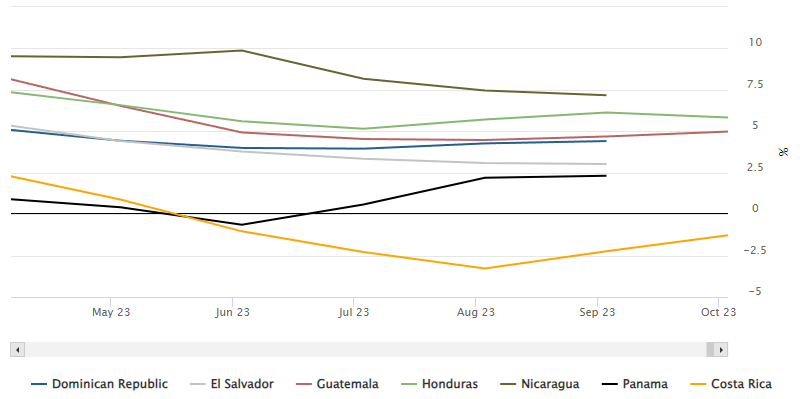
    Central America & Caribbean: inflation rate
    Percentage variation (year-on-year)

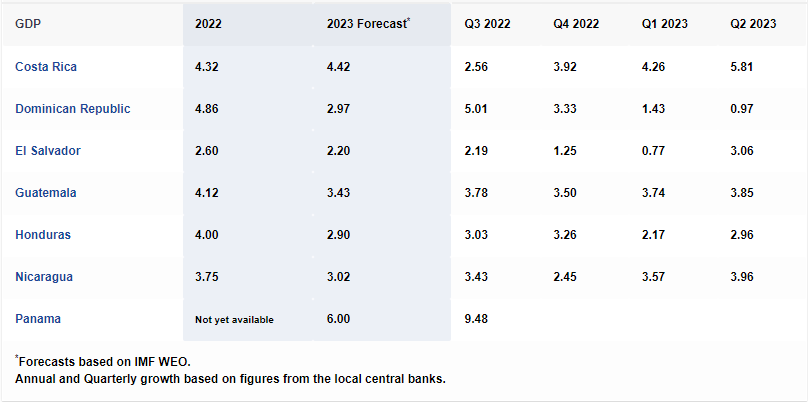
    Central America & Caribbean: GDP growth (%)
    Quarterly figures are year-on-year growth

  • Covid-19

    LatinNews 19 August 2020 Hits: 831

    The global coronavirus pandemic, which arrived in Venezuela in March 2020, is a major additional economic problem. The country suffers both direct and indirect effects. Direct effects include the negative impact on already-weakened domestic economic activity caused by enforced lockdown/quarantine measures, social distancing, and added strain on the country’s already overstretched and under-funded public health system. Indirect effects include the impact of lower international oil prices and falling global trade.

    On paper Venezuela appears to be one of the Latin American countries least hard hit by the coronavirus, but this is almost certainly misleading. By mid-August 2020 Venezuela had reported just over 30,000 cumulative cases of the virus and 259 confirmed deaths. This placed it far below some of its Latin American peers. Brazil for comparison had by that stage 3.2m cumulative cases and over 105,000 deaths, while for Mexico the numbers were 505,000 cases and over 55,000 deaths. Venezuela was also less hard hit in per capita terms. Deaths per million inhabitants at that stage stood at 9.1 in Venezuela, at 428 in Mexico, and at 496 in Brazil.

    Yet official statistics are unreliable. Covid-19 testing was being conducted slowly, and at only one medical laboratory in the capital. Independent medical experts suggested real contagion and death rates were at least double what was being reported. The government’s own measures – including enforced quarantines, the announced conversion of a sports arena into an emergency hospital, and strident claims that returning refugees who failed to quarantine were acting as “bio-terrorists” - all suggested that in reality it considered the pandemic to be more serious than its own official numbers suggested.

    The pandemic will clearly impact an already weakened economy. Along with other Latin American countries Venezuela shares structural factors that contribute to the spread of the disease. These include a high level of informal working, high poverty rates, and densely populated shanty towns within major cities. This means that large numbers of people in low income sectors live and work in close proximity to each other with little opportunity to practice social distancing and other precautionary measures. In addition, years of reduced funding have weakened the country’s public health system. Any economic recovery plan will have to factor in the continuing economic and social cost of Covid-19, as well as acknowledging a high level of uncertainty over the future pathway of the disease in the country.

    Venezuela’s health expenditure (% of GDP)

    Source: World Bank

  • Pink and green – the colours of the future?

    Patrick de Courcy 06 July 2023 Hits: 2203

    In Latin America the future does seem to be one of coalitions in which green parties are represented, most likely as junior partners. A number of political analysts have sought to place the handling of green issues within the context of a region that is seen swinging periodically between the political right and left. Many analysts described the spread of left-wing governments in the period between 2003 and 2014 as the continent’s first ‘pink tide’. Its leaders were Hugo Chávez (Venezuela), Evo Morales (Bolivia), Rafael Correa (Ecuador), Néstor and Cristina Kirchner (Argentina), and Luis Inácio Lula da Silva (Lula) and Dilma Rousseff in Brazil. During that period, helped by an extended commodities boom, many leftist governments were able to redistribute income and reduce poverty, enjoying as a result significant electoral popularity.

    However, tougher times came with the end of the commodities and export boom. At that point many of these left-wing governments faced economic recession, rising crime rates, and significant allegations of corruption. As a result, the tide ebbed: the political pendulum swung back again to the right during the latter part of the 2010s and into the early 2020s. By last year, however, as left-wing political leaders began a comeback in countries like Chile, Colombia, and Brazil, commentators began to talk of a second pink wave. This time they highlighted an important novelty: they believed the second wave would actually be pink, but with streaks of green. The regional mood music, they argued, was now putting environmental issues much closer to the centre of the political debate. In the first pink wave, governments had been less interested in the environment. This was because the commodities boom, including ‘dirty’ activities such as oil and gas extraction, coal and metals mining, and commercial farming and livestock seemed to be successfully funding a vote-winning formula for growth, poverty alleviation, and new job creation.

    It is worth looking at the claim that that left wing governments tend to be greener in some detail. Matías Franchini, an academic at Universidad del Rosario in Colombia, says “the first question we must ask ourselves is whether it is correct to correlate progressive governments with the regional struggle against climate change”. He goes on to point out a number of exceptions to the rule. The recent conservative governments of Ivan Duque in Colombia and Sebastían Piñera in Chile (both in office from 2018-2022) made considerable progress in promoting renewable energy and on adopting Paris Agreement de-carbonisation pledges.  

    Another conservative, Mexican President Felipe Calderón (2006-2012), was also something of an activist on climate change issues, promoting a major tree-planting programme and encouraging the adoption of green technology. After stepping down from the presidency he went on to serve as chair of the Global Commission for the Economy and Climate. By direct contrast however, Andrés Manuel López Obrador (AMLO – in office since 2018) represents a form of traditional left-wing resource nationalism, dating back to the 1970s, which is decidedly non-green as it prioritises fossil fuels. This political school of thinking remains largely unenthusiastic about renewable energy sources. The long-standing tradition of developmentalist economic policies has clearly valued economic growth above environmental protection.

    Where Green Parties Hold Power

    Source: CFR Research

    Tatiana Roque of Universidad Federal de Rio de Janeiro says AMLO’s approach is outdated. “We must be careful not to reproduce the same old vision, a sharply developmentalist outlook which fails to engage with the future and with the need for an urgent dialogue on climate change”, she says. The problem in her view is that Latin America has become too dependent on commodity exports, which get in the way of a necessary energy transition to renewables.

    Somewhat paradoxically, Mathias Alencastro of CEBRAP (Centro Brasileiro de Análise e Planejamento) says the absence of a massive commodity boom during the second pink wave may turn out to be a good thing. He argues that in the first wave the surge in growth helped consolidate the move away from military rule towards democracy, as well as reducing economic dependence on the United States (since China was then emerging as a major new trading partner). Now, with a second and extended commodities boom looking unlikely, he says “the left will be forced to become more daring”. Others who share that optimism say there is an opportunity to develop new, more sustainable, economic activities, such as expanding the bioeconomy in the Amazon. This includes supporting small-scale sustainable farming and forestry, eco-tourism, and the production of nuts, medicines, cosmetics, and oils.

    The environmental critique of the old left has come from a number of sources. Speaking in May 2022, before she took office as vice president alongside Colombia’s President Gustavo Petro, Afro-Colombian environmental activist Francia Márquez said: “The problem is that both the right and the left are fomenting a policy of extractivism when humanity faces the challenge today of transitioning from this extractivist economy to a sustainable economy. Life isn’t possible without our planet.”

  • Oil concessions process back on track

    LatinNews 08 January 2016 Hits: 4

    All 25 onshore hydrocarbons blocks offered in Mexico’s third oil auction to date drew bids on 15 December 2015, exceeding the expectations of the national hydrocarbons commission (CNH).

    The third auction under the ‘Round 1’ concession process was thus the most successful yet, and followed efforts to sweeten contract terms after a disappointing first phase in July.

    Unlike the first two auctions, the CNH in December for the first time offered licence contracts, rather than production-sharing agreements, for the 25 hydrocarbon concessions, aimed specifically at encouraging smaller local operators into the newly liberalised sector.

    Twenty of the 25 bids were won by Mexican firms, many of which have already been contractors for the state-owned oil firm, Pemex. These firms are now making the transition to operating companies, noted Lourdes Melgar, deputy energy minister for hydrocarbons.

    The 25 onshore fields are located in the Gulf of Mexico coastal states of Tamaulipas, Veracruz and Tabasco, along with Nuevo León in the north and Chiapas in the south. They include 17 crude oil fields and nine natural gas fields, of which 19 were already in production under Pemex. As such, they were considered low risk prospects. According to government officials, these blocks will produce the first oil under Mexico’s landmark energy reform to open up the sector to private participation in production, with output projected at about 77,000 barrels of crude oil equivalent a day upon reaching peak production in about three years’ time.

    The winning Mexican firms included Diavaz, Strata Campos Maduros, Compañía Petrolera Perseus, and Geo Estratos; while the successful foreign bidders included consortiums led by Canamex Dutch BV, Canada’s Renaissance Oil, and US firm Roma Energy Holdings.

    Some oil sector analysts sounded a note of concern, however, that in their enthusiasm the winning companies offered rather high bids. Pablo Medina, an oil sector analyst at Wood Mackenzie, noted that while the CNH terms were reasonable, the interest in the auction led to something of a bidding war, meaning that the winners offered a lot more than the minimum royalties required. This could eventually hurt these new and inexperienced operators by making it more difficult for them to turn a profit.

    Sener announces deepwater block tender

    On 16 December 2015, the CNH and the federal energy ministry (Sener) announced details of the more lucrative deepwater blocks to be offered in phase four of Round One. The 10 blocks included, which were not those expected as per Sener’s plans published earlier this year, are located off the coasts of Tamaulipas, Tabasco and Veracruz, at depths of 1500-3500m. Six blocks are located in the Salina basin, four in the Plegado Perdido belt.

    All the fields are exploratory and the production contracts will be divided into three stages, the first involving small well drilling prior to subsequent development and production stages. These stages are expected to take 10, three and 37 years respectively, so 50 years in all. Total estimated investment in each block over the 50 years is put at US$400m by Sener.

    Interested companies must go through prequalification, as part of which there is a requirement that they submit a corporate guarantee proving they have a minimum net worth. Companies can participate individually or in a consortium and, for the first time, companies will be able to be involved in various consortiums within one bidding round.

    It is unclear whether joint ventures with Pemex will be included in the deepwater phase four round. Pemex did not participate in the first three auctions this year. The state company apparently is still finalising details of its planned ‘farm outs’, whereby it is seeking new private partners for some 14 existing fields as part of its urgent bid to boost output, while existing service contracts are also being revamped and/or migrated in the name of efficiency improvements. Farm out partners are to be chosen by the regulator, following submissions by Pemex. The Pemex submission process was due to be done last August.

    Mexico’s energy minister, Pedro Joaquín Coldwell, said that the deepwater auction would not be held until late 2016, giving interested companies time to analyse seismic data to be provided by the government in January, and to take account of brand new safety and environmental regulations due for publication by Agencia de Seguridad Energia y Ambiente (Asea), a new national agency to regulate safety and the environment in the oil and gas sector. To date, the deepwater sector has been unregulated.

    Coldwell said that he did not believe that low oil prices would impinge on phase four, noting that the deepwater sector is a long-term investment prospect. The Mexican authorities have also now decided to proceed with phase five, which will focus on unconventional resources. This round previously had been put on indefinite hold; however, a new date has yet to be announced.

    Holding up

    “Mexico’s economy continues to grow at a moderate pace, despite an array of external challenges, including a collapse in oil prices and heightened volatility in international financial markets”, according to the International Monetary Fund. A continued rebound in exports to the US, the country’s main economic partner, combined with firm domestic demand, is keeping the economy on a fairly even keel, despite the severe oil price shock.

    The IMF has trimmed its forecasts for Mexico, however, and now expects real annual GDP growth of 2.5% in 2016, up marginally from 2.3% in 2015. The IMF has warned that this forecast could be revised down, citing the potential risk of volatile capital flows, weaker US growth and a further drop in domestic oil production. In the longer term, the IMF expects Mexico’s structural reforms to support an average GDP trend growth rate of 3.0%-3.5%, which, however, is lower than the average 4.0%-5.0% projected by the government in the run up to 2020.

    As an open economy with significant participation by foreign investors, Mexico is exposed to external shocks. But the IMF noted the fact that the government has in place a fiscal policy designed to ensure sustainable debt levels, and a monetary policy “guided by a credible inflation-targeting regime”. It also has a flexible exchange rate and relatively deep financial markets, which allow the hedging of exchange rate risks, meaning that “reserve buffers are strong”. These defences are also being further strengthened by the government’s policy of gradually reducing the fiscal deficit, from an estimated 4.1% of GDP in 2015 to a targeted 2.5% by 2018.

    Peso still under pressure

    The collapse in global oil prices and expectations of a rise in US interest rates led the Mexican peso, along with most other Latin American currencies, to depreciate against the US dollar throughout 2015. While a weaker peso makes exports more competitive, it also brings some negatives, such as a pass-through to domestic inflation or a rise in volatility, which can create economic uncertainty. Mexico's Central Bank (Banxico)’s policy in 2015 was to conduct daily dollar auctions to support the value of the peso and to smooth out any abrupt oscillations. In late November 2015, Banxico said that the daily US$200m currency auctions were being partially suspended. Instead, US$200m auctions would still be held, but only on days when the peso weakened by 1% or more against the dollar. While Banxico has followed the US Federal Reserves' interest rate move, the peso remains under pressure. On 6 January, for example, Banxico sold all US$200m offered after a renewed slump in the peso to M$17.53/US$1. Supporting the peso has been expensive: reserves fell from US$195.7bn to US$172bn in the 12 months to December 2015.

  • Region: Doing Business

    LatinNews 27 October 2016 Hits: 3647

    Doing business in Latin America is getting easier, according to the World Bank.

    The Washington-based World Bank (WB) released its latest (2017) ease of doing business report on 25 October. The report examines and analyses regulations that apply to a businesses across its life-cycle, from start-up and operations, to trading across borders, paying taxes, and resolving insolvency, among others.

    The new report, entitled ‘Doing Business 2017: Equal Opportunity for All’, says that 137 of the 190 economies it examined around the world have adopted key reforms in the past year (in the 12 months to June 2016) that make it easier to start and operate small and medium-sized businesses. The WB noted that developing countries implemented over 75% of the 283 reforms in that period, with Sub-Saharan Africa accounting for over one-quarter of all reforms.

    Amid some methodology adjustments, the new 2017 rankings cannot be directly compared with those for 2016. Nonetheless, in the WB’s global country rankings of business efficiency, New Zealand took the top spot in the Doing Business 2017 report, knocking Singapore into second place. These were followed thereafter by: Denmark, Hong Kong SAR, China, South Korea, Norway, the UK, the US, Sweden and Macedonia. The top 10 improvers, based on reforms undertaken in the review period, were: Brunei, Darussalam, Kazakhstan, Kenya, Belarus, Indonesia, Serbia, Georgia, Pakistan, the United Arab Emirates (UAE) and Bahrain.

    A good business-operating environment helps improve economic equality

    The report this year emphasises that a better performance in the Doing Business Index, is, on average, associated with lower levels of income inequality, thereby reducing poverty and boosting shared prosperity. Paul Romer, the WB’s chief economist and senior vice president noted that, “Simple rules that are easy to follow are a sign that a government treats its citizens with respect. They yield direct economic benefits – more entrepreneurship; more market opportunities for women; more adherence to the rule of law”. “But we should also remember that being treated with respect is something that people value for its own sake and that a government that fails to treat its citizens this way will lose its ability to lead”, he added.

    The environment for women

    With that in mind, this year’s report adds gender measures to three indicators – Starting a Business, Registering Property and Enforcing Contracts – finding disparities in 38 economies. Of these, the WB noted, “23 economies impose more steps for married women than men to start a business. Sixteen limit women’s ability to own, use and transfer property. Doing Business found that, “in these economies, fewer women work in the private sector, both as employers and employees”. Gender disparities were highest in the Middle East, with 70% of the economies creating barriers for women entrepreneurs.

    Amid growing scrutiny of tax environments, tax reform accelerates

    The 2017 report also features expansions to the Paying Taxes indicator, to cover post-filing processes – such as tax refunds, tax audits and administrative tax appeals, so as to better understand the overall tax environment. Since 2004, when the first Doing Business report was compiled, a total of 443 reforms have been recorded under the Paying Taxes indicator, the second highest number of reforms, with 46 reforms implemented in the past year, the WB notes.

    Public procurement – an important ‘opportunity pool’

    The new report also includes a pilot indicator on public procurement regulations. The WB examines procurement in 78 economies across five principal areas: accessibility and transparency, bid security, payment delays, incentives for small and medium enterprises and complaints mechanisms. Public procurement represents, on average, 10%-25% of an economy’s GDP, it notes, making the procurement market “a unique pool of business opportunities for the private sector”.

    Finally, easing requirements for Starting a Business is by far the most common reform area each year, according to the WB, with almost 600 reforms recorded since 2004. Of those, 49 were introduced in the latest period. Starting a new business now takes an average of 21 days worldwide, compared with 46 days 10 years ago.

    Latin America

    While still a laggard in the overall global rankings compared to a region like Asia, the WB reported that business reform activity accelerated in Latin America and the Caribbean in the past year, with over two-thirds of the region’s countries implementing a total of 32 reforms in the past year, compared with 24 reforms the previous year. The bulk of these reforms were aimed at improving tax payment systems, facilitating cross-border trade and starting a new business. According to the report, Brazil implemented the most reforms in the past year, which may come as a surprise given the severe political and economic crisis in the country.

    Mexico the regional leader

    Mexico again ranked best in the region in the 2017 report, with a decent overall ranking of 47 out of the 190 countries ranked for ease of doing business by the World Bank. Second and third in the region were Colombia (53) and Peru (54), followed thereafter by Puerto Rico, a US territory (55), Costa Rica (62), Jamaica (67) and Panama (70). Brazil, however, was well down the table, with a global ranking of 123, putting it below the likes of the El Salvador (95), Honduras (105) and Paraguay (106), and also its chief neighbour Argentina (116).

    The Doing Business report notes that “for policy makers, knowing where their economy stands in the aggregate ranking on the ease of doing business is useful”. Also useful is to know how it ranks compared with other economies in the region and compared with the regional average. Another perspective is provided by the regional average rankings on the topics included in the ease of doing business ranking and the distance to frontier scores. We include below the relevant tables for Latin America.

    How economies in Latin America and Caribbean (LAC) rank on the ease of doing business

    Note: The rankings are benchmarked to June 2015 and based on the average of each economy’s distance to frontier (DTF) scores for the 10 topics included in this year’s aggregate ranking. The distance to frontier score benchmarks economies with respect to regulatory practice, showing the absolute distance to the best performance in each Doing Business indicator. An economy’s distance to frontier score is indicated on a scale from 0 to 100, where 0 represents the worst performance and 100 the frontier. For the economies for which the data cover 2 cities, scores are a population-weighted average for the 2 cities.
    Source: Doing Business database.

    Rankings on Doing Business  topics - Latin America and Caribbean (LAC)
    (Scale: Rank 190 center, Rank 1 outer edge)
    Regional average ranking

    Source: Doing Business database.

    Distance to frontier scores on Doing Business topics - Latin America and Caribbean (LAC)
    (Scale: Score 0 center, Score 100 outer edge)

    Note: The rankings are benchmarked to June 2015 and based on the average of each economy’s distance to frontier (DTF) scores for the 10 topics included in this year’s aggregate ranking. The distance to frontier score benchmarks economies with respect to regulatory practice, showing the absolute distance to the best performance in each Doing Business indicator. An economy’s distance to frontier score is indicated on a scale from 0 to 100, where 0 represents the worst performance and 100 the frontier. For the economies for which the data cover 2 cities, scores are a population-weighted average for the 2 cities.
    Source: Doing Business database.

    How far has Latin America and Caribbean (LAC) come in the areas measured by Doing Business?

    Note: The distance to frontier score shows how far on average an economy is from the best performance achieved by any economy on each Doing Business indicator. Starting a business is comparable to 2010. Getting credit, protecting minority investors, paying taxes and resolving insolvency had methodology changes in 2014 and thus are only comparable to 2013. Dealing with construction permits, registering property, trading across borders, enforcing contracts and getting electricity had methodology changes in 2015 and thus are only comparable to 2014. The measure is normalized to range between 0 and 100, with 100 representing the best performance (the frontier). See the data notes starting on page 114 of the Doing Business 2017 report for more details on the distance to frontier score.
    Source: Doing Business database.

  • Peru: The market darling

    LatinNews 25 August 2016 Hits: 395

    Peru’s S&P Lima General Index has outperformed all emerging markets in local currency terms to date this year, surging by 58% to mid August. That compares to a bounce of 37% in Brazil’s Bovespa and 33% in Argentina’s Merval. Investor expectations are high for the new business-friendly government led by President Pablo Kuczynski.

    Peru’s stock market is small still, with a market capitalisation of US$75bn. The country's MSCI index includes only three companies – Credicorp Ltd, which owns the country’s main Banco de Crédito, and two mining companies, Companía de Minas Buenaventura and Southern Copper Corporation. Given its commodity-base, the Lima index has tended to be volatile. For example, it rose by 168% in 2006, 101% in 2009 and 65% in 2010, and it last peaked in April 2012, at 24,095.29 points, on Reuters financial data.

    But nonetheless, sentiment is strong. In comments to Reuters on 19 August, Will Pruett, manager of the Fidelity Latin America Fund (in Boston), observed that while the market is shallow (and equities not very liquid), it remains a good bet, singling out the “very well run, very profitable” local banking sector as “one of the most attractive in emerging markets”, while noting also that “there's good corporate governance, [and] long growth opportunity”.

    Another fund manager, Javier Creixell, of Epiphany Funds in Dallas, described Peru as” in the best shape that it has been in the last 50 or 60 years," noting that, by contrast to his like-minded counterparts in Brazil and Argentina, Kuczynski is starting out on a relatively sound base, with orthodox monetary and budget policies well entrenched over the life of several successive governments in Peru. So, while Brazil is struggling with a fiscal deficit of over 10% of GDP and a debt/GDP ratio nearing 70%, Peru’s deficit is just above 3% of GDP, with a public debt/GDP ratio of about 25%. (Total external debt, public and private, is around 33% of GDP).

    Kuczynski, a former economy minister and prime minister, and a veteran international financier, sent all the right signals with the appointment of a team of highly-qualified technocrats to his 19-strong cabinet, including Alfredo Thorne, a respected former World Bank economist, at the helm of the economy ministry. Upon taking office on 28 July, Kuczynski reiterated his plans to lower taxes, cut red tape, formalise the large informal labour market (66% of the workforce), improve infrastructure and boost foreign investment, while also pledging to improve the country’s parlous education standards and provide universal access to potable water and sanitation by the end of his term in 2021.

    Thorne, however, has sought to temper expectations, warning that domestic demand remains subdued and the fiscal position weaker than expected. In testimony to congress on 19 August, ahead of a requisite vote of confidence in the new cabinet, Thorne said his new team had inherited a “worrying” deficit that could make it difficult to initiate some of Kuczynski’s priority projects. He reported that the deficit was 3.3% of GDP to end July, well above the 2.5% that the previous government led by Ollanta Humala had pledged to hand over to its successor.

    As such, Thorne has adjusted down his deficit improvement targets, to around 3% of GDP by the end of this year and 2.5% in the 2017 budget. This is a notable increase from the Humala government’s targeted 1.8% of GDP. The 2015 deficit was 2.1% of GDP, a sharp jump from 0.3% in 2014 (when the country’s budget went into the red for the first time since 2010). Thorne still aims to get the deficit down to 1% of GDP by 2021, but now intends to do so more gradually, so as not to choke off the domestic recovery or force excessive austerity on the new administration.

    This additional leeway (amounting to about US$1.5bn in 2017) may help cushion the revenue impact of the government’s planned tax reforms (including a phased reduction in VAT), and will also allow more room for its spending and investment plans, which aim to lift real GDP growth to 5% from 2018 onwards. Thorne said he would also consider re-structuring some debt and noted that he had asked the International Monetary Fund (IMF) to review the public finances, alongside an autonomous team inside the economy ministry.

  • Argentina’s vaccine jumpers

    LatinNews 31 March 2021 Hits: 1648

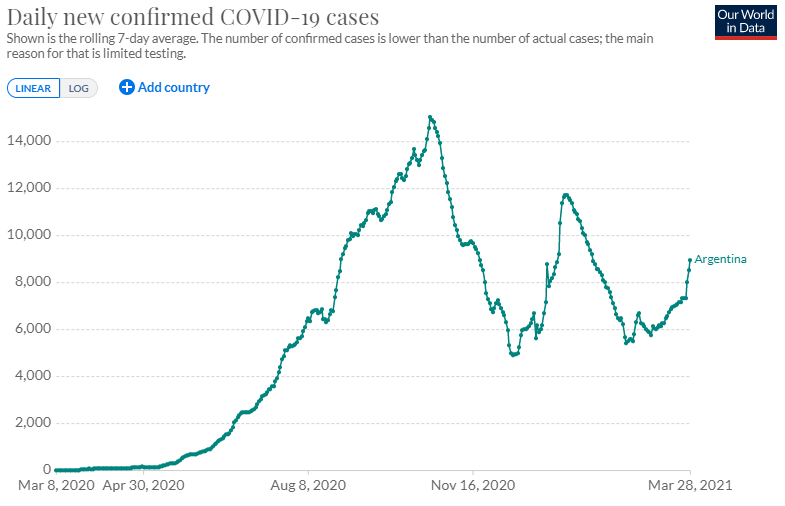
    One year on, Argentina can be classified among the countries that were harder hit by the virus, reporting over 2m confirmed cases and 50,000 deaths. In terms of deaths per 100,000 inhabitants (as measured in mid-March 2021) Argentina, with 120, showed slightly lower mortality than either Brazil (128) or Mexico (152).

    The first cases in the country were detected at the beginning of March 2020. Unlike either Brazil or Mexico, the centre-left government of President Alberto Fernández did not minimise the seriousness of the pandemic and was quick to take scientific advice. The administration responded by introducing a stringent nationwide lockdown, described as a regime of “social, preventive, and obligatory isolation” effective from 20 March. This initial phase lasted until late April, when it was replaced by a policy of “geographic segmentation” with restrictions tailored to the severity of the outbreaks in different parts of the country. Restrictions in the Greater Buenos Aires area were comparatively severe since in the early stages it accounted for 90% of positive cases detected. The threat of an early collapse in the public health system was avoided, with the government successfully acquiring 4,000 new intensive care unit (ICU) beds and 3,300 respirators and building 12 emergency field hospitals.

    Argentina Cumulative Cases Cumulative Deaths Deaths per million
    15 March 2021 2.19mn 53,670 1,186

    The peak of the first wave of infection was reached in October 2020, but a second wave made itself felt in January 2021 and in the immediately subsequent months. According to immunologist Jorge Geffner from the University of Buenos Aires (UBA) the second or ‘rebound’ wave reflected a general relaxation of health protocols. A significant part of the population did not use face masks and ignored social distancing protocols. The period between the two peaks was also marked by frequent pro- and anti-government street demonstrations, as well tightly packed crowds to mourn the death of football super-star Diego Maradona.

    Already before the arrival of the pandemic Argentina had been struggling with an economic and foreign debt crisis. The virus therefore intensified an already bad situation. Economic activity dropped by a record 10% in 2020, with inflation remaining high at 36.1% and the proportion of the population living in poverty rising to 40.9%.

    New hopes were raised with the launch of a coronavirus vaccination programme in late December, with an initial target of covering 25% of the population during the southern hemisphere summer (December-March). However, the programme suffered initial setbacks with delays in deliveries of the Russian-made Sputnik V vaccine, and a corruption scandal. It was found that a number of friends and supporters of the government had jumped to the front of the queue for vaccine deliveries. The media called it the ‘VIP Vaccines’ scandal. President Fernández was forced to demand the resignation of health minister Ginés González García, who was replaced by his deputy, Carla Vizotti.   

  • POINTERS

    LatinNews 19 July 2011 Hits: 401

    *** WARNER KEEPS JOB IN T&T RESHUFFLE. At the end of June, Trinidad & Tobago’s Prime Minister Kamla Persad-Bissessar reshuffled her cabinet, firing two ministers but keeping embattled minister Jack Warner, albeit in a downgraded role. Warner has been under pressure since football’s world governing body, FIFA, announced an investigation into bribery allegations involving Warner and another executive member of FIFA. Instead of sacking the Minister of Works and Transport, the prime minister has left Warner in charge of Works while putting Transport into a separate ministry. Warner is also chairman of the United National Congress (UNC), the main party in the governing People’s Partnership.Therese Baptiste-Cornelis has been replaced as Minister of Health by Dr Fuad Khan, and Rudrawatee Nan Ramgoolam has been replaced as Minister of Public Administration by Carolyn Seepersad-Bachan. The cabinet was originally formed in May 2010, and the prime minister gave as her reason for the changes the need for “a more effective alignment of competencies”.

    *** DOMINICA BUDGETS FOR GROWTH. On 1 July, Dominica’s prime minister and minister for finance, Roosevelt Skerrit, presented his budget to parliament for the year ending 30 June 2012. Skerrit told parliament: “Preliminary GDP estimates suggest that amid the global economic slowdown, Dominica’s economy exhibited an admirable degree of resilience, a fact attested to by regional and international observers.”
    According to the prime minister, “the gains and policy space created by prudent fiscal management” has enabled the government “to undertake counter-cyclical measures to address the adverse effect spilling over from the global slowdown”. In a statement issued on 1 June, the IMF said: “Dominica is emerging from the crisis, building on the timely and strong countercyclical response over the past few years. Growth turned positive last year, but the recovery is expected to slow in 2011 to 0.8 percent, given tepid demand and the needed fiscal consolidation, and to gradually rise to 2 percent over the medium-term.”

  • URUGUAY: Bordaberry blasts FA’s security record

    LatinNews 23 January 2014 Hits: 1488

    Uruguay’s electoral year began with a fierce attack by Pedro Bordaberry on the government’s record public security. The likely presidential candidate for the right-wing opposition Partido Colorado (PC) this October, Bordaberry knows that this provides his main chance of upsetting the ruling left-wing Frente Amplio (FA); and he is seizing on mounting public concern about insecurity to collect signatures in order to hold a plebiscite together with the elections on whether to lower the age of sentencing to 16 from 18 for crimes such as rape and homicide. Polls suggest this would be successful.

    Bordaberry jumped on the fact that there were 10 murders in just the first four days of 2014 to accuse the government of President José Mujica of being distracted by issues of party rather than national interest, such as repealing the Ley de Caducidad amnesty law (twice upheld in popular referendums) and neglecting far more significant issues, such as public security. He pointed out that there were 284 murders in 2013, much the same as the 289 murders in 2012, which was up a massive 45% on 2011. The average for the previous 20 years was 199 a year. Bordaberry also said that in the nine years of FA administrations the number of rapes had doubled. In this way he was also able to take aim at former president Tabaré Vázquez (2005-2010).

    Bordaberry also slammed the new marijuana law, which he said could lead to an increase in violence. Uruguay’s drug czar, Julio Calzada, has conceded that the success of the new policy will depend “substantially” on the ability of the country’s anti-drug trafficking agency, customs and airport police to perform with “even more rigour than now”.

    Bordaberry argued that Philip Morris International (PMI) would use the marijuana law in its legal case against the government over anti-tobacco measures. Vázquez, who has been supportive of the marijuana law, led a crusade against smoking while he was in office. PMI is suing Uruguay in a long drawn-out legal case, for a law pushed through congress by Vázquez in 2006 requiring large health warnings on cigarette packets and banning the sale of those branded as “light” or “ultra light”.

  • ECONOMIC OVERVIEW: EL SALVADOR

    LatinNews 02 September 2011 Hits: 1685

    El Salvador’s trade deficit increased 19% to US$1.86bn in the first five months of 2011 compared with the same period last year. This is deeply concerning for the government, which is reliant on remittances from Salvadoreans living abroad to cover the trade deficit, although these have fallen short in the last few years as a result of the economic slowdown. Exports totalled US$2.31bn, up 27% on the same period in 2010, while imports soared 24% to US$4.17bn, the central bank announced. The biggest increase was the oil bill, which climbed 31% over the period to US$728m.
    The problem for the government is that remittances were up just 4.3% year-on-year in the first six months of the year, to reach US$1.82bn, according to the central bank. This means that there is a US$350m financing gap. Remittances in Guatemala increased at a much faster rate, up 9.5% in the first half of 2011 on the same period last year to US$2.18bn, according to the central bank (Banguat). The president of Banguat, Edgar Barquín, predicted that remittances would break all previous records and reach US$4.5bn in 2011, surpassing the US$4.32bn recorded in 2008 before the onset of the global economic slowdown.

  • ECONOMIC OVERVIEW: PANAMA

    LatinNews 14 January 2015 Hits: 1566

    Panama Canal Authority accused of “negligence”: A ruling by an independent arbitration panel, Dispute Adjudication Board (DAB), has found that the Panama Canal Authority (ACP) was “negligent” and ought to pay part of the overrun costs to Grupo Unidos por el Canal (GUPC), the consortium in charge of construction work on the Canal’s third set of locks – the biggest project under the US$5.2bn Canal expansion plan.

    The DAB ruling, which was issued on 31 December found the ACP acted in an “unfair” way to circumvent the terms of its contract with the GUPC. In response the ACP has issued a “note of dissatisfaction”, which means the case will now go to the third and final arbiter, the International Chamber of Commerce in Miami.

    According to the 167-page judgement by the DAB, GUPC was correct in filing for damages based on the fact that at the start of the canal widening project, the ACP had failed to detect the presence of fault lines in the terrain on which the canal rests. This resulted in the GUPC consortium being unable to find basalt, a key ingredient in cement, in the quantity and quality needed. The ACP was also at fault for “unjustified” delays caused by its failure to give timely approvals for the concrete mix proposed by the GUPC.

    The DAB said GUPC was entitled to US$233m of the US$463m the consortium is seeking from ACP in connection with two specific issues. GUPC has total standing claims before the DAB for US$2.3bn in what the consortium describes as cost-overruns for which it is not responsible.

    GUPC halted work on the locks on 5 February 2014, alleging a cash-flow crisis stemming from US$1.6bn in cost overruns that it insisted the ACP should cover. On 27 February the ACP announced that it had reached a conceptual agreement with GUPC to inject fresh funds into the project and ensure completion. The parties then signed a Memorandum of Understanding embodying the terms of the conceptual agreement, which stated that GUPC would pay US$100m and ACP would advance US$100m to enable the work to continue.

    • Panama’s first cardinal

    José Luis Lacunza, the bishop of the western city of David, will travel to Rome in early February to take part in the ceremony that will see him appointed as Panama’s first Cardinal.

  • REGION: First European Union-Central America Association Council takes place

    Sarah Sheldon 18 August 2025 Hits: 1432

    On 14 July the first ministerial meeting between the European Union and six Central American countries as part of the Association Agreement between the two regional blocs was held in Brussels.

    Known as the European Union-Central America Association Council, the meeting involved high level officials from the European Union as well as from Costa Rica, El Salvador, Guatemala, Honduras, Nicaragua, and Panama, according to a statement from the EU. This was the first meeting of its kind after the Association Agreement came into force on 1 May 2024. “The meeting presented an opportunity to exchange views on global challenges that affect both regions, including the rapidly changing geopolitical landscape and on-going wars, conflicts and crises, as well as the state of our regional cooperation, investment and trade agendas,” reads the European Union statement.

    Officials also discussed how to move forward with bi-regional dialogue, including an agreement on “the importance of Central American integration, based on the values of peace, democracy and inclusive economic development,” it added. Other points of discussion included an agreement to find common ground in the face of geopolitical challenges, and to work together on issues such as climate change and environmental degradation; the protection of the oceans and their governance; and security issues such as organised crime and trafficking in drugs, firearms, illicit commodities, and human beings.

    The two sides agreed that the 2030 Agenda for Sustainable Development, adopted by all United Nations members states in 2015, would remain as a reference for their joint efforts, particularly the implementation of the Sustainable Development Goals (SDGs). Officials also underlined the need to further develop the Central American Regional Electricity Market (MER) to drive growth and regional integration, among other issues. The next meeting under the framework is scheduled to take place in Central America in 2027.

    Central America-European Union trade

    The European Union statement on the first meeting of the European Union-Central America Association Council highlights increased trade between the two regions, with the European Union becoming Central America’s third-largest trading partner as annual trade grew from €8.7bn (US$10bn) in 2012 to €22bn in 2023. Of particular note is the fact that the European Union is a key market for Central American agricultural exports, and these flows have shown themselves to be “very resilient to external shocks”, according to the European Union statement.