All Categories

Subcategories

  • Argentina: The return of Peronism?

    LatinNews 07 January 2019 Hits: 2418

    Date: October 2019

    Type: General election: presidential, legislative.

    Main contenders: Cabiemos coalition (Cambiemos), Propuesta Republicana (PRO), Unión Cívica Radical (UCR), Coalición Cívica para la Afirmación de una República Igualitaria (CC-ARI), Partido Justicialista (PJ, Peronists), Peronismo Federal (PF), Frente Renovador (FR).

    After four years of significant economic turbulence, Argentina’s centre-right ruling Cambiemos coalition is expected to struggle in its attempt to retain the presidency this year. President Mauricio Macri, who has yet to confirm if he will be seeking re-election, had promised that his administration would fix Argentina’s macroeconomic imbalances and return the country to the path of sustainable economic growth. However, 2018 was another dismal economic year for Argentina with sky-high inflation and the domestic economy set to post negative growth. This has opened the door for the political opposition to mount a strong challenge for the presidency should it succeed in uniting behind a charismatic candidate, sparking fears that a populist Peronist leader could once again rise to power by promising a return to state largesse.

    Although President Macri has not confirmed his candidacy it is widely expected that he will seek re-election. Macri is a solid candidate with opinion polls showing that he still enjoys significant public support and that he remains a strong contender for the presidency even if he is unable to win it outright in a first round – where he would need to win 45% of the valid vote or 40% and maintain a ten-percentage point difference over his nearest rival. Pointedly, barring a challenge by a prominent Cambiemos figure such as the popular governor of Buenos Aires province, María Eugenia Vidal, Macri is seen as the most likely presidential candidate for the centre-right ruling coalition. However, whether Macri is successful in retaining the presidency will very much depend on Peronism’s ability to coalesce behind a single presidential candidate.

    • Vidal

    Since becoming the first female to be elected governor of Argentina’s most populous province, Vidal, a member of Macri’s PRO party, has succeed in maintaining high approval ratings of around 46%. This has prompted some speculation that Vidal could seek to contest the Cambiemos presidential nomination given that her approval ratings are currently higher than Macri’s and that opinion polls have found that her candidacy would be supported by as much as 55% of respondents. But Vidal, a close ally of Macri, has repeatedly stated that she has no intention of running for the presidency in 2019 and that her objective is conclude her current gubernatorial term ending in December.

    The Peronists remain deeply divided following their electoral defeat in 2015 after 13 consecutive years of rule by the Frente para la Victoria (FPV, Kirchneristas) leftist-populist party faction. Macri’s 2015 electoral victory has been partly attributed to the stagnant economy resulting from the implementation of unorthodox economic policies by successive Kirchnerista governments, but also due to Peronism’s failure to field a consensus presidential candidate, with the more moderate party factions refusing to back the candidate favoured by then-president Cristina Fernández (2007-2015), who now is a sitting senator. The party is still very much divided along these fault lines, with the more hard-line factions supportive of a new presidential bid by Fernández, who retains a considerable level of public support and who polls currently suggest would push Macri to a second-round vote (which Fernández is projected to lose).

    Meanwhile, moderate Peronist party factions – such as the PF and FR – remain staunchly opposed to another presidential bid by Fernández, who is currently the subject of various corruption investigations. But the moderate PJ factions have so far failed to unite behind a single candidate or even a clear set of policies (including on the economic front). As such, various moderate Peronist leaders including Miguel Ángel Pichetto, the president of the national senate, Juan Manuel Urtubey, the governor of Salta province, Juan Schiaretti, the governor of Córdoba province, and Sergio Massa, a former national deputy and presidential candidate for the FR in 2015, have all mooted their candidacy and called for moderate factions to coalesce around their candidacies. However, so far none of the moderate Peronist presidential hopefuls has succeed in securing the support of any of their rivals.

    The mandatory, simultaneous, and open party primaries (Paso) due to be held in August should help to provide a clearer picture of the situation in the PJ and whether any of the moderate pre-candidates can muster more support than Fernández to secure the PJ’s presidential nomination. Even after the Paso produce a Peronist presidential candidate, be it Fernández or a moderate, he or she will have to work hard to secure the party’s full support if they hope to win the presidency.

    Cambiemos out to consolidate foothold

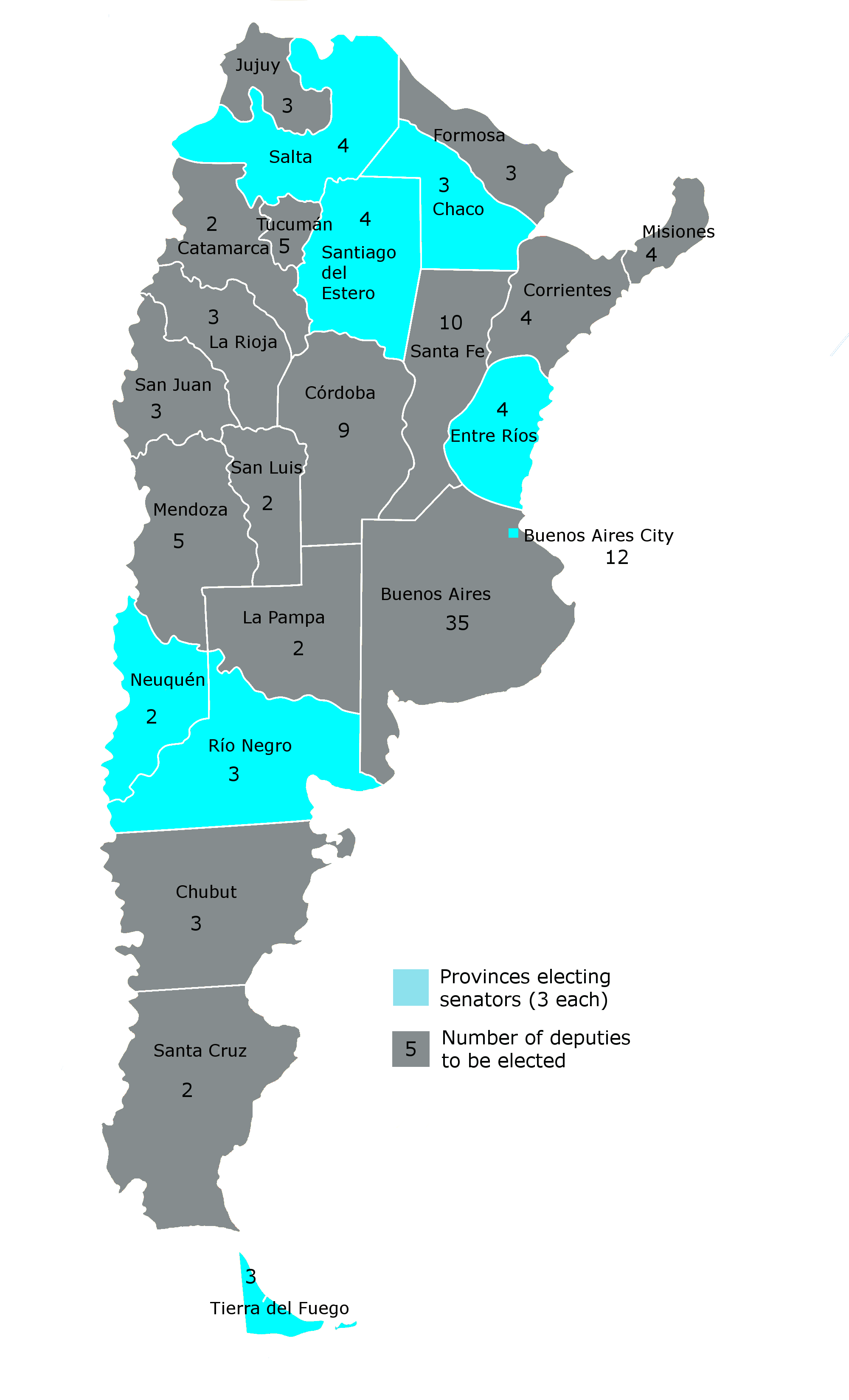
    The federal legislative elections will see over half (130) of the seats in the 257-seat chamber of deputies come up for grabs, as well as one-third (24) of the seats in the 72-seat senate. These elections are seen as posing a big challenge for the ruling coalition, which despite Macri’s victory failed to secure a legislative majority in the 2015 polls (it has 108 seats in the lower chamber and 25 in the upper chamber). It is expected that after four difficult years it will be hard for the Cambiemos member parties – which include Macri’s right-wing PRO, the centre-left UCR, and the centrist CC-ARI – to make significant gains in either chamber.

    The fact that the Macri government has been able to advance its legislative agenda without a majority by relying on the support of moderate PJ factions and the growing divisions within the Cambiemos partners over government policy could lead to a loss in voter support for the ruling coalition. The challenge for the Cambiemos members is thus first to reinforce internal unity first and then convince the electorate that giving it a stronger representation in congress is necessary.

    For Peronism the challenge in the legislative contest is to maintain the clear majority it has in both chambers (136 seats in the lower chamber and 44 in the upper chamber) despite the deep divisions between its radical and moderate factions. Against this backdrop, the conformation of a single legislative candidate list in each province (see map below) will prove to be key for the PJ. Should the rival factions fail to achieve this, then they would risk splitting the Peronist vote and opening the door for other parties to make gains against it. However, achieving this will be no mean feat, not least because many hard-line Peronist political figures still have high rejection rates among the general electorate, while moderate figures are increasingly viewed with distrust and seen as being allied to Macri by many Peronist voters.
    Argentina election map

  • EL SALVADOR: War on mara gangs looms

    LatinNews 21 May 2015 Hits: 3013

    Annihilate the mara gangs. This was the core message of the former mayor of New York, Rudy Giuliani, when he visited El Salvador at the start of May to present a plan drawn up by his consultancy, Giuliani Security and Safety, to the country’s powerful private business association (Anep), which hired him. This should suit President Salvador Sánchez Cerén, whose government has already responded to mounting violence by adopting an aggressive security policy, creating three 400-strong elite army battalions to take the fight to the gangs in the 50 municipalities where their presence is strongest; transferring imprisoned mara leaders en masse from ‘softer’ common jails to the maximum-security prison Zacatecoluca; and floating the threat of extradition to the US.

    Giuliani presented his firm’s proposals for reducing violence in El Salvador on 4 May at an Anep forum, attended by President Sánchez Cerén, three and a half months after he sent a team of experts on a fact-finding mission to the country. Giuliani said the two main gangs, Mara Salvatrucha (MS13) and Barrio 18, had not been elected by anyone and were not approved by anyone, adding that living in a neighbourhood controlled by a gang was like living under a dictatorship.

    Giuliani said the government needed to have a single-minded focus to free people from the control of the gangs through tough law enforcement; restructuring the prison system so that prisons are controlled by prison guards rather than providing a refuge for gang leaders to order crimes from within; improve the efficiency of the justice system; reform the penal code to hand down tougher sentences and to stiffen laws against minors who commit serious crimes; improve the compilation of crime statistics; and enhance coordination between police and prosecutors.

    Giuliani drew on examples of methods used to reduce crime in New York and in Colombia. He discussed some specifics, such as improving the police DNA analysis system, and introducing bonuses to provide incentives for law enforcement officials who do a good job (although this has its associated problems as shown by the ‘false positives’ scandal in Colombia).

    Above all, however, Giuliani said there must be political will to reduce violence and crack down hard on corruption at all levels (not just the police, but also the attorney general’s office and judges) or his proposals would amount to nothing. He recommended the creation of a dynamic anti-corruption investigative unit to take the fight to the corrupt to create fear of the justice system and to make any official think twice about accepting a bribe.

    Despite the scale of the transformative reforms recommended in the document, which was handed by Anep to Sánchez Cerén, the attorney general’s office and the supreme court of justice (CSJ), Giuliani expressed his confidence that a reduction in crime could be achieved within six to seven months. Giuliani was critical of any suggestion of a gang truce, which he said works for a bit before a resurgence in crime follows. The resurgence in crime in El Salvador, however, came after the 2012 gang truce was abandoned.

    Anep recently published a report predicting that homicides could reach 4,651 this year, which would be the highest since the civil war (1980-1992). The total number of homicides for the first four months of 2015 was 1,551, according to a report released on 7 May by the supreme court’s legal medicine institute (IML). This is up by a massive 44.3% year-on-year.

    • Elite army battalions

    President Sánchez Cerén announced the establishment of three special battalions of 400 soldiers each on 18 April, as well as a rapid response unit within the national police force (PNC), to support his government’s increasingly militarised fight against organised crime. This is the first time elite army battalions have been used in El Salvador since the civil war (1980-1992), when death squads proliferated.

  • TRACKING TRENDS

    LatinNews 31 August 2017 Hits: 1744

    PERU | Seeking to boost foreign trade. On 29 August Peru’s foreign trade & tourism minister, Eduardo Ferreyros, announced plans for a series of 13 measures designed to stimulate Peru’s trade with its international partners. Ferreyros said Peru needs to become a more attractive trade partner, by making its products more competitive, and by reducing logistical costs. The initiative is part of the efforts by the government led by President Pedro Pablo Kuczynski to lift GDP growth up to 2.8% by the end of the year – a difficult task, given the 1.3% growth recorded in the first six months of the year. But Ferreyros said the government will seek to “improve customs operations, increase the competitivity of logistics services, create mechanisms of inter-institutional co-operation, and promote administrative simplification”.

    Logistical failings are to be addressed by measures that will prevent goods from being held in port for too long before being shipped to their destination; while competitivity will be tackled by making the customs process less rigorous, for instance by allowing exports worth up to US$7,500 to be processed under a simplified procedure.

    Another significant change is the creation of a new directorate to promote foreign investment in development projects in Peru. Further details on these measures will be released before they are submitted to congress for approval. The constant economic growth posted by Peru in recent years has been a cause for optimism, but lately the domestic economy has suffered a marked slowdown in activity. It seems that the Kuczynski government’s new goal is to bolster economic growth by increasing the country’s exports via this comprehensive programme intended to turn Peru into a competitive player in the global market.

    • Rice farmers threaten to strike

    On 29 August Colombian rice farmers grouped in the Dignidad Arrocera organisation threatened to stage a national strike if the government does not offer a satisfactory solution to the flooding of the domestic market with foreign rice imports by 6 September. Dignidad Arrocera complains that since the implementation of the 2012 Colombia-US Free Trade Agreement (FTA), Colombia has imported increasing amounts of rice from the US to the point that domestic demand is now flooded and the prices received by local producers is derisory. The group claims that this has resulted in local producers incurring losses of US$338 per hectare sown; and that the US$22 per tonne subsidy offered by the government does not make up for this.

  • Conclusion: opportunity in the crisis

    LatinNews 05 May 2020 Hits: 908

    One way of thinking about the current bust in oil and gas prices is that there will be one central scenario in the early 2020s, with two possible variants. The current crisis is unprecedented in its severity but there are reasons to believe it will follow a familiar pattern. We have been here before. The slump in prices will lead to a market-led correction: high-cost oil fields will be shut in, some oil and gas producers will go bankrupt, many Latin American oil producing countries will experience deep recession, and in perhaps two-to-five years the oil glut will be eliminated, consumption will recover, and prices will begin to rise again. However, there are higher carbon and lower-carbon versions of this cycle.

    In the higher carbon version companies and governments concentrate on trying to preserve fossil fuel industries and employment. Investment in renewable energies is put on hold or squeezed out. Innovation slows or stops. With cheap oil available the incentive to make the big investments that are required for alternative energies to gain traction fades. Major global technological change such as the development and adoption of electric vehicles or a renewables-led hydrogen economy are pushed back by five years or even by a decade. Brazil eventually leads the region on a carbon-intensive recovery path. Latin America as a whole fails to control GHG emissions.

    In the alternative scenario the energy transition actually gathers pace during the crisis. Companies and investors realise that the oil price slump will continue for a number of years and that at current bust prices the return on capital invested in fossil fuels is low. Renewables in contrast, are valued because they offer a comparable but more stable rate of return. Governments, forced to spend billions of US dollars in fiscal stimulus measures, channel at least some of that spending into renewable energy infrastructure. Renewables therefore play a much bigger part in the eventual recovery, led by solar and wind across many Latin American countries. GHG emissions remain problematic but are lower than in the other scenario.

    Perhaps the key point is that the choice of future energy scenarios depends on price signals, and those prices are deeply influenced by government policies and ultimately by politics. Current fossil fuel energy prices do not fully reflect pollution costs – hence the call for a carbon tax of some type. Many governments also subsidise fossil fuels prices at the pump. The recession may force a change in thinking and lead to a greater, rather than lower focus on the potential of renewable energy in Latin America.

  • Central America & Mexico: The economics of La Bestia

    LatinNews 28 August 2014 Hits: 2306

    La Bestia (‘the beast’) is the generic name given to a number of slow freight trains that work their way through Mexico and have become notorious for carrying mainly Central American migrants and refugees northwards, as they attempt to get into the US. The large number of under-age children taking this perilous journey, coupled with US concerns over border security and immigration in an election year, has catapulted La Bestia into the headlines. As we try to show here, it is part of an interrelated multi-billion dollar ecosystem of legal and illegal businesses.

    Hundreds of thousands of Central Americans (mainly from Guatemala, El Salvador, and Honduras) try every year to get across Mexico and into the US as illegal immigrants. This human tide – according to some estimates half a million people a year – is caused by a combination of pull and push factors. Among the former, the desire for a better life and to attain the ‘American dream’. Among the latter, the need to escape gang violence, poverty and extortion. The flow of people from South to North has created a complex economy if its own, linking different types of otherwise unrelated businesses.

    At its centre is the people-trafficking or ‘coyote’ business. The coyote is the middleman paid by travellers to arrange the trip. According to a report by the United Nations (UN) in 2010, people-smuggling from Latin America into the US is a US$6.6bn per year business. Migration experts and other sources say that the price each immigrant pays for the service is somewhere between US$5,000 and US$10,000, which is broadly consistent with the UN estimate, considering that many also face additional forms of extortion and ransom demands along the way. The profit per migrant has been loosely estimated at US$3,500-US$4,000, with the proviso, made by Rodolfo Casillas of the research group FLACSO in Mexico, that “we’re talking about a market where chaos reigns”.

    Estimated costs of people trafficking

    Item:

    Cost in US$

    Boatmen at Mexico’s southern border: cost of crossing the Suchiate River from Guatemala

    1.50

    Lodging: cost per room, which can hold many migrants

    11.50 per night

    Central American gang (e.g. El Salvador’s Mara Salvatrucha or MS). Cost per migrant to be allowed to board La Bestia

    100.00

    Mexican police and immigration officials bribe

    230.00 to 540.00

    Release fee per detained immigrant

    40.00

    Northern Mexico drug cartels: cost per Central American immigrant (note Mexican immigrants pay less, European or Asians more).

    500.00-700.00, plus 10% flat fee per smuggler crossing into US

    Boatmen on northern Mexico border with US: fee for crossing the Rio Grande per immigrant

    100.00

    Drivers: cost of ride from Rio Grande to stash house, or from any point north of US Border Patrol to Houston

    150.00- 200.00

    Caretaker at stash house, per immigrant per day

    US$20

    Source: Associated Press

    The structure of the coyote business is not unlike that of tour operators and guides in the legal tourism business. Many coyotes appear to be independent contractors putting together ‘package deals’ and negotiating the necessary arrangements with different parties along the way. A number have lived in the US and speak good English. Today’s coyotes use Facebook and Skype as essential tools of the trade. Alan Villeda, a people-trafficker operating out of San Pedro Sula in Honduras, told the Reuters news agency that when he started in 1998 he had to contact his clients on bad telephone lines. Nowadays, people contact him directly through Facebook; they use social media to keep in touch with friends and family who have made it into the US. In contrast to the drug smuggling business, where the drug cartels keep absolute and watertight control of the merchandise at every step, coyotes sub-contract different parts of the process and may cover only a section of the trip. In Southern Mexico, they know they have to pay a flat fee per migrant to the Central American gangs. In Northern Mexico, they know they instead have to adapt to the business rules of the Mexican drug cartels, which insist on payment of a 10% flat fee commission on anyone crossing their territory or plaza (the same rate applied to retail drug sellers).

    ‘Antonio Martínez’ (most probably a false name), a coyote who spoke to the Associated Press in July, said he charged US$2,500 a head for moving people from the Guatemalan to the US border, where he gave them fake Mexican identity cards and made them learn the first stanza of the Mexican national anthem before passing them off to another coyote (that meant that if caught they’d be deported to Mexico, not their country of origin, allowing them to try again).

    Another smuggler said the all-in rate was US$10,000, and that covered everything from hotel and train payments to official bribes and ‘cartel taxes’. This man said that a drug cartel could occasionally demand an extra US$5,000 on threat of death. “You have to be careful with the Zetas. They cut you in pieces and videotape it”, he said.

    The Mexican-Guatemalan border is widely described as ‘porous’, meaning that there are few effective border controls. However, there are rather more Mexican police and immigration posts dotted around the road network in a fairly wide area to the north of the border, particularly in Chiapas state. For this reason, immigrants have preferred to use the freight trains as a better way to avoid officials and travel northwards during the Mexican section of their journey.

    There are two freight tracks. One starts in the north of the isthmus at Tenosique, running into Veracruz and from there onwards to Lechería in Estado de México, to the north of Mexico City. The southern route also goes through Veracruz and then it too leads on up to Lechería. From here further routes to the US border are available. The shortest and therefore most popular of them lead to Reynosa and Nuevo Laredo, on the border with Texas. This is why the Texas border is under most pressure. The southern track used to start in Tapachula, near the border with Guatemala, but the line was damaged by Hurricane Stan in 2005 and remains largely abandoned. Instead trains now start from Arriaga some 240kms further on. Many immigrants walk to Arriaga along the unused rail tracks. A report by the Washington Office on Latin America (WOLA), published earlier this year, says “for years migrants on this journey have been robbed, beaten, sexually assaulted, and even killed, particularly in an area commonly known as La Arrocera in Huixtla municipality”.

    The operation of the freight trains is of course a legal business, which since the privatisation of the Mexican rail system in 1996 is largely run by four private companies (although the state remains responsible for the track in a number of areas). Three of the freight companies are Ferromex, Ferrosur and Kansas City Southern de México (KCSM). The fourth is Ferrocarril Chiapas Mayab (FCCM), which works with Ferrocarril Istmo de Tehuantepec (FIT). The main business is hauling cargo like cement, construction steel, scrap, sand, corn, wheat, diesel fuels and industrial detergents. These are freight trains, but hundreds of migrants ride illegally and dangerously on the roofs of each wagon.

    Univisión, the US-based Hispanic TV news network, has pointed out that these companies are wholly or part-owned by high profile Mexican and US businesspeople. Mexico’s Carlos Slim, one of the world’s richest men and owner of telephony giant América Móvil, has a stake in Ferromex, as does the mining impresario Germán Larrea, known as ‘The King of Copper’, and the US rail group Union Pacific. KCSM shareholders include Rodney Slater (the former US secretary of transportation under President Bill Clinton [1993-2001]), and the former US ambassador to Mexico, Antonio Garza. Another shareholder is the Republican congressman Kenny Marchant, who has opposed President Barrack Obama’s recently submitted emergency bill to respond to the unaccompanied minors crisis on the border.

    The rail companies stand accused of doing little to protect the safety of the migrants – who admittedly use their trains illegally – but who are exposed to accidents, derailments and threats of violence from the gangs. It is also frequently claimed that railway staff themselves are guilty of abusing and extorting those riding illegally on top of the freight wagons. Responding to some of these criticisms, FCCM recently said it was planning to invest US$150m to upgrade the track on its section and increase train speeds from 10 to 30kms per hour, which it said would make it more difficult for illegal riders to board them. The company’s deputy director general, Maria Isabel Pons, said “the moment you increase the speed you make the tracks safer, because these people aren’t going to be able to climb aboard. People are climbing aboard because the quality of the operation has fallen and the trains are slow”. She added that the company aimed to use a new technique to solder rail lines together, replacing the current system whereby they are bolted together with steel plates. As it is easy to unbolt the plates, allowing gangs to force the trains to stop on pain of derailment, this too would improve security.

    Kansas City Southern de México, on the other hand, has warned of legal action against various media outlets. The company says it does not “own or operate La Bestia” and that the number of illegal immigrants boarding trains on the routes it does operate is “minimal”. A lawyer for the company noted that “KCSM has a robust security system aimed at preventing illegal migrant trespassing, protecting cargo, and preventing vandalism and accidents, and complies strictly with the security rules and regulations in close coordination with public security authorities at three government levels in Mexico”. Various journalists acknowledge on this point that La Bestia is a generic term, and does not refer to any specific freight train or operating company used by the migrants; but some insist that they have evidence of migrants riding KCSM trains at various points in the network.

    One person evidently not convinced of the companies’ record is Veracruz State Governor Javier Duarte de Ochoa, who in March this year filed a formal complaint against KCSM and Ferrosur with the federal prosecutor’s office, charging them with “presumed responsibility by action or omission in the violation of the human rights of migrants”. The case says the companies were complicit in various crimes against the migrants, including robbery, human trafficking, kidnapping, murder and extortion. The Veracruz state prosecutor, Luis Angel Bravo Contreras, said there was evidence of “strange or suspicious stops and decreasing speeds just before robberies occur”. In press statements at the time, KCSM said it would cooperate with the investigation.

  • Great power competition in infrastructure: BRI and B3W

    Patrick de Courcy 04 November 2022 Hits: 655

    China’s Belt and Road Initiative (BRI)

    Beijing’s Belt and Road Initiative, which aims to improve infrastructure connectivity, is the flagship of President Xi Jinping’s foreign policy. Initially launched in 2013, the scheme was only extended to LAC in 2018. Panama was the first of a raft of nations to sign onto the BRI that year, and since then the involvement of Chinese companies in logistics, electricity, and construction centres around the strategically important Panama Canal has raised concerns in the US, which sees the BRI as a challenge to its hegemony in LAC. At the latest count, 20 LAC countries are part of the initiative, with many smaller nations among that number, but Brazil, Mexico, and Colombia have not formally joined. However each of these nations has still seen significant Chinese activity because their large, diversified economies make them more attractive destinations for investment. 

    Recent developments include Nicaragua and Argentina formally joining the initiative in January and February 2022 respectively. Nicaragua joined the BRI shortly after ending diplomatic relations with Taiwan, which is a requirement for members as China uses the BRI to further its goal of isolating the island state on the international stage. That said, a Chinese-backed rival to the Panama canal had been planned in Nicaragua, with a concession granted in June 2013, but the project seems to have been put on hold indefinitely. In the case of Argentina, the country had already received massive Chinese investment in infrastructure projects, including the largest solar energy plant in Jujuy, which is funded by the China Development Bank. Beijing has also invested in developing lithium mines in Argentina as it moves to secure supplies of the metal, which is used in batteries for electric vehicles and is therefore essential to the energy transition.

    The attraction of the BRI is obvious in a region in which a serious infrastructure gap is seen as a major drag on economic performance. However it is worth pointing out that Chinese activity in LAC started growing since Beijing joined the World Trade Organisation (WTO) in 2001, and there is no evidence of a significant uptick since the BRI came to the region. Indeed, state-to-state loans were in fact higher prior to the BRI, and in 2020 their value fell to zero. 

    “None of the cooperation priorities of the BRI are novel compared to earlier Chinese policies towards the region,” reads a December 2021 academic paper assessing its impact. “There has not been a step change in Sino–LAC economic relations compared to the trends that have been observed since the Global Financial Crisis a decade earlier nor has there been any systematic differences between those countries that have signed BRI MOUs with China and those that have not.”

    The Build Back Better World Initiative (B3W)

    The B3W was announced by the Group of Seven (G7), an informal grouping of advanced economies, in June 2021. It is defined as “a values-driven, high-standard, and transparent infrastructure partnership led by major democracies to help narrow the $40+ trillion infrastructure need in the developing world, which has been exacerbated by the Covid-19 pandemic,” and Latin America is the first region in its sights.

    B3W activities kicked off in September 2021 when US officials visited Colombia, Ecuador, and Panama, with some small agreements announced including a US$150m loan to help small businesses in Ecuador deal with the fallout from the pandemic, but there has been little activity since. Details on how financing would work have not been released, but the aim is to leverage the US Development Finance Corporation (DFC), USAID, and EXIM Bank to encourage private investment from G7 member states. This is similar to the America Crece initiative announced under former US President Donald Trump, which has since been cancelled. It is likely that loans and investment deals would come with stricter conditions than those offered by China.

    With B3W still at a nascent stage it is difficult to assess its impact in the region, but its stated aims demonstrate a greater consideration for climate and the environment, social inclusion, labour standards, and anti-corruption compared to the BRI, with transparency and sustainability at the forefront.

    Given the differences in priorities of the two projects it is possible that they could be complementary rather than competitive. Chinese officials have suggested that there is space for cooperation, but direct cooperation seems unlikely.

    However focusing entirely on the BRI and the B3W to assess great power competition in infrastructure projects in LAC misses out on some important aspects. As outlined previously, Chinese activity in the region is not necessarily linked to the BRI. In addition, the drop off in state-to-state loans has been compensated for by investment through other channels, such as the purchase of companies and participation in public tenders, according to Margaret Myers, head of the China and Latin America programme at the Inter-American Dialogue.

    Under President Joe Biden, who led Latin America policy when he was vice-president to Barack Obama (2009-2017), the US has spoken of strengthening its partnerships in LAC to counter the influence of China. However the actions of his administration have not matched his rhetoric. There remains a lack of real detail underpinning the B3W initiative, and other commitments have been lacking. Some were expecting significant funding commitments to be announced at the Summit of the Americas (SoA) in Los Angeles in June 2022, but they were left disappointed after commitments for just US$1.9bn in private investment were announced for El Salvador, Guatemala, and Honduras. 

    It is difficult to envision a world in which the US can outcompete China in spending on infrastructure projects or loans to LAC countries. For one thing many LAC countries would not accept conditions such as those envisaged by the B3W initiative and its commitment to certain values, and US plans are reliant on private capital, with investors not willing to outbid state-backed Chinese rivals which can overpay for strategic reasons. 

    In general, there has so far been less resistance to Chinese investment than in some other parts of the world, as LAC governments know they need to seek foreign cash to carry out significant projects. Beijing has also proven willing to work with governments of all political stripes, rather than excluding ideological opponents, and it maintains a policy of not getting involved in domestic politics, which makes it an easier partner than Washington. 

    The US is trying to sell itself based on values such as human rights and care for the environment in a region that is desperate for cash to chip away at its infrastructure deficit. And, as demonstrated by the response to US attempts to talk LAC nations out of using Huawei telecoms equipment over security concerns, regional governments have proven that they are willing to put economic considerations above any notion of shared values.

  • PANAMA: Ending speculation over oil

    LatinNews 02 September 2011 Hits: 1584

    After months of rumours, the government of President Ricardo Martinelli has confirmed the discovery of at least 900m barrels of crude oil reserves in Panamanian territory. While the announcement means Panama looks poised to join Guatemala and Belize as oil-producing countries in Central America, it also potentially sets the right-wing pro-business government on a new collision course with indigenous groups given that some of the reserves are partially located in indigenous territories.

    The quality of the oil deposits, which were identified in the Garachiné-Sambú and Bayano-Chucunaque-Atrato basins, both in the Darién province, has yet to be determined. Yet Energy Minister Juan Manuel Urriola said that the discovery would likely translate into US$15bn in royalties and taxes over a 20-year period, based on an average oil price of US$100/barrel. According to a statement by the energy ministry, more than 36 exploratory wells have been drilled over the years and geologists have obtained geophysical information over an area of almost 10,000km2 that confirms the presence of hydrocarbons. In September 2010 the Martinelli government contracted Venezuela’s OTS to identify and map oil reserves, a study which cost US$476,765 -of which US$381,420 came from the Andean Development Corporation (CAF) and the remainder from the local energy ministry.

    Aside from the Darién, the study detected oil in the Bocas del Toro region (on the Caribbean side), in the central region of Azuero and in coastal Caribbean areas. Urriola added that a bidding process for the rights for exploration and in order to determine the quality and quantity of the deposits would be launched before the end of 2011, a prospect likely to set off alarm bells among indigenous groups which have so far managed to resist government efforts to exploit other natural resources – namely the mining sector [RC-11-03].

    • Molirena merger stalled

    Panama’s electoral authorities (TE) have rejected the 3 July decision by the Movimiento Liberal Republicano Nacionalista (Molirena) to merge with President Ricardo Martinelli’s Cambio Democrático (CD) [RC-11-08] because the vote to do so violated the electoral law. Specifically, the TE pointed out that the party convention had adopted the motion to merge by a roll call rather than by secret ballot, as established by a 2006 electoral tribunal decree. Although the party was given 15 days to call a new convention and rectify the procedural error, the TE’s ruling suggests the merger will not take place.

  • ECONOMIC OVERVIEW: PANAMA

    LatinNews 08 August 2012 Hits: 1721

    Canal budget presented: On 27 July the president of the Panama Canal Authority (ACP) directorate, Rómulo Roux, presented the national congress with the proposed budget for the Panama Canal for the fiscal year 2013 (which runs from 1 October 2012 to 30 September 2013), following its approval by the council of ministers. The budget, which is for a total of US$2.38bn, a 0.38% increase on last year, envisages a direct contribution to state coffers of US$960.5m, up US$9.8m on the previous year, and an indirect contribution of US$177.9m.

    The budget does not, however, take into account recent controversial proposed toll increases on the Panama Canal. The increases, of up to 15%, were approved by the ACP on 18 April along with the introduction of three new vessel type segments and were due to go into effect on 1 July, but have since been postponed (see sidebar). On 27 June the ACP announced it would delay the move following complaints by the International Chamber of Shipping (ICS), along with Ecuador, Chile and Japan. In a statement, the ACP said: “at the request of the industry, implementation of the new charges has been postponed from July 2012 to October 2012, giving the industry additional lead time before implementation of the new tolls as well as providing an additional three months before the second step of increase in 2013”. The statement adds that “the revised proposal eliminates the proposed container/break-bulk segment. Container/break-bulk vessels will continue to be classified as part of the segment known as other”.

    2013 Budget proposal: On 2 August Economy and Finance Minister Frank De Lima presented the 2013 State Budget proposal to the congressional budget committee. The proposal is for US$16.26bn, a 12.6% increase on the current budget, and is based on projected real GDP growth of 8.0% for 2012 (down from the 10.6% recorded in 2011). According to the proposal, US$7.57bn will go on operating costs, US$6.94bn on investment and US$1.7bn on debt servicing. De Lima explained that US$7.9bn would go on social services (education, health, labour and housing); US$1.16bn on infrastructure; and US$3.35bn on production.  Key infrastructure projects such as the US$1.6bn metro – the flagship project of President Ricardo Martinelli, who took office in July 2009 - are due for completion in 2013.

    • Panama toll increases

    Describing the new changes as “simply unacceptable”, the International Chamber of Shipping (ICS) had complained that the shipping industry had been assured of only one small toll adjustment before the completion of the Canal expansion project in 2014. The Panama Canal Authority (ACP) had described the changes as necessary to “reflect the value provided by the Canal to its users”. It also said that the main changes would affect tankers, chemical vessels and general cargo. For example, tolls for tankers will increase from US$4.46 per PC/UMS Ton (Panama Canal Universal Measurement System) for the first 10,000 tonnes to US$4.68 as of July 2012, and to US$4.92 as of July 2013.

  • CHILE: Moving beyond fossil fuel

    LatinNews 19 February 2021 Hits: 2168

    Chile is building more ‘clean energy’ capacity and is beginning to ease back on fossil fuels. Recent news stories suggest the country remains one of the frontrunners in Latin America’s race to go green – but decarbonisation still has a way to go.

    In January Italian energy company, Enel, said it was closing its 128MW Bocamina I coal-burning power plant three years ahead of schedule, as part of a policy of shifting to renewable energy. Closures have been announced at other high-polluting coal-fired power stations operated by AES of the US, Chile’s Colbún, and Engie of France. The government expects 11 plants will close by 2024. Meanwhile Spanish-owned Grupo, Ibereolica, has announced plans to build a US$720.3m combined wind and solar energy plant in Antofagasta with a capacity of 1.17GW. The company, in partnership with Repsol, says it aims to build 1.6GW of ‘clean’ wind and solar plants by 2025.

    Chile was an enthusiastic participant in the 2015 Paris Agreement on climate change where countries committed to make ‘nationally determined contributions’ (NDCs) in the fight against global warming. In April last year it updated its NDCs, committing to reduce greenhouse gas (GHG) emissions relative to GDP by 30% in 2007-2030. If all countries were to do this, global warming would be kept to under two degrees centigrade (current NDCs fall short and point to catastrophic global warming of three degrees or more). Chile is also aiming to reach carbon neutrality by 2050. Coal power plants are to be completely phased out by 2040. The country has set absolute targets to reduce CO2-equivalent emissions to 95 metric tonnes by 2030. There are also targets for restoring natural ecosystems and reducing fine particulate matter emissions.

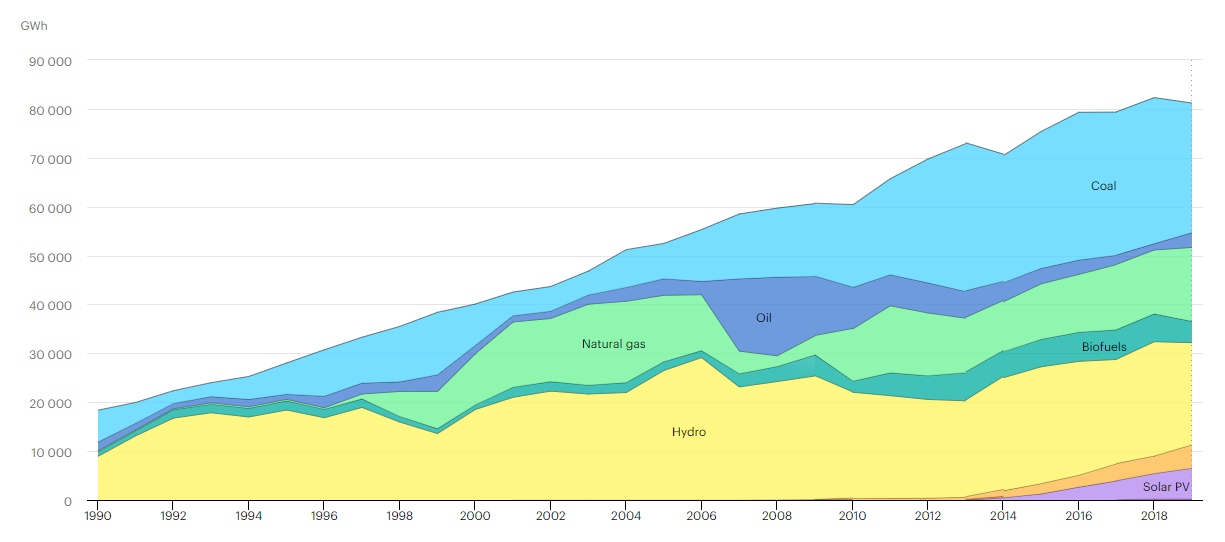
    While the country’s primary energy balance shows the continuing dominance of fossil fuels – oil, coal, and natural gas – change in the mix of electric power supply has been more noticeable (see graph). Nearly half of the power grid supply now comes from renewable resources: large scale hydroelectric (28%), solar PV (11%), wind (9%), biomass (1.8%), and geothermal (0.2%). Chile’s legislation focuses on ‘non-conventional renewable energy’ (known by its Spanish acronym ERNC) which excludes the larger hydroelectric plants. The law has required power companies to increase their ERNC quota to 20% by 2025, but this was achieved in 2020, almost five years ahead of schedule.

    • Incentives for renewable energy quotas

    An explanation for ERNC quotas being reached ahead of schedule is that, in addition to the quota system, renewable energy costs have become highly competitive relative to fossil fuels. Other government incentives are also in play, including transmission toll exemptions, incentives for the use of public land and support for private sector power purchase agreements (PPAs). 

    Electricity generation by source, Chile 1990-2019

    Source: IEA World Energy Balances 2020

    The outlook for Chile’s energy transition is positive. In the last ten years investment in renewables has topped US$15bn. However, reducing fossil fuel use in transport and other key sectors of the economy such as mining is still a major challenge and will take more time and investment. In the power sector itself, more investment is needed in energy storage to overcome the intermittency of wind and solar generation. New technologies – such as hydrogen-based energy cycles [EB-20-11] – are needed to accelerate the pace of the transition.

  • ARGENTINA: Fernández faces into her biggest test yet

    LatinNews 22 January 2013 Hits: 1223

    Type: Mid-term legislative, comprising 127 of 257 seats in the chamber of deputies and 24 of 72 senate seats.

    Date: Due in November.

    Main contenders: Frente para la Victoria-Partido Justicialista (FPV-PJ), Partido Justicialista (PJ), Frente Peronista (FP), Unión Civica Radical (UCR),  Frente Amplio Progresista (FAP), Coalición Civica (CC), Propuesta Republica (PRO), Producción y Trabajo S. Juan (PYT-SJ), Partido Liberal-Corrientes (PL-Ctes)

    A year ago, President Cristina Fernández’s closest entourage was toying with the slogan ‘Cristina Forever’ — amending the constitution to allow her to run for more than the allowed two consecutive terms of office. They were confident that with her high popularity rating (the highest ever enjoyed by a Peronist president, including Perón) this year’s mid-term congressional elections would deliver the necessary two-thirds majority in both chambers needed to secure approval of the amendment. That confidence has all but evaporated as a result of the downturn in Cristina’s and Argentina’s fortunes. This report examines the causes and extent of this reversal.

    In October 2011 Cristina Fernández was reelected with 54% of the vote and, according to a survey by Management & Fit, a ‘positive image’ of 63.3%. Just over a year later the same pollsters reported that her positive image had fallen to 24.3%. Her high initial popularity is not hard to explain. The economy had been led through a period of very high growth that had allowed the proportion of the population living below the poverty line to shrink from 57% in 2002 to 22% in 2011 and for open unemployment to fall to 7.6%. Also, 2.6m people who had not made the requisite social security contributions to benefit from pensions. Crucially, unionised labour was able to keep wages running ahead of rising inflation.

    The feel-good effect of all this began to fade in late 2011 when the government slashed subsidies for the supply of gas and electricity, and for public transport. In 2012 the average pay increase for unionised labour was 24%, just under the rate of inflation. Left well behind are the employees who are outside the collective wage agreements and, of course, those in the informal economy. The government is already trying to persuade employers and unions to cap pay increases in 2013 at 20%, which will be hard to achieve when three of the four umbrella labour confederations oppose the government.

    Further up the social ladder dissatisfaction was fuelled by restrictions on the purchase of foreign exchange, initially meant to ‘de-dollarise’ the economy, but which evolved into a far-reaching cepo cambiario (‘exchange clamp’) that makes it difficult to buy foreign currency for travel, let alone to conduct dollar-denominated real-estate transactions and other purchases. This has bred a ‘parallel’ (black) exchange market — and, combined with the ‘retentions’ on agricultural exports, an array of ‘effective exchange rates’ that yield even fewer pesos than the official rate for farmers. This, against a backdrop of coercion of businesses to agree to cut imports or increase exports.

    Other contributing factors were the nationalisation of the private pension funds and transformation of the social security administration (Anses) into a cash cow for the government and, in business sectors, the highly irregular expropriation of part of the stake held by the Spanish firm Repsol in the once state-owned oil company YPF to bring it back under state control. In the political arena, the government has turned on the judiciary, accusing it of seeking to stage an ‘institutional coup’ through rulings against major executive initiatives.

    In October the electorate goes to the polls for the biennial renewal of both chambers of congress (a third of the senate and half the chamber of deputies). In the chamber of deputies in 2012 the ruling FPV-PJ plus its allies were 35 seats short of the requisite two-thirds majority; in the senate they were seven seats short. These figures are already obsolete, as alliances are in a state of flux and defections from the FPV-PJ bloc have been announced. The FPV-PJ bloc is the

    one in which the share of seats up for renewal in the chamber of deputies is the lowest (27.5%), which in theory makes them the least vulnerable to shifts in voters’ preferences — but their allies’ renewal shares range from 89% to 100% (for the detailed electoral panorama see the tables on page the facing page).

    Few analysts believe that the FPV-PJ and its allies will achieve the necessary majority to secure a constitutional amendment (even considering the lowering of the voting age from 18 to 16, which could add about 1m newcomers to the electorate).  The big question is whether they will retain their majority in both chambers; in other words, will the Fernández government continue to enjoy its current freedom to govern (or at least to legislate).

    See PDF for tables.

  • Region: Higher oil prices failing to bolster the region's economies

    LatinNews 07 September 2018 Hits: 734

    In recent years, high oil prices have generally boosted economic performance in the region, via increased export earnings and stronger government spending. However, the increase in oil prices so far this year does not seem to be having a significant positive impact on the region’s net energy exporters. Even though Brent oil prices are approaching US$80/barrel – a level not seen since late 2014 – GDP growth in Latin America looks set to remain weak. Indeed, the Economic Commission for Latin America and the Caribbean (Eclac) are forecasting growth of just 1.5% this year, up only marginally from 1.2% last year.

    Brazil, Mexico, Venezuela, Colombia, and Ecuador are the region’s largest oil producers, but none of them are expected to register particularly firm GDP growth this year. The legacy of a highly distorted policy framework in Venezuela means that higher energy prices are having no impact in alleviating the severe economic distress. Until hyperinflation took hold several years ago, there had long been speculation about the break-even oil price needed to eliminate the fiscal deficit, with calculations generally ranging from US$100-US$250 per barrel, but the depth of the economic crisis makes it unfeasible for oil prices to return to a market level that would return the economy to growth. As such, Eclac is projecting another double-digit contraction this year. Prospects in Ecuador are better, but still poor, with Eclac projecting a deceleration from 3% GDP growth in 2017 to 1.5% this year. Brazil, Mexico and Colombia are all expected to register an acceleration in underlying growth, but Colombia is the only country forecast to break through the 2% market.

    Production volumes are falling in many oil producers

    There are two main reasons why higher oil prices are not providing the boost to the region’s economies that they have done in the past. The first is that production volumes remain fairly weak, with many countries registering year-on-year falls in output, which dilutes the positive impact arising from higher prices. The fact that production quotas remain in place for members of OPEC is not really a factor, since output in Venezuela, at 1.26m barrels per day (b/d), is already well below the country’s 2.07m b/d quota, indicating that the state oil company PDVSA is simply unable to generate higher levels of oil output. Ecuador is the only other country in the region to be a member of OPEC, but the government stated a year ago that it did not intend to abide by its production quota of 520,000 b/d, citing fiscal difficulties. That said, Ecuador has not been able to generate firm growth in oil output, with long-running underinvestment in the sector preventing rising volumes. Underinvestment in Mexico is also the main reason behind a continued slide in production levels. Meanwhile, while the picture is slightly more positive in Brazil and Colombia, oil output is stable rather than rising.

    The other factor explaining the weak pass-through from higher oil prices to the local economy is that many governments are tightening their belts, which limits the extent to which windfall oil income can stimulate private-consumption led expansion. Global trade tensions have raised country risk, making it more difficult for countries (particularly emerging markets) to tap international capital markets and, when they do so, increasing the cost of doing so. Efforts to reduce budget deficits are, in many countries, being led by cuts in public spending. As such, the prospect of the start of another commodities ‘supercycle’, in which sharp rises in oil prices help trigger a rapid acceleration in GDP growth, does not appear to be in prospect.

  • ECONOMIC OVERVIEW: NICARAGUA

    LatinNews 09 October 2013 Hits: 1682

    Thumbs up from the IMF: Following a visit by an International Monetary Fund (IMF) mission to Nicaragua on 17-26 September, the IMF described Nicaragua’s recent economic performance as “favourable” and “welcomed the recent prudent management of macroeconomic policy”. According to a 26 September statement by the IMF, “Real growth of Gross Domestic Product (GDP) in the last two years averaged 5.3 percent, while the annual average inflation was 7.3 percent. In 2012, the consolidated public sector deficit was about 0.3 percent of GDP. As a result of this fiscal discipline, public debt declined from 45.7 percent of GDP in 2011 to 42.3 percent in 2012. The deficit on the external current account fell from 13.2 percent of GDP in 2011 to 12.9 percent in 2012, and gross international reserves remain at the equivalent of 3.5 months of imports”. The IMF also remains positive about the short and medium term macroeconomic outlook, stating that “For 2013 it is estimated that GDP will grow at 4.2 percent while inflation would be about 7 percent. The current account deficit will remain around 13 percent of GDP while international reserves coverage will remain stable”. In a further sign of the positive relations between the IMF and the radical left-wing Nicaraguan government, Nicaragua’s central bank president, Alberto Guevara, has since said that the IMF would act as an advisor to the Ortega government through a so-called ‘Plan of Accompaniment for Economic Development and Poverty Reduction’. In late October 2011, the IMF completed the seventh and final review of Nicaragua’s economic performance under its three-year Extended Credit Facility (ECF) arrangement, approved in 2007 and subsequently extended to allow Nicaragua to cope with natural disasters.


  • Suriname: Fiscal slippage and other challenges

    LatinNews 30 October 2014 Hits: 3016

    Softness in the prices of gold, oil and alumina have hurt Suriname's budget. A lack of spending discipline has done a lot more damage. With elections due in 2015, the government has little appetite for hard decisions. However, a major financial crisis appears unlikely.

    At first glance, Suriname's US$5.27bn economy looks to be in good shape, as chart 1 indicates. According to latest (October 2014) IMF forecasts, real annual GDP growth should slow to a little under 3.3% this year, before rising to 3.8% in 2015 and 4%-5% over the subsequent four years to 2019. Thanks in part to the (more or less) fixed exchange rate (SRD1: US$0.30 since a 20% devaluation in January 2011); inflation is running at around 2%. The unemployment rate has risen from 8.5% to about 8.9% over recent years, but is not expected to increase further. Government gross debt is low, at around 33% of GDP.

    For this reason, there is not much difference between the government's primary (i.e. before interest payments) and overall budget deficits, of 2.5% and 3.5% of GDP respectively. The IMF is also looking for the current account to move from a deficit of 3.6% of GDP in 2014 to a surplus of 1.3% by 2019.

    Suriname's Economy - as the IMF sees it

    2012 2013 2014 2015 2016 2017 2018 2019
    Gross domestic product, constant prices, % change 4.80 4.10 3.26 3.78 4.23 4.57 4.97 4.43
    Gross domestic product, current prices, US$bn 4.83 5.04 5.27 5.65 6.04 6.49 7.00 7.52
    Gross domestic product per capita, current prices, US 8,910 9,206 9,539 10,131 10,733 11,427 12,223 13,021
    Inflation, average consumer prices, % change 5.01 1.92 2.59 3.48 3.09 3.05 3.03 3.01
    Volume of imports of goods and services, % change 19.34 5.67 -6.50 7.20 0.91 6.06 5.87 5.31
    Volume of Imports of goods, % change 22.74 9.80 -3.22 6.25 -0.19 6.70 6.53 5.84
    Volume of exports of goods and services, % change 9.42 0.84 -1.31 2.73 0.59 14.72 4.87 4.75
    Volume of exports of goods, % change 11.09 -0.05 -2.05 2.93 0.52 15.86 5.19 5.07
    Unemployment rate, % workforce 8.50 8.50 8.93 8.93 8.93 8.93 8.93 8.93
    Population, mn 0.54 0.55 0.55 0.56 0.56 0.57 0.57 0.58
    General government revenue, % GDP 25.93 23.82 24.61 25.03 24.44 23.77 23.95 24.00
    General government total expenditure, % GDP 29.91 30.62 28.10 27.97 27.31 26.40 26.25 26.24
    General government net lending/borrowing, % GDP -3.98 -6.80 -3.49 -2.94 -2.87 -2.63 -2.31 -2.25
    General government primary net lending/borrowing, % GDP -2.98 -5.41 -2.54 -1.94 -1.82 -1.40 -1.13 -1.10
    General government gross debt, % GDP 22.24 29.77 33.47 36.14 39.78 39.67 39.08 38.64
    Current account balance, US$bn 0.16 -0.20 -0.19 -0.21 -0.17 0.03 0.05 0.10
    Current account balance, % GDP 3.40 -3.93 -3.59 -3.70 -2.79 0.53 0.74 1.27
    Note: Forecasts begin after 2011 for GDP, unemployment and current account balance as % of GDP
    Forecasts begin after 2012 for public finances and population; after 2013 for trade and inflation.
    Source: International Monetary Fund, World Economic Outlook Database, October 2014

    In the report following its latest Article IV Consultation with the local authorities, the IMF noted that the banking system was strong in terms of its profitability, liquidity and levels of capital. Overall supervision of the banking system by the Centrale Bank van Suriname (CBVS) has been strengthened by the passage of a new banking law in 2011 and the implementation of more rigorous regulations through 2013. Through much of 2013, credit growth to the private sector was in excess of 15% year-on-year: however, the stock of lending to the private sector amounted to only 26% of GDP. As yet, though, there is no specific law governing the insurance sector.

    However, some recent trends are concerning. Exports fell from over 60% of GDP in 2011 to 50% in 2013, reversing a trend that had been in place since 2008. In 2013, challenges included the fall in the price of gold, which typically accounts for just over 60% of total exports. Revenues from sale of alumina (about 10% of exports) have been constrained by the persistent weakness in aluminium prices. Prices of oil (another 10% of exports) have also been slipping.

    The slippage in the price of gold has caused Canada's Iamgold to postpone an expansion of its Rosebel Gold Mine, while the international major Newmont Mining likewise has placed under review its investment program for its local mines. In May 2014, the government shelved plans to raise US$500m by way of a sovereign bond. The issue was meant for the purchase of government equity interests in each of the latter two projects, ahead of plans to boost production after 2015. As of September 2014, it appeared that the government was considering raising US$200m or so through a loan, in order to fund its investment in Newmont's Merian gold project.

    The sovereign bond also would have raised money for the state owned energy company, Staatsolie Maatschappij Suriname NV (Staatsoli). At the end of March 2014, Staatsolie raised US$275m on its own account through a five-year loan from a consortium of regional and international banks. The money will go towards US$1.85bn in capital expenditure planned for 2014-18. Staatsolie is looking to commission a new refinery prior to the end of 2014, and is progressing with an ethanol project in Wageningen, about 200km west of Paramaribo. At current rates of production, Suriname's oil reserves should last another 15 years - although this could be extended if Staatsolie's exploration efforts are successful.

    More crucially, the softness in mineral prices is likely to have an impact on public finances. The budget deficit has two key components: revenues received by the government in relation to the production of minerals (i.e. gold, alumina and oil/related products); and the non-mineral deficit (i.e. the excess of spending over revenues from all other sources). As chart 2 shows, mineral related revenues fell quite sharply as a percentage of GDP in 2013, and are expected by the IMF to continue to decline through the forecast period.

    Key elements of budget deficit in Suriname (% GDP)

    Source: IMF

    The government has not adjusted its overall spending to recognise the downturn in revenues from the extractive industries. The non-mineral deficit soared from 8.6% of GDP in 2011 to 15.3% in 2012. The IMF expects the deficit to exceed 13% in 2014. In a working paper published in July 2014, Fund economists Daniel Kanda and Mario Mansilla observed that “overall, a medium term non-mineral fiscal deficit target in the neighbourhood of 5.25% of GDP, while ambitious, appears appropriate”.

    'Fiscal slippage' was a major theme of the IMF's report following its Article IV consultation. Spending on subsidies and transfers jumped by 1.5% of GDP in 2012, “led by pension, childcare, and disability benefit increases”. Spending on goods and services (including, perhaps, mis-classified capital expenditure) rose by 2.25% of GDP. The statistical discrepancy (essentially unclassified spending) increased by 1.25%.

    In its discussions with the Fund, the government acknowledged that fiscal consolidation was needed. The government has indicated that it is at least considering the introduction of a Value Added Tax (VAT) and a review of electricity subsidies, estimated at around 2% of GDP. These subsidies largely benefit Suriname's higher income urban population.

    In 2013, the government introduced a new health care system. Health insurance is compulsory for everyone aged between 16 and 59. However, citizens younger than 16 or older than 60 are entitled to basic healthcare that is free at the point of delivery. The new system is being administered by Self Reliance, one of the four indigenous insurance companies, to whom the government pays a premium.

    Winning the state healthcare contract had a transformative impact on Self Reliance's business. Total premiums written jumped from SRD111m in 2012 to SRD250m in 2013. Of the premiums written in the later year, healthcare insurance accounted for SRD198m. Self reliance also provided motor insurance (premiums of SRD24m in 2013), fire insurance (SRD14m), travel & accident insurance (SRD4m) and other non-life insurance products (SRD9m). The company’s assets jumped from SRD141m at the end of 2012 to SRD260m at the end of 2013. End box

    With total assets of SRD850m at the end of 2013, the largest (by far) of the local insurance companies is Assuria. In mid-2014, the managing director of Assuria noted that the preparation time for the new health care system had been very short, and questioned whether it would be financially sustainable. He also noted that the government is planning to introduce a new General Pension Plan. According to the IMF, this will be funded largely on a pay-as-you-go (PAYG) basis. More worryingly, the government has rejected the legislation making its way through the National Assembly to establish a Sovereign Wealth Fund (SWF). Over time, the SWF would have grown so as to provide the government with a fiscal buffer in the event of a sharp downturn in revenues from the country’s minerals sectors.

    Over the nine months to the end of September 2014, the official reserve assets held by the CBVS slipped from around US$775m to US$662m, but remain ample in the context of the overall economy and imports. This indicates that a currency crisis is unlikely and that the authorities should be able to maintain the local currency SRD at the present level - which the IMF considered as “somewhat on the strong side”. As noted, the overall level of government sector debt is also low: the risks of a financial crisis also appear to be low.

    Nevertheless, it is difficult to avoid the conclusion that the government's appetite for tough decisions in relation to the fiscal slippage is minimal, and will remain so prior to the elections due next year. By the end of 2015 though, it should become a lot clearer whether the government has the stomach for the fiscal reforms that are clearly needed. Should the price of gold fall sharply over the coming year from the current level of US$1,250 or so, the pressures for change will become even more intense.

  • Mexico: Nafta guessing game continues

    LatinNews 13 February 2018 Hits: 770

    The sixth round of Canada-Mexico-US talks on the future of the North American Free Trade Agreement (Nafta) were held in Montreal on 23-29 January, amid conflicting signals over the ultimate outcome.

    Interpreting Nafta smoke signals remains an uncertain business. The head of the Mexican negotiating team, economy minister Idelfonso Guajardo, said that for the first time in the latest talks all three delegations felt progress had been made. Talks over a dozen chapters were very advanced and Canada had placed “creative ideas” on the table. Officials said the chapters on telecommunications and e-commerce were almost finalised. Guajardo’s ministry later announced that a seventh round of negotiations would be held in Mexico City between 26 February and 6 March. US Trade Representative Robert Lighthizer was more guarded, saying there had been “some advances” but that difficulties remained: he specifically rejected Canada’s proposals to resolve a deadlock over local content rules in the automobile sector.

    Mexican Nafta watchers were tracking US Secretary of State Rex Tillerson’s visit to Mexico City in early February. The visit came amid reports by Reuters news agency that Mexico is considering allowing US air marshals to travel on commercial cross-border flights. This led to speculation that Mexico might be seeking to make concessions on both border security and immigration issues in a bid to secure a successful Nafta renegotiation. While not directly confirming that interpretation, Reuters quoted a senior Mexican government official saying “all our efforts now are based around Nafta and making sure the pact doesn’t collapse”. During Tillerson’s visit Mexican foreign minister Luis Videgaray suggested Mexico’s relationship with the Trump administration was closer and “more fluid” than it had been with previous US governments.

  • COSTA RICA: Exporters complain about currency appreciation

    Sarah Sheldon 28 May 2024 Hits: 958

    Costa Rican export industry associations have called on the central bank (BCCR) to take action over the continued appreciation of the colón against the US dollar, blaming exchange rates for the recent shuttering of companies and associated job losses.

    On 24 April the Cámara de Exportadores de Costa Rica (Cadexco) export association was widely cited by the local media as expressing concern over what it called a “critical situation” due to the weakening of the dollar in the past two years. US$1 was worth ₡696 on 20 June 2022, falling to ₡518 on 31 January this year, according to figures cited by multi-platform business news brand Bloomberg Línea, and the colón has continued to appreciate since then. A stronger colón is an issue for businesses that are paid in dollars but have to spend on inputs and salaries in colónes, because each dollar is worth less than before. This includes most exporters as well as service sectors such as tourism. On the other hand, importers and those who have loans in dollars benefit from a stronger colón.

    Cadexco blamed currency movements for the recent closure of agroexport company MyM Productores and the export division of Aquafoods, a Costa Rican seafood firm, with the loss of almost 800 jobs. This follows the shutdown of two banana farms by Standard Fruit Company, the Costa Rican subsidiary of US firm Dole, in February, with the reported loss of 111 jobs. And on 18 April, the Cámara Nacional de Turismo (Canatur) tourism body was widely reported as saying that its affiliates had fired 544 workers due to increased costs associated with the exchange rate, and it forecast that another 918 jobs would be lost in the next year if action is not taken.

    Exporters blame the BCCR’s efforts to reduce inflation by sharply increasing interest rates from 0.75% in December 2021 to 9% by the end of October 2022. The bank started to cut rates from mid-March 2023 but industry bodies say it hasn’t done so fast or hard enough, given the fact that the country recorded a -1.77% inflation rate in 2023. However, the exchange rate has also been influenced by the US Federal Reserve, whose policies have meant that the dollar has depreciated against a varied basket of currencies in that time, as well as Costa Rica’s efforts at fiscal consolidation as part of a financing agreement with the International Monetary Fund (IMF), which has reduced country risk.

    On 25 April the BBCR announced its latest rate cut, from 5.25% to 4.75%, which may go some way to assuaging the concerns of exporters. Despite criticism from certain quarters, there have been positive recent economic developments, including new figures from the national statistics institute (Inec), published 4 April, which show that the national unemployment rate was 7.8% in the December 2023 to February 2024 rolling quarter, a drop of 3.2 percentage points on the same quarter the previous year.

    Then on 12 April the IMF announced it would release another US$270m tranche of financing under the Extended Fund Facility (EFF). In a statement, the IMF said that last year’s fiscal targets were met by “a comfortable margin,” the primary balance is expected to increase this year and debt is forecast to fall to less than 60% of GDP by the end of 2025. It also forecast “robust” growth of 4% of GDP this year. Six days later President Rodrigo Chaves announced the signing of a comprehensive economic partnership agreement (CEPA) with the United Arab Emirates (UAE). These developments may encourage BCCR officials to believe that they have been justified in keeping interest rates higher for longer although pressure is set to continue from business groups if job losses in the export sector persist.

    CEPA with UAE

    On 19 April President Rodrigo Chaves announced the signing of a comprehensive economic partnership agreement (CEPA) with the United Arab Emirates, which will “significantly enhance bilateral trade and mutual investments between the two countries by eliminating tariffs, reducing trade barriers, promoting the exchange of goods, capital, and ideas, and encouraging cooperation in the private sector”.  According to a report by the state Emirates News Agency (WAM) in English, bilateral non-oil trade reached US$65m in 2023. It adds that the CEPA with Costa Rica would give the UAE “significant market access, with 98% of tariff lines duty-free or with reduced tariffs, including aluminium, polyethylene, heavy machinery, ceramics, glass, copper, and related products, iron and steel and related products, and cement”.

  • GUATEMALA: Morales’s appointments excite controversy

    LatinNews 17 May 2017 Hits: 900

    At the end of last month President Jimmy Morales named Víctor Manuel Asturias Cordón, a mechanical engineer by profession, as his new economy minister. He replaces Rubén Estuardo Morales Monroy, who stepped down for unspecified “personal reasons”. Asturias’s appointment is just one of various which are proving controversial for the president and his small, conservative Frente de Convergencia Nacional (FCN-Nación) government.

    Asturias took over on 28 April from Morales Monroy who became President Morales’s fourth minister to step down since the FCN-Nación government took office in January 2016. Others to have seen the door include Sherry Ordóñez (communications & infrastructure) who quit after just 11 days in the job over an alleged conflict of interest. Four months later, energy & mining (MEM) minister Juan Pelayo Castañón resigned – a move linked by the local media to a dispute over the ‘El Tambor’ gold mine [RC-16-08], while in July Health Minister Alfonso Cabrera stepped aside over his failure to address the health crisis.

    Having served as advisor to the gas company Zeta Gas de Centroamérica SA (2013-2014), and general manager of Trade & Investment SA (2007-2013) (which provides satellite monitoring services), Asturias has held the post of general manager of energy engineering group Grupo Tekno Energy SA since 2015. He also has been the general director of Localiza El Salvador SA for El Salvador and Guatemala, a firm that also provides GPS and monitoring services, since 2008. His appointment has come under fire however from local media such as investigative daily El Periódico which in a report published on 2 May suggested a possible conflict of interests. El Periódico cited figures from the tax authorities (SAT) and web portal Guatecompras (where all bids and information about awarded public contracts above a certain threshold have to be published) which suggest that Localiza El Salvador SA received a Q$39,250 (US$4,149) contract from the economy ministry on 17 March to provide a service of “GPS control and monitoring” for 25 vehicles between March and December 2017. According to El Periódico, the company has won state contracts worth Q$23.36m between 2008 and 2017. The issue has attracted concern given Guatemala’s constitution prohibits those who provide contracts to the state from serving as ministers.

    More controversial appointments

    As well as the appointment of Asturias, who has since told reporters that he had left the company years ago but the records had not been updated, President Morales’ judgement has further been called into question after the constitutional court (CC) suspended the appointment of six departmental governors. The CC’s ruling on 2 May is in line with an appeal presented by the main opposition Unidad Nacional de la Esperanza (UNE) party together with local departmental development councils (Codedes), who argued that the appointees were unsuitable. President Morales had substituted eight of the 22 departmental governors (who are appointed by the executive) on 10 March.

    The CC ruled against the appointments of Carlos Rafael Moreira Salazar (Sacatepéquez department), Julio Calderón Flores (Huehuetenango), Oswin René Morales Flores (San Marcos), Marvin Estuardo Alvarado Morales (Totonicapán), Héctor Eduardo Flores Moscoso (Santa Rosa), and Luis Antonio Herrera Rabanales (Suchitepéquez). According to El Periódico, complaints include the fact that Moreira was accused of tax debt, while in 2011 Calderón was ordered to pay Q$19,000 (US$2,588) in damages to a teacher for unjustified dismissal and he was convicted of fraud in 2012. Meanwhile Morales Flores was reportedly appointed despite a CC ruling ordering his suspension after it emerged that he had not been proposed by the local Codede. This breeches the organic law of the executive which establishes (Art. 42) that the president must make gubernatorial appointments “taking into account” candidates proposed by the Codedes.

    • GDP growth

    Asturias takes up the post of economy minister as the most recent (24 April) update by the United Nations Economic Commission for Latin America & the Caribbean (Eclac) forecasts 3.4% GDP growth for Guatemala in 2017. This is slightly below the 3.6% average for Central America – below Panama (5.2%), Nicaragua (4.6%), Costa Rica (4.15), and Honduras (3.7%) but above El Salvador (2.5%).

  • Trump’s use of tariffs

    Patrick de Courcy 18 February 2026 Hits: 786

    Donald Trump has for many years supported protectionist economic policies and opposed globalisation. The novelty of the first year of his second term in office is that he sought to pursue these protectionist and nationalist policies much more aggressively than had been expected, and as means to exert undisguised political leverage against both diplomatic friends and foes alike. In short, import tariffs have been turned into diplomatic weapons.

    In January 2025 an initial skirmish was fought with Colombia. The left-leaning government of Gustavo Petro refused landing rights to two US military aircraft which, on the orders of the new US administration, were deporting Colombian undocumented migrant workers. President Trump threatened to apply an immediate 25% tariff on all imports of Colombian goods into the United States, causing Petro to back down.

    Trump also began applying punitive 25% tariffs on Mexican and Canadian goods, demanding that their governments should tighten border security and interrupt the flow of illicit drugs, such as fentanyl. To give some time for negotiation, the measure was paused for a month but implemented as of March. The Mexico City and Ottawa administrations criticised Washington’s unilateral action which they said was also a violation of the three countries’ USMCA free trade agreement.

    On 2 April 2025, described by Trump as “liberation day”, the president unilaterally imposed “reciprocal” tariffs on 90 countries. Despite the essentially false claim of reciprocity, the tariffs were set by the US government using a rather crude formula which aimed to eliminate the deficits in US trade with its partners. The announcement triggered a stock market fall and unleashed a trade war between the US and China. It has been calculated that because of “liberation day” average US import tariffs rose from 2.4% in 2024 to 18.6% in 2025. In the Western Hemisphere, Mexico and Canada benefited from a USMCA exemption but still had to pay higher tariffs on some products. At a global level Trump justified these big increases saying they are necessary to reduce a widening US trade deficit with the rest of the world (US$904bn in 2024, nearly double its value in 2016). However, if Mexico is excluded there was actually a US$106bn US surplus in its trade with LAC, putting the economic rationale for the exercise in doubt.

    It is also evident that many of the key decisions are political. Most of Latin America now must pay a 10% tariff, but in August Trump imposed a punitive 50% tariff rate on Brazilian products. This reflected Washington’s essentially political demands that the Brazilian Supreme Court should drop the trial of former president Jair Bolsonaro (2019-2023) a close ally of the US president. The US also imposed visa and other restrictions on the chief justice of the Brazilian Supreme Court, not only for presiding over the Bolsonaro trial, but for ordering restrictions on US-owned social media networks. 

  • ECONOMIC HIGHLIGHTS

    Abbi Dicker 16 April 2025 Hits: 3756

    REGION | Mulling a response to US tariffs. On 3 April Nicaragua’s government said that it had started to meet with economic teams to analyse the impact of the new tariffs announced on 2 April by the US government led by President Donald Trump against imports from other countries. Nicaragua was initially hit with a 18% tariff, second only to Guyana (38%) in the region, and well above the general 10% rate levied on the rest of Latin America and the Caribbean although Trump announced on 9 April that these higher tariffs would be paused for 90 days – along with those for other countries bar China hit by higher rates.

    With Costa Rica and Guatemala, the US’ biggest trade partners in the sub-region, having indicated caution in response to the 10% tariffs, which remain in place, on 3 April Honduras’ Foreign Minister Eduardo Enrique Reina said the government “will explore a diplomatic path to find a solution beneficial to Honduras”, adding that the “most important thing will be dialogue with the US. A trade war doesn’t make sense.”

    All Central American countries bar Panama have a free trade agreement with the US (Cafta-DR). According to figures from the US Census, US exports under Cafta-DR in 2024 totalled US$47.0bn while imports totalled US$36.6bn. Meanwhile Panama, which has a bilateral trade promotion agreement with the US which took effect in October 2012, has also said it is evaluating the impact of the new US tariffs. A statement released on 4 April by Panama’s trade & industry ministry (Mici) highlights that the US is the main destination for Panama’s exports, with Panama’s sales to the US totalling US$179.6m in 2024, equivalent to 19% of its total exports. It notes that top exports include raw sugar cane which represented 28% of Panama’s total exports to the US, followed by bananas (13%).

    Central America & Caribbean: inflation rate
    Percentage variation (year-on-year)

    Central America & Caribbean: GDP growth (%)
    Quarterly figures are year-on-year growth

  • BARBADOS: Movement on debt-for-climate

    Sarah Sheldon 28 May 2024 Hits: 825

    Efforts by Barbados Prime Minister Mia Mottley to negotiate a trail-blazing debt-for-climate swap are advancing.

    Speaking at the United Nations Financing for Development Forum in New York in April, European Investment Bank (EIB) president Nadia Calviño said she had been in conversation with Mottley over “the first ever debt-for-climate swap” which, with support from the European Investment Bank (EIB) and the Inter-American Development Bank (IDB) would allocate savings on interest payments to be used for investment in climate resilience. In Barbados’ case, these would be earmarked for water re-use and treatment which would “reinforce the resilience of the country without increasing debt levels”.

    Details of the proposed swap were first released last November. Under its terms Barbados will raise US$295m through a sustainability-linked bond, with the EIB and IDB each putting up US$150m in collateral. Interest rate savings from the deal are to fund the South Coast Sewage Treatment Plant (US$108m), reducing shortages and improving wastewater systems.

    The deal, if confirmed, will boost Mottley’s campaign for financial relief for Small Island Developing States (SIDS). She has argued that financial support for climate change mitigation is crowding out funding for poverty alleviation and economic development meaning that “we may save the planet and lose the people”.  

    UN official in agreement

    United Nations Deputy Secretary-General Amina Mohammed agreed with Barbados’ Prime Minister Mia Mottley saying that the climate agenda and the development agenda were both “in crisis” and in need of a new approach.

  • ECONOMIC OVERVIEW: PARAGUAY

    LatinNews 21 July 2011 Hits: 592

    In the first quarter of 2011, the economy grew 4.6% year-on-year. This brought the rate of growth over the previous four quarters to 11.8%, a bit below the 15% rate for calendar 2010. The economy has been growing at a decent rate since 2003, with only a slight dip between the third quarter of 2008 and the third quarter of 2009. The key issue for the economy is the size of the soya crop. Essentially, economic forecasts for Paraguay are the same as weather forecasts.
    During his 1 July state of the nation address, President Lugo praised last year’s impressive economic growth, although he conceded that in spite of this, great social inequality persisted: “the needs and social demands surpass the state’s capacity of response in financial, human and institutional terms,” he said. Still, growth on that scale will raise expectations of a trickle-down effect. Lugo did not provide poverty figures for 2010 but those for 2009 (35.1%) showed a negligible improvement on 2008 (37.9%), when he took power. Indigence barely fell, from 19% to 18.8%, over the same period. Landless groups are also getting restless as Lugo has failed to deliver on land reform: on 5 July local authorities in the southern department of Alto Paraná declared a state of emergency in the wake of a series of land invasions.