Honduras: No longer the regional pariah
Honduras continues to consolidate an economic recovery and is slowly shedding its reputation as the most violent country in the region.
Like its Central American neighbours, Honduras is one of the beneficiaries of the global oil price rout, as a fuel importer, and is also enjoying the ‘pull effect’ of a stronger US economy and a stronger US dollar, which means a recovery in demand for its exports, and a more competitive rate for its goods on international markets. Remittances from Hondurans living in the US (worth about 20% of GDP) have also risen for similar reasons. On the downside, a stronger dollar makes non-oil imports more expensive, albeit the drop in fuel prices and low food prices appear to have mitigated any pass-through to inflation which this year has fallen steadily.
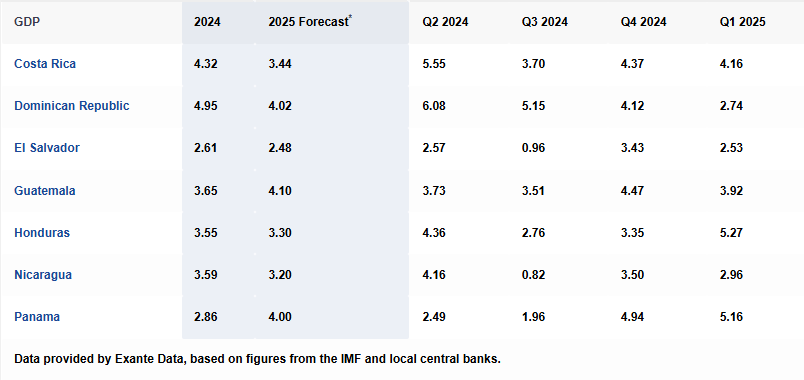
The IMF expects real GDP growth to accelerate from 3.5% in 2015 to 3.6% in 2016 and 3.8% in 2018. Overall, GDP in 2015 should touch US$20bn. Concerted government efforts at fiscal reform (under the auspices of the IMF programme) are ongoing, with the deficit reducing from 4.3% of GDP in 2014 to an estimated 2.5% in 2015. In light of this, however, central government gross debt was expected to rise to 48.4% in 2015, up a little from 45.7% in 2014.
According to Banco Central de Honduras (BCH), real GDP rose by 0.6% in the second quarter over the first, and by 3.0% year-on-year over the second quarter of 2014. The growth was broadly based, with an expansion in activity in the telecoms sector (by 1.2% relative to the first quarter); retailing, hotels and restaurants (+1.1%); financial services (+0.6%); and construction (+1.5% thanks to both public works and spending on residential housing in Tegucigalpa and San Pedro Sula). There were smaller rises in activity in manufacturing (+0.3%) and agriculture (+0.1%).
In terms of expenditure, second quarter growth was driven by exports of goods and services (which rose by 1.8% over the first quarter) and domestic consumption spending (which increased by 0.6%). However, investment fell by 4.2%.
There were some significant changes in the country’s balance of trade through the first half of 2015. Thanks to the fall in the global price of energy, imports of fuel and power were valued at US$721m, or US$345m less than in the first six months of 2014. The trade deficit nonetheless increased by US$235m to US$2.6bn, mainly due to higher imports of raw materials for industry and consumer goods (indicative both of the strengthening domestic demand but also the higher cost of imports on the back of the depreciating exchange rate). Remittances in the first half of 2015 came to US$1.82m, up by 10.3% on the previous corresponding period.
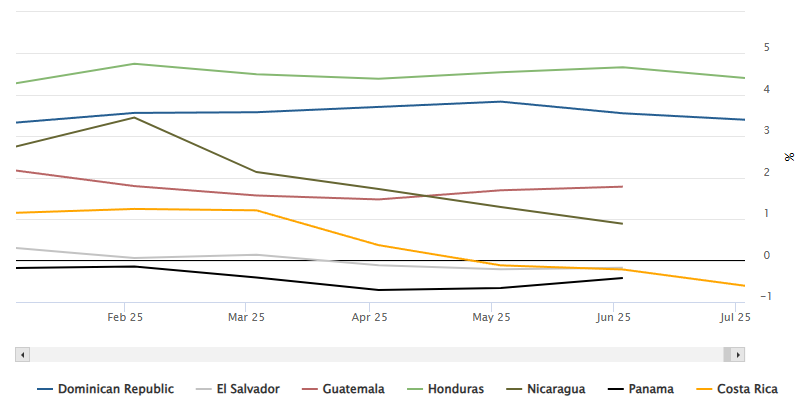
The BCH cut its key policy rate by 25 basis points on each of 9 February, 23 March and 6 July. The rate currently stands at 6.25%. In April 2015, the IMF assessed the BCH’s monetary policy as being “broadly appropriate”, bearing in mind the inflation target and the central bank’s desire to allow the lempira to depreciate relative to the US dollar by around 5% over the course of 2015. In the 12 months to June 2015, broad money (M3) and deposits from the non-bank public both rose by 13.7%. Bank lending to the private sector rose by 9.2%. Inflation ended the year at a low of 2.36%, down from 5.8% in December 2014.
Corruption in government still an issue for donors
On 9 November, the US embassy in Tegucigalpa indicated that Honduras had failed to qualify for a second year running for inclusion in programmes offered by the Millennium Challenge Corporation (MCC), which provides US development aid and financial assistance to developing countries.
The MCC published its annual policy performance scorecards, used to select countries eligible for MCC programmes in 2016, on 6 November. According to a US embassy statement, the country’s performance on ruling justly, investing in people and economic freedom as measured by 20 indicators in this year’s scorecard were similar to last year, and Honduras once again did not pass the indicator on control of corruption, “a key criterion for passing the scorecard and being considered for eligibility to develop an MCC Compact”. While there had been “a modest improvement in control of corruption and rule of law”, there was still “weaker performance on regulatory quality”, the statement noted.
The MCC is currently supporting Honduras with a three-year US$15.6m good governance Threshold Program. Signed in August 2013, it is designed to improve transparency and efficiency of government. The embassy stressed that “many of the reform efforts underway in Honduras with support from this Threshold Program will help reduce opportunities for corruption. They include reducing payment arrears and increasing prompt government payments, improving oversight and capacity in the procurement process, increasing the ability of the TSC to conduct performance audits, and support for the implantation of the Transparency International/ASJ initiative”.
Honduras is very keen to qualify for a new MCC Compact, a more substantive aid package. According to John Wingle, director of the MCC’s evaluation unit, Honduras is about half way towards eligibility for a second MCC Compact. It now scores 26 points, up from 21 last year but needs 50 to become eligible.
Despite the disappointment for the Hernández government, which has made a concerted effort since taking office in January 2014 to improve public sector management (including tough fiscal reform measures in order to secure an IMF lending facility), the US ambassador to the country, James D. Nealon, stressed that efforts are moving in the right direction, noting that “Honduras is still paying the bill for budgetary and policy decisions of years past”. Honduras’ improved fiscal policies, follow-through on its commitment to Transparency International to improve governance, and continued efforts to lift the regulatory burdens on small businesses will pay dividends down the road – not just by improving Honduras’ chances of developing a new Compact with the MCC to spur economic growth, but in direct benefits to the Honduran people”, he emphasized.
- Competitiveness
In the World Economic Forum’s latest (2015-2016) Global Competitiveness Report, Honduras’ overall competitiveness ranking was 88/140 – a marked improvement over 2014-2015 (when it ranked at 100/144) and 2013-2014 (111/148). In spite of the progress made by the Juan Orlando Hernández administration in improving public sector expenditure control, the country was ranked a poor 124th for wastefulness of government spending, however.
- Homicide rate down again in 2015
Honduras’ homicide rate in 2015 was 56 per 100,000 inhabitants last year, according to preliminary government figures, another sharp improvement over 67 in 2014. There were 5,047 registered homicides over the year, down from 5,891 in 2014. The murder rate peaked at 90.4 in 2012, when Honduras earned the ignominious title of most dangerous country in the world, inclusive of active war zones.