Trinidad & Tobago: IMF confident that Trinidad & Tobago is turning a corner
The days of posting Chinese-style rates of GDP growth – which it did for much of the 1996-2006 period, when annual growth averaged well over 8% – are long gone for Trinidad & Tobago.
GDP growth has slowed sharply, with the drop in energy prices since 2014 driving the economy into recession – real GDP has contracted in each of the past three years. Yet the IMF was somewhat more positive about the country’s prospects after its annual Article IV consultation, which took place on 20 July-2 August. It identified a nascent economic improvement and praised the government’s fiscal policy adjustments, although cautioned that further work is necessary to arrest rising debt levels and address imbalances in the foreign exchange market.
At the heart of Trinidad & Tobago’s problems is a heavy dependence on the energy sector (the sector accounts for 35% of GDP), with the country hit both by lower world prices, but also by a fall in domestic production volumes. According to data from BP’s Statistical Review of World Energy, in 2016, natural gas production fell by 13.2%, to 3.3m cubic feet per day (cf/d), down from a peak of 4.3m cf/d in 2010, while oil production fell by 11.2% to 96,500 barrels per day (bpd), compared with a peak of 177,500 bpd in 2006. Local data from the central bank indicate that both natural gas and oil production remained relatively stable during the first half of 2017.
Still in recession, but bottoming out
There is no official data on real GDP from 2017, but the IMF noted that preliminary data showed that the economy continued to contract during the first half of the year, as these recent developments have continued to have a negative spill-over effect on the non-energy sector. However, the Fund stated that it believed the economic downturn has finally bottomed out, identifying a projected upturn in natural gas production as the main factor that will drive a recovery in economic performance later in 2017.
Meanwhile, recent exploration efforts on the part of the state oil company, Petrotrin, as well as a refinery upgrade, are expected to help reverse the slide in oil production. On the basis that energy sector production volumes begin to pick up, higher fiscal revenues would then help support public sector investment projects, which in turn would feed through to bolstering non-energy GDP growth.
The two main areas of concern flagged by the IMF, echoing previous policy assessments, are public debt levels and imbalances in the foreign exchange market. With relation to the first issue, concerns relate more to the pace of accumulation of public debt, rather than the level themselves.
As a share of GDP, the IMF estimated that public debt stood at just under 30% in its last full country report in mid-2016. But this has risen sharply in recent years (public debt averaged 17% of GDP in 2005-13) and, according to the IMF’s baseline scenario, is expected to jump to 38.6% by the end of 2017 and to 78.7% of GDP in 2021. Although the IMF welcomed government efforts to boost revenue, it cautioned that the impact of things like asset sales will fade over time and that more extensive efforts to contain current spending were needed in order to reduce the fiscal deficit – which is already in double-digits as a share of GDP.
In late April both Moody’s and Standard & Poor’s ratings agencies downgraded Trinidad’s credit rating. On 26 April, Moody’s marked it down to Ba1 from Baa3, following S&P’s 21 April markdown from A- to BBB+. The S&P rating is still considered to be investment grade; the Moody’s rating is classified as junk-bond status. For Moody’s, debt was the key issue.
Currency overvaluation
With relation to the second area of concern, the Fund highlighted the “paramount importance” of reducing imbalances in the foreign exchange market, that have been generated as a result of the sharp fall in energy receipts. The Trinidadian dollar had long been heavily managed around the TT$6.3:US$1 mark, but has been allowed to depreciate since late 2015 to address local currency overvaluation.
However, the authorities have continued to intervene heavily and the pace of depreciation has been mild (the Trinidadian dollar is currently trading at around TT$6.7:US$1). Assuming that the authorities do not sanction a more significant depreciation, the IMF recommended that the government look at ways to lift foreign currency earnings, through tabling structural reforms that would bolster investment in the non-energy sector. This would also help diversify the economy, supporting longer term growth in the event that energy prices remain relatively suppressed. The recommended reforms include changes to public procurement processes, reducing the costs associated with doing business and modernising financial supervision.
Material improvements unlikely in the short term
However, the government is likely to encounter difficulties in enacting some of the prescribed spending cuts and reform recommendations. The public is already frustrated by years of sub-par economic performance and opposition to some legislative proposals has already resulted in reforms being either delayed or suspended.
Assuming that the economy returns to growth later in 2017 or in early 2018, as expected by the IMF, this may boost public confidence in economic policy reforms, but rapid progress on the reform front is unlikely. The Fund expects real annual GDP growth of just 0.3% in 2017, rising to 3.4% in 2018, with inflation of 3.7% in 2017 and 4.7% in 2018.
Moreover, efforts to diversify the economy – even if successful – will take several years to have a significant impact on the economy, given the feed-through times from higher investor interest to actual investment inflows and, finally, rising production. In the meantime, the underlying economic situation is likely to remain relatively weak, characterised by fairly low GDP growth, still-high fiscal deficits and rising public debt levels.
New offshore prospects offer hope
In June, BP Trinidad and Tobago (BBTT), 70% owned by BP, with Spain’s Repsol holding the other 30%, announced two significant discoveries of approximately 2trn cubic feet (tcf) of gas. The discoveries were made in the Savannah and Macadamia exploration wells, some 80km off Trinidad, for which BBTT has a 100% working interest.
According to a report from the specialist website offshoretechnology.com, the Savannah exploration well was drilled “at water depths of over 500 feet into an untested fault block east of the Juniper field, a US$2bn BBTT project sanctioned in 2014”. According to the report, based on the success of the Savannah well, “the company expects to develop the reservoirs via a future tieback to the Juniper platform, which is due to come online in mid-2017”, while the Macadamia discovery “is expected to support a new platform post-2020”.
BBTT president Norman Christie was reported as saying that the find represented “the start of a rejuvenated exploration program on the Trinidad shelf”. “Even after 55 years of operations the Columbus Basin still has more to give with the right technology being applied”, he added.

BPTT operates 904,000 acres off Trinidad’s east coast and has 14 offshore platforms and two onshore processing facilities. In May, it pledged to invest an additional US$56bn in Trinidad over five years, which comes on top of an approved investment pipeline of US$10bn for the 2012-2022 period.
Offshoretechnology.com also noted that the company had secured approval for the development of its Angelin offshore gas project, noting that this will involve the construction of a new platform 60km off the south-east coast of Trinidad, in water depths of approximately 65m. ”The development will include four wells and will have a production capacity of some 600 million standard cubic feet of gas a day (mmscfd). Drilling is due to commence in 2018, with first gas from the facility expected in 2019”, it noted.
Elsewhere, in January BHP Billiton reported that its LeClerc discovery, also located in deep water off Trinidad’s south east coast, contained a potentially large resource of natural gas and oil.
In August, BPTT announced the first gas from its Juniper development, the fifth of BP’s seven Upstream major project start-ups planned for 2017. Juniper began production on schedule and under budget, a company announcement boasted.
According to the company, the project is expected to boost BPTT’s gas production capacity by an estimated 590 million standard cubic feet a day (mmscfd). With a US$2bn investment, Juniper is BP’s first subsea field development in Trinidad. It produces gas from the Corallita and Lantana fields via the new Juniper platform, 50 miles off the south-east coast of Trinidad in water approximately 110 metres deep. The gas then flows to the Mahogany B hub via a new 10-km flowline installed in 2016.
Bernard Looney, chief executive of BPTT Upstream, noted that, “Juniper is a major milestone in BP’s more than 50 years of investment in Trinidad and Tobago. It is the largest new project brought into production in Trinidad for several years and the second major project we have started here this year”. (The Trinidad Onshore Compression project, another large gas scheme, began operations in April).
Separately, Royal Dutch Shell will acquire the Trinidad and Tobago assets of the US oil company Chevron. The US$250m deal will allow Shell to “optimise its developments across the East Coast Marine Area, a core component of Shell’s interests in Trinidad and Tobago, through which it is supplying gas to both the domestic market and Atlantic LNG”, the company said in a statement in June.


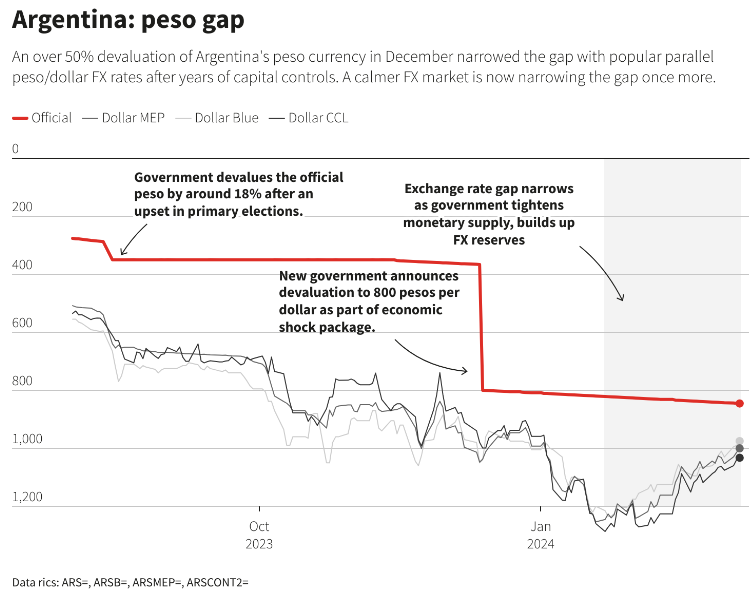 Source: Reuters
 Source: Alphacast