PANAMA: Consumer confidence droops
|

|
The ruling left-wing Frente Farabundo Martí para la Liberación Nacional (FMLN) and the right-wing opposition Alianza Republicana Nacionalista (Arena) have announced almost all of their candidates for the 2015 legislative and municipal elections for the 84 deputies of the legislative assembly and the 262 mayoral positions across all municipalities in the country. The secretary general of the FMLN, Medardo Gonzaléz, announced in late August that Nayib Bukele would be the mayoral candidate for the all-important mayoralty of San Salvador where he will face off against the present incumbent, Arena’s Norman Quijano.
Bukele is the current mayor of Nuevo Cuscatlán in the La Libertad department, who took office in 2012. Bukele, who previously had a career in advertising before entering politics, has been widely acclaimed as mayor of Nuevo Cuscatlán. He has donated his entire mayoral salary to scholarships (the only mayor in El Salvador to do so) and has established healthcare for low-income families to be paid for by the municipality. He has strengthened social programmes and maintained a low crime rate in Nuevo Cuscatlán with only one homicide in the town since becoming mayor, very rare in El Salvador. Investment is much higher in Nuevo Cuscatlán than in surrounding municipalities.
Despite being branded a Socialist by his opponents, Bukele has incredibly high approval ratings in a historically right-wing municipality. The FMLN hopes he can win over voters in San Salvador, a traditional party stronghold before Quijano won election for Arena in 2009, and then bring some of the same achievements to the capital.
Bukele has criticised his own party in the past and put distance between himself and the previous government of Mauricio Funes (2009-2014), the first-ever FMLN president. On 19 August at a press conference he stated: “what was good about Mauricio Funes’ government is that social programmes became part of the debate, and what was bad is that five years passed and I feel that not one structural change took place”. He continued “yes, the FMLN won in 2009 and they did a few things but the people are still in the same situation, the economic model has not been restructured”.
Notable FMLN candidates elsewhere include former economy minister Armando Flores (2012-2014), who is running for mayor of Santa Tecla in the La Libertad department (where the FMLN’s Oscar Ortiz held sway [2000-2014] before becoming Vice-President last June), and Carlos René Hernández, current director of the San Batrolo Hospital in Ilopango, who is running for mayor in the same town in the department of San Salvador.
Jorge Velado, the president of Arena, confirmed that Quijano will stand for re-election in San Salvador. Velado said that Quijano, who narrowly lost in this year’s presidential elections to Salvador Sánchez Cerén, would defeat whatever candidate the FMLN put forward.
Over 100 Arena mayoral candidates have been announced around the country to run in areas not currently governed by the party.
The FMLN confirmed all of its candidates at its annual conference on 31 August. The Arena annual conference will take place in late October; Velado is promising a party surprise.
Whichever candidate wins the San Salvador mayoral election will have to combat some of the highest crime rates of any city in the world, something Norman Quijano has had some success in addressing through the installation of security cameras, safety campaigns and recreational programmes for youths.
The government prefers to stress the strong GDP growth of the economy (perhaps 10% in 2011 and the prospect of 6% 2012), but persistently high inflation may be the more important economic development.
The local consensus is that the economy will grow by between 5% and 6.2% in both 2012 and 2013. The government is forecasting 6.5% inflation in 2012 and claims that the 2011 rate was 10.5%.
In 2011 the inflation rate was 5.9%. Few local analysts believe that the rate will do much in the next couple of years. Several local economists point out that the GDP growth rate is much less important to the bulk of Panamanians who are barely in the formal economy but are nevertheless vulnerable to rising prices. Some economists even argue that unless inflation starts to fall perceptibly, political instability could mount.
President Ricardo Martinelli has already shown himself to be sensitive on the issue. At the World Economic Forum in Davos at the end of January, he claimed that the country’s inflation was largely imported. Local economists dismiss this argument and say that the strength of domestic demand is prompting retailers to hold back goods, especially food from the market.
Independent economists point out that successive governments have moved to dismantle what was once a comprehensive system of price controls. They argue that this was a disastrous development for what is essentially an oligopoly.
The government also boasts that unemployment is down to 4%. Independent economists say that a lot of the jobs being created are not proper, sustainable jobs and point out that the informal economy still supplies work for 41% of the population.
Opposition businessmen too are complaining publicly about the current government’s right wing populism which lavishes subsidies on special interest groups and reward its friends at the expense of its enemies.
One of the country’s biggest ever construction projects, the Panama City metro, enters a key phase this year. The construction industry claims that the project will make 2012 a record year for the industry.
Already around 4,000 people are employed on the project and the bulk of the work will be done in the dry season which usually runs from December to April.
In 2011 receipts from the export of tangible products were up by 8.3% at US$785m, according to figures from the Instituto Nacional de Estadística y Censo (INEC) which is part of the Contraloría General de Panama. These figures exclude both the activities of the Colón Freezone and the banking sector, which together account for over US$10bn of export revenues.
Exports are still well down on the US$1.12bn they hit in 2007. In 2008 they were US$1.14bn and in 2009 US$822m. The biggest export earner in 2011 was gold, which brought in US$117m. Banana exports were worth US$86m and shrimp larvae US$53m. Yellow fin tuna (in all its forms, fresh, frozen and tinned) was worth US$47m; shrimp exports were worth US$38m; sugar US$37m and pineapples US$32m.
Other exports include beef (US$18m); watermelons (US$17m); fishmeal and fishoil (US$14m), leather and hides (US$14m) and clothes (US$12m).
GDP: Officially GDP grew by 10.6% in 2011.
Inflation: In the 12 months to the end of February the inflation rate kicked up to 6.4%. In calendar 2011 the rate had been 5.9%. Wholesale prices rose even faster in 2011 at an 11.9% clip.
Foreign direct investment: Foreign direct investment (FDI) increased from US$1.3bn in 2009 to US$2.4bn in 2010 and US$2.8bn in 2011.
Current account: In 2011 the current account was in deficit to the tune of US$3.89bn, up US$1.03bn on 2010. The trade deficit was US$5.99bn and there was also a deficit on financial income of US$1.79bn. The country ran a surplus of US$3.77bn on its services account.
Canal administrator: In March the Panama Canal Authority appointed Jorge Quijano, the engineer responsible for the current widening scheme, to take over from Alberto Alemán Zubieta, as administrator. Aléman Zubieta has been in the post 16 years.
The PCA said that it had been considering the succession since August 2010, the minister for canal affairs, Rómulo Roux said. He added that the board had also drawn up a detailed job description.
Aléman Zubieta will stay on to the end of the Canal’s financial year (September) to ease Quijano into his new post, which he will take up, formally, on 4 September 2012.
Quijano started working for the ACP in 1975 as an engineer in the lock division. He became maritime operations director in 1999, a post he held until 2006 when he took over the US$5.25bn widening project. The Canal was transferred from the US to Panama in 1999. Quijano qualified as an engineer and industrial administrator from Lamar University at Beaumont, Texas. He has further academic qualifications from a Federal Executive Institute in Charlottesville (Virginia) and Northwestern University in Chicago, Illinois.
The work on widening the Canal, which calls for the construction of a new set of locks, is on course to finish in 2014. The expanded Canal will have double its current capacity of 300m t a year.
Quijano said that one of his targets would be to ensure that the Canal delivered more to its employees and the government. Quijano stressed, however, that he had no political connections: his local reputation is that he is a Canal man to his fingertips.
The panorama for indigenous rights in Latin America is complex, and it would be wrong to conclude with pan-regional generalisations. While recent forays into electoral politics in Mexico and Guatemala provide hope for indigenous political movements, the continued exclusion of the Mapuche in Chile provides a frustrating, and violent, counterpoint. Bolivia has seen more than a decade of indigenous rule, and yet Evo Morales has lost considerable report after struggling to reconcile party politics with indigenous ideals. In Brazil, indigenous groups are gearing up for what looks set to be a massive battle as President Jair Bolsonaro attempts to shake off the country’s economic malaise by opening indigenous territories to development.
In terms of strategy, there appears to be a growing appreciation for electoral politics even in those places where indigenous groups have preferred to articulate their demands through social movements. National governments shouldn’t feel threatened by this development, but rather reform institutions to encourage indigenous participation as a way of strengthening the nation state, which remains weak in many parts of Latin America.
Cooperation between indigenous groups, civil society, and international organisations is increasing awareness of indigenous issues. This transnational approach has started to bear fruit, although the level of engagement varies from country to country. There is also an opportunity for indigenous groups to gain support for their campaigns against extractive projects by framing them as part of the struggle to deal with the climate crisis.
Each country in Latin America is at a different point in the process of recognising and guaranteeing indigenous rights, but in general the direction of travel is positive as indigenous groups become more organised and empowered than at any time in recent history.
Can the Colombian military adopt a different approach?
The Colombian armed forces have played a central role in counter-insurgency operations for at least half a century. Given the views of successive right-wing governments over that period, together with the anti-communist and Cold War components of national security doctrines at the time, there was a strong emphasis on hard-line military action against rebel forces, over and above any alternative strategies (such as ‘hearts and minds’ persuasion or support for social reforms). The Colombian army became one of the most battle-hardened forces in Latin America but was still unable to enforce a military defeat on the rebels.
Rather, a form of strategic deadlock was achieved, with military control of urban areas coexisting with ‘no-go’ isolated rural areas where rebel groups effectively set up an alternative government. By some calculations up to 30% of national territory was held by rebel forces. Starting from 2000 onward the US financed the major multi-year military aid and training programme known as Plan Colombia, designed to defeat the rebels and eradicate coca production and trafficking. During the Álvaro Uribe presidency (2002-2010), and supported by Plan Colombia, the army did become significantly more efficient and was able to reduce levels of rebel violence (for example there was a significant fall in homicide rates in that decade, and a reduction in violent attacks).
However, evidence from multiple sources indicates that corruption has remained a significant issue, and that the security forces frequently violate human rights. A sign of both these negative trends has been the ongoing scandals over ‘false positive’ cases, where army units have killed innocent civilians and passed them off as guerrillas killed in action (KIA). This practice has existed because high guerrilla KIA rates attracted bonus payments and promotion for commanding officers. The Transitional Justice authorities (JEP) have estimated that there were 6,402 ‘false positive’ killings at the hands of the army in 2002-2008, with the practice continuing past that period.
Days after taking office Petro announced a new military and police leadership, stating that he had specifically chosen officers who had not been accused of corruption or human-rights violations. He also announced an overt change in performance assessment stating that “the concept of human security means that success lies not in the number of dead, but in substantially reducing deaths, massacres, and increasing substantially peoples’ liberties and rights”.
The new military high command consists of General Helder Fernan Giraldo (armed forces commander), General Luis Mauricio Ospina (army commander), Vice Admiral Francisco Hernando Cubides (navy commander), General Luis Carlos Cordoba (air force commander), and General Henry Armando Sanabria (national police commander). The Petro government is also promising reforms to bring the police under civilian, rather than military, control and to make changes to Esmad, the urban riot police notorious for its brutality.
With Iván Velásquez as the newly appointed minister of defence, it is clear that a major re-think of security policy is on the cards. Much will depend on whether Velásquez can establish a good working relationship with the new military commanders. This will not be an easy process as decades of military thinking are unlikely to change overnight. In the worst-case scenario, the military might undermine or resist the peace talks.
The relationship with Venezuela
For almost all of the 21st century to date, Venezuela, governed by an authoritarian left-wing regime, and Colombia, governed by a succession of elected centre-right and right-wing administrations, have shared a sense of deep animosity, mutual suspicion, and mistrust. Given the deep economic crisis in Venezuela, Colombia has found itself hosting large numbers of Venezuelan migrants and political refugees – in mid-2022 the total was estimated at around 2.5m.
In 2015, Venezuela’s President Nicolás Maduro closed the 2,200km joint border to all vehicular traffic. In 2019, after Colombia recognised Venezuelan opposition leader Juan Guaidó as the legitimate president of the country, Maduro cut off diplomatic relations. Successive Colombian governments have accused Venezuela of providing a haven for Colombian ELN and dissident Farc guerrillas, who are allowed to set up camps on the Venezuelan side of the border from where they have launched cross-border raids back into Colombia.
On taking office Petro announced he would seek a re-set of relations with his country’s eastern neighbour. Diplomatic relations are being restored with the appointment of new ambassadors. Plans are progressing to-reopen border crossings and bridges. Bilateral trade, which exceeded US$7bn in 2008 and which subsequently collapsed to around US$200m after the border closures, is being re-established and there are hopes that it will begin a strong recovery in regional economies.
It is reasonable to expect that the Petro government will also seek to improve bilateral security and will call on the Caracas administration to support the peace process. However, progress on this issue may not be easily achieved. Multiple sources confirm that elements of the Venezuelan armed forces allow Colombian guerrillas and criminal groups to traffic drugs and other illicit products (including gold and rare metals) across the border, while charging a commission. These local-level relationships are complex and sometimes break down. In 2021 there was heavy fighting across Arauca department (Colombia) and Apure State (Venezuela) between the Venezuelan military and the dissident ‘10th Front’ of the Colombian Farc, reflecting disagreements over territorial control and the management of drug-trafficking revenues.
The danger is that, despite desiring a partial normalisation of relations with Colombia, the Venezuelan government may still refuse to cut off its support for rebel groups such as the ELN. It is even possible that after a successful peace agreement and demobilisation in Colombia, ELN dissidents or ‘refuseniks’ will simply move to Venezuela to continue cross-border military and criminal activity there. That would essentially be a repeat of what happened with the Farc after 2016: many of the dissidents, who refused to accept the peace settlement, simply moved across the frontier into Venezuela. At a national level the Venezuelan government, battling against the impact of US economic sanctions, may not be prepared to lose revenue from the Colombian rebel groups, who are also a potentially valuable future negotiating chip.
A never-ending war on drugs?
Hypothetically, if Colombia could by art of magic sign instant and simultaneous peace agreements with all armed groups in the country there would still be an underlying problem. Basically, existing rebel groups survive and prosper because of what could be called their proven criminal business model. A central part of that business model is that they are serving voracious international demand for cocaine and other drugs, and for illicitly mined products such as gold and rare metals. In particular, demand for drugs, largely but not exclusively from the United States, is price-inelastic, meaning it remains strong even when prices go up. That kind of demand and profitability is likely to call forth the supply it requires. In other words, even if today’s AGC, ELN, Farc dissidents, and many others become no more than footnotes of history, a new crop of guerrilla rebels and criminal cartels is likely to come forward to fill the supply gap. In many ways that is the story of the last half century in Colombia: the fate of armed organisations and cartel kingpins have ebbed and flowed, but the criminality and the drug trafficking have remained constant across the years.
In his inauguration speech Petro admitted some of this reality. He said peace in Colombia would only be possible if there were changes in international anti-narcotics policies, and if the wealthier nations followed stronger policies to control and reduce drug consumption. The incoming president also described the long running ‘War on Drugs’ as a failure saying its repressive nature had led states to commit crimes and to what he called “an evaporation of the horizons of democracy”. He asked rhetorically “are we going to wait for another million Latin Americans to be murdered or for 200,000 people to die of drug overdoses in the United States?”. He went on to call for a new international approach to anti-drugs policies. In this context associates of the new president have expressed interest in legislation to decriminalise consumption of some drugs.
The fact that global demand for illicit drugs is likely to remain high for years to come places an obvious limit on how far or how fast the country can be pacified. That is a directly pessimistic message for those hoping for change under Gustavo Petro. However, another consideration offers a more optimistic perspective. The question should perhaps be not whether violence can be eliminated, but whether it can be reduced in a meaningful way. Persuading rebels to lay down their arms and participate in a more inclusive and democratic Colombia could offer a clearly more promising way forward.
One factor that feeds into many issues surrounding water is governance, which is fragmented and controlled by weak institutions in many countries.
This makes it difficult to develop and act upon plans that cover large geographical areas such as river basins as well as further limiting the prospects of international cooperation. Weak institutions and a limited state presence in many remote areas also limits regulatory enforcement and increases corruption risks. This weakness also leaves state institutions vulnerable to lobbying by powerful vested interests keen to maintain the status quo, such as water-hungry industries like agriculture and mining. However improving water governance has taken on a new urgency as supplies are increasingly stretched and decades of mismanagement and underinvestment have come home to roost.
One interesting case study is Chile, the only country in the world where water rights are considered private property separate from ownership of land under the 1981 national water law adopted under former dictator General Augusto Pinochet. This allows water rights to be bought and sold, and it has resulted in their accumulation by large companies as well as speculation among water traders. A system of strong property rights combines with a weak regulatory system: there is no centralised government agency responsible for developing a water strategy. This has led to accusations that industrial users have been allowed to overexploit available resources, particularly during the ongoing drought that has lasted more than a decade.
While efforts to overhaul water governance as part of an attempted constitutional reform ultimately failed, there have been some changes in recent years. For example, water was declared a public good for human use as part of a reform to the water code published in April 2022. The government has also proposed reforming the General Environmental Law (Ley 19.300) in order to boost the involvement of local communities in environmental impact assessments. The idea is to reduce political influence over the process and balance the interests of communities and investors, but no one seems satisfied by the proposals. Businesses worry that it could make it easier for activists to challenge project approvals in court, and campaign groups have rejected the proposal, arguing that it will tilt the balance further in favour of business interests by reducing government control.
This debate shows the difficulty of balancing competing interests by tinkering with existing systems, when experts, including the OCDE, recommend wholesale changes to water governance. However if such efforts appear to have failed in Chile, they are being pursued with fresh vigour in other countries in the region.
One example is Mexico, where new President Claudia Sheinbaum, who took office on 1 October, has laid out plans to overhaul the water sector during her six-year term. As things stand, water is provided by a huge number of small water companies which are frequently bankrupted by low water prices, leaving gaps in provision. The existing system of water concessions also means that agricultural and industrial users compete with households for supplies and use drinking water rather than treated wastewater in their processes.
Sheinbaum made securing water supplies a key manifesto promise, publishing a water plan that includes updated governance. The president has proposed a new water law to “protect the human right to water”; more powers for the national water commission (Conagua); and a systematic review of water concessions to reduce hoarding and unregulated sales. Sheinbaum is also aiming to boost the number of water quality monitoring stations from 2,000 to 10,000, as well as increasing wastewater treatment from municipal and industrial discharges.
Sheinbaum made water issues a focus of her time as mayor of Mexico City (2018-2023) and appears committed to enacting change nationwide. She has already proposed a new water plan for central Mexico, covering Mexico City (CDMX), Estado de Mexico (Edomex), and Hidalgo state, and the dominance of her Morena party in national and state legislatures gives her a good chance of passing reforms. Sheinbaum is also likely aware of the political risks of not dealing with increasingly severe water problems, given recent protests in Mexico City and their emergence as an issue on the campaign trail.
However attempts to reform the water law in years past have faced intense pushback from industry associations such as the Coparmex business association and the CNA farm lobby. Although both bodies have reacted positively to Sheinbaum’s plans to reform water governance, it is unlikely that they would accept any measures that imposed extra costs on their members or affected their ability to do business. For example, Sheinbaum is targeting the agricultural sector and plans to update irrigation systems to improve efficiency, and digital technology such as AI monitoring could help, but who will pay for this to happen is not clear.
Even if new rules are introduced it will be difficult to enforce them across Mexico’s vast territory, particularly given pervasive corruption and the weak presence of the state in many areas.
Another country to watch is Argentina, where President Javier Milei is stripping back the state’s role in managing water supplies as part of his radical austerity programme. In November Milei ordered the closure of the Ente Nacional De Obras Hídricas De Saneamiento (ENOHSA), which was responsible for monitoring water quality and managing sanitation infrastructure, as well as announcing plans to award a 30-year concession to a private firm for the management and maintenance of the Paraguay-Paraná waterway.
And in October, the country’s supreme court ended its oversight of cleanup efforts in the Ricahuelo River in Buenos Aires, 16 years after a landmark decision that made the state responsible for restoring the hyper-polluted 40-mile waterway. The 2008 decision was seen as a historic ruling which set the tone for environmental law, and activists worry about the wider effects of the latest ruling, which comes after Milei said that “a company can pollute a river all it wants” during his presidential election campaign.
More stringent tax transparency requirements on the part of the international community are having implications for governments presiding over economies with significant offshore banking sectors – including the Bahamas. Both the OECD, under the auspices of the Financial Action Task Force (FATF), and the G20 have published lists of non-cooperative tax jurisdictions for several years. Although Bahamas has featured occasionally previously – including on the FATF’s blacklist from 2000-2001 – it has not been blacklisted since then.
The EU is the latest member of the international community to begin publishing a list of non-cooperative tax jurisdictions. The Bahamas avoided being blacklisted in the EU’s first such list in December 2017, but the EU flagged significant concerns about information exchange and international cooperation on tax issues. At the time, it placed the Bahamas on a watch-list alongside seven other Caribbean economies that had suffered damage from the most recent hurricane season, essentially giving these countries extra time to respond to areas of EU concern before a decision was made about whether to blacklist these countries. To ensure that countries stay off the EU’s list, they must fulfil the following criteria:
Despite government efforts to avoid blacklisting, on 13 March the EU confirmed the Bahamas’ inclusion on its list of non-cooperative tax jurisdictions, alongside Saint Kitts & Nevis and the US Virgin Islands. In terms of rationale, the EU simply stated that these countries had failed to make commitments “at a high political level in response to all of the EU’s concerns”.
Government lobbies EU heavily
It is unclear how long the Bahamas will remain on the list, with the government complaining vociferously about its inclusion and lobbying heavily for its immediate removal. The Ministry of Finance has issued a statement stating that the government has been consistently engaged with the EU’s Code of Conduct Group and that it is on track to meet its December 2018 target date for the implementation of the areas of concern indicated. Several ministers flew off straight away to Brussels in an effort to engage the Code of Conduct Group directly over these issues, arguing that miscommunication and misunderstandings clouded the EU’s view about recent government developments on the tax transparency front. They are urging the EU to announce the Bahamas’ delisting on 12 April (as we went to press, an announcement was still awaited), with a view to finalising this in a meeting of EU finance ministers on 25 May. The government has expressed confidence about securing the country’s immediate delisting, although it remains unclear whether the EU would want to execute such an immediate about-turn, as such a rapid de-listing following significant government lobbying could in itself invoke criticism about its processes and independence.
In late January and early February Costa Rica made headlines due to two major security developments. The first, a large cocaine seizure, was great news for the government; the other, the theft of hundreds of weapons from a police depot, could have had a much more negative impact on the administration of President Laura Chinchilla if it had happened a year ago. The explanation for this is simple: public perceptions don’t always go hand-in-hand with reality and there is a time lag between changes in security threat levels and the public’s perception of such changes, regardless of whether they constitute an improvement or step backward.
President Chinchilla campaigned on the promise of improving citizen security and after 20 months in office she can celebrate some progress. According to official data from the judicial investigations’ office (OIJ), Costa Rica’s murder rate decreased to 10 per 100,000 inhabitants in 2011 from the 11.6 rate recorded in 2010. This improvement was somewhat reflected in an opinion poll conducted by Unimer during early January (4-10), in which 39% of the 1,200 respondents cited insecurity as their principal concern; in June 2011, 49% had put insecurity at the top of their list, marking a historic record.
The drop is interesting because it coincided with an unprecedented coordinated theft of weapons from the headquarters of the transit police, currently being remodelled. The four armed men stole 215 Glock 9mm handguns, police uniforms and bullet-proof vests, raising questions as to whether they seized the weapons for a specific criminal group or if they intended to sell them in the black market - the cache’s value was put at some ¢172m (US$339,184).
However, just two days later, authorities trumpeted a large cocaine seizure - 1.96 tonnes (t) - and the arrest of two Costa Ricans and three Colombians in relation to the raid. In fact, in just three seizures (to 2 February), authorities had confiscated 3.32t of cocaine, or roughly 46.11% of the entire seizures during 2011 (7.2t). This could mean one of two things: 1) drug trafficking organisations are rapidly increasing their use of Costa Rica as a transit route; and/or 2) Costa Rican authorities are becoming increasingly more efficient at intercepting drug shipments.
According to Unimer, the future of the economy is becoming another issue of concern, with 17% of respondents putting it at the top of their list (up from 12% in June last). President Chinchilla has been struggling to get her fiscal reform package debated by congress, let alone approved, and according to the poll, her decision to strike a deal with Ottón Solís of the opposition Partido Acción Ciudadana (PAC) has had a much more detrimental impact on the public’s perception of her leadership skills than on his (see sidebar).
|
Impact of the fiscal agreement on the politician’s image | ||
|
|
Laura Chinchilla |
Ottón Solís |
|
Strengthened |
10% |
24% |
|
Weakened |
40% |
26% |
|
No impact |
30% |
29% |
Source: Unimer poll of 1,200 Costa Ricans conducted between 4 and 10 January.
There are a number of other projects that are bringing additional fossil fuel capacity online, including in new producing countries Guyana and Suriname, and efforts to boost production in others such as Argentina have been stepped up in response to recent changes in political and economic conditions, both internally and externally.
Guyana has seen remarkable development in oil production since US firm ExxonMobil found a huge offshore reservoir in the Stabroek block in 2015. The potential for these reserves to transform the country’s economy meant that there was an overwhelming domestic political consensus to exploit them, even as international climate efforts were ramping up.
Production started in 2019 and set a new quarterly production record of more than 900,000 barrels per day (bpd) in the first quarter of this year. Combined with higher oil prices, this meant that Guyana received a record US$761m in oil revenues for the quarter. And oil revenues have driven a remarkable increase in the country’s GDP per capita, which increased from US$3,840 in 2010 to US$26,990 in 2025, with further growth expected.
There are now four floating production, storage and offloading (FPSO) vessels in operation, with a further US$60bn in investment announced in November 2025 expected to push daily production capacity to 1.7m bpd by 2030. Given the fact that decisions to invest in further capacity were made when the Brent crude price was hovering around US$60 per barrel, these plans are unlikely to be affected even if the end of the Iran war brings prices down from their recent highs.
The price spike caused by the Middle East conflict will in fact bring further benefits to Guyana’s public purse, as it has brought forward the date by which the Stabroek Block will recover its exploration and development costs. Once cost recovery is achieved, a milestone that is expected to be reached around the middle of this year, Guyana’s share of oil profits will increase from 12.5% to 50%, a significant boost to state revenues and a significant change from initial contract terms that critics had argued were tilted too far in ExxonMobil’s favour. The country is also exploring LNG projects, including the Wales Gas Vision, both for domestic use and for export from a planned offshore facility to be built by US firm Fulcrum LNG, although progress has stalled.
For Guyana the incentives are clear, with the IMF highlighting that the country has recorded the highest real gross domestic product (GDP) growth rate in the world in recent years and underlining that the outlook is “highly favourable”. Combined with the fact that the country boasts the world’s largest per capita oil reserves, the conditions are in place for continued strong growth in production capacity.
Although Guyana’s progress from first discovery to first oil was remarkably quick, neighbouring Suriname has faced more challenges in exploiting its own offshore oil fields, in part due to the differing geology of its deposits, which make extracting oil more difficult and expensive.
This has slowed the pace of development, although more than 750m barrels in recoverable reserves have been confirmed in the Block 58 field. The first planned project in this field is GranMorgu, a joint venture between TotalEnergies (40% stake), APA Corporation (40%), and Surinamese state oil firm Staatsolie (20%), with a final investment decision (FID) worth US$10.5bn confirmed in October 2024. In April this year the project’s first FPSO was reported to be 60% complete at a shipyard in China, and production is expected to begin in 2028, with a maximum production capacity of 220,000bpd.
At the same time, Suriname’s first gas development, the Sloanea field, was confirmed to be commercially viable in November 2025. This means that the project, operated by Malaysian energy company Petronas and Staatsolie, can now move towards development. Current forecasts project an FID later this year, and a target of 2030 for first gas production. Petronas has also expanded its interests in the country’s offshore gas fields, signing another agreement with Staatsolie in June 2025 that means it is active in six Surinamese blocks.
These developments signal growing confidence that Suriname will enter global markets for both oil and gas in the coming years, adding to the growing slate of extra capacity that is set to come online. Another key contributor to South America’s fossil fuel frontier is Argentina, where investment in fossil fuels projects has surged since President Javier Milei enacted a programme known as the Régimen de Incentivos a las Grandes Inversiones (Rigi), which offers a range of incentives, legal protections, and stability measures for large projects, in 2024.
While the country’s oil and gas potential has long been known, Rigi has improved the business environment and encouraged a wave of investments in fossil fuels projects, primarily in the Vaca Muerta shale fields in northern Patagonia, which contain a colossal 16bn barrels of recoverable oil reserves and 308 trillion cubic feet of recoverable gas resources. Rigi also covers renewable energy projects, as well as other sectors such as mining, supporting the idea that clean energy and fossil fuels are being developed at the same time.
Oil production at Vaca Muerta surged 32% year-on-year from January 2025-January 2026, pushing Argentina’s overall oil output to 874,000 bpd in February. And international oil companies such as Chevron, Pluspetrol, and Continental Resources have announced a slew of significant investments, meaning that production is expected to see further significant increases.
There are also significant pipeline projects underway, including Vaca Muerta Oil Sur (VMOS), a US$3bn project led by state-run firm YPF to transport oil to a shipping terminal in Punta Colorada, Rio Negro province. This kind of infrastructure will be vital in ensuring that Argentina benefits from a forecast increase in oil production to 1.5m bpd by 2030, according to the Argentine Chamber of Hydrocarbons Exploration and Production. YPF has also published the Argentina LNG project, which aims to boost exports of liquified natural gas, and has agreed to develop an LNG export facility in Patagonia in conjunction with Italian energy company Eni.
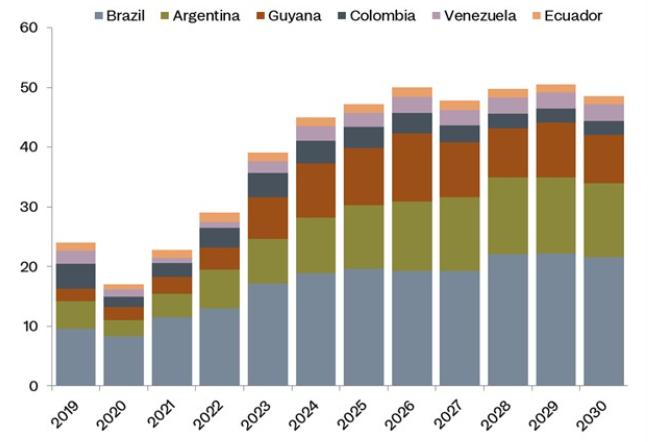
Across South America as a whole, energy consultancy Rystad’s analysis of oilfield investment shows some interesting patterns, as illustrated by Chart 3 (below). Investment in Argentina has spiked since 2023, coinciding with the introduction of the Rigi framework, and Guyana has also seen rapid growth since 2019. Looking ahead, Brazil is set to maintain its position as the largest single recipient of oilfield investment in South America, followed by Argentina and Guyana.
Chart 3: Total investment in South American oilfields (US$bn), 2019–2030
Source: Rystad Energy Upstream Solution.
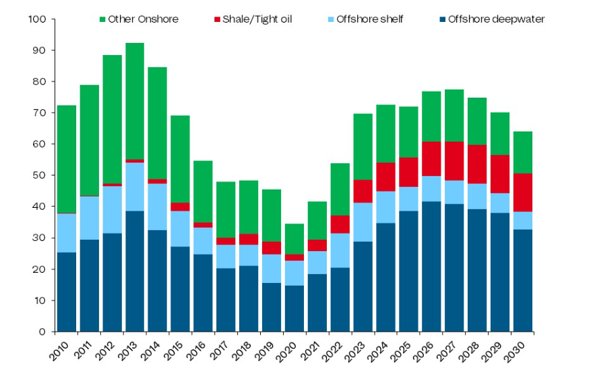
Chart 4 (below) reveals further detail on oilfields investments in the whole of Latin America over a longer time period, rising from 2010 to a peak of US$90bn in 2013 before falling sharply to a recent low in 2020. A strong recovery post-pandemic is expected to continue, with a peak in 2027 before decreasing slightly to 2030. The chart also shows how onshore investment has fallen away, with offshore deepwater now taking the largest share and shale attracting a significant proportion of investment.
Chart 4: Annual Latin America spend by supply segment (US$bn), 2010–2030
Source: Rystad Energy Upstream Solution.
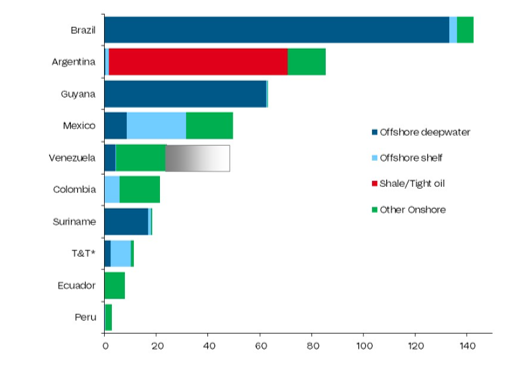
Chart 5 (below) illustrates Rystad’s forecast that more than US$400bn will be invested in the oil sector from 2026-2030. It breaks that figure down by country, with several standout elements to highlight. First, Brazil, Guyana, and Suriname will dedicate almost all of their investment for the period to offshore deepwater, with Argentina accounting for all of these countries’ shale investments.
Chart 5: Latin America spending (US$bn), 2026–2030
Source: Rystad Energy Upstream Solution.
Another thing to note is that Venezuela’s bar is mostly greyed out, reflecting the fact that investment is contingent on political and economic developments in that country discussed in the next case study.
In the gas sector, Guyana, Suriname, and Argentina all feature among the top Latin American candidates to benefit from growing demand for LNG identified by the International Gas Union (IGU) in a report published at the beginning of June. The IGU highlights the fact that the region accounts for only 5% of global natural gas production, despite its vast reserves, and the IGU argues that gas projects can be a key contributor to the energy transition due to the fact that emissions are lower than oil.
Securing natural gas supplies has become a strategic priority for many countries around the world, particularly in Europe, given the recent ban on purchases from Russia in the wake of the country’s invasion of Ukraine and the ongoing disruption to supplies from the Middle East due to the war with Iran. This increases the likelihood of further investments in LNG projects in Latin America, with the IGU also highlighting Peru and Venezuela as potential beneficiaries, although significant uncertainty remains around Venezuela’s ability to realise this potential.
|
Home grown NGOs also encountered difficulties as they grew or adjusted to changing circumstances. This has applied, for example, to the Mothers of the Plaza de Mayo, one of the most iconic and long-lasting civil society organisations in the region. The organisation came into existence in Argentina over four decades ago in April 1977 when a group of mothers of young victims of the Argentine military dictatorship began demonstrating every Thursday, wearing white headscarves, in the square in front of government house (Plaza de Mayo). Their main demand was that their children, many of whom had been kidnapped and tortured and whose fate was unknown, be returned to them alive. They served as a rallying point for opposition to the military regime, accused of killing up to 30,000 citizens (the number is disputed). The government responded by calling them the Plaza de Mayo locas (literally, madwomen, but the word is also used in slang to mean prostitutes). Some of the original Mothers were themselves kidnapped and murdered by clandestine military units.
After the return of democracy in 1983 the mothers continued holding their weekly marches, lobbying for the prosecution and sentencing of members of the former military government on charges of crimes against humanity (the key leaders were eventually sentenced, many to life imprisonment, in 1985). The Mothers were also intensely active in the search for their grandchildren, many of whom had been given away for adoption after their parents were killed by the military.
In 1986 the movement split into two separate groups. One, called Madres de la Plaza de Mayo-Línea Fundadora focused on developing human rights legislation, continuing to search for and identify the bodies of their disappeared relatives, and to trace adopted grandchildren. The other, called Asociación Madres de la Plaza de Mayo and led by Hebe de Bonafini, one of the higher profile leaders, took a more activist political line. A third group is known as the Grandmothers of the Plaza de Mayo. Bonafini’s wing of the movement aligned itself closely with the faction of the Peronist party known as kirchnerismo, loyal first to President Néstor Kirchner (2003-2007) and then, after his death, to his widow and successor in the presidency, Cristina Fernández de Kirchner (2007-2015).
Bonafini in particular earned a reputation for outspoken and controversial views, attacking Argentina’s centrist or centre-right governments and reacting to the 11 September 2001 attack on the twin towers in New York by saying she was “happy” that the United States, which she described as “one of the most terrorist of all countries”, was for once on the receiving end of acts of violence. She also spoke out in support of ETA, the Basque separatist guerrilla group in Spain. Her friendship with president Fernández de Kirchner also led to a rapid, and with the benefit of hindsight, imprudent expansion of the organisation, which had developed radio and TV programmes and the beginnings of a university.
In 2005-2011 it was involved in running a large government funded social housing programme called Sueños Compartidos (Shared Dreams). Bonafini subsequently claimed that the financial side of the operation was entirely managed by Sergio Schoklender, a former convict she had befriended and treated almost like a son. Schoklender, along with his brother Pablo, had been tried and sentenced in the 1980s for murdering their parents in a high-profile case. Schoklender left the organisation in 2011; after that, Bonafini accused him of financial fraud. According to a subsequent investigation only 822 homes were built, despite the Mothers having received funding for 4,757 units. A report by the national audit office suggested at least US$52m had been illicitly diverted. Bonafini was briefly declared bankrupt in 2016 but legal proceedings against her have been inconclusive. She accused Schoklender of betrayal and the subsequent centre-right government of Mauricio Macri of trumping up charges against her for political reasons. The chequered history of the association is for some an indication of the dangers of excessive politicisation of NGO activity.
According to the Instituto Nacional de Estadística y Censos, the economy grew by 10.3% in the first half of 2011, compared with the same period of 2010. The fastest growing sectors are transport & communications sectors and construction.
In the second quarter, year-on-year growth was even faster at 11.3%. In this quarter agriculture did well (and so did almost everything, except dairying and hydro-electricity generation.
Exports: The same quarter the economy and finance ministry reported exports of US$246m in the first four months of 2011, down from US$266m in the same period of 2010. Gold has now become Panama’s leading export in dollar terms at US$28.3m from the first four months of 2011. This is followed by bananas (which represent US$27.4m): the banana sector is showing signs of recovery (up from US$22.8m in the same period of 2010) following the hurricane winds that had affected the Bocas del Toro banana growing region.
Inflation: In the year to August inflation was 5.3%.
Jacqueline Mazza is currently an Adjunct Lecturer in the Johns Hopkins University SAIS Latin American Studies Program. Previously she was Principal Labor Markets Specialist at the Inter-American Development Bank (1993-2014).
This telephone interview has been edited for length and clarity.
What are the biggest labour market challenges in Latin America and the Caribbean?
They’re actually pretty universal across the region. I put them on poor job quality. The principal problem is the large numbers of informal workers, which are at low labour productivity levels, and low wages that are associated with that low productivity work. Often what we talk about is the inability to move into higher quality work. The key labour market problem in Latin America is a human capital one. Latin America is a middle-income region, but it has the most stagnant labour productivity levels in the world.
What is your take on the progress of education reform in Latin America?
Education reform in Latin America has failed. We’ve been looking at these reform movements which just dance around the edges of what Latin America fundamentally needs. The only changes we’ve had is when you can take over a small subsystem of the education system by attacking some types of schools. One area of success in Mexico has been a particular technical school within its training system, to orient [them] more to business. It’s too small scale to affect the big picture of education quality, but it has been helpful.
If you were a businessperson looking to invest in Latin America, where would you do so?
It’s where you’ve seen this innovation in the technical training institutes. When they are ready to partner with the private sector you can get something much more systematic in terms of the skills needed by the private sector. Most of the Southern Cone and Andean regions have really achieved reasonable growth rates and sound macroeconomic policies. They are a good place to invest, it’s really a human capital problem that’s holding back their ability to be much more competitive in a global market. One of the areas for investment is for domestic consumption in food and services as well as to follow the development of a regional labour market with your investments. That is to look to replicate investments in one country and facilitate the market across borders. Another is countries like Costa Rica, Uruguay, that have begun to develop high tech parks and manufacturing. Most of the region is in good shape, it’s just that the Costa Ricas and the Uruguays, that is small economies where the level of security is very high, are very attractive for niche investments.
What should labour market priorities be?
We spoke about rural indigenous women being the most troubled part of the labour market along with afro-descendants. In that lower-wage sector we have a real issue with those left behind in the labour market then contributing to crime and insecurity. What Latin America really needs from a labour market perspective is to intervene on those who need the skills upgrade the most and target those who have been left out so far.
Why are workers skills not matched to jobs?
There is blame on all parties. There is a long history of developing methods and curriculums for training that are highly outdated, but the other part is the private sector in Latin America poorly articulates what it needs in terms of skill development. The key in any training system reform is this public-private collaboration that continually changes and adapts.
How does Latin America and the Caribbean compare to other developing regions of the world?
I think it’s the flexibility and the ability to be more forward thinking outside of your political box. In all of Latin America they change programmes just because it was the former government’s success story, and as a result we disconnect from the programmes that were effective for political reasons. South East Asia does not have the institutional rigidities that we can see in Latin America and the Caribbean. They have more longer-term, more forward-thinking governments in terms of these institutional changes and they have really taken off in terms of educational reform and in more strategic investments, that is marrying training with sectional growth industries.
How can labour markets be improved?
The region needs to begin to think of its labour market as more regional than as individual countries, particularly when we are talking about demand industries and the ability to move across countries. This is particularly true for smaller markets such as healthcare in the Caribbean. Some markets are so small that your school system and your university system can’t train to the quality that you need. You need more regional approaches to sectoral development and then the ability of workers to work across countries. In Latin America we restrict particularly low-skilled and middle-skilled migration. They allow the most high-skilled migration inter-regionally, but what we need is to be able to advance careers and skill development by working across regions.
What other factors should be considered when it comes to labour markets?
The growing role of crime and insecurity in Central America, where the outflow of workers due to insecurity is so bad it represents a problem for new investment. Security is a labour market constraint, even to the extent of people being able to get safely to employment. The other issue I wanted to raise is demographically Latin America has had what we called for a while a youth dividend, but those trends are changing. The population is getting older and the average population growth rate is slowing down, so the labour force is not going to be growing substantially. When Africa looks at its growth, it looks at a bulging working age population. In Latin America it won’t be the plus for economic growth that it has been in the past.
As our Special Focus on Mexico shows (see below), notwithstanding intensifying external and internal pressure most governments in Latin America, along with the judiciary, the police, and other state agencies, are still struggling to respond adequately to corruption.
In a year-end blog, John Dunn Smith, Assistant Editor of the Inter-American Development Bank’s research department, examined whether governments and civil society organisations (CSOs) might work together, cooperatively, to help tackle the scourge of corruption in Latin America.
Describing corruption as “a public enemy” Dunn Smith looks for more dynamic approaches to dealing with it. As he observes, the public resources available to monitor the implementation of public works projects at state or municipal level, for example, are finite. National government agencies involved in enforcement may have some legal teeth, but they typically lack resources for monitoring. As such they tend to be reactive rather than proactive. Against this, civil society organisations, while often having a strong interest in monitoring public sector activities, lack teeth. They have no enforcement powers (and invariably also lack resources).
Dunn Smith points to a recent research project led by a Columbia University researcher and former IDB visiting scholar, Paul Lagunes. This project, carried out in Peru between August 2015 and May 2017, examined what happened when a CSO and a national government agency informed local authorities that their use of central government funds for infrastructure projects was being monitored.
As Lagunes set out in a November 2017 Working Paper for the IDB*, in the first stage of the project officials in randomly selected districts across Peru received a letter stating that their expenditure on the execution of small infrastructure projects (e.g. roads, pavements, municipal sports grounds etc.) – which were being funded by the central housing ministry in Lima – was being monitored. One letter was sent by Proética, a CSO that serves as Peru’s chapter of Transparency International. Proética has national recognition in Peru and is demonstrably independent of the government. Shortly thereafter, district officials received a second letter from the national government’s auditor, the Controloría General de la República, notifying them that it was aware of Proética’s monitoring activities. A second stage consisted of a follow-up letter from Proética, then another one from the Controloría, reminding the district that the monitoring was ongoing.
According to Lagunes, this intervention yielded notable results. Projects in ‘treated districts’ (i.e. districts that had received the letters) registered a 51% reduction in final construction costs compared to projects in control group districts (i.e. districts that did not receive the letters).
The reduction, moreover, was found to have been delivered without any perceptible change in the quality of the completed works. Lagunes, along with Proética, verified this by examining the condition of some of the works projects, both first hand and in some cases using satellite pictures of the kind available from Google Earth. Lagunes thereby concluded that the cost reductions in the infrastructure schemes had been achieved by curtailing unnecessary – and quite likely some dubious – outlays.
The project also found that the monitoring scheme appeared to have had a positive impact in neighbouring districts. In other words, other districts, aware of the monitoring, also took a more careful approach to expenditures.
While this was a relatively moderate field study, the author concluded that there were some clear lessons for policymakers. That is to say, when government agencies and CSOs combine anti-corruption efforts, the resulting social benefits significantly outweigh the costs.
However, and as Dunn Smith also noted, cooperation between government and civil society can be tricky. “Mutual relations are often tense and even conflictual”, he notes. Trust is very often sorely lacking between civil society and governments and, in Latin America, government-civil society relations are particularly weak. However, when this kind of positive collaboration does take place, corruption almost certainly can be reduced, and significantly.
*Guardians of Accountability: A Field Experiment on Corruption & Inefficiency in Local Public Works. Paul Lagunes, Assistant Professor, School of International & Public Affairs, Columbia University. November 2017. Available at: https://www.theigc.org/wp-content/uploads/2017/11/Lagunes-2017-Working-paper.pdf
The patchwork of small nations that makes up Central America has not attracted the same interest from digital commerce entrepreneurs as the larger markets in Latin America.
Along with a lack of urban areas with the population of Mexico City or Sao Paulo, infrastructure in many Central American nations needs serious work. The safety of delivery services also presents a problem, as shown by multinational companies suffering extortion in the Northern Triangle countries.
Despite the difficulties there have been signs of life. Including a Central American Digital Commerce Platform (PDCC) agreement, which was signed in October 2017. Supported by Inter-American Development Bank (IDB) and the European Union, the platform will work to boost regional trade and improve conditions for ecommerce. In June 2018, the Electronic Commerce Guild (Grecom) formed in Guatemala, and the Guatemalan Chamber of Commerce launched an online platform named Cyberdays in October 2019. Guatemalans placed US$900m in orders from international sellers in 2018, according to Grecom, while national sellers received orders worth just US$82m. Cyberdays aims to drive growth in ecommerce for Guatemalan companies, but the challenges faced by the sector are underlined by the fact that the national postal service shut down in 2016. It restarted in September 2019, but only with a limited service.
Crisis-stricken Nicaragua might not seem like a hotspot for ecommerce, but research from Hootsuite reveals that 6.7% of consumers will make an online purchase in 2019, up from 2% in 2018. Costa Rica, which has been more politically stable and safer than Central American averages for years, has good telecoms networks and smartphone penetration, driving the development of ecommerce. Amazon ships directly to Costa Rica, and Chinese company Wish.com has become a major player.
Panama
Details based on indicators above:
Income: US$13,100 GNI per capita
EGDI: 0.6092 (85 of 193)
IIE: 55 of 100 globally
LPI: 3.28 (38 of 160)
DB: 66.12 (79 of 190)
In Panama, 19% of the population made online purchases in 2018, according to World Bank Global Financial Inclusion Data, a 6% increase over the previous year. The country generated 50% of ecommerce for the whole of Central America, according to Visa executive Renato Rocha. The region as a whole is gaining trust in online payments, with 14% growth in Visa payments for ecommerce from April 2018-March 2019. In Panama the growth rate hit 18%, with the most important sector airline tickets. In terms of internet penetration, 70% of the population can get online, according to the Panamanian Observatory of Information and Communication Technology (Optic). Fifty-eight percent of Panamanians had access to a laptop or desktop in 2018, up from 55% the previous year, and 63% had access to a mobile phone in 2018, up from 61% in 2017.
The number of ecommerce buyers increased 12% in 2018, and the same growth rate is forecast for 2019, with 58% of internet users planning to make an online purchase in 2019 and 2020. Logistics company DHL, which is a major player in Panama and operates the largest delivery hub in Central America, says the average ecommerce purchase is worth more than $200. DHL’s Latin America airline is based in Panama City, and the company was the first international delivery company to start operations in most Central American countries.
Panama’s strategic position between North and South America is one advantage when it comes to developing ecommerce. The dollarised economy is another, facilitating international transactions. And the government is doing its best to boost developments. In July 2019 it announced the creation of the first digital free trade zone in the Americas with the aim of attracting technology firms to the country and driving growth in the digital economy. Minister of commerce and industry Ramón Martínez said the BPOS Panama Free Zone will generate up to 1,500 jobs in fields related to digital commerce.
The private sector is also trying to drive growth in the sector. A partnership between Google, the Panamanian Chamber of Commerce, Industry and Agriculture and the Micro, Small and Medium-Sized Business Authority (Ampyme) saw the development of a training course called Garage Digital, aimed at small and medium-sized businesses that want to develop ecommerce capabilities. Starting 25 September, the programme is open to companies that employ 280,000 people, or 24% of the economically active population, according to the trade body. Google believes that Panama presents the best digital opportunities of any country in the region, but a lack of human resources is holding back development.
Another potential problem is legislation governing ecommerce. Analysts claim that current Panamanian legislation is not adequate, and companies are currently operating based on interpretations of the law. According to industry expert Alex Neuman, existing digital commerce operations may not be operating within the law. Panama signed the first ecommerce law in Central America in 2001, but it now requires an update.
Encouraging cross-border ecommerce is as important in Central America as anywhere else, but for the moment investment from Mexico does not look to be forthcoming. According to Eric Pérez-Grovas, there is little appetite to expand business south among Mexican ecommerce industry players. “I get the impression that there is more interest in completing market penetration in Mexico,” he said, underlining that ecommerce represents just 3% of the total retail market. “For the moment Mexican entrepreneurs are more interested in the remaining 97% of the Mexican market than working in Central America or any other market.”
According to an estimate made by the United Nations in 2018, since it began the US financial and trade embargo has cost Cuba over US$130bn in lost revenue. By mid 2024, six decades-plus after the initial imposition of sanctions by the United States, three very basic things seemed to be true. First, sanctions have deeply and adversely affected the Cuban economy. Second, they have not demonstrably eased the repressive political climate on the island or assisted any moves towards a more democratic system. Third, sanctions seem to have become ossified and politically self-sustaining. Amid the 2024 US election campaign, for example, none of the frontline candidates is proposing a review of their effectiveness or any kind of fundamental reset.
On 1 December 2006 Felipe Calderón took office as Mexico’s new president. Ten days later he metaphorically declared war on the drugs cartels and put the army at the centre of a major security clampdown. Calderón’s decision to militarise the fight on drugs was one of the most consequential, and some would say, the most catastrophic taken by any recent Mexican government. Put bluntly, he claimed that in the six years of his term in office he would improve citizen security and reduce the murder rate, and he failed. Each of the two subsequent presidents, Enrique Peña Nieto in 2012 and Andrés Manuel López Obrador (AMLO) in 2018, made the same promise and achieved the same terrible result: failure.
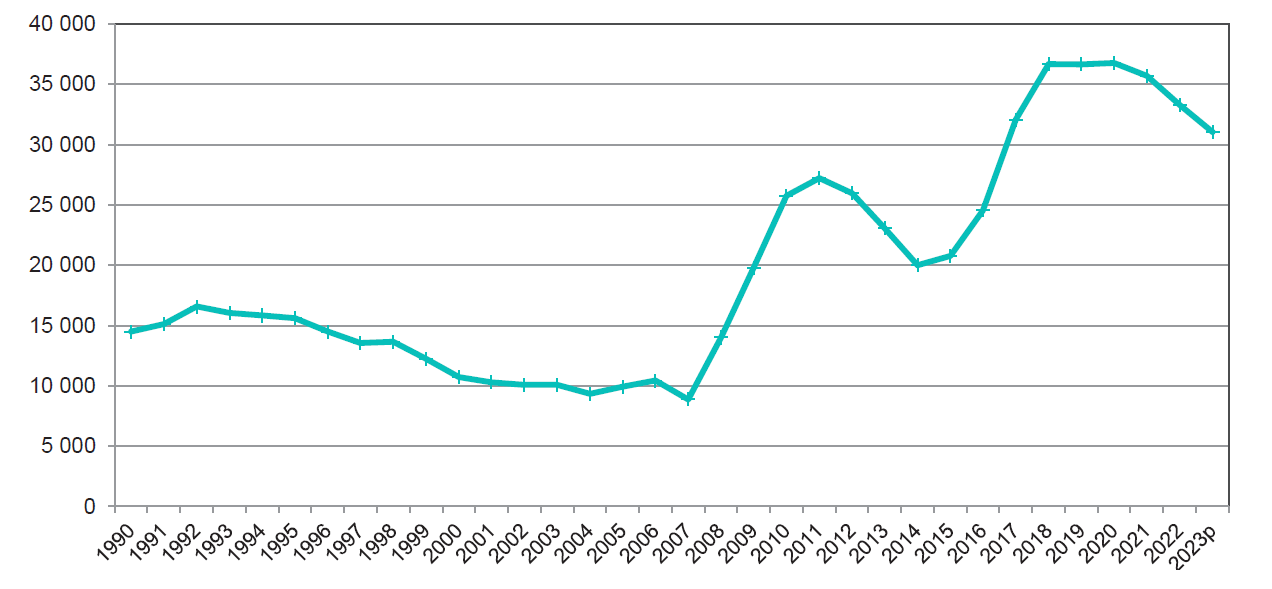
Now, on 1 October 2024, Claudia Sheinbaum has become the fourth consecutive president to make the same promise. Solely based on crude numerical probability the risk is that she too, like her predecessors, will fail. Certainly, security will be one of the top yardsticks for measuring her government’s performance since it cuts across so many other issues such as the economy, migration, public health, human rights, and the rule of law. A sense of the severity of the problem is given by the fact that since 2006 when the ‘war’ started, 431,000 Mexicans – nearly half a million - have died from the violence. In 2012, Calderón’s last year in office, the annual homicide rate was 25,967, more than double when he started. In 2018, the last year of Peña Nieto’s term, it had risen further to 36,685. Final numbers for 2024, AMLO’s last year in office, have yet to be published, but are expected to be over 30,000. More people will have died under AMLO than any other Mexican presidency. The ratio of murders per 100,000 inhabitants stands at 24.0. one of the highest rates in Latin America.
Number of homicides nationwide, 1990-2023 (total)
Source: Source: Inegi
Note: Preliminary figures (January to December 2023), with a cut-off date of July 24, 2024, because the processes have not yet concluded generation of Registered Death Statistics
It should be noted that for multiple reasons drug-related violence is extremely difficult to eradicate, whichever government is in power. The cartels, often described as drug trafficking organisations (DTOs), smuggle cocaine, fentanyl, heroin, marijuana, and methamphetamines into the United States as well as running other illicit businesses including extortion and people trafficking. US demand for drugs is massive and price inelastic. One research team found that US citizens spent an estimated US$153bn on illicit drugs in 2017. With such massive demand, when a particular DTO is broken up or neutralised by law enforcement, other sources of supply quickly come into play. The DTOs appear to be in constant flux battling between themselves to control supply, trafficking routes, and distribution networks. Violence tends to spike when rival groups are contesting control of specific geographical areas, and to ebb when a single cartel is dominant.
During the Calderón presidency tens of thousands of army troops were deployed across the country to engage the cartels. The president deliberately avoided using state and municipal police who he regarded as corrupt. Partly at the suggestion of the US he followed a kingpins strategy focused on capturing or killing the top leaders. In fact, 25 of the top 37 drug kingpins were neutralised in this way, but new leaders rapidly emerged. Peña Nieto on the other hand sought to place greater emphasis on protecting civilians and intelligence-gathering. But he too relied heavily on the military and the Federal Police. He began a process designed to create a new gendarmerie. While homicides fell during the first years of Peña’s sexenio, they then picked up intensity again. Security experts have suggested that this was a reaction to the kingpin strategy, with fragmentation and turf wars now being fought by a new generation of criminal leaders.
In 2018 AMLO offered a new approach. The key policy of his incoming government was described as ‘abrazos, no balazos’ (hugs not bullets) and was focused on social spending and job creation. The idea was to provide alternative sources of livelihood for young men who would otherwise be recruited as sicarios (paid killers) for the cartels. In effect this was an attempt to tackle the socio-economic root causes of the drug war. There was also initially talk of legalising some drugs and offering possible amnesties to lower-ranking cartel members. However, these were not pursued. In addition, the military appear to have been instructed to remain in barracks and not to pro-actively confront the cartels. These left certain areas of the country completely unprotected. In a notorious incident in October 2019 the security forces seized Ovidio Guzmán López, a senior leader of the Sinaloa cartel, only to release him when surrounded by cartel gunmen with superior fire power.
There was also a major change in the new president’s thinking. As a left winger, for most of his career AMLO had opposed the use of the army in the fight against drugs, accusing it of terrorising rural communities and causing human rights violations. But in the years immediately prior to his election AMLO seems to have had a change of heart. He ordered the creation of a new force, the National Guard, which was initially staffed by the military and by members of the armed forces and was to be focused on fighting the cartels. Despite complaints from civil society and opposition groups AMLO insisted on reforming the constitution to place the National Guard under military control (via the national security ministry Sedena) which is led by the army’s commander in chief.
Although the homicide rate did dip a little at the tail end of AMLO’s administration, he failed to achieve a sustainable reduction. Various factors were in play. The hugs-not-bullets policy, by its very nature, would take many years to have an effect. The National Guard was at the time still in formation and was partly diverted to other duties – among them, increasing northern and southern border patrols in response to US pressure to reduce migrant transits through Mexico. Security cooperation with US law enforcement deteriorated after various incidents, including the arrest in the US on drug and money laundering charges of former Mexican defence minister General Salvador Cienfuegos in October 2020. As a result of all these factors the AMLO administration was widely seen as being passive and purely reactive to the spread of cartel-linked violence.
In the first week of her presidency Sheinbaum and her security minister Omar García Harfuch set out the new government’s security policy, which they said would be based on four pillars: these were first, to address the root causes of crime; second to consolidate the National Guard; third to strengthen intelligence and investigation; and, fourth to achieve absolute coordination between state and federal authorities.
The fist pillar appears to be a continuation of AMLO’s hugs-not-bullets approach, with Harfuch saying the government would focus on supporting vulnerable families, reducing poverty and inequalities. The National Guard, currently numbering 133,000 members, will now report directly to the army commander (who is also defence minister). It is likely to be further strengthened. As Harfuch put it, the Guard will be a “police institution” that nevertheless follows “military doctrine” and “military discipline”. President Sheinbaum said she did not intend to return to the war on drugs or to extrajudicial killings, saying that her government would rely on “prevention, focusing on the root causes, intelligence and presence”.
The new government says better intelligence will allow law enforcement not just to react to crimes but to anticipate them as well. The aim, Harfuch said, was to “analyse data, identify criminal patterns, and understand the dynamics in the areas with the highest incidence of crime”. A new intelligence division would be created within the security ministry.
Looking forward, Sheinbaum faces an unenviable task. As noted, the relentless demand for illicit drugs from the US will continue to fuel the cartel wars. In fact Sheinbaum has taken office amid a surge of fighting between rival internal factions of the Sinaloa cartel. Whether Donald Trump or Kamala Harris win the US election, a difficult re-set of US-Mexico security collaboration will be required. An ongoing deficit in security policy is the weakness of state and local police forces, and the wider criminal justice system which currently lacks the ability to efficiently investigate, capture, bring to trial, and sentence the country’s narco-criminals. The already weak criminal justice system may be thrown into further disarray by the reform of the judiciary and the introduction of inexperienced elected judges.
Ahead of the arrival on 9 March of a mission from the International Monetary Fund (IMF) for the first evaluation of the country’s new stand-by agreement (SBA), the Honduran finance ministry reported that it had beaten last year’s fiscal deficit target.
The 2014 deficit came in at 4.5%, compared with the budgeted 5.2%. Finance Minister Wilfredo Cerrato Rodríguez says that despite the better-than-expected result the government will stick to its tough 2015 deficit target of 4.0% of GDP. The result is a boon for President Juan Orlando Hernández, who took office in January 2014 promising to restore stability to the US-facing economy. The centre-right administration inherited a record fiscal deficit of 7.9% of GDP in 2013.
Under a critical IMF credit facility totalling US$187m inked in December 2014, the Hernández government has committed to reducing the deficit to 2% of GDP by 2017. It is front-loading major public sector cuts (and tax increases) now, in the hope of an economic recovery by the next general election due in late 2017.
The immediate plan is to reduce central government spending by 10.4%, with major staff cuts last year at the state electricity and telecoms companies, Empresa Nacional de Energía Eléctrica (ENEE) and Hondutel. The Hernández government has also committed to more private participation in these long-struggling state utilities, albeit progress to date has been slow.
Efforts to improve tax collection system are faring better. The total take rose almost 18% to HNL69.8bn (US$3.32bn) in 2014, from HNL55.9bn (US$2.66bn) in 2013. The main sales tax, Impuesto sobre Ventas (ISV), was lifted to 15% from 12% last year, and revenues rose by 30% as a result. Other revenues (tax and non-tax) were either stagnant or declined slightly, however.
The left-wing opposition Libre is strongly critical of what it says is regressive taxation in support of the fiscal consolidation, however with the next general election not due until late 2017, the ruling Partido Nacional is calculating that the adjustment will have paved the way for stronger economic growth by then.
A continued gradual recovery in domestic economic activity in 2015, helped significantly by lower oil prices for this fuel-importing country, will be supportive of the government’s adjustment efforts. Inflation was 3.7% year on year in February, down sharply on 5.7% a year ago, according to the central bank (BCH).
The monthly rate of 0.7% followed deflation of 0.4% in January. Inflation in February was driven primarily by a sharp (8.3%) increase in private education fees, followed by the key food and non-alcoholic drinks sector, which posted monthly inflation of 0.5%, followed by clothing & shoes and the health sector.
Notably, the housing, water, electricity, gas and other fuels sector registered monthly deflation of 0.3% in February, on lower household electricity costs and sharp falls in kerosene and liquid natural gas prices. Likewise, while monthly inflation in the transport sector was 0.4%, on an annual basis it registered strong deflation of 4%, on the back of the sharp fall in fuel prices over the past year.
Exports were valued at US$4.0bn in 2014, up 4.7% over 2013, according to the central bank (BCH), led by agri-industrial exports (notably coffee, palm oil and shrimp), which accounted for 49.7% of the total, followed by manufactured items (24.6% of the total), agricultural products (17.3%) and mined metals (mainly gold, 6.6%). Total imports rose 1.7% to US$9.3bn, led by increased demand for construction materials, capital goods and intermediate inputs, suggestive of recovering economic activity. Fuel imports came to US$1.97bn, down US$205m on the previous year, thanks to a 6.7% fall in the average fuel import price, according to the BCH. The still-large trade deficit of US$5.24bn was stable on the previous year.
Not surprisingly, perhaps, the crippling impact of the Covid-19 pandemic has led many to question traditional approaches to fiscal management. While some consider the pandemic to be a one-off external shock, unlikely to be repeated for a generation, others argue that the world will actually see a quickening pace of similar disruptive events, whether they be new and destructive diseases or extreme weather events connected to climate change, on top of natural disasters such as earthquakes. The future cannot be accurately predicted, but for governments that were unprepared for Covid-19, it seems reasonable that they should now try to get ahead of the curve, trying to develop robust fiscal policies to manage future disruption.
One approach was mapped out earlier this year in a research paper and linked blog by former Colombian finance minister Mauricio Cárdenas (2012-2018) along with IMF economists Luca Antonio Ricci, Jorge Roldos, and Alejandro Werner. Given the crippling impact of Covid-19 and pre-existing economic imbalances (which led to mass protests in some countries in the region in 2019) the authors suggest LAC countries could benefit from negotiating “a broad fiscal pact”. This would have two objectives: first, to continue supporting households and private sector companies during the remaining stages of the pandemic, and, second, to meet medium term challenges to broaden the social safety net and improve the quality of public services, while at the same time ensuring the sustainability of public finances and building fiscal space to cope with possible future shocks.
The blog recognises that after the initial pandemic shock in 2020 more support will be necessary in 2021 and 2022, because LAC countries are still facing high rates of contagion and death, vaccination programmes are progressing slowly, and the economic recovery is “likely to be partial, uncertain, and not strong enough to help those affected by the twin public health and economic crisis”. It also suggests that fiscal space is “not set in stone” meaning there is some flexibility in its use. To support this Cárdenas et al note that the injection of fiscal stimulus in the 2020 pandemic has been much larger than during the Great Recession of 2007-2009, “suggesting that fiscal space was not as tight as suggested by public-debt-to-GDP ratios”.
The blog says that in the medium-term fiscal policy should have an “anchor” consisting of a series of deficit/surplus targets, similar to the way many Latin American countries now have monetary policy anchors, with central banks setting a target band for the annual inflation rate, and raising, lowering, or holding stable benchmark interest rates to nudge actual inflation closer to the target rate. In the case of fiscal policy, the anchor would include pre-announcing future tax and expenditure measures, and credibly communicating a path towards regaining fiscal space to reassure investors. Fiscal councils and multi-year budgeting frameworks might also contribute a degree of additional credibility to the process. The blog notes that while LAC governments have adapted their fiscal policies quite flexibly in response to the external shocks of the last 15 years, they have been notably less successful at bringing their fiscal balances back down to more normal levels once the shocks have passed. In other words, there has been a consistent upward bias for public debt levels.
The current situation is not without opportunities. One of them is that global conditions up to and during the pandemic have favoured comparatively low interest rates. This means that, despite an increase in debt, interest payments have fallen, giving LAC governments a little more room for manoeuvre.
Low for longer – Debt has increased, but interest payments went down (percentage of GDP)
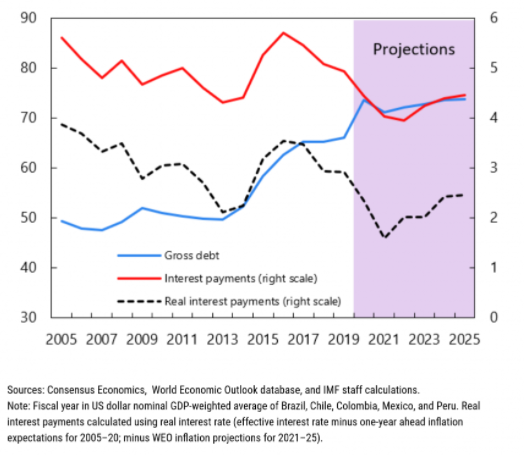
The authors make a particularly interesting point about politics and fiscal management. They believe it is necessary to begin a public dialogue on the need for legislation to revise pension, health, and educational systems. At a technical level, they believe the current fiscal system in the region is not progressive enough for society’s preferences, as expressed in recent social protests and political developments. The tax and cash transfer system across the region is less efficient than in advanced economies in terms of its ability to reduce income inequalities. Therefore, change is needed. The do-nothing option is risky because it leads to low growth, social discontent, and political polarisation. Taking action also has risks, but the proposed fiscal pact is seen as “the best way for catalysing major changes that require broad social consensus and political cohesion around several crucial dimensions of countries’ public finances”.