All Categories

Subcategories

  • What comes next?

    Patrick de Courcy 14 January 2025 Hits: 4235

    Water scarcity, defined as a composite measure of baseline water stress, seasonal variability, interannual variability, ground water table decline, and drought risk, is forecast to increase in the coming years as climate change intensifies, with higher temperatures and longer periods of drought interspersed with periods of very heavy rainfall that cause flooding and other issues. 

    In the Andes, higher temperatures will mean glaciers shrink further, reducing supplies from meltwater, while in Central America dry areas are forecast to get drier, while wet areas become wetter.

    This will affect crop yields, impacting the economy in those countries with large agricultural export sectors, and encouraging migration in areas where subsistence farmers rely on rain-fed agriculture to produce staple crops. 

    One example is the Dry Corridor in Central America, where the Economic Commission for Latin America and the Caribbean (Eclac) estimates production losses of up to 22% of agricultural GDP by 2100. 

    Migration will increase as crop yields decrease, driving people to move to urban areas as well as heading north to the US. More urbanisation will concentrate demand for water in cities, and many new arrivals will end up living in informal settlements without access to running water or sanitation services, exacerbating health risks due to diseases such as dengue fever.

    Decreasing water availability will also make hydroelectric dams increasingly unviable, with significant implications for energy security. This is particularly true in Ecuador, Panama, and Paraguay, where hydropower provides more than 70% of electricity needs, as well as Brazil, Venezuela, Uruguay, and Peru, where that proportion is more than 50%, according to the International Energy Agency (IEA). In Ecuador, for example, studies project that hydropower generation will fall between 39% and 55% from 2000-2071.

    Although it will be tempting to recommission existing thermoelectric power plants in order to secure supplies, doing so while meeting climate commitments will mean that governments need to build out new generating capacity from renewable sources such as solar and wind.

    However the output from these variable renewable sources fluctuates depending on wind speeds or the amount of sunlight, meaning that electrical grids must be flexible and robust enough to deal with these peaks and troughs. This will require significant investment in electricity grids, which are complicated and expensive to upgrade, although improvements in battery technology could also help.

    These issues will result in further debates over the role of state-owned energy companies, which have flared up throughout the region. In Brazil, for example, disagreement over how much profit should be used to pay dividends or be reinvested in ambitious diversification plans led to the ousting of the CEO of the state oil company Petrobras in May, triggering a sell-off of the company’s shares that shaved over US$11bn off its market value. 

    On the demand side, population growth and the expansion of water-hungry industries such as mining and agriculture will increase pressure on resources as water demand is forecast to increase by 43% by 2050, the second-largest increase of any world region.

    Demand for the region’s critical minerals will continue to grow as the energy transition progresses, encouraging the development of more mines. Many reserves are found in dry areas such as northern Chile and northern Argentina, increasing the impact of operations on the local environment. 

    High global gold prices will also encourage mining, both legal and illegal. Nicaragua is one country to watch in this regard, with President Daniel Ortega granting myriad mining concessions to Chinese companies after formalising diplomatic relations with Beijing in 2021. Another is El Salvador, where President Nayib Bukele has said that he will lift a ban on metals mining introduced in 2017 in order to exploit the country’s gold deposits.

    Government plans to build out industries such as green hydrogen will exacerbate water issues, as will the increasing adoption of AI, which will drive demand for more data centres, and greater industrial use of water will increase contamination and impact water quality, increasing the cost of water treatment services.

    These issues will increasingly place households in competition with industrial water users, and increase awareness of the environmental impacts of certain economic sectors. Water will become a key political issue in an increasing number of countries, with the potential to spark social unrest.

    Some attempts will likely be made to impose stricter regulations on water use through updated governance, but sweeping reform processes will face stiff opposition from sectors that benefit from the status quo.
  • Geopolitical considerations/potential influence of multilateral climate commitments

    Abbi Dicker 09 July 2026 Hits: 395

    Looking beyond the region itself, expectations that the multilateral climate framework would drive a fossil fuels phaseout have diminished, with the United Nations COP30 climate summit in November 2025 underlining the reasons why. 

    Hosted by Brazil’s President da Silva, world leaders failed to agree on a roadmap to transition away from fossil fuels due to opposition from Russia, India, and the OPEC+ nations. In contrast, the COP30 declaration pledged to quadruple the output of “sustainable fuels” such as biofuels, biogas, hydrogen, and e-methane by 2035, an admission that fossil fuels will remain an important part of the energy matrix even if in low-emissions forms.

    And while the European Union (EU) pushed for a fossil fuel transition roadmap at COP30, and was part of a bloc that lamented that the summit had “missed its appointment with history” in terms of climate commitments, it has not used all of the tools available to it to pressure Latin American nations to favour renewables over fossil fuels in its direct relations with the region. 

    For example, the EU’s Carbon Border Adjustment Mechanism (CBAM), which came into force on 1 January and aims “to encourage cleaner industrial production in non-EU countries,” notably does not cover oil and gas. Although European refiners are lobbying for this to change, the current exclusion underlines that the EU has decided not to place any barriers in the way of fossil fuel imports from Latin America, likely due to concerns around energy security. And the EU trade deal with South America’s Mercosur bloc, which provisionally came into force on 1 May, may facilitate investment in fossil fuels projects by providing greater legal certainty and eliminating tariffs on machinery and chemicals.

    If Europe is choosing not to actively disincentivise fossil fuels, the US has been aggressive in pushing for the continued exploitation of hydrocarbons. During Trump’s second term in office he has developed what has become known as the “Donroe Doctrine,” a foreign policy framework that aims to assert US dominance in the Western Hemisphere. 

    This rests in part on favourable access to energy and other resources, as illustrated by Trump’s pledge to “take back” Venezuela’s oil and his formation of the National Energy Dominance Council, which has reportedly been liaising closely with the country’s new government in a bid to boost oil production.

    While the seizure and imprisonment of Maduro is the most extreme example, US relations with Latin America have become increasingly violent and coercive. Washington has also shown a growing disregard for multilateral frameworks, notably not sending a delegation to the COP30 summit, and has preferred to negotiate bilateral agreements. The approach has relied far more on the metaphorical stick than the carrot, with a lack of financing and infrastructure investment on offer even to those nations that acquiesce in his demands. 

    This means that China continues to be the only viable solution for Latin American governments looking to advance the energy transition, and the country’s firms have slowly built up significant positions in strategic infrastructure throughout the region.

    In Brazil, Chinese companies own 304 power plants that contribute 10% of total generating capacity and the State Grid Corporation of China operates around 12% of the country’s transmission infrastructure. In total, China has invested US$60bn in public energy finance in Brazil, compared to just US$472m for the US. State Grid also controls more than 57% of Chile’s energy distribution system, and in Peru, Chinese firms control 100% of electricity distribution in the capital, Lima.  

    In addition, the conflict in the Middle East is accelerating this process, with concerns over energy security driving investments in renewables as a hedge against oil price shocks, as even oil producing countries in the region lack the refining capacity to meet domestic demand and are therefore still exposed to fluctuations in the global market: Chinese suppliers are the only ones that can provide the necessary equipment at a price point Latin American governments can afford, with the US unwilling or unable to offer an alternative.

    But it is not all good news for Beijing, with Washington’s aggressive move to secure access to Venezuela’s oil bringing an end to China’s previous advantages. Nonetheless, it has built up considerable leverage by embedding Chinese firms in physical infrastructure following a sustained investment drive that hasn’t been matched by successive US governments. China has also become the top trading partner for many countries in the region, increasing its leverage over governments that may try to limit its investments or commercial activities due to US pressure.

    As a result, there is currently no geopolitical impediment to Latin American nations pursuing both fossil fuels and renewables development. The EU is, at least for now, not working to discourage fossil fuel exports, and the US is actively encouraging new oil and gas exploration. As for China, it remains a willing importer of fossil fuels, while its vast renewables industry supplies clean energy tech at affordable prices to anyone who wants it. The current system in fact rewards a hybrid approach: exploit oil and gas reserves for export to capture the economic benefits, while continuing the energy transition at home to reduce exposure to energy price shocks. Of course, this may change in future if the EU tightens restrictions or a future US administration pivots back to clean energy.

  • Panama: civil society vs political parties

    Patrick de Courcy 09 March 2022 Hits: 1751

    An important question concerns the role that NGOs may be able to play in a situation where citizens are losing confidence in democracy and democratic institutions. Arguably, this is exactly what has been happening in the region over the last ten years. Traditional or mainstream democratic systems seem to have been unable to provide workable solutions to a range of problems including crime, corruption, unemployment, poverty, and inequalities of income. Even countries widely regarded as stable democracies such as Chile have suffered angry waves of street protests. The two largest countries in the region, Brazil and Mexico, have populist leaders who have displayed openly anti-democratic tendencies.

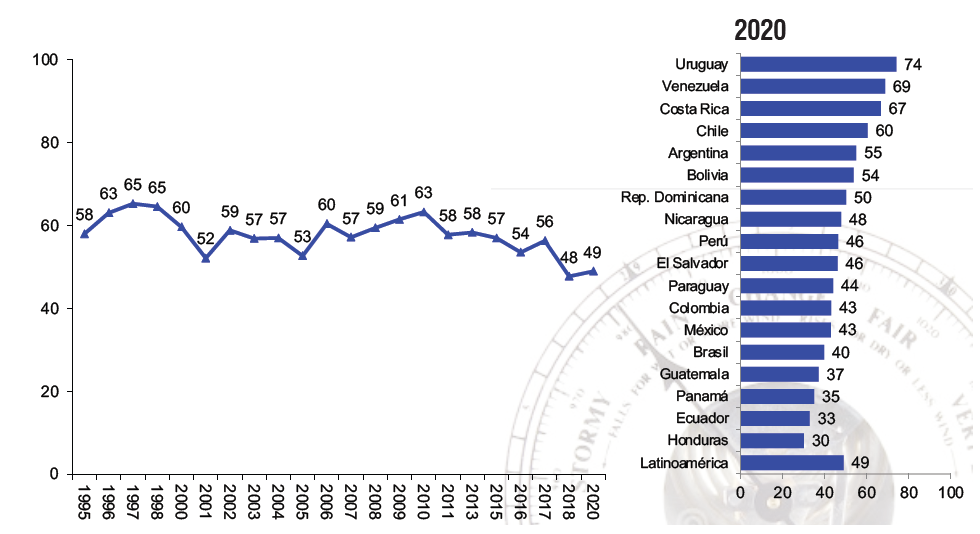
    Support democracy over all other forms of government
    Latin America 1995 – 2020 (% of positive responses)

    Source: Latinobarómetro

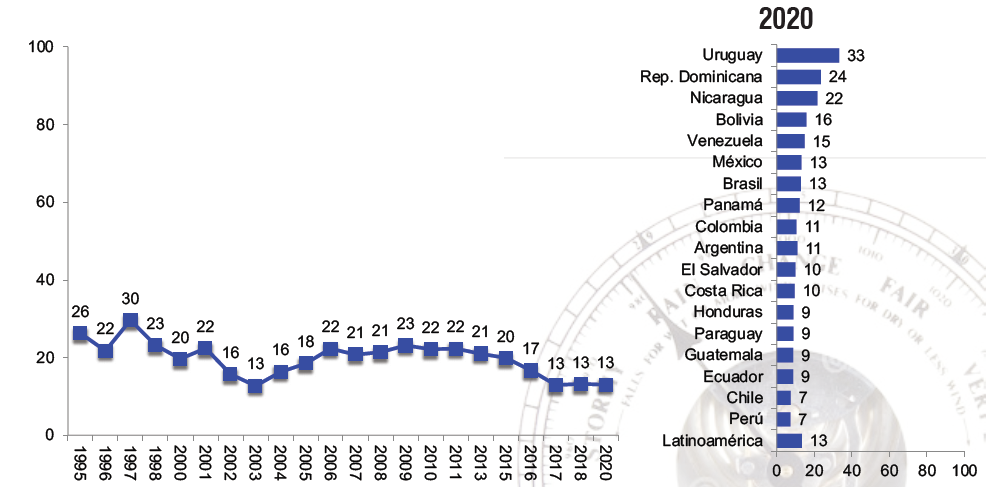
    Latinobarómetro, the opinion polling company that has been periodically tracking attitudes to democracy since the 1990s across 18 countries in the region, shows that the proportion of respondents who agree with the view that “democracy is preferable to all other forms of government” peaked at 63% in 2010 and has trended down fairly steadily since them to reach 49% in 2020. This means that today, less than half the total population of the region supports democracy. Among those who don’t support democracy, 11% have no opinion, 13% say they prefer authoritarian governments, and 27% pronounce themselves indifferent to the form of government that they live under. The opinion polls also reveal that political parties – a key component of democratic institutions are among the least trusted of all.

    Trust in political parties
    Latin America 1995 – 2020 (% of positive responses)

    Source: Latinobarómetro

    Across the region there is what could be called a serious confidence deficit. The only institution trusted by more than half the respondents is the Church (61%). Beneath it come the military (44%), the police (36%), and the presidency (32%). Lower down come the electoral authorities (31%), the government (27%), the judiciary (25%), Congress (20%), and, least trusted of all, the political parties (only 13%). The political parties have suffered a long process of attrition and decadence, often fragmenting into smaller units, with politicians held in contempt for their perceived opportunism, corruption, and lack of new ideas, ethical standards, or credible policies.

    This crisis in political representation is evident at many different levels. Truthfully or not, more and more politicians have tried to present themselves as outsiders not connected to the established political class. Abstention rates have gone up. Presidents have been increasingly prone to attempts at impeachment, some of them successful. Celebrities including TV and sports personalities have entered politics in an effort provide a less drab alternative to the discredited politicians. One candidate even ran for high office on the slogan that he was “neither corrupt nor a thief”.

    Could the decadence of politicians create an opportunity for civil society to play a more active role? Clearly this is a possibility that could happen in many different ways. Elected governments could co-opt NGO policies and personnel to help formulate and deliver their policies. If actors, business leaders, football stars, former judges and comedians can be elected, it is not inconceivable that a leading figure from the NGO world might join them. Such an alliance would be complex, since NGOs are largely one-issue, specialised organisations, working with a medium to longer-term perspective, while politicians are generalists with a short-term focus on the next elections.

    The case of Panama offers a glimpse of some of the issues that may be involved. By regional standards Panama is a wealthy country with solid institutions. It has enjoyed political stability for over three decades since the US invasion of 1989, which deposed General Manuel Noriega and allowed a restoration of civilian rule. In the first two decades of the 21st century Panama experienced some of the fastest economic growth rates in the region. Despite this, however, there was (and still is) a sense of deep malaise. Corruption and crime are significant and apparently ever-advancing problems. Support for democracy has steadily eroded, from a high of 75% in 1996 down to 35% in 2020 (much lower than the regional average). Only 12% of the population trusts politicians. Elected leaders have repeatedly promised to crack down on corruption, to reform the electoral system, and to reform the constitution, but none of these things have been achieved.

    In fact, in recent years various consultation exercises involving civil society designed to build support for change appear to have been blocked due to opposition from an entrenched political class in the legislature (Asamblea Nacional - AN). Ahead of the 2024 elections the national electoral reform commission (Comisión Nacional de Reformas Electorales – CNRE) a body in which political parties, the electoral tribunal (Tribunal Electoral – TE), business, trade unions, and civil society organisations are all represented, held 23 meetings and agreed a 323-article draft intended to be put forward to amend and improve existing electoral legislation. However, the AN immediately deleted 75 of the proposed articles, including provisions for better gender balance and specific rules to allow a larger role for independent (non-party) candidates. It also removed the obligation to submit campaign accounts, undermining election funding transparency and anti-corruption objectives.

    A separate consultation process, known as Pacto Bicentenario ‘Cerrando Brechas’, was also expected to meet resistance. Conducted mainly through an online portal, it captured 175,000 citizen proposals for reform, which regional and national committees then refined into 187 action points. According to the government, it was the largest consultation process of its type in Panama's history and involved 215,000 people. Most proposals related to requests for better infrastructure, followed by improved health, water, and education services. Other action points are to do with decentralisation, crime, the need to reform the constitution, environmental sustainability, socioeconomic inclusion, and access to technology. Although on paper President Laurentino Cortizo's government holds a legislative majority, some deputies in his coalition who normally support him, along with their colleagues in other mainstream parties, are unwilling to support major reforms, which will limit what the president can achieve. The likely outcome is that the president will only be able to deliver piecemeal reform during the rest of his term.

    The failure of mainstream politicians to deliver reform in Panama has led a proportion of the population to put their faith in independent candidates. In the 2019 presidential election Ricardo Lombana, an independent candidate, came third, with 18.8% of the vote. In addition, five independents were elected to the 71-seat legislature. Lombana is familiar with the NGO world, having been involved in an anti-corruption campaign called ‘Juego Limpio Panama’ (Play Fair Panama). He has declared his intention to run again in 2024 and has now created a political party, known as Movimiento Otro Camino.

  • Conclusion

    LatinNews 21 November 2019 Hits: 346

    As with all things digital, ecommerce in Latin America is in a state of flux. There are wide disparities in access between nations, as well as between different areas within nations, and plenty of untapped potential. Whether it is a lack of internet connectivity, poor physical infrastructure hindering deliveries, or a lack of adequate payment solutions, most Latin American nations have plenty of work to do in creating the right conditions to maximise digital commerce.

    Entrepreneurs and investors should identify areas with large markets of connected consumers, where the big players like Amazon and Mercado Libre aren’t already dominating. Alternatively, look for businesses that can help dominant companies meet pressing challenges such as logistics and payments.

    Concern over macroeconomic performance pervades the region, already one of the slowest growing in the world, due to a wave of recent unrest. However, the examples of Argentina and Nicaragua show that ecommerce has proven resilient in the face of tough economic times. Buying online is here to stay, and it could provide an engine for business in a region that appears to need as much help as it can get.

  • Venezuelan embargo – recent timeline

    Patrick de Courcy 12 August 2024 Hits: 1252

    As in the case of Cuba, US sanctions against Venezuela have a deeply ideological background. Venezuelan political leader (and army lieutenant-colonel) Hugo Chávez (1999-2013) who had previously led military rebellions but was ultimately put in office by democratic elections, proclaimed a “Bolivarian revolution” which rejected what he described as US imperialism and followed a radical programme based on redistributing oil revenues to favour the poor while nationalising and expropriating leading private sector companies, including many from the US. Despite its democratic mandate the new government rapidly did away with checks and balances, modified the constitution, and consolidated tight and dictatorial political control of the country.

    • March 2015: The US imposes broad economic sanctions against Venezuela, citing human rights violations, civil unrest, and regime instability.
    • August 2017: US bans transactions relating to newly issued debt by state oil company Petróleos de Venezuela (PdVSA), as well as other new debt or equity issued by the government. US individuals and/or companies face a ban on facilitating profit distribution from, or to, entities controlled by the Venezuelan government.
    • March 2018: US prohibits all transactions involving digital currency, coins or tokens issued by the Venezuelan government.
    • May 2018: US prohibits its nationals and companies from dealing in debts owed the Venezuelan government, portraying the move as partly motivated by anti-corruption policy.
    • January 2019: Washington supports new anti-government strategy of proclaiming opposition leader Juan Guaidó as interim president. As part of Donald Trump’s programme of maximum pressure the administration recognises Guaidó as the legitimate leader of the country and re-writes existing sanctions so that they apply not to him and his parallel administration, but to the de-facto regime led by President Nicolás Maduro.
    • March 2019. OFAC and the Treasury Department sanction Evrofinance Mosnarbank, a Russian and Venezuelan state-owned owned bank that has “materially assisted” PdVSA. Treasury Secretary Steven T Mnuchin says: “This action demonstrates that the United States will take action against foreign financial institutions that sustain the illegitimate Maduro regime and contribute to the economic collapse and humanitarian crisis plaguing the people of Venezuela.”
    • August 2019. US government designates the entire Maduro administration as a Specially Designated National (SDN). It defines the Venezuelan government to include PdVSA, the Central Bank, and subsidiaries and administrative sub-divisions. All PdVSA property and income subject to US jurisdiction is blocked and US persons are prohibited from engaging in transactions with them.
    • November 2022. In a change of approach signalling the end of the Trump administration’s maximum pressure policy, the Joe Biden administration grants a waiver allowing US oil company Chevron to resume some financial transactions relating to its joint ventures in Venezuela. In separate political negotiations Washington is reportedly offering sanctions relief in exchange for a political opening, a prisoner exchange, and undertakings that Venezuela’s 2024 elections will be fair and free.  
    • May 2023: Washington now issues a general licence authorising a wider range of activities including debt renegotiations involving the National Assembly and government and PdVSA debt, subject to certain limitations and conditions
    • October 2023: Following an agreement between the ruling party and the opposition alliance (Plataforma Unitaria Democrática – PUD) concerning the conduct of the 2024 presidential elections (reached after talks in Barbados), the Biden administration issues several general licences, further easing sanctions. They include a six-month general licence allowing oil and gas companies to produce, pump, sell, and export oil and gas from Venezuela, as well as to provide related goods and services. There is also a licence providing sanctions relief for the gold-mining sector and for the national airline, Conviasa. Secondary sanctions banning trade in certain Venezuelan sovereign bonds were also partially relaxed although primary sanctions banning trade in these debt papers remained in place.
    • January 2024: The US warns that sanctions relief could be reversed if the Maduro government backtracks on the Barbados agreement. US officials are particularly concerned over a decision by the government-controlled Supreme Court to disqualify the main opposition candidate, María Corina Machado, from standing in the elections. She is banned from holding public office for 15 years.
    • April 2024: After the Maduro regime began to backslide on the political agreement (at least in the eyes of Washington and the PUD) the sanctions regime began to be re-tightened. The six-month general licence was withdrawn and replaced by a one-month “wind down” licence allowing companies that had re-entered the Venezuelan market to prepare to exit again in an orderly fashion. The gold sector licence had also been restricted, although the relaxation of bond trading remained in place.  
    • July 2024: The general elections are held on 28 July with the Maduro government ignoring key points of the Barbados agreement. The PUD says it has polling booth evidence that its candidate, Edmundo González Urrutia, who is supported by opposition leader Machado, won a landslide victory with around 73% support. Without presenting any detailed polling booth returns the government-controlled national electoral council claims Maduro has been re-elected with 51.2% of the vote against 44.2% for González Urrutia. A new period of political unrest and government repression appears to be beginning

    Since they started in 2015 the mainly US-imposed sanctions against Venezuela have had very high economic costs. According to an estimate by economist Francisco Rodríguez the first wave of comprehensive sanctions triggered a loss of nearly US$15bn in reduced oil revenues, with subsequent additional sanctions costing a further US$7.5bn. A 2019 study by Mark Weisbrot and Jeffery Sachs suggested that by drastically reducing food and medicine imports into Venezuela, sanctions have resulted in at least 40,000 deaths above normal mortality rates. The state of play in mid-2024, with the government having conducted fraudulent elections to remain in power, suggests that Washington’s experiment with calibrated sanctions, seeking to tighten and ease them as a way of gradually coaxing measured political concessions along a road map that leads to democratic restoration, has failed.

  • Will Sheinbaum turn Mexico green?

    Patrick de Courcy 04 November 2024 Hits: 817

    Words are important, and Rosanety Barrios, who worked for over a decade at the Mexican energy regulatory commission (Comisión Reguladora de Energía – CRE), told Associated Press news agency in early October that she had noticed a change. In her first speeches in office the new president, Claudia Sheinbaum, was using the terms “sustainability” and “renewable energy” a lot. Her predecessor AMLO, in contrast, hardly ever used those words at all. In short, Sheinbaum is an enthusiast for clean energy; AMLO was much more of a fossil-fuel advocate kind of guy, an exponent of old-fashioned oil and gas-based energy nationalism.

    AMLO made things difficult for foreign energy companies wishing to invest and produce in Mexico. The programme of auctions allowing private sector participation in oil and gas exploration and production, and for clean energy power contracts, that had been introduced by his predecessor, was abruptly stopped. In the power sector state-owned Comisión Federal de Eletricidad (CFE) was instructed to give priority to fossil fuel-based generators over and above cleaner and cheaper alternatives. The previous government’s clean energy certificates programme, designed to encourage a reduction in companies’ carbon footprint was also stopped. Many of these measures, which involved unilateral changes to existing power contracts, have been challenged in the courts and referred to arbitration within the USMCA treaty, which calls for equal treatment of investment across the three countries.

    Sheinbaum has been careful to stress a degree of continuity with AMLO’s energy policies. For example, she has supported a bill giving CFE a majority market share of 54% of electricity generation. She has promised to “strengthen Pemex” and has never criticised AMLO’s pet project, the hyper-expensive Dos Bocas refinery, designed to help achieve help self-sufficiency in petrol, a goal that many experts believe is now a distraction from the bigger energy transition challenges facing the country.  

    But Sheinbaum has used her first speeches to highlight some big changes. For a start, she used the words that AMLO avoided. She said “We are going to boost renewable energies. The goal is that by 2030, they will have a 45% share of total electricity production” (in 2023 the share was 24%). The president said that she was preparing to unveil an “ambitious energy transition programme”. It was clear that Sheinbaum intends to bring Mexico back into line with the commitments to fight global warming it made under the umbrella of the 2015 Paris Agreement. According to lobby group Climate Action Tracker, Mexico’s efforts so far in this regard have been “critically insufficient”.

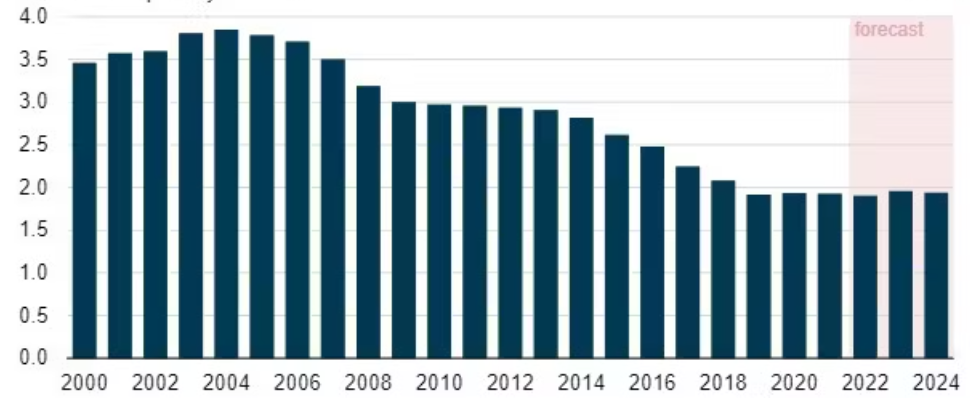
    In her first speech to congress Sheinbaum said she would introduce the country’s first ever upper cap on oil production which would be set at 1.8m barrels per day (mbpd). This is below the 3mbpd targeted as part of the liberalising energy reforms under the presidency of Enrique Peña Nieto (2012-2018). It is also well below the 2.6mbpd set as a target by AMLO in 2018 at the start of his efforts to revive Pemex. Taking into account the long-term stagnation of oil output, current production of 1.9-2.0mbpd is already at the level of the cap. Given that Mexican oil reserves are depleted, and that increasing output would require massive investment in fracking or deep-water exploration, the cap seems to be an acknowledgment that it is time to look to renewable alternatives.

    Annual total petroleum and liquid fuels production in Mexico (2000-2024)
    Million barrels per day

    Source: EIA

    Early signs are that Sheinbaum will lead a much more technical (and less political) approach to state companies CF and Pemex. Her pick for the CFE is Emilia Esther Calleja, who has a degree in electronic engineering as well as 21 years of technical experience in the company. At Pemex the new chief executive is Victor Rodríguez Padilla, a well-regarded left-leaning academic, who can boast over 40 years of hydrocarbons research at national university UNAM.

    The message to Rodríguez is that he must save Pemex, a wounded and heavily indebted company that is big enough to drag down Mexico’s sovereign credit rating and pose a major financial headache for Sheinbaum’s new administration. At his first press conference Rodríguez felt driven to tell journalists that “Pemex is not dead nor in as bad a state as you may imagine”. He admitted however that Pemex is still the world’s most indebted oil company, with total debt standing at US$99.4bn (down from UDS$130bn at the beginning of AMLO’s presidency) and that it has been repeatedly bailed out through government subsidies and tax relief. The company reported US$13.6bn in first half losses this year. It also owes suppliers around US$19bn in unpaid bills. Losses in part reflect AMLO’s expensive programme to seek energy self-sufficiency by buying the Dear Park refinery in Texas and building the Dos Bocas refinery in Tabasco (the latter at a cost of US$16bn, twice the amount originally budgeted). The new chief executive now says further growth in energy demand from current levels will be covered with increases in renewables rather than fossil fuels.

  • Dominican Republic: Multiple challenges for the central bank

    LatinNews 06 June 2013 Hits: 2922

    On 23 May, the Banco Central de la República Dominicana (BCRD – the central bank) announced a 75 basis point rate cut (to 4.25%) and other measures to boost economic activity, which has been flagging.  There are a number of other long-term challenges: however, early signs indicate that these are being addressed.

    In explaining the latest easing in monetary policy, the first since August 2012, the BCRD highlighted a number of factors. These included output below capacity, softness in domestic demand and the absence of inflationary pressures. Since December 2011, the BCRD has used an inflation-targeting framework. In 2013, the target range is 5.5% ± 1.0%, falling to 4.0% ± 1.0% by 2015. The bank also alluded to the general softness of the global economy.

    The BCRD has also undertaken several measures to boost the availability of credit to the economy. On 8 May, it announced a reduction in the banks’ minimum reserves in order to bring about an increase in total lending of DOP20bn (US$489m). This was in addition to the government’s earlier-announced DOP9bn public works program. Of the DOP20bn, one quarter has been earmarked to fund purchases of affordable housing, while another 5% will be made available to buyers of newly completed housing. Manufacturers and the agricultural/fishing sectors will receive 25% and 20% respectively. Most of the remaining 25% will be targeted at other businesses, especially small- and medium-sized enterprises (SMEs). The funding will be available at a concessional rate of 9% per annum over a six-year period.  On 23 May, the BCRD announced other changes that should make it easier for SMEs and micro-businesses to access credit.

    The BCRD’s latest quarterly report (for the three months to March 2013) notes that GDP has virtually stagnated. This follows very respectable annual growth of 7.5% in 2010, 4.3% in 2011 and 3.8% in 2012. However, policymakers have to be wary of various, and substantial, imbalances. One is the budget deficit, which blew out from 4.5% of GDP in 2011 to 8.5% in 2012. The main problem has been a surge in government spending over the period from 14.0% to 18.5% of GDP, thanks in part to a lift in transfers to the power generating sector from 1.2% to 1.8%. In late 2012, President Danilo Medina announced a fiscal reform package that included a hike in the rate of Value Added Tax (VAT) up to 18% from 16% previously and broadened its base. In the meantime, the government remains notoriously extravagant. In its 2012-13 Global Competitiveness Report, the World Economic Forum (WEF) rates the country last (of 144 surveyed) for favouritism in decisions of government officials and wastefulness of government spending, 143rd for the reliability of the police force and 142nd for diversion of public funds.

    Meanwhile, the current account deficit last year was 7.0% of GDP, having been 7.9% and 8.4% in 2011 and 2010 respectively.  In essence, merchandise imports of about 30% of GDP (with fuel imports alone amounting to 8% of GDP) are not matched by merchandise exports of around 16% of GDP, or services and net transfers of around 8%.

    An additional problem, identified in a February 2013 working paper by International Monetary Fund (IMF) economists Umidjon Abdullaev and Marcello Estevão, pertains to the country’s labour market. Over the long term, growth in output and productivity has taken place mainly in a few sectors of the formal economy. Meanwhile, most – by and large low quality – jobs have been created elsewhere. The authors note that “low real wages and low labour force participation suggest the need to raise market wages above fall-back incomes to attract individuals (back) to the labour force. For that, measures to improve education and reduce product market distortions would be helpful”.  The IMF notes that, in 2008, the percentage of people classed as living in poverty and extreme poverty were, respectively, 38% and 12% of the total population.

    Nevertheless, the Dominican Republic has a number of strengths, which should make it easier for the government and the BCRD to undertake the changes that are needed. One is that any growth in the US economy this year should result in further increases in remittances from foreign workers. As Abdullaev and Estevão note, remittances amounted to about 6% of GDP in 2011, having risen by around 6% annually. The UN’s Economic Commission for Latin America and the Caribbean (ECLAC) is looking for the DR’s economy to grow by 3.8% in 2013. In its Article IV Consultation with the government for 2012, the IMF noted that the country’s commercial banks’ capitalisation amounts to around 15% of total assets. (For its part, the WEF rates the Dominican Republic as 30th of the 144 countries it surveys in terms of banks’ soundness.)

    Further, although both public sector and external debt levels are rising (from 40.0% to 44.9% of GDP and from 32.0% to 34.1% of GDP, respectively); they are still at manageable levels. In April 2013, the government successfully placed US$1.0bn in 10-year sovereign bonds, at a yield of 5.875%.

    Meanwhile, the government has been keen to highlight new investment in infrastructure and mining projects. In mid-May, the public works ministry noted that work is underway on the US$95m first phase of a new ring road around Santo Domingo. The state power holding company has issued a tender for the construction of two coal fired power stations with a combined capacity of 600MW. In early May, the Canadian mining firm Barrick Gold announced that it had reached an ‘in-principle’ agreement with the government to amend the contentious contract for the Pueblo Viejo mine. The 13.7km first phase of Santo Domingo’s metro line 2 was opened officially at the beginning of April.

    • China’s new president visits the Caribbean

    On 2 June in Trinidad & Tobago China’s President Xi Jinping met several leaders of the English-speaking Caribbean. Xi’s three-day visit to Trinidad & Tobago is the first leg of a trip to the region that includes Costa Rica and Mexico. He arrived just days after the 27 May visit to Port of Spain by the US vice-president Joe Biden, giving added resonance to comments  by Prime Minister Perry Christie of The Bahamas, who said that Xi’s visit provided a reminder of “the sense of balance that we must recognise that exists on a global basis”.  Notably, of the Chinese-backed projects in the Caribbean, the biggest is the multibillion-dollar Baha Mar resort under construction in the Bahamas, due for completion in December 2014. Financed by the Export-Import Bank of China Baha Mar and currently being built by China State Construction Engineering with  a several-thousand-strong force of Chinese workers, it promises 8,000 permanent jobs for locals upon completion.

    While in Trinidad & Tobago, which will open its first embassy in Beijing this year, 39 years after establishing diplomatic relations with China, Xi also met the leaders of Suriname, Guyana, Dominica, Barbados, Jamaica, the Bahamas, Grenada, and Antigua & Barbuda, all countries that recognise China rather than Taiwan. Excluded from the gathering were the five pro-Taiwan Caribbean holdouts: the Dominican Republic, Haiti, St Kitts & Nevis, St Lucia, and St Vincent & the Grenadines.

    Xi promised to increase Chinese assistance to the Caribbean (or at least to the bits it approves of) in what the official Chinese news agency Xinhua described as “an effort to give fresh impetus to the cooperation between China and the region”.  Jamaica in April secured a Chinese loan of almost US$300m for transport infrastructure (roads and bridges). Amongst other things, Xi promised to set up agricultural demonstration centres, to send 100 medical staff to the Caribbean, to train 100 part-time postgraduate students, and to provide scholarships for 1,000 students.  Much was made of the US$150m new 230-bed children’s hospital that China is funding in Trinidad and which will be completed in 2015.

  • Chile’s ANFP drawn into FIFA scandal

    LatinNews 10 December 2015 Hits: 17

    Chile’s investigative police (PDI) raided the headquarters of the country’s football federation (Asociación Nacional de Fútbol Profesional de Chile, ANFP) on 3 December, as part of money laundering investigations into Sergio Jadue, a vice-president on the South American football confederation (Conmebol) and until November the ANFP president.

    The raid was sanctioned after the ANFP on 25 November had refused to hand over information at the behest of Justice Minister Javiera Blanco, who demanded the documents as part of an investigation into alleged irregularities in salary payments. According to local press reports, one of the objectives was to seize Jadue’s computer, but it was not there. Jadue resigned as ANFP president on 18 November, a day after he travelled to the US as a US Federal Bureau of Investigation (FBI) informant, after he agreed to plead guilty on two charges of racketeering conspiracy, and wire fraud conspiracy.

    The Chilean raid took place as the US Justice Department announced the arrest of 16 more officials from the Fédération Internationale de Football Association (Fifa), football’s global governing body, on racketeering, wire fraud and money laundering conspiracy charges as part of its major corruption investigations. Those arrested include Paraguay’s Juan Angel Napout, Conmebol’s current president, and a Honduran, Afredo Hawit, the president of the Confederation of North, Central American and Caribbean Association Football (Concacaf). Reportedly, both Napout and Hawit are fighting extradition to the US.

    According to a Justice Department press release, also indicted were Marco Polo del Nero and Ricardo Teixeira, the current and former presidents of the Brazilian football federation (CBF), both of whom are also former members of the Fifa Executive Committee, as well as Argentina’s José Luís Meiszner and Eduardo Deluca, the current and former general secretaries of Conmebol.

    The press release noted that “Within UNCAF, the Central American regional soccer union operating within CONCACAF, the charges in the superseding indictment name the current and/or former presidents of nearly every country in the region: Costa Rica, El Salvador, Guatemala, Honduras, Nicaragua and Panama”.

    • The charges unsealed on 3 December by the US Justice Department, brought the total number of individuals and entities charged to date in the Fifa scandal to 41. Of those, 12 individuals and two sports marketing companies have been convicted already as part of the ongoing investigation.
  • Petro’s victory heralds battle over reforms in Colombia

    Patrick de Courcy 29 June 2022 Hits: 1385

    As this issue went to press leftist Gustavo Petro won the second round of Colombia’s presidential race with 50.55% of the vote, against right-wing anti-corruption candidate Rodolfo Hernández, who received the backing of 47.3% of the voters. The vote is considered a watershed for various reasons. One is that for the first time in more than a generation Colombia’s second-round presidential contest was a battle between two anti-establishment candidates. A late surge for Hernández pushed out Federico ‘Fico’ Gutierréz. It is likely that this reflects deep-seated demands for change, in line with the impact of the pandemic and the surge of street protests over poverty and inequality in 2021. Another indicator of change is that Petro becomes the first-ever elected socialist president in Colombian history. Because of the country’s decades long experience of violent Marxist guerrilla movements, and the perceived threat from socialist Venezuela, the electorate has long been wary of voting for a socialist. Again, the fact that it finally did so in 2022 indicates the strength of underlying pressures for change.

    Petro starts out with an ambitious agenda. Colombia is the second-most unequal country in Latin America after Brazil, and the president-elect is proposing sweeping land reform, and a wealth tax on the country’s 4,000 private fortunes, which is expected to bring in US$10bn a year. The extra money raised is to be used to fund free higher education and a minimum wage for 1.3m people. Petro also seeks a ban on oil exploration, open-pit mining, and fracking, with resources being re-directed to manufacturing, agriculture, and tourism. Petro must not only face the challenge of achieving a more inclusive economy; he must also tackle the thorny issue of the country’s rural violence, more intense than anywhere else in the region and led by deeply embedded left-wing rebels and right-wing paramilitary forces. This will mean adjusting and relaunching some of the reforms promised, but never fully delivered, in the 2016 peace agreement with the FARC (Fuerzas Armadas Revolucionarias de Colombia) guerrillas.

    Petro’s victory was quickly welcomed by other left-wing presidents in the region, such as those from Mexico, Chile, and Argentina. But the new president will face difficult obstacles. The business community is concerned over higher tax rates and may postpone investment and send capital abroad, weakening the peso and thereby fuelling inflation and slower growth. The parties of the political establishment are still strong in congress (those allied to Petro control only 15% of the seats). As Boric has found in Chile, the new president may find himself swamped with simultaneously occurring crises, reducing his short-term political options. Like Boric, Petro (who takes office in early August) could see an initial drop in his approval ratings.

  • Jamaica: Government targets development of stock market

    LatinNews 25 January 2019 Hits: 2095

    The authorities are seeking to use the stock exchange as a way of raising funds for national infrastructure projects, in a bid to reduce pressure on government spending and enable a continued fall in public debt.

    The Jamaican stock exchange has hit the headlines in early 2019 for all the right reasons, with Bloomberg reporting that the country’s main index registered the largest gains in US-dollar terms (29%) during 2018 out of all of the 94 countries that it tracks. The results were not just a one-off; over the past five years, the stock-market index has risen by nearly 300%, way ahead of other countries. It is perhaps on these coat-tails that the government is seeking a further development of its capital market, with Finance Minister Nigel Clarke emphasising its intentions while addressing investors at a forum in the capital, Kingston, in mid-January. He stated that the country had infrastructure needs totalling “hundreds of billions of [Jamaican] dollars” in the next few years and if the authorities managed to part-finance some of these plans via equity, the government would be able to continue to shrink its public debt:GDP ratio from around 100% currently to a targeted 60% by 2025.

    Capital markets will develop only slowly 

    This is a laudable goal, but several structural barriers are likely to prevent rapid development of the stock market that would enable equity financing. Firstly, part of the reason that the stock market has registered such sharp growth levels is that the stock market is extremely small. It is positive that the stock market is expanding, but the pace of growth is magnified by the fact that it comes from such a low base for comparison. Only 37 firms are listed on the main exchange and total stock market capitalisation is extremely low (a fraction of the size of many individual companies listed on larger overseas exchanges). The head of the Jamaica stock exchange has indicated that she expects another 20 companies to list on the exchange over the course of 2019, but even if that materialises, the exchange will remain small in comparative terms.

    Developing capital markets is a slow and drawn-out process and requires not only growth in the number of listed firms, but also the development of accompanying financial instruments and the presence of sufficient numbers of investors to boost demand. The fact that the Jamaican market remains small and that some market participants will have ongoing reservations about the weak underlying economic situation are, in practice, likely to hamper the governments’ efforts in this area. This will be particularly true if international investor confidence wavers in the face of slower global economic growth, a sharp deceleration in the Chinese economy, or escalating trade tensions between the US and its major trading partners. All of these factors have the potential to affect global stock market development, including the exchange in Jamaica. However, with the authorities remaining determined about the necessity of sticking rigidly to International Monetary Fund fiscal targets, a sharp rise in public spending (relating to infrastructure spending) is unlikely. A scaling back of infrastructure plans is, instead, more probable, although this will inevitably take its toll on potential long-term GDP growth.

  • Looking back: Some lessons from the pandemic

    LatinNews 31 March 2021 Hits: 1606

    A review of the first year of the pandemic in LAC suggests various conclusions.

    Governments lacked the right tools. The first general point is that governments were unprepared and, in the early stages of the outbreak, had few effective tools with which to fight the pandemic. This problem was of course not exclusive to LAC but was shared around the world. With the benefit of hindsight, it is clear that tools were developed on the hoof and eventually grew to include a significant range of policies and medical know-how, including testing and tracing, closing borders, promoting medical protocols (washing hands, using face masks, keeping social distancing), enforcing various types of quarantine, lockdown and curfew measures, and, eventually, developing vaccines in record time and launching mass vaccination programmes. However, most LAC governments were unable to combine all of these elements in a joined-up, coordinated, and effective manner. Most notably they relied heavily on what could be called blunt instruments - quarantine and lockdown measures - which had a major negative effect on economic activity, but which were frustratingly inefficient as far as flattening the curve of contagion was concerned.

    Structural factors played a major part. One reason why the available tools were less effective was due to deeply rooted structural factors in Latin American society. One of the most important of these is the prevalence of informal employment, poverty, and high-density living conditions in urban shanty towns. Informal employment rates of around 60% in many countries mean that the majority of the labour force pays no taxes and receives no social protection (such as health and pension provision). This significant section of the population cannot therefore afford to shelter at home. For lack of alternatives, many people are forced to break lockdown rules, continuing to work as street sellers, domestic servants, taxi drivers, and many other high-contact, high-mobility roles that increase virus transmission.

    The politics was unhelpful. Right and left-wing wing populism in the two largest countries in the region (respectively Brazil and Mexico) as well as elsewhere, had a range of negative effects. In remarkable similarity to Donald Trump’s outgoing administration in the US, presidents Jair Bolsonaro and Andrés Manuel López Obrador consistently minimised the severity of the pandemic, played down or ignored scientific advice, and sought to blame others for shortcomings in the response to the crisis. All three presidents opposed lockdowns and shifted political responsibility for management of unpopular restrictions to state and municipal authorities. Vaccine policy in Brazil was politicised, with the president criticising vaccines from Chinese laboratories in an attempt to score points against the governor of São Paulo state, a potential rival in the 2022 presidential race. Significantly, and in sharp contrast, Chile’s right-wing government adopted a very different approach, pursuing a non-political and pragmatic vaccine procurement policy. Many governments, whether populist or not, focused excessively on short term political priorities – such as how to win the next elections – at the expense of longer-term thinking. Many governments were reluctant to take scientific advice.  

    The pandemic vindicated inclusive public health policies. The LAC region has a wide range of public health systems, including private or public-sector dominated models, and a variety of employer subsidised health plans. The evidence from the pandemic is that countries with more inclusive health coverage systems and a record of significant investment in the sector – as measured by per capita health spending, health spending as a proportion of GDP, availability of hospital beds and physicians among other metrics - all tended to better manage the pandemic. Countries where significant sectors of the population have no real health coverage performed poorly. A longer-term lesson is therefore that inclusive health care can benefit not only the poor but also society as a whole, including the middle classes and the rich who benefit from a reduction in their own contagion risks.  

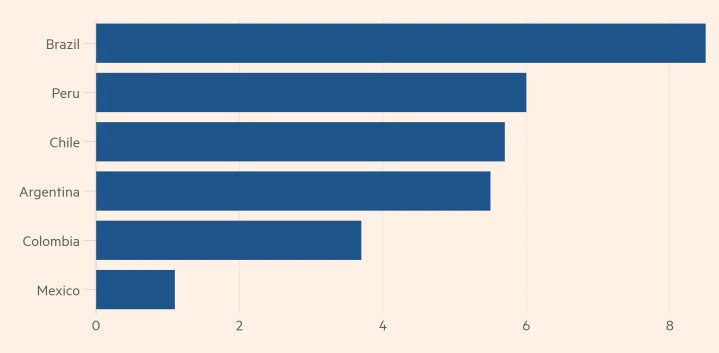
    The crisis created new interest in emergency cash transfer programmes. Where there were sharp falls in economic activity, governments experimented by introducing a range of emergency payments and cash transfer schemes intended to help poor households, informal workers, and other vulnerable groups. On the whole these programmes were successful. In Brazil, the so-called ‘coronavirus voucher’, which at its height paid out around US$112 per month to poor families, reduced poverty and reached an estimated 67m people (32% of the population), softening the economic impact of the pandemic. Ironically it can be argued that through this mechanism the right-wing government of Brazil ended up doing more than the left-wing government of Mexico to help the poor. Throughout the region, however, differing versions of these emergency payments stimulated interest in their future potential. In Colombia, for example, there was interest in the concept of a universal basic income scheme. Early on in the pandemic Eclac called on governments to consider paying a basic emergency income (BEI) worth ‘one poverty line’ or the cost of basic necessities in each country.

    Deficits and debt went up everywhere. Also of interest is the fact that different governments sought to inject vastly different levels of counter-cyclical fiscal stimulus into their economies in an attempt to offset falls in activity caused by Covid-19. To some extent this was to be expected, given that the different countries in the region entered the pandemic with different degrees of fiscal vulnerability. But the stimulus adopted did not correlate to pre-existing fiscal strengths or weaknesses, or necessarily with the left-right policy divide. Fiscal stimulus measures were highest in countries like Brazil and Peru, in the region of 6%-8% of GDP, and lowest in Mexico and Colombia (1%-4% of GDP). Overall, it is clear that this extra spending raised public debt to high and unsustainable levels in relation to GDP.


    Mexico spends least among major Latin American economies on pandemic stimulus efforts

    Fiscal stimulus as % of GDP

    Source: UN Economic Commission for Latin America and the Caribbean

  • Expect slow change in the drug business

    Patrick de Courcy 08 September 2023 Hits: 1788

    In conclusion and returning briefly to the eight headlines dating back six years ago, the fact that there has been little change underlines a somewhat disappointing but unavoidable reality. The drugs business is profitable, highly violent, and deeply embedded in Latin American economies and political systems. Put simply, it is not going to go away anytime soon. Massive demand for illicit drugs coming from the United States and other relatively wealthy countries tends to call forth the necessary supply. If one cartel is neutralised, or otherwise removed from the picture, new criminal organisations quickly spring up to fill the vacuum left behind it.  

    While both the business and government efforts to eliminate illicit drugs will continue evolving, there appears to be no single ‘silver bullet’ or policy recommendation capable of guaranteeing short term anti-narcotics success. According to US foreign policy think tank Responsible Statecraft, “there will be no quick fix to the current drug crisis, only multipronged solutions that address both the supply and demand of fentanyl”.

    On a more positive note, tackling not just one but a combination of the areas covered by the eight headlines is likely to yield some results. Any government that can meaningfully pursue strategies to break up the big cartels, follow the money trail tackling the money laundering of billion-dollar revenues, improve the criminal justice system, and restore control of prisons is likely to register perhaps modest but still important progress.

    That said, it is also true that the fentanyl crisis introduces some genuinely new elements into an already complex drugs equation. The most important of these is that production of the drug is no longer tied to plant cultivation in particular geographic locations, vulnerable to weather and government-led eradication efforts. With the right precursor chemicals, fentanyl can be produced anywhere in hard-to-detect clandestine laboratories. A very literal response would therefore be to say that the arrival of fentanyl is eroding the drug crops near- monopoly enjoyed within Latin America by the Mexican and Colombian cartels, while triggering a consumer shift away from cocaine.

    That too would be an oversimplification. The Mexican cartels in particular have shown their ability to adapt to the threats and opportunities presented by fentanyl. They have maintained the cocaine business, while lacing some of their product with fentanyl. In the face of US-China tensions, they have exploited a window of opportunity to become major fentanyl producers in their own right. With production no longer tied to illicit crop-growing areas, they have nevertheless pursued comparative advantage by efficiently sourcing precursor chemicals and hiring qualified chemists. At the same time, they are innovating by selling fentanyl-laced painkillers through networks of pharmacies.

    Reports of the ‘death of cocaine’ are much exaggerated. Changing patterns of drug consumption can take years. Under certain conditions marijuana is now legal in many parts of the US, but more than half a century since they began selling it, the cartels still have a small stake in the business. Demand for cocaine appears relatively stable, with the current low prices likely to be one of many cyclical ups and downs that the industry has frequently experienced.

  • New Chilean government eyes value added

    Abbi Dicker 14 May 2026 Hits: 1354

    In April 2026 Chile and the United States signed a memorandum of understanding (MoU) designed to accelerate exploration, production, and processing of critical raw materials and rare earths. Foreign minister Francisco Pérez Mackenna said the aim was to consolidate a government policy to strengthen resilient and secure supply chains, so as to generate increased value added. The minister - a member of the new right-wing government that took office a month earlier - said his administration was particularly eager to attract new foreign investment into the sector. He also saw it as an opportunity for technology transfer and for the development of human capital and downstream capacity.

    Chile’s rare earth reserves have been topped up as exploration and geological surveys progress. An earlier development under the previous government was the launch of a Strategic Lithium Plan, which seeks to balance resource sovereignty and international/private sector cooperation. The law was challenged in an appeal to the Constitutional Council, which ended up endorsing the combination it had proposed between state ownership of the metal, combined with openness to private sector technology partnerships and downstream processing investments. Foreign companies can form joint ventures with state entities as well as signing technology licensing agreements.

    As in Brazil, there are worries in Chile over a potential rare earths processing and refining capacity gap. Mining consultant Constantine Karayannopoulos says Chile has “probably one of the best” rare earth resource endowments, but that it should avoid what he sees as the “mistakes” made by Australia and Canada. “Their economies grew largely on the basis of extraction of raw materials, but they did not capture the added value that the Chinese, the Koreans, and the Japanese – and to a lesser extent the Europeans – did.”

    Ayaz Alam, director of the Geological Society of Chile (SGC), acknowledges that there is interest in increased value-added production, but that it is “important to be realistic” since “projects have been delayed for years”. According to Alam: “Some companies planned to start operating in 2026 or 2027, but there are unresolved environmental issues, technologies that are not yet consolidated, and pending conflicts with local communities.” Another analyst, Juliana González Jáuregui at the Latin American Faculty of Social Sciences (FLACSO), says it is necessary to balance investment and political risk: “The balance is not ‘with or without China’, but how to insert oneself into the global system without further deepening historical vulnerabilities.”

  • ST LUCIA: UWP to face electorate after historic slump

    LatinNews 28 January 2021 Hits: 1789

    Date: By 6 June.

    Type: General Election,

    Main contenders: The United Workers Party (UWP), led by Prime Minister Allen Chastanet, and the St Lucia Labour Party (SLP) led by Philip Pierre.

    UWP looking for second term

    Since independence in 1979, power has been shared more or less evenly between the currently ruling UWP, with five terms in office, including a three-term stretch from 1982-1997, and the SLP with four terms in power.

    When the UWP returned to power in 2006 after a two-term hiatus, it was widely expected to remain in power for an extended period, perhaps emulating its 1982-1997 15-year dominance. This hope was dashed by the 2008/09 global financial crisis, and it was the SLP that won the 2011 election, but, perhaps surprisingly, it was unable to hold onto power just as the economy was beginning to recover in 2016.

    The problem for the outgoing SLP government was that although the economy was slowly beginning to recover (with 1.3% growth in 2015 after just 0.5% growth in 2014, near zero growth in 2013, and a 1.1% contraction in 2012) overall unemployment was still very high at 25%, with youth unemployment at over 40%. Public-sector debt had also escalated on the SLP’s watch, from 66.9% of GDP in 2011 to 82.4% in 2015.

    Now the UWP is faced with defending its own record, which has been much damaged by the onset of the Covid-19 pandemic. After its 2019 Article IV Consultation, the report for which was released in February 2020, the IMF was predicting 3.2% growth for 2020. It’s not just that this didn’t happen; it didn’t happen by a distance that no one could have predicted. The IMF estimates that St Lucia’s GDP contracted by 16.9% in 2020. It may not have been the UWP’s fault, but by any standards that is a difficult record to defend at the hustings.

    The UWP goes into election year led by veteran Allen Chastanet; the SLP is now led by Philip Pierre who was promoted to party leader after the 2016 general election defeat. Pierre was Deputy Prime Minister and Minister for Infrastructure, Port Services and Transport in the 2011-2016 administration.

  • Examining the future (2): Brazil

    Patrick de Courcy 18 February 2026 Hits: 726

    Brazil has the largest economy and population of Latin America. It has traditionally aspired to lead the region and has campaigned to win a permanent seat on the UN Security Council. General elections are due to be held in October this year. The race remains open, but current polls suggest that the incumbent centre-left president, Luíz Inácio Lula da Silva, is set to win re-election to what would be his fourth four-year presidential term. On the far-right Lula has been opposed by former president Jair Bolsonaro (2019-2023) a close political associate and family friend of Donald Trump’s. Bolsonaro is currently banned from running for public office since he was found guilty last year by the Supreme Court of conspiring against democracy and given a long (27 year) prison sentence. At the moment one of his sons, Flavio Bolsonaro, is due to stand as his proxy in the presidential race, but that may change as various right-leaning individuals and political parties are discussing potential coalitions.

    Perhaps unlike other countries in the region Brazil stands out because of the close ideological and personal links between the Trump and Bolsonaro families. There are remarkable similarities in the recent political history of both countries. Trump supporters (January 2021) and bolsonaristas (January 2023) have attacked and broken into the headquarters of the legislative powers in each country. Both Trump and Bolsonaro have, without credible evidence, pronounced recent elections in their countries (in which they were the losers) to be rigged and fraudulent. Both have faced multiple claims of conspiring against democracy and committing acts of corruption. However, Trump has fared better at the hands of the US courts than Bolsonaro did before the Brazilian ones: he survived two impeachment attempts and other court cases to run for, and win, a second presidency. Bolsonaro on the other hand was found guilty of plotting a coup d’etat and sentenced to 27 years in prison, which he is currently serving at a penitentiary in Brasília. He is therefore out of the running for a second presidency.

    From the point of view of Lula and his officials the largest threat is that the bolsonaristas may seek to disrupt and undermine the 2026 elections. Relations between Trump and Lula have improved as the two countries have toned down their dispute over punitive tariffs and over other issues such as social media regulation. But Trump might still intervene to destabilise the election campaign, along the lines of how he did during last year’s Honduran election.

    If Lula is victorious in October US-Brazil relations are likely to follow along their current course: the diplomatic mood music will be broadly positive but the two governments will remain on opposing sides in relation to a number of important issues, including trade, multilateralism, Chinese influence, and the role of the Global South (through associations such as the Brics group). A win for the bolsonarista right on the other hand, will likely increase political uncertainty and polarisation at home. It will also give added momentum to the swing to the right across the region, creating fertile conditions for joint military action against drug cartels and for further tightening of borders.

  • ECONOMIC OVERVIEW: COSTA RICA

    LatinNews 11 January 2012 Hits: 723

    Inflation: In 2011 inflation closed at 4.74%, giving Costa Rican authorities a cause to celebrate - 2011 became the third consecutive year in which real inflation came in below the central bank’s target (5%) – an achievement not attained since the 1976-1978 three-year period. For 2012, the central bank’s inflation target is 4% (+/- 1%). While transport was the sector that registered the highest increase in the consumer price index, reaching 7.1% by year end, the communications sector registered a decrease in prices of 0.44%. Experts attribute this to the opening up of the sector for competition.

    Fiscal deficit: In December 2011, the International Monetary Fund (IMF) noted that for the second year running, Costa Rica would post Latin America’s highest fiscal deficit in GDP terms. The IMF’s estimate put Costa Rica’s deficit at 5.6% of GDP; Finance Minister Fernando Herrero, however, estimated it would come in slightly lower, at 5% of GDP.

  • Intelligence Research highlights - 1 March 2007

    LatinNews 08 September 2011 Hits: 3

    INTELLIGENCE RESEARCH HIGHLIGHTS

    TO: All Strategic Intelligence Forum members

    DATE: 1 March 2007

    The Strategic Intelligence Forum is part of the Intelligence Research group, and as a member of the Strategic Intelligence Forum I am very pleased to send you from time to time a selection of reports published recently by Intelligence Research Ltd that I consider to be of particular STRATEGIC significance. Please find below my latest selection of Intelligence Research articles:

    1. SOUTH ASIA: THE COSTS OF TERRORISM - AsiaInt Economic Intelligence Review, February 2007

    SUMMARY: The bombing of a train connecting India to Pakistan has highlighted the persistent risk of terrorism in South Asia. The tendency of the regional security establishment to assess this risk in terms of relations between India and its neighbours provides a key by which local security arrangements can be understood; not in isolation but as part of an overlapping set of concerns involved with the rationalisation of states still only 60 years old...

    Link to full article: http://www.asiaint.com/arl/arl13141.asp

    2. COLOMBIA: MERGENCE OF NEW-GENERATION PARAMILITARY, Latin American Security & Strategic Review, February 2007

    SUMMARY: While headlines in Colombia have been dominated since last November by the so-called 'parapolítica' scandal - the revelations about paramilitary penetration of the country's political and administrative establishment - a more menacing development has been taking place in the area of public security: the rearming of paramilitary groups and the appearance of new armed groups. These appear even more tightly connected to the drugs trade than the demobilised Autodefensas Unidas de Colombia (AUC). Still unclear is the extent to which the former leaders of the AUC are involved in the 'rearming' - a misnomer, since it has always been clear that the AUC did not surrender all of its weaponry...

    Link to full article: http://www.latinnews.com/lss/LSS13188.asp?instance=2

    NOTE: Links to these - and other - reports can also be found in the Strategic Intelligence Monitoring Centre, which you may access on a 24/7 basis by going to www.stratintforum.com, logging in as a member, and selecting the Strategic Intelligence Monitoring Centre option.

    With best regards

    JKC de Courcy
    Chairman
    Strategic Intelligence Forum

    P.S. You may sign up for a free evaluation of any Intelligence Research Ltd services by visiting the following websites, or you may contact our Business Development Director: [email protected].

    www.intelligenceresearch.com
    www.stratintforum.com
    www.asiaint.com
    www.latinnews.com

  • Brazil weighs up data protection risks

    Abbi Dicker 11 July 2025 Hits: 2033

    Some analysts worry that the spread of Chinese-made EVs poses a risk to data protection laws such as Europe’s GDPR which sets out data privacy and security standards. Brazil has a similar law known by its Portuguese acronym LGPD. In the first four months of this year some 54,600 EVs were sold in Brazil representing a 7.5% market share. Chinese EV brands such as BYD, Great Wall Motor, Chery, and Zeekr are permanently internet-connected. JR Caporal, head of Brazilian auto-tech company Auto Avaliar, says the Chinese EVs are forcing a “structural reconfiguration of the market” based on innovation, economies of scale, and a planned industrial strategy. He says individual vehicles have become “digital databanks on wheels” but that at present there is a lack of transparency over how their data is used and stored.

    Europe-based cyber-security company Sophos says there is already one legal case in France over alleged unauthorised data collection by EVs including details of routes and times followed, driver performance, and voice commands. Thiago Guedes of Brazilian security company Deserv says that digitisation of the auto industry must be accompanied by a responsible industry stance on users’ rights to privacy. Another specialist, Bruna Fabiane da Silva, says “if a connected vehicle collects sensitive data without explicit consent, or without effective local control, there is a risk that the LGPD law is being violated”.

  • Is there a connection between crime and migration?

    Abbi Dicker 11 September 2025 Hits: 1125

    Over the last decade many Latin American politicians have successfully attracted voters by appealing to citizen concerns over inward migration, safety, and crime. The issue has also loomed large in the United States where two-time President Donald Trump has used it to his advantage, for example by appealing to nativism, extending the border wall between the US and Mexico, and, as we have seen, by preparing the ground for mass deportations. Many populist politicians have reaped benefits from promoting mano dura (iron fist) anti-crime and anti-immigration policies.

    An examination of opinion polls around the region shows that concerns over crime and migration are widespread, but also that attitudes can be quite complex and even contradictory. In Chile, according to the National Urban Citizen Security Survey (ENUSC) of 2022, 70% of respondents believe that migrants increase crime rates. Nearly 75% of respondents have a worse opinion of migrants who have arrived in the country in the last five years, compared to those who arrived earlier. A total of 51% of respondents believe that less than half of migrants are respecting local law. Despite this however, 76% of respondents report experiencing positive personal interactions with migrants.

    According to a Reforma–Washington Post survey conducted in Mexico in 2019, only 7% of respondents support giving residency to Central American migrants, with a larger group – 33% - saying they would be open to temporary stays. A majority – 55% - favours deporting undocumented migrants. A slightly narrower majority – 51% - supports using the National Guard to deter illegal migration. More than 60% of respondents say migrants take jobs and benefits that should go to Mexicans.

    An earlier Mexican poll, conducted in 2018 for newspaper El Universal, found that 64.5% of respondents feel that the presence of Central American migrants increases violence or unemployment. In a follow-up poll that proportion increases to 73%. A total of 56% say the president should take tougher action against migrants and 58% oppose migration from Central America.

    A multi-country survey by Gallup International found that in most countries in Latin America there is a net negative attitude towards immigration (negative views exceeding positive views). This was the case in Ecuador (net support of -53%), Colombia (-34%), Brazil and Panama (both -11%) and Argentina (-3%). The exceptions in this survey were Mexico and Peru which had net positive views.

    A 2023 report by the InterAmerican Development Bank (IADB) found that security remains the most prevalent issue in public discussion “confirming that host societies’ attitudes are strongly influenced by the belief that the arrival of migrants leads to an increase in crime and delinquency”. The report analysed social media platforms and found that 22% of the conversations were “xenophobic tweets” (defined as messages containing discriminatory language targeting migrants).

    A 2022 survey for the Lloyd’s Register ‘World Risk Poll’ found that more than 43% of people from Latin America and the Caribbean believe that crime and violence is the greatest threat to their safety, while over one-third (37%) would permanently move to another country. In countries such as Venezuela (60%), Ecuador (50%), Argentina (49%), Colombia (47%), and Mexico (46%) crime was seen as the top threat.

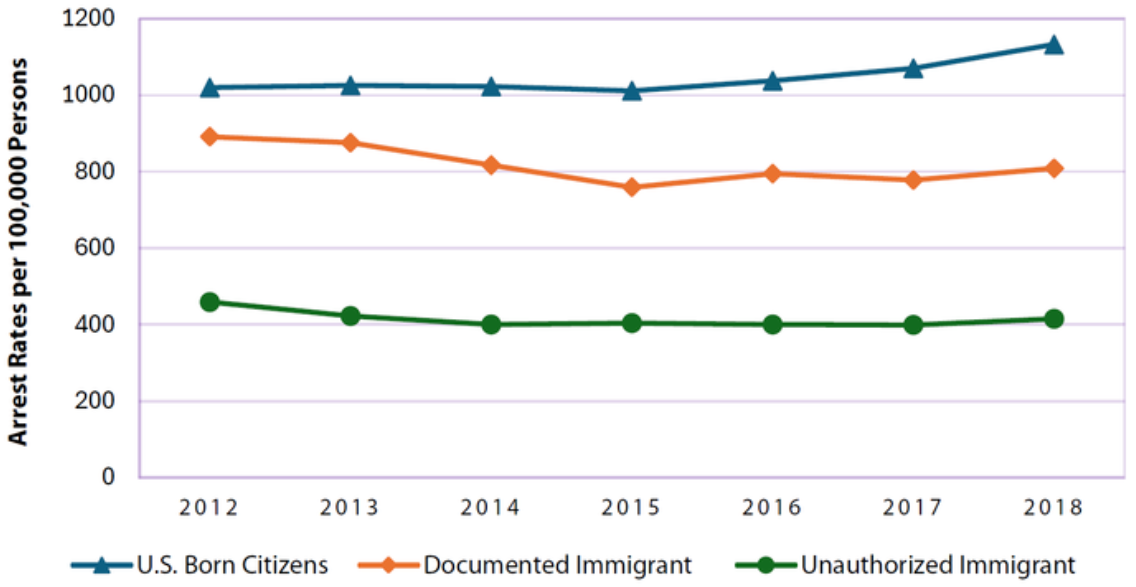
    In contrast to the public view, there is significant evidence questioning whether immigrants are indeed more likely to commit crimes than the general population. In October 2024 a report for the US think tank Migration Policy Initiative (MPI) concluded that “Immigrants in the United States commit crimes at lower rates than the US population, notwithstanding the assertion by critics that immigration is linked to high rates of criminal activity”. The conclusion was in part reached by analysing data from Texas, the only state that records criminal arrests and convictions by immigration status.

    This showed that the arrest rates per 100,000 inhabitants were consistently higher for US-born citizens than for immigrants, whether documented or not. The report also cited official data from 2020 showing immigrants were 60% less likely to be incarcerated than the US born. In addition, nearly 90% of immigrant prosecutions are for violations of immigration-related laws. US-born citizens are ten times more likely than immigrants to be incarcerated for weapons-related offences, five times more likely for violent offences, more than twice as likely for property crimes, and twice as likely for drug offences,  

    Texas Study: Overall Offending Rates by Citizenship and Legal Status

    Source: Migration Policy Institute

  • US opens up new front in Iraq war - 25 January 2007

    LatinNews 06 September 2011 Hits: 4

    US President George W Bush has opened a new front in the Iraq war, this time against Iran. The immediate objective is to curb Tehran’s covert campaign to destabilise Iraq, but the long-term strategic aim is to thwart Iran’s drive for dominance in the Middle East. An SIR correspondent reports from the Middle East on why it has taken the US administration so long to tackle Iran’s clandestine operations which began at the time US-led forces invaded Iraq in 2003.

    Iraq has long been a prime target for Iran’s intelligence services, whether during the reign of the late Shah Mohammad Reza Pahlavi or under the Islamic regime that toppled the monarchy in 1979. Iranian penetration has been extensive and deep, particularly since Saddam Hussein was overthrown in April 2003 and security along the 1,200km border between the two states collapsed.

    Surprisingly, the Iranian campaign to destabilise Iraq has received little attention outside the region, apart from occasional allegations of infiltration, gun-running, and mischief-making by the Bush administration. There have been occasional arrests, but Iranian agents have hitherto operated with virtual impunity, presumably because the US authorities did not want to antagonise Tehran further at the same time as the West is seeking to persuade the regime to abandon its nuclear weapons programme.

    Getting tough with Iran became necessary when Bush decided, as part of his new "surge doctrine", to go all-out against the Shia militias slaughtering Iraq’s Sunnis and undermining US efforts to stabilise the country. These forces are backed, funded and armed by the government in Tehran - or at least the ultra-hardline faction within it - and crossing swords with Iran thus became inevitable.

    Some critics in the US Congress fear the new policy has the potential to trigger a war with Iran. Just how far the US administration is prepared to go – including hot pursuit of suspects across the border and into the Islamic republic itself – remains unclear, but there is no doubt that the risks of such a conflict escalating have now increased significantly.

    "It’s going to have some serious consequences," warned former US Assistant Secretary of State Martyn Indyk, a Middle East specialist. "Since the president has taken the gloves off, I would expect that they [Iran’s leaders] would respond by taking the gloves off too."

    ‘Killing Americans’

    US Secretary of State Condoleezza Rice has stated that Bush authorised a wide-ranging US offensive against Iranian intelligence agents in Iraq "several months ago" because they were aiding attacks on US troops. According to the US military, nearly 200 US and British soldiers have been killed, and more than 600 wounded, by advanced explosive devices made in Iran and smuggled into Iraq through the southern marshes and along the Tigris.

    The first US swoops were not announced until late December, although US military sources said other covert operations against the Iranians had been carried out earlier. The US authorities have confirmed that five Iranians were arrested in two raids in the capital on 24 December. Two more raids took place in the northern Kurdish-controlled city of Irbil on 4 January, with six arrests.

    According to the ad-Dawa Party, a Shia faction with strong links to Iran, the Iranians arrested in Baghdad were liaising between Iran’s National Security Council and the Badr Organization, the military wing of the Tehran-backed Supreme Council for the Islamic Revolution in Iraq (SCIRI), the most powerful of the Iraqi Shia groups.

    Two of the five were arrested with the Badr commander, Hadi al-Ameri, at his home in a compound owned by the SCIRI head, Abdul Aziz al-Hakim, on the east bank of the River Tigris. Before 2003, Ameri served with Iran’s elite Islamic Revolutionary Guards Corps (IRGC). Hakim, who held talks with Bush in Washington in early December, ensured that Ameri - who is also chairman of the Iraqi parliament’s security committee - was quickly released.

    The two Iranians in question are believed to be Brig-Gen Mohsen Chirazi, ranked No 3 in the IRGC’s highly secretive Quds Force, which deals with foreign militants and handles covert operations abroad, and one of his aides, Colonel Abu Ahmad Davari. If Chirazi has been detained, he would be the highest-ranking Iranian officer ever seized by the US.

    Ansar connections

    US intelligence also reportedly seized plans for attacks from the other Iranians arrested, along with contact numbers for key members of Ansar al-Sunnah, a Sunni jihadist group that emerged from the Iraqi Kurdish Ansar al-Islam organization, a movement that had operational links with Tehran before the US-led invasion in March 2003. Ansar al-Sunnah operates in the Kurdish zone.

    The Patriotic Union of Kurdistan, one of the two main Kurdish groups, is headed by Jalal Talabani, Iraq’s first non-Arab president, who has links with Tehran that date back to the Kurds’ decades-long rebellion against the Baathist regime. Two of the five Iranians held in Baghdad in December had been personally invited to Iraq by Talabani, who was incensed by their arrest.

    Tehran has vehemently rejected the US allegations and it remains unclear whether Iranian activity in Iraq has diminished in the wake of the US raids. Most analsysts suggest that it is unlikely that that the Iranian leadership will allow itself to be drawn into a war with the US at this time, despite Washington’s military overstretch. This view has been reinforced by evidence of mounting domestic pressure on Iran’s hardline President Mahmoud Ahmadinejad over his provocative stance towards the West.

    The Islamic Republic clearly believes that time is on its side when it comes to bleeding the Americans in Iraq. However, stepping up covert activities in Iraq, where intelligence reports suggest that Iran has established an elaborate, deeply entrenched covert infrastructure, in order to maintain pressure on Washington, is an option that Tehran may find attractive.

    Iran’s network in Iraq

    The presence of Iranian militants in Iraq goes right to the top. Iran’s current ambassador in Baghdad, Hassan Kazemi Qomi, also served with the IRGC throughout the 1980-88 war with Iraq. In 1988-90, he was deputy chief of the IRGC unit that trained the almost entirely Shia Iraqi opposition forces based in Iran.

    According to an April 2004 interview with an Iranian described as a former intelligence officer involved in Iraq by the Saudi-owned As-Sharq al-Awsat newspaper, Tehran has established a vast network of agents throughout Iran over the last two decades. This Iranian source, who was not identified, alleged that the Quds Force was responsible for the assassination of Ayatollah Mohammad Baqr al-Hakim in August 2003. Al-Hakim founded SCIRI in Iran early in the 1980-88 war. However, he co-operated with US forces after they invaded Iraq in March 2003. SCIRI was politically aligned with Iran’s hardliners during that war and maintains close links with the IRGC.

    The ayatollah, Abdul Aziz’s older brother, perished in a massive bombing at the Imam Ali Mosque in the holy city of Najaf along with more 80 others, an attack widely attributed to the Sunni jihadists allied to Al-Qaeda in Iraq. The source interviewed by As-Sharq al-Awsat also indicated that hardliners in Tehran considered that at the time it was prudent to weaken the politically moderate and nationalistic Shia leadership in Iraq in order to bolster Iranian influence over the soon-to-be empowered Shia majority, with the aim of steering Iraq’s political future towards Tehran’s advantage.

    Moreover, the Iranian informer claimed that the Quds Force uses at least 18 charitable organizations as cover in major Iraq cities, including Baghdad, Basra, Najaf, Kufra, and Nasiriyah. He also alleged that there are around 2,700 safe-houses in Baghdad alone, while up to 300 Iranian media representatives are also used as agents or intelligence assets.

    Controlling Karbala

    More recently, the Baghdad daily newspaper Iraq al-Ghad claimed that Iran’s Ministry of Intelligence and Security (MOIS) now controls the levers of power in Karbala, a Shia holy city south of Baghdad. The paper asserted that during the time of the interim government Prime Minister Ayad Allawi, a secular Shia and former CIA operative, more than 420 Iranian agents were arrested in Karbala.

    Iraq al-Ghad also suggested that a tactic used by MOIS agents to secure support for Iran in Karbala – and presumably in other Iraqi cities – is the cutting off of electricity supplies. Its agents then step in to distribute portable generators and food provided by Tehran.

    Once a Shia alliance, dominated by Iranian protégés SCIRI and ad-Dawa, was in power in Iraq following the January 2005 elections, the Badr Organisation, with some 20,000-25,000 Iranian-trained fighters, took over many of the interior ministry’s intelligence and security functions. Its elite units were infiltrated en masse into the ministry.

    According to both US and Iraqi officials, these and other Shia militias such as the Mahdi Army led by firebrand cleric Moqtada al-Sadr, have been responsible for slaughtering Sunnis. The notorious Wolf Brigade, blamed for the killing of hundreds if not thousands of Sunnis, is a Badr offshoot formally under the ministry’s control and commanded by senior Badr officers.

    If this intelligence estimate is accurate, the Iraqi interior ministry has effectively become an Iranian fifth column within the US-backed government, and US forces are in the invidious position of fighting to defend a Shia-dominated regime in thrall to Iran, a member of Bush’s "axis of evil".