All Categories

Subcategories

  • Sanctions-busting: paying the price

    Patrick de Courcy 12 August 2024 Hits: 1241

    Knowingly or unknowingly, many companies have broken sanctions rules and faced significant fines and penalties for doing so. In a case in the Southern District of New York, in 2014, French bank BNP Paribas pleaded guilty to processing billions of dollars’ worth of payments for blacklisted Cuban, Iranian, and Sudanese individuals. The illicit transactions reportedly totalled “in excess of US$8.8bn” and BNP Paribas agreed to pay a fine of US$8.9bn, one of the world’s largest such settlements to date. Commenting on the case Attorney General Eric H Holder said “BNP Paribas went to elaborate lengths to conceal prohibited transactions, cover its tracks, and deceive US authorities. These actions represent a serious breach of US law. Sanctions are a key tool in protecting US national security interests, but they only work if they are strictly enforced…Banks thinking about conducting business in violation of US sanctions should think twice because the Justice Department will not look the other way.” . Holder

    An earlier incident, in 2005, showed that sanctions-busting activity can seriously imperil some financial institutions. US Treasury officials designated Macau-based Banco Delta Asia (BDA) as a “primary money laundering concern” and a “willing pawn for the North Korean government” ordering all US banks to sever ties with it. This triggered a run on the bank’s deposits with US$133m, or one third of its total deposits, withdrawn in a week. The bank was intervened by the Macau Monetary Authority but was eventually returned to its owner. In 2020, during the Donald Trump administration, the US Treasury revoked all sanctions and restrictions.

  • The mañaneras: a PR victory?

    Patrick de Courcy 04 November 2024 Hits: 645

    In terms of the overall achievements of the six-year AMLO presidency, there is a school of thought which believes his performance was mediocre at best. Despite all the 4th Transformation rhetoric, drug-related violence continued to rage, the economy was flat, the quality of Mexican democracy deteriorated, and corruption indicators remained high. Admittedly there was progress in the reduction of poverty and an improvement in living standards for some sectors (such as those who benefited from higher-than-inflation increases in the minimum wage). But, it can be argued, AMLO’s overall score was nothing out of the ordinary.

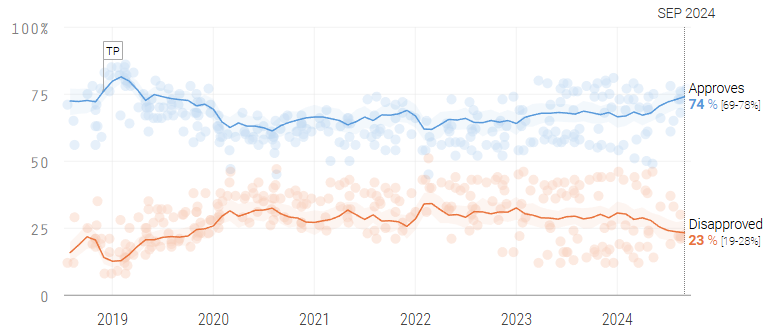
    What cannot be contested however is that AMLO turned out to be one of the most consistently popular presidents of contemporary Mexico, and indeed of Latin America. According to a poll of polls by Oraculus, in December 2018 as he took office, AMLO had a 76% approval rate which six years later, in September 2024, was virtually unchanged at 74%. There had been some smallish ups and downs along the way but AMLO’s aggregated approvals never fell below 60%,

    AMLO’s approval rating (poll of polls)

    Source: Oraculus

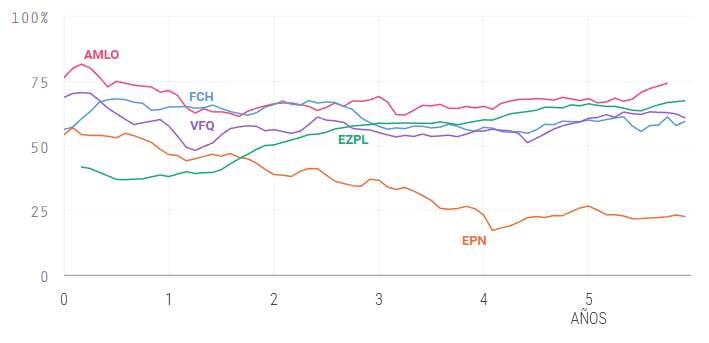
    AMLO also takes first place in the popularity stakes when compared to previous Mexican presidents. Ernesto Zedillo (EZPL) - a member of the Partido Revolucionario Institucional (PRI) who was president in 1994-2000, and is remembered as the architect of Mexico’s return to full democracy, came in second place with 67% approval at the end of his term. Next came Vicente Fox (VFQ), of the right wing Partido de Acción Nacional (PAN) who was in office in 2000-2006 and ended up with a 62% approval rating. Below him came Felipe Calderón (FCH) also a member of the PAN, who was president in 2012-2018 and achieved a 58% approval rate at the end of his six years. Enrique Peña Nieto of the PRI was something of an outlier, affected more than his peers by allegations of corruption, ending his 2018-2024 term with an approval rate of only 23%.

    AMLO’s approval ratings compared to previous Mexican presidents across their terms

    Source: Oraculus

    Part of AMLO’s popularity maybe be attributed to his exceptional communication skills and to a specific device he brought with him to do the job – the mañanera or morning show. This was a daily press conference in the National Palace, starting at 6 or 7 am and usually lasting two-to-three hours when AMLO held forth on the issues of the day. The mañaneras were broadcast on live television, streamed on social media, picked up by pro-government social influencers, and widely commented upon by radio news programmes. They were used by AMLO to communicate directly with his voters and to set the news agenda for the rest of the day.

    By one measure in the first four and a half years of his presidency there were 1,124 editions of the programme, equivalent to 4.8 a week, basically one for every working day of the week. A rough approximation is that during the course of his sexenio, AMLO pumped out over 3,000 hours of running commentary on Mexican politics, attacking his rivals, promoting his friends, and highlighting government achievements. This was a major change on the past. Traditionally, Mexican presidents have been rather remote figures, almost imperial in style, speaking at set-piece events in formal Spanish. In the 1970s presidents hardly gave any media interviews at all. AMLO turned that on its head being ever present, using colloquial language, telling jokes, and even singing songs.

    According to journalism professor Raúl Cortes “there is no other example in the world of this radio show” which has represented “an essential element in [AMLO’s] popularity”. Erwin Neumaier of Churubusco film studios told French newspaper Le Monde "There is no doubt that the mañanera has entered households. Previously, the presidential discourse was never heard, but now it's everywhere." Francisco José de Andrea Sánchez of LatAm Journalism Review has described the mañaneras as the “cornerstone” of the president’s communications.

    The mañaneras were also used as a vehicle for AMLO’s more authoritarian instincts. The guests and the narrative were tightly controlled; the president often ignored sensitive questions or suggested they were the work of conspiratorial conservative pressure groups. In February 2024 the president ‘doxed’ (released private details, including the mobile phone number) Natalie Kitroeff, a New York Times journalist. He was at that point involved in a dispute with the NYT, which had reported alleged government-drug cartel links. This led the Committee to Protect Journalists to issue a statement calling on the president to “refrain from publicising the personal information of journalists and respect privacy laws in the most dangerous country for journalists in the Western Hemisphere”. AMLO has also used the mañaneras to publish the salaries and tax details of journalists he disliked or wished to discredit.

    According to the 2023 annual report of lobby group Article 19, the organisation recorded at least 62 cases of stigmatisation, criminalisation, information blocking, and publication of information without consent during these press conferences. Political consultancy SPIN claimed that in a two-and-a-half-year period AMLO made 56,000 false or misleading statements in the mañaneras, including the assertion that the drug cartels “respect citizens and only fight among themselves”.

    President Sheinbaum has decided to continue with her own version of the mañaneras. With a scientific, data-driven background, her performance is likely to be different to that of AMLO, her mentor. She is unlikely to replicate his folksy tone, or to tell many jokes. AMLO’s core working class voters may be disappointed by the switch to a less sensationalist show. On the other hand, floating voters may welcome a more rigorous and transparent approach to information. The mañaneras may change in tone and structure, but Sheinbaum seems committed to maintain the element of direct communication that they represent.

  • Conclusion: politics holds the key

    Patrick de Courcy 03 August 2021 Hits: 1713

    This paper has argued that in the post-pandemic era LAC countries will in principle be able to recover and rebuild lost fiscal space so that they will eventually reduce the public debt burden and get themselves back on a pathway of sustainable economic growth. Getting back on track will be achieved not by a single dramatic policy decision, but by a combination of incremental changes affecting the fiscal cycle. A crude eight-stage model of fiscal adjustment was described, with opportunities for deficit reduction in each of its stages. These include reducing tax avoidance and evasion, raising income and wealth taxes, undertaking profound reforms on the spending side (particularly relating to health, social programmes, and education), introducing multi-year budgets, strengthening fiscal responsibility rules, and managing debt levels in the most efficient ways possible. Other factors are also in play, capable of making the fiscal cycle more or less difficult. Relatively low global interest rates provide an opportunity to ease fiscal pressures; Latin America’s gradually ageing population profile is likely to act in the opposite direction.

    While in principle this, therefore, looks like a problem that can be solved, introducing the political dimension makes it more intractable. Although there are exceptions, many Latin American governments and politicians shy away from the necessary structural reforms. Governments are in office for relatively short periods between elections, and short-term electoral priorities often seem to delay reforms. Major reforms are likely to be resisted by some interest groups, and putting together an effective coalition for change is often an arduous task. Pension reform in Brazil was first proposed in 1995 and not finally approved until 24 years later in 2019; even then, to gain the necessary support, its provisions were diluted to the extent that many argue a second pension reform will now need to be undertaken.

    The current crop of Latin American leaders appears less than enthusiastic about fiscal reform. The Argentine government of Alberto Fernández has postponed an agreement with the IMF; Brazil’s Jair Bolsonaro is under intense political pressure and may not get relatively modest tax reforms approved this year; street protests caused Colombia’s Iván Duque to perform a U-turn over the planned extension of VAT; and Mexico’s Amlo appears to be a fiscal conservative unwilling to consider a wider modernisation of his country’s tax and spend rules.

    In short, politics gets in the way. But this is not a reason to do away with politics or somehow ignore the democratic mandate. It does suggest however that the region’s current leaders will make only limited progress in the rebuilding of fiscal space. It will be down to the next generation of leaders to better engage with their electorates and stakeholders so as to achieve more politically sustainable fiscal pacts.

  • Jamaica: The inflation conundrum

    LatinNews 30 November 2018 Hits: 469

    Contrary to previous battles with above-target inflation, the current policy dilemma facing the Jamaican authorities is how to prevent inflation from falling back below the 4%-6% target band, which prompted a Consultation Clause with the IMF as part of the government’s borrowing agreement earlier this year. Recent signs are positive, with annual inflation rising in October, albeit as a result of higher supply-side oil and food prices, rather than stronger domestic demand.

    Jamaica is not an economy that it accustomed to grappling with low inflation. Annual inflation has traditionally been high in Jamaica, frequently creeping into double-digits, so government concerns about prices have tended to focus on the extent to which inflation is exceeding official targets. Monetary policy formulation, in turn, has often been crafted with this in mind, with benchmark interest rates having been traditionally fairly high, in an effort to keep inflation under control.

    Inflation set to rise

    However, inflation has surprised on the downside for much of this year. Despite a spate of interest rate cuts, prices have increased only gradually, with annual inflation falling from 5.3% in December 2017 to just 2.8% in June 2018. This triggered a Monetary Policy Consultation Clause (MPCC) that forms part of Jamaica’s borrowing agreement with the International Monetary Fund (IMF): as inflation fell below the official June target of 5% plus or minus 1.5 percentage points at the test date (June), the Jamaican authorities were required to consult with the IMF Board on the reasons for the deviation of inflation from the target and the authorities’ proposed policy responses.

    Recent signs, however, have been more positive. Annual inflation rose to the lower boundaries of the 4%-6% target range in September and continued to rise in October, reaching 4.7%. However, rather than reflecting firmer domestic demand (which would have boosted overall private consumption and thus strengthened GDP growth), the acceleration in inflation reflects higher supply-side prices. Rising international commodity prices have lifted food and fuel prices in Jamaica, with the food sub-sector of the consumer price index registering inflation of 5.6% in October, up from less than 3% in June-July. Utility prices registered inflation of 7.3% in October, up from 4% in June.

    IMF broadly supportive of progress

    In the IMF’s most recent review of the Jamaican economy, published in early November, the Fund noted that the Jamaican authorities had reinforced that they viewed the recent spate of below-target inflation results as a temporary deviation and were confident that inflation would return (and remain in) the 4%-6% target band. The Fund emphasised that monetary policy decisions took between four and eight quarters to feed through to inflation, implying that the period of interest rate cuts (that began in August 2017 and finished in May 2018) will continue to have an impact on lifting inflation for some time. Nevertheless, the government has requested a modification of the MPCC to reduce the lower boundary of the inflation target band, presumably to guard against a renewed fall in annual inflation.

    More broadly, the IMF continued to praise the progress made by the Jamaican authorities in consolidating the public finances, reducing unemployment and engendering greater macroeconomic stability. Continued emphasis is being placed on broader reforms to improve the operating climate for businesses, in a bid to lift private investment and bolster GDP growth, which remains weak. With this in mind, the authorities are preparing a reform to the Customs Act, with the Jamaica Customs Agency (JCA) stating in late November that they expect a draft reform to be presented to parliament in 2019. In the November IMF review, the Fund pencilled in a submission date of March, noting that implementation for that date remains on track. Few concrete details of the proposed changes have been made public, but the JCA has emphasised the need for modernisation and greater efficiency, with a view to facilitating international trade and aligning Jamaica’s legislation with current international best practices. This follows ongoing efforts to roll out Jamaica’s ‘Single Window Project’, which will provide one central hub for import, export, and transit-related regulatory paperwork, helping to improve communications between port authorities and customs offices and other regulatory agencies. The Single Window Project is due to be rolled out over the next 36 months.

  • The complex life of the Mexican tomato

    LatinNews 21 December 2018 Hits: 115

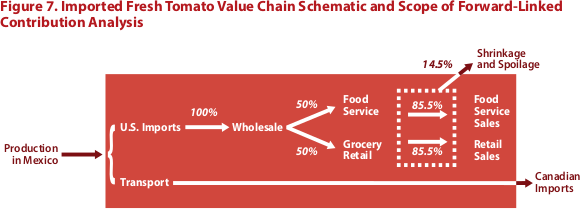
    The production and sale of agribusiness goods across international frontiers is often more complex than it appears at first sight. A recent study by the University of Arizona, ‘Mexican Fresh Tomatoes – Agribusiness Value Chain Contributions to the US Economy’, analyses the economics of the sale of Mexican fresh tomatoes into the US. In 2016 Mexico sold 3.4bn pounds worth of fresh tomatoes into the US, for a value of US$1.9bn. By weight, 1.7bn pounds of these exports were round tomatoes, 1.5bn were plumb (Roma) tomatoes, and the remainder, 228m pounds, were cherry and grape tomatoes. More than half these tomatoes were produced using protected agriculture techniques (greenhouses), with the remainder grown in open fields. Mexico’s share of the fresh tomato market in the US has been running at 40%-50%.

    The report notes that Mexican tomato producers have both forward and backward links to the value-added production chain. Forward links are those that connect them to the next stages of production, transportation, warehousing, and to the wholesale, retail, and foodservice industries ultimately leading to the final consumers in the US and Canada. Backward links concern the purchase of inputs needed for the production process, things like labour, fertilisers, and raw materials. These backward links can also cross international boundaries. Typically, Mexican tomato producers have backward links for the acquisition of greenhouses (from the Netherlands, Spain, and Mexico), for tomato seeds (Netherlands, Israel, and the US), for seedlings (Mexico and Canada), and for fertilisers (Mexico, Israel, and the US).

    Tomato production and trade in North America has developed agribusiness supply chains that take into account seasonal growing conditions, industrial specialisations, and comparative advantage across countries. The benefits of these agribusiness chains to a net tomato importer such as the US are not limited to the increased availability of tomatoes for consumers. North of the border the wider benefits include economic activity taking place within the transportation, warehousing, wholesale, retail, and foodservice industries to deliver tomatoes to end-buyers in both the US and Canada. South of the border the benefits include economic activity supported by demand for labour, goods, and services from Mexican tomato producers including the agricultural inputs needed for production.

    Tomatoes

    Source: University of Arizona

    The study found that US and Canadian imports of fresh tomatoes from Mexico contributed an estimated US$4.8bn in total economic activity to the US economy in 2016, including direct, indirect, and induced multiplier effects. The activity supported nearly 33,000 full and part-time jobs, earning US$1.4bn in employee compensation, US$353m in business owner income, and US$801m in corporate profits and other returns. In total US$2.9bn of US GDP was directly and indirectly supported by the tomato value chain.

    Clearly, multiple factors influence which parts of the value-added chain take place north or south of the border. The balance of trade at the border itself tells only part of the story. The value chain is shaped by comparative advantage, cost structures, competitiveness, industry organisation, transport, weather conditions, and government policies, just to name a few. It is interesting to note that the US is a net importer of fresh tomatoes from Mexico, but a net exporter of processed tomato products to Mexico. Exports of processed tomato products totalled US$96m in 2016, with nearly 247m lbs of prepared or processed tomatoes, tomato juices, and tomato sauces and ketchup exported to Mexico. In the US, the processed tomato industry is much larger than the fresh tomatoes sector; in Mexico it is the other way around with the fresh tomato sector dominating.

  • URUGUAY: A Familiar Infrastructure Story

    LatinNews 06 June 2013 Hits: 3058

    Between international trips (which among other places took him to China) Uruguay’s President José Mujica admitted that Uruguay, like a number of its neighbours, has fallen far short when it comes to investing in transport infrastructure.

    The president acknowledged that the country could fail to get the best out of promising soya and maize harvests because of “a crisis in road, port, and general logistics infrastructure”.  He noted that new public private partnerships (PPP) law approved in July 2011 had failed to deliver the desired upgrade in Uruguay’s roads – no PPP deals have since been signed. Worse, the country was side-tracked by a dispute with Argentina over the dredging of the Martín García canal and the River Uruguay (both necessary to increase waterway transport capacity).

    Mujica did say, however, that moves to launch a new state railway operator, and turn AFE, the existing railway company, into an infrastructure unit, were progressing.  And the transport and public works ministry has revealed it is involved in discussions with Turkish investors on opportunities in rail and a potential new deep sea port.

  • BRAZIL: A circular firing squad

    LatinNews 10 December 2015 Hits: 14

    One of the memes doing the rounds on Brazilian social media, in the wake of Eduardo Cunha’s decision to initiate impeachment proceedings against President Dilma Rousseff, was the final scene of the film Reservoir Dogs in which the last surviving characters shoot each other simultaneously. Whatever the final outcome of the impeachment proceedings, it is difficult to imagine any of the main characters emerging unscathed. Arguably, however, the greatest victim in this circular firing squad is the last remaining scrap of credibility of Brazilian politics.

    After months of speculation, Cunha finally pulled the trigger on 2 December. His motivation was simple and ignoble. Facing a congressional ethics committee investigation over lying to parliament about his possession of a number of secret Swiss bank accounts, Cunha has been using a variety of ingenious, if destructive, stalling devices. With dozens of impeachment requests against Rousseff filed at his office, Cunha had threatened to open one of the them if the ruling Partido dos Trabalhadores (PT) voted to allow the ethics committee to continue its work.

    In the end, despite apparent pressure from the presidential palace, the three PT deputies on the committee announced their intention to vote in favour of an investigation. An irate Cunha immediately telephoned the senate president, Renan Calheiros, and the vice-president, Michel Temer, to announce his intention to start impeachment proceedings. All three men are from the Partido do Movimento Democrático Brasileiro (PMDB), the PT’s restive coalition ally. Reportedlty, neither Calheiros nor Temer made an effort to dissuade Cunha.

    In the press conference he called to announce his decision, Cunha insisted he took “no happiness in doing so” but was obliged to for “political reasons”. In fact, the case against the president is legally dubious, at best. It was devised by three legal experts, including Hélio Bicudo, one of the founders of the PT, whose motivations appear to have more to do with spite over his failure to reap rewards from the party’s 12 years in power than statecraft.

    A president can only be impeached over crimes committed during his or her current mandate: so Rousseff can only legally be judged by acts she has committed since January. While Rousseff’s government has been accused by the federal court of accounts (TCU) of manipulating the public accounts in 2014, there has not yet been any judgment of her actions in 2015. The impeachment request is based on an assumption that the malpractices of 2014 (which, in themselves, are not necesarrily criminal) continued into 2015.

    Immediately after Cunha’s announcement, Rousseff called an emergency meeting with nine of her cabinet ministers and made a brief statement, insisting that she had committed no crime, vowing to fight the impeachment case, and contrasting her own probity with that of her accuser, Cunha. Various government supporters, meanwhile, tried to persuade the supreme court to throw out the impeachment request, without success.

    Over the weekend, congressional political parties met to discuss the possible membership of the 65-strong special commission on impeachment that will now convene to discuss the issue. All of the parties in congress have the right to a seat on the commission, with the PT and the PMDB having eight seats each, and the main opposition Partido da Social Democracia Brasileira (PSDB) having six. Once the commission is formed, the president will then have ten congressional sessions to mount her defence; the commission will then have five sessions to deliberate on the evidence before voting.

    If the commission votes by a simple majority to continue with the proceedings, the next hurdle is the lower house of congress, where two-thirds need to approve the continuation of the process. Should that happen, the president will have to stand aside in favour of her vice-president, Michel Temer, while the senate can take up to six months to decide her fate. If two-thirds of the senate voted in favour of impeachment, Rousseff would be out.

    Precedence

    Rousseff and her allies are wont to call Cunha’s maneuverings a “coup”, but there are certain similarities with the impeachment process against President Fernando Collor in 1992. Both presidents were elected in democratic, popular elections in the second round of voting. These second-round elections were hotly disputed and each won by a small margin. Neither Collor nor Dilma had or have adequate majorities in congress, meaning they both struggled to secure passage of their legislation.

    Unlike Collor, however, not even Rousseff’s bitterest critics believe that she personally profited from the corruption rampant in her government. In fact, Rousseff has recently embraced the accusations that she borrowed from public banks to fund her social programmes. On 7 December, she gave a speech in which she stated: “Some people have accused me of paying Bolsa Familia [the social security programme] and Minha Casa Minha Vida [the social housing programme]. I did pay it, with the money of the Brazilian people”.

    In other ways, however, the differences between 1992 and 2015 appear to weigh against Rousseff. In Collor’s day, there was no massive corruption scandal in the same league as Operation Car Wash, and the recession of that year was much milder than the depression Brazil is now in. These elements complicate the scenario going forward, and endanger Rousseff even though she appears to have the votes to prevent impeachment.

    For example, the arrest in late November of Delcídio do Amaral, a serving PT senator, over allegations of perverting the course of justice by attempting to bribe a witness in Operation Car Wash is unprecedented in Brazilian politics. Should Amaral co-operate with prosecutors, he may bring down others in the top echelons of the senate. Equally, another unknown is how bad the economic situation will get. Goldman Sachs now argues that Brazil is entering a depression, with the economy now expected to contract by more than 3% this year and more than 2.5% next year.

    Such a poor economic performance will inevitably impact jobs. Unemployment is already rising, with some expecting it to reach 10% by the end of the year. If this trend continues, there are likely to be many more protesters on the streets calling for Rousseff’s ouster. At present, street protests have been limited to the coxinhas, Brazil’s white, upper-middle class elite, but should the povão, the masses, turn out in force, Rousseff’s days are likely to be numbered.

    A recent vote count, after the impeachment case was filed, suggests Rousseff has around 120 votes solidly in her support in congress; the pro-impeachment camp has around 206. With 324 votes needed to continue the impeachment process, the pro-impeachment camp are still some way short. But the arithmetic could change rapidly. At the beginning of Fernando Collor’s impeachment process, then-future President Fernando Henrique Cardoso said the hearing was likely “to end in pizza”, the Brazilian term for when a corruption scandal peters out without convictions.

    Temer’s missive

    Already there are signs of the delicate relationship between the PT and the PMDB rupturing, with potentially ruinous consequences for the government. On 7 December, the local media published a leaked letter from the vice-president, Michel Temer, to Rousseff.

    In the three-page, 11-point document, Temer unleashed a long series of grievances about the president’s apparently unwillingness to trust either Temer or his party. Though Temer was reportedly “surprised” and ”irritated” by the leaking of the letter, its authenticity was quickly confirmed by his spokesperson and appears consistent with his plan of uncoupling the PMDB from the government. Without the support of at least some of the PMDB, it may prove difficult for President Rousseff to survive the impeachment process against her. Temer, the next-in-line should Rousseff be impeached, appears to be manoeuvring himself into position as her successor.

    In particular, Temer lamented the fact he was considered a “decorative” vice-president, excluded from various key decision-making meetings, and accused of betrayal when he sought to use his influence to reach across to political opponents to ensure the passage of government legislation. “I have always worked to keep the unity of the PMDB supporting your government, using the political prestige that I have within the party,” he wrote. “This was not enough to win your trust”.

    What this means for the future of the coalition between the PT and the PMDB, the foundation of the government, is not yet clear. Temer insisted that he was not proposing a split between the parties, he was instead working towards “the reunification of the country”. The vice-president’s entourage insist that he wrote the letter for the sake of clarity, lamenting the fact that whatever he did, he would be accused of ‘coup-mongering’ by the PT.

    So far, Rousseff has not responded to the letter, though before its publication she insisted that she had full confidence in Temer. Separately, she continued to defend herself, arguing that there is no justification for impeachment. “They accuse me of having paid Bolsa Família [a social assistance programme] and Minha Casa, Minha Vida [a social housing programme]. I paid it, yes, but with the money of the Brazilian people,” she said.

    The impeachment request accepted by Cunha accuses Rousseff of breaking the law by using illegal accounting manoeuvres to balance the books. Specifically, Rousseff is accused of using public banks to fund social programmes to keep the payments off the government’s books.

    Legally, however, most analysts agree that the basis is thin, based as it is on the federal court of accounts (TCU) condemnation of the government’s accounts for 2014, during her first term. Firstly, the TCU is not a proper court, but an advisory body to congress, and its rulings have no legal force. Secondly, Rousseff could not be impeached for acts committed during her first term, so her accusers have merely made the assumption the accounting practices carried out in 2014 continued into 2015.

    The formation of the special commission on impeachment was due to be finalised by Cunha as we we went to press. This looks like another manoeuvre to delay the ethics committee investigation into Cunha’s alleged lying to congress. If the timetable of the two clash, the impeachment commission will take precedence over the ethics committee, pushing its work back yet again.

    Datafolha poll

    On 29 November, Datafolha published a poll showing Rousseff’s approval rating had improved slightly from 9% to 10%. Her rejection rating had fallen too, from 71% to 67%. The survey also asked respondents to name the worst problem in Brazil. For the first time, corruption topped the list with 34%, followed by health, unemployment, education, then public safety.

    • Worst quarter for 20 years

    On 1 December, the national statistics agency (IBGE), released the GDP data for the third-quarter of 2015, showing a retraction of -1.7% quarter-on-quarter and   -4.5% year-on-year. BNP Paribas expects GDP to contract by 3.8% in 2015; Credit Suisse predicts GDP to fall 3.5%.

  • Ecuador: Fiscal consolidation efforts underwhelm

    LatinNews 11 May 2018 Hits: 757

    President Lenin Moreno unveiled his government’s multi-year economic plan in early April, which aims to increase productivity, cut the fiscal deficit, promote investment, and generate employment. In mid-April, the government began to table measures in line with these goals, including a consolidation of the bloated public sector. Although the government’s intentions are laudable, it remains highly unclear whether it will manage to reduce the fiscal deficit and arrest a recent sharp increase in public debt without more significant revenue-raising measures, including tax increases.

    Laudable aims

    The underlying premise of the 2018-2021 Economic Programme for Fiscal Stabilisation and Productive Reactivation is solid: that economic growth cannot continue to be driven by fiscal stimulus, which in recent years has bolstered consumption but has come at the cost of spiralling levels of public debt. Instead, the administration is seeking to lift productivity, in an attempt to lift exports and thus enable cuts in government consumption. Making the business environment more friendly would also help diversify the economy, as well as bring in much-needed investment.

    The plan outlines government efforts in four separate areas:

    • Fiscal stability: involving efforts to reduce the deficit from an expected 5.6% of GDP in 2018 to just under 2.5% of GDP in 2021.
    • Public-sector restructuring: including measures to improve the quality of public expenditure and cut the size of the public sector.
    • External sector: boosting exports in order to improve the balance of payments and thus increase the sustainability of dollarisation.
    • Investment: increasing productivity through strengthening operating conditions in the private sector

    The plan is accompanied by 14 concrete measures that the government hopes to push through. Reflecting the importance of cutting the fiscal deficit, many of these relate to cost-saving measures, including saving US$1bn as a result of public-sector consolidation, including eliminating and merging ministries and secretariats. The government also hopes to raise US$810m over the 2018-2021 period by reducing tax evasion. In terms of improving the business environment, proposed measures include new tax incentives for foreign investors and better access to local finance.

    Ministries set for merger

    In mid-April, the government followed up on this plan with the unveiling of more details of the intended public-sector consolidation. Labour Minister Raúl Ledesma, together with the head of the national planning and development secretariat (Senplandes) Edison Garzón, announced that 1,000 civil service posts would be cut in the coming three years. In addition, 50% of the consultants employed by the public sector (amounting to 365) would be cut.

    This will be partly achieved through a reduction in the number of ministries – which swelled under Moreno’s predecessor, Rafael Correa – from 27 to 22. Rather than eliminating ministries altogether, this will be achieved by a merger of currently independent ministries, including Education and Sport, and Hydrocarbons, Electricity and Mining. By contrast, five public-sector entities will be eliminated, including the state cement firm, and a further four will be merged. There will be pressure on other state firms to improve their performance, perhaps with future concession sales in mind.

    Forecast cost savings appear unrealistic

    While the underlying premise of all of these efforts is positive, economists have generally reacted with some degree of scepticism regarding the extent of fiscal savings that the government hopes to generate though its plan. Saving US$1bn through public-sector consolidation is a large sum, equating to around 2.5% of total fiscal expenditure last year, and given that most ministries will be merged rather than eliminated, it is difficult to envisage that such a large sum can be saved. Equally, cracking down on tax evasion will be difficult without a significant increase in resources (which, given the fiscal policy stance, is unlikely), so revenue-raising projections may well also be missed.

    Meanwhile, efforts to bolster the business environment may flounder. Not only does President Moreno lack an absolute parliamentary majority, but there is no firm domestic consensus on the requisite measures needed to attract investment. The president’s falling approval ratings, which stood at 46.6% in April, down from well over 75% in mid-2017, may also act as a restraining factor. With no new revenue-raising suggestions (including tax reform), it is therefore likely to prove difficult to meet the government’s ambitious goals for deficit reduction.

  • Brazil – the debate over Lula’s policies

    Patrick de Courcy 29 June 2022 Hits: 1424

    Such is Brazil's size and influence that if Luiz Inácio Lula da Silva, who was in office for two consecutive terms in 2003-2011, wins a third term in elections due next October, the second wave of the pink tide will be deemed to have gathered a lot of critical momentum. Social democrats have long praised Lula as a pragmatic politician with strong negotiating skills. Although he and his administration have been accused of corruption, at a personal level, court convictions against him have been overturned after being judged to have been biased against him. Unlike the incumbent Jair Bolsonaro, Lula is also widely considered to have accepted democratic checks and balances, and to have respected the rule of law.

    Yet none of this necessarily suggests a third, centre-left Lula presidency will be successful. Some analysts say there were ‘two Lulas’ during the first wave of the pink tide. ‘Lula 1.0’, most in evidence during his first presidency, was pragmatic, reformist, and market friendly. Looking back on that period, he himself has highlighted that there was an economic boom, around 250 corporate IPOs, a reduction in Brazil's debt-to-GDP ratio, and a sharp increase in foreign currency reserves. Critics say this was all possible because of the commodities boom. As record export revenues began to subside, however, a less market friendly ‘Lula 2.0’ is said to have emerged. The president and his successor Dilma Rousseff (2011-2016) tolerated corruption, failed to control a widening fiscal deficit, subsidised energy prices in an unsustainable manner, and presided over bureaucracy and rising costs that made Brazil less internationally competitive.

    It is not yet clear if there will be a ‘Lula 3.0’ and if so what he will be like. While the candidate continues to have a commanding lead in the opinion polls, there is still some doubt over what his policies will be. A first 90-point draft manifesto has been submitted to the parties backing Lula's candidature, which will be subject to further negotiations. The document contains a general commitment to economic recovery, to increasing employment and wages, and to achieving a reduction in inflation, by expanding access to food, fuel, and energy. There is a call for massive investment in infrastructure, but no details on how the money needed would be raised. There is also talk of reviewing the 2017 labour reform law, which left wingers believe gave too much negotiating power and flexibility to employers. Trade unions say the extra jobs that the 2017 law was supposed to create never materialised. The current draft of the manifesto suggests a new piece of legislation may be proposed to stimulate employment.

    Investors may also be worried over what the manifesto does not say. Ahead of the 2002 elections, ‘Lula 1.0’ wrote an open letter to the business community promising there would fiscal responsibility and no abrupt changes in policies. In contrast, ‘Lula 3.0’ has yet to make any similar commitment. He has also spoken of lifting the fiscal spending cap (which prohibits raising government spending by more than the rate of inflation), causing some concern over a possible move to an unchecked policy of tax and spend. The business community is also wary of the suggestion of government intervention in specific economic sectors to achieve growth targets.

    The document does promise tax reform. Given Brazil's massively complex and regressive tax system most economists believe tax reform is essential, but there is not necessarily an agreement on what the details should be. It is also unclear where a Lula government would introduce a tax on dividends, which is opposed by the business community. As expected, the manifesto opposes privatisations and indicates that a Lula government would consider reversing the divestment of power company Eletrobras and postal company Correios, both of which are in their final stages.

    To some extent the ambiguity of the document is deliberate, as Lula is still in the process of negotiating more specific deals with the parties in this coalition and seeking to attract centrist voters. But it also underscores the major challenges the presidential hopeful will have to confront if he is to get the economy growing again and overcome the deep divisions in Brazilian society.

  • Guyana: Upcoming early election raises questions over future economic policy stance

    LatinNews 25 January 2019 Hits: 2033

    The prospect of an early election in Guyana following a motion of no-confidence that was tabled by the opposition on 21 December has raised uncertainties about the likely policy stance that the next administration will adopt. This is particularly relevant given that the opposition has been critical of contract terms agreed with the US oil major ExxonMobil for development of offshore energy reserves.

    On 21 December, the opposition People’s Progressive Party/Civic (PPP/C) tabled a no-confidence motion against the government, which it won by a narrow one-vote margin (33-32 votes in the 65-seat National Assembly) following the surprise defection of Charrandas Persaud, from the Alliance For Change (AFC, a small party within the ruling coalition), who voted to support the opposition. Although the government has challenged the results in the high court, if the judiciary backs the result of the no-confidence vote, a general election must be held within 90 days of the December vote.

    Implications for Guyana’s economy will very much hinge on the result of the election. Given that the current president, David Granger, has been receiving cancer treatment in Cuba there had been some uncertainty about whether he would seek re-election, but on 21 January the People’s National Congress Reform (PNC/R, the largest party in the ruling coalition) endorsed him as their candidate. He will face a former housing minister, Irfaan Ali, who was selected by the main opposition People’s Progressive Party (PPP) as their presidential candidate in mid-January. The PPP’s leader, Bharrat Jagdeo, is not constitutionally permitted to run for election given that he has already served two terms as president. 

    PPP criticises oil policy

    The main focal point with regard to the next administration’s policy stance will be in relation to energy. ExxonMobil found offshore oil in 2015, with reserves believed to hold around 5bn barrels, and production expected to begin in early 2020, reaching 750,000 barrels per day by 2025. However, the PPP has been highly critical of the terms of the production-sharing agreement that the current government signed with ExxonMobil. In a press conference last September, Jagdeo indicated that while the PPP would honour the contract signed with ExxonMobil if it returned to power, it may seek to renegotiate contracts signed since then. These contracts included similar terms as offered to ExxonMobil, but the PPP has argued that Guyana is no longer a “frontier market” now that oil reserves have been proven, so contract terms should be more favourable to Guyana on the basis that the country needs to offer fewer incentives to lure international oil firms. 

    Given that the prospect of an early election has come as a major surprise, with political parties only in recent days confirming their presidential candidates, parties have not yet drawn up detailed campaign manifestos. As such, it is difficult to gauge whether the official fiscal and monetary policy stance will shift in the coming years. If the PNCR wins re-election, either on its own or in coalition with the AFC, policy would be unlikely to shift dramatically. However, President Granger would have to ensure that the large oil receipts that are set to begin hitting the state coffers from next year are used efficiently in terms of promoting economic development. Recent moves to put in place fiscal stabilisation rules, to set aside some of the commodity windfall in years of high energy prices, are likely to continue under a Granger-led administration. 

    Broad policy continuity is likely

    Notwithstanding the criticism of contract terms by the PPP, a dramatic shift in policy stance under a PPP government looks unlikely. Both the PNCR and the PPP would be likely to prioritise lifting economic growth and making sure that the expansion of the energy sector filters down into sustainable and material improvements in living conditions, including greater job creation. Regardless of who wins the election, the next government will also have to deal with potentially-tricky relations with neighbouring Venezuela, whose government continues to lay claim to territorial waters. Although there is little sign that the Venezuelan government would actually seek to seize Guyana’s oil assets (notwithstanding Venezuela’s interfering with two ships under contract to ExxonMobil in December, see our Latin American Security & Strategic Review [SSR-19-01]), the continuing escalating of the Venezuelan economic crisis raises risks of renewed diplomatic spats, as their government seeks to detract attention from domestic woes.

  • Petro faces difficulties on the road to a Colombian green agenda

    Patrick de Courcy 06 July 2023 Hits: 2568

    Gustavo Petro took office in Colombia at the beginning of a four-year presidential term in August 2022. He was the country’s first left-winger to take office, and the first to assemble a ruling coalition including his own Pacto Histórico (PH) and an environmentalist party, the Alianza Verde, respectively with 28 and 15 seats in the 188-strong Chamber of Deputies. However, as in the case of the Lula government in Brazil, the balance of power in the Colombian congress is held by a range of smaller right and centre-right parties.

    Petro’s policies on the protection of the Colombian Amazon and on a transition to renewable energy have to be seen in the context of a wider package of tax, health, pension, and educational reforms, as well as the highly ambitious total peace programme which calls for parallel negotiations on a peace settlement with all of the country’s armed rebel and criminal groups. As Petro approached the end of his first year in office, the initially feverish pace of reform was beginning to wane, with allegations of corruption eroding government popularity and the congressional opposition beginning to block or delay proposed new laws.

    Petro set out his vision for the Colombian Amazon while attending the COP27 global climate conference in Egypt in November 2022. In a key part of his speech the president said that “saving the Amazon rainforest means life, it means building a multilateral fund that is capable, over 20 years, of financing the social forces, peasants, farmers, humble people, who are today the agents of destruction of the rainforest. The aim is to transform them into a positive force, which means paying them monthly for environmental services, for protecting the Amazon rainforest and allowing it to grow."

    However, many details and budget allocations have yet to be fixed. Amazon policies are intended to form part of the four-year Plan Nacional de Desarrollo (PND), for which investment projects are still being finalised. In the meantime, there have been complaints that staffing levels in the system of national parks continue to be overstretched. Pending progress on total peace, many parts of the Amazon remain under the direct control of armed groups and vulnerable to the environmental depredation caused by illegal gold and rare-earth metals mining.

    Petro has also run into some significant political trouble over his plans to reduce Colombia’s dependence on fossil fuels, switching instead at a rapid rate to renewables. Together with energy and mining minister Irene Vélez-Torres, he has promised to stop new oil and gas exploration as well as banning fracking. In January 2023 at the World Economic Forum (WEF) Petro said: “We are convinced that strong investment in tourism and clean energies will allow us on the short term to fill gaps left by the fossil fuel industry.”

    But a range of critics have said a very rapid transition is difficult and that the plan has not been properly thought through. Colombian oil and gas production accounts for nearly half of exports and one-fifth of government revenue, while current reserves stand at only 7-8 years’ worth of consumption. The Centro Regional de Estudios Energéticos (CREE), a think-tank, says that meeting Colombia’s commitment to become a net-zero emitter by 2050 while reducing fossil fuel dependence, will require an extraordinary five-fold increase in electricity supply, some of which will have to be gas-fired at a time when Colombia’s gas reserves are also dwindling.

    Meanwhile, as part of the tax reform that was approved by congress, the government has actually increased taxes on wind and solar generation while putting a major new wind farm project on hold in La Guajira department, pending completion of a lengthy consultation process with the local indigenous community. Finance Minister Ricardo Bonilla, trying to reassure the fossil fuel industry, has said that “the energy transition is going to take 15 to 20 years and we are going to continue exporting oil and coal for much longer”. Bonilla also said the government was considering launching carbon credits to combat deforestation as well as green bonds to fund projects that restore the environment and recover water resources.

    Just as the Brazilian ministerial team has experienced internal disagreements over oil drilling in the mouth of the Amazon, the Colombian authorities are somewhat split over whether or not to ban all new oil and gas exploration. In both countries the pink-green coalition may therefore find itself under pressure, and the two presidents will need to use their political skills to reconcile opposing positions. It is also interesting to note that in his speeches Petro takes the more radical and abrupt position of favouring renewables instead of fossil fuels, while Lula in Brazil is following the more pragmatic rule of pursuing renewable energy as well as fossil fuels, at least for the medium-term future.

  • REGION: Tough trip to a rough destiny

    LatinNews 02 September 2011 Hits: 1796

    The situation of Central American migrants has once again made headlines, but this time concerns are focusing on their welfare whilst on their overland route to their final destination, the US, rather than their treatment once they have arrived. Maura Sánchez, a 56 year old activist, finally reached Mexico City’s El Zócalo on 1 August after a gruelling 1,500km walk, bus and train ride from her native Honduras. She led a group of some 100 protestors, who were later joined by 400 Mexican activists, calling on Mexican authorities to ensure the rights of migrant workers are respected and to investigate the numerous reports of kidnappings, disappearances, forced labour and other abuses suffered by Central Americans while crossing Mexico.

    “We ask the authorities to meet their obligations, to be heavy handed, because they [the authorities] are the ones who attack the migrants”, Sánchez said to the media. It is estimated that some 500,000 Central American migrants cross Mexico on their way to the US every year, but it is unknown how many of them make it to their destination and how many meet their end in Mexico. The discovery of a mass grave containing the bodies of 72, mainly Central American migrants, in the state of Tamaulipas in August 2010, brought the issue of migrant abuses to the fore [RC-11-01]; since then, Mexican authorities have tried in earnest to free kidnapped migrant workers. On 23 July, for example, the Mexican federal police rescued 12 migrants who had been held against their will in Reynosa, Tamaulipas, for two months. Such efforts, however appear just a drop of water in an ocean of criminality and the relatives of those still missing, like Sánchez, are calling for more action.

    Same dangers, less money
    A study by the US-based PEW Hispanic Center released in July found that Hispanics in the US, now the biggest ethnic minority in the country (16% of the population), have been the worst affected by the US credit crisis and the subsequent recession. PEW calculates that the average Hispanic household has seen its net worth plunge from US$18,359 in 2005 to US$6,325 in 2009. PEW reckons that African American households on average saw a 53% drop in their net worth compared to a decline of just 16% for white households. The problem for Central American and Mexican immigrants is that they had already started from a much lower average than their African American and white counterparts.

    According to a recent study by the Migration Policy Institute (MPI), published in June this year, a quarter of Mexican, Honduran and Guatemalan immigrants, together with 18% of Salvadoreans, already lived below the poverty line before the crisis hit. In contrast, only 14.3% of the general US population lived in poverty at the same time. This situation improved markedly when researchers disaggregated numbers by region of origin and generation: Central American second-generation immigrants were quick to catch up and meet the US median, but a large portion of their Mexican counterparts remained in poverty, with a rate of 20.1% for second-generation Mexican-Americans and 18.6% for the third generation.

    The problems for these immigrants is not only that they start at the very bottom of the labour pecking order, taking the worst paid of the low-paying unskilled jobs on offer, but they also lack the most basic education to compete for work at home, let alone with their non-Hispanic immigrant counterparts. According to the MPI, in 2008 61.5% of Mexican immigrants aged 25 and over had less than a secondary school diploma when the figure is only 32.5% for all foreign-born adults. The problem is that the vast majority are unable to speak English well enough to improve their level of education or help their teenage children overcome this challenge: in 2008, 52% of all foreign-born persons reported limited English proficiency, while that figure soared to 74% for Mexicans and Guatemalans and to 72% for Hondurans and Salvadorans. The younger the immigrant the better his/her chances of learning English are, and of improving their education and employment opportunities.

    • Missing for 12 years

    Sánchez was compelled to enter political activism as a result of personal experience: in 1997, her 37 year old sister-in-law, Lourdes Soyapa, left her native Tegucigalpa to seek a better future in the US. After travelling for two years, she made it to the border city of Nogales in 1999, where she last made contact with her family. Her whereabouts have been unknown ever since. The Comisión Nacional de Derechos Humanos (CNDH), the office of Mexico’s human rights ombudsman, estimates that in 2010 alone, 20,000 Central American migrants were the victims of numerous abuses -including kidnapping, extortion and murder- whilst on transit through Mexico.

  • Colombia hopes for cocaine anti-narcotics win

    Patrick de Courcy 08 September 2023 Hits: 3427

    On 12 August, Colombian President Gustavo Petro shared some of his thinking on his country’s evolving anti-drug policies on X (formerly Twitter). He argued that market geography and cocaine smuggling routes are beginning to change as a result of the rise of fentanyl consumption in the United Sates. In the past, he said, the geography of coca cultivation and the location of cocaine laboratories was primarily defined by patterns of US demand. As a result, the main drug-trafficking routes lay to the north of his country, leaving Colombia either through the Pacific or the Caribbean. The president said these were now “progressively changing” and up to a point swinging around to the south. The cartels, he claimed, “are abandoning the coastal areas and instead penetrating the eastern slopes of the Andes and into the Amazon”.

    As result, Colombia’s main coca cultivation areas were no longer to be found in Tumaco (on the Pacific coast of Nariño department) or in Catatumbo (near the frontier with Venezuela). Instead, Petro asserted, “the world’s top cocaine production area is now located in a 10km strip of land on the Colombian side of the Colombia-Ecuador border”. Cocaine produced there is shipped southward through the river network. Some goes through Brazil as a gateway to Europe and Africa, and some goes to Ecuador and Peru, seen as gateways to reach central Asia, Japan, and Australia.     

    Petro went on to argue that the shift in supply routes had been a major factor in the dramatic spread of violence in formerly peaceful Ecuador, where Mexican and other top international cartels are fighting a proxy war for control of territory. This was the background to the August assassination of the Ecuadorean anti-crime presidential candidate Fernando Villavicencio. The Colombian president said the “shift to the south” might see Paraguayan and Uruguayan criminal groups fighting to secure control of cocaine production in Bolivia. For him, a related and major driver of change is the sharp drop in global cocaine prices.

    Crucially, Petro suggested the “shift to the south” might be beneficial to Colombia in the long term. As he put it, “Colombia, a country that lacks the manufacturing capacity to produce fentanyl, might escape from this narco-trafficking geography: that escape, for us, would mean peace”. However, the recent fall in cocaine prices does not simply reflect demand-side factors, such as the rise of fentanyl. Colombia is the world’s dominant cocaine producer, accounting for about 60% of global supply. In Cauca, in Colombia’s southwest, the price of a bushel of coca leaves (12.5kg) has nearly halved, from 70,000 pesos (US$17.30) to 38,000 pesos (US$9.40) in the year to August 2023. Similar drops have been seen in Nariño, Cauca, and Catatumbo. Various factors explain the price drop. In broad terms supply has gone up, both in Colombia and in neighbouring countries like Peru and Bolivia while international demand remains broadly stable.

    Coca cultivation in the Andes, 1987-2021 (U.S. government estimate)

    Source: WOLA

    In Colombia the coca cultivation area has expanded sharply (up by 43% in 2021 to 204,000 hectares). Partly because of the change of administration last year government eradication efforts have been paused. Coca cultivation and laboratory processing has meanwhile become more efficient. The UN estimates that cocaine hydrochloride yield has increased from 6.5kg to 7.9kg per cultivated hectare over the last four years. A further factor may be the fragmentation of criminal cartels which has led to more competition between them and increased supply. Ana María Rueda of lobby group Fundación Ideas para la Paz told The Economist: “Now there are more than 500 criminal groups across the country. Gangs who buy cocaine wholesale can pick and choose which regions they purchase it from and drive prices down locally.”

    There are also suggestions that the crop eradication policies of Petro’s predecessors may have been counterproductive. Poor families were paid to switch away from coca leaf production, but in some cases they appear to have responded by actually planting more coca bushes, so as to be able to claim more of the subsidy for substituting them. The Petro administration has in any case said it wants to focus its efforts more on cocaine interdiction than on coca leaf eradication.

    What is clear, however, is that the cocaine market is going through a global ‘bust’ that is creating real hardship in some areas of Colombia. It is estimated, for example, that around 230,000 farming families depend on coca cultivation to earn a livelihood. The government has begun an emergency programme of cash payments in 181 municipalities to help.

    The Petro government has taken some time to develop a detailed anti-narcotics policy, partly because it has been eager to do so in consultation with local communities in some of the areas most affected by drug trafficking and violence. At the end of August – when the new government had been in office for a year - Camilo Umaña Hernández, Deputy Minister for Criminal Policy and Restorative Justice, outlined some of the key points of a draft 10-year drugs policy covering 2023-2033, which he said included inputs from 2,700 social leaders and 274 “national organisations”.

    The deputy minister said the overall policy had three major priorities. One, to break up the large criminal cartels; two, to encourage economic alternatives for community development; and, three, to promote protection of the environment. Speaking at a community meeting in Puerto Asís, Putumayo department (on the border with Ecuador), Hernández said the aim was for government intervention in areas of conflict to come in two forms, to be known as “suffocation” and “oxygen”.

    “Suffocation” measures would be designed to reduce the influence and organisational capacity of criminal organisations responsible for drug trafficking and human rights violations. Under this heading the deputy minister said the objective was “to break up these organisations and create conditions for peace and security in the communities”. Under the “Oxygen” heading, on the other hand, the aim was to transform communities through the promotion of alternative and legal economic activities. This would involve presenting the communities with development options, creating a climate of co-existence, safety, and respect for human rights.

  • Chile bets on mass vaccination

    LatinNews 31 March 2021 Hits: 1635

    One of the features of the global pandemic has been that government responses have been erratic, confounding predictions, with both unexpected successes and unexpected failures in the different phases of the crisis. Chile is a case in point, struggling to cope in the lockdown phase but suddenly becoming much more effective during immunisation phase. Although Chile scores well in terms of per capita income levels, and has an above-average health system and low labour informality, the country nevertheless entered the first phase of the pandemic in a weakened state. In October 2019, six months before the start of the pandemic, intense street protests and riots had spread across the country supporting demands for major social and political reforms. Protests continued intermittently after the start of the pandemic.

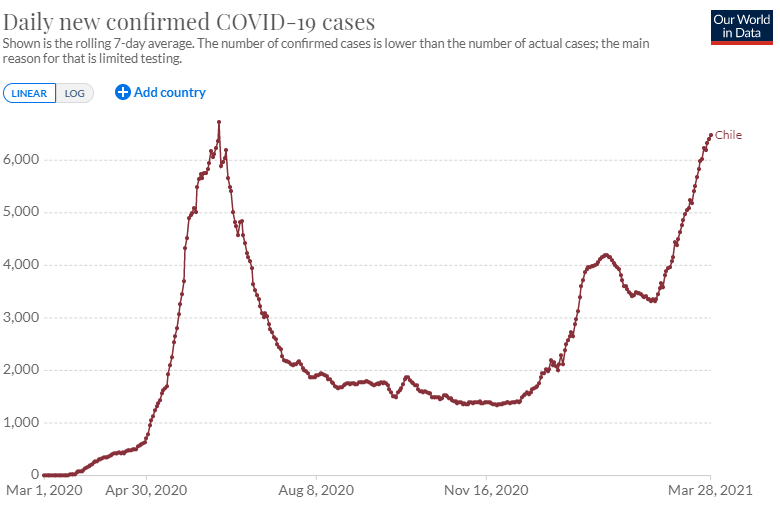
    The right-wing government of Sebastián Piñera was slow to respond to the first positive cases of Covid-19 in March. It was not until mid-May that it declared a quarantine in the capital, Santiago, where 7m of the country’s 19m inhabitants live. The public health system came under pressure but continued operating even during the first peak in June and July 2020 when daily new coronavirus cases rose above 7,000. In June the health minister had resigned amid claims the government was under-reporting the true extent of the pandemic. Enrique París, the new minister, admitted “we’ve made mistakes, among them by saying that the pandemic wasn’t going to be that strong”. In early 2021 París acknowledged Chile was undergoing a second, although smaller wave, aided by a relaxation of health protocols and increased mobility triggered by the southern hemisphere summer holidays.

    What does appear to be changing the picture in Chile is the initial success of its vaccination plan, launched in early February 2021. In little over a month mass vaccination took the proportion of the population that had received a jab from near-zero to 18%. This catapulted Chile into fourth place in the global immunisation ranking, behind Israel, the United Arab Emirates (UAE), and the UK. By 17 March Chile had immunised 40.7% of its population, overtaking the UK (39.8%) and leading across all of Latin America. The mayor of La Florida, a neighbourhood of Santiago, said the authorities had deliberately set out to emulate the Israeli approach, converting football stadiums and other accessible locations into mass vaccination centres. Chile also pursued a pragmatic, non-ideological approach to buying vaccines, which were acquired from a number of laboratories including China’s Sinovac. The government aims to have vaccinated 15m people by June, and health minister París says he hopes the population will have acquired a degree of herd immunity by mid-year, an achievement which should flatten the curve of infection.

    Chile Cumulative Cases Cumulative Deaths Deaths per million
    15 March 2021 0.88mn 21,674 1,128

  • NICARAGUA: Ortega set for another term

    LatinNews 28 January 2021 Hits: 1741

    Date: 7 November.

    Type: Presidential, legislative (92 seats in the unicameral congress), 20 seats for the Central American parliament (Parlacen).

    Main contenders: President Daniel Ortega (Frente Sandinista de Liberación Nacional, FSLN). At the time of writing, candidates had yet to be announced for Coalición Nacional (CN), Partido Liberal Constitucionalista (PLC), and the other main opposition grouping Alianza Cívica por la Justicia y Democracia (ACJD)/Ciudadanos por la Libertad (CxL).

    Towards a fifth term

    In power since 2007, President Ortega won his third consecutive election and fourth presidential term in the last (November 2016) election, with 72.5% of the vote, taking 71 seats in the legislature. The main opposition PLC of disgraced former President Arnoldo Alemán (1997-2002), which took 15% of the presidential vote, had 14 deputies and the smaller parties made up the difference.

    As with previous elections, questions were raised about the integrity of the electoral process. Ortega’s critics accuse him of having dismantled Nicaragua’s democratic institutions since taking power, including the electoral authorities (CSE), and reproducing the very caudillismo that he fought to overthrow in 1979 with the defeat of former dictator Anastasio Somoza (1967-1972; 1974-1979). The UK-based Economist Intelligence Unit (EIU) for instance classifies Nicaragua as an ‘authoritarian regime’ while US NGO Freedom House rates it ‘not free’ in its annual study of political rights and civil liberties worldwide.

    Concerns about democracy have intensified since April 2018 when an unprecedented show of unrest, prompted by protests over changes to the social security system (INSS), led the government to begin a crackdown on opponents, who it accused of trying to carry out a coup, which has continued.

    • Impact of repression

    According to the OAS, the repression in Nicaragua has resulted in 328 deaths since April 2018 (though local human rights groups suggest the number is far higher), around 2,000 injured, over 770 imprisoned, over 100,000 fleeing the country, and over 90 journalists forced into exile.

    The international community has taken a stand. In June 2020, Organisation of American States (OAS) General Secretary Luis Almagro announced he would request that OAS members declare a “rupture of the democratic order” in Nicaragua. This brought the Ortega government a step closer to facing sanctions which could include the suspension or termination of its member state status. In October 2019 the European Union established a framework for targeted sanctions which it extended a year later, citing the “ongoing deterioration of democracy and human rights in Nicaragua”. It sanctioned six officials in May 2020, and the US has also slapped a string of sanctions on key allies of Ortega including First Lady Rosario Murillo Ortega’s sons, Juan Carlos, Rafael, and Laureano Ortega, Commander-in-Chief of the Army Julio César Avilés Castillo, and police chief Francisco Díaz, among others.

    Against this backdrop, the prospects for the opposition, which remains fractious, are not promising. In February 2020 a national coalition, the Coalición Nacional (CN), was launched, comprising seven members. These were: the civil-society groups ACJD; Unidad Nacional Azul y Blanco (UNAB); peasants’ movement Movimiento Campesino; and four political parties – PLC, Fuerza Democrática Nicaragüense (FDN), Partido de Restauración Democrática (PRD), and indigenous party Yatama. Since then, the ACJD pulled out in October 2020, complaining the CN had failed to facilitate dialogue with other opposition groups, and has since formed a new alliance with another opposition group, CxL. In December 2020, the PLC was ejected amid concerns it still had links to the FSLN with which it forged a power-sharing arrangement, ‘El Pacto’, in 2000.

    Further compounding these problems, the opposition has decried new legislation which it warns will further target them ahead of the elections. This includes a new law prohibiting anyone who has “led or financed a coup d’état, fomented terrorist acts, or incited foreign interference” from running in elections - all accusations levelled by Ortega at the opposition. Other contentious new legislation includes: a foreign-agents law requiring organisations and individuals that receive money from international governments and institutions to register as ‘foreign agents’ with the interior ministry; a cyber-security law; and a constitutional amendment which allows life imprisonment for ‘hate crimes’.

    Major doubts also persist as to the integrity of the electoral process. Such were the concerns in 2016 that the FSLN government committed to electoral reform as part of a Memorandum of Understanding (MoU) signed in February 2017 with the OAS. However, an OAS resolution passed in October 2020 indicated that this had not taken place and urged that “concrete electoral reform commitments, in particular modernization and restructuring of the Supreme Electoral Council, be in place before the State convokes general elections, or no later than May 2021”.

    A survey by pollster CID-Gallup published in October 2020 showed support for the FSLN running at 20%-25%, a decline on previous years but no opposition grouping had emerged to capitalise on this. The survey also showed that Nicaraguans’ main concern is lack of employment (cited by 34% of the 1,202 respondents), followed by government corruption (17%), insecurity (16%), and the high cost of living (10%). This reflects the dire economic situation. Already impacted by the political crisis which began in April 2018 (GDP shrank 4.0% and 3.9% in 2018 and 2019, respectively on World Bank figures), this has since been compounded by the impact of both the coronavirus (Covid-19) pandemic and devastation wreaked by hurricanes Eta and Iota in early November. In October the central bank said it was forecasting that GDP would contract 4.5% in 2020 (within a ±1 percentage point range) due to the pandemic but this does not take into account the damage caused by Eta and Iota which preliminary government figures put at US$742m or 6% of national GDP.

  • Concern over REE preferential access

    Abbi Dicker 14 May 2026 Hits: 1303

    Additional US proposals to develop critical minerals in Brazil have also triggered worries over national sovereignty according to news outlet Brasil 247. In March It cited Brazilian officials saying the proposed terms would give US companies and investors preferential access to strategic minerals. US companies were said to “expect the first opportunity to invest, in accordance with domestic laws, in critical mineral assets that may be sold in Brazil, or by a company headquartered or incorporated in Brazil”.

    The officials worried that this might lead to an undesirable concentration of foreign investment in certain parts of the country. They also noted that a similar agreement between the US and Australia restricted preferential access to companies investing over US$1bn, but that there was no similar threshold in drafts of a similar US-Brazil agreement. As we have seen President Luíz Inácio da Silva favours foreign investment in rare earths, but only if the processing also occurs in Brazil.

  • Uruguay: The end of the FA’s run?

    LatinNews 07 January 2019 Hits: 2638

    Date: 27 October 2019. Run-off to be held on 24 November if no candidate obtains 50%+1 of the vote in the first round.

    Election type: Presidential and legislative elections (99 seats in the chamber of deputies and 30 seats in the senate).

    Main contenders: Frente Amplio (FA); Partido Nacional (PN, Blancos); Partido Colorado (PC, Colorados); Partido Independiente; Partido de la Gente.

    Although no presidential candidate will be announced until the nationwide primaries have been held on 30 June, a range of polls from late 2018 show that the centre-right opposition PN stands a good chance of defeating the ruling FA, a broad coalition of centre-left to left-wing parties. This would bring about a swing to the right in Uruguay where the FA has held the presidency since 2005, arguably the most successful of the ‘pink tide’ governments that came to power in the region at the turn of the century. However, the FA is now battling with the same problems that brought about the demise of its neighbouring allies, albeit to a lesser degree, namely internal tensions and corruption scandals, as well as a stagnant economy, public concern with rising crime, and political disengagement.

    A poll released by Grupo Radar in December shows the FA in the lead with 33% of support, followed by the PN with 27% and the PC with 15%. A survey conducted at the same period by consultancy Equipos put the PN in the lead with 34% of support, while the FA collected 30% and the PC, 11%. The race is set to be a tight one, and there is talk from the PN of seeking to create a coalition with several other parties to defeat the FA. The idea of an alliance between the PN and the PC is no longer the impossibility that it once seemed, and the PN may come to rely on its historical opponent to guarantee its victory. Edgardo Novick, FA critic and the leader of the up-and-coming Partido de la Gente who is sometimes described as Uruguay’s milder version of Brazil’s Jair Bolsonaro, has also expressed his disposition to forming alliances if it means defeating the FA.

    At this stage, the FA must focus on rallying behind a unifying candidate. The incumbent Tabaré Vázquez (who also held the presidency from 2005-2010) cannot run for re-election; charismatic former president José ‘Pepe’ Mujica (2010-2015) is also retiring from politics, he is now 83. Reflecting internal divisions, the FA has already confirmed four pre-candidates for its primaries. The favourite is the governor of Montevideo, Daniel Martínez, although Carolina Cosse, the current minister for energy, industry & mining, is preferred by Mujica’s faction within the FA. The PN also has a crowded race for the primaries. The frontrunner is Luis Lacalle Pou, a younger generation senator who lost the presidential run-off to Vázquez in 2014. Behind him is senator Jorge Larrañega, who promises a tough line to fight insecurity. Juan Sartori, a multimillionaire businessman, shocked the political establishment by entering the race for the PN primaries in December, but while he is a highly visible figure, his support does not exceed 2%. Meanwhile, the favourite to win the PC nomination, former president Julio María Sanguinetti (1985-1990; 1995-2000), has not yet formally announced his pre-candidacy.

    Should the FA succeed in turning the tide of public opinion and produce a winning presidential candidate, it will most likely be constrained by an opposition majority in the national assembly. The FA’s slim legislative majority has got steadily thinner at each election, and it currently has only 15 representatives in the senate (out of 30) and 50 in the lower chamber (out of 99). Combined, the PN and PC currently have 14 senators and 45 deputies.

    • Concerns with violence

    Although Uruguay remains one of the safest and most peaceful countries in Latin America, violence is on the rise. The government recorded 218 homicides in the first six months of 2018, up from 131 in the same period in 2017, and Uruguayans have cited insecurity and violence as their second-biggest concern after unemployment. This poor security record for the FA is reflected in its eroded support, and it could lead to the emergence of tough ‘law-and-order’ discourses in the election campaign, à la Jair Bolsonaro in Brazil.

  • COSTA RICA: Chinchilla receives foreign support

    LatinNews 02 September 2011 Hits: 1494

    It must have been music to the government’s ears and it could not have been better timed: former Colombian President Alvaro Uribe (2002-2010), during a public interview in Costa Rica, endorsed President Laura Chinchilla’s plan of creating a “security tax” akin to the one he implemented in Colombia to fight against narco-trafficking groups. More importantly, the statement was made just a few days after Chinchilla had returned from an official state visit to Mexico, where she also signed several bilateral agreements with the administration of President Felipe Calderón Hinojosa, establishing mechanisms that will become vital in joint counter-narcotics operations and transnational collaboration against organised crime (see sidebar).

    President Chinchilla is calling for the creation of an annual security tax to be paid by all limited liability companies registered in Costa Rica (of US$300 a piece), but her initiative has been stalled in congress for several months amid constant political battles between the ruling Partido Liberación Nacional (PLN) and the opposition coalition that took control of the legislative branch earlier this year [RC-11-05], which has left it barely able to operate. Uribe, who used a similar tax upon taking office to double the number of policemen on the streets (from 70,000 to 140,000), said the involvement of the private sector “generated a lot of trust and gave us credibility to seek out cooperation from other countries”.

    For Chinchilla, the answer to Costa Rica’s problems lies with more money and better knowledge. Thus, the president is intent on learning lessons from Colombia and from Mexico, but she is also keen on increasing spending on security, especially to strengthen the rule of law and the state’s presence in border areas before the problem blows out of control. Uribe - who asked a local journalist “why are you so worried [about narco-trafficking]?” because the problem in Costa Rica is still very small in comparison to other Central American nations- congratulated the government for its “early-riser” measures and backed Chinchilla and her attorney general, Jorge Chavarría, in their reading that securing border areas should be their top priority to thwart the strengthening of transnational criminal groups.

    “It is a pertinent warning: the infiltration of criminal organisations always happens from bottom to top...where there is no state, the functions [of the state] are taken over by narco-traffickers. They charge taxes, they give protection. The [key] issue is that they don’t win that territory [border areas] from us”, said Chinchilla in late August. Partly in response to insecurity, and partly in response to the current border dispute with Nicaragua, Chinchilla announced an increase in the border security budget of US$3.5m on 17 August. The US$3.5m in additional funds will come from the committee for national emergencies (CNE), whose remit is to handle natural disasters like floods and mudslides. “We are taking money away from the committee because we don’t have fresh funds either to address security on the streets or border security”, said President Chinchilla.

    • Intelligence sharing agreement

    During an official state visit to Mexico (21-23 August), President Laura Chinchilla and her Mexican counterpart, President Felipe Calderón Hinojosa, signed an agreement whereby both countries made a commitment to exchange intelligence information about the operations, membership, money laundering techniques and routes used by organised criminal groups in each other’s country. A second agreement stipulates the return of airplanes and cars seized during counter-narcotics operations to their country of origin. Costa Rica will now move to sign similar deals with Guatemala and Nicaragua.

  • CAYMAN ISLANDS: In search of good governance

    LatinNews 22 January 2013 Hits: 973

    The Cayman Islands, a British Overseas Territory, will hold a general election on 22 May. The stakes are high.  Its successful financial-services industry depends in large part on a reputation for good governance, and the election is important for the restoration of confidence given the arrest in December of Prime Minister McKeeva Bush on charges under the Anti-Corruption Law and his subsequent loss of a no-confidence motion in the 15-seat Legislative Assembly.

    Unwelcome parallels have been drawn between the Cayman Islands and the Turks & Caicos Islands (TCI), where home rule has just been restored following a period of direct government from the UK.  The parallels are too close for comfort given that, in November, Bush was forced to back down in a row with London over the implementation of a Framework for Fiscal Responsibility (FFR).  Bush’s attempt to modify the provisions of the FFR, previously agreed with the UK, led to the threat of direct rule.  It has also no doubt been noted in the Cayman Islands that the recent general election in the TCI has led to some messy legal challenges over the eligibility of candidates that could yet see a close result overturned.  The Cayman’s will be keen to avoid such a mess.

    In the 2009 election, Bush’s United Democratic Party (UDM) won nine seats to five won by the People’s Progressive Movement (PPM) under Alden McLaughlin, with one independent.  Since then, the UDM has been split by the no-confidence vote.  Five UDM members now form a minority government under Juliana O’Connor-Connolly and have been expelled from the party.

    The Legislative Assembly now consists of the five ex-UDM members, four PPM members, four UDM Bush-loyalists, and two independents.  The future of the five UDM exiles is now in considerable doubt.  The PPM says it already has a full slate of candidates, and the new Coalition for Cayman (C4C) advocacy grouping has says that it has no plans to support them as independent candidates.

  • Venezuela: Venezuela announces maxi-devaluation

    LatinNews 13 February 2018 Hits: 741

    After holding the official exchange rate known as ‘Dipro’ steady at BsF10:$ for nearly two years, President Nicolás Maduro announced the elimination of this official rate on 31 January. The rate had been essentially reserved for public-sector imports, but the government now plans to use a much weaker rate, the so-called ‘Dicom’, for all foreign-currency transactions. The move is likely to fan the flames of already-rampant inflation and, coupled with an ongoing slide in oil production, will do little to address the critical problems facing the economy this year.

    The ‘Dicom’ foreign-exchange system has been dormant since last August, so the government has announced that with the elimination of ‘Dipro’, ‘Dicom’ will be reactivated. Dicom was designed as an auction system, with the government supposedly making US dollars available on a weekly basis to the private sector, with participants placing bids for required amounts of foreign currency. The government allocated US dollars on a discretionary basis and at its own preferred exchange rate. However, shortages of US dollars led the authorities to suspend these sales, with the last auction taking place on 31 August 2017.

    Dicom auctions restart

    The first Dicom auction following the elimination of the Dipro rate took place straight away, on 1 February. The government had indicated that foreign currency sales would probably use a rate of BsF3,345:$ - the rate used at the last auction in August 2017 – but following the auction, the authorities announced that it had sold foreign currency at a rate of BsF25,000:$. The total amount of foreign currency sold has not been revealed, but given shortages of US dollars, as a result of low levels of foreign reserves and falling oil production (see below), the auction is unlikely to have satiated market demand.

    There are several explanations for the elimination of the Dipro exchange rate and the restart of Dicom foreign-currency auctions. The first is that the government is seeking to address deep currency distortions and return the heavily-managed exchange rate to something like market equilibrium. The Dipro rate was hugely overvalued and the restricted nature of the foreign-currency system generated a large black market, where US dollars routinely changed hands at up to BsF266,000 as of late January. This huge gap between the official Dipro exchange rate and the black-market rate was a major contributing factor to an increase in corruption in recent years, as individuals with access to US dollars at the BsF10:$ rate could make huge sums of money by selling these dollars on the black market. Following the 1 February Dicom auction, the black-market rate appreciated somewhat, to BsF225,000:$ on 5 February.

    The second reason for eliminating the Dipro rate is that the resulting maxi-devaluation artificially boosts the fiscal position. This is because Venezuela’s oil export earnings are denominated in US dollars, so by devaluing the official exchange rate, the government is increasing its local-currency revenue from oil. This improves the income side of the budget and, given that much fiscal expenditure is also denominated in local currency, it has the effect of narrowing the budget deficit.

    Hyperinflation is set to rise further

    However, the sharp devaluation will have a number of negative effects on the economy. The government is monetising the fiscal deficit, which will require an even more significant ramping-up of money-printing by the central bank. Broad money (defined as the amount of cash in circulation plus instant-access bank deposits) is already over thirteen times higher than it was a year ago. The devaluation will drive this figure even higher. With vastly more local currency in circulation, prices will increase ever-more rapidly, particularly given that shortages of basic consumer goods continue. Any firms that import goods will face much higher costs as a result of the devaluation, which will also contribute to lifting inflation.

    A lack of official data makes it difficult to assess the current level of inflation with any accuracy, but the IMF stated in late January that it had revised its inflation forecast for Venezuela upwards by more than five-fold; it is now projecting inflation of 13,000% this year. Moreover, this announcement pre-dated the elimination of Dipro by several days, so it is possible that the Fund may again revise its projections upwards as a result of the devaluation.

    Oil production slides

    Meanwhile, oil production has continued to slide. The latest data from the International Energy Agency (IEA) showed that oil production fell to 1.61m b/d in December, representing a fall of 490,000 b/d from December 2016. Oil production is now only half the level it was when Maduro’s predecessor, Hugo Chávez, took office in 1999. The average decline registered during 2017 was around 8%, marking a much more rapid slide than in previous years (production fell by 2% in 2016 and 1% in 2015). The IEA expressed significant concern in its Monthly Oil Market Report, describing the decline as “precipitous” and highlighting the likelihood of another, even deeper fall in output in 2018. It stated that there were only 50 rigs drilling for oil in December, with industry sources indicating that at least 100 are necessary to arrest the decline in production.

    In the context of this fall, as well as the devaluation (which is likely to fuel hyperinflation), the government is probably envisaging an even more marked economic deterioration as 2018 progresses. It is also likely that bondholders, who have not received interest and capital payments on bonds that have fallen due in recent months, will take more legal action against the Venezuelan authorities to recoup their losses. These factors are likely to explain the decision of the constituent assembly (dominated by the ruling PSUV) to call an early presidential election, which is expected at some point before the end of April. With the opposition in disarray, Maduro is clearly hoping to secure another six-year term in office before the economy goes from bad to worse. Yet even if he does win re-election, there are major questions about his ability to remain in power in the context of six-digit inflation, another steep fall in GDP (the IMF is forecasting a 15% contraction), and ongoing shortages of consumer goods.