What chances of a nationalist backlash?
Nationalism and anti-American sentiments have traditionally run high in Latin America and the Caribbean, at least partly in response to the application of the Monroe Doctrine in its most imperialist forms. The response to the armed operation to extract Maduro gives some sense of how the faultlines in regional diplomacy currently lie. As might be expected the authoritarian left-wing governments of Cuba and Nicaragua rejected the incursion. Cuba’s President Miguel Diaz-Canel accused the US of a “criminal attack” and of practising a form of “state terrorism”. Nicaragua condemned the strike and called for Maduro’s immediate release. Broadly speaking the response of many of the other governments has been influenced by their sense of frustration with Maduro who consistently rejected their efforts to reach a political settlement to solve the Venezuelan conflict and whose disastrous policies forced millions of Venezuelans to emigrate, burdening the social programmes of neighbouring countries. In short many were happy to see Maduro’s back, even though they had mixed feelings over the method of his departure.
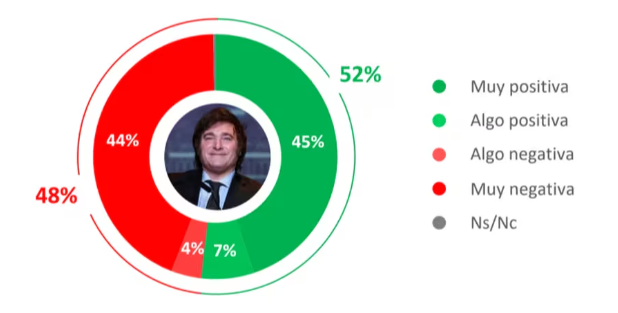
The response from the democratic left-wing governments of Brazil, Mexico, and Colombia was also to condemn the US action but to do so using more diplomatic language. On the other hand, a number of countries that have aligned themselves with the US under Trump praised it: these included Argentina, El Salvador, and Ecuador. Argentina’s President Javier Milei accused Maduro of clinging to power and of “rigging elections” saying his departure was “excellent news for the free world”. Ecuador’s right wing President Daniel Noboa posted on social media: “To all the narco-chavista criminals, your time is coming. Your structure will completely collapse across the entire continent.”
Mexico’s reaction was carefully worded. It did not mention the US by name, stating in general terms that “intervention has never brought democracy, never generated prosperity and never created lasting stability”. The Mexican foreign ministry did sign a joint rejection of the action, along with Brazil, Colombia, Uruguay, and Spain, but it did not post the document on its website. Brazil was more direct and upfront in its condemnation: the incident, it said was “yet another extremely dangerous precedent”. Brazil nevertheless acknowledged the need for a balanced relationship with Washington. Celso Amorim, the Brazilian president’s chief foreign policy advisor, told the New York Times “of course we want to have good relations with the United States. It is a very important country in every sense. But there is no way to avoid condemning this action.” President Petro of Colombia, who has had a volatile and adversarial relationship with Trump, much of which has played out on social media, said the US had “kidnapped” Maduro adding “no one in their right mind would bomb the homeland of Bolívar” [the nineteenth century hero of the wars of independence against Spain].
A poll conducted by mobile phone in Venezuela by The Economist and Premise in January (immediately after the military operation) found that the removal of Maduro was highly popular. A total of roughly 50% of respondents supported the operation, 35% were neutral, and 13% opposed it. More than half said their opinion of the United States had improved because of the operation. The results must be assessed with caution, of course, since things could yet change and potential conflicts may still emerge. For example, two-thirds believe new presidential elections should be held, and 91% of them want the polls to be held within a year. The US government may prove to be out of step with these sentiments since it has made no firm commitment on when elections will be held. And while 45% of respondents say they will vote for opposition leader María Corina Machado, only 10% express support for the US-appointed interim President Delcy Rodríguez. The post-Maduro honeymoon period may not last as long as Washington has been hoping.
In contrast to these short-term results for Venezuela, at regional level available polls show Donald Trump remains unpopular. US think tank Pew Research Centre measured confidence in Donald Trump as a world leader across 24 countries in 2025 and found that 62% were not confident of his ability “to do the right thing regarding world affairs” while 34% took the opposing view. Three Latin American countries were included in the survey. Those not confident in Trump were 61% in Brazil, 62% in Argentina (both close to the global average), and a large outlying 91% in Mexico. In general confidence in Trump is higher among men (43% to 27% in Brazil) and among those who identify as right-wing.
Confidence in Trump as a world leader
% who have confidence in U.S. President Donald Trump to do the right thing regarding world affairs
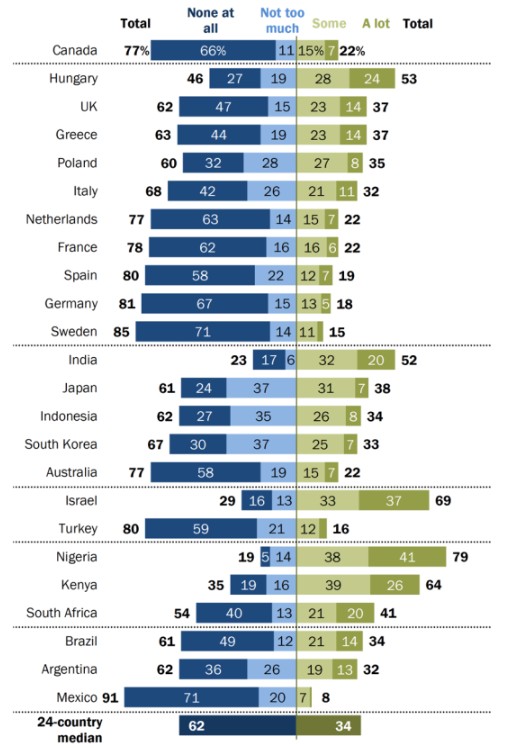
Note: Those who did not answer or said “Never heard of this person” are not shown
Source: Pew Research Center, Confidence in Trump in 24 Nations, Spring 2025 Global Attitudes Survey
Could there be a nationalist and anti-Yankee turn in public sentiment in the next few years? Such a reaction cannot be excluded, nor can its opposite. As we have suggested, domestic politics may be the key driver. As well as seeking economic security, voters have been looking for a reduction in crime, corruption, and immigration. A generation of populist politicians have promised to deliver quick results in these areas. With some variations, their agenda in their different countries is similar to Trump’s in the United States. It follows that if they are highly successful their popularity ratings will rise further and regional support for Trump will also increase.
But a much more problematic scenario is also possible. Turning round crime and corruption is a complex challenge that requires extra resources, new policies, and significant time. A militarised version of the War on Drugs has been underway for decades in various parts of the region – particularly in Colombia and Mexico – and is widely considered to have failed. At the moment, despite a relatively new president pushing hard line policies in Ecuador, levels of violence there also remain very high. Only El Salvador under Nayib Bukele’s authoritarian rule claims to have brought the homicide rate to near zero, but it has done so at the cost of undermining civil liberties and enforcing mass incarceration. It is also not clear whether the Salvadorean experience is exportable.
On a one-to-two-year time horizon, slow or insufficient progress improving security could be a blow to this new generation of right-leaning populist leaders, reducing their standing in the opinion polls. Some of Donald Trump’s high-profile interventions might also backfire. If there are future military interventions it is not guaranteed that they will all be as precise and accurate as the Caracas raid. It is not impossible for a US strike against cartel bases in Mexico or Colombia to go bad, for example by causing unintended civilian deaths which might turn opinion dramatically against Trump. It is worth noting that on a smaller scale Trump’s temporary punitive tariffs levied against Brazil, set at 50% and initially introduced in August 2025, were politically counterproductive for him and were eventually rolled back by Washington. Trump’s officials had been wrong-footed by a rally-round-the-flag effect. President Lula da Silva, seen as defending the national interest against arbitrary action by a meddling superpower, benefited from rising approval rates. The far right, led by Trump ally and former president Jair Bolsonaro (2019-2023), also lost ground because it was cast as being unpatriotic, supporting a foreign power that was actively causing economic difficulties for Brazilian companies.