All Categories

Subcategories

  • TRACKING TRENDS

    Patrick de Courcy 04 May 2023 Hits: 2958

    MEXICO | Pemex profits fall. Mexico’s state-run oil company Pemex announced on 3 May that its net profit was down by 53.7% in the first quarter of 2023 compared with the same period last year at M$56.74bn (US$3.15bn) due to weaker sales. The CEO of Pemex, Octavio Romero Oropeza, tried to put a positive spin on the results, claiming that the company was showing greater “discipline and operational efficiency” and that production was up by 5.9% over the same period, averaging 1.85m barrels per day (bpd), although much of this was down to increased condensate output rather than heavy crude production.

  • COLOMBIA: ELN tests limits of ceasefire agreement

    Patrick de Courcy 06 July 2023 Hits: 3327

    Violence and provocations by the Ejército de Liberación Nacional (ELN) guerrilla group continued until just before a much-vaunted bilateral ceasefire began coming into force on 6 July. The murder of three police officers and the kidnapping of an army sergeant and her two young children will place early strain on a ceasefire which is vital to the credibility of President Gustavo Petro’s ‘total peace’ initiative.

    The success of the ELN ceasefire and the eventual signing of a peace agreement with the guerrilla group is of the utmost importance to President Petro’s struggling peace plans, which have suffered major setbacks in recent months [WR-23-24]. On 6 July Petro and the ELN’s top command both issued instructions for a cessation of hostilities between the guerrilla group and the security forces before the ceasefire comes fully into effect on 3 August. However, the continuation of ELN provocations until the eleventh hour was an ominous sign for Petro, who believes that peace can only be reached in Colombia through negotiation rather than military crackdowns.

    Four incidents, in both the far east and far west of the country, have highlighted the challenges that lie ahead of a possible peace deal with the ELN. On 4 July – the 59th anniversary of the ELN’s formation – the military accused it of gunning down two police officers while they ate in a restaurant in the municipality of El Zulia, Norte de Santander department. On the same day, another police officer was killed by a sniper while on duty in the neighbouring Tibú municipality, also in Norte de Santander. Explosive artefacts and ELN graffiti were also found in several locations in the departmental capital, Cúcuta.

    On the other side of the country, in the western department of Chocó, the ELN announced an indefinite ‘armed strike’ in the municipalities of San Juan and Sipí, ordering people to remain in their homes or face the risk of violence. The ELN is engaged in a fierce territorial conflict with the Clan del Golfo neo-paramilitary drug trafficking organisation in these areas, which does not fall under the scope of its bilateral ceasefire with the government. The following day, with less than 24 hours to go before the ceasefire came into force, the ELN was accused by military authorities of kidnapping Sergeant Ghislaine Ramírez and her two young children, aged six and eight, in Fortul municipality in the eastern department of Arauca.

    The key question is whether these provocations by the ELN continue past the 6 July deadline for the cessation of hostilities. There was always a risk that the ELN’s federalised structure would result in some of its units disregarding the ceasefire order from the group’s top command, in a process similar to that which occurred following the 2016 peace accord with the Fuerzas Armadas Revolucionarias de Colombia (Farc) guerrilla group. Confrontations between the ELN and other armed groups, such as the dispute with the Clan del Golfo in Chocó, are likely to persist without derailing the wider peace process, given that they fall outside the scope of the ceasefire, but they will increase the pressure on the government not to appear too lenient with the ELN in the negotiations.

    Addressing the latest violence by the ELN, Interior Minister Luis Fernando Velasco said that “it’s what the ELN always does on its birthday”. Promising “a very serious monitoring” of the situation, he urged the group to take steps that “contribute to reconciliation and to public trust”. If the attacks turn out not to have been just a celebratory show of force by the ELN to commemorate its anniversary, the government will face difficult decisions over whether to abandon the first ceasefire that the group has agreed to in its six-decade insurgency.

    Criticism of ceasefire

    The surge in violence has provided right-wing politicians who oppose negotiations with the ELN with an attack line against the government’s peace plans. Centro Democrático (CD), the right-wing party of President Petro’s predecessor, Iván Duque (2018-2022), tweeted that “the country demands more authority and fewer concessions to those who do not want peace”. CD Senator María Fernanda Cabal said that the attacks showed that the ceasefire with the ELN was a “farce”.

  • CARIBBEAN POINTERS

    Abbi Dicker 09 February 2024 Hits: 3391

    *** BOUTERSE DISAPPEARS IN SURINAME. On 20 December Suriname’s former president Desi Bouterse (2010-2020), who led a military dictatorship from 1980-1987, reached the end of his drawn-out fight to avoid responsibility for the 1982 killing of 15 political opponents. His 20-year prison term, imposed in 2019, was upheld and he was ordered to report to prison by 12 January, but failed to do so. The murders took place during a period of repression after Bouterse led a coup in 1980. He later served as elected president for the Nationale Democratische Partij (NDP) from 2010-2020. Despite Bouterse’s defiance of the court, the NDP has said that he remains the party’s chairman. His lawyer says that he is seeking a presidential pardon, but President Chandrikapersad Santokhi has said: “There is a verdict, and that verdict must be carried out.”

    The optimists say that Bouterse’s conviction is evidence that Suriname is a well-functioning democracy, but independent analysts say that the system continues to provide cover for high-level officials and politicians involved in criminal activities. Bouterse himself was also convicted by a Dutch court in 1999 for involvement in the trafficking of 500kg of cocaine. In 1994, a former head of security for Bouterse, Marcel Nelom, told a Dutch media outlet: “The entire military revolved around cocaine, as did politics and business.” Bouterse’s son Dino was convicted on drug trafficking and other charges in the US in 2015.

    The present administration is not without the taint of criminality given Vice President Ronnie Brunswijk was convicted for drug trafficking in the Netherlands in 1999 and in France in 2000. US Drug Enforcement Administration (DEA) officials reportedly suspect his continuing involvement in the drug trade. A board member of Brunswijk’s party, Algemene Bevrijdings- en Ontwikkelingspartij (Abop), Joel Martinus, was convicted by a French court in 2019 for involvement in the exporting of cocaine from Suriname to France.


    *** ANTIGUA & BARBUDA BOOSTS CHINA TIES AMID IMF WARNINGS. Antigua & Barbuda’s Prime Minister Gaston Browne visited China from 22-28 January and met with President Xi Jinping. Chinese media quoted Browne as saying that Antigua & Barbuda had been “lifted out of poverty thanks to help from China” and “is willing to be China’s most reliable partner”.

    The International Monetary Fund (IMF)’s latest Article IV Consultation for Antigua & Barbuda, concluded on 29 November 2023, said that economic activity should return to pre-coronavirus (Covid-19) levels this year, forecasting growth of 5.7% driven by a rebound in tourism and construction activity. Inflation, however, “remains elevated” at 6.6%. The primary deficit has been reduced to 1.7% of GDP, and public debt was down to 87% of GDP by the end of 2022. However, the IMF reports, “gross financing needs remain high at 14% of GDP, and an inability to access international capital markets continues to limit financing options”. Meanwhile, “the fiscal position may deteriorate if arrears continue to accumulate, or if the current financing options become unavailable or unaffordable, particularly if the planned deficit reduction is not realised”.


    *** EFFORTS CONTINUE TO LAUNCH NEW REGIONAL AIRLINE. On 24 January the Antigua-based LIAT regional airline ceased operations. The airline had been servicing Anguilla, Barbados, Dominica, Guyana, Grenada, Guadeloupe, Martinique, Puerto Rico, St Kitts & Nevis, St Lucia, and St Maarten. Prime Minister Roosevelt Skerrit of Dominica and Prime Minister Gaston Browne of Antigua & Barbuda are leading efforts to establish a new regional service. Skerrit has said: “Dominica is still prepared to invest in any airline outfit that will serve the Caribbean because we believe that is absolutely important.” Browne, for his part, said that his government is looking to resurrect LIAT “with a vision of returning the airline to the skies”. He added that the Caribbean Development Bank (CDB) will play a crucial role any plans.

  • ECONOMIC HIGHLIGHTS

    Patrick de Courcy 22 March 2024 Hits: 2121

    MEXICO | Tourism up year-on-year. On 11 March, Mexico’s national statistics institute (Inegi) announced a 3.6% increase in international tourist arrivals and a 4.6% overall increase in visitors in January compared to the same month last year. In January 3.64m international tourists arrived in Mexico, surpassing the 3.51m who arrived in January 2023.

    MEXICO | Inflation rate falls. On 7 March, Mexico’s national statistics institute (Inegi) released consumer price index figures for February, which put monthly inflation at 0.09% and the annual rate at 4.40%. This is down from an annual rate of 4.88% in January, when the monthly rate stood at 0.89%. The drop in annual inflation follows increases in the annual rate in January, December, and November, which reversed nine consecutive months of downwards trend in 2023.

    MEXICO | Job creation down year-on-year. On 5 March, Mexico’s national social security institute (IMSS) released a new report showing it had registered 22.29m jobs as of 29 February 2024. According to the IMSS, 86.0% of these jobs were permanent while 14.0% were temporary. In February, 156,403 jobs were created, an increase of 0.7% on the previous month but a decrease of 11.1% compared to the 175,874 jobs created in February 2023.

    MEXICO | GFCF increases in yearly terms. On 4 March, Mexico’s national statistics institute (Inegi) released new figures which show that gross fixed capital formation (GFCF) increased by 19.7% last year amid the rise of nearshoring. In December 2023, the GFCF increased by 13.4% year-on-year due to a 21.8% increase in investment in construction and 5% increase in machinery & equipment. Meanwhile, seasonally adjusted data shows that the GFCF in December was unchanged from the previous month.

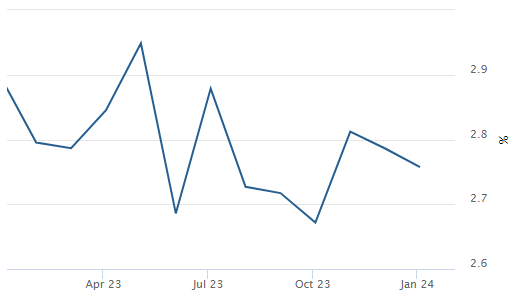
    Mexico: GDP growth
    Percentage variation (year-on-year)

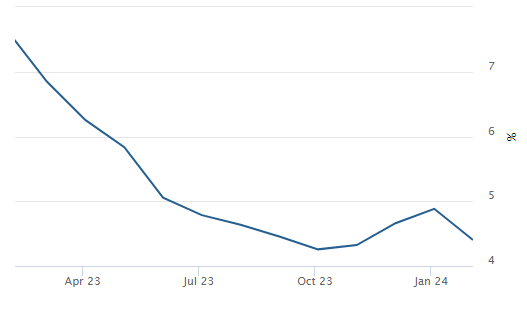
    Mexico: unemployment rate
    Economically active population

    Mexico: inflation rate
    Percentage variation (year-on-year)

    Source (all graphs): National Statistics Institute (Inegi

  • TRACKING TRENDS

    Abbi Dicker 11 April 2024 Hits: 2694

    PERU | Attacks on gold mine in Pataz continue despite state of emergency. On 5 April Peruvian gold mining company Poderosa, which operates a gold mine in Pataz province, in the north-western region of La Libertad, said that illegal miners had used dynamite to take down two high-voltage towers that supply energy to its mining operations, resulting in one worker being killed and two injured.

    In a statement, Poderosa complained that the attack took place despite the fact that a state of emergency has been in place in Pataz since February and a contingent of over 300 members of the national police and military were in the area. The new attack occurred soon after the police evacuated 150 troops from specialised units that had been providing services in Pataz, who had yet to be replaced.

    The mine made headlines in December following an attack by a group of armed men that left nine dead and over a dozen injured.

    In its 5 April statement, Poderosa complained that the actions of the security forces had been severely limited by the lack of support from the public prosecutor’s office and representatives from the energy, mining & hydrocarbons authorities in the region. Warning that the criminal act emulates those of terrorist groups active in the country in previous decades, Poderosa said that in the last two years, 16 workers have lost their lives in illegal mining attacks and 14 towers have been taken down.

    The prime minister, Gustavo Adrianzén, accused the illegal miners of being intent on “generating terror”. On 6 April the head of the joint command of the armed forces, General David Ojeda Parra, arrived in Pataz to supervise military actions and operations carried out by the unit comprising military personnel and the national police in line with the state of emergency.

    According to the government, since the declaration of a state of emergency, 79 operations and 30 interdiction operations against illegal mining have taken place in the area. This has resulted in the arrest of 48 people involved in illegal mining, and the seizure of PEN139,190 (US$37,600) and 15 vehicles, as well as 1,711 cartridges of dynamite, 58kg of ANFO (ammonium nitrate-fuel oil) explosives, and 4,423 gallons of fuel. Also 85 items of mineral processing equipment were destroyed along with 13 tractors. The total value of goods seized and destroyed totalled PEN36m.

  • ECUADOR: Government touts falling homicide rate

    Patrick de Courcy 29 November 2024 Hits: 907

    With the clock ticking towards the 9 February first round of Ecuador’s presidential elections, President Daniel Noboa’s government is emphasising what it believes to be its biggest success – a significant reduction in homicides, which according to Interior Minister Mónica Palencia have fallen by 17.6% this year.

    Citing figures compiled by the security forces, Palencia announced on 4 November that the homicide rate had plunged by 17.6% in the year to 3 November, compared with the same period in 2023. The 5,589 murders that Palencia said had taken place during that period would once have been shocking in Ecuador. Yet amid an unprecedented crime wave that the government says is being fuelled by rival Mexican drug trafficking organisations (DTOs), this was clear progress. By contrast, in 2023 Ecuador saw 8,008 homicides, giving the country the highest murder rate in Latin America at 44.5 per 100,000, according to figures from the specialist website Insight Crime.

    President Noboa’s central focus since taking office in November 2023 has been to tackle the growing power of criminal gangs. The figures announced by Palencia suggest that his radical approach, which includes the wholesale militarisation of public security, is bearing fruit. Palencia noted that homicides fell particularly steeply in the port city of Manta (Manabí province), and Durán municipality, which is located close to the massive port in Guayaquil, the capital of Guayas province. Both have been focal points for the gang war being fought between Los Lobos, Los Choneros, and Los Tiguerones. In Manta, Palencia said that homicides fell by 28.6% between 1 July and 3 November, while in Durán homicides decreased by 23.6% between 6 June and 3 November.

    The Noboa administration has previously been accused of massaging figures for political purposes, and Palencia’s inconsistent selection of timeframes to measure the drop in homicides for Manta, Durán, and the nation as a whole suggested that the drop in violence might not be as dramatic as the government claims. Even in the supposedly controlled environment of prisons, where troops have been deployed to bolster the overwhelmed prisons authority (SNAI), massacres have continued – albeit not at the same startling rate of 2021-2023. In the latest such massacre, 15 inmates were killed during rioting at the notorious Penitenciaría del Litoral in Guayaquil on 12 November.

    Meanwhile, there are signs that gangs are continuing with business as normal despite the reduction in homicides. Palencia announced on 18 November that 262 tonnes of drugs had been seized in Ecuador in the year to date, representing an increase of 37.7% compared with the same period in 2023. Some of this increase could owe to intensifying security operations by the military, which under Noboa’s new measures has been authorised to operate permanent checkpoints around the country. However, the rise in drug seizures more likely owes to increased trafficking in Ecuador, given rising coca production in neighbouring Colombia, where cocaine production potential increased by a massive 53% in 2023, according to an October report by the United Nations Office on Drugs and Crime (UNODC) [SSR-24-11].

    But, presiding over an ailing economy and a year-long energy crisis that has forced rolling blackouts to be introduced across the country, the government’s emphasis on its security credentials is understandable in the run-up to the election. Despite those challenges, Noboa currently appears well-placed to secure a second term in office.

    Polling

    A survey by the Ecuadorean pollster Comunicaliza, published 15 November, put President Noboa in a technical tie with Luisa González of the left-wing Revolución Ciudadana (RC), with Noboa on 27.5% and González on 26.7%. But González, who lost to Noboa in the second round of the 2023 presidential election, will face an uphill battle to avoid another defeat. In Ecuador’s past two presidential elections in 2023 and 2021, the RC candidate has won the first round only to be defeated in the second, largely due to RC’s strained relationship with Ecuador’s indigenous movement, represented by the Pachakutik party. Noboa will also benefit from the exclusion of security hardliner Jan Topić, who was disqualified by the electoral disputes court (TCE) due to being a shareholder in companies with government contracts.

  • CUBA: New devaluation fails to convince the markets

    Sarah Sheldon 26 January 2026 Hits: 308

    On 18 December the Cuban government devalued the peso by creating a third exchange rate, which, along with the increasing dollarisation of the economy, it described as a temporary stabilising measure. Yet many economists remain unconvinced.

    Cuba’s central bank (BCC) said the third official exchange rate would be initially set at 410 Cuban pesos (CUP) to a dollar, close to current black-market valuations. Analysts said this represented a devaluation of 30% or more. The new peso/dollar rate will sit alongside the two existing official rates of 24 and 120CUP to the dollar. The existing official rates apply to state-run companies and transactions deemed to be “essential and strategic”. Ian Pedro Carbonell, a BCC official, said the new rate would stimulate exports and offer citizens “an attractive exchange rate that will allow them to obtain more national currency without the risks of going to the black market”. The new rate will be adjusted “periodically”. The government says it remains committed to eventually unifying the three rates. It has also announced a liberalisation of foreign-currency bank accounts.

    The track record for the use of multiple exchange rate regimes in Latin America to help economic stabilisation is not good. In places like Argentina and Venezuela they have been associated with market manipulation and corruption achieved by obtaining dollars at low “official” prices and reselling them at much higher market or informal rates. Cuban economist Mauricio de Miranda says the current policy mix of fixed and fluctuating exchange rates is long term “unsustainable”, as it favours certain state and military owned companies while distorting the rest of the economy. Another economist, Pedro Monreal, says that currency unification will only be possible if there is much further and deeper devaluation of the official peso rates. He describes future devaluation of the CUP24 rate as “100% likely” and the chances of devaluation of the CUP120 rate as “very high”.

    It doesn’t help that the wider Cuban economy is being hit by multiple levels of bad news. Concerns over corruption were reinforced by the announcement in December 2025 that former economy minister Alejandro Gil (2018-2024), dismissed in 2024, has been sentenced to life imprisonment on espionage and corruption charges. The ruling Partido Comunista de Cuba (PCC) has postponed its ninth congress, initially scheduled for April 2026, to an unspecified future date because of the economic crisis. Over Christmas and the New Year, the island economy limped on with power cuts running at 40%-50% of capacity. US military action in Venezuela and the associated tanker ship seizures were expected to further reduce the island’s oil supplies and ramp up uncertainty.

    Tourism

    Tourism, a key source of foreign currency in Cuba, remains weak. Cuba’s national statistics office (Onei) reports that tourist arrivals fell by 19% in the first 11 months of 2025, indicating that the sector remains well below levels registered prior to the coronavirus (Covid-19) pandemic which struck in 2020.

  • RASTREANDO TENDENCIAS

    LatinNews 28 November 2011 Hits: 141

    ECUADOR | Boom petrolero. El alto precio del petróleo ha eliminado el déficit comercial de Ecuador este año, y proveyó fondos para que el estado incremente el gasto y la inversión públicos, afirmó el gobierno la semana pasada. Ecuador también está tratando de aprovechar el alto precio a través del incremento en la producción del petróleo: la compañía petrolera estatal, Petroecuador, anunció el 8 de noviembre que había roto su propio record de producción diaria con 156.359 barriles por día (bpd). Petroecuador atribuyó el incremento en la producción a una tecnología más eficiente, aunque es justo decir que fue conducido a mejorar. El Presidente Rafael Correa había puesto una fuerte presión sobre la firma, incluso amenazando con privatizarla en agosto a menos que se despabilen y avancen [IL-11-32]. “Es la conducta típica de [alguien que trabaja en] un monopolio, que sabe que si las cosas salen bien o mal, todos reciben el mismo cheque,” dijo Correa en aquel entonces.

    Al mismo tiempo que Petroecuador estaba apuntando a mejorar los niveles de producción, el ministro de finanzas estaba anunciando que el gobierno gastaría US$2,87bn en 2012, subsidiando el combustible, el equivalente de 4% del PIB. La oposición y varias organizaciones internacionales, alegan que eso está proveyendo un incentivo para el consumo excesivo y el derroche, que socava el profesado compromiso del gobierno de proteger el medioambiente. Ellos también sostienen que eso resultará en contrabando a Colombia y Perú, donde el combustible es significativamente más caro. La administración Correa ha resistido la presión para remover los subsidios. Y afirma que el incremento en los costos del transporte verían escalar los precios de los alimentos, trepar la inflación, y los pobres sufrir.

  • In Brief - Andean

    LatinNews 15 February 2012 Hits: 2419

    Peru| Experts named. On 14 February, the Peruvian government revealed the names of the three experts it has selected to review the Environmental Impact Assessment (EIA) report for the highly controversial Conga mining project in Cajamarca. According to the electronic State contracts system (Seace), two Spanish environmental engineers, Luis López García and Rafael Fernández Rubio, along with a Portuguese geologist, José Martins Carvalho, have been chosen. The local press reports that the Spaniards have already signed a contract with the government, but Martins Carvalho has yet to do so.

  • ARGENTINA: Fernández’s rosy picture turns grim

    LatinNews 01 March 2012 Hits: 3582

    March will bring many (and serious economic) problems. That is what the local commentariat in Argentina predicted following the government’s November announcements relating to the removal of subsidies, which would have a widespread impact on purchasing power. The administration of President Cristina Fernández is facing myriad other problems including questions raised about the (lack of) enforcement of maintenance in the privately run railway networks, after the country’s third-largest rail tragedy last week; Vice-President Amado Boudou’s alleged corrupt practices [WR-11-08]; the government’s failure to reach a salary agreement, for the first time since 2003, with the teachers’ unions; and fuel shortages, particularly diesel, which have triggered the rumour that, as we go to print on 1 March, Fernández could announce the re-nationalisation of Repsol-YPF.

    For the first time in over two years, Fernández appears to be reacting to developments rather than setting the political agenda herself, which a (small) group of people has (unsuccessfully) tried to turn into a cacerolazo (pots and pans protest) using Twitter. However, as the fallout from the 22 February train crash that killed 51 people and injured more than 700 continues, public demonstrations against the administration’s handling of the railway network’s concessions could materialise in the (not too distant) future. The local media has placed special emphasis on several official reports submitted by the national commission of transport regulation (CNRT) to Secretary of Transport Juan Pablo Schiavi in 2010 and 2011.

    The latest one, dated 21 March 2011, states that the Línea Sarmiento, operated by Trenes de Buenos Aires (TBA), is in a deplorable state, with “structural deficiencies [that] continue to increase the considerable maintenance deficit, generating a deterioration of the components and the superstructure of the railway”. Because of the tracks’ “irreversible faults”, the CNRT calls on the secretary of transport to design a plan whereby the trains reduce their speed; the report also stated that “a pronounced maintenance deficit can be observed, with worrying faults from the security viewpoint, because of their gravity and recurrence”. The government argues that it did not turn a blind eye and that in fact, TBA was fined more than 40 times in recent years – in 2008, TBA trains suffered 23 derailments and in 2009, 39.

    Schiavi made matters worse when in the first statement after the crash he appeared to blame the passengers for the extent of the tragedy. “There is a very Argentine culture of going up to the front of the train so as to get off earlier...which turned an accident into a tragedy”, he said during a ‘press conference’ in which the media was not permitted to ask questions. The hashtag “we want to ask” has since become increasingly used on Twitter by members of the Argentine press who claim that, unlike in any other country in the region, they are invited to press conferences as an audience rather than to ask questions.

    When the body of the 51st victim was found on board the fourth carriage 60 hours after the tragedy, Minister of Security Nilda Garré also appeared to blame the victim in an official communiqué which noted that he was travelling in an area “forbidden to the public”. The family of Lucas Menghini Rey, the 51st victim who has become the face of the tragedy, replied to the government in a very strongly worded open letter “to the Argentine society”. “Because of its magnitude, we consider the event a foreseeable disaster and not an accident, considering that the latter term is chosen to avoid responsibility,” stated his father, Paolo Menghini. María Luján Rey, his mother, said it was her duty “to express my most energetic repudiation of the communiqué issued by the ministry of security, headed by Dr. Nilda Garré, which hinted at the possibility that Lucas was responsible for what happened.”

    • Controversial judicial requests

    A day after the crash, Schiavi and Minister of Planning Julio de Vido announced that the government would file for plaintiff status in the judicial process relating to the crash. The move makes sense from both a political and PR perspective, though its legality is highly questionable. By claiming plaintiff status, the government aligns itself with the victims while attempting to put some distance between its problematically close relationship with the Cirigliano Group, which owns TBA. This, however, could backfire as the opposition media digs up tapes from last October and November in which Fernández appears with the group’s owners and praises them for their investment and improvement of the railway lines under their care. (Similar tapes are also resurfacing in relation to Repsol-YPF’s investment, which the government praised six months ago and now says is lacking.)

        Also, the State was technically responsible for ensuring that TBA met safety and operating regulations. Thus, if the accident proves to be the result of mechanical error, the State should be a defendant, not a plaintiff. Judge Claudio Bonadío will have the final say, but the rumour in Buenos Aires is that he will reject the government’s request. In fact, the judge also came out against another request made during a public speech by Fernández herself – the president did not speak or appear in public for five days after the tragedy, but when she did, she asked the judiciary to complete all forensic studies within 15 days. Judge Bonadío immediately replied that the tests might or might not be completed within this stipulated period.

        After stating that the government would not rescind TBA’s contract unless the company was found guilty by the courts, Fernández decided to take over TBA’s management this week and appoint a caretaker until the forensic studies are concluded. If the government were to rescind the contract, and the courts did not find enough evidence that the crash was the result of negligence, the State would have to foot a multi-million dollar bill for breach of contract.

    • Macri gets off the metro

    After Minister Garré announced that as of 1 March the federal police (PFA) would no longer patrol the Buenos Aires city metro, the local mayor, Mauricio Macri, said that his administration would not, therefore, take over the metro’s running. When making the announcement, Macri clearly tried to link his decision to the overland train tragedy: “I felt that we Argentines owed ourselves a reflection...Unfortunately the metro can’t escape reality… We cannot take responsibility for 10 years of no investment...I will neither lie nor become an accomplice in endangering users for lack of security and investment, [for these reasons] we decided to call a halt to the handover,” he said.


  • ECONOMIC OVERVIEW: BOLIVIA

    LatinNews 01 May 2013 Hits: 947

    Minimum wage increase approved. On 10 April President Evo Morales decreed an 8% salary rise for State sector workers, and a 20% increase to the minimum wage – both retroactive to January. Inflation in 2012 was 4.5%. The announcement had the broad agreement of the main umbrella trade union Central Obrera Boliviana (COB) which initially had made its annual fantastical call for a new monthly minimum wage of B$8,300 (US$1,199), based on its estimates of the cost of a basic basket of goods. The COB has made similarly-exaggerated demands for the past three years, to no avail. Last year the government raised the minimum wage from B$679.35/month (US$97) to B$815.40 (US$118).


  • ARGENTINA: Corruption troubles

    LatinNews 18 July 2013 Hits: 1130

    At press time Ricardo Jaime, a former transport minister (2003-2009) was still on the run, following a court order for his arrest on corruption charges on 12 July. Also under severe public scrutiny is the new head of the army, General César Milani, the subject of last week’s popular investigative TV programme, Periodismo Para Todos. The presenter, Jorge Lanata, alleged Milani participated in some of the human rights abuses committed by the dictatorship during the 1980s. Lanata also posed the question of how a man in the employ of the state since the age of 19 had amassed such a large personal fortune.

    Politicians

    Late last week a Buenos Aires federal judge issued an arrest warrant for Jaime, who was transport minister under President Néstor Kirchner (2003-2007). Jaime faces around 20 separate court cases, mostly involving charges of administrative fraud and overpricing for railway contracts, including the overpayment of Arg$2m to renovate the Belgrano freight train service. Acting on the court’s instructions, police searched addresses in Buenos Aires and Córdoba over the weekend, but to no avail.

    On 16 July Jaime’s legal counsellor, Marcelo Brito, read out a statement by his client on national radio. “My Buenos Aires lawyers have advised me not to turn myself in because the resolution that orders preventive detention has been appealed.” Ahead of the statement, Brito had already said that Jaime “will remain a fugitive” as “advised by his lawyer”. Given the poor state of the railways, which has resulted in a number of tragic accidents over the past few years, public anger at Jaime’s actions could prove politically toxic.

    The military

    On 14 July, Jorge Lanata broadcast a number of revelations about the personal wealth of the new army commander, General César Milani, who was appointed in late June. In essence, these claim that despite earning an armed forces salary since joining the army at the age of 19, the general now owns a luxurious house in Buenos Aires, various properties in Córdoba and an Alfa Romeo sports car. In 2011, the general was earning Arg$15,000 a month, (US$2,800 at the official exchange rate), yet purchased the Buenos Aires house conservatively valued at around US$600,000.

    Lanata appears to have gained access to correspondence between the general and Argentina’s anti-corruption office, showing how Milani struggled to explain how he funded various acquisitions, including an admission that he had forgotten to declare the purchase of the sports car.

    Lanata also linked Milani with the acts of violence and torture carried out by the state during the dictatorship. Milani’s service record shows he was in the province of Tucumán when the so called “Operativo Independencia”, a brutal counter-insurgency military campaign was carried out by the security forces. The Argentine Nobel Peace Prize laureate Adolfo Pérez Esquivel commented that “all signs show he [Milani] had been involved in the repression period.”

    The head of the Abuelas de Plaza de Mayo, who are closely linked to the government, was more circumspect in her reaction to the revelations, merely calling for an investigation into his records. “If we presumed that every member [of the Armed Forces] was involved in repressive actions, then we would have to put them all on trial since they were all deployed somewhere,” she said.

    • Blue dollar rises again

    After several months in abeyance, the market in the so-called ‘blue dollar’ – the unofficial exchange rate, started to take off again in July. On 15 July, it reached Arg$8.58 to the dollar, pushed by a higher demand due to the beginning of the winter holidays in Buenos Aires. The official rate is around Arg$5.4.

  • RASTREANDO TENDENCIAS

    LatinNews 12 December 2014 Hits: 260

    PERÚ | Un paso más cerca de unirse a la OCDE. El 8 de diciembre Perú firmó un acuerdo de entendimiento mutuo y cooperación con la Organización para la Cooperación y el Desarrollo Económico (OCDE), como parte del proceso que le permitirá al país unirse a la organización internacional para el 2021 como prevé el gobierno liderado por el Presidente Ollanta Humala.

    En mayo, Perú fue invitado a iniciar el proceso para convertirse en el cuarto país latinoamericano en unirse a la OCDE, siguiendo los pasos de sus colegas socios de la Alianza del Pacífico, México y Chile (quienes son miembros plenos de la OCDE) y Colombia (quien actualmente está en las etapas finales del proceso de adhesión).

    El acuerdo fue firmado por el Presidente Humala y el secretario general de la OCDE, Ángel Gurría, al margen de la XXIV Cumbre Ibero-Americana realizada en la ciudad mexicana de Veracruz, el 8 y 9 de diciembre. El acuerdo esboza una serie de medidas, parte del llamado ‘Programa País’ que deberán ser adoptadas por Perú durante los próximos siete años a fin de cumplir con los estándares de la OCDE.

    Una declaración oficial del gobierno peruano dijo que la firma de los acuerdos “representa el inicio de una nueva fase en las relaciones de Perú con la OCDE y muestra el compromiso de Perú en lograr alcanzar estándares de buen gobierno y de política pública sostenibles utilizados por los miembros de esta organización”.

    El ministro de economía & finanzas de Perú, Alonso Segura, saludó la firma del acuerdo como un “hito histórico” para su país. Segura explicó que Perú está comercialmente integrado con el mundo a través de varios acuerdos comerciales, pero lo que se busca con el último acuerdo es “incorporar conocimientos de las mejores prácticas que utilizan las economías desarrolladas”. Él agregó que el acuerdo firmado por Humala serviría como un “catalizador” para continuar adoptando reformas económicas que ayudarían al Perú a alcanzar el estatus de economía desarrollada. De hecho, Segura dijo que las medidas ayudarían a la economía interna de Perú a superar su actual desaceleración y avanzar hacia un crecimiento sostenido en el mediano plazo.

    Después de informar de un crecimiento decente del 5% del PIB en el 2013, el pronóstico de crecimiento de la economía peruana es de un 3,6% para este año. La administración Humala sostiene que gracias a las varias medidas de estímulos económicos que ha implementado recientemente, la economía se recuperará fuertemente. Sin embargo, Segura admitió que la meta de crecimiento del 5,5% para el año próximo, ahora luce improbable y que él ahora espera que la economía rebote a un crecimiento del 5% en el 2015.

    COLOMBIA | Puerto Brisa. El 7 de diciembre el Presidente de Colombia, Juan Manuel Santos, inauguró un nuevo puerto multipropósito de US$70,9m cerca de la ciudad de Dibulla en el fronterizo departamento  del noroeste caribeño de La Guajira. La terminal portuaria de aguas profundas de Puerto Brisa tiene la capacidad para manejar hasta 5.000 toneladas (t) de carga por hora y acomodar buques de hasta 18,5 metros de calado, capaces de transportar hasta 180.000t de carga.

    En un discurso, Santos dijo que el puerto ayudaría a estimular las exportaciones del país, en particular los embarques de hidrocarburos y carbón, pues el puerto ha sido específicamente diseñado para satisfacer a buques que transportan petróleo, carbón, gas natural, y otros petroquímicos. Santos agregó que el proyecto también incluye una segunda y tercera fase que incluye la construcción de una nueva línea ferroviaria de 523kms uniendo al puerto con áreas del interior, así como también la construcción de cinco muelles adicionales en Puerto Brisa, lo que incrementaría su capacidad para manejar contenedores de carga general.

    Santos dijo que el proyecto ayudaría a Colombia a superar su falta de infraestructura portuaria, un resultado de décadas de falta de inversiones en las áreas de la costa del Caribe en particular. Como parte de sus esfuerzos para revertir esto, la administración de Santos ha lanzado programas de inversión en infraestructura apuntando en especial al departamento de La Guajira, el cual en años recientes ha visto la construcción de tres ‘mega puertos’–Puerto Bolívar Cerrejón Zona Norte; Sociedad Portuaria La Península (Pensoport S.A.) y Puerto Brisa– con una inversión total de US$234,39m.

    El problema para la administración Santos es que sus esfuerzos para desarrollar la infraestructura portuaria de Colombia llegan cuando el ciclo del boom de las materias primas parece haber terminado, con los precios del petróleo y los minerales cayendo en los mercados internacionales por primera vez en años. El ministro de finanzas, Mauricio Cárdenas, admitió recientemente que el bajo precio del petróleo, por ejemplo, podría llevar a recortar el pronóstico oficial de crecimiento del PIB del 4,7% para el 2015.

    • La Paz, ciudad maravilla

    El 8 de diciembre Bernard Weber, el fundador y presidente de la fundación New7Wonders, reveló que, junto con La Habana, la capital de Cuba, la capital de Bolivia, La Paz, ha sido seleccionada como una de las siete ciudades maravillas del mundo. Desde el 2000, la fundación New7Wonders ha conducido encuestas globales para seleccionar las nuevas maravillas del mundo de una lista compilada por expertos. Según Weber, después de un prolongado proceso de selección que se inició en el 2011 e incluyó a 1.200 ciudades, el público votó por incluir a La Paz, La Habana, Beirut (Líbano), Doha (Qatar), Durban (Sudáfrica), Kuala Lumpur (Malasia), y Vigan (Filipinas) como las nuevas ciudades maravillas. La reacción del alcalde de La Paz, Luis Revilla, fue anunciar que su gobierno ahora buscaría atraer más inversiones al sector turístico de la ciudad.

  • CARIBBEAN POINTERS

    LatinNews 10 June 2015 Hits: 2851

    ***NEW BELIZE-GUATEMALA AGREEMENT. On 25 May the (now former) Secretary General of the Organization of American States (OAS), José Miguel Insulza attended the signing of the Protocol to the Special Agreement between Belize and Guatemala in Guatemala City. According to an OAS press release, the latest agreement will allow both governments to hold separate public consultations with a view to submitting their longstanding territorial dispute to the International Court of Justice (ICJ) at The Hague.

    Guatemala lays claim to 12,772km² of adjacent land and sea, over half of Belize’s territory, stretching from south of Sibun up to the Sarstoon River and including many of its coastal cayes. While both countries began a dialogue process in 1995, brokered by the OAS, the negotiations have so far failed to yield much progress.

    In his speech on 25 May at the event – his last act as OAS Secretary General - Insulza described the role of facilitator and mediator in the dispute played by the OAS as “one of the most important tasks of the Organization and one to which we have assigned the highest priority in the General Secretariat”. He also said it was “the only territorial dispute in the region that the OAS has accompanied continuously for more than fifteen years”.

    Insulza also recalled that the most recent milestone vis-à-vis Guatemala-Belize relations took place in December 2014 when “the foreign ministers of Belize and Guatemala, with my guidance and in the presence of all the Heads of State and Government of Central America meeting in Placencia, Belize, in the framework of the Central American Integration System (SICA), signed thirteen bilateral agreements under the coordination of the OAS for the direct benefit of the people of Guatemala and Belize”. According to a statement by Insulza, “these agreements, together with the three agreements on security and intelligence that had been adopted three months before in order to strengthen the mechanisms of cooperation to combat illegal activities, including transnational organized crime, reflect the significant progress achieved in the process led by this Organization.”

  • TRACKING TRENDS

    LatinNews 23 July 2015 Hits: 1449

    GUATEMALA | Favourable WTO ruling. On 20 July Guatemala’s agricultural chamber celebrated a favourable ruling issued by the World Trade Organization (WTO) on Guatemala’s trade dispute with Peru. Since 2001 Peru has imposed additional import tariffs on a range of agricultural products including rice, sugar, maize and dairy products when the prices of these imports fall below a certain level. The Sistema de Franja de Precios (SFP) price band system was designed to protect Peru’s domestic agricultural producers when international agricultural produce prices reached very low levels.


    Guatemala denounced this practice as a discriminatory barrier to trade inconsistent with Art. 4.2 of the WTO’s Agricultural Agreement and presented a formal complaint before the WTO in 2013 (to which third parties including Argentina, Brazil, the US, Ecuador, Colombia, El Salvador and Honduras adhered). A WTO adjudication panel backed Guatemala’s complaint in November 2014. Peru appealed this ruling on the grounds that the SFP was based on the rules framed under the Peru-Guatemala free trade agreement (FTA), signed in 2011.

    But the ruling has now been upheld by the WTO. This was hailed by Guatemala’s agricultural chamber, which said that it “sets an important precedent... as this ruling guarantees that Peru will uphold rules agreed in a partial [economic] agreement it signed with Guatemala”.

    Indeed after the WTO issued its latest ruling, the Peruvian government released a statement in which it said that while it did not agree with the ruling, it would observe it and implement all of the recommendations made by the WTO, including a complete revision of the SFP, within the established timeframe for settling these issues (9-18 months). While in 2012 (after the bilateral FTA came into effect) Peru imported US$8.7m of agricultural products from Guatemala, this figure increased to US$11.8m last year, with rubber and sugar among Guatemala’s leading exports to the Andean country.   


  • Costa Rica: Solís announces new security measures

    LatinNews 29 June 2017 Hits: 706

    Last month the leftist Partido Acción Ciudadana (PAC) government led by President Luis Guillermo Solís announced new security measures. The move was in response to renewed public concerns after hitmen reportedly shot at a car at the entrance of a private school in Escazú canton, San José province. The incident left two dead, one of whom was Elias Akl, a Lebanese national with an international criminal record, and a six-year-old wounded. With the Solís government already under pressure due to the worsening security situation (attributed to increased drug trafficking activity in national territory), the incident once again highlights what should be a major government priority ahead of the February 2018 general election.

    Following the incident, which took place on 15 May, the local press cited reports from the judicial investigation police (OIJ) that Akl and his brother Ziad, who has since been arrested, had been living in Costa Rica and had criminal records for crimes including attempted murder and extortion.

    Two days after the incident, on 17 May, President Solís, Interior Minister Gustavo Mata, and representatives from the public security ministry and the police held a meeting after which they announced a series of measures. According to a presidential press release, a key outcome was the announcement of plans to expedite the expulsion of suspected foreign criminals. Also announced were plans to: intensify control of ownership of weapons; to reactivate and increase police operations, with a further 613 new police cadets to join surveillance operations in coming months; and boost coordination with the judicial authorities. The security authorities also announced plans to expand police maritime cooperation with counterparts from France and the Netherlands to ensure increased patrolling in Caribbean waters.

    The Solís government remains under sustained pressure to address security given that 2016 was Costa Rica’s most violent year on record, with 579 homicides registered – equivalent to 11.8 murders per 100,000 people – capping a three-year trend. Meanwhile, insecurity was cited as the chief public concern by 19% of respondents in the latest poll by the Centre for Research and Policy Studies (Ciep) at the Universidad de Costa Rica (UCR), released on 5 April.

    Boosting ties with Panama

    On 5 May the first meeting of the Costa Rica-Panama Association Council took place in Costa Rica’s capital, San José. The Panamanian delegation was headed up by Vice President Isabel de Saint Malo de Alvarado (who doubles up as foreign minister) while the Costa Rican delegation was headed up by Foreign Minister Manuel González.

    With some 70 issues discussed (which included security, trade and cooperation), those present reportedly discussed plans to strengthen operations targeting drug trafficking and organised crime. The two sides also agreed to reactivate a binational border security commission (Combifron) which would facilitate more effective cooperation between security institutions and strengthen the exchange of intelligence information in real time. They also discussed plans to sign a tripartite mechanism (along with Colombia) to cooperate in the fight against transnational organised delinquency.

    • US seeks extradition of Baldetti

    The Guatemalan government this month announced that it had received an extradition request from the US government for Guatemala’s disgraced former vice-president Roxana Baldetti (Partido Patriota, 2012-2015). Baldetti is wanted by a US District Court for the crimes of criminal association and conspiracy to traffic illegal drugs.

  • URUGUAY: Deepening ties with Finland

    LatinNews 28 March 2018 Hits: 1909

    Timo Soini became the first Finnish foreign minister to visit Uruguay last week. Soini’s visit was seen as a firm endorsement of the construction of a new US$4bn pulp mill in the country by the Finnish firm UPM, which would be Uruguay’s largest-ever foreign investment project.

    Soini met his Uruguayan peer Rodolfo Nin Novoa in Montevideo on 23 March to discuss joint business and investment opportunities. The following day they visited UPM’s existing pulp mill in the department of Río Negro. The Fray Bentos mill opened in 2007 and employs 7,000 workers, 99% of whom are from Uruguay. In addition to producing 1.3m tonnes (t) of pulp per year, the plant contributes 1.4% of Uruguay’s total GDP and 8% of the country’s energy needs, producing enough biomass power to supply 150,000 households.

    The government led by President Tabaré Vázquez has been trying to convince UPM to build an even bigger mill (with the capacity to produce 2m t of cellulose a year) on the banks of the Río Negro since July 2016 and negotiations are at an advanced stage. Soini expressed his support for the project and predicted that it would contribute significantly to both national GDP and employment. It is projected that the plant would create 8,000 new jobs.

    • Finnish investment

    Finland’s Foreign Minister Timo Soini said that Uruguay was becoming an increasingly attractive destination for Finnish firms; there are already nine Finland-based companies operating in the country. In the near future, the telecommunications giant Nokia is interested in setting up in Uruguay.

  • CHILE: Piñera wraps up Asian tour

    LatinNews 02 May 2019 Hits: 1395

    Chile’s President Sebastian Piñera conducted an official tour of Asia over the course of the last week with visits to China and South Korea. Piñera was accompanied by First Lady Cecilia Morel, Foreign Minister Roberto Ampuero, government representatives, and Piñera’s son, Cristóbal.

    In Beijing President Piñera met President Xi Jinping, signing a three-year action plan with a view to expanding the countries’ bilateral relationship. According to a Chilean government press release, the 2005 Chile-China free trade agreement (FTA) will be updated to increase the number of Chilean products, particularly agricultural, that will have tariff-free access to the Asian market. Currently, China is Chile’s main trading partner, accounting for 28% of the country’s international trade. In subsequent meetings with businesspeople and government officials, Piñera discussed strengthening cultural and academic relations, sought to attract Chinese investment in Chile’s wine and technology sectors, and participated in a roundtable discussion at the Belt and Road Forum.

    On 29 April the Asian tour moved to South Korea, Chile’s fifth largest trading partner. Piñera and his Korean counterpart, Moon Jae-In, signed agreements in the areas of defence, modernisation of the state, transport, and technology with four new priorities central to discussions: to digitalise governments, to promote the knowledge economy, to collaborate on cybersecurity, and to promote free trade. In addition, Piñera acknowledged Moon’s “great efforts to move forwards with the denuclearisation of the Korean peninsula and in his role in facilitating talks between the US and North Korea”.

    • Mishaps

    President Piñera came under fire from Chilean media for a comment excusing his government’s uncritical stance towards China: “each country can choose the political system it wants”. The remark has sparked controversy considering the Piñera administration’s vocal stance against Venezuela’s authoritarian government led by the de facto president Nicolás Maduro. Piñera was also criticised for taking his son along on the trip, to which Cristóbal Piñera responded on Twitter that he went simply to accompany his parents “at no expense to the state”.

  • Pemex: not just an economic problem

    LatinNews 01 August 2019 Hits: 1028

    Mexico’s state-owned oil and gas company Pemex presents a major economic problem for the government of President Andrés Manuel López Obrador. Less immediately evident may be the fact that that its unique cocktail of corruption, crony capitalism, authoritarian labour unions, and criminal activity also presents a major security problem.

    Patrick Heller, an adviser at the National Resource Governance Institute (NRGI) has argued that Pemex is one of a number of state-owned oil companies around the world that pose tricky economic policy issues because they have become “too big to fail”. Pemex has debts of over US$100bn (more than 10% of Mexico’s GDP). It is widely seen as poorly managed. In June, Fitch Ratings downgraded Mexico’s sovereign credit rating citing Pemex’s deteriorating credit profile. The government appears to be caught between possibly contradictory requirements: deep and radical reform of a dysfunctional organisation on the one hand, or shoring it up through short-term financial support, on the other. Earlier this year the López Obrador administration appeared to incline towards the latter approach, helping to arrange a US$8bn bank loan for the struggling company. Alfonso Romo, López Obrador’s chief of staff, has said that Mexico has just a year to restore Pemex’s investment grade rating.

    Former Pemex chief executive Emilio Lozoya (2012-2016) stands accused of accepting at least US$10m in bribes paid by Brazilian engineering company Odebrecht along with a range of other improprieties. An Interpol arrest order is outstanding: Lozoya is thought to be outside the country, possibly in Germany. Lozoya was a protégé of former president Enrique Peña Nieto (2012-2018).

    Political obstacles to change

    While President López Obrador has railed against the alleged corruption of his predecessor, ongoing investigations may turn out to be politically sensitive for the current administration as well as its predecessor. One relates to allegedly massive overpayments for the acquisition of fertiliser company Grupo Fertinal by Pemex. The cash injection in turn allowed repayment in full of an otherwise distressed US$400m loan from Banco Azteca, owned by billionaire Ricardo Salinas Pliego, a López Obrador supporter.

    López Obrador began his presidency with a crackdown on fuel theft, which requires insider support within Pemex. A brigadier general, Sócrates Alfredo Herrera, the former head of security at Pemex, has been arrested, along with other officials. The government’s financial investigations unit has also targeted the Guanajuato-based Santa Rosa de Lima organisation, the country’s biggest fuel theft criminal group. However, organisation leader José Antonio ‘El Marro’ Yépez Ortiz remains at large and fuel theft continues to pose a significant threat.

    Another dimension of the security problem is the role of entrenched labour unions, often seen as dedicated to enriching their leaders rather than representing the interests of their members. On 23 July, prosecutors working with the financial intelligence unit of the finance ministry accused Carlos Antonio Romero Deschamps, a former senator and head of the powerful Sindicato de Trabajadores Petroleros de la República Mexicana (STPRM), along with six of his relatives, of illicit enrichment and money laundering. Romero’s daughter was seen in 2017 wearing seven Cartier bracelets valued at US$100,000, while his son has been seen driving a US$2m Ferrari. Mexican daily Reforma claims Pemex management has made direct “support” payments to the union leader of around US$18.5m a year. The accusation comes as a new round of collective and wage bargaining is due to begin. President López Obrador has said negotiations should go ahead with no privileges for union leaders, and with everything being done with “austerity and justice”. López Obrador is clearly seeking to attack the worst practices within Pemex, but it is not yet clear whether he will be prepared to overcome financial and political obstacles to get that job done.

  • Paraguay reproaches international community over escape of wanted criminals

    LatinNews 05 November 2019 Hits: 3364

    Following the escape to Finland of three Paraguayan nationals wanted in Paraguay on kidnapping charges, the Paraguayan government has complained that the fugitives were allowed to exploit the international asylum system by various countries and even the United Nations High Commissioner for Refugees (UNCHR). Besides producing diplomatic tensions, the case also raises some uncomfortable questions about the asylum system and international law enforcement cooperation.

    The three fugitives in question are Juan Arrom, Anuncio Martí, and Víctor Colmán, all of whom are wanted in connection with the emblematic kidnapping in 2001 of María Edith Bordón (see below). They were detained by the Paraguayan authorities but released on bail after which they fled to Brazil in 2002, where they requested political asylum. The three political activists from the leftist Partido Patria Libre party claimed that they had been subjected to torture by the Paraguayan government while in detention due to their political affiliations (Bordón is the daughter in-law of Enzo Debernardi, who served as finance minister in the centre-right Asociación Nacional Republicana- Partido Colorado (ANR-PC) government led by Andrés Rodríguez [1989-1993]). The leftist Brazilian government led by Dilma Rousseff (2011-2016) granted political asylum to the three.

    But after Jair Bolsonaro, a right-wing politician, became Brazil’s new president in January, the Paraguayan government asked for the status of the three fugitives to be reviewed. In the meantime, Arrom, Martí, and Colmán presented a lawsuit against the Paraguayan state before the Inter-American Court of Human Rights (Corte-IDH) demanding compensation for the torture that they were allegedly subjected to while under arrest. However, in June Corte-IDH dismissed the lawsuit after considering that the allegations made by Arrom, Martí, and Colmán were unsubstantiated. Following the Corte-IDH ruling the Brazilian government decided to revoke the asylum awarded to the three and announced that they would be extradited to Paraguay to face trial.

    However, the three fugitives then fled from Brazil to Uruguay, where they once again applied for political asylum from the leftist government led by President Tabaré Vázquez. As soon as news of this broke, the Paraguayan government asked its Uruguayan counterpart to refuse them asylum and extradite the three. With the Uruguayan authorities considering both the asylum and extradition requests, it then emerged that the three had received assistance from UNCHR officials to travel to Finland, where they would be offered asylum. The UNCHR staff managed to secure safe passage documents for the three that would allow them to fly from Uruguay to Spain and then onward to Finland. Noting that an international arrest warrant for the three was outstanding, the Paraguayan government requested the Spanish authorities to detain them as soon as they entered Spain.

    Complaints

    Yet this was to no avail and Arrom, Martí, and Colmán were able to reach Finland on 8 October after flying in from Madrid. The Paraguayan government reacted by announcing that it would ask Finland to revoke any asylum given to the three individuals and that it would file an extradition request. But the Paraguayan government also denounced the UNCHR, the Uruguayan and Finnish governments, and even Interpol for arbitrarily preventing the detention of wanted criminals. Paraguay’s foreign ministry complained that the Uruguayan authorities refused to collaborate with it to bring the three fugitives to justice. It criticised the Uruguayan and Finnish governments for the assistance that they provided to the fugitives and the actions that they undertook before the UNCHR to allow the three to evade Paraguayan justice. The foreign ministry said that it would issue formal notes of protest to both governments.

    But Paraguay also accused the UNCHR of overstepping its remit and acting “arbitrarily, privileging impunity and hurting the reputation of the United Nations”. Similarly, it condemned Interpol for failing to enforce the red circular that it had issued against Arrom, Martí, and Colmán and instead opting to suspend it at the request of the lawyers for the three men to allow them to travel from Uruguay to Spain despite Paraguay’s calls for it to remain in place. Paraguay said that Interpol’s actions “undermined the credibility” of the organisation, arguing that there was no good technical reason not to enforce the red circular. As the foreign ministry explained, these actions curtailed Paraguay’s ability to deliver justice; and it called for countries and international organisations not to “misuse” international law to protect individuals accused of committing serious crimes.

    • Misuse of asylum

    Condemning the actions of all those that aided Arrom, Martí, and Colmán to escape to Finland, Paraguay’s foreign minister, Antonio Rivas Palacios, stated, “We ask our American and European brother countries to abstain from misusing the instruments of international law create to safeguard the integrity and well-being of people in danger to protect individuals that have been prosecuted for horrendous crimes.” Rivas added that Paraguay “makes big efforts to honour its commitments to international law…[and] demands an equal commitment from all our partners and allies…ideology or politics cannot and should not be above justice”.

    The UNCHR responded to the accusations by saying that it is prepared to receive any information that the Paraguayan government has on the three individuals that may affect their refugee status. In a letter, UNCHR head Filippo Grandi explained that the status of refugee can be revised, revoked, or cancelled at any point but that it is up to the authorities in the country that has granted the asylum to make this decision. Nevertheless, Grandi said that he takes any accusations of the misuse of refugee status to be very serious and that is why his organisation was prepared to receive this information and share it with the Finnish government so that it can “carefully” analyse the case of the three individuals.

    The Paraguayan government insists that it presented the UNCHR with the relevant Corte-IDH ruling and information on the outstanding judicial case that Arrom, Martí, and Colmán face in Paraguay after they fled to Europe. It has also made it clear that the three are wanted for a “serious but common crime” and that there are no political considerations to be made. Nevertheless, Paraguay’s President Mario Abdo Benítez, an ANR-PC member, said that his government will continue “litigating” until it secures the extradition of the three fugitives, whom he said are running from justice because they are scared of facing it and want to remain unpunished.

    Emblematic case

    The kidnapping and release of Bordón, following the payment of a ransom, became an emblematic case due to the fact that it was the first time that a high-profile individual was abducted in Paraguay since the return to democracy in 1989. It has also been identified as the first crime committed by a criminal group whose members went on to form the Ejército del Pueblo Paraguayo (EPP) leftist insurgent guerrilla group.

    In fact, the suspected involvement of the three Partido Patria Libre activists led the investigators to believe that the Fuerzas Armadas Revolucionarias de Colombia (Farc) guerrillas advised Bordón’s kidnappers on how to carry out the abduction and how to negotiate a ransom. The Partido Patria Libre was known to have links with the Farc, and members of both organisations were in contact with each other. Following the payment of a ransom (believed to have been of US$1m) for Bordón, the group further radicalised, becoming the EPP and carrying a series of other kidnappings for ransom (the whereabouts of some kidnap victims remains unknown to date).

    The success that the group enjoyed in these operations, in which more ransoms were paid, allowed the EPP to consolidate itself as an organisation and to expand its operational capacity. With the EPP still active and continuing to represent a major threat to national security, the hope in Paraguay is that Arrom, Martí, and Colmán could provide valuable information about how the EPP was created, how it operates, and what links insurgent groups have with other foreign criminal organisations.

    A painful defeat

    After finding out that Juan Arrom, Anuncio Martí, and Víctor Colmán were allowed to travel from Uruguay to Finland with the help of the United Nations Commissioner for Refugees (UNCHR), Paraguay’s President Mario Abdo Benítez said that this constituted a “judicial defeat” for the country and Paraguayan justice. “This is a defeat that hurts us all…these people are running from Paraguayan justice. As long as I’m president will continue to go after them wherever they go.”