All Categories

Subcategories

  • GUATEMALA: Menchú’s candidacy – a new hope for the Left?

    LatinNews 01 September 2011 Hits: 3582

    The indigenous leader and Nobel peace prize laureate, Rigoberta Menchú, has confirmed a fresh bid for the presidency in the September 2011 general elections. Having managed just 3% of the vote in the last 2007 election, and having maintained a low profile since, few believe she is likely to pose a threat to current the frontrunners, Otto Pérez Molina of the right-wing Partido Patriota and former First Lady Sandra Torres running for her ex husband’s (President Alvaro Colom) centre-left Unidad Nacional de la Esperanza (UNE). Menchú’s candidacy for the Frente Amplio de Izquierda, a broad coalition comprising her own party, Winaq, former guerrilla-turned political party Unidad Revolucionaria Nacional Guatemalteca (URNG) and the left-wing party Alianza Nueva Nación (ANN) along with more than 60 social movements, is nonetheless significant. It represents the first concerted effort to unite the Left since the 1996 Peace Accords which ended the 36-year civil war.

    Unlike El Salvador and Nicaragua, where the former guerrilla-turned left-wing parties Frente Farabundo Martí para la Liberación Nacional (FMLN) and Frente Sandinista de Liberación Nacional (FSLN) are in power, the more radical Left in Guatemala has failed to unite and prosper as a viable political movement. This is despite the fact that, as US Ambassador to Guatemala Stephen McFarland noted in a 2009 cable released by WikiLeaks, “widespread poverty [51% and 15% of Guatemala’s population live in poverty and extreme poverty respectively], hunger, marginalisation of the large (but fractious) indigenous minority [which conservative estimates put at 40% of the population] and a long history of state neglect of the poor could provide fertile ground” for such proposals.

    In the three elections since the Peace Accords (1999, 2003 and 2007), those parties borne out of the guerrilla movement, which advocate tackling inequality through more structural reforms such as agrarian reform and the fiscal pact – the two key areas to register little or no progress since the Accords-, have seen their influence wane, largely as a result of internal splits. In 1999, the URNG (which signed the Peace Accords with the government), together with the now defunct Desarrollo Integral Auténtico (DIA) and Frente Democrático Nueva Guatemala (FDNG) formed the ANN as an alliance and fielded Colom as its candidate. Although the ANN suffered the withdrawal of the FDNG, which then ran separately, Colom nonetheless came in third, with 12% of the vote, while the ANN won nine congress seats (out of the then 113-seat unicameral legislature).

    The ANN alliance proved short-lived, however: in 2002, the former guerrilla leader and URNG secretary general, Jorge Soto (AKA Pablo Monsanto), left the URNG over leadership differences to found the ANN as a political party. Since then, the two parties have persistently failed to overcome divisions and run together, resulting in the decline of their overall influence. In 2003, the URNG won 2.58% of the presidential vote, managing just two seats in the newly expanded 158-member congress while the ANN, which did not run a presidential candidate, took six congress seats. In 2007, the URNG saw its vote dwindle to 2.14% and retained its two seats in congress. The ANN took less than 1% of the vote, failed to win any congress seats and lost its legal status as a result (under the electoral law, parties lose their legal standing if they achieve less than 5% of the vote or fail to secure a legislative presence), forcing it to go through the necessary procedures to re-register. Also serving to further split the Left’s vote in the 2007 election was the emergence of two new movements, Menchú’s Winaq and the Encuentro por Guatemala (EG) of Nineth Montenegro, a former ANN legislator. EG-Winaq ran as an alliance with Menchú as its presidential candidate and Montenegro at the top of its list of deputies (winning the EG’s only seat in congress). Initial hopes that the candidacy of Menchú, Guatemala’s first indigenous presidential candidate could nonetheless prove a galvanising force for those traditionally excluded sectors, ultimately foundered. Her disappointing performance was attributed to a range of reasons including: racism; lack of financial resources; and the EG’s weak party structure [RC-07-09].

    Aside from failing to unite as a single platform, the more radical Left also struggled in the last election, losing some of its support base to the more moderate centre-left UNE, which Colom had set up in 2002. Pledging to establish a “social democracy with a Mayan face”, the UNE had campaigned on an anti-poverty platform, appealing to the indigenous rural vote. It stopped short of broaching the thorny issue of land reform, opting instead to tackle poverty through strategies such as promoting and financing rural development and cooperativism. Once in power, Colom has sought to address poverty primarily through social programmes such as the conditional cash transfer scheme, “Mi Familia Progresa (Mifapro)”, which, given the opposition’s persistent refusal to approve tax reform, is the only method of state intervention available to his government. The fight against poverty looks once again set to underpin the electoral campaign for the UNE’s presidential candidate, Sandra Torres, in the September vote: through her identification with Mifapro as former head of the Social Cohesion Council (CSS), charged with administering the program, Torres has cultivated an image as “champion of the poor”.

    The need for structural reform
    Colom may well boast that Mifapro, which McFarland, in the same leaked cable, dubbed a “ground-breaking official effort to alleviate poverty”, benefited some 814,625 families at a cost of US$138m in 273 municipalities (out of a total of 332) by end 2010, up from 280,996 in the first year of his mandate. However, the ultimate failure of his government to address the structural inequalities which gave rise to the 1960-1996 internal conflict was once again laid bare amid renewed concern regarding the food crisis afflicting the country. Last month, Colom declared that Guatemala, which has the highest rate of child malnutrition in Latin America and the fourth highest in the world, was facing a situation of “nutritional risk”, with 15,000 children in 127 municipalities facing the prospect of chronic malnutrition.  The announcement came on the back of a damning report by the human rights ombudsman (PDH), which claims that 953 people died from chronic malnutrition in 2010.  It also serves as the latest in a string of warnings. In 2009, Colom was forced to declare a “state of calamity” after 462 people died in the first seven months of the year from starvation, sparking international outrage and prompting a visit from Olivier de Schutter, the UN Special Rapporteur on the Right to Food. Schutter’s chief conclusion was that the structural causes of the problem lie in the country’s “intolerable” levels of inequality and unequal distribution of wealth [RC-09-09]- once again highlighting the failure of Colom, long hamstrung by his weakness in congress, to enact fiscal reform. Tax take was just 10.5% of GDP in 2010, the lowest in Central America and once again below the 12% stipulated by the 1996 Peace Accords. Colom himself acknowledged to Schutter that “malnutrition in Guatemala is historic and is to a large extent considered [...] one of the factors which caused the armed internal confrontation”.

    In its report, the PDH recognises that Colom has faced a particularly challenging situation due to rocketing global food prices (which in mid April, the World Bank noted were 36% above the levels registered last year) and climate change. Highlighting the devastation wreaked by an “above average” cyclone season - one of the 10 most active in the country’s history-, the PDH singled out as the two key weather events Tropical Storm Agatha, which struck in June 2010, and the eruption of the Pacaya volcano, which caused US$1.5bn worth of damage (or almost 4% of GDP). The PDH did, however, pin some of the blame on Colom. As well as flagging up poor coordination between those authorities responsible for food security, the PDH pointed to his ultimate failure to distinguish himself from his right-wing predecessors in the area of land reform. With the latest URNG-backed rural development bill - a chief demand of indigenous peasant organizations – stuck in congress since 2009, the PDH report pointed out that just 3.2% of private estates account for 65.4% of agricultural territory, criticising the increasing usage of land for cash crops rather than basic food crops (see sidebar).

    • Agrarian reform

    The objectives in the 1996 Accord relating to agrarian reform include: the establishment of a land fund to improve access to landownership through market-based land reform; the revision and update of legislation on idle lands; legal reform to simplify land registration procedures; development of a legal land title registry; establishment of a land tax on underused and undeveloped land; the establishment of  conflict-resolution mechanisms to settle land conflicts; and the implementation of agricultural development and rural investment programs that facilitate a more equal distribution of credit, technology, training, and information.

    • Land usage

    A March 2010 report by APRODEV, an association of 17 European NGOs, in response to the food crisis, urged the Colom government to “stop the expansion of agrofuel production, giving priority to the sustainable production of food”. It warned that the “expansion of the oil palm [industry] has increased the pressure on land… restricted the access to land of peasant and indigenous communities, and has proved to have a very negative effect on the right to water”. According to figures cited by the Inter Press Service, the area used to cultivate African palm expanded from 40,000 hectares (ha) at the start of the 1990s to 120,000ha currently, while the total area planted with sugar cane increased from 84,000ha in 1985 to about 220,000ha in2009.
  • ECONOMIC HIGHLIGHTS

    LatinNews 11 November 2020 Hits: 833

    DOMINICAN REPUBLIC | First oil exploration contract. On 22 October the government of the Dominican Republic led by President Luis Abinader announced it had signed a contract with US hydrocarbon exploration firm, Apache Corporation, for the exploration and exploitation of hydrocarbons in the San Pedro de Macorís basin, in the Caribbean Sea, over an area of 2,535km2 and at a depth of between 800 and 1,400 metres. Awarded in November 2019, this is the first oil exploration contract signed by the Dominican government. It establishes that the state will receive 40% of the profits obtained. According to the government, Apache Corporation will invest as much as US$13m in the first two phases of the exploration, lasting seven years in total, with a planned third phase of US$100m. President Abinader called the oil exploration “an important milestone in the history of the Dominican Republic”.

    NICARAGUA | Pandemic impact on formal jobs. Last month Nicaragua’s central bank (BCN) released new figures which show there were 695,867 people employed in the formal sector in August, down 3.7% on August 2019 - indicative of the impact of the coronavirus (Covid-19) pandemic. As regards different sectors, the number of formal jobs registered in electricity, gas & water was up 6.7% in August year-on-year, followed by mining & quarries (4.4%); construction (3.7%); and transport, storage & communications (2.9%). Sectors which registered a decline included trade (-8.2%); manufacturing (-5.3%); and finance (-3.2%). A recent report by local think-tank, Fundación Nicaragüense para el Desarrollo Económico y Social (Funides), forecasts that open unemployment in Nicaragua will rise from 5.5% in 2019 to 6.8% in 2020.

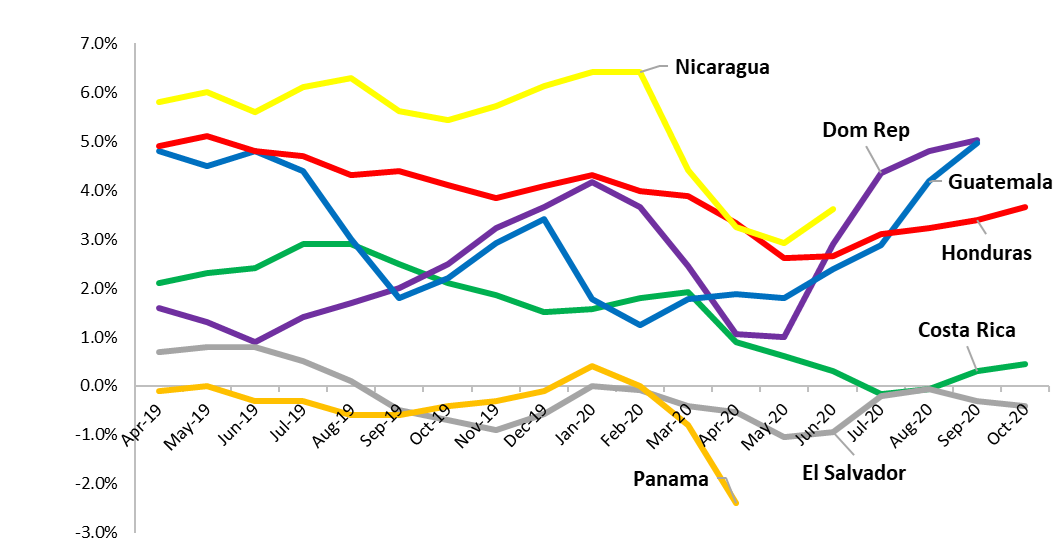
    Central America & Caribbean:​ Inflation
    Monthly year-on-year figures

    Central America & Caribbean, selected countries: GDP growth (%)
    Quarterly figures are year-on-year growth
    GDP  end 2019* 2020 forecast** Q4 2019 Q1 2020 Q2 2020
    Costa Rica 2.1 -5.5 2.9 0.8 -8.6
    Dominican Republic 5.1 -5.3 5.8 0.0 -16.9
    El Salvador 2.4 -8.6 3.0 0.8 -19.2
    Guatemala 3.5 -4.1 3.9 0.7 -9.6
    Honduras 2.7 -6.1 2.5 -1.5 -18.5
    Nicaragua -3.9 -8.3 -0.2 1.8 -7.9
    Panama 3 -6.5 3.3 0.4 Not yet available
    *Figures from local central banks **Figures from the United Nations Economic Commission for Latin America & Caribbean July 2020
    Quarterly growth based on figures from the local central banks


  • REGION: Struggles to rebuild after Hurricanes Eta and Iota

    LatinNews 25 January 2021 Hits: 1436

    Central America faces an uphill battle to recover from the impact of two powerful hurricanes in the midst of the coronavirus (Covid-19) pandemic.

    Hurricane ‘Eta’ hit on 3 November 2020, and those affected had no time to recover before ‘Iota’ followed on 16 November. There were 189 reported deaths from the two hurricanes, and an estimated 5.2m people were affected in Central America, according to an initial assessment by the United Nations (UN) published 27 November. Eta alone caused up to US$5.5bn in economic damages in the seven Central American countries, according to a preliminary estimate from the Inter-American Development Bank (IDB) published 23 November, and the Central American bank for economic integration (BCIE) estimates total losses of US$11bn for both storms in Central America.

    The scale of the destruction was immense, and Vinicio Cerezo, general secretary of the Central American integration system (Sica), called for support from the international community. “This situation is even more dramatic than what we faced in 1998 after Hurricane Mitch”, Cerezo said. In Nicaragua, the storms damaged or destroyed around 43,000 houses, health facilities and schools, and damaged 98% of the road network, according to the UN, which said losses and response expenditures will cost the equivalent of 6% of Nicaragua’s GDP. Local journalists reported that communications networks were disrupted in 33 of 153 Nicaraguan municipalities, with some left off grid for days.

    On 12 January Guatemala’s presidential planning secretariat (Segeplan) put the cost of damage, losses, and additional costs caused by the hurricanes in Guatemala at Q6.0bn (US$770m). The hurricanes produced the evacuation of 311,317 people and particularly affected the departments of Alta Verapaz, Izabal, Quiché, Huehuetenango, Petén, Zacapa, and Chiquimula (see sidebar). Segeplan said that as regards the scenarios regarding GDP growth prior to and after Eta and Iota, between 2018 and 2021, the impact of the hurricanes was expected to result in an additional 0.1% decline. A report published on 1 December by Central American law firm, Garcia & Bodan, said one in four agricultural exporters in Guatemala suffered crop damage, and at least 5% of that number suffered a complete loss of crops, while damage to roads and other infrastructure disrupted both imports and exports. At the end of December, the government said some Q296.1m for reconstruction would be taken from the 2020 emergency fund, but further funds would have to be approved by congress this year.

    Dramatic footage of bridges being swept away by swollen rivers surfaced from Honduras, and the country’s busiest airport, Aeropuerto Internacional Ramón Villeda Morales in San Pedro Sula, was left underwater following both hurricanes. In a report published 21 December, the UN Economic Commission for Latin America and the Caribbean (Eclac) estimated that the storms will cause Honduras’ GDP to contract by an additional 0.8% in 2020. Maite Matheu, country director for NGO CARE in Honduras, said it would take at least a decade for the country to recover from the storms, underlining both short-term destruction and long-term impact on livelihoods. President Juan Orlando Hernández has promised a sustainable recovery plan, but details on funding are thin on the ground. The Guatemala-based think tank, Central American institute for fiscal studies (Icefi), estimates that 600,000 Hondurans will fall into poverty this year due to the impact of the hurricanes combined with that of the coronavirus pandemic. As a result, Icefi is calling for more action from the Honduran government, but national governments in affected countries are already suffering severe budgetary pressures due to the pandemic.

    International institutions stepped up in response to the hurricanes, led by Sica and the BCIE working in conjunction with the World Bank (WB) and IDB. On 14 December BCIE announced a US$2.5bn support plan called the ‘Central American programme for resilient reconstruction’. The stated aim is “increasing the resilience and adaptation of the Sica countries to climate change”, but it also provides for emergency aid to help affected communities.

    The BCIE will also manage and administer funds donated by other donators “at no administrative cost,” and the plan also provides for the creation of a Climate Change investment project preparation fund (FCC). This fund will “provide the countries with technical assistance resources for the creation of a set of priority projects for the adaptation to climate change which will allow to promote public investment for the construction of new resilient road and social infrastructure and resilient agriculture projects, as well as private investment for the construction and restoration of dams, resilient housing, using Public-Private Partnership (PPP) schemes and resources for MIPYME [Micro, Small, and Medium Enterprises] environmental investments”.

    In addition, the IDB has promised US$1.2bn in new resources, as well as another potential US$500m in reassigned resources. “The IDB is totally committed to helping with the recovery and reconstruction of affected countries in Central America”, said IDB chief, Mauricio Claver-Carone. “The IDB will lead a historic cooperation effort between governments, multilaterals, and the private sector to accelerate the recovery and reconstruction of the region”.

    The WB has also pledged US$150m to support Honduras’ recovery from the storms, with a focus on rebuilding roads and infrastructure. Some 200 pieces of infrastructure have been prioritised, along with the restoration and improvement of services including electricity and water, which the WB says will benefit 800,000 people. The plan also aims to “strengthen institutional capacity in the country to manage resilient and inclusive reconstruction and recovery from disasters”. Existing programmes have also responded in the wake of the storms. Nicaragua, Guatemala, Belize, and Panama are members of a multi-country risk pool called the Caribbean Catastrophe Risk Insurance Facility (CCRIF). Nicaragua was the first to join, in 2015, and the policy paid out US$30.6m to the country in mid-December. Other Sica members also have the possibility to join.

    While international institutions have sprung into action to support Central America’s recovery, the fact remains that Eta and Iota caused widespread damage in a region that already suffered a significant infrastructure deficit. Recovery efforts will also be hampered by constraints on spending as national treasuries struggle to deal with the continued economic fallout of the coronavirus pandemic, leaving governments with difficult choices as to which areas to prioritise. In terms of weather patterns, the 2020 Atlantic hurricane season was the worst on record, according to the World Meteorological Organisation, and things look set to get worse.

    Central America is one of the world’s most vulnerable regions to the effects of climate change, which scientists say is increasing the strength and frequency of tropical storms and hurricanes in the region, and the existing pledges of resources for reconstruction seem more like a sticking plaster in the face of systemic issues. Global measures to combat climate change may be way behind schedule, but the prospects for meaningful action increased with the election of Joe Biden as the next US president. In fact, Biden addressed Eta and Iota in a tweet, writing that “the increasing frequency of these powerful storms is another reason that fighting climate change will be one of my top priorities”. It would take years for the effects of new policies to be felt, assuming Biden sticks to his word and does take action, but long-term solutions to climate change and worsening hurricanes in Central America will have to come from both inside the region and the wider international community.

    • Damages in Guatemala

    Segeplan deputy secretary, Stuard Villatoro, told reporters that the social sector (housing, health, and education) was most affected, accounting for 48% of damages, followed by productive sectors (agriculture, agroindustry, tourism, and trade – 31%); infrastructure (15%); and the environment (7%).


  • GUYANA-VENEZUELA: Guyanese UN application rekindles old spat

    LatinNews 05 October 2011 Hits: 2486

    The second half of September saw the revival of historic tensions between the governments of Guyana and Venezuela over a disputed territory; however, the prompt intervention of Trinidad and Tobago, whose government called on both sides to hold talks in Port of Spain, eased tensions as quickly as they had risen with the foreign ministers of the two countries, Nicolás Maduro of Venezuela and Carolyn Rodrigues-Birkett of Guyana, pledging to “negotiate the delimitation of maritime boundaries between the two States”.

    The row began on 7 September when the government of Venezuela received formal notification from the UN’s Commission on the Limits of the Continental Shelf (CLCS) that Guyana had submitted a formal application for the extension of its maritime shelf from 200 nautical miles (nmi) to 350nmi the previous day. Venezuela, which has a longstanding claim to Essequibo, an area of 167,839km2 encompassing two-thirds of Guyanese territory, claimed that: 1) Guyana had failed to inform it of its intention of submitting the application; and 2) that Guyana wrongly claimed in the document that there were no disputes over the area in which the extension would take place.

    Guyana denied both claims, saying it had informed the Venezuelan embassy in Georgetown about the studies that ultimately resulted in the CLCS application on 13 May 2009. The second criticism seems unfounded as the official document submitted to the CLCS, in the section regarding “absence of disputes”, clearly states: “The continental margin of the Co-operative Republic of Guyana is a maritime region over which there are overlapping claims made by other States. There are no disputes in the region relevant to the Submission of data and information relating to the outer limits of the continental shelf beyond 200 nautical miles” (emphasis is our own). In other words, Guyana recognizes the existence of a land dispute but denies the existence of disagreement over the extension of the continental shelf. The reasoning is logical: if the continental shelf were to be extended to 350nmi, regardless of whether the disputed territory eventually became Venezuelan or remained Guyanese, the shelf (of whatever size) would remain attached to said territory.

    The emergency bilateral meeting on 30 September served to highlight what the government of Venezuela and local commentators had been noting all along: “the historic level they [the two governments] have reached in bilateral relations, characterized by respect, fraternity and solidarity.” For the government of President Hugo Chávez, who did not seek to fuel nationalist sentiments over the Guyanese application despite opposition calls to do so and accusations that he was disregarding threats to Venezuelan national sovereignty –an ironic claim at best- the administration of President Bharrat Jagdeo was being unfair since bilateral relations have never been as good as under his administration.

    Looking ahead

    The CLCS will not consider Guyana’s application until its 29th session, scheduled to take place in New York during March/April 2012. Furthermore, as Rodrigues-Birkett told the local media, given the workload of the CLCS, it will be some years before Guyana’s submission is ruled upon by that body and for the CLCS to make recommendations on the outer limit of Guyana’s extended continental shelf. In the meantime, the foreign ministers will hold talks on the issue. In Port of Spain they stated their agreement “that Venezuela and Guyana develop cooperation projects in diverse areas, and strengthen their integration into [sic] mechanisms such as the Union of South American Nations (Unasur), Petrocaribe, and the Community of Latin American and Caribbean States (Clacs), with the conviction that the ties that unite them overcome their legacy of divide inherited from colonialism”. The storm has passed it seems, at least for now.

    • War-mongering

    Venezuela’s ambassador to the Organization of American States (OAS), the ultra Chavista Roy Chaderton, said the Venezuelan opposition was trying to inflame nationalist sentiments to declare war on Guyana so that it “serves as an excuse for third parties to intervene in our country and they solve their [the opposition’s] electoral problem by non-electoral means…they dream of a little war…all of a sudden we have Nato [North Atlantic Treaty Organization] taking off from Curaçao, Aruba, Bonaire and Puerto Rico”.

  • TRACKING TRENDS

    LatinNews 24 September 2015 Hits: 1563

    CHILE | Government salary freeze

    On 21 September the Chilean government announced that after reaching a deal with the national legislature it had decided to freeze the salaries of President Michelle Bachelet, her cabinet ministers and other top government officials for a year as part of its efforts to promote austerity amid the domestic economic slowdown.

    Finance Minister Rodrigo Valdés said that the unprecedented agreement means that this is the first time that top-ranking Chilean government officials, including national legislators, would not see their salaries rise along with that of all other public sector workers starting from 1 December.

    According to Valdés, windfall savings produced by this measure will be used to pay for the emergency relief efforts in the central areas of the country affected by a major earthquake on 16 September.

  • BARBADOS: Georgieva plays good cop in Barbados

    Sarah Sheldon 19 July 2022 Hits: 900

    Visiting Barbados in June, International Monetary Fund (IMF) Managing Director Kristalina Georgieva met Prime Minister Mia Mottley and played the role of financial ‘good cop’ saying the Fund is now much more sensitive to the social costs of fiscal austerity, and more prepared to protect the vulnerable at times of financial difficulty.

    The meeting came after a visiting IMF technical team and Barbadian officials had, in late May, agreed the seventh and final review of the IMF’s four-year-long US$435m extended fund facility (EFF) programme. An IMF report noted that the country’s economic performance had been strong, despite external shocks such as the coronavirus (Covid-19) pandemic, natural disasters, and the global impact of the war in Ukraine. At the start of the pandemic, tourism had virtually stopped dead, leading to a 14% drop in GDP in 2020. Foreign currency reserves dwindled to only US$220m (five weeks of import coverage) but have since recovered to a “comfortable” US$1.2bn.

    In parallel with the EFF programme the government developed a plan known as BERT (Barbadian Economic Recovery and Transformation). The economy began a slow recovery in 2021 but is now gaining momentum. Tourism activity has come back up to 60% of pre-pandemic levels. The Fund is calling for medium term reforms to improve the business climate, diversify the economy, and enable environmental and digital transformation. However, it notes there are significant ongoing external risks including an intensification of the Ukraine crisis and extreme weather events. The IMF is predicting 11% GDP growth this year. The Fund acknowledged the need for countercyclical fiscal deficits during the pandemic and including a more recent decision to reduce pressure on the cost of living by capping VAT on fuels (costing 0.3% of GDP). However, the government is still committed to achieving a primary fiscal surplus of 5%-6% of GDP within three years which, if achieved, will help reduce the debt-to-GDP ratio to a sustainable 60% by 2036.

    • More IMF funds?

    Avinash Persaud, the government's special envoy to the prime minister on investment and financial services, has suggested that Barbados should seek further precautionary funding from the IMF to create “life-saving safety nets”. BERT expires in September, and Mottley said that her administration was discussing whether there should be a successor programme.

  • RASTREANDO TENDENCIAS

    LatinNews 22 September 2011 Hits: 594

    ARGENTINA | Salario mínimo e inflación. El gobierno ha elevado el salario mínimo en 25%, a Arg$2.300 (US$518) por mes. La escala del incremento es una confirmación más que la inflación, pese a las persistentes negativas del gobierno, está a ese mismo nivel, y no en el de las manipuladas cifras oficiales (de sólo 5,5% para los primeros siete meses del año) difundidas por el instituto nacional de estadísticas (Indec). La Presidenta Cristina Fernández afirmó que el incremento premia a los trabajadores argentinos con mayor poder de compra (aunque los nuevos salarios sólo mantendrán el mismo ritmo que la inflación no-oficial), lo que es importante faltando menos de dos meses para las elecciones generales. Los sindicatos discuten acuerdos anuales sobre revisiones del salario mínimo con los empleadores. El hecho que ninguno de ellos usa la inflación oficial como referencia para las negociaciones fue subrayado por el hecho que los sindicatos presionan por un incremento de 41%, y los empresarios han comenzado con un gambito de apertura de 18%.

    PARAGUAY | ¡Brasiguayos fuera! Miles de campesinos sin tierras marcharon en Asunción el 30 de agosto para exigir que el gobierno del Presidente Fernando Lugo compre o expropie unas 12.000 hectáreas de tierra en los distritos de Ñacunday, Santa Rosa y Santa Rita, en la región fronteriza de Alto Paraná. La tierra está dividida actualmente en largas plantaciones manejadas por productores locales de origen brasileño, o brasiguayos. Los campesinos alegan que los brasiguayos durante años han ‘adquirido’ títulos por unas 28.000 hectáreas de tierras del estado en la región. La mayoría de esa tierra ahora está cultivada con soja, la principal exportación de Paraguay. Una propuesta del gobierno de Lugo de comprar unas 22.000 hectáreas de tierra para su redistribución a los sin tierra permanece estancada, en medio de alegatos de irregularidades en el proceso. Los sin tierra también desean la remoción de jueces locales a los que ellos acusan de favorecer a los propietarios privados de tierra. La Liga Nacional de Carperos (LNC), que organizó la marcha, dijo que asistieron 10.000. La policía ubicó la asistencia en 6.000.

  • Trinidad and Tobago: Recession deeper than expected

    LatinNews 20 December 2016 Hits: 2921

    In November, the Central Bank of Trinidad and Tobago (CBTT) released GDP data showing an unexpectedly sharp contraction in the first half of 2016. Real GDP fell by 6.7% year-on-year (with a dramatic 8% contraction in the second quarter). There is no doubt that the country is struggling with an energy-led recession, but these numbers may not be telling the full story.

    Trinidad and Tobago is in its third consecutive year of recession, and the reasons for that are fairly obvious. It is an energy-driven economy and has suffered the full force of the fall in international oil and gas prices, coupled with revenue reductions caused by falls in local hydrocarbons production levels. In its November Monetary Policy Report, the CBTT said that after a GDP fall of 0.3% in 2015, there had been a 6.7% contraction in H1 16. The energy sector plummeted by 10.8% in the first half, while non-energy activities were down by 4.3%. The drop in energy sector activity was more acute because two key companies, BHP and BPTT, suspended normal operations to prepare new offshore fields for production (the Greater Angostura and Juniper fields, respectively). This reduction in upstream operations had rippled through the sector, affecting downstream activities such as LNG production and refinery output.

    There were also steep falls in the non-energy side of the economy, with construction sector activity down by a steep 20% in the first half. Manufacturing was also hit, with the after-effects of the November 2015 closure of the Arcelor Mittal steel plant taking a toll (there was a drop of a third in assembly-type and related industries). Elsewhere, distribution activities were down by 3%. On the other hand, the finance, insurance and real estate sector achieved positive first half growth of 1.7%, while the agriculture sector registered growth of 9.1%.

    One way of reading these numbers is to conclude that Trinidad and Tobago has suddenly plunged into a crisis of Venezuelan proportions. The latest data certainly seems a lot worse than either the official CBTT forecast – that the economy will shrink by 2.3% in 2016 – or the IMF’s estimate of a 2.7% fall. After all, a slump of 6.7% is not that far off the 10% contraction in Venezuela expected by the IMF this year. Commentators have pointed out that the first half data for Trinidad and Tobago was probably the worst slump experienced in over 30 years (GDP fell by 9.2% on a full-year basis in 1983).

    But there are two important reasons separating Trinidad and Tobago from Venezuela, despite their geographic proximity and their shared dependence on the energy sector. The first is simply that the data may be wrong, or to be more specific, that inappropriate comparisons are being made. Later in November, the CBTT clarified that two different data series were in play.

    The Central Statistical Office (CSO) produces annual GDP estimates, using the value-added method. The CSO’s annual data shows a GDP decline of 0.6% in 2015 and is the statistical basis on which the government based its forecast for a comparably modest 2.3% decline in full-year 2016. The CBTT, however, uses its own and different short-term methodology to come up with quarterly GDP estimates, and this is what has produced the estimated 6.7% first half drop. The two series are not directly comparable. The CSO annual series is regarded as the more authoritative, and past full-year CSO estimates are automatically incorporated into CBTT statistical series.

    The second related point is that other macroeconomic variables suggest the recession is significant, but perhaps less pronounced than the -6.7% figure implies. Unemployment is rising, but at 4.4% in Q2 16, up from 3.8% in Q1 16, it is still relatively modest (and would be described by some as still not too far off full employment levels). The trade account registered a deficit equivalent to 3.6% of GDP in the first half, against a surplus of 6.2% of GDP in the same period of 2015. But unlike Venezuela, Trinidad and Tobago still has significant foreign currency buffers, and the government is seeking to manage the downturn. Foreign currency reserves grew by 1.6% year on year to US$9.8bn in October, representing almost 11 months’ worth of imports. The Trinidad and Tobago dollar is experiencing a managed depreciation (a 6.1% fall to TT$6.75/US$1 in the year to October). While aspects of this are problematic – importers are finding it hard to get foreign currency, for example – individuals and the government (through its Heritage and Stabilisation Fund) still hold significant dollar assets. In summary, while the recession is real, Trinidad and Tobago has some fuel left in its tank.

  • BRAZIL: Debates over public sector salary perks fuel tensions

    Patrick de Courcy 12 February 2026 Hits: 1507

    The question of how much to pay public sector staff has emerged as another potential point of tension between Brazil’s political and judicial institutions. On 5 February supreme court (STF) justice Flávio Dino ordered the suspension of benefits and allowances for public sector employees which could raise their incomes above constitutionally determined salary caps. This court order came just days after congress passed a fiscal reform to increase the salaries of congressional staffers. This bill could cause a headache for President Luiz Inácio Lula da Silva who could be under pressure to crack down on the long-running fiscal concern over ‘super-salaries’, but if he were to veto the bill to increase salaries, it could strain his relationship with the legislative branch.

    On 3 February, the second day after congress returned from its December-January recess period, both legislative chambers passed bills that proposed changes to the salaries and system of awarding bonuses and perks to the staff of the lower chamber and senate. While many pieces of legislation spend months or even years stalled in prolonged review processes, these fiscal bills were approved by both chambers in less than a day and have been passed onto the office of President Lula to be promulgated.

    According to the national daily Folha de São Paulo, the exact benefits that public sector staff could earn are not completely clear, but the bill does include possible bonuses ranging from 40%-100% of an employee’s base salary. Folha has estimated that this could add an extra fiscal burden of at least R$650m (US$126m) per year to the federal budget.

    Dino’s court order on 5 February did not explicitly mention congress’ bill, but it did slam the practice of ‘penduricalhos’ (perks or add-ons) as a violation of the constitution. Article 37 of the federal constitution specifies that the income of a civil servant cannot exceed that of an STF justice, which is currently around R$46,366 (US$8,975) per month.

    Dino also gave a list of loopholes often used to inflate public sector salaries, including bonuses, allowances, and compensation payments for unused holiday leave. He ordered the executive, legislative, and judicial branches to suspend all penduricalhos and carry out a review within 60 days of the bonuses and perks it offers to employees and flag up the add-ons that would effectively raise a civil servant’s income above that of an STF justice.

    At the time of writing, Lula has not been vocal on the issue of penduricalhos and is reportedly still deciding whether to promulgate the bill passed by congress, which would implement the add-ons that Dino had deemed unconstitutional. Federal lawmakers have also opted against publicly criticising Dino’s order, which could indicate that they might be worried about a public spat over perks and add-ons, which could worsen the public perception of congress.

    In September 2025, protesters took to the streets in major cities around the country to criticise several bills tabled in congress. These unpopular pieces of legislation included bills that could have reduced the jail time of former president Jair Bolsonaro (2019-2023), who is currently serving a 27-year prison sentence for plotting a coup, as well as a bill that proposed strengthening the legal immunity of federal legislators from criminal prosecution.

    The sentence reduction bill was vetoed by Lula in January. The legislator immunity bill, meanwhile, was rejected by congress following a huge public outcry and criticisms that portrayed congressmen as both self-serving and corrupt.

    Criticisms against suspension

    Although congress has not filed legal challenges against Flávio Dino’s court order to suspend ‘penduricalhos’, judges from lower courts have called on him to reverse his decision. On 11 February several associations and unions of judges and legal professionals issued statements which insisted on the legality of the perks offered to employees of the court system. On the same day, the top court of São Paulo state formally appealed against Dino’s order.

  • ECONOMIC HIGHLIGHTS

    Patrick de Courcy 13 October 2022 Hits: 968

    ECUADOR | Mexico trade talks. Ecuador’s minister of production, foreign trade, investment and fishing, Julio José Prado, said on 4 October that a trade agreement with Mexico is “99% complete” after more than three years of negotiations. A trade agreement with Mexico would enable Ecuador to join the Pacific Alliance trade bloc, as Ecuador already has trade agreements with the other member states – Chile, Colombia, and Peru. Progress has been slowed by Mexico’s reluctance to allow tariff-free entry of Ecuadorean bananas and shrimp – a matter that is still under dispute. “It’s especially the shrimp that is causing the greatest disagreement,” Prado explained, although he said that both countries were moving towards a quota arrangement on bananas. He added that the phase of highly technical negotiations “has finished” and said that Ecuador is now waiting for a “political response” from the Mexican government.

    COLOMBIA | Mining sector unnerved by tax reform bill. Juan Camilo Nariño, the president of the Colombian mining lobby Asociación Colombiana de Minería (ACM), said on 27 September that the tax reform bill submitted by President Gustavo Petro’s government places an excessive burden on the mining sector and could lead to falls in investment and production. Speaking at a press conference, Nariño said that “the tax structure should coincide with business realities” and that “these [tax] contributions are going to diminish and fall drastically in the short and medium term.” He stated that coal production would be particularly impacted, and he predicted that foreign investment in the mining sector would fall by 17%. “It puts at great risk the viability of the Colombian mining sector, future investments and, most seriously, the stability of 640,000 families” involved in the mining industry. The tax reform bill, which is awaiting debate by congress, proposes various measures that would affect the mining sector, including windfall taxes for exports of coal and gold. These windfall taxes would be imposed when the value of these exports exceeds a base level set by the national hydrocarbons agency (ANH), with companies to be taxed at 10% on excess profits.

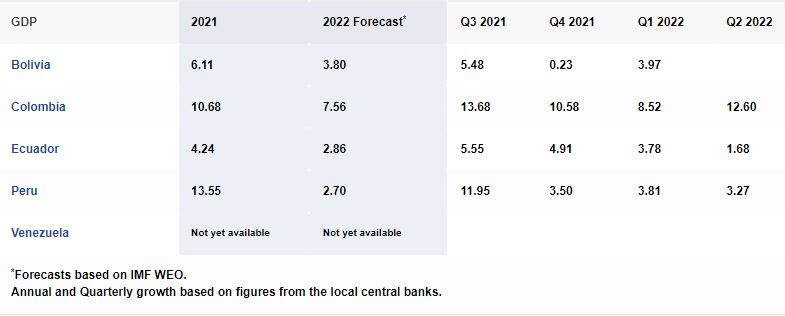
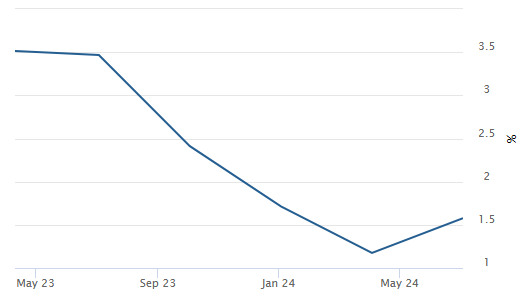
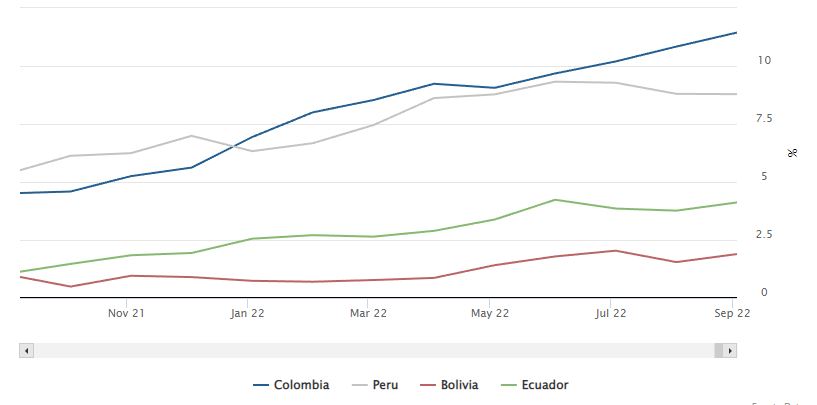
    Andean countries: inflation rate
    Percentage variation (year-on-year)

    Andean countries: GDP growth (%)
    Quarterly figures are year-on-year growth


  • MEXICO: Reports of the death of the maquiladora - exaggerated?

    LatinNews 19 December 2013 Hits: 3512

    Anyone following Mexico’s business press and the comments of manufacturing managers and analysts in recent months, particularly in the industrialised north of the country, could be forgiven for getting a little confused. After a lifetime of over half a century the maquiladora sector – in-bond assembly plants largely focused on the US market – is reported to be either on the verge of death, or at the dawn of a new golden age. Surely both things can’t be true at the same time?

    The maquiladoras – assembly plants near the border with the US – were introduced in the 1960s. Over the decades they have had booms and busts, but growth on the whole has been extremely strong. Industry exports and investment grew by more than 50% in 2009-2012 to US$196bn and US$7.4bn respectively. The sector is responsible for around 85% of Mexico’s manufacturing exports. According to the US Congressional Research Service, in April 2012 there were 5,075 companies in Mexico’s maquiladora sector, employing 1.9m people. They have helped turn Mexico into the world’s largest producer of flat-screen TVs, as well as becoming an important car, aircraft, and medical equipment supplier.

    The supposed death of the maquiladora sector is being blamed on the government’s recent fiscal reform, designed to boost Mexico’s very low non-oil tax revenues. Mexico has one of the lowest non-oil tax burdens in the Organisation for Economic Co-operation and Development (OECD) – around 9.7% of GDP (vs. the OECD average of 34%). Under the reform some of the maquiladora’s tax breaks are being withdrawn. They lose a partial income tax exemption, and a value-added tax exemption on imports (instead they will get a credit against VAT, subject to an annual certification process). The VAT rate in Mexican border states rises from a concessionary 11% to the nationwide level of 16%. The changes come into effect on 1 January 2014, although the industry is still lobbying the government to ease some of the provisions. Accountancy firm Deloitte says the effective income tax rate on maquila operations will jump from 17.5% to as much as 30%.

    There have been cries of anger. Joseph Olmeda, a manager of BSN Medical in Reynosa, complained, “obviously, the goose that lays the golden egg – they are affecting it”. “I have instructions that if this reform doesn’t change, starting in January, we begin sending equipment back to the United States and start shutting down the plant”, said Raúl Leyva, manager of a gutter machine manufacturing plant in Hermosillo, Sonora. According to Luis Aguirre, head of the national maquiladora council, companies might move their assembly operations to elsewhere in Central America. He said about US$3bn in new investments had been put on hold because of the tax changes.

    Some disagree – strongly

    “It’s … crocodile tears. These guys are not going to go away and stop producing” , says Ehtisham Ahmad of the London School of Economics. Those who follow this line of thought argue that the economic fundamentals are becoming even more favourable for manufacturing operations in northern Mexico, so favourable in fact, that special tax regimes are no longer necessary. For a variety of reasons, many US companies that relied on manufacturing supplies from China are shifting back to ‘near-shoring’ in Mexico. “Sometime in the last year, we reached a crossover point when it became cheaper to make a lot of goods in Mexico than in China. A lot of American companies are looking or moving” said Hal Sirkin of the Boston Consulting Group. According to Bank of America, Mexican manufacturing labour costs are now about one fifth lower than factory wages in China, as well as being below those in Brazil, Indonesia, and the Philippines. Mexico has a skilled labour force, and much lower freight transport costs. Getting a forty-foot container from Mexico to the US takes 3 days and costs US$3,460: from China it takes 21 days and costs US$4,665. If the new energy reform is successful in the medium term, Mexico might be able to add competitive energy costs as a further attraction.

    • Moving up the value chain

    Analysts say the real challenge is for Mexico to move up the value chain, developing high tech manufacturing clusters. The future, says the prestigious Instituto Tecnológico de Monterrey, lies in eight sectors in which the country can demonstrate comparative advantage: cars, electronics, plastics, minerals processing and fuel, chemicals, food, tourism services, and metal processing.

  • URUGUAY: Lorenzo walks over Pluna scandal

    LatinNews 23 January 2014 Hits: 1464

    President José Mujica was reluctantly forced to accept the resignation of his economy and finance minister, Fernando Lorenzo, on 21 December. Lorenzo stepped down from his position as soon as the supreme court announced that it would investigate his role in the liquidation of the national air carrier Pluna. The opposition is desperate to make hay out of the Pluna scandal ahead of presidential and congressional elections in October this year. Former president Tabaré Vázquez (2005-2010) is the early favourite to secure the left-wing coalition Frente Amplio (FA)’s third consecutive term in power.

    President Mujica has barely tinkered with his cabinet at all since coming to power in March 2010, primarily because it is a devilishly difficult balancing act for any president representing the FA, which is formed of so many discrete parties and factions. Not only did Mujica have to replace Lorenzo but he also had to name a new labour and social security minister after Eduardo Brenta stepped aside in order to run for a senate seat in October.

    Lorenzo’s departure had the potential to open a damaging rift within the FA. The protégé of Vice-President Danilo Astori, Vázquez’s moderate former economy minister, Lorenzo has steadfastly opposed adopting any of the more radical economic policy suggestions of the most left-wing factions in the FA. But not even the most radical of these factions dared to push for an economy minister more suited to their tastes (who might for instance increase taxes on wealthy Uruguayans); for fear of alienating voters as elections draw nigh.

    As such, Astori was given a free hand by Mujica to select Lorenzo’s successor. Astori plumped for Mario Bergara, his deputy economy minister between 2005 and 2008 before picking up the presidency of the central bank (BCU), to replace Lorenzo. Bergara, who has a doctorate in economics from the University of California, Berkeley, said he was expecting “an enormous challenge” to maintain Lorenzo’s policy direction. His primary challenge will be the perennial struggle to fend off double-digit inflation. Inflation, famously described by President Mujica as “a slippery eel” early in his mandate, reached 8.5% in 2013, well above the 6% fixed by the BCU for the third consecutive year. The government is predicting economic growth of 4% in 2013, which is low by the high standards set in recent years.

    The new president of the central bank, Alberto Graña, also announced that slowing down inflation would be his main priority. In July, the central bank will widen its target range for inflation from 4%-6% to 3%-7%. Graña, who also has a doctorate in economics, worked at the central bank for 20 years before replacing Bergara.

    Mujica defended Lorenzo to the hilt. He said he had “no doubts” about his “ethical integrity and commitment to the national interest”, adding that his government would miss him profoundly. Lorenzo resigned shortly after giving testimony on his role in the Pluna debacle to an organised crime judge, saying he had done so “on his own initiative and to make things easier for the courts”. He was charged, along with the president of the state-owned Banco de la República Oriental del Uruguay (Brou), Fernando Calloia, with “abuse of powers”.

    The charge relates to his alleged direct involvement in the dubious acceptance of a bid by a little-known Spanish-Argentine firm, Cosmo Líneas Aéreas, in October 2012 to purchase Pluna’s seven-strong fleet for US$137m, a bid which Lorenzo and Calloia committed the State to underwrite financially. Cosmo promptly pulled out of the purchase, claiming it lacked sufficient capital. Lorenzo’s lawyers filed an appeal on constitutional grounds, arguing that as the minister tasked by the government with expediting Pluna’s liquidation, Lorenzo had always acted according to his specially delegated powers. The appeal means that the case will now be heard by the supreme court (SCJ), which has dealt the government some painful reverses over the last year.

    Mujica might still be drawn into the Pluna scandal. There have been insinuations that Lorenzo, Calloia and all the other government officials involved in the affair had been acting on orders handed down directly from the presidency, and Mujica might have to testify before the SCJ over his role in the case. The opposition will be doing its level best to capitalise on the government’s travails over Pluna. Since the government’s decision in June 2012 to assume full control of the ailing public-private company, there has been a series of judicial investigations into impropriety, mismanagement and even corruption.

    *José Bayardi, a former defence minister (2008-2009), replaces Eduardo Brenta as the new labour and social security minister. Brenta left his position in order to run for a senate seat at the head of the Vertiente Artiguista (VA) faction of the FA this October. Bayardi also hails from the VA, thus preserving the delicate balance of cabinet representation of different political factions within the FA.

    • “We have this system properly established but it doesn’t solve differences that arise between countries […] we should face reality, be sincere and accept that these mechanisms don’t actually work, and start building new ones that fit our needs […] There is a serious internal problem, we need to review it […] we need more flexible instruments which we can effectively apply and are more responsive to current times. What we can’t do is to continue with this sort of institutional lie, with the lyrics one way and the music the other way.” President Mujica in a candid appraisal of the Southern Common Market (Mercosur) in mid-Januar.
    • “They have pulp mills, and they have to change them because they are older than the Ark. They damage the environment […] (With Argentina) relations are at a bit of a standstill, but everything will depend on what the president decides. Let’s see if we can fix things.” President Mujica on Argentina.
  • TRACKING TRENDS

    LatinNews 28 April 2016 Hits: 1117

    BRAZIL | Unemployment. According to the official statistics institute (Ibge), unemployment in the quarter ending in February 2016 increased to 10.2% or 10.4m people – up from 9.5% in the quarter ending in January 2016. The number of workers with official signed work contracts declined by 1.5%. Employment in the industrial sector was down by 5.9%. Average workers’ incomes fell from R$1,954.00 to R$1,934.00.

    CHILE | Preparing for “post-copper economy”. President Michelle Bachelet used the XIV edition of the mining fair Expomin this week to propound her government’s plan for “a post-copper economy”. Bachelet stressed the need for significant diversification of the mining sector “to adapt to the new times, increasing productivity, reducing costs and innovating”. In this sense, she said the key for Chile was to aspire to global leadership “conquering international markets” through the export of goods and services linked to mining.

    “Without question the challenges facing the industry are enormous,” Bachelet said, adding that “there is no doubt about it [implementing the necessary changes] will demand a big effort of dialogue and articulation between different actors…the public sector, companies, academia, employees and civil society”.

    • Major challenge

    Joaquín Villarino, the head of the Consejo Minero de Chile, the mining council bringing together domestic and foreign-owned private and state copper, gold and silver producers operating in Chile, said that there was a “tremendous challenge” ahead. “The political class can’t live with a paralysed business class, and the business class can’t live with a political class with which it doesn’t speak,” he said.

  • REGION: Pandemic accelerates growth in e-commerce

    LatinNews 21 October 2020 Hits: 563

    The coronavirus (Covid-19) pandemic has accelerated many economic changes that were already under way, and the development of e-commerce in Central America is one example.

    Digital commerce still has very low penetration in the region at just 1% according to a survey by market research firm, Kantar, published in June. This is less than the 6% penetration in all of Latin America and the 10% in Europe on estimates from Stelleo Tolda, chief operations officer at online marketplace MercadoLibre. However, the restrictions on movement brought in due to the pandemic have caused an explosion in e-commerce transactions. Kantar found that in Central America these increased by 299% in April alone, as people were forced to forego face-to-face transactions and shop online from home.

    Guatemala is a particularly interesting case as domestic e-commerce businesses have been flourishing. In 2019, Guatemalans spent US$155m on e-commerce purchases from foreign firms, many of them operating via Post office (PO) boxes in the US, with US$110m spent in the local market, according to a survey by the e-commerce unit of the Guatemalan chamber of commerce. This year those numbers are forecast to reach US$250m in foreign transactions and US$240m locally, with local firms capturing a larger percentage of a growing market. Some 50% of Guatemalans make an online purchase each month, the survey found.

    Buyers are heavily concentrated in the capital, but other parts of the country have also seen growth. In addition, around 5,000 firms were selling online in July, a number which is predicted to increase by 152% to reach 6,500 by the end of the year. These numbers are growing despite a high percentage of unbanked individuals and a low percentage of credit card holders, e-commerce has grown faster during the pandemic after years of steady progress.

    In Honduras, local initiatives are driving this growth. One example is Sandmart.hn, which offers food and drink deliveries in the city of San Pedro Sula, Honduras’s second largest city and the capital of Cortés department. Costa Rican drinks company, Florida Ice and Farm (Fifco), is just one example of a company that brought forward plans to implement digital sales due to the pandemic. Fifco general manager, Ramón Mendiola, told Costa Rican daily, La Nación, in an interview in late August that the company had not planned to do so this year.

    There are many initiatives under way to further develop the sector in Central America. For example Sube Latinoamérica, a digital commerce company, supports small businesses that want to build a web page, social media presence or online sales; Guatemala is part of the “eTrade for All” initiative run by the United Nations Conference on Trade and Development (Unctad) that makes e-commerce work for development; and in April, the Honduran government launched a small business digitalisation programme in association with the Organization of American States, which offers business owners free assistance to start selling online.

    Analysts at Consortium Legal, a Central American law firm, says that the region as a whole has a strong regulatory framework that will allow further growth in the e-commerce sector, although Nicaragua lags behind its neighbours, and consumers seem to be getting more comfortable with buying online. However, the rapid growth of the sector has given rise to new opportunities for cybercriminals, as the rush to start selling products online means some companies don’t have adequate security features.

  • TRACKING TRENDS

    LatinNews 24 June 2021 Hits: 3631

    PERU | Economic recovery. Peru’s GDP expanded by 13.8% in the first four months of 2021 compared with the same period last year, the national statistics institute (Inei) announced on 22 June. In April the economy grew by a record 58.49% year-on-year against a very low base of comparison: the economy contracted by 39.09% in April 2020 as tough restrictions were imposed at the start of the coronavirus (Covid-19) pandemic; April’s GDP figure is still down by 3.46% on April 2019.

    At opposite ends of the spectrum, the construction sector grew by 987.36% on the same month in April 2020, while the agriculture sector contracted by 5.20%. Amid all the criticism levelled by Keiko Fujimori, of the right-wing Fuerza Popular (FP), at the yet-to-be declared victor in the presidential elections, Pedro Castillo, of the far-left Perú Libre (PL), for the havoc his anti-capitalist policies will wreak in Peru, Pedro Francke, Castillo’s economic adviser, argued that Fujimori’s refusal to accept defeat, and insistence that she is the victim of electoral fraud, is causing untold “socio-economic damage” as well as disquieting the markets.

  • REGION: Studies call for increased investment in health sector

    Sarah Sheldon 22 May 2023 Hits: 888

    Two recent studies call for more investment in the health sector in Central American countries in order to boost social and economic development.

    In mid-April, the Federación Centroamericana y del Caribe de Laboratorios Farmacéuticos (Fedefarma), a regional pharmaceutical industry body, published two pieces of research demonstrating a link between productivity and quality of life and investment in the health sector. At the same time, researchers say that spending must be efficient in order to maximise the benefits, as higher spending does not guarantee better outcomes by itself.

    The two studies focus on Costa Rica, Panamá, Guatemala, and the Dominican Republic and were conducted in collaboration with Sanigest International, a Panama-based healthcare consultancy, and the WifOR Institute, an economic research institute headquartered in Germany. Researchers found that in 2021, public spending on health was 5.3% of GDP in Costa Rica, 5% in Panamá, 2.7% in the Dominican Republic (DR), and 2.4% in Guatemala. By way of comparison, the Organization for Economic Co-operation and Development (OECD) recommends minimum spending equivalent to 9% of GDP, which no country in Latin America achieves, and the World Health Organization recommends 6% of GDP as a minimum.

    As for health system coverage, Costa Rica is top with 92%, compared with 71% in the Dominican Republic, 63% in Panamá, and 17% in Guatemala. The main issues identified by researchers are inadequate and inefficient primary care, long waiting lists, and poor management of the prevention and treatment of chronic and rare conditions. In addition, the proportion of healthcare costs paid by patients, known as out-of-pocket spending, sits at 56% in Guatemala, the highest in the region. In the Dominican Republic, this figure is 47%, followed by Panamá at 28% and Costa Rica at 20%. The OECD recommends that a maximum 20.6% of spending should be out of pocket.

    For researchers, Central American nations need “a paradigm shift among governments so that they no longer see healthcare as a cost and see it as a long-term investment that will bring about socioeconomic development”. One benefit they identify is that health interventions can help to improve education levels, as healthy children can study for longer. Research shows that educational attainment can increase by up to seven percentage points with early health interventions. 

    At the same time, investment and budget management should be collaborative processes in order to maximise efficiency, they say. Spending should be tied to quantifiable short- and medium-term goals, say researchers, in order to avoid waste. Recommendations to improve budget management include streamlining purchasing processes and addressing labour informality and a lack of liquidity.

    Given ongoing economic headwinds in Central America it seems unlikely that we will see any great increase in overall spending on healthcare in the coming years. And while improving management systems to increase budget efficiency could offer opportunities to boost coverage and quality at a lower cost, reformist efforts would likely run into roadblocks in the shape of vested interests. As healthcare systems are linked to such a wide array of economic sectors and geographies, meaningful change will likely come as a result of root and branch reform rather than bureaucratic tinkering.

    Other development goals

    The research also links healthcare to other development goals such as connectivity, with internet access essential to implementing digital health strategies. Costa Rica again scores highest, with 80.5% internet access, followed by the Dominican Republic on 76.9%, Panama on 64.4%, and Guatemala on 50%. This is just one example of how the healthcare sector is connected to wider development goals.

  • ECONOMIC HIGHLIGHTS

    Abbi Dicker 17 January 2025 Hits: 4760

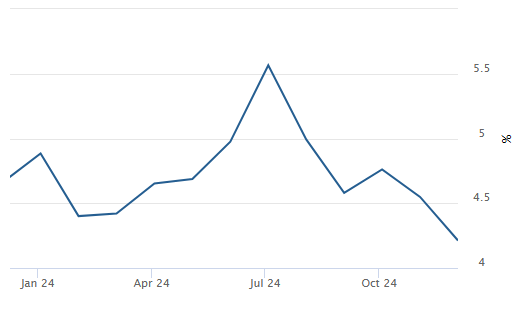
    MEXICO | Inflation continues to drop in Mexico. On 9 January Mexico’s national statistics institute (Inegi) released the consumer price index (INPC) for December 2024, showing a monthly inflation rate of 0.38%, down from 0.44% in November. This brings the annual headline inflation to 4.21%, the lowest since early 2021. However, the core inflation index, which excludes volatile items such as food and fuel, was up 0.51%, resulting in a year-on-year rate of 3.65%, up from 3.58% in November.

    MEXICO | Gov’t announces major dollar-bond sale. On 6 January Mexico’s finance ministry (SHCP) announced that it had placed bonds worth US$8.5bn on the international market. The placement consists of one bond worth US$2bn with a coupon rate of 6% due to mature in five years; one worth US$4bn with a coupon rate of 6.875% due to mature in 12 years; and one worth US$2.5bn with a coupon rate of 7.375% due to mature in 30 years.

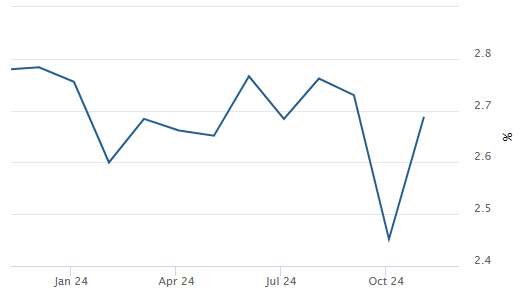
    MEXICO | Unemployment rate rises. On 3 January Mexico’s national statistics institute (Inegi) released new figures revealing that the unemployment rate of the economically active population – consisting of 61.6m people aged 15 and older – rose to 2.6% in November 2024, up from 2.5% recorded in October of the same year. Inegi did not provide a year-on-year comparison of the unemployment rate, as it was unable to complete a measurement in November 2023 due to the impact of Hurricane Otis in southern Mexico.

    MEXICO | Remittances increase. On 2 January Mexico’s central bank (Banxico) released new figures showing that the country received US$5.44bn in remittances in November 2024, marking a 10.6% annual increase. The cumulative total of remittances from January to November last year reached US$59.52bn, a 2.9% rise from the same period in 2023.

    Mexico: GDP growth
    Percentage variation (year-on-year)

    Mexico: unemployment rate
    Economically active population

    Mexico: inflation rate
    Percentage variation (year-on-year)

    Source (all graphs): National Statistics Institute (Inegi)

  • GUATEMALA: Pérez Molina under fresh pressure over education

    LatinNews 12 February 2014 Hits: 2646

    Last month saw a revival of unrest from Guatemala’s teachers in demand of a 10% salary increase and additional resources. This was not a surprise given the failure of the 158-member unicameral legislature to approve the government’s national budget last year, which would assign more funds to the sector [RC-13-12]. The subsequent approval by the legislature of an additional Q$1.5bn (US$191m) at the behest of President Otto Pérez Molina has, for the time being, averted the threat of further unrest. Yet it comes amid signs that education is suffering under the Partido Patriota government.

    On 23 January thousands of teachers across the country gathered in Guatemala City, in protests organised by the Asociación Nacional del Magisterio (ANM) and the Sindicato de Trabajadores de la Educación (Steg) unions. This had been widely expected after congress failed to meet the 30 November deadline to approve 2014 draft budget for Q$70.6bn (US$8.9bn), meaning that the 2013 budget for Q$66.98bn (US$8.41bn) was rolled over. Education was due to receive an allocation of Q$12.32bn (US$1.56bn) in the 2014 budget, up from Q$10.74bn (US$1.36bn) in 2013.

    The unrest had an impact. A week later congress approved the extra Q$1.5bn of funds, of which Q$1.0bn will go to education and the rest to health. With Guatemala’s spending on education among the lowest in the region (see sidebar), the protests come as a local think-tank, Educa Guatemala, released a report at the start of the month which had some worrying findings for the Pérez Molina government, suggesting a decline in educational coverage. According to the report pre-school coverage was just 44% in 2012, down from 57% in 2009. For primary education, coverage dropped to 89.1% from 98.7% over the same period, while lower secondary (ciclo básico) coverage remained stable at 43.2%.

    • Spending

    The latest World Bank figures put Guatemala’s public spending on education as a percentage of GDP at just 3% - the lowest of any Central American country (although figures for Honduras were not available). This compares with Costa Rica (7.2%), Nicaragua (4.6%); Panama (3.5%) and El Salvador (3.4%).

  • CHILE: Boosting ties with Brazil

    LatinNews 10 December 2015 Hits: 11

    Last month, Brazil’s Foreign Trade and Industry Minister Armando Monteiro travelled to Santiago where he met Chile’s Foreign Minister Heraldo Muñoz. The two signed a Cooperation and Investment Facilitation Agreement (CIFA) which has the objective of offering better governance for investors of both countries and establishing mechanisms to mitigate risks of investments.

    Back in September 2015, Chile’s Foreign Investment Committee (CIEChile), the governmental agency that represents the state in its dealings with foreign investors noted that “Brazilian companies are showing renewed interest in investment opportunities in Chile”, citing “the local economic situation” as leading “companies that normally focus their investments in the Brazilian market to look at the opportunities our country offers in sectors such as energy, infrastructure, mining and manufacturing”. According to the same CIEChile report, between 2009 and 2013, Brazilian companies invested over US$2.7bn in Chile, positioning it as the country’s largest source of investment regionally and the eighth largest internationally and accounting for 2.8% of the total inflow during this period.

    Meanwhile, a press release by Chile’s foreign ministry issued following Monteiro’s visit, notes that bilateral trade reached US$9.7bn in 2014, up 3% on the previous year. Chile’s total trade in 2014 reached US$147.8bn. However, according to other official sources, bilateral trade was US$4.0bn in the first six months of 2015, down 15% on the same period the previous year. Meanwhile total trade over the same time period was US$65.4bn, down 12% on the same period the previous year. As well as trade and investment, the two officials also reportedly discussed a Chilean initiative to construct a bi-oceanic corridor with Argentina, Brazil and Paraguay amid other intraregional connectivity infrastructure projects, and plans to move on road infrastructure projects which would connect the south of Brazil with the north of Chile.

    More problems with Bolivia

    While strengthening cooperation with Brazil, the government led by President Michelle Bachelet continues to struggle in its relations with another neighbour – Bolivia - which has a case against Chile before the International Court of Justice (ICJ) over Bolivia’s longstanding claim of access to the Pacific Ocean, lost to Chile in the War of the Pacific (1879-1883).

    On 18 November, Bolivia’s Defence Minister Reymi Ferreira accused Chile of failing to comply with the Ottawa Convention, an international agreement to remove landmines along their shared border – specifically he accused Chile of failing to meet a 2012 deadline to deactivate all landmines along the border. This prompted a response the following day by Chile’s foreign ministry which issued a press release stating that “The Ottawa Convention, in Article 5, gives to its States Parties the right to request the extension of the initial 10-year period for demining, a norm that Chile invoked in April 2011…Unanimously accepting Chile's request, the Tenth Meeting of States Parties extended the deadline to complete the demining until March 1, 2020”. The press release notes that “To date, Chile has completely destroyed its stockpiles of antipersonnel mines and has removed 69.67% of the 32,059 antipersonnel mines laid along the border with Bolivia, a process that began in 2005”.

    Further stoking Bolivian suspicion, on 22 November Chile’s Defence Minister José Antonio Gómez told local daily El Mercurio that Chile was bolstering security at its border with Peru and Bolivia with military troops as part of anti-crime efforts. This followed a formal complaint presented by Chile’s foreign ministry to its Bolivian counterpart on 2 November regarding increased criminality in the border area.

    In late August, the Bolivian government filed an official complaint against Chile before the Latin-American Integration Association (Aladi) for a dozen “irregularities” under the 1904 Peace Treaty, under which Chile guarantees Bolivia the right to free transit and access to Chilean Pacific ports [RBS-15-10].

    Meanwhile the resignation last month of Felipe Bulnes as Chile’s representative before the ICJ is being trumpeted by the Bolivian government as a sign that the Bachelet administration is fearful of a defeat. In the post since 2012, Bulnes’ resignation, which was announced on 23 November, has been linked to the ICJ’s ruling back in September against Chile’s claim that it did not have jurisdiction to rule on the dispute. Bulnes has since been replaced by former secretary general of the Organisation of American States (OAS), José Miguel Insulza. In his resignation letter, Bulnes cited the response among certain sectors to the ICJ September ruling as grounds for his decision, alluding to the fragmentation of support for his negotiating team and lack of unity, which he wrote is necessary “when facing these kinds of challenges”.

    • Insulza

    Well-known nationally and internationally, José Miguel Insulza served as the Secretary-General of the Organization of American States (OAS) (May 2005- May 2015) and in various ministerial positions under former centre-left governments, including foreign minister under President Eduardo Frei (1994-2000). His international contacts could prove important in gaining international public support for Chile’s cause.

    • Codelco

    On 27 November, the CEO of Chile’s state-owned copper company Codelco, Nelson Pizarro, announced pre-tax profits for the first three-quarters of 2015 of US$1.12bn, down 47% on the same period in 2014. However, copper production over this period was up 2.3% on the same period in 2014, reaching 1.26MT (million tonnes) of fine copper.

  • Bolivia: Unprecedented agreement with the Unodc

    LatinNews 25 February 2017 Hits: 568

    Earlier this month the Movimiento al Socialismo (MAS) government led by President Evo Morales signed a ‘Country Programme’ for 2016-2020 with the United Nations Office on Drugs and Crime (Unodc), providing funds of around US$22m to respond to the threats connected with drugs, crime and corruption. The agreement is the first of its kind between Bolivia and Unodc. It is the latest sign of how other institutions have stepped in following President Morales’ expulsion of the US Drug Enforcement Administration (DEA) in 2008 amid a diplomatic spat with the US, which takes issue with Morales’ ‘Coca Sí, Cocaína No’ drugs policy distinguishing between the raw coca leaf and cocaine, the illegal narcotic.

    According to a Unodc press release dated 2 February, of the US$22m, US$9.3m (43%) has already been financed. Those contributing funding to the programme include: European Union, Sweden, Bolivia, Germany, Denmark, France, Austria and Spain. The press release notes that this new programmatic framework consolidates and deepens Unodc’s cooperation in five key areas. These are: (1) coca and comprehensive development which will receive US$6.2m; (2) health and drug control which will receive US$4.7m; (3) prevention of and fight against crime and organised crime (US$5.9m); (4) prevention of and fight against corruption (US$2.6m); and (5), criminal justice reform (US$2.7m).

    A press release published by the Bolivian government cites Unodc’s representative in Bolivia, Antonino De Leo, as saying that “the programme’s activities will also strengthen Bolivia’s efforts to achieve the United Nation’s sustainable development objectives”. Meanwhile Foreign Minister Fernando Huanacuni was also keen to emphasise that the programme will contribute to the progress of other agendas, noting that “the Country Programme is connected to the Agenda Patriótica 2025 and Social and Economic Development Plan 2016-2020”.

    More signs of boosting cooperation with neighbours

    Following various security-related agreements with Peru, Argentina, and Brazil late last year [SSR-16-12], last month Bolivian officials, along with representatives from the Chilean government led by President Michelle Bachelet, announced a deal aimed at strengthening bilateral anti-drug trafficking efforts.

    This followed the ninth meeting of the binational mixed commission on drugs which took place on 26 January in Santa Cruz city, the capital of Bolivia’s eponymous eastern department. The last such meeting took place over six years ago, in August 2010, in Chile’s capital, Santiago.

    According to an official press release from the Morales government, the national delegation was headed up by the deputy social defence minister, Felipe Cáceres, and included representatives from the foreign ministry, the attorney general’s office and the special anti-drugs unit (Felcn).

    The announcement of the agreement with Chile made headlines given the long-running enmity between the two countries, stemming from Bolivia’s historical claim to access to the Pacific Ocean, which it lost to Chile in the 1879-1883 War of the Pacific, a dispute which is currently before the International Court of Justice (ICJ) at The Hague.

    Felcn progress

    In a recent report, Felcn claimed to have seized some 29 tonnes (t) of cocaine in 2016 (comprising 12.1t of cocaine base and the remainder, cocaine hydrochloride). In total last year, Felcn carried out 12,251 drugs-related operations and arrested 3,598 people.

    • Approving more pardons

    Last month Bolivia’s bicameral legislature approved a resolution ratifying a December 2016 presidential decree which grants pardons to up to 1,700 prisoners. This is the fourth time since 2012 that President Morales has issued the pardons which, on this occasion, apply to women who are 24 weeks or more pregnant, and to prisoners with serious or very serious disabilities, or with terminal illnesses. The amnesty will not apply to those facing charges of homicide, aggravated robbery, contraband, kidnapping, and other serious crimes. The head of the prison service, Jorge López, has warned that the prison system is in crisis due to overcrowding, with 16,038 prisoners for 5,013 places and has blamed this on delays in the justice system, noting that just 38% of prisoners had received sentences.