All Categories

Subcategories

  • New ideas on how LAC tourism may respond

    LatinNews 01 December 2020 Hits: 691

    The travel and tourism crisis has thrown up a wide range of ideas about how to respond or rebuild and re-invent the Latin American and Caribbean tourism industry. Some of them may lead nowhere, but others could turn out to be useful in a general industry reset. It is still too early to pick any clear winners and losers, not least because the immediate future course of the pandemic is still difficult to predict.

    Adjusting to the end of mass tourism?

    One possible future scenario is that the era of mass tourism has ended, or at least has gone into a period of decline. In this model, as global mobility reduces, so long-haul flights become much more expensive, and a significant proportion of the population begins to spend their holidays closer to home. The main implication of this scenario is that the LAC tourism industry will need to move upmarket, catering for fewer, wealthier, or more niche types of visitors. A number of global cities and industry analysts seem to be already moving towards that conclusion. Tony Matthews, an urban and environmental planning specialist at Griffith University in Australia, has made that case, commenting: “Cities that rely heavily on tourism are facing an extraordinary crisis. Do they wait it out until mass tourism is viable again, or do they start developing major new industries and economies?” Griffith argues that urban economies are by their nature difficult to “re-tool”.

    Notwithstanding that difficulty, a number of European cities have already adjusted their approach in a way that may be relevant to the LAC countries. The city authorities in Barcelona have said they intend to “put quality over quantity”, promoting local food and seeking to attract higher-spending visitors. Amsterdam says it will concentrate on social and environmental improvements. Matthews comments: “With less future income from tourists it makes sense for Amsterdam to try to improve its economic fundamentals in other ways.” Bangkok in Thailand has also dialled down mass tourism. David Robinson, director of Bangkok River Partners, says: “The race to the top of the ‘most visited’ chart does not benefit the country. More is just more, not better, and certainly not more financially beneficial to the country. It’s unsustainable.”

    Focusing on improved infrastructure

    The World Economic Forum (WEF) noted that before the pandemic a number of LAC countries had begun to improve their travel and tourism competitiveness including air, land, and sea infrastructure. However, the pandemic also altered the relative weighting of key components of competitiveness in a way that is not particularly helpful to the region. For example, tourists now place much greater emphasis than before on the availability of good healthcare facilities - and LAC has 42% fewer hospital beds per 10,000 inhabitants than the global average. The region will also need to overcome often unfavourable business, safety, and security conditions, gaps in health and hygiene, and environmental issues.

    While acknowledging the existence of funding constraints, WEF has suggested the way ahead could be to invest more in tourism related infrastructure through public-private partnerships (PPPs). Desirable investments would include contactless payment and ticketing options in airports, buses, and Metros, which would save time and reduce the spread of the virus. More technologically advanced infrastructure would improve quality and reduce costs.

    Increased infrastructure resilience would help cope not only with pandemics but also with natural disasters such as hurricanes and earthquakes. A World Bank study has found that investment in resilient infrastructure in low and middle-income countries can generate US$4 worth of benefits for every US$1 spent. Investment in digital systems would prepare the LAC travel and tourism sector for the spread of 5G (5G subscribers in the region are expected to reach 58m by 2025). Digitalisation could also help small and medium-sized enterprises (SMEs) in the industry to offer more competitive services.

    Improved marketing techniques

    Some tourism executives say that in response to the pandemic the sector should focus more rigorously on specific market segments, so as to optimise profitability. One version of this hypothesis is that the industry in general should target the millennial generation, which is now larger than the baby boomers. Recent research suggests millennial travellers are attracted by personalised and technology-based travel options and place a high value on authenticity and unique experiences. Latin American and Caribbean tour operators can offer a particularly good fit for adventure-seeking millennials, with an emphasis on outdoor activities, hiking, sightseeing, and a range of sporting activities.

    Countries that have already established a distinctive tourism brand may be well-positioned to ride out the storm. One example is Costa Rica, which over the last two decades has built its reputation as an eco-tourism destination with beautiful beaches, tropical rainforests, and diverse eco-systems. While the country has suffered from the global downturn in 2020 (tourism accounts for around 8% of GDP) it intends to use these already established green credentials to recover around US$1.5bn in lost revenues and generate 80,000 new jobs.

    There are a number of other ways to improve the targeting of market segments. Destinations like Mexico and the Caribbean can sharpen their focus on attracting short-haul US and Canadian travellers, where airlift is easier than for long haul visitors (e.g. Europe). Although airlift remains an issue, as China is emerging as the only major global economy expected to record positive growth in 2020, targeting Chinese tourists as travel restrictions are gradually eased may be a useful and potentially profitable diversification strategy.

    Across the region there are signs that the industry as a whole is promoting domestic tourism as a first step designed to kickstart a wider recovery process. Various governments have already begun to prioritise this as a policy option. One way of encouraging domestic tourism has been to move public holidays to Fridays or Mondays, thereby creating a number of long weekends that will encourage short holiday breaks in local resorts.

    There may also be scope for better targeting regional and neighbouring country tourism flows. Uruguay, for example, has for many years attracted visitors from neighbouring Argentina and Brazil and a relatively smaller number of travellers from the US and Europe. While Uruguay’s southern hemisphere summer season (December to March) will suffer because of the pandemic, the country’s relative success in controlling the coronavirus, providing high levels of safety, good health services, institutional stability, and a high standard of living has attracted a significant number of longer-staying Argentine visitors. Somewhere between 15,000 and 20,000 Argentines are estimated to have moved to Uruguay since the outbreak of the pandemic in March, equivalent to about 0.6% of the country’s total population of 3.5m.

    Like a downturn in any other industry, companies are likely to focus on supply-side consolidation and demand-side simplification of the product offer. To some extent this is a natural process. Given the drastic and abrupt downturn, it is likely that a significant number of travel and tourism companies will be driven into bankruptcy or administration. On the other hand, those that have larger cash reserves and lower costs will be a position to take over some of their rivals.    

    Attracting remote workers and digital nomads

    A number of analysts have wondered whether the surge in remote working experienced in wealthy countries during the pandemic might offer some clues to help to revive the tourism sector. The argument is that if people were able to work remotely from home during the more intense phases of lockdowns, they might also be attracted by the idea of working remotely from a more distant location, with a more relaxed lifestyle and in a better climate – a second home, time-share, villa, or hotel in a tourist destination in the LAC region. Frank J Llibre, a top executive at the Dominican Republic’s Grupo Puntacana, has spoken about the potential attractiveness of this option in the Covid era, particularly if the local operator can offer good broadband connectivity, high health and cleanliness standards, and appropriate services for longer-stay visitors. His company operates a cluster of businesses including an airport and the residential Puntacana village, which includes an international school, a medical centre, and sports facilities as well as shops and restaurants. Subject of course to reliable airlift, some LAC countries may be able to develop this model designed to cater to longer stay remote workers.

    A related experiment is being pursued in Panama. From December 2020 a giant cruise ship, MS Satoshi, which has a length of 245 metres and a total of 777 cabins distributed over 12 decks, will anchor 22kms off the Bay of Panama. The ship, owned by a company called Ocean Builder, has been diverted from the mobile cruise tourism business which has become unviable because of the coronavirus pandemic. As a result of the crisis, many cruise ships have been idled at anchor in various parts of the world. In this case the idea is to repurpose the ship to offer a home for ‘digital nomads’ and crypto-currency entrepreneurs. According to Panamanian tourism minister Ivan Eskildsen, this will be the world’s first residential, fixed-location cruise ship designed for “digital nomads, new technology entrepreneurs and digital professionals who are seeking to work remotely”.

    The ship will be linked to Panama City by a regular small ferry service taking 30 minutes for each trip. Facilities onboard include multiple restaurants, a theatre, health centre, casino, and a gym. The company is currently also building water-based homes known as Sea Pods on Panama’s Caribbean coast. It says an initial tranche of 200 cabins on the ship will be sold by auction by the end of this year and are expected to be priced at somewhere between US$25,000 and US$50,000 each. Like a condominium, residents will also have to pay a fee for the upkeep of the ship and facilities. Ocean Builder says it is also able to assist residents who are interested in acquiring permanent residence status in Panama (the Panamanian government has recently offered improved terms to convince more foreigners to become residents, in an attempt to boost inward investment and innovation). It is not yet clear whether the MS Satoshi project will succeed, but the experiment is likely to be watched closely in both Central America and the Caribbean, still adjusting to the collapse of the cruise ship industry.

    Introducing new technology: The tourist sector as a whole faces the challenge of adopting new digital technologies that will help control costs and improve profitability. One example of how this can work is the Who’s Your Guest website launched by Inbal Tubi, who owns and runs hotels in both Brazil and Colombia. The project was launched as 80% of Colombia’s hotels closed in the first phase of the lockdown; occupancy rates in July stood at only 14%. Tubi had been frustrated by high commissions charged by booking platforms, so he launched an alternative designed to give the hotel a larger share of the fees. He says hotels have had to pay “crazy” 15%-30% commissions to established online booking sites such as Expedia and Booking.

    “Booking makes more money than the hotel on the reservation. And you have absolutely no information about the guest you are about to receive. The guests go on TripAdvisor and know everything about you, but you have no idea.” To solve that problem, he has created a mutual rating system through “Go Travel”, a direct booking club, which offers discounted rates to the more desirable customers. Tubi says hotels can boost net profits by 12% by using the system, which also enables contactless check-in “so the hotels know in advance if you like an extra pillow on the bed, if you’re lactose intolerant, what tours you do. So they can give you a personalised service.” He had worked on the idea before the pandemic, but as he puts it “the industry was growing like crazy and no-one had time for new ideas”. The Covid pandemic he adds, “is the moment I’ve been waiting for, for three years. It’s all about timing. Just like Airbnb was born out of the 2008 crisis. Everyone is already expecting a new normal, so that’s the time to bring in new ideas.”
  • Argentina postpones the IMF reckoning

    Patrick de Courcy 03 August 2021 Hits: 1540

    Some recent examples may cast further light on the type of political tensions involved. In Argentina, a centre-left government led by president Alberto Fernández was elected in late 2019 and immediately faced two major problems: a foreign debt crisis and, starting in early 2020, the economic and social upheaval caused by the arrival of the coronavirus pandemic. With gross debt levels in excess of US$320bn at the end of 2019, by May 2020 the country had defaulted on its debt, but was subsequently (in August) able to reach a restructuring agreement with a large group of bondholders. At that point, one of its most pressing requirements was to renegotiate outstanding debt to the IMF. The previous centre-right government had signed a US$56bn stand-by agreement with the IMF in 2018, but it had been an almost complete failure. It failed to stabilise the economy, or to end repeated waves of turbulence on the foreign currency markets, or to reduce high domestic inflation rates. The new government therefore faced the need to renegotiate the outstanding debt to the IMF (calculated at around US$45bn) as well as agreeing a new economic programme. Reaching a new agreement with the IMF would be essential to reassure other creditors that Argentina would be able to get back onto a track of sustainable economic growth and to continue servicing its foreign debt. Both economy minister Martín Guzmán and the IMF authorities agreed to set May 2021 as the target date to complete their negotiations.

    It was at this point that political complications began to come into play. Guzmán and President Fernández are widely seen as moderates, with a more radically nationalist wing of the government led by Vice-President Cristina Fernández de Kirchner (a powerful figure who was herself president in 2007-2015). For most of her political career, Fernández de Kirchner has repeatedly criticised the IMF for following neoliberal economic policies that favour the rich rather than the poor. In early 2021 the vice-president lobbied strongly and successfully to postpone any agreement with the IMF until after the mid-term congressional elections due at the end of the year (initially set for October, but later moved to November). Her argument was that announcing IMF-backed austerity measures in the months running up to the elections would be a disastrous vote-loser for the Frente de Todos, the governing coalition. She also maintained that postponement would allow Argentina more time to recover from the impact of the pandemic. Fernández de Kirchner also intervened to restrain Guzmán’s attempts to increase public utility tariffs (such as gas and electricity). For the economy minister raising tariffs would help begin to reduce the public-sector deficit. For the vice-president raising tariffs would be unpopular and another potential vote loser.

    The timing of any IMF agreement is clearly open to reasonable debate, and public opinion needs to be taken into account. But there is much to suggest that Argentina’s moves to delay the agreement during the course of 2021 introduced new risks. One was that the pandemic might again intensify, increasing the country’s economic losses at a time of uncertain external financial support. It extended the period in which the country, with extremely low hard currency reserves, remained vulnerable to speculative attacks on the peso. It also complicated and delayed attempts to refinance debts to other groups of creditors such as Paris Club governments. In addition, it extended the period in which the country was facing heavy repayments to the IMF (over US$8.5bn was due for repayment between June 2021 and March 2022).

    A more favourable debt repayment schedule would only be achieved after an IMF agreement, not before. At the time of writing, and bearing opinion polls in mind, it was likely that the government would lose seats in the congressional mid-term elections, and that the IMF agreement might be finally reached in December or in early 2022. There was also a risk that the whole issue might cause a major political split within the government. In other words, the start of an economic adjustment plan to rebuild Argentina’s drastically reduced fiscal space would have been delayed by between seven and ten months. At its mid-way point in December 2021, the Fernández administration would therefore have only two years to try and get the country back onto a fiscally sustainable growth path, before new general elections and another possible change in government policy.

  • ECONOMIC HIGHLIGHTS

    Patrick de Courcy 18 February 2022 Hits: 3144

    EL SALVADOR | IMF urges gov’t to remove bitcoin’s legal tender status. On 25 January the International Monetary Fund (IMF) urged El Salvador’s government led by President Nayib Bukele to “narrow the scope” of the legislation which took effect in September 2021 making the cryptocurrency bitcoin legal tender in El Salvador, by removing its legal tender status. The call came in a statement issued after an IMF Article IV consultation with El Salvador, which concluded on 24 January. The statement cites IMF directors as agreeing on the “importance of boosting financial inclusion and not[ing] that digital means of payment - such as the Chivo e-wallet - could play this role”. However, they emphasised the need for “strict regulation and oversight” of the new ecosystem of Chivo and bitcoin. They stressed that “there are large risks associated with the use of bitcoin on financial stability, financial integrity, and consumer protection, as well as the associated fiscal contingent liabilities”. Some directors also “expressed concern over the risks associated with issuing bitcoin-backed bonds” which Bukele has indicated that he plans to do this year. The IMF’s latest comments raise further questions over the future of the US$1.3bn loan which the Bukele administration has said that it is seeking from the multilateral lender.

    COSTA RICA | Exploring offshore windfarm potential. On 31 January the Central American development bank (BCIE) announced that through a US$600,000 non-reimbursable technical cooperation grant from the South Korea-BCIE Single Donor Trust Fund (KTF), Costa Rica’s state electricity firm (Instituto Costarricense de Electricidad, ICE) will receive support for the development of offshore wind farms in the near future. According to a BCIE press release, this cooperation “will finance studies to identify the potential of offshore wind energy, the challenges, risks and opportunities in the development, installation, and operation of offshore wind farms in the near future.”

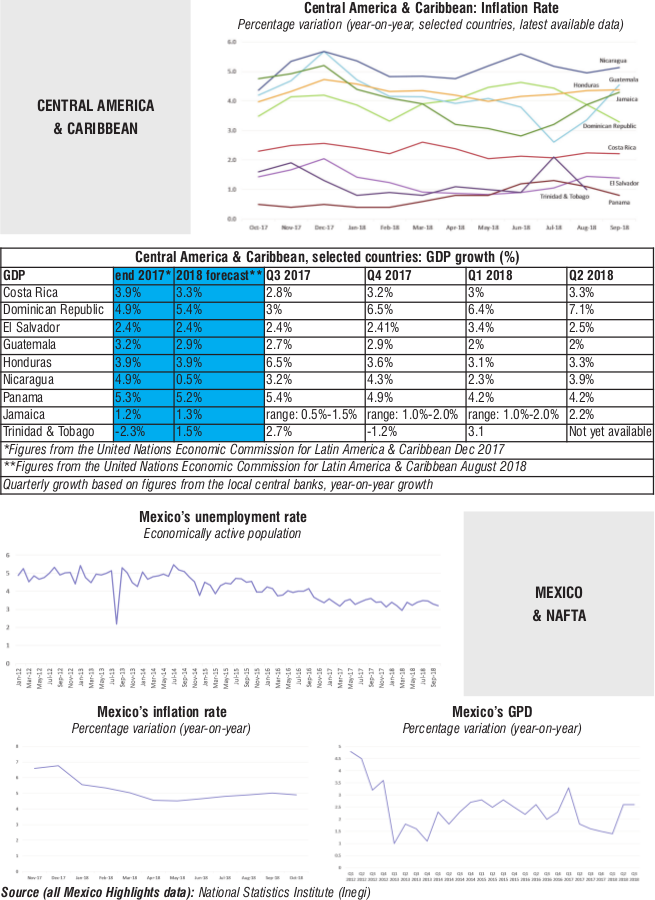
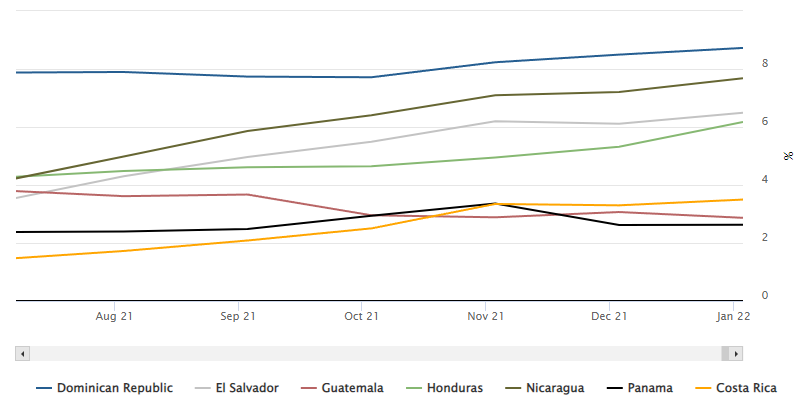
    Central America & Caribbean: inflation rate
    Percentage variation (year-on-year)


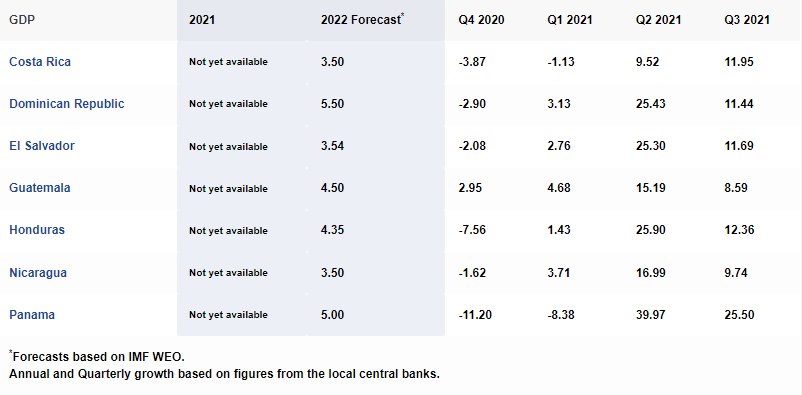
    Central America & Caribbean: GDP growth (%)
    Quarterly figures are year-on-year growth

  • CHILE: Government moves to expropriate former torture site

    Abbi Dicker 05 September 2025 Hits: 2499

    Chile’s leftist government led by President Gabriel Boric has officially launched the process to expropriate land that was once a site used for detention and torture during the military dictatorship led by General Augusto Pinochet (1973-1990). This comes as part of efforts by the Boric administration to address the legacy of the dictatorship and create more memorials to remember the regime’s victims. With Boric’s term due to end in March 2026, the current administration is under pressure to deliver on this declared objective.

    In March this year the government announced its plan to expropriate 117 hectares (ha) of land around a settlement in the central region of Maule operating as a tourist resort village known as Villa Baviera, but which was once known as Colonia Dignidad. The village was originally founded in 1961 as an isolated community set up by German emigrants and became the base of a religious sect led by German emigrant preacher Paul Schäfer.

    Under his leadership, Colonia Dignidad turned into a cult community. Residents who fled the isolated enclave revealed the physical and sexual abuse committed by Schäfer and other cult members, who were found guilty of child abuse by a Chilean court in 2004. After the dictatorship was established in 1973, Schäfer collaborated with the Pinochet government and allowed the community to be used as a detention and torture centre for political dissidents.

    Expropriation process

    Government officials such as Chile’s justice minister, Jaime Gajardo, launched the expropriation process for Colonia Dignidad on 7 July. In an interview with French news agency AFP in May this year, Gajardo had suggested that the government would use the land to create a public memorial site akin to the memorials of Nazi concentration camps in Europe. According to a government press release published on 7 July, the memorial will be centred around the main facilities associated with the acts of repression and torture in the settlement, such as the Schäfer’s house, the community’s administration building, and the potato warehouse where political prisoners were imprisoned.

    However, some current residents in Villa Baviera reportedly sent a letter to the Boric government in May to voice their concerns that they were being excluded from discussions over the expropriation process. In 1991 the settlement was renamed and has since seen the rise of local businesses such as hotels and farms. The owners of these businesses have expressed concern over their livelihoods, but in his AFP interview in May Gajardo insisted that they would receive the proper compensation.

    The next step in the process will reportedly be the valuation of the properties that the government will acquire. It is likely that Boric will seek to complete the expropriation before the end of his term, given the possibility that he will be succeeded by a right-wing president who would be unlikely to continue his initiatives to address the legacy of the Pinochet era.

    The latest polls ahead of the election show far-right candidate José Antonio Kast (Partido Republicano, PR) as the frontrunner. National pollster Cadem released a poll on 10 August which projected that Kast would finish as the top candidate in the first round of the election and would win a possible second round run-off by 48%-34% against Jeannette Jara of the ruling leftist Unidad por Chile coalition.

    Boric defends search plan

    On 29 August President Boric held an event at the presidential palace to commemorate the International Day of the Victims of Enforced Disappearances, which is observed on 30 August. He used the occasion to highlight his government’s ‘national plan for the search of truth and justice’, which includes the Colonia Dignidad expropriation initiative. Boric cited various achievements of the plan such as the publication of the first official list of 1,469 victims of forced disappearance, the creation of a geo-referenced map of their last known whereabouts, and more than 100 on-site efforts, including excavations, interviews, psychosocial support for relatives, and reviews of archives and forensic examinations.

  • BOLIVIA: Finance minister seeks to stay on despite impeachment

    Patrick de Courcy 20 August 2026 Hits: 330

    Bolivia’s economy and finance minister, José Gabriel Espinoza, lost a vote of censure in congress on 18 August. In theory, this means that he should have been dismissed by President Rodrigo Paz within 24 hours. Espinoza has so far remained in his post, however, with the government questioning the constitutionality of the vote.

    The impeachment vote came after Espinoza failed to attend a congressional summons that day, arguing that he instead needed to meet industrial producers in the eastern department of Santa Cruz before travelling to Brazil. Congress approved a motion rejecting his explanation before voting to censure him with 91 votes in favour, 34 against, and four abstentions. The constitution states that a two-thirds majority is needed to approve a motion of censure, although the government argues that this refers to the total number of legislators, rather than those present in the session, and that Espinoza can therefore remain in his post. Espinoza said that the government would defer to the judgment of the constitutional court.

    There is a precedent for the government to ignore the vote. After former interior minister Eduardo del Castillo (2020-2025) was impeached in 2023, President Paz’s predecessor, Luis Arce (2020-2025), removed him before immediately reappointing him to his previous position. Arce’s predecessor, Jeanine Áñez (2019-2020), did the same when congress impeached her interior minister, Arturo Murillo (2019-2020).

    The attempted ousting of the finance minister reflects the Paz administration’s weak position in congress despite there being a strong likeminded conservative majority in both chambers. The vote was tabled by the right-wing opposition Libre party and reportedly won some support from the centre-right Unidad and the left-wing Alianza Popular (AP). Espinoza has been a key architect of the government’s sweeping economic reform plans, which encompass privatisations, spending cuts, and the winding down of fuel subsidies. This economic agenda triggered huge protests in May and June which persisted for 53 days until President Paz deployed the army to clear roadblocks on the highway system.

    Another minister survives vote of censure

    Bolivia’s public works minister, Mauricio Zamora, comfortably survived an impeachment vote on 19 August relating to concerns about fares and quality at state airline Boliviana de Aviación (BoA). Just six legislators voted for Zamora’s removal, with 99 voting against and 34 abstaining.


  • BRAZIL: Brazil lashes out at FIFA; FIFA lashes back

    LatinNews 20 October 2011 Hits: 388

    The Brazilian government is very publically at loggerheads with the World Football Federation (FIFA) over the 2014 World Cup, which will be hosted by 12 Brazilian cities.

    On 11 October a special congressional commission began to examine the so-called Lei General da Copa, a bill sent down in September by President Dilma Rousseff to regulate the organisation of the World Cup. FIFA wants the law amended to reflect its commercial demands which, apparently, are clearly stipulated in its contract with Brazil. Rousseff is having none of it. She has reportedly decided that Brazil will not bow down to “absurd” FIFA demands the way South Africa had to in 2010. One notable aspect of that tournament was that the vast majority of the enthusiastic South African locals that helped deliver such a successful tournament were unable to afford to attend the matches.

    The bill asserts pre-existing Brazilian laws on ticketing, such as the regulation that students and pensioners get a 50% discount on tickets. FIFA argues that this would compromise its forecast revenues. The bill also contradicts FIFA’s demands on the sale of alcohol inside the stadiums, which is prohibited in Brazil. Moreover, under Brazilian law, states, and not the federal government, regulate alcohol sales, and so FIFA would have to negotiate individually with each host state. The tournament sponsor, Budweiser, expects exclusive rights to all the stadiums. TV rights are also an issue, with local Brazilian companies demanding some access to the games. Another FIFA demand is that Brazil alters its existing laws so as to levy harsher sentences on people caught selling fake merchandise. Under the current law, the maximum sentence is three months; FIFA wants that increased to a year.

    Rousseff has the full support of the public. Local football stars like Pelé and Romario (now a socialist party deputy) have criticised FIFA “excesses”. “Our president needs …to put FIFA in its place,” Romario stated, arguing that Rousseff should not bow down to its demands. He suggested that FIFA could easily bear the estimated US$100m cost of half price tickets for students and pensioners. “FIFA will come down here for a month and we all know the profit it will make. FIFA could earn a little bit less so that the Brazilians can take part,” he asserted. Others, including former president Lula da Silva, who oversaw Brazil’s winning World Cup and (2016) Olympic bids, intimated that a sovereign state like Brazil should not be “subservient” to an “entity” like FIFA.

    FIFA’s secretary general, Jerome Valcke, reportedly had a tense meeting with President Rousseff in Brussels on 3 October. “We never compromise on the protection of our commercial partners,” Valcke said. “The FIFA World Cup is a partnership and as much as we do respect Brazilian law, the host country respects the commitment made”. “Either we work together and we arrive at a situation where everyone is a winner or we don’t work together and we’re all losers”, he added. On paper, FIFA has until 1 June 2012 to rescind its contract with Brazil and move the tournament to an alternative country.

    Brazil could have been emboldened to challenge FIFA because of the Zurich-based organisation’s severe image problems, mostly centred on governance issues and allegations of corruption in the senior ranks. Equally however, FIFA, led by its French president, Seb Blatter, has also loudly raised concerns about Brazil’s preparedness for the tournament, citing delays in delivering new stadiums and transport infrastructure. In Moscow on 18 October Jerome Valcke pointedly said that Russia’s “early start “in its preparations to host the 2018 World Cup “would help avoid the kinds of organisational problems afflicting Brazil”. Brazil is dismissive of the concerns.

    • Rio crime continues to fall

    According to the Institute of Public Security (ISP) in Rio de Janeiro, homicides in the state fell 13.2% year-on-year in the first half of 2011, led by a 27.4% drop in the number of fatal victims of police shootings. The ISP reports 3,088 violent deaths in January-June 2011, the lowest result for the period since 2000. There were 2,587 deaths linked to criminal violence (typically robberies, assaults or inter gang rivalries), with a further 409 attributed to clashes between “delinquents” and the police. A further 347 unresolved fatalities were omitted from the total. Some local NGOs question the ISP’s methodology, suggesting that the true homicide figure is under-reported. The state government run by the government-allied Partido do Movimento Democrático Brasileiro, touts the falling crime indices as evidence of its successful efforts to clean up Rio before it hosts the World Cup and the Olympics.

  • TRACKING TRENDS

    LatinNews 15 October 2015 Hits: 2055

    ARGENTINA | Dealing with holdouts

    The debate over Argentina’s attitude towards the so-called ‘holdouts’, those investors who refused to accept a haircut on their Argentine bonds after debt restructuring, has resurfaced over recent days. Mauricio Macri, the presidential candidate for the centre-right Cambiemos coalition, said the administration of President Cristina Fernández was leaving a “bomb to explode” in the next government by failing to deal with the issue. Both Daniel Scioli, Fernández’s chosen successor, and Macri have indicated they would hold talks to end the dispute which has kept Argentina shut out of international capital markets.

    PARAGUAY | Cement shortage

    The president of Paraguay’s state-owned cement firm (INC), Jorge Méndez, admitted this week that there is a severe shortage of cement provision in the local market and that this is producing a “crisis” in the domestic construction sector.

    Since the final weeks of September Paraguay’s construction chamber (Capaco) has complained that many of its members have been encountering problems in securing cement after the INC announced that it had been forced to reduce its cement production due to some problems with its main cement kiln. The INC was forced to reduce its cement shipments from 55,000 bags a day to 35,000 bags a day. This has led to cement prices increasing in the domestic market by as much as 70%, with construction firms complaining that cement distributors are taking full advantage of INC’s production issues and the fact that a stronger US dollar means that cement imports are currently relatively more expensive.

    All of this caught the attention of President Horacio Cartes, who is keen on ensuring that the current construction sector boom fuelled by the slew of public infrastructure projects promoted by his government continues and is not undermined by the cement shortage. President Cartes summoned Méndez to a meeting at the Mburuvicha Róga presidential residence to analyse the situation.

    After the meeting, Méndez said that although the INC has now solved its production problems and is once again supplying up to 55,000 bags a day to the domestic market, this is insufficient to satisfy a higher demand that currently stands at 110,000-120,000 bags a day. Méndez added that “the President has asked us to supply cement to the country and to analyse alternatives to complement INC’s maximum production”. Asked by reporters what this might entail, Méndez responded “that is what we will evaluate”. But Méndez did say that the INC’s plan to acquire a new pozzolan dryer and a new cement mill would allow it to produce an additional 55,000 bags per day by 2018, providing a foreseeable solution in the medium term.

  • What have the new populists done about the economy?

    LatinNews 12 June 2020 Hits: 916

    A major criticism of both Amlo in Mexico and Bolsonaro in Brazil is that they have failed to focus on a clear and internally consistent economic strategy. In this section we examine the outlines of their economic policies in the period of approximately 13-15 months that preceded the Covid-19 crisis.

    In Amlo’s case the Mexican leader took office in December 2018 with commitments to increase healthcare and education spending (by up to 0.5% of GDP according to some estimates) and to deliver reductions in poverty and inflation-beating annual increases in the minimum wage. However, it also became evident that the government was going to behave in a fiscally conservative manner, as it promised to run a balanced budget without increasing taxes. The government was also committed to finalising the renegotiated USMCA free trade agreement with the US and Canada.

    In December 2019 in a speech marking his first year in office Amlo claimed, without hard evidence, that progress had been made reducing inequality. He vowed to continue efforts to establish new cash aid programmes for the elderly, for unemployed youth, and for the disabled. The president acknowledged that the economy had been flat in 2019, despite his earlier claims that it would expand by 2%. One factor behind lower growth was a series of confidence-draining clashes with business leaders, as the government cancelled plans for the Mexico City airport, said it would review private sector participation in the energy sector, cancelled new oil exploration auctions, and announced the renegotiation of multi-billion dollar gas pipeline contracts. Amlo’s commitment to fiscal austerity, coupled the heavy debts of state oil company Pemex, and with doubts over tariffs on some aspects of trade with the US, meant that most analysts were forecasting a mild recession in 2020, which would make it difficult to deliver the promised reductions in poverty levels.

    Taking office in January 2019 Jair Bolsonaro in effect delegated economic policymaking to a University of Chicago educated super-minister, Paulo Guedes, a known champion of free market economics and a supporter of reducing the size of the state through privatisations and other measures. However, there have been lingering doubts over the extent to which the president may share those values. In Bolsonaro’s long career in congress before ascending to the presidency, he often took nationalist and protectionist positions. Guedes has also found his level of autonomy restricted by various political factors. Sometimes he has been over-ruled by the president (as in a proposal to reintroduce a financial transaction tax); sometimes he has been unable to get approval for his proposed legislation in a congress where the government lacks majority control. 

    Guedes inherited a difficulty not shared by his Mexican opposite number: a major crisis marked by a large fiscal deficit, a fiscal responsibility law that freezes extra spending, and a dangerously high debt-to-GDP ratio. Most of his first year in office was consumed by navigating a complex pension reform law though congress: diluted legislation was finally approved in October 2019. The reform was seen as a necessary first step, but further adjustments remain necessary to make the country’s finances sustainable.

    That said, by early 2020 the Bolsonaro/Guedes duo seemed to have positioned the country for modest recovery. The primary deficit was improving, interest rates were low, the debt-to-GDP ratio dipped to under 80%, and growth forecasts stood at around 2.0%-2.5% for the year. However, political risk continued to remain high reflecting internal ideological quarrels within the Bolsonaro government, and allegations of corruption affecting the president’s inner circle (and in particular his three sons).    

  • REGION: Mixed reaction to Icon of the Seas

    Sarah Sheldon 27 February 2024 Hits: 1201

    The world’s largest – and brand new – passenger cruise ship, the ‘Icon of the Seas’ set out from Miami on 27 January for a seven-night maiden tour of the eastern Caribbean taking in St Thomas and St Kitts & Nevis. The launch celebrations included the presence of the now Miami-based Argentine footballer Lionel Messi. Despite the razzamatazz, opinions are divided over whether the ‘Icon’ and other big ships are a good or a bad thing for Caribbean tourism.

    Everything about the ‘Icon’ is big. It is 1,200 feet (366 metres) long and displaces over 250,000 tonnes. It is five times the size of the Titanic. There are 20 decks. Passenger capacity is nearly 8,000 (with crew and entertainment staff that goes up to nearly 10,000). It has eight onboard “neighbourhoods” a waterfall, six water slides, and over 40 restaurants. Nick Rose, a vice-president at operating company Royal Caribbean Group has explained the company’s concept saying, “We live by one single philosophy, which is to deliver the best vacations responsibly”. The ship cost about US$2bn to build.

    The trend to mega-ships will concern Caribbean tourism operators since per capita spending by cruise ship passengers tends to be significantly lower than spending by tourists who arrive by air and stay on land over various nights in local hotels. A 2005 study by the United Nations (UN) Economic Commission for Latin America and the Caribbean (Eclac) found that what it calls land-based tourism accounts for 90% of Caribbean countries’ tourism earnings (which are equivalent to 14.8% of regional GDP). Tourists on cruise ships spend significantly less than those who stay overnight in hotels. The fear therefore is that an expanding market share for lower-spending cruise visitors will have an overall adverse effect on profitability.

    There is also an intense debate over environmental impacts. The Icon of the Seas is powered by liquid natural gas (LNG) and according to the operating company this makes it 24% more efficient than the latest International Maritime Organisation (IMO) standard. Royal Caribbean says it continues to aim for net-zero emission ships by 2035. But Marcie Keever of lobby group Friends of the Earth says “the ships are getting bigger and bigger and that is the wrong direction for the cruise industry to be going”.

    Carbon emissions

    A 2022 study by the US-based multinational public policy think tank, International Council on Clean Transportation (ICCT), found that a passenger travelling on a 1,200 mile cruise ship tour would generate around 500kg of carbon emissions, comparted to only 235kg if he or she did the same trip by air. Another lobby group, Climate TRACE, has found that cruise ship emissions are already 6% higher than

  • GUATEMALA: Proposed changes to the mining law

    LatinNews 12 July 2012 Hits: 1606

    Amid fresh interest in local deposits, Guatemala’s government wants a bigger slice of future potential mining royalties.


    Guatemala’s mining ministry (MEM) has unveiled proposed reforms to the country’s mining law, which includes modifications to 30 articles. Mining Minister Erick Archila highlighted the need to modernise legislation dating back 15 years.


    Amongst other provisions, the draft proposal aims to increase the amount of royalties paid by mining companies from the current level of just 1%. Though the draft document fails to provide a breakdown, the bill suggests by way of example an increase in royalties to 5% for gold produced by the Marlin gold and silver mine, the main mine in the country, which is owned by Montana Exploradora de Guatemala, a subsidiary of Canada’s Goldcorp.


    The bill also provides for the establishment of a state mining company and a new mining fund to distribute income from royalties, which would be divided up as follows: 35% for the municipality in which the mine is located, 20% for the other municipalities in the same department; 20% for the ministry of social development; 20% for natural disasters fund; 3% for the energy and mining ministry and 2% for natural resources.


    In late January President Otto Pérez Molina hailed a temporary new mining accord signed between the government and the national chamber of industry (CIG) intended as a temporary stopgap until changes to the mining law are approved. The agreement, which increased mining royalties on non-precious metals from 1% to 3%, rising to 4% for gold and silver and to 5% for Montana Exploradora de Guatemala, was slammed by civil society groups, however, due to the fact that it was “voluntary” and failed to establish adequate environmental protection provisions.

    Exports fall

    Guatemala’s exports in the first four months of 2012 were valued at US$3.59bn, a 1.7% drop on the same period the previous year, according to figures from the central bank (Banguat). Sales were led by sugar (US$431m), which accounted for 12% of the total; coffee (US$409m, 11.4%); and textiles (US$358.6m, 10%). The main export destinations were the US (which took 39.9% of all exports); Central America (25.8%); Europe (6.2%); and Mexico (5.2%).


    Imports in the first four months of 2012 reached US$5.44bn, a 3.7% increase on 2011, leaving Guatemala with a trade deficit of US$8.85bn.

  • RASTREANDO TENDENCIAS

    LatinNews 20 November 2015 Hits: 289

    CHILE | Buscando un acuerdo comercial con las Filipinas. El 16 de noviembre el gobierno chileno liderado por la Presidenta Michelle Bachelet difundió una declaración anunciando que había firmado una carta de intención (CDI) con el gobierno de las Filipinas, liderado por el Presidente Benigno Aquino III, concerniente al inicio de “negociaciones sobre un tratado de libre comercio (TLC)” entre los dos países en el 2016, el año que marcará el 70mo aniversario del establecimiento de las relaciones diplomáticas bilaterales en julio de 1946.

    Aunque Chile tiene vigentes unos 60 TLCs con sus socios comerciales y como uno de los proponentes originales de la Asociación Trans-Pacífico (ATP), el área de libre comercio de los países de la costa del Pacífico, es visto como uno de los principales promotores del establecimiento de lazos comerciales más estrechos entre América Latina y el área Asia-Pacífico, las Filipinas es uno de los pocos países de Asia-Pacífico con el cual Chile aún no tiene un TLC. De todos modos, el comercio bilateral Chile-Filipinas llegó a US$182m el año pasado, de acuerdo con cifras oficiales. En particular, la cancillería de Chile ha señalado que, con una población de 94m, las Filipinas es un mercado atractivo para las exportaciones agrícolas y de alimentos de Chile.

    La firma de la CDI coincidió con la visita de Estado de dos días de la Presidenta Michelle Bachelet a las Filipinas, la primera visita de un jefe de Estado chileno al país asiático en 17 años. Comentando sobre la CDI después de una reunión  que ella celebró con Aquino en Manila, Bachelet dijo que el objetivo de su gobierno era continuar profundizando los lazos comerciales con la región Asia-Pacífico firmando un TLC con las Filipinas. “Queremos comenzar este proceso para ver si podemos llegar a un acuerdo”, dijo Bachelet, agregando que “Trabajaremos realmente duro por para ver si podemos comenzar las negociaciones el año próximo”.

    Bachelet destacó que existe espacio para desarrollar la cooperación bilateral en varias áreas, incluyendo políticas públicas, desastres naturales, minería, agricultura, y cuestiones del medioambiente, revelando que ella había firmado un memorándum de entendimiento sobre manejo de desastres naturales y cooperación en alivios de emergencia con Aquino.

    Más tarde, durante una conferencia de negocios organizada antes del inicio de la XXIII Reunión de Líderes Económicos de la Cooperación Económica Asia-Pacífico (Apec, siglas en inglés), en Manila el 18 y 19, Bachelet dijo que el gobierno continuaría impulsando por relaciones más cercanas con Asia, señalando que luego de la firma de la ATP, Chile ahora estaba solicitando unirse a la asociación de naciones del sudeste asiático (Asean, siglas en inglés), la primera nación no asiática en hacerlo. “A nosotros nos gustaría contar con su apoyo, escuchar su experiencias y recibir su consejo”, dijo Bachelet.

    Bachelet también señaló que, junto con ella, los presidentes de los otros tres países de la Alianza del Pacífico (México, Perú, y Colombia) asistirían por primera vez a la reunión de la Apec después de que Chile, México y Perú convencieron a las Filipinas que extiendan una invitación a Colombia, la cual no es  miembro de la Apec, como otro signo de los esfuerzos por apuntalar los lazos comerciales América Latina-Asia-Pacífico. De acuerdo con las cifras presentadas por los líderes de la Alianza del Pacífico a la reunión de la Apec, el 25% de las frutas que la Apec importa provienen de la Alianza del Pacífico, así como también el 23% de sus importaciones de cobre, y el 13% de las importaciones de automóviles. Los países de la Apec actualmente adquieren el 58,4% de las exportaciones colombianas, el 43% de las exportaciones peruanas, y el 65% de las exportaciones chilenas.

    BRASIL | Brasil y Noruega apuntan a profundizar las relaciones económicas. El 16 de noviembre el Príncipe Haakon de la Corona Noruega, se reunió con el Vicepresidente de Brasil, Michel Temer, en Brasília al comienzo de su visita oficial de seis días a Brasil, y los dos expresaron su voluntad para profundizar las relaciones comerciales bilaterales, en particular  en el sector petrolero y la protección medioambiental. En una conferencia de prensa conjunta, Temer afirmó que “Brasil considera el fortalecimiento de los lazos comerciales con Noruega como una prioridad”. El heredero del trono noruego, dijo que ambos países son “importantes productores de petróleo” y que existen otros sectores económicos que pueden ser explotados conjuntamente por Brasil y Noruega.

    De acuerdo con Temer, en la última década, el comercio entre Noruega y Brasil se incrementó un 145%, alcanzando US$1,8mm en el 2014. Actualmente hay 150 compañías noruegas presentes en Brasil. Luego de la reunión con Temer, el 17 de noviembre, el príncipe noruego fue a Río de Janeiro, donde lanzó un discurso a los propietarios de empresas, y visitó el centro de investigaciones de la firma petrolera estatal de Brasil, Petrobrás. Él continuó su viaje, yendo a Belém, en el estado de Pará, para visitar los sitios de varios proyectos de desarrollo financiados por el Fondo Amazonas –una fondo establecido pro el gobierno brasilera, que reúne donaciones para invertir en los esfuerzos para prevenir, monitorear y combatir la deforestación en el Amazonas– para el cual Noruega ha contribuido aproximadamente US$1mm, lo que equivale al 96% del Fondo.

    • Prospección de petróleo en el Chaco paraguayo

    El 16 de noviembre el viceministro de minería & energía de Paraguay, Mauricio Bejarano, dijo que la compañía petrolera peruana, Olympic Perú INC, que opera bajo el nombre de Zeus OL S.A. en Paraguay, planea perforar dos pozos petroleros en la región occidental del Chaco en el 2016. De acuerdo con Bejarano, después de concluir un estudio sísmico 2D sobre un área con una superficie de 1.200 hectáreas en los departamentos de Boquerón y Alto Paraguay, Olympic Perú “intenta comenzar a perforar el año próximo […] Ellos perforarán pozos y evaluarán poco después si ellos podrán continuar o no”. Olympic Perú por lo tanto se unirá a otras firmas como President Energy de Gran Bretaña, y Crescent Global Oil de EU, que han haciendo prospecciones  de petróleo en el Chaco paraguayo, y que han hecho algunos descubrimientos menores de petróleo en los últimos años.

  • ECONOMIC HIGHLIGHTS

    Patrick de Courcy 21 May 2024 Hits: 2248

    MEXICO | Gov’t hails record FDI. On 14 May, Mexico’s economy ministry (SE) released its latest report on foreign direct investment (FDI), which showed that FDI for the first quarter of 2024 reached a new all-time high for the period of US$20.3bn. This figure represents a 9% increase on the same period in 2023. The report highlights that the US remains Mexico’s leading source of FDI, accounting for US$10.62bn of FDI, 52% of the total.

    MEXICO | Tourism increases. On 12 May, Mexico’s tourism ministry (Sectur) announced that 11.2m international tourists entered Mexico in the first quarter of 2024, 6.9% more than in the same quarter of 2023 and 1.3% more than the first quarter of 2019, before the coronavirus (Covid-19) pandemic disrupted international travel. The income derived from international tourists in the first quarter of 2024 totalled US$9.17bn, up 9.5% on the same period of 2023 and a 41.7% rise on the first quarter of 2019.

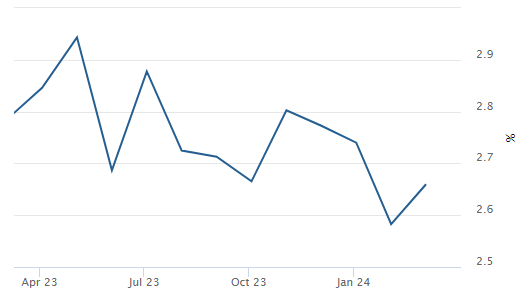
    MEXICO | Job creation rises. On 6 May, Mexico’s national social security institute (IMSS) released a report showing that it had registered 22.37m jobs as of 30 April. This was up from 22.28m jobs at the end of March. The IMSS reported that 84,857 jobs were created in April, which it said was the fourth-highest job creation figure for April on record.

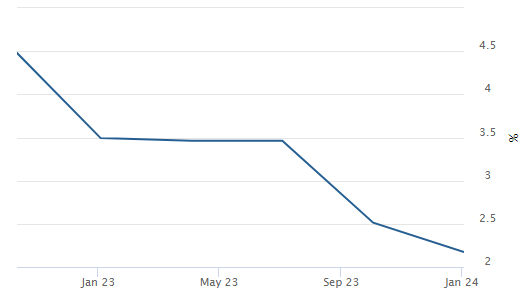
    MEXICO | GDP edges up in Q1. On 30 April, Mexico’s national statistics institute (Inegi) announced that GDP grew by 0.2% in the first quarter of 2024 as compared with the previous quarter. Activities in the services sector grew by 0.7% in quarterly terms, while activities in the agricultural and manufacturing sectors were down 1.1% and 0.4% respectively. In yearly terms, GDP grew by 2%, with activities in the agricultural sector up 1.3%, manufacturing up 1.5%, and services up 2.5%.

    Mexico: GDP growth
    Percentage variation (year-on-year)

    Mexico: unemployment rate
    Economically active population

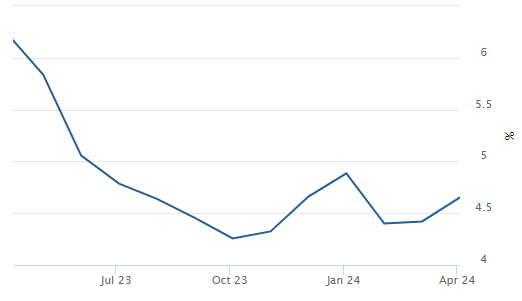
    Mexico: inflation rate
    Percentage variation (year-on-year)

    Source (all graphs): National Statistics Institute (Inegi

  • TRACKING TRENDS

    Abbi Dicker 28 May 2026 Hits: 1591

    CHILE | New Codelco leadership. Bernardo Fontaine took over as the new chairman of Chile’s state-run copper company Codelco on 26 May. Fontaine, a well-known economist from the Pontificia Universidad Católica de Chile (PUC), replaces Máximo Pacheco, who has come under fire from cabinet ministers in the far-right government led by President José Antonio Kast, over how Codelco has been run.

    The finance minister, Jorge Quiroz, said that Fontaine would bring “business experience” and “strategic thinking” to Codelco, but would face “numerous inherited problems, starting from production figures which are today being audited, and an economic performance that leaves a lot to be desired”. The economy and mining minister, Daniel Mas, also called for an urgent financial review, saying that “various projects [had] exceeded their original budgets significantly”, serving as “a red flag”. Pacheco insisted that Codelco is “not in crisis”. He also responded to Mas by saying that “subjecting this corporation to the instability of political cycles or short-term visions is a risk that the country cannot allow. Looking after Codelco is looking after Chile.”

    BRAZIL | Gov’t posts record tax take in April. The Receita Federal do Brasil (RFB), the finance ministry’s tax and customs agency, released new figures on 21 May showing that federal tax revenue in April this year totalled R$278.82bn (US$55.09bn), marking a 7.82% increase in real terms compared to April last year. According to a government statement, this result is a record tax figure for the month of April. Meanwhile, the accumulated tax revenue for January-April 2026 stood at R$1.06tn, up 5.41% on the same period in 2025. The RFB attributed the increase to higher revenue from taxes such as the PIS/Cofins consumption tax and the taxes on financial operations (IOF).

  • Uruguay: Pharmacies assess the cannabis option

    LatinNews 04 August 2017 Hits: 363

    Legal cannabis sales began in Uruguay on 19 July. The drug is distributed to registered users, at controlled prices, through local pharmacies. But not all pharmacies have seen it as an attractive opportunity.

    In the end, only 16 pharmacies have started out selling cannabis under the terms of the law authorising its legal production, sale, and consumption, which was approved three and a half years ago. It has taken over three years to implement an innovative, but rather complex system. Those who want to buy and consume marijuana legally must first become registered users. They are then allowed to buy the drug from pharmacies in packets of 5 grams each, priced at the equivalent of US$6.50.

    Each consumer is allowed to buy up to 40 grams a month for personal use, and has a choice of two basic varieties, known as Alfa 1 and Beta 1. Experts say that both have fairly low levels of the active component THC, and as such will generate a relatively mild “high”. The regulated price compares to US$14-U$25 for 5 grams of relatively high quality marijuana on the illegal market; however poor quality “Paraguayan” marijuana of somewhat dubious origin can sell for as little as US$4.80 for 5 grams. Under the law the registered users are also allowed to grow up to six marijuana plants at home, or to form “smokers’ clubs”. Only Uruguayan citizens can be registered; advertising is prohibited; and a proportion of sales revenue will be used for addiction treatment and health awareness programmes.

    The marijuana is produced by two companies (Symbiosis and Iccorp) under a government concession. They must meet strict quality and security criteria. Each pharmacy that opts to sell the drug is allowed to hold a stock of up to 400 packets (a total of 2 kg) on the premises that must be held under lock and key. Across the country, a total of only 16 pharmacies registered to sell. Sebastián Scaffo, owner of Tapie, one of only four pharmacies in Montevideo that have started selling the drug right from the beginning of the programme, told Reuters news agency “For me this is an opportunity to attract more customers: as a business, it could increase my profits.”

    But not all pharmacies think selling marijuana is necessarily a good business idea. Juan José Rodríguez, an independent pharmacy owner, told the New York Times that selling marijuana would put the country on a dangerous course, that might include eventually legalising cocaine or ecstasy. Other retailers said they were worried that selling might put off some of their other customers. Legalisation of cannabis remains controversial in Uruguay, with polls indicating that around 60% of respondents remain opposed to the drug being freely available.

    Some of the pharmacies that opted to sell marijuana sold out their stock on the first day, and this may persuade others to join them. Pablo Durán, legal adviser to the trade association Centro de Farmacias del Uruguay said that after the first week around 20 more pharmacies had been in touch with him to find out the requirements to start selling. By his estimate the customer base – the people who have opted to purchase marijuana through legal channels – now stands at over 25,000. “I think a first assessment is positive, particularly taking into account the lengthy process of implementing the new law” he said. The government regulator – Instituto de Regulación y Control del Cannabis (IRCC) also confirmed that additional pharmacies had expressed interest. However, it said it was too early to make any full assessment of how the system was working.

  • CARIBBEAN POINTERS

    Sarah Sheldon 23 July 2024 Hits: 717

    *** EXPANDING AFRICA-CARIBBEAN RELATIONS. The Bahamas hosted the African Export-Import Bank (Afreximbank)’s annual general meeting and the AfriCaribbean Trade and Investment Forum from 12-14 June. Guyana’s President Irfaan Ali, the outgoing Caribbean Community (Caricom) chairman, commented: “Three years ago, sophisticated investors from Africa were not seen in the Caribbean region. Fast forward to today, we have seen in this region, since Afreximbank came on board, more than 50 African delegations looking at business opportunities in this region. It’s this little spark that could ignite massive transformation and realisation of the opportunity and potential that exists within our region.”


    *** WMO 2023 REPORT CONFIRMS DANGEROUS TRENDS FOR CARIBBEAN. The United Nations World Meteorological Office (WMO) has published its 2023 State of the Climate in Latin America and the Caribbean report in which it finds that last year was the warmest on record for the region. It also found that sea levels “continued to rise at a higher rate than the global mean around much of the Atlantic part of the region, threatening coastal areas of several countries and small island developing states”.

    In 2023, global mean sea level (GMSL) rose by an estimated 3.43mm. In the sub-tropical North Atlantic and the Gulf of Mexico, the rise was 4.23mm, and in the tropical North Atlantic, around Central America and the southern Caribbean, the rate was 3.56mm.

    Another worrying trend is the rising number of extreme events. The 2023 Atlantic hurricane season had an above-average number of storms, ending with 20 named storms, compared with an average of 14 named storms per year for the 1991-2020 period.


    *** TRINIDAD’S UNC RETAINS LEADER IN ELECTION RUN-UP. The last general election in Trinidad & Tobago was held on 10 August 2020, so Prime Minister Keith Rowley and the ruling People’s National Movement (PNM) are moving into the final year of their mandate. Internal elections held by the opposition United National Congress (UNC) in June have ensured that the UNC will go into the next election with its long-time leader Kamla Persad-Bissessar still at the helm and looking for a second term as prime minister having served from 2010-2015.

    There are no great ideological differences between the PNM and the UNC, but they appeal to two distinct segments of the population. The UNC mainly appeals to those of Indian descent, who make up 35.4% of the population, while the PNM mainly appeals to those of African descent who make up 34.2% of the population.

    After two terms in power, the PNM will have to counter any anti-incumbency bias in the electorate, but the economic cycle is being kind to it. The latest Article IV Consultation by the International Monetary Fund (IMF), concluded in May, noted that “for the first time in a decade” Trinidad is undergoing “a gradual and sustained economic recovery”. GDP growth in 2023 was 2.1%, and further momentum is expected in 2024 with growth of 2.4% projected, “supported by the non-energy sector and new energy projects coming on stream”. Annual inflation, which peaked in 2022 at an average of 5.8%, fell to 4.6% in 2023 and is expected to fall further during 2024 to an average of 1.5%.

    Furthermore, the IMF sees the balance of risk as tilting towards the upside in the medium term, with new natural gas projects and the implementation of structural reforms boosting growth.

  • JAMAICA: Politicians divided over recession fears

    Abbi Dicker 20 March 2025 Hits: 4031

    Not unusually, Jamaican politicians cannot agree on what is happening in the local economy. Output looks to have contracted in the last two quarters of 2024, signalling a technical recession, but there is little consensus on what caused it.

    GDP fell by 3.5% in the third quarter of 2024 and the Planning Institute of Jamaica (PIOJ), a government office, is projecting a 1.8% contraction in the fourth quarter (definitive numbers are expected by the end of March). The fall comes as politicians continue to disagree. In February Prime Minister Andrew Holness of the Jamaica Labour Party (JLP) said the economy was “strong, resilient, and fiscally fit”. Improved fiscal management meant that for nine consecutive budgets, the government had not had to introduce any new taxes. He also highlighted the strength of the freely floating Jamaican dollar and government policies to increase investment, productivity, and prosperity.

    Not so, seems to be the response from leaders of the opposition People’s National Party (PNP). Senator Peter Bunting accused the government of operating a plantation style economy marked by “low skills, low wages, low productivity, and high job insecurity as contract work predominates”.

    Recession?

    PIOJ director Wayne Henry acknowledged that there had been a fall in output but suggested that this fell short of a recession, particularly if other indicators such as income and unemployment were considered. Metry Seaga of the Private Sector Organisation of Jamaica (PSOJ) said the GDP data did point to a slowdown, but unemployment, at 3.5%, remains at its lowest level ever, and the strong dollar reflects underlying business confidence. Bank of Jamaica governor Richard Byles suggested that there might be a short-term downturn due to the effects of last year’s Hurricane Beryl, impacting an otherwise strong economy.

  • TRACKING TRENDS

    LatinNews 22 August 2011 Hits: 519

    BRAZIL | Concern about Amazon tribe. The justice ministry has dispatched 16 national security force officers to Acre to provide security to employees of the National Indigenous Foundation (Funai) on the Xinane base, 20km from the border with Peru. Funai has raised the alarm about the fate of an uncontacted Amazon tribe, which it fears has been disturbed or even wiped out by Peruvian drug traffickers. Last week Brazilian police arrested for a second time a Portuguese national, Joaquim Antônio Custódio Fadista, previously charged with drug-trafficking in Brazil and Luxembourg. He was arrested in the same area in March and extradited to Peru. Funai workers found a tribal arrow at a camp site used by the traffickers. Brazil’s remote tribes (estimated at 77, with 30 identified) are increasingly threatened by traffickers, logging and oil companies.

  • CARIBBEAN POINTERS

    LatinNews 13 June 2019 Hits: 679

    *** GRENADA GETS GOOD GRADES FROM IMF. Grenada has completed three years under an IMF Structural Adjustment Programme (SAP). Following its latest Article IV consultation and visit to the island, from 25 April to 8 May, the IMF reported that Grenada had entered a “virtuous circle”.

    For the IMF, this “virtuous circle” is based on a state of affairs “whereby the good output performance helps to improve the fiscal position, which in turn is anchored by the fiscal responsibility”.

    The IMF’s assessment is that growth in 2018 was 4.2%, however it predicts that growth will fall to 3.5% in 2019 and will then settle “over the medium term of the next few years” at around 3%.

    The main concern for the IMF is unemployment, which it puts at about 22% in 2018. For the IMF, it is “important to continue the reforms that help generate sustainable jobs” in part because some of the elements currently driving growth, such as construction, “you cannot count on forever in terms of being very strong”.

    The current account deficit of about 11% of GDP is another area of concern. IMF team leader Bogdan Lissovolik commented on this, saying: “We always ask in the IMF whether there are elements of sustainability or non-sustainability here and, in this regard we know that the Citizenship by Investment Programme has enjoyed robust influence that supported the growth and financing of the external deficit…So when you think about sustainability or growth obviously [you] raise the sub-issue of whether this element is going to be sustainable as well.”

    *** JAMAICA’S FIRST QUARTER GROWTH. According to the Planning Institute of Jamaica (PIOJ), GDP growth in the first three months of 2019 was 1.5% year-on-year.

    The PIOJ reported that the positive out-turn was based in large part on increased external demand from Jamaica’s main trading partners. It also reported increased domestic demand as a consequence of higher employment. The PIOJ reported: “The increases in external and domestic demand were facilitated by the expansion in the hotel room stock air seat capacity and flight frequency, which facilitated growth in stopover visitor arrivals.”

  • CHILE: Pension dispute intensifies

    LatinNews 21 April 2021 Hits: 1982

    Pensions are likely to be at the centre of the Chilean political debate for the rest of this year. The constitutional commission of Chile’s chamber of deputies voted on 1 April in favour of allowing a third 10% withdrawal of privatised pension funds; the government opposes the idea and favours instead a wider pension reform. Meanwhile Labour Minister María José Zaldívar, responsible for that reform, has resigned.

    The essential problem remains that Chile’s three decades-plus privatised pension system, based on paying in 10% of salary into individual savings accounts administered by private fund managers known as AFPs (Administradoras de Fondos de Pensiones), is generating insufficient pension payouts. According to a 2015 report for the government, nearly 80% of Chilean retirees receive a pension lower than the minimum wage (now the equivalent of US$414 a month). Anger over insufficient pensions was a factor in the wave of unrest that swept through the country after October 2019. Pensioners and contributors have faced an added financial impact because of the coronavirus (Covid-19) pandemic.

    Despite government reluctance, last year congress twice approved legislation allowing contributors to withdraw up to 10% of their pension pot each time, as an emergency measure. The first withdrawals were allowed in July; 94% of the 11m affiliates in the AFP system took advantage of the opportunity. A second 10% withdrawal was given the green light in December.

    • Pension withdrawals

    Data from the Superintendencia de Pensiones (SP), the pensions regulator, shows that US$19.7bn was withdrawn after the first withdrawal was approved in July, followed by a further US$14.7bn after December 2020. At the end of January total funds in the AFP system stood at US$210bn, meaning that as a result of the two authorised withdrawals the overall pension pot had contracted by around 16%.

    As the possibility of triggering a third 10% withdrawal looms, the arguments for and against are getting another airing. Proponents say that amid the pandemic, contributors to the system must have the right to withdraw what is in effect their own money to meet their immediate needs. The government says the withdrawals are irresponsible and erode the long-term viability of the pension system. It promises to challenge a third withdrawal – which looked likely as we went to press, with the initiative having been approved in the chamber of deputies and awaiting a vote in the senate – in the constitutional court.

    The government argues it is best to tackle the problem through other channels: emergency social programmes to ease the impact of the pandemic (which are already being expanded) and longer-term pension reform. However, the withdrawals are widely supported by public opinion (with 83% of respondents in favour according to one survey). Even some members of the ruling Chile Vamos centre-right coalition have ‘flipped’ in favour of withdrawals. The constitutional commission of the chamber of deputies voted 10-3 in favour of a third withdrawal this month; three of that 10-strong majority were government supporters. Chile Vamos deputies backed the withdrawal in the vote on 15 April.

    How the departure of labour minister Zaldívar affects the situation was not immediately clear. Officially, she resigned for “personal reasons”. She was replaced by Patricio Melero, a deputy for the Unión Democrática Independiente (UDI), part of the ruling coalition, who has a reputation for taking hard-line right-wing positions. Although Melero said he would seek “understanding rather than confrontation”, opposition deputies say he has consistently voted against increasing pension and other benefits for working people.

    With constituent assembly elections now due in May, and congressional and presidential elections planned for November, the timetable for wider pension reform is also somewhat unclear. The centre-left opposition favours greater state involvement and consideration of some form of universal basic income. The government’s current proposal is to expand the ‘solidarity pillar’ within the existing system, a state subsidised component, which it wants to expand to cover 80% of the population (up from 60%), as well as improving pension provision for women. The government also proposes that those who have paid in for 30 years or more should receive a pension equal or greater than the minimum wage. But these changes, along with others to improve competition among the AFPs, will require increasing the paying-in rate to around 16% of salary, up from 10%, and it is not clear exactly who will carry that burden.

    Concha y Toro has a good pandemic

    While for some companies the Covid-19 pandemic has been catastrophic, Concha y Toro, the Chilean group which is Latin America’s largest wine exporter, had a remarkably good year in 2020. In early April it reported a 17.1% increase in revenues to US$1.077bn, a 42% surge in earnings before interest, taxes, depreciation, and amortisation (Ebitda) to US$208m, and a 48.6% increase in net earnings to US$109m. The management said the improvement was due to a combination of factors, including higher sales volume, better retail prices, a better mix of wine brands, and reduced costs due to a good harvest. Whether the pandemic led more people to drink at home was not entirely clear, but the company reported a 17.6% increase in export value with strong increases in demand from the United Kingdom, Brazil, the Nordic countries, and Mexico. Sales to Latin America and within Chile itself, on the other hand, contracted a little relative to 2019. There were also falls in sales to Asian markets such as China and Japan.