All Categories

Subcategories

  • TRACKING TRENDS

    LatinNews 25 September 2014 Hits: 903

    VENEZUELA | Fresh interventions in the state food sector. The government led by President Nicolás Maduro has ordered a 90-day (extendable) intervention in the state-run Corporación Venezolana de Alimentos (CVAL), according to the 23 September edition of the daily gazette.

    A four-person team led by José Leonardo Patiño Umbria will “revise administrative, productive and industrial procedures” in the various companies comprising the corporation, with the power to remove officials and re-formulate budgets “to guarantee the correct administrative and financial development” of CVAL, the gazette said. CVAL was set up in March 2010 as a ‘social ownership enterprise’, including primary producer and agri-industrial companies.

    Also intervened in recent days was the Superintendencia Nacional de Silos Almacenes y Depósitos Agrícolas (SADA), for “irregularities in food distribution”.

    Separately, Gustavo José Cabello Canales was appointed president of the Productora y Distribuidora Venezolana de Alimentos (PDVAL), the state-owned food distribution company best known for the ‘rotting food scandal’ in Venezuelan ports a few years ago. Cabello Canales is a cousin of Diosdado Cabello, the president of the national assembly.

    VENEZUELA | Simonovis release perplexes observers. The association of victims (Asovic) of Venezuela’s 2002 coup d’état has strongly rejected a supreme court decision to grant temporary house arrest to the former Caracas police chief, Iván Simonovis, and demanded a full explanation from the government led by President Nicolás Maduro.

    Simonovis, who was chief of police during the failed coup against the late president Hugo Chávez (1999-2013), was identified by the Chávez government as one of the main leaders of the revolt. Interior Minister Miguel Rodríguez said that the decision to grant Simonovis temporary house arrest would be “respected” by the government as it was based on humanitarian grounds.

    The government’s decision not to challenge the decision has prompted speculation that it may be part of efforts to remove some of the obstacles holding up a frozen political dialogue with the opposition.

  • CARIBBEAN POINTERS

    LatinNews 10 August 2016 Hits: 527

    *** DOMINICA STILL RECOVERING FROM TROPICAL STORM ERIKA. The International Monetary Fund (IMF) concluded its latest Article IV consultation with Dominica on 13 July, in which it reported that the Dominican economy had declined by 3.9% in 2015 as a consequence of Tropical Storm Erika. The IMF noted: “While tourism activities have largely normalized following the resumption of full operations at the main airport, other sectors will likely need more time to be fully restored.”

    A “protracted decline” in credit offered by banks to the private sector, underpinned by high non-performing loans, was also singled out as a “drag on economic activity”. Growth in 2016 is expected to be 1.3%, although it is noted that this is dependent on donor grants coming through as budgeted. Over the medium-term, growth is expected “to stabilize at 1.7% per year”.

    During his annual budget presentation on 26 July, Prime Minister Roosevelt Skerrit said that the total debt to GDP ratio (including guaranteed debts held by statutory institutions and agencies) was 77.8%, with the government debt to GDP ratio at 65.2%. He added: “For the public debt, debt service to current revenue was 22.6%. For central government debt, debt service to current revenue was 16.5%.”

    *** JAMAICA TO USE BARTER TO PAY PETROCARIBE DEBTS. On 29 July, Jamaica announced that it is to pay off its PetroCaribe oil debts to Venezuela with food, medication, and fertilizers. The transfers are to begin in the final quarter of this year.

    *** HEALTH FEARS FOR TRINIDAD PRIME MINISTER. It was announced on 8 August that Trinidad & Tobago’s prime minister, Dr Keith Rowley, was due to undergo medical tests at a clinic in the United States. It appears that the 66-year-old Rowley has had health issues for many years which he has had to manage “through diligent and disciplined guidance”.

    He issued a statement saying: “I have been regularly, even annually, reviewed by them [specialists in Trinidad and California] over the years. This occasion is hardly different except that as a result of the intensity of my activities during the last 36 months or so I have not kept my annual appointments until recently. I did my examinations locally and the results were transmitted to my doctors abroad. There have appeared to be some changes which both sets of doctors conclude should be investigated further. That is what I am here for and that is what I have referred to when I spoke to the public about travel and health as well as vacation.”

    *** ST VINCENT & THE GRENADINES AWAITING BOOST FROM NEW AIRPORT. The IMF completed its latest Article IV consultation with St Vincent & the Grenadines in early July. It said that GDP growth is expected to reach 2.2% in 2016 and then to accelerate to 3.1% as the impact of the new international airport is felt. The airport is due to be completed this year.

    Public debt, which has steadily increased since the financial crisis in 2008, had reached 74% of GDP by end-2015. However, the government is committed to reducing this ratio to 60% by 2030. In pursuit of this goal, the primary deficit has been reduced from 5% of GDP in 2013 to 1.1% in 2015.

    In order to achieve further progress in debt reduction, the IMF said that it “saw scope” to further broaden the tax base, to “restrain” the wage bill, and to “improve the sustainability” of the public pension scheme.

  • NICARAGUA: Candidacies launched ahead of November

    LatinNews 15 June 2016 Hits: 1298

    At the start of this month, President Daniel Ortega officially launched his presidential re-election bid for the Frente Sandinista de Liberación Nacional (FSLN) ahead of 6 November general elections in which he is widely expected to secure a third consecutive term. The previous month, the Coalición Nacional por la Democracia (CND), the fractious opposition’s latest attempt to unite against the FSLN, unveiled as its presidential candidate, Luis Roberto Callejas, a national deputy for the coalition’s biggest member, Partido Liberal Independiente (PLI). As with other recent elections, the opposition’s main concern and campaigning focus is the lack of transparency surrounding the electoral process. A ruling by the supreme justice court (CSJ) stripping Eduardo Montealegre of PLI leadership (see sidebar), together with President Ortega’s refusal to invite international observers, is doing little to assuage these fears.

    TSE calls the vote

    In a press conference held on 6 May to formally call the election, TSE president Roberto Rivas – who has been in the post since 2000 – omitted mention of any plans to invite international electoral observer missions. Instead, he pointed to the academic credentials of “electoral specialists” from several Latin American countries who would oversee the process.

    As well as prompting a response from the CND, the decision not to invite international electoral observers also attracted attention from the US whose ambassador, Laura Dogu, has repeatedly called for international observers to oversee the vote. In a daily press briefing on 19 May, US State Department spokesperson John Kirby said “As we’ve said and made clear, allowing internationally recognized election observers to freely monitor elections will only strengthen Nicaragua. We urge the Nicaraguan Government to issue a timely invitation to credible international observation missions.” In a 7 June statement, the US-based Carter Center, which observed four elections in Nicaragua between 1990 and 2006, “lament[ed] this decision to ignore a key component of Nicaragua's own electoral law”, describing it as “an attack on the international community”.

    The CND, which comprises the PLI; the dissident Sandinista party, Movimiento Renovador Sandinista (MRS); and other small parties like the Partido Social Cristiano (PSC), has also flagged up other electoral-related concerns, not least the CSE’s electoral calendar which omits mention of the publication of electoral rules, regulations, or manuals to direct the process. Calling for the “rules of the game” to be made public so that the CSE cannot release them “arbitrarily”, the opposition coalition sent a letter on 23 May to Luis Almagro, the general secretary of the Organization of American States (OAS), outlining doubts about the electoral process.

    These concerns also featured in the reasons given by the CND’s first choice of presidential candidate, businessman and radio personality Fabio Gadea, for declining the opposition coalition’s offer to run in the election. In a public letter dated 7 April, Gadea, who is 84 and stood in the last (2011) general elections for the PLI, taking 31% of the vote to 62% for Ortega, attributed his decision to the fact that the multiple concerns flagged up by international observer missions sent by the OAS and the European Union (EU) in relation to the 2011 election, had yet to result in any significant changes in the CSE.

    Meanwhile, the latest polls present a dismal picture for the CND, which on 2 June unveiled Violeta Granera, the leader of the civil-society grouping Movimiento por Nicaragua (MpN), as Callejas’s presidential running mate. A survey by M&R Consultores, published in the investigative daily Confidencial on 13 May, gave the FSLN – which has yet to unveil Ortega’s running mate – 63.7% of voting intentions to just 5% for the PLI while 24% of respondents refused to say how they would vote. In the 2011 elections, the FSLN won 62 seats in the 92-member unicameral national legislature, up from 38 in 2006, while the PLI won 26 and the Partido Liberal Constitucionalista (PLC) of disgraced former president Arnoldo Alemán (1997-2002) took just two.

    • Move against Montealegre

    On 8 June, the constitutional chamber of Nicaragua’s supreme justice court (CSJ) issued a ruling stripping Eduardo Montealegre of leadership of Partido Liberal Independiente (PLI), the main party in the opposition coalition Coalición Nacional por la Democracia (CND). The CSJ, which also announced that the PLI’s new leader was Pedro Reyes Vallejos, maintains that it was ruling on a dispute dating back to 2011 between various PLI factions – one of which was headed up by Reyes. The ruling against Montealegre provoked outrage from local human-rights groups like Centro Nicaragüense de Derechos Humanos (Cenidh) and the main private sector lobby, Consejo Superior de la Empresa Privada (Cosep), whose president, José Adán Aguerri, warned that it could result in “instability” and have repercussions for multilateral institutions.

  • Peru: Flooded with bad news

    LatinNews 07 April 2017 Hits: 604

    Peru’s much anticipated recovery under the liberal economic new government led by the investment-banker turned president Pedro Pablo Kuczynski has failed to materialise. The minority and politically-novice Kuczynski administration got off to very slow start after taking office in late July last year, bitterly disappointing (admittedly-high) local private sector and foreign investor expectations. The country was then hit by two successive major shocks. The first of these was the Odebrecht bribery scandal, which has implicated the last three governments and prompted extreme investor nervousness. The second relates to the unprecedented heavy rains in northern coastal zones of the country starting in December last. Now in their fifth month, the rains, which have spread down as far as Lima province, have has caused over US$3bn in flood and landslide damages, on latest government estimates, and destroyed infrastructure in half of the country’s regions.

    Interviewed at the presidential palace by the financial newswire Bloomberg in early April, Kuczynski admitted that the floods, the worst in two decades, would mean lower economic growth this year. Initially, the government had forecast a real GDP growth rate of 4.8% this year (from 3.9% in 2016), but now, in the wake of the Odebrecht scandal and the floods disaster, the president said that the government had reduced its forecast to a range of just 3%-3.5% this year, before rebounding in 2018 to about 4%-5%. Speaking on 4 April, Economy Minister Alfredo Thorne said in early April that first quarter GDP results looked “fairly weak”, at about 2% at best.

    Thorne noted that this year’s El Niño Costero (a coastal version of the larger El Niño Pacific Ocean climatic phenomenon) had been weaker than those registered in Peru in 1983 and 1998. However, the destruction this time round was much more dramatic, not least because of the rapid economic growth in Peru in the last decade, including rapid and typically unplanned urbanisation, with the accompanying informal development of local infrastructure and services, much of which simply collapsed and washed away under the force of the flood water and landslides.

    The extension of damage, Thorne said, reflected the fact that the Peruvian economy is about 10 times its size back in 1982-1983. As such, this year’s El Niño Costero destroyed 242 bridges, whereas in the 1982-1983 emergency, 47 bridges were lost. Likewise, 198,000 homes have been lost to date in 2017, compared to 111,000 in 1997-1998 and 94,000 in 1992-1993. Other reports, including the latest (31 March) update from the Centro de Operaciones de Emergencia Nacional (Coen), estimated that just over 205,000 homes have been lost. On Coen data, almost one million people in all in Peru have now been affected by the emergency (950,498), with 101 deaths to end-March.

    On the other hand, Thorne noted, while 2,629km of roads have been destroyed to date this year, in the 1982-1983 floods, which were very severe, 2,600kms were lost. And in terms of cultivated areas, the losses will be smaller this year, he noted, albeit the country’s agricultural sector questions this (see sidebar).  Thorne tried to minimise the concerns about the economic impact, emphasising that increased public spending would help the economy back on its feet in the second half of this yea. Like the president, he insisted that 2018 would see a much better result.

    With 15,000 people forced out of their homes, the government’s immediate priority is to ensure adequate shelter for these people. Thorne has already pledged at least US$741m for reconstruction works. Kuczynski insisted that funds for the emergency and repair effort were not a problem, saying that the government would dip into its “substantial savings”, as well as taking on additional loans, to finance the reconstruction effort. Thanks to fairly prudent financial management over the successive governments, Peru has room for fiscal manoeuvre. The government could draw on the fiscal stabilisation fund (Fondo de Estabilización Fiscal, FEF), or alternatively (and perhaps preferably), on its contingency reserve, which holds about US$1bn. The government will also be eligible for preferential multilateral funds for reconstruction from the likes of the Inter-American Development Bank (IBD), the World Bank and the CAF-Development Bank of Latin America, which will also lend important technical support.

    Kuczynski said he expected the budget deficit to increase by about 0.5% of GDP this year on the back of the reconstruction effort, potentially taking it to 3%, above the initially-targeted 2.5%. However, he stressed that he did not expect the public debt burden to exceed 24%-25% of GDP.

    On 26 March, the central bank (BCRP) revised its growth and inflation forecasts for the year. The BCRP president, Julio Velarde, reported March inflation of 3.97%, up from 3.25% in February, due to a temporary price shock related to the flood emergency, which has severely disrupted supplies, including in the capital Lima (home to a third of the population). Velarde said the spike was transitory, and would subside. Nonetheless, the BCRP has increased its 2017 inflation forecast by one percentage point to 2.4%. Even so, this is still within the BCRP’s target range of 1%-3%, and is “still one of the lowest in the region”, he noted. Reflecting the inflation spike, the BCRP subsequently left the benchmark interest rates unchanged at 4.25%, where it has been for a year now. There had been hopes for interest rate reductions in support of investment this year, but that will now be delayed until inflation re-stabilises, which could take some months. The BCRP has revised down its real GDP forecast from 4.3% to 3.5%.

    A local economic consultancy, Maximixe, has estimated the total flood damages to date at US$5bn, above that of another consultancy Macroconsult, which put it at just over US$3bn, similar to the government’s estimate. Maximixe calculated the damages in the northern region of Piura alone at US$1.7bn, putting the costs in Lima province at US$1.2bn and in the rest of the country at US$2.4bn. Still others put it higher again at US$6bn, which would be 3% of GDP.

    Cited by the business daily Gestión, economist Carlos Casas of the Universidad del Pacífico (UP) noted that these damages should be understood as disinvestment, or negative investment, on the basis that the reconstruction effort, which could last 3-4 years, is effectively an effort to rebuild capital stock that existed as of December 2015. In that sense, the disaster will damage the economy’s growth capacity over an extended period, as it has lost vital inputs. Nevertheless, Casas agreed with the Thorne that the reconstruction effort would positively contribute to aggregate demand, amid increased public demand in infrastructure, with a boost to the private sector from the need for housing.

    Macroconsult has now lowered its 2017 GDP forecast from 3.5% to just 2.9%, while Maximixe has cut its forecast from 3.8% a 3.1%, but with downside risk to a low of 2.45 should the rains extend out to May.

    Ratings agency Moody’s Investors Service is less pessimistic, maintaining its 2017 growth forecast of 3.7%, with upside risk to 4% on the basis of the government’s planned fiscal stimulus. Also taking a positive view, the chief economist of BBVA Research, Francisco Grippa, emphasised that would be a ‘natural rebound from Q1 2018, as those sectors affected by the rains bounce back.

    • Steep agricultural losses

    According to Héctor Carrasco, president of the Convención Nacional del Agro Peruano (Conveagro) and the Sociedad Peruana de Criadores de Alpacas y Llamas, estimated flood losses in the farming and livestock sector to date amount to some PEN2.1bn (US$640m). He noted that over 90,000 hectares of banana, cane, rice and other grains have either been destroyed or could not be harvested. Carrasco said that the government’s promised emergency payment for farmers of PEN1,000 per hectare (about US$308) was “insufficient”. The supply losses will keep food price inflation in Lima and elsewhere elevated until at least the third quarter, private economists estimate.

  • CARIBBEAN POINTERS

    LatinNews 13 July 2016 Hits: 835

    *** DESI INVOKES NATIONAL SECURITY TO STOP TRIAL. On 29 June, Suriname’s President Desi Bouterse instructed the country’s attorney general to bring to an end his trial for the abduction and execution of political opponents in 1982 during the time of his military dictatorship. The instruction to the attorney general relied upon Article 148 of the constitution and the invocation of a national security imperative.

    Bouterse, who was democratically elected president in 2010, had benefitted from an amnesty law pushed through parliament by his supporters in 2012, but this law was overturned by the courts in June this year and the trial of the president and 24 co-defendants was resumed. Now it has been stopped again.

    At the 4-6 July Caribbean Community (Caricom) summit, Bouterse referred to the economic difficulties faced by Suriname as a result of the fall in commodity prices, and he talked about the threat of “foreign domination”. He said: “We are aware of the fact that the present economic challenges and its social effects have created a situation whereby agendas geared towards foreign domination of our countries are becoming manifest. These agendas use a variety of political and judicial mechanisms to achieve their goals. There are various examples in the South American region, making it necessary to stay alert in this respect.”

    Presumably in defence of his move to stop his trial, Bouterse argued that overcoming the present economic difficulties “can only take place in an atmosphere of political stability”. The response of Caricom leaders to this was to “note the information provided by the President of Suriname” and to express their view that the matter was an internal one.

    *** GRENADA RESHUFFLE. On 28 June, Grenada’s Prime Minister Keith Mitchell announced a cabinet reshuffle designed in particular to strengthen the ministry of agriculture, lands, forestry, fisheries, and the environment. The new minister will be Yolande Bain, the former tourism minister.

    According to Mitchell, the economy is on track for at least 3% growth in 2016 after recording 5% growth in 2015. He noted that tourism in particular performed well in the first quarter of 2016, with a 12.3% year-on-year increase for stayover arrivals. Arrivals from the US were up by 32%, significantly higher than the 5.1% increase in arrivals from the UK.

    *** PROGRESS REPORTED ON BAHAMAS MEGARESORT TALKS. The developer of the Baha Mar holiday megaresort in the Bahamas sought Chapter 11 bankruptcy protection in the US a year ago, but in September 2015 Baha Mar was put into provisional liquidation at the behest of the Bahamian government. On 28 June, Prime Minister Perry Christie said that the government had been in talks with both the receivers and Chinese stakeholders and that an announcement was due soon on the resort’s future. Two bidders are said to have been shortlisted for the US$3.5bn project.

    However, difficulties with completing the project were highlighted recently by Bahamian MP Andre Rollins who claimed that the estimated cost of fixing “construction deficiencies” in the project was now US$1.8bn rather than the original US$600m. Also, according to Rollins, the resort is currently uninsurable in its present state. He says it “has been assessed to be a $3.5bn liability”. Sources close to the project have denied these allegations, but the level of uncertainty remains high despite the talk of an imminent announcement on a buyer.

  • AI in LAC, as seen by ChatGPT.

    Abbi Dicker 16 May 2025 Hits: 2531

    One way of illustrating the rapid development of AI capabilities is to ask Chat GPT a question. The specific question, chosen as an example for this report, was “Can you give me a 400-word summary of recent developments in AI in Latin America, with bullet points?” The answer, delivered in seconds, was as follows:

    “Latin America is experiencing a dynamic surge in artificial intelligence (AI) development, marked by significant investments, policy advancements, and regional collaborations. Here’s a concise overview of recent developments:

    Regional Highlights

                •          Brazil: Announced a $4 billion AI investment plan in 2024, focusing on sustainable and socially oriented technologies across sectors like health, agriculture, and education.

                •          Microsoft’s Commitment: Pledged $2.7 billion to enhance Brazil’s cloud and AI infrastructure, aiming to train 5 million individuals and expand data centres in São Paulo.

                •          Argentina: Partnered with a U.S. investor to develop a nuclear-powered data centre in Patagonia, intending to support AI-driven operations and position the country as an SMR (Small Modular Reactor) technology exporter.

                •          Chile, Brazil, and Uruguay: Recognized as regional leaders in AI readiness, excelling in infrastructure, research, and governance frameworks.


    Regional Cooperation & Governance

                •          Montevideo Declaration (2024): Brought together representatives from 20 countries to discuss AI governance, resulting in a roadmap for ethical AI development and annual summits to monitor progress.

                •          Cartagena Declaration: Adopted by 17 nations, emphasizing responsible AI use and fostering regional collaboration.

                •          Ibero-American Forum of Digital Parliamentarians: Held in October 2024 to enhance legislative capacities in AI regulation and policy design across Latin America and the Caribbean.


     Private Sector & Innovation

                •          MercadoLibre: Leveraging AI for personalized financial services, contributing to its status as Latin America’s most valuable firm with a market capitalization exceeding $100 billion.

                •          Globant: An Argentine tech company generating $350 million in AI-related revenue in 2024, doubling from the previous year, despite facing market challenges.

                •          Startup Ecosystem: A surge in AI-driven startups, particularly in fintech, healthtech, and agtech, is evident, with young entrepreneurs leading innovations despite an aging median population.


    Challenges & Opportunities

                •          Infrastructure Deficits: The region faces challenges in computing resources and digital infrastructure, potentially hindering AI advancement.

                •          Labor Market Impact: AI could automate up to 5% of jobs, particularly affecting women and younger workers in formal sectors, highlighting the need for inclusive policies.

                •          Digital Access: Expanding internet connectivity and formal employment opportunities are crucial for maximizing AI’s productivity benefits.

    Latin America’s AI landscape is rapidly evolving, with countries like Brazil and Argentina making significant strides. While opportunities abound, addressing infrastructure gaps and ensuring equitable growth remain paramount.”

  • HONDURAS: Back to the future again

    LatinNews 14 April 2015 Hits: 2000

    Continuismo, which led to the 2009 coup d’état ejecting former president Manuel Zelaya (2006-2009), seems to be back. A former president, Rafael Callejas (1990-1994), has submitted a petition to the supreme court (CSJ) seeking to declare inapplicable constitutional Article 239, which prohibits presidential re-election. There is strong suspicion that Callejas is acting as a foil to pave the way for a second term bid by President Juan Orlando Hernández.

    Callejas, of the ruling Partido Nacional (PN), filed his request on 11 March, arguing that Article 239 goes against a citizen’s right to be elected and breaches the Inter-American Convention on Human Rights (IAHCR). The president of the PN's executive committee, Gladys Aurora López, signalled support for reform, stating that only three countries in Latin America do not allow re-election (the other two being Mexico and Paraguay) and that, as such, Honduras is being left behind. (It is worth pointing out that Guatemala also does not permit re-election). Notably, in early December last, 15 PN deputies (plus one from the allied Unificación Democratica) also mooted a request to the CSJ to eliminate Article 239.

    Article 239 bars anyone who has already held the post of president from seeking the post, or that of vice-president, for a second time. Whoever breaks that provision, or proposes its reform, as well as those who directly or indirectly support that person, must immediately relinquish any public office that they may hold, and are barred from subsequent public office for ten years. As he does not currently hold any public office, Callejas, in theory, cannot be sanctioned. He insists that he wants to run in the PN primaries in 2017, ahead of that year’s November general election. He will be 74 years old by then. Critics suggest that the real motive behind his move is to allow Hernández to run again in 2017. Hernández is popular, having overseen an improvement in the country's parlous security situation, along with a gradual economic recovery, since taking office in January 2014. Formerly congress president, he has been criticised, however, for his autocratic tendencies, most controversially in overseeing the removal of four of the five magistrates on the CSJ's constitutional chamber in December 2013, after they struck down a government police reform. The replacement magistrates are considered broadly sympathetic to the PN.

    The CSJ accepted Callejas's submission on 16 March. The court then had to submit a copy to the Public Ministry's special attorney for the defence of the constitution within six working days. The ministry had another six days to deliver a (non-binding) opinion on the matter. On 27 March, the president of the CSJ’s constitutional chamber, Víctor Lozano, denied in a radio interview that the chamber had received a favourable opinion from the public ministry. Lozano suggested that the chamber would not consider the matter until after the Easter holidays. As of mid-April, there was no further news.

    Pandora’s Box

    A change to permit re-election would allow six other former presidents to run again, including Zelaya and his elected successor Porfirio Lobo (2010‑2014). It is unclear whether Zelaya's interim de facto successor, Roberto Micheletti (2009‑2010), who took office on behalf of Zelaya's then-party, the Partido Liberal (PL), would also be eligible. Carlos Roberto Flores (PL, 1998‑2002) and Ricardo Maduro (PN, 2002‑2006), both now in their late-60s, would also be eligible. As such, both the PL and Zelaya's new leftist party, Libertad y Refundación (Libre), have remained quiet about the PN moves.

    To complicate matters, Article 374 of the constitution makes clear that the articles of the constitution relating to the prohibition on presidential re-election may not be amended at all. The prior article (373), meanwhile, assigns congress responsibility for amending the constitution, dependent on a two-thirds majority (see sidebar).

    • Congress

    If the CSJ were to find Article 239 inapplicable on human rights grounds, congress potentially could then move to strike it. The PN, with 48 of the 128 seats, has managed to keep onside a majority of the PL, which has 27 seats, to give it a working majority. Libre has 37 seats and with the support of allies can muster up a 50-strong opposition bloc.

  • ECONOMIC HIGHLIGHTS

    Patrick de Courcy 20 April 2023 Hits: 3111

    MEXICO | Industrial activity increases. On 11 April, Mexico’s national statistics institute (Inegi) published new data for its monthly index of industrial activity (Imai), showing that industrial activity increased 0.7% in February as compared to the previous month. In seasonally adjusted annual terms, industrial production increased by 3.5% compared to February 2022

    MEXICO | Remittances continue to rise. On 3 April, Mexico’s central bank (Banxico) announced that Mexico recorded a year-on-year increase of 11.2% in remittances from abroad in February 2023. Remittances to Mexico totalled US$4.35bn in February 2023, representing a 1.3% drop from US$4.41bn sent the previous month. In the first two months of 2023, Mexico received US$8.76bn from its citizens residing abroad, a yearly rise of 11.8% compared to US$7.83bn in the same period of 2022. Mexico received a record total of US$58.49bn in remittances last year.

    MEXICO | Finance ministry forecasts solid growth. On 31 March, Mexico’s finance ministry (SHCP) forecast that GDP will grow by up to 3.0% in 2023 and 2024. In a statement, the SHCP predicts that Mexico’s economy will expand between 2.2% and 3.0% this year, and between 1.6% and 3.0% in 2024.

    MEXICO | Banxico slows pace of interest rate hikes. On 30 March, Mexico’s central bank (Banxico) raised its benchmark interest rate by 25 basis points to 11.25%. The bank has now hiked the rate by 725 basis points since the current raising cycle began in June 2021. However, this latest increase represents a slowdown from previous rate hikes, following increases of 50 basis points in February and December, and of 75 in November. Additionally, Banxico’s statement did not explicitly mention the possibility of future upward adjustments to the interest rate as it had following previous monetary policy announcements.

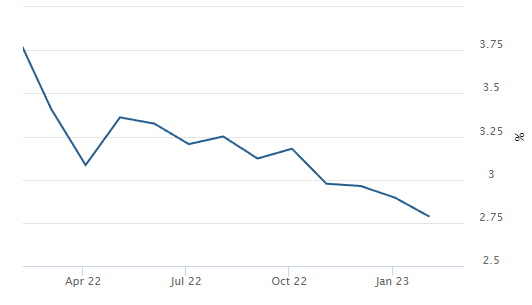
    Mexico: GDP growth
    Percentage variation (year-on-year)

    Mexico: unemployment rate
    Economically active populatio

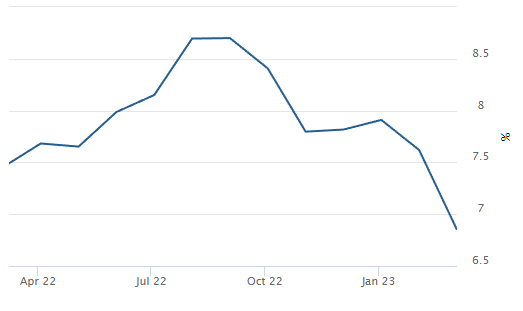
    Mexico: inflation rate
    Percentage variation (year-on-year)

  • GUYANA: PPP/C can boast enviable, if fortuitous, economic record

    Patrick de Courcy 28 January 2025 Hits: 2823

    Date: By December 2025

    Election type: General election for the president and National Assembly.

    Main contenders: The ruling People’s Progressive Party/Civic (PPP/C) and the opposition People’s National Congress Reform (PNCR) and Alliance for Change (AFC), possibly combining as in the last election as A Partnership for National Unity-Alliance for Change (Apnu-AFC).

    The 2020 election was fiercely contested and heavily disputed, with then-president David Granger and the Apnu-AFC coalition taking five months to concede. The reason for the fierceness of the contest was the upcoming surge in oil money. Growth in 2020 was 43.5%, followed by 20.1% (2021), 62.3% (2022), 33% (2023), and an estimated 44% in 2024. In the final count for the 2020 election, the PPP/C won 33 seats to 31 for the Apnu-AFC coalition. A joint effort by Liberty and Justice Party, A New and United Guyana, and the New Movement won the remaining seat in parliament.

    President Irfaan Ali will lead the ruling PPP/C into the 2025 election, with Aubrey Norton leading the PNCR, the main component of Apnu. The AFC will be led by Nigel Hughes. Neither Norton nor Hughes have yet committed to running again in coalition. PPP/C is in the enviable position of defending a stellar, if fortuitous, economic record. PNCR and AFC are relying on allegations of corruption and favouritism for the PPP/C’s mainly East Indian voters. There are no reliable recent polls, but the PPP/C is saying publicly that it expects a “huge” victory. A lot could depend on opposition unity. Apnu-AFC lost in 2011 when competing separately but won in 2015 as a coalition.

  • ST LUCIA: Strong growth but debt burden still heavy

    Sarah Sheldon 24 April 2025 Hits: 1796

    The St Lucia economy had a strong year in 2024 but the pace is now set to slow as the government struggles with heavy debt levels.

    The latest Article IV Consultation report by the International Monetary Fund (IMF) on the St Lucia economy, published on 13 March is a mixture of light and shade. On the plus side the report says that the economy grew by 3.7% last year on the back of strong tourism, construction, and manufacturing. Unemployment trended down (but remained high for the region at 14%); the government introduced a minimum wage while reducing VAT. Inflation, which had peaked at 6.4% in 2022 dropped to under 1% in the middle of the year. However, the fiscal deficit widened to 2.6% of GDP and total debt rose to 74.5% of GDP (a level many analysts consider unsustainable on the medium to longer term).

    IMF economists also note that as the current cycle of tourism infrastructure and hotel investment is set to be completed, growth will slow to a 1.5% annual trend over the medium term. Inflation will rise to an annual 2% in coming years. The fiscal deficit excluding natural disasters will narrow to 1.3% in FY 2024 but then widen to 2.2%-2.9% of GDP as capital expenditure begins to push up again.  Bank lending will be anaemic because of relatively high NPLs (non-performing loans). The IMF says risks to the economy are “tilted to the downside” and include a global economic slowdown and extreme climate events.

    Commenting on these predictions the IMF executive directors called for prudent policies and reforms designed to reduce debt, increase productivity, and boost potential growth. They also recommended “comprehensive tax policy reform”, with improved targeting of current expenditure including the wage bill. The directors welcomed the government’s commitment to a regional debt target but suggested it could also introduce a “sound fiscal rule”.

    They also called for action to reduce bank NPLs and legislation on foreclosures to support credit growth. The IMF also issued a call to boost natural disaster-resilient investment.

  • NICARAGUA: Election-related doubts persist

    LatinNews 07 December 2016 Hits: 891

    The 6 November general elections, which produced a sweeping (72.5%) victory for President Daniel Ortega and his ruling Frente Sandinista de Liberación Nacional (FSLN) [RC-16-11], have come under criticism from various sectors. While the opposition has accepted the result, candidates like Saturnino Cerrato, of the small opposition Alianza Liberal Nicaragüense (ALN), have denounced irregularities. Given the FSLN’s control of the country’s institutions, these complaints are unlikely to prosper.

    In a press conference on 10 November, Cerrato, who came a distant fourth in the election, with 4.3% of the vote, gave various examples of these irregularities. He cited the alleged refusal by the electoral authorities (CSE) to release the figures concerning absentee voters, along with its alleged cancellation of ballot papers. As well as highlighting acts of intimidation which took place at polling stations – including those where the ALN had fielded candidates and the one in which he himself cast a ballot – Cerrato also reiterated claims of widespread abstention, contrary to the CSE’s official line that abstention was 31.8%.

    With the international community having also waded in (last month deputy spokesperson at the US State Department, Mark C Toner, expressed “deep concern” about Nicaragua’s electoral process [RC-16-11]), Cerrato’s complaints have been echoed by two damning reports released since the vote. One is by ‘Panorama Electoral’, a group of local civil society organisations which sent 650 observers to voting centres around the country. The other is by Ciudadanos por la Libertad (CxL), one of two separate recently formed opposition coalitions, along with Frente Amplio por la Democracia (FAD).

    Released on 7 November, the ‘Panorama Electoral’ report was unequivocal that “the 2016 elections have failed to meet basic standards of electoral integrity and have represented an even further step back from three previous elections that were not credible.” It cited multiple areas of concern both regarding voting day itself and the electoral period as whole. As regards the latter point, these include: irregularities in voter registration; the rulings by the CSE and supreme court (CSJ) against the main opposition Partido Liberal Independiente (PLI) [RC-16-07], which ended up third in the presidential vote, with 4.5%; the imbalance in financial aid for parties and the misuse of state funds and facilities; the lack of transparency on the part of the CSE; and the blanket ban on observers.

    Four days later, CxL released its own report. That report, which put abstention at 76.2%, also flagged up as a major concern the intimidation of voters, particularly those who receive state benefits, and the use of state funds in the FSLN campaign. The opposition coalition also accused the Ortega government of helping people to travel between voting stations in order to vote multiple times, as well as manipulation of the electoral register to create 545,161 ‘ghost’ voters, thus significantly inflating the number of voters. CxL calculates that just 1.034m people voted in the election, in contrast with the CSE’s figure of 2.58m.

    CSE moves against PLI leader

    In a move likely to fan democracy-related concerns further, on 19 November PLI president, Pedro Reyes Vallejos, told reporters that the CSE had stripped him of the party presidency and suspended his political rights for three years. In a statement circulated in the press by Reyes, who was controversially awarded PLI leadership by the CSJ in June from long-time Ortega opponent, Eduardo Montealegre [RC-16-07], the CSE resolved in ‘record time’ a request for his removal from PLI figures including secretary general, Mario Asensio Florez, and PLI former presidential candidate, José del Carmen Alvarado.

    Reyes, who Montealegre previously accused of being an Ortega collaborator, said that the PLI members accused him of creating “internal political conflict” and that he would appeal the ruling before the local authorities (a move unlikely to prosper given the FSLN’s control of all of the country’s institutions). He also mooted the possibility of taking his complaint before the Inter-American Commission on Human Rights (IACHR).

    Final legislative results

    According to the CSE’s final results, released on 16 November, the FSLN will have 71 national deputies in the 92-member unicameral legislature, up from the 62 seats won in the previous November 2011 elections. The opposition Partido Liberal Constitucionalista (PLC) of disgraced former President Arnoldo Alemán (1997-2002) which took 15% of the presidential vote, will have 14 deputies, up from two in 2011. The PLI will have two deputies, down from 26. The ALN will also have two seats while the Partido Conservador (PC), the Alianza por la República (Apre), and the regional indigenous party, Yatama, will have one a piece.

    • Violence

    The ‘Panorama Electoral’ report on the Nicaragua general elections also cited 211 instances of intimidation or violence. It noted that on voting day itself, three people were killed in the community of Magdalena, Ciudad Antigua municipality, in the northern department of Nueva Segovia. According to the local human rights group, Centro Nicaragüense de Derechos Humanos (Cenidh), the relatives of the three killed have denied police reports that the deaths stemmed from clashes between drug traffickers. The relatives instead have told reporters that the individuals were the victims of political persecution.

  • CUBA: Non-farm co-ops to soak up excess labour

    LatinNews 08 May 2012 Hits: 748

    On 4 April the vice president of the council of ministers and Cuba’s economic policy czar, Marino Murillo, said that the council had approved in its most recent meeting on 31 March a new policy for “the experimental creation of cooperatives outside the agriculture sector”, as part of the package of 300 economic reforms approved a year ago at the Sixth Communist Party congress.

    According to the latest figures from the labour ministry, as of end February 2012 there were 371,200 Cubans registered as working ‘on their own account’ (cuentapropistas), meaning the self employed, along with their employees, in the small private sector. However, with the cash-strapped central government already running behind in its plans to purge the bloated public sector of a million workers, and transfer them to a small new private sector, there is an urgent need to accelerate the process. Thus the government has approved pilot projects for the establishment of non-farm cooperative in three provinces – Artemisa, Mayabeque (formerly Havana province) and Isla de la Juventud.

    There are few details as to how these new cooperatives will function, but Murillo has previously indicated that the idea is that existing state workers in certain defined sectors form their own co-ops, whereby workers remain in their current place of work, with access to the same materials and equipment etc, but then transition gradually off the public payroll to operate independently.

    It is unclear whether other state and non-state workers will also be able to set up brand new co-ops, or whether the government will permit the creation of co-ops outside of the list of permitted private sector activities. In an ideal scenario, the more the merrier. In theory, these new co-ops (or small- to medium-sized private business entreprises) would create a virtuous circle of job creation and, importantly, a steady stream of tax revenues for the government.  As ever, the devil will be in details, most especially in the tax details. The government has already been criticised for nearly killing off the new private sector before it ever got off the ground due to a punitive and complicated tax regime for the cuentapropistas.

    To his credit, Murillo took on board these complaints and the government has made efforts to lessen the overall burden and simply the bureaucratic process. Opposition economists make the point that the tax regime for the new co-ops must be such that it encourages state workers to make the transition – i.e. that there is a tax incentive to quit the public sector payroll. Secondly, there is still an urgent need for a wholesale market on the island. Right now the cuentapropistas are obliged to source their materials at full retail price. This need for a wholesale market will become even more urgent as additional (and potentially bigger) startups get up and running. President Raúl Castro has acknowledged this gap in speeches, though part of the set-up problem for the wholesale market also lies in the pending challenge of the dual currency, which would first need to eliminated to create a single, preferably US dollar convertible, currency.

  • CARIBBEAN POINTERS

    LatinNews 09 November 2016 Hits: 558

    *** JAMAICA LOCAL ELECTIONS. On 28 November, Jamaica will hold municipal elections in the first electoral test since the People’s National Party (PNP) lost national power to the Jamaica Labour Party (JLP) in February. The PNP is hoping to retain 13 parish councils and the Portmore municipality.

    *** TRINIDAD CABINET RESHUFFLE. On 31 October, Trinidad & Tobago’s Prime Minister Keith Rowley reshuffled his cabinet for the first time since being elected PM in September 2015. He dismissed two senior Cabinet members, the Energy and Energy Industries Minister Nicole Olivierre and the Public Utilities Minister Brigadier General Ancil Antoine. Minister of the People Dr Glenn Ramadharsingh was also dismissed, for “inappropriate touching” of a female Caribbean Airlines flight attendant.

    Franklyn Khan, formerly Minister of Rural Development and Local Government, is the new Minister of Energy and Energy Industries. Fitzgerald Hinds, formerly Minister of Works and Transport, is the new Minister of Public Utilities. Kazim Hosein has been appointed a senator and becomes Minister of Rural Development and Local Government, and Senator Rohan Sinanan is the new Minister of Works and Transport.

    *** PROGRESS ON BAHAMAS MEGA RESORT. In mid-October, the government revealed that a new owner had been found for the troubled Baha Mar mega resort. On 17 October, the government issued a statement saying: “The assets of Baha Mar have been acquired by Perfect Luck Holdings Ltd.” Perfect Luck is a Hong Kong registered company.

    The statement from the Office of the Prime Minister (OPM) added: “The company may sell the resort to whomever it wishes, subject to the proposed purchaser being acceptable to the government and other bodies performing their public function.” Most importantly, the OPM statement added that “remobilization has commenced” and that “a substantial fund has been established by CEXIM [China Export-Import Bank – the original backer of the project] for the payment of creditors’ claims, and former Baha Mar Bahamian employees are already being paid”.

    A few days after this announcement, on 27 October, a Hong Kong firm called Chow Tai Fook Enterprises Limited (CTFE) announced that it had “entered into negotiations in connection with the ownership of Baha Mar”. CFTE is a Hong Kong-based conglomerate owned and controlled by the Cheng Family. The principal activities of CTFE and the Cheng family include property holding and development, hotel investment and management, jewellery retailing, department stores, transportation and infrastructure investment.

    All this sparked immediate controversy, with former Baha Mar Director Dionisio D’Aguilar saying that the conglomerate was an unsuitable investor because it had been refused casino licenses in two US states, and because of its alleged “well-documented connection to organised crime in Asia”. The reference to organised-crime connections is thought to refer to the Cheng family’s links to billionaire Stanley Ho through its stake in Macau group STDM. Ho and his associates are said to have been blocked from expanding their gaming interests into Australia and Canada because of alleged associations with Chinese triad gangs in Macau.

    CTFE responded by saying: “CTFE has never applied for a casino license in the US, and a consortium including CTFE has just been approved for the granting of a casino license in Queensland, Australia…In addition, the Cheng family’s role in the Macau casino is strictly as an investor with no involvement in day-to-day management of the casino or oversight of the gaming industry in Macau…There will be no affiliation on this project with STDM.”

  • HONDURAS : No comment from IMF

    LatinNews 02 December 2011 Hits: 429

    The IMF mission that arrived in Honduras on 9 November, left the country on 20 November without making a comment on the economy’s prospects.

    This is unusual and suggests that there are major differences between how the Fund sees the economy and how the government does. María Elena Mondragón, the president of the Banco Central de Honduras (BCH), said that the IMF still needed to review various aspects of the economy.

    She claims that the bank and the government are sterilising monetary emission and building up reserves. It appears that the IMF has doubts about both these variables. Officially reserves at the end  June stood at US$2.5bn which is the equivalent of three months of imports.

    Mondragón added that the Fund officials said that they were aware of the efforts President Porfirio Lobo is making to achieve fiscal stability. The government says that it is reducing the fiscal deficit. Mondragón asserted that the economy was going in the right direction but conceded that it still had a lot to do to reduce poverty which afflicts 70% of the 8.2m people in the country.

    GDP: The IMF GDP growth target for 2012 is 3.6%.

    Inflation: In the 12 months to October inflation came to 5.9%.

  • CARIBBEAN POINTERS

    Sarah Sheldon 17 August 2021 Hits: 1178

    *** THE CARIBBEAN TURNS ON ORTEGA. When the Organisation of American States (OAS) passed its resolution on 15 June condemning Nicaragua and President Daniel Ortega for undemocratic conduct, 12 Caribbean countries voted for the resolution, two abstained, and one voted against. St Vincent & the Grenadines was the only Caribbean country to remain loyal to Ortega while Belize and Dominica abstained on the resolution.

    Five Caribbean countries which had never previously voted against Nicaragua changed sides for the 15 June resolution. These five were Barbados, Grenada, St Kitts & Nevis, Suriname, and Trinidad & Tobago. Normally these five would remain faithful to their code of non-interference in the internal affairs of member states, but the arrest of, inter alia, five presidential pre-candidates and nine opposition leaders proved too much for them to stomach.

    Commenting on the switch, Ronald Sanders, who is Antigua’s ambassador in Washington and the OAS, said that while Caricom countries have mostly been faithful to the mantra of non-interference, “no country can be a member of an organisation that proclaims adherence to the rule of law, democracy, human rights, and free and fair elections and remain silent when these principles are discarded.”

    *** US SENATOR WARNS OF CHINA’S VACCINE DIPLOMACY IN THE CARIBBEAN. Albio Sires (D-NJ), who is chairman of the US Senate sub-committee on the Western Hemisphere, told a hearing at the end of June on the administration’s policy to deepen engagement with the Caribbean that the US was allowing China to gain ground with its vaccine diplomacy. He said: “Here’s what I have a problem with. You have China going in and giving directly to these islands the vaccine. They take all the credit. Why can’t we do the same thing and take the credit instead of giving to Covax or Caricom? They may be great organisations, but I’m not looking to build those organisations. I’m looking to build our position in the Caribbean, and our position in the Caribbean should be that we should send the vaccines directly to these people. Let them know that it’s the United States that is helping.”

     *** IMF HIGHLIGHTS IMPORTANCE OF CBI PROGRAMME FOR ST KITTS. On 6 July, the International Monetary Fund (IMF) released a Concluding Statement on the impact of the Covid-19 pandemic on St Kitts & Nevis (SKN) in which it highlighted the importance of the country’s Citizenship by Investment (CBI) programme.

    The IMF statement noted: “St Kitts and Nevis entered the Covid-19 pandemic from a position of fiscal strength following nearly a decade of budget surpluses. A significant part of the large CBI revenues were prudently saved, reducing public debt to below the regional debt target of 60 percent of GDP and supporting accumulation of large government deposits.”

    Nevertheless, the pandemic has had a severe impact on the SKN economy, with a contraction of 12.5% in 2020 and the government’s first fiscal deficit (4.7% of GDP) since 2010. There is likely to be a further contraction of 1% in 2021, but a 10% bounce back in 2022. GDP should return to its pre-pandemic level in 2024.

    The IMF urges the government to resume its policy of saving part of CBI revenues to build fiscal buffers “once the recovery is firmly established”. It says: “Assuming annual CBI revenues of 9 percent of GDP, the savings would allow reducing public debt to around 40 percent of GDP and rebuilding deposits to close to a quarter of GDP by the end of the decade, which would provide a significant buffer against both macro-economic and natural disaster shocks.”

  • PARAGUAY: Cartes provokes divisions and realignments

    LatinNews 21 May 2014 Hits: 2829

    With just three months to go before President Horacio Cartes marks his first full year in power, his authoritative style has eroded much of the political goodwill he was initially afforded both by the opposition and the ruling traditional Asociación Nacional Republicana-Partido Colorado (ANR-PC), in which, as a newcomer, he is considered something of an interloper. The growing discontent with the Cartes administration has produced some serious divisions in congress, risking a breakdown in relations between the executive and the legislature.

    When Cartes, a business tycoon who turned his hands to politics ahead of the 2013 elections, assumed office in August last year, he did so as a political unknown. Cartes had never held public office and most of Paraguay’s politicians, including many within the ANR-PC itself, were unsure about him. In a bid to paint himself as someone aiming to build a broad political consensus behind government policy, rather than rely upon the ANR-PC’s majority in both house of congress to govern, Cartes sought to emulate Mexico’s President Enrique Peña Nieto by trying to force a broad political agreement in congress on a national legislative agenda.

    Cartes failed to reach agreement with all the opposition parties, but he did manage a deal with the main centre-right opposition Partido Liberal Radical Auténtico (PLRA) - the so-called ‘Pacto Azulgrana’[RBS-13-06]. But since then, Cartes has proven less open to political dialogue than his initial overtures suggested. He has paid only lip service to his promise to seek political consensus around his policy plans, and instead has more often than not resorted to the ANR-PC’s congressional dominance to expedite passage of his initiatives.

    Availing of its majority, the executive thus has succeeded in rushing through congress a number of controversial initiatives, including an amendment to the country’s military law and a new public-private law (APP), despite pointed opposition reservations (including in the PLRA). The president’s critics (which include some political rivals in the ANR-PC) accuse him of seeking to impose an authoritarian rather than a deliberative government, to the detriment of democracy.

    Pacto Azulgrana begins to unravel

    The president’s preference for steam-rolling through his initiatives has also led to social discontent. Labour unions last year staged the first general strike in the country in decades in protest at government policies (in particular the new APP law) and the manner in which the Cartes administration imposed its political will [RBS-14-04]. In response to this, some PLRA politicians urged the party leadership to reconsider the Pacto Azulgrana at the party’s recent (8 April) political committee meeting.

    Even though the PLRA party leadership admitted that the government’s behaviour was undermining the Pacto Azulgrana, it decided against pulling out of the agreement, arguing that it would go counter to the party’s pledge to act as a ‘constructive opposition’ in congress. The decision upset some PLRA legislators, who argued that this did not mean that the PLRA should unconditionally support the legislative agenda. Deputy Enrique Antonio Buzarquis mooted forming a dissident PLRA bench in the chamber of deputies to provide a “clear but responsible” opposition to the Cartes government.

    By 28 April, Buzarquis had secured the support of six fellow PLRA deputies (of the total 27) to form a dissident PLRA bench in the 80-seat lower chamber. According to Buzarquis, this new bench will act independently of the PLRA party leadership in order to “vindicate the decision adopted at the last party convention to provide a constructive opposition”. In particular, Buzarquis said, the dissident deputies will seek to promote social development policies, which, he argued, are largely being ignored by the Cartes administration.

    Re-alignments on the Left

    Soon after presenting the dissident PLRA bench, Buzarquis announced that the group had reached an agreement with deputies from other centre-left opposition parties to form a new “parliamentary front” minded to work as one to promote a common agenda in congress.

    The ‘Frente Legislativo por la defensa de los derechos económicos, sociales y culturales’ is comprised of 10 deputies- Buzarquis’s PLRA followers plus deputies from the small Partido Encuentro Nacional (PEN); the main leftist coalition, Frente Guasú (FG); and the second largest leftist coalition, Avanza País (AP).

    Buzarquis said the Frente would to be jointly coordinated by Víctor Ríos (PLRA) and Rocío Casco (AP). Ríos said each deputy would try to influence their individual parties to support the Frente’s common agenda. This could potentially give the opposition considerably more clout. If the PLRA, FG and AP joined forces, they could better stand up to the ANR-PC, stall key initiatives and potentially block its qualified majority.

    Leftist opposition parties have been attempting to replicate the new Frente in the senate. On 19 May, senators from FG, AP, PEN and the small Partido Democrático Progresista (PDP) said they had reached a “programmatic agreement” on forming an 11-member bloc in the 45-seat senate. The announcement was made by FG senators Sixto Pereira and Carlos Filizzola, who said that ‘Bloque 11’ would pursue a well-defined reform agenda (see sidebar) and seek to provide stronger opposition to the Cartes government. The senators added that the ‘Bloque 11’ would be open to alliances with other Cartes opponents “mainly from the PLRA, but also from the ANR-PC”.

    Discontent among ANR-PC ranks continues

    That the ‘Bloque 11’ appealed to the president’s critics within the ANR-PC was not casual. In recent weeks ANR-PC leaders including the congress president, Deputy Julio César Velázquez, have again been critical of Cartes for not consulting with the party in the development of government policy. ANR-PC leaders have repeatedly complained that the party is not adequately represented in Cartes’s technocratic cabinet. Velázquez has said that “90% of ANR-PC members are unhappy” with Cartes; and that he hoped Cartes would attempt to rectify this “before the party abandons him”.

    Notably, elections for a new congressional leadership must take place before the end of the current period of ordinary sessions on 30 June. The mood in congress, with a resurgent opposition and an unhappy ANR-PC, could mean that the president’s critics succeed in securing some relevant leadership roles. That could put a more serious strain on executive-legislative relations moving forward.

    • Bloque 11

    The Bloque 11’s agenda covers reform of the judiciary to change the appointment process for supreme court judges and prosecutors; and a broad electoral reform, including changes to the way in which electoral authorities are elected, and reforms to the regulations governing the formation of political parties and electoral alliances. Some of these reforms would require amending the constitution.

    • New appointments

    On 9 May President Cartes appointed two members of the ruling ANR-PC as deputy ministers in the new labour & social security ministry. The new ministry was created in March, after Cartes split the labour & justice ministry. The ANR-PC leadership had pressured Cartes for control of the new ministry but in keeping with his previous ministerial appointments, Cartes named a technocrat, Guillermo Sosa. However in a bid to appease the party, Cartes named César Augusto Segovia as the new deputy labour minister and Matías Orlando Fernández as the new deputy social security minister.

  • NICARAGUA: Police concerns back on the rise

    LatinNews 15 March 2017 Hits: 640

    An incident last month in which two people – including a two-year-old child – were killed in an armed clash with police (PNN) officers has reignited concerns about the PNN, previously one of the country’s most respected institutions but now considered under the thumb of President Daniel Ortega. The incident attracted particular attention given other reports of increased police repression following President Ortega’s controversial re-election in the November 2016 general elections, in a process questioned by the local and international community alike amid wider democracy-related concerns [RC-16-11].

    Vilma Rosa González, the PNN’s head of public relations, announced the deaths in a press conference on 6 February, following the incident which took place the previous day in La Dalia municipality, Matagalpa department. González said that an alleged local gang leader, Cairo Blandón Lemus, was killed along with his daughter in the cross-fire after some 15 PNN officials searched his house.

    These claims however have been challenged by local human rights groups like the NGO Centro Nicaragüense de Derechos Humanos (CENIDH). In a 7 February statement, the CENIDH announced that it had received a complaint from both Blandón’s mother and his wife (and mother of the child) who denied that Blandón was a criminal and that he had a gun. The CENIDH report cites the two women as saying that during the operation, the PNN failed to present warrants either for his arrest or to search the premises. They also denied that the deaths were the result of an exchange of fire as Blandón did not have a gun.

    The incident led human rights defenders like CENIDH director Gonzalo Carrión to make comparisons with the so-called Las Jagüitas case which took place in July 2015 in Las Jagüitas, an area in south-eastern Managua, and attracted widespread outrage. In that incident, a young woman and two children were killed by the PNN in a botched counter-narcotics operation when the officials reportedly mistook the family’s vehicle for that of suspected criminals [RC-15-08].

    Other concerns about repression

    The PNN also attracted concerns that it was being deployed by the Frente Sandinista de Liberación Nacional (FSLN) government for repressive ends over its response to protests which took place in late 2016 against the controversial ‘Gran Canal’ project linking the country’s Caribbean and Pacific coasts – Nicaragua’s biggest ever infrastructure project.

    With the protests, which took place in late November/early December, reportedly attracting a turnout of thousands – both in Managua and the rest of the country – the Frente Amplio por la Democracia (FAD) opposition coalition issued a statement at the time accusing the Ortega government of deploying a “gigantic operation” of PNN and army officers, leaving the country in a “virtual state of siege”.

    At the time, a leading national daily, La Prensa, reported that the PNN had set up 54 roadblocks across the country, in 13 of the 15 departments, as part of efforts to stop demonstrations. Clashes between PNN officers and protesters on 30 November left 11 people injured, while plans to stage protests in Managua the same day were cancelled after incidents with riot police the previous day in Nueva Guinea municipality in the South Atlantic autonomous region (Raas), and El Tule town in Río San Juan department.

    • DOEP deployment

    On 4 February, a special police unit (DOEP) was deployed in the capital, Managua. This was in response to a shootout which took place on 26 January which left one criminal and two police officers dead. While the Ortega government maintained that the DOEP deployment was necessary to restore order, Omar Lola, a local councilor for the opposition Partido Liberal Independiente (PLI), told the local press the same day that it was intended to send a message of “intimidation”. The violence made headlines given that Nicaragua has one of the lowest homicide rates in the region at seven per 100,000 inhabitants in 2016.

  • Colombia: No jam today

    LatinNews 10 October 2018 Hits: 473

    The new administration of President Iván Duque has been promising tax reforms and other measures to improve the country’s public finances. But by refusing to offer jobs and other benefits to political parties, he may be making it more difficult to get congressional approval for these initiatives.

    Next year’s government budget, currently under discussion in Congress, has been set at COP258.9tn (US$87.4bn). The overall value of the budget was fixed under the outgoing government in July. The new administration must work within that global figure although it can submit supplementary funding requests. The final version of the budget must be approved by 20 October. At the end of August finance minister Alberto Carrasquilla said there was a COP25.6tn (US$8.6bn) shortfall, which would have to be found to ensure the country kept to its fiscal rule, under which the deficit must be narrowed from 3.1% of GDP this year to 2.4% next. More recently, officials say a rescheduling of public debt might reduce the short fall to COP14tn (US$4.72bn).

    Carrasquilla described the fiscal outlook for Colombia as “worrying”. The fear is that Colombia’s investment-grade credit rating may be at risk if the deficit is not controlled. In December last year S&P downgraded the country’s credit rating to BBB- (one notch above junk status) while in February Moody’s revised its outlook on Colombia from stable to negative.

    Various plans have been under discussion to help cover the shortfall. The government has been promising a tax reform package, although Duque has recently been speaking instead of a “financing reform” which might be one smaller and less ambitious component of a wider package. One proposal is to increase VAT revenue, possibly by expanding the scope of the tax while lowering the rate from 19% to 17%. Together with other tax tweaks that might raise between COP12tn (US$4.05bn) and COP13.5tn (US$4.56bn) which would plug most of the budget gap.

    But getting reforms and tax changes agreed may be that bit more difficult this year. Traditionally, Colombian governments offer jobs and influence to parties in the ruling coalition to ensure support for its legislative programme in Congress. In a number of countries offering such inducements is called pork barrel politics: ethically questionable perhaps, but often central to the realpolitik of getting things done. In Colombia handing out favours is known as ‘mermelada’ (‘marmalade’). Duque, mindful of the strength of feeling about corrupt practices, has said his government will not be offering any marmalade. As he put it, “Relations between the powers of government cannot be transactional.”

    It is estimated that though a series of alliances the ruling Centro Democrático (CD) party can count on a majority in the Senate (54 out of 106 seats) and, while falling short of a majority, controls the biggest minority group in the lower house (83 out of 170 deputies). In theory, that should mean that by clinching a few more votes in the lower house, Duque can get his legislation approved. But the votes of at least one allied party, the Partido de la U, are not guaranteed: almost half of its deputies say that because their party was not given ministerial positions they may not vote for Duque’s reforms. CD Senator Paloma Valencia has argued that the pressure of public opinion will replace the need for mermelada, but not everyone is as optimistic.

  • ECONOMIC HIGHLIGHTS

    Patrick de Courcy 21 January 2022 Hits: 2106

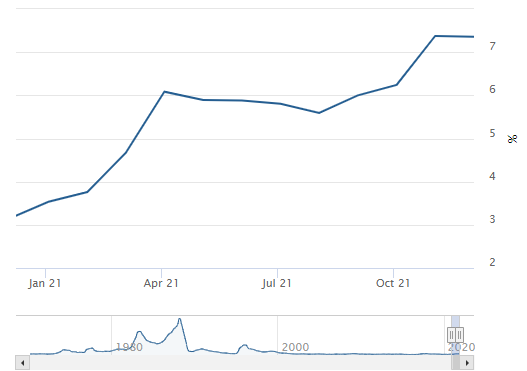
    MEXICO | Raising benchmark interest rate again. On 16 December Mexico’s central bank (Banxico) raised its benchmark interest rate by 50 basis points to 5.5%, as it ups efforts to rein in inflation. This is the biggest of five consecutive rate hikes, following increases of 25 basis points in November, September, August, and June. Banxico said in a statement that the decision was taken in response to inflationary pressures, after Mexico registered annual inflation of 7.37% in November, well above Banxico’s 3% +/-1 inflation target range for 2021.

    MEXICO | Remittances surge. On 3 January Mexico’s central bank (Banxico) released new figures which show remittances to Mexico totalled US$4.7bn in November 2021, up 37.7% on the same month in 2020. This brings the total for the first eleven months of 2021 to US$46.8bn, a 26.7% increase on the same period in 2020. The number of remittances recorded in 2021 so far exceeds the total received in 2020 (US$40.6bn), meaning that 2021 will be another record year for remittances. 

    MEXICO | Mexican business closures reveal pandemic impact. On 21 December Mexico’s national statistics institute (Inegi) published figures on the closures of micro, small, and medium-sized enterprises (MSMEs), announcing a net loss of approximately 400,000 of these businesses between October 2020 and July 2021. Inegi reported that, over this period, 1.2m new MSMEs were launched, whilst 1.6m closed down. Whilst the figures demonstrate the continued impacts of the coronavirus (Covid-19) pandemic on Mexico’s economy, Inegi noted that the proportion of MSMEs closing down was lower than that revealed in its last report covering the May 2019-September 2020 period, when 619,000 MSMEs were opened but 1m closed their doors for good. The latest report notes that MSMEs account for 99.8% of all businesses in Mexico.

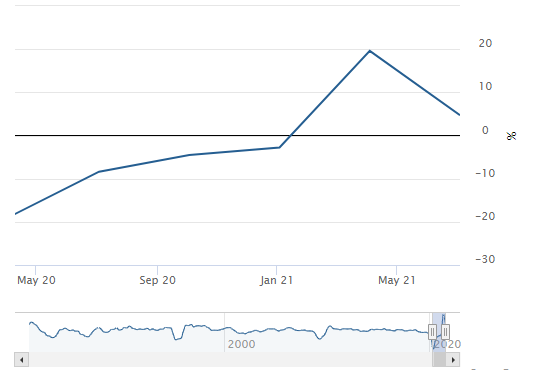
    Mexico: GDP growth
    Percentage variation (year-on-year)

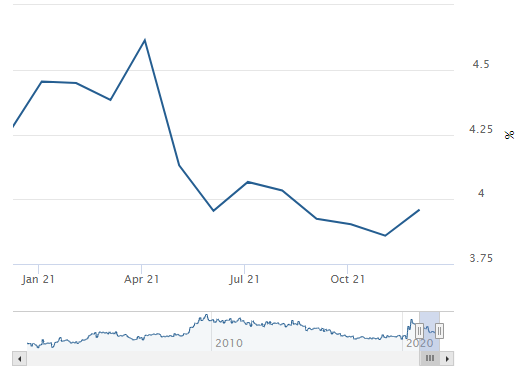
    Mexico: unemployment rate
    Economically active population

    Mexico: inflation rate
    Percentage variation (year-on-year)

  • NICARAGUA: More cooperation with Iran and China as US sanctions bite

    Sarah Sheldon 21 June 2022 Hits: 885

    Nicaragua’s President Daniel Ortega has boosted ties with Iran and China in recent months as the US steps up efforts to punish his government for its attacks on civil liberties and dismantling of democratic institutions.

    At the beginning of May, Iran’s oil minister Javad Owji visited Nicaragua and reportedly signed a Memorandum of Understanding and contracts in the areas of oil and agriculture, the details of which at the time were not made public. On 6 May, Owji said that Iran will make its “best efforts to guarantee the supply of fuel” to Nicaragua, according to local media outlet Confidencial, although he did not specify quantities or conditions of the agreement. In addition, he floated the possibility of Iran investing in Nicaragua’s Supremo Sueño de Bolívar oil refinery, a mega-project first agreed with Venezuela’s late president Hugo Chávez (1999-2013) in 2007 which has yet to materialise. After looking into documentation related to the refinery, “we will decide on the participation of our country in the continuation of this project,” said Owji. “We will do our best to be able to participate in that refinery and in future refineries in the country,” he added. “We hope that a mixed, shared investment from Iran, Nicaragua, and Venezuela can be made to complete the refinery.” 

    This is the second high-level visit by an Iranian delegation since Ortega took office for another term in January 2022 following elections widely condemned as a sham. Iran was one of just a few countries to recognise Ortega’s victory, reflecting the fact that its government has been an ally of the Nicaraguan president since he took power in 2007. However, despite many promises, little of note has come of the relationship. In 2007 the two sides agreed to cooperate on various projects, including the construction of a deep-water port on the Caribbean coast, but only a health centre in Villa Libertad, a neighbourhood in Managua, was actually delivered, reports Confidencial on 24 May.

    One of the proposals to come out of Owji’s visit involved trading Iranian fuel for Nicaraguan products, but experts are sceptical. Economist and former legislator Enrique Sáenz told Confidencial that this kind of deal isn’t viable due to the huge distance which separates the countries, and lack of an existing trade relationship.

    China is another nation which has deepened ties with Nicaragua of late, even sending a special envoy to attend Ortega’s inauguration. The visit followed Nicaragua’s December 2021 decision to establish diplomatic ties with China and sever relations with Taiwan. Since then, bilateral ties have deepened, and on 28 April the Ortega government announced that China would provide US$60m in funding for the housing sector. The agreement was signed off by chairman of the China International Development Cooperation Agency (CIDCA), Luo Zhaohui, and Nicaragua’s finance minister, Iván Acosta. The Nicaraguan government cited Luo as saying that the CIDCA, which is a government agency, had held four meetings with Nicaraguan officials and reached agreements on four important areas: housing; anti-epidemic materials; vaccines against the coronavirus (Covid-19); and human resource training. China does have the financial muscle to help Nicaragua, but relations have only just been kickstarted once more, and the US remains Nicaragua’s largest trading partner by far.

    Unfortunately for Ortega, it appears that Washington has moved to increase pressure on his administration. For example, on 15 April the Office of the US Trade Representative (USTR) excluded Nicaragua from the reallocation of the unused country-specific quota allocations under the tariff-rate quota (TRQ) on imported raw cane sugar. These reallocations are normally interpreted as a political message. Critics say that the move will not affect Ortega’s government unduly, as it doesn’t make much money from cane sugar, which is dominated by private producers. Nonetheless, it marks a new stage in US pressure on Ortega, and it appears that financial sanctions targeting the Ortega family and key aides, which started in 2018, may be starting to bite.

    Indeed, an article by the New York Times (NYT), published on 5 May, suggests that Ortega is sufficiently concerned that he authorised his son to approach US officials in order to reopen dialogue. Laureano Ortega, the dynasty’s most prominent son, reportedly made contact with Washington after Russia invaded Ukraine in late February. A US diplomat reportedly travelled to Managua for a meeting, but the Ortegas allegedly pulled out.

    The reported development could indicate Ortega’s worries for the future after Western sanctions on Russia started to affect another of his few remaining allies. “A key takeaway from this outreach is that the US sanctions on Nicaragua clearly have the family’s attention,’’ Dan Restrepo, a former national security adviser on Latin America under former US president Barack Obama (2009-2017), told NYT in the same article. “Probably even more so as the US ramps up its sanctions regime against Russia. That combination is clearly hitting pretty hard when it comes to regime insiders.” With Ortega relying on a steady flow of cash to bolster support among the groups that maintain his grip on power, it stands to reason that money worries may prompt reengagement with the US.

    • Trade deal with China?

    On 6 June Nicaragua’s minister for development, business and industry (Mific), Jesús Bermúdez, announced that Nicaragua and China had outlined a trade deal, which comprises two parts, the first of which will take effect this year. According to Nicaragua’s state mouthpiece, el19Digital, the first part of the agreement, which could be signed as early as this month, seeks to cover 90% of products that Nicaragua had previously exported to Taiwan, with which Nicaragua severed ties in December 2021 as part of a move to establish relations with Beijing. The second part of the deal is a free trade agreement (FTA). Bermúdez says that the framework for negotiations has already been established and hopes that the FTA can be finalised within a year and a half.

    • Financing uncertainty

    In a report published on 7 June, international credit ratings agency Fitch notes that US sanctions and the deteriorating governance backdrop have not precluded Nicaragua from securing record-large support from multilaterals in 2020 and 2021, although large disbursements from the International Monetary Fund and World Bank were due to extraordinary circumstances, including the coronavirus (Covid-19) pandemic and hurricanes. Fitch highlights that external funding has become increasingly reliant on the Central American development bank (BCIE) which represented 55% of net external financing in 2021, up from 28% in the prior decade.