All Categories

Subcategories

  • RASTREANDO TENDENCIAS

    LatinNews 25 July 2014 Hits: 538

    CHILE | Recortan pronóstico de crecimiento. El gobierno Chileno ha recortado su pronóstico de crecimiento económico por segunda vez este año, de 3,4% a 3,2%. La economía chilena ha estado sufriendo una desaceleración desde el año pasado, cuando informó de una tasa de  crecimiento del 4,1% después de haber promediado un crecimiento del 5,8% en los dos años anteriores. En una aparición ante el congreso, el director de presupuesto del gobierno, Sergio Granados, señaló un número de factores: la caída en la actividad en la industria minera del cobre; el reciente terremoto que impactó el norte de Chile; el devastador incendio en la ciudad de Valparaíso; y la depreciación del peso. La caída en la actividad minera del cobre significa que los niveles de producción de la firma estatal del cobre, Codelco, una de las principales fuentes de ingresos del gobierno, ha sido reducido significativamente.

    La revisión del pronóstico de crecimiento fue rápidamente seguida por una revisión a la baja del crecimiento por parte del banco central, de 3% - 4%, a 2,5% - 3,5%. El banco central también decidió cortar su tasa de interés de referencia (TPM) en un cuarto de punto porcentual a 3,75%, en un esfuerzo por impulsar la actividad económica. El TPM había permanecido estable en un 4% en los últimos cuatro meses, en medio de preocupaciones acerca de que la tasa de inflación observada a comienzos del año fue más alta de lo esperado. Sin embargo, el presidente del banco central, Rodrigo Vergara, dijo que el banco ahora espera que la inflación, actualmente en un índice alto del 3,9%, se alivie en la segunda mitad del año.

  • REGION: Severe drought hits Central America

    LatinNews 09 September 2014 Hits: 1194

    Up to 2.8m people are struggling to feed themselves as a severe drought continues to blight Central America, according to a United Nations (UN) World Food Programme (UNWFP) report released on 4 September. The “dry corridor” of Central America, including southern Guatemala, northern Honduras, central Nicaragua and western El Salvador, has been particularly hard-hit by low rainfall linked to the El Niño weather phenomenon. In August, the Famine Early Warning Systems Network (FEWS NET) run by the US Agency for International Development (USAID) warned that the area may require the highest level of humanitarian assistance since Hurricane Mitch in 1998.

    Guatemala

    At the end of August the Guatemalan government declared a state of emergency in 16 of the country’s 22 provinces. Pea, green bean and broccoli farmers estimate losses of 30-40% of their crop. The agriculture minister, Elmer López, said that 236,000 families had been affected by the drought. By declaring a state of emergency, the government can release funds to those who have lost their crops. Guatemala is due to begin distributing food aid in early October. Around half of the country’s population of 15m lives in poverty and the country has the world's fourth-highest rate of chronic malnutrition.

    Nicaragua

    Nicaragua’s Institute of Territorial Studies, Ineter, says the country is experiencing its worst drought since 1976. The national livestock commission, Conagan, reported that 2,500 cattle died in July, and a further 600,000 of the country’s 4.1m livestock are on the verge of starvation. Nicaraguans reacted with a mixture of ridicule and scorn when a government land management expert, Guillermo Membrano, suggested breeding iguanas for consumption, due to their high protein content and low intake of water. In August the central bank cut its growth forecast to 4-4.5%, down from its previous estimate of 4.5-5%.

    Honduras

    Honduras’ rainy season is usually from May to November, but this year the drought has led to the ruin of 70% of corn crops and 45% of the bean harvest, affecting 72,000 families. Furthermore, the Honduran state energy company has begun rationing power for up to four hours a day, between 12 noon-2pm and 6pm-8pm, in several cities because of low water levels in dams that power hydro-electric plants. Aline Flores, the head of the main private business sector council, Consejo Hondureño de la Empresa Privada (Cohep), said that the rationing would hamper economic activity and increase costs.

    In El Salvador, the government estimates that up to two-thirds of the country’s crops have been lost. Other countries in the region have also been hit, though the impact there is likely to prove less devastating. Costa Rica’s livestock and crop farmers have suffered losses totalling US$24m. Panama’s energy supply has also been hit by the regional drought because it gets 60% of all its energy from hydroelectric power. In May, officials declared about one-third of the country to be in a state of emergency. The water scarcity has even reached Colombia, where the cattle ranchers’ federation found 30,000 dead livestock.

    In both Honduras and Nicaragua, red bean prices have risen by up to 129% between January and June 2014, according to FEWS NET. The precarious economic situation of many families in the region has been intensified by the fact that over the past two years, coffee producers have been hiring fewer seasonal coffee pickers and paying lower wages because of a coffee leaf rust or roya epidemic. However, with the introduction of more rust-resistant strains, production in the region is expected to rebound this year, though it is not clear this will be sufficient to mitigate the effect of the drought. According to FEWS NET, “Extremely poor households across large areas of Guatemala, Nicaragua, Honduras and El Salvador will experience a rapid deterioration in their food security in early 2015.”

    • Coffee output

    After two years of declining output caused by coffee rust, the region is forecast to increase production by 870,000 bags to 16.2m. Honduras is expected to add 400,000 bags to last year’s 5m as rust-resistant trees from recently renovated land reach maturity. Guatemala expects to produce 200,000 bags more this year on 2013’s 3.6m bags. El Salvador, where production plunged 60% last year, expects to produce 675,000 bags.

  • Region: Calculating the cost of Zika

    LatinNews 22 February 2016 Hits: 2325

    The outbreak of the Zika virus in Latin America has raised concern. Some see it as one more negative impacting the region’s economies, coming hard on the heels of other setbacks such as the commodities slump and the El Niño cycle of disruptive weather. Seen from that point of view, the virus and the panic it may generate will make the Latin American recession go deeper and last longer. But there is a counter-view that holds that the impact of the disease, although negative, will be manageable.

    The mosquito-borne Zika virus has spread rapidly throughout Latin America. The first cases were reported in Brazil in May 2015, and since then it has appeared in at least 26 countries, with Brazil apparently remaining the epicentre but with Colombia, Mexico, Venezuela, and Paraguay all reporting significant numbers of cases. There have also been reports of a concentration of Zika cases along Colombia’s border with Venezuela. On 1 February the World Health Organisation (WHO) declared the outbreak a “public health emergency of international concern” and estimated that by the end of this year there could be as many as 4m people infected throughout the Americas. Most concern has focused on the possible link between Zika infections in pregnant women and a spike in cases of microcephaly – children borne with abnormally small heads and brain defects. A positive scientific link has not yet been fully proven, but it is suspected and is being investigated. There is also a potential link to Guillain-Barre syndrome, a neurological condition that in the worst cases can lead to paralysis of the limbs and respiratory muscles

    There is as yet no known vaccine for Zika, and diagnosis tests are relatively unreliable. Various medical teams in Brazil, the United States, and elsewhere have accelerated the search for an anti-Zika vaccine, but this is widely considered to be a task that will take a number of years. Attention is meanwhile focusing on the carrier, the Aedis aegypti mosquito, which is also known to carry the dengue and chikungunya viruses. The Aedis aegypti is found in tropical and sub-tropical regions of the world and breeds mostly where there is hot weather and stagnant water pools, hence the fear that in those areas where the El Niño weather pattern has led to higher than normal temperatures, the disease may be most concentrated. Recently flooded areas are also at risk. Many Latin American countries have poor quality water supplies and drainage systems, meaning the battle against the mosquito is potentially very difficult and costly. The WHO has recommended intensified public health surveillance, research, data-sharing, public risk communications, mosquito control, and personal protective measures to prevent mosquito bites.

    In Brazil the government has responded by deploying army units – over 200,000 troops in all – to find and fumigate likely mosquito breeding grounds. There has been a degree of controversy over the advice given to women in a number of countries that they should seek to avoid becoming pregnant. In El Salvador the government recommended that women should delay pregnancies for up to two years. Some have questioned the advice on the grounds that it could infringe personal freedoms, is not accompanied by sufficient data to permit informed choice, and may be impractical.

    But some analysts argue that the Zika outbreak will be manageable in economic terms. Both SARS in southern China in 2003-04 and Ebola in West Africa in 2014-15 had major economic consequences with a negative impact on activity levels. But as far as is known – and despite worries over potential transmission through sex or blood transfusion – Zika is not directly transmitted from person to person and, setting aside the potential link to microcephaly for one moment, has relatively mild symptoms which last between two and seven days. In up to 80% of cases those carrying the virus present no symptoms at all and may be completely unaware that they are carriers. One crude calculation is that if the WHO is right and 4m people do contract the disease before the end of this year that will still represents under 0.1% of the region’s working age population (the population aged between 16 and 64).

    That said, there could clearly be a significantly negative impact on tourism. According to a Reuters/Ipsos poll among US travellers in early February 41% of those who had heard of Zika said they were less likely to visit Latin America and the Caribbean as a result of the outbreak. There have already been official requests that pregnant women not travel to Zika areas, and this may have a ripple effect, causing couples and families to change their travel plans and stay away. In the case of Brazil there were fears of a negative impact on the number of people attending the Rio Carnival in February (just concluded) and, perhaps more importantly, the 2016 Rio Olympics due in August. But, despite this, over a million people are estimated to have taken part in Carnival street parties in Rio, Salvador, and Recife. Some dressed as mosquitoes to help raise awareness of the struggle against Zika. However, it is still too early for a full assessment of the economic impact on Carnival. A number of airlines reported fairly normal passenger traffic. Moody’s, the US ratings agency, said LATAM Airlines, through its Brazilian division TAM, together with the Brazil-based budget airline Gol Linhas Aéreas, would be the most exposed to the Zika risk. But on 8 February LATAM issued a statement saying “up to the moment there has been no impact on TAM bookings due to the Zika virus in Brazil or in other locations where the airline operates”.

    There is also cause for concern over the impact of the disease in countries like Venezuela, which is experiencing a severe political and economic crisis, caused by acute shortages of foreign exchange. The country already has difficulty paying for imports of medicine. Nevertheless Luis Salas, the short-lived minister for the productive economy (he was replaced in mid-February after just over a month in office) claimed that available foreign currency would be managed to ensure funding for “the more immediate emergencies”. Critics of the government believe the real extent of the Zika outbreak may be ten times more than the 5,000 cases reported by the authorities.

    On average, tourism’s direct contribution to Latin American GDP is around 2%, but including indirect contributions that number can go up to 10% (and higher in some Caribbean countries). There is a real prospect that Zika could have a negative effect on the tourism, and that it could dampen the expected positive economic impact of the Rio de Janeiro Olympic Games. Some international medical experts such as Doctors Lee Igel and Arthurt L Caplan, both of New York University, have suggested that the Zika outbreak is serious enough to merit cancelling or postponing the Games. Caplan questioned whether the city could simultaneously conduct an effective anti-Zika campaign on the one hand, which would include identifying stagnant water pools, and fumigating wide areas, while also on the other hand preparing effectively for the Olympics, reducing water contamination for the sailing events, taking effective anti-terrorism measures, and dealing with the budget crisis in the city’s public hospitals.

    But on 12 February Brazil’s President Dilma Rousseff insisted that the Zika outbreak would not compromise the Olympic Games, with the government stepping up its efforts to combat the virus. She said that Rio itself would be given priority attention in the government campaign. Her head of civilian staff, minister Jacques Wagner, also said the games would go ahead, although he admitted that the number of tourists coming to see them could be lower because of fears over the outbreak.

    Consultancy Capital Economics has taken the view that although clearly a factor of concern, Zika is a relatively minor risk. In a research note, the consultancy said: “Other factors, such as commodity prices and the fate of China’s economy, will play a much more important role in the region’s economy in 2016. In Brazil, the risks to the economy from further fiscal slippage and the possible impeachment of President Rousseff are likely to be much bigger drags on the beleaguered economy this year.” A World Bank study published on 17 February estimated that the cost of Zika for Latin America and the Caribbean would be around US$4bn, or 0.07% of GDP this year, through loss of income and fiscal effects. The report said Mexico and Cuba could be among the most affected because of the impact on tourism.

  • HONDURAS: Changes to the exchange rate system

    LatinNews 31 August 2011 Hits: 1561

    The government is reintroducing a crawling peg exchange rate system. This is when a currency is devalued by the central bank in line with inflation. The degree of devaluation will be determined by daily/weekly auction, conducted by the central bank. Theoretically, the Lempira has been in a free float since 2005, although in fact it has been steady for the past couple of years at L$19 to the US dollar.

    The central bank stated that it wants to ensure that the lempira remains competitive against its main trade partners. It wants bids for currency to reflect the previous month’s inflation rate. María Mondragón, the president of the central bank, added that the bank wants a stable exchange rate regime. The central bank has US$3bn in reserves. The central bank, however,  has lost US$53m in reserves in recent weeks, as Hondurans, worried about the impact of a new financial transactions tax, switch into the greenback.

    The first auction, on 25 July, bizarrely saw the Lempira appreciate against the dollar to L$18.665, even though Honduras’s annual inflation rate is twice the US’s. One reason for this is that Honduras is changing its exchange rate system just as the financial markets’ fretfulness about the sustainability of the dollar as a reserve currency reached a new peak as a result of the impasse in Washington over how to increase the US government’s debt ceiling.

    The Honduran private sector was caught out by the central bank’s change of exchange rate policy. It also wants the government to rethink its new tax changes, designed to get the private sector to pay more for the mounting security costs in the country. Luis Larach, the president of the Cámara de Comercio e Industrias de Cortés (CCIC) has asked the government for a dialogue. The Consejo Hondureño de la Empresa Privada (Cohep), however demanded that the government led by President  Porfirio Lobo Sosa simply drop the taxes on the business  sector.

    Santiago Ruiz, Cohep’s president, claimed that the proposed tax would have a highly damaging effect. He wants it suspended pending further analysis of the likely impact. Ruiz claimed that it would cost another 20,000 jobs, in addition to 180,000 already lost amid the weak-ish economic performance in the past couple of years.

    Larach said that the Cohep understood that the government had to spend an extra L$1.5bn (US$80m) on security, but stressed that his members want to ensure that the money is spent sensibly. Businessmen note that the government is already budgeted to increase spending by L$7bn this year (to L$57bn), with little guarantee that this extra money will not be wasted. What these critics don’t say is that a lot of the increase in government spending is caused by inflation, which is running at around 8% a year.

    Inflation: In June monthly inflation was 0.4%, bringing the annual rate to 7.7%.

  • MEXICO-BRAZIL: Femsa Swoops On Spaipa

    LatinNews 10 September 2013 Hits: 2563

    The Mexico-based Coca-Cola Femsa, the largest soft drinks bottler in Latin America, has agreed to buy Brazil’s Spaipa SA Industria Brasileira de Bebidas in a US$1.86bn cash-based deal. If approved by Brazil’s anti-trust authority, the deal will raise Femsa’s share of the Brazilian Coca-Cola market to around 39%.

    Femsa has been on a buying spree in recent years, acquiring various regional bottlers in its Mexican home market, one in Miami, and one as far afield as the Philippines. It has been present in Brazil for ten years, and its executives have made it clear that they see South America’s largest economy and most populous country as a strategic market where they would like to further expand their geographic reach.

    In July, Femsa moved to acquire a Rio de Janeiro regional Coca-Cola bottler. In this deal it will buy Spaipa’s existing franchise, which operates in more than half of São Paulo state, and also in Paraná. Spaipa has four bottling facilities and seven distribution centres, serving an estimated 17m consumers. The Brazilian company achieved net revenues of US$929m in 2013.  A statement issued by Femsa described the Spaipa footprint as “a perfect geographic fit”.  Femsa said the cash acquisition was being financed through bank loans, most of which were already in place.

    According to Femsa CEO Carlos Salazar Lomelín, “we are privileged to serve as many consumers in Brazil as we do in Mexico, and our company will benefit from the talented and experienced employees of the Spaipa franchise.” He added that “building on our operating capabilities and solid financial position, we are confident that our company will be able to deleverage our balance sheet in a short period of time”.

    Femsa may also be hoping that an emerging public relations problem for the soft drinks sector in Mexico will not be too quick to spread south to Brazil. In fact, the issue can be traced back further north to New York Mayor Michael Bloomberg, who set the ball rolling by campaigning against high sugar-content soft drinks. A UN Food and Agriculture report then boosted concern in Mexico by noting that the country’s obesity rate has just surpassed that of the United States (32.8% of the adult population vs. 31.8% in the US). A number of health specialists have linked this to Mexico’s high per capita soft drink consumption, and the high sugar content in each drink, which they say contributes to an above-normal incidence of diabetes.

    In the US, per capita soft drink consumption is a staggering 165.3 litres and there is a 7.7% diabetes rate.  Mexicans consume 146 litres of soft drinks a year and have a 9.0% diabetes rate, one of the highest in the world. About 10m Mexicans suffer from the disease. The debate is beginning to have an impact on local attitudes, with the Mexican education ministry asking retailers not to sell soft drinks in public schools, and one senator (Marcela Torres of the right-wing Partido Acción Nacional [PAN]) sponsoring a bill that would impose a 20% tax on sugar-heavy drinks. Coca-Cola Mexico has responded that the company’s drinks “are all healthy and can be integrated into a correct diet, combined with an active lifestyle”.

  • HONDURAS: Electricity problems

    LatinNews 23 February 2012 Hits: 2669

    The influential Consejo Hondureño de Empresa Privada (Cohep) is calling for the resignation of Roberto Martínez Lozano the general manager of the Empresa Nacional de Energía Eléctrica (Enee), because of a controversial deal with Westport, to buy up to 100MW of emergency back-up power over the next 16 years.

    The controversy arose over the length of the contract: the deal was supposed to be a back-up to Enee regular generating capacity. In the event, Enee said that Westport did not pay the US$1.35m performance bond (ie deposit against which Enee could claim if the contract was not fulfilled). The contract was due to start on 24 January 2012.

    The government’s anti-corruption unit is already looking into the deal. Henry Salgado, the anti-corruption czar, said that the agency was investigating whether Westport could have delivered on its side of the contract. There are also doubts over whether the Enee held a tender select the emergency provider.

    The issue of back-up generation capacity has sprung to importance because of potential problems at the country’s main hydro-electric power stations, Francisco Morazán. Recent earthquakes have shaken the mountainous area around the dam. The government is simultaneously negotiating with Brazil for it to finance the repair of the dam’s fifth turbine.

    Renewable energy: The government is also trying to attract renewable energy suppliers to the country. At a recent trade fair in San Pedo Sula, companies such as BFL from India and Mecadimi from France gave updates on their projects. BFL is working on a hydro project on the River Quilio which should provide power for 100,000 households. Mecamidi is interested in another hydro-project in the middle of the country on the River Singuizapa.

    Honduras already has Central America’s biggest wind farm at Cerro Hula in the central province of Francisco Morazán.

    IMF: At the end of January, an IMF mission arrived for the fifth evaluation of the accord agreed by President Porfirio Lobo in October 2010. The evaluation will take two weeks. The current programme ends in March 2013. The president of the central bank, María Elena Mondragón, expects the IMF mission to report back positively on the country’s economic developments. Last November the last Fund mission left without holding its usual press conference to discuss its findings. This omission prompted suggestions that the Fund had found things amiss.

  • REGION: Inter-oceanic canal plans proliferate

    LatinNews 10 July 2013 Hits: 2544

    Nicaragua last month took a concrete step towards building an inter-oceanic canal with the congressional approval of a US$40bn concession to a Chinese company for the construction and operation of the project. This has since appeared to spur on its neighbours, Honduras and Guatemala to publicise similar plans. While the completion of any of these is still far off, doubts persist as to their feasibility and future success.

    Infrastructure projects aimed at reducing the time needed to transport goods from the Atlantic to the Pacific in the Central American isthmus have been around since the 19th century. For political and historical reasons the Panama Canal project was completed first. Despite the planned Panama Canal expansion, which will accommodate increased traffic and even larger freight ships, the continued increase in global trade has fuelled an interest and awareness of scope for alternative pathways through Central America.

    Prior to the construction of the Panama Canal, Nicaragua was considered to present the best prospects for an inter-oceanic route as the San Juan River travels two-thirds the length of the country, from its source in Lake Nicaragua all the way to the Caribbean Sea. This idea of building a new canal or indeed canals (plans to build a ‘dry canal’, comprising a railway line connecting ports in the Atlantic and the Pacific, have also been floated) re-emerged last year [RC-10-12]. While this were initially dismissed as just another declaration of intent, on 13 June Nicaragua’s national assembly awarded Chinese company, HK Nicaragua Canal Development Investment Company (HKND), the concession to build, operate and manage an inter-oceanic ‘Gran Canal’. The Nicaraguan government of President Daniel Ortega has provided very few details as to the project beyond stating that it will make use of Lake Nicaragua although it has clarified that it would not run along the San Juan River, as expected. The plan appears to be to build an entirely new water channel linking Nicaragua’s South Atlantic Autonomous Region (Raas) to the Lake; and the Lake to the Atlantic. The project, which according to HKND will cover 286km (three times the length of the Panama Canal) also envisions the construction of two new deep-water ports, one in the Raas and one on Nicaragua’s Pacific coast.

    The news from Nicaragua prompted its neighbours to publicise their own projects. On 17 June during a visit to Taiwan, Guatemala’s President Otto Pérez Molina revealed his government was progressing with plans to build a 372km ‘dry canal’ highway and railway system linking the Atlantic port of Puerto Barrios to the Pacific coast in Jutiapa department. Pérez Molina said his government and its partner, construction consortium, Odepal International SA, were “much more advanced” than Nicaragua in their plans to develop the US$10bn project, which also includes the construction of two new deep-water ports and oil and gas pipelines. This was followed by Honduras’ President Porfirio Lobo’s 8 July announcement that he had signed a memorandum of understanding with the China Harbour Engineering Company Ltd (CHEC) for the construction of a 280km railway linking the Atlantic port of Puerto Castilla to Ampala, Honduras’ main port on the Gulf of Fonseca. According to Lobo, this US$20bn project will include an oil refinery at Puerto Castilla and an oil pipeline linking it to Amapala.

    All three Central American countries claim their projects will not compete with the Panama Canal but would “complement” it by providing more trade cargo capacity. Pointing to foreign (mostly Asian) involvement in the projects as evidence of international interest in accommodating future transcontinental trade, the leaders claim the projects are designed to cater for the Super Post Panamax (SPPX) generation of cargo vessels, currently being developed which will exceed the size limits of the Panama Canal expansion (over 366m long and 49m wide). However, what the leaders of these countries fail to address is whether the projects will compete directly with each other and whether there will be a need for all three in the future.

    •  Long-distance race

    While the race to build a new inter-oceanic conduit across the Central America isthmus is well and truly on, it will be a long and protracted one rather than a quick sprint. Construction on Nicaragua’s “Gran Canal” could start as early as next year but will take 6-10 years to complete. Honduras’ project may involve the shortest distance but is expected to take 15 years to complete according to the government. Meanwhile Guatemala’s, by far the longest canal project in terms of distance, is expected to be completed in seven years after construction begins. However, this depends on the government appropriating all the necessary private land holdings through which the project is to pass, a process that may take years.   

  • HONDURAS: Coffee problems

    LatinNews 30 March 2012 Hits: 2218

    The recent dip in the international coffee price is likely to clip US$200m off the country’s export revenues, which had been budgeted by the government at US$1.5bn for the 2011/12 coffee year. In percentage terms the drop will be about 13%. Coffee is the country’s biggest single export.

    The gloomy forecast came from Víctor Hugo Molina, the manager of Ihcafe (Instituto Hondureño del Café). In the 2010/11 coffee year (which runs from October to September), exports were a record US$1.2bn. In calendar 2011 coffee exports were worth US$1.37bn. To some extent, an increase in production this season (to around 6m 100lb or 45.5kg bags) will compensate for the slide in prices, Ihcafe says.

    Although coffee prices hit a record US$2.3 a pound in 2011, they have since subsided to US$1.82 a pound in February.

    According to the Banco Central de Honduras, the country’s total exports in 2011 came to US$7.2bn, which was US$1.46bn (20%) higher than for 2010.  Imports in 2011 came to US$10.34bn, up 21% on 2010.

    Dollarisation: Local savers are increasing their dollar deposits in local banks and reducing their Lempira business. The total value of local deposits at 1 March, according to the central bank, was L$156bn, of which L$45.2bn are in dollars. At the end of 2011, dollar deposits were worth L$43bn. On 1 March 2011, dollar deposits were worth L$39.7bn.

    Bankers said that depositors have been shifting into dollars because of the weakness of the Lempira against the dollar, though the statistics do not support this argument. On 23 June 2011 the government switched back to a system of exchange rate bands. At that point, dollars accounted for 27.7% of total deposits; now they account for 28.9%.

    Inflation: In the first two months of 2012 inflation came to 1.2% after consumer prices jumped 1% in February. This brought the lagging 12 month rate to 5.6%.

  • Current subscriber: Update Contact Preferences

    LatinNews 01 April 2018 Hits: 481

    Thank you for taking the time to update your contact preferences.

    Changes to data protection regulations mean that you need to tell us that you are happy to continue receiving our communications.

    You are a valued LatinNews subscriber, and we want to make sure you still receive important information from us.

    The General Data Protection Regulation (GDPR) will come into effect on 25 May 2018, and will bring with it changes to the way in which personal data is processed and used. As a result, we need you to confirm that you want to continue receiving communications from us and opt-in.

    From time to time, we would like to send you communications to help you keep up-to-date on news about our latest publications, complimentary content, information on relevant services, and special offers which could benefit you. We may contact you via email, post or phone. We will never share your data with a third party.

    To continue receiving communications from us, all you need to do is confirm your email address, opt-in to the different types of communication by ticking the boxes, and click the Confirm Contact Preferences button.

    Please confirm your email address:
     
    We would like to contact you from time to time so that we may send you complimentary content, and keep you updated with news about our services. To opt-in to this communication, please tick the LatinNews Updates box.
    LatinNews Updates:
     
    Occasionally we work with partners who provide content and provide services that complement our own. To opt-in to this communication, please tick the Trusted Partners' Updates box.
    Trusted Partners' Updates:


  • Puerto Rico: The buck is passed…to Washington DC

    LatinNews 20 May 2016 Hits: 642

    Following the declaration of a moratorium on payment of most of US$422m due from the Government Development Bank (GDB) for Puerto Rico on 1 May 2016, the government has reached an agreement with the Ad Hoc group of creditors[1], who account for some US$900m of the GDB’s US$4bn in outstanding bonds. The GDB has agreed to pay interest on its bonds and in return the Ad Hoc group will not undertake legal action against the government or the GDB for the remainder of May. The Ad Hoc group also will accept a 53% ‘haircut’ on its investment. However, a number of details still need to be settled, not least of which is the passage of crucial legislation by the US Congress.

    The agreement between the government of Puerto Rico and the Ad Hoc group of investors for bonds issued by the GDB envisages a two stage restructuring process. In the first stage, the outstanding bonds will be replaced in an Interim Exchange, with new Interim Notes. In the second stage, the Interim Notes, along with other obligations owned by the government and the various utilities and agencies that it controls, will be exchanged for new securities, in a Global Restructuring. Following this Global Restructuring, the Ad Hoc group will be left with new securities. These are expected to be worth around 47% of the existing GDB bonds.

    Crucially, the Interim Exchange will require the participation of all GDB bondholders. Aside from the Ad Hoc group, these investors include the state-chartered credit unions of Puerto Rico (Las Cooperativas) and other institutional investors on the island. On 29 April, the GDB reached an agreement with the credit unions whereby they would exchange US$33m in notes maturing on 1 May with newly issued notes maturing on 1 May 2017. Meanwhile, negotiations continue between the GDB and those creditors who are not members of the Ad Hoc group.

    The GDB notes that the agreement of all the bondholders is unlikely to be secured unless the US Congress passes legislation that would bind non-consenting creditors. Puerto Rico’s governor, Alejandro García Padilla, in recent months has urged Congress to make changes to the US Bankruptcy Code that would allow for an orderly default and negotiation with creditors. One obvious possibility is an amendment to Chapter 9 of the US Bankruptcy Code. This provides protection for cities and counties that get into financial difficulties. However, Puerto Rico is an unincorporated US territory and is not currently covered by Chapter 9.

    The GDB’s position on this issue is uncompromising. The GDB president Melba Acosta Febo notes that the latest agreement with the Ad Hoc group “is but one piece in a complicated process that will require every [creditor of the GDB, the government and its utilities/agencies] to participate. The time necessary to reach an agreement on key terms with ¼ of a single issuer’s bond holders demonstrates that, in the absence of federal legislation that gives Puerto Rico the tools it needs, the island will be condemned to a quagmire of economic stagnation with no relief, for which both 3.5 million American citizens and our creditors will bear the consequences”.

    In the meantime, the latest flow of economic data from Puerto Rico remains grim. The GDB’s Economic Activity Index (EAI – a measure of the performance of the economy that provides a reasonably accurate indication of trends in real GNP) dropped by 0.4% in March and was down by 2.1% relative to March 2015. Total non-farm employment in March averaged 895,900 – or 1.4% less than in the same month of 2015. Power generation was 0.7% lower at 1,653.2m kWh. The preliminary indication for gasoline consumption was 82.5m gallons, or 5.2% less than in March 2015. Most ominously, cement sales were down 19.5% year on year, at 1.04m bags. Puerto Rico’s economy grew by 0.5% in the June 2013 fiscal year, but has otherwise been contracting each fiscal year since June 2007.


    [1] The members of the Ad Hoc group are funds managed or advised by Avenue Capital Management II, L.P., Brigade Capital Management, LP, Claren Road Asset Management, LLC, Fir Tree Partners, Fore Research & Management, LP and Solus Alternative Asset Management LP, according to Davis Polk & Wardwell LLP, the Ad Hoc group’s lawyers.

  • Nicaragua: On the right track, but in the slow lane

    LatinNews 27 November 2013 Hits: 2145

    In its latest Article IV consultation with the government of Nicaragua, the International Monetary Fund (IMF) confirmed that most of the country's macroeconomic metrics are moving in the right direction. Relative to other countries in Central America, crime and violence is much less of a challenge for businesses. However, change and development is not occurring rapidly enough to have an impact on poverty, which remains endemic, affecting up to 43% of the population on some estimates.

    The IMF last published a full country report in relation to a regular Article IV consultation with the Managua government in June 2012. Although the Fund’s review of the economy and economic management was generally favourable, it highlighted a number of structural problems. Most crucial is poverty. By many metrics, Nicaragua remains one of the poorest countries in the Western Hemisphere. Real per capita incomes are still only about two-thirds of the peak in 1977. Poverty rates have fallen in recent years, but are still considerably in excess of regional averages. Over a quarter of the rural population lives in extreme poverty. Only one quarter of workers are enrolled in the country's social security system, which on current trends is headed for large financial problems.

    Contested poverty figures

    According to the latest annual survey on poverty by a local Nicaraguan think tank, Fundación Internacional para el Desafío Económico Global (Fideg), released on 25 June this year, general poverty affected 42.7% of the population in 2012, down from 44.1% in 2011, while extreme poverty dropped to 7.6% in 2012 from 8.2% in 2011. (The Fideg defines general poverty an individual income of less than US$2/day and extreme poverty as less than US$1/day). The survey was carried out in 1,730 homes across the country, 874 in urban areas and 856 in rural areas, with a 2.4% error margin. The organisation’s director, Alejandro Martínez Cuenca, noted that the improvement in general poverty lay within the margin of error. Commentators also noted that extreme poverty in rural areas actually rose, to 12.9% in 2012 from 11.6% in 2011, although it dropped to 3.2% in urban areas from 5.4%.

    Cuenca noted that the improvement owed largely to remittances, which reached US$1.0bn in 2012, up 11.3% on 2001 and accounting for 10% of GDP. He said that without the remittances contribution, the poverty rate could well have increased by as much as “4.1% in the case of general poverty and 3.7% in the case of extreme poverty.”

    The UN Development Programme’s latest Human Development Report, ‘The Rise of the South: Human Progress in a Diverse World’,  presented in Mexico on 14 March, showed continued improvements in Nicaragua’s human development index (HDI) - a composite of health, education, and living standards. According to the UNDP report, Nicaragua’s HDI in 2012 was 0.599 (on a rising scale of 0-1), up from 0.583 in 2007, the year President Daniel Ortega took office. Yet in the Inequality-Adjusted Human Development Index (IHDI), which measures inequality within each of these three dimensions, Nicaragua’s score fell to 0.434.

    According to the UN’s Food and Agriculture Organisation’s January 2013 ‘Panorama of Food and Nutritional Security in Latin America and the Caribbean 2012’, the proportion of the population in Nicaragua suffering from hunger dropped to 20% in 2010-2012, down from 23.9% in 2007-2009 and 55% in 1990-1992. While below Guatemala (30.4%), the latest figure for Nicaragua was still above El Salvador (12.3%); Panama (10.2%); Honduras (9.6%) and Costa Rica (6.5%).

    The banking system is sound and resilient - but is vulnerable to a sudden reduction in deposits linked to assistance to Nicaragua received from the government of Venezuela. Power outages are, by regional standards, common. In spite of Venezuelan aid, dependence on oil imports (of around 17% of GDP in 2011) is an obvious and important source of vulnerability. Details are shown in Chart 1.

    CHART 1: Structural problems as identified by IMF, mid-2012
    Per capita income of around US$950 (1994 dollars) is well below 1977 peak of about US$1,500.
    Poverty rates has declined from 48.3% of the population in 2005 to 42.5% in 2009, but is still well above the regional average of 27%.
    In spite of falling poverty, 63% of the rural population lived below the poverty line in 2009.
    In 2009, 15% of the population, and 27% of the rural population lived in extreme poverty.
    Financing the current account deficit still depends on aid and FDI.
    Oil imports rose from 11% of GDP in 2010 to nearly 17% in 2011.
    Power outages (of six in a typical month) are far more common than in other countries in Central America.
    At 70%, the number of urban workers who are employed informally is one of the highest in Latin America.
    Only 25% of the workforce is enrolled in the social security system.
    The pension system is set to record deficits from 2015 and to deplete its trust fund by 2021.
    The banking system is resilient: 'however, deposits linked to Venezuela's assistance programs are increasingly large and potentially volatile.
    Source: IMF, Staff Report for Article IV Consultation, 12 June, 2012

    The IMF's latest assessment was summarised in a press release in late September 2013 - following the most recent Article IV consultation, but before publication of the full report. The key message is that macroeconomic management remains sound. The authorities in Managua are addressing the main challenges. The current account deficit is falling only slowly, but foreign reserves, at around 3.5 months of imports are, and should remain, sufficient for the country's needs. The budget is broadly in balance, with the result that public sector debt (which is overwhelmingly held by foreign creditors) is falling relative to GDP. Inflation is sticky and, relative to what it is in major economies, quite high. However, it is falling and in any event, the gradual (and predicable) depreciation of the Córdoba against the US dollar, in accordance with the central bank's long-established sliding peg regime, ensures that Nicaraguan exporters remain internationally competitive. Details are shown in Chart 2.

    CHART 2: IMF's view of macro-economic metrics, late 2013

    Average real GDP growth over two years of 5.3% annually

    GDP growth of 4.2% in 2013 and 4% per annum thereafter

    Inflation over two years of 7.3% per annum

    Inflation of 7% per annum in 2013 and subsequent years

    Public sector deficit of 0.3% of GDP in 2012

    Public sector deficit of 1.4% of GDP

    Public debt declining from 45.7% of GDP in 2011 to 42.3% in 2012

    Government committed to further reductions over the medium term.

    Current account deficit falling from 13.2% of GDP in 2011 to 12.9% in 2012

    Current account deficit of around 13% of GDP

    Gross international reserves equivalent to 3.5 months of imports.

    Reserve coverage should remain stable

    Source: IMF Press Release 13/364 of 26 September, 2013

    The real problem, though, is that economic growth appears set to slow slightly, with the result that the incidence of poverty is unlikely to fall at the same rate as in recent years. In particular, it appears unlikely that the left-wing government led by President Daniel Ortega will have the resources to do much to improve the country's education system. This matters, because the inadequate education of the workforce was seen in the latest (2013-14) Global Competitiveness Report of the World Economic Forum as being one of the top five obstacles to doing business in Nicaragua, as Chart 3 indicates. Other problems, in increasing order of severity, are government instability, corruption, policy instability and inefficient government bureaucracy.

    CHART 3: The five most problematic factors for doing business in Nicaragua

    Source: WEF Global Competitiveness Report 2013-14. Respondents were asked to select the five biggest challenges for doing business and to rank them from 1 to 5. The responses are weighted according to rankings.

    However, no one of these problems appears to be seen as overwhelmingly more serious than the others. Further, crime and violence, which are seen as a very serious challenge to doing business in some other countries in Central America, is not seen as a major problem in Nicaragua. This is in the context of a country whose overall Global Competitiveness Index improved from 115/142 in 2011-12 to 108/144 in 2012-13 to 99/148 in 2013-14. Relative to other low income countries, the Global Competitiveness Report shows Nicaragua in a favourable light in terms of healthcare services and certain aspects of its financial sector (such as the availability of venture capital and access to loans).

    In short, progress is slow, but in the right direction. It is easy to identify challenges and sources of vulnerability. There will be widespread poverty for years. Nevertheless, the state clearly has the ability to effect positive changes at grassroots level. The most likely outcome is that a stable economic environment results in a gradual improvement in living standards (and greater social stability) over the medium-term.

  • ECONOMIC HIGHLIGHTS

    Abbi Dicker 23 February 2024 Hits: 3033

    HONDURAS | Private sector highlights new EU deforestation export rules. On 22 December Honduras’ leading private sector lobby Consejo Hondureño de la Empresa Privada (Cohep) underlined that new European Union rules will take effect from January 2025 regarding zero deforestation for Honduras’ export sectors of coffee, palm oil, cacao, beef, leather, wood, and soya. According to Cohep, in order to continue exporting to the European market, companies working in these sectors must comply with requirements regarding deforestation. Also indicative of EU efforts to reduce deforestation in Honduras, last month at the United Nations climate change conference (COP28) in the United Arab Emirates, Maroš Šefčovič, the executive vice president of the European Commission, the EU’s executive branch, and Honduras’ President Xiomara Castro, signed a Memorandum of Understanding for a Forest Partnership with Honduras which will contribute to Honduras’ objective to restore 1.3m hectares of forest and implement its National Biodiversity Action Plan.

    PANAMA | Consumer confidence up. On 30 January Panama’s chamber of commerce, industry, and agriculture (CCIAP) published its bimonthly survey of consumer confidence, which it said stood at 84 points in January, up from 71 points in November 2023. The CCIAP measures consumer confidence on a scale between zero and 200 points, with 200 signifying maximum confidence and zero signifying minimum confidence. The latest CCIAP figures suggest that consumer confidence has reverted to its typical level seen over the past year, which hovered around the mid-80s before a steep drop from September-November 2023 when Panama was rocked by protests against a major mining project. The CCIAP found that, compared with November, Panamanians were more optimistic about their prospect of saving money, finding work, and seeing an improvement in their household finances over the next 12 months.

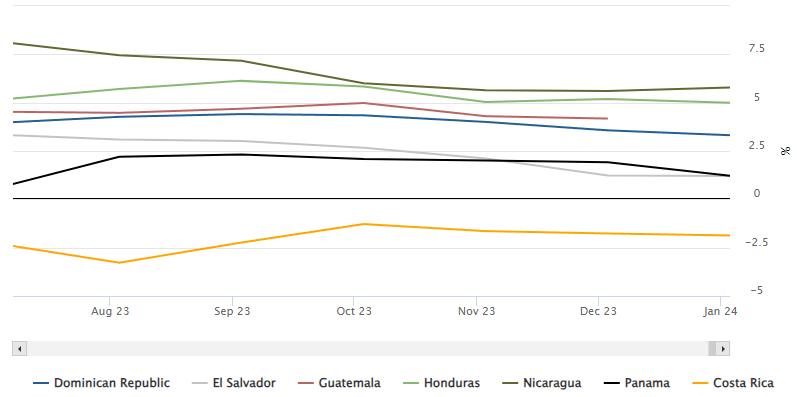
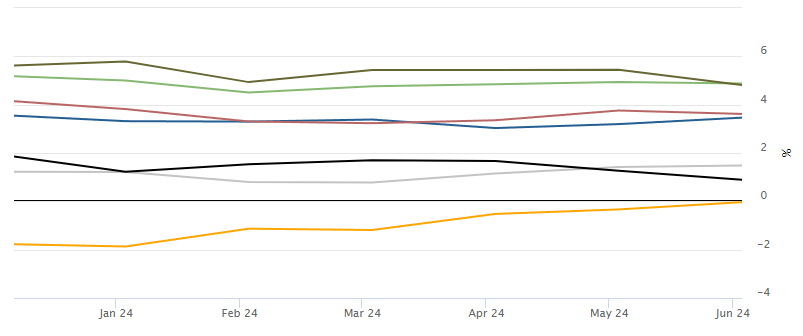
    Central America & Caribbean: inflation rate
    Percentage variation (year-on-year)

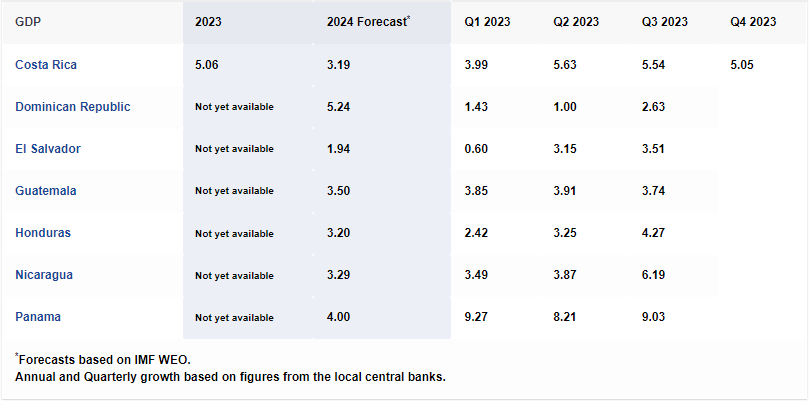
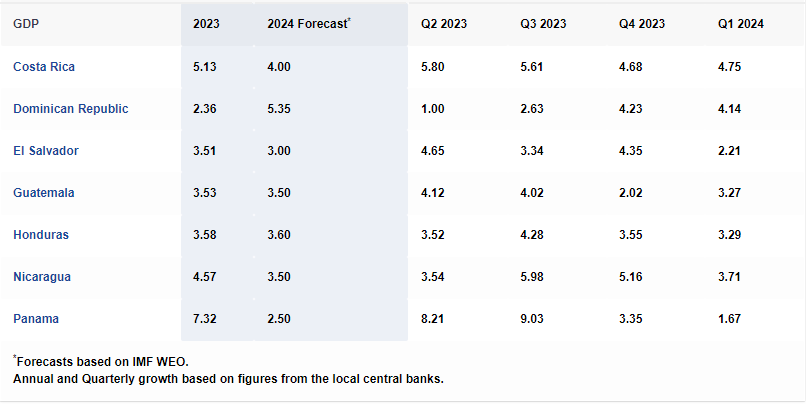
    Central America & Caribbean: GDP growth (%)
    Quarterly figures are year-on-year growth


  • TRACKING TRENDS

    LatinNews 27 August 2015 Hits: 499

    ARGENTINA | Fernández limits privatisations. On 20 August President Cristina Fernández announced new legislation that would ensure that future privatisations of state-owned utilities or energy companies will require a two-thirds congressional majority.
    In addition, Fernández wants to create a new agency to administer state holdings. If passed, it would ensure another element of her legacy is likely to bind the hands of whoever succeeds her in the presidential palace, Casa Rosada.

    ARGENTINA | Hotesur. An Argentine judge has ordered the government to provide information on the tax and legal status of Hotesur, a company owned by President Cristina Fernández and her family.
    The request is technical and relatively minor, but politically highly sensitive. At issue is whether, amid the growing intensity of the presidential election campaign, any evidence can be found supporting political opposition claims that Hotesur has been used as a vehicle for money laundering.

    BRAZIL | Back to the bad old ways? With the central bank forecasting a contraction of close to 2% of GDP this year, and many analysts now expecting 2016 to prove a year of negative growth once again, the government is resorting to increasingly drastic moves to stimulate the economy. In its latest gambit, the Caixa Econômica Federal and the Banco do Brasil have announced a total of R$14bn (US$3.84bn) in credit lines for local businesses. Many economists were critical of the move, arguing that it recalled the discredited interventionist policies of Guido Manteiga, President Dilma Rousseff’s finance minister in her first term.

    “We are at a crossroads,” Miriam Belchior, the president of the Caixa, said. “As well as the fiscal adjustment, we need to have the conditions to make it through this period. We, the banks, have been summoned.” The Caixa announced its R$5bn credit programme on 18 August; it will offer cheap credit to companies that committed to not firing their employees. A day later, the Banco do Brasil announced its R$9bn (US$2.47bn) programme; it has already determined the 354 companies that are eligible for the cash.

    For Silvio Campos Neto, an economist at Tendências Consultoria, the cheap credit is “contradictory”, given that the central bank continues to raise interest rates, which undermines consumption, while state banks pump cheap money into the economy. “The government has not been cured of its desire to stimulate the economy with a shove,” he said.
    Following the news, shares in Brazil’s major banks fell slightly. Joaquim Levy, the current finance minister, said there would be no impact on the government’s fiscal adjustment programme.

    BRAZIL | Unemployment. Arguably the biggest concern for the administration of President Dilma Rousseff is rising unemployment. On 20 August, the official statistics institute (Ibge), released its unemployment data for the month of July: at 7.5% it was up 0.6% on June, and 3.6% on July 2014. The result was much higher than the consensus expected by economists. Data from Caged, the statistics organisation linked to the labour ministry, showed that 157,905 jobs were lost in July, the worst result since 1992. With the recession set to deepen, and unemployment a lagging indicator, the scenario is expected to deteriorate further.

    • Brazil inflation slowing

    Brazil’s national statistics institute (Ibge) announced that its IPCA-15 inflation index in August was 0.43%, lower than the 0.59% posted in July. This was the first time this year that the IPCA-15 dropped below 0.50%. The 12-month accumulation of the IPCA-15 is now at 9.57%.

  • TRACKING TRENDS

    LatinNews 16 May 2019 Hits: 1639

    ECUADOR | Cacao boom on the horizon. On 8 May the head of the national department of planning and development (Senplades), Juan Carlos Proaño, presented a ‘plan to improve competition’ (PMC) for cacao and related products, such as chocolate, making improvements to production and export. Changes in the industry’s productive matrix will result in “planting 720,000 hectares of crops, selling 500,000 tonnes of product on the stock market, and the export of 20% of prepared and semi-prepared products, thus doubling exports in the next seven years,” Proaño said.

    The project has been designed with the support of the European Union (EU) in Ecuador; the ministries of agriculture and livestock, production, foreign trade, investments, and fishing; and individuals involved in cacao’s value chain. Proaño noted that it is thanks to cooperation between the private and public sectors that the PMC for cacao and its products is now in place. The vice president of the agriculture and livestock ministry, Byron Flores, highlighted Ecuador’s position at the forefront of world cacao production, saying it should be “one of the world’s greatest chocolate producers”.

    ECUADOR | Trainline bidding begins. President Lenín Moreno and his minister of transport and public works (MTOP), Aurelio Hidalgo, launched a public tender process on 10 May for the contract to build phase one of the coastal railway, a new trainline that will extend from the inland city of Daule in the province of Guayas to the coastal town of Manta, Manabí province. Plans for the railway were announced in October of last year, and the opening of the public tender to both national and international markets marks the first step towards the project’s completion, Hidalgo affirmed.

    The coastal railway will need an investment of US$370.5m during its construction and US$156.4m for operation and maintenance across a 27-year period, Hidalgo said. According to an official press release, the government will be taking offers until 16 August and will award the contract on 9 October, signing it a month later. News sources affirm that three international companies, Spain’s state-owned railway company Renfe, the Korea trade and investment promotion agency Kotra, and China Civil Engineering Construction Corporation (CCECC), have already expressed interest in the concession.

    Phase one of the project will run between Daule and Posorja, on the Guayas coast, where a deep-water port is set to open in August of this year. The train will comprise five engines and 30 flatcars measuring 400m in total and will be able to carry up to 600 tonnes in weight.

    • Coastal railway

    Ecuador’s minister of transport and public works (MTOP), Aurelio Hidalgo, predicts that transporting fuel via the new coastal railway will save US$11.4m in fuel subsidies per year and that the annual transport of goods across phase one of the project alone will reach 4m tonnes. He also estimates that 1,000 new jobs will be created during the railway’s construction, with a further 2,000 available once the line is up and running.

  • Guatemala

    LatinNews 23 July 2019 Hits: 380

    Indigenous groups in Guatemala face many of the same structural problems that affect similar groups in other Latin American nations, but their case is particularly interesting given the relative size of the indigenous population and the effects of civil war.

    Guatemala is home to one of the largest populations of indigenous people by percentage of the total of any country in the Americas, with 44% of the population fully indigenous, according to official figures. However, the country does not possess reliable data on its indigenous population, according to the IWGIA. The last census took place in 2002 and the effectiveness of the 2018 Population and Housing census is in doubt due to an ongoing political and institutional crisis. However, we do know that most indigenous people are Maya, consisting of 22 different ethnic groups including K’iche’, Q’eqchi, Kaqchikel and Mam, as well as Xinca and Garifuna groups. Plus, it’s worth noting that despite the idea of a homogenous Maya indigenous group, historical conflicts, for example between the K’iche’ and Mam, have prevented them from working together.

    The country is one of the poorest in Latin America, and indigenous groups suffer disproportionately. Almost 80% of indigenous people live in poverty, according to a March 2018 report by Inter-American Commission on Human Rights (IACHR), and the rate of extreme poverty is three-times higher in the indigenous population than in the non-indigenous population. Chronic malnutrition affects eight of every ten indigenous children, according to the UN Children’s Fund (Unicef). There has been little improvement in social, economic and political inclusion in recent years, with the IWGIA citing “rates of unequal public investment and the persistence of discrimination, exclusion and racism”.

    One explanation for this inequality is land tenure insecurity, according to a UN special envoy, who also highlighted Guatemala’s historical debt to its indigenous groups, which have suffered marginalisation and exploitation for centuries, as well as bearing the brunt of the 36-year civil war that ended in 1996. Some 250,000 civilians were killed or disappeared in the conflict, many of them indigenous, and former dictator General Efrain Rios Montt was convicted of genocide against the Maya as a result of his “scorched earth” tactics in rural areas during the war.

    Violence against indigenous groups continues to this day, whether the targets are rights defenders or politicians. For example, two indigenous politicians were murdered in the northern Petén department in the run up to the 2019 elections, and a report from NGO Frontline Defenders revealed that 26 human rights defenders (HRDs) were killed in Guatemala in 2018, the majority of whom were indigenous. This represents a 136% increase from 2017, and a particularly murderous period from 9 May-4 June 2018 saw seven HRDs killed. All seven were indigenous, and five were members of peasant farmers’ organisation Comité de Desarrollo Campesino (Codeca). According to the local human rights NGO Unidad de Protección de Defensores y Defensoras de Derechos Humanos en Guatemala (Udefegua), there is a link between President Jimmy Morales’ (2016-present) criticism of Codeca and the spate of killings of HRDs in May-June 2018. On 5 July 2019, two more Codeca members were shot dead during a peaceful protest over land rights.

    Peace accords signed in 1996 include several conditions designed to improve conditions for indigenous groups, but the Consejo Nacional para el Cumplimiento de los Acuerdos de Paz (CNAP), an organism which monitors their implementation, has found serious shortcomings. The budget for reparations has been cut back, conflicts over land ownership continue, and while Guatemala is a signatory to ILO 169, CNAP says the views of local communities have been ignored in a majority of cases.

    The UN Special Rapporteur on the rights of indigenous peoples, Victoria Tauli-Corpuz, echoed many of these concerns following a May 2018 visit to Guatemala. She pointed out the criminalisation of protest movements and racial discrimination that permeates society, as well as an upsurge in violence and forced evictions against those that defend their land. Campaigns for land rights and opposition to extractivism have provided a rallying call for indigenous organisations such as Codeca, which is known for organising protest marches and putting up roadblocks.

    Guatemala is a hotbed of mining activity, including the world’s third-largest silver mine San Rafael Escobal. Canadian mining company Tahoe Resources invested around US$500m to develop the mine but work was suspended in July 2017 after Guatemala’s top court (Corte de Constitucionalidad – CC) ruled that there had been a failure to adequately consult the local indigenous Xinca community, as required by ILO 169. Despite calls from various sectors to reopen the mine, it remains shuttered and Tahoe sold its operations to another Canadian company, Pan American Silver, in January 2019. However, not all indigenous mobilisations have been so successful. Protests against nickel mines near the town of El Estor, Izabal, have resulted in the death of a protester, forced evictions, and complaints of environmental damage. Despite widespread concerns, the mines continue to operate.

    Other examples are the demonstrations in favour of the UN-backed International Commission against Impunity in Guatemala (Cicig). On 14 January, protesters took to the streets to speak out against President Morales’ attempts to expel Cicig, with Codeca, along with indigenous organisations Comité de Unidad Campesina (CUC) and Comité Campesino del Altiplano (CCDA), organising at least 26 roadblocks. However, President Morales has successfully dismantled the Cicig and its mandate will end on 3 September.

    While indigenous social movements are highly active, and indigenous groups represent a significant part of the population, they suffer serious underrepresentation in party politics. Only 18 of 158 congresspeople were indigenous for the period 2015-2019, according to NGO the International Work Group for Indigenous Affairs (IWGIA). This is a symptom of the historic political and social marginalisation of indigenous groups, which have struggled to influence national politics. This can be explained in part by the so-called ‘discourse of concealment’ – the suppressing of certain identities that started under the rule of colonial Spain – but also by a certain scepticism on the part of indigenous communities to engage with the electoral process as a way of bringing about change.

    One example is the 1999 referendum on a proposed amendment to the constitution, which included the recognition of indigenous rights. Indigenous groups voted against the amendment, preferring to concentrate on building a grassroots movement, according to some experts. However, Rice believes the ‘no’ vote was a bad move. “For me that was a big mistake,” she said. “You need to have a constitution that has things set up in there.” The ‘no’ vote may also have been a sign of misgivings toward the existing system, according to Rice. “They don't trust the elections, they don't trust constitutional reform,” she said. “It's much more of a social movement that’s detached from the political system. Then you get the political system that you have in Guatemala, because people are not engaging with those institutions.”

    However, it appears that indigenous attitudes towards electoral politics have been changing in recent years. Nobel Prize winner Rigoberta Menchú ran in the 2011 presidential election but gained just 3.27% of the vote. The fact that her Movimiento Político Winaq party had just one seat in congress from 2015-2019 provides further evidence that indigenous involvement in democracy is still developing. That said, indigenous politics took an exciting turn in November 2018, when the electoral court registered a new party, Movimiento para la Liberación de los Pueblos (MLP), ahead of the June 2019 general election. MLP is the political arm of Codeca and campaigned on familiar themes such as corruption, land rights, and the nationalisation of the electricity sector. Presidential candidate Thelma Aldana also pushed for a plurinational constitution in Guatemala, which would represent a significant advance in recognising the rights of indigenous groups. Aldana gained just over 10% of the vote in a surprise performance, which may have been facilitated by the barring of frontrunners Zury Rios and Thelma Aldana from the election.

    “With dignity, without a single advertising spot on radio or television, independently of the results, we are making history,” tweeted the party following the results. In a report by electoral watchdog Mirador Electoral, MLP reported total spending of Q15,436 (US$2,000) to March 2019 compared with Q1.97m for the UNE party of first round winner Sandra Torres. The MLP later rejected the results of the election due to alleged voter fraud, complaining that in various parts of the country its logo did not appear on ballot sheets and citing evidence of vote-buying by various parties, but its performance marks a departure for indigenous politics in Guatemala. The party won one seat in congress, which means that it will have an opportunity to influence matters in the formal political system as well as through social movements. Aldana’s campaign also increased the visibility of the indigenous struggle and allowed her to introduce key ideas to a national audience. Although Guatemala’s political system is racked by allegations of corruption, and the country appears to have been stuck in a perpetual political crisis in recent years, recent developments are encouraging for indigenous representation. 

  • ECONOMIC HIGHLIGHTS

    LatinNews 16 October 2020 Hits: 823

    PARAGUAY | Warnings from air travel sector. On 7 October, the Junta de Representantes de Líneas Aéreas Internacionales en Paraguay (Jurcaip) – the organization that represents international airlines operating in Paraguay – issued a statement warning of the adverse effects that the continued closure of air travel will have on both the industry and the country. “Historically, Paraguay has had the lowest level of air connectivity in all of Latin America”, the Jurcaip recalls, going on to warn that “Therefore, to postpone the reopening of regular air travel services not only affects the sustainability of the entire chain of aeronautical and tourism sectors, but could also produce dire consequences which could geographically isolate [the country] even more”. Commercial flights have been suspended in Paraguay, which also closed its land borders, since the start of the coronavirus (Covid-19) pandemic in March, although a limited number of flights to Uruguay have been running since mid-September. The Paraguayan government announced that it would be reopening some other international air connections in October, although it had not given a specific date for this as of the time of the Jurcaip statement – which urged the government to do so. “The opening of the airport can no longer wait”, the statement concludes.

    URUGUAY | Falling tax take. Uruguay’s tax authority (DGI) reported on 2 October that the net tax take for the month of August was Ur$36.1bn (US$848m), a 2.6% year-on-year fall. This was the fifth consecutive month in which the DGI’s net tax take has decreased after falling 9.9% in April; 19.2% in May; 3.4% in June; and 0.3% in July. The negative trend is attributed to the fall in economic activity in the country stemming from the coronavirus (Covid-19) pandemic. According to a DGI report, there was a 33.9% annual increase in the Impuesto Específico Interno (Imesi) tax levied on goods including petrol fuel, vehicle purchases, alcoholic drinks, and tobacco. However, the increase in the Imesi could not offset the 4.1% fall in the value-added tax (VAT) take reported in August. 

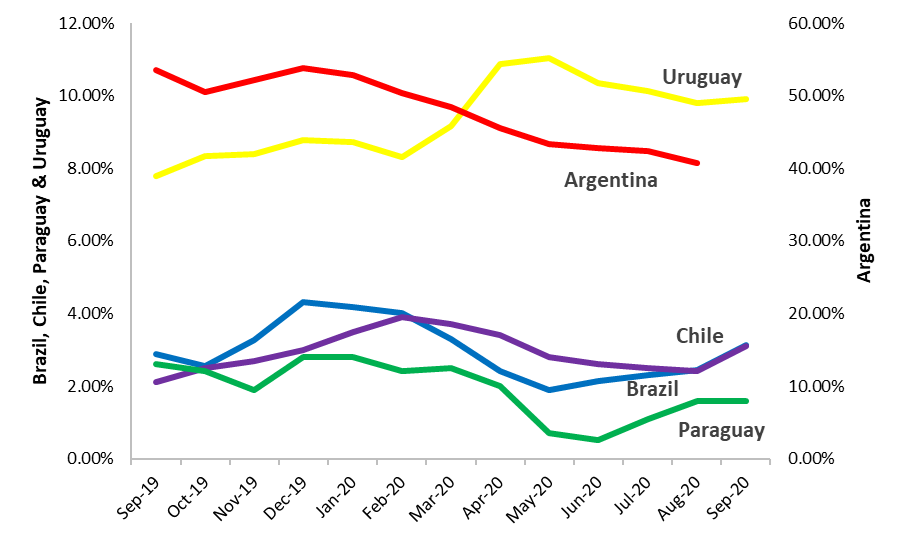
    Brazil & Southern Cone: Inflation
    Monthly year-on-year figures

    Brazil & Southern Cone: GDP growth (%)
    Quarterly figures are year-on-year growth
    Country End 2019  2020 forecast * Q3 2019 Q4 2019 Q1 2020 Q2 2020
    Argentina -2.2 -10.5 -1.7 -1.1 -5.4 -19.1
    Brazil 1.1 -9.2 1.2 1.7 0.9 -11.4
    Chile 1.1 -7.9 3.3 -2.1 0.4 -14.1
    Paraguay 0.0 -2.3 2.8 3.5 3.5 -6.5
    Uruguay 0.2 -5.0 0.9 0.2 -1.4 -10.6
    *Figures from the United Nations Economic Commission for Latin America & Caribbean Jul 2020
    End 2019 and quarterly growth based on figures from the local central banks
  • The total peace concept: how could it work?

    Patrick de Courcy 24 August 2022 Hits: 1271

    There is a widespread belief that the peace talks model created in the 2016 agreement with the Farc is insufficient to meet today’s challenges. One major deficiency concerns the time and effort required to negotiate. It took no less than four years to reach the Farc agreement, with negotiations spread out over two presidential terms. Given the number of armed groups still in existence, repeating the formula sequentially would be deeply problematic. If negotiations are approached in that way, it could take as much as eight years or even more to finalise settlements with the ELN and AGC (extending beyond Petro’s four-year term in office), and in the interim old organisations and trouble spots might re-arm and re-ignite. In many senses this would be a familiar and depressing Colombian story. Since the 1990s Colombian governments have reached separate peace deals with no less than six different armed groups. None of those deals has been able to achieve a sustainable end to armed conflict.

    Recognising this difficulty, the proposed ‘total peace’ approach has five complementary components:

    1. Farc: Rescuing and strengthening the 2016 agreement with the Farc, and in particular delivering on as-yet-unmet government commitments to land reform and substitution of illicit crops.
    2. ELN: Resuming peace talks with the ELN after a four-year hiatus. This will imply easing the Duque government’s preconditions for talks, which required the release of all hostages and demobilisation before addressing the substantive issues.
    3. Dissidents: Engaging with the guerrilla and paramilitary ‘refuseniks’ who rejected earlier agreements, refusing to lay down their arms. This group includes the Farc dissidents who rejected the 2016 accord, many of whom have continued to operate in the border area close to Venezuela. It also encompasses right-wing paramilitaries in the AGC, who rejected a 2015 government demobilisation offer. These groups would be offered collective surrender and plea-bargaining benefits.
    4. National Accord: The disparate armed groups who agree to lay down their arms will be offered full participation in the Gran Acuerdo Nacional (GAN) debate. The GAN is designed to reach fundamental cross-party points of agreement on the country’s future, to which Colombia’s traditional economic and political elites, who have shunned earlier peace attempts, will now be required to sign up.
    5. Education for Peace: To secure real change the new government says it will make major investments in ‘education for peace’ which will involve appeals for tolerance and reconciliation through initiatives to be delivered across a range of programmes and institutions.

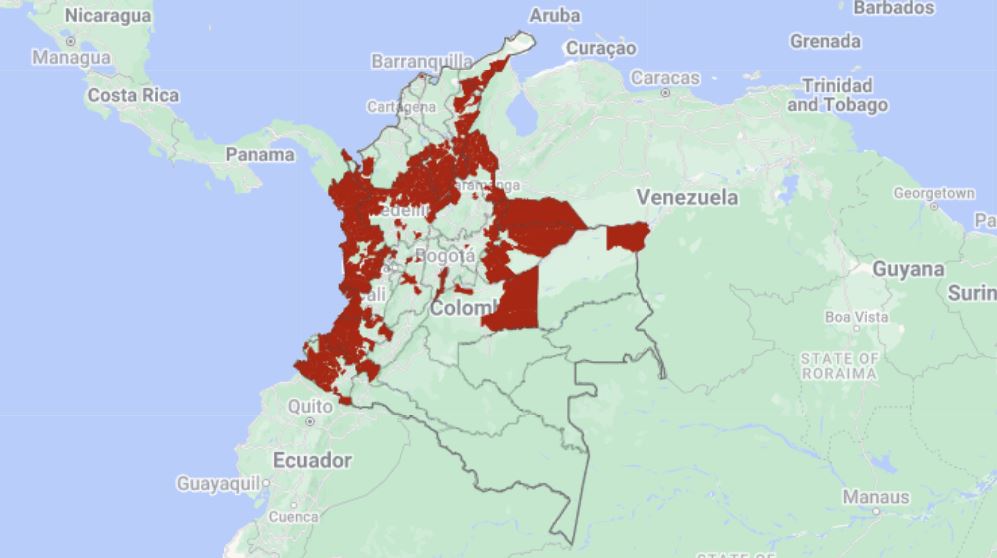
    ELN activity, 2020
    The ELN is Colombia’s major remaining Marxist guerrilla movement, with an estimated 2,000-plus armed members mainly operating in isolated rural areas. It has frequently targeted oil infrastructure.

    Source: Indepaz

    The country’s different armed groups have responded in various ways to the new government’s proposals. All rebel groups have signalled a willingness to engage, but there is also a significant degree of caution and a desire to seek maximum advantage ahead of talks.

    ELN favours resumed talks. At the beginning of July ELN leader alias ‘Antonio García’ (real name Eliécer Herlinto Chamorro) issued a press statement saying his movement was “ready to resume peace conversations with the new government, to achieve peace and social justice for all Colombians”. Previous rounds of negotiations, conducted with international observers, had commenced in 2017 in Quito and continued later in Havana, but were broken off in 2018 at the beginning of the Iván Duque presidency. García emerged as the group’s top leader after poor health led his predecessor, alias ‘Gabino’ (Nicolás Rodríguez Bautista) to step down. The ELN ‘Central Command’ (known by its Spanish acronym COCE) had also issued a statement favouring peace talks. The talks have been hosted by Cuba with the Norwegian government acting as guarantor.

    Negotiations with the ELN have traditionally been difficult because it is a highly decentralised organisation with field commanders in its different areas of operation having a large degree of autonomy. Agreements reached by COCE may not necessarily be supported by the on-the-ground commanders. The breakdown in talks in 2018 came after the Duque government demanded preconditions such as the release of all hostages held by the ELN and a cessation of military and criminal operations. Prospects for a resumption in negotiations were also dealt a major blow as of January 2019 when the ELN bombed a police training academy in Bogotá, killing 22 people and injuring 60. That attack pretty much killed off any remaining chance of negotiations during the Duque administration.

    Nevertheless, in August 2022, only days after Petro took office, a Colombian government delegation, led by Foreign Minister Leyva, High Commissioner for Peace Danilo Rueda, and Senator Iván Cepeda (a veteran of earlier peace talks) travelled to Cuba for exploratory discussions with the ELN leadership. Referring to the peace commissioner, President Petro said: “Danilo is authorised to make contacts, that is his job and function. We are going to weigh this up, there are many rumours, communiques, statements in favour of a cease-fire, but we need to confirm the position”. The governments of Chile and Spain have also offered to support negotiations and to host them should Cuba want to stop doing so.

    Paramilitaries set out their position: On 21 July the Clan del Golfo (AGC) and other right-wing paramilitary and criminal organisations signed a joint letter to then president-elect Gustavo Petro, offering a cease fire on condition that none of their members be required to serve prison sentences or be extradited to the United States. The document was signed by the AGC and some 30 other criminal groups including Los Rastrojos, Los Caparros, Los Shottas de Buenaventura, and Los Mexicanos de Quibdó. It said these groups could not be “indifferent” to “the clamour of the Colombian people and the democratically elected President” to achieve “peace with social justice” and were ready to be “an active part of this project”. The letter also said these groups were ready to disarm and apologise “at the appropriate point in time” and to seek truth and reparations, while undertaking not to repeat criminal acts.

    The AGC/Clan del Golfo activity, 2020
    The AGC Clan del Golfo is the largest criminal group with paramilitary connections in Colombia. It is estimated to have between 3,000 and 7,000 members. It includes dissident former members of Autodefensas Unidas de Colombia (AUC) which demoblised in 2003-2006.

    Source: Indepaz

    The letter made no mention of a surge in AGC attacks on the police in the last days of the Duque government, part of a paramilitary offensive known as an ‘armed strike’ and a separate so-called Plan Pistola. The origins of this wave of bombing attacks can be traced back to October last year when an army operation led to the capture of the Clan del Golfo’s top commander, alias ‘Otoniel’ (Dairo Antonio Úsuga David), who was extradited to the United States in May. At the time of the extradition the ‘armed strike’ consisted of around 300 acts of violence around the country. In all, around 30 police were reported killed as part of the Clan del Golfo offensive. Responding to the letter the incoming foreign minister, Álvaro Leyva, reiterated the new government’s position that it was prepared to talk to all armed groups, including the Clan del Golfo, who were genuinely prepared to lay down their arms. Left wing Senator Iván Cepeda condemned the attacks on the police, insisting a cease-fire was necessary to “end violence, ensure these crimes are not repeated, and achieve total peace”.  

    On inauguration day, the AGC/Clan del Golfo announced it was observing a “unilateral cease fire” relating to “offensive operation” to enable an investigation of “roads to peace”. One reason why government officials are eager to achieve an early peace deal with the paramilitary groups is that they are seen as a key component of the cycle of violence. The paramilitaries are seen as largely responsible for threats, armed attacks, and assassinations targeting demobilised former Farc members, community and indigenous leaders, and human-rights defenders. These attacks undermine the wider peace process and potentially intensify a cycle of reprisals.

  • ECONOMIC HIGHLIGHTS

    Abbi Dicker 19 July 2024 Hits: 2621

    DOMINICAN REPUBLIC | Tourism up. On 10 June the Dominican Republic’s tourism minister, David Collado, announced that the country had received 5.03m visitors in the first five months of the year, up 12% on the same period of 2023 and a 49% rise on the first five months of 2022. Collado stated that May was “an extraordinary month” with 846,735 visitors, up 12% on May 2023 and 45% on May 2019, before the coronavirus (Covid-19) pandemic disrupted international travel. Collado said the main source countries of tourists in the first five months of 2024 were the US, which accounted for 53% of tourists, followed by Canada (11%), Colombia (5%), and Argentina (4%). Collado projects the Dominican Republic will receive some 11.5m tourists this year, exceeding last year’s record.

    NICARAGUA | Foreign cooperation down. On 31 May Nicaragua’s central bank (BCN) released new figures on foreign cooperation which show that this totalled US$813.7m in 2023, down from US$967.6m in 2022. Of the total 95.2% went to the public sector and the rest to the private sector. The BCN figures show that loans accounted for 90.2% of the total, with donations making up the remainder. As regards sources, 93.4% of foreign cooperation (US$759.8m) came from multilateral funds (up 6.7% on 2022) while bilateral cooperation totalled US$53.9m, a 78.9% drop from 2022. The main sources of funds were: the Central American Development Bank (BCIE) which provided US$549.2m, the World Bank (US$47.7m), and the Inter-American Development Bank (IDB) (US$46.6m) among others. As regards sources of bilateral cooperation, the Netherlands was Nicaragua’s main partner, accounting for US$14.3m (all loans), followed by Russia which provided US$9.4m, also in loans.

    Central America & Caribbean: inflation rate
    Percentage variation (year-on-year)

    Central America & Caribbean: GDP growth (%)
    Quarterly figures are year-on-year growth

  • TRACKING TRENDS

    LatinNews 17 November 2011 Hits: 610

    VENEZUELA | Bouncing back. President Chávez, who on 13 November addressed his first major rally since being taken seriously ill in June, said the economy would grow by 4% this year, almost twice the budgeted rate of 2% for 2011. The economy grew by over 3.5% year-on-year in the third quarter, he said. While announcing that the repatriation of Venezuela’s gold reserves would begin before the end of the month, the president of the central bank, Nelson Merentes, claimed that the worst was over for the economy. The construction sector grew by 6% over this period but the all-important oil sector grew by just 0.2%.

    The state-owned cash cow Pdvsa continues to be milked, however. It issued a US$2.39bn bond this week in a private placement to the central bank to finance government investment and social plans. Pdvsa debt reached US$29.52bn in July. The government and Pdvsa have issued bonds worth US$17.5bn so far this year

  • Effects on plans to develop new industries

    Patrick de Courcy 14 January 2025 Hits: 2493

    Concerns over water are also affecting Latin America’s efforts to benefit from global trends such as the energy transition and the increasing adoption of AI.

    The region is home to significant reserves of critical minerals that will be needed to make the transition to clean energy a reality, but mining them will require huge amounts of water. For example, lithium is a key component in batteries that are used in products such as phones, laptops, and increasingly electric vehicles, which are a vital part of the energy transition.

    Some 56% of global reserves are found in South America’s Lithium Triangle, which straddles Argentina, Bolivia, and Chile, representing a potential economic bonanza for the trio. However extracting one ton of lithium requires around 500,000 gallons of water, and the reserves are found in some of the driest places on earth. Critics say that operations alter the water table, affecting traditional agricultural practices as well as impacting flamingo populations in these areas. 

    In Chile, which has been extracting lithium since 1984, growing awareness of the environmental impact of lithium extraction has led to protests that have blocked access to existing operations, which is easy to do as facilities are in isolated areas, and impacted plans to expand the industry. 

    Activists have also appealed government approvals of new projects, such as the Minera Salar Blanco in the Maricunga salt flat, around 100 miles northeast of the city of Copiapó, further slowing project development. President Gabriel Boric has attempted to find a way to encourage mining without causing widespread environmental damage, publishing a roadmap in April 2023 that includes the proposed use of more efficient technologies, but the country is at risk of losing out to competitors in the space. 

    Efforts to expand lithium mining in Argentina have also caused concerns among local communities worried about the impacts on freshwater supplies, such as depleting water sources or contaminating them with pollutants. Their arguments have also convinced judges to halt project development. In March, the supreme court of Catamarca province ordered the provincial government to suspend new mining permits in the Los Patos stream area pending an environmental impact study. 

    Although President Javier Milei is keen to attract investment in the sector, and his government signed a memorandum of understanding (MoU) with the US to promote critical minerals exploration in August, local opposition could dissuade miners due to the threat of disruption from protests.

    Various countries in the region, including Brazil, Chile, Colombia, and Uruguay, are also working on building up a green hydrogen industry, an emerging fuel that can be used to store energy from renewable sources and is therefore an enabler of the energy transition.

    In August, Brazilian President Luiz Inácio Lula da Silva promulgated a law to create a regulatory framework for the production and distribution of low-carbon hydrogen fuel in the hope of attracting investment in the sector. Under the new regulations, green hydrogen is defined as hydrogen fuel created by splitting water molecules through electrolysis using renewable energy, such as solar or wind power. The fuel can be certified as ‘green’ if the production process emits up to and including 7kg of carbon dioxide equivalent per kilogram of hydrogen produced.

    Brazil is not alone in harbouring green hydrogen ambitions: Chile published a preliminary version of its National Green Hydrogen Action Plan at the end of 2023, and Uruguay also released its Green Hydrogen Roadmap last year. 

    The country’s first green hydrogen plant is scheduled to start operations in 2026, and in February the country signed an MoU with Chilean firm HIF Global for the construction of a US$6bn green hydrogen plant in Paysandú department, which is the largest investment deal in the country’s history. The aim is to benefit from global net-zero ambitions and become a source of low-carbon fuel that can replace fossil fuels, taking advantage of plentiful renewable energy resources.

    According to the International Energy Agency (IEA), Latin America "is well placed to thrive as clean energy transitions move forward and to contribute to global energy security and climate goals," and could play “an outsize role in the new global energy economy". However producing green hydrogen involves the use of vast amounts of water, and many projects that have been announced will be located in areas that are already experiencing water stress.

    One solution is to expand the use of desalination plants, which turn sea water into fresh water, but the time it takes to build out more capacity could mean that the region misses its opportunity to benefit from the expansion of the green hydrogen industry, as other countries around the world such as Australia, China, and the US are also developing capacity.

    Local opposition to the plans, such as the formation of a new civil society organisation in the Magallanes region of southern Chile, mooted to be the centre of the country’s green hydrogen industry, could also slow development. The Citizen Panel on Hydrogen in Magallanes has accused President Boric of failing to uphold Chile’s commitments under the Escazú Agreement, a United Nations-backed environmental treaty. The allegations could complicate potential future exports as the industry will likely develop certification schemes to reassure buyers that hydrogen has been produced sustainably. Uncertified hydrogen is unlikely to be bought by buyers from markets such as the European Union, which has been working to improve supply chain sustainability in recent years.

    The region has also become increasingly popular as a home for data centres, which house the servers necessary to process, store, and communicate the massive and growing amount of data sent and received by internet users. While demand for data centre capacity has grown steadily as more of the global population has come online, the recent boom in artificial intelligence adoption has driven rapid growth in data centre construction in recent years.

    The servers that they contain have to be cooled to prevent them from overheating. Air conditioning used to be the most commonly used cooling method, but worries over the carbon emissions from the electricity that powers these systems meant that many tech firms switched to water-based cooling systems. The vast majority of these systems are fed by public utilities, meaning that they draw supplies from the same water sources as households and other industrial users. 

    With the facilities able to process data from around the world, tech firms are able to choose to operate in those locations that offer the best conditions, and governments keen to attract investment provide incentives and work hard to build out the necessary infrastructure such as data cables and mains water connections. This has led to the development of data centre clusters in areas such as Querétaro state in Mexico and the Chilean capital Santiago (see CASE STUDY), where the existence of multiple similar facilities in a small geographic area exacerbates their impact on water supplies.

    Local communities are increasingly protesting the facilities both in the street and in the courts. In Querétaro state, activists say that officials are approving more data centres despite increasing pressure on water supplies amid a drought that has impacted agricultural output and impacted the tourism sector. They allege that authorities prioritise industrial water users over households, which is a common complaint in many social conflicts linked to water.

    In some cases tech firms have responded by updating plans. In Uruguay, for example, Google said that a planned data centre in Canelones, Canelones department, would use air conditioning, rather than a water-based cooling system, following an outcry. Air conditioning brings its own issues, such as higher electricity consumption and more carbon emissions. A better solution is to use closed-loop water cooling systems, in which the same water is used repeatedly instead of being pumped out into sewers or emitted as steam. While this is technically possible, tech firms are unlikely to use such systems unless required to do so by regulators, who commonly fail to keep up with the rapid pace of developments in the sector.