All Categories

Subcategories

  • SURINAME: A key election ahead of first oil

    Patrick de Courcy 28 January 2025 Hits: 2847

    Date: 25 May 2025

    Election type: General election for 51-seat National Assembly which will elect the president.

    Main contenders: The ruling Vooruitstrevende Hervormings Partij (VHP), the Nationale Democratische Partij (NDP), the Algemene Bevrijdings- en Ontwikkelingspartij (Abop), the Nationale Partij Suriname (NPS), Pertjajah Luhur (PL), Broederschap en Eenheid in de Politiek (BEP).

    Suriname in 2025 is in much the same position as Guyana in 2020: on the verge of transforming oil wealth (first oil from the hopefully prolific Block 58 will flow in 2028). This is the election to win. The VHP, under President Chandrikapersad Santokhi, goes into the election defending 20 seats, with its coalition partners Abop, led by Vice President Ronnie Brunswijk, holding eight seats, the NPS three seats, and the PL two seats. The main opposition party is the NDP, for many years led by former dictator Desi Bouterse, who died in December 2024. The NDP won 16 seats in the 2020 election. The BEP, aligned with the opposition, has three seats.

    The government is defending a reasonable economic record, with inflation down from 52.4% in 2022 to under 20% in 2024. Growth is estimated at 3.0% for 2024, and the debt-to-GDP ratio has fallen from 146.4% in 2020 to 85.7%. With limited polling data, and a new national electoral system, it is very difficult to predict the outcome of the May poll, but with unemployment remaining stubbornly high at 10.3%, disgruntled voters may move towards the more populist centre-left NDP, with some perhaps more willing to do so now that it is no longer dominated by the highly controversial Bouterse.

  • REGION: Food security still a cause for concern

    Sarah Sheldon 24 April 2025 Hits: 1793

    In February Guyana’s President Irfaan Ali, who also coordinates Caribbean Community (Caricom) initiatives on agriculture and food security, told a meeting of regional leaders in Georgetown that despite some progress Hurricane Beryl and global supply chain disruption was continuing to disrupt efforts to improve nutrition in the Caribbean region.

    The overall campaign to improve access to food and nutrition across the Caribbean goes by the name of “25 by 2025”. It was launched in 2022 proposing to reduce the US$6bn regional food import bill by 25% by the end of this year. Reliable data on progress made so far has yet to be compiled but Ali nevertheless spoke of significant advances.

    He said that during the period running from 2022 to October/November 2024 there had been a 24% increase in regional food production. He highlighted investment in infrastructure including cold storage, farm-to-market access roads, dryer facilities, bank loan approvals and the establishment of dairy facilities. He argued that the region was on the right track to build a resilient sustainable and competitive industry that would encourage participation by young people and women.

    A United Nations Food and Agriculture Organization (FAO) report on food security in Latin America and the Caribbean, published in January, offers some context. It notes that second only to Asia, nearly three-quarters of LAC countries are exposed to extreme weather events. In 2023 41m people in LAC suffered from hunger down by 6.6% on 2022. But there were big disparities between regions. The proportion of Caribbeans suffering hunger has increased over the last two years to 17.2% of the population, while it remained stable in Mesoamerica, at a much lower 5.8%.

    Hunger and food insecurity

    According to the United Nations Food and Agriculture Organization (FAO) report on food security in Latin America and the Caribbean, published in January, overall, the number of people living with hunger and food insecurity across LAC has fallen over the last two years. The UN attributes this to economic recovery, social protection programmes, and efforts to improve food access. Extreme weather, hurricanes, and limited fiscal room for manoeuvre nevertheless make it particularly difficult for Caribbean countries to tackle malnutrition.

  • GUATEMALA: Transparency concerns surround approval of State budget

    LatinNews 07 December 2016 Hits: 722

    With just one day to go before the 30 November constitutional deadline, Guatemala’s 158-member unicameral legislature approved the 2017 State budget for Q$77.31bn (US$10.29bn), with 115 votes in favour. As in previous years, local think tanks and civil-society groups have raised transparency-related concerns.

    The 2017 budget is up from the Q$70.96bn (US$9.41bn) approved for 2016 and includes increases for key ministries such as education and health where the main teachers’ union, the Sindicato de Trabajadores de la Educación en Guatemala (Steg), and health-sector officials grouped in the Sindicato Nacional de Trabajadores de la Salud de Guatemala (SNTSG) staged unrest earlier in the year, calling for increased spending. Under the new budget, education will receive Q$13.94bn (US$1.86bn), up from Q$12.89bn (US$1.72bn) in 2016, while health has been allocated Q$6.90bn (US$918.40m), up from Q$5.53bn (US$736.06m). The interior ministry will receive Q$5.47bn (US$728.02m), up from Q$4.47bn (US$594m) while the defence budget will be Q$1.91bn (US$254.23m), down from last year’s Q$2.06bn (US$274m).

    A statement released on 30 November by local think tank Instituto Centroamericano de Estudios Fiscales (Icefi) hails the fact that 16 amendments which would have further weakened transparency were rejected. The amendments in question would have removed fiscal transparency controls and included allocations to benefit dubious NGOs as well as companies linked to national legislators. In its press release, Icefi also welcomed the approval of amendments such as the allocation of Q$300m to the national electrification institute in order to fund social tariffs and Q$20m to the labour ministry to support centres of attention for the elderly.

    However, Icefi also flags up transparency-related concerns. These include the approval of an amendment which transfers responsibility for execution of works carried out by departmental development councils (Codedes) from departmental governors to mayors. The Icefi statement notes that while Codedes have been accused of corruption and fiscal opacity, the transfer of responsibilities to mayors fails to tackle this problem as they too have faced similar complaints along with accusations of “systematic violations to the Law on Access to Public Information”. Icefi also criticises hermeticism surrounding the approval of special allocations such as Q$30m in spending for the communications, infrastructure and housing ministry (see sidebar) and the transfer of Q$11m for the institute for assistance and attention to victims of crime.

    • A dubious portfolio

    Guatemala’s communications, infrastructure & housing ministry has been the subject of long-running corruption concerns associated with the awarding of lucrative contracts. The decision to increase the allocation in the 2017 State budget from Q$3.63bn (US$482m) in 2016 to Q$4.10bn (US$544m) is likely to arouse suspicion from government critics.

  • COSTA RICA: Scrambling for alternative fiscal measures

    LatinNews 08 May 2012 Hits: 660

    Costa Rica is the only country in the region that has not implemented a fiscal reform in recent years. That was the conclusion of the 'Lente Fiscal Centroamericano' report compiled by a local think-tank, Instituto Centroamericano de Estudios Fiscales (Icefi), which analysed the Central American response to the 2008-2009 global economic crisis. Costa Rica’s fiscal deficit came in at 4.4% of GDP in 2011 and is projected to rise to 6.7% in 2012. The policy alternatives at President Laura Chinchilla’s disposal shrank dramatically in April when the constitutional (IV) chamber of the supreme court ruled that a fiscal reform proposal sent down by the executive to the national assembly (AL) was “unconstitutional”. After 18 months, the government will have to return to the drawing board; in the meantime, President Chinchilla has announced a series of piece meal measures intended to arrest the soaring deficit.

    The fiscal reform was intended to generate additional tax revenues worth 1.5% of GDP. The government will now concentrate on the passage of another four pieces of legislation, which though related to its main fiscal reform proposal, remain separate from that document. Government ministers have recognised that the original reform proposal is no longer “politically viable” in the wake of the supreme court ruling and so the government will have to resort to Plan B.

    If that wasn’t bad enough, a damaging tax evasion scandal erupted in late March that cost the two highest fiscal authorities in the country, the minister of finance and the head of the tax collection agency, their jobs in early April [RC-12-04]. So, at the very moment when time President Chinchilla needed a trusted economic policy advisor, she lost her top economic technocrat, Fernando Herrero.

    Edgar Ayales Esna was quickly appointed as Herrero’s replacement. He immediately announced new measures aimed at saving the potatoes including: the creation of electronic billing systems; the elimination of tax exemptions for luxury food products – such as premium beef and pork cuts as well as imported foodstuffs – the sale of state properties; and a new ‘spending rationalisation’ bill.

    The latter includes public pay freezes for those earning over ¢3m (US$5,820.25) a month – as well as for the highest pensions and expenses for board members in public institutions. It also includes cuts to state financing of political parties. According to the government, these measures would reduce the deficit by 0.8% of GDP. In the meantime, Ayales has tried to signal calm, saying that the country’s “fiscal situation in the short-term is bearable”, hardly a strong reassurance.

    Public transport: On 18 April the public services regulatory authority (Aresep) announced that bus fares would go up by an average 11.2% nationally as of 23 April. The increase is in response to higher fuel prices and higher salary demands by public transport sector workers.

    Electricity: The Aresep is due to decide in early May on a request filed by the Instituto Costarricense de Electricidad (ICE) in April requesting a 16.18% reduction in the electricity rates paid by the four companies that consume most electricity in the country, in exchange for a 0.76% increase in the rate paid by household consumers. According to the supporting documentation filed by the ICE, the average electricity rates for industrial users in Costa Rica are twice those of the US and 24% more expensive than in Mexico. The ICE proposes that the new rates be paid in US dollars and maintained until 2014.

    Basic interest rate: In early April, the central bank (BCCR) increased the basic interest rate (TBP) by 25 basis points, putting it at 9.5% as of 19 April, the highest level since December 2009.

    • Petrol

    The public services regulatory agency announced in early April that fuel prices would have to increase in May, in response to higher international oil prices. The litre of premium unleaded will reach its highest level ever. In March it was  already at ¢724 (US$1.44), surpassing the all-time high of ¢699 (US$1.39) recorded in 2008. In May, it will climb to ¢785 (US$1.56). Super unleaded will rise to ¢762 (US$1.51), up from ¢704 (US$1.40); with diesel at ¢652 (US$1.29), decreasing by ¢8 (US$0.01). Super unleaded is the most widely used, while diesel is the main fuel for public transport.

  • NICARAGUA: Ortega boosts budget

    LatinNews 02 December 2011 Hits: 395

    On 25 November the newly-re-elected President Daniel Ortega sent a bill to congress to increase the 2011 budget by US$130m. When the new congress convenes Ortega will have a majority.

    The 2011 money will be used mostly (US$62m) to pay down domestic debt, particular to energy companies and water and sewage companies. Some (US$25m) may also go on repairing damage caused by the heavy rains in October. The balance will go on unspecified administrative expenses including US$17m which appears to have been generated during the recent general elections won by Ortega on 6 November.

    Ortega said that the extra money is available to spend because tax revenues are ahead of budget.

    Congress had already approved a US$70m increase in the budget earlier in the year. The revised budget for 2011 now stands at US$1.51bn.  In addition the government has also received US$1.94bn in aid from Venezuela, which is not included in the budget.

    Forecasts: The central bank is forecasting GDP growth of 3.5% in 2011 and inflation of between 8.5% and 9.5%.

    • Coffee exports in the October 2011, the first month of the new coffee year were up by 3.2% on the same month of the previous year. The key months are in the first quarter, when the new crop is harvested. In October coffee exports came to US$11m. The average price was US$227 per quintal (100lbs) compared with US$178 in October 2010.
  • Venezuela: What is the big sister thinking?

    LatinNews 10 October 2018 Hits: 533

    Venezuelan President Nicolás Maduro visited China from 14-16 September, signing a series of cooperation agreements. According to the Venezuelan version, the agreements were worth billions of US dollar and showed that China, a country Maduro described as Venezuela’s ‘big sister’, remains fully committed to helping his nation in a time of need. But despite a lot of smoke and mirrors, some say Beijing is still limiting its exposure to Venezuelan risk.

    The Venezuelan account was definitely upbeat. Maduro said that as a result of the visit “there are financing commitments to increase oil production, and gold production, as well as investment in more than 500 development projects within Venezuela.” The Venezuelan information ministry said a total of 28 bilateral cooperation agreements had been signed in Beijing, including US$184m in financing for an oil joint venture and the transfer of 10% of another project to China. Maduro spoke of billions of dollars’ worth of incoming oil and gold investments, as well as an agreement to import Chinese pharmaceuticals into his country. The biggest headline-grabbing announcement was that the China Development Bank (CDB) had agreed to extend a US$5bn credit line to boost heavy oil production from three joint ventures between PDVSA of Venezuela and CNPC of China. In a subsequent good-will gesture China sent Peace Ark, a hospital ship, on a week-long visit to the port of La Guaira to offer free medical attention to the local population.

    But there is reason to believe that, not for the first time, the Venezuelans are hyping up their description of the relationship to a couple of notches higher than Chinese officials believe it is at. Maduro admitted that in the last three years there had been “difficulties” in the bilateral relationship. Notably, Chinese officials made no specific mention of the US$5bn CDB loan and adopted a friendly, but more measured tone (this suggests that the loan is not yet a done deal). It is widely estimated that over the years China extended between US$60bn and US$70bn in financial loans to Venezuela. There is little clarity over how the money was used. The Latin American country has lagged behind on repayments to China (and indeed, also remains in partial default on loans and bonds held by Western creditors). Most repayments to China are now made in kind through crude oil shipments. While no precise data has been published it is thought that Venezuela owes China at least US$20bn in overdue interest and principal. Given this state of affairs the Beijing authorities may well be hesitant to throw more good money after bad.

    The visit may nevertheless be significant as at least a partial move to rebuilding the Sino-Venezuelan relationship. Since 2014 relations between the two countries had cooled as a result of Venezuela’s failure to properly account for the loans it had been given and because of its apparent inability to stop the decline in its oil production and boost crude exports back to China. To some extent Russia’s state-owned Rosneft stepped in to fill the gap, providing US$6.5bn in oil-backed loans to PDVSA.

    China’s re-engagement with Venezuela can be at least partly explained by a tightening international oil market, which increases the attractiveness of acquiring more ‘barter oil’ from Venezuela. The emerging trade war between Beijing and Washington may also have been a factor. In addition, the Chinese seem to be taking some practical measures to protect their investments. Interestingly if the US$5bn loan to the PDVSA-CNPC joint venture goes ahead, China will deploy officials to monitor that it is spent appropriately.

  • REGION: New ferry linking El Salvador and Costa Rica enters service

    Sarah Sheldon 18 September 2023 Hits: 669

    A cargo ferry between the Puerto La Unión port in El Salvador’s La Unión department and the Puerto Caldera port in Costa Rica’s Puntarenas province made its maiden voyage on 10 August.

    The ferry, which can carry 100 trucks and 200 passengers, will make two return trips per week, providing an alternative route for cargo which previously had to pass through Honduras and Nicaragua overland. In six months, the operator, Panamanian firm Blue Wave Corporation, plans to add another trip each week, as well as offering berths to passengers, with 73 cabins and a restaurant onboard. Blue Wave Corporation is represented by local firms Transmares and Consorcio Maritimo Centroamericano (CMC) in Costa Rica and El Salvador respectively. The pair are responsible for handling customs procedures and ticket sales.

    From port to port the voyage will take around 22 hours, compared to the 96 hours it takes to make the same journey by road, which involves four border crossings in Honduras and Nicaragua. Luis Amador, Costa Rica’s minister of transport and public works, said that the ferry will cut journey times, reduce costs, and improve competitiveness for both countries.

    Industry bodies in El Salvador, such as the Corporación de Exportadores (COEXPORT) and the Asociación Salvadoreña de Industriales (ASI), encourage members to use the new ferry. COEXPORT president Silvia Cuellar told the Associated Press (AP) that the ferry reduces bureaucracy and time spent waiting to cross borders, as well as the risk of robberies, blockades, and traffic problems.

    However, Raúl Alfaro, president of the Salvadorean association of international freight carriers (ASTIC), questioned how much time the ferry would save given the fact that trucks have to arrive at port the day before each sailing. In a blog posted on 31 July by the Central America Group (CAG), a conglomerate of firms with operations located throughout the region, Alfaro also raised the possibility of delays in disembarking at Puerto Caldera, which is already saturated, and estimated that the journey from San Salvador, El Salvador, to San José, Costa Rica, would take three days via ferry, compared to four by road.

    The CAG blog also cites Alfaro as questioning whether there would be any financial benefit to the ferry. Shippers sending products from capital to capital will still have to pay US$800 for the drive from San Salvador to La Unión and Puerto Caldera to San José. This means that the journey would cost US$2,160 with the ferry ticket (maritime plus land), compared to US$1,400-US$1,500 currently, he said.

    For Ricardo Castaneda, economist at the Guatemala-based think tank Instituto Centroamericano de Estudios Fiscales (Icefi), the Salvadorean and Costa Rican governments may have different expectations for the ferry. Salvadorean officials are “much more motivated” by these kinds of projects, Castaneda told the BBC in an article published on 10 August, whereas even just a few months ago their Costa Rican counterparts were sceptical that there would be any benefits to the ferry as Puerto Caldera is already working at capacity. Castaneda also said that “the impact it will have on trade will not be significant”.

    However, Salvadorean officials may be hoping to use the ferry to drive investment and activity at La Unión. The port, located 210km east of San Salvador, was renovated by former president Tony Saca (2004-2009), but it has not attracted as much investment as hoped since then.

    If the ferry can attract enough customers to maintain services during the first few months of operations, then it will be well placed to benefit if there are problems crossing Nicaragua or Honduras by road in future. In the meantime, many shippers are likely to see how the service performs under real-world conditions, including any delays in unloading at Puerto Caldera, before committing to changing their routes.

    Bypassing Nicaragua?

    Beyond reducing costs and journey times, others say that another benefit of the ferry is to avoid passing through Nicaragua. President Daniel Ortega has closed the borders on multiple occasions in recent years, in response to the coronavirus (Covid-19) pandemic as well as civil unrest, incurring huge costs for business. Nicaraguan economist Enrique Sáenz was cited by local news outlet 100% Noticias as saying that he believes that the ferry will help to stop Ortega from “blackmailing” other Central American nations with the threat of border closures. However, as Salvadorean presidential adviser Cristian Flores points out in an AP article, the ferry will only be able to handle 3%-5% of total freight traffic, meaning that the vast majority will still have to travel by road through Nicaragua.

  • ECONOMIC HIGHLIGHTS

    Abbi Dicker 21 May 2026 Hits: 2107

    PANAMA | Banana sector recovery. On 5 May Panama’s trade and industry minister, Julio Moltó, hailed the “significant recovery” of the banana sector in the banana-producing province Bocas del Toro following a major strike by banana workers which began in April 2025 amid more general protests over new reforms to the social security system, among other things. On 5 May Moltó reported that 5,065 formal jobs in the banana sector had been recovered since the resumption of production in December 2025-January 2026 and approximately 5,000 hectares of farmland reactivated. The banana workers’ strike, which lasted until 11 June, when a deal was reached between the various sides, completely paralysed productive activity in Bocas del Toro, and led Chiquita Panamá, the local subsidiary of multinational banana company Chiquita Brands International, to halt operations and lay off workers. Moltó highlighted the impact on the country’s crucial banana sector – hitherto its leading export – noting bananas accounted for just 7.5% of Panama’s exports in December last year, down from 12% in May and 17.5% in March.

    DOMINICAN REPUBLIC | Trade talks begin with Ecuador. On 6 May the Dominican Republic’s President Luis Abinader hosted his Ecuadorean counterpart, Daniel Noboa, in the Dominican Republic where the two held a meeting to “strengthen a joint cooperation agenda…focused on investment and economic development” for both countries, according to a social media post by the Dominican presidency. The two sides also agreed to begin talks regarding the signing of a partial trade agreement to boost trade and investment, and to work together in areas such as free zones, tourism, health, migration, human mobility, and energy and mining, mainly with regard to natural gas.

    Central America & Caribbean: inflation rate
    Percentage variation (year-on-year)

    Central America & Caribbean: GDP growth (%)
    Quarterly figures are year-on-year growth

  • PARAGUAY: Cartes to enjoy a boom year – but will it last?

    LatinNews 09 May 2013 Hits: 3016

    A president-elect with a clear majority is about to take office in the fastest-growing economy in the Americas. Is it too good to be true?

    Paraguay’s economy will be super-charged this year. Just nine days before the traditional Partido Colorado’s candidate Horacio Cartes won a convincing victory in the presidential elections on 21 April, the central bank increased its forecast for real annual GDP growth in 2013 to a spectacular 13%, up from 10.5% previously.

    The bank is not alone in its optimism: both the World Bank and the Economic Commission for Latin America and the Caribbean (ECLAC) agree that Paraguay will be the fastest growing country in the region in 2013. The World Bank predicts annual GDP growth of 11%, while ECLAC puts it at 10%. All three institutions and many private sector analysts explain the growth surge in terms of strong base effects — the economy slumped by 1.2% last year because of an agricultural drought, the after-effects of a foot-and-mouth outbreak in 2011 and the political crisis triggered by the impeachment of president Fernando Lugo (2008-2012) — coupled with this year’s expected surge in soya and beef exports; along with hydroelectric power, these are the country’s top foreign currency earners.

    Paraguay-boosters can, at first sight at least, make a persuasive case for seeing 2013 as the take-off point for strong and sustainable growth. They can point to the president -elect’s clear majority in the lower house and some encouraging economic fundamentals including low inflation and unemployment (2% and 6% respectively), together with low foreign debt levels. Cartes, a businessman-turned-politician, wants to kick-start growth and has promised to implement land reform, to attract up to US$2.7bn in private capital to modernise the country’s airports and highways, and to reform state companies and the central government bureaucracy. He is also keen to end Paraguay’s political isolation and negotiate its return to regional political and economic associations, most particularly the Southern Cone Market  (Mercosur, the customs union comprising Argentina, Brazil, Paraguay, Uruguay and Venezuela ), from which Paraguay was suspended in the wake of the Lugo impeachment.

    Things may not turn out so well. There are significant downside risks. The president-elect is one of the country’s wealthiest businessmen and has not been free from controversy, with some of his companies accused of involvement in drug running and cigarette smuggling. These accusations could prove to be a diplomatic liability, obstructing attempts to end Paraguay’s relative isolation.

    Politically inexperienced, he could face resistance from within his own Colorado party, which in the past has been prone to epic factional struggles.

    Perhaps more fundamentally, though, Paraguay remains an agricultural economy with a low tax base, deep structural imbalances, and a very unequal distribution of income. Something like 77% of arable land is controlled by 1% of the landowners, and rhetoric aside, critics do not believe the Colorado party will allow serious land reform. The low unemployment figures are misleading given massive underemployment. At least a third of the population lives in poverty. Analysts point to the fact that growth is led by mechanised agriculture, which provides few jobs: they say that structurally Paraguay is more like a low income African country. In this view, growth spurts are led by the farming and weather cycle, and are not take-off points for sustainable expansion.

  • Economy: Changing direction on soft drinks tax?

    LatinNews 29 October 2015 Hits: 3

    Tacked on unobtrusively to a miscellaneous finance bill approved on 19 October by a 423-33 vote in the federal chamber of deputies was a significant reduction in the tax on high-sugar soft drinks. The tax, set at one peso (US$0.06) per litre, was first introduced at the beginning of 2014, and at the time was hailed as a precedent-setting innovation by a wide range of food and health campaigners, both in Mexico and abroad.

    Mexico has one of the highest obesity and diabetes rates in the world, so reducing the amount of sugar consumed by the population is seen as desirable. But now legislators from the ruling Partido Revolucionario Institucional (PRI) and one of the opposition parties, the Partido Acción Nacional (PAN) are seeking to reduce the tax. Some have interpreted the change as a U-turn by the government and a victory for the soft-drinks lobby: others point out the legislative battle is still far from over.

    The proposed change is that the tax should be reduced by half - from 10% to 5% - on soft drinks containing less than 5 grammes of added sugar per 100 millilitres. Because the change was part of a wide-ranging miscellaneous finance bill, it appears to have been approved without its proponents spelling out why it was necessary in the first place, or what it sought to achieve. It was only when a coalition of food and health lobbies, the Alianza por la Salud Alimentaria (ASA), denounced the change as “regressive” from a public health point of view that those who voted for it began to explain their position.

    Marko Cortés, coordinator of the PAN bench in the lower chamber, said the reduction in the soft drinks tax, – formally the Impuesto Especial sobre Producción y Servicios (IEPES) was designed to apply only to lower calorie drinks: “what we are trying to achieve is a shift in the range of drinks produced by the bottling companies, so they concentrate more on low-energy drinks”, Cortés said.

    But campaigners see things differently. The lower-calorie drinks are frequently marketed to children, and the fear is that the tax reduction could end up boosting consumption in that specific market sector. “The deputies have allied with the soft drinks industry to lower the tax, threatening especially the health of the children of Mexico, a country whose children suffer one of the highest rates of obesity in the world” said Alejandro Calvillo, of lobby group El Poder del Consumidor. Calvillo added that the bottling companies in any case might not pass on the tax reduction in lower prices to consumers. “It’s still not clear”, he said, adding, “but what’s sure is that it will help with their advertising and promotion.”

    The proposed change comes at a time when the debate over soft drinks and public health continues to rage. Mexicans are estimated to have one of the world’s highest soft drinks consumption rates, at 163 litres per capita per annum. Bottling companies such as Mexico-based Coca-Cola Femsa – the largest soft-drinks producer in Latin America – along with Nestle, Danone and Pepsico, are politically influential.

    A study by Mexico’s National Institute of Public Health (INSP) suggests that soft drinks consumption rose by a massive 60% over the eight years to 2014, but fell by 6% soon after the new tax was introduced (as of 1 January 2014). Separate research by the University of North Carolina suggests that consumption went on to fall by a steeper 12% by the end of 2014.

    Campaigners, encouraged by signs that the tax was having an effect, argued that the next step would be to increase it further, perhaps to 20% or 30%. A report by the Centro de Estudios de las Finanzas Públicas – a unit attached to the lower house of congress – said that taxing soft drinks was the correct approach, but that more public policies were needed to combat obesity and diabetes. Against this, one of the country’s main business lobbies, the Confederación de Cámaras Industrialises (Concamin), in August called on the government not to raise the IEPES rate on soft drinks, saying that there was “no scientific evidence” linking higher taxes with lower obesity and diabetes.

    The story is not yet over. The finance bill now moves to the senate, where the voting may be different. PAN Senator Héctor Larios Córdova has already indicated that he will break ranks with his lower house colleagues and call for the soft drinks tax to be held at its existing level. Another PAN senator, Jorge Luis Lavalle Maury, has added that it would be better to leave the tax untouched and put more resources into raising public awareness and campaigning against obesity, hypertension and diabetes.

  • TRACKING TRENDS

    LatinNews 16 June 2016 Hits: 1914

    ARGENTINA | Grain exports. On 12 June Argentina’s agriculture ministry announced that the volume of the country’s wheat exports reached 5.6m tonnes (t) in the first half of 2016, 115% more than the same period in 2015. According to the press release, wheat exports reached a total of only 4.2m t in the whole of 2015, with 2.6m t exported in the first six months of the year. The agriculture ministry also highlighted the expansion of wheat planting during the current growing season by 1m hectares (ha). This means that for the 2016-2017 harvest cycle, the government expects the planted area to increase by another 1m ha to reach a total of 5.3m ha thanks to the investment of Ar$5bn (US$362m) in the wheat industry.

    In the statement, the agriculture ministry cited the government’s removal of wheat export duties and restrictions imposed by the previous administration led by former president Cristina Fernández (2007-2015). The lifting of the restrictions allowed Argentine wheat exporters to resume sales to international markets such as Brazil, Egypt, and south-east Asia. The recovery of these international markets and the large export volumes is good news for the government led by President Mauricio Macri, as it will translate into increased tax revenues that it can use to shore up its finances and provide it with more resources to plough back into the domestic economy to stimulate growth. On 9 June Interior Minister Rogelio Frigerio pointedly announced that the government is planning to invest 6% of GDP per year in infrastructure in the next four years to help boost the domestic economy. According to Frigerio this will be achieved with the participation of the private sector, adding that the investment will provide a “growth with the creation of genuine and quality jobs”.

    Since coming to power last year, the Macri administration has promised more transparency in public works to reduce corruption and has presented a number of investment projects. These include a US$15bn project to improve access to drinking water and sanitation, a US$9bn project for adaptation to climate change, a US$1.6bn project aimed at flood prevention, and a US$1.2bn irrigation development project. According to the government, these initiatives are expected to create 200,000 new jobs. The government has also planned the building of 200,000 new homes through the investment of US$7bn between 2016 and 2019 and the construction of 2,800km of new roads, which will require an investment of Ar$200bn (US$14.5bn) and will generate 35,000 new jobs.

  • PUERTO RICO: Fears Overdone

    LatinNews 04 November 2013 Hits: 536

    In late October 2013, the government of Puerto Rico mounted a major PR campaign to reassure investors in its General Obligation (GO) bonds, and other securities issued by the government and its agencies, that they will be paid. In the first nine-and-a-half months of this year, the GOs had fallen in price by around one-fifth, and had grossly underperformed other securities in the US US$3.7trn municipal bond market. Although Standard & Poor's Ratings Services (S&P) confirmed the rating of the GOs at BBB-, the lowest investment grade, they have been trading at yields normally associated with high yield bonds. In part because of the City of Detroit's filing for Chapter 9 bankruptcy in mid-July 2013, there has been very widespread media comment on the considerable problems, both structural and financial, of Puerto Rico.

    On 15 October 2013, the government of the Commonwealth of Puerto Rico (as this unincorporated territory of the US is known formally) published a very comprehensive 'Update on Fiscal and Economic Progress.' The Update highlighted how the government has already made progress in reducing the deficit of its General Fund - from US$2.375bn in the June 2012 fiscal year to US$1.29bn (or US$923m less than envisaged in January 2013). The government is looking to achieve a deficit of US$820m in the current, June 2014, fiscal year: it looks to balance the budget by no later than the June 2016 fiscal year. Preliminary revenues for the September 2013 quarter are US$11m ahead of budget.

    The government has also undertaken comprehensive reform of the Employee Retirement System. Thanks mainly to natural attrition; the government's payroll has fallen by around 5,200 people in the first eight months of this year. Further, steps have been taken to turn public corporations such as the Puerto Rico Aqueduct and Sewer Authority (PRASA), the Highways and Transportation Authority (HTA), the Ports Authority and the Puerto Rico Electric Power Authority (PREPA) into entities that are financially self-sufficient.

    The Update also emphasises that the government is taking the long-term view, and that it understands that it needs to do more than to balance the budget. It also needs to boost real growth in an economy that has long been stagnant. Indeed, the announcement by the Government Development Bank (GDB) that its Economic Activity Index in August this year was 5.4% lower than it had been in the same month of 2013 was a key factor underlying concerns that the government's financial problems have increased dramatically in the recent past. The government has identified five priority sectors of the economy that it plans to promote: life sciences, knowledge services, tourism, small and medium-sized enterprises (SMEs) and agriculture. In all of these sectors, Puerto Rico already has clear strengths.

    In recent months, seven major life sciences and knowledge services companies - Johnson & Johnson, Bristol Myers Squibb, CooperVision, Covidien, Saint Jude Medical, IBM/True North and AON Hewitt - have all announced investments that have created nearly 2,000 new jobs in aggregate. The government hopes that by 2018 its efforts will create over 130,000 new jobs and boost GDP by US$10bn-US$12bn.

    Importantly, the Update highlights that the government's current financial position is strong. As chart 1 shows, total outstanding public debt (of the government and various agencies) amounted to just over US$70bn as of end-June 2013.

    Although the total debt level is substantial in relation to the population (3.67m) and GDP (US$101bn), it is still manageable in relation to the overall budgets of the government and the agencies, of around US$29bn annually.  Public corporations and agencies account for US$25.6bn of the total debt. The debt is secured against the revenues of the organisations.

    As noted above, the government has improved the organisations' financial positions by allowing them to lift rates and charges, and by other measures. Bonds issued by COFINA, the affiliate of the GDB through which some of the Sales and Use Tax (SUT) revenues are channelled, account for another US$15.2bn. S&P cut its rating on COFINA at the end of September this year: at AA-, and A+, its securities are still significantly more highly rated than the GOs, which account for US$10.6bn of the outstanding debt.  The government's full faith and credit covers the GOs and US$5.6bn in other Commonwealth Guaranteed Debt, but not the three smallest categories of debt, which amount to about US$13.0bn.

    Most crucially, however, the government does not have to access capital markets for the remainder of the June 2014 fiscal year. Only US$786m in GOs are maturing during this period: the government expects to handle these through re-financings, or repayments in full. The government has already covered its cash flow needs for the fiscal year through the issuance of US$1.2bn in Tax and Revenue Anticipation Notes.

    As a result of bond issues that they have already undertaken, and/or other measures, HTA, PREPA and PRASA do not have to issue securities. The GDB is contemplating bond issues of between US$500m and US$1.2bn through COFINA, but does not have to undertake these. This is at a time that Act 116 of 2013 is increasing the percentage of SUT that is allocated to COFINA from 2.75% to 3.50%.

    In the event of unanticipated revenue shortfalls, or blow-outs in costs, the government could borrow from the GDB. The GDB's assets include around US$2.8bn in liquid and very high quality securities (US Treasury bonds, Agencies and Mortgage Backed Securities). The GDB's balance sheet could also be boosted 'within a short timeframe' by the transfer of most of the US$2.8bn in unrestricted government deposits that are currently held with private sector financial institutions. The GDB could enter into secured or unsecured credit lines with private financial institutions. It could also boost its balance sheet through medium- or long- term private placements with institutional investors.

    The bottom line is that investors' fears appear to have been overdone. The government is at an early stage of wholesale financial and structural reform program. Thanks to its access to the financially strong GDB, the government and its agencies have access to the cash that they need for at least the next nine months.

  • BARBADOS: A tough position, but not an impossible one

    LatinNews 25 February 2014 Hits: 1152

    The International Monetary Fund (IMF)’s latest Article IV Consultation with the government of Barbados has highlighted the challenges that the island government faces. After years of economic stagnation and soaring public debt, the Bridgetown government needs to promote growth and put its finances on a stable footing, within the constraints of a fixed exchange rate regime. Fortunately, Barbados’ reasonably competitive US$4.0bn economy is one in which relatively few new investments could have a positive impact – especially as the UK and US economies are recovering.

    Data published on 12 February by the IMF do not show Barbados in a good light. Thanks mainly to the weakness of the economies of its main trading partners (the UK, the US and other Caribbean countries); the local economy has stagnated for the last five years. Low inflation in the past two years has gone hand-in-hand with a contraction in bank lending to the private sector, with both financial institutions and their customers remaining cautious. The government’s fiscal deficit has been rising, and stood at a little over 7% of GDP in 2013. Since 2010, the ratio of outstanding government debt to GDP has risen from about 70% to over 90%: the figures are even more alarming if one includes government debt held in the investment portfolio of the National Insurance Scheme (NIS – the island’s social security system). The current account deficit has been running at around 10% of GDP – although inwards Foreign Direct Investment (FDI) has been sufficient to cover this. International reserves have been falling, in part because the central bank has been monetising some of the government’s spending, and now cover about three months of imports. The major ratings agencies downgraded the Barbados government to below investment grade in 2012 (see table 1).

    Table 1: Barbados: Selected Economic Indicators
    Fiscal year to 31 March 2011 2012 2013 2014 2015
    Annual Change %
    Real GDP 0.2 0.8 0.0 -1.7 -1.2
    CPI Inflation (Ave.) 5.8 9.4 4.5 2.3 2.0
    Exports (Goods & Services) 7.9 6.7 -6.6 -3.1 2.5
    Imports (Goods & Services) 9.5 2.6 -7.8 -0.8 -4.0
    Broad money 3.9 -2.9 6.3 1.2 1.7
    Private sector credit 1.5 2.7 10.5 -2.5 -2.8
    Percentage of GDP %
    Central government revenues etc 25.8 29.4 27.6 23.9 24.9
    Central government spending 34.6 33.9 35.6 33.5 29.5
    Interest on debt 5.7 6.1 6.6 7.3 7.5
    Balance -8.8 -4.4 -8.0 9.6 -4.9
    Gross government debt [1] 70.3 78.0 85.8 92.0 94.7
    Gross government debt [2] 96.7 106.1 118.2 126.4 129.8
    Current Account -5.8 -11.4 -10.1 -11.4 -7.8
    Overall External Balance -0.6 -0.1 0.3 -3.9 -1.3
    Memo: L/T Private Flows 4.9
    7.7 1.8 8.0
    US$mn
    Net International Reserves 718 712 729 563 509
    Nominal GDP 4,434 4,369 4,225 4,284 4,316
    [1] Excludes bonds held by National Insurance Scheme (NIS)
    [2] Includes bonds held by NIS
    Source: IMF, Press Release 14/51, 12 February 2014.

    As the IMF highlighted, the government has not been sitting by idly. In the second half of 2013, the government announced a 13% reduction in the number of civil servants, “further downsizing by attrition, wage cuts for elected and appointed officials, and a two year nominal wage freeze”. The IMF thinks that these measures could reduce the fiscal deficit to 4.9% of GDP. This should enable the debt-to-GDP ratio to stabilise from 2015/2016 and to decline slowly thereafter. For its part, the IMF believes that the government can also take steps to boost revenues, “by broadening the tax base, reducing tax exemptions and improving tax and customs administration”. The IMF also sees potential for improvement in the performance and oversight of the main public enterprises (PEs), many of which have not reported on their results to the finance ministry for several years.

    All parties are committed to maintenance of the currency peg, which fixes the Barbados dollar to the US dollar at a rate of 2:1. One implication of this is that the IMF has argued that the central bank should stop financing the government and allow interest rates to rise in order “to reflect a credible risk premium”. In essence, maintenance of the peg should be, and be seen to be, the paramount aim of monetary policy conducted by an independent institution. The other implication is that Barbados’ economy could adjust to the current imbalances through falls in prices and wages – an internal devaluation. In the early 1990s, the government undertook a fiscal adjustment equivalent to 7% of GDP in one year, along with real wage cuts and other adjustments over a period of years. This had the desired effect – and the government sustained primary surpluses of 2%-4% of GDP for about a decade. However, the IMF notes that this approach would be much riskier now, given that growth is slower and the mountain of public debt much larger.

    In its Article IV consultation, the IMF identified a number of risks that “would aggravate vulnerabilities and could trigger a disorderly adjustment process.” These risks include delays to implementation of the government’s proposed fiscal adjustments. However, most of the risks emanate from outside Barbados. Volatility in global financial markets could hamper the government’s access to funds. The maturity profile of the government’s outstanding debt means that its total financing requirement is expected to rise from 39% of GDP in 2013/14 to 50% of GDP in 2018/19. Tourism receipts are vulnerable to future weakness in key markets. A fiscal shock in the US or a shock in the UK or Trinidad & Tobago – the country’s three biggest trade partners – would also hurt.

    However, we would highlight a number of positives. Although Barbados has been losing market share to other tourist destinations, its upmarket ‘brand’ is reasonably well established. According to the World Economic Forum’s latest (2013-2014) Global Competitiveness Report, Barbados is the 47th most competitive economy of the 148 surveyed, and compares favourably with similar economies except in terms of its macroeconomic environment and the absolute size of the market. Although the country’s international business/ offshore finance sector is smaller than others in the region (e.g. Bermuda and the Cayman Islands) it is substantial: the IMF notes that, in 2012, there were 4,000 licenced entities, including 45 offshore banks. The six domestic banks are well capitalised and are owned by foreign institutions. Subsidiaries of Canadian banks account for about three-quarters of total assets of the banking system.

    Most importantly, an economy that is only about US$4bn in size, but in which per capita incomes are a little over US$16,000, is one in which positive changes are relatively easy to engineer. In its analysis, the IMF identified 11 large capital investment projects that will be underway in 2014/15 and which have a combined face value that exceeds 10% of GDP (see table 2). The announcement over the next year or so of additional investment projects – probably related to tourism or offshore business, the two sectors in which Barbados clearly has a competitive advantage –would have a positive impact, both on the economy and on perceptions.

    Table 2: Investment Projects 2014-15
    Tourism Green Energy
    Sandals Resort Sustainable Energy Investment Program
    Cruise Ship Pier and Ancillary Facilities Public Sector Smart Energy Program
    Pierhead Marina Development Solar Electricity Roof Project
    Others Waste to Energy Facility
    Bushy Park Agriculture
    Low Housing Project Sugar Cane Restructuring Project
    Road Rehabilitation Project
    Source: IMF Country Report 1452, February 2012, p8.

    In short, we believe that the position of the government of Barbados is tough, but not impossible. Over the next six months or so, we believe there are three factors to monitor that will provide clues as to whether the position is improving. One is the health of the US and UK economies, the island’s key trading partners. The second is the extent to which the Bridgetown government is actually implementing measures to cut expenses and/or to boost revenue. The third is the extent to which the central bank is ceasing to act as short-term financier of the government. Progress in any of these three areas would be good news.

    • “The IMF identified a number of risks that “would aggravate vulnerabilities and could trigger a disorderly adjustment process.” These risks include delays to implementation of the government’s proposed fiscal adjustments. However, most of the risks emanate from outside Barbados. Volatility in global financial markets could hamper the government’s access to funds. The maturity profile of the government’s outstanding debt means that its total financing requirement is expected to rise from 39% of GDP in 2013/14 to 50% of GDP in 2018/19.”
    • “Most importantly, an economy that is only about US$4bn in size, but in which per capita incomes are a little over US$16,000, is one in which positive changes are relatively easy to engineer.”

  • CARIBBEAN POINTERS

    LatinNews 17 January 2017 Hits: 786

    *** BUNTING PULLS OUT OF JAMAICA’S PNP LEADERSHIP RACE. The decision by former Jamaican prime minister Portia Simpson Miller (2006-2007; 2012-2016) to step down later this year from the leadership of the People’s National Party (PNP) has given the party a headache. As political commentator Martin Henry put it in comments to the Jamaica Observer: “She’s far and away one of the most popular politicians that Jamaica has ever produced, in the same sort of league as Michael Manley. She has tremendous grass roots support among PNP supporters.”

    Portia Simpson’s enduring popularity was reflected in the many angry denunciations of potential leadership candidates. Now former National Security Minister Peter Bunting (2012-2016) has withdrawn his candidacy, but on the grounds that there appears to be overwhelming support for Dr Peter Phillips to succeed Simpson Miller. Phillips came second in the 2006 leadership contest to succeed PJ Patterson, in whose government he had served as Minister of National Security. He later served in the Portia Simpson administration as Minister of Finance and Planning.

    Announcing his decision not to stand, Bunting said: “Since the last NEC [national executive council] meeting where the Most Hon Portia Simpson Miller signalled her intention to retire as Party Leader, I have thrown my hat in the ring as an aspirant to succeed her. I did this with the conviction that it was time for the next generation of leadership to refresh the image of the Party and help to attract a broader base of support, particularly among younger voters...In the ensuing period, I have held a series of consultations with the Parliamentary and local government leadership, and have concluded that a large majority feels that ‘it is Comrade Peter Phillips’ turn’...Therefore, I will not be going forward in this contest.

    Although neither youthful nor charismatic, the 67-year-old Dr Phillips won considerable respect for his handling of the Jamaican economy under the watchful eye of the International Monetary Fund (IMF). And a recent online poll for the Jamaica Observer confirmed that Phillips is favoured not just by the party but by the public as well – although not by any overwhelming margin. The poll gave 31.01% support to Phillips, 28.87% to Lisa Hanna, (MP for Saint Ann South East) and 28.73% to Bunting.

    *** NEW ANTI-CRIME MEASURES FOR JAMAICA. On 3 January, Jamaica’s National Security Minister Robert Montague announced a series of new security measures for 2017. Amongst other things, Montague announced the imminent arrival of two naval ships from the Netherlands for the Jamaica Coast Guard and a new surveillance plane to “provide additional protection and security to Jamaica’s borders to prevent the trafficking of illegal guns and ammunition”. The Jamaica Constabulary Force (JCF) is also to receive 200 additional vehicles. In relation to the new Firearm Act, Montague said: “The Firearm Act is special to me. The message must be clearly sent that when you take up a gun, you are going to spend a long time behind bars.”

    *** IMF REVIEW OF GRENADA. In December, the IMF completed a review of Grenada’s performance under a programme supported by a three-year Extended Credit Facility (ECF) approved in June 2014. The IMF reported that the government had met all performance criteria for end-June 2016 and “most structural benchmarks” for the Fifth Review. In particular, it noted that Grenada’s debt-to-GDP ratio has declined to 84.3% at end-June from 107% in 2013. It added that “the prospects for debt sustainability and durable growth are improving”. GDP growth for 2016 and 2017 is projected to be about 3.0%, “reflecting strong construction activity and steady external demand for Grenada’s tourism services”.

  • Venezuela: Bills on steroids

    LatinNews 07 July 2017 Hits: 568

    President Nicolás Maduro announced a 50% increase in the minimum wage as of 1 July, the third to date this year. Maduro has now increased Venezuela’s minimum salary (and associated benefits including food stamps and pension payments) by 140% in total since February. Yet, opposition economists point out that the daily minimum wage is barely enough buy a packet of biscuits, while an average hamburger would eat up six days’ of the basic wage.

    Officially, the monthly minimum wage rose to BOL97,532 on 1 July. At the widely used (albeit illegal) black-market exchange rate, that is US$12.50 a month. US media outlets lost no time in pointing out that this was the same as the hourly minimum wage in Seattle, Oregon.

    Including food stamps, the total minimum wage increased to BOL250,53 on 1 July; or roughly US$32/month at the black-market rate. However, in dollar terms, the latest pay award is down 17% in dollar terms since the last increase –just eight weeks prior on 1 May (Labour Day) – at which point the total package was worth the equivalent of US$46.7. That discrepancy alone is a telling sign of the price and monetary distortions in Venezuela’s domestic economy.

    While dollar shortages have obliged a massive reduction in imports of essential goods (including food and medicine), much of the monetary distortion in the country is being fuelled by the government’s incessant money printing to fund its (previously expansive) public expenditure commitments, which has led to soaring money supply and runaway inflation. On latest central bank (BCV) data, the annual growth in the broadest measure of Venezuela’s money supply was running at about 300%, up from 160% in January.

    Broad money supply, April 2013-June 2017

    Money supply

    Source: BCV

    While the BCV no longer publishes inflation data, the opposition-controlled national assembly this year has begun releasing its own inflation estimates, calculated by the respected economist José Guerra, head of the assembly’s finance commission, and using similar methodology to that of the BCV. On this measure, Guerra reported month-on-month inflation of 16.2% in March, 16.5% in April and 18.3% in March, to give year-to-date (ytd) accumulated inflation of 127.8%. With money supply rising, inflation can be expected to be higher again in June. In response to the latest minimum wage increase, Guerra said that it would only bring about more inflation, on the basis that it would be financed by money printing. “The lesson not learned in Venezuela”, he tweeted. Guerra now suggests year-end inflation of between 700% and 800%. By any measure, that is hyperinflation.

    María Carolina Uzcátegui, president of the national council for commerce and services (Consecomercio), publically stated in early July that Venezuela “is now a hyperinflationary economy”. But it was the US professor Steve Hanke, director of the Troubled Currencies Project at the Cato Institute, who first called out signs of hyperinflation in Venezuela back in November 2016. He continues to argue for a currency board as an effective ‘shock’ potential solution, even as he admits that this, almost certainly, would be anathema to the left-wing Maduro government. And indeed, currency boards have a bad reputation in the region, with Argentina cited as the prime example against.

    In surreal territory

    The parallel exchange rate was trading at BOL7,679/US$ on 5 July, according to the US-run website DolarToday.com, which claims to base the rate on trade levels at the Venezuela/Colombia border. The black-market rate may look surreal, but it reflects the recent maxi-devaluation in the official secondary FX rate, the Dicom (used for private sector non-essential imports). The Maduro government dismisses DolarToday.com as a US-backed conspiracy, and has sought to prosecute the site, to date unsuccessfully.

    Goldman Sachs quickly cashes in Venezuelan bonds

    A Wall Street Journal (WSJ) report in late June suggested that the US investment bank Goldman Sachs had begun selling – at a small profit – some of the US$2.8bn in Venezuelan bonds it had purchased in May.

    News of the May acquisition by Goldman Sachs Asset Management (GASM) was something of a PR disaster for the firm, with the Venezuelan Harvard professor, Ricardo Hausmann, dubbing the instruments, originally issued by the state oil company Pdvsa, “hunger bonds”; while angry expat Venezuelans protested outside Goldman Sachs’ HQ in New York wearing unflattering masks. No stranger to controversy, Goldman Sachs shrugged off the purchase as a routine financial transaction. By way of added explanation, financial analysts pointed to the desperate search of global capital for yield in the context of subdued global interest rates.

    The WSJ now has reported that the bank recently has sold some US$300m-worth of the bonds to a small group of hedge funds, via a boutique brokerage identified as Liquidity Finance; reporting that “four or five hedge funds in London and New York” bought the Pdvsa 2022 instruments for about 32.5 cents on the dollar, slightly more than the 31 cents GASM paid for the bonds in May; continuing evidence (as if any were needed) of the insatiable investor appetite for return, regardless of its provenance.

  • The EU and supply-chain deforestation

    Patrick de Courcy 05 June 2024 Hits: 1291

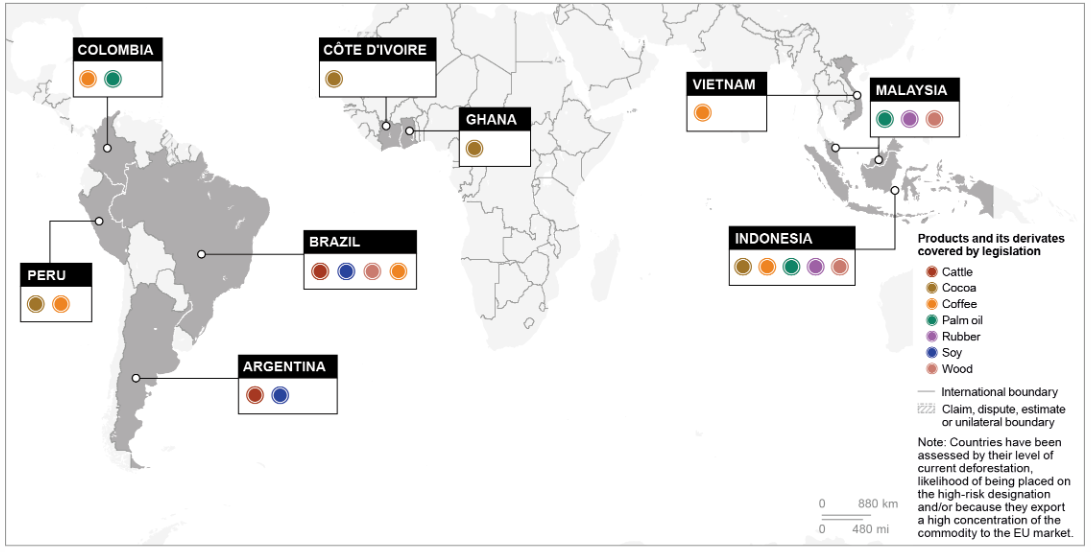
    In mid 2023 the EU approved a Deforestation Regulation, known as EUDR. It applies to imports of seven main commodities: cattle, cocoa, coffee, palm-oil, rubber, soya, and wood, as well as other related products that have been made or fed with such commodities (likely including beef, charcoal, chocolate, leather, and printed paper products). These commodities will not be authorised for import or sale into the EU unless they meet three criteria: they must be deforestation-free; produced in accordance with the relevant legislation of the country of origin; and covered by a due diligence statement to that effect.

    “Deforestation-free” is defined as applying to products that avoid the conversion of forest to agricultural use, and for products using wood, those that avoid the structural degradation of mature natural forests to “other woodland types”. This latter definition is important since it means that wood products could still be banned if the forested area is expanding but is doing so at the expense of older trees, due to increased planting of “other woodland types”. The EUDR definition of the “relevant legislation” is also very wide in scope, creating a potential for confusion and overlapping obligations. Companies must make due-diligence declarations that go beyond deforestation to include compliance with land use, labour, and human rights laws, and those covering indigenous community rights.

    The requirement for EUDR due diligence will depend on the risk profile of the country of origin. Countries are grouped into three tiers: low, standard, and high-risk. Low risk countries get relatively light due diligence; for high-risk countries, companies must provide satellite images and geo-location coordinates. Risk profiles must be drafted 18 months after the EUDR came into force (in other words, by the end of this year, 2024). Due diligence is likely to be extensive. The EU requires very detailed information such as exact time and location of production; a risk assessment covering the presence and protection of indigenous communities; supply chain complexity and “any information that would point to a risk that the relevant products are non-compliant.”

    Suppliers in producing countries must provide certificates of traceability and other documents. Various governments in exporting countries (including Colombia, Indonesia, and Malaysia) say they are concerned that the extra costs could penalise their medium and small-sized exporters, and that the EUDR may violate the non-discriminatory principles of the World Trade Organisation (WTO).

    The legislation envisages significant sanctions for non-compliance. Penalties include fines of up to 4% of the annual turnover of the importing company. Goods may also be confiscated, and the offending companies may be prevented from taking part in EU public sector procurement tenders for a 12-month period. Large companies must be compliant as of 30 December 2024, while for small and medium enterprises (SMEs) the deadline date is 30 June 2025.

    Selected countries impacted by EU anti-deforestation regulation

    Source: S&P Global Market Intelligence

    An initial assessment is that EUDR will have its greatest impact on the palm-oil producing countries (such as Indonesia and Malaysia), on agro-business exporters (Argentina and Brazil), and on cocoa exporters (such as Côte d’Ivoire and Ghana). Some analysts believe the EU has not left enough time or engaged in sufficient prior consultation for producing countries to become rapidly compliant with its requirements. For that reason, there is a possibility that, at least as a short-term measure, exports may be diverted to less demanding markets. Indonesia is considering increasing palm oil sales to Africa, while Brazil may increase soya sales to China.

    It appears that less than half of EU importing companies affected by EUDR are ready to deal with the new supply chain reporting system. According to ratings agency S&P, 34.2% of the largest companies in its S&P Europe 350 index have set targets to reduce, offset, or end deforestation in their supply chains. A share of 35.1% of companies related to food products have also done so, as have 33.3% of those related to paper and forest-related products.

    Companies have expressed concern over the additional costs involved. According to the European Commission (EC) the extra costs of supply-chain tracking systems could fall between US$170m and US$2.5bn a year. This, it says, would be “absorbed by a reduction of profit by operators along the value chain and/or eventually [be] passed through to the final consumer”.

    For Brazil in particular, EUDR presents some significant challenges. While stressing the need to fight climate change, protect the environment, and reach an ambitious zero-deforestation-by-2030 target, President Luiz Inácio Lula da Silva still faces strong domestic resistance from the conservative farming lobby and a need for a costly upgrade of monitoring and enforcement technology across the Amazon and other biomes.

    The underlying problem of deforestation is persistent. Although the pace of deforestation has slowed in the Amazon, it has accelerated in the neighbouring Cerrado biome, a key agriculture and livestock producing region. According to environmental activists Brazil’s top three meatpacking companies – JBS, Marfrig, and Minerva – are continuing to use products associated with deforestation in their supply chains. This is done by ignoring the requirement to submit legal land clearance permits (known as an Autorização de Desmate). Global Witness, one of the lobby groups, says one in three cows from the Cerrado came from farms with illegally deforested land.

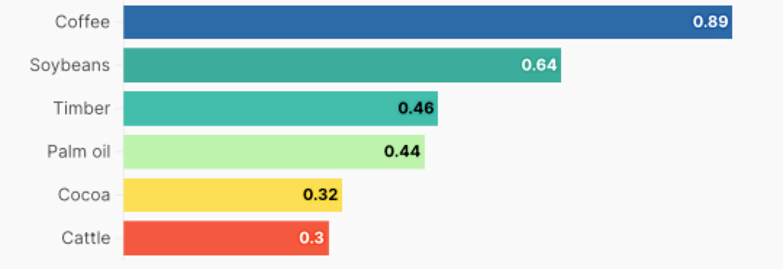
    According to a study by the Rio de Janeiro International Institute for Sustainability (IIS) based on available monitoring and procedures, Brazilian coffee exports are likely to be those at least risk of being declared non-compliant under EUDR. However, beef exports get the lowest “compliance probability index” and, if they fail to improve supply chain traceability, could end up with reduced access to EU markets. Susan Oliveira of IIS comments that “although well-intentioned, zero deforestation regulations act as non-tariff trade measures, hindering the access of Brazilian agricultural products. Despite requiring European operators to undergo due diligence processes, the burden of providing deforestation-free production falls on all links in the value chain.”

    EUDR compliance probability index

    Source: Instituto Internacional para Sustentabilidade (IIS)

    Brazil will likely be classified as a high-risk jurisdiction for EUDR purposes, meaning it will face greater costs. Brazil is the leading member of the Mercosur trade bloc (alongside Argentina, Paraguay, and Uruguay). A long-negotiated EU-Mercosur free trade agreement (FTA) remains deadlocked. Politically Lula objects that both the FTA and the EUDR should be partnerships of equals rather arrangements where one party imposes penalties on the other.

  • LatinNews Contact: Update Communication Preferences

    LatinNews 21 May 2018 Hits: 101

    Thank you for taking the time to update your contact preferences.

    Changes to data protection regulations mean that you need to tell us that you are happy to continue receiving our communications.

    The General Data Protection Regulation (GDPR) will come into effect on 25 May 2018, and will bring with it changes to the way in which personal data is processed and used. As a result, we need you to confirm that you want to continue receiving communications from us and opt-in.

    From time to time, we would like to send you communications to help you keep up-to-date on news about our latest publications, complimentary content, information on relevant services, and special offers which could benefit you. We may contact you via email, post or phone. We will never share your data with a third party.

    To continue receiving communications from us, all you need to do is confirm your email address, opt-in to the different types of communication by ticking the boxes, and click the Confirm Contact Preferences button.

    Please confirm your email address:
     
    We would like to contact you from time to time so that we may send you complimentary content, and keep you updated with news about our services. To opt-in to this communication, please tick the LatinNews Updates box.
    LatinNews Updates:
     
    Occasionally we work with partners who provide content and provide services that complement our own. To opt-in to this communication, please tick the Trusted Partners' Updates box.
    Trusted Partners' Updates:


  • NICARAGUA: OAS report fails to assuage concerns

    LatinNews 15 February 2017 Hits: 1070

    Last month, the Organization of American States (OAS) and the Frente Sandinista de Liberación Nacional (FSLN) government led by President Daniel Ortega presented a joint document – the fruit of a three-month period of talks between both sides and meetings with groups representing various sectors. The report was part of the “mechanism of conversation and exchange” agreed in October 2016 by both sides as part of efforts to assuage democracy-related concerns ahead of the November 2016 general elections which produced a sweeping victory for Ortega albeit in a highly questioned electoral process [RC-16-11]. The report has, however, been slammed by the opposition and civil society groups. These complain that it effectively grants a ‘clean slate’ to the FSLN government – which controls all the country’s institutions – and which has recently faced other democracy-related criticism from the international community.

    Inked on 20 January by Foreign Minister Denis Moncada and OAS Secretary General Luis Almagro, the report calls for the two sides to sign a Memorandum of Understanding (MoU) on 28 February that “would include technical aspects” aimed at reinforcing the country’s democratic institutions. The report also establishes that the OAS will observe the next municipal elections, scheduled for November of this year. (President Ortega’s refusal to allow any credible international observers to oversee the last election was a major concern for both the political opposition as well as members of the international community such as the US government).

    The OAS-government report was criticised by a range of sectors. Mauro Ampié, the executive director of the local human rights NGO, Centro Nicaragüense de Derechos Humanos (Cenidh), complained that the result of the dialogue “did not respond to the immediate necessities of the Nicaraguan people”. His remarks were echoed by Fabio Gadea, the 2011 presidential candidate for the opposition Partido Liberal Independiente (PLI) who went on to accuse Almagro of being “too frightened” to acknowledge that the country’s “institutionality” had been “lost”. Previously the main opposition, the PLI had suffered as a result of a highly controversial decision by the electoral authorities (CSE) last year, stripping 28 national deputies (including 12 alternates) of their posts [RC-16-08]. One of the PLI legislators affected by the CSE’s ruling, Carlos Langrand, told leading national daily La Prensa that the OAS-government report served as “a clean slate”, for the Ortega government, with regard to the alleged fraud committed in the last election. He added that it would “leave intact and unpunished Ortega’s abuse and violation of the Nicaraguan democratic institutions”.

    Other democracy-related criticism

    In recent weeks, the Ortega government has attracted criticism from institutions like US-based NGO Freedom House and international NGO, Transparency International (TI). In a report released on 17 January, Freedom House noted that, along with Venezuela, Nicaragua is one of the “few countries in the Americas on an extended downward trajectory” with the “regime of President Daniel Ortega” having “brought Nicaragua to its lowest point in more than 20 years”. The Freedom House report warns that “having stacked the judiciary in his favor and whittled away the independent media, Ortega was able to nearly eliminate the opposition in presidential and legislative elections”.

    Meanwhile the annual TI Corruption Perceptions Index (CPI), released on 25 January, showed Nicaragua with the third worst ranking in the Americas, (145 of 176 countries) and scoring 26 out of 100 (where 0 is highly corrupt and 100, very clean). This is above only Haiti (159; 20) and Venezuela (166; 17) in the region. Nicaragua’s score also marks an ongoing decline – having registered 27 in 2015; 28 in 2014 and 2013 and 29 in 2012.

    • Political rights and civil liberties

    In the latest Freedom House report, Nicaragua’s political rights rating declined from 4 to 5, while its civil liberties rating declined from 3 to 4 (where 1=Most Free, 7=Least Free). Along with Venezuela, Nicaragua also featured as one of the countries to register one of the largest ten-year declines in political rights and civil liberties, with a -17 decline in aggregate score.

  • VENEZUELA: Opposition sees narrow route back into contention

    Patrick de Courcy 29 January 2024 Hits: 2590

    Date: Second half of 2024.

    Type: Presidential elections.

    Main contenders: President Nicolás Maduro is expected to stand for the ruling Partido Socialista Unido de Venezuela (PSUV). María Corina Machado is the chosen candidate for the opposition coalition Plataforma Unitaria Democrática (PUD) but is currently appealing a ban on her candidacy.

    This presidential election is on course to be the first since 2013 which will not be boycotted by Venezuela’s main opposition parties, which are now grouped under the PUD banner. But the PUD’s decision to participate appears to be based less on a genuine conviction that President Nicolás Maduro can be toppled at the ballot box, than on the evident failure of previous boycotts in the 2018 presidential election and the 2020 legislative election. Those boycotts, which came in response to the disqualification of leading opposition candidates, failed to dislodge Maduro despite sparking mass protests and prompting the introduction of a punishing US-led sanctions regime.

    A major loosening of US sanctions in October 2023, including on Venezuela’s all-important oil sector, has given the opposition some cause for hope. The détente came with some democratic strings attached; crucially, President Joe Biden’s administration demanded that disqualifications be lifted on all opposition candidates so that they can participate in an election which Maduro has said will be monitored by international observers, including a delegation from the European Union. If the bans on leading opposition candidates are lifted, then there is a chance that Venezuela could see a genuine electoral contest – although Maduro’s tight control over the country’s electoral institutions and media means that the playing field will be far from level.

    María Corina Machado

    The real test of Maduro’s claim to be participating in a fair election will be whether the Venezuelan authorities allow the PUD’s chosen candidate, María Corina Machado, to participate. Machado was disqualified by the comptroller general’s office in June 2023 as she surged ahead in polling for the PUD’s primary election. The timing and nature of Machado’s disqualification (an expired 12-month ban imposed in 2015, relating to alleged irregularities in her declaration of assets, was extended to 15 years just as she stormed to a wide lead in the polls) sparked accusations that the Maduro administration was running scared of Machado.

    The effort to keep Machado off the ballot only boosted her popularity; she refused to drop out of the PUD primary and scored a runaway victory with over 92% of the vote. Eight days later, the supreme court “suspended” the primary results, but not before Machado had emerged as the overwhelming favourite to take on Maduro. The government was left juggling its competing priorities of preventing her from participating in an election which she would be likely to win, whilst adhering closely enough to the democratic principles demanded by the US to avoid a snapback of sanctions.

    For now, the authorities are kicking any decision on Machado’s candidacy down the road. Just before a US deadline for the ban to be lifted, the supreme court announced on 30 November that it would consider appeals from disqualified opposition candidates. As of mid-January, no verdict has yet been reached on the appeals lodged by Machado or any other opposition candidates. But given the supreme court’s long-running subservience to the government, there is little expectation of a shock ruling in favour of Machado.

    A failure to allow her to compete would throw the opposition into disarray. There is no obvious choice to replace her, given that the two other best-polling candidates ahead of the PUD primary, Henrique Capriles Radonski and Freddy Superlano, have also been disqualified and both dropped out in the run-up to the primary vote. The PUD ticket could potentially pass to the candidate who came second in the primary, Carlos Prosperi. But Prosperi enjoys nothing like the popular support of Machado; he took just 4% of the vote, compared with Machado’s 92%. A lack of enthusiasm for Prosperi would be likely to drive up voter abstention and could see the PUD collapse into infighting – both of which would play to Maduro’s advantage.

    Early start to a deeply uncertain campaign

    In spite of the massive uncertainties surrounding her candidacy, Machado got her campaign off to an early start on 17 January even though there is still a lack of clarity over when the election will be held. The government has so far only indicated that it will take place “in the second half of 2024”. Machado’s campaign chief, Henry Alviárez, said that as the government had started its election campaign, “so we’ll start ours; in an organised, civic way…we’re going to unleash our force”. He added that Machado’s campaign would not be cowed by “repression” or “persecution”.

    Maduro has not formally announced the start of his own campaign. But the ruling PSUV rarely lets up on the electoral rhetoric. In a boosterish state-of-the-nation address on 15 January, Maduro announced a 43% pay rise for public sector workers in an effort to quell mounting protests over wages which have been hugely eroded by high inflation (the annual inflation rate was running at nearly 190% in December, according to the central bank, which nonetheless noted that this was the lowest figure recorded since 2015). Maduro ignored the opposition’s demands that he use the speech to announce a date for the election, but two days later he said that the PSUV was on course for a “great victory” that will “set us on the road to the 2030 election and beyond”. He added that elections will be held this year “with or without sanctions”.

    Machado’s privatisation plans

    Machado has argued that mass privatisations, including of the state oil company Pdvsa, will go a long way towards lifting Venezuela out of the economic mire. Her commitment to privatisation is so great that she has previously been described in the local media as the “Venezuelan Margaret Thatcher”. This desire to crack open Venezuela’s statist economy may in part be explained by her family background; she was born the heiress to Venezuela’s second-largest steel company, Sivensa, which was partially nationalised under Maduro’s predecessor, Hugo Chávez (1999-2013).

    Improving economic outlook

    Venezuela’s economy, whilst still hugely troubled, is showing signs of bouncing back from rock bottom. A gradual improvement had been seen since around 2021 and looks likely to accelerate in 2024 as long as the lifting of US sanctions is maintained. In his 15 January state-of-the-nation address, Maduro said that GDP growth surpassed 5% in 2023, adding that his government expects 8% GDP growth in 2024. He also celebrated his government’s success at reducing inflation, which stood at ‘just’ 189.8% in 2023 – no longer the highest in the region having been narrowly topped by Argentina.

    Maduro whips up Essequibo tensions in search of nationalist vote

    The looming election offers the most plausible explanation for Maduro’s otherwise bizarrely timed decision to ratchet up tensions with neighbouring Guyana. After weeks of increasingly warlike rhetoric, the government held a referendum on 3 December asking voters whether they supported the annexation of the disputed Essequibo region, which has been claimed by Venezuela for over a century but which lies within Guyana’s internationally recognised borders. Venezuelan interest in “reclaiming” the Essequibo has intensified since massive offshore oilfields were discovered there in 2015.

    Maduro’s provocative actions after the referendum questions were approved by voters, including creating a new regional military force dedicated to the Essequibo and ordering the state oil company Pdvsa to prepare to begin drilling in the territory, provoked a furious backlash from Guyana, the wider region, and the US. Given the major strides made by the Maduro administration regarding the lifting of US sanctions, it was a strange time to be raising tensions.

    The most likely explanation for this is Maduro’s desire to drive up voter turnout to give at least the appearance of a competitive election. Seeking greater support from nationalist voters offers one way of achieving this, as well as providing plenty of opportunities for Maduro to engage in flag-waving patriotic displays. Venezuela’s claim to the Essequibo is also one of its only points of agreement between the government and opposition, which was put in an awkward position by the referendum. Unwilling to condemn the vote for fear of being viewed as unpatriotic, but also hesitant to accept Maduro’s offer to join the referendum campaign in order not to offend its international allies, the PUD instead opted to sit on the sidelines.

  • Region: Export recovery brings opportunities and challenges

    LatinNews 07 December 2017 Hits: 352

    At last, Latin American and the Caribbean (LAC) exports are growing again. In a new report[1] the Economic Commission for Latin America and the Caribbean (ECLAC) says that exports are set to grow by around 10% in 2017, after four years of negative performance in 2012-2016. ECLAC highlights three main points, however. It says that the recovery remains uncertain still. It notes the LAC region is lagging in the development of trade in modern services, and finally it stresses that the region needs to do more to diversify and increase-value added in the agricultural sector.

    The export recovery in Latin American and the Caribbean is a fact. In the first half of 2017, the region’s exports of merchandise goods rose by 12.1% year on year (after a contraction of 9% in the first half of 2016). Services exports grew by 8.9% (compared to a 0.4% fall in the comparable year-earlier period). Overall, exports are expected to grow by10% in 2017, thanks to a 6.5% rise in export prices and a rise of 3.5% in volumes shipped.

    Imports also rose in the first half, indicative of recovering demand within the region. Goods imports were up by 7.4%, with imports of services up by 2.8%.

    The export recovery has been particularly marked in the mining and oil sectors. Mining growth is being driven by increased shipments to China and the rest of Asia, which is strongly linked to higher metal and mineral prices.

    Meanwhile, exports to the US – and within the LAC region itself – have been growing at roughly historical averages in 2017, with exports to the European Union (EU) the least dynamic. Within LAC, the greatest increase in exports this year is accruing to Central America (+15.8%) and the Caribbean (+12.5%). In Mexico, exports will gain 8.7%, led by volume. South America will experience export growth of 8.2%, based on higher prices, ECLAC estimates.

    But the Commission also makes it clear that there are questions about the sustainability of this recovery. It notes, for example, that the medium-term outlook for the world economy remains uncertain, and that there are challenges posed to traditional trade by the digital revolution, and by “the emergence of populist political movements in some developed countries”.

    Globally, investment has still not recovered to pre-2008/2009 levels, before the global financial crisis. Productivity growth remains low, and nominal wages are stagnant. In this context, there is much to be said for boosting intra-regional trade within LAC, which tends to favour a model based on product diversification and the inclusion of greater value-added items such as manufactures. The LAC is also the natural market for the internationalisation of home-grown small and medium-sized enterprises (SMEs).

    Yet, despite the growth of free trade agreements with third countries and trade blocs beyond the region, Latin America remains quite protectionist internally. The ECLAC report notes that some severe non-tariff barriers remain in place within the region, including quotas, non-automatic import licences, informal barriers and anti-dumping duties. Taken together, these barriers equate to an overall import tariff of 23.5%. Slow-moving customs processes, ECLAC calculates, are the equivalent of an additional 20% ad valorem tariff.

    Therefore, the report says, there is “an urgent need for deeper integration, especially with the recent shift in the United States’ trade policy and the uncertainty surrounding the renegotiation of the North American Free Trade Agreement (NAFTA).”

    Latin America and the Caribbean (selected subregions and countries): projected year-on-year variation in trade in goods, by price and volume, 2017
    (Percentages)

    Variaition in trade goods

    Source: Economic Commission for Latin America and the Caribbean (ECLAC), on the basis of official information from central banks, customs offices and national statistics institutes.

    Services Exports

    There is a particularly interesting chapter in the report on trade in services. ECLAC now breaks this down into two categories – traditional services (including travel, transport and others) and what it terms ‘modern services’. Modern services comprise telecoms, IT services, financial services, insurance and pensions, royalties, and other business services. As the process of technological change ripples through the world economy, growth in modern services has become more dynamic. For example, in 2005-2016 global growth in merchandise exports averaged 3.9% per annum. Growth in traditional services was stronger, at 4.5%, but growth in modern services was strongest of all at 6.7%. The LAC region has not yet really grasped this opportunity. In 2016, its share of global merchandise exports was just under 6%; its share of global traditional services exports was a lower 4.4%, and its share of global modern services exports was the lowest, at just 1.8%.

    Within LAC, South America is the largest exporter of services, accounting for three quarters of the total in 2016. Central America and the Caribbean contribute about one-fifth of total service exports, with a particularly strong presence in travel and tourism, transport and telecoms.

    Only two countries in the region – Costa Rica and Panama – have a trade surplus in modern services. This is because Costa Rica specialises heavily in the export of computer and other business services that have an intensive need for skilled labour and foreign direct investment (FDI). Panama in turn has specialised in the provision of financial services. At the other end of the spectrum, Bolivia runs a large deficit in services (both traditional and modern) equivalent to almost 5% of its GDP. Chile and Brazil have smaller services deficits (mainly concentrated in modern services), while Argentina’s services deficit owes mainly to modern services.

    ECLAC points out that the indirect trade in services – because services may be ‘embedded’ as intermediate inputs in the export of physical goods – is also important. In fact, using new data from the World Trade Organisation (WTO) and the Organisation for Economic Cooperation and Development (OECD), it says that indirectly exported services are on average similar in value to those directly exported. By countries, indirect services exports represent between 65% of direct exports, as in the case of Chile, and 160%, as in the case of Mexico. Chile’s low proportion of embedded service exports reflects the weight of its commodity exports, which have a relatively low services component. By contrast, Mexico’s exports of manufactures have a high service content.

    Brazil and Costa Rica were the countries with the largest share of domestically -supplied intermediate services in the value of their manufacturing exports in 2011. While this may be desirable in terms of maximising value added and economic diversification within a given country, it can also have a downside.

    ECLAC comments that “the high domestic services content in Brazil contributes little to the international competitiveness of its manufacturing sector, as it mostly reflects the high prices of key services such as finance, logistics, and telecoms.”

    The UN Commission concludes that to compete in modern services, countries in the region will need to develop public-private strategies to support and develop the sector. It highlights Colombia’s ten-year Productive Transformation Programme (launched in 2009), which set targets for software and IT exports, business process outsourcing (BPO) and knowledge process outsourcing (KPO).

    Finally, the report dedicates a chapter to one of LAC’s traditional exporting strengths – the agricultural sector. It notes that despite global price fluctuations, agricultural exports have tended to be more resilient and less volatile than total exports. In 2012-2016, the value of the region’s total exports slumped by 21%, but the value of its agricultural exports slipped by only 1%.

    LAC has an agricultural trade surplus with all its partners. But although the region remains a significant global supplier of a range of agricultural products, most of them are still primary commodities, with a low presence of agro-industrial products. This concentration of exports in a few raw commodities is particularly evident in exports to Asia. Yet by contrast, intra-regional trade in agricultural products is much more diversified. ECLAC recommends that the region should follow a policy of “de-commoditising” its agricultural exports, increasing their diversification and raising value-added by processing and expanding the agro-industrial sector.

    The China connection: An ECLAC delegation visited China in November to further cooperation, and to present some of the more-regionally relevant findings of its 2017 LAC trade report.

    Officials noted that regional exports to China will show the highest growth rate in 2017, at 23%, surpassing the growth of exports to the rest of Asia, Europe and the US, or within the region itself. Mario Cimoli, an ECLAC official, noted that “relations between Latin America and the Caribbean and China must be understood in a new global context. The region and China have to have a joint response to confront the macroeconomic, technological, and geopolitical uncertainties”. This, he suggested, could be done through strengthening multilateralism and the mutual recognition of diverse development goals.

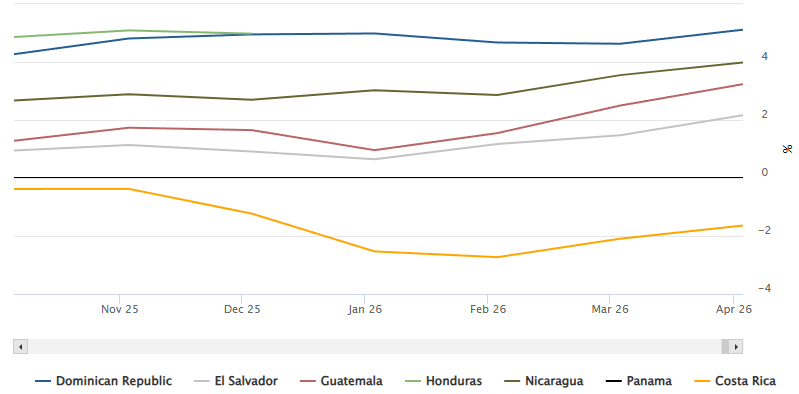
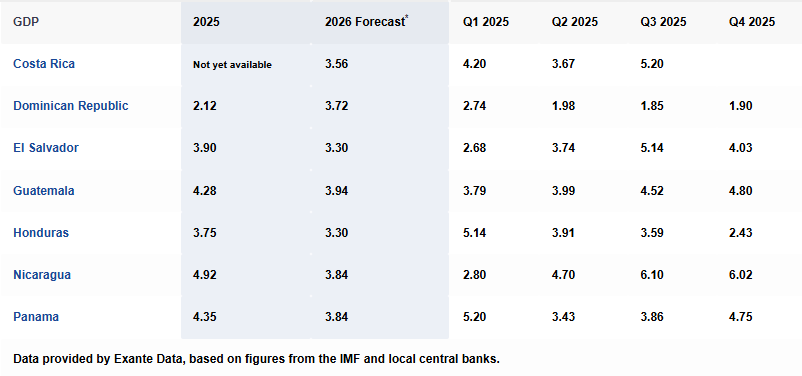
    [1] International Trade Outlook for Latin America and the Caribbean – Recovery in an uncertain context. ECLAC, November 2016, http://repositorio.cepal.org/handle/11362/42316