All Categories

Subcategories

  • Honduras: No longer the regional pariah

    LatinNews 23 February 2016 Hits: 2182

    Honduras continues to consolidate an economic recovery and is slowly shedding its reputation as the most violent country in the region.

    Like its Central American neighbours, Honduras is one of the beneficiaries of the global oil price rout, as a fuel importer, and is also enjoying the ‘pull effect’ of a stronger US economy and a stronger US dollar, which means a recovery in demand for its exports, and a more competitive rate for its goods on international markets. Remittances from Hondurans living in the US (worth about 20% of GDP) have also risen for similar reasons. On the downside, a stronger dollar makes non-oil imports more expensive, albeit the drop in fuel prices and low food prices appear to have mitigated any pass-through to inflation which this year has fallen steadily.

    The IMF expects real GDP growth to accelerate from 3.5% in 2015 to 3.6% in 2016 and 3.8% in 2018. Overall, GDP in 2015 should touch US$20bn. Concerted government efforts at fiscal reform (under the auspices of the IMF programme) are ongoing, with the deficit reducing from 4.3% of GDP in 2014 to an estimated 2.5% in 2015. In light of this, however, central government gross debt was expected to rise to 48.4% in 2015, up a little from 45.7% in 2014.

    According to Banco Central de Honduras (BCH), real GDP rose by 0.6% in the second quarter over the first, and by 3.0% year-on-year over the second quarter of 2014. The growth was broadly based, with an expansion in activity in the telecoms sector (by 1.2% relative to the first quarter); retailing, hotels and restaurants (+1.1%); financial services (+0.6%); and construction (+1.5% thanks to both public works and spending on residential housing in Tegucigalpa and San Pedro Sula). There were smaller rises in activity in manufacturing (+0.3%) and agriculture (+0.1%).

    In terms of expenditure, second quarter growth was driven by exports of goods and services (which rose by 1.8% over the first quarter) and domestic consumption spending (which increased by 0.6%). However, investment fell by 4.2%.

    There were some significant changes in the country’s balance of trade through the first half of 2015. Thanks to the fall in the global price of energy, imports of fuel and power were valued at US$721m, or US$345m less than in the first six months of 2014. The trade deficit nonetheless increased by US$235m to US$2.6bn, mainly due to higher imports of raw materials for industry and consumer goods (indicative both of the strengthening domestic demand but also the higher cost of imports on the back of the depreciating exchange rate). Remittances in the first half of 2015 came to US$1.82m, up by 10.3% on the previous corresponding period.

    The BCH cut its key policy rate by 25 basis points on each of 9 February, 23 March and 6 July. The rate currently stands at 6.25%. In April 2015, the IMF assessed the BCH’s monetary policy as being “broadly appropriate”, bearing in mind the inflation target and the central bank’s desire to allow the lempira to depreciate relative to the US dollar by around 5% over the course of 2015. In the 12 months to June 2015, broad money (M3) and deposits from the non-bank public both rose by 13.7%. Bank lending to the private sector rose by 9.2%. Inflation ended the year at a low of 2.36%, down from 5.8% in December 2014.

    Corruption in government still an issue for donors

    On 9 November, the US embassy in Tegucigalpa indicated that Honduras had failed to qualify for a second year running for inclusion in programmes offered by the Millennium Challenge Corporation (MCC), which provides US development aid and financial assistance to developing countries.

    The MCC published its annual policy performance scorecards, used to select countries eligible for MCC programmes in 2016, on 6 November. According to a US embassy statement, the country’s performance on ruling justly, investing in people and economic freedom as measured by 20 indicators in this year’s scorecard were similar to last year, and Honduras once again did not pass the indicator on control of corruption, “a key criterion for passing the scorecard and being considered for eligibility to develop an MCC Compact”. While there had been “a modest improvement in control of corruption and rule of law”, there was still “weaker performance on regulatory quality”, the statement noted.

    The MCC is currently supporting Honduras with a three-year US$15.6m good governance Threshold Program. Signed in August 2013, it is designed to improve transparency and efficiency of government. The embassy stressed that “many of the reform efforts underway in Honduras with support from this Threshold Program will help reduce opportunities for corruption. They include reducing payment arrears and increasing prompt government payments, improving oversight and capacity in the procurement process, increasing the ability of the TSC to conduct performance audits, and support for the implantation of the Transparency International/ASJ initiative”.

    Honduras is very keen to qualify for a new MCC Compact, a more substantive aid package. According to John Wingle, director of the MCC’s evaluation unit, Honduras is about half way towards eligibility for a second MCC Compact. It now scores 26 points, up from 21 last year but needs 50 to become eligible.

    Despite the disappointment for the Hernández government, which has made a concerted effort since taking office in January 2014 to improve public sector management (including tough fiscal reform measures in order to secure an IMF lending facility), the US ambassador to the country, James D. Nealon, stressed that efforts are moving in the right direction, noting that “Honduras is still paying the bill for budgetary and policy decisions of years past”. Honduras’ improved fiscal policies, follow-through on its commitment to Transparency International to improve governance, and continued efforts to lift the regulatory burdens on small businesses will pay dividends down the road – not just by improving Honduras’ chances of developing a new Compact with the MCC to spur economic growth, but in direct benefits to the Honduran people”, he emphasized.

    • Competitiveness

    In the World Economic Forum’s latest (2015-2016) Global Competitiveness Report, Honduras’ overall competitiveness ranking was 88/140 – a marked improvement over 2014-2015 (when it ranked at 100/144) and 2013-2014 (111/148). In spite of the progress made by the Juan Orlando Hernández administration in improving public sector expenditure control, the country was ranked a poor 124th for wastefulness of government spending, however.

    • Homicide rate down again in 2015

    Honduras’ homicide rate in 2015 was 56 per 100,000 inhabitants last year, according to preliminary government figures, another sharp improvement over 67 in 2014. There were 5,047 registered homicides over the year, down from 5,891 in 2014. The murder rate peaked at 90.4 in 2012, when Honduras earned the ignominious title of most dangerous country in the world, inclusive of active war zones.

  • Region: Poverty rate begins to edge up

    LatinNews 22 April 2016 Hits: 2356

    According to the 2015 Social Panorama of Latin America, published in March by the UN Economic Commission for Latin America and The Carribbean (ECLAC), more than a decade of steady reductions in poverty rates may have come to an end last year. If this is more than a temporary blip, there are at least two implications: one is that the region may begin to see a moderate increase in social and political tensions, and second, that the strong growth of the middle classes, which has boosted consumer demand, may also be easing back.

    According to ECLAC, poverty and indigence rates were unchanged in 2014 compared to the preceding year, at 28.2% and 11.8% of the total population. But the organisation estimates that last year these edged up to 29.2% (a total of 175m people) and 12.4% (75m people). Another way of saying the same thing is that nearly one in three Latin Americans are poor, and one in ten are extremely poor, or indigent.

    As a UN body focused on socio-economic issues, ECLAC does not comment on the political implications. However, we can make the general assumption that higher poverty rates could lead to moderate increases in social tensions. Admittedly, a one percentage-point increase in the rate of poverty from one year to the next is unlikely to have dramatic implications. But if this is a beginning of a trend, it suggests that there are groups of people who will have emerged from poverty for a few years and then slipped back below the poverty line. These groups may be more likely to behave as dissatisfied and rebellious voters. It is possible to speculate that some of the political trends seen in recent years – the disaffected middle classes in Brazil, the rise of independent candidates in Mexico, falling support for traditional parties in various countries – could become more acute in this context.

    On the business front, companies selling consumer goods may also see their natural middle class markets growing less dynamically than in the past, putting pressure on sales growth. This will create both threats and opportunities – among the latter a trend among consumers to shift to economy or ‘no frills’ products, at the expense of higher end/luxury options.

    Three decades-plus of poverty reduction

    Poverty and indigence rates as % of Latin American population

    Chart

    Source: ECLAC

    It does appear that sustaining poverty reduction, along with efforts to reduce income inequalities, is getting more difficult as the end of the commodities boom leads to slower growth across the continent and to greater fiscal pressures. During the boom years, social spending increased substantially. ECLAC says it rose from 12.6% of GDP in the early 1990s to 19.5% in 2014. Growth occurred mainly as an expansion of social security and social assistance programmes (up by 3.5 percentage points of GDP), followed by education (up by 1.9 percentage points), and by health (up by 1.5 percentage points). Overall social spending is now coming under downward pressure. ECLAC’s executive secretary, Alicia Bárcena, says governments need to find new sources of funding and fiscal mechanisms in order to “ensure the sustainability of social progress achieved in the last decade”.

    One long-term factor may help this, while another will hinder it. On the plus side the working age population (usually defined as those aged 15-60) is still growing faster than dependents (the under 15s and over 60s). This ‘demographic dividend’, which creates opportunities for investment in education and health, will last for another 15 years, although it is reducing in intensity. According to ECLAC, Latin America will transition from being ‘a youthful society’ in the period leading up to 2023 to becoming a ‘young adult society’ in the period running up to 2045, and to an ‘adult society’ up to 2052. After that it will be classified as an ‘ageing society’, although the turning points will vary from country to country.

    On the negative side, there are still deeply entrenched inequalities. The Gini income distribution coefficient (a measure of inequality where 0 means full equality and 1 maximum inequality) fell from 0.507 in 2010 to 0.491 in 2014, but in the lower-growth scenario further progress is looking difficult.

    The top 10% of Latin America’s population by income earns 14 times more than the bottom of 40%. ECLAC also notes persistent inequalities of income by sex, race and ethnicity. Indigenous and Afro-descendent ethnic groups earn less than the average, and women earn less than men. The key to trying to change this may lie in the creation of high quality jobs. ECLAC says 80% of household incomes come from work, and therefore what it calls quality employment “is the key to equality, the cornerstone of social and economic integration and a fundamental mechanism for the construction of autonomy, identity, personal dignity and an enlarged citizenship”. It is therefore suggested that efforts to expand formal employment, strengthening minimum wages and access to social protection should be intensified.

  • HONDURAS: Hernández boasts of improved security

    LatinNews 12 July 2017 Hits: 638

    “Honduras has found its way again”, President Juan Orlando Hernández declared on 10 July, announcing that on current projections the homicide rate was set to drop by 10 percentage points by year-end. Ahead of his bid for re-election in November, Hernández took full credit for the improvement. Yet other public officials acknowledge that the reality on the ground remains quite difficult, not least for Honduran women.

    In a statement, the office of the presidency noted that Honduras had registered the strongest improvement of the Northern Triangle countries in the 2017 Global Peace Index, compiled since 2007 by the Australia-headquartered Institute for Economics & Peace. While the Northern Triangle (comprising El Salvador, Guatemala and Honduras), along with Mexico, is rated as an area with ‘Significant Societal Safety and Security Concerns’, the latest Global Peace report notes that Honduras registered the strongest improvement (and in the region as a whole) thanks to improvements in indicators feeding into the index such as ‘political terror’, ‘financial contributions to United Nations peacekeeping missions’ and ‘impact of terrorism’. “The country has benefitted from government efforts to combat crime”, the report notes, although it also comments that scores for indicators such as ‘homicide rate’ are still among the highest in the world.

    According to the Violence Observatory (OV) at the Autonomous University of Honduras (UNAH), on the basis of first half data the national homicide rate could end 2017 at a rate of 50.5 per 100,000 inhabitants. The homicide rate peaked at 90.4 per 100,000 in 2012, making Honduras the world's most murderous country, inclusive of war zones. By 2015, the rate was down to 60.0 per 100,000 residents, and that remained largely stable at 59 in 2016.

    By any standards, that is still a shockingly high civilian murder rate. The OV recorded an eye-watering 1,997 homicides in the first half of 2017, based on national police statistics, compared with 2,574 in the year-earlier period, meaning 577 fewer deaths. For most countries, 577 murders a year would be considered an epidemic of violence. Honduras averages 333 a month.

    Hernández, who upon taking office in late January 2014 declared war on crime, has taken a hard-line (mano dura) approach to security, with heavy use of the military, which with he has strong ties. The Honduran military, in turn, has a cooperative relationship with the US military, which has long maintained a regional forward operating base in Honduras and provides assistance with anti-drug trafficking operations and also with military training, for example. With efforts to clean up and reform the long discredited (and deeply corrupted) national police force making only fitful progress, this reliance on the military has only intensified since 2014, prompting some complaints about the militarisation of the country under the stoutly conservative right-wing Hernández administration. And while the headline homicide rate has come down, violence and crime (organised and gang-related) remains rife, and citizen insecurity high.

    In particular, violence against human rights and environmental defenders has increased rather than decreased in recent years, while journalists also still work in very dangerous circumstances. The most recent ‘State of the World’ human rights report by Amnesty International, published on 21 February, noted that Honduras remained one of the most dangerous countries in Latin America for human rights defenders, especially for environmental and land activists. And an earlier report published on 31 January by the UK-based NGO Global Witness claimed that Honduras had the highest number per capita of killings of environmental and land activists in the world, with more than 120 killed since 2010. In similar vein, some 60 journalists were murdered from the Honduran coup in June 2009 to 2015, leading to major international pressure on the Tegucigalpa government.

    Femicides are also a very big problem. According to latest data from the Honduran human rights commissioner and public ombudsman, Roberto Herrera Cáceres, 5,000 women were killed in Honduras between 2006 and June 2017, with a 90% impunity rate. Of those 5,000 deaths, 1,660, or a full third, were recorded since 2014, which makes for a rather strong indictment of the Hernández government. Indeed, Herrera himself questioned the lack of preventative strategies in place, and noted that it was of additional concern that these women were dying in very violent and bloody circumstances. While Herrera did not say what percentage of the deaths were explicitly categorised as femicides, he stressed that femicide was “a flagrant violation of the human rights and fundamental freedoms of women” and “an evident manifestation of the persistent inequality and gender discrimination in the country”.

    He added that the increase in violent deaths of women, and the brutality with which they are being killed, “puts under serious question the strengthening of the state of law, especially with regard to the non-application of the principal of equality of human rights, and in respect of continuing impunity”.

    “We are concerned about the persistence of non-diligent and insufficient state action, in which there are no strategies of a preventative and investigative nature, which contributes to the predominance of impunity”, he noted. Herrera called on those responsible for security for “more effectiveness in their actions”, including to “deal with those responsible and put them before the courts”. In 2016, Herrera noted, his office received 12 reports a day, on average, of violence against women. “We are trying to see how the State can improve its policies of prevention and investigation, and how also to deliver structural change, starting from childhood, in how to create respect for women”, he stated.

    • Gender violence

    In 2015, according to the human rights commissioner, 478 Honduran women died in violent circumstances, followed by 466 in 2016, with a further 4,529 subjected to violations of their human rights. Of those, 2,796 were the victims of domestic or inter-family violence, sexual violence and death threats. The other 1,733 denounced violations of their labour, health and education rights and their right to access justice.

    • Edwin Rivera Paz

    The prosecutor's office in the Mexican state of Veracruz confirmed that a Honduran video journalist, Edwin Rivera Paz, was shot to death in the town of Acayucan on 9 July. Rivera Paz apparently had fled Honduras after his colleague and well-known journalist Igor Padilla was killed in January. Padilla was shot by four men in police uniforms in San Pedro Sula, still one of the most violent cities in the world. Padilla specialised in reporting on organised crime and also hosted a TV show (‘Los Verduleros’). Rivera was his cameraman. Veracruz is known as the most deadly state for journalists in Mexico. Acayucan is a transit town for Central American migrants fleeing north. It was unclear how long Rivera Paz had been in the area.

  • Venezuela: Currency redenomination looms

    LatinNews 13 April 2018 Hits: 702

    Ten years after the former President Hugo Chavez oversaw a currency revamp that saw three zeroes knocked off the existing bolivar, with the launch of a new “strong” bolivar (bolivar fuerte), current President Nicolas Maduro is doing the same thing. In late March, the president announced that the new “sovereign” bolivar (bolivar soberano) would launch from 4 June, with new banknotes that in effect have three zeroes eliminated from the existing bills.

    The government has stated that the monetary changes will help tackle chronic cash shortages and address hyperinflation, but this is extremely unlikely to occur because the Banco Central de Venezuela (BCV, the central bank) is continuing to print money ever more rapidly. Among the few statistics that the bank actually publishes are figures on money supply; according to this data, broad money supply – which includes cash in circulation plus instant-access deposits – was rising at a rate of 3,013% per year at the end of March. That implies that money supply is over 30 times higher than a year ago, which is generating huge inflationary pressures by virtue of the fact that there is significantly more cash in circulation chasing a scarce number of goods.

    New currency unlikely to halt hyperinflation

    The central bank stopped publishing inflation several years ago, but several domestic sources measure price data in order to fill this publishing gap, including the opposition-dominated national assembly, as well as several private economists. According to the national assembly’s latest figures, inflation rose by 80% during February alone, bringing annual inflation up to 6,147%. An opposition congressman, Angel Alvarado, noted that if recent exponential growth in inflation continues, Venezuela may be headed for inflation of over 131,000% later in the year.

    There are no signs that the central bank will slow the printing of money with the launch of a newly denominated currency. Moreover, the process of replacing so much domestic liquidity with new banknotes is likely to be chaotic. The government introduced new higher denominations of the existing currency, the bolivar fuerte, in December, withdrawing some of the lower denominations of banknotes at the same time, but the process was disordered. The government began withdrawing the smaller notes before sufficient quantities of new larger notes had been sourced, leading to a liquidity crunch. Part of the problem is that the new banknotes were imported, as domestic paper shortages preclude large-scale printing by the central bank itself, with reported payment delays slowing the arrival of the new notes.

    Logistical challenges mount

    Replacing the entire currency will be even more challenging. The fact that the government has stated that the operation will take place comparatively soon gives little time to source a completely new monetary base. This contrasts with the 2008 redenomination, which had a much longer lead-up planning period (the government announced the redenomination in March 2007, to take effect from the following January). The monetary conversion also was spread over a much longer period, with the public able to use old bolivares for cash payments for several years, whereas President Maduro aims to complete the switch-over in the space of a single calendar month.

    The reality is that Venezuela’s currency situation will remain highly distorted after the new banknotes enter circulation. Perhaps the only real upside is that the general public will require a lower volume of notes for everyday purchases, but amid hyperinflation this benefit is likely to prove fleeting. Amid ongoing shortages of US dollars, strict currency controls will remain in place, which will continue to fuel the black market, where a US dollar currently trades for over BsF36,000. Hyperinflation raises the risk that the new, “sovereign” bolivar will quickly become worthless, which will either require new larger denomination banknotes, or the introduction of another replacement currency.

    Higher oil prices are not helping

    Higher global oil prices have provided little respite. Venezuelan oil export prices have risen from US$40/barrel last June to around US$60/barrel so far this year, but stocks of international reserves have only edged up marginally, from US$9.5bn at the beginning of 2018 to US$10bn in early April. It is likely that falling oil production volumes are partly offsetting higher prices. Data from the International Energy Agency (IEA) reveals that oil production fell by 60,000 barrels/day (b/d) in February alone, taking output to 1.55m b/d – significantly lower than 2.05m b/d a year earlier.

    However, given that external debt is not being serviced, international reserves would have been expected to have risen more firmly given the recovery in oil prices. The fact that reserves have only edged up suggests that either the government is spending more foreign currency on sourcing imports, or that the US dollars earned from oil exports are being redirected. With the army in de facto control of many areas of the economy, including energy and food distribution, there is very little transparency about how and where oil export earnings are being spent. With data from the International Monetary Fund (IMF) indicating that import spending by the Venezuelan government dropped by one-third last year, despite the recovery in oil prices, it is highly likely that much of this money is being misspent.

    ‘Petro’ sales launch

    The government’s need to source foreign currency therefore remains pressing, which partly reflects recent efforts to launch a crytocurrency known as the ‘petro’ (it also serves as an attempt to circumvent US financial sanctions). Following a month of pre-sales, the petro became available for public sale in late March, with President Maduro stating that people will be able to purchase the oil-backed cryptocurrency with a variety of foreign exchange, including Russian roubles, Chinese yuan and Turkish lira. The president has indicated that sales have so far brought in the equivalent of US$5bn, but given that there remains a high level of uncertainty about how the virtual system functions, and that international investors are likely to remain highly wary of financial transactions with the Venezuelan state, the figure has been widely regarded as highly inflated.

  • ECONOMIC OVERVIEW: PANAMA

    LatinNews 08 February 2012 Hits: 1944

    Exports: According to a recent report by the comptroller general’s office, Panama’s exports reached US$726.7m in the first eleven months of 2011, a 7% increase on the same period of 2010. Its biggest export is gold, which accounts for US$108m of the total, up 60% on the same period the previous year, followed by: bananas (US$78.9m); yellow-fin tuna (US$42.6m); sugar (US$37.1m); shrimp (US$34.6m); and pineapples (US$29m).

    Inflation: Panama's consumer prices rose 0.2% in December versus a month earlier, bringing the 12-month inflation rate to 6.3%, according to the national statistics agency (Inec). The year closed with 5.9% inflation, up from the 3.5% in 2010.

  • HONDURAS: Zelaya held up as public enemy number one

    LatinNews 10 September 2014 Hits: 1304

    On 9 September Mario Zelaya Rojas, former head of the social security institute (Instituto Hondureño de Seguridad Social, IHSS) was arrested near the Nicaraguan border after being on the run since January. Zelaya is suspected of being the protagonist in one of the biggest corruption scandals to hit Honduras in decades having been accused of embezzling more than US$300m from the IHSS. Zelaya, who was head of the IHSS between February 2010 and January 2014, has been charged with fraud, bribery, abuse of public funds, and money laundering, all of which he denies. Security Minister Arturo Corrales said in a statement following Zelaya’s arrest: "We're proving that impunity is a thing of the past, and that impunity won't prevail, justice will”.

    After a judicial hearing hastily convened the morning of his arrest, the judge ordered Zelaya’s immediate detention. Over the last few months more than US$7m worth of assets including mansions, apartments, land and vehicles have been found under Zelaya's control. The alleged fraud involved overpricing goods and services, such as ambulances, by more than 100%. Businesses that benefited allegedly paid commission to officials, two of which Carlos Montes and Javier Pastor, the ex-vice ministers of the labour and health ministries respectively, have already been arrested and are being held alongside Zelaya. Authorities emphasized that the scale of the corruption has still to be determined; it has been alleged that over 320 people benefited from Zelaya’s actions.

    The operation to capture Zelaya, dubbed Operation Libélula, commenced in April of this year and involved the national police, the military and two new police forces — the Tigres rapid-response unit and the Policía Militar de Orden Público (PMOP). President Hernández praised the cooperation of the different authorities involved in the search. There was some confusion over the location of Zelaya’s arrest. Zelaya’s lawyer, Marcelino Vargas, claimed in an interview on 10 September that Zelaya had been detained alone in Managua, across the border in Nicaragua, by “masked persons” and later delivered to the Honduran police. This contrasts with the statement released the day before by President Juan Orlando Hernández, in which he announced that Zelaya had been seized by Honduran military police at 1:30am in El Paraíso in Honduras heading towards the Nicaraguan border at Las Manos.

    President Hernández, elected in November 2013, has made fighting corruption a cornerstone of his government. The US was quick to praise Zelaya’s arrest, with US ambassador to Honduras, James Nealon, tweeting: “We congratulate the Honduran government…another blow against impunity. I hope the fight against corruption continues”. Zelaya will appear in court for another hearing on 12 September. He faces a sentence of 15 to 20 years if found guilty of money laundering.

    Box Doctors, nurses and health care workers staged a ‘Dignity March’ in several cities on 24 August in protest at the deteriorated state of the public health system. The president of the Honduran medical college (CMH), Elmer Mayes, said that the government had left the health system in “total abandonment”. “We are health soldiers and without arms we can’t have results,” he declared, adding that doctors and nurses work “with their hands alone”. Health Minister Yolani Batres took umbrage at the protest, warning of sanctions against striking workers. She told a press conference that President Hernández had ordered a thorough review of the national health system upon taking office in late January, starting with “a new and transparent mechanism for the purchase of quality medicines, at a fair cost, from suppliers of confidence, delivering immediate savings of 300%”. She did not elaborate with actual figures, but continued that since early August these new supplies had been distributed across the country. She added that the government was taking disciplinary measures aimed at improving the quality of service and stressed that it would not allow the health of people to be used as an excuse for unions to negotiate salary demands. End box

    • Health spending

    According to the World Health Organisation, Honduras spent a relatively high 8.6% of GDP on health in 2012, or US$354 per capita annually (in adjusted international dollar terms). However, most of its health indicators are worse than the regional average, including infant and maternal mortality rates, life expectancy at birth, and the prevalence of HIV, TB and malaria.

  • Brazil case study: squaring conservation commitments with more exploration

    Abbi Dicker 09 July 2026 Hits: 311

    Brazil illustrates this tension: it is a renewable energy powerhouse that has made serious commitments to decarbonisation and conservation efforts, while also developing a large and growing oil sector.

    These tensions were demonstrated in October 2025, when drilling started on the first well at a new offshore oil field known as the Equatorial Margin, near the mouth of the Amazon river. A few weeks later, Brazil hosted the COP30 climate summit in the nearby city of Belém, providing a geographical reminder of the contradictions in its approach. Brazilian officials pushed for an agreement on phasing out fossil fuels, which ultimately failed, before announcing that the government would produce its own fossil fuel transition roadmap.

    President Lula da Silva of the centre-left Workers Party had pushed for the project to go ahead despite domestic and international opposition and laid out his reasoning during a trip to Indonesia. “As long as the world needs it, Brazil is not going to throw away wealth which could improve the lives of the Brazilian people,” he said. “We will use this money to increasingly create the conditions for Brazil to free itself from fossil fuels.” 

    Juliano Bueno de Araujo, technical director of Brazil's Arayara International Institute, has pushed back against this framing, highlighting the fact that the country doesn’t have any direct mechanisms through which oil revenues are used to fund green energy projects, such as a national climate fund. “Instead of strengthening the transition, this model increases dependence on fossil fuels,” he warned. 

    Brazil’s renewable energy projects are financed separately, but state oil firm Petrobras is a huge contributor to the public purse, paying BRL$277.6bn (US$53.1bn) in taxes and royalties in 2025. The success of the company is therefore a key factor in Brazil’s fiscal stability, and its contributions enable government spending in areas such as social programmes. 

    With Brazil’s oil destined largely for export, the sector is benefiting from the reordering of global markets brought on by conflict in the Middle East. It saw record national monthly oil production of 5.53m bpd in March, a 4.6% month-on-month increase and a 17.3% year-on-year increase, and the International Energy Agency said that Brazil is offsetting Gulf losses. This signals that Da Silva’s bet is paying off in the short-term. 

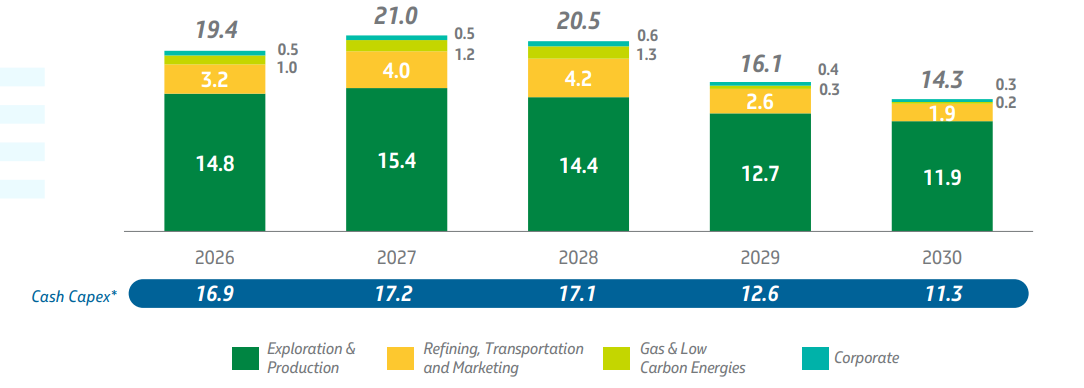
    Petrobras is also poised to double down on oil despite suggesting that it would become an energy company with more renewables exposure. Its 2026-2030 investment plan, worth a total US$109bn, focuses heavily on expanding fossil fuel production, including 15 new wells in the Equatorial Margin field alone.

    Higher oil prices and a search for alternative suppliers due to disruption in the Gulf states strengthens the economic case for this strategy, but the investment plan has also deprioritised renewables investments. As shown in Chart 2 (below), more than 75% of the US$91bn in capex under implementation is allocated to oil exploration and production, with spending on the gas and low carbon energies category growing slightly from US$1.0bn in 2026 to US$1.3bn in 2028 before falling to US$0.3bn in 2030.

    Although clean energy projects are generally funded by private auctions and development banks, the shift at Petrobras shows oil dependence crowding out investment in the energy transition, undercutting da Silva’s assertion that expanding fossil fuel production can ultimately help to reduce their use. 

    Chart 2: Petrobras capital expenditure under implementation by business segment (US$bn), 2026–2030

    Source: Petrobras, Business Plan 2026–2030.

    The underlying political calculation, that fossil fuel revenues facilitate public spending that benefits voters and builds electoral coalitions, is also facing a significant test in the run up to general elections scheduled for 4 October. For example, the Articulação dos Povos Indígenas do Brasil (Apib), which provided significant support for da Silva during the last election, has criticised the Equatorial Margin project and called for a halt to oil and gas exploration, underlining how the dual-track energy strategy can have a negative impact on political coalitions. The issue is unlikely to decide the presidential election this time around, with da Silva’s main rival Flavio Bolsonaro likely to deepen fossil fuel expansion to an even greater extent than the incumbent, but it could affect the future of the PT in Brazil and provide valuable lessons for politicians around the region.       

  • CARIBBEAN POINTERS

    LatinNews 12 July 2017 Hits: 650

    *** BELIZE PRESSED TO INCREASE GST. The International Monetary Fund (IMF) is calling on Belize to increase the rate of the General Sales Tax (GST) to 15% from 12.5%. It is also calling on the Dean Barrow government to remove GST exemptions. The IMF concluded its latest mission to Belize on 15 June.

    Debt is very much on the IMF’s mind. Belize’s debt-to-GDP ratio is close to 100%, and as a consequence it is urging the government to adopt a fiscal rule to help get the debt down. The IMF said: “In Belize, the adoption by parliament of a fiscal rule that targets 60% debt-to-GDP by 2025 could help guide the fiscal consolidation effort and broaden the support for it.”

    More positively for the government, the IMF is projecting GDP growth this year of 2.5% following a recession in 2016. Another positive was news that the crisis over correspondent banking was easing. The IMF reported: “Since mid-2016, all affected banks have been able to reconnect to foreign banks, with no further losses of relationships.”

    *** IMF CONTINUES TO BE SATISFIED WITH JAMAICA. Following a visit from 12-16 June to review Jamaica’s economic reform programme, the IMF reported: “Fiscal performance in 2016/17 was commendable, with the central government’s primary surplus in excess of 7% of GDP for the fourth consecutive year.”

    It added: “Corporate and personal income taxes over-performed relative to the budget, partly reflecting dividends from reforms in tax and revenue administration over the past few years. The 2017/18 budget targets a primary surplus of 7% of GDP, with increased budget allocations to social and growth-enhancing capital spending.”

    However, having reported in such as positive vein on the reform programme, the IMF also warned on “the need to anchor the upcoming public-sector wage negotiations on a comprehensive and forward-looking compensation framework.” It argued that containing the wage bill was an essential prerequisite if the government was to prioritise social and infrastructure spending.

  • ECONOMIC OVERVIEW: URUGUAY

    LatinNews 02 August 2012 Hits: 2627

    Uruguay and Brazil are advancing rapidly towards an energy cooperation agreement “unprecedented at continental level” according to Ramón Méndez, Uruguay’s energy secretary. Uruguay’s industry, energy and mining minister Roberto Kreimerman was scheduled to travel to the Mercosur presidential summit in Brasília on 31 July for further talks. Kreimerman has been holding weekly videoconferences with Brazil’s deputy mining and energy minister, Marcio Zimmerman, to put together the deal, with the support of 20 technicians.

    The idea is to exchange 500 megawatts (MW) of energy daily, according to Méndez, thereby optimising the energy flow in both countries and reducing costs.  Uruguay expects to have a surplus in wind energy and biomass by 2015, which it will send on to Brazil.

    Uruguay is heavily dependent on hydro power, which is subject to extreme weather like drought, and it has basically fully exploited its hydro capacity. It continues to purchase energy from Brazil, which comes in via the Rivera converter station. Built in the late 1990s, the Rivera station has a limited capacity of only 70MW, which is insufficient to projected future demand. Uruguay’s power transmission utility (UTE) has commissioned another HVDC station at the Melo substation to provide an additional link to the transmission system in Brazil.

    Soya: Miguel Carbajal, president of Uruguay’s association of seed suppliers (Ausid) expects record planting in 2012/2013 on the back of a surge in global soya prices, which in July topped US$600 a tonne. Carbajal expects soya to replace sorghum in some areas, while it is also extending to departments in central Uruguay that are not traditional agri areas, including Durazno and Flores.


  • NICARAGUA: Coffee exports up

    LatinNews 31 August 2011 Hits: 405

    Coffee exports for the first 10 months of the coffee year, which began on 1 October 2010, were up 43% year-on-year at US$412m, according to figures from the Centro de Trámites de las Exportaciones (Cetrex).

    The increase was entirely down to higher international prices because the volume of coffee shipped fell by 6%, year-on-year to 1.83m quintales (100lb bags), down from 1.94m quintales in the same period of the previous coffee year. Coffee prices in the first 10 months of this year have averaged US$226 a quintal, up from US$148 a quintal in the previous year.

    Coffee is the country’s biggest single export.

    The US is the country’s biggest coffee market. So far this year the US has imported just under 800,000 quintales for a total cost of US$179m. The country’s next biggest market is Venezuela, which spent US$38m on Nicaraguan coffee followed by Germany which spent US$31m, just ahead of Belgium (US$30m). The other significant coffee markets are Canada (US$21m) and Italy (US$18m).

    In the 2009/10 coffee year the country produced 2.1m quintales of coffee and had exports of US$321m. In the 2008/9 year exports were worth US$242m. 
    Inflation: In July the consumer price index rose by 0.36% bringing the 12 month inflation rate to 8.5%.

    Reserves: The country’s reserves now stand at US$1.8bn. In 2010 the country spent US$4.7bn on imports. Exports were worth US$3.2bn.

  • Haiti and the NGO global debate

    Patrick de Courcy 09 March 2022 Hits: 1735

    On 12 January, 2010 Haiti was struck by a catastrophic earthquake that killed well over 100,000 people and affected the lives of at least 3m. In a country with already extreme levels of poverty and inequality, around 250,000 homes and 30,000 commercial buildings were destroyed. Many countries and NGOs sought to respond rapidly with humanitarian aid. However, resources were limited compared to rebuilding needs, and economic recovery was slow. As late as 2017, seven years after the quake, the UN was reported saying at least 2.5m people were still in need of humanitarian aid.

    Although not immediately evident at the time, the Haiti earthquake also posed a major threat to the reputation of a number of international NGOs, and particularly to Oxfam, the UK-based charity focused on poverty reduction, humanitarian aid, and economic development. In 2018 allegations emerged that some members of Oxfam had sexually abused victims of the earthquake. Based on evidence from a whistle-blower, it was alleged that Oxfam employees, including a former country director, had used prostitutes, some as young as 12 or 13. Four people were sacked and three resigned. A subsequent report by the UK Charity Commission published in 2019 confirmed the allegations and was severely critical over the way Oxfam had responded to them, accusing it of “mismanagement” and of tolerating “a culture of misbehaviour”.

    The report said Oxfam had initially tried to cover up the extent of the sexual exploitation and the involvement of a senior manager. Inappropriate behaviour had not been limited to Haiti, with evidence that there had also been abuse in Oxfam’s network of UK charity shops, where there had been at least 16 incidents involving volunteers under the age of 18. Charity Commission chief executive Helen Stephenson said, “Over a period of years, Oxfam’s internal culture tolerated poor behaviour, and at times lost sight of the values it stands for.” The report said Oxfam had placed its own reputation and its relationship with donors above the need to protect victims.

    At one level the events at Oxfam could be seen as unexceptional: abuse of power, sexual exploitation, bullying, misogyny, and racism have been detected to differing degrees in almost all types of organisations, and there is nothing to say the NGO sector is somehow exempt from such harmful behaviour. At another level, however, the revelations were truly shocking, precisely because Oxfam, in line with other NGOs, claim to conform to a higher ethical standard. The scandal set off a domino effect of negative outcomes: Oxfam was banned from Haiti, suffered significant drops in member-generated revenue, and saw a reduction in government funded income. Authoritarian governments already suspicious of the work of NGOs gained a further excuse to limit their activities.

    More widely, the Haiti case set off a degree of soul-searching among NGOs. A number, including Oxfam, Save the Children, and Amnesty International have made internal changes designed to improve their work culture and strengthen personnel management. Most remained convinced they continue to have a positive role to play providing essential support and services, security and rights, and by doing so, contributing to strengthening democracies.

    But there may be greater awareness of weaknesses and shortcomings. Those involved in the debate have cited the dangers of excessive bureaucracy, self-promotion, and of becoming too distant from the people they are supposed to serve. They also highlight that NGOs have unequal access to funding and that the desire to maintain those revenue flows can distort their priorities. NGOs reliant on funding from the richer north may, for example, impose certain values and approaches on aid recipients in the poorer south. At worst, NGOs may be seen as modern-day agents of old-style colonialism.

    Among discussions of potential solutions some activists have suggested greater ‘localisation’ – where decisions should be taken closer to the communities in need of assistance, and for more to be done horizontally through coalitions of NGOs and other groups. It remains unclear how fast NGOs may respond to these challenges. Analyst Michael Edwards reaches the conclusion that “to achieve their stated goals of abolishing poverty, curbing inequality, ending injustice and addressing the climate emergency, NGOs will have to accept a smaller role in a larger system, since that it the only way that enough pressure for change can be mobilised and exerted”. 

  • ECONOMIC HIGHLIGHTS

    Abbi Dicker 12 August 2025 Hits: 2987

    COSTA RICA | Costa Rica posts drop in tourism. On 15 July Costa Rica’s tourism institute (ICT) released new figures showing that 1.49m tourists flew into the country in the first six months of 2025, down 2.8% on the same period in 2024. Tourism Minister William Rodríguez attributed the drop to the global context of economic uncertainty and geopolitical conflicts. He said however that the ICT was projecting that the year would close with between 2.66m and 2.87m tourists visiting the country via air, representing a 1.7% increase. He said that these hopes for recovery were based on the fact that 13 new air routes would be operating in the second half of the year as well as plans for record investment (over US$43m) by the ICT to promote Costa Rica as a tourism destination to key markets.

    NICARAGUA | Nicaragua’s trade deficit grows. On 15 July Nicaragua’s central bank (BCN) released new figures showing goods exports in the first quarter of 2025 totalled US$1.86bn, up 8.2% on the same quarter in 2024. The rise was driven by agricultural exports (+30.9%), mining (+15.8%), and manufacturing (+1.8%), which offset the drop in exports of fishing and aquiculture (-4.0%). Meanwhile services exports totalled US$316.6m, down 5.3% on the same quarter in 2024 as a result of a 33.3% drop in revenue from non-resident tourists and a 9.6% fall in telecommunications services. The same figures showed imports of goods totalled US$2.54bn in the first quarter, up 5.1% on the first quarter in 2024 while imports of services totalled US$342.6m, up 16.3% on the same quarter in 2024. According to the BCN this leaves an overall trade deficit of US$708.5m in the first quarter of 2025, up 7.1% on the US$661.6m trade deficit registered in 2024.

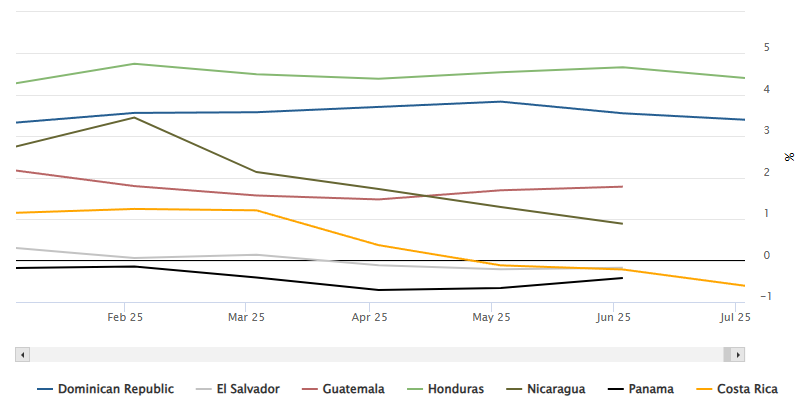
    Central America & Caribbean: inflation rate
    Percentage variation (year-on-year)

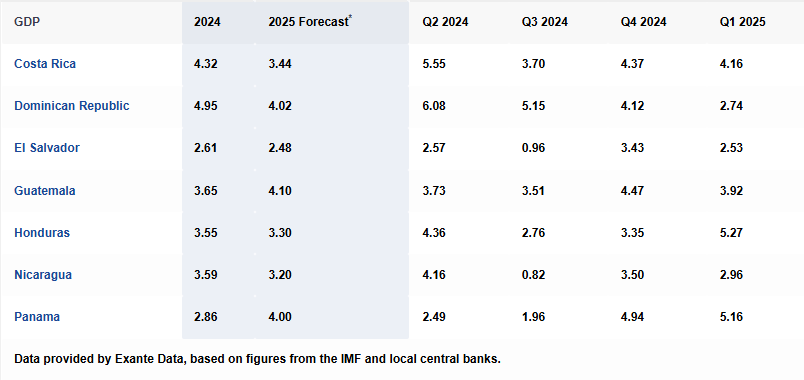
    Central America & Caribbean: GDP growth (%)
    Quarterly figures are year-on-year growth

  • RETAILING: Brazil’s resilient retailers – fortune in adversity

    LatinNews 21 March 2014 Hits: 2533

    Most of the major retailers in Brazil performed well in 2013 - in spite of an often challenging economic environment.

    For Brazil's retail industry as a whole, the last year brought slow growth, but it was far from disastrous: this was thanks to sustained demand for discretionary consumer items with relatively low ticket prices. According to national statistics institute (Ibge), sales volumes across all categories (both discretionary and staple) was 4.3% higher in the year to January 31 than in the previous corresponding period (see chart 1). For pharmaceuticals and cosmetics, growth in sales volumes was - just - into double digits. There were three other categories of goods for which the growth in sales volumes was 5.0% or more: electric appliances, electronics/IT goods and oil and lubricants.

    Chart 1: Growth in sales volumes in the year to 31 January 2014 (%) [1]

    1. Relative to the previous corresponding period
    2. Via supermarkets and hypermarkets
    Source: IBGE

    Growth in sales volumes for consumer staples was pedestrian. Volumes of textiles, apparel and footwear sold increased by 3.4%. For 'other' personal and domestic items, the corresponding figure was 3.3%. Most significantly, volumes of food, beverages and tobacco sold via supermarkets and hypermarkets increased by just 2.1%.

    The Ibge’s data highlights two other issues. Sales of big ticket consumer discretionary items have been soft. Sales of vehicles and parts, for instance, grew by just 0.7%. Thanks in part to the building boom associated with the FIFA 2014 World Cup and the Rio de Janeiro Olympics in 2016, demand for construction materials has remained firm, with volumes increasing by 6.3%. Neither vehicles and parts nor construction materials are included in the overall total cited above.

    Focusing on corporate successes, rather than difficult conditions

    Some of the leading retailers in Brazil - such as GPA, the holding company for leading chains like Pão de Açucár, Extra and Assaí - commented on difficult economic conditions in their reviews of operations through 2013: however, they were the exceptions, rather than the rule. In general, retailers placed much greater emphasis on positive developments arising from corporate strategies which, in some cases, had been in place for years. GPA itself, for instance, noted that it had increased market share in food retailing via “competitive pricing” (see chart 2).

    What the Brazilian retailers are saying about operations in 2014

    Carrefour:

    *'Aiming at continuous improvement of its offer and price image to enhance the shopping experience, notably in its three largest markets, France, Brazil and Spain.'

    Cia. Hering:

    *'2014 begins with important challenges in the economic outlook, with uncertainty regarding the consumption environment and cost pressures to be administered.'

    *'The company is planning to open 30 stores in the Hering Kids format and 70 Hering Stores throughout 2014.'

    Lojas Americanas:

    *'Throughout 2014, we will continue strengthening our multi-channel structure aiming to bring more convenience to our consumers and to offer the best purchase experience.'

    *Since 2010, in accordance with its 'SEMPRE MAIS BRASIL' program, the company has doubled the number of bricks-and-mortar stores and has established a presence in three new states - Acre, Amapá and Tocantins.

    *B2W Digital is in the middle of a three year expansion plan, allowing the company to move forward in its strategy of being closer to the customers.' B2W Digital recently bought three specialist IT companies - Uniconsult, Ideais and Tarkena - along with Click-Rodo, a transportation company that specialises in logistics for e-commerce. During 2013, B2W Digital boosted its storage capacity by 60%, opening three new distribution centres. 'Other notable achievements included the choice of B2W Digital to operate the entire Ambev online store, including its technological and logistics platforms, and the FIFA online store, which offers licensed products exclusive to the FIFA Brazil 2014 World Cup event.'

    Lojas Renner:

    *'The outlook is one of higher inflation, interest rates above those of recent years and GDP recording moderate growth.' Renner plans to invest BRL533mn: this includes 25-30 new Renner stores, 6-10 new Camicado stores and 15 new Youcom units. The company will also invest in store remodellings and IT improvements.

    Natura:

    *'We estimate total capex in 2014 of BRL500mn, with an increased share allocated to IT to expand the Natura Network and to improve and integrate transaction systems in the international operations.'

    *'Productivity gains in our network will be driven by increased buying frequency and a greater number of categories purchased by our consumers ...'

    *'Despite the ever more competitive environment, we are confident that we have created the conditions for our consultants to more and more business with Natura.'

    Walmart:

    *'We have initiated actions in Mexico, Brazil and China to improve our operating performance, and this is a priority.'

    Sources: Company reports released in February and March 2014.

    Many of the retailers have been in expansion mode, and have been expanding their networks of outlets and distribution centres. The French group Carrefour, for instance, noted that its Atacadão hypermarket business had nearly 100 outlets across Brazil by the end of 2013. Clothing retailer Cia. Hering opened 77 new stores last year. In accordance with its SEMPRE MAIS BRASIL program, Lojas Americanas has doubled its number of outlets, to 838, since 2010: this includes 109 stores that were opened last year. Lojas Americanas also inaugurated its fourth distribution centre, in Uberlândia, Minas Gerais. GPA's GPA Malls business added 45,000 square metres of gross leasable area, to a total of 288,000 square metres. Cosmetics group Natura invested around BRL554m (US$236m) in logistics, as well as in new production facilities in Cajamar and Pará.

    The main exception appears to be the Brazilian operation of the US giant Walmart. Over the course of 2013, Walmart closed 25 underperforming stores in Brazil (and a similar number in China). Walmart also has faced an upsurge in litigation arising from staff cuts in Brazil as the company rationalised its operations in the country.

    As in the rest of the world, online retailing has been booming. According to the department store group Lojas Renner, the number of consumers taking advantage of e-commerce in Brazil rose by 10m, or 20% last year. Gross revenues of B2W Digital, the 62.2% subsidiary of Lojas Americanas which claims to be “the leading e-commerce company in Latin America”, surged by 28.5% to BRL7.9bn. Among much else, B2W Digital announced a BRL2.4bn (roughly US$1.0bn) capital increase and set up its [B] Seller platform, which gives other merchants the opportunity to operate their own online stores. At the end of 2013, B2W Digital announced the launch of four private label brands - Newme (health/beauty), Meemo (petshop), Topdesk (stationery) and Orb (furniture).

    GPA's food business was an exception in that operating profits (EBITDA) slipped by 12.4% to BRL604m (US$256m). For most of the retailers, EBITDA actually rose by double digit amounts in 2013. For the GPA group as a whole, EBITDA increased, albeit by 3% to BRL3.8bn (US$1.6bn). Cia. Hering undertook a major reorganisation, so that the business will be organised around each of its major brands. Carrefour highlighted “excellent performance” across all of the various retail formats that it operates in Brazil.

    Brazilian retail in 2014: more of the same

    We would draw four conclusions from all this. First, because most of the retailers handle several (or numerous) product categories, they are naturally protected against weakness in any one. Second, thanks to their relationships with their suppliers, good control of costs and the strength of their brands, they have generally not suffered from any erosion in margins. This is at a time that rising inflation (with the Ibge’s main IPCA index up 5.68% in the 12 months to February 2014) would normally be expected to have had some impact on consumers' disposable income. Third, geographic expansion (typically from the South or the Southeast of Brazil towards the Northeast and the West) has brought several of the retailers into contact with first time customers. Finally, Brazilian retailers - like their counterparts in other parts of the world - understand the benefits of multi-channel distribution: for now, though, B2W Digital appears to be the pre-eminent online retailer.

    This year will be the second of three years during which B2W Digital is expanding in such a way that it “comes closer to its customers”. B2W Digital has bought specialist IT companies and has taken other steps to (dramatically) increase its logistics/distribution capacity. B2W Digital is also becoming a substantial provider of solutions to other retailers/ brand owners that want to distribute online: B2W Digital recently has won clients including the brewery giant Ambev and, in advance of the Brazil 2014 World Cup, FIFA.

    Comments from the various other retailers vis-à-vis 2014 suggest that they expect the main trends of 2013 to continue. None of them expect overall consumer spending to increase rapidly: however, several are confident that they will be able to increase the efficiency of their own networks. Natura, for instance, is looking for its customers to buy a greater variety of products, and with increased frequency, from its 1.28m sales consultants across Brazil. New stores are being opened and others are being remodelled. Investment in distribution, logistics and IT will be considerable.

    If we were to use one word to describe Brazilian retailers, it would be 'resilient'. Although some have undertaken substantial initiatives in consumer finance, (e.g. introducing own-brand credit cards), they are not depending for growth on increased spending by already-indebted consumers. All have clearly identifiable strengths, such as well entrenched brands, scale and (near) nationwide distribution. Without exception, the major retailers have endured previous economic conditions that were far more challenging than the current prevailing winds. They are now very well placed to benefit from the improving economic situations - and expectations - of lower income groups, as they look to step up into Brazil’s new middle class.

  • NICARAGUA: Doing OK

    LatinNews 04 October 2011 Hits: 692

    The economy should grow by about 4% this year and inflation will come in towards (or perhaps just over) the top end of the government target o a rate between 8.5% and 9.5%. The target was agreed with the IMF which visited Nicaragua at the beginning of September for its latest, and final, monitoring meetings for existing standby agreement.  The final disbursement from the IMF is worth US$16m.

    More importantly, remittances have risen strongly in the first seven months of 2011. The central bank reported that the inflow of remittances came to US$510m in the first seven months of 2011. This was up 9% on the US$466m that arrived in the same period of 2010. Most of the money comes from the US, but there is also a significant contribution from Costa Rica, where Nicaraguans traditionally harvest cash crops.

    Inflation: In August monthly inflation was 0.6%, bringing the rate for the last 12 months to 9.7%.

  • Gender issues in the labour market

    LatinNews 17 May 2019 Hits: 602

    Women have made great strides in labour market participation in recent decades, but there are still a lot of improvements to be made in Latin America.

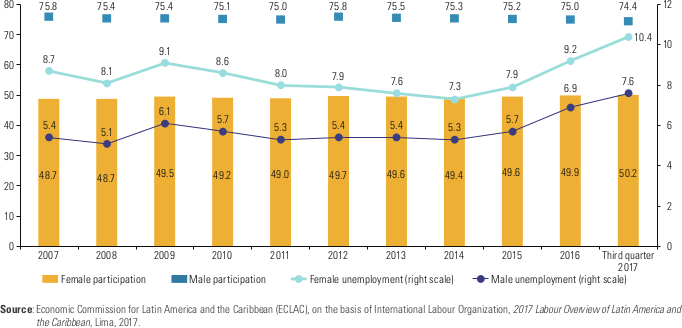
    According to a January 2019 report from Eclac, 50.2% of women are active in the labour market compared with 74.4% of men. Over the past 50 years this number has increased significantly, but the rate of increase slowed from the early 2000s onwards. This slowdown has affected vulnerable women – the poorly educated, those with young children or low-income partners, and those in rural areas – the most, according to the IDB. This research suggests that this may be explained by unusually strong economic growth in Latin America during the 2000s. It may seem paradoxical, but better labour market conditions due to economic growth may encourage women to stay at home and perform traditional gender roles as their partners are earning more money. In contrast, a tough labour market may mean that both the male and female partners are forced to work.

    Latin America and the Caribbean (weighted average for 24 countries): activity and employment rates, by sex, 2007–2017
    (Percentages)

    Gender

    IDB researchers also claim that better social protections may encourage women to stay at home, as do conditional cash transfer programmes that were common in Latin America during the 2000s as governments spent more on social policies. However, female participation is also limited by structural factors, including horizontal segmentation which restricts them to certain sectors. Care giving jobs are one example – comprising education, health, social assistance, and domestic employment – which represent 27.7% of women’s jobs. The countries with the highest proportion of female workers in the care sector are Argentina (42.8%), Uruguay (38.4%), Chile (34.9%), Brazil (33.7%), and Costa Rica (32.6%). This is an extension of women’s care giving role in the home, according to Eclac, where they perform unpaid labour which also constitutes a barrier to finding decent work. This is referred to as the ‘double burden’, as women’s increasing participation in the labour market did not lead to a fairer division of domestic chores. According to World Bank statistics, women spend three hours more than men on household labour per day.

    Eclac statistics also show that unemployment was higher among women (10.4%) than men (7.6%) across the region in 2017. Low productivity sectors employed 51.8% of working women in 2017, and 82.2% of working women were not members of a pension scheme. At the same time, 48.7% of women in employment earn less than the minimum wage, and earn on average 16% less than men. The concentration of women in lower-quality jobs means that they are likely to miss out on the benefits of the digital transformation because they are largely excluded from the highly-skilled sectors that are set to expand. Manufacturing is the second-largest sector for female employment, with 11.5% of employed women. Across the region there are generally more men than women employed in manufacturing, but the opposite is true in Colombia, Guatemala, Nicaragua, El Salvador, and Honduras. The latter four Central American nations are home to maquiladora textile firms which could explain this phenomenon.

    If the current generation of women are restricted to certain low skilled jobs, statistics from the next generation are far from encouraging. Female students are underrepresented in science, technology, engineering, and mathematics (STEM) disciplines, which offer pathways to high-skilled jobs. According to Eclac, just 34.6% of STEM graduates are women, and this gap could widen. However, if women receive the right training to make the most of new technologies, they could benefit thanks to more flexible working hours which are better suited to family care. That said, it would be more beneficial for women’s well-being if the division of unpaid household labour became more equitable.

    Women now tend to spend longer in education than men, but this has not improved access to higher paying jobs. In fact, for skilled jobs, the wage gap can be as high as 25.6%. Improving the situation means changing laws, and better female political representation has been linked to policies that are favourable to women’s inclusion in the labour market. As women are largely excluded from decision-making positions, they are currently less able to influence policy, according to Eclac,

    However, improving equality in the labour market would bring major benefits. If more women can be brought into the labour market it would boost economic growth and the distribution of income, as well as reducing poverty, according to Eclac. In El Salvador, Eclac director Alicia Bárcena claimed that poverty could be cut by up to 12% if more women were earning. Major target groups include rural women and rural indigenous women, according to Jacqueline Mazza, who have lower participation rates. As growth in the overall labour force slows, governments need to look at the pockets of the population where women have so far not been entering the labour market, she said. “The next generation really needs a change if we are going to keep up with other regions,” said Mazza. “So it’s really about opening up those last segments where there is discrimination in the labour market.”

    Case study: Laboratoria

    While national governments can struggle to implement successful labour market policies on a large scale, entrepreneurs across the region are proving what can be achieved at a more local level. Among their number is Mariana Costa Checa, a young Peruvian who set up a coding school for girls called Laboratoria.

    The social enterprise started with a single site in the Peruvian capital, Lima, in 2014, training women to be web developers and user experience designers during a full-time, six-month boot camp. Laboratoria focuses on women from low-income families whose access to education is limited, ensuring accessibility by only charging those students who successfully find a job in the tech sector, and thereby working to close the gender gap in the industry. “Female tech talent is being wasted in Latin America,” a Laboratoria spokesman told LatinNews. “For that reason it’s important to generate this talent so that the digital economy can be more diverse, competitive, inclusive, and offer opportunities for everyone.”

    After early success in Lima, Laboratoria has since expanded to Santiago, Chile; Mexico City and Guadalajara, Mexico; and Sao Paulo, Brazil. So far over 1,000 women have graduated from Laboratoria’s four sites and over 700 now work in the tech sector, according to company figures. These graduates now earn up to three times as much as the average salary, according to the spokesman, providing a significant boost to their economic freedom in a region where many women are limited to poorly-remunerated, informal work.

    In contrast to the traditional public education systems, the Laboratoria bootcamp is set up to emulate the world of work with a focus on practical tasks. This means that graduates are prepared for the first job, rather than needing further in-firm training. Laboratoria has been praised by figures such as Facebook founder Mark Zuckerberg and former US president Barack Obama, and works hard to cultivate links with the private sector. The company runs an outreach programme which contacts human resources teams to identify technological needs that graduates could fulfil, and also runs corporate training sessions for firms to assist them with their digital transformation. Laboratoria also counts on support from the Inter-American Development Bank, Omidyar Network, Draper Richards Kaplan Foundation, Microsoft, Citi Foundation, and Blackrock.

    Boot camp graduates are the perfect fit for Peru’s booming tech industry, which has suffered from a huge skills gap, and it looks as though the company will struggle to keep up with regional demand. By 2025 the software development industry will employ 1.2 million people in Latin America and the Caribbean, according to the Inter-American Development Bank, which means plenty of job opportunities for developers and designers.

    As things stand, Laboratoria is responding to a number of labour market issues on a small scale. It provides vocational training that aligns with the needs of the private sector, boosts women’s participation in the labour market, and increases their chances of finding well-remunerated, formal employment. While it is understandably easier for a small, agile operation to train 1,000 women in five years than government to overhaul nationwide systems, there are valuable lessons to be learnt. For the private sector, continued shortfalls in national education systems may encourage investment and partnership with focused training centres like Laboratoria.

  • Jamaica: IMF seal of approval

    LatinNews 06 October 2017 Hits: 271

    Following a 10-day trip in early September, the IMF has praised the Jamaican government’s ongoing efforts to consolidate the public finances, improvement monetary policy management and reduce external vulnerabilities through reserve accumulation. The Fund only raised one main area of concern, highlighting the need to press ahead with public-sector reform, including job cuts and lower wage hikes. These challenges will test Prime Minister Andrew Holness and his government in the coming months.

    Jamaica’s impressive progress under IMF guidance – initially under an Extended Credit Facility (ECF) agreement and now under a Stand-By Loan Arrangement (SBA) – has continued. The Fund highlighted that the government had met all of its end-June qualitative and quantitative targets under the SBA, which will make an extra US$180m available to the Jamaican authorities, bringing total accessible credit to US$790m.

    Primary surplus will ease debt burden

    Out of all of the programme targets, the primary fiscal surplus is one of the most important, given that the Fund views a large surplus as crucial to reducing eye-watering level of public debt, which stands at around 115% of GDP. The government not only met its primary fiscal surplus target – which has remained at an extremely-high 7% of GDP in recent years – in the 2016/17 financial year, but the Fund has stated that the authorities exceeded this target by some margin, thanks to rising corporate tax revenue.

    This is likely to result in the public debt to GDP ratio falling slightly faster than the IMF projects, potentially meaning that debt will fall below the 100% mark in 2018/19, rather than 2019/20, assuming fiscal consolidation continues.

    To date, the main problem has been that prolonged fiscal austerity has taken a toll on the pace of GDP growth, which has been either negative or barely positive for several years. However, the IMF noted that GDP was strengthening, highlighting that economic growth has been positive for nine consecutive quarters, with a firmer overall rate of 1.6% projected for the 2017/18 financial year. Moreover, the outlook for medium-term trend growth is much stronger, at 2.5%-3%, as structural economic reforms boost investment.

    External vulnerabilities have also eased, thanks to ongoing accumulation of foreign reserves, which now exceed US$3bn. Meanwhile, inflation has risen from last year’s lows, but remains contained at around 4.5% year on year in recent months (well within the central bank’s 4%-6% target range).

    Controversial reforms on the way

    The main area of concern remains forthcoming planned reforms to the public sector, including job cuts – which the IMF diplomatically referred to as a “scaling back of roles” – as well as a reduction of public-sector wages and pensions reform.

    These will be politically-difficult for the Jamaica Labour Party (JLP) government. It has a narrow parliamentary majority and has so far benefitted from the fact that the opposition People’s National Party (PNP) has been preoccupied by internal leadership issues, but there is a danger that the public will tire of ongoing fiscal reforms, particularly given that unemployment remains high, at 12.2% in April, according to the latest available data.

  • TRACKING TRENDS

    LatinNews 20 December 2018 Hits: 758

    COLOMBIA | Shock plan. Colombia’s President Iván Duque announced the launch of a Col$480bn (US$150m) ‘shock plan’ last week for the country’s mixed public-private national health system.

    Speaking at a public event in Bogotá, Duque said that his government will invest this sum in the national health system by the end of the year to ensure that it is properly funded over the Christmas season and that the salaries of all health sector workers are paid. Duque explained that the cash injection would be made available for public hospitals as well as to private health care providers to help them finance their books by offering credit lines, by paying off and purchasing outstanding sector debt, and by reimbursing the sector for unpaid dues.

    Duque was also clear that these investments are separate from the additional Col$780bn budget allocation that the government has awarded to the health ministry for the end of the year and the Col$32.3trn that it has been allocated in the 2019 draft budget. Breaking down the investment plan, Duque said that Col$80bn from the general social security service resources fund (Adres) will be used to purchase sector debt; Col$63bn will be used to pay for outstanding sector debt; Col$225bn will be destined for reimbursing healthcare providers for the provision of services; Col$20bn will be assigned for the attention of migrants in public hospitals; and that the state-run lender Financiera de Desarrollo Territorial SA (Findeter) will open a Col$100bn credit line available to healthcare providers.

    ECUADOR | Looking for foreign investment. Ecuador’s President Lenín Moreno concluded a tour of China and Qatar on 16 December in which he sought to secure loans for his government and to drum up investment. Following his arrival back in Quito, Moreno said his trip had been successful, noting that he had secured a US$900m loan from China that will help finance debt payments in 2019.

    Ecuador’s communications secretariat (Secom) highlighted that the six-year loan was secured without having to offer any future oil deliveries in exchange and at the “the lowest ever” interest rate of 6.5%. A Secom statement added that Moreno also obtained a commitment from the Chinese government that it would open a new US$3.5bn credit line from its development banks to help finance potential investments in Ecuador.

    In Qatar, Moreno held a meeting with Sheikh Tamin bin Hamad al Thani, with whom he also discussed attracting Qatari investments to Ecuador.

    Moreno concluded that he hoped that his tour would help to attract more investment than the US$1.15bn in foreign direct investment (FDI) that the central bank forecast will flow in to the country this year.

  • COSTA RICA-PANAMA: Security cooperation to be strengthened

    LatinNews 10 March 2015 Hits: 952

    Panamanian and Costa Rican officials met in the Panamanian city of Bocas del Toro in mid-February to discuss ways to strengthen security cooperation between the two countries, which share a 330km border. Neither has a standing army, relying instead on their police forces to counter threats to national security. Both are also vulnerable to the problems posed by the trafficking of drugs, weapons and people in the Central American isthmus.

    Panama’s security minister, Rodolfo Aguilera, agreed with his Costa Rican counterpart, Gustavo Mata, to launch a joint training programme, border surveillance cooperation and an enhanced exchange of information and security technology. The two men also discussed setting up a joint task force of police officers from both countries. The Honduran security minister, Julián Pacheco, also attended the meeting. A meeting between all three men to discuss further related issues will take place later this year.

    Gun-running raids

    A few days prior to the meeting in Bocas del Toro, Costa Rica’s judicial investigations agency (Organismo de Investigación Judicial, OIJ) raided 12 locations, including some public security ministry offices, as part of an investigation into gun-running connected to the Colombia guerrilla group, the Fuerzas Armadas Revolucionarias de Colombia (Farc). Panamanian officials had alerted OIJ agents that AR-15 assault rifles and other guns which appeared to have been imported into Costa Rica had turned up on the streets of Panama.

    Five private security firms are now being investigated over the weapons. One of the businesses raided in February was Grupo Chiribogo, the same company targeted in a 2013 OIJ raid that resulted in the arrest of five Colombians and a Nicaraguan. At that time, it was the US Drug Enforcement Administration (DEA) that gave the Costa Ricans the information to act.

    • Successful bond sale

    Costa Rica managed to sell US$1bn worth of 30-year bonds on 5 March, according to the finance ministry. The bonds offered a yield of 7.158%, or 445 base points above US treasuries. It was Costa Rica’s first successful bond auction since it was stripped of its investment grade status last year. The Central American country has now reached its own legally-approved limit of debt issuance, which allows for a maximum of US$4bn over four years.

  • ECONOMIC HIGHLIGHTS

    Patrick de Courcy 15 September 2021 Hits: 1649

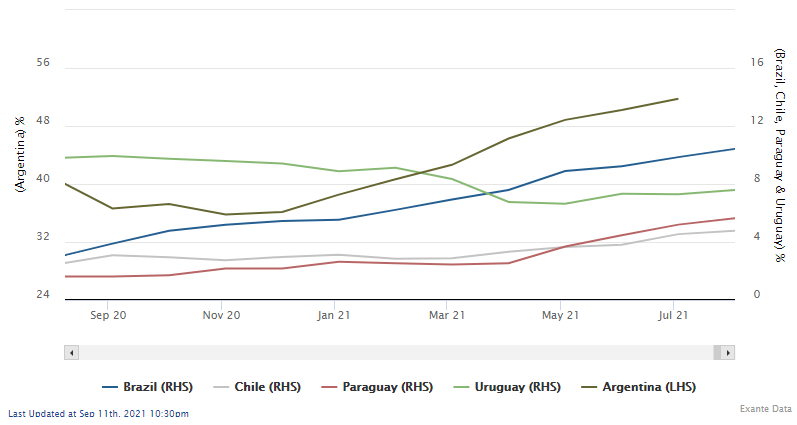
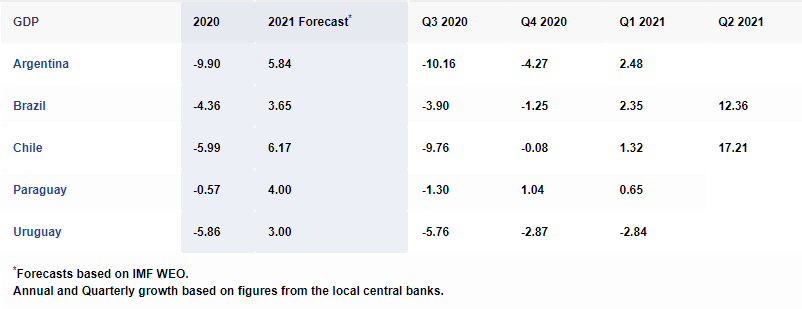
    CHILE | Monetary tightening continues. On 31 August, Chile’s central bank (BCCh) increased the benchmark interest rate by 75 basis points, doubling it to 1.5%. The decision was unanimously supported by members present at the BCCh’s monetary policy meeting. The BCCh cited external factors for this rate hike, such as the sustained economic recovery globally from the crisis caused by the coronavirus (Covid-19) pandemic, as well as risks of imbalances from rising inflation. “Idiosyncratic factors” also weighed on the BCCh’s decision, notably the high likelihood that Chileans will be authorised to make a fourth withdrawal from their pension funds, thus increasing liquidity and pushing up prices further. Chile’s annual inflation rate stood at 4.8% in August.     

    CHILE | Unemployment falls. On 31 August, Chile’s national statistics institute (INE) released the latest figures for unemployment, which show that the country’s unemployment rate has dropped to the lowest point since the beginning of the coronavirus (Covid-19) pandemic. In the May-July rolling quarter, Chile’s unemployment rate stood at 8.9% – a 4.2 percentage-point drop compared with the same period a year earlier, and a figure not seen since before Covid-19 hit.  

    PARAGUAY | Budget unveiled. On 1 September, Paraguay’s finance ministry unveiled its proposed 2022 budget, for G$92.1trn (US$13.33bn). Finance Minister Oscar Llamosas outlined that next year’s budget focuses on three key pillars: investment in health, social protection, and public works. Of the proposed total, G$7.4trn will be destined to the education ministry; G$5.4trn to the ministry of public works & communication; G$2.4trn to the national electricity company (Ande); and G$2.7trn to healthcare infrastructure, medication costs, and assistance for high-complexity diseases. The 2022 budget proposal forecasts G$27.5trn in tax income for the government, GDP growth of 3.8%, and inflation of 4%. Llamosas stressed that under its current format, next year’s budget abides by the fiscal responsibility law (LRF) which stipulates that the fiscal deficit cannot exceed 1.5% of GDP, but said that the government had requested of congress that the cap be raised to 3% of GDP.

    Brazil & Southern Cone: Inflation Rate

    Percentage variation (year-on-year)

     Brazil & Southern Cone: GDP Growth (%)

     Quarterly figures are year-on-year growth

  • Mexico: Decisive round for Nafta?

    LatinNews 12 January 2018 Hits: 1335

    The sixth round of tripartite negotiations between Canada, Mexico, and the United States on the future of the North American Free Trade Agreement (Nafta) was due to be held in Montreal, Canada, on 23-28 January. Various observers said they believed the sixth round could prove decisive.

    A Mexican industrialist was quoted off the record by Spanish newspaper El País saying “Trump thinks he is on a roll; while it would be logical for him to seek a positive renegotiation of Nafta, he is so unpredictable that I am afraid he may just bang the table and reject the whole deal. We’ll come out of Montreal knowing whether this thing is going to move forward or not.” A member of the Mexican negotiating team, also speaking off the record, said it was approaching Montreal “ready for anything, including packing up our bags and going home.”

    Nafta negotiations are now beginning to overlap with the Mexican 2018 presidential election campaign. This has led one analyst, Ignacio Bartesaghi of the Universidad Católica del Uruguay, to suggest Mexican negotiators might simply want to gain time, trying to push things forward to after the July elections.