All Categories

Subcategories

  • ECONOMIC HIGHLIGHTS

    LatinNews 12 August 2020 Hits: 926

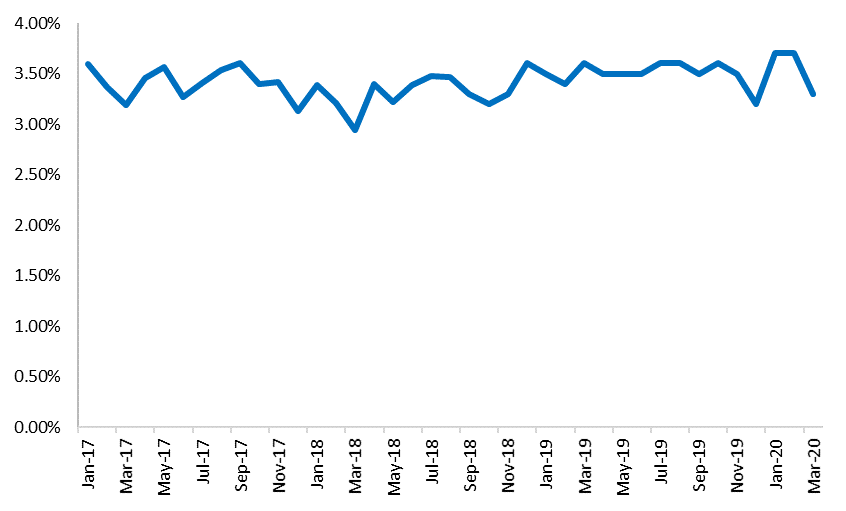
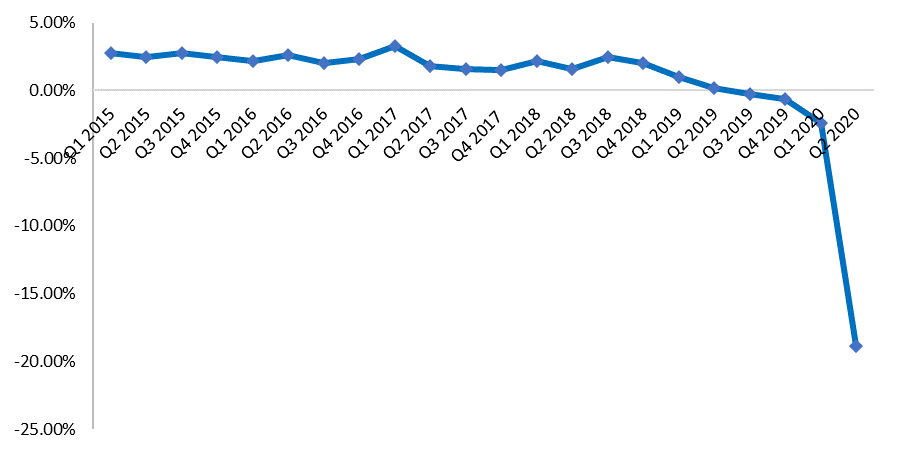
    Interest rate cut: On 25 June the governing committee of Mexico’s central bank (Banxico) announced its unanimous decision to cut the benchmark interest rate by 50 basis points to 5%, in a further effort to address the economic fallout of the coronavirus (Covid-19) pandemic. This marks Banxico’s fourth such interest rate cut since February. In statement, Banxico highlighted the fact that economic activity in Mexico registered a “significant contraction” in the first quarter of 2020 (down 1.4%), and that “available information indicates that the impact of the pandemic intensified in April”. It also notes that the balance of risks for inflation remains uncertain, with the general inflation rate increasing from 2.15% to 3.17% between April and the first half of June. According to the statement, “expectations for headline inflation for the medium and long-term have remained relatively stable, but at levels above the 3% target”.

    Canadian investment: On 2 July Canadian vehicle maker, Bombardier Recreational Products (BRP), announced that it will invest CA$185m (some US$136m) in a new manufacturing facility in the Mexican city of Juárez, Chihuahua state. This was the first investment announced since the US-Mexico-Canada Agreement (USMCA) on regional trade took effect on 1 July. In a statement, BRP said it expects the facility, which will be used to produce off-road vehicles, will create 1,000 permanent jobs. Site planning and construction is set to commence within the next few months with the factory set to begin operating in late 2021. Following the announcement, Chihuahua Governor Javier Corral Jurado told the local press via videoconference that it was great news in the midst of the coronavirus (Covid-19) pandemic and that it was an “enormous sign of foreign investor confidence in Chihuahua state”.

    Mexico: GDP Growth
    Percentage variation (year-on-year)

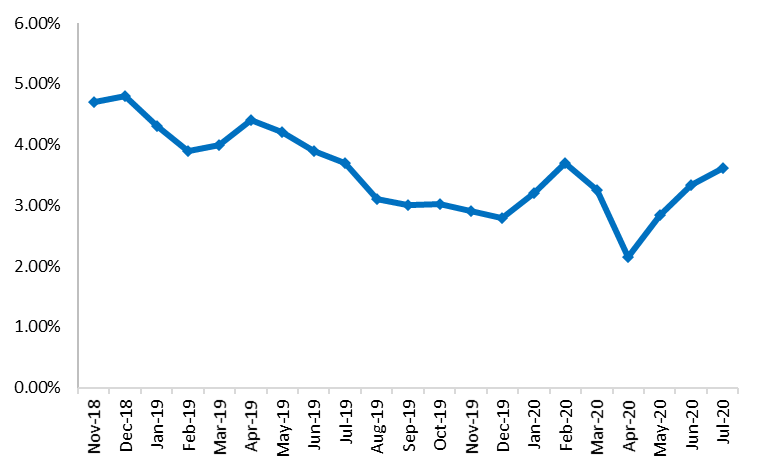
    Mexico: Unemployment Rate
    Econimically active population

    Mexico: Inflation Rate
    Percentage variation (year-on-year)


  • RASTREANDO TENDENCIAS

    LatinNews 23 May 2014 Hits: 691

    PERÚ | Decepcionantes resultados en el primer trimestre. El 15 de mayo el Instituto Nacional de Estadísticas e Informática (Inei) de Perú, reveló que el PIB creció un 4,76% en el primer trimestre del 2014, por debajo de lo que habían pronosticado los mercados. Este resultado sugiere que después de reportar estelares tasas de crecimiento económico en promedio por encima del 5% en el último par de años, la economía ahora está experimentando una clara declinación. La cifra del primer trimestre también crea dudas acerca de si el pronóstico oficial de crecimiento económico del 5,5% para el 2014 es obtenible. De acuerdo con Inei, el resultado fue conducido por una significativa caída en la actividad del sector minero & hidrocarburos en marzo. El crecimiento año en año del PIB en marzo fue de un inesperadamente bajo 4,9%, después de que los economistas locales habían pronosticado un 5,65%. Esto a pesar del hecho de que todos los subsectores reportaron tasas de crecimiento positivas en el mes, liderados por finanzas (13,56%) y manufacturas (5,76%). Pero las cifras del Inei muestran que la actividad en el sector  de minería & energía sólo se incrementó un 0,8% año en año en marzo, el nivel más bajo desde marzo del 2013. Más preocupante, la producción en el clave subsector minero, de hecho se contrajo un 1,7% en marzo. Aunque la producción de cobre (9,9%), plomo (6,7%) y molibdeno (4,6%), todas subieron, la producción de otros minerales incluido el cinc (-18,5%), el oro (-14,7%) y la plata (-1,9%) todas cayeron agudamente. De hecho, las cifras ajustadas estacionalmente del Inei para marzo, muestran que la economía en su conjunto se contrajo un 0,4% en el mes comparado con febrero. La desaceleración económica es claramente un motivo de preocupación para el gobierno liderado por el Presidente Ollanta Humala, pues éste está consciente de que necesita que la economía crezca si es que quiere cumplir con sus promesas de reducir la pobreza y la desigualdad en el país. Pocos días después de conocerse los datos del Inei, el 17 de mayo, el ministro de producción, Piero Ghezzi, presentó el nuevo ‘plan nacional para la diversificación de la producción’ del gobierno a los miembros de la Sociedad Industrial Nacional (SIN). Ghezzi dijo que el objetivo del plan es transformar la estructura productiva del país para así crear nuevos “motores del crecimiento” para la economía interna; y reducir la dependencia económica de los altos precios de las materias primas para conducir el crecimiento. Ghezzi presentó entonces 23 propuestas diseñadas para reducir los costos operacionales y el papeleo a través de varios sectores económicos que ayudarían a estimular la productividad del país.

    COLOMBIA | Inversionistas de EU optimistas sobre Ecopetrol. El 20 de mayo firma petrolera estatal de Colombia, Ecopetrol, anunció que ha recaudado US$2mm de su emisión de bonos a 30 años en el mercado de valores de EU, la mayor operación de ese tipo por una empresa colombiana hasta la fecha. La última emisión de bonos fue la segunda operación llevada adelante por Ecopetrol en los mercados internacionales, después de haber reunido US$2,5mm en letras similares emitidas en septiembre. Estas emisiones son parte de los planes del gobierno liderado por el Presidente Juan Manuel Santos para que Ecopetrol lance un gran programa de exploración de petróleo en el país en el próximo par de años. Significativamente, los bonos de Ecopetrol fueron ubicados con un rendimiento del 5,92%, apenas 255 puntos básicos sobre los rendimientos ofrecidos por los comparables bonos del tesoro de EU. Señalando que la oferta de bonos estuvo sobre-suscripta por cinco veces su valor, el jefe ejecutivo (CEO) de Ecopetrol, Javier Gutiérrez, dijo que él estaba “muy satisfecho con la emisión… [que ] evidencia la confianza que tienen los inversionistas internacionales con la firma, el país; y su apetito por invertir en una firma tal como Ecopetrol, que ha sido capaz de mostrar un crecimiento consistente en el último par de años”. Pocos días antes de la conclusión de la emisión de bonos, el 14 de mayo, el Presidente Santos dio apertura al 10mo congreso internacional de minería y petróleo de Colombia, en Cartagena de Indias. Santos destacó  que en los últimos cuatro años la actividad en el sector se había incrementado en un promedio del 8,9% hasta el punto de que ahora representa el 7,8% del PIB de Colombia, agregando que las perspectivas del subsector de los hidrocarburos en particular eran muy “positivas”. Según Santos, solamente el año pasado, las reservas de petróleo crudo de Colombia se incrementaron un 2,8% a más de 2,4mm de barriles y la expectativa es que el programa de exploración de Ecopetrol reforzará esto. De hecho, ese mismo día, Ecopetrol confirmó el descubrimiento de un nuevo depósito de petróleo crudo en el departamento de Santander, en el este. De acuerdo con Ecopetrol, un nuevo pozo perforado en su concesión del Bloque Playón ahora está produciendo 765 barriles de petróleo por día, y la compañía ahora llevara a cabo estudios de evaluación para determinar el potencial de reservas del depósito.

    • Planta de ensamblaje de laptops

    El 14 de mayo el Presidente de Bolivia, Evo Morales inauguró la primera planta de ensamblaje de laptops del país de propiedad del Estado, en la ciudad de El Alto, en el departamento de La Paz. Se espera que la planta ‘Quipus’ de US$60m produzca 800 computadoras por día, que el gobierno distribuirá sin cargo alguno a los estudiantes y maestros en escuelas estatales a través del país. Desde el 2011 el gobierno de Morales ha estado entregando laptops a estudiantes y maestros en las escuelas estatales, en un esfuerzo por mejorar la calidad de la educación en el país. En un corto discurso, Morales explicó que la planta será conducida por técnicos locales quienes han recibido capacitación en China.

  • Coporate Radar

    LatinNews 19 November 2015 Hits: 14

    CMPC and SCA accused of running a cartel: Chile’s economic prosecutions office (Fiscalía Nacional Económica) accused the powerful CMPC group (controlled by the Matte family) and Swedish-owned SCA of operating a price cartel in the country’s paper products market for over 10 years. In a complaint filed with the competition tribunal (Tribunal de Defensa de la Libre Competencia – TDLC), the FNE said the two companies colluded on fixing quotas and prices on toilet paper, paper towels, paper serviettes, facial tissues, and cosmetic tissues. The two companies have combined sales in Chile of around US$400m per annum and control 90% of the market. CMPC owner Eliodoro Matte officially apologised to the public and the company’s consumers for what he described as “these repudiable acts”. President Michelle Bachelet said the matter was “very serious” and that she would submit a bill in congress raising the level of fines for market rigging. Apart from Chile, CMPC, which is also involved in forestry and cellulose, has operations in Argentina, Brazil, Colombia, Mexico, Peru, and Uruguay.


    Petrobras announces further losses: State-owned oil company Petrobras announced net third quarter losses of BRL3.76bn (US$1.01bn) as a result of lower international oil prices, the depreciation of the real, and a deep domestic recession. The loss was over three times larger than the market had been expecting, although smaller than in Q314, when the company was in the red by BRL5.34bn. Net revenue fell 6.9% to BRL82.2bn in Q315. But analysts noted that operating results improved, with Ebitda up by 82% to BRL15.5bn. Meanwhile the company was hit in early November by a stoppage by oil workers’ union FUP that reduced output by around 115,000 barrels per day, or 5.5% of the total. On 11 November management offered a 9.5% salary increase, but the union, which is demanding an 18% rise, was reported to have rejected the offer and demanded a meeting with chief executive Aldemir Bendine.


    LATAM denies IAG talks: Rumours of discussions on a strategic alliance or even a takeover bid by International Airlines Group (IAG – the alliance between British Airways and Iberia) for LATAM Airlines (the merger formed by LAN of Chile and TAM of Brazil) have been denied. The reports led to a 6% rise in LATAM share prices on 9 November. They were based on a discussion between IAG chief executive Willie Walsh and a group of analysts. According to press reports of the meeting Walsh had said IAG wanted to work more closely with LATAM and might even consider a takeover. However IAG later denied that this had been said, and LATAM issued a formal statement saying the company was “not in conversation with IAG on an ownership stake.” Both companies are members of the Oneworld alliance and have code-sharing agreements.


    Pemex further in the red: Mexico’s state oil company Pemex reported net losses of MXN167.57bn (US$9.921bn) in Q315 on the back of lower international oil prices, a fall in crude oil output, and a depreciating peso. The losses were more than double the MXN59.654bn loss in the comparable year-earlier period. Net revenues fell by 22.8% in the quarter to MXN313.77bn. Crude output fell by 5.5% to 2.266m barrels per day (bpd). The price of Mexican mix crude was down by 53.8% to US$41.75 a barrel.

  • ECUADOR: Lasso talks trade in Southern Cone

    Patrick de Courcy 21 April 2022 Hits: 3923

    Ecuador’s President Guillermo Lasso travelled to Argentina and Uruguay from 17-20 April, where he held discussions on trade with Argentina’s President Alberto Fernández and Uruguay’s President Luis Alberto Lacalle Pou. In both countries Lasso voiced his ambition of delivering a free trade zone in South America modelled on the European Union (EU). More realistically, he also made a strong push for bolstering Ecuador’s trade relations with Uruguay.

    “If we want to emulate the EU, the first step that we need to take is forming a great free trade zone to increase our negotiating power with other regions of the world,” President Lasso said in Buenos Aires on 18 April. Standing beside him was President Fernández, an advocate of greater regional integration in theory, but one predicated more on ideological affinity than practical considerations, having previously spoken of the need for Latin America to “join forces to face the challenge of globalisation”.

    When questioned on whether the Southern Common Market (Mercosur), comprising Argentina, Brazil, Uruguay, and Paraguay, could be expanded, Fernández said “Mercosur is a market that works”, adding that “its expansion, or the inclusion of other members in the market, is not a decision for me to make and would need to be discussed with member countries”.

    The following day, in Montevideo, Lasso appeared to tone down his aspirations somewhat to pitch for a bilateral trade agreement with Uruguay within the Latin American Integration Association (Aladi), the headquarters of which are located in the Uruguayan capital, and whose secretary general, Sergio Abreu, Lasso also met.

    The discussions between Lasso and Lacalle Pou appear to have been successful. The two heads of state share an ideological affinity, with both men representing right-of-centre coalitions, in contrast to Fernández, who sits on the left of the political spectrum.

    Lasso and Lacalle Pou’s vision of open economies and free trade is not shared by Fernández. The Argentine head of state clashed with Lacalle Pou last year over the latter’s publicly stated determination to pursue an FTA with China despite membership of Mercosur precluding bilateral trade deals. Speaking during a virtual summit last March, Lacalle Pou said that Mercosur should not be a “burden” or a “corset in which our country cannot move” [WR-21-36].

    Uruguay FTA

    President Lasso tweeted after meeting his Uruguayan peer that both he and President Lacalle Pou have the “firm conviction” of a need to strengthen trade cooperation between the “complementary” economies of Ecuador and Uruguay. He said that “Ecuador can export bananas to Uruguay and import dairy products and beef”.

    Lasso’s abortion veto comes into force

    The president of Ecuador’s national assembly, Guadalupe Llori of the indigenous party Pachakutik, has come under fire for suspending the last legislative session before the Easter recess on 14 April, which represented the final opportunity for legislators to challenge President Guillermo Lasso’s partial veto of a bill authorising abortion in the case of rape.

    The original bill sought to authorise terminations up to 12 weeks after conception for rape victims, and up to 18 weeks in the case of minors, indigenous women, and those living in rural areas.

    Lasso’s partial veto restricts abortions to the first 12 weeks after conception in all cases, and it requires women seeking abortion to have first made a formal complaint of rape to the police, to have undergone a medical examination, or to have made a statement under oath.

  • TRACKING TRENDS

    Abbi Dicker 08 August 2024 Hits: 1819

    BRAZIL | Hawkish tone on interest rates. The monetary policy committee (Copom) of the central bank (BCB) released its latest meeting minutes on 6 August. The meeting took place on 30-31 July and concluded with Copom’s members unanimously deciding to hold the country’s benchmark interest rate (Selic) at 10.50% for a second consecutive meeting.

    Copom’s latest minutes stated that the BCB “would not hesitate to raise the interest rate” to meet the annual inflation target of 3.00% +/-1.5. According to private sector economists and analysts whose forecasts are published in the BCB’s weekly Focus bulletin, the 2024 annual inflation rate is projected to be 4.12% and the Selic is expected to close this year at 10.50%. The market experts also raised their 2025 Selic projection from 9.50% in last week’s bulletin to 9.75%.

  • How is water affecting electricity generation

    Patrick de Courcy 14 January 2025 Hits: 2444

    Drought has also exposed vulnerabilities in the region’s energy matrix. For decades policymakers have invested in hydroelectric dams, which have become a significant contributor to electricity generation capacity in many countries.

    One example is Ecuador, which gets more than 90% of its electricity from hydropower, using water reservoirs along the country’s plentiful rivers to feed generators. This year the country is suffering its worst drought in more than 60 years after the dry season started two months earlier than normal.

    Hydroelectric facilities at the Mazar reservoir in Cañar province, which supplies three hydroelectric plants that in the rainy season have previously met 30% of Ecuador’s electricity demand, were declared inoperational on 18 April. As a result power generation plummeted and there have been scheduled power cuts lasting for up to 12 hours per day, disrupting industrial operations and seriously impacting the economy.

    The drought also depleted reservoirs in neighbouring Colombia, which was no longer able to export excess energy that it usually sells to Ecuador. Water levels at the Regadera and Chuza reservoirs that supply Bogotá with water fell to their lowest in three decades.

    In an attempt to boost electricity supplies, Ecuador signed a contract for a Turkish power ship which will add 100MW in generating capacity. This is part of a wider trend in which the decreasing reliability of hydroelectric dams means that officials are forced to turn to dirtier thermoelectric power plants, releasing more emissions that then contribute to climate change. 

    Similar issues have also affected Honduras, where the electricity system operator (CND) declared a state of emergency on 9 May, and Costa Rica, which narrowly avoided introducing electricity rationing after a period of heavy rain replenished reservoirs. President Rodrigo Chaves highlighted the regional nature of the problem, claiming that attempts to boost supplies by buying energy from neighbouring countries had failed due to the fact that those nations had also been struggling to meet demand. This meant that they had restricted energy exports, increasing prices in Central America’s regional electricity market. With much of the region highly reliant on hydropower, these issues are likely to persist, increasing tensions over the functioning of the regional market and the interconnected electricity network. These issues are compounded by higher temperatures due to climate change, which increase demand for electricity as more people use fans or air conditioning.

    Increasing pressure on water supplies has also led to rationing for households in a number of cities.

    Residents of Colombia’s capital Bogotá have been living with scheduled daily water rationing for much of the year as part of measures to eke out supplies in reservoirs that reached record lows following a severe drought. Under the rationing system, which began in April, neighbourhoods have their water supply cut off on a rotating basis for 24 hours once every nine days. Although city mayor Carlos Fernando Galán announced that rationing would be suspended over the festive period, he said it would restart on 7 January. Rationing means that there are 18.8m cubic metres more water in the city’s Chingaza reservoir system than there would have been without it, said Galán, but the Chingaza system was only 53% full at the end of November.

    In Mexico City significant restrictions were imposed on the amount of water pumped from reservoirs after falling precipitation levels, extended dry periods, and higher temperatures combined to increase water stress to critical levels. Tight restrictions were introduced on the times at which residents of a number of neighbourhoods had access to tap water, and overexploitation of the city’s subterranean aquifers has led to decreasing water quality. In April, demonstrators blocked a key road in the city to protest the contamination of the drinking water supply in parts of the capital, and the issue has become increasingly politicised. This follows stringent water saving measures in the city of Monterrey, Nuevo León state, which limited water access to just six hours per day in June 2022, with water stress now affecting large parts of the centre of the country in addition to the historically arid northern states.

    And in Montevideo, Uruguay, a prolonged drought meant that authorities declared a water emergency in June. Public water utility OSE started mixing fresh water with brackish water from the Rio de la Plata estuary in order to make supplies last longer, raising concerns over the health effects of water containing higher levels of chlorides and salt and highlighting inequalities between those who could afford to buy bottled water and those who had no choice but to keep drinking from the tap.

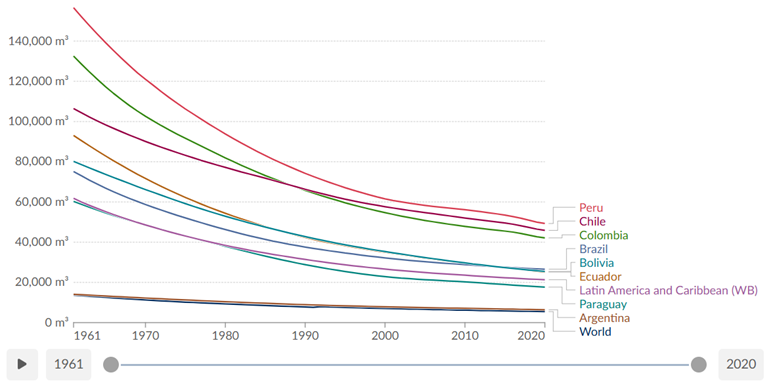
    Figure 6. Renewable freshwater resources per capita
    Renewable internal freshwater resources flows refer to internal renewable resources (internal river flows and groundwater from rainfall) in the country.

    Source: Our World in Data using data from the World Bank

  • ECUADOR: Noboa imposes spending limits on local government

    Abbi Dicker 26 February 2026 Hits: 1073

    A new law approved on 20 February by the government majority in Ecuador’s national assembly requires the largely opposition-controlled municipalities to rein back current expenditures on wages.

    The new law, which reforms the territorial, autonomy and decentralisation code (known as Cootad) states that local governments must earmark no less than 70% of their budgets for investment, using the remaining 30% for current expenditure, including wages and administrative costs. The bill was approved with 77 votes, the number needed for a simple majority.

    Valentina Centeno, a deputy for the ruling right-of-centre Acción Democrática Nacional (ADN), said the new law would deliver efficiency and social justice, since infrastructure spending on water supply and drainage should be prioritised over current spending. She claimed that in 2024 the municipalities had spent “billions of dollars” in order to support “bureaucratic structures” while poor households lacked water and roads. Other ADN leaders claimed opposition-controlled municipalities had used current expenditure to hold parties and social events.

    Correísmo, the opposition movement loyal to former president Rafael Correa (2007-2017) and led by the Revolución Ciudadana (RC) party which controls key municipalities around the country including Quito and Guayaquil, rejected these claims saying that the Cootad reform is unconstitutional and will lead to forced reductions in current spending on education and other basic services. RC deputy Diego Salas said the new law “does not measure quality of service or results”; he expected the central government to “punish” those who failed to meet the 70-30 rule by reducing their budgets.

    Mariana Yumbay, a deputy for Pachakutik, the political arm of the umbrella indigenous organisation Confederación de Nacionalidades Indígenas del Ecuador (Conaie), said that even the salaries of officials working on investment projects would be considered current spending and would have to be financed from the 30%. She said the net result would be a poorer public service and less territorial development.

    The mayor of Quito, Pabel Muñoz, a member of RC, said that to comply with the new Cootad rules Quito would have to re-allocate US$459m of a US$1.04bn 2026 budget that has already been set. The government’s new and narrower definition of investment will exclude education, health, transport, environment, and emergency response from the 70%.

    • Quito mayor to take legal action against Noboa government

    Quito Mayor Pabel Muñoz said that by enforcing the new rules the central government is violating municipal autonomy. Quito, he said, would seek a ruling on the legality of the new approach by appealing to the constitutional court (CC).

    Pipo accuses Noboa in murder case

    During extradition hearings in Spain, Wilmer Chavarría (‘Pipo’), who is considered to be the leader of Los Lobos, Ecuador’s most powerful drug cartel, denied any involvement in the August 2023 assassination of presidential candidate Fernando Villavicencio, claiming instead that the killing had been ordered by the current president, Daniel Noboa. According to Pipo’s narrative Noboa had ordered the killing of Villavicencio, an anti-corruption campaigner, fearing that his rival in the presidential race might win.

    Amanda and Tamia Villavicencio, the daughters of the murdered presidential candidate, rejected Pipo’s claims saying he was simply seeking to deflect accusations of his own culpability. The daughters said they have confidence in the ongoing official investigation into their father’s death, which has implicated Los Lobos, some business leaders, and persons linked to Correísmo, the movement loyal to former president Rafael Correa.

    President Noboa did not react immediately to the accusations, but the interior minister, John Reimberg, said Pipo’s claims were “absurd” and “nonsense”. Correa posted a message on X, the social media platform, calling Noboa a “criminal” who had won elections “by a murder in 2023 and by fraud in 2025”.

  • RASTREANDO TENDENCIAS

    LatinNews 14 January 2013 Hits: 1021

    MÉXICO | Priorizar la reforma fiscal. México necesita una reforma fiscal integral en el 2013, anunció el ministro de finanzas, Luis Videgaray a finales del año pasado. Videgaray dijo que era esencial una reforma consensual porque el presupuesto para el 2013 aprobado por el congreso, deja a México con menos de la toma fiscal de otros miembros de la Organización para la Cooperación y el Desarrollo Económico (OCDE). Él dijo que las “necesidades” de México no se podrán cubrir sin una reforma fiscal este año. Y agregó que el sistema fiscal necesita ser simplificado y generar más empleos.

    Videgaray agradeció a los legisladores por aprobar un “prudente, responsable, y equilibrado” presupuesto, pero dijo que tal como están las cosas, México no podría cubrir totalmente los costos de la educación (especialmente educación terciaria y superior), y tampoco los costos de salud y de infraestructura. La cámara de diputados aprobó un gasto público de M$3,95mm (US$312m) para el 2013, un 6,7% más sobre el presupuesto del 2012. El presupuesto predice un déficit fiscal del 2% si la inversión de la compañía estatal de energía Pemex es incluida; de otro modo, el déficit sería cero.

    MÉXICO | El costo de los subsidios a los combustibles. El costo de la gasolina y el diesel se elevaron por 11 centavos por litro (poco menos de un centavo de US$) el 5 de enero. El incremento está diseñado para reducir levemente la masiva carga sobre el gobierno de los subsidios a los combustibles. Los mismos totalizaron M$206mm (US$16,2mm) para noviembre del 2012. Un informe de desarrollo humano de la ONU en el 2011 sostenía que los subsidios a los combustibles llegaban a cuatro veces más el costo total de los programas del gobierno para combatir la pobreza. El ministerio de finanzas alega que un 43% del subsidio beneficia al 10% de los mexicanos más ricos, mientras que el 10% de los más pobres reciben solamente el 0,6% del mismo.

    Miguel Messmacher Linartas, el viceministro de finanzas, sostiene que el costo extra de los combustibles sólo produciría un 0,01% de incremento en la inflación. También alega que incluso después de estos incrementos, el costo de la gasolina y el diesel estarían entre el 10% y el 17% más elevados que en EU. Dijo que los incrementos eran esenciales para evitar un permanente deterioro de las finanzas públicas del país.

    El predecesor del Presidente Enrique Peña Nieto, Felipe Calderón carecía de la voluntad política para reducir los subsidios a los combustibles, a pesar de sus muy promocionadas credenciales ecológicas, pero Peña Nieto no puede permitirse subsidiar el combustible hasta ese punto si es que quiere implementar las variadas propuestas contenidas dentro del ‘Pacto por México’.

    • Libre comercio

    Un tratado de libre comercio (TLC) entre México y Honduras entró en vigencia el 1 de enero. Guatemala y Costa Rica tienen la esperanza de aprobar el acuerdo en la primera mitad de este año. El TLC entro en vigencia con El Salvador y Nicaragua el 1 de septiembre del año pasado. El comercio en las dos vías entre México y Honduras totalizó US$844m en el 2011, con México disfrutando de un superávit comercial de US$156m. El comercio entre México y las cinco naciones centroamericanas se elevó cerca del 200% entre el 2000 y el 2010, cuando alcanzó los US$6,55mm.

  • TRACKING TRENDS

    LatinNews 16 January 2014 Hits: 1948

    GUATEMALA | Remittances reach record high. Remittances sent back home by Guatemalan expatriates reached a new record of US$5.11bn in 2013, according to the central bank, and were up by 6.7% on the previous year. A total of 90% of the remittances came from the US, where 1.5m Guatemalan expatriates live, 60% of them illegally. The record figure came despite the deportation of a record number of 50,200 undocumented Guatemalans last year.
    Meanwhile, the labour minister, Carlos Contreras, confirmed a 5% increase in the minimum wage to Q2,096 (US$267) a month for workers in maquila manufacturing plants and the export sector and Q2,380 (US$304) for workers in agricultural and other sectors. President Otto Pérez Molina announced the increases after employers and employees failed to reach an agreement, with the former offering 3.3% and the latter demanding 30% increases. This is effectively no more than an inflationary increase: inflation for the first 11 months of 2013 stood at 4.63%. It also remains below the cost of the basic food basket (CBA) in Guatemala which, for an average family of five, is calculated at Q2,897 (US$369).

  • PARAGUAY: Cartes acusado de tratar de acabar con la Izquierda

    LatinNews 18 September 2015 Hits: 240

    La oposición de Izquierda de Paraguay, Frente Guasú (FG) está acusando al gobierno liderado por el Presidente Horacio Cartes de autoritarismo, alertando a las instituciones regionales de que él está tratando de suprimir al partido. La acusación se produce después de una supuesta diatriba de Cartes dirigida al diputado del FG, Ramón Duarte, en una fiesta privada la semana pasada. Duarte derramó lágrimas mientras dirigía unas palabras ante la cámara baja del congreso el 14 de septiembre, alegando que Cartes lo había acusado de ser “un asesino y secuestrador”, y que ayuda a “encubrir al [grupo de guerrilla] Ejército del Pueblo Paraguayo [EPP]”.

    Duarte fue invitado a una fiesta de cumpleaños privada del presidente de la cámara baja, Hugo Velázquez, de la gobernante Asociación Nacional Republicana- Partido Colorado (ANR-PC) junto con otros miembros de la oposición, que se celebró en la casa del Diputado Julio Javier Ríos (ANR-PC). En medio del festejo, un bilioso Cartes supuestamente ordenó que se apagara la música y se lanzó a una diatriba contra el ala disidente de su propio partido, señalando a varios senadores. Supuestamente, también acusó al FG de intentar desestabilizar a su gobierno, agregando que tenía que ‘desaparecer’ –una palabra muy emotiva en América Latina.

    El FG subsecuentemente emitió una declaración enumerando los repetidos ataques del gobierno, afirmando que Cartes había hablado de la necesidad de “eliminar” a miembros del partido, incluido el miembro fundador, el ex presidente Fernando Lugo (2008-2012). Algunos diputados de la ANR-PC han salido en defensa de Cartes, aunque sus críticas contra el ala disidente del partido de gobierno habrán servido para acrecentar la tensión interna.

    “La expresión lanzada por Horacio Cartes y su camarilla es una amenaza directa a la democracia, el pluralismo, la diversidad de la expresión política, los demócratas, un insulto para el público, y el más explícito signo de una profunda crisis de legitimidad”, Dice la declaración del FG. También alega que está siendo preparado “un fraude masivo” en las elecciones municipales de noviembre, con el FG “excluido sistemáticamente del proceso electoral, y la co-opción de todos los jueces del Tribunal Superior de Justicia Electoral [TSJE] por el sistema bipartidista [la ANR-PC y el Partido Liberal Radical Auténtico], y de esa manera despojar de las garantías para una elección democrática y transparente”.

    Ejército del Pueblo Paraguayo

    No es la primera vez que el FG ha sido vinculado con el EPP, el cual Cartes ha prometido derrotar cuando asumió el poder en el 2013. El mismo Velázquez afirmó el 11 de septiembre que el FG tiene vínculos con el EPP. El EPP permanece activo, aunque la Fuerza de Tareas Conjunta (FTC) militar y policial la semana pasada propinó algunos golpes a la Agrupación Campesina Armada (ACA), un pequeño grupo escindido del EPP, de acuerdo con el ministerio del interior.

    El 6 de septiembre la FTC arrestó a dos adolescentes, quienes se cree que son miembros de la ACA, mientras estaban circulando sobre una motocicleta en el distrito de Yby Yaú en el departamento de Concepción, en el nordeste. Aparentemente, ellos habían aparecido en videos y fotografías de supuestos miembros de la ACA.

    El día siguiente, la FTC halló uniformes de la ACA y del EPP en una camioneta Toyota en Horqueta, departamento de Concepción, lo que llevo a que las autoridades concluyeran que los dos grupos se habían reunificado después de que la ACA se escindiera en septiembre del 2014 (ver abajo). El supuesto jefe de logística de la ACA y presunto propietario de la camioneta, Daniel Rivarola Areco, fue arrestado un día más tarde.

    • ACA y EPP

    La ACA, formada por los hermanos Albino y Alfredo Jara Larrea, ha sido progresivamente debilitada; el primero fue muerto por la FTC el pasado enero. Se cree que ambos, la ACA y el EPP han estado reclutando nuevos miembros, aunque entre ambos se piensa que cuentan con solo 30 a 40 miembros dedicados. Varias organizaciones de derechos humanos en Paraguay han acusado a la administración Cartes de no hacer lo suficiente para evitar el reclutamiento de menores en áreas pobres del país para integrarse a la ACA. Ellos insisten en que estos menores deben ser reconocidos como víctimas, y que se deben poner en práctica programas especiales para protegerlos.

  • TRACKING TRENDS

    LatinNews 20 September 2018 Hits: 435

    COLOMBIA | Cutting red tape to boost jobs market. On 13 September Colombia’s President Iván Duque announced the implementation of a raft of measures designed to cut red tape and encourage entrepreneurialism. In his first year in office Duque, who assumed office last month, has promised to reduce by 50 the number of requirements needed to found and run a company in Colombia, a move which he hopes will inspire the creation of new businesses that will provide quality jobs.

    The changes are part of a drive to reinvigorate the Colombian economy through innovation, improved access to finance, and the promotion of the ‘orange economy’, which comprises the creative industries.

  • ECUADOR: Tax reform takes effect, dividing indigenous

    LatinNews 09 January 2020 Hits: 4025

    Ecuador’s new tax reform came into force on 1 January - but not without some eleventh-hour drama. Deputies in the national assembly approved the tax reform initiative on 9 December but they then had to vote on a partial veto by President Lenín Moreno eight days later before, on 30 December, approving the reform’s publication in the official gazette the following day. If it had not been published before the end of 2019 the treasury would not have been able to collect some of the taxes outlined in the reform in 2020. This all caused ructions between the country’s largest indigenous organisation, Confederación de Nacionalidades Indígenas (Conaie), and its political arm Pachakutik (PK) after PK deputies voted in favour of publishing it.

    The national assembly voted on 17 December to approve 11 of the objections raised by President Moreno to the version of the tax reform passed by legislators. But it was not until 61 of the 72 deputies present in the assembly voted for the reform to be published in the official gazette that it could take effect. Four of these deputies were members of PK.

    The Confederación de Nacionalidades Indígenas de la Amazonía (Confeniae), one of the three main constituent groups within Conaie, and Movimiento Indígena y Campesino de Cotopaxi (MICC), a grassroots movement, called for the four PK deputies to face sanctions. Marlon Vargas, the president of Confeniae, accused the deputies of “betraying October’s struggle”. Confeniae released a statement on 2 January decrying the vote by PK deputies as “inexplicable and surprising”; “eleven deaths, dozens injured, and thousands imprisoned has meant nothing to some deputies who are completely out of touch with the grassroots”.

    Leonidas Iza, president of the MICC, said the deputies were not even consulting the PK party let alone Conaie, adding that it would evaluate the actions of Jaime Olivo, the PK deputy representing the highland province of Cotopaxi. Marlon Santi, PK’s national coordinator, acknowledged that the differences between Conaie and the PK amounted to “a yawning chasm”. Santi argued that “Conaie is a social organisation; Pachakutik abides by the political guidelines of the democratic code…although Conaie grassroots participate in elections”.

    Over the coming four months, PK and Conaie will need to discuss candidates to compete in the general elections in 2021. This is likely to be a tense affair. Iza insisted that Conaie would be pushing its alternative economic proposal, which includes hitting the 270 largest economic groups in Ecuador with a 4% income tax [WR-19-43]. But Eddy Peñafiel, the PK deputy for the eastern province of Orellana, argued that “the functioning of the country’s institutions prevails over individual beliefs”. 

  • Risk pointers

    LatinNews 06 September 2011 Hits: 205

    *** Taleban Warning To Collaborators.  Following the assassination in Afghanistan on 12 July of Ahmad Wali Karzai, a brother of President Karzai, the Taleban issued a statement warning people who continue “working for the infidel occupants of Afghanistan”.

    The statement warns: "If they continue their jobs for which they are paid, in that case with the help of Almighty they will face the fate of Gen Daud Daud [killed in a suicide bomb attack] and Ahmad Wali Karzai...and they would be the loser in this world and the world after death as well."

    *** Russia reports increase in terrorism.  According to the Russian Interior Ministry, the number of terrorism-related crimes in the first six months of 2011 increased by almost one-third.  According to the ministry: “As many as 370 terrorism-related crimes were registered in January-June 2010, up 28.9% compared with the first six months of 2010.”

    *** Russia’s Mideast conundrum.  Moscow will not have endeared itself to many supporters of the Arab Spring with its strong opposition to international action (military in the former case, diplomatic in the latter) against Libya and Syria.  In the case of Libya, Russia says that UN Security Council resolution 1973 is being “grossly violated” by Nato.  On Syria, Moscow is arguing that putting pressure on President Bashir al-Assad only encourages extremists within the opposition to increase their violence in the hope of forcing a military intervention by Nato.  Russia believes the approach towards Yemen has been slightly more even-handed and should be the model.

    However, Moscow will have in some degree compensated for its lack of enthusiasm for overturning the dictatorships in Libya and Syria by its performance at the 11 July Middle East Quartet meeting (comprising the US, EU, Russia, and the UN) aimed at restarting negotiations between Israel and the Palestinians.  The Palestinians were looking for a Quartet statement calling for negotiations to begin using the 1967 lines, with mutually agreed swaps, as a baseline and for the ending of Israeli construction in east Jerusalem and the settlements.  Israel wanted any statement to include a reference to Israel as the nation state of the Jewish people, and for language ensuring that any agreement would signify an end to the conflict.

    According to a senior Israeli official, Russia’s Foreign Minister Sergey Lavrov took pro-Palestinian positions throughout the talks and would not allow a reference to the Jewish and democratic state to be included in the concluding statement of the meeting and so no statement was issued.

    Palestinian president Mahmoud Abbas said on 12 July that if the Quartet cannot agree on acceptable guidelines for Israel-Palestinian negotiations, he will continue with his plan to go to the United Nations in September to seek full membership for a Palestinian state.

  • Risk pointers

    LatinNews 02 November 2011 Hits: 247

    *** New source of tension for Turkey and Israel.  Turkey is to launch a new military intelligence satellite next year, called Gogturk, which will enable it to gather high-resolution images of Europe, the Caucasus, and the Middle East, including Israel.  Israel has been lobbying France and Italy to stop helping with the project.  Israel is concerned that Turkey might sell sensitive images to hostile states and the Palestinians.  Turkey has said it is up to it how it uses images from its own satellite.

    An official from Turkey’s Defence Ministry said on 1 November: “For years Israel has obtained images of our territory.  For the first time we will have a satellite for intelligence.  Reciprocity is essential in international relations.  If they observe Turkish soil, Turkey has the same right.”

     *** Pakistan and Iran.  Former Pakistani foreign secretary Tanvir Ahmad Khan (1989-90) has been arguing for a much closer relationship between Pakistan and Iran based on spheres of influence in Afghanistan and energy supplies.  Khan’s view is that provided Iran does not seek the dominance of Afghanistan by non-Pashtun factions, and Pakistan does not seek the supremacy of the Taleban, then a deal can be done.  Writing in The Express Tribune on 31 October, he argued: “Iran may be a dangerous country in the Western perception, but for Pakistan it can only be a source of strength.”

    In Khan’s view, Pakistan should stop dithering, and reject American pressure, over a proposed gas pipeline project with Iran.  He concluded: “It is time that instead of dithering because of exaggerated fears of international displeasure, Islamabad becomes more proactive in arriving at a new strategic understanding with Tehran.”

    *** Philippines rejects China’s ‘sounds of cannons’ threat.  Last week we highlighted a threat issued by China through the Communist Party-run Global Times that China might seek a military solution to territorial disputes in the South China Sea.  An editorial in the paper warned: “If these countries don’t want to change their ways with China, they will need to mentally prepare for the sounds of cannons.”  It added: “If a situation turns ugly, some form of military action is necessary.”

    In comments published on 28 October, Lt General Juancho Sabban, chief of the Philippines Armed Forces Western Command, said: “Any threat, any intrusion, or any violation in the code of conduct of claimant countries, we are determined to protect our territory and sovereignty...Mere deployment of missiles or ‘the sound of cannons’ will not scare us from protecting our own territory.”

    It is perhaps significant that Sabban made his comments during the course of a joint Philippines-US amphibious landing exercise.

  • AGRIBUSINESS: Drought hits Brazilian harvest

    LatinNews 23 February 2012 Hits: 3349

    The drought in the south of Brazil has ended the prospect of a record harvest for the country this year. The official forecast is now for a marginally smaller (0.7%) crop of grains and oilseeds in 2012.

    The official forecast from the Instituto Brasileiro de Geografía e Estadísticas (IBGE) is now for a crop of 158.7m t, down from the record 159.9m t harvested in 2011.

    The new forecast follows a field trip by IBGE analysts in January and represents a reduction of 1% on the official forecast for a crop of 160.3m t, published in January. The IBGE officials say that they have had to cut their estimate because of the severe drought which has afflicted the south of the country in December 2011 and January 2012.

    The IBGE officials said that the area sown was down by 4% on the last crop year at 50.6m hectares. The big falls will be in the rice and soya crops. The soya crop is likely to be down by 6% at 70m t. Brazil is the world’s second biggest soya producer. The rice crop will be 15% down on 2011’s crop at 11.4m t.

    The maize crop, on the other hand, is likely to be up 11% at 62.5m t.

    These three crops, maize, rice and soya, represent 91% of the country’s total production of grains and oil seeds and are grown on 83% of the arable land.

    The IBGE said that of the 26 crops grown in the country, 18 will see lower production and only eight an increase. The other big falls are in: oats (down 11%); cocoa (down 6%); onions (down 4%), barley (down 13%); beans (9%) mandioca (down 2%); sorghum  (down 8%); and wheat (down 11%).

    The crops with increases are: cotton (1.5%) ; arabica coffee (14%); sugarcane (9%) and castor oil (34%).

  • Risk pointers

    LatinNews 07 November 2012 Hits: 457

    *** China’s overseas acquisitions race ahead in 2012.  Figures released by the ChinaVenture Group on 5 November show the number of overseas mergers and acquisitions in the first nine months of 2012 at 208, valued at US$93.09bn.  In 2007, the number was 107 valued at US$13.58bn.  According to Wan Ge of ChinaVenture, the European debt crisis has, in particular, enabled Chinese enterprises to acquire undervalued European assets.  Although energy and mining were at the top of the list, there are also signs that China is diversifying its buying strategy, with agriculture now a strong feature.  An Ernst & Young report indicates that 82% of China’s overseas direct investment (ODI) in 2009 was energy oriented.  In the first half of 2012, it was only 60%.

    *** Pakistan power struggle.  On 5 November, Pakistan’s Chief of Army Staff General Ashfaq Pervez Kayani made a statement that has been interpreted as criticizing a court move against a retired army chief, General Aslam Beg, and a former head of the Inter-Services Intelligence (ISI), Lt-Gen Asad Durrani.  The allegation is that they bankrolled politicians to stop the current ruling Pakistan People’s Party (PPP) from winning the 1990 election.

    Kayani said: “No individual or institution has the monopoly to decide what is right or wrong in defining the ultimate national interest...Weakening the institutions and trying to assume more than one’s appropriate role will set us back...The fundamental principle, that one is innocent until proven guilty, should not be forgotten.  Let us not pre-judge anyone, be it a civilian or a military person, and extend it, unnecessarily, to undermine respective institutions.”

    This comment sparked a retaliation form Supreme Court Chief Justice Iftikhar Muhammad Chaudhry, who said: “Gone are the days when stability and security of the country was defined in terms of number of missiles and tanks as a manifestation of hard power available at the disposal of the state.”

    There was also some fairly hysterical media reaction to Kayani's statement, with many talk show hosts lashing out at the army chief for what he had said.  However, there has been some evidence of a conscious effort by the military leadership to play down the significance of Kayani's statement, and the PPP has also preferred to play it down.

    Nevertheless, there is clearly tension between the judiciary and the military.  The day after Kayani's statement, the Chief Justice was hearing a petition seeking to ban the media from criticizing the armed forces, intelligence agencies, and other defence and security institutions in the wake of the US operation to kill Osama bin Laden on 2 May 2011.  When the lawyer said that the army respected the court, the chief justice remarked: "Yes, we witnessed that yesterday".

  • PERU: Unions try to ratchet up pressure on Humala

    LatinNews 16 July 2015 Hits: 1266

    The umbrella trade union Confederación General de Trabajadores del Perú (CGTP) mobilised thousands of members in a day of protest against the economic policies of the government led by President Ollanta Humala on 9 July. The president of the CGTP, Carmela Sifuentes, claimed that 25,000 workers demonstrated nationwide (4,000 marched to congress in Lima), staging marches and erecting roadblocks to demand, inter alia, that the minimum wage be doubled from NS$750 (US$235) to NS$1,500; greater respect for labour rights and collective bargaining; and that the government take significant steps to combat corruption and impunity.

    The CGTP protests took place as far afield as Cuzco, the capital of the eponymous region in the southern highlands, and Iquitos, the capital of the northern Amazon region of Loreto. It was largely a peaceful day, although the police had to break up some roadblocks on the interoceanic highway to Brazil and they used tear gas to disperse protesters in Huancayo, the capital of the central highland region of Junín.

    The timing of the protests looked designed to apply some pressure to Humala in advance of his last state-of-the-nation address on 28 July, when his final year in office will commence. Humala is widely expected to use his address to present economic measures to provide incentives for private investment drawn up under the extraordinary legislative powers recently conferred on his administration by congress.

  • ECONOMIC OVERVIEW: COSTA RICA

    LatinNews 05 August 2015 Hits: 2547

    Solís warns of need for higher tax revenue: While President Luis Guillermo Solís has indefinitely postponed discussion of public sector salary reform (see related article) on 31 July he argued that new sources of government income were urgent. The country could not cope “one year more” without the legislative assembly approving new taxes. Solís made his appeal ahead of a series of extraordinary sessions of congress in which the executive will have the authority to determine the agenda of legislative bills up for discussion.

    President Solís argued that the country can no longer bear the burden of the growing fiscal deficit and that immediate action was required to increase tax revenue. “The economy cannot handle another year, like this one, in which it records a deficit of 6.4% of GDP or more,” Solís said. Among the government’s plans to raise revenue is to switch from a sales tax of 13% to a value-added tax of 15%, but the executive may struggle to pass the bill through an opposition-dominated congress.

    Government opponents questioned why the executive wishes to raise taxes but is unwilling to cut spending. Many pointed out that the government increased the budget for 2015 by 19% compared with 2014. Antonio Alvarez, from the opposition Partido Liberación Nacional (PLN) said that his party had repeatedly expressed its willingness to discuss tax hikes with the government if it took action to rein in public pensions, wages and bonuses. Meanwhile, the left-leaning party, Frente Amplio, said the government should focus on tax evasion before tax increases.

    • Costa Rica growth

    On 31 July Costa Rica’s central bank increased its forecast for the government’s fiscal deficit for this year to 5.9% of GDP, up from its 5.7% forecast in January, and forecast next year’s deficit at 6.6% of GDP.

  • Region: Corporate Radar

    LatinNews 20 May 2016 Hits: 714

    Chile big on multilatinas

    A study published in May by Deloitte has found that Chile is a particularly good base for multilatinas, the name given to Latin American companies serving the regional market. The study distinguished between multilatinas, described as indigenous companies operating across regional borders, on the one hand, and what it calls ‘Latinas Globales’ on the other, the latter being companies that, having originated in Latin America, have gone on to become truly global in their operations.

    According to Omar Aguilar, head of Americas regional operations and strategy for Deloitte Consulting, no less than 50% of the regionally focused companies are based in Chile, while the globally focused companies tend to be based primarily in Brazil and Mexico. Multilatinas include companies like Grupo México (mining), Latam (airlines), Localiza (car rental) and Alicorp (consumer goods). Multilatinas are particularly strong in retailing and transport. Roughly 50% of them have head offices based in Chile, followed by 14% in Brazil, 11% in Mexico, 10% in Colombia, 8% in Peru and 4% in Argentina.

    Aguilar said that Chile was a particularly good launch pad for these companies because it has an open economy, high levels of investment, low interest rates and good access to capital, with one of the continent’s most dynamic stock markets. Other potentially promising home bases for multilatinas were Colombia and Peru in the short term, and Argentina in the medium term, Aguilar said.

    The report suggests that global Latin American companies are a different breed to the multilatinas, and rely on different factors to be successful. The Latinas Globales include Vale (mining), Embraer (aircraft manufacture), Grupo Argos (cement and energy) and Petrobras (oil and gas). It notes that 80% of these global companies are based in either Mexico or Brazil. Their success is attributed to their access to well trained and highly qualified staff, as well as central government support and – particularly in the case of Brazil – credit at subsidised interest rates.

    Grupo Alfa mis-steps?

    One of the beneficial side-effects of Mexico’s landmark energy reform in 2013/2014 was expected to be a big move by the domestic private sector into the oil and gas sector, having been excluded by over seven decades of monopoly rights exercised by the state-owned oil giant Pemex. While a number of Mexican companies have made successful bids for the first round of oil and gas production licences offered last year, Grupo Alfa’s story has been less encouraging. Considered one of the country’s top industrial conglomerates (with diversified interests including petrochemicals and auto-parts), Grupo Alfa’s long running takeover bid for Colombia and Canada-based Pacific Exploration and Production – hailed by many as a key step to creating an indigenous Pan-Latin American oil company – was abandoned in April. Although Alfa had spent US$1bn acquiring a 19% stake in Pacific, its latest offer to acquire majority control was rejected. Alfa’s only bid for a Mexican exploration and production licence last year was also unsuccessful.

    And the group’s US subsidiary, Newpek, reported a small Q1 2016 loss, and announced that it would halt drilling in the Eagle Ford shale formation, in southern Texas, until oil prices recover. This is not how the script was supposed to unfold. Many expected Alfa to take advantage of low oil and gas prices to acquire strategic assets in the sector and position itself for the eventual up-turn. “This should be the perfect time to be calculating in their approach, to find the right company or assets, and acquire now,” said David Neuhauser, an analyst at Livermore Partners. Jean-Baptiste Bruny at BBVA commented, “Their strategy to participate in the sector is not well-defined or public at this point, so we are waiting to see what could happen. Could that justify the poor performance the shares have had this year? Yes, surely.” To mid-May, Alfa shares slipped 5.7%, while the overall Mexican equities index grew by 5.5% during the same period.

  • TRACKING TRENDS

    LatinNews 17 December 2020 Hits: 3352

    BRAZIL | Budget advances. Brazil’s federal congress approved the draft law for the budgetary guidelines (LDO) on 16 December, a necessary step to then approving the draft budget (LOA) for next year. Congress usually votes on the LDO before the July recess, but it failed to do so this year amid constraints linked to the coronavirus (Covid-19) pandemic, with politicking then causing further delays in recent months [WR-20-44].

    The 2021 LDO was finally approved by first the chamber of deputies and then the senate in a rapid vote this week, with some modifications to the original bill after the economy ministry submitted some revisions on 15 December. The law plans for a primary deficit in the central government of R$247.1bn (US$48.76bn) – worse than the R$149.61bn initially projected in April – and sets the minimum wage at R$1,088, a R$21 increase on the minimum wage proposed in the draft budget submitted in August, which reflects the recent rise in inflation. Other parameters in the LDO include expected GDP growth of 3.2% next year, inflation of 3.2%, and an exchange rate of R$5.30/US$1.

    The yet-to-be-approved draft budget submitted on 31 August plans for R$1.5trn in spending next year, although government spending will be constrained in the first months of 2021 if the budget is not approved before the end of 2020.