
All Categories

Subcategories

  • TRACKING TRENDS

    LatinNews 19 November 2015 Hits: 303

    CHILE | Seeking a trade agreement with the Philippines. On 16 November the Chilean government led by President Michelle Bachelet released a statement announcing that it had signed a letter of intent (LOI) with the Philippines’ government led by President Benigno Aquino III concerning the start of “negotiations over a free trade agreement [FTA]” between the two countries in 2016, the year which will mark the 70th anniversary of the establishment of bilateral diplomatic relations in July 1946.

    Although Chile has in place some 60 FTA’s with its trading partners and as one of the original proponents of the Trans-Pacific Partnership (TPP) Pacific Rim area FTA it is seen as one of the leading promoters of the establishment of closer trade ties between Latin America and the Asia-Pacific area, the Philippines is one of the few Asia-Pacific countries with which it currently does not have an FTA. Nevertheless, bilateral Chile-Philippines trade reached US$182m last year according to official figures. In particular, Chile’s foreign ministry has noted that, with a population of 94m, the Philippines is an attractive market for Chilean food and agricultural exports.

    The signing of the letter coincided with President Bachelet’s official two-day State visit to the Philippines, the first by a Chilean head of state in 17 years. Commenting on the LOI, following a meeting she held with Aquino in Manila, Bachelet said that her government’s objective was to continue to deepen trade ties with the Asia-Pacific region by signing an FTA with the Philippines. “We want to start this process to see if we can reach an agreement,” Bachelet said, adding that “We will work really hard for this to see if we can start the negotiations next year”.

    Bachelet highlighted that there is also space to develop bilateral cooperation in various areas including public policy, natural disasters, mining, agriculture and environmental issues, revealing that she had signed a memorandum of understanding over natural disaster and emergency relief cooperation with Aquino.

    Later, during a business conference Bachelet organised ahead of the start of the XXIII Asia-Pacific Economic Cooperation (Apec)’s Economic Leaders Meeting, held in Manila on 18-19, Bachelet said that her government would continue to push for closer relations with Asia, noting that following the signing of the TPP, Chile has now applied to join the Association of Southeast Asian Nations (Asean), the first non-Asian nation to do so. “We would like to count on its support, listen to its experience and receive its advice,” Bachelet said.

    Bachelet also noted that, along with her, the presidents of the three other Pacific Alliance countries (Mexico, Peru and Colombia) would for the first time all attend the Apec meeting after Chile, Mexico and Peru convinced the Philippines to extend an invitation to non-Apec member Colombia, in another sign of the efforts to shore up Latin American-Asia-Pacific trade ties. According to figures presented by the Pacific Alliance leaders at the Apec meeting, 25% of Apec fruit imports come from the Pacific Alliance, as well as 23% of its copper imports and 13% of its automobile imports. This as Apec countries currently account for 58.4% of Colombian exports, 43% of Peruvian exports and 65% of Chilean exports.


    BRAZIL | Brazil and Norway aim to deepen economic relations. On 16 November, Norway’s Crown Prince Haakon met Brazil’s Vice-President Michel Temer in Brasília at the start of a six-day official visit to Brazil, and the two expressed a willingness to deepen bilateral trade relations, particularly in the oil sector and environmental protection. In a joint press conference, Temer affirmed that “Brazil considers the strengthening of economic ties with Norway as a priority”. The heir to the Norwegian throne said that both countries are “important oil producers” and that there are other economic sectors that can be exploited jointly by Brazil and Norway.

    According to Temer, in the last decade, trade between Norway and Brazil increased by 145%, reaching US$1.8bn in 2014. There are currently 150 Norwegian companies present in Brazil. Following his meeting with Temer, on 17 November, the Norwegian prince went to Rio de Janeiro, where he delivered a speech to business owners, and paid a visit to the centre of investigations of Brazil’s state-owned oil firm, Petrobras. He travelled on to Belém, Pará state, to visit the sites of various development projects funded by the Amazon Fund, a Brazilian governmental campaign raising donations to invest in efforts preventing, monitoring and combating deforestation, to which Norway has contributed approximately US$1bn, equivalent to 96% of the Fund.


    PARAGUAY | Prospecting for oil in Paraguayan Chaco. On 16 November Paraguay’s deputy mining & energy minister, Mauricio Bejarano, said that Peruvian oil company Olympic Perú INC, which operates under the name Zeus OL SA in Paraguay, plans to drill two oil wells in the country’s western Chaco region in 2016. According to Bejarano, after concluding a 2D seismic study on a surface area of 1,200 hectares in the departments of Boquerón and Alto Paraguay, Olympic Perú “intends to start drilling next year…. They will drill two wells and evaluate shortly after whether they are able to continue or not”. Olympic will thus join other firms such as Britain’s President Energy, and the US’s Crescent Global Oil, which have been prospecting for oil in Paraguay’s Chaco, and made some minor oil discoveries in the last few years.
  • TRACKING TRENDS

    Patrick de Courcy 21 September 2023 Hits: 990

    ARGENTINA | Inflation update. The Argentine government announced on the 15 September that it would reveal weekly inflation figures to keep people reliably informed of any changes. The announcement looks designed to try and convey any slight fall between now and the first round of presidential elections on 22 October in a last-ditch effort to boost the economy minister, Sergio Massa, after the damaging news that inflation in August reached 124.4%.

    The secretary of economic policy, Gabriel Rubinstein, said that inflation was declining, although it remained very high. The new weekly report revealed that inflation in the first week of September stood at 2.1%.

    Upon presenting economic growth figures this week, the national statistics institute (Indec) argued that high inflation had reduced consumer demand and that, along with a severe drought, this had led to GDP in the second quarter contracting by 4.9% year-on-year, the first negative quarterly result since the final quarter of 2020. The economy grew by 0.9% in the first quarter this year.


    BRAZIL | Central bank cuts interest rates. Brazil’s central bank (BCB) announced on 20 September that its monetary policy committee (Copom) had lowered the benchmark interest rate (Selic) from 13.25% to 12.75%. For the first seven months of this year, the BCB had been criticised by the government for its hawkish monetary policy stance which the government said was suffocating economic activity. But, in the Copom meeting concluded on 2 August, the committee decided to begin the cycle of easing.

    The rate cut in August came after deflation had been registered in June (-0.08%) and July (-0.07%). However, Copom’s latest cut comes after inflation rose again in August (0.23%). Copom released a statement in which it warned that economic activity is expected to decelerate in the coming quarters and projected that annual inflation in 2023 would reach 5.0%, above the bank’s target range of 3.25% +/-1.5.

    Private sector analysts consulted by the BCB had a lower annual inflation forecast than Copom. In the BCB’s weekly Focus bulletin, last published on 18 September, the experts lowered their annual inflation projection to 4.86%, down from the 4.93% predicted in the previous week’s bulletin. They also increased their annual GDP growth forecast for 2023, projecting 2.89% growth, up from the 2.64% from one week earlier. Their forecast for the Selic at the end of the year remained unchanged from the previous bulletin, predicting 2023 to close the year with a benchmark interest rate of 11.75%.

    The government’s most recent projections for annual inflation were close to the findings published in the latest Focus bulletin, but the growth forecast was more optimistic. On 15 September the finance ministry’s economic policy secretariat (SPE) published the latest edition of its bi-monthly economic report, Boletim MacroFiscal. The SPE predicted that annual inflation for 2023 would come to 4.85% but forecast annual GDP growth of 3.2%. The government’s optimistic growth outlook was mainly driven by strong production forecasts in the agriculture sector, with an annual growth forecast of 14.0%.

    2024 forecast for meat production

    The government’s GDP growth forecast for 2024 (2.3%) may not be as high as the 3.2% predicted for 2023, but official forecasts for 2024 agricultural production (expected to be the strongest sector in 2023) is still expected to be strong. The Companhia Nacional de Abastecimento (Conab), the logistics arm of Brazil’s agrarian development ministry, released its latest forecast for meat production in 2024 on 19 September, projecting a total volume of 30.85m tonnes (t), mainly driven by a forecast for poultry production of 16m t.

  • TRACKING TRENDS

    LatinNews 21 February 2013 Hits: 1108

    BOLIVIA | Yet another nationalisation. On 18 February Bolivia’s President Evo Morales ordered the nationalisation of the country’s main airport operator, Servicios de Aeropuertos Bolivianos (Sabsa), expropriating it from Spanish firms, Abertis and Aena. This is the third time in the last 10 months that the Morales government has nationalised companies controlled by Spanish capital. Unlike the other expropriations, the latest incident was not taken as lightly by the Spanish government, which has warned Bolivia that following the “hostile” act, it would “rethink bilateral relations”.

    The threat of a Sabsa takeover had been latent since last year when the Morales government announced that it was reviewing the Spanish consortium’s investments in Sabsa, concerned that it was not meeting its stated targets. The Morales government gave the firms an opportunity to present new investment plans in order to avoid a possible takeover. Abertis & Aena presented a US$36m investment plan on 2 February, but this was deemed to be insufficient by the Bolivian government. In announcing his decision Morales said that Sabsa had presented a US$26.9m investment plan for the 2006-2011 period, however, only US$5.8m was actually invested during that five-year period.

    The Spanish firms have accepted the decision, but rejected the claims that they had underinvested in Sabsa. The fact that following the takeover Bolivia’s public works minister, Vladimir Sánchez, said that the government would invest US$19m over the next three years in Sabsa, less than the Spanish consortium’s final offer, could help their case. Indeed Francisco Reynés, the CEO of Abertis, which owned a majority 60% stake in Sabsa, said that the firm would be seeking US$90m in compensation from the Bolivian government; and that it was studying the possibility of taking international legal action.

    The Morales government has yet to settle compensation payments to the other Spanish firms that have been affected by the recent bout of nationalisations, however, it is now under increased international pressure to so. The Spanish government has already recalled its ambassador to Bolivia in protest and Spain’s foreign minister, José García-Margallo, warned Bolivia that Spain was one of the few countries in the European Union (EU) which has consistently defended the “generous cooperation” Bolivia receives from the EU. According to EU figures, US$314m has been earmarked as aid for Bolivia for the 2007-2013 period. Meanwhile, John Clancy, the EU’s trade commissioner, has demanded Bolivia offer a “swift” and “appropriate” compensation to Abertis & Aena.

    COLOMBIA | Highlighting the need for increased oil exploration efforts. Colombia currently has proven oil reserves to cover its production levels for only the next eight years according to official calculations, the country’s finance minister, Mauricio Cárdenas, revealed on 19 February.

    The Colombian government led by President Juan Manuel Santos has set a production target for the state-controlled oil firm, Ecopetrol, of 1m barrels per day (bpd) in a bid to promote more activity in the country’s rapidly expanding and lucrative hydrocarbons sector. However, Cárdenas said that if the government wanted to maintain such a production rate, there was an “urgent need” to promote more exploration efforts in order to find new reserves.

    Cárdenas pointed out that in addition to the fact that the discovery and exploitation of new hydrocarbon deposits has been slow, the sector in Colombia has also had to contend with the fact that Colombia’s insurgent groups have continued their practice of targeting oil industry infrastructure. According to Cárdenas, last year alone attacks on the Limón-Coveñas pipeline in north-eastern Colombia had resulted in the loss of approximately 10,000 bpd.

    Despite this, Cárdenas was optimistic about the sector’s prospects, noting that the security situation has improved in the last couple of months and that there had not been any attacks on infrastructure reported since last September. In addition Cárdenas said that although finding new deposits was a challenge, Colombia’s oil industry and in particular Ecopetrol were ready to take it on. Cárdenas pointed out that last year’s financial results for Ecopetrol, whose share price momentarily overtook that of Brazil’s state-owned oil giant Petrobras last year, were “good in the eyes of any analyst”.

    Although Cárdenas recognised that finding new deposits with large production potential such as the Limón oilfield or the Cusiana deposit, Colombia’s largest, is “very difficult”, he said that “in order to increase reserves we have to explore and to explore we have to invest”.

    Sidebar: Peru: positive forecast

    On 18 February Peru’s economy & finance minister, Luis Miguel Castilla, revealed the Peruvian government’s economic forecasts for the year citing economic growth of 6.3%, with inflation staying within the target range of 2%.  Castilla pointed out that the forecasts rested on the assumption that economic performance will remain constant as growth last year was of 6.3%. Indeed Castilla said that the forecast was rather conservative and that “there were chances that it would be revised upwards”. Just four days earlier the IMF praised Peru’s “impressive” economic growth, saying that it had been able to maintain an average growth rate of over 6% in the last three years without any signs of overheating. The IMF said it expected Peru to post a 6.3% growth rate in 2013 (as in 2012) and that, more remarkably, inflation would fall below 2%.

  • CHILE: Drawing the battle lines

    LatinNews 11 July 2013 Hits: 1252

    Former president Michelle Bachelet (2006-2010) and her rival for the presidency, Pablo Longueira, fired the opening salvoes this week in the campaign leading up to November’s elections. Bachelet promised tax and education reform, and a new constitution, but above all she said the political system had to heed the voice of the people and change. In an indirect response, Longueira cautioned against irresponsibly raising expectations.

    “Systems must adapt to people and not people to systems. This was the big lesson I took from Transantiago,” Bachelet said in an interview with the national daily La Tercera on 6 July in reference to the metropolitan transport system which had a disastrous inception during her mandate. “The big danger is … listening to what is happening and not paying attention to these changes,” Bachelet said. This was an implicit criticism of the present government, which has delivered solid economic growth and more jobs, but has struggled to communicate achievements and has often seemed to be on the back foot reacting to problems arising from a poorly communicated policy rather than anticipating them.

    Bachelet appealed to Chileans not only to elect her but also to give her centre-left Concertaciόn a strong presence in congress because all of her promised reforms to the tax and education system were contingent upon it. She also clarified that she would like to change the constitution in congress rather than through a constituent assembly but that this depended upon how receptive congress was: under the existing electoral system it is very hard for the Concertaciόn to win a majority. “If the parliamentary world does not move with the times… if we cannot channel this expression on the street, people will look for other mechanisms. To opt for an (existing) institutional mechanism means demanding more of our institutions; that they respond to today’s needs,” she said. 

    When asked what she felt about Brazil’s President Dilma Rousseff losing 27 percentage points of support in three weeks, Bachelet conceded that she was aware that she was raising expectations, but designated blame in advance: “If we’re unable to make changes and people take to the streets it will not be the responsibility of the president, but a political system incapable of responding to Chile’s challenges.”

    Bachelet feels that she was thwarted in some of her reform agenda during her first term by an obstructive opposition in congress, but her detractors will argue that by seeking to circumvent this by entertaining a constituent assembly, rather than seeking a consensus with the opposition and offering compromise, is anti-democratic. Supporters will argue that it is impossible to expect congressmen who owe their positions to the Pinochet-era binomial electoral system, which allows the country’s two main coalitions to dominate politics, to reform the system. Various adjustments have been mooted in the last couple of years, and as recently as this week in the senate, but without tangible progress as yet.

    Longueira, from the right-wing Unión Demócrata Independiente (UDI), responded to Bachelet by arguing that she was absolutely right that “it is more difficult to govern” right now because “the international reality is tough”. He said the public had to brace itself for the fact that “the price of copper we have had for a very long period will not continue and we must be responsible from a macroeconomic and fiscal point of view, and also be very responsible in the expectations we raise among Chileans”. This was an indirect criticism of Bachelet and the idea put forward by protesting students that Chile’s copper could fund universal free education. Longueira may be right about copper prices (see page 13) but caution, bordering on pessimism, does not tend to win elections. He will need to put together a more upbeat message before long.

    • Uncomfortable bedfellows

    Michelle Bachelet sought to downplay the differences between the most centrist party in the Concertaciόn, Democracia Cristiana (DC), and the left-wing Partido Comunista de Chile (PCCh) which she has brought into her electoral coalition. She said there were “conceptual differences in terms of political or economic analysis” but that broadly speaking they were on the same page. A very big page maybe, but after its poor performance in the primary elections last week the DC is not currently in a strong position to dictate terms to Bachelet. Bachelet, herself keen to use the DC to win over moderate Chileans, insisted that she had not lurched leftwards: “I have not moved to the Left or the Right but towards the people.”

  • PARAGUAY: Cartes on the defensive

    Patrick de Courcy 02 November 2023 Hits: 2301

    Paraguay’s former president Horacio Cartes (2012-2018) is doubling down on claims that mounting corruption allegations against him are part of a campaign of “political persecution” orchestrated by the previous government of Mario Abdo Benítez (2018-2023). The allegations concerning Cartes, who is the current leader of the ruling Asociación Nacional Republicana-Partido Colorado (ANR-PC), are piling pressure on his protégé, President Santiago Peña, straining his administration’s relationship with the US and raising scrutiny on his professed commitment to combating corruption and impunity.

    Cartes, who was sanctioned by the US in January for involvement in significant corruption, has added to a criminal complaint originally made before the attorney general’s office in July. Cartes’ lawyer Pedro Ovelar shared the complaint on social media, in which Cartes claims he is the victim of a “plan hatched from the organs of the previous government”. The ANR-PC is divided between two factions – the one led by Cartes to which Peña also belongs, and the one led by former president Abdo Benítez. Cartes claims the previous government, whose favoured presidential candidate was beaten by Peña in ANR-PC primaries last year, is working to damage Peña’s administration by “manipulating public opinion with false information”, primarily about Cartes himself.

    According to Cartes, the media is helping the previous administration in this task. The complaint refers to an article published by the national daily ABC Color on 27 September which concerns a leaked draft of an alleged US anti-corruption plan for Paraguay. The documents – the authenticity of which the US has not confirmed - convey US concerns regarding Peña’s anti-corruption credentials due to his links to Cartes. The complaint states that the documents were not discovered as the result of a journalistic investigation, but rather “as a direct delivery” with “anti-democratic ends”. The leaked documents have placed much strain on the US-Paraguay relationship, with Peña calling them “a personal aggression”.

    Whether or not the documents are authentic, it is clear that tackling corruption in Paraguay remains a priority for the US. On 31 October, US Ambassador to Paraguay Marc Ostfield announced that he had received the US State Department’s deputy global anti-corruption coordinator, Brendan Boundy, at the US embassy in Asunción. He stated that Boundy would meet government officials and private sector and civil society representatives to talk about Paraguay’s efforts to tackle corruption and impunity. Boundy’s visit follows Peña’s trip to Washington from 23-24 October. During his time in the US, Peña held diplomatic meetings and participated in public discussions on topics including investment, technology, and security. He did not meet President Joe Biden or speak publicly about the issue of corruption.

    This all comes as the attorney general’s offices in Paraguay and Colombia are investigating claims that Cartes was involved in the murder of Paraguay’s special prosecutor against organised crime, Marcelo Pecci, who was assassinated in Colombia in May 2022. On 6 October, Francisco Luis Correa Galeano, a Colombian charged with coordinating the hit on Pecci, testified that Cartes was one of the masterminds of the crime, along with Miguel Ángel Insfrán (‘Tío Rico’), considered by Paraguayan authorities to be the leader of criminal organisation Clan Insfrán. Cartes has strongly rejected the allegations. Nevertheless, they are another unwelcome distraction for Peña’s burdened government.

    Press freedom

    The complaint also asked the attorney general’s office to investigate journalist and cyberactivist Alfredo Guachiré over a social media thread regarding leaked documents implicating former president Cartes in crimes including tobacco smuggling and money laundering, among other things. Guachiré responded that the complaint was part of a pattern of intimidation of journalists investigating Cartes’ alleged corruption: “It seems we are at the funeral of press freedom in Paraguay,” he wrote on social media.

  • TRACKING TRENDS

    Abbi Dicker 22 May 2025 Hits: 2143

    CHILE | Codelco partners with Rio Tinto on lithium project. Chile’s state-owned mining company Codelco has partnered with Anglo-Australian mining giant Rio Tinto for its new lithium project in the Maricunga salt flat, one of the world’s richest lithium reserves.

    The partnership marks a significant step in Codelco’s move into lithium after President Gabriel Boric expanded the mandate of the state-owned copper giant to include lithium last year. His government has declared the Maricunga salt flats, as well as those in the Atacama, as strategic resources that can only be exploited by joint ventures in which Codelco or Chilean state miner Enami have a majority stake. In May last year Codelco announced a partnership with private Chilean company Sociedad Química y Minera de Chile SA (SQM) to develop lithium in Atacama. With the Rio Tinto deal, it now has a partner in Maricunga too.

    Under the new agreement, Rio Tinto will acquire 49.99% of the joint venture, Salar de Maricunga SpA, while Codelco will retain control with 50.01%, in line with Chile’s national lithium strategy and the mining ministry’s terms. The deal is expected to close in the first quarter of 2026, pending regulatory approval. Rio Tinto will invest up to US$900m in the project: US$350m when the deal closes, US$500m when the final investment decision is made, and a further US$50m if commercial lithium carbonate production begins by the end of 2030.

  • ECONOMIC HIGHLIGHTS

    Abbi Dicker 19 June 2026 Hits: 888

    BRAZIL | IMF hails resilience of economy. The International Monetary Fund (IMF) released a statement on 1 June conveying the preliminary findings from an Article IV visit to Brazil, carried out from 18-29 May. The IMF highlighted that the Brazilian economy has remained “remarkably resilient in the face of multiple shocks”. The statement noted that Brazil is “relatively cushioned” from global oil price increases resulting from the conflict in the Middle East by “its status as a net oil exporter and the high share of electricity from renewable sources”. Regarding growth prospects, the IMF expects that Brazil’s economic growth will strengthen gradually to 2.5% over the medium term, while noting that growth slowed in 2025 and that the risks to the growth outlook, at least in the short term, are “tilted to the downside” due to the “further deterioration of geopolitical tensions and tighter financial conditions”. However, the IMF also highlighted “Brazil’s strong policy frameworks, sound financial system, adequate reserves, and flexible exchange rates” which continue to “support resilience”.

    ARGENTINA | Government announces more investments under Rigi. Economy Minister Luis Caputo announced on 4 June that the committee for the government’s incentive for large investments scheme (Rigi) has approved two new projects. The first is for the San Matías pipeline and comprises a total investment of US$1.3bn to transport 27m cubic metres of natural gas per day from Neuquén province to the San Matías Gulf in neighbouring Río Negro province, in northern Patagonia. The pipeline is 100% dedicated to liquid natural gas (LNG) exports for a project run by Argentina’s Southern Energy (Sesa), which was included in the Rigi last year, and will enable exports worth US$2.5bn per year, according to Caputo. The other project is the second phase of the Sal de Oro lithium project in Salta and Catamarca provinces in the northwest of Argentina. This project is being developed by the South Korean company Posco and comprises a total investment of US$547m to produce 23,000 tonnes (t) per year of lithium carbonate, equating to exports of over US$300m per year.

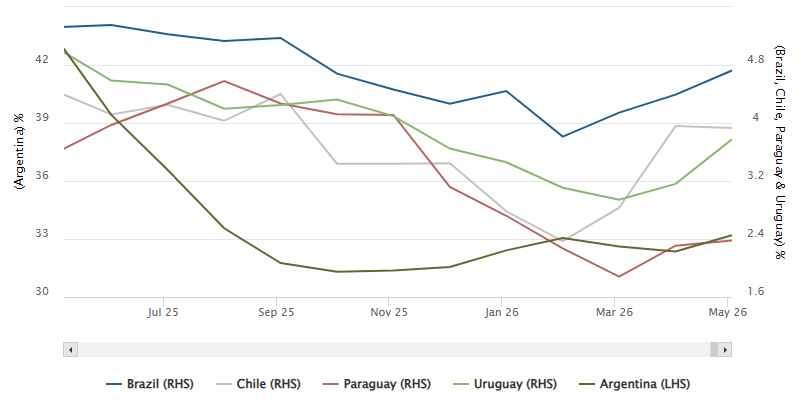
    Brazil & Southern Cone: inflation rate
    Percentage variation (year-on-year)

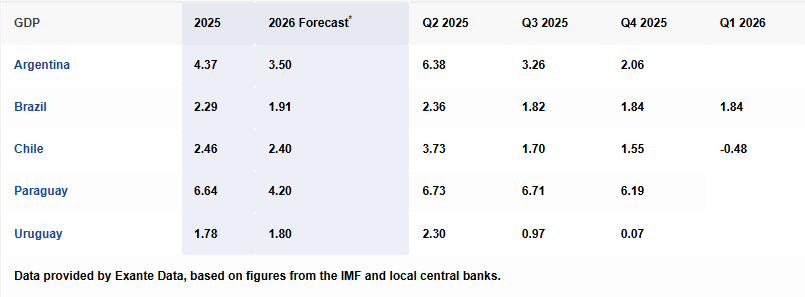
    Brazil & Southern Cone: GDP growth (%)
    Quarterly figures are year-on-year growth

  • GUATEMALA: Tax collection up, but budget slashed

    LatinNews 31 August 2011 Hits: 630

    In the first seven months of 2011 tax revenues rose by 18.5% year-on-year to Q$25.9bn (US$3.31bn), the Superintendencia de Administración Tributaria (SAT) reported.

    In the first seven months of 2010 the government collected tax revenues of Q$21.8bn (US$2.79bn). The SAT said that VAT revenues were the most important source of taxes, providing Q$12.9bn (US$1.66bn). The government’s target is to collect Q$38.7bn (US$4.94bn) in tax revenues this year.

    Despite this increase in revenues, President Alvaro Colom announced he was cutting spending by Q$2.125bn (US$265m) because, he says, of congress’s failures either to approve either a law against tax evasion (which would boost the government’s revenues by at least US$100m) or to approve further borrowing. In fact, what seems to have happened is that the government has ramped up spending well beyond what was called for in the budget.

    The institutions whose budgets are most affected are the community development councils (Cocodes), which will see their spending cut US$89m, municipalities (US$46m) and San Carlos University (US$32m).
    President Colom is also pushing on with smaller spending cuts in health, education communications and security. Congress last year approved a budget of US$6.8bn.

    Even with the increase in tax collection the government’s sums do not add up. The 2010 budget capped the fiscal deficit at 2.8% of GDP.

    Trade: Guatemalan businesses want to double their exports to Southern Mexico and Central America (an area the Guatemalans call Mesoamérica) over the next four years, according to Francisco Menéndez, the president of the Asociación Guatemalteca de Exportadores (Agexport). There are 21.4m consumers in this area. The Guatemalans expect to set up offices in El Salvador, Honduras, Costa Rica, and Cancún and Mérida (México). The Guatemalans will focus on exporting agricultural products, shoes, paper, frozen foods and confectionery.
    The US is currently the biggest single market for Guatemalan exports which came to US$8.5bn in 2010: the US accounted for 42% of Guatemala’s exports.

    Inflation: In July consumer prices rose by 0.95% in the month, bringing 12 month inflation to 7.04%.

  • ARGENTINA: Central bank president quits

    LatinNews 02 October 2014 Hits: 1118

    On 1 October the president of Argentina’s central bank (BCRA), Juan Carlos Fábrega, resigned. A day earlier, President Cristina Fernández had accused bank employees of helping speculators undermine the Argentine peso. Alejandro Vanoli, the head of the national securities commission (CNV), will take over as BCRA president. Among the main challenges facing the new president are the country’s exchange rate policy, low levels of international reserves, and spiralling inflation.

    In a lengthy, rambling speech on 30 September, President Fernández had taken a swipe at a number of enemies, both domestic and international. At one point she warned her supporters that if anything happened to her, they should “look to the north”, in other words, the US. Fernández also accused the BCRA of failing to control manoeuvres by banks and brokers to weaken the peso, and suggested that privileged information had been leaked.

    Kicillof victorious

    Fábrega and the economy minister, Axel Kicillof, have long been locked in a battle for influence. Fernández’s comments indicated it was her economy minister she favoured, and Fábrega felt compelled to resign. Government control over the BCRA is likely to increase in the wake of Fábrega’s departure.

    In the short-term, Buenos Aires's main stock market (Merval) fell 8.2% (although it is worth noting that it has risen by 132% over the past year). The ‘blue dollar’, the unofficial exchange rate, fell slightly, to Arg$15.60/US$1, still a long way from the official rate of Arg$8.47/US$1.

    As well as the massive discrepancy in the exchange rate, which most analysts believe means another devaluation is inevitable shortly, inflation is running at around 40%. Argentina’s reserves have fallen to around US$27.1bn, leading to concerns that the country might run out of dollars to pay for its imports. While he was not in a position to refuse the government’s financing needs, Fábrega was credited with restoring some credibility to the currency markets after devaluing the peso at the beginning of the year and increasing interest rates.

    New civil code

    Opposition deputies staged a walk-out from congress on 1 October, as the government benches prepared to approve a new civil and commercial code. The bill contains 2,671 articles and will abolish the previous code drafted in 1869.

    The code will not take effect for the next 15 months, but when it does it will have a significant impact on marriage, adoption and divorce rights. But one of the articles could eventually change the nature of Argentina’s dispute with its bondholders: the new law would allow debtors to pay lenders in Argentine pesos rather than US dollars.

    Civil matters

    In marriage, the new code aims to catch up with Argentina’s Equal Marriage Act which allowed people of the same gender to wed. As for divorce, the new law will simplify the current procedure, by abolishing time limits and permitting divorce in cases where only one spouse has filed the petition. On adoption, the new code will reduce the time for the processing and issuance of decisions. Another article, the “convivial union” grants certain rights to two people living together, regardless of gender.

    Commercial code

    Argentina’s creditors, however, are far more interested in the commercial code. In the aftermath of Argentina’s default in 2001, the government converted dollar deposits and loans into pesos, in a move known as “pesofication”. In 2012 the northern province of Chaco repaid its dollar-denominated bonds in pesos because the central bank denied its request to buy foreign currency.

    “The feeling is that the government is going toward a pesofication option in the new civil code,” Alejo Costa, a strategist at Puente Hermanos Sociedad in Buenos Aires, told Bloomberg.

    • In contempt

    On 29 September US District Judge Thomas Griesa ruled that Argentina was in contempt of court because of its attempts to circumvent his order that it pay its debts owed to its 'holdout' creditors before making any other payments to the holders of its restructured debt. So far Griesa has not announced what the punishment should be; one of the holdouts, NML Capital, has suggested a fine of US$50,000 per day. President Cristina Fernández accused the US government of being behind Griesa's ruling.

  • CHILE: Mapuche conflict causes waves

    LatinNews 13 August 2020 Hits: 3971

    After a particularly violent flare-up in tensions between the indigenous Mapuche and Chilean authorities in early August, arson attacks by Mapuche activists in the southern region of La Araucanía have continued. The government led by President Sebastián Piñera is facing conflicting calls on how to address the situation: human rights defenders and large parts of civil society advocate a resolution through dialogue, while some business sectors are demanding a rapid end to a conflict that impedes their work.     

    A small demonstration in Santiago in defence of the Mapuche on 10 August drew particular attention as it resulted in several arrests, with one of those detained for breaking the coronavirus (Covid-19) lockdown being Francisca Dávalos, the daughter of former president Michelle Bachelet (2006-2010; 2014-2018). Bachelet is now the United Nations High Commissioner for Human Rights. The representative for her office (the OHCHR) in South America, Jan Jarab, is one of the voices calling for a peaceful resolution through dialogue to the long-running Mapuche conflict. In a 5 August statement, Jarab notably expressed concern with signs that civilians have been expressing hatred and racial discrimination against the Mapuche.

    This came after a group of civilians joined the police in violently repressing the occupation of public buildings by Mapuche activists over the weekend of 1-2 August. However, a public opinion survey by pollster Cadem published on 10 August reveals that 76% of Chileans believe that the Mapuche are discriminated against. A large majority of Chileans supports the better recognition of Mapuche rights, such as their right to be recognised in the constitution (supported by 93% of respondents), or to have their ancestral lands returned to them (75%). Although 57% of respondents believe that the attacks in the La Araucanía constitute terrorism (the government’s narrative on the situation), 79% believe the conflict should be resolved through political dialogue, with only 11% defending its resolution by judicial means.

    Perhaps part of these 11% are the Chilean lorry drivers who have been pressuring the government to take action to end the arson attacks, which usually target agricultural machinery and other heavy vehicles. Representatives from the CNDC and Fedesur lorry drivers’ unions met Interior Minister Víctor Pérez in Santiago on 10 August, with some threatening a strike if “one more lorry” is attacked. Pérez has condemned this “ultimatum” from lorry drivers, while acknowledging the challenge of the situation and the government’s efforts to work towards a resolution. 

    Hunger strike

    The spark behind the latest flare-up in tensions in La Araucanía is a new hunger strike by several Mapuche prisoners who are demanding that they be allowed to serve their sentence on their land, arguing that to deny them this contravenes Convention 169 of the International Labor Organization (ILO) on indigenous rights. Mapuche shaman (machi) Celestino Córdova, who is serving an 18-year sentence for murder and is the leading figure of this hunger strike, reached the 100-day mark of his hunger strike on 11 August in frail condition. In an audio message circulating online and attributed to Córdova, the machi says he is prepared to give his life “for my Mapuche people, for our spiritual beliefs”.

  • NGOs and the commodity value chain

    Patrick de Courcy 09 March 2022 Hits: 1711

    An important development in the various Amazon environmental protection campaigns has been the growing ability of activists to identify, understand, and track global commodity or value-added chains. These chains, part of a globalised economy, have been defined in different ways. They have been characterised as a network of labour and production processes whose end result is a finished commodity or product. The chain is said to link primary production units through a series of ‘boxes’ or ‘nodes’, each performing different aspects of additional processing or distribution, often in different parts of the world, and eventually leading to where the ultimate buyers or consumers are located. As part of their campaign to preserve the Amazon from deforestation or other harmful practices, NGOs have politicised different links in the chain. They have for example highlighted the various phases, locations, and export destinations for the illegal logging of mahogany, or drawn attention to the harmful side-effects of unrestrained commercial expansion of soya production and export.

    At present, there is a significant environmental focus on the role of beef and leather produced from cattle raised on illegally deforested land. Particularly in Europe, investors, consumer groups, supermarkets, and retail outlets have become more aware of the deforestation issue, and less prepared to buy products tainted by being linked to deforestation at some points in the commodity chain. In January 2022 those taking distance included the Norwegian government pension fund, which said it would consider de-investing in Marfrig, Brazil’s second largest meat producer, and some European supermarkets such as Sainsbury’s (UK), Carrefour (France), and Lidl and Albert Hejin (Netherlands), all of which announced decisions to remove or restrict the sale of meat cuts from Brazilian suppliers suspected of using cattle grazed on deforested land.

    At the Glasgow Climate Summit (COP26) in November over 100 countries, including Brazil, had pledged to end livestock farming on deforested land by 2030, although there was some doubt over the seriousness of Brazilian government’s commitment given the Bolsonaro administration’s pro-economic development stance and the fact that it was already coming to the end of its four-year term in office. A major issue for firms and consumers is that Brazil’s agro-commodity supply chains are complex and loosely regulated, enabling a high level of ‘cattle laundering’. There are an estimated 2.5m cattle ranchers in Brazil, many in isolated areas. Typically, cattle are bought, sold, and moved around different pastures between two and six times before being slaughtered. This makes it is easy to mix ‘dirty’ beef (raised on illegally deforested land) with ‘clean’ beef. Relevant paperwork is also often forged. Major Brazil-based producers such as JBS (the world’s largest meat processor) say they have taken steps to ensure beef bought from direct suppliers is ‘clean’. However, they are less able to vouch for the significant volumes of beef the company acquires from indirect suppliers.

    Consumer pressure for ‘deforestation free’ products from Brazil is likely to increase in the next few years, placing much greater demands from supermarkets and others for credible verification processes. The European Commission has drafted a bill to exclude goods produced on illegally deforested land from its supply chains. If approved, this could heavily hit Brazilian exports of beef, wood, soyabeans, coffee, and cocoa; Brazil is the largest supplier of soya, beef, and coffee to the EU. EU parliament members are also seeking to widen the bill’s scope to include not only the Amazon but also additional Brazilian regions where development is threatening biodiversity, such as the Cerrado and Pantanal wetlands.

    JBS and other companies will continue to gradually improve their monitoring, including through digital tracking tools and blockchain technology. However, critics say the industry is still too reliant on beef of uncertain origin and has resisted ideas such as obligatory cattle-tagging at birth. Brazil’s meat industry will face the greatest pressure. The extractive and energy sectors can also expect rising levels of scrutiny. The current Brazilian government has a sceptical or even denialist position on climate change, but the next government (due to take office in January 2023) will likely move to a more mainstream approach and will require farmers and others to tighten their environmental and sourcing controls.

  • CUBA: New sanctions as economy deteriorates

    Abbi Dicker 12 August 2025 Hits: 3020

    Marking the fourth anniversary of Cuba’s anti-government protests of July 2021, the US administration led by President Donald Trump has announced additional economic sanctions.

    For the first time the Cuban president, Miguel Díaz-Canel, has been directly sanctioned by Washington, accused of responsibility for “gross violations of human rights”. There are also sanctions against his defence and security ministers, Álvaro López Miera and Lázaro Álvarez Casas respectively. All three men are now banned from visiting the US (something Díaz-Canel has done on several occasions to attend meetings at the United Nations in New York). The US State Department also announced that US citizens and corporates will henceforth be banned from doing business with 11 hotels, including the recently completed Torre K in Havana, and from transactions with Grupo de Administracion Empresarial SA (Gaesa), the state-owned military conglomerate, and its affiliates.

    In macro-economic terms these latest sanctions will have relatively limited effect. Cuban economist Omar Pérez Villanueva was cited by Spanish daily El País in a July report as saying “All these new measures tend to reinforce the US blockade of Cuba, but they won’t be a major blow [because]…many of the foreign countries with ties to Cuba have already been pressured, and American tourists are no longer coming to the country as they used to.”

    In fact, the macro-economic situation of the island is extremely fragile. Tourism arrivals fell by 25% in the first half of 2025. Official data is unreliable, but the government has admitted that the economy contracted 1.1% last year and has not yet recovered to pre-coronavirus (Covid-19) levels. Constant power plant breakdowns mean only half the population has electricity at any given time. There is a chronic lack of foreign currency. The health service, social safety nets, agriculture, and industry are all in crisis. The labour minister, Marta Elena Feitó Cabrera, was forced to resign on 15 July after wrongly claiming that there are no beggars in the country. A report released in July 2024 by Spain-based NGO Observatorio Cubano de Derechos Humanos (OCDH) on the state of social rights in Cuba estimated 89% of Cuban families suffered from extreme poverty.

    Admitting errors

    For decades Cuban governments have blamed the US trade embargo as the main cause of all their economic difficulties. This remains the case, but in his speech to mark the anniversary of the 26 July 1953 attack on the Moncada barracks (in effects the beginning of the Cuban Revolution) President Díaz-Canel adopted a more self-critical tone, admitting that his government needs to correct internal “errors” and “deficiencies”.

  • URUGUAY: Stability fails to deliver popularity

    Abbi Dicker 22 October 2026 Hits: 89

    Uruguayans suffer from “an excessive lack of self-esteem”, according to the country’s economy and finance minister, Gabriel Oddone, who argued that they had forgotten what it was like to suffer from certain problems afflicting other countries in the region, such as debt management, fiscal stability, and inflation. While Oddone recognised that more needed to be done in areas such as competitiveness, his comments reflected a sense of frustration that the government is so unpopular when the country is widely viewed as a paragon of political and economic stability in Latin America.

    “Uruguay slowly and quietly cleared up a number of things that are no longer up for debate,” Oddone said, while addressing the independent civil society group Círculo Uruguayo para la mejor Gobernanza de las Organizaciones (Cugo) last week in a forum entitled ‘Governing amid uncertainty: board decisions in new scenarios’ in Montevideo. “The most obvious example is that we have had the lowest country risk in the region for many years, whoever is in government. This is an asset built by Uruguayan society,” he added.

    Uruguay’s country risk, Oddone said, was just 75 basis points last week in the Bolsa Electrónica de Valores, which publishes the country’s official country risk index. All of this stands in stark contrast with neighbouring Argentina, for instance, where all the fiscal and monetary metrics Oddone highlighted as no longer “topics of discussion” remain very much active, unresolved issues.

    It is this economic and political stability which has made Uruguay an attractive destination for investment in recent years. On 14 October President Yamandú Orsi announced a US$5.7bn investment by the Spanish company Solaria Energía y Medio Ambiente in three data centres and a 350MW solar generation plant to supply them with renewable energy. Uruguay is “a country where you can invest, where you can grow, and where the rules are clear,” Orsi said. The government expects the data centres, which will be located in the departments of Canelones, San José, and Florida, to be up and running in 2029 or 2030.

    The industry, energy, and mining minister, Fernanda Cardona, said the project constituted “historic investment in Uruguay”, nearly doubling public-private investment in wind power generation in the country. “There will be an economic spillover here, but also job creation, territorial decentralisation, and a win-win situation,” Cardona said. She added that the construction would be carried out by Uruguayan companies, which would generate 1,500 permanent operational jobs (and a further 3,000 temporary ones during building).

    In stark contrast with the prevailing good news in Uruguay presented by Oddone and Cardona, public disillusionment with the Orsi administration remains rife. Orsi is the third least popular head of state in the region, according to the latest survey conducted by the consultancy CB Global Data between 5-8 October. Orsi had a disapproval rating of 62.1%, with just under a third of respondents describing his performance as ‘very bad’, and an approval rating of just 35.2%, down 2.5 percentage points from a September survey.

    This placed Orsi in sixteenth position out of 18 regional heads of state, only just above Venezuela’s President Delcy Rodríguez and Guatemala’s President Bernardo Arévalo. Rodríguez’s approval rating was 32.3%, although her disapproval rating was actually slightly lower than Orsi’s on 60.9%, while Arévalo’s approval rating was 31% and disapproval rating 63.1%. Mexico’s President Claudia Sheinbaum led the way with a 69.3% approval rating, ahead of El Salvador’s President Nayib Bukele on 68.3%.

    Poverty decreases

    Official data from Uruguay’s national statistics institute (INE) showed 14.8% of the population living below the poverty line in the first half of the year, and 1.2% in extreme poverty. The figures marked an improvement on the first half of 2025 when poverty stood at 17.7% and indigence at 1.8%, meaning some 95,000 people were lifted above the poverty line in absolute terms.

  • VENEZUELA: Still recovering

    LatinNews 04 October 2011 Hits: 817

    The economy probably grew by 2.5%, year-on-year, in the second quarter of 2011. The government’s critics happily point out that the recovery appears to be running out of steam.

    An anti-government Think Tank, Ecoanalítica, says that the recovery in the first half of 2011 was hampered by “the new economic model, which not only arrests the development of the private sector, but also the public sector.”

    According to the firm, both the public and private sector are lagging behind their potential. It said that “Hence, low overall growth rates. Thus, what we used to call boom or surge when oil prices would rise, now, we just call it a break.”

    Ecoanalítica argues that that although the economy is recovering, the rate of growth is slowing. “This means that the country has not fully recovered yet from the recession of the past two years. A 2.5% rate is very far from the rate actually needed to overcome recession accordingly. GDP remains significantly lower than in the first half of 2008”.

    Statistics from the central bank show that despite increased household spending (up 3.4% in real terms, the highest level for a second quarter since 1998), this was not magnified by increased spending by the public and private sectors.

    The key oil industry was up by only 0.1% in the first half of 2011, even though the non-oil economy was up by 4%. Both figures are comparisons with 2008.

  • REGION: Balance of trade deteriorates

    LatinNews 21 March 2014 Hits: 2499

    Across Latin America, trade balances are deteriorating. While different factors are at play in different countries, changes in the global economy seem to be affecting the region as a whole.

    Brazil posted a US$2.13bn trade deficit in February, the biggest in two decades. Exports rose 2.5% year-on-year to US$15.93bn, while imports jumped 7.3% to US$18.06bn. A poor performance in the first two months of 2014 followed on from a fairly dismal 2013, when the country registered a whopping current account deficit of US$81.37bn, equivalent to 3.66% of GDP, on data from the central bank (BCB).

    Although generally better placed, Mexico also had something of a bad start to the year on the trade side. In January, the trade deficit was US$3.19bn, up from US$2.85bn in the same month in 2013. Exports fell 1% year-on-year, while imports rose 0.3%. The trade deficit for 2013 as a whole was a small US$1.02bn (on exports of US$380.18bn versus imports of US$381.21bn). Elsewhere, trade balances deteriorated in a number of countries including Argentina, Colombia, Chile, Peru and Venezuela.

    Deteriorating trade balances can be explained by a number of factors. Commodity prices have fallen, with weaker prices for copper (affecting Chile and Peru), iron ore (Brazil), crude oil (principally Ecuador, Venezuela, and Mexico). Domestic economic imbalances, including high inflation and multiple exchange rate regimes, have been an important factor in Argentina and Venezuela.

    Smaller trade balances – or larger deficits – have been a factor in a general deterioration of current accounts across the continent. Most Latin American countries are now running current account deficits. Some have regularly posted deficits in the last 5-6 years (Brazil, Colombia, Mexico), while others have gone from a current account surplus to a deficit (Peru, Chile). Some analysts think the new move to larger and more generalised current account deficits is a danger signal: they believe it could add up to a repeat of events in the late 1990s, when growing concerns over these imbalances led investors to take fright, triggering a financial crisis.

    In a recent research note, London-based analysts Capital Economics pointed out that with the exception of Mexico, the current account deficits of 2013 were comparable in size to those of 1998. However, it does not see a crisis coming around the corner now, as it did then. This, it says, is for two main reasons. The first is that the deficits “are now funded by more stable forms of external finance”, with less reliance on short-term bond and equity markets, and more reliance on long-term inflows of foreign direct investment (FDI). In all countries except Brazil, net FDI inflows exceed the current account deficit (in Brazil FDI covers three-quarters of the deficit). The second is that Latin American countries now have greater accumulated levels of foreign currency reserves – a buffer against sudden financial turbulence – than they did in the late 1990s.

    While it doesn’t see a crisis, Capital Economics notes that there still is some cause for concern. It argues that Latin American economies have used their rather more stable positions to boost consumption rather than investment, raising questions over sustainability. As the research note says, “there is no evidence that large current account deficits have gone hand-in-hand with higher rates of investment. At best, investment as a share of GDP has remained stable over the past five years. But in Brazil, and to a lesser extent Chile and Mexico, it has actually fallen. In other words, the authorities have taken advantage of cheap and plentiful foreign finance over the past five years to fund a consumption binge rather than much-needed investment”. The net result, the paper concludes, is that Latin American economies are more exposed than they need have been to tightening global monetary conditions.

  • PANAMA: Electoral campaign kicks off

    LatinNews 07 March 2019 Hits: 3831

    Panama’s electoral campaign formally began on 4 March. Competing for the presidency will be the frontrunner Laurentino Cortizo, of the opposition Partido Revolucionario Democrático (PRD); Rómulo Roux, of Cambio Democrático (CD); José Blandón of the ruling Partido Panameñista (PPA); Saúl Méndez, of the left-wing Frente Amplio por la Democracia (FAD); and three independents, former attorney general Ana Matilde Gómez, former deputy Marco Ameglio, and lawyer Ricardo Lombana.

    This is the first time there has been an official campaign period. It will last for 60 days, concluding three days before general elections on 5 May when, in addition to the successor to President Juan Carlos Varela, deputies to the 71-seat national assembly will also be chosen.

    There will be new limits on campaign financing set at US$10m for presidential candidates, and US$300,000 for deputies, in the interest of greater transparency over electoral spending. Meanwhile, a social media campaign opposing legislative re-election obtained through clientelism and vote buying is gathering steam.

    Opinion polls are expected to proliferate now the presidential electoral campaign is officially underway. All the competing candidates agree on the need for profound constitutional reforms to revive state institutions discredited by myriad corruption scandals over the course of the last decade, although there is no consensus on how to go about it.

  • HONDURAS: Controversial new budget will be largest in Central America

    Sarah Sheldon 23 February 2023 Hits: 1325

    On 13 January Honduras’ congress approved a L392.52bn (US$16bn) state budget for 2023, up 8.9 % compared to 2022, with various budget items prompting criticisms from civil society organisations like Asociación para una Sociedad Más Justa (ASJ), the local chapter of anti-corruption NGO Transparency International, and think tank Foro Social de la Deuda Externa de Honduras (Fosdeh).

    One of the main criticisms is that the weighting of resources doesn’t reflect the stated priorities of President Xiomara Castro’s government to guarantee access to fundamental services such as health services and education, according to ASJ. Another is that it will cost 47% of GDP, the largest proportion of any country in the region, where state budgets average 27% of GDP, said the NGO in a statement dated 12 January.

    The amount of resources dedicated to the state-owned energy company Empresa Nacional de Energía Eléctrica (ENEE) rose by 128% year on year, according to ASJ. This is part of Castro’s plan to get a handle on the parlous state of the government owned and operated company, which has accumulated huge debts and recorded losses that affect the public finances. However, in its statement, ASJ says that with these funds “it would be possible to double the number of teachers, doctors and medicines, to benefit the most vulnerable”. ASJ and Fosdeh both highlight the increase in spending on security. Fosdeh highlights that under the 2023 budget, L10.2bn has been earmarked for security up from L7.8bn in the revised 2022 budget while L10.9bn has been assigned to defence, up from L9.3bn in 2022. In December, Castro declared a partial state of exception covering dozens of municipalities with the aim of combating organised gangs.

    In its statement ASJ highlights that these spending priorities are “inconsistent with the national reality,” and it said that more money should be invested in health and education, which have seen their share of the total budget decrease for 2023. Improving health and education systems is a priority for Castro, but nonetheless the new budget provides less resources for public provision of these services than last year, according to ASJ. This continues the trend of the last 10 years, adds the organisation, with the assignation for education as a proportion of the budget dropped to 10% from 16% over the past decade.

    Both ASJ and Fosdeh highlight the lack of resources for fighting corruption – another declared government priority. Fosdeh points out that just 1% of the budget is assigned to institutions tasked with fighting corruption, which include the transparency ministry which received just L157.1m, the attorney general’s office, which received US$2.2bn, the high court of auditors (TSC), which received L491.9m, and the institute for access to public information (L39.0m).

    Liliana Castillo, a former president of the Colegio de Economistas de Honduras, a national association of economists, told local media outlet Proceso in an article published 12 January that most of the budget was set aside for running costs, with only the equivalent of 1% of GDP destined for investment. This will not be enough to generate public sector jobs, according to Castillo. And there was more criticism over the approval process. Economist Julio Raudales said it was “painful” that the budget was approved during the night after only one debate “

    The enlarged budget comes at a time of economic slowdown forecast for Honduras. GDP growth is expected to slow from 3.5% in 2022 to 3.1% in 2023, according to the World Bank (WB), before rebounding to 3.7% in 2024. While these figures aren’t terrible given global headwinds, it is important to note that the Honduran economy remains heavily reliant on remittances sent home by migrants living abroad, leaving the country dependent on the economic situation in the US. Honduras received a total US$8.69bn in remittances in 2022, up from US$7.37bn in 2021, on figures from the central bank (BCH). According to WB data, remittances represented 25.3% of Honduras’s GDP in 2021.

    To fulfil her campaign promises and put Honduras on the path to sustained growth, Castro needs to overhaul the country’s development model. However one year of her term has already passed and she has made little progress. She has been hamstrung by the fact that her Partido Libertad y Refundación (Libre) party does not have enough legislators in the 128-member unicameral legislature to pass legislation on its own. The situation worsened in October with the breakdown of an alliance with Partido Salvador de Honduras (PSH) party, with which Libre had forged an electoral alliance ahead of the November 2021 general election. Far from being able to concentrate on the economy, Castro’s energy will likely be used up fighting ongoing political battles in congress, on issues such as the election of the new supreme court which will have a huge say in the direction of the country over their seven-year terms.

    Taiwan concerned about Honduras’s relations with China

    On 19 January, Taiwan’s foreign ministry was reported as expressing “grave concern” over news of a meeting between Honduras’ foreign minister Eduardo Enrique Reina and Chinese deputy foreign minister Xie Feng. The meeting reportedly took place on 1 January in Brazil’s capital, Brasília, where both officials were attending the inauguration of Brazil’s President Luiz Inácio Lula da Silva.  

    According to the local media, the pair discussed China’s possible involvement in the construction of the Patuca II hydroelectric dam in Honduras’s Olancho department. Honduras is one of 14 countries that maintains diplomatic relations with Taiwan in the face of growing pressure from China to break ties. For his part, Reina said that there are no plans to establish diplomatic relations with China, although Honduras will “open its doors to the world in order to gain the most benefit for the Honduran people,” he said. In recent years, Panama, El Salvador, Nicaragua, and the Dominican Republic have all switched allegiance from Taiwan to China, and Castro caused a stir ahead of the election with her pledge to make a similar switch – a promise on which she has since rowed back.

  • TRACKING TRENDS

    LatinNews 16 July 2015 Hits: 1601

    ECUADOR | CAF credit line

    On 14 July Ecuador’s finance ministry announced that the Latin American Development Bank (CAF) had opened a new US$400m credit line for electricity-related projects in the country. A ministry statement, explained that the funds would be used to help achieve the government’s objective of changing the country’s energy matrix by moving away from the use of fossil fuels, in particular natural gas, towards using more electric power. Achieving this has been described as “vital for the country’s future development” by the government led by President Rafael Correa.

    While Ecuador is a net crude oil exporter, its natural gas production has been lagging behind for years due to lower levels of investment in this sector and the country currently consumes its entire natural gas production (which reached 600m cubic metres per day in 2014). Aware that developing the necessary infrastructure to expand the country’s natural gas production could take years, and that demand for the fossil fuel could outstrip the national supply in this time, the Correa government has been pursuing an ambitious plan under which it plans to get some 3m households to switch from natural gas fired cookers to electricity-powered induction cookers. In fact, María Soledad Barrera, the president of Ecuador’s national financial corporation (CFN), has said that part of the CAF credit money will be used in this specific project over the next three years. According to Barrera, the credit line will also be assigned to other programmes designed to promote the substitution of fossil fuels with renewable energy sources.

    BOLIVIA| Lithium processing plant

    On 13 July Bolivia’s Gerencia Nacional de Recursos Evaporíticos (GNRE), a state-owned firm, signed a contract with Chinese firm, Camc Engineering Co. Ltd., which is affiliated to the China national machinery industry corporation, for the building of a lithium processing plant in the Uyuni salt flats, located in the south-western department of Potosí. Bolivia’s President Evo Morales, Vice-President Álvaro García Linera and China’s ambassador to Bolivia, Wu Yuanshan, were among those present at the signing of the contract.

    According to Morales, the signing of the contract marked a historic moment for Bolivia, since it represents a significant step in the industrialisation of lithium production in the country. According to Luis Alberto Echazú, GNRE’s national manager, Potosí has the biggest lithium reserve in the world and the plant will be the biggest factory in Uyuni municipality. It will also be among the 10 largest in the world and the fourth largest in Latin America. It is estimated that it will take some 30 months to build the plant at a cost of US$178m. The goal is to have it operational by 2018. According to the GNRE, once fully operational, the plant will produce 700,000 tonnes of lithium per year.

    COLOMBIA | Net FDI plummets in June

    On 14 July Colombia’s central bank (Banrep) released its national investment figures, which showed that net foreign direct investment (FDI) in the country fell by a sharp 94% year-on-year in June. According to the Banrep figures, in June FDI in Colombia was US$166m compared to US$$2.98bn recorded in June 2014. This fall is primarily explained by a decrease in investment in the oil & mining sector. While there was a 13.4% increase in foreign investment in other sectors to reach US$261.6m, investment in the oil & mining sector fell by 40.1% year-on-year to US$746m. Meanwhile, Banrep figures also showed that foreign investors pulled a net US$490m out of the country in June.

    As the security in Colombia has improved, the country has enjoyed a decade-long increase in FDI, mostly driven by investment in the oil & mining sector. However, as a result of the recent significant fall in international oil prices, FDI inflows in Colombia have tapered off, resulting in lower domestic economic growth. All of this is problematic for the government led by President Juan Manuel Santos given that it has embarked on an ambitious multi-year infrastructure development investment plan. The lower level of investment and economic activity is now working against this. Indeed on the same day the Consejo Nacional de Política Económia y Social (Conpes) approved the government’s proposed 2016 budget for Col$167.2trn (US$62.3bn), a modest 2.3% reduction on the previous year’s budget. Finance Minister Mauricio Cárdenas explained that the reduction in the investment plan is “a consequence of austerity resulting from the fall in international oil prices”. Among the sectors most affected by the cuts are the key areas of agriculture and housing.

    • Colombia-Japan EPA

    On 14 July Colombian and Japanese representatives met in Bogotá to initiate the XII round of negotiations for the Japan-Colombia Economic Partnership Agreement (EPA), which will go on until 17 July. Colombia’s trade minister, Cecilia Álvarez-Correa, highlighted the importance of negotiating a trade agreement with the world’s third largest economy and biggest food importer. According to trade ministry data, bilateral trade in goods between Colombia and Japan amounted to US$1.86bn last year. According to Álvarez-Correa once a bilateral EPA deal is reached, exports of agricultural and industrial goods, as well as services, will be diversified. In last year’s round of negotiations, which took place in Tokyo in May, progress was made in areas such as trade in goods, government procurement and rules of origin.

  • TRACKING TRENDS

    LatinNews 03 August 2017 Hits: 570

    URUGUAY | Fiscal deficit creeps up. Uruguay’s economy & finance ministry (MEF) reported on 31 July that the country’s fiscal deficit reached 3.6% of GDP (equivalent to US$1.97bn) in the rolling 12-month period to June. The result is two percentage points higher than the deficit reported back in May and should be a concern for the government led by President Tabaré Vázquez as it goes against its declared efforts to reduce the fiscal deficit to 3.3% of GDP this year (and to 2.5% of GDP by 2018).

    The fact that the increase in the deficit comes just as Uruguay’s national congress is debating the government’s draft 2018 budget should focus the minds of the government and legislators from the ruling left-wing Frente Amplio (FA) coalition. The government has been advocating an austere budget based on public spending constraints, but radical FA factions are complaining that it fails to allocate sufficient funds for social spending. Nevertheless, the need to contain government spending is highlighted by the MEF report, which notes that the increase in the deficit to June came on the back of a 0.1% of GDP fall in central government revenue, a 0.3% of GDP fall in non-financial public-sector revenue, and a 0.2% fall of GDP in revenues from state-owned firms. Meanwhile, central government expenditure increased by 0.1% of GDP, which was only offset by an identical 0.1% of GDP reduction in public sector investment.

  • PARAGUAY: Top of the class for business?

    Patrick de Courcy 15 September 2021 Hits: 1913

    The business climate across Latin America is improving, and Paraguay is doing best of all, according to a report published by the Brazilian university and think-tank Fundação Getúlio Vargas (FGV).

    The FGV publishes a regular ‘index of the economic climate’ (ICE) which is compiled for 10 countries in Latin America, based on interviews with 149 specialists. The index has an equilibrium point of 100: scores above that number indicate an improving business climate, while those below 100 show deterioration. In its latest report the FGV says that after hitting an all-time low of 40.1 in the second quarter of last year, at the worst point in the coronavirus (Covid-19) pandemic, the ICE for Latin America as a whole has been improving, coming back up to 99.7 (almost in positive territory) in the third quarter of this year.

    This is in fact the highest score since the last peak of 101.5, which was registered in the first quarter of 2018. The ICE score has consistently increased for the last five quarters. Improvements seem to have been led by a positive assessment of the current short-term situation. Businesses appear encouraged by advances in Covid-19 vaccination programmes and by the re-opening of significant parts of local economies. Strong global commodity prices have also supported exports. However, the experts believe the future outlook remains quite uncertain.

    Among the 10 countries covered, Paraguay had the best ICE score, at 125.1. It was followed by Brazil at 116.5, Chile with 104.1, Peru at 102.0, and Colombia with 101.1. All these five countries were in positive territory. The economic climate was less good, coming in below 100 in the other five countries: Mexico at 92.4, Uruguay at 79.2, Ecuador at 77.9, Bolivia at 73.2, and Argentina at 60.3. Paraguay’s good showing in the ICE index was welcomed by government officials in Asunción, who said it reflected the country’s strengths and the effective management of the pandemic.

    Some clouds on the horizon

    The FGV report was relatively modest in its projection for economic growth in Paraguay this year, which it expects to come in at 3.7%, below the 10-country average. This came amid growing concern over the drought, which has lowered water levels in the Paraguay and Paraná rivers and disrupted Paraguay’s trade flows. As a landlocked country, Paraguay is heavily dependent on river shipping. Transport problems were made more acute by a 20-day truck drivers’ strike which ended on 21 August, after a dispute over road-freight and petrol prices.