All Categories

Subcategories

  • MEXICO: Truckers deal at last

    LatinNews 30 January 2015 Hits: 2355

    It took 21 years after the signing of the North American Free Trade Agreement (Nafta) but Mexican truckers will soon be able to operate in the US rather than having to unload their cargo at the border to be taken on to its destination in US trucks. Under the 1994 Nafta treaty, Texas, California, New Mexico, and Arizona were meant to be opened up to Mexican trucks by December 1995 and all constraints on their free circulation lifted by 2000. But, invoking fears about low Mexican compliance with safety and environmental standards, the US Teamsters union won support from protectionist politicians in Congress to prevent the liberalisation of the US road haulage market. The policy change should sharpen Mexico’s competitive edge in its capacity to make goods available to the US supply chain.

    The US Transportation Secretary, Anthony Foxx, confirmed on 15 January that the country had begun accepting applications from Mexican trucking companies seeking authorisation for long-haul, cross-border transportation under Nafta. “Opening the door to a safe cross-border trucking system with Mexico is a major step forward in strengthening our relationship with the nation’s third largest trading partner, and in meeting our obligations under Nafta,” Foxx said. The Mexican communications and transport ministry (SCT) celebrated the announcement, saying that it would contribute to the creation of “a modern, agile, efficient border, at the same time as strengthening the productive integration of Mexico and the US”.

    According to US Department of Transportation figures for 2013, 66% of annual two-way trade between the US and Mexico, some US$335bn, is handled by trucks. The change is likely to lower the cost of Mexican products in the US and cut the time taken to deliver them. The previous system, which involved Mexican trucks delivering to warehouses just inside the US border, where the goods were then transferred to US trucks for the onwards journey across the US, added between 3% and 5% to delivery costs.

    The policy change will also bring a definitive end to tariffs worth some US$2.3bn a year levied by Mexico on US goods and agricultural products under a favourable ruling by a Nafta dispute settlement panel in 2001. Mexico first applied these in 2009 after a pilot programme launched by the administration of President George W Bush in 2007, enabling 25 Mexican carriers to operate 100 trucks within the US, was halted prematurely. The Mexicans suspended 50% of these tariffs after another pilot programme began in 2011. Involving 15 Mexican trucking companies crossing the border more than 28,000 times, and undergoing more than 5,500 safety inspections by US officials, this programme concluded last October. Foxx said that data from the programme had “proved that Mexican carriers demonstrate a level of safety at least as high as their American and Canadian counterparts”.

    The Teamsters union was ostensibly motivated by a concern that Mexican trucks were subject to inadequate regulation and that their drivers had poor safety records. The data collated through the pilot programme disproves this argument which was always spurious anyway because Nafta requires Mexican truckers to be certified, along with their companies, and held to the same safety and pollution standards as US trucks. In fact Mexican long-haul trucking companies wanting to operate in the US will now have to pass a safety audit and their trucks a rigorous safety inspection every 90 days for at least four years.

    Big uptake?

    The Teamsters Union’s fear of a big increase in competition might not be realised. While being forced to offload goods to warehouses just inside the US border for US trucks to take onwards added time and money to Mexican deliveries, the long wait crossing the border due to congestion and security checks has meant that several Mexican long-haul trucking companies have been reluctant to send their top trucks to the US just to sit in a queue. Anything other than a top truck, however, is unlikely to pass the rigorous US safety audits and inspections.

  • How the virus threatens the populists

    LatinNews 12 June 2020 Hits: 1173

    In many ways Covid-19 presents a uniquely powerful challenge to Latin American populist leaders. For a range of structural, social, and economic reasons its impact in the region could be more severe than in other parts of the world. Latin America has congested urban centres and shanty towns where social distancing is difficult. Public health systems are underfunded and do not adequately cover the whole population. Most Latin American countries have large numbers of informal workers, making it hard to fully enforce furlough or lockdown measures.

    Indeed, the graph of Covid-19 deaths per million inhabitants shows that, among the larger countries in the region, Brazil, Mexico, and Chile are pushing past the United States to register the highest per capita death rates. In late May, the WHO said Latin America had become “a new epicentre” for the global coronavirus epidemic. The fact that Latin America’s democracies have already been seriously weakened by crime and corruption, and that economic growth has been disappointing or non-existent for the last eight years, as argued in the earlier parts of this report, creates a sense in which the region is facing a ‘perfect storm’. According to the UN’s Economic Commission for Latin America (Eclac) the Covid-19 crisis could push an additional 29m people in the region into poverty this year and create another ‘lost decade’ for economic development (similar to the 1980s).

    There is also a sense in which the disease presents a uniquely sharp political challenge. As we have argued before, the populist knee-jerk reaction is to simplify a problem, find electorally significant groups of people it is hurting, and create a narrative that focuses attention on the real or imagined bad guys who can be blamed for it. But it is difficult to do this with a virus that is not fully understood, that triggers unfamiliar health issues that require rapid medical and scientific analysis. Notably both Amlo and Bolsonaro initially sought to minimise the problem, with the latter notoriously describing it as no more than a “little flu”.

    In his uncertain handling of the pandemic, US President Trump has at different points sought to blame China or the World Health Organisation (WHO) or to put his faith in insufficiently tested medicines such as hydroxychloroquine. Given their ideological affinities, Bolsonaro has echoed these views, while Amlo, from a left-wing perspective, has not joined in the anti-China campaign. However it is interesting that all three  rapidly came to the view that lockdown or quarantine measures were a major threat to the economy, and began to attack state governors, usually from opposing political parties, for moving too slowly to re-open economic activity.      

    A knockout blow for Jair Bolsonaro?

    The impact of the pandemic could arguably deliver a close-to-knockout blow to the Jair Bolsonaro government in Brazil, where it has shone an unforgiving light on the administration’s incompetence, its internal divisions, and on the president’s lack of leadership qualities. In May-June, amid a rising death toll and a deepening economic recession, the president appeared to be holding on to his hard-core loyal supporters, representing approximately 25%-30% of the electorate, but otherwise the political tide was turning. Consensus forecasts showed the economy contracting by 6% or more in 2020. In late May the proportion of respondents who considered his rule “bad or terrible” had risen to 44% with 23% considering it “fair”. That meant that two out of three Brazilians were critical of his administration. With the death rate surging, over 30 impeachment requests filed in congress, and the possibility of a Supreme Court investigation into his alleged unlawful manipulation of the Federal Police, there was a real possibility that Bolsonaro might not complete his four-year term running up to the beginning of 2023.

    Jair Bolsonaro approval ratings

    Note: Performance by colour: orange = bad/terrible; dark blue = optimal, good; light blue = fair; grey = don’t know.

    Source: Poder360

    Ironically perhaps, it had initially looked as if Brazil would have a rapid and competent response to the pandemic. The country has well-qualified medical experts, and considerable experience of dealing with other epidemics such as zika. On 13 March, only two days after the WHO declared a global pandemic and before there had been any deaths in the country, the Brazilian health ministry announced restrictions on public events. But these restrictions were almost immediately softened on the order of the president’s chief of staff, an army general.

    An investigation by Reuters news agency indicates that disease control measures proposed by the ministry were consistently over-ruled or diluted by the president and a group of his military ministers. Throughout this period Bolsonaro made a point of appearing on a weekly basis at right wing public rallies, shaking hands and embracing his supporters in defiance of lockdown and of social distancing rules. In a period of six weeks, two health ministers resigned or were dismissed.

    At the time of writing, the health ministry had been run for weeks by an interim minister – a former army general – with no medical experience.  Bolsonaro insisted on re-opening the economy at all costs. Asked by a journalist about the rising death rate the president infamously responded “So what? What do you want me to do?”. By early June total recorded deaths had reached 31,410, placing Brazil fourth in the world after the United States, the UK, and Italy. The total number of confirmed Covid-19 cases rose to more than half a million, the highest in the world after the United States. Even then, the Brazilian numbers were widely considered to be underestimates. Brazil’s role as a global epicentre for the disease was confirmed by data showing it to have one of the highest rates of deaths-per-million at 147.7 (the highest in South America).

    As in the United States and Mexico, Brazil began a phased lifting of quarantine restrictions among tensions and disagreements between federal and state authorities and fears that the process had been launched too early, raising serious risks of re-infection. The process has been politicised. Some governors are aligned with opposition parties and at least one, Sao Paulo governor Joao Doria, is a potential contender in the 2022 presidential race. Rio de Janeiro governor Wilson Witzel, like Doria a former Bolsonaro supporter, now faces an investigation into allegations of public funds embezzlement during the pandemic.

    Economy minister Paulo Guedes was slow to react to the crisis, claiming as late as March that the Brazilian economy would still grow by 2% this year even if the global economy sank into recession. Focused on fiscal austerity the government was slow to increase emergency spending. It did nevertheless introduce a special monthly payment of BRL600 (US$120) for the unemployed and informal workers. This appears to have been done reluctantly. A recording of a cabinet meeting on 22 April shows Guedes worrying that the BRL600 payment was making life “too easy” for the poor and should be reduced to BRL200 and paid for only a further three months. Presented with health ministry estimates of a rising death rate, a senior official close to Guedes is reported by Reuters to have responded: “It is good that deaths are concentrated among the old. That will improve our economic performance as it will reduce our pension deficit.” 

    A setback – but not a knockout for López Obrador?

    In contrast to Brazil, Mexico’s response to Covid has been somewhat more nuanced, but still open to serious criticism. Like Bolsonaro, Amlo was initially unwilling to acknowledge the seriousness of the pandemic; like Bolsonaro he initially refused to alter his own behaviour, ignoring social distancing rules. He has also pushed for a rapid re-opening of the economy, at the risk of triggering second-wave contagion effects.

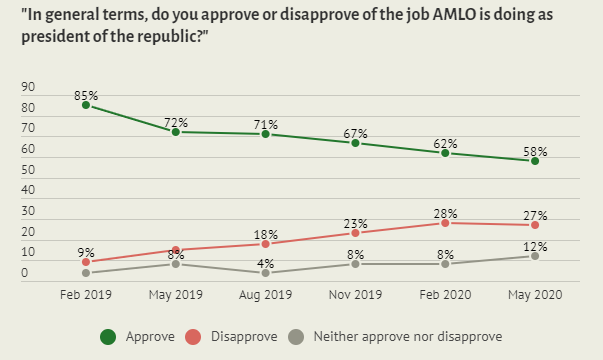
    There have been some significant differences, however. Amlo’s personal approval ratings have on the whole been higher than Bolsonaro’s. While they have fallen over time, they have done so from a higher starting point. The Mexican president has some other political and economic advantages such as a working majority in congress, lower public debt, and more fiscal room to manoeuvre.

    Source: Buendía y Laredo, Americas Quarterly

    While taking these factors into account, it is still the case that Mexico’s response to the coronavirus pandemic has been insufficient, and its handling of the crisis will be a major negative factor in the current sexenio (six-year presidential term). Surprisingly perhaps for a left winger, in the name of a balanced budget Amlo has consistently limited fiscal stimulus to the economy. As a result, estimates of the likely fall in GDP this year range up to 8.2%. With mid-term congressional elections due in July 2021, and a possible presidential recall poll due in 2022, it is likely that Amlo’s popularity will face significant erosion.

    Almost the only official goal in the management of the Covid-19 crisis has been to prevent hospital bed capacity from being swamped. Officials such as deputy health minister Hugo López Gatell have dismissed testing and tracking for Covid-19 as “useless, costly, and not feasible”. This has led to criticism, with lobby group Mexicans Against Corruption saying that the strategy “limits the possibility of identifying super-spreaders, people who are asymptomatic and spread the virus massively”. By early June total recorded coronavirus deaths had reached 11,136. In terms of deaths per million since the outbreak of the disease, Mexico had reached 86.4, one of the highest rates in Latin America, although behind Brazil, Peru, and Ecuador.

    The government nevertheless was pressing ahead with its programme to lift lockdown restrictions and move to what the president has been calling the new normal. A ‘traffic light’ system was established to allow a phased lifting of quarantine restrictions by economic activity and geographical area. When the system was launched on 1 June only the central state of Zacatecas was on orange (high risk of contagion) with the rest of the country on red (maximum risk). The removal of restrictions was made more urgent by the opening up of the US economy. Mexico is closely integrated into North American supply chains, and there was pressure from US-based companies, including those in the automobile industry, to resume supplies of key components. Given that Mexico’s opening up came at a time when infection curves were still rising, there was therefore a significant risk of potential renewed outbreaks of the disease.

    There was also a degree of confusion with some Mexican states saying they would follow the federal traffic light while others insisted on making their own arrangements. The governor of Tamaulipas, Francisco García de Vaca from the right-wing opposition Partido de Acción Nacional (PAN), said “the Tamaulipas traffic light will be managed by Tamaulipas”. Jalisco governor Enrique Alfaro, a political independent, has been highly critical of federal guidance and implemented his own lockdown measures (Jalisco schools were closed earlier than in the rest of the country). 

    The Mexican president stands out for his stubbornness and his Trump-like ability to ignore inconvenient facts. He has dismissed pessimistic forecasts for the economy, and almost any adverse data as part of a “neo-liberal conspiracy” by Mexico’s business leaders. Critical journalists have been described as “buzzards”. Faced by an inevitable recession he has suggested gross domestic product should be replaced by a “well-being index” to measure “happiness”, an indicator which would include spiritual as well as material being. While such an indicator might be welcomed by many, in this case it seems to have been introduced simply as a device to distract from bad news.

    Despite the global oil glut Lopez Obrador is insisting on keeping to his pet project to build a massively expensive new refinery in his home town in Tabasco. He has manipulated regulations to promote oil and gas fired power plants at the expense of renewable energy. In the president’s mind renewable energy is associated with dubious business interests while he champions public-sector led fossil fuels – a hallmark of 1970s (or even 1930s) Mexican oil nationalism. The government has meanwhile refused to reveal data on excess deaths (comparisons with previous years which give a higher and more accurate account of Covid-19 mortality).

  • POINTERS

    Sarah Sheldon 27 February 2024 Hits: 1187

    *** BOUTERSE DISAPPEARS IN SURINAME. On 20 December Suriname’s former president Desi Bouterse (2010-2020), who led a military dictatorship from 1980-1987, reached the end of his drawn-out fight to avoid responsibility for the 1982 killing of 15 political opponents. His 20-year prison term, imposed in 2019, was upheld and he was ordered to report to prison by 12 January, but failed to do so. The murders took place during a period of repression after Bouterse led a coup in 1980. He later served as elected president for the Nationale Democratische Partij (NDP) from 2010-2020. Despite Bouterse’s defiance of the court, the NDP has said that he remains the party’s chairman. His lawyer says that he is seeking a presidential pardon, but President Chandrikapersad Santokhi has said: “There is a verdict, and that verdict must be carried out.”

    The optimists say that Bouterse’s conviction is evidence that Suriname is a well-functioning democracy, but independent analysts say that the system continues to provide cover for high-level officials and politicians involved in criminal activities. Bouterse himself was also convicted by a Dutch court in 1999 for involvement in the trafficking of 500kg of cocaine. In 1994, a former head of security for Bouterse, Marcel Nelom, told a Dutch media outlet: “The entire military revolved around cocaine, as did politics and business.” Bouterse’s son Dino was convicted on drug trafficking and other charges in the US in 2015.

    The present administration is not without the taint of criminality given Vice President Ronnie Brunswijk was convicted for drug trafficking in the Netherlands in 1999 and in France in 2000. US Drug Enforcement Administration (DEA) officials reportedly suspect his continuing involvement in the drug trade. A board member of Brunswijk’s party, Algemene Bevrijdings- en Ontwikkelingspartij (Abop), Joel Martinus, was convicted by a French court in 2019 for involvement in the exporting of cocaine from Suriname to France.


    *** ANTIGUA & BARBUDA BOOSTS CHINA TIES AMID IMF WARNINGS. Antigua & Barbuda’s Prime Minister Gaston Browne visited China from 22-28 January and met with President Xi Jinping. Chinese media quoted Browne as saying that Antigua & Barbuda had been “lifted out of poverty thanks to help from China” and “is willing to be China’s most reliable partner”.

    The International Monetary Fund (IMF)’s latest Article IV Consultation for Antigua & Barbuda, concluded on 29 November 2023, said that economic activity should return to pre-coronavirus (Covid-19) levels this year, forecasting growth of 5.7% driven by a rebound in tourism and construction activity. Inflation, however, “remains elevated” at 6.6%. The primary deficit has been reduced to 1.7% of GDP, and public debt was down to 87% of GDP by the end of 2022. However, the IMF reports, “gross financing needs remain high at 14% of GDP, and an inability to access international capital markets continues to limit financing options”. Meanwhile, “the fiscal position may deteriorate if arrears continue to accumulate, or if the current financing options become unavailable or unaffordable, particularly if the planned deficit reduction is not realised”.


    *** EFFORTS CONTINUE TO LAUNCH NEW REGIONAL AIRLINE. On 24 January the Antigua-based LIAT regional airline ceased operations. The airline had been servicing Anguilla, Barbados, Dominica, Guyana, Grenada, Guadeloupe, Martinique, Puerto Rico, St Kitts & Nevis, St Lucia, and St Maarten. Prime Minister Roosevelt Skerrit of Dominica and Prime Minister Gaston Browne of Antigua & Barbuda are leading efforts to establish a new regional service. Skerrit has said: “Dominica is still prepared to invest in any airline outfit that will serve the Caribbean because we believe that is absolutely important.” Browne, for his part, said that his government is looking to resurrect LIAT “with a vision of returning the airline to the skies”. He added that the Caribbean Development Bank (CDB) will play a crucial role any plans.

  • HONDURAS: Internal debt piling up

    LatinNews 12 July 2012 Hits: 1545

    Internal debt was US$2.4bn in the first quarter of 2012, according to latest figures.

    Héctor Guillén, the finance secretary, said in early July that the treasury might ask congress for permission to issue fresh bonds on the domestic market in an effort to meet current expenditure commitments (or in other words, public sector salaries). Guillén admitted that there had been problems meeting wages in June but promised that any payment delays would be in days, not weeks.

    Honduran governments have long recurred to expensive short term domestic debt in support of  budget spending, but that debt is piling up. It was an estimated US$2.4bn as of 31 March 2012, on official statistics, requiring the cash-strapped government to spend US$130m on servicing. Multilaterals including the International Monetary Fund (IMF), the World Bank and the Inter American Development Bank have all suggested that Honduras re-structure this debt by taking out an external loan on more manageable terms or potentially issuing future domestic debt in US dollars instead.  The IMF has conditioned its stand-by agreements (SBA) for Honduras on fiscal reform measures, including paying off internal debt, but Honduras has been unable to do so. The Fund has reportedly postponed talks on a new SBA because Honduras missed its 2011 targets, posting a fiscal deficit of 3.9% of GDP.

  • Region: Corporate Radar

    LatinNews 04 August 2017 Hits: 405

    Buquebus plans big investments

    Buquebus, the ferry company that plays a dominant role in passenger services across the River Plate, has announced US$400m worth of new investments. The money will be spent on physical upgrades at the ports of Buenos Aires and Montevideo, and will include spending US$160m on a new ship. An IPO is planned for next year to help finance this extra capital expenditure.

    The company was created and is still controlled by Juan Carlos López Mena, an Argentine-born businessman who now has Uruguayan citizenship. From a poor background López Mena, now 75, started working in a shirt factory and became interested in boats. He used his first ferry to offer a fast service from Buenos Aires to Colonia and to Montevideo on the Uruguayan side of the River Plate. Services to the seaside Punta del Este are also now a key part of the company’s routes.

    Buquebus has a staff of 750 in Uruguay and 550 in Argentina, operating a fleet of five ferries and 40 road coaches. The company’s latest acquisition is a ferry built by Australia’s Incat yard, the Francisco (named after the Pope), which can carry 1,000 passengers and 200 vehicles at a speed of 55 knots (about 90km/h), crossing between Buenos Aires and Montevideo in two hours.

    The service is targeted to serve customers who can afford to pay more than the cheap (but very lengthy) bus route between the two capitals, but who find the air fare rather too pricey. Data shows that over 2m Argentines travel to Uruguay every year: 40% do so by ferry, 54% by land, and around 6% by air. López Mena has frequently attracted political controversy. In 2013 he was accused of trying to buy out a competitor, Colonia Express, though a third party, in an attempt to achieve 100% control of the River Plate ferry market. He is also accused of using questionably-secured credit from Uruguay’s state-owned Banco República in 2012 to buy aircraft from Pluna, the bankrupt Uruguayan airline. The brief incursion into commercial aviation through a company called BQB proved to be a failure for Buquebus, which eventually sold it to a Bolivian airline.

    Vista to launch IPO

    Mexico’s first publicly traded oil and gas company is expected to debut in August, four years after the government’s energy reforms ended the monopoly status enjoyed for over seven decades by state-owned Petróleos Mexicanos (Pemex). According to Reuters news agency Vista Oil & Gas, backed by private equity firm Riverstone Capital, was set to launch an IPO on the Mexican stock exchange (BMV). Riverstone has also invested in Sierra Oil & Gas, the first Mexican company formed after the reform; but Sierra is privately held and not listed on the BMV.

    Volcan profits hold up

    Volcan, one of Peru’s largest privately owned silver and zinc mining companies reported profits of US$15.6m in the second quarter (Q217) up by 1% on the comparable year-earlier period. Sales grew by 2.7% to US$202.1m. Ebitda was up by 16.6% to US$73.6m. The company said its results had been supported by improved prices, which had more than offset an increase in operating costs.

  • ECONOMIC HIGHLIGHTS

    Abbi Dicker 20 March 2025 Hits: 3927

    GUATEMALA | Port expansion. On 24 February Guatemala’s President Bernardo Arévalo announced plans to expand Puerto Quetzal, Guatemala’s largest Pacific Ocean port, with cooperation from the US Army Corps of Engineers (Usace). Located in Escuintla department, the port is run by Empresa Portuaria Quetzal (EPQ), a government entity. A Usace delegation was in Guatemala last month to conduct initial assessments of the capacity of the port, which was constructed in the 1980s with the objective of handling up to 700,000 tonnes of cargo but has not undergone expansion since. The proposal to expand the port with US cooperation was announced during the recent visit to Guatemala by US Secretary of State Marco Rubio, in which Guatemala agreed to accept a 40% increase in the number of deportation flights arriving from the US, carrying both undocumented Guatemalans and citizens from other countries. A US embassy press release states that the port’s expansion “is the first step to modernizing Guatemala’s broader infrastructure network, including its railway corridor”. José Antonio Lemus, president of EPQ’s board of directors, said a letter would be inked by both countries in May formalising their commitment regarding the port expansion project with a further technical visit slated for August with the aim of compiling the final necessary information to design it.

    COSTA RICA | Unemployment edges up. On 6 March Costa Rica’s national statistics institute (Inec) released new figures showing that the unemployment rate for the November 2024-January 2025 rolling quarter was 7.0%, up from 6.9% in the previous October-December 2024 rolling quarter. In year-on-year terms, Inec said there was no significant variation on the same quarter in 2023.

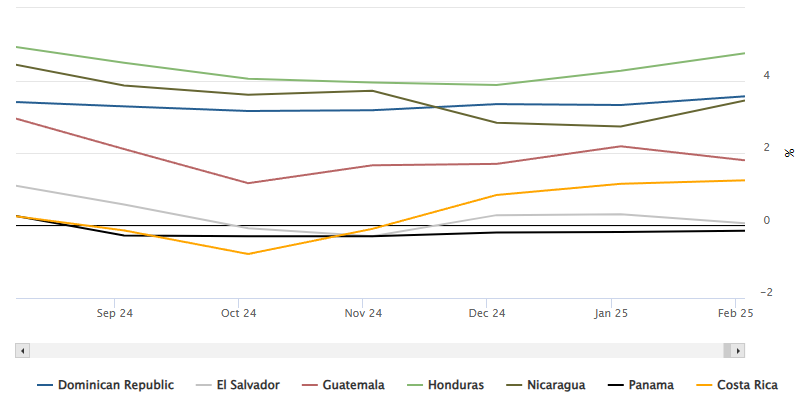
    Central America & Caribbean: inflation rate
    Percentage variation (year-on-year)

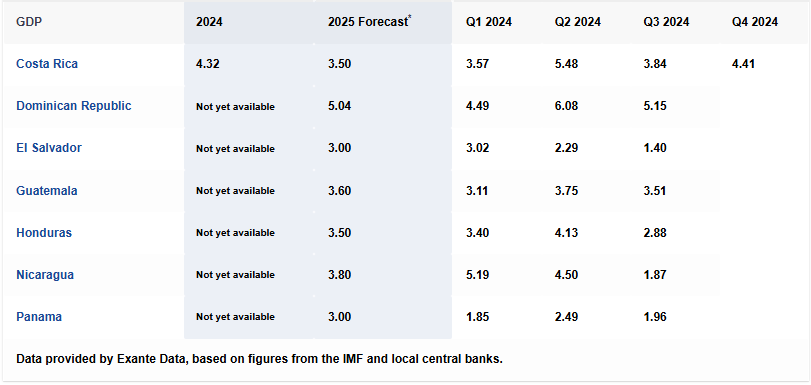
    Central America & Caribbean: GDP growth (%)
    Quarterly figures are year-on-year growth

  • CHILE: Not (yet) near the top of the class

    LatinNews 06 June 2013 Hits: 2564

    Chile’s competitiveness has been held back by the related problems of income inequality and the defects of its education system. Its government is beginning to tackle the problems. However, a final solution is some years away.

    Along with Mexico, Chile is just one of two Latin American members of the Organisation for Economic Co-operation and Development (OECD, a grouping of (relatively) rich democracies. Benchmarked by Latin American standards, Chile has for a long time compared favourably in terms of its overall economic competitiveness. In its Global Competitiveness Report 2012-13, the World Economic Forum (WEF) ascribes Chile an overall Global Competitiveness Index (GCI) of 4.6 (out of a possible 7.0). By this measure, Chile is the 33rd most competitive country of the 144 for which the WEF compiles data. Within the region, only Puerto Rico, in 31st place, is ranked more highly.

    Nevertheless, further changes need to be made if Chile’s competitiveness is to approach that of the OECD’s wealthier and longer-standing members. Of that group, Australia arguably provides the most relevant standard for comparison. Like Chile, it is a (fairly) small open economy that relies heavily on the export of raw materials to distant markets. Both countries are rightly and widely acclaimed for the performance of policy makers before, during and since the Global Financial Crisis. By rich country standards, government spending accounts for a fairly small portion of GDP in both Australia and Chile. In part, this is due to social security systems in which private pensions famously play a central role. In both cases, government debt levels are low and (persistent) current account deficits are easily manageable. Details are provided in the table Selected Economic Indicators.

    Selected Economic Indicators - Chile and Australia
    Chile Australia
    GDP Current US$ bn, 2012 268.20 1,488.31
    GDP PPP US$bn, 2012 320.54 970.76
    GDP PPP per capita, 2012, US$ 18,419.00 42,640.28

    Unemployment rate, 2012 6.45 5.24
    Population mn, late 2012 17.40 22.77
    Gini coefficient - late 2000s(1) 0.50 0.34

    General government revenue as % of GDP, 2012 23.88 33.64
    General government spending as % of GDP, 2012 23.27 36.59
    General government gross debt as % of GDP, 2012 11.22 27.16

    Current account balance % of GDP, 2012 -3.54 -3.66

    Retirement savings fund assets, US$bn, early 2013 (2) 170.08 1,627.40

    Source: IMF World Economic Outlook Database, April 2013 except as indicated below
    1. Source: OECD, cited by Australian Government, Productivity Commission,
    Staff Working Paper 'Trends in the distribution of income in Australia', March 2013, p126.
    2. Sources: SAFP, Ficha Estadística Previsional No.6 (end Apr.) and APRA, Press release of
    23 May 2013  (re end Mar.)


    In PPP terms, per capita incomes in Australia are about 130% higher than those in Chile. Australia’s Gini coefficient, at 0.34, is slightly higher than the average for all OECD countries (0.31). However, it is a lot lower than Chile’s 0.50, which means that its income distribution is the least equal of any OECD country. Further detail is provided by UN Economic Commission for Latin America and the Caribbean (ECLAC) in the table Distribution of income by decile. The wealthiest 10% of the population accounts for almost 40% of the income. The wealthiest 20% receives over half of the income. At the other end of the social spectrum, the poorest 30% of the population receives about one tenth of the income. Figures published by ECLAC indicate that in 2011 11.0% of the Chilean population was classed as living in poverty (meaning that they lived on less than half of the median income), with an additional 3.1% living in extreme poverty.


    A key difference between Australia and Chile, which is highlighted by the WEF’s Global Competitiveness Report, is the quality of their respective education systems.  As the table Global Competitiveness Index shows, the WEF ranked Chile at 91 out of the 144 countries surveyed. By contrast, Australia (in 20th place in terms of overall competitiveness) was ranked at 15 for the quality of its education system.  In both countries, businesses cite restrictive labour regulations as being the most pressing challenges. In both cases, there are complaints about inefficient government bureaucracy.  In Chile, a very significant number of businesses are troubled by the inadequately trained workforce and insufficient capacity to innovate – challenges which could be assumed to be linked to weaknesses in the education system. By contrast, this appears to be a problem for virtually no businesses in Australia, where businesses are more worried by tax-related issues.

    Global Competitiveness Index - Chile and Australia, 2012-13

    CHILE AUSTRALIA

    Score* Ranking/144 Score* Ranking/144
    Overall GCI 2012-13 4.6 33 5.1 20
    Basic requirements 5.3 28 5.7 12
    1.Institutions 5.0 28 5.3 18
    2. Infrastructures 4.6 45 5.7 18
    3. Macroeconomic environment 6.2 14 5.6 26
    4. Health and primary education 5.6 74 6.5 13
    Efficiency enhancers 4.6 32 5.2 13
    5. Higher education and training 4.7 46 5.6 11
    6. Goods market efficiency 4.7 30 4.9 24
    7. Labour market efficiency 4.7 34 4.6 42
    8. Financial market development 4.7 28 5.4 8
    9. Technological readiness 4.5 44 5.6 19
    10. Market size 4.4 42 5.1 21
    Innovation and sophistication factors 3.9 45 4.6 28
    11. Business sophistication 4.2 48 4.6 30
    12. Innovation 3.5 44 4.5 23
    Memo: Aspects of 5 - higher education and training
    Gross secondary education enrollment % 87.9 75 131.3 1
    Gross tertiary education enrollment % 59.2 38 79.9 9
    Quality of the education system 3.4 91 5.0 15
    *Out of a maximum of 7.0 Except for enrollment figures

    Memo: the most problematic factors for doing business:
    (Percent of responses)

    Restrictive labour regulations 18.8
    20.3
    Inadequately trained workforce 15.6
    Inefficient government bureaucracy 12.3
    14.0
    Insufficient capacity to innovate 11.1
    Tax rates

    9.8
    Tax regulations 9.4
    Source: World Economic Forum, Global Competitiveness Report 2012-13


    A new round of large scale demonstrations by students in May 2013 points to a link between the two issues – the inequality of income distribution in Chile and the underperformance of the education system.  About 45% of secondary students in Chile study at state schools. Another 50% study at fee-paying private schools, with the government subsidising the cost through vouchers. The remaining 5% study in private schools, with their parents paying all the costs. All universities in Chile are private. Ostensibly, the student demonstrations, which began in 2011, are a demand for fully free education – even though this is available in few other countries. (In Australia, for instance, about one third of all school students are educated outside the schools operated by the various state and territory governments; and all universities charge fees).

    To date, the Chilean government’s efforts have focused on reducing extreme poverty, in part through the new Ingreso Ético Familiar program, which targets Chile’s 170,000 poorest families (about 470,000 people, or 2.8% of the population). In its Economic Survey of Chile in 2012, the OECD suggested that the government broaden the range of recipients. The OECD has also advocated a broadening of the tax base (through higher environmental taxes, for instance) in order to fund investment in education and social services. Notwithstanding that the number of people living in poor housing conditions in Chile has fallen from nearly 30% in 1990 to 10% in 2009, the OECD calls for “better access to quality housing along with measures to reduce residential segregation and to enhance mobility.”

    In short, policies appear to be moving in the right direction. It appears reasonable to expect that, over the coming three years, there will be clear evidence that the lot of the poorest Chileans has improved. Wholesale fiscal reform should permit an aggressive campaign to boost the quality of the country’s education system. However, it will probably take at least a decade for such a campaign to lift Chile’s overall competitiveness.

  • Costa Rica: Brighter prospects for tax reform

    LatinNews 30 November 2018 Hits: 430

    Prospects for the successful passage of a tax reform proposal are much more encouraging than they were several weeks ago. On 23 November, the constitutional chamber (CS) of Costa Rica’s supreme court (CSJ) ruled unanimously that the tax reform proposal is constitutional and that the bill only needs the backing of a simple majority in the Legislative Assembly to be approved.

    There had been serious concerns about the future of the ‘Ley de Fortalecimiento de las Finanzas Públicas’ (law to strengthen the public finances) following a ruling on 16 October by the CSJ’s plenary court that the government must amend four areas of the bill before the judiciary would sign off on the legislation. These points did not affect the main tax proposals, but instead related to interaction between the government and the judiciary (including the Planning Ministry’s oversight of public employment in the judiciary). However, the CS has now ruled that it finds no procedural flaws in the bill, meaning that the government is under no obligation to make final changes before returning it to the Legislative Assembly for a second congressional vote.

    Passage of the bill seems all but assured

    The fact that the CS has also specified that the bill only needs the support of a simple majority is also positive. There had been speculation that the government might need to secure a two-thirds majority (which it did not have in the first vote, in which the bill received the backing of 35 out of 57 legislators). Given that the government easily secured a simple majority in the first vote, passage in the second – and final – vote is now all but assured. Given that one of the main goals of the tax reform bill is to raise revenue, the successful passage of the legislation is likely to help reduce the fiscal deficit, which at around 7% of GDP remains extremely large, as well as arrest a recent sharp rise in the public debt stock, which now stands at around 70% of GDP.

    Other developments in recent weeks indicate that the authorities are seeking to consolidate the public finances. Just days before the CS’s ruling on the tax reform proposal, the chamber approved a proposal by the government to reduce so-called ‘luxury’ public-sector pensions. There are currently 61,000 former civil servants who receive extremely high pensions, of up to C12m gross per month (equivalent to just under US$20,000); the government has proposed reducing the maximum entitlement to C2.7m (US$4,500). The CS has ruled that this proposal is constitutional, giving the green light to the submission of a formal pension reform bill. The director for pensions has since indicated that there may even be scope for a further reduction in the maximum pension ceiling. Assuming some success in this area, this will help trim expenditure.

    Scope for limited currency strengthening

    These developments followed several weeks of more marked volatility in the country’s financial markets, with the Costa Rican currency coming under significant pressure. The colon had already weakened from C570:US$1 in early September to around C590:US$1 in late October, but the currency weakened sharply in the first half of November, to over C620:US$1. The Costa Rican judiciary gave no indication that this volatility had any bearing on the decision to give the green light to tax reform and pension changes, but markets appear to have settled somewhat since mid-November, with the colon strengthening to C600:US$1 in late November.

    Although there is likely to be some scope for further local-currency appreciation, the colon is set to remain relatively weak by recent historical comparison (it traded at C500-550:US$1 for much of 2011-2016 and C550-570:US$1 during 2017 and most of 2018). This reflects the fact that, despite better prospects for fiscal reform, the public finances will remain in a precarious state. In mid-November, the international credit ratings agency Fitch Ratings put Costa Rica on alert for a ratings downgrade. The country outlook was already on ‘negative’; the most recent warning means that a downgrade will occur within 90 days unless significant progress is made to improve the public finances. Fitch made specific reference to the tax reform proposal, but also to the looming repayment of three-month treasury bills that were issued by the central bank to the government in September for emergency budget financing. Difficulties in accessing international capital markets is precluding sovereign bond issuance, reinforcing the government’s financing difficulties.

  • ECONOMIC HIGHLIGHTS

    LatinNews 21 April 2021 Hits: 1584

    PARAGUAY | Infrastructure project postponed for pandemic funds. Paraguay’s President Mario Abdo Benítez announced on 14 April that the bidding process for the construction of a new bridge connecting Paraguay’s Capitán Carmelo Peralta, Alto Paraguay department, with Brazil’s Porto Murtinho, Mato Grosso do Sul state, will be postponed with the aim of using the funds to tackle the coronavirus (Covid-19) pandemic. Abdo Benítez said that the US$30m earmarked for the bridge project will be reassigned the health ministry to help with its pandemic efforts such as medicine procurement. He added that discussions regarding the launch of the bidding process would resume in June-July, with the possibility of delaying it further until 2022 if all of the funds ended up being used to combat the pandemic.

    URUGUAY | Government freezes fuel prices. The Uruguayan government announced on 12 April that it will freeze fuel prices this year in a bid to support local business and kickstart a domestic economic recovery. Economy & Finance Minister Azucena Arbeleche explained that international oil prices have risen by 30% between December 2020 and March 2021 and this has led to an increase in petrol fuel prices of between 10% and 25% in Latin America. However, Arbeleche said that the government has decided to not to increase domestic prices as a way of alleviating the financial pressure on local firms and households, which have suffered the economic effects of the coronavirus (Covid-19) pandemic. “The government is providing this support for the entire productive sector… for small firms to weather the pandemic and for people in general”, Arbeleche said. The minister noted that the measure would cost the government some US$30m a month and that “this will significantly deteriorate fiscal results”, but said that the executive led by President Luis Alberto Lacalle Pou considers this to be necessary and has decided to use the savings achieved in 2020 to absorb these costs.

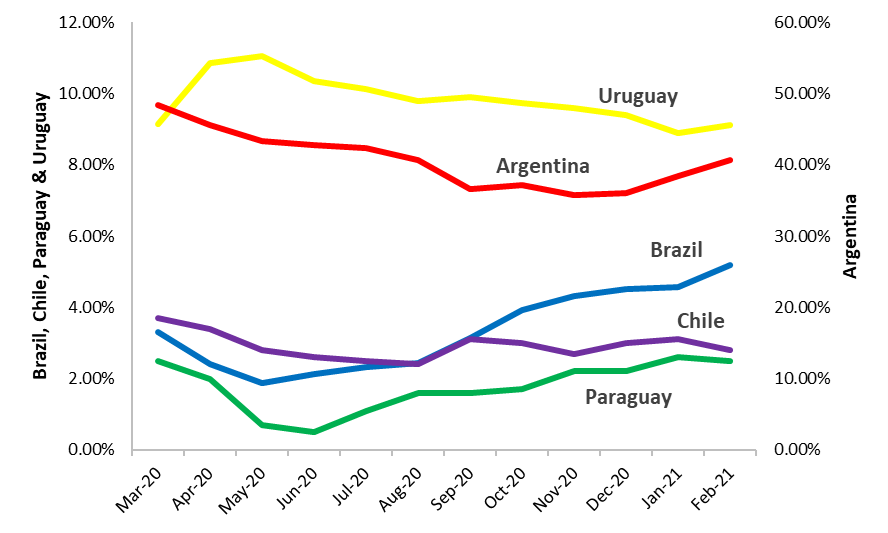
    Brazil & Southern Cone: Inflation
    Monthly year-on-year figures

    Brazil & Southern Cone: GDP growth (%)
    Quarterly figures are year-on-year growth
    Country 2020 forecast * 2021 forecast *  Q1 2020 Q2 2020 Q3 2020 Q4 2020
    Argentina -10.5 4.9 -5.4 -19.1 -10.2 -4.3
    Brazil -5.3 3.2 0.9 -11.4 -3.9 -1.1
    Chile -6.0 5.0 0.4 -14.1 -9.1 0.0
    Paraguay -1.6 3.5 3.5 -6.5 -1.2 1
    Uruguay -4.5 4.0 -1.4 -10.6 -5.9 -2.9
    *Figures from the United Nations Economic Commission for Latin America & Caribbean Dec 2020
    Quarterly growth based on figures from the local central banks


  • POINTERS

    LatinNews 23 June 2017 Hits: 645

    COSTA RICA | Anti-money laundering legislation approved. Last month Costa Rica’s 57-member unicameral national assembly approved a legislative bill (19,951) which aims to regulate non-financial activities vulnerable to money laundering, extending regulatory supervision to credit card operators, money transfer business, casinos, and real estate developers and agents. In December 2016, the national assembly passed another legislative bill (19,245) that seeks to combat fiscal fraud by creating a registry of beneficial owners of legal entities. The moves are in line with recommendations by the Financial Action Task Force (FATF), an intergovernmental body formed to combat money laundering and the financing of terrorism.

    PANAMA | Significant drugs seizure. On 31 May Panama’s national police (PN) and the attorney general’s office (MP) announced that more than four tonnes (t) of cocaine had been seized and 64 members of an international criminal ring arrested. The results were the fruit of an operation codenamed ‘Asturia’, which was launched in August 2015. According to an MP statement, the criminal organisation dismantled by operation Asturia had been receiving large shipments of illicit substances via Colombia, which were then transported to Costa Rica via the Panamanian provinces of Colón and Chiriquí. Those arrested included Colombian nationals – including three suspected active members of the Clan Úsuga or Clan del Golfo criminal organisation – along with Panamanian, Mexican, Cuban, Venezuelan, and Guatemalan nationals. The authorities also announced that since the launch of the operation some US$2.58m in cash had been seized.

    In its latest International Narcotics Control Strategy Report (INCSR), released in March, the US State Department notes that the Panamanian government seized approximately 63t of illicit drugs in 2016, including approximately 56t of cocaine – up from the 52.3t of cocaine seized in 2015. While attributing this to “the increasing ability of Panama’s security services to act on operational intelligence, better analysis, and a more aggressive operational posture”, the INCSR also highlights that the “overall magnitude of the drug threat exceeds the capacity of Panama’s security services to manage it alone”, indicating the need for continued cooperation with neighbours like Colombia and Costa Rica.

    • Visa controls

    Indicative of the continued efforts to address insecurity, Panama’s President Juan Carlos Varela has announced new immigration measures for foreign nationals from Colombia, Nicaragua, and Venezuela, reducing the amount of time they are able to stay as tourists in Panama from 180 days to 90.

    CARIBBEAN | OAS stalemate. For those who feel that the crisis in Venezuela has gone on for too long and has gone too far, the inability of the Organization of American States (OAS) to agree on a concerted course of action is an immense frustration. One reason for the deadlock at the OAS has been the opposition of some Caribbean states to any criticism of Venezuela, which is a source of subsidised oil for many of them.

    Initially, the 14 members of the Caribbean Community (Caricom) displayed unusual unity in agreeing a draft declaration for the OAS to consider alongside an alternative proposed by the US, Canada, Mexico, and Peru (the ‘Peru draft’). This prompted veteran Caribbean diplomat Sir Ronald Sanders to describe Caricom’s performance at the 31 May foreign ministers’ meeting as “a moment of unbridled pride”. For Sanders, “the Caricom countries showed the ‘soft power’ that they can wield on the hemispheric stage when they maintain solidarity and unity of purpose”. Unfortunately, this “unity of purpose” collapsed at the 19-21 June OAS summit in Mexico as a result of objections by St Vincent & the Grenadines and Suriname to elements of a new negotiated text. In the end two rival drafts were voted on by the OAS, with the St Vincent draft securing only eight votes and the negotiated draft securing 20, which was still short of the 23 required for the declaration to be adopted. The end result was considerable embarrassment for Caricom, prompting Sanders to write: “The pride I felt just 20 days before dissolved into profound disappointment.”

    Sanders is no doubt right about Caricom being weaker as a result of this debacle, but the failure of the OAS to agree a declaration on Venezuela as a consequence of objections from a number of Caribbean states does still underline their significance. Although tiny, their votes in multinational forums have the same weight as those of most other states many times their size. On the other hand, their small size makes them relatively easy to influence, as Venezuela has done with its subsidised oil supplies.

    CARICOM | Tightening policy on returning ISIS fighters. According to Caricom’s Implementing Agency for Crime and Security (Impacs), over 200 Caricom nationals have travelled to the Middle East to fight with or otherwise support Islamic State (ISIS). Some 130 are now being tracked as foreign terrorist fighters (FTFs). Among the many concerns about FTFs is the possibility that they might use their battlefield experience to launch attacks in the Caribbean. The issue is to be on the agenda for Caricom’s July summit. A region-wide draft plan for dealing with FTFs will be discussed at the meeting.

    The Executive Director of Impacs, Francis Forbes, told a Counter-Terrorism Strategy Conference in mid-June: “Whether we like it or not, we are already at war.” He said: “Trained experienced FTFs represent a significant threat to the region for perhaps years to come. Our resolve must be to share information willingly and have mechanisms in place.” And he added: “Let’s send a collective message, Caricom has no room for terrorists.”

    GUYANA | Targeted by Haitians. Following the decision last year by Suriname, under pressure from France and the European Union, to end visa-free entrance for Haitians and to close its consulate in Haiti’s Port au Prince, Haitians seeking to get to French Guiana are increasingly seeing Guyana as a key transit point. From Guyana, it is relatively easy to get to Suriname without papers and from there to move on to French Guiana.

    Guyana is under pressure to tighten its policy towards Haitians seeking to travel to the country. The attitude of the Guyanese authorities, however, was summed up by the minister for citizenship and immigration, Winston Felix, in March when he expressed unconcern about the arrival of 150 Haitians on a chartered plane. As he put it to a local newspaper: “They didn’t come to Guyana to stick in Guyana.”

  • Agribusiness and new technology

    LatinNews 21 December 2018 Hits: 66

    Agribusiness may also prove to be a very suitable sector for the adoption of various types of new technology, another of the priorities that the McKinsey report recommends. LAC agriculture and food companies use double or triple the amount of water than their counterparts in the US or China. It follows that more efficient use of water could lead to increased outputs. Advances in automation technologies such as artificial intelligence, robotics, analytics, and the Internet of Things (IoT) also offer the possibility of major improvements in efficiency.

    There is in fact a wave of innovation under way known as the growth of ‘AgTech’, defined as the application of emerging new digital systems and technologies to traditional agriculture and livestock production and distribution. A group of small Latin American companies is beginning to introduce radical new approaches. In Brazil a company called Bovcontrol uses data in the cloud, implanted chips in livestock, mobile communication, and analysis to improve performance on meat, milk, and genetics production. It is also used for certification of origin and herd and inventory control. In Mexico a company called CEICKOR has found that high-tech greenhouse temperature and irrigation control systems can increase tomato yields from 25-30kg per square metre to 50-60kg. Another innovative Mexican company is called Lluvia Sólida (‘Solid Rain’). It has perfected a biodegradable polymer that absorbs and stores rainwater, allowing farmers in arid regions of the country to hold back reserves and better manager irrigation.

    BUG Agentes Biológicos, a Brazilian venture, uses wasps as bio-agents, getting them to do the job of chemical pesticides but without the harmful side effects. BUG came into its own in 2012 when Helicover, a caterpillar pest that attacks soya plants, began to develop an immunity to pesticides: the company’s winged bio-agents did the job instead with an 80% success rate. In Peru, Spacedat is using drones to aggregate aerial imagery to help farmers monitor their crops. At different points around the continent, in fact, drones are beginning to be used experimentally to inspect crops for disease and to deliver a new geo-referenced approach to farming called precision agriculture. In Argentina Kilimo blends satellite, climate, and local data to come up with optimum irrigation schedules for each crop. The company claims farmers who use its system can boost yields by 30% and improve water efficiency by as much as 70%.

    In another development the UN’s Food and Agriculture Organisation (FAO) has signed an agreement with Telefónica of Spain to use digital data to help farmers deal with climate change. There will be initial pilots focusing on more efficient water use in El Salvador, Colombia, and the ‘dry corridor’ that runs through Central America. Telefónica has already been involved in projects covering 17,000 hectares in Chile, where remote sensors have been used to measure humidity and solar activity. Initial results suggest using the ‘big data’ captured in this way can lead to a reduction in water usage of up to 20%. If that can be replicated in Central America’s dry corridor, it could bring major benefits to the 10.5m people living there: it is an area which is particularly vulnerable to drought and climate change, stretching across Guatemala, El Salvador, Honduras, and Nicaragua. Among other things the project sets out to improve weather forecasting for farmers.

    Manuel Otero, director general of the Inter-American Institute for Cooperation of Agriculture (IICA), has articulated a vision of how AgTech could develop the sector. He argues that regional agriculture must become more technologically savvy and rebrand itself as a source of future jobs, improving the lives of small-scale farmers and stopping the population drift into urban areas. “Agriculture and rural areas sometimes get a bad press…we have to communicate a new vision and revitalise agriculture as a dynamic sector,” Otero told the Thomson-Reuters foundation, adding “Independent of the contribution of agriculture to GDP, it is a strategic sector – food security and global and environmental sustainability depend on it.” He says small-scale family farmers continue to form the backbone of the industry: they need support to allow them to work collectively and adopt technologies processing raw crops into higher-value products. Smart technology can be used to increase yields. Similarly, technology can help reduce the wastage of scarce resources such as water. Switching agricultural chemicals for microbial alternatives can reduce soil degradation. In Otero’s view, a trade-off needs to be reached between increasing production and yields on the one hand, and protecting the environment on the other. He said, “There is a new equilibrium in agriculture that necessarily has to be in better harmony with nature so that we can maintain and hopefully increase high yields but above all, preserve natural resources for future generations.”

    A study by the IDB, ‘Agro-Tech: Inovaciones que no sabías eran de América Latina y el Caribe’, confirms the productivity potential of the AgTech revolution. It notes that 38% of Latin America and the Caribbean’s total area is cultivated, and that in 2014 the region was the world’s largest net food exporter to the tune of US$148bn. If, as expected, the global population reaches over 9bn people by 2050, it will be necessary to increase global food production by 50% to meet additional demand. A large part of that could come from Latin America. Agribusiness could play key part in achieving that surge in productivity and output, applying a wide range of techniques including mechanisation, automation, improved genetics, big data, and improved distribution and logistics.

  • TRACKING TRENDS

    LatinNews 19 December 2013 Hits: 537

    REGION | Iglesias warns of regional fragmentation. Various Latin American experts are warning of the pitfalls of having numerous regional economic integration projects operating at the same time. On 17 November, a new book was presented by the institute for Latin American studies at the University of Alcalá (IELAT) entitled ‘Latin America: Society, Economics and Security in a Global World’, which focuses on the issue of regional economic fragmentation.

    One of the speakers at the event was Enrique Iglesias, the head of the Ibero-American general secretariat (Segib), and former executive secretary of the UN Economic Commission for Latin America and the Caribbean (1972-1985). Iglesias agreed with the main premise of the book that the emergence of the Pacific Alliance - the trade bloc comprised of Chile, Colombia, Mexico and Peru - as a new challenger to South America’s other major economic grouping, the Southern Common Market (Mercosur) - comprised of Argentina, Brazil, Paraguay, Uruguay and Venezuela - will promote increased regional fragmentation and undermine the general integration process in Latin America. He said that the existence of a potentially contradictory set of economic agreements across the region “contributes to the feeling that the world is organising itself in a fashion that we had neither planned nor desired [...] we are of the idea of a united Latin America”.

    URUGUAY | Salary negotiations concluded. On 18 December the Uruguayan press reported that the government of President José Mujica had successfully concluded the tripartite collective salary negotiations - involving the government, employers and workers’ unions - for 2014 and was preparing to make the results of these public. This would put an end to a lengthy process that has already overrun its agreed 1 November deadline. The yearly negotiation process through which the salaries of 500,000 workers are reviewed are always complex; but despite this year’s delay it was deemed successful by Uruguay’s main umbrella workers’ union, the Plenario Intersindical de Trabajadores- Convención Nacional de Trabajadores (Pit-Cnt). According to the Pit-Cnt, 115 of its 130 member unions reached a deal with their respective employers covering salary increases for the next three years, with 10 union-employer negotiations requiring government arbitration and five sectors still negotiating terms, including the key agricultural production sector that employs 50,000 people.

    The difficulties presented in concluding the tri-partite negotiations this year have once again called its effectiveness into question, with critics arguing that it has become an outdated mechanism. Yet Pit-Cnt spokesman, Milton Castellano, hailed the tri-partite negotiation process by stating that the fact that an agreement was ultimately reached shows that it is still a valid and effective method. In particular, Castellanos praised the fact that the process not only allows workers to secure salary increases, but also other improvements such as demands for better hygiene conditions and gender equality.

    However, Mercedes Comas, an economist at Price Waterhouse Coopers, said that labour represents the highest factor of production in Uruguay, and that constantly having to raise salaries on these terms will probably undermine productivity indexes. Perhaps more importantly for the Mujica government avoiding the tensions that such negotiations spark between the private sector, government officials and the unions is something that might be politically beneficial for the ruling Frente Amplio leftist coalition, which has a long history of involvement with the trade union movement and often relies on the Pit-Cnt’s electoral support.

    BRAZIL | Petrobras finds oil in Potiguar. On 18 December Brazil’s state owned oil firm, Petrobras, announced the discovery of an oil deposit in the Portiguar basin, located 55km off the shore of the state of Rio Grande do Norte, in north-west Brazil. The discovery was made as a result of an operation carried out as part of Petrobras’s joint venture with Portuguese oil firm Petrogal. This is the first oil deposit to be found in the Potiguar basin. Petrobras is the majority stake holder of the Potiguar basin concession with an 80% participation, while Petrogal owns the remainder. The discovery would help Petrobras consolidate itself as one of the world’s fastest-growing oil companies. Petrobras currently produces around 2m oil barrels per day, mostly obtained from deep waters in the Atlantic Ocean, where the new oil discoveries are continually being made.

    • Paraguay upgrades public transport

    On 17 December the governor of Paraguay’s Central department, Blas Lanzoni Achinelli, joined Esteban Dávalos, the head of a public transport company Lince, in announcing the launch of the first disabled-user-friendly bus service in the country. Dávalos explained that all buses servicing the No. 26 route will now have hydraulic lifts that will make them accessible to disabled users. Dávalos added that the buses will also provide users with mobile internet access, as well as boasting surveillance camera equipment. Lince also announced that it will employ disabled people to collect tickets on this route. Lanzoni, in turn, said that the transport ministry will push for a law bill that will require all transport service companies to upgrade 10% of their vehicles to meet these standards.

  • RASTREANDO TENDENCIAS

    LatinNews 03 October 2014 Hits: 488

    BRASIL | Termina la guerra de subsidios en el comercio del algodón. Una disputa de 12 años entre EU y Brasil sobre los subsidios al algodón finalmente terminó el 1 de octubre. Bajo los términos del acuerdo firmado entre los dos países, Brasil ha prometido no continuar con sus quejas acerca del apoyo de EU al sector ante la Organización Mundial del Comercio (OMC). A cambio, EU le pagará al instituto Brasilero del algodón  una suma global de unos US$300m. Más significativamente, desde la perspectiva de Brasil, EU también se ha comprometido a no extender las garantías de crédito para exportar por un periodo de más de 18 meses. En el pasado sus garantías de crédito eran por hasta tres años.

    El caso fue presentado por primara vez ante la OMC en el 2002. Después de varias idas y venidas, en el 2009 se le otorgó a Brasil el derecho de retaliación con sanciones contra bienes de EU por alrededor de US$829m. Luego en el 2010, EU acordó pagar US$147m anualmente a un fondo para apoyar a los productores brasileros. Sin embargo, este acuerdo no se cumplió  cuando, por razones presupuestarias, EU no pudo contribuir al fondo.

    Para el ministerio de agricultura, el acuerdo ayudará a hacer más competitivo el algodón brasilero: el país sudamericano es el tercer mayor exportador del mundo, después de EU y la India. En el 2013, las exportaciones de algodón significaron para Brasil US$1,2mm. El acuerdo podría ayudar a allanar el camino para mejores relaciones entre Brasil y EU después de las elecciones. Desde las revelaciones acerca del espionaje de la Agencia Nacional de Seguridad (NSA, por sus siglas en inglés) de EU a oficiales del gobierno brasilero se hicieron públicas por el informante Edward Snowden, las relaciones entre los dos países han estado en un punto bajo.

    Luis Alberto Figueiredo, el canciller de Brasil, y Neri Geller, el ministro de agricultura, estuvieron en Washington para firmar el acuerdo. Hablando luego ante la prensa, Figueiredo dijo que el acuerda era “un paso adelante en las relaciones comerciales” entre los dos países, pero también reiteró que el escándalo de espionaje era “de suma seriedad”.

    PARAGUAY | La tasa del PIB se expande de manera constante. El PIB de Paraguay ha crecido un 3% en el segundo trimestre del año, de acuerdo con un informe difundido por el banco central (BCP). El BCP dijo que la actividad económica entre abril y junio se había “desarrollado favorablemente, aunque a un ritmo más moderado de lo que se había predicho inicialmente”.

    La economía creció un 4,1% en el primer trimestre del año. El gobierno está prediciendo un crecimiento del 4,8% para este año, mientras que la agencia de rating Standard & Poor’s ha pronosticado recientemente un crecimiento de entre el 4,5% y el 4,8% por año durante los próximos tres años.

    Una constante y consistente tasa de crecimiento haría más fácil llevar adelante el planeamiento presupuestario en los últimos dos años: la economía creció un 13,6% en el 2013, siguiendo a una contracción del 1,2% en el 2012, que iguala a una caída del 2,9% en el PIB per cápita.

    El conductor principal del crecimiento en el segundo trimestre fue el sector de la ganadería, forestal, y pesca, que creció un 11,1% año en año. El BCP atribuyó el significativo crecimiento a la decisión del pasado noviembre de la Organización Mundial para la Salud Animal de restaurar el estatus de Paraguay como libre de la aftosa bovina con vacunación, que el país había perdido después de un brote de aftosa en septiembre del 2011. El BCP dijo que la recuperación del estatus ha conducido a la reapertura de los mercados de carne en Chile y Rusia y que la esperanza ahora era que se conduzca un retorno a los mercados europeos antes de finalizar el año.

    • Ciencia y tecnología

    El candidato presidencial opositor uruguayo, Pedro Bordaberry, ha pedido la creación de un ministerio de ciencia, tecnología & innovación, sea quien sea el que triunfe en las elecciones a fines de este mes. “Este sector produce US$1mm y exporta US$400m. Actualmente, Uruguay exporta productos cárnicos por US$2mm, y el turismo trae ingresos de US$2mm. ¿No es esta un área para tener un ministerio y desarrollar la ciencia, tecnología e innovación?” Preguntó retóricamente Bordaberry. Los cuatro candidatos que compiten en las elecciones han firmado un acuerdo conjunto estableciendo la ciencia y la tecnología como prioridades de sus políticas sin tener en consideración quién gane. Estas incluyen estimular los programas de financiamiento para la investigación y el entrenamiento; establecer iniciativas para retener a los investigadores en Uruguay; y la provisión de becas para asegurar que los científicos puedan dedicarse a la investigación a tiempo completo por hasta cinco años.

  • REGION: Tough year ahead?

    Abbi Dicker 23 January 2026 Hits: 1295

    According to the United Nations (UN)’ Economic Commission for Latin America and the Caribbean (Eclac), growth in the Caribbean sub region will be muted this year.

    In its most recent (16 December) update, Eclac expects GDP growth in the Caribbean to be only 1.8% in 2026, down from an estimated 1.9% in 2025 (for purposes of comparison the number excludes oil-boom Guyana which is expected to grow by over 20%). The sub-region will be affected by softer tourism demand, high import costs, volatility in the construction sector and recurring climate shocks.

    Among the worst performing economies in the Caribbean are Cuba and Haiti, both currently in crisis mode, marked by an energy collapse in Cuba, violent gangs in Haiti, and extreme political uncertainty in both. Eclac expects Cuba’s GDP to have fallen by 1.5% in 2025 and to be at a standstill this year (+0.1%). Haiti’s GDP is expected to have contracted by 2.3% in 2025 and to fall again this year by 1.2%. Among those at the other end of the spectrum is the Dominican Republic which has a stable democracy, a diversified economy, and market-friendly policies. An Article IV consultation with the International Monetary Fund (IMF) last November concluded that the Dominican Republic’s growth would pick up this year based on “strong economic fundamentals…and policy space to respond should risks materialise”. Eclac expects growth of 2.9% last year rising to 3.6% in 2026.

    Other Caribbean countries

    Guyana’s oil boom put the country on course for a whopping 24% GDP growth this year. Suriname, where oil investment is beginning to pick up pace, will grow by 3.4% this year. Among other important island economies are Trinidad and Tobago (+ 0.9% growth in 2026), Jamaica (+ 1.4%), and Barbados (+2.1%)  

  • EL SALVADOR: Right-wing parties struck down

    LatinNews 01 September 2011 Hits: 3900

    The two oldest right-wing political parties in El Salvador are fighting for survival. The Partido Demócrata Cristiana (PDC) and the Partido de Conciliación Nacional (PCN) were dealt a hammer blow this month by the supreme court, which stripped them of official recognition. The PCN and PDC now have just six months in order to collect 50,000 signatures of support apiece in order to register again to compete in the legislative and municipal elections on 11 March 2012.

    The supreme court ruled that the PDC and the PCN should have been stripped of legal recognition in 2004, when they failed to clear the minimum threshold of 3% of the national vote in presidential elections. The supreme electoral tribunal (TSE) upheld their complaint in 2005 that their disappearance would violate article 85 of the constitution enshrining a pluralist system of politics in El Salvador. A week later the legislative assembly waived the 3% requirement in a legislative decree.

    The supreme court was singularly unimpressed and ruled that the decree had contravened the constitution. Quite why it took six years to reach this conclusion, during which time the two parties have contested two further legislative elections and one presidential election, is unclear.

    Those were the days
    It is a spectacular fall from grace for the PDC and the PCN, which were founded at the start of the 1960s. The right-of-centre PDC, which has just celebrated its 50th anniversary having been founded in November 1960, governed for much of the civil war in the 1980s. The PDC’s former president José Napoleón Duarte headed the civil-military government between 1980 and 1982 and a civil government between 1984 and 1989. The PCN, a right-wing party and political face of the military, was founded in 1961. It held sway between 1962 and 1979, supplying four straight presidents.

    Those halcyon days are, of course, long gone, as a new right-wing outfit, Alianza Republicana Nacionalista (Arena) emerged to dominate the political scene, pushing both parties to the periphery of political life. Arena came to power in 1989 and maintained an unbroken stranglehold on power for 20 years until the left-wing Frente Farabundo Martí para la Liberación Nacional (FMLN) brought Mauricio Funes to power in 2009. Arena itself has suffered setbacks since then, with party infighting ensuing as it struggled to accustom itself to life in opposition. This led to a schism and the formation of the Gran Alianza por la Unidad Nacional (Gana).

    Gana is likely to be the biggest beneficiary of the supreme court ruling if the PDC and the PCN fail to gather the requisite number of signatures to register candidates by the November deadline for next March’s elections. It could well eclipse Arena as the country’s largest right-wing party (see sidebar).

    Current composition of legislative assembly


    Seats
    Frente Farabundo Martí para la Liberación Nacional (FMLN) 35

    Alianza Republicana Nacionalista (Arena)

    18
    Gran Alianza por la Unidad Nacional (Gana) 16
    Partido de Conciliación Nacional (PCN) 10
    Partido Demócrata Cristiana (PDC) 2
    Cambio Democrático (CD) 1
    Independent 2
    Total 84
    • Boost for Gana

    Although both the PDC and the PCN are traditional allies of Arena against the FMLN, there is considerable enmity too. If the parties are wound up, the leading lights are more likely to enlist in the ranks of Gana rather than reach an unpalatable accommodation with Arena: the reactionary Arena party leadership committee (Coena) brooks no dissent, and the very strict discipline it demands of affiliates, and its hostility to reform, led to 12 deputies leaving to form Gana in 2009.

  • Venezuela: Default concerns ease…for now

    LatinNews 12 May 2017 Hits: 2998

    In the midst of significant social unrest, the government led by President Nicolás Maduro made three large scheduled bond repayments on time on 12 April, relatively unnoticed. These latest payments reinforce the perception that the left-wing regime intends to continue to service its external debt commitments, come what may. Yet the continued deterioration in the country’s underlying economic conditions, combined with few sources of fresh credit, suggest that a default risk is still high.

    Three bond payments were due on debt issued by the state oil company Petróleos de Venezuela (Pdvsa). The largest repayment was US$2.1bn, due on the Pdvsa 2017 bond (comprising both principal and interest repayments), while US$81m was due in interest payments on the Pdvsa 2027 bond, plus US$41m in interest payments on the Pdvsa 2037 bond.

    Rather unusually, the Maduro government made little fanfare about the repayments, failing to publicise the transfers, with news of the payments instead coming from investors, who indicated that they had received the funds ahead of the deadline.

    Where did the cash come from?

    This latest payment eased immediate concerns of an external debt default, as it had been unclear whether the Caracas government had sufficient cash to make the payments.

    In fact, it remains very unclear where the government actually found the money, since foreign reserves only fell slightly (by around US$370m) just before the payments, suggesting that these were only tapped for a small part of the total sum repaid. Moreover, reserve levels had been relatively stable during March and early April, implying that the government had not been gradually drawing down on reserves in the run-up to the repayment deadline (as might be expected).

    The extremely opaque nature of the Venezuelan public finances means that the administration may have alternative sources of savings. Oil prices remain low by recent historical comparison, but with Venezuela’s export price averaging close to US$45/barrel in the first quarter of 2017, prices are over 80% higher than in the first quarter of 2016. Rather than increase import spending, the government may well have put aside part of these additional earnings in anticipation of the 12 April repayment.

    It is also possible that part of the funds from the sale of an unusual bond issue at the end of 2016 may have been stashed by the government in an off-budget account, with the specific intention of using the money to repay the large April debt payments. When the bond issue came to light in January, there was speculation that the issue – made available only to Venezuelan state-owned banks – represented securities for China, following rumours that Beijing had potentially extended further credit to the Venezuelan government, but had demanded something concrete in return, given the still-substantial risk of default. It is in China’s interest for Venezuela to remain current on its debt repayment schedule, because if Venezuela were to default, there would be a high risk that the current government would collapse. A successor opposition-led administration might not honour the large debts racked up by presidents Hugo Chávez (1999-2013) and Nicolás Maduro (2013-).

    CDS spreads remain high

    Although the immediate risk of default has passed, markets remain highly concerned about the government’s creditworthiness. Notably, the 5-year Credit Default Swap (CDS) spread – an indication of default risk, as the CDS market provides insurance to investors against default – has not fallen since the 12 April repayment.

    CDS spreads stood at around 3,700 basis points in early May, similar to early April and higher than in most of January-March. This indicates that markets still adjudge an extremely high risk of default within the next five years. By comparison, CDS spreads on other high-risk sovereigns are much lower, with Greece’s 5-year CDS spread standing at just 670bps.

    The fact that market risk surrounding Venezuelan repayment capacity remains elevated reflects several factors. Firstly, there are ongoing concerns that the government may run out of ways to put together sufficient cash to make future repayments. The May-September repayment schedule is relatively light, but a total of US$3.5bn falls due in October and November, mainly comprising capital and interest repayments on the Pdvsa 2020 bond and the final tranche of the Pdvsa 2017 bond. The authorities already restructured bonds falling due in 2017 in order to reduce repayments, so it would be very difficult to repeat this in the near term.

    Foreign reserves are likely to have been tapped to some extent in the run-up to the April repayment, but with reserves levels continuing to fall, this option may not be available later in the year. At US$10.1bn in early May, reserves are perilously close to dipping below the psychologically-important US$10bn mark. With much of this held in gold (the exact amount is unclear, given holes in official data), liquid reserves, put at no more than a third of the total, may be close to depletion.

    Secondly, market risk remains elevated because of the highly volatile political situation. Anti-government protests have raged for over a month, with the death toll approaching 40. The protests have been given additional impetus by President Maduro’s surprise announcement of a constituent assembly, which the opposition fears will erode its already-weak position even more. The fear is that Venezuela could end up a one-party state.

    Although the military leadership is continuing to prop up the Maduro government for the time being, the ongoing unrest means an elevated risk of a change of administration. This affects default risk in several ways, with the most obvious being the possibility that an opposition-led government would either seek a voluntary debt restructuring or, more likely, be forced into default owing to a lack of available funds.

    However, even if the Maduro government does not collapse, ongoing unrest raises the risk of an accidental default. With the government’s focus elsewhere, there is a possibility, for example, of administrative errors resulting in a missed deadline. There is also a possibility that the military places ever-greater (financial) demands on the government in return for its support. These demands could eat up any extra money earned from higher oil prices, reducing the government’s capacity to repay debt.

    Currency reform is unlikely to bring any change

    The government’s preoccupation with social unrest has affected economic policy plans. Most notably, a new round of currency reform – initially unveiled in late March – have not yet materialised. At that time, the government announced a new programme of regular central bank foreign exchange auctions through the secondary ‘Dicom’ system, which is essentially the conduit through which private-sector firms and individuals can purchase US dollars. Although the authorities said that these auctions would begin straight away, there has been no progress in this respect, with the official silence only broken in early May, when Finance Minister Ramón Lobo stated that the technical platform to manage the auctions was now ready.

    The government has not made clear the amount of US dollars to be made available per auction, or with what regularity the auctions will be held. More importantly, the authorities have failed to say if the Dicom exchange rate – which is heavily managed – will be devalued with the new auctions. The rate currently stands at around BsF720:US$1, much weaker than the fixed ‘Dipro’ rate of BsF10:US$1 (used for public-sector imports), but stronger than the black-market exchange rate, now trading at over BsF5,000:US$1, according to websites that publish the (illegal) rate.

    In any case, the description of the new system as an auction is likely to be somewhat of a misnomer, since it implies a relatively open and democratic process, with market participants able to bid for foreign exchange and the price determined by the level of interest and availability. What is more likely to occur instead is that the central bank will provide an unspecified amount of foreign exchange, likely to be relatively little given heavy liquidity constraints, with the authorities distributing it to chosen recipients at an undisclosed price. That is how the previous ‘Sicad’ currency system functioned during the Maduro government’s last (failed) experiment with foreign currency auctions in 2015.

    Imports – throttled

    As the Maduro government scrabbles to make debt repayments, some of the most vulnerable Venezuelans have been pictured in the media scrabbling through rubbish bins, in search of food scraps and other essentials.

    The local economic consultancy Ecoanalítica now projects total imports of just US$15.3bn in 2017. In 2012, at the height of Chavismo (which coincided with peak oil), Venezuelan imports soared to US$66bn, on central bank data, of which 80% (US$52.6bn) corresponded to non-oil imports. At that point, Venezuela was importing some 80% of its food needs. By 2015, imports had fallen to US$27.9bn (but 80% was still made up of non-oil items). Official BCV import data for 2016 has not been made available.

    According to Ecoanalítica, and based on BCV data, Venezuela’s total external debt was US$24bn in 2004. In 2016, the consultancy estimates, external debt was valued at US$103.7bn (inclusive of bond issues by the sovereign and Pdvsa, as well as financing from China). In other words, the country’s external debt rose by factor of four in the space of 12 years.

    When oil prices were above US$80/b, it was not a problem to service public debt, including the principal plus interest. But once oil prices began to creep down from late 2013 (before collapsing from mid-2014), the debt burden complicated.

    Pdvsa was in double trouble, because not only were oil prices falling, so too was its production. On data from the Organisation of Oil Exporting Countries (OPEC, of which Venezuela is a founding member), Venezuela’s oil production, which had been stagnant at about 2.9m b/d between 2003 and 2013, dropped by 400,000 barrels in the space of 15 months to just 2.2m barrels/day by October-November 2016 (when OPEC was in talks with members and other producers about global output cuts to put a floor under prices).

    Of that total production, 1.6m barrels generates income for Pdvsa, Ecoanalítica calculates, with the remainder set aside for internal consumption and debt payments. Currently, Pdvsa is paying interest only on its loans with strategic partner China, with capital repayments deferred in light of Venezuela’s economic difficulties. In late 2016, China also agreed to allow Venezuela to defer payments pending on US$2.8bn in separate bond debt.

    Of its actual earnings, Pdvsa keeps some for its operational needs (including debt), with the rest transferred into the central bank’s international reserves, again used for debt servicing and for imports. At just over US$10.1bn, reserves are now at a 15-year low.

    In October-November next, the government and Pdvsa have combined bond debt payments of US$3.5bn falling due. The Venezuelan economist Francisco Rodríguez of Torino Capital calculates that the Caracas government has money in various funds worth about US$4.5bn, plus gold reserves of another US$7.6bn. However, neither assets are readily liquid, he notes. Access to international capital (and even multilateral financing) is also now more difficult because of the problems between the Maduro executive and the opposition-controlled national assembly, which warns that there might not be any future legal claim on external debt contracted by the government without its assent.

    Given this tight situation, another Venezuelan economist, Alejandro Grisanti, head of research and strategy on Latin America for investment bank Barclays (and the founder and former director of Ecoanalítica), estimates that the Maduro government has to make savings of some US$500m-US$600m a month in order to meet the October-November debt crunch, meaning no chance of any increase in imports. Complicating matters, as of mid-May, Brent crude prices were still failing to breach US$50/b, and OPEC was moving to roll over output cuts, potentially all the way to 2018, in a bid to neutralise the effect of rising inventories (notably in the US) and continued increases in non-OPEC output, as compliance with the late-2016 global oil agreement weakened.

    Ecoanalítica now expects imports of just US$15.3m in 2017, a drop of 15% on 2016. Taking the peak non-oil import figure of US$52.6bn in 2012, that would amount to a drop of 71% in Venezuela’s imports in five years (with next to no substitution by domestic supplies either).

    As things stand, there will be no reprieve for ordinary Venezuelans any time soon. The question is how much longer the country can physically withstand this immense chokehold being imposed – at the cost of people’s very lives – by the Maduro regime.

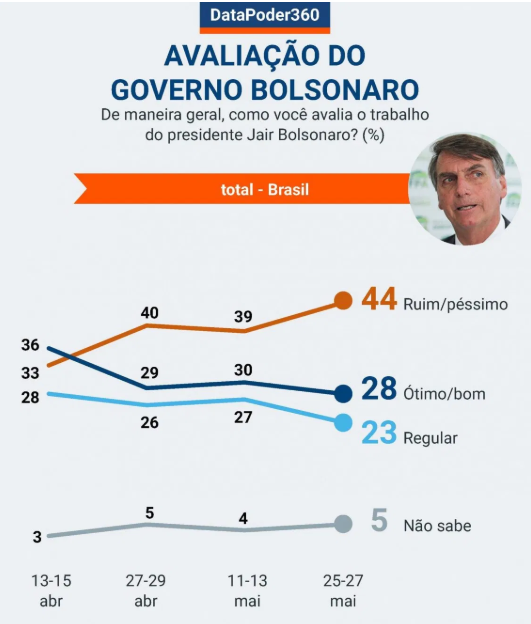
  • REGION: Multinational telecoms firms drive FDI

    LatinNews 25 January 2021 Hits: 1165

    Foreign direct investment (FDI) in Central America fell 6.4% from 2018-2019, according to a recent report from the United Nations Economic Commission for Latin America and the Caribbean (Eclac), but has proven more resilient than FDI to the region as a whole, which fell 7.8% for the period.

    This is the steepest decline of any world region, according to the annual report, ‘Foreign Direct Investment in Latin America and the Caribbean 2020’, which was published 2 December 2020 and forecasts that inflows will plunge further in 2020. Central America attracted 7% of total FDI to Latin America and the Caribbean in 2019, according to Eclac. Of the Central American nations, only Panama (7.4%) and Guatemala (0.4%) saw an increase in FDI inflows in 2018-2019 from US$5.49bn to US$5.89bn, and US$994m to US$998m, respectively. FDI in Nicaragua fell from US$838m to US$503m during the period, a decrease of 39.9%; Honduras recorded a 31.3% fall from US$1.38bn to US$947m; in El Salvador it decreased by 19.9% from US$826m to US$662m and in Costa Rica it fell by 9.3% from US$2.76bn to US$2.51bn. The ranking of Central American countries in terms of the proportion of regional FDI received is largely unchanged year-on-year. Panama continues to lead the way, attracting just over half of FDI in the region, followed by Costa Rica with 21.8%. Guatemala (8.7%), Honduras (8.2%), El Salvador (5.8%), and Nicaragua (4.4%) complete the table.

    In terms of sectors, services (58%) and manufacturing (34%) received the lion’s share of those inflows. Natural resources represents 4% and other sectors 3%. In terms of sources, 52% of FDI in the region came from the US, while intra-regional investment represented 6%. Costa Rica stands out for having received 60% of its FDI in manufacturing compared to 40% for services, inverting the average for the region. This is thanks to the country’s important healthcare industry, which attracted 21 investments in 2019, 100% of the total for Central America. Eclac also highlights investments from large telecommunications firms such as Millicom, headquartered in Luxembourg, and Mexican firm América Móvil, which are increasing their presence in the Central American market. Millicom acquired Telefónica Móviles Panamá for US$650m and committed US$500m to investment in high-speed internet in Honduras, while América Móvil pledged to invest US$300m in Panama’s ‘5G’ telecoms network over the next three years and signed a cooperation agreement with Spanish company Telxius Telecom in Guatemala to work on a proposed underwater internet cable on the Pacific coast.

    FDI in Latin America and the Caribbean as a whole has declined fairly steadily from a peak of US$214bn in 2012 to US$161bn in 2019, demonstrating “the relationship existing in the region between FDI flows, the macroeconomic cycle and commodity price cycles,” according to Eclac. However, FDI in Central America has proven more resilient, increasing from US$6.2bn in 2010 to US$12.2bn in 2014 and remaining around that level until 2019, when FDI inflows totalled US$11.5bn. That said, the region is unlikely to escape Eclac’s forecast drop of 45%-55% of FDI inflows into Latin America in 2020 due to the coronavirus (Covid-19) pandemic.

    Yet there are also reasons for optimism. Economies in the sub-region could benefit from a drive to shorten supply chains at a time of increased tensions between the US and China, with US firms looking to invest in “nearshoring”, bringing manufacturing capacity back to the Americas. Eclac also highlights the possibility of building subregional supply chains which take advantage of existing capacity in certain sectors, such as textiles, medical devices, and pharmaceuticals, which are well-developed in Central American nations.

  • BRAZIL: Inflation tempers optimism over imminent rate cuts

    Patrick de Courcy 12 February 2026 Hits: 1359

    The national statistics institute (Ibge) reported on 10 February that Brazil’s monthly inflation rate stood at 0.33% in January while annual inflation rose to 4.44%. While authorities have not expressed significant concern over the latest acceleration of annual inflation, analysts cited in the media have highlighted the importance of monitoring the prices of products such as fuel and food products. Significant monthly increases in prices of these products could dampen the public mood ahead of the presidential and congressional elections in October and make the central bank (BCB) think twice about its imminent cycle of interest rate cuts, which are expected to begin in the coming months.

    The monthly inflation rate in January was the same as the monthly rate registered for December, while annual inflation accelerated from 4.26% to 4.44%. This is still within the BCB’s target range of 3.0% +/-1.5 percentage points, so it has not sounded major alarm bells. The BCB’s monetary policy committee (Copom) is still expected to lower the country’s high benchmark interest rate, currently set at 15.0%, which could be decreased by 25 or 50 basis points when the Copom next meets from 17-18 March.

    Of the nine categories of products and services measured for the Ibge’s consumer price index, seven registered a monthly rise in prices, the greatest increases being in communications (+0.82%), health and personal care (+0.70%), and transport (+0.60%).

    Although transport had the third highest variation in prices, it was the category with the highest impact on overall monthly inflation, accounting for 0.12 percentage points of the overall 0.33% inflation rate. This means that the personal finances of consumers in Brazil were impacted much more heavily by higher fuel prices than by higher prices for services in the communications category, such as TV subscriptions. Within the transport category, the most significant monthly price variations were for products such as gasoline (+2.06%), ethanol (+3.44%), and diesel oil (+0.52%). 

    Another potential point of concern that economists cited in the media have highlighted is the price of common food items. The food and drink category posted a monthly inflation rate of 0.23%, marking a deceleration from 0.27% in December, but certain products that often feature in the grocery baskets of consumers registered major price increases in January, including meat (+0.84%) and tomatoes (+20.52%).

    Cost-of-living concerns, mainly driven by rising food prices, contributed to a decline in government approval in 2024. The fall in food inflation in mid-2025 somewhat contributed to a rise in the popularity of President Luiz Inácio Lula da Silva last year.

    Food prices will likely be a key metric that the Lula administration will need to monitor in 2026, ahead of the presidential race in October, when Lula will run for re-election. Even if the overall inflation rate stays within the official target range, price increases for specific products frequently purchased by consumers could impact Lula’s chances of securing a fourth term.

    Revised forecasts

    On 6 February the federal government’s economic policy secretariat (SPE) updated its economic projections for 2026, showing a new annual growth forecast of 2.3% and an annual inflation forecast of 3.6%. This growth forecast is higher than the latest projections of private sector economists surveyed by the central bank, which forecasts Brazil’s growth in 2026 will fall to 1.80%. The market analysts also project annual inflation to close the year at 3.97%. 

  • REGION: Latin America and the Caribbean in the year of tapering

    LatinNews 19 December 2013 Hits: 2226

    The UN Economic Commission for Latin America and the Caribbean (ECLAC)'s Preliminary Overview of regional economies is looking for real annual growth across the region to accelerate to 3.2% in 2014, up from 2.6% in 2013. However, in many countries, domestic demand will face headwinds.

    On 18 December 2013, the US Federal Open Market Committee (FOMC) finally announced that it would begin tapering the large-scale asset purchase program that has been the key feature of recent monetary policy. In recent weeks, many indicators have pointed to accelerating economic growth in the US, as well as strengthening activity in Japan, the UK and parts of the Euro area. Latest data also suggests that policymakers in Beijing have successfully engineered a soft landing for China's economy.

    On 11 December, ECLAC published its latest forecast review. It is looking for growth across the region to accelerate to 3.2% in 2014, from 2.6% this year. Details are shown in Chart 1. Most significantly, ECLAC expects growth in Mexico to accelerate from 1.3% to 3.5%, thanks to continued expansion in the US. Growth in Brazil is expected to nudge up marginally to 2.6%, from 2.4% in 2013. Where ECLAC expects a slowdown, this comes on the back of one-off developments that boosted growth in 2013 (e.g. Paraguay and Bolivia), or where there are widely documented policy-related problems acting as a brake on growth (e.g. Argentina and Venezuela).

    ECLAC's forecasts are based on the reasonable expectation that “improving external conditions” will drive export growth in 2014. It notes, however, that tail risks remain. These include the possibility that the US Congress will not reach an agreement with the Barack Obama administration on the federal government's debt ceiling. They also include lingering public finance problems in some Eurozone countries. Nevertheless, several Latin American countries have considerable foreign exchange reserves, access to global capital markets and low debt levels. Colombia, as we noted earlier in this edition, is a good example, but there are others (like Peru, for example). Such countries should not be affected unduly by any volatility on global financial markets.

    The US Fed’s decision to begin tapering makes little difference in the short term. It means that the FOMC will buy US$75bn in securities (specifically, US$35bn in agency mortgage-backed securities and US$40bn in longer-dated Treasuries) rather than US$85bn each month. Further reductions in asset purchases will only take place, and then only in “measured steps”, if US labour market conditions improve and inflation increases.

    More important in Latin America and the Caribbean are headwinds to domestic demand. ECLAC noted that improvements in labour productivity was one reason for slower growth in employment in the region in 2013. This in turn constrained wage growth, with the result that consumption was weaker than it would otherwise have been. This could continue to hold back consumption in 2014, especially as growth in household credit in a number of countries is also slowing.

    In early 2014, most regional countries will be characterised by softness in consumption, fairly low (or falling) inflationary pressures and, as indicated in the chart, modest growth in overall GDP. ECLAC anticipates that some central banks will ease monetary policy (or at least stop tightening) in response to these conditions. “In other words, given the slowdown in lending observed in 2013, measures will continue to be adopted in 2014 to expand credit volume and reduce its cost, by lowering reserve requirements in some cases and cutting interest rates in others”. In contrast, political factors, “as new governments take office in several countries” may prompt some authorities to introduce fiscal reforms aimed at boosting tax revenues: in other words, across the region as a whole, there is less scope for easing fiscal policy than there is for easing monetary policy.

    Just as the overall levels of financial risk attached to each country vary quite widely, it is difficult to generalise about investment prospects for 2014. However, the general softness of regional currencies and the lacklustre performance of listed stocks during 2013 means that, for the most part, assets are cheaper than they were at the end of 2012. This is at a time when prospects for growth, in the region and globally, are undoubtedly better than this time last year.

    Real GDP growth rates (%): Selected countries

    Source: ECLAC
    • “In early 2014, most regional countries will be characterised by softness in consumption, fairly low (or falling) inflationary pressures and, as indicated in the chart, modest growth in overall GDP”.
    • “The general softness of regional currencies and the lacklustre performance of listed stocks during 2013 means that, for the most part, assets are cheaper than they were at the end of 2012.”
  • GUATEMALA: Justice concerns rumble on

    LatinNews 28 October 2014 Hits: 1546

    Domestic and international concerns regarding the crucial September election of supreme court (CSJ) and appellate court justices [RC-14-10] in Guatemala ultimately had an impact. On 9 October the constitutional court (CC) suspended the swearing-in of the 13 new CSJ magistrates, 126 appeals’ courts judges and their alternates after admitting appeals against the election process. The decision comes as another key election is under way – to pick the new head of the comptroller general’s office (CGT). Again civil society groups are raising concerns regarding the independence of Guatemala’s institutions.

    The CC magistrate, Gloria Porras (who was acting as president while Justice Roberto Molino Barreto was abroad), said that the decision to suspend the swearing-in of the new judges, due to assume their five-year posts on 13 October, was taken after the court admitted five different appeals against the election process submitted by individuals and civil society groups including the Centro para la Defensa de la Constitución and Acción Ciudadana. The 25 September election of CSJ magistrates and the 30 September election of appellate justices had been routinely slammed, not only by local civil society groups and the United Nations (UN)-backed anti-impunity commission (Cicig) but also by the UN Special Rapporteur on the Independence of Judges and Lawyers Gabriela Knaul and the US-based Washington Office on Latin America (Wola). Even one of the newly-elected appellate justices, Claudia Lissette Escobar Mejía, quit on 5 October, citing flaws with the procedure [RC-14-10]. Porras said that the current sitting judges would remain in their posts until the CC rules on the appeals, a process that could take between 30 and 45 days.

    With the independence of Guatemala’s judiciary already under scrutiny, the election of the CGT head – which has the crucial mandate of overseeing and auditing State institutions – has attracted particular attention. The 158-member unicameral legislature is in the process of filling the post which is currently occupied on an interim basis by deputy comptroller, Héctor Santizo. This, after Molino ordered the CGT head, Nora Segura, to step down on 16 October on the grounds that her four-year mandate expired on 13 October. Segura initially refused, arguing that she took up her post later than planned due to procedural delays and so had yet to see out her full term, but she caved in the next day.

    Segura was a controversial figure prompting transparency-related complaints from civil society groups like Acción Ciudadana (AC), the local branch of international NGO Transparency International (see sidebar). Concerns persist as to the independence of her eventual successor given that an 11 October report by investigative daily, El Periódico, noted that 12 of the 21 candidates on the shortlist proposed by legal experts, from which the legislature makes its choice, have links to the ruling Partido Patriota (PP).

    Emblematic civil war case begins

    The trial of a former police chief, Pedro García Arredondo, for allegedly masterminding a notorious attack by State security forces on the Spanish embassy in Guatemala City on 31 January 1980, began last month.

    One of the defining events of Guatemala’s 1960-1996 civil war, the attack left 39 people dead, including Vicente Menchú, the father of Guatemalan Nobel Peace Prize winner and indigenous leader, Rigoberta Menchú.

    A former chief of the national police force’s 6th command under the military government headed by Fernando Romeo Lucas García (1978-82), García Arredondo has been identified as one of the main violators of human rights during the civil war by the local archbishop's human rights office (ODHA) and the United Nations Verification Mission in Guatemala (Minugua). He has already received a prison sentence for other civil war crimes – in August 2012 he was sentenced to 70 years imprisonment for the 1981 disappearance of Edgar Sáenz Calito, an engineering student.

    • Segura

    Among the various complaints against the former head of the comptroller general’s office (CGT), Nora Segura, the civil society group, Acción Ciudadana (AC), flags up her failure to respond to information requests. An AC report also accused Segura of nepotism and hiring relatives like her stepson, Manolo Hernández, to work in her office. Meanwhile the president of the congressional probity commission, Amílcar Pop, has said that the commission has presented the CGT with 18 requests to carry out audits, none of which received any response.