All Categories

Subcategories

  • BOLIVIA: Morales celebrates 13 years in power

    LatinNews 20 December 2018 Hits: 830

    Bolivia’s president Evo Morales celebrated the 13th anniversary of his electoral triumph in 2005 on 18 December with a gathering of his party, Movimiento al Socialismo (MAS) in a sports arena in Quillacollo, near the central city of Cochabamba. Morales announced to his supporters his aim to win 70% of the vote in the 2019 presidential elections, and called upon them to entice back those who have distanced themselves from the MAS. The celebration was another iteration of the gatherings that have become familiar during Morales’s time in office, with large blue banners emblazoned with the MAS logo, representatives of the social movements affiliated with the party, traditional music, and indigenous people in traditional dress.

    If President Morales is re-elected in 2019, he will be in power in 2025, the bicentenary of Bolivia’s independence, a symbolic achievement that would add to his claims to have made Bolivia a reference worldwide for inclusive development.

    • Morales re-election

    In Quillacollo, President Morales impressed upon his supporters the need not to cede any ground to his opponents, but to continue the ruling MAS’s project under his leadership for a fourth term in office. Morales is already the longest-serving president in the country’s turbulent history.

    Meanwhile, opposition members of congress presented a complaint on 17 December against the members of the electoral tribunal who voted to allow Morales to contest the 2019 elections. In the complaint, presented to the attorney general’s office, Wilson Santamaría and Rafael Quispe of Unión Democrática and Yesenia Yarhui of the Partido Demócrata Cristiano (PDC) accuse four members of the tribunal, including its president, María Eugenia Choque, of displaying a lack of transparency and independence. More concretely, they maintain that the decision to allow Morales to stand for re-election was made illegally, in a clandestine vote held at night outside the normal headquarters of the tribunal.

  • GUATEMALA: Giammattei faces a raft of issues as Guatemala’s new president

    LatinNews 30 January 2020 Hits: 903

    Alejandro Giammattei took over as Guatemala’s new president on 14 January. While little is known about his plans for the nation, there are various significant issues that he needs to address.

    Giammattei and his Vamos government are set to inherit a raft of problems from his predecessor Jimmy Morales (Frente de Convergencia Nacional, 2016-2020), who has made little headway in dealing with poverty, corruption, and security concerns. Much like Morales, Giammattei, a former head of the prison service under the Óscar Berger administration (2004-2008), is a right-wing conservative with links to the military and far-right civilian elements. In fact, such are the links between the two camps that the new president has already been dubbed ‘Jimmyttei’ by Guatemalans concerned that they will end up with more of the same from their new leader.

    Corruption - a common thread

    Public corruption remains a major public concern and has made headlines in recent years. After former president Otto Pérez Molina (Partido Patriota, 2012-2015) was forced out of office amid a huge graft scandal, hope surged that the country had turned a corner on official corruption, with the help of the United Nations-backed International Commission against Impunity in Guatemala (Cicig). However, Morales refused to renew Cicig’s mandate, and it ceased operations in September 2019.

    Giammattei was no fan of Cicig either, having been subject to an investigation in relation to allegations of extrajudicial killings that occurred during his time as head of the prison service, for which he was imprisoned but ultimately acquitted, so the timing of its exit saved him a potentially unpopular political decision. Yet corruption is nonetheless a huge problem for the new president. He will find himself walking a tightrope between an electorate that is more conscious than ever of graft and its nefarious effects, and allies in the traditional elites whose interests could be affected by a crackdown on corruption. In fact, Giammattei’s promise to end the corrupt practices of the past with the aid of a new national anti-corruption commission was met with scepticism by many observers.

    Corruption also affects efforts to deal with Guatemala’s many pressing issues, such as rampant child malnutrition and stubbornly high poverty rates. Almost half of children under five are chronically malnourished, part of a wider issue in a country where 59% of the population lives below the poverty line on the latest (2014) World Bank figures. This is despite fairly strong economic growth in recent years, with GDP growth rates of 3.1% in 2016, 2.8% in 2017 and 3.1% in 2018. Giammattei also needs to work on increasing Guatemala’s tax revenue of just 10.3% of GDP in 2018 according to the United Nations Economic Commission for Latin America & the Caribbean (Eclac) which is the lowest percentage of any Latin American country. This is a longstanding problem which looks set to have worsened under Morales, whose removal in January 2018 of Juan Francisco Solórzano Foppa, the head of the tax authority (SAT), attracted concerns given he was well respected and received Cicig’s backing.

    The low tax take is just one facet of wider issues with an economic system that feeds inequality, relies heavily on the informal labour market, and fails to provide adequate education. As a result, equitable growth remains out of reach. Giammattei needs to kickstart the state sector and pull in more public money to fund social programmes that would benefit the millions of Guatemalans that are struggling to survive, particularly in areas such as the so-called ‘Dry Corridor’ (a tropical dry forest region on the Pacific side of Central America) that are suffering the effects of climate change and give them a reason to stay at home rather than migrate to the US.

    Relations with the US could have deep ramifications

    The question of migration leads us to perhaps the most unpredictable issue for Giammattei: relations with the US and President Donald Trump. In July 2019 the Morales government signed a migration deal with the US which allows US authorities to deport asylum seekers to Guatemala if they passed through that country during their journey to the US. This has the potential to create huge problems in an impoverished nation, placing huge strain on public services that cannot support the local population as things stand and perhaps stoking a wave of xenophobia, as seen in various South American countries that have received Venezuelan migrants. Worryingly, Giammattei has said that the Morales government has not shared details of the deal, but it seems unlikely that Giammattei would be able to renegotiate with a Trump administration that so far had no qualms about threatening to suspend crucial aid payments in pursuit of migration deals. Trump has also threatened to tax remittances, which represent 12% of Guatemala’s GDP, underlining the reality that Giammattei will have to appease the US throughout his term.

    The new president will also have to deal with security issues. Guatemala retains one of the highest homicide rates in Central America, third to El Salvador and Honduras with 22.48 homicides per 100,000 in 2018. Giammattei is pledging to combat this with a ‘mano dura’ (repressive) approach to crime. He has made headlines with pledges to fight violence and organised crime “with testosterone”; enact a law against terrorism that criminalises gang membership; restore the death penalty; and deploy the military to fight crime, a policy which has been used by his predecessors. While a December 2019 report in Spanish daily El País featured an interview with a high-ranking member of the Mara Salvatrucha street gang, who offered to work with Giammattei in “pacifying” the streets in return for rehabilitation programmes, such policies are a hard sell to voters who have been affected by gangs. The new realities of Giammettei’s role as president mean he will likely fall back on tough policies which traditionally go down well with voters.

    It doesn’t appear that Giammattei has much to worry about in terms of popular protests. Since the mass mobilisations of 2015 that contributed to the downfall of Pérez Molina there has been little appetite for protest, and social movements have been criminalised. There remains a stark divide between indigenous peasant farmer movements, that are concentrated in rural areas and tend to focus on opposing extractive projects, and the urban population that appears so far unaffected by the protest wave in Latin America.

    The situation is more restive in the legislative and judicial branches of government (see sidebar). First of all, congress did not approve a new budget for 2020, which means Giammattei will have to work with the same amount of resources allocated in the 2019 budget (Q87.715bn [US$11.37bn]) plus an extra Q750m authorised in that budget last year. At the end of November 2019 local daily, Prensa Libre, reported that government officials are working to reallocate funds where they are needed most, but the Giammattei government will likely need to request more money from congress in early 2020.

    Giammattei will also face a congress in which the opposition Unidad Nacional de la Esperanza (UNE), of his second-round opponent, former First Lady Sandra Torres (2008-2012), will be the largest party. UNE has 54 seats in the newly expanded 160-member unicameral legislature, compared with 16 for Vamos with 17 other parties making up the remainder. The legitimacy of the legislature has also been badly affected by the Morales years, in which legislators appeared more concerned about shielding themselves from corruption investigations than running the country.

    • Key elections

    Elections for a new set of judges for the supreme court (CSJ) and appeals court also need to be held. This was due to take place last year but a constitutional court (CC) ruling suspended the process after admitting appeals which claim procedural irregularities. This meant that the term of the sitting judges has continued beyond constitutional limits which was meant to end on 13 October 2019. Continued uncertainty in this area will impact trust in the judicial system and could make it harder for the Giammattei government to attract foreign investment.

    • Homicides

    While in recent years, Guatemala’s homicide rate has declined, think-tanks such as International Crisis Group (ICG) attribute this to the United Nations-backed International Commission against Impunity in Guatemala (Cicig). ICG research suggests Cicig’s work helped contribute to a 5% average annual decrease in murder rates. Cicig’s departure has raised some question marks as to whether this trend will continue.

  • Economic Highlights

    LatinNews 20 February 2020 Hits: 2291

    CHILE| Growing economic pessimism despite some positive indicators. A public opinion survey published by local pollster Cadem on 10 February shows that a majority of Chileans have a pessimistic outlook on the country’s economy. Of those surveyed, 43% believe the economic situation will worsen in the first half of 2020, up from 20% in August 2019. Just 13% believe it will improve, while 43% predict no change. The crisis of social discontent and inequalities are cited as the country’s principal economic problem by 43% of respondents, while 57% believe that unemployment will increase. This pessimistic outlook comes despite some better than expected economic indicators for the end of 2019. The latest monthly economic activity index (Imacec), published by the central bank (BCCh) on 3 February, shows that economic activity expanded 1.1% year-on-year in December 2019 and 3.5% compared with November 2019, following year-on-year contractions of 3.4% and 3.5% in the October and November 2019 Imacec, respectively. Unemployment figures, released by the national statistics institute (INE) on 31 January, show only a slight year-on-year increase in the rolling quarter to December 2019. The unemployment rate totalled 7% in October-December 2018, up from 6.7% over the same period in 2018.

    URUGUAY| Tourism surprises in January. On 13 February, Uruguay’s tourism ministry (Mintur) released figures for tourist arrivals for January 2020. Despite cautious expectations for the tourism industry, tourist arrivals increased 3% year-on-year to a total 444,509 visitors in January (including non-resident Uruguayans). Within this, the number of Brazilian visitors increased 6.8% to 60,421, while the number of Argentine visitors increased 0.7% to 288,605. The economic crisis in Argentina and the introduction of a 30% tax on foreign currency transactions there was expected to negatively impact Uruguay’s tourism industry which depends heavily on Argentine visitors (they made up 65% of total tourist numbers in January). Although the number of tourists visiting Uruguay in January increased, total tourist spending decreased 7.5% to a total US$327.6m. Deputy Tourism Minister Benjamín Liberoff recognised that the January results were not entirely satisfactory, but were nonetheless a “success” in light of the situation in Argentina. In 2019, Uruguay received over 3.22m visitors, bringing in US$1.75bn.  

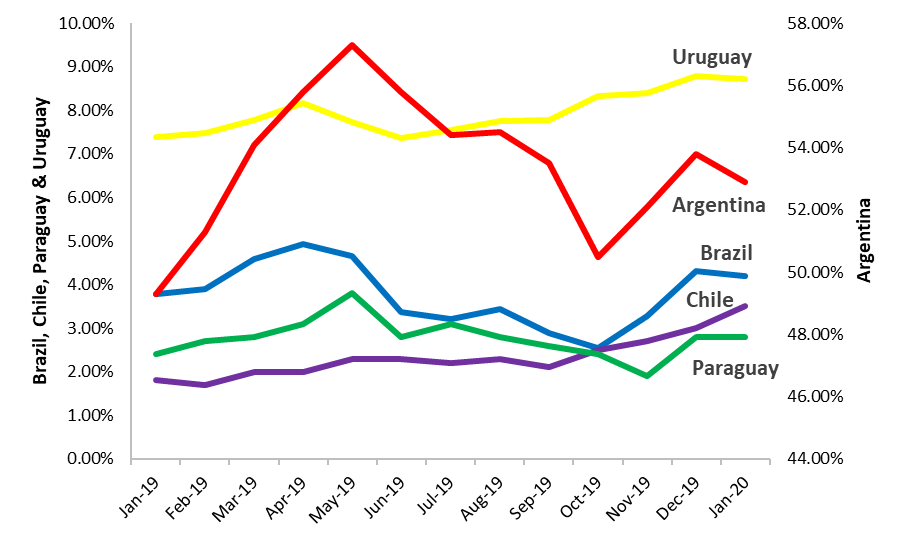
    Brazil & Southern Cone: Inflation
    Monthly year-on-year figures

    Brazil & Southern Cone: GDP growth (%)
    Quarterly figures are year-on-year growth
    Country End 2019 forecast* 2020 forecast * Q4 2018 Q1 2019 Q2 2019 Q3 2019
    Argentina -3.0 -1.3 -6.1 -5.8 0.6 Not available yet
    Brazil 0.8 1.7 1.2 0.6 1.1 1.2
    Chile 1.8 2.3 3.6 1.5 1.9 3.3
    Paraguay 0.2 3.0 1.2 -2.0 -3.0 2.8
    Uruguay 0.3 1.5 0.6 -0.2 0.1 0.9
    *Figures from the United Nations Economic Commission for Latin America & Caribbean Dec 2019
    Quarterly growth based on figures from the local central banks
  • ECONOMIC OVERVIEW: NICARAGUA

    LatinNews 15 May 2013 Hits: 4677

    Foreign debt rises: Last month, Nicaragua’s central bank released a report which showed that at the end of 2012, the country’s foreign debt reached US$8.66bn, 11.2% up on the previous year. Of the US$870.8m increase, US$654m corresponded to the private sector. The ratio of total external debt to GDP was 82.5%, up from 80.9% in 2011.

    Slowing growth: According to another report issued by the central bank, the monthly economic activity index (Imae) registered a 4.1% year-on-year increase in February, led by construction (21.1%), agriculture (20.1%), and financial services (11.5%). Real annual GDP growth was 5.2% in 2012, down from 5.4% in 2011, while inflation was 6.6%, down from 8.0%. For this year, the bank is forecasting that growth will slow to just above 4%, with inflation down to 1%. Also indicative of this slowdown was an 8.3% year-on-year drop in exports in the first quarter of 2013 to US$642m, according to separate central bank figures. The central bank attributes this to a fall in key exports such as beef (which fell by 21.3% to total US$104m) gold standard coffee (which declined 29.6% to US$96.2m) and sugar (which registered a 17.7% drop to US$59.7m). The exception was gold, Nicaragua’s top export, which registered a 21% increase to reach US$119.9m. Total exports reached US$4.6bn in 2012.

    Rise in formal employment: According to the government of President Daniel Ortega, the number of workers making social security contributions grew by 46.6% between 2006 (when the Frente Sandinista de Liberación Nacional [FSLN] government took office for a second time) and 2012. The government-aligned online publication, el19digital, cites figures from the central bank and the national development information institute which suggests that some 439,000 workers were registered with the social security system (INSS) at the end of 2006, rising to 643,538 by December 2012. This is equivalent to 21% of the economically active population of some 3.1m inhabitants (out of a total population of 5.8m). According to these statistics, the rate of open unemployment in the last quarter of 2012 was 5.07%.

    • U-turn over Telcor decree

    On 19 April Nicaragua’s telecommunications regulatory agency (Telcor) performed a U-turn: it revoked its highly controversial administrative order which stipulated that private telecoms companies required Telcor’s approval for appointments ranging from managers and directors to security personnel [RC-13-04]. The order had caused major outrage among Nicaragua’s two largest private sector lobbies, the Consejo Superior de la Empresa privada (Cosep) and the Cámara de Comercio Americana de Nicaragua (Amcham) who complained that it was unconstitutional and would scare off foreign investors.

  • TRACKING TRENDS

    LatinNews 06 August 2015 Hits: 1913

    ARGENTINA | Government attacks “speculators”

    The economy minister, Axel Kicillof, has attacked “speculators” in the foreign exchange market who he says are sinking the value of the Argentine peso. Officially, the Argentine peso stands at Ar$9.19/US$1, while the black market rate, the so-called ‘blue dollar’ stands at Ar$14.94, a gap of 60%. The government insists that the black market rate is insignificant and that a similar trade exists in all countries.

    CHILE | Growth forecast to be revised down

    Chile’s central bank will lower its forecast for the country’s growth this year, according to its president, Rodrigo Vergara. In an interview with the national daily La Tercera, Vergara said that persistently weak domestic investment was the main cause for the downward revision.
    Monthly activity in April and May was lower than anticipated. In its most recent report, in June, the central bank cut its forecast to 2.25%-3.25%, down from 2.5% to 3.5%. Although Vergara would not be drawn on a figure in the latest interview, he did not rule out the possibility that the top of the new range would be under 3%.

    • Pope’s visit inspires poverty dialogue

    Paraguay’s President Horacio Cartes has met leaders of the Catholic Church in the country to discuss the fight against poverty, in the wake of the visit by Pope Francis. Around 1.5m Paraguayans live in poverty, equivalent to 22.6% of the total population, according to the latest official data.


  • Puerto Rico: The stakes rise in the debt crisis

    LatinNews 29 January 2016 Hits: 1947

    As of 22 January 2016, three bond insurers have initiated legal moves against the administration of Governor Alejandro García Padilla to prevent the diversion of funds from government-backed entities to repay interest and principal on the General Obligations (GO) and other securities issued by the government itself.

    As we noted last month, 1 January 2016 represented an important deadline for the repayment of principal and interest by the heavily indebted government of Puerto Rico and other entities that it controls. Total debt outstanding as of late 2015 was around US$73bn.

    On 30 December, the Government Development Bank (GDB) of Puerto Rico confirmed that it would, on 1 January, pay around US$444m in interest and principal on bonds issued or guaranteed by the government itself. Some US$164m of this money came from ‘available revenues’ that had previously been earmarked for service of debt issued by the Highways and Transportation Authority (HTA), the Puerto Rico Infrastructure Financing Authority (PRIFA), the Convention Center District Authority (CCDA), and other government-backed entities. HTA and CCDA were able to make full payment of the amounts that were due on their bonds on 1 January. So too was the Sales Tax Financing Corporation (COFINA). PRIFA was also able to make payment on its 2015 Series Dedicated Tax Fund Revenue Bond Anticipation Notes. However, PRIFA did not have sufficient funds to make full payment on its Series 2005A-C and Series 2006 Special Tax Revenue Bonds. The shortfall was US$36m.

    The less-than-full payment by PRIFA resulted in claims against three bond insurers, Ambac Financial Group Inc, Assured Guaranty Limited, and Financial Guaranty Insurance Co (FGIC). By the end of the third week of January, all three had launched lawsuits against the government to prevent the diversion of funds from PRIFA and the other government-backed entities to pay GOs and other obligations of the government itself.

    As of the end of September last year, FGIC had provided insurance cover in relation to US$769m of PRIFA’s bonds. Its exposure to principal and interest of bonds issued by Puerto Rico-based entities amounts to around US$2bn, with the final repayment taking place in 2045. Assured Guaranty and Ambac Financial have respective exposures of around US$8bn that extend to 2047 and US$10bn that extend to 2054. Another bond insurer, National Public Finance, has exposures of about US$9bn that extend to 20461.

    The lawsuits complicate negotiations between the government and its creditors at a time that the Working Group for the Fiscal and Economic Recovery of Puerto Rico has announced that it envisages a larger funding gap for the government and its entities than it had forecast in September 2015. On 18 January, the Working Group noted that “even with economic growth and all of the measures outlined in the Fiscal and Economic Growth Plan (FEGP), the cumulative [budget] deficit [of the government and all the other entities], assuming contractual debt service is paid [stress added], will grow by approximately US$23.9bn over the ten year period”. Without all the measures to boost revenues and to reduce spending, the debt is forecast to balloon by US$63.4bn. Over the next five years, the corresponding figures are US$16.1bn and US$28.0bn. Previously, the Working Group had envisaged that the funding gap would grow by US$14.0bn over five years if the recommended measures were adopted. Lower-than-anticipated revenues are the main reason for the US$2.1bn rise in the funding gap.

    The clear implication from the Working Group’s latest report is that the government of Puerto Rico and its entities remain in a debt trap from which they will only emerge if there is a very substantial renegotiation of their obligations with their creditors. In the meantime, the burden of debt service (ie including both interest and capital payments) is relentless. Total debt service in 2016 is expected to be US$4,121m. The largest elements of this are the government’s GOs (US$1,126m), obligations of the GDB (US$1,064m), COFINA (US$682m), PRIFA (US$158m in short-dated paper and an additional US$128m in other obligations), HTA (US$323m), the Public Building Authority (PBA – US$277m), and the Employees’ Retirement System (ERS – US$167m). Debt service should fall to US$3,396m in 2017 and to US$3,272m in 2018, thanks to the maturity of PRIFA’s short-dated paper. However, annual debt service should exceed US$3,000m each year until 2025.

    The governor himself is under no illusion as to the scale of the challenge. On 14 December 2015, García Padilla had announced that he would not seek re-election in the polls that are due to take place in early November 2016. Instead, the governor will focus his efforts on resolving Puerto Rico’s problems and, in particular, the debt crisis.

    In short, the government will face a chain of deadlines for debt service payments and will continue to face legal challenges from bond insurers as long as it is making payments on GOs and other securities that it guarantees with funds from other entities. During the coming weeks and months, the pressure will mount for the government to persuade lawmakers in the US Congress to enact legislation that will allow for an orderly default (eg via Chapter 9 of the US Bankruptcy Code) and to renegotiate its debts with its creditors.


    1Bloomberg Business, 22 January 2016, ‘Puerto Rico Sued by Third Bond Insurer to Halt Revenue Raid’.

  • GUATEMALA: Budget approval raises corruption concerns in electoral year

    Sarah Sheldon 12 December 2022 Hits: 204

    On 9 November Guatemalan lawmakers approved the budget for 2023, which will be the largest in the country’s history.

    The final version of the budget is worth a total Q115.4bn (US$14.8bn) after congress approved several additions to the initial version of the bill, sent for consideration by the finance ministry, which was for Q112.3bn, already an increase on the Q106.23bn approved for 2022.

    Among these last-minute changes was a fund to allow the health ministry to finance salary increases that have been demanded by protesters as well as an extra Q800m allocated to the electoral authorities (TSE), which is staging general elections in June 2023, bringing its total assignation to Q1.1bn. Other last-minute increases include the allocation of Q600m for local departmental development councils (Codedes) to invest in initiatives contemplated in the Gran Cruzada por la Nutrición (GCNN), the flagship initiative of the conservative government led by President Alejandro Giammattei aimed at tackling malnutrition (see sidebar).

    President Giammattei hailed the decision to approve the budget, which he said “will allow us to continue along the path of transforming the country, widening productive programmes and projects that benefit vulnerable populations and strengthening local authorities”. However, multiple concerns have been raised regarding the extra funds handed over to Codedes. The idea is that these authorities are responsible for executing projects that aim to improve access to drinking water, wastewater treatment, and the construction of rural roads, among other things. However, opposition lawmaker Sonia Gutiérrez, of the indigenous Winaq party, told local outlet Prensa Libre that there are worries that spending will be utilised for electoral purposes. Critics also warn that it will be difficult for analysts to track this spending, and analyst Pablo Hurtado, from the Guatemala-based think tank, Asociación de Investigación y Estudios Sociales (Asies), said that several elements of the budget need to be watched to ensure they don’t become electoral tools.

    In an article published on 11 November by national daily elPeriódico, Manfredo Marroquín, the director of Acción Ciudadana, the local branch of international anti-corruption NGO Transparency International, said that it is “almost certain” that the funds assigned to Codede will go on financing electoral campaigns. He said the extra funds will be used for “administrative issues rather than for families with children suffering malnutrition”.

    Another local think tank, Instituto Centroamericano de Estudios Fiscales (Icefi), added its voice to calls for greater transparency, asking for better tracking of physical investment projects, in particular those carried out by Codedes.

    Icefi also presented an analysis of the proposed budget to the congressional public finance committee, which has to scrutinise the draft before it is sent to congress for approval, but the think tank later published a statement on 11 November criticising the committee for a lack of interest in its recommendations. The committee rushed the proposal through, said Icefi, “increasing the risk of repeating the errors committed in previous years”.

    Guatemala’s new finance minister, Edwin Martínez, who was promoted from deputy minister at the end of September after his boss Álvaro Gónzalez Ricci was named as the new central bank (Banguat) governor, sought to reassure regarding the sources of extra finance. In an interview with national newspaper, Prensa Libre, published on 14 November, he said that increased spending would not be financed by growth in public debt. Instead, the budget will be financed by income, particularly from increased tax receipts as the tax authorities (SAT) have exceeded its goals for the year, he said, adding that the fiscal deficit will only increase from 2.4% to 2.6% of GDP. However, the 11 November Icefi statement warned that tax revenues for 2023 had been overestimated by at least Q7.9bn, of which just Q1.6bn had been corrected in the final approved budget.

    Other criticisms

    Another think tank, Centro de Investigaciones Económicas Nacionales (CIEN), highlighted technical deficiencies in the 2023 budget. An article by CIEN published on 27 October points out that Guatemala has one of the most rigid budgets in the world, with 86% of spending destined for specific projects. CIEN analyst Verónica Spross also notes that operational costs are eating up an increasing proportion of the country’s budget, growing from 52% of spending for the period 2004-2007 to 67% in 2021. The fastest growing subsector is human resources, according to CIEN, and the issue is that increasing operational costs has led to decreasing public investment.

    As things stand, the 2023 budget will be executed at a time when economic problems are mounting. In an opinion piece published on 10 November in Salvadorean media outlet Gato Encerrado, Icefi senior economist Ricardo Castaneda highlights forecasts suggesting poverty, food insecurity, and inequality are set to rise as spending power decreases at a time of rising inflation and stagnant earnings. Remittances have softened the blow of recent economic shocks such as the coronavirus (Covid-19) pandemic, but there are rising worries over a global economic slowdown that could tip the US into recession, with knock-on effects on remittances, as well as Guatemalan exports to the US and foreign direct investment, according to Castaneda. “Public budgets are the key instrument in reducing all of the aforementioned negative effects, but most of all to protect the most vulnerable groups,” said Castaneda, who calls for more transparency and public involvement in the process to decide where money is spent. 

    However, these think tanks warn that Guatemala’s 2023 budget was pushed through with minimal scrutiny while leaving such a huge chunk of resources to be spent at the discretion of local authorities raises the risk that money will be lost to corruption, rather than helping vulnerable people, as well as increasing the possibility that spending is used to distort the electoral process.

    • Young people side-lined

    Icefi economist Julio César Hernández believes that the budget continues a trend that sees Guatemala miss out on benefiting from a demographic dividend. In 2023 there will be 5.8m Guatemalans aged 13-29 years old, equivalent to 33% of the total population, but Hernández says that there is not enough support for young people. For example, access to education is limited, with 52% of those aged 13-18 no longer in education in 2021. And spending on young people has fallen in recent years, from 7.1% of public spending in 2015 to 5.9% in 2021.

    • Golden rule’

    CIEN analyst Verónica Spross also highlights that successive governments in Guatemala have broken a so-called “golden rule” implemented in 1997, which established that the government should only take out loans in order to invest and pay interest on public debt. In fact, the percentage of public debt which is used to finance government operations has increased from 4% in 2004-2007 to 40% in 2021. CIEN recommends that budget assignments to specific projects should be gradually eliminated, and laws which promote budget rigidity should be reformed in order to encourage a style of management that focuses on responsibility for results.

  • TRACKING TRENDS

    Patrick de Courcy 27 April 2023 Hits: 3186

    BRAZIL | Increased sugar cane production. The Companhia Nacional do Abastecimento (Conab), the logistics arm of Brazil’s agrarian development ministry, announced on 20 April that the production of sugar cane from the 2022/23 harvest was estimated at 610.1m tonnes (t), up 5.4% from the previous harvest cycle.

    The rise in production comes despite this cycle being marked by low rainfall indices, although the climate conditions were still more favourable than the 2021/22 harvest. For the 2023/24 harvest cycle, Conab predicts an even higher yield of 637.1m t. 

  • ECONOMIC HIGHLIGHTS

    Patrick de Courcy 13 October 2023 Hits: 1841

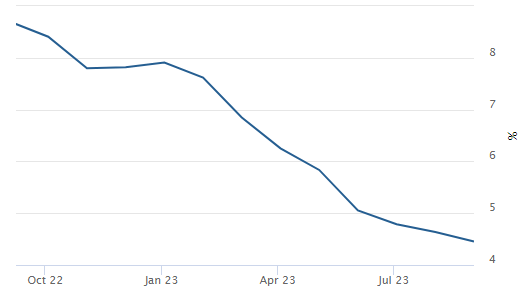
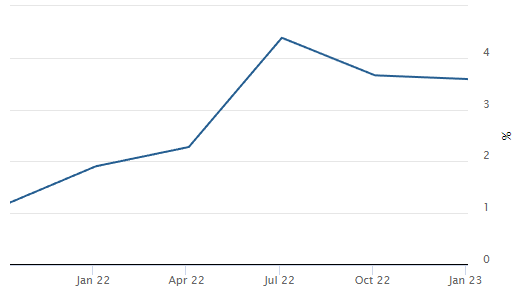
    MEXICO | Central bank maintains interest rates again. On 28 September, Mexico’s central bank (Banxico) announced that it was maintaining its benchmark interest rate at 11.25% for the fourth consecutive occasion. This is in line with Banxico’s announcement in May that the rate would be held for a prolonged period in order to reduce inflation to the target of 3%. This comes after Mexico’s national statistics institute (Inegi) released figures for the consumer price index (INPC) for the first half of September, which show that annual inflation rate stood at 4.4%.

    MEXICO | Trade deficit grows. On 27 September, Mexico’s national statistics institute (Inegi) released new figures showing that the country registered a trade deficit of US$1.38bn in August 2023, up from US$881m in July. Total exports in August were US$52.36bn, up 3.8% year-on-year while imports were US$53.74bn, down 4.3% year-on-year. In the first eight months of 2023, the trade deficit was US$8.60bn up from US$7.23bn in the year to July. Total exports in the first eight months of 2023 were US$391.88bn, up 3.8% year on year, while imports totalled US$400.48bn, down 0.5% on the same period in 2022.

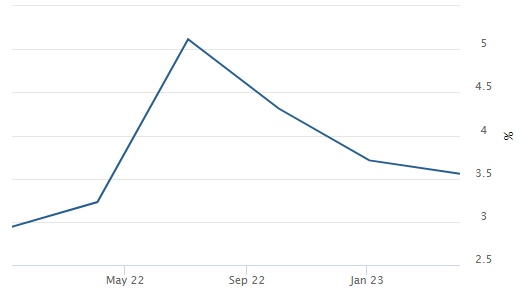
    MEXICO | Growth ticks up. On 22 September, Mexico’s national statistics institute (Inegi) released the latest figures for its monthly global indicator of economic activity (IGAE), which showed 0.2% economic growth in July 2023, as compared to the previous month. In seasonally adjusted monthly terms, economic activity in July increased by 0.5% in the secondary (industrial) sector but decreased by 0.2% in the primary (agriculture) sector and by 0.1% in the tertiary (services) sector. In year-on-year terms, economic activity increased by 3.5%, with the primary sector up 4.4%, the secondary sector up 4.9%, and the tertiary sector up 2.4%.

    Mexico: GDP growth
    Percentage variation (year-on-year)

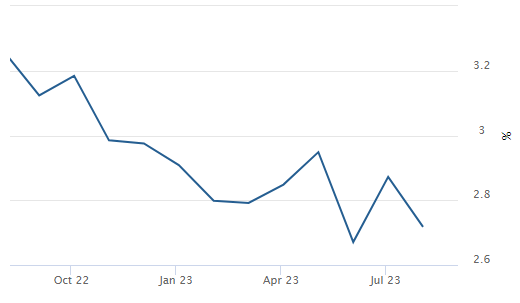
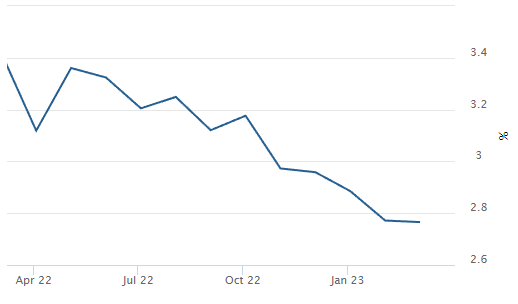
    Mexico: unemployment rate
    Economically active population

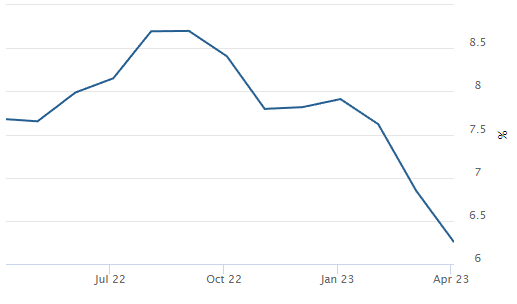
    Mexico: inflation rate
    Percentage variation (year-on-year)

    Source (all graphs): National Statistics Institute (Inegi)

  • CARIBBEAN POINTERS

    LatinNews 28 November 2012 Hits: 3019

    *** GRENADA GOVERNMENT IN UPHILL BATTLE. The ruling National Democratic Congress (NDC) led by Prime Minister Tillman Thomas remains in disarray only months before an election is expected.

    The NDC government was elected in July 2008 for a maximum five-year mandate, and it is difficult to see how it can overcome its problems even if it were to hang on to the bitter end.  Prior to July 2008, the New National Party (NNP) held power for 13 years, and recent opinion polls have suggested that it could win as many as 14 out of 15 seats if an election were held today.  In 2008, the NDC won by 11 seats to 4.

    The NDC’s principal problem is disunity.  Five of the NDC’s 11 MPs were expelled from the party at its September convention.  One of those expelled, former party chairman Stanford Simon, illustrated the depth of the division earlier this month when asked if he would still vote NDC at the next election.  He said: “No, I will not.  My position is very clear on that.  I do not believe that they have this country at heart as they have said.  What is happening now within the National Democratic Congress is not what I have fought for.”

    Later in November, former labour minister Glynn Roberts, who had resigned from the government in September, said that she intended to play a key role in the formation of a new party.

    Disunity in the ruling party is not the only thing going for the NNP.  Not surprisingly it is making much of the unemployment rate, which has grown from just over 20% in 2007 to 40%.  The IMF is projecting GDP growth of just 0.5% for 2012, which is the lowest for the Caribbean and half its average growth projection for the tourism-dependent economies of the region.

    *** ELECTION TIME FOR BERMUDA. Bermuda’s Premier Paula Cox of the Progressive Labour Party (PLP) has called a general election for 17 December.  The PLP is hoping to secure a fourth successive term, but this may be optimistic.  A recent opinion poll put the opposition One Bermuda Alliance (OBA) ahead by 11 percentage points.  There are 36 seats in parliament.  In the 2007 election, the PLP took 22 seats to the 14 won by the OBA.  The PLP has been criticized in the past for its anti-white sentiments.  The OBA is the lineal descendant of the United Bermuda Party that held power from 1968-1998 (8 consecutive terms) but was dissolved in June 2011.

    *** BOOM IN TOURISM FOR GUYANA. Tourist arrivals in Guyana were up 17.7% year-on-year as of end-October.  The country has been experiencing record-breaking months all year.  Only May failed to provide record arrivals.  The US is the most important source of tourism, providing 57% of visitors.  The Caribbean comes second, with 21%, followed by Canada (14%), Europe (5%), Latin America (2%), and the rest of the world (1%).

    Guyana’s economic position is comparatively enviable.  It grew by 5% in 2011, and GDP is projected by the IMF to grow by about 4% this year “supported by increased activity in bauxite, gold, rice, and the services sectors”.  Looking further ahead, the IMF says that “infrastructure projects...along with private mining investments should sustain growth levels at around 5%”.

    • Bahamas referendum postponed

    The vote on the legalization of gambling web shops in The Bahamas has been postponed from 3 December until 28 January 2013.  The government will not attempt to remove the ban on casinos.

  • ARGENTINA: Fernández a la caza de chivos expiatorios

    LatinNews 07 February 2014 Hits: 770

    El reposo medico puede haber moderado la frecuencia de los arrebatos de la Presidenta Cristina Fernández, pero esto no ha mitigado su mordacidad. En un discurso del 4 de febrero, en el cual ella anunció incrementos a las pensiones y asignaciones escolares, Fernández se lanzó contra los empresarios argentinos, quienes “llevan sus ganancias en moneda extranjera al exterior” y atacó incluso a los sindicalistas que la apoyan, cuyas demandas salariales aparentemente muestran que ellos “no entienden lo que está pasando”. Políticamente, esto fue muy imprudente, provocando que los sindicalistas opositores salgan en ayuda de sus menospreciados hermanos.

    Consciente de que se había propasado, la Presidenta Fernández invitó a Antonio Caló, líder del ala pro-gobierno de la Confederación General del Trabajo (CGT), para una reunión con el fin de aclarar las cosas, en la Casa Rosada el 6 de febrero. Caló había provocado su cólera al sugerir que la inflación era tan alta que algunas personas estaban pasando hambre. Pero el haber atacado a su base de apoyo que está en rápida disminución sugiere que Fernández está empezando a sentir la presión.

    La realidad muerde

    A inicios de esta semana, la compañía petrolera Anglo-Holandesa, Shell, anunció su decisión de elevar los precios de sus combustibles un 12%, provocando reacciones de ira en el gobierno. “Ellos nos acusan de codicia”, dijo Juan José Aranguren, el presidente de la subsidiaria de Shell en Argentina. “Si los proveedores incrementan los costos un 23% y nosotros elevamos los precios del combustible in 12% el siguiente mes, ¿eso es codicia?”

    Después de una reunión con el ministro de economía, Axel Kicillof, el gobierno acordó permitir a las compañías petroleras elevar el precio de los combustibles hasta un 6% en febrero. Shell reducirá sus precios; YPF, Oil Combusibles, Axion (la subsidiaria de ExxonMobil), y Petrobrás ahora elevarán los suyos. El alza de precios inevitablemente alimentará aún más la inflación, estimada, extraoficialmente, en alrededor del 28%. Los datos de inflación a ser divulgados este mes usarán  una nueva metodología, lo que casi por seguro mostrará un agudo incremento, provocando más exorbitantes demandas salariales.

    Por su lado, el banco central trató una táctica diferente para estabilizar el peso, ordenando a los bancos que liberen sus tenencias en monedas extranjeras. Esto reinstala una norma que restringe el monto de moneda extranjera en poder de los bancos a un máximo del 30% del capital de responsabilidad financiera o de su capital líquido, cualquiera sea el menor. Al mismo tiempo, fue fijado un límite del 10% para el mercado de monedas a futuro. La tasa de cambio oficial trepó seis centavos al conocerse la noticia de la norma, a Ar$7,96/US$1.La tasa del dólar del mercado paralelo, el dólar ‘blue’, permaneció estable, en Ar$12,55/US$1. Pero como los dólares en los bancos ya han sido tenidos en cuenta, esto no logró revertir la caída en las reservas en moneda extranjera del banco central, que ahora está en sólo US$27,8mm.

    ‘Nuestros hermanos’ traen malas noticias para Brasil

    Argentina es el tercer mayor socio comercial de Brasil; poco más del 8% de las exportaciones de Brasil van a la Argentina. En el 2013, los argentinos importaron productos brasileros por un valor de US$19,6mm, principalmente automóviles, lo que equivale al 0,9% del PIB de Brasil. En momentos en que las ruedas de economía argentina empiezan a fallar, los brasileros han comenzado a pensar cuánto de su propio lento crecimiento es probable que esté siendo dificultado por el desorden económico de su vecino.

    El banco brasilero Itaú, estima que cada 10% en reducción en las exportaciones a la Argentina podría reducir el crecimiento del PIB de Brasil por unos 0,2 puntos porcentuales en el 2014, con las manufacturas llevándose la peor parte. Las pequeñas empresas del sur de Brasil, que suman el 45% del comercio con Argentina, también se espera que sufran.

    La mayor preocupación para muchos economistas brasileros es que Brasil pueda ser contaminado por asociación. Pese a las claras diferencias entre las dos economías, no menos en la cantidad de las reservas en moneda extranjera que poseen, Paulo Márcio Mello, un profesor de economía de la universidad estatal de Rio de Janeiro, teme que los inversionistas puedan actuar “emocionalmente e irracionalmente” englobando juntos a los dos vecinos. La semana pasada el ministro de finanzas de Brasil, Guido Mantega, dijo que Brasil estaba preparado para ayudar a sus hermanos del sur, en caso de que ellos estén dispuestos a pedir ayuda.

    • ¿El último sachet?

    El 2 de febrero, McDonald’s Argentina se disculpó ante sus clientes por la falta de ketchup. Aunque prometió resolver la cuestión rápidamente, declinó especificar la naturaleza exacta del problema. La sospecha entre usuarios de medios sociales en el país, sin embargo, es que los controles de dividas extranjeras del país son la causa. Mientras que los individuos pueden haber sido liberados para comprar dólares (hasta US$2.000 cada uno al mes), las compañías, no. Los sachets de kétchup usados por McDonald’s Argentina son fabricados en Chile. Dada la dramática depreciación en el valor del peso argentino, los proveedores chilenos podrían estar exigiendo dólares. Sin dólares, no hay ketchup.

  • ECONOMIC OVERVIEW: NICARAGUA

    LatinNews 10 March 2015 Hits: 826

    Investment: Nicaragua hopes to attract US$1.6bn in investment in 2015, according to Javier Chamorro, the executive-director of PRONicaragua, the official export and investment agency. Such a figure would be a 10% increase on 2014, when Nicaragua received US$1.5bn. Growth in the agricultural sector, the renewable energy industry and tourism is helping to attract increasing amounts of capital to the Central American country. “There are countless companies that are developing these projects and we are getting more projects,” Chamorro said. “Right now we are working with two companies developing new projects in the country.” Investments in the production of cocoa, palm oil and textile manufacturing are expected to be announced soon.

    In February, PRONicaragua announced the start of a feasibility study for a new hydroelectric dam, the “Aguas El Carmen”. The dam would be located in the northern department of Matagalpa and would cost US$350m. Once in operation it would supply around 10% of Nicaragua’s energy needs, according to PRONicaragua.

    Tourism: International tourist spending in Nicaragua is predicted to grow 8.8% over the next decade, according to the World Travel and Tourism Council (WTTC). According to the WTTC, tourist spending to the country from 2013 to 2014 grew by 6.1%. Tourism is responsible for around 4% of Nicaragua’s GDP at present, though the percentage of its contribution to the country’s GDP is expected to rise to 5.8% by 2024.

    In terms of jobs, the tourism industry generated 82,000 jobs directly (3.3% of total employment) and 195,500 jobs indirectly (7.9% of total employment) in 2013. By 2024, this industry is expected to support 92,000 jobs directly and 280,000 jobs indirectly, according to the WTTC.

    January deflation: According to Nicaragua’s central bank, the monthly consumer price index (CPI) fell by 0.25% in January, driven by a drop in the price of fuel; annual inflation was running at 5.45%. For 2015, the central bank predicted growth of 4.5% to 5% with inflation of between 6%-7%.

  • Bermuda: Off the floor in 2015?

    LatinNews 30 March 2015 Hits: 3561

    Thanks in part to spending related to the 2017 Americas Cup, and in part to an upturn in construction, Bermuda’s long recession may end in 2015. However, the strategic challenges facing the tourism sector and (especially) the International Business sector will remain substantial.

    As a small and very open economy, Bermuda should have derived much benefit from the strong recovery in the US, with which it has strong links. However, the island has suffered from a long recession. There has not been positive GDP growth since 2008.

    Relative to the island economies of the Caribbean, many of which have larger populations, Bermuda is wealthy (with a per capita GDP in excess of US$80,000) and diversified, in that it has a globally competitive International Business sector and a substantial tourism industry. The other key elements of the economy are construction and domestic consumption.

    As chart 1 shows, all four sectors have been contracting. Premiums written by the island’s massive insurance industry, dominated by reinsurers focused mainly on property & casualty risks and offshore captive insurers, have stagnated. There were fewer cruise ship visitors in 2014 than in 2011 or 2012. The number of other visitors has been unchanged for years, and they stay for fewer nights on aggregate than in 2009, in the immediate aftermath of the global financial crisis. Construction, particularly residential, has slumped. Total retail sales in 2014 were about 4% below those of 2006. Total employment, on an island whose entire population is around 64,000, slipped from 39,087 in 2010 to 33,487 last year. In spite of expatriate workers (and some Bermudans) leaving to seek their fortunes elsewhere, the official unemployment rate is 9.0%. Given this grim environment, it is perhaps unsurprising that Bermudans have been paying down debt. Total bank lending to residents has contracted by about one fifth since 2011.

    Chart 1: Economy of Bermuda - Selected Metrics
    2007 2008 2009 2010 2011 2012 2013 2014
    Gross (re) insurance premiums (US$bn) 124.4 123.6 119.8 107.7 107.6 120.5
    Number of bed-nights sold by hotels/homes ('000) 1,679 1,437 1,442 1,430 1,414 1,681 1,408
    Cruise ship visitors  ('000)

    319 348 416 378 340 364
    Regular visitors ('000)

    236 232 236 232 236 229
    Gross addition to housing stock (units)


    375 393 228 117
    Estimated value of new projects started (US$mn)

    164 303 107 85
    Bank loans to residents (US$mn)
    6,013 6,320 6,178 6,234 5,674 5,238 4,941
    Retail sales index (2006=100) 104.3 106.0 102.1 97.3 94.2 94.7 94.6 96.2
    Total employment


    39,087 37,399 35,443 34,277 33,487


    CPI Inflation (All items %)


    2.4 2.7 2.4 1.8 2.0
    GDP at current prices (US$mn)
    6,110 5,806 5,744 5,551 5,538 5,574
    Real GDP Growth (%)
    1.5 -5.3 -2.1 -3.3 -4.8 -2.5


    Net Public Debt (US$mn)
    277 482 759 1,002 1,477 1,772 1,987


    NB Real GDP growth in 2014 has been estimated at between 0.0% and -1.5%. The government is looking for an increase in real GDP of up to 1.5% in 2015. Official unemployment rate of 9.0%


    Source: Ministry of Finance - National Economic Report of Bermuda 2014, 2015/16 Budget

    In his budget speech on 20 February last, Finance Minister Everard (‘Bob’) Richards said that the government would continue to follow a ‘Two Track’ economic management approach this fiscal year (ending in March 2016). The ‘First Track’ involves stimulating the economy; the ‘Second Track’ focuses on control and reduction of government spending. The government is looking for real GDP growth of between 0.0% and +1.5% to March 2016. This follows a contraction of similar magnitude over the past year.

    In short, the government thinks that calendar 2015 should see a fresh revival of growth in Bermuda’s economy. A major opportunity is the country’s hosting of the 35th America’s Cup in 2017, which it was awarded in December 2014. This is expected to result in additional spending of US$250m over the next three years, with another US$250n in infrastructure investment to support the event (including, for instance, the base for Team Oracle, the defending US champions). In addition, the tourism sector should benefit from the efforts of the Bermuda Tourism Authority (BTA) to gain certification as an official Destination Marketing Organisation (DMO) from Destination Marketing Organisation International. The BTA is also undertaking a number of initiatives to encourage visitors to spend more when they come to the island (see chart 2).

    Chart 2 Opportunities Challenges
    Tourism America's Cup 2017 - estimated US$250mn in spending over three years Long term decline in visitor numbers
    Bermuda Tourism Authority: seeking DMO certification Decline in visitor spending
    Initiatives to encourage tourists to spend more
    Construction St Regis - St George's US$140mn over 2-3 years Completion of King Edward VII Memorial Hospital
    Ritz Reserve US$160mn over 2 years
    Hamilton Princess Phase II US$40mn over 2 years
    Pink and Sinky Bay Beaches US$35mn over 1-2 years
    Ariel Sands colony development, US$50mn over 2 years
    America's Cup infrastructure US$250mn over 2 years
    PPP for US$255mn new airport terminal
    Expanding Tynes Bay Waste Management Facility
    Upgrading of airport runway
    International Business Bermuda Development Agency: promoting asset management and trust & private client business Contraction of global reinsurance premiums
    Creation of new Bermuda Limited Liability Company (LLC) encourage incorporations Low interest rates compressing (re)insurers' investment earnings
    Potential investment by life science/biotech and Canadian E-Commerce companies.
    Insurance-linked securities (ILS)

    Various developments in the International Business centre are also positive. Bermuda is a leading domicile for catastrophe bonds and other insurance-linked securities (ILS). The Bermuda Development Authority (BDA) is promoting asset management and trust-related business. It is hoped that the development of a new Limited Liability Company (LLC) structure will encourage incorporations of enterprises in Bermuda. The BDA is also looking at the potential to attract life sciences/biotech companies and Canadian e-commerce companies to the island.

    However, the strongest potential appears to lie in the construction sector. The completion of the King Edward VII Memorial Hospital has freed up capacity. Including the new infrastructure needed for the 2017 Americas Cup, projects worth almost US$1bn should get underway over the next two years or so. This includes a proposed public private partnership (PPP) deal to build a new US$255m new terminal at the main airport. All this activity is in the context of an overall economy that is around US$5.5bn in size.

    In the meantime, the structural challenges confronting the government and other decision-makers remain considerable. The long-term decline in visitor numbers and spending suggests that Bermuda is not seen as being good value for money by US and Canadian tourists. These are the two key markets, accounting for 71% and 13% of overall arrivals respectively in 2014, according to the BTA. There has been strong growth in arrivals from Europe (outside the UK), but such visitors account for only about 3% of the total.

    More crucially, there is downwards pressure on prices and profits in the global reinsurance market (and in many national property & casualty markets). This is due to extremely low interest rates, which affect the (re) insurers in two ways. The direct impact is to make harder for insurers to maintain and grow investment income. The indirect impact is that hedge funds and other institutional investors have increasingly seen ILS as attractive investments (not least because their returns are not correlated with those of other asset classes). The result of this is that there is an overcapacity (i.e. a surfeit of capital) in the global reinsurance market, which likely will remain. ACE Limited, one of the world’s leading property & casualty insurers and a member of the Association of Bermuda Insurers & Reinsurers (ABIR), reported that its gross reinsurance premiums written fell from US$1.06bn in 2013 to US$994m in 2014. XL Group plc, another ABIR member, noted that its reinsurance premiums dropped from US$1.89bn to US$1.71bn. Minister Richards noted in his budget speech that reinsurers had responded to the challenging conditions through a wave of mergers, in order to maximise economies of scale. This has not been good news for Bermuda, as the fortunes of its International Business sector depends on the number of insurers who are active, as well as on the quantity of premiums written.

    The ‘Second Track’ of the government’s policy has been to rein in spending, in order to move towards a balanced budget. This task has become more important in recent years as the government’s debt burden has risen. Net public debt has gone from US$277m in 2008 to US$1.9bn as of end-2014. The overall debt burden is still at a manageable level, relative to the economy and the government’s revenues. However, the government is keen to ensure that this remains the case.

    The government thinks that its borrowing requirement in 2015/16 will be US$125m, amid an overall deficit of US$220m, less money available in the government’s sinking fund. Total debt servicing costs in 2015/16 are calculated to be US$170m: this includes interest payments of US$118m and sinking fund contributions of US$52m. In the context of current spending for all other purposes of US$912m, this means that debt service is already substantial.

    As chart 3 indicates, a key policy associated with the ‘Second Track’ is an increase in current revenues, from US$902m in 2014/15 to US$931m in 2015/16. This rise should be due in part to the anticipated growth in the economy. It is also due to a range of tax increases. Payroll tax rates will be increased for both employers (by 0.5% to 14.5%) and employees (by 0.25% to 5.5%). Land Tax will be boosted by a lift in the rate on Annual Rental Values (ARVs) for commercial properties from 4.4% to 5.5%. The Corporate Service Tax Rate is rising from 6% to 7%. The departure tax for each passenger using the airport will be lifted from US$35 to US$50. Various fees for Department of Marine and Ports’ services will also be increased. Taking a longer term view, the government has requested technical assistance from the Caribbean Regional Technical Assistance Centre (CARTAC), a regional organ of the International Monetary Fund (IMF), to broaden the tax base.

    Chart 3: Government of Bermuda Budget (US$m)

    2014/15 2015/16
    Revenue 901.7 931.3
    Current Account Spending* 945.8 912.7
    Current Account Balance* -44.1 18.6
    Interest on Debt 113.5 117.6
    Current Account Balance less Debt Interest
    -157.6 -99.0
    Sinking Fund Contribution 47.7 52.3
    Surplus Available for Capital Spending -205.3 -151.3
    Capital Spending 62.0 52.3
    Budget Surplus (Deficit) -267.3 -203.6


    *Excluding debt service and sinking fund contribution

    The government is also hoping to reduce current expenditure from US$946m in 2014/15 to US$913m in 2015/16. In his budget speech, Minister Richards warned that these cuts may involve public sector lay-offs. If such lay-offs occur, they will represent a major change. To date, much of the retrenchment since 2008 has been in the private sector. The government, for its part, had reached an agreement with the public servants’ union for workers to take a monthly ‘furlough’, one day of unpaid leave. However, this agreement expires at the end March and the current union leadership has shown no appetite for extending the ‘furlough’, in spite of the government’s argument that it saved public sector jobs. This is in the context of a 20% increase in the overall number of public servants since 2007, even as the economy has stagnated.

    Measures announced by the government so far to reduce spending include: cutbacks to financial assistance; changes to the health insurance plan for government employees, a suspension of some of the government’s contributions to the Public Service Superannuation Fund; a hiring freeze (including the elimination of vacant posts); the curtailment of some public services; and the extension of the early retirement eligibility plan to public servants aged 55, down from 60 currently.

    In short, economic activity in Bermuda in 2015/16 will be boosted by a one off surge in construction (which is only partly related to the 35th Americas Cup). It remains to be seen whether or not the latest BTA initiatives can counter the tourism sector’s slow decline. Meanwhile, the outlook for the International Business sector in general, and the (re)insurers in particular, remains challenging. Until structural issues like the over-supply of capital in the global (re)insurance industry are resolved, it will be difficult for Bermuda’s economy to achieve anything other than pedestrian rates of growth. This, in turn, will make it harder for the government to balance its budget– which is necessary if it is to reduce the debt burden.

  • TRACKING TRENDS

    LatinNews 20 November 2015 Hits: 24

    CHILE | Seeking a trade agreement with the Philippines. On 16 November the Chilean government led by President Michelle Bachelet released a statement announcing that it had signed a letter of intent (LOI) with the Philippines’ government led by President Benigno Aquino III concerning the start of “negotiations over a free trade agreement [FTA]” between the two countries in 2016, the year which will mark the 70th anniversary of the establishment of bilateral diplomatic relations in July 1946.

    Although Chile has in place some 60 FTA’s with its trading partners and as one of the original proponents of the Trans-Pacific Partnership (TPP) Pacific Rim area FTA it is seen as one of the leading promoters of the establishment of closer trade ties between Latin America and the Asia-Pacific area, the Philippines is one of the few Asia-Pacific countries with which it currently does not have an FTA. Nevertheless, bilateral Chile-Philippines trade reached US$182m last year according to official figures. In particular, Chile’s foreign ministry has noted that, with a population of 94m, the Philippines is an attractive market for Chilean food and agricultural exports.

    The signing of the letter coincided with President Bachelet’s official two-day State visit to the Philippines, the first by a Chilean head of state in 17 years. Commenting on the LOI, following a meeting she held with Aquino in Manila, Bachelet said that her government’s objective was to continue to deepen trade ties with the Asia-Pacific region by signing an FTA with the Philippines. “We want to start this process to see if we can reach an agreement,” Bachelet said, adding that “We will work really hard for this to see if we can start the negotiations next year”.

    Bachelet highlighted that there is also space to develop bilateral cooperation in various areas including public policy, natural disasters, mining, agriculture and environmental issues, revealing that she had signed a memorandum of understanding over natural disaster and emergency relief cooperation with Aquino.

    Later, during a business conference Bachelet organised ahead of the start of the XXIII Asia-Pacific Economic Cooperation (Apec)’s Economic Leaders Meeting, held in Manila on 18-19, Bachelet said that her government would continue to push for closer relations with Asia, noting that following the signing of the TPP, Chile has now applied to join the Association of Southeast Asian Nations (Asean), the first non-Asian nation to do so. “We would like to count on its support, listen to its experience and receive its advice,” Bachelet said.

    Bachelet also noted that, along with her, the presidents of the three other Pacific Alliance countries (Mexico, Peru and Colombia) would for the first time all attend the Apec meeting after Chile, Mexico and Peru convinced the Philippines to extend an invitation to non-Apec member Colombia, in another sign of the efforts to shore up Latin American-Asia-Pacific trade ties. According to figures presented by the Pacific Alliance leaders at the Apec meeting, 25% of Apec fruit imports come from the Pacific Alliance, as well as 23% of its copper imports and 13% of its automobile imports. This as Apec countries currently account for 58.4% of Colombian exports, 43% of Peruvian exports and 65% of Chilean exports.


    BRAZIL | Brazil and Norway aim to deepen economic relations. On 16 November, Norway’s Crown Prince Haakon met Brazil’s Vice-President Michel Temer in Brasília at the start of a six-day official visit to Brazil, and the two expressed a willingness to deepen bilateral trade relations, particularly in the oil sector and environmental protection. In a joint press conference, Temer affirmed that “Brazil considers the strengthening of economic ties with Norway as a priority”. The heir to the Norwegian throne said that both countries are “important oil producers” and that there are other economic sectors that can be exploited jointly by Brazil and Norway.

    According to Temer, in the last decade, trade between Norway and Brazil increased by 145%, reaching US$1.8bn in 2014. There are currently 150 Norwegian companies present in Brazil. Following his meeting with Temer, on 17 November, the Norwegian prince went to Rio de Janeiro, where he delivered a speech to business owners, and paid a visit to the centre of investigations of Brazil’s state-owned oil firm, Petrobras. He travelled on to Belém, Pará state, to visit the sites of various development projects funded by the Amazon Fund, a Brazilian governmental campaign raising donations to invest in efforts preventing, monitoring and combating deforestation, to which Norway has contributed approximately US$1bn, equivalent to 96% of the Fund.


    PARAGUAY | Prospecting for oil in Paraguayan Chaco. On 16 November Paraguay’s deputy mining & energy minister, Mauricio Bejarano, said that Peruvian oil company Olympic Perú INC, which operates under the name Zeus OL SA in Paraguay, plans to drill two oil wells in the country’s western Chaco region in 2016. According to Bejarano, after concluding a 2D seismic study on a surface area of 1,200 hectares in the departments of Boquerón and Alto Paraguay, Olympic Perú “intends to start drilling next year…. They will drill two wells and evaluate shortly after whether they are able to continue or not”. Olympic will thus join other firms such as Britain’s President Energy, and the US’s Crescent Global Oil, which have been prospecting for oil in Paraguay’s Chaco, and made some minor oil discoveries in the last few years.

  • ECONOMIC HIGHLIGHTS

    LatinNews 22 January 2021 Hits: 1622

    PARAGUAY | A good year for beef. On 4 January, Paraguay’s national service for livestock health and quality (Senacsa) informed that beef exports reached a new record in 2020, totalling 271,000 tonnes (t). This is the first year that Paraguay has seen record beef exports since 2014, and the positive figures come despite the challenges caused by the effects of the coronavirus (Covid-19) pandemic. The value of beef exports totalled US$1.12bn, slightly under the 2014 figure. Chile was the primary destination for Paraguayan beef, representing almost 40% of total exports. It was followed by Russia (22%), Taiwan (9%), Brazil (8%), and Israel (6.5%). The government led by President Mario Abdo Benítez is working to open up more markets to Paraguayan beef and has informed that it will be re-launching discussions with Turkey on the matter this year. The Abdo Benítez government also expects to see advances in its efforts to access the US market in the first half of 2021.  

    CHILE | Boosting foreign reserves. On 13 January, Chile’s central bank (BCCh) announced a gradual programme to reposition and expand foreign currency reserves to around 18% of GDP, in order to strengthen the country’s international liquidity position. The BCCh noted that its foreign currency reserves currently amount to 16% of GDP, compared with 13.4% in September 2019, but that this is due to a significant drop in GDP as well as exchange rate depreciation over the past year. The aim is to increase foreign reserves to 18%-18.5% of GDP by 2022, based on current GDP estimates for that year. In a statement, the BCCh highlighted that a 24-month Flexible Credit Line (FCL) from the International Monetary Fund worth US$24bn was agreed in May 2020 to address the impact of the coronavirus (Covid-19) pandemic. However, this is set to expire in May 2022, and so the BCCh considers it “prudent” to begin shoring up foreign exchange reserves in order to strengthen liquidity. From mid-January, the BCCh is implementing a plan to gradually purchase US$12bn in foreign currency, through daily purchases of US$40m at competitive rates.

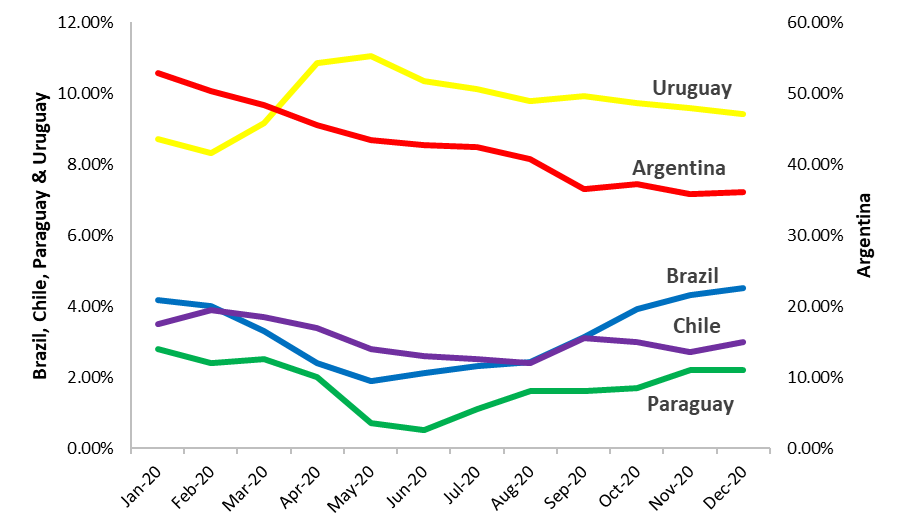
    Brazil & Southern Cone: Inflation
    Monthly year-on-year figures

    Brazil & Southern Cone: GDP growth (%)
    Quarterly figures are year-on-year growth
    Country 2020 forecast * 2021 forecast *  Q1 2020 Q2 2020 Q3 2020
    Argentina -10.5 4.9 -5.4 -19.1 -10.2
    Brazil -5.3 3.2 0.9 -11.4 -3.9
    Chile -6.0 5.0 0.4 -14.1 -9.1
    Paraguay -1.6 3.5 3.5 -6.5 -1.2
    Uruguay -4.5 4.0 -1.4 -10.6 -5.9
    *Figures from the United Nations Economic Commission for Latin America & Caribbean Dec 2020
    Quarterly growth based on figures from the local central banks


  • ECONOMIC HIGHLIGHTS

    Patrick de Courcy 19 May 2023 Hits: 3149

    MEXICO | Inflation drops. On 9 May, Mexico’s national statistics institute (Inegi) released the latest figures for the consumer price index (INPC), which showed that inflation fell by 0.02% in April 2023, compared to the previous month. This brings annual inflation to 6.25%, down from 6.85% in March.

    MEXICO | Increase in gross fixed investment. On 4 May, Mexico’s national statistics institute (Inegi) released new figures which show that gross fixed capital formation (GFCF) in February increased by 1.9% in real terms as compared to the previous month, with investment in machinery & equipment up 2.9% and investment in construction up 0.6%. Year-on-year, investment increased by 12.4% in real terms.

    MEXICO | Pemex Q1 profit slumps year-on-year. On 3 May, Mexico’s state-run oil company Pemex released new figures showing that it posted a net profit of M$56.7bn (US$3.1bn) in the first quarter of 2023. This compares with a net profit of M$122.5bn in the same period in 2022. The same figures show that total revenue in the first three months of 2023 totalled M$418.4bn, down from M$517.2bn in the same period in 2022. The company’s total financial debt totalled M$1.94trn, down 7% on the amount registered at the end of last year. Production of crude oil averaged 1.85m barrels per day (bpd) in the first quarter of 2023, up from 1.75m bpd in the same quarter in 2022, while output of refined oil products averaged 835,000 bpd, up from 822,000 bpd in 2022.

    MEXICO | Remittances rise again. On 2 May, Mexico’s central bank (Banxico) announced that remittances to Mexico totalled US$5.19bn in March, a 10.7% increase year-on-year. Remittances were also up on the US$4.35bn received in February. In the first three months of 2023, remittances totalled US$13.95bn, an increase on the US$12.52bn recorded in the same period of the previous year.

    Mexico: GDP growth
    Percentage variation (year-on-year)

    Mexico: unemployment rate
    Economically active population

    Mexico: inflation rate
    Percentage variation (year-on-year

  • TRACKING TRENDS

    Abbi Dicker 03 July 2025 Hits: 1545

    BRAZIL | Job creation down in monthly terms. The labour ministry released new figures on 30 June which showed that net job creation in Brazil came to 148,992 new jobs created.

    This latest monthly result marks an increase from the 139,557 jobs created in May 2024, but a decrease from the net 237,377 jobs created in April.  

    In May this year a total of 2.26m new hires were registered, up from 2.14m in the same month last year but down from 2.32m the previous month. Meanwhile, dismissals totalled 2.11m in May 2025, up from 2m in May 2024 and from 2.08m in April.

  • TRACKING TRENDS

    Abbi Dicker 30 July 2026 Hits: 690

    BRAZIL | Current account deficit decreases. The central bank (BCB) released the latest balance of payments figures on 28 July, showing that the country’s current account deficit in June stood at US$2.3bn, down from US$5.2bn in the same month last year. The accumulated current account deficit for the 12 months through June 2026 totalled US$61.4bn (2.46% of GDP), marking a decrease compared to US$64.2bn (2.60% of GDP) the previous month and US$75.5bn (3.52% of GDP) through June 2025. The trade balance of goods showed a monthly surplus of US$8.8bn, up from US$5.2bn in June 2025. Exports totalled US$36.4bn, up 24.8% year-on-year, while imports totalled US$27.6bn in June, marking a rise of 15.3%.

  • HONDURAS: Crocodiles and lions

    LatinNews 05 November 2015 Hits: 6038

    Victims of the massive scandal that has brought down one of the most prominent families in Honduras, the Rosenthals, now include an estimated 11,000 crocodiles and seven lions kept at the family's 30-hectare ranch, who were at risk of starvation after unpaid workers abandoned the ranch. The Honduran Forest Institute had arranged for the usual supplier to ‘donate’ two tonnes of “cow entrails and chicken”, local media reported in early November, although this would last only a few days at most, the ranch manager admitted.

    The fate of the animals is illustrative of the sheer depth of this scandal, which has rocked Honduras to its core. The reach of the Rosenthal family is such that its business interests could account for up to 5% of the country’s GDP, according to the family scion Jaime Rosenthal (‘the richest man in Honduras’), who is now wanted by US justice officials, and whose whereabouts are unknown. His son, Yani Rosenthal, reportedly has turned himself in at the US embassy in Guatemala City, according to late-October media reports, although this has not been confirmed by US authorities. Yankel Rosenthal, Jaime’s nephew, was arrested in Miami on 6 October and is now in custody awaiting a trial before a New York court. Honduran authorities have seized assets including two planes.

    The scandal broke publically on 7 October, the day after Yankel’s arrest, when the US Department of the Treasury’s Office of Foreign Assets Control (Ofac) announced the designation of four Honduran businessmen and seven businesses as Specially Designated Narcotics Traffickers pursuant to the Foreign Narcotics Kingpin Designation Act for playing “a significant role in international narcotics trafficking”.

    Those affected are Yankel, Jaime and Yani Rosenthal, as well as Andrés Acosta García, a lawyer for the family’s business conglomerate, Grupo Continental. “This action targets the three Rosenthal family members and their properties for their money laundering and drug trafficking activities,” stated Adam J. Szubin, Acting Under Secretary for Terrorism and Financial Intelligence. “This step underscores that the US government is fully committed to protecting the US financial system from criminals like the Rosenthals…[and] working with the Honduran authorities to take the necessary steps to protect the Honduran financial system from abuse by drug traffickers and other illicit actors, in order to further safeguard Honduran financial institutions,” Szubin added.

    The Panama-registered Grupo Continental, the holding group for the Rosenthal family’s various businesses, immediately responded with a statement denying that it had been operating one of the region’s biggest money laundering networks for the proceeds of drug trafficking and foreign bribery. The designation affects group businesses including Banco Continental, allowing the freezing of assets under US control. Several offshore companies in the British Virgin Islands were also cited.

    The Honduran government moved immediately, as per its obligations under international law, to order the compulsory liquidation of Banco Continental. The bank was banned from trading as of 12 October. Under the Ofac designation, the bank’s assets in the US were frozen, taking its capital adequacy ratio from 11.6% to 5.2%, below that permitted by local legislation (6%). The CNBS offered the bank’s 220,000 customers immediate deposit guarantees of up to HL204,000 (US$9,400) per fixed deposit account, with the funds funnelled for immediate release through four Honduran banks with any outstanding amount above that to be disbursed later. The banking and securities commission (CNBS) stressed that bank employees would receive their outstanding salaries. Emphatic that the wider local banking sector remained “solid”, the regulator urged the public to maintain “full confidence in the national financial sector”.

    Meanwhile, the public ministry said that it will evaluate the other local companies linked to Grupo Continental in a bid to offer assistance, so far as reasonable, in support of their continued operation. These companies employ an estimated 11,000 people (with another 25,000 indirect employees), so the ripple effects through the economy could be severe. Grupo Continental has interests in almost every economic sector in Honduras. Aside from banking and insurance (Banco Continental, Banco de Occidente), this includes the media (El Tiempo, Canal 11, Cablecolor), cement, food packing, bananas, coffee, cocoa, cattle rearing, commercial and residential property.

    President Hernández, in whose cabinet Yankel Rosenthal was an investment minister until last June, has sought to distance his government from the action, stressing that this is a strictly a matter for the US judicial authorities and that his government will meet any legal obligations, and will continue working with the US and other countries to defeat transnational crime and drug trafficking.

    • Jaime Rosenthal not safe at home

    In January 2012 Honduras amended its constitution to allow for the extradition to the US of nationals charged with drug trafficking, terrorism or crime, partially reversing a ban on extradition in place since 1982.

  • Region: Can Cartes do the deal with Europe?

    LatinNews 12 January 2018 Hits: 1446

    In the tail-end of his five-year term in office, Paraguayan President Horacio Cartes appears to have taken on a new job: trying to steer almost 20 years of free trade negotiations between the European Union (EU) and Mercosur to a successful conclusion. Cartes has just taken over the six-monthly rotating Mercosur presidency from his Argentine colleague, President Mauricio Macri. Macri’s attempt to reach a deal in time for the World Trade Organisation (WTO) ministerial summit in Buenos Aires in December did not succeed.

    For years protectionist sentiment in key Mercosur members Brazil and Argentina held up negotiations on a free trade agreement (FTA) with the European Union. Current Mercosur governments are more enthusiastic about free trade and globalisation but now the shoe may be on the other foot: EU members France, Ireland, and Poland are concerned to protect their farmers from competitively-priced South American agricultural products. All sides had hoped to finalise the FTA by December, but failed. There are at least three big outstanding issues. The first is that the EU is offering a low quota for reduced-tariff imports of Mercosur beef and ethanol (respectively, 70,000 and 600,000 tonnes). In the past it had offered a beef quota of 100,000 tonnes but EU officials say that is no longer on the table: the European market for beef has shrunk, so import quotas should be correspondingly smaller.

    The second issue is that the Europeans want to see bigger reductions in Mercosur tariffs on their key exports to the block (mainly machinery, vehicles and parts, chemicals, and pharmaceuticals). Officials in Brussels say Mercosur is still starting out from a very protectionist position, with ad valorem import tariffs on automobiles at 35%, on machinery at 20%-35%, and on clothing and footwear at 35%. Third, while Mercosur countries accept they need to open up their markets and become more competitive, there is a dispute over the scope and speed at which this should be done in trade with Europe. The Mercosur negotiators proposed phased and partial tariff reductions over a 15-year period. The EU position is that 80% of traded goods between the two blocks should become zero-rated within ten years.

    Further negotiations were expected in Brussels in late January, but the political window of opportunity for completing the FTA may be narrowing. While Argentina and Uruguay continue enthusiastic, Brazil’s centre-right administration under President Michel Temer faces general elections in October and may be wary of provoking domestic nationalist and protectionist sentiment. In Paraguay, President Cartes would like to crown his presidency with a successful FTA negotiation, but after the controversy over his failed attempt to secure a re-election bid, he too may be distracted by internal political manoeuvring prior to the general elections in April.