All Categories

Subcategories

  • Colombia: Confidence improves, but economy still slow

    LatinNews 04 August 2017 Hits: 367

    The industrial confidence index (Índice de Confianza Industrial, ICI) showed a small improvement in June, rising to -5.4%, up from -8.8% in May. But it remained below the year-earlier reading of +3.7% in May 2016.

    The ICI, published by think-tank Fedesarrollo, confirms that the Colombian economy is still sluggish. The index is based on a survey of three main components: the level of demand, the level of inventories, and the outlook for production over the next few months. Correcting for seasonal factors, Fedesarrollo said there had been a month-on-month improvement in inventories and in the outlook for production, but there had also been a deterioration in the level of demand. The separate index of commercial confidence (Índice de Confianza Comercial – ICCO) had shown a slight deterioration in June, falling to +14.9%, down from +15.3% in May, and also down from the +22.9% registered in June 2016.

    The ICI and ICCO numbers came after other evidence of a slow economy. Unemployment remains high, at 8.7% in the quarter ending in June, but has been improving. June was the fifth consecutive reading with a single-digit unemployment rate, measured in percentage terms. President Juan Manuel Santos sought to accentuate the positive, noting that over half a million Colombians had been hired in the year to June, the highest number since 2001. Despite this encouraging statistic, on 26 July finance minister Mauricio Cárdenas cut the official growth forecast for this year down to 2.0%, from 2.3% previously. He is predicting that GDP will rise 2.0% this year and by 3.0% in 2018. Last year’s growth was 3.1%. Cárdenas described the growth projection for next year as “realistic and solid”, and as a reliable baseline for preparing next year’s public sector budget.

    On 27 July, the central bank (Banco Central de la República de Colombia) said it was again cutting the benchmark interest rate, but unlike previous reductions which have been implemented in steps of 50bps at a time, was now slowing the rate of reduction to 25bps, bringing it to 5.5%. In its press release the bank said it noted the “growing weakness in economic activity” and the “risk of deceleration”. In the year to June, inflation stood at 3.35%, still above the bank’s 3% target.

    A number of analysts believe inflationary pressures may increase over the next few months: the bank itself noted that “the contribution of food CPI to the decline in annual inflation may reverse during the second half of this year”. Higher VAT, introduced at the beginning of this year, is also pushing prices up. Caught between the need to inject some stimulus into the economy and to remain vigilant on inflation, the central bank appears to have settled, at least for the time being, on a slower rate of economic easing.

    The international ratings agencies are also sounding a note of caution. At the end of July Moody’s said it might prove difficult for Colombia to meet its ambitious fiscal targets, due to slower growth. This followed a similar warning from Fitch, which said fiscal difficulties might undermine the country’s efforts to reduce its debt-to-GDP ratio. For Moody’s Samar Maziad said “even though Colombia will increase its tax income, it may not be enough to meet its goals in the medium term”.

    “Austere” 2018 budget

    On 28 July, the government presented its first draft of the 2018 budget, with total spending set to rise by 1% to COP235.6bn (US$78.456bn). Officials described it as “austere” and said the aim was to meet fiscal targets and avoid a downgrade of Colombia’s sovereign credit rating. Government current expenditure is set at COP149.3bn, debt servicing at COP51.9bn and pension spending at COP41.1bn. Public sector investment is set at COP34.3bn, a reduction of 13.8% on the amount budgeted in 2017. Finance minister Mauricio Cárdenas said, “The most important objective of this budget is to guarantee that credit agencies maintain our BBB rating.” The government’s target is to hold the fiscal deficit to not more that 3.6% of GDP this year, and to an upper limit of 3.1% of GDP in 2018. Congress must approve the budget by mid-October.

  • ECONOMIC HIGHLIGHTS

    Patrick de Courcy 21 May 2024 Hits: 2511

    ARGENTINA | YPF improves its results in Q1. On 9 May, Argentina’s state-owned oil company Yacimientos Petrolíferos Fiscales (YPF) released its financial results for the first quarter of 2024, which showed a 93% increase in net income year-on-year. The company reported US$657m in net income in January-March 2024, up from US$341m a year earlier. A drop in sales amid economic hardship in Argentina was counterbalanced by an increase in fuel prices. Total oil production stood at 526,000 barrels of oil equivalent per day (boed), up 3% year-on-year, and driven by shale production, which represented 49% of the total, the company said in securities filing. Crude oil production was up 7% year-on-year to 255,500 bod, roughly the same as during the last quarter of 2023. Natural gas production stood at 229,000 boed and natural gas liquids, 42,000 boed.

    URUGUAY | Average household incomes see significant rise. Uruguay’s national statistics institute (INE) released new socio-economic data on 15 May, according to which the average household income in the country grew by more than Ur$6,000 (US$155) in the first quarter of the year, compared with Q4 2023. The average household income in Uruguay totalled Ur$95,395 (US$2,459) in Q1, while the average income per capita stood at Ur$33,843 (US$872), up from Ur$31,661 in the previous quarter. Historical data shows that household incomes suffered a big dip in 2020 with the coronavirus (Covid-19) pandemic and have been steadily rising since Q2 2022, but this is one of the biggest quarterly increases on record (based on 2005 prices). The INE report shows a sharp disparity between incomes in the capital Montevideo and the rest of the country; while the average household income in the capital city stands at Ur$117,142, it is Ur$80,677 in the rest of the country. In Uruguay, 6.7% of households and 9.8% of the population live beneath the poverty line, per an INE report released in April.

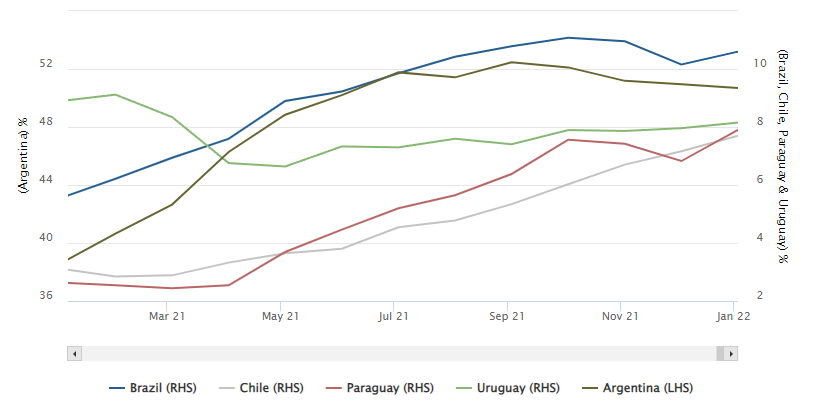
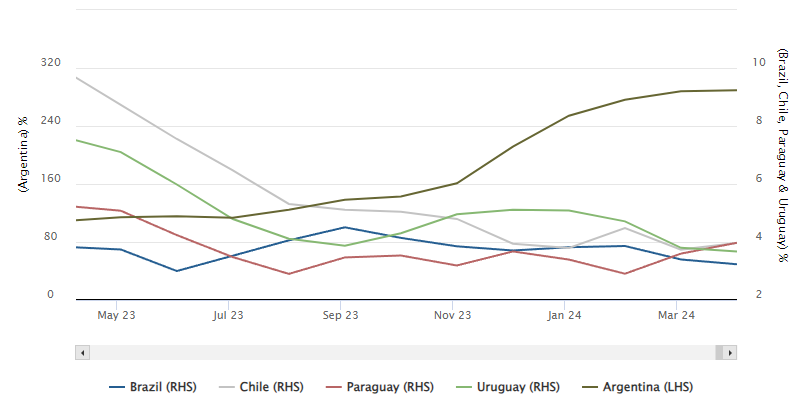
    Brazil & Southern Cone: inflation rate
    Percentage variation (year-on-year)

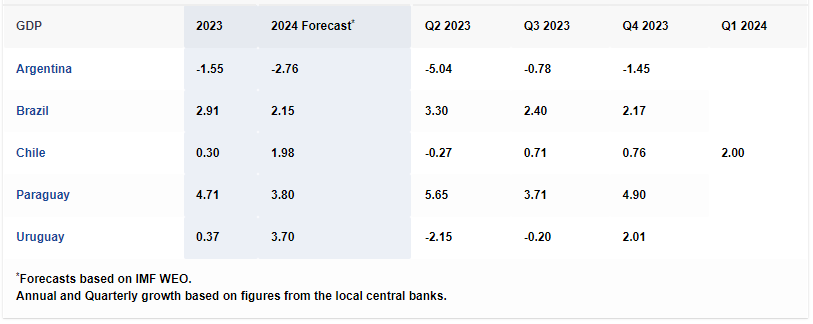
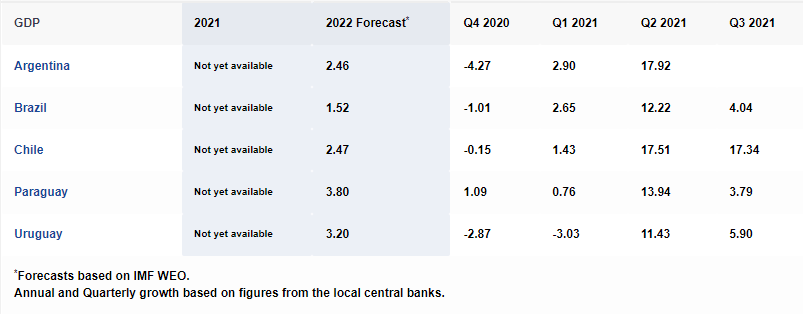
    Brazil & Southern Cone: GDP growth (%)
    Quarterly figures are year-on-year growth

  • EL SALVADOR: Bukele claims record drug haul amid other security achievements

    Sarah Sheldon 24 March 2026 Hits: 433

    On 15 February El Salvador’s President Nayib Bukele claimed that the navy had seized 6.6 tonnes (t) of cocaine worth some US$165m in what he described as the country’s biggest single drug seizure. His claim comes amid other security successes trumpeted by his administration, whose hardline security initiatives, including the implementation of a state of exception which has been in place since March 2022, and a mass incarceration policy, remain very popular despite ongoing human rights concerns.

    Writing on social media, Bukele said that during the operation, which took place 380 nautical miles south-west of the country’s shores, 10 alleged drug traffickers were detained: four Colombians; three Nicaraguans; two Panamanians; and an Ecuadorean. Bukele’s claim followed a 6 January press conference by the country’s defence minister, René Merino, in which he said that 25.01t of drugs had been seized in 2025, worth US$620m, up from 17.22t in 2024 (worth US$422.77m). He said that of the 25.01t total, cocaine seizures accounted for 22.53t. The latest report from the US State Department’s International Narcotics Control Strategy Report (INCSR), published in March 2025, notes that El Salvador is a transit country for illicit drugs although due to El Salvador’s “vigorous interdiction efforts, drug trafficking organizations largely avoid passing through El Salvador by land and rather attempt transit by sea”.

    The government has also hailed other security achievements. On 5 January Justice and Security Minister Gustavo Villatoro claimed 2025 was the safest year in “the country’s history”, with just 82 homicides committed, down from 114 in 2024, and equivalent to a rate of 1.3 homicides per 100,000 inhabitants. Indeed, the latest (February 2025) annual homicide round-up published by specialist website Insight Crime already showed El Salvador to have the lowest homicide rate (at 1.9 per 100,000) in Latin America and the Caribbean.

    Nonetheless, Insight Crime points out that the data may “overstate how comprehensive the reduction in violence has been” as the Bukele government does not follow the “Bogotá Protocol, the standard for measuring homicides in the region, so its murder rate cannot be directly compared to other countries that do”. Insight Crime also highlights a lack of transparency, making it harder to access data in El Salvador and the fact that it does not include deaths stemming from clashes between authorities and suspected gang members, nor murders where bodies have been discovered in mass graves.

    Public support

    The latest survey by Instituto Universitario de Opinión Pública (Iudop), affiliated with Jesuit-run Universidad Centroamericana (UCA), released in January, found that 62.7% of respondents considered security to be “the most positive aspect” of 2025, while 81.7% believed that crime had fallen. The same survey gave the Bukele administration an overall score of 8.39 out of 10, the second highest since 2020, the first full year after Bukele took office.

    Rights concerns

    Bukele and his flagship 40,000-capacity maximum security mega prison Centro de Confinamiento del Terrorismo (Cecot) are inspiring ideologically aligned leaders across the region such as Chile’s José Antonio Kast, who takes office on 11 March; Argentina’s President Javier Milei; and Costa Rica’s President Rodrigo Chaves. The victor of Costa Rica’s 1 February general election, continuity candidate Laura Fernández, has also professed her affinity with the authoritarian leader.

    However, Bukele’s hardline policies, which have been accompanied by a major crackdown on dissent, with rights groups shuttered and leading activists jailed [SSR-25-09], remain a major cause for concern for local and international rights groups. A report released at the end of January by local civil society group Socorro Jurídico Humanitario (SJH) tallied 90,844 people detained between the start of the state of exception and the end of December 2025, and estimates that of these, some 30% are arbitrary and illegal. Meanwhile on 13 February it reported that as of 8 February it had documented the deaths of at least 487 prisoners since the start of the state of exception.

  • CUBA: Suitcases at the ready, just in case

    LatinNews 06 June 2012 Hits: 1630

    President Raúl Castro raised hopes of comprehensive migration reform in August 2011, saying that the government was examining a policy “to facilitate Cubans resident in the country travelling abroad as tourists”. Almost a year later, Cubans are still waiting for their tourist visas.

    The president of the national assembly, Ricardo Alarcón, said in April that officials were discussing “a profound radical reform” of migration (and consular) policies. Currently Cubans need to obtain a travel permit known as the white card (tarjeta blanca) to go abroad. The permit is valid for 30 days only and to get it applicants have to endure a host of bureaucratic and security checks, as well as fork out about US$1,000. The white card can be extended a maximum of 10 times. Anyone that overstays their exit permit is considered a permanent emigrant and loses their right of residency in Cuba. Their property in Cuba also reverts to the state. Dissidents like the blogger Yoaní Sánchez are always refused travel requests, despite multiple applications (and rumoured behind the scenes diplomacy by friendly governments).

    Last year Castro hinted that, in addition to allowing Cubans to travel abroad more easily, the reforms under discussion would also cover the equally complex and expensive bureaucracy imposed on Cuban émigrés wanting to visit Cuba. “Now things have changed a lot, Alarcón noted, adding,” Nearly half a million Cubans living abroad visit us each year. The vast majority of Cuban emigrants have normal relations with their country of origin. Currently it is an economic emigration, they have family and friends on the island, and they wish above all stability”. “This new reality leads us to a substantial reform of our migratory policy. Some rules must be changed and others eliminated,” he stated.

    However Alarcón repeated President Castro’s warning that Cuba’s migration regulations would continue to “protect the human capital created by the Revolution”, in clear reference to Cuban doctors and other professionals who are specifically banned from travelling abroad for either tourism or family visits. He cited a special fast-track US visa program for Cuban doctors, put in place by the US to encourage them to abandon medical missions abroad and immigrate to the US. Under the 1996 Cuban Adjustment Act, Cubans automatically gain US residence after a year on US territory. The US does not offer this to residents of any other country.

    The cash-strapped Cuban government is increasingly welcoming of visiting Cuban émigrés, and their hard currency. Sceptics suggest that the authorities might also welcome a wave of outward migration under more relaxed travel rules, by way of releasing a social pressure valve. However as the Castro government tries to encourage private economic enterprise on the island, neither can it afford to lose its best and brightest. The new regulations may be announced in August.

    No shortage of inward tourism

    Total tourist visitors to Cuba rose to 2.7m in 2011, according to the government, generating an estimated US$1.7bn in much needed hard currency revenues. José Manuel Bisbé, commercial director at the ministry of tourism (MINTUR), said in a presentation to an industry conference in Havana on 31 May that the government expects 2.9m visitors in 2012. Bisbé noted that when the US broke off diplomatic relations with Cuba in 1961, over 90% of tourist visitors to Cuba were from the US, adding that “Cuban tourism had to develop accessing only 50% of the tourists that visit the Caribbean”. Today, he continued, Cuba is connected to 82 cities all over the world via 65 regular and charter airlines; and has 10 international airports, 10 ports and three cruise ship terminals.

    There are 335 hotels with 58,434 rooms, with annual average capacity growth of 6.5%, Bisbé said, adding that 65% of those are four or five star-rated. Cuba’s tourist ministry has 62 contracts in place with 13 foreign hotel operators, he noted, including Sol Meliá, Barceló, and Hoteles C (Spain) and Accor (France). The main source markets are Canada, the UK, Italy, France, Spain and Argentina.

    Mexico City to Cuban idyll

    From 12 July Cuba’s state airline Cubana de Aviación will offer two weekly tourist flights direct from Mexico City to Cuba’s Villa Clara keys (Cayos de Villa Clara). The Villa Clara Keys, spread along a 50km causeway, begin just east of the small coastal town of Caibarién and end at Cayo Santa María, 45km from the Cuban mainland. The keys boast 17km of fine sandy beaches. In 2008 the area, set among 500 small islands and the world’s second largest coral reef, was designated for sustainable (and more upmarket) tourism, with about 5,000 rooms available in 2011 through the chains Sol Meliá, Barceló and Gaviota. According to Alicia Pérez, head of the Cuban tourism office in Mexico, just over 76,000 Mexicans visited Cuba in 2011, up 14.5% year-on-year.

    Rail repairs steam ahead

    The director general of Cuba’s railways union, Miguel Acuña, said on 31 May that over 5,000km of rail track, or over half of the country’s total rail lines (9,300 km) would be repaired by the end of 2012, under plans to revive the rail sector. According to the daily Juventud Rebelde, Acuña said that rail passenger numbers totalled 3.4m in the first four months of the year (without specifying if this was up or down), while rail cargo totalled 11m tonnes, 10% above official expectations, mainly due to increased sugar loads previously handled by the now defunct sugar ministry.

    Repsol quits the Cuban gulf

    Antonio Brufau, the chairman of the Spanish oil company Repsol, hinted on 29 May that the company may stop looking for oil in Cuban waters in the Gulf of Mexico, after it was unsuccessful with its first deepwater well. In a statement on 18 May, the company said the well in question would be capped and abandoned. A company spokesman, Kristian Rix, said that Repsol was evaluating data collected and had not yet decided whether to sink further wells in the area. Rix stressed that it was normal to turn up dry wells, adding that it was too soon to determine whether other parts of Repsol's exploration bloc were commercially viable.

      However 10 days later, Brufau suggested that Repsol may cut its losses altogether. "The well we drilled turned out dry and it's almost certain that we won't do any more activity there," he said at a press conference. Repsol has been in Cuba since 2000 and first drilled a well in 2004. That well, in the same area, was also dry. Repsol is partnered in Cuban waters with Norway's Statoil and India's ONGC Videsh. The Spanish company’s financial position has recently taken a hit from the seizure of its local subsidiary in Argentina.

      Repol’s latest drilling off Cuba's northern coast began in February, after a deepwater Scarabeo 9 oil rig was brought from China (to bypass the US trade embargo on the island).

      The Malaysian state oil company, Petroliam Nasional Berhad (Petronas) and Russia's Gazprom Neft began drilling in mid May in a Cuban-owned area of the Florida Straits known as the Northbelt Trust, about 180km southwest of Repsol's drill site. Its results are expected in July. Petronas is also using the Scarabeo rig. Venezuela's state oil firm Petróleos de Venezuela (Pdvsa) and Sonangol of Angola also have exploration options in Cuban waters. Pdvsa is due to use the Scarabeo rig after Petronas. The rig is due to be in Cuba for another 12 months, until July 2013, at a daily leasing cost of US$0.5m. Each well costs about US$100m to sink.

    The Cuban government estimates that its offshore region could contain between five and nine billion barrels of oil equivalent. Pdvsa ships 115,000 barrels a day to Cuba in an oil-for-services deal between Caracas and Havana.

    • Sprightly

    President Raúl Castro turned 81 on 3 June. His number two, José Ramon Machado Ventura (the first vice president of the council of state and the council of ministers), is also 81, while his effective number three Ramiro Valdés (second vice president on the council of state), is 80. Fidel Casto is 85. The average life expectancy for Cuban men is 76.

    • Connected!

    The new undersea fibre optic cable between Venezuela and Cuba is now fully functioning, according to Venezuela’s science and technology minister, Jorge Arreaza. “It is absolutely operational. It will depend on the Cuban government what it uses it for…That’s their sovereign matter, but we know that the cable is in full operation”, Arreaza said on 24 May. The Caribbean sea cable, laid by Alcatel-Lucent, stretches 1,600km from Venezuela and reached Siboney, eastern Cuba, in mid 2011. It then extends another 240km from Cuba to Jamaica. Arreaza said a third branch may be extended to Hispaniola.

  • BRASIL: Inminente reorganización ministerial

    LatinNews 14 November 2014 Hits: 726

    Quince ministros del gabinete entregaron sus renuncias a la Presidenta de Brasil, Dilma Rousseff, el 12 de  noviembre. Aloizio Mercadante, el jefe del gabinete, dijo que las renuncias fueron actos de “amabilidad” diseñados para cumplir con la promesa de campaña de Rousseff de “nuevo periodo, nuevo equipo”. Muchos de ellos tienen la esperanza de conseguir un nuevo empleo en el segundo periodo de Rousseff. Hablando a los periodistas en Qatar, en camino a la reunión del G-20 en Australia, Rousseff dijo que ella no tenía la intención de anunciar designaciones la próxima semana.

    Más significativa fue la renuncia de la secretaria de cultura, Marta Suplicy, el 11 de noviembre. Siguiendo la habitual y repetida costumbre de hablar acerca de las satisfacciones que le ofreció su puesto, Suplicy le pidió la presidenta Rousseff que nombre “un equipo probado de economistas con experiencia, e independiente” para su segundo mandato. Los comentarios de Suplicy no encontraron mucho eco en el saliente ministro de finanzas, Guido Mantega, quien según se dijo, murmuró a sus ayudantes que el ministerio de cultura bajo la dirección de Suplicy no careció de dinero, pero de talento.

    Pero Suplicy no puede ser ignorada tan fácilmente. La ex ministra de cultura fue ministra de turismo bajo el ex presidente, Lula da Silva (2003-2011), y ella también fue alcalde de la ciudad de São Paulo. Una representante del ala conservadora del gobernante de Izquierda Partido dos Trabalhadores (PT) quien prioriza el crecimiento en orden para financiar la distribución de la riqueza, los comentarios de Suplicy revelan la batalla por el alma económica del segundo periodo de Rousseff.

    Una vez más, Rousseff ha descartado tomar una decisión inmediata sobre el reemplazante de Mantega, y el retraso parece indicativo de los feroces argumentos que se discuten fuertemente detrás del escenario. A comienzos de esta semana, Gilberto Carvalho, una figura central en la administración Lula, otorgó una entrevista en la que criticó a Rousseff por distanciarse de los “principales actores de la economía y de la política”. Es probable que la designación de Mantega acentúe esta ampliada fisura.

  • ARGENTINA: Government takes on the supreme court, again

    LatinNews 14 May 2015 Hits: 5960

    With the end of Kirchnerismo now in sight, the government is making a renewed push to ensure the movement’s influence, particularly within the country’s judiciary, continues beyond 2015, regardless of who wins the elections in October. In the latest skirmish, the impeachment commission of Argentina’s chamber of deputies, which is dominated by pro-government politicians, voted in favour of opening an investigation process into the fitness for office of Carlos Fayt, the 97-year-old supreme court judge.

    Unhappy at the re-election of the independently-minded supreme court president, Ricardo Lorenzetti, for the 2016-2019 term, and his deputy, Elena Highton de Nolasco, the government is now questioning whether the correct procedure was followed in his election. Last week, Fayt’s lawyer confirmed reports that he was not actually present in the courthouse when Lorenzetti was re-elected by the court on 21 April. Horacio Verbitsky, a journalist for the pro-government Página/12, which first broke the story, argued that Fayt’s health was so poor he could no longer recognise his secretaries.

    This prompted a move by deputy Anabel Fernández Sagasti, from the ruling Frente para la Victoria (FPV) faction of the Peronist Partido Justicialista (PJ), to question whether Fayt was fit to continue. In her argument to the impeachment commission, she said an investigation was necessary not to question Fayt’s record but to “corroborate his capabilities”. It wants to hear testimony from a number of court employees who work with him, from his driver, and from journalists who interviewed him last week. In that interview Fayt had said he had been suffering from the flu and a sore throat, but “I am well and, as always, working”.

    In order to dispel doubts about the legitimacy of Lorenzetti’s re-election, the court met on 12 May to confirm their decision. But this only generated further controversy when Fayt, whose presence had been expected, failed to turn up. The supreme court then met again on 13 May, this time with Fayt in attendance, and issued a resolution in which it confirmed the original resolution appointing Lorenzetti with a line noting that “the place in the city of Buenos Aires where it was definitively signed by the ministers being irrelevant”. Still, the apparent contradiction between the supreme court’s words and actions did not go unnoticed by government sympathisers.

    The opposition argues that the case against Fayt is politically motivated. Deputy Pablo Tonelli of the centre-right Propuesta Republicana (PRO) said, “it is a political attack to undermine Dr. Fayt’s resolve, it is an attack on the independence of the supreme court”. Other members of the opposition argued that the impeachment commission can only, as the name implies, decide to open impeachment proceedings, and not carry out “investigations” of the type it proposes. The FPV lacks the two-thirds majority on the commission needed to recommend impeachment.

    • FPV candidate for Buenos Aires province bows out

    With the province of Buenos Aires arguably the most Peronist area of Argentina, whoever wins the primaries for the ruling FPV faction of the PJ stands a strong chance of replacing the current incumbent, and presidential hopeful, Daniel Scioli. However, with 10 candidates in the race, President Cristina Fernández has called for the party to reduce its number of contenders to avoid weakening its chances. On 13 May, one of those candidates, Carlos Castagneto, the deputy minister for social development, heeded that call. “I deeply believe that the true candidate is our political project, so I withdraw my candidacy for governor, and will keep on supporting the policies that bring joy to our people with commitment, love and work,” Castagneto wrote on his social media accounts.


    • Randazzo still in the race

    Florencio Randazzo, the interior and transport minister, has confirmed his intention to stand against Daniel Scioli in the FPV’s primaries to determine who will be the party’s candidate for the presidency in October’s elections. So far Scioli has dominated the field of FPV candidates, and is polling well in comparison with the opposition candidates, Sergio Massa and Mauricio Macri. However, support for Scioli’s candidacy remains lukewarm within the party, meaning Randazzo is still in with a chance.

  • PERÚ: Los sindicatos tratan de elevar la presión sobre Humala

    LatinNews 17 July 2015 Hits: 431

    La importante organización sindical, la Confederación General de Trabajadores del Perú (CGTP), movilizó a miles de sus miembros en un día de protesta contra las políticas económicas del gobierno liderado por el Presidente Ollanta Humala el 9 de julio. La presidenta de la CGTP, Carmela Sifuentes, afirmó que 25.000 trabajadores se manifestaron en toda la nación (4.000 de ellos marcharon hasta el congreso nacional en Lima), realizando marchas y erigiendo bloqueos de carreteras para exigir, entre otras cosas, que el salario mínimo sea elevado al doble de NS$750 (US$235) a NS$1.500 (US$470); mayor respeto por los derechos laborales y las negociaciones colectivas; y que el gobierno dé significativos pasos para combatir la corrupción y la impunidad.

    Las protestas de la CGTP tuvieron lugar en sitios tan lejanos como Cusco, la capital de la región del mismo nombre en las sierras del sur, y en Iquitos, la capital de la norteña región amazónica de Loreto. En gran medida fue un día pacífico, aunque la policía tuvo que derribar algunas barreras que bloqueaban la autopista interoceánica a Brasil y utilizaron gas lacrimógeno para dispersar a los manifestantes en Huancayo, capital de la región de Junín en el altiplano central.

    El momento de las protestas parecía estar diseñado para aplicar alguna presión sobre Humala, antes de su último discurso sobre el estado de la nación del 28 de julio, cuando iniciará su último año en el poder. Se espera ampliamente que Humala utilice su discurso para presentar medidas económicas que provean incentivos para la inversión privada elaboradas bajo los poderes legislativos extraordinarios conferidos recientemente por el congreso nacional a su administración.

  • BRAZIL: Temer’s approval rating sinks further

    LatinNews 23 February 2017 Hits: 666

    Though the Brazilian government appears increasingly confident that the recovery is around the corner, the feel-good factor is certainly eluding the electorate. On 15 February, the CNT announced the results of a poll that was conducted among 2,002 voters in 25 states. Overall the evaluations of Temer’s government and his performance as president declined from what they were in October. For what it is worth, they remain slightly higher than they were for Dilma Rousseff this time last year.

    Just 10.6% of respondents described President Temer’s government as ‘good’ or ‘excellent’, down from 14.6% in October. Meanwhile, the number of respondents who consider the administration to be ‘bad’ or ‘terrible’ rose from 36.7% to 44.1% (compared with 62% for Rousseff’s government in February 2016). Temer’s personal approval rating had also fallen from 31.7% to 24.4%. The number who disapproved of him personally increased from 51.4% to 62.4%.

    This decline is mostly due to economic factors, such as the continuing recession (now in its eighth quarter), increased unemployment (at 12.5%), high interest rates, and very tight credit. The political scenario has also not improved, with ‘Operation Car Wash’ and many other scandals continuing to result in accusations against members of Temer’s cabinet.

    It is difficult to see the president’s standing improving rapidly, given that further austerity measures, such as pension reform, are likely to erode his popularity even more. However, the government’s support base in the federal congress is solid and the administration will be hoping that forthcoming populist measures will at least keep Temer’s approval rating on life support.

    From mid-March Brazilians will have access to their inactive FGTS accounts – workers’ funds usually only to be used on retirement, unemployment, or when buying a house. Millions of Brazilians will thus benefit from a small windfall of up to a few thousand reais.

    The 2018 race

    The survey also looked ahead to the presidential elections in 2018. Between October 2016 and February 2017, all of the pre-candidates fell – except for former president Lula da Silva (2003-2011), who was up 5.2 percentage points, and the far-right federal deputy Jair Bolsonaro, who was up 3.2 points. Interestingly, for the first time, the poll showed Lula winning against two viable alternative candidates, Aécio Neves and Marina Silva, in a second-round run-off.

    Clearly, the recent press coverage after the death of his wife, Marisa Letícia, has boosted Lula’s support. But it remains a fact that Lula retains a significant and passionate following, regardless of the fact he now faces trial in five separate criminal cases. If he does run in 2018, he will be a formidable candidate. Bolsonaro improved his standing because of increased press coverage of his activities as federal deputy.

    The Instituto Paraná conducted a separate poll in mid-February among 2,020 voters in in 26 states. The results for Lula, Marina Silva and Jair Bolsonaro were similar to the CNT poll. However, the big news was the candidate from the Partido da Social Democracia Brasileira (PSDB), São Paulo Mayor João Doria. Doria has been in office only 45 days and appeared in this poll with 9.1%, the same level as the PSDB Governor Geraldo Alckmin, and just one percentage point less than PSDB Senator Neves.

    Doria has had large media coverage of his activities as mayor, particularly as a non-politician businessman who had never run for office before, but was elected in the first round.

    • Improvements

    The CNT poll also asked the interviewees whether they expected ‘improvements’ in Brazil in five key areas. Expectations were more negative for employment, income and public safety/security, but improved slightly for education, and were ‘stable’ for public health care.

  • ECONOMIC HIGHLIGHTS

    LatinNews 22 January 2021 Hits: 1943

    CFE investment plan: On 8 December 2020, Mexico’s state-owned electricity company, Comisión Federal de Electricidad (CFE), announced plans to invest M$62.75bn (US$3.18bn) in electricity generation projects over the next five years. According to the CFE’s 2021-2025 business plan, the construction of six combined-cycle power plants and five aeroderivative turbine units will increase generation capacity by 4,347 megawatts (MW), with some of these projects earmarked for parts of the country that struggle with electricity shortages, including the states of Baja California and Yucatán. The company’s CEO, Manuel Bartlett, reported that construction works will create some 28,850 jobs, as well as a further 1,515 permanent jobs with the CFE once the plants are operational. Bartlett defended the company’s financial situation as “extraordinarily sound”, after Mexico’s federal audit office (ASF) concluded in November 2020 that the CFE is “not profitable, and does not generate any economic value for the state”, with losses of M$40.38bn posted in 2019.

    Auto sector recovery: On 11 January Mexico’s national statistics institute (Inegi) released new figures which show total production of light vehicles (cars and vans) was 3.04m in 2020, down 20.23% on 2019 while 2.68m light vehicles were exported, down 20.85% on 2019. April and May were the worst performing months, due to the nationwide restrictions on movement imposed to stop the spread of the coronavirus (Covid-19). However, the figures also indicate signs of recovery in production and exports towards the end of the year: in December 2020, 275,081 light vehicles were exported, up 16.14% on December 2019 while 254,251 light vehicles were produced, up 18.41% on December 2019. As regards domestic sales, 105,135 light vehicles were sold in December 2020, a 19.41% drop on December 2019, while 949,353 units were sold in 2020, down 27.97% on 2019.

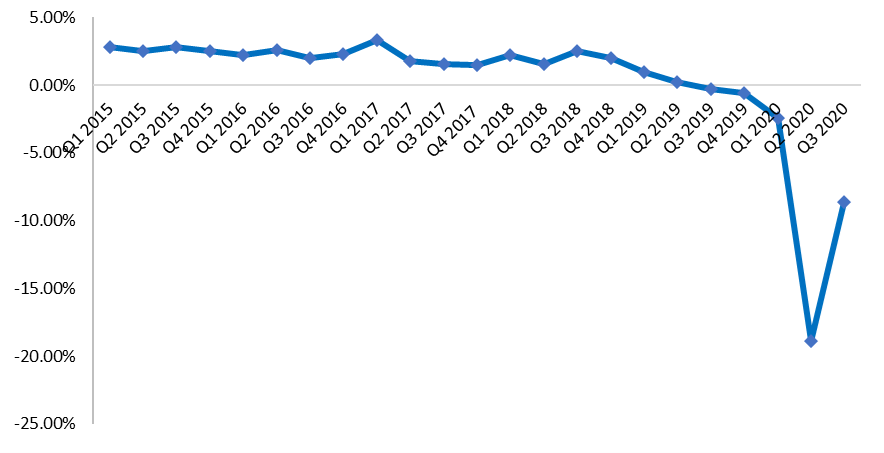
    Mexico: GDP Growth
    Percentage variation (year-on-year)

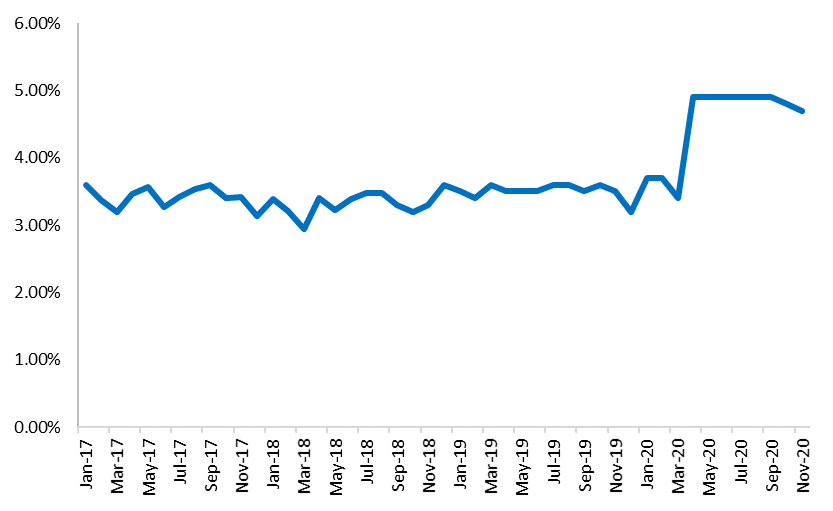
    Mexico: Unemployment Rate
    Econimically active population

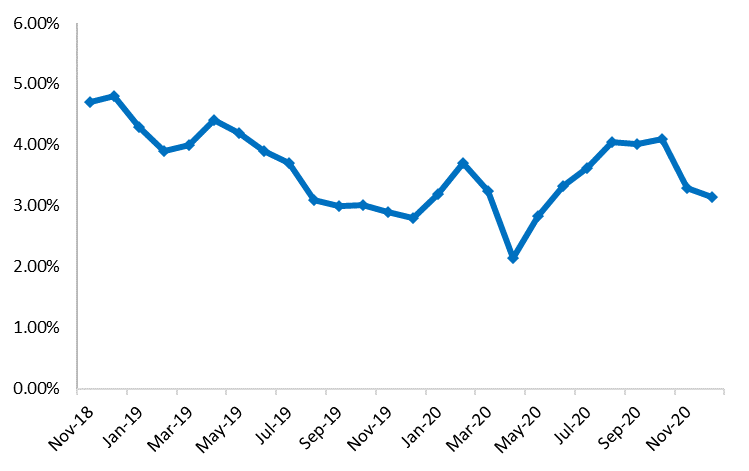
    Mexico: Inflation Rate
    Percentage variation (year-on-year)

  • ECONOMIC HIGHLIGHTS

    Patrick de Courcy 18 February 2022 Hits: 3065

    URUGUAY | Unemployment falls to lowest point in four years. Uruguay’s national statistics institute (INE) released the latest figures for unemployment on 1 February. After reaching a 14-year high of 11.2% in October 2020, amid the coronavirus (Covid-19) pandemic, Uruguay’s unemployment rate has now fallen to 7% in December 2021, the lowest figure recorded by the INE since December 2017. The employment rate stood at 57.7% at the end of last year, with 9.2% of the employed population considered to be under-employed, and 21.8% working informally, without a social security register. Unemployment is somewhat lower in the capital Montevideo (6.6%) than in the rest of the country (7.3%), while women are hit by unemployment much more than men: the unemployment rate last December was 8.5% amongst women compared with 5.8% amongst men.

    CHILE | First woman appointed to head central bank. On 3 February, Chile’s President Sebastián Piñera appointed Rosanna Costa as the new president of the country’s central bank (BCCh). The previous BCCh president, Mario Marcel, stepped down after being appointed finance minister in the incoming government of President-elect Gabriel Boric. Costa, who has sat on the BCCh’s council since 2017, is the first woman to hold the position of central bank president in Chile. Her five-year tenure begins under the shadow of soaring inflation, with inflation closing 2021 at 7.2%, and climbing to 7.7% in the 12 months to January.   

    BRAZIL | Vale posts strong 2021 results. Brazilian mining giant Vale released its fourth quarter production report for 2021 on 10 February, showing growing production and sales driven by a 5.1% increase in iron ore production and 8.9% increase in iron ore sales. Vale is the world’s largest iron ore producer and its production of the metal totalled 315.6m tonnes (t) in 2021, 15.2m t higher than 2020 production levels. Last year’s strong performance came despite a dip in production in Q4, with iron ore production falling 7.8% compared with Q3 and 2.4% year-on-year.   

    Brazil & Southern Cone: inflation rate
    Percentage variation (year-on-year)

    Brazil & Southern Cone: GDP growth (%)
    Quarterly figures are year-on-year growth

  • TRACKING TRENDS

    Patrick de Courcy 16 March 2023 Hits: 3333

    BRAZIL | Lower interest rates? Brazil’s finance minister Fernando Haddad confidently asserted on 13 March, at an event hosted by newspapers O Globo and Valor Económico, that the collapse of Silicon Valley Bank (SVB) and Signature Bank in the US should not pose a systemic risk, but was “serious”. A silver lining for the government led by President Luiz Inácio Lula da Silva could be the bringing forward of a reduction in Brazilian interest rates.

    Brazilian banks are considered to be resilient to external shocks, and while the São Paulo stock exchange fell sharply on the news of the US banks’ collapse on 13 March, it recovered thereafter.

    While he has resisted government pressure for lower interest rates, the central bank governor, Roberto Campos Neto, may use the opportunity to assess the impact on inflationary expectations not only of the US banking crisis, but also of efforts by Haddad to launch a new fiscal responsibility framework. The next meeting of the central bank’s monetary policy committee (Copom), due on 22 March, should also give an indication of the future direction of monetary policy.     

    But the country may still not escape at least one specific negative impact of the bank crisis. Various Brazilian start-ups had deposits at the Californian bank which they were unable to withdraw in time. While covered by a US$250,000 deposit guarantee scheme, some start-ups had deposits of up to US$10m and may have difficulties in eventually withdrawing their funds.

    A number of start-ups including Nubank, C6, and Inter have been quick to say they have no exposure to SVB. Junior Borneli of business school StartSe has nevertheless warned that many Brazilian start-ups were already starved of cash and that in the worst-case scenario “we could have a mass extinction of start-ups”.

  • TRACKING TRENDS

    Abbi Dicker 16 January 2025 Hits: 2807

    BRAZIL | Monthly decline in services sector. The national statistics institute (Ibge) released its latest figures for the services sector on 15 January, which showed that the volume of services provided in Brazil decreased by 0.9% from October to November 2024. However, the monthly services volume in November was up 2.9% compared with the same month in 2023. The accumulated volume in the 12 months until November 2024 was also up 2.9% from the previous 12-month period, and the accumulated services volume for January-November 2024 was 3.2% higher compared with the same period in 2023.

    Of the five categories of services measured, two registered monthly decreases in November – professional and administrative services (-2.6%) and transport and postal services (-2.7%). Within the transport category, air travel registered a significant monthly decrease (-13.7%), in contrast to October, when air travel saw a monthly rise of 28.6%.

  • TRACKING TRENDS

    LatinNews 22 August 2011 Hits: 541

    GUATEMALA | Historic conviction. On 2 August a “high risk” court in Guatemala City (so called because of the threat the accused pose to judges and witnesses) handed down life sentences to the four special forces soldiers accused of involvement in the 1982 Las Dos Erres massacre, eight days after the trial began [WR-11-30], and amid other signs of a widening crackdown on past military impunity. Hailed by local and international human rights organisations alike, the conviction is the first for a massacre perpetrated during the 1960-1996 civil war.

    PANAMA | Canal. Alberto Alemán Zubieta, the administrator for the Panama Canal Authority (ACP) has announced a record budget of US$2.39bn for the ACP for Fiscal Year 2012 (1 October 2011 to 30 September 2012), an increase of US$292.6m on the budget approved for FY2011. Last month Alemán forecast that the Canal would beat its record for tonnage shipped through the Canal and tolls paid this year, estimating that the tonnage for the current FY would be between 15m t and 20m t ahead of the 320m t it had initially budgeted. The Canal’s previous record year was in 2007, prior to the global financial crisis, when it handled 312m t. Alemán told reporters that he expects the Canal’s total income to exceed US$2bn, which is just ahead of the result for the last financial year.

  • ARGENTINA: Los dolores de cabeza del gobierno empeoran antes de las elecciones

    LatinNews 14 July 2013 Hits: 694

    En una concentración de miembros de su poderosa Confederación General del Trabajo (CGT) durante la huelga de 24 horas de los camioneros el 8 de julio, Hugo Moyano estableció sus ambiciosos planes para las elecciones legislativas. “El 27 de octubre vamos a votar por la solución política que pondrá fin a todas las injusticias”, dijo. En otra parte, un sondeo de Transparencia Internacional sobre la corrupción aplicó una nota adversa al gobierno de Argentina; un prominente ministro del gobierno enfrenta lo que promete ser, por lo menos, un caso judicial que consumirá mucho tiempo; y un popular político de la oposición expresó su fuerte objeción a la posibilidad de enmendar la constitución para permitir que la Presidenta Cristina Fernández compita por un tercer mandato.

    Huelgas

    Moyano, un ex aliado del gobierno, estaba hablando en el apogeo de una huelga de los choferes de camiones de larga distancia que causó severos retrasos en Buenos Aires, y causó que se agote el combustible en estaciones de gasolina a través de Argentina. Montañas de basura se apilaban en las calles mientras los recolectores de basura se unían a la huelga, ostensiblemente provocada por el fracaso del gobierno en actualizar las escalas del impuesto a las ganancias.

    Moyano acusó a la Presidenta Fernández de haber “perdido el rumbo”. Y advirtió: “le decimos al gobierno y la sociedad que estamos ultrajados debido a este nocivo impuesto [a las ganancias] que deben pagar los trabajadores [...] ¿No sabe esta señora que ella está creando condiciones similares a las políticas neoliberales que destruyeron empleos?”. La huelga, del Sindicato de Choferes de Camiones, fue organizada por Pablo Moyano, hijo de Hugo, y líder del sindicato.

    Corrupción

    Los alegatos de corrupción contra los gobiernos de Argentina son tan familiares como para provocar que muchos observadores cuestionen su impacto sobre el electorado. Pero el constante goteo de alegatos contra la administración parece haber tenido un efecto. Un sondeo realizado por el lobby global anticorrupción, Transparencia Internacional (TI), halló que el 72% de los argentinos creen que la corrupción se ha incrementado durante los dos últimos años. Fernández comenzó su segundo periodo en el poder en el 2011. El resultado ubicó a Argentina al tope del ranking de percepciones de corrupción en América Latina. El diario, Clarín (implacablemente opuesto a la presidenta), señaló que la mayor parte de las auditorías y cuerpos de control del gobierno han sido sistemáticamente debilitados, citando el hecho de que la oficina anticorrupción y la unidad de información financiera no han procesado a ningún funcionario por cargos de corrupción en los últimos 10 años.

    Moreno

    Un hombre responsable más que la mayoría del vaciamiento de la alguna vez respetada institución pública es Guillermo Moreno, el secretario de comercio domestico. Moreno está acusado de socavar, y luego despedir a importantes economistas en el Indec, la agencia oficial de estadísticas, y de reemplazarlos con funcionarios leales al gobierno dispuestos a manipular las tasas de inflación. Ahora él enfrenta una investigación encabezada por un juez sobre alegatos de abuso de su cargo público por su rol en los cambios en el Indec. Potencialmente, él podría terminar enfrentando una sentencia de dos años. Y, por lo menos, el caso le quitará energía y capital político a uno de los más importantes agentes económicos del gobierno.

    La oposición política hace acopio de fuerzas

    Mientras que el gobierno apaga incendios en varios frentes, la oposición comienza a organizarse. El 8 de julio el popular alcalde de Tigre, Sergio Massa, ahora visto como un posible candidato presidencial para el 2015, lanzó la campaña para las elecciones legislativas para su recientemente creado movimiento político, Frente Renovador (FR). Hasta hace poco, Massa era miembro del gobierno y del dominante Frente para la Victoria (FPV), la facción del gobernante Partido Justicialista (PJ, Peronistas). Su apelación, por tanto, se extiende desde kirchneristas independientes, hasta oponentes del gobierno. El FR ya encabeza las encuestas de opinión por unos 10 puntos porcentuales, delante de la lista del FPV.

    • Riña sobre Colón

    El 8 de julio el alcalde de la ciudad de Buenos Aires, Mauricio Macri, de la opositora Propuesta Republicana (PRO), prometió que una estatua de Cristóbal Colón “no saldrá de la ciudad de Buenos Aires”. La semana anterior, La Presidenta Fernández había reafirmado el compromiso de su gobierno de mudar la estatua a Mar del Plata y reemplazarla con una escultura de la heroína boliviana, Juana Azurduy, obsequiada al país por el gobierno del Presidente de Bolivia, Evo Morales. Fernández fue una de las más abiertas críticas de la “vieja Europa” y el “colonialismo” después de que el avión de Morales fue desviado a Viena la semana pasada por sospechas de transportar a bordo a el informante que filtró datos de la inteligencia de EU, Edward J. Snowden. Macri pidió a los candidatos políticos a “respetarse uno al otro, escuchar uno a otro, y que no haya ataques entre uno y otro. [...] Como las campañas electorales han comenzado, debemos demostrar respeto por cada uno de los que están participando”.

  • TRACKING TRENDS

    LatinNews 21 August 2014 Hits: 1475

    BOLIVIA | YPFB signs accords with Petrobras. Bolivia’s state-owned oil firm, Yacimientos Petrolíferos Fiscales Bolivianos (YPFB), and its Brazilian counterpart, Petrobras, have signed a series of agreements ending their dispute over outstanding natural gas payments and paving the way for their continued commercial association. Petrobras agreed to pay off part of its outstanding debt to YPFB for gas deliveries by compensating the firm with US$457.7m. Meanwhile, YPFB agreed to pay fines levied on it by Petrobras for gas supply interruptions that took place between 2001 and 2012.

    The other agreements signed included a series of addendums to the existing gas supply contract between the two firms, under which YPFB is contracted to deliver 30m cubic metres (m3) of gas per day to Brazil until 2019. In February YPFB announced that it had signed a temporary contract with a thermoelectric plant located in Brazil’s western city of Cuiabá to export 2.24m cubic metres of gas a day (mmcm/d) to cover extra demand generated by construction projects ahead of the 2014 Fifa World Cup and 2016 Olympics. Under the new addenda, YPFB will continue this arrangement (which was due to run out this month) until 31 December 2016.

    Bolivia’s gas exports to Brazil reached US$3.87bn in 2013, up from US$800m in 2005, the year before the government led by President Evo Morales took office.

  • Corporate Radar

    LatinNews 29 January 2016 Hits: 18787

    Eurnekian bets on IPOs: Argentine businessman Eduardo Eurnekian is reported to be planning up to four IPOs on the New York Stock Exchange (NYSE) this year, arguing that conditions could be “ideal” for such a move if Argentina successfully resolves its long legal dispute with the hold-out creditors. Reuters said that Eurnekian, one of the country’s most successful businessmen, was thinking of floating shares in his airports operating company, in his energy unit Compañía General de Combustibles (CGC), in his nanotechnology group (which trades as Unitec Blue in Argentina and as Unitec in Brazil), and in his agricultural company as well. He said launching the IPOs would be a complex process, but he hoped it could develop in tandem with Argentina’s gradual re-insertion into global capital markets. He would use proceeds from the IPOs to fund expansion of his holding group, Corporación América, into other South American markets such as Brazil, Ecuador, and Peru. Corporación América, which has overseas interests as far away as Italy, Morocco, and Armenia, has an estimated annual revenue of US$2bn. Eurnekian said he was optimistic about the long term outlook for gas – through GGC he has an interest in gas fields in Patagonia.

    Foreign companies betting on Brazil: When things get really bad, then it’s time to buy. That may – or may not – be a thought going through the minds of Brazil-focused corporate investors. What is clear, according to two separate studies, is that last year foreign companies were more active in Brazilian mergers and acquisitions (M&A) than the Brazilians themselves. According to KPMG, in 2015 there were 773 M&A transactions. Of the total, more than half – 396 – involved purchases by foreign companies. According to KPMG partner Luis Motta: “The current state of the economy and the depreciation of the real may have been accelerating the arrival and expansion of foreign companies in Brazil, despite worsening growth expectations and rising country risk”. According to a separate report by PwC, foreign investors accounted for 51% of a total of 672 acquisitions and capital increases that it analysed last year, up from 38% in 2014. PwC expects the proportion to rise a little further to 55% this year. PwC Brasil partner Rogerio Gollo said “Foreigners are going to remain interested in Brazil while domestic companies will continue to have financing difficulties”. One of the biggest transactions last year was the US$3.37bn purchase of the Jupiá and Ilha Solteira hydroelectric generators by Three Gorges Corp of China. New York-based Coty Inc also agreed to pay US$1bn for the beauty-care unit of Hypermarcas of São Paulo. Gollo said the sectors likely to attract most interest in 2016 are information technology, trade, agribusiness, and renewable energies.

    Ford plans new plant in San Luis Potosí: According to press reports – yet to be formally confirmed – Ford Motor Co will in the first quarter of this year announce a major new investment in an assembly plant in the state of San Luis Potosí in Mexico. It is believed the plant will be used to launch a new model in the car company’s range. It is thought to involve investment of US$1.5bn and would produce some 350,000 units per annum. Earlier, in April 2015, the company said it was investing US$2.5bn to expand its engine and transmission manufacturing in central and north Mexico. The Mexican automobile industry continues on a strong growth trajectory. Last year Mexico produced an all-time record of 3.4m vehicles, up 5.6% on 2014. Exports rose by 4.4% to 2.76m vehicles. This consolidated its position as Latin America’s leading carmaker, ahead of Brazil (where production slumped by 21.6% to 2.33m vehicles). Globally Mexico is the seventh largest car producer; some estimate that this year it could overtake India and move up to sixth position. North of the border, a new agreement with one of the main US auto industry trade unions, the United Auto Workers (UAW), may also be positive for Mexico. Under its terms companies such as General Motors, Ford, and Fiat Chrysler have offered improved pay and health care to their US workforce in return for the right to boost output of some cheaper, lower-margin passenger cars in Mexico. Average wage costs in the Mexican industry are around $5 an hour compared to $29 in the US. The agreement may therefore lead to further relocation of plants from the US to Mexico.

    Trouble with the Isagen sale: The Colombian government’s long-running plans to divest a majority stake in power generator Isagen have finally concluded with a sale – but a legal challenge is on the way. In January the government sold 57.6% of the company’s shares to Canadian investment fund Brookfield Asset Management for COP6.49trn – around US$2bn. Formally this was a sale by auction, but Brookfield was the only bidder after Chile’s Colbún, the only other company left in the race, decided to drop out after the government raised the minimum share price. Brookfield’s bid came in at the minimum and was accepted. The government says it has met all legal requirements for a successful privatisation. Medellín-based Isagen operates six hydroelectric and one thermal power station, with an installed capacity of 3,032MW. It generates about 16% of total electricity supply in Colombia. It is regarded as well-run and profitable. But an unusual alliance of left and right wing opposition members of Congress is mounting a legal challenge on the grounds that the sale was not competitive. On the right, former President Álvaro Uribe, using a calculation based on the cost of acquiring new generating capacity, claims Colombian tax payers have been short-changed by as much as US$1.5bn. But local brokers say the sale price actually exceeded fair value. On the left Clara López Obregón of Polo Democrático has claimed electricity tariffs are likely to go up as a result of the privatisation. The government intends to use the proceeds from the sale to fund its ‘Fourth Generation’ (4G) road-building programme.

  • HONDURAS: Castro declares fiscal emergency as part of economic plan

    Sarah Sheldon 25 April 2022 Hits: 1066

    Honduras’s new president, Xiomara Castro, has made dealing with public finances a priority in the first few months of her leftist Partido Libertad y Refundación (Libre) government, moving to enable more borrowing by declaring a fiscal emergency in mid-February.

    On 16 February the 128-member unicameral legislature approved a fiscal and financial emergency decree which will allow the government to borrow up to US$2bn in 2022 and 2023 both domestically and internationally. The government was also able to access support from the International Monetary Fund (IMF), which is held by the central bank (BCH) in order to meet a 15 March sovereign bond maturity worth US$166m.

    The declaration of the fiscal emergency stems from alleged issues with the 2022 national budget which was approved on 17 December 2021 under the previous government led by former President Juan Orlando Hernández (Partido Nacional, 2014-2022).

    According to officials from the Castro administration, which took office on 27 January, the budget doesn’t make provisions for debts incurred by state-owned electricity company Empresa Nacional de Energía Eléctrica (ENEE); state-owned telecoms company Empresa Hondureña de Telecomunicaciones (Hondutel); or the water authority Servicio Autónomo Nacional de Acueductos y Alcantarillados (Sanaa) and other sources.

    Castro has claimed that debt increased by 700% under her two conservative predecessors, nearing 60% of GDP, up from 48.7% in 2019. And the Guatemala-based thinktank Central American institute of fiscal studies (Icefi) projects that debt will reach 62.9% of GDP by the end of 2022.

    Some 60% of the existing budget would have been spent servicing debt, with insufficient funds left for the day-to-day functioning of public institutions, said presidential secretary Rodolfo Pastor de María y Campos. This lack of funds means that every government department is working “with its hands tied,” De María y Campos told local outlet Contra Corriente in an article published on 18 February.

    However, opposition figures have criticised what they say was a rushed decision to declare the emergency, and former BCH president (2019-2022) Wilfredo Cerrato said the move is unnecessary as there is more money available than the government said. In addition, Cerrato, who also served as finance minister from 2012-2018, said the move will make borrowing more expensive for Honduras. But while debate over the merits of the move rumbles on, Castro is forging ahead with plans to increase borrowing.

    On 16 March the president’s private secretary, Héctor Zelaya, announced that an IMF mission would visit the country the following week, but meetings have been delayed until April. On 22 March local outlet El Heraldo reported that IMF officials were planning to meet with finance minister Rixi Moncada to discuss the ENEE and foreign debt.

    The IMF will want to know whether the Castro administration wants to restructure its debt, according to Mauricio Díaz Burdett of the Foro Social de Deuda Externa y Desarrollo de Honduras (Fosdeh) thinktank. Ismael Zepeda, also of Fodseh, said that public spending would be the main focus of talks. Under the previous government the number of public employees increased, and there could be reforms to pay and staffing, he added.

    Aside from issues with the budget, Castro has also introduced fuel subsidies to lessen the impact of increasing oil prices. At the beginning of February, she announced a L10 (US$0.40) per gallon subsidy at the pumps for the rest of the year, and from 15 March the government will also cover 50% of price increases to diesel.

    Other initiatives in the works include plans to widen the tax base to address what De María y Campos called a “regressive fiscal policy” which encourages inequality, and a drive to attract foreign investment. Building relationships with the US government appears to be a key part of this strategy, and Héctor Zelaya mentioned efforts to “strengthen” that relationship at an event with Honduras’ main private sector lobby Consejo Hondureño de la Empresa Privada  (Cohep) on 15 March.

    There is some evidence of these efforts too, with a string of US officials travelling to Honduras in recent months. Honduras’s new foreign minister, Eduardo Enrique Reina, met both US international trade administration under-secretary Marisa Lago and US deputy secretary of state Wendy Sherman at the end of February, while Jose Fernandez, US subsecretary for economic growth, energy and the environment, arrived in Honduras on 17 March for meetings to discuss transparency and investment. 

    Then, on 24 March, officials from the US Department of the Treasury met with Honduran counterparts in Tegucigalpa, agreeing to provide technical assistance in areas such a tax collection, the budget, transparency, and debt restructuring. The debt crisis at the ENEE was also discussed, and US officials will provide technical assistance in matters such as restructuring the company’s debt and renegotiating expensive energy contracts. At present the company is paying private generators US$0.135 per kilowatt, whereas the average cost in Central America is US$0.07-0.09 per kilowatt. Renegotiating these contracts will help to bring down electricity costs for consumers and industry, economic development minister Pedro Barquero told El Heraldo in an article published on 24 March. 

    Honduras is also looking further afield for investment. In an article published 21 February, Vice-President Salvador Nasralla told the Financial Times that the country has approached Japan, Taiwan, and Qatar, adding that investments in the agricultural sector will be a priority.

    However, the success of efforts to attract investment will depend on demonstrating that the rule of law holds in Honduras, said Libre legislator and congress vice president Hugo Noé Pino, in the same article. While Castro has already requested help from the United Nations to establish a commission against corruption and impunity in Honduras (CICIH), this is a “medium-term task,” said Noé.

    While Castro attempts to lay the groundwork for wider changes in Honduras, she also has to face down pressing short-term issues such as a high rate of inflation. On 25 March analysts from Cohep presented proposals including an emergency energy policy, modernisation of public transport, and a hybrid working model for public and private employees to encourage people to work from home.

    Other proposals include improving access to finance for farmers and subsidising fertilisers, which have also increased in price due to Russia’s invasion of Ukraine. Energy Minister Erick Tejada told El Heraldo in an article published on 25 March that government officials agree with the majority of Cohep’s proposals and are working on implementing measures, without giving any further details.

    • Mining

    Other measures announced by the government include the 28 February decision to cancel environmental permits for metal and non-metal mining and prohibit open-pit mining. It remains unclear whether the cancellations will apply to new projects, or whether they will also apply to existing ones. Either way, it appears a relatively affordable way to fulfil an election pledge. According to Fosdeh, since 2000, mining has contributed on average less than 1% annually to Honduras’s GDP. It cites BCH figures that in 2019 mining generated L3.693bn, barely 0.60% of GDP.


  • CUBA: Citizens get a new chance to buy dollars

    Sarah Sheldon 20 September 2022 Hits: 565

    It sounds like a contradiction in terms, but in August the Cuban authorities tried to nationalise the foreign currency black market. 

    Before August, under currency reforms introduced in 2021, there were two key exchange rates in the Cuban economy: an official rate of 24 Cuban pesos (CUP) to the US dollar, and a black-market rate oscillating around 120 CUP to the greenback. Driven by a need to build up scarce foreign-currency reserves, the Havana government is tentatively trying to ‘legalise’ or replace the black market with a system over which it will have greater control.

    The move came in two steps. On 4 August the government said the central bank would begin to buy dollars in cash from individuals, initially at a rate of roughly CUP110.40. The preferential CUP24 rate would, however, remain in place for state companies and other official transactions. President Miguel Díaz-Canel said the aim was to “mobilise financial resource and inputs as quickly as possible” to deal with the country's economic needs. Critics said the move would be inflationary and that by buying, but not selling dollars to individuals, an unbalanced market was being created. However, on 23 August economy and finance minister Alejandro Gil said the central bank would on the following day also begin selling dollars to those who wanted them, under certain conditions. Gil said that the aim was to build and “control” a foreign-currency market.

    Under the new arrangements, Cuban citizens wanting to buy foreign currency are allocated up to US$100 a day, initially at a price of CUP123.60. Central bank president Marta Sabina Wilson said that the amount of dollars offered for sale through this channel would be limited. Dollar sales to individuals would be offered through the network of exchange houses (known as Cadecas) and each Cadeca would be required to sell no more than it had acquired on the previous day. The aim was therefore to both buy and sell foreign currency to individuals, but to do so in a way that would build reserves. Wilson said central bank dollar purchases since 4 August had been ten times higher than in the previous month.

    In the Mesa Redonda television programme to discuss the changes, Gil said that a range of domestic prices, including nominal salaries, basic goods and services, and gas and electricity tariffs, would continue linked to the CUP 24 rate, while others, deemed less essential, would be linked to the higher rate.

    This led to a wave of critical comments (which were later removed from the associated website). One viewer commented “What a cheek to admit that my salary is based on the 1×24 exchange rate, but when it comes to buying what I need it is at 1×120. These are things like shampoo, cosmetics, food, confectionery for a child's birthday, and medicines,” he added.

    The latest development shows that Cuba is still struggling to introduce a single, unified exchange rate, a goal that was announced at the beginning of 2021. Mauricio de Miranda, a Colombia-based specialist on the Cuban economy, said the latest change was “insufficient” and the country's economy would remain in crisis in the absence of “integral and systematic” economic reforms.

    The available data for the first six months of this year suggests Cuba's post-coronavirus (Covid-19) economic recovery is faltering. First half currency revenues are estimated at US$2.5bn, well down on the US$4bn registered in 2019. Despite a surge in the price of key nickel and sugar exports, the economy has been hit by higher oil and food import prices, as well as by widespread power cuts.

    The continuing US trade embargo has not helped. Foreign direct investment has slumped to below US$2bn-US$2.5bn a year, the amount which economists estimate is necessary to sustain GDP growth of 5% or more. The country is struggling to reschedule its Paris Club foreign debt. The recovery in tourism has been slow. GDP grew by 10.9% in the first quarter, but this reflected a low base of comparison (there was a sharp Covid-19 related recession in Q1 2021). The economy is not expected to reach its pre-pandemic levels until 2024-2025. 

    • Oil facility fire

    On 12 August the Díaz-Canel government announced that a fire, which began on 5 August in the industrial zone of Matanzas, in Cuba’s main oil terminal, had been extinguished. The fire, which is considered among the worst in Cuba’s history, has dealt a further blow to the country’s crumbling energy infrastructure and is believed to have killed at least two people, leaving over 130 injured and displacing hundreds of local residents.

  • ECONOMIC HIGHLIGHTS

    Abbi Dicker 23 May 2025 Hits: 3707

    MEXICO | Banxico continues to lower interest rate. On 15 May Mexico’s central bank (Banxico) lowered its benchmark interest rate by 50 basis points for the third time this year, bringing the rate to 8.5%. This is the seventh consecutive rate cut, following cuts of 25 basis points in December, November, September, and August last year. In a statement announcing the decision, Banxico said it could consider cutting the rate by a similar magnitude at future meetings. However, the bank noted that core inflation rose in April and forecasts for general inflation at the close of 2025 had been revised up in the short-term. Despite this, it still expects inflation to reach the 3% target by Q3 2026.

    MEXICO | Vehicle production, exports and sales fall in April. On 9 May Mexico’s national statistics institute (Inegi) reported year-on-year declines in the country’s light vehicle production, exports, and domestic sales for April 2025. Production dropped by 9.1% compared to the same month in the previous year, with a total of 326,069 units manufactured. In annual terms, exports fell by 10.9% to 256,953 units, while domestic sales declined 4.6% to 108,298 units. Despite April’s downturn, cumulative production from January to April rose slightly by 0.9% year-on-year to 1.30m units, while sales were up 1.4% at 473,323 in the same period. However, exports over the same period fell to 1.03m units, marking a 7.3% decline from the first four months of 2024.

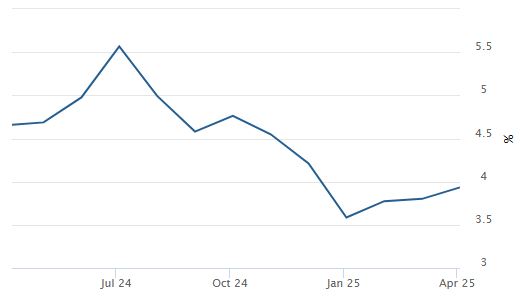
    MEXICO | Inflation continues to edge up. On 8 May Mexico’s national statistics institute (Inegi) released the consumer price index (INPC) for April, reporting monthly inflation stood at 0.33%, up from 0.31% in March. This brought the annual headline inflation rate to 3.93%, up from 3.80% in March, and just above the 3.90% median estimate of analysts surveyed by Bloomberg. Core inflation, which excludes volatile items like food and fuel, was 0.49% on a monthly basis, up from 0.43% in March.

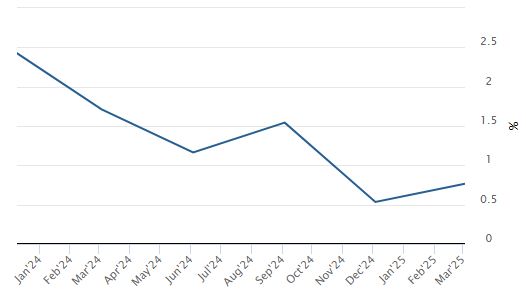
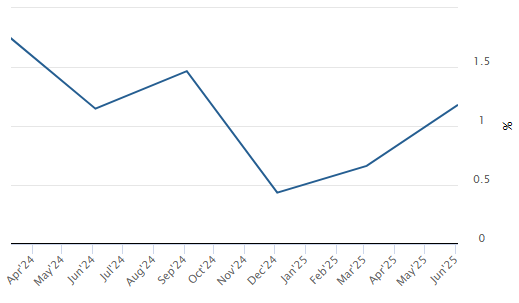
    Mexico: GDP growth
    Percentage variation (year-on-year)

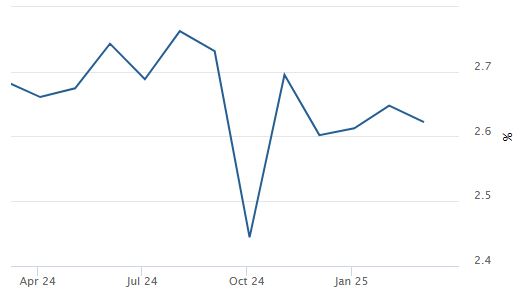
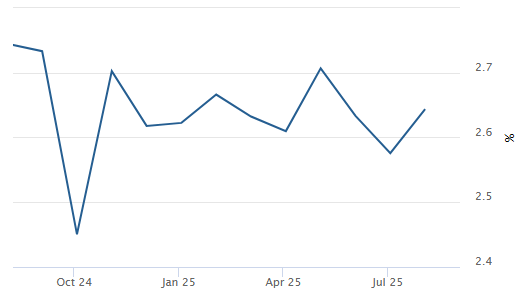
    Mexico: unemployment rate
    Economically active population

    Mexico: inflation rate
    Percentage variation (year-on-year)

    Source (all graphs): National Statistics Institute (Inegi)

  • ECONOMIC HIGHLIGHTS

    Abbi Dicker 17 October 2025 Hits: 659

    MEXICO | Vehicle sales up, exports and production down. On 7 October Mexico’s national statistics institute (Inegi) reported that light vehicle sales edged up year-on-year in September, while exports and production were down in yearly terms. Sales were up 0.34% with 117,181 vehicles sold in September. However, production was down 6.09% on September 2024, with 355,525 units produced, while exports were down 0.33%, with 314,656 units exported. All three metrics were down in the first nine months of the year as compared to the same period of 2024. Sales were down 0.55% with 1.08m units sold, production was down 0.31% with 3.02m units produced, and exports dropped 0.94% with 2.57m units exported.

    MEXICO | Remittances to Mexico fall again. On 1 October Mexico’s central bank (Banxico) announced that remittances sent to the country in August totalled US$5.58bn, representing a year-on-year decrease of 8.3%. This follows yearly drops of 4.7% in July, 16.2% in June, 4.6% in May, and 12.1% in April. Accumulated remittances received over the first eight months of 2025 totalled US$40.47bn, down 5.9% on the US$43.00bn received in the same period of 2024. Remittance flows from the US have come under pressure from a new remittance tax of 1% and the hardline anti-migration measures being implemented by the government of President Donald Trump.

    MEXICO | Trade deficit widens in August. On 26 September Mexico’s national statistics institute (Inegi) released trade figures for August 2025, revealing a trade deficit of US$1.94bn. This compares to a deficit of US$17m in July and a surplus of US$514m in June. Imports in August totalled US$57.66bn, down 0.2% year-on-year, while total exports reached US$55.72bn, up 7.4% year-on-year. In the first eight months of the year, the trade deficit stood at US$528m, compared to a deficit of US$17.98bn in the same period of 2024.

    Mexico: GDP growth
    Percentage variation (year-on-year)

    Mexico: unemployment rate
    Economically active population

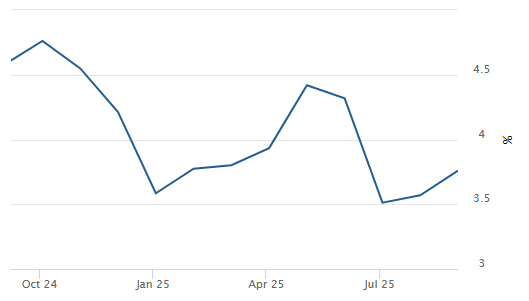
    Mexico: inflation rate
    Percentage variation (year-on-year

    Source (all graphs): National Statistics Institute (Inegi)