All Categories

Subcategories

  • TRACKING TRENDS

    LatinNews 28 June 2018 Hits: 572

    ARGENTINA | GDP growth downgraded. Speaking during an address to the federal senate on 27 June, Argentina’s cabinet chief Marcos Peña announced that the government was revising the country’s annual growth rate down from 3% to 1%. Peña cited the impact of the drought on the agricultural sector, the rising international oil price, and turbulence in financial markets.

    Peña said that the drought was responsible for slashing one percentage point off GDP growth for 2018, due to a loss of some US$8.5bn in exports from the agricultural sector. He said that rising oil prices had caused “considerable” negative repercussions, while the volatility of international capital markets had “put pressure on the currency”, compelling the government to seek a US$50bn Stand-By Arrangement (SBA) with the International Monetary Fund (IMF) to stave off “crisis”.

    The economy grew by 2.4% in the first four months of the year, down from 3.6% in the first quarter. The national statistics institute (Indec) released figures this week showing that economic activity in April was down by 0.9% on the same month a year earlier and by 2.7% on March.

    PARAGUAY | Congressional pension controversy. Finance Minister Lea Giménez denounced the decision by Paraguay’s lower chamber of congress last week to approve a bill under which retired legislators would receive an attractive retirement package. Giménez said that the decision by members of congress to grant themselves more benefits would not only affect the sustainability of the domestic pensions system but also further erode public support for Paraguay’s political class.

    The pensions deal, dubbed ‘VIP retirement’ by detractors, would see members of the national congress or Parlasur, the parliament of the Southern Common Market (Mercosur), who have served two terms in office, receive a pension equivalent to 60% of their average salary in their second term, a figure that rises to 80% for those who have served for three terms upon retirement.

  • TRACKING TRENDS

    LatinNews 27 September 2018 Hits: 1481

    BRAZIL | Consumer confidence down. The index of consumer confidence (ICC) measured by the Instituto Brasileiro de Economia Fundação Getulio Vargas (Ibre/FGV) fell by 1.7 points in September to 81.2, back to the same level as June when consumer confidence was rocked by the 11-day lorry drivers’ strike at the end of May. The September ICC was affected by particularly poor confidence amongst low-income earners (down 3.9 points from August to September). Viviane Seda Bittencourt, coordinator of the consumer survey, said that the fall in the ICC was primarily due to families’ financial situation and the slow recovery of the job market, and she noted that Brazil’s uncertain political scenario was only a secondary factor.

    CHILE | La Araucanía plan announced. President Sebastián Piñera has announced a US$8bn public investment plan for the country’s southern region of La Araucanía. One of Chile’s poorest and most neglected regions, La Araucanía has long been the site of conflicts stemming from the indigenous Mapuche claim to ancestral lands. Upon taking office in March this year, Piñera had identified the need for a targeted development and peace plan in La Araucanía as one of his five priorities.

    The US$8bn will be invested in 490 different projects over eight years in a number of different areas, namely security, housing, public infrastructure, the environment, education, health, the economy, national goods, agriculture, social development, energy, and tourism. The initiative also includes plans to present a constitutional reform which would formally recognise indigenous people’s rights, accelerate the creation of a ministry of indigenous people, and put in place compensation mechanisms for victims of rural violence, amongst other measures.

    CHILE | Budget presented. President Sebastián Piñera has presented the draft budget for 2019 for US$73.5bn, a 3.2% increase on this year’s budget. In an address broadcast on national television and radio, Piñera cited citizen security, the creation of good jobs, and an improvement in salaries, and in the quality of healthcare and education as some of his government’s priorities under the proposed budget.

    Local press noted that this is the smallest annual increase in the state budget since 2011. Piñera presented it as being in line with the government’s efforts to reduce its fiscal deficit. Congress will analyse the proposed budget over the next two months.

  • TRACKING TRENDS

    Abbi Dicker 05 September 2024 Hits: 1894

    BRAZIL | Government submits 2025 budget proposal. The federal government led by President Luiz Inácio Lula da Silva submitted its proposal for the 2025 budget (PLOA) to congress on 30 August. The proposed federal budget for next year stands at R$5.87tn (US$1.04tn), up from the approved budget of R$5.57tn for 2024.

    The government’s proposed primary expenditure is R$2.93tn, while its debt repayments and other financial costs would total R$2.77tn. The ministries with the highest proposed budget are the ministries for social security (R$1.03tn), social development and assistance (R$291.31bn), health (R$241.61bn), and education (R$200.49bn).

    According to the PLOA, the government projects that it would raise a primary revenue of R$2.91tn and financial revenue of R$2.79tn. Based on these estimates, the government would run a primary deficit in 2025, but on 2 September the executive secretary of the finance ministry, Dario Durigan, gave a press conference in which he insisted that the government’s zero-deficit fiscal target was attainable. He argued that extra revenue could be raised by rallying support in congress for legislation to boost tax revenue and phase out tax breaks.


    BRAZIL | GDP growth accelerates. The national statistics institute (Ibge) released GDP growth figures for the second quarter on 3 September, which showed quarterly GDP growth of 1.4%, marking an acceleration from the 1.0% growth registered in the first quarter.

    The overall quarterly growth was mainly driven by the industrial sector, which posted 1.8% growth, and the services sector, which grew by 1.0%. Agriculture, on the other hand, saw a quarterly contraction of 2.3%.

    Compared with the same quarter last year, Brazil’s GDP grew by 3.3%. The year-on-year growth for industry came to 3.9%, while services grew by 3.5%, but agriculture saw a yearly contraction of 2.9%. The annual growth rate in the four quarters until the second quarter of 2024 stood at 2.5%.

    Brazil’s finance minister, Fernando Haddad, said on 3 September that the annual growth rate for 2024 could surpass 2.7%. However, the latest projections from private sector economists and analysts surveyed by the central bank (BCB) showed a more modest forecast of 2.46% growth.

  • TRACKING TRENDS

    LatinNews 06 October 2011 Hits: 4893

    JAMAICA | Golding drops a bombshell. Prime Minister Bruce Golding has confirmed that he will step down in November, once a new leader for the ruling Jamaica Labour Party (JLP) has been selected. Golding, who led the JLP back into power in 2007 after 18 years in opposition, first made the announcement on 25 September as he was preparing for his mother’s funeral. As well as citing his age and the need to “allow a new crop of leaders to step forward and unleash their energies and creativity” (see sidebar) Golding attributed his decision directly to the political fallout from his handling of a US request for the extradition of a drug baron, Christopher 'Dudus' Coke, in May 2010 in which it transpired that he had hired a US-based firm, Manatt, Phelps & Philips, to lobby on the government’s behalf [WR-10-21]. Expressing concern that his presence would damage the JLP in the scheduled 2012 general election, Golding said that “questions about the role I played in the Coke/Manatt matter have remained a source of concern in the minds of many people”. But he reiterated his government’s argument that the evidence against Coke, gathered by US authorities through wiretaps, had been obtained illegally.

    EL SALVADOR | Addicted to remittances. El Salvador’s deputy minister for Salvadorans abroad, Juan José García recently warned that El Salvador is an economy “addicted to remittances”. Speaking at an event organised by the US-based Brookings Institute and the Central American Bank for Economic Integration (Cabei), García pointed out that remittances account for nearly 17% of El Salvador’s GDP, rising to as much as 70% of GDP in some areas such as the Bahía de Jiquilisco on the Pacific coast. Some 337,000 households received family remittances from the 2.8m Salvadoreans abroad, 2.5m of whom live in the US. In the first eight months of 2011, remittances reached US$2.4bn, up nearly 5% on the same period in 2010. During 2010 inflows reached US$3.5bn, a 2.2% increase on 2009. Warning that the situation was not sustainable, García said that the Mauricio Funes government was exploring ways in which the Salvadorean diaspora can invest in the country, with a delegation of 16 expat businessmen due to visit the country to consider possible projects.

    PANAMA | New economy minister. Deputy economy minister, Frank de Lima, officially took over the economy portfolio on 30 September, one month after his boss Alberto Vallarino, a member of the opposition Partido Panameñista (PP) quit amidst the rupture in the ruling alliance [WR-11-35]. The appointment of De Lima, a cardholder of President Ricardo Martinelli’s Cambio Democrático (CD) was in line with Vallarino’s recommendations and has assuaged concerns that the political strife at the top would translate into economy instability. Less than a week later, congress approved the new state budget for 2012 of US$14.451bn, an increase of 7.5% on the 2011 budget – itself a 23% increase on the 2010 budget. The final budget, which was US$17m less than the initial proposal, is based on a 7.5% GDP growth forecast for 2012 and expects the fiscal deficit to remain at 2% of GDP, in line with the law of fiscal responsibility. Meanwhile preliminary figures show that the Panama Canal closed the fiscal year 2011 (which ended 30 September) with a new tonnage record of 322.1m Panama Canal tons (PC/UMS), 7.1% up from last year and 2.9% more than the previous 2007 record of 312.9m tons.

    PUERTO RICO | Referendum. The governor of Puerto Rico, Luis Fortuño, has announced he will be presenting legislators with a plan for a two-stage referendum to decide the status of Puerto Rico which would allow citizens to vote on 12 August 2012 as to whether they want a change in status. If they vote in favour, a second referendum would be held concurrently with the November 2012 US general elections, in which they would choose between three different options: US statehood, independence, or a sovereign free association (essentially the status quo). The move comes amid mixed messages from the US. Following the positive noises made by US President Barack Obama during his historic visit last June, in which he backed a referendum and said he would support any outcome [WR-11-22], at the end of September, he said that he believes the island will remain a US commonwealth unless there is a “solid indication” of support for statehood.

    • JLP leadership contest

    The favourite to succeed Bruce Golding is Education Minister Andrew Holness who, at the age of 39, is one of the “new leaders” to which the Prime Minister alluded. The chances of Holness significantly increased after four of his five rivals, Dr Christopher Tufton (the minister of industry, investment and commerce), Dr Ken Baugh (deputy prime minister and foreign minister), Audley Shaw, (finance minister) and Robert Montague (agriculture and fisheries minister) threw their backing behind him. Nominations for the JLP leadership contest close on 19 October. The party’s conference is scheduled for the weekend of 18 November.

  • PANAMA: Martinelli dealt fresh political defeat

    LatinNews 25 October 2012 Hits: 2340

    A law to sell off state lands in the Colón free trade zone (FTZ) has delivered the latest political embarrassment to President Ricardo Martinelli, whose backtracking over various unpopular initiatives has become a defining feature of his government. The latest U-turn – which saw Martinelli promise to repeal the law, just four days after its approval – has not only revived doubts over government spending which emerged over another ditched initiative (his proposal in June to sell government shares in the telecoms and energy sectors [WR-12-24]). It has also reignited concerns over police brutality after clashes with protesters left three dead, including a nine-year-old boy.

    Approved by Martinelli’s Cambio Democrático (CD)-led 71-member unicameral legislature on 19 October, Law 72 establishes that 35% of the proceedings generated by the sale of land in the Colón FTZ, the second largest duty-free trade area in the world after the Hong Kong FTZ, would be reinvested back in the area with the rest going to central government.

    Martinelli insisted that the move would inject resources back into what is one of the country’s most impoverished regions, (figures cited by the local press put poverty at 45% of the roughly 242,000 inhabitants, above the 25.8% average for the national population of 3.4m). Sceptics were quick to slam the law as a ploy aimed at covering government spending and keeping the deficit low – the same suspected motive for selling off shares in the telecoms and energy sectors, which Martinelli was forced to revoke.

    While Panama led the region in terms of growth last year (with 10.6%) and has the highest forecast for 2012 (9.5%), according to the latest report by the UN Economic Commission for Latin America and the Caribbean (Eclac) released this month, public debt remains a concern; according to a report released by the economy and finance ministry (MEF) in June this year, Panama’s public debt reached US$13.8m in the first half of 2012, up from US$12.5bn in 2011, US$11bn in 2010 and US$10.8bn in 2009, the year Martinelli took office. The government’s creation last May of a sovereign wealth fund and its decision to raise the ceiling on the fiscal deficit in 2012 to 2.9% of GDP, up from 2% has similarly fanned concerns regarding fiscal responsibility.

    Law 72 served as the latest rallying point for the recently established opposition alliance, Frente por la Democracia, comprising the two main opposition parties, Partido Revolucionario Democrático (PRD) and Partido Panameñista (PPA) and various civil society organisations. It was also rejected by the powerful union of construction workers, Suntracs, and private sector lobbies such as the chamber of trade, industry and agriculture (CCIAP) and national association of business executives (Apede). The latter issued a statement urging consensus and stability in the FTZ, which sits just outside the former Panama Canal Zone, given its economic importance to the country. (According to the Apede, some 2,500 companies currently operate in the FTZ, providing employment to 27,347 people and contributing more than US$1.3bn to the economy, equivalent to some 8% of GDP).

    Legal experts also questioned the legality of the proposal: two lawyers’ associations filed complaints before the supreme court on the grounds that the Colón FTZ is a landfill site (created using seabed soil) and cannot be sold, as per article 258 of the constitution, which dictates that the airspaces, the continental shelf, seabed and subsoil belong to the state.

    A familiar response

    As has been the case with Martinelli’s other controversial initiatives, it was the use of police repression in response to protests which made international headlines and ultimately forced the president to back down. (He announced on 23 October that he would repeal the law although at the time of writing he has yet to do so). The law’s approval triggered protests and looting in Colón which soon spread to other parts of the country, including the capital. The authorities are yet to provide a full report, but the local press put the number of dead at three, caused by the use of tear gas and gun shots by the police to disperse demonstrators. Magaly Castillo, executive secretary of union civil society group Alianza Ciudadana Pro Justicia (ACPJ) was among those quick to draw analogies with previous incidents – most notably the Bocas del Toro protests in July 2010, where clashes over Martinelli’s (failed) attempt at weakening union and environmental legislation resulted in two dead and hundreds injured [WR-10-44].

    The ACPJ is preparing a report on the human rights violations committed during the most recent protests, to be submitted to the Inter-American Commission on Human Rights. Castillo highlights the violence as evidence of the government’s failure to address previous concerns regarding the police - not least the influence of controversial former police chief Gustavo Pérez de la Ossa in Martinelli’s government [WR-12-12]: last month Pérez was moved from the head of the executive’s national state security council to take up the post of deputy security minister.

    New judicial appointment

    The recent appointment of Heriberto Araúz Sánchez to replace Gerardo Solís as president of the three-member supreme electoral court (TE) (whose 10-year term expires on 14 November) has attracted attention, not least given the 2014 presidential and legislative elections.

    The local press cited legal experts and opposition politicians as raising concerns about the independence of Araúz, a professor in constitutional law who previously worked for the comptroller’s office. Araúz received the backing of all four of the supreme court justices appointed by President Martinelli as well as two others. Araúz was also part of the “committee of notables” appointed by Martinelli to draw up constitutional reforms which are still being discussed.

    Rogelio Paredes, the second vice-president of the PRD said the party was on the alert because Araúz supports re-election; Martinelli is constitutionally barred from running for re-election in 2014, and lifting the ban is highly unpopular.

    • More misjudgements

    President Ricardo Martinelli exacerbated anti-government sentiment by refusing to cut short his tour of Asia, where he was visiting Japan and Vietnam in search of investment. Other members of his Cambio Democrático (CD) also displayed a lack of political tact: Sergio Gálvez, the president of congress and a CD legislator, was forced to apologise for comments he made during the law’s approval, in which he taunted the opposition to “go to the cemetery and cry” – remarks that led the Colón municipal council to declare him persona non grata.

  • HONDURAS: Escasos resultados, por lo tanto, más tropas y policías

    LatinNews 27 October 2013 Hits: 308

    Las tropas desplegadas en Tegucigalpa y San Pedro Sula junto con la Policía Nacional (PN) ya  han recibido a los miembros de la nueva fuerza de policía militar, extraídos del ejército, y pronto tendrán a su disposición una nueva unidad de respuesta rápida. Más de un año de intervención militar en actividades policiales no parece haber marcado una gran diferencia en el nivel de violencia en todo el país, lo que ha mantenido a Honduras al tope de la tabla de homicidios de la región, muy por encima de todos los demás.

    Los primeros elementos de la nueva Policía Militar de Orden Público (PMOP), de 5.000 hombres, empezaron a ser desplegados a mediados de octubre. Ellos fueron enviados a Tegucigalpa y San Pedro Sula, los mismos puntos calientes donde desde el año pasado han estado actuando 2.000 soldados, junto con oficiales de la PN. Los miembros de la PMOP han sido seleccionados entre personal del ejército y han sido instruidos en habilidades policiales. El entrenamiento para los primeros a ser desplegados no pudo haber sido más largo que unas pocas semanas. La PMOP reportara directamente al ministerio de defensa, lo que ha atraído las críticas desde varios sectores, quienes ven esto como un retorno a los malos viejos días cuando la policía era parte de los militares.

    Los primeros movimientos de la PMOP han proveído un anticipo de la clase de operaciones concebidas para ellos. En Tegucigalpa, la unidad ha ocupado el distrito marginal Flor del Campo, donde predominan los miembros de las bandas violentas. Ellos pretenden estar por  “unos días” para “limpiar” el área, luego de lo cual ellos dejarán las cosas en manos de la PN. En San Pedro Sula, ellos fueron enviados a patrullar un distrito comercial y para proveer seguridad en el transporte público.

    La segunda nueva fuerza creada por la Asamblea Nacional, la Tropa de Inteligencia y Grupos de Respuesta Especial de Seguridad (Tigres), que se supone que es una unidad de elite de respuesta rápida. A pesar de su nombre de tono militar, ellos responderán al ministerio de seguridad, como la PN. Está programado que los Tigres sean desplegados en noviembre, el mes en que Honduras celebrara elecciones generales.

    El telón de fondo de esta evolución es la consciencia de que aunque hubo algunas mejoras en la situación de la seguridad en el último par de años, estas han sido mínimas. El Observatorio de la Violencia (de la Universidad Nacional Autónoma de Honduras, Unah) informó que hubo

    3.547 homicidios intencionales en el primer semestre del año, sólo un 1,8% menos que en el mismo periodo del 2012. Esto significa que el promedio diario sólo cayó levemente, de 19,8 a 19,6. Los homicidios intencionales representaron el 71% de todas las muertes violentas en enero y junio; todas las otras categorías registraron una mayor declinación. El total de muertes violentas se redujo un 8,8%.

    Marcha lenta con las maras

    Cuando Adam Blackwell, el secretario de seguridad multidimensional para la Organización de Estados Americanos (OEA), hizo una revisión a mediados de octubre del progreso en el diálogo con las dos más grandes pandillas callejeras, Mara Salvatrucha y Mara 18, tuvo que admitir que estaba avanzando muy lentamente. “Es un problema muy complejo. Estamos avanzando muy cautelosamente a fin de no crear expectativas [...] Estos son grupos que han estado luchando uno contra otro por 40 años”. Blackwell representa a la OEA en un esfuerzo guiado por el obispo católico de San Pedro Sula, Rómulo Emiliani.

    Esta iniciativa fue puesta en marcha el pasado mayo, cuando los líderes de las pandillas pidieron disculpas a la sociedad en su conjunto y dijeron que estaban dispuestos a reducir la violencia. Blackwell dijo que era optimista de que después de de las elecciones del 24 de noviembre “podremos sentarnos a discutir con el nuevo presidente [electo] sobre cómo podemos avanzar hacia adelante sobre la materia”. El mandato del Presidente Porfirio Lobo termina a fines de enero.

  • ECONOMIC OVERVIEW: PANAMA

    LatinNews 08 October 2014 Hits: 1169

    FDI up. Foreign Direct Investment (FDI) in Panama is at its highest level for five years, according to the finance ministry. In the first half of 2014, FDI was worth US$2.5bn; already higher than the US$2.4bn for the whole of 2013. The finance ministry argues the increase in capital flows is due to the high growth rate of the local economy. According to the official statistics agency, INEC, Panama grew 6.2% in the first half of 2014 and is on course for 7% growth by the end of the year. Construction, fishing and mining have contributed the most to Panama’s impressive economic performance. However, tourism, agriculture and farming all recorded lower growth than last year.

    Inflation down. Inflation averaged 2.6% between January and June this year, compared with 3.5% in the same period of 2013. Prices are expected to fall even further in the third quarter, largely due to a food-price freeze implemented in July. As per his pre-election promise, President Juan Carlos Varela froze the prices of 22 items in the basic food basket, which led to a 0.8% fall in the consumer prices index for that month. Varela also instituted some electricity and fuel subsidies in the past few months which have helped to keep inflation down, although it is expected these will be removed at some point in the next few quarters.

    FTZ disputes. Panama’s trade disputes with Colombia and Venezuela continue, prompting falls in the volume of trade in Panama’s largest free-trade zone, the Zona Libre de Colón. Re-exports fell by 13.4% in the first six months of 2014, while imports fell 16.5% in the same period. Colombia has restrictive import tariffs in place on clothing and footwear citing country of origin issues. (The dispute is currently before the arbitration body of the World Trade Organization). Meanwhile, Venezuela’s economic problems, including its lack of access to US dollars, has affected the free trade zone’s second-largest market. Bilateral talks on cancelling outstanding Venezuela debts have yet to reach a settlement. While trade with its immediate neighbours has suffered, Panama has managed to increase its exports to the US and the Dominican Republic.

    • New PRD secretary general

    On 21 September Panama’s main opposition party, Partido Revolucionario Democrático (PRD), elected Carlos Pérez Herrera as the new secretary general of its national executive committee (CEN). A little known PRD representative for the local corregimiento (administrative division) of San Francisco in Panama City, Herrera received 120 of the 302 votes cast by the PRD’s national directorate, defeating lawyer, Juan Felipe Pitty, who received 95 votes; national deputy and member of the old guard, Pedro Miguel González (85); and one of the PRD’s founders, Rafael Pittí, who received two votes. Herrera replaces Juan Carlos Navarro, the defeated PRD presidential candidate in the May general elections who quit in July. Herrera is aligned with PRD president and national deputy, Benicio Robinson, who controls the party legislative caucus and chairs the national assembly’s key budget committee.

  • ECONOMIC HIGHLIGHTS

    Patrick de Courcy 16 June 2023 Hits: 2805

    ARGENTINA | Strong tourism numbers. Argentina’s national statistics institute (Indec) released on 7 June new tourism data, which shows that the number of foreign visitors to the country nearly doubled year-on-year in April. Argentina received 1.1m foreign visitors that month, a 98.9% increase on the same month a year earlier. Of these, 574,800 were tourists and 526,400 were excursionists (international visitors who do not stay the night). The number of foreign tourists to visit Argentina in the first four months of 2023 grew 209.6% compared with January-April 2022, to 4.34m. Visitors from Uruguay (25.9%), Chile (21.9%) and Brazil (14.9%) made up the majority of overnight tourists in April. This shows a continuing recovery of the tourism industry following the impacts of the coronavirus (Covid-19) pandemic – with a weak currency also making Argentina an attractive destination for neighbouring countries – although tourism numbers remain below pre-pandemic levels.

    CHILE | On track for a recession. Chile’s central bank (BCCh) on 1 June published the April figures for its monthly index of economic activity (Imacec), which shows a 1.1% decline on April 2022. In monthly seasonally adjusted terms, the Imacec remained unchanged compared with March. The year-on-year drop is the third consecutive decline in monthly economic activity after negative year-on-year results of 2.1% in March and 0.5% in February. According to the BCCh, the April result was due to drops in trade and, to a lesser extent, manufacturing activity. The Imacec is considered a preview of GDP growth. Despite an improvement in recent growth forecasts for Chile, the Southern Cone country is still expected to see a recession in 2023. The World Bank projects a 0.4% contraction in its latest Global Economic Prospects report (up from forecasts of -0.9% in January), while the Organisation for Economic Co-operation and Development (OECD) forecasts -0.1% growth, citing effects from tighter financial conditions and the withdrawal of pandemic support. 

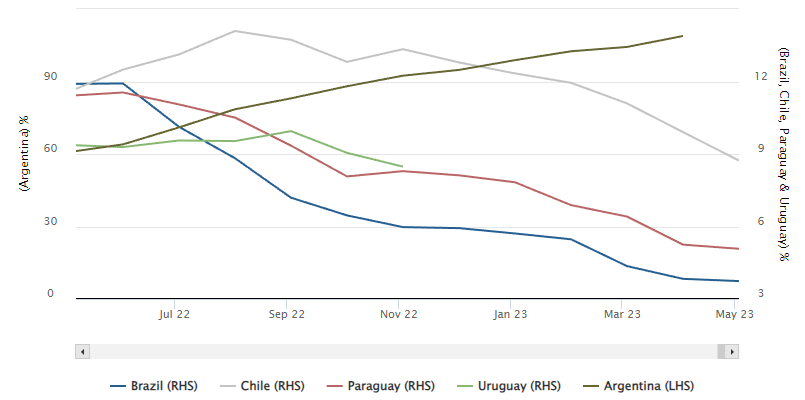
    Brazil & Southern Cone: inflation rate
    Percentage variation (year-on-year)

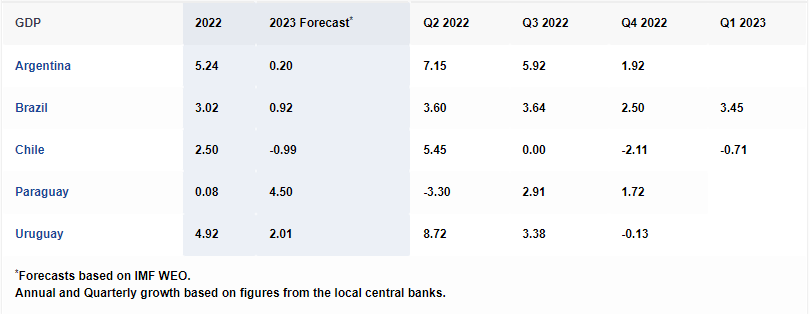
    Brazil & Southern Cone: GDP growth (%)
    Quarterly figures are year-on-year growth

  • The growth of fentanyl money laundering

    Patrick de Courcy 08 September 2023 Hits: 2180

    According to Felbab-Brown’s testimony small and middle level actors in China’s chemical and pharmaceutical industries are at the forefront of supplying Mexico’s criminal cartels with fentanyl precursors. China’s own criminal groups such as the triads are less directly involved. However, she and other analysts point to the emergence of a sophisticated money-laundering network around the fentanyl business, including product barter.

    According to reporting by The Underworld Podcast, a network of Chinese businesses and communities in the US is now playing an important role in laundering fentanyl profits. In one case the owner of a Chinese restaurant in New York was receiving millions of dollars in cash from illicit drug sales. The money was ‘cleaned’ when he deposited it at the subsidiaries of Chinese banks in New York claiming it was revenue from the legitimate restaurant business. After taking a handling commission, the Chinese restaurant owner would then arrange for the money to be paid to Mexican bank subsidiaries, ultimately finding its way back to the Mexican cartels. An advantage of this procedure was that no US banks or financial institutions were directly involved, reducing the probability of stringent KYC (know your customer) scrutiny. Many Chinese expatriate communities also use informal money-transfer systems which can conceal drug-money flows.

    In general, money laundering and other operations to stop the authorities detecting illicit fentanyl-related financial flows have become much more sophisticated than in the past. They now include trade-based laundering and barter, covering protected wildlife products, seafoods, timber, real estate, cryptocurrencies, and casinos and gambling. An example of how gambling can be used for money laundering is where bulk cash – the proceeds of drug sales - is brought to a casino in Vancouver, and ‘lost’ by the cartel-linked gambler. Meanwhile, his money laundering associate in Macao, China, coincidentally ‘wins’ an equivalent amount of money which can then be used to pay Chinese exporters of precursor chemicals.  

    By using barter, criminal groups can also reduce the net size of the financial flows needed to settle accounts between them, thereby making them less likely to attract suspicion. There is evidence that through front companies the Sinaloa cartel is seeking to control a large share of the fishing industry, and that Chinese precursor networks are prepared to take part-payment for their chemicals in abalone, jellyfish, and lobster. Payments in kind have also been made using the swim bladder of the rare and protected Mexican totoaba fish, highly valued in China because of its presumed health and aphrodisiac qualities. These tactics are important in a context where the overall value of drug-related transactions is very high. The UNODC for example has estimated Mexico’s illicit drug-export revenues to have been somewhere between US$6bn and US$21bn a year in 2010-2018.

  • TRACKING TRENDS

    Abbi Dicker 11 April 2024 Hits: 2750

    BRAZIL | Monthly inflation decelerates. The national statistics institute (Ibge) released its latest inflation figures on 10 April, which showed that monthly inflation in March stood at 0.16%, down from the 0.83% inflation registered the previous month.

    Annual inflation in the 12 months to March came to 3.93%. Monthly inflation in February was mainly driven by education services, coming at the start of the academic year, but in March the education category registered a monthly inflation rate of 0.14%, down from 4.98% in February.


    BRAZIL | Minister downplays Petrobras leadership tensions. At a press conference on 9 April, Brazil’s mining & energy minister Alexandre Silveira, said that the rumours of the possible dismissal of Jean Paul Prates, the CEO of state-controlled oil company Petrobras, were just “speculation”. Over the past week, the national press has been reporting that the rivalry between Silveira and Prates has intensified recently and that President Luiz Inácio Lula da Silva is weighing up whether Prates should remain at the helm of the Brazilian oil giant.

    Silveira and Prates reportedly diverged on several issues over the past year, but tensions came to a head last month when Petrobras suspended a special shareholder payout. Prates reportedly called for a gesture to appease investors and markets by paying at least some of the extraordinary dividends, but he was overruled by factions on Petrobras’ board aligned with Silveira.


    BRAZIL | New Petrobras oil deposit. Brazilian oil giant Petrobras announced on 9 April that it has discovered a new oil deposit in the “ultra-deep waters” of the Potiguar basin, near Brazil’s north-eastern coast. The discovery was made near the equatorial margin, an area over which environmental groups have previously raised concerns.

    Petrobras insisted in a press release that its exploration wells are far from sensitive marine ecosystems. In the press release, the oil company also pointed to the success that neighbouring Guyana and Suriname have enjoyed from drilling oil in the equatorial margin.

  • ARGENTINA: Where’s the food?

    Anna Grace 15 August 2024 Hits: 2209

    Argentina’s ministry for human capital has become locked in conflict with the courts over its failure to distribute some 5,000 tonnes of food to community kitchens in various parts of the country.

    Under the previous left-leaning government, local authorities, NGOs, and community and social organisations distributed government-funded food supplies to poor families through networks of community kitchens. Taking office last December, the far-right administration of President Javier Milei has always viewed this arrangement with extreme suspicion. The new government claims that the distribution programmes have been tainted by corruption and have been used by left-wing activists for political purposes.

    At the end of May government officials admitted that distribution had been halted and that some 5,000 tonnes of food are now stored in government warehouses, some of which is in danger of perishing (exceeding its sell-by date) [WR-24-22]. The admission, in a country with a sharp austerity programme, over 40% of the population living in poverty, and three-digit inflation, triggered various legal actions.

    Juan Grabois, a left-wing activist who leads the Unión de Trabajadores de la Economía Popular (Utep), an organisation that seeks to represent informal workers and the unemployed, was first off the mark, initiating legal action against the human capital minister, Sandra Pettovello, whom he accused of failing to fulfil the duties of a public servant, due to her department’s apparent decision not to distribute the food.

    His petition to the courts also demanded that distribution should re-commence. On the other hand, the government has begun legal action against nearly 20 social and community leaders whom it accuses of mishandling subsidised food and other social programmes during the preceding government of Alberto Fernández (2019-2023). The government claims that up to 50% of the community kitchens said to be cooking and distributing food existed only on paper and were part of a large-scale scam.

    So far various judges have ordered Pettovello’s ministry to restart food distribution and provide information on how this is progressing. But the ministry has appealed against the decisions, missed deadlines, and played for time. At the end of July, Judge Sebastián Casanello issued his fifth information request to the ministry, requiring it to respond within 72 hours with details of a food distribution programme. The judge says that, according to the information he has received, only about 10% of the warehoused food backlog has now been distributed.

    Casanello is also demanding a detailed audit of warehouse food movements. This is because a court-ordered inspection team which visited a warehouse in Villa Martelli found discrepancies in powdered milk and flour stocks. The judge is demanding that the human capital ministry should provide a detailed food distribution plan: so far it has only provided an overview and spoken in general terms of collaboration with provincial and local authorities to distribute the food. On 7 August Pettovello signed an accord with the development minister of the provincial government of Buenos Aires, Andrés Larroque, to hand over 30% of the food stored in the Villa Martelli warehouse and says that more will be released in September.

    Advancing with omnibus law reforms

    The government published a decree in the official gazette last week regulating parts of the omnibus bill of reforms approved by congress in late June. The regulations pertain to the areas of privatisation of seven state-owned companies, public employment, and public administration.

    Federico Sturzenegger, appointed to lead the newly created ministry for deregulation and transformation of the state, said the decree introduces the concept of “positive silence”, which establishes that government departments that do not respond to a request for a permit within a certain timeframe will automatically be deemed to have approved it. The aim of this proposal is to reduce bureaucracy and prevent corrupt officials from taking money on promises to unblock permits that are seemingly stuck.

    Changes to public employment law

    The changes to public employment law are designed to streamline the state, removing political appointees on the government payroll; achieve greater flexibility and efficiency; and promote meritocracy. They include the introduction of entrance examinations. A certificate of psycho-physical capacity to do the job will be required in some instances. Sturzenegger said that since taking office last December, the government has sacked around 20,000 public sector employees and further lay-offs are planned.

  • NICARAGUA: Voluntary police force gains constitutional recognition

    Sarah Sheldon 25 March 2025 Hits: 1893

    “A lawless, repressive army that has been given constitutional status”.  This was the response by exiled Nicaraguan opposition writer Gioconda Belli to recently approved changes to the constitution which create a voluntary police force. Approved in late January by the 92-member unicameral legislature, which like all institutions is controlled by President Daniel Ortega’s Frente Sandinista de Liberación Nacional (FSLN), the changes are in line with the constitutional reform package that he unveiled in November 2024 [SSR-25-01]. Critics consider the new force little more than an institutionalisation of the paramilitary FSLN shock groups which played a key role in helping the police (PNN) suppress dissent as part of the government crackdown which began in 2018 in response to social unrest.

    While the legislature approved the changes on 21 January, authorities began swearing in the first 2,504 members of the volunteer police force six days earlier. With their faces concealed by black balaclavas, 1,204 voluntary police members were sworn in in Madriz department and 1,300 in Estelí department on 15 January, in ceremonies presided over by Francisco Díaz, the general director of the national police (PNN), whose daughter is married to Ortega’s son. Díaz is one of various senior officials blacklisted by Washington: the sanctions against him unveiled in 2018 were attributed to the fact that under his watch, the PNN had “engaged in serious human rights abuse against the people of Nicaragua, including extrajudicial killings”. This was an allusion to the PNN’s brutal crackdown on unrest following the 2018 protests, as directed by the Ortega government which a United Nations expert panel found in 2023 had committed crimes against humanity [SSR-23-04].

    With PNN Inspector General Jaime Vanegas telling the local media on 17 February that over 50,000 people had been sworn in as members of the voluntary police, and First Lady and Vice President Rosario Murillo announcing on 25 February that a further 30,000 new members would be signed up, the changes have drawn concern from activists such as Juan Carlos Arce, of human rights NGO Colectivo de Derechos Humanos Nicaragua Nunca Más who warn that these represent a formalisation of parastate groups, known as ‘shock groups’. Indeed a 2021 report by the Organization of American States (OAS)’s Inter-American Commission on Human Rights (IACHR) identifies such groups, which were formed in late 2007 and early 2008, as crucial to the suppression of dissent by the Ortega government [SSR-21-12].

    Contempt

    The ruling by the Inter-American Court of Human Rights (Corte-IDH) regarding President Ortega’s 2011 re-election is unlikely to have much impact on the Nicaraguan government: in 2023 Nicaragua formally withdrew from the Organization of American States (OAS), accusing the OAS of meddling in the country’s domestic affairs. This followed condemnation by the OAS, along with much of the international community, of the controversial election in November 2021 which produced a re-election for Ortega but was widely slammed as a sham. In November 2022, the Corte-IDH declared the Nicaraguan government in contempt of court for having refused to heed earlier Corte-IDH rulings.

    Corte-IDH rules against Ortega’s 2011 re-election

    On 23 January the Costa Rica-based Inter-American Court of Human Rights (Corte-IDH), another arm of the OAS, ruled that the State of Nicaragua had violated the right to participate in government, judicial guarantees, and judicial protection, of Fabio Gadea Mantilla during the 2011 presidential elections. In that election Ortega defeated Gadea, of the Partido Liberal Independiente (PLI), by 62%-31%. Ortega, who had served one term (1985-1990) and was in the process of a second (2007-2012), was not eligible to run again due to a prohibition in the constitution (Art. 147) on presidents serving consecutive terms or more than two terms non-consecutively. However, in 2009 the supreme court (CSJ) controversially lifted the ban on consecutive presidential re-election (a move widely slammed as illegal given only the legislature was authorised to amend the constitution), thus enabling Ortega to run again.

    In its ruling, the Corte-IDH concluded that “the lack of integrity of the electoral process” favoured Ortega’s reelection. In addition, it concluded that the CSJ and the electoral authorities (CSE) “showed bias and did not guarantee an effective judicial remedy to review decisions that questioned the irregularities of the proceedings”. 

  • REGION: Fuel price increases give governments hard choices

    Sarah Sheldon 20 April 2026 Hits: 213

    Higher energy prices due to the fallout from the conflict in the Middle East have had a significant effect on Central American economies, which are very reliant on imported fuels and therefore highly exposed to external energy shocks. 

    Governments throughout the region are facing the same dilemma in choosing who has to pick up the bill: if the government subsidises fuel prices it places extra strain on already stretched public finances, but leaving consumers to pay the market price stokes discontent among voters and impacts approval ratings. Officials will be hoping that the war comes to a swift end, with any settlement allowing ships to pass through the strategic Strait of Hormuz as quickly and easily as before, which would allow energy prices to fall again. The longer it takes for shipping to regain its previous rhythm, the worse things will get for Central America – as elsewhere. Potential knock-on effects include higher food prices, anti-government protests, and an uptick in the poverty rate in countries that decided not to introduce subsidies, or widening fiscal deficits that affect public spending and economic development in those that did. 

    In Honduras, where a recent spike has led to some of the most expensive petrol and diesel prices in the region, President Nasry Asfura of the conservative Partido Nacional (PN) announced a raft of measures on 14 March. These include plans for the government to assume the cost of 50% of the increase in fuel prices, a 10% discount in purchases made with the national supplier of basic products (Banasupro), a government-run entity which seeks to address food insecurity and ensure price stability for essential goods, and remote working for non-essential government officials. The aim is to reduce the impact on the cost of basic goods and services such as public transport, according to Finance Minister Emilio Hércules.

    • Cost

    On 17 March, Honduras’ finance minister, Emilio Hércules, was cited by the local media as saying that it was costing around L126m lempiras (US$4.74m) per week to pay for 50% of the increase in fuel prices, adding that he hoped that prices would start to come down so that other spending plans didn’t have to be curtailed.

    In Guatemala, government officials have voiced concerns around price speculation among fuel vendors, and it has stepped up monitoring using the police and the army under the umbrella of the ‘Plan Centinela’ security programme. President Bernardo Arévalo has warned that some increase in prices is justified, but his government will continue to clamp down on speculation. In congress, legislators from Arévalo’s Semilla party have proposed a temporary direct subsidy, but the need for an associated budget increase sparked some disquiet among opposition lawmakers, who would prefer to suspend fuel taxes. 

    For its part, Nicaragua has maintained a price freeze for petrol, diesel, and cooking gas since 2022, when the Russian invasion of Ukraine caused a similar spike in energy prices. On 23 March José Antonio Castañeda, executive president of the country’s energy institute (INE), confirmed that the subsidies would remain in place despite the recent increases. According to Castañeda, the price freeze has helped to insulate households and supply chains from the effects of external shocks. However, prices were frozen at a time when oil was at US$120 per barrel, meaning that consumers have been paying way over the odds in recent years.

    As of 1 April, oil prices have not hit this level since the start of the war in the Middle East, meaning that the Nicaraguan government is able to claim a political win while unwitting consumers continue to pay more than the market price for fuel. This may change if the Strait of Hormuz remains closed and oil prices increase further, forcing the government to choose whether to risk protests if it removes the price cap or to take the financial hit of paying a subsidy.

    As for Panama, President José Raúl Mulino said that there would be no government subsidies at a press conference on 5 March, but he quickly changed tack. On 25 March, the government announced caps on residential electricity rates, public transport fares, and cooking gas prices, and then it announced a temporary price freeze for petrol and diesel on 31 March. Finance Minister Felipe Chapman said that the measure could be in place for up to 10 months, although it could be lifted sooner if conditions allow. “This measure implies extra public spending of US$15m per month,” he said, promising that capital spending would not be affected.

    On the other hand, the government of El Salvador hasn’t announced fuel subsidies, likely due to continued difficulties in managing public finances and the need to conform with the terms of a financing agreement with the International Monetary Fund (IMF). The country’s authoritarian president, Nayib Bukele, may also have calculated that the lack of political opposition, and the continuation of a state of emergency that has severely restricted civil rights, means that his government is well-placed to ride out any discontent around higher fuel prices. In Costa Rica, prices have risen but, at the time of writing, the government had not announced any measures to contain the impact, which has been mitigated by the fact that the country generates almost all of its electricity from renewables.

    With the region so heavily reliant on imported fuel, there isn’t really any way to escape the negative effects of the energy shock. Passing price increases on to households and local businesses means higher costs for everything from transport to manufacturing, stoking inflation as price increases cascade through the economy. It also means a hit to living standards, which can push lower income households below the poverty line, increasing the risk of protests and social unrest in the short- and medium-term. 

    Alternatively, governments that choose to absorb all or part of the fuel price increases insulate consumers and businesses from the short-term impact at the petrol station, but they cannot head off increased prices of other imported goods and manufacturing inputs, meaning that inflation eventually increases anyway. This approach also incurs a steadily mounting cost to the public purse, leaving less room for the kind of social spending that voters tend to demand in the face of eroding living standards due to high inflation. 

    Each government in the region is responding to its own individual set of considerations when deciding how to respond to the energy price shock caused by conflict in the Middle East, but none of them are likely to be able to escape the long-term consequences: higher inflation and higher borrowing costs that slow investment and economic growth, as well as poorer and more discontented voters that are more receptive to protest movements and political opponents.

    Costa Rica hails high percentage of renewable energy generation

    On 27 February Costa Rica’s state electricity firm Instituto Costarricense de Electricidad (ICE) announced that 98.6% of the country’s electricity needs were met by renewable sources in 2025.

    Costa Rica uses hydro, geothermal, wind, biomass, and solar generation, and the proper use and administration of these resources allows ICE to offer stable prices, said Marco Acuña, president of ICE, in a statement. “In the face of operational and climatic challenges, Costa Rica is consolidating its position as a reference point in renewable generation,” he added.

    A further 600MW in renewable generating capacity is set to be added to the grid by 2030, further diversifying supply and increasing energy security.

    The next challenge is to decarbonise other key sectors, such as transport, which still relies on fossil fuels and is therefore vulnerable to the aforementioned increases in the price of petrol and diesel. 

  • RASTREANDO TENDENCIAS

    LatinNews 07 November 2011 Hits: 112

    BRASIL | ¿Culpa del Real? Los últimos datos difundidos de nuevo sugieren que el sector productivo de Brasil está saliendo del agua hirviendo, y rápido. El importante indicador de la producción interna de manufacturas, el índice de producción industrial, cayó más de lo esperado en setiembre, contrayéndose 2% mes en mes sobre agosto y 1,6% año en año sobre setiembre de 2010. El movimiento promedio trimestral fue de {0,6%, y la producción industrial ahora se ha contraído por los dos meses últimos, de acuerdo con el instituto nacional de estadísticas (Ibge). El último resultado llegó a espaldas de un 11% de declinación mes en mes en el sector automotriz, que suma un 11% del índice general. Ese fue el peor resultado para la industria automotriz desde diciembre de 2008, cuando Brasil se desplomó, provocando que el gobierno de Lula tome medidas de estímulos de emergencia para remediar. El sector automotriz tuvo un efecto de impacto sobre el resto del sector productivo, debido a sus vínculos con cosas de sectores como el acero, vidrio, plástico y pintura, entre otros.

    Con el sector de las manufacturas claramente en dificultades, el pronóstico del PIB fue recortado a alrededor del 3% para 2011. Las ventas de autos y vehículos ligeros cayeron 10% mes en mes en octubre, sobre cifras preliminares. Aún la prensa está llena de actualizaciones diarias acerca de la corrida de fabricantes extranjeros de autos para establecerse en Brasil. En parte, esa corrida es conducida por las duras nuevas regulaciones de normas sobre contenido local, pero es principalmente debido al enorme mercado consumidor interno de Brasil –que permanecerá robusto en 2012 gracias a la caída de las tasas de interés, un constante crecimiento del crédito y firmes empleos y salarios.

    El banco central informó del más rápido crecimiento del crédito hasta la fecha este año en setiembre (19,6% año en año, impulsado por los préstamos hipotecarios de 45,3%). A pesar del Real más débil y signos de una subida en los índices de precios en octubre, el último consenso sobre expectativas inflacionarias compilado por el banco central fue constante, aunque en el rango final más alto (6,5%) para 2011, cayendo a 6% en 2012. Considerando todo, Brasil, que el año próximo superará al reino Unido para convertirse en las sexta más grande economía del mundo, deberá manejar con suerte un suave aterrizaje. Dios es brasileño, como dicen ellos.

  • First annual trade surplus in 15 years

    LatinNews 07 February 2013 Hits: 892

    Mexico’s final trade balance for 2012 registered a surplus of US$163m, the country’s first year-end surplus in 15 years, according to the statistics institute (Inegi). On Inegi’s figures, exports increased by 6.2% year-on-year to US$370.9bn, while imports also increased but at a slightly lower rate of 5.7% to US$370.7bn.

    The positive trend of the trade balance was also observed in the last month of the year when the surplus was US$961.7m, which at first glance appears to be positive, but upon closer inspection might actually reflect certain weaknesses in the Mexican economy. In its report Inegi also provided seasonally adjusted figures for December which show that the surplus is reduced to US$552m on the back of a 3.38% decrease in imports and a 0.93% decrease in exports. However, the surplus is still a marked improvement on the US$227m deficit recorded by Inegi in November.

    Analysts, such as Marco Oviedo from Barclays, pointed out that all this sends “mixed signals” about the performance of the Mexican economy. Oviedo explained that on one hand the results show that the external demand for Mexican goods particularly in the US has not been as weak as was previously expected; but the decline in imports suggests that internal demand in Mexico may be weakening, which is a worrying sign that economic activity could be slowing. The government, which is expected to release its final official economic figures for 2012 by 18 February, seems to believe that there are underlying weaknesses in the economy, either in competitiveness or domestic demand; as such even though its final year forecast for 2012 remains at 3.9% it has pencilled in a slight slowdown to 3.5%  in 2014, below the central bank’s more optimistic forecast.

    Pemex too

    On 29 January the state-owned oil firm, Pemex, revealed that it had posted a US$20.995bn trade surplus on its hydrocarbons operations, which include the crude oil, natural gas, and petrochemical imports/exports. According to Pemex the result was driven by US$52bn in exports of crude oil compared to US$31bn in imports.

    Pemex approves joint venture with Mexichem

    On 17 January, the administrative council of Pemex, approved a US$556m joint investment project with Mexico’s largest chemical company, Mexichem, to further develop Pemex’s petrochemical complex in Coatzacoalcos, Veracruz. The deal, under which Mexichem is to provide 60% of the investment capital to upgrade production of vinyl chloride at the ‘Pajaritos’ complex was first announced in June 2011 but stalled after unionised Pemex workers employed by the company’s petrochemical branch, Pemex Petroquímica (PPQ) expressed their opposition to it, on the grounds that their jobs would be threatened.

    After months of negotiations with PPQ workers the deal was approved upon assurances to PPQ workers that their jobs were safe. A Pemex statement said the original deal would allow “the exponential increase in vinyl chloride production to 24,000 tonnes in the first year, 146,000 in the second and 217,000 in the third”. It added that the venture would allow Mexico to “improve its competitiveness” as regards vinyl chloride production and “reduce its disadvantages, both from a size and integration perspective, with its North American competitors”. The new energy minister, Pedro Joaquín Coldwell, said that in order for the deal to be approved, the Pemex administrative council was clear that “the industrial process of developing vinyl chloride would be exclusively reserved for PPQ, safeguarding its workers’ labour rights at all times”.

  • ECONOMIC OVERVIEW: GUATEMALA

    LatinNews 04 December 2013 Hits: 2300

    Boosting ties with Russia: On 27 November Guatemala’s economy minister, Sergio de la Torre, and Russia’s deputy minister for economic development, Alexei Likhachev, announced the inking of an agreement to promote and protect investments (Appri). The announcement was made during a visit to Russia by a Guatemalan delegation which included De la Torre as well as Foreign Minister Fernando Carrera and Energy Minister Erick Archila. According to a press release by the Guatemalan economy ministry, bilateral discussions regarding the Appri began in February 2010 and were completed in May 2013. A press release by the Guatemalan presidency highlighted as examples of Russian involvement in the country, the authorisation in April 2013 of a licence for mining exploitation to the Compañía Guatemalteca de Níquel, S.A, (CGN), a subsidiary of Russia’s Solway Investment Group Limited Inc. in the El Estor municipality, Izabal department. The nickel mining project, which is due to come on stream in 2014 and has triggered social unrest, is expected to create 3,000 jobs and G$521m (US$65m) in taxes. The press release also highlighted Russian interest in the area of infrastructure. According to figures from the Central American economic integration system (Sieca), bilateral trade reached US$91m in 2012, of which Russian exports to Guatemala accounted for US$76.5m. While Russia’s exports have just about recovered to their 2008 peak following a significant decline in 2009, Guatemala’s exports dropped sharply from an estimated US$37.8m in 2011.

    Congress fails to approve 2014 budget: Guatemala’s 158-member unicameral legislature failed to meet the 30 November deadline to approve the 2014 draft budget (for Q$70.6bn [US$8.9bn]), meaning that this year's budget (for Q$66.98bn [US$8.41bn]) will be rolled over. This could place a strain on the government efforts to boost spending on sectors like education, which was due to receive an allocation of Q$12.32bn (US$1.56bn) in the 2014 budget, up from Q$10.74bn (US$1.36bn) in 2013.

  • JAMAICA: Politics edging to the fore

    LatinNews 08 October 2014 Hits: 1120

    In our July issue we looked in depth at the success Jamaica is having in implementing its International Monetary Fund (IMF)-invigilated reforms and how this was being achieved in part through (in the words of IMF chief Christine Lagarde) “a great innovation in ownership” of the reform programme. By this, Lagarde meant the creation of an inclusive Economic Program Oversight Committee to monitor the content and progress of reforms from the outside. Jamaica continues to make good progress, impressing both the IMF and ratings agencies such as Standard & Poor’s. But the People’s National Party (PNP) government led by Portia Simpson Miller has reached the halfway point of its five year term and electoral calculations must inevitably begin to move centre stage.

    During September, Jamaica received an upgrade of the country’s rating from ‘stable’ to ‘positive’ from Standard & Poor’s (on 19 September it affirmed Jamaica’s ‘B’ longer-term foreign and local currency and ‘B’ short-term foreign and local currency credit ratings). It also received another strongly positive review from the IMF, which said on 24 September that “the program is on track” and that “gains from Jamaica’s demanding reform program are emerging” with growth projected to surpass 1% in 2014/15.

    At the PNP’s annual conference on 21 September, Simpson Miller showed no sign of weakening, saying on the one hand that “our generation has a sacred duty and a moral obligation to secure our nation’s future by bequeathing to our children and their offspring a better, stronger, more viable Jamaica”. Nowhere did she suggest any intention to backslide, but the opposition Jamaica Labour Party (JLP) is accusing the government of keeping the IMF happy while failing “the people’s test”, and as the election gets closer so the need to counter this allegation must grow.

    • “During September, Jamaica received an upgrade of the country’s rating from ‘stable’ to ‘positive’ from Standard & Poor’s (on 19 September it affirmed Jamaica’s ‘B’ longer-term foreign and local currency and ‘B’ short-term foreign and local currency credit ratings). It also received another strongly positive review from the IMF, which said on 24 September that “the program is on track” and that “gains from Jamaica’s demanding reform program are emerging” with growth projected to surpass 1% in 2014/15.”
  • URUGUAY: Judges and teachers up the ante ahead of elections

    LatinNews 20 November 2014 Hits: 775

    The government of President José Mujica was put on the back foot this week by trade unions representing secondary school teachers and magistrates. On 17 November State secondary school teachers went on a 24-hour strike to protest against aggressive verbal and physical attacks on teachers; the association of Uruguayan magistrates (AMU), meanwhile, decided in an assembly that it would stage a massive march in Montevideo on 26 November unless the government meet its salary demands.

    The timing of the strike action by the teachers was far from ideal for the government as Mujica himself has acknowledged that his government has not delivered the reform the education sector needed over the last five years, and the opposition has sought to exploit public disillusionment with the state of education in the country.

    But a judicial strike would be much more serious. It has no precedent in Uruguay and, if it goes ahead, it will be just four days before the second round of presidential elections pitting former president Tabaré Vázquez (2005-2010) of the ruling left-wing Frente Amplio (FA) against Luis Alberto Lacalle Pou, of the main opposition Partido Nacional (PN; Blancos). As such, it looks like a calculated threat to extract concessions from the government. Vázquez has a comfortable lead over Lacalle Pou in the opinion polls but nothing can be taken for granted and the FA government will be desperate to avert strike action by magistrates.

    Teachers go on strike

    The incident involving the two secondary school teachers occurred on 14 November outside the gates of a college in Barros Blancos, located in the department of Canelones, just east of Montevideo. The two teachers were attempting to separate two pupils fighting each other when they were assaulted by adults.

    The teachers’ union issued a statement saying that it was organising a strike to protest against such incidents, which it argued were becoming more and more common and could not be dissociated from the government’s failure to counteract increasing levels of societal violence. It also accused the government of tarnishing the reputation of the profession.

    Judicial complaint

    The AMU, meanwhile, is demanding retroactive salary increases for its members dating back to 2011, when the government increased the salaries of cabinet ministers in line with that of national senators, ignoring a law requiring a commensurate increase for supreme court judges (SCJ) and concomitant increases for the whole judicial sector, including actuaries and administrative officials. The government refused to meet these increases, and passed a law designed to avoid them, but the SCJ struck this down as unconstitutional.

    With the threat of disruptive strike action at such a sensitive time, a mere four days before the presidential run-off, the FA government will be keen to reach a compromise by the deadline of 24 November set by the AMU, but it will try and resist forking out what would amount to an additional US$60m a year to meet the salary increases demanded by the magistrates.

    If the magistrates do decide to go ahead with a threatened strike on 26 November, the labour minister, Julio Bayardi, says he would move to prohibit strike action by the judicial sector because it is an essential service. But this would need to be approved - by the CSJ.

    • Electoral polls

    Tabaré Vázquez has a lead of 13 percentage points over his rival Luis Alberto Lacalle Pou ahead of the presidential run-off on 30 November, according to the latest opinion survey released by the local pollster Equipos. Vázquez has 51% support compared to 38% for Lacalle Pou, with 4% of respondents still undecided and 7% ready to cast blank or spoilt ballots.

  • VENEZUELA: US focus evident in foreign ministry reshuffle

    Abbi Dicker 16 July 2026 Hits: 390

    The Washington-oriented nature of Venezuela’s new foreign policy was evident in the 13 July replacement of the foreign minister, Yván Gil, who had been in the role since 2023. Gil was replaced by one of his predecessors, Félix Plasencia, who was foreign minister from 2021-2022 and since February this year had been serving as Venezuela’s diplomatic representative in Washington. Maintaining a strong working relationship with the US will be Plasencia’s primary focus.

    Plasencia has played a key role in the rapprochement that followed the capture of former president Nicolás Maduro (2013-2026) in January. As Venezuela’s envoy to Washington he coordinated with President Donald Trump’s administration on reforms to hydrocarbon and mining legislation, both of which were shaped by the US. He was likely also involved in discussions around security policy, including a Venezuelan military operation which on 9 June began pushing gangs out of mining hotspots in Bolívar state, and a 12 June US airstrike which took out the leader of the Tren de Aragua organised crime group [WR-26-24].

    The relationships he developed in Washington were probably the main factor in Plasencia’s return to the role of foreign minister, in which he will continue to pursue close ties with the US. President Delcy Rodríguez’s government will be hoping that in exchange for US-friendly concessions in the areas of minerals, oil, and security it will receive ongoing assistance to help recover from the 24 June earthquakes. The US has already pledged US$386m in support.

    Announcing Plasencia’s appointment, Rodríguez described him as an “internationalist” who “has extensive diplomatic experience and will have the mission of directing Venezuela’s foreign policy, defending our sovereignty, strengthening cooperative relations, and driving the diplomacy of peace in the world”. Plasencia inherits an expanded brief thanks to the merging of the foreign ministry with the ministry of foreign trade. Johann Álvarez, who had served as foreign trade minister since March, was dispatched to Washington to pick up Plasencia’s former role of diplomatic envoy.

    Plasencia’s predecessor, Gil, was demoted to the role of science and technology minister in a further weakening of the faction of the ruling Chavista movement that was appointed under Maduro. Although Plasencia also held the role of foreign minister for around a year under Maduro, his tenure was something of an anomaly, representing a less confrontational interlude between those of Jorge Arreaza (2017-2021) and Carlos Faría (2022-2023). Gil had been one of the few top-ranking Chavistas, alongside hardline Interior Minister Diosdado Cabello, to retain his position in the months following Maduro’s downfall.

    Cabello, who was initially seen as a rival to Rodríguez but has thrown his support behind her amid reported threats from the US to arrest him on drug trafficking charges if he does not, appears safe in his position. His brother, José David Cabello, was named president of state petrochemicals company Pequiven on 7 July. This was the latest reward for the Cabello family, after Diosdado’s daughter Daniella was named tourism minister in February. His cousin, Alexis, has headed the intelligence service (Sebin) since 2024.

    Gil replaces Gabriela Jiménez, another long-serving Maduro appointee who had been science and technology minister since 2019 and has now left the government. Announcing the change, Rodríguez said that Gil’s “broad international vision will give a boost to this strategic sector”.

    Date set for opposition talks

    Talks will begin on 1 August between government negotiators and a faction of the opposition led by Dinorah Figuera, who leads the opposition’s ‘parallel national assembly’ consisting of legislators elected in 2015 in what are widely viewed as the country’s last free elections. Figuera shared a statement saying that the talks will prioritise “strengthening democratic institutions and the electoral system, and re-establishing guarantees for political participation”. Figuera’s leading role could create a rift with the main opposition coalition, led by María Corina Machado, who has been sidelined by the US since the capture of Nicolás Maduro.

  • BRAZIL: An extraordinary democratic normality

    LatinNews 11 December 2015 Hits: 53

    The leaking of a remarkable letter from Vice-President Michel Temer to President Dilma Rousseff detailing a long list of grievances from their working relationship has put new strain on the coalition between the Partido dos Trabalhadores (PT) and the Partido do Movimento Democrático Brasileiro (PMDB). If Rousseff is to survive the impeachment process she will need the support of at least some of the PMDB. Temer was thought to belong to a loyal faction of the fractious party, but the letter throws into question just how many of the PMDB’s deputies will support Rousseff.

    Tension between Temer and Rousseff has been brewing steadily. Over the weekend, Rousseff called for Temer to endorse her mandate publicly in the wake of the resignation of Eliseu Padilha, the civil aviation minister and a close ally of Temer. None was forthcoming. Then on 7 December, Temer’s letter was leaked to the press. It is unclear how it became public. Temer reportedly expressed “surprise” and “irritation”, but his spokesperson swiftly confirmed its authenticity.

    In the three-page letter, Temer itemised 11 different grievances from his five-year stint as Rousseff’s deputy. In particular, he lamented the fact he was considered a “decorative” vice-president, excluded from various key decision-making meetings, and accused of betrayal when he sought to use his influence to reach across the political spectrum to ensure the passage of government legislation. “I have always worked to keep the unity of the PMDB supporting your government, using the political prestige that I have within the party,” he wrote. “This was not enough to win your trust.”

    Rousseff has yet to respond to Temer’s letter, but her advisers let it be known that they considered it an act of betrayal. Over the course of 8 December, various political parties attempted to spin the letter in different ways, with Aécio Neves, from the opposition Partido da Social Democracia Brasileira (PSDB), arguing it represented the complete lack of confidence Temer had in Rousseff’s competency; while Renan Calheiros, the president of the federal senate, also from the PMDB, claimed it was merely a private letter, born of personal frustration, with no wider significance.

    Finally, the following day, Temer spoke directly to the press. He insisted that the letter did not mean that the PMDB was about to withdraw from the government. In his first public comments since the impeachment proceedings began, Temer said the country was passing through “an extraordinary democratic normality”. Notably, however, he did not condemn the voting session in the federal lower chamber of congress to decide the composition of the special impeachment commission.

    Cunha commission

    Meanwhile, Eduardo Cunha (PMDB), the speaker of the lower chamber and the man who initiated impeachment proceedings, managed to delay, for the fifth time, the start of the ethics committee’s investigation into allegations he lied to congress on 7 December.

    At some point, however, the committee will have to come to a conclusion about whether to pursue the charges against Cunha. Though he still retains powerful allies, most analysts expect that the charges against him are so serious, and the evidence so compelling, that he will at some point be forced to step aside as speaker, possibly in order to avoid being expelled from congress altogether (see sidebar).

    • Cunha

    As an extremely canny politician, the speaker of the federal lower chamber Eduardo Cunha is unlikely to step aside before ensuring that his successor is an ally: one likely choice is Jarbas Vasconcelos, a PMDB federal deputy for Pernambuco. A recent Datafolha poll found that 81% of those interviewed believe Cunha should be expelled from congress.