All Categories

Subcategories

  • REGION: Tourism industry lobbies for gov’t support

    LatinNews 27 May 2020 Hits: 568

    Measures to stop the spread of the coronavirus (Covid-19) have badly impacted travel and tourism in Central America, a sector which is a key contributor to GDP across the sub-region.

    The significance of the sector to the Central American economy is evident in the latest (2020) figures from the United Kingdom-based World Travel and Tourism Council (WTTC). Panama tops the region in terms of the percentage of GDP accounted for by tourism (13.6% in 2019), according to WTTC figures, which also show that travel and tourism contributed 14.7% of total employment and US$5.7bn in revenue, or 21.7% of total exports. In Costa Rica, travel and tourism accounted for 12% of GDP in 2019, contributing 11.7% of total employment and revenue of US$4.1bn, equivalent to 19.5% of the country’s total exports. The numbers are also significant in El Salvador (11% GDP and 11.6% total employment), Guatemala (6.2% GDP and 6.5% total employment), Honduras (11.7% GDP and 12.2% total employment) and Nicaragua (10.1% GDP; 10.4% total employment).

    Restrictions on movement due to Covid-19 have brought the travel and tourism industry to a halt throughout the sub-region. On 25 March, Costa Rica’s tourism board (ICT) said the country would suffer a complete loss of income from tourism. Warning it would take “many months and years” for the industry to recover, Tourism Minister María Amalia Revelo predicted in a “best case scenario” some ₡24bn (US$41.5m) of tourism revenue would be lost. El Salvador had expected revenue from tourism to rise by 15%-20% in 2020, but the industry is now expected to contract by 25%, according to Tourism Minister Morena Valdez. In Guatemala, many firms in the sector will go bankrupt without state support, said Luis Rey, president of the tourism chamber (Canatur) noting tourism supports 177,000 direct jobs and 500,000 indirect jobs in the country.

    Given the importance of tourism in the sub-region, unsurprisingly governments have implemented measures to support the sector. Authorities in Costa Rica are planning a massive advertising campaign and measures to reduce prices to encourage domestic tourism and kickstart the industry post-coronavirus. Panama is planning to develop internal and external tourism in small- and medium-sized cities using a US$100m loan from the Inter-American Development Bank (IDB), according to an 18 March announcement by Panama’s tourism authority (ATP). The ATP has also formed a working group with public and private sector tourism bodies which will focus initially on promoting domestic tourism and then welcoming international visitors back.

    In Guatemala, President Alejandro Giammattei announced that his government is working to support the tourism sector and formed a working group with industry representatives. One of the first initiatives on offer is Q400m (US$51.9m) in loans, announced by Finance Minister Álvaro González Ricci at the end of April. In Honduras, the government has agreed to pay L6,000 (US$242) per month to workers in the tourism sector no longer receiving a salary, according to Labour Minister Carlos Madero. The Honduran government will cover 58% of the fund and tourism companies the remaining 42%, and the agreement provides for monthly payments for a maximum period of one quarter, a scheme which will assist 150,000 workers on estimates from Epaminondas Marinakys, president of the Honduran national tourism board (Canaturh).

    While the plans outlined above are a move in the right direction, those working informally in the sector are likely to miss out on state aid. It is also unclear whether the region’s public finances will be able to sustain extended support for business.
  • CHILE: Global optimism, local concern over marine wildlife

    Abbi Dicker 09 February 2024 Hits: 3038

    On 16 January Chile’s senate ratified the United Nations (UN) High Seas Treaty, which aims to establish protected marine areas. The decision received international praise as a strong signal of the country’s ambition to address issues such as pollution, deep-sea mining, intensive fishing, and other activities which threaten marine biodiversity. However, one week earlier, the government presented legislation which aimed to “modernise” or accelerate the country’ environmental permits system, a move which has caused concern among environmental activists.

    The treaty, also known as the Biodiversity Beyond National Jurisdiction (BBNJ) agreement, was formally adopted by the UN in June last year. It aims to provide an international legal framework for the assessment of environmental impacts on biodiversity in international waters. According to a UN press release, areas beyond national jurisdiction cover over two thirds of the world’s oceans.

    The BBNJ requires the ratification of 60 countries to enter into force and will become international law 120 days after the 60th country ratifies it. As of the end of January 2024, the only countries to have ratified it are Palau and Chile. According to international environmental groups, including Greenpeace, the aim is for the treaty to reach 60 ratifications by June 2025, when the next UN Oceans Conference is due to be co-hosted by France and Costa Rica. If it comes into force, the BBNJ will set up institutions such as a finance committee, a scientific and technical group, and other international bodies which would identify and establish marine protected areas (MPAs), conduct environmental assessments, and manage special financing mechanisms for the implementation of the treaty.

    The Chilean branch of international NGO World Wildlife Fund (WWF) released a statement on 17 January which expressed hope that other countries would follow suit, while the Chilean branch of Greenpeace praised the senate’s ratification as a “historic” and “urgent” step, but warned that “it is necessary for this favourable position which we have shown on the international level to also be expressed at the local level, where there are many marine areas affected by industrial activities, such as salmon farming.”

    This comes as local media cited Greenpeace Chile on 10 January as expressing concern over proposed legislation which the government presented earlier that day, which aims to update the structures and processes regarding environmental permits. According to a government press release, the legislation would streamline bureaucracy and reduce the number of steps required for a permit to be authorised.

    According to Greenpeace Chile, the initiative was announced shortly after six government officials held meetings with industry representatives, including the salmon farming sector. The NGO also argued that the government is promoting a “mistaken idea” about bureaucratic red-tape and said that the environmental superintendent, a regulatory body tied to the environment ministry, has received a significant number of reports of companies not complying with existing permit procedures. The news website of national broadcaster Radio Cooperativa cited finance minister Mario Marcel on 10 January as saying that the streamlining of permits could increase Chile’s GDP by 2.4% in ten years. Greenpeace Chile declared that it was not opposed to the intention to “modernise” state bureaucracy, but it did call for authorities to consult civil society groups and local communities, not only corporations, in the drafting of this legislation.  

    Antibiotics in salmon farming

    In November the ‘Seafood Watch’ programme of the US-based Monterey Bay Aquarium released its latest report on the use of antibiotics on Chile’s salmon farms, conducted in partnership with Chilean industry associations. The report showed that the use of antibiotics in salmon farms decreased from 2017-2019 but rose again from 2020-2021, before registering a slight decrease in 2021-2022. The 2020-2021 increase was mainly driven by unusual environmental conditions which caused more harmful algal blooms and low oxygen levels, prompting farmers to resort to more antibiotic treatment - a practice long known to impact the microbial ecosystems

  • CHILE: US eyes lithium reserves for energy transition

    Patrick de Courcy 22 March 2024 Hits: 2933

    When the finance chief of the world’s biggest economy parachutes in, you know there’s something big at stake. Indeed, Janet Yellen’s visit to Chile in early March was not a routine visit but one driven by a new geopolitical order.

    Low-carbon economies of the future need sustainable energy and critical minerals – and the US doesn’t want to rely on China for either. Enter Chile, the world’s largest producer of copper and the second largest producer of lithium, both resources needed for the batteries used in electric vehicles (EV) and in solar energy storage.

    Chile also boasts a huge potential in renewable energy such as green hydrogen; and it has been a reliable, market-friendly partner of the US with a free-trade agreement to sweeten the relationship.

    “As we accelerate toward a clean energy future, our already strong economic relationship is poised for further strengthening,” Yellen said during her trade-focused visit, which included a visit to a lithium factory in the northern Antofagasta region as well as meetings with government and business representatives in Santiago. “All of this makes Chile exactly the kind of partner we need in the transition to clean energy,” she added, predicting a jump in US imports from the South American country.

    The visit is part of a broader effort by President Joe Biden that has been dubbed ‘friend-shoring’ and aims to make US supply chains less dependent on China and less vulnerable to external shocks. As Yellen summarised: “Parts of our key supply chains, including for clean energy, are currently over-concentrated in China.”

    But the US is not the only country befriending Chile. In fact, Yellen’s visit came after a host of fresh investment pledges from China late last year. Yongqing Technology Co Ltd, a subsidiary of Chinese mining company Tsingshan, is investing US$233m into a new lithium plant in Antofagasta, and BYD, the world’s largest EV maker, is building a US$290m lithium cathode factory in the same region.

    Possible concerns over the national lithium strategy launched by President Gabriel Boric a year ago [EB-23-05] may have been discussed behind closed doors but weren’t aired publicly. The plan aims to bring most of the country’s huge lithium reserves under state control and create a national lithium company. At one point, Boric even wanted to renegotiate the contracts with the only two current lithium producers in Chile, SQM and Albermarle, but has since backed down and said he would respect their existing contract terms.

    Instead the government is aiming to attract new investors and develop its own production. Chile’s state-owned copper mining company Codelco in January completed the acquisition of Australia’s Lithium Power International (LPI), which owns the Blanco project in the Maricunga salt flat, for US$250m. During Yellen’s visit, Chile’s Finance Minister Mario Marcel said that he hopes to have two additional lithium producers up and running by 2026.

    An oversupply has caused lithium prices to plunge more than 80% in 2023 and some producers have scaled back production to cut costs. But as the market rebalances short-term supply and demand, the overall outlook remains positive and most businesses continue their expansion plans.

  • PANAMA: Mulino’s hard line on immigrants faces big challenges

    Sarah Sheldon 18 October 2024 Hits: 562

    In late August Panama’s President José Raúl Mulino hailed the first of a series of US-funded repatriation flights to deport illegal migrants who had entered the country via the Darién Gap – the lawless jungle border with Colombia, which is a key migration corridor to the US. This was in line with a Memorandum of Understanding (MoU) struck with Washington soon after Mulino was inaugurated on 1 July [SSR-24-08]. While the authorities have claimed a drop in the number of migrants seeking to cross the Darién Gap, Mulino’s promises of tough action to limit the flow of migrants, which have also seen authorities attempt to close the border, may prove elusive.

    On 20 August a group of 29 Colombians who had illegally crossed the Darién Gap from Colombia to Panama were put on a repatriation plane back to the Colombian city of Medellín in what was the first of the US-funded flights. A month later, on 20 September, the Panamanian migration authorities (SNM) said that a total of 11 flights had taken place, with 433 people deported in line with the MoU struck with the US, which pledged US$6m in funding for the flights.

    While most of those deported are Ecuadoreans and Colombians, it is worth pointing out that the largest single group of migrants crossing the Darién Gap is Venezuelans (who accounted for 328,667 of the record 520,085 migrants who crossed the Darién Gap last year). However, amid claims of fraud in Venezuela’s 28 July presidential election, diplomatic relations between Panama and Venezuela have been suspended, effectively ruling out any bilateral talks on the migration issue or repatriation flights back to Venezuela now that flights between the two countries are suspended.

    Amid scepticism regarding the policy of deporting illegal migrants on repatriation flights, in the absence of efforts to tackle the factors driving migration in the first place [SSR-24-08], on 23 September the SNM announced that so far this year 257,974 people had entered the Darién, a drop of 34% on the same period in 2023. However, an update issued a month earlier by US human rights lobby group Washington Office on Latin America (Wola), in response to claims by the authorities of a drop in crossings, suggested that this would be a “temporary lull”. Wola considers that the inauguration of a president promising to crack down on migration “may have placed ‘would-be migrants’ in a momentary ‘wait and see’ mode”, along with the announcement regarding deportation flights and other efforts to limit Darién migration.

    • Factors driving up migration

    Other factors indicate that this year’s drop in the number of migrants seeking to cross the Darién Gap may be temporary. These include the political crisis in Venezuela which suggests a new exodus may begin from that country. The Darién is being crossed by growing numbers of Haitians and Cubans, whose countries are also in crisis, as well as extra-regional migrants from countries including China, Afghanistan, India, and various African countries.

    Boosting ties with neighbours

    The Mulino government has also sought to shore up ties with neighbouring Colombia and Costa Rica as part of efforts to tackle illegal migration. Most recently, on the sidelines of the United Nations General Assembly (UNGA) in New York, on 24 September Mulino met Colombia’s President Gustavo Petro (who had previously been critical of the new government’s efforts to close the border). The two pledged to come up with a joint strategy to tackle migration. Meanwhile on 23 August President Mulino hosted his Costa Rican counterpart Rodrigo Chaves – the first foreign president to visit Panama since Mulino took office. Among other things, the two leaders committed to revising and enhancing border controls, while a joint statement released following the meeting underlined Costa Rican support for Panama’s international efforts to control illegal migration on its border with Colombia.

    Then, three days after the Chaves-Mulino meeting, Panama’s foreign minister, Javier Martínez-Acha, met his Colombian counterpart Luis Gilberto Murillo and the head of the US Department of Homeland Security, Alejandro Mayorkas, in the Colombian city of Cartagena (Bolívar department) to discuss migration. According to a joint statement, the three governments agreed to implement “a plan of action with concrete and realistic steps to strengthen Colombian and Panamanian state presence along their shared border”. In line with this they committed “to improving control and regulation mechanisms, to the sharing of information, and identity verification”, as well as boosting cooperation to disband human trafficking and migrant smuggling networks.

  • CUBA: New sanctions as economy deteriorates

    Sarah Sheldon 18 August 2025 Hits: 1410

    Marking the fourth anniversary of Cuba’s anti-government protests of July 2021, the US administration led by President Donald Trump has announced additional economic sanctions.

    For the first time the Cuban president, Miguel Díaz-Canel, has been directly sanctioned by Washington, accused of responsibility for “gross violations of human rights”. There are also sanctions against his defence and security ministers, Álvaro López Miera and Lázaro Álvarez Casas respectively. All three men are now banned from visiting the US (something Díaz-Canel has done on several occasions to attend meetings at the United Nations in New York). The US State Department also announced that US citizens and corporates will henceforth be banned from doing business with 11 hotels, including the recently completed Torre K in Havana, and from transactions with Grupo de Administracion Empresarial SA (Gaesa), the state-owned military conglomerate, and its affiliates.

    In macro-economic terms these latest sanctions will have relatively limited effect. Cuban economist Omar Pérez Villanueva was cited by Spanish daily El País in a July report as saying “All these new measures tend to reinforce the US blockade of Cuba, but they won’t be a major blow [because]…many of the foreign countries with ties to Cuba have already been pressured, and American tourists are no longer coming to the country as they used to.”

    In fact, the macro-economic situation of the island is extremely fragile. Tourism arrivals fell by 25% in the first half of 2025. Official data is unreliable, but the government has admitted that the economy contracted 1.1% last year and has not yet recovered to pre-coronavirus (Covid-19) levels. Constant power plant breakdowns mean only half the population has electricity at any given time. There is a chronic lack of foreign currency. The health service, social safety nets, agriculture, and industry are all in crisis. The labour minister, Marta Elena Feitó Cabrera, was forced to resign on 15 July after wrongly claiming that there are no beggars in the country. A report released in July 2024 by Spain-based NGO Observatorio Cubano de Derechos Humanos (OCDH) on the state of social rights in Cuba estimated 89% of Cuban families suffered from extreme poverty.

    Admitting errors

    For decades Cuban governments have blamed the US trade embargo as the main cause of all their economic difficulties. This remains the case, but in his speech to mark the anniversary of the 26 July 1953 attack on the Moncada barracks (in effects the beginning of the Cuban Revolution) President Díaz-Canel adopted a more self-critical tone, admitting that his government needs to correct internal “errors” and “deficiencies”.

  • In Brief – Colombia; Venezuela

    LatinNews 28 June 2012 Hits: 1221

    POLITICS | Colombia’s Garzón taken off the respirator. The latest official medical update, released by the Reina Sofía clinic of Bogotá on 27 June, states that Colombia’s vice-president, Angelino Garzón, no longer needs “mechanic ventilator assistance”, “is awake” and shows signs of improvement. Garzón suffered a thrombosis on 18 June and has remained in the intensive care unit of the clinic ever since; if his recovery continues as expected, he will be transferred to a regular room over the coming days. The vice-president, however, will have to undergo “a strict and comprehensive process of rehabilitation” before being discharged and returning to his duties.

    POLITICS | New poll comfort for the MUD in Venezuela.  A new private client poll by Consultores 21, whose results were partially provided to the newswire Reuters, suggests that the Venezuelan 2012 presidential race is tighter than expected. According to the poll, taken between 2 and 12 June, the incumbent Hugo Chávez is on 47.9% of voting intentions and has a 3.4 percentage point lead over his main opposition rival, Henrique Capriles Radonski, who is on 44.5%.  The big difference with other recent polls, which gave Chávez a firm double-digit lead, is that undecided voters only numbered 7.5%, compared with between a quarter and a third in other surveys taken by the likes of Datanálisis. The poll error margin was +/-2.4 percentage points. In a March poll, Consultores 21 put Chávez on 46.3% percent and Capriles on 44.8%. Chávez has thus gained slightly since then, though the increase is within the margin of error. Both the government and the opposition tried to spin the latest poll their way, but Capriles will take most comfort from it. The official campaign starts on 1 July and runs to 4 October, ahead of the 7 October vote.

  • TRACKING TRENDS

    LatinNews 11 April 2013 Hits: 1101

    CHILE | Codelco strike. On 9 April all the unions of Chile’s state-owned mining firm, Codelco, the world’s largest copper producer, went on a 24-hour strike to demand better working conditions as well as changes to the way that Codelco is being operated. The strike was called by the Federación de Trabajadores del Cobre (FTC), an umbrella union which groups 22 of Codelco’s unions, to protest against the use of temporary contractors; the perceived attempts by Codelco to privatise the health and pension systems; and the firm’s failure to develop the potential of its mines, amid evidence of deteriorating ore grade and production at some of Codelco’s older and larger mines.
        FTC president, Raimundo Espinoza, said that the Codelco management had once again showed an “overbearing, arrogant and inefficient” attitude towards the company and its staff. Espinoza said that the FTC was calling for reform of Chile’s national copper industry, demanding its “re-nationalisation” so that the full benefits from copper mining in Chile go to the Chilean State.
        According to Espinoza currently 70% of Chile’s copper is mined by private firms, which see the majority of revenue resulting from the profitable activity. Espinoza said that if these were instead obtained by the Chilean government, then “we would have a more equal system without students on the streets” – an allusion to the student protests that have affected Chile since 2011.
        Worryingly for the government, Espinoza then called on the Federación Minera de Chile (FMC) to join the strike, an invitation which the FMC accepted, pointing out that it “fully backed the FTC’s demands”.
        This is the second time that Codelco workers have gone on strike since President Sebastián Piñera took office in 2010. The copper industry sustained losses of US$41m as a result of the first strike in July 2011.
        The announcement of the copper mining strike came just as the Piñera government managed to appease the country’s port workers which had been on strike for the previous two weeks causing an estimated US$210m in losses.
        Although the strike was observed by all of the FTC members and was described as “a success” by Espinoza, it was only partially observed by FMC members, which meant that the losses were lower than expected at US$35m. Nevertheless, FTC has warned that it could stage another strike if its demands are not addressed. Codelco’s CEO, Thomas Keller, said he is seeking to establish talks with the FTC to hear their grievances.
        Similarly, on 10 April, Piñera referred to the two recent strikes and called on all Chileans to “react and privilege dialogue and looking for agreement… as only in this way can Chile continue growing, creating more jobs, improving salaries and reducing poverty”. 

    CHILE | Codelco signs deal with Colombia. On 9 April Chile’s state-owned mining company, Codelco, signed a memorandum of understanding with the government of Colombia to promote the development of prospective mining operations in the Andean country.
        The agreement, which gives Codelco two years to assess mining opportunities in Colombia in the interest of setting up joint operations, was signed by Codelco’s vice-president of development, Gerhard Von Borries, and the Colombian deputy mining minister, Natalia Gutiérrez, at an international copper conference in Santiago, Chile.
        Gutiérrez said that Colombia wants to expand its mining operations in a sustainable fashion and an agreement with Codelco would render this a possibility. Meanwhile, Von Borries stated that the agreement would allow Chile and Colombia to share the benefits of new operations jointly. The agreement comes after a number of preliminary talks conducted by Colombia’s mining & energy ministry and Codelco.  

    PARAGUAY | More gas from Bolivia. On 8 April Bolivia’s state-owned oil firm, YPFB, revealed that it is to sign a liquefied natural gas (LNG) provision contract with three Paraguayan energy companies next week. YPFB president, Carlos Villegas, said that the price at which the gas was to be exported was still being negotiated but that everything was set so that the deal could be sealed next week, although he failed to name the interested companies or where the signing of contracts might take place. Between December 2012 and January 2013 Bolivia exported 1 tonne of LNG to Paraguay.

  • RASTREANDO TENDENCIAS

    LatinNews 30 May 2014 Hits: 828

    REPÚBLICA DOMINICANA | Obama responde a las preocupaciones acerca del TPP. El 25 de mayo una carta enviada por el Presidente de EU, Barack Obama, al Presidente de la República Dominicana, Danilo Medina, abordando las preocupaciones de este último acerca de los efectos negativos que el propuesto acuerdo comercial de la Asociación Trans-Pacífico (ATP) podría tener sobre la industria textil de Centroamérica, fue difundida a la prensa.

    La ATP es una propuesta de expansión de un tratado de integración del 2005 originalmente negociado entre Brunei, Chile, Nueva Zelanda, y Singapore, que ahora se prepara para incluir a EU y un número de otros países Latinoamericanos y asiáticos. En noviembre, el Presidente Medina le envió una carta a Obama, en la cual él subrayaba sus preocupaciones de que la concreción del acuerdo ATP podría tener efectos muy negativos para los socios comerciales de EU que habían firmado el Acuerdo de Libre Comercio EU-Centroamérica y la República Dominicana (Cafta-DR, siglas en inglés). En particular, Medina señaló que un tratado de libre comercio entre EU y las naciones Asia-Pacífico socavaría el delicado balance logrado bajo Cafta-DR, para asegurar que la industria textil Centroamericana se beneficie con el acceso preferencial a la provisión de bienes intermedios producidos en EU (hilos y telas), así como también al mercado de ropa en EU.

    En su carta, medina advirtió que cualquier alteración de este equilibrio podría conducir a la “inestabilidad económica y social” en la subregión centroamericana y caribeña si su industria textil se encuentra repentinamente incapaz de competir y pierde su porción del mercado de EU, lo que podría llevar a la pérdida de empleos. Sin embargo, en su respuesta, Obama afirmó que los negociadores de EU que están trabajando actualmente sobre la ATP “reconocen la naturaleza única […] en la integración económica regional” del acuerdo Cafta-DR y que ellos “tienen presente el grado con el cual los proveedores de EU están integrados con los productores de la República Dominicana”.

    Obama siguió para señalar de él le que había instruido a los negociadores de EU tener en cuenta las consideraciones de Medina así como también las extensas discusiones acerca de la ATP realizadas en mayo del 2013 entre representantes del departamento de comercio de EU y los embajadores de los países firmantes de Cafta-DR; y la reciente consulta sobre el tema entre funcionarios del departamento de estado de EU y el consejo nacional de seguridad de EU con el embajador dominicano en EU, Aníbal de Castro.

  • Cuba Mixed signals on SMEs

    LatinNews 01 July 2016 Hits: 1861

    At first sight the Cuban Communist Party’s publication of a new policy towards small and medium-sized enterprises (SMEs) was taken as increased recognition of the role of the private sector, and as a sign of further liberalisation of the Cuban economy. But the timing and the detail of future changes are not clear and analysts warn that government is still unwilling to relax its tight controls over economic activity.

    A new 32-page document, released in May in the wake of the Communist Party’s 7th congress in mid-April, states: “Private property in certain means of production contributes to employment, economic efficiency and well-being, in a context in which socialist property relations predominate”. For some, this indicates that Cuban SMEs will be given legal recognition in the relatively near future. Others warn that the process of reorganising property ownership in Cuba could still take a number of years, and that in the wake of President Barrack Obama’s historic visit to Cuba in March, some members of the party are keen to slow down the speed of change and reassert their socialist credentials.

    The current situation is a hybrid. Despite long-standing talk of unification, Cuba still has a dual currency system, with most of the dominant State sector operating in non-convertible domestic Cuban pesos, known as CUPs. The convertible Cuban peso, or CUC, is pegged at one-to-one with the US dollar and is used for tourism and foreign investment transactions. One CUC is equivalent to 25 CUPs.

    Since 2010, individuals have been allowed to work for themselves in around 200 different types of permitted roles. These include things like mechanics, beauticians, bed-and-breakfast hosts, and even small, in-home restaurants (known as paladares). Cooperatives have also been allowed, for example to operate farms, taxi services and other businesses. The number of these cuentapropistas (people who work on their own account) has grown sharply. Labour ministry data indicates that there are some 500,000 cuentapropistas registered, out of a work force of roughly 5m. Some economists believe there are at least another 500,000 who, although lacking formal cuentapropista permits, are illegally/informally involved in some kind of private sector activity.

    What all these workers have lacked is the opportunity to set up formal companies with clearly defined legal and property rights. Such a legal framework could be used, for example, to allow such entities to deal with banks, foreign investors and State-owned companies. Most cuentapropistas are also currently blocked from accessing raw materials and other products at wholesale prices. (While some wholesale markets have been introduced in agriculture, they remain the exception). Neither can cuentapropistas import or export.

    Even with these limitations, these self-employed workers have shown themselves to be resourceful and innovative. While State salaries remain extremely low in CUC terms, the combination of growing tourism and increased remittances sent back to families and friends from Cuban-Americans has meant that some Cubans have higher levels of disposable income, and they are getting used to spending it.

    Writing for the Quartz online magazine, Ana Campoy and Jacob Templin cite a local source who quips that, “the well-off have become the neediest people in Cuba” seeking among other things accessories for pet dogs, beauty treatments, and expensive trainers. After years of the US trade embargo and domestic scarcity, consumerism is an attractive novelty: with limited Internet connectivity many keep up with US fashion and trends through el paquete, a weekly download of web content placed on a memory stick and brought in to Cuba by travellers. Given the ban on import-export trade, many cuentapropistas also use travellers to bring in essential supplies – for example skin creams and other products that are re-sold in beauty parlours. Despite continuing bureaucratic obstacles and red tape, analysts believe consumerism is a growing force to be reckoned with in modern Cuba.

  • THE BAHAMAS: New government trying to restore economic credibility

    LatinNews 09 August 2017 Hits: 336

    Shortly after the Free National Movement (FNM), led by Dr Hubert Minnis, ousted the Progressive Liberal Party (PLP) in a landslide victory in the 10 May general election, the FNM’s incoming finance minister, Peter Turnquest, declared that the PLP had “literally left us with a cupboard that is bare”. In an address to the nation on 26 July, Prime Minister Minnis reiterated the difficulties that the government and the country face in the coming months, not least in trying to resist a further credit-rating downgrade by the main international ratings agencies.

    In theory, the new FNM government should have an easier economic climate to cope with than its PLP predecessor. Although in 2012 the PLP inherited an economy growing at 3.1% annually, this dropped to zero in 2013, with two further years of recession following in 2014 (-0.5%) and 2015 (-0.7%). The marginal return to growth in 2016 came too late to boost the government’s ratings.

    The FNM doesn’t face such strong economic headwinds, but it does have to cope with the consequences of the PLP’s fiscal irresponsibility, including the downgrade of the country’s sovereign credit rating by Moody’s ratings agency in August 2016, from Baa2 to Baa3, and the downgrade to sub-investment-grade level in December 2016 by Standard & Poor’s.

    In his televised address to the nation on 26 July, the prime minister warned that the country faced another downgrade as a result of “five years of gross mismanagement and incompetence” by the PLP government. He said that the country was now in a “new era of financial discipline” and that, “unlike the former head of government”, as prime minister he would be “extraordinarily more vigilant in ensuring that my ministries adhere to their budgets and financial constraints”.

    Backing up his words with actions, Minnis announced that spending in certain ministries was to be cut by 10%, that he would institute a hiring freeze, and that no contracts exceeding US$100,000 would be renewed. A special committee to advise on state-owned enterprises is to be appointed.

    Referring to his medical background, Dr Minnis warned: “I am not going to sugarcoat the medicine that we are going to have to take to restore our fiscal good health. As a doctor, I know only too well that sometimes you need to deploy strong measures to get a patient’s fever to break as you seek to alleviate the symptoms and the underlying causes of ill-health.”

    The prime minister went on to say: “The former practice of bypassing the Ministry of Finance and bringing new spending requests directly to cabinet, without review of the Ministry of Finance, is over. We are in a new era of financial discipline.”

    The scale of the difficulty faced by the new government was revealed by Turnquest, who said that while the previous government had projected a fiscal deficit of US$100m, the actual figure would be more than US$500m. He said that the government would have to borrow US$722m in order to cover the fiscal deficit and to finance the government’s commitments for the upcoming fiscal year.

    On 30 July, Turnquest held a meeting with Moody’s to explain the government’s strategic plan. After the meeting, he said: “We have to focus on growing the economy, and that is our primary objective at this stage, to correct and stem any unnecessary bleeding in the economy, in our fiscal situation, and then to grow the GDP, so that’s what we are focused on.”

    Interestingly, he admitted that the goal of making 10% savings in certain ministries might not be achievable. He said: “We believe in regard to what we know to be wasteful spending and programmes that have questionable value to the Bahamian people, as well as looking at various contracts, both in terms of human resources as well as physical infrastructure contracts, that we ought to be able to realise some significant savings, [but] whether it will amount to 10% we will see.”

    For the moment, Turnquest ruled out increasing the rate of VAT (currently 7.5%) or imposing it on “breadbasket items” or babies’ and children’s clothes, healthcare, insurance, electricity, and water bills.

    FNM response

    The FNM under its new leader, Philip Brave Davis, is trying to tread a fine line between accepting that it fell short in government and accepting that the FNM has the right answers going forward.

    Davis has said that the party has begun a process of “change and reform”, but that its core values will remain the same. In a televised address on 31 July, he said that “Bahamians tell us they still profoundly support the ideology and mission of the PLP. They know that the PLP has brought about the biggest, best, and most profound positive changes that are the foundations of the modern Bahamas. And they still believe that the PLP remains a powerful force for good in our country.”

    The question of ideology is where Davis clearly intends to challenge the government. He accused the government of having no agenda beyond “political revenge”, and he said that the proposed cuts risked putting the country back into recession and that the government was “condemning [young people] to desperation and a life of economic hardship”. He also went on to say that the PLP would oppose any ill-considered “slash and burn policy”, and he added: “In considering the human impact of government policy we have always been steadfast”.

    Davis did say that he supported the imposition of anti-corruption measures, which he described as a “fundamental component of good governance”. However, it was clear that he was not giving wholehearted support to the government. He stressed that any anti-corruption drive had to be fair and had to target the private sector as well as politicians. He said: “The wealthy businessman who cheats on his customs duties is as corrupt as the politician who awards government contracts to his own businesses.”

    Minnis was unimpressed by Davis’ speech, wondering in public the following day where the apology had been. He said: “I was listening for the apology. There was no such apology.”

    The prime minister also said that he’d been hoping that Davis would say that the PLP was ready to enter into discussions with the government about putting systems in place to “deal with those who were wrong and who did wrong to the Bahamas, so that it never, ever happens again”. Dealing with corruption, the prime minister added, “has nothing to do with seniority, political affiliation, or financial status. We just want to eradicate it.”

  • TRACKING TRENDS

    LatinNews 12 October 2017 Hits: 1216

    CHILE | Falling short of expectations. Chile’s monthly economic activity index (Imacec), a GDP proxy measure, increased by 2.4% in August compared with the same month last year, according to new figures released by the central bank (BCCh) on 5 October. The August Imacec result was largely driven by a 9.2% year-on-year increase in the mining Imacec, compared to a 1.8% increase in the non-mining Imacec, according to the BCCh report.

    The full August Imacec results were lower than the consensus market forecast of 2.5%-3%. However, Finance Minister Nicolás Eyzaguirre insisted that the August Imacec figure was positive, as it suggests that the domestic economy is exhibiting dynamic growth compared to the sluggish growth registered in the first half of the year (see sidebar).

    Eyzaguirre’s view is shared by BCCh president Mario Marcel, who said that “the economy is travelling on the projected path. Today we see that economic activity continues to accelerate…[this] is similar to our projections”. Last month the BCCh revised up its year-end GDP growth forecast from 1%-1.75% to 1.25%-1.75%.

    • Blooming?

    “We are now beyond green shoots and we are starting to see the first little blooms,” Chile’s Finance Minister Nicolás Eyzaguirre said this week. He added that “these are robust signals…that clearly show that [economic] activity is higher than that seen up to July”.

    PARAGUAY | Maintaining positive trade balance. On 9 October, Paraguay’s central bank (BCP) released new trade figures, which showed that the country’s exports increased by 5.6% year-on-year in September to reach US$9.09bn. A BCP report noted that the increase in exports in September offset the 19.2% increase in imports (which reached US$8.35bn) registered in the month leading to a trade surplus of US$748.6m.

    URUGUAY | Renewable energy. Uruguay’s decisive shift from importing energy from Brazil and Argentina to cover its needs to becoming a net exporter was underscored this week by the presidential office’s release of a report compiled by the foreign trade agency Uruguay XXI.

    The Uruguay XXI report found that renewable energy sources make up 62% of Uruguay’s overall energy mix (including transport fuel), more than triple the global average of 19%, as the country aggressively invests in wind farms, biomass, and solar power. Wind farms often feed into hydropower plants to ensure dams maintain reservoirs for longer after rainy seasons helping to reduce vulnerability to drought by as much as 70%.

    Uruguay ranks third on the global list of renewable energy investment as a percentage of GDP, with total investment of more than US$7bn since 2010 by means of public-private partnerships. The government has allocated a total of US$4.23bn of investment in the energy sector in its US$12.5bn infrastructure plan (2015-2019).

    Uruguay now exports an average of 9.5% of the electricity it generates and has not imported a single kilowatt hour for five years. Agricultural processing is predominantly powered by biomass cogeneration plants, but the transport sector is still reliant on oil, which makes up 38% of the country’s total energy mix.

  • TRACKING TRENDS

    LatinNews 06 September 2018 Hits: 799

    ECUADOR | Moreno promotes trade and investment on Japan trip. Ecuador’s President Lenín Moreno arrived in Japan on 3 September for a series of meetings designed to encourage trade and investment, as well as to celebrate the centenary of diplomatic relations between the two countries.

    Moreno met Emperor Akihito and Empress Michiko on 4 September before a working meeting with Prime Minister Shinzo Abe the following day. Moreno was accompanied by his foreign minister, José Valencia; his economy & finance minister, Richard Martínez; and his foreign trade & investment minister, Pablo Campana, as well as various Ecuadorean business leaders.

    The delegation will also meet representatives of the Japan Business Federation, a trade body that includes Japanese companies and corporations, to promote investment opportunities in Ecuador. One deal that will be signed during the trip is a US$70m agreement for Japan to part-finance improvements to Ecuador’s energy matrix. The project is a joint venture between Ecuador’s electricity & renewable energy ministry, the Inter-American Development Bank (IDB), and the Japan International Cooperation Agency (Jica).

    Delegates will also follow up on discussions that were started at the Invest Ecuador 2018 forum in March this year regarding Japanese investments in the Río Santiago hydroelectric dam, an aluminium plant, and projects in the agro-industrial sector. Another item on the agenda is the negotiation of a possible bilateral trade deal, in which both countries have expressed an interest.

    Moreno is seeking to position Ecuador as a strategic ally for Japan in Latin America, emphasising his government’s recent reforms and anti-corruption efforts, designed to boost economic growth and make the business sector more dynamic.

    The visit is the latest move in Moreno’s campaign to show that Ecuador is open for business and can be trusted by international partners after years of uncertainty under the previous administration led by Rafael Correa (2007-2017). Foreign trade & Investment Minister Campana visited the US in late July as part of what he called a “process of rapprochement with strategic partners to strengthen the Ecuadorean economy,” and he also announced Ecuador’s intention of joining the Pacific Alliance trade bloc – which currently consists of Chile, Colombia, Mexico, and Peru.

    • Japan ties

    By improving commercial ties with Japan and other potential trading partners Moreno hopes to invigorate Ecuador’s domestic economy, which has been hit by a period of stagnation with reduced domestic demand and slow GDP growth, and to reverse the downward trend in foreign direct investment (FDI), which fell by 20% from US$755m in 2016 to US$606m in 2017.

  • NICARAGUA: Another sector silenced

    Sarah Sheldon 21 September 2021 Hits: 1206

    While much attention has been focussed on the crackdown by the Frente Sandinista de Liberación Nacional (FSLN) government led by President Daniel Ortega on its political opponents ahead of the 7 November general election, human rights groups have also decried repression targeting those critical of the government’s handling of the coronavirus (Covid-19) pandemic. On 28 July Nicaragua’s legislature shuttered 24 NGOs mainly operating in the medical field for failing to comply with legislation authorising NGOs to operate in the country.


    Those affected by the national assembly’s vote include Nicaragua’s national associations of pneumology (Anine) and diabetology (Anidiab) and association of infectious diseases, among others, which have reportedly been critical of the government’s handling of the pandemic. The FSLN administration faced widespread condemnation over its response to the health emergency at the start for failing to impose strict measures to stop the spread of the virus, such as a nationwide quarantine, curfews, and the closure of educational establishments and non-essential businesses [SSR-20-08].

    The government was also criticised for the lack of transparency surrounding information regarding the health situation, which has been an ongoing complaint of local medical associations and civil society groups. A report dated 13 August by Observatorio Ciudadano Covid-19, a collaborative civil society group set up in March 2020 to monitor the outbreak in Nicaragua, tallies 20,636 cases of Covid-19 and 3,807 fatalities between 20 March 2020 and 11 August 2021, while it cites official government data putting these figures at 10,432 and 197 respectively. As of 13 August for example, neighbouring Costa Rica had officially registered 426,474 cases and 5,199 deaths from Covid-19.

    These parallel narratives and criticism of the government’s lack of transparent data would seem to have produced a backlash by the state. A statement issued on 28 July by the Inter American Commission on Human Rights (IACHR) and its Special Rapporteurship on Economic, Social, Cultural and Environmental rights (Redesca) condemned “acts of harassment and intimidation against medical workers in Nicaragua” and urged “the state to immediately cease these actions”. It underlines public statements against health professionals made by high-ranking authorities within the executive branch which have been interpreted as a threat by the medical and health sector. For example a 7 July statement from the office of the vice presidency warned that medical organisations that issue “fake news” are “fake doctors making fake predictions” and that they should bear in mind that “in this life, you pay for everything.” The statement also singles out reports of acts of persecution and harassment perpetrated by state agents against members of the Observatorio Ciudadano Covid-19 as well as Unidad Médica Nicaragüense (UMN) and Comité Científico Interdisciplinario, both groups of doctors and medical experts which have been critical of the government response. The statement highlights for example that in response to the increase in surveillance and harassment of members of the UMN and its board of directors, the board decided to close its headquarters and continue providing care via telemedicine.

    The IACHR/Redesca statement also points out that this is not the first time that the Ortega administration has targeted health workers (see sidebar) and adds that so far 28 new dismissals of medical personnel had been registered in relation to complaints due to the lack of measures taken by the state in relation to the pandemic, and counts at least five professionals who had opted to leave the country.

    • Previous reprisals against health workers

    The IACHR/Redesca statement notes that during the 2018 crackdown on dissent, the Ortega government “fired at least 400 doctors, nurses, and other health workers from several public hospitals in apparent retaliation for providing care to victims of violence”.

  • ECONOMIC HIGHLIGHTS

    Abbi Dicker 19 January 2024 Hits: 2533

    MEXICO | GFCF picks up. On 10 January, Mexico’s national statistics institute (Inegi) released new figures showing that in October 2023 gross fixed capital formation (GFCF) increased by 24.7% year-on-year and 1.9% in monthly terms on seasonally adjusted figures. The monthly increase was driven by a 4% increase in investment in construction although investment in machinery and equipment was down 0.6%. The yearly increase was made up of an increase of 31.8% in investment in the construction sector and a rise of 17.8% in investment in machinery and equipment. This compares to a monthly decrease of 1.5% and yearly rise of 23.5% in GFCF in September 2023.

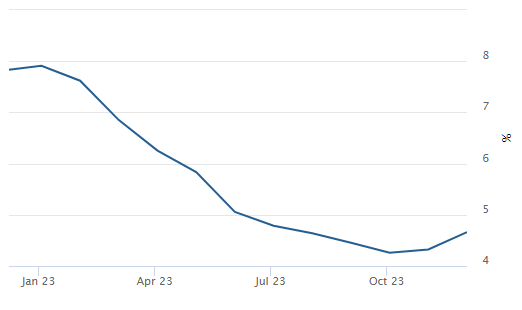
    MEXICO | Annual inflation continues upwards trend. On 9 January, Mexico’s national statistics institute (Inegi) released consumer price index figures December, which showed monthly inflation at 0.71% with the annual rate reaching 4.66%. Annual inflation has edged up in the last two months after nine consecutive months of decline in 2023. In October, annual inflation stood at 4.26%, its lowest value since February 2021.

    MEXICO | Major bond placement announced. On 2 January, Mexico’s finance ministry (SHCP) announced the issuing of bonds totalling US$7.5bn on the international market, with demand for the offer reaching US$21.3bn. The bonds, worth US$1bn, US$4bn, and US$2.5bn, are due to mature in five years, 12 years, and 30 years respectively. The coupon rates are 5.0% for the five-year bond, 6.0% for the 12-year bond, and 6.4% for the 30-year bond.

    MEXICO | Informal economy grows. On 18 December, Mexico’s national statistics institute (Inegi) released the preliminary results of its measurement of the informal economy (MEI) 2022, showing the informal economy accounted for 24.4% of GDP in 2022, up 0.4 percentage points compared to 2021.

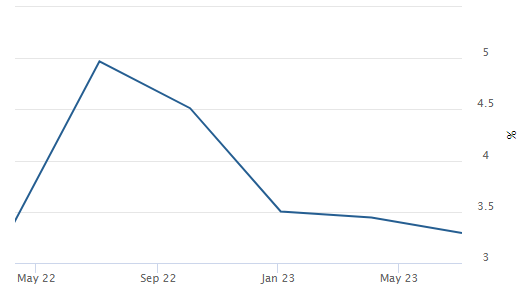
    Mexico: GDP growth
    Percentage variation (year-on-year)

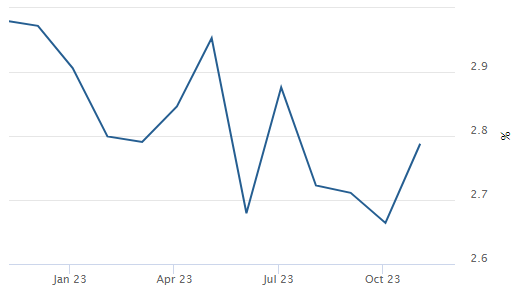
    Mexico: unemployment rate
    Economically active population

    Mexico: inflation rate
    Percentage variation (year-on-year)

    Source (all graphs): National Statistics Institute (Inegi)


  • EL SALVADOR: Bukele claims record drug haul amid other security achievements

    Abbi Dicker 05 March 2026 Hits: 1626

    On 15 February El Salvador’s President Nayib Bukele claimed that the navy had seized 6.6 tonnes (t) of cocaine worth some US$165m in what he described as the country’s biggest single drug seizure. His claim comes amid other security successes trumpeted by his administration, whose hardline security initiatives, including the implementation of a state of exception which has been in place since March 2022, and a mass incarceration policy, remain very popular despite ongoing human rights concerns.

    Writing on social media, Bukele said that during the operation, which took place 380 nautical miles south-west of the country’s shores, 10 alleged drug traffickers were detained: four Colombians; three Nicaraguans; two Panamanians; and an Ecuadorean. Bukele’s claim followed a 6 January press conference by the country’s defence minister, René Merino, in which he said that 25.01t of drugs had been seized in 2025, worth US$620m, up from 17.22t in 2024 (worth US$422.77m). He said that of the 25.01t total, cocaine seizures accounted for 22.53t. The latest report from the US State Department’s International Narcotics Control Strategy Report (INCSR), published in March 2025, notes that El Salvador is a transit country for illicit drugs although due to El Salvador’s “vigorous interdiction efforts, drug trafficking organizations largely avoid passing through El Salvador by land and rather attempt transit by sea”.

    The government has also hailed other security achievements. On 5 January Justice and Security Minister Gustavo Villatoro claimed 2025 was the safest year in “the country’s history”, with just 82 homicides committed, down from 114 in 2024, and equivalent to a rate of 1.3 homicides per 100,000 inhabitants. Indeed, the latest (February 2025) annual homicide round-up published by specialist website Insight Crime already showed El Salvador to have the lowest homicide rate (at 1.9 per 100,000) in Latin America and the Caribbean.

    Nonetheless, Insight Crime points out that the data may “overstate how comprehensive the reduction in violence has been” as the Bukele government does not follow the “Bogotá Protocol, the standard for measuring homicides in the region, so its murder rate cannot be directly compared to other countries that do”. Insight Crime also highlights a lack of transparency, making it harder to access data in El Salvador and the fact that it does not include deaths stemming from clashes between authorities and suspected gang members, nor murders where bodies have been discovered in mass graves.

    Public support

    The latest survey by Instituto Universitario de Opinión Pública (Iudop), affiliated with Jesuit-run Universidad Centroamericana (UCA), released in January, found that 62.7% of respondents considered security to be “the most positive aspect” of 2025, while 81.7% believed that crime had fallen. The same survey gave the Bukele administration an overall score of 8.39 out of 10, the second highest since 2020, the first full year after Bukele took office.

    Rights concerns

    Bukele and his flagship 40,000-capacity maximum security mega prison Centro de Confinamiento del Terrorismo (Cecot) are inspiring ideologically aligned leaders across the region such as Chile’s José Antonio Kast, who takes office on 11 March; Argentina’s President Javier Milei; and Costa Rica’s President Rodrigo Chaves. The victor of Costa Rica’s 1 February general election, continuity candidate Laura Fernández, has also professed her affinity with the authoritarian leader.

    However, Bukele’s hardline policies, which have been accompanied by a major crackdown on dissent, with rights groups shuttered and leading activists jailed [SSR-25-09], remain a major cause for concern for local and international rights groups. A report released at the end of January by local civil society group Socorro Jurídico Humanitario (SJH) tallied 90,844 people detained between the start of the state of exception and the end of December 2025, and estimates that of these, some 30% are arbitrary and illegal. Meanwhile on 13 February it reported that as of 8 February it had documented the deaths of at least 487 prisoners since the start of the state of exception.

  • The definitive US position on Taiwan - 15 September 2007

    LatinNews 08 September 2011 Hits: 5

    SPECIAL BULLETIN

    TO: All Strategic Intelligence Forum members

    FROM: JKC de Courcy, Chairman, Strategic Intelligence Forum

    DATE: 15 September 2007

    SUBJECT: The definitive US position on Taiwan

    Taiwan is by a wide margin the world's most important flashpoint.  There is no other dispute in the world today that has such potential to spark a superpower conflict.  It is our long-held position that for all the hedging and quasi-alliance forming inspired by China's rise, there is little chance of a rigid Cold War-style alliance system emerging in Asia, still less the kind of worldwide competition that existed between the US and USSR and that even a slight miscalculation could have precipitated into conflict at almost any time.  Nevertheless, the Taiwan issue, uniquely, does have the potential to spark a military conflict between China and the United States.

    For this reason, the speech made on 11 September by Thomas J Christensen, Deputy Assistant Secretary for East Asian and Pacific Affairs warrants close reading.  Addressing the US-Taiwan Business Council Defence Industry Conference in Annapolis, Maryland, Christensen made it clear that his remarks represented "the agreed view of the United States Government".  He invited his audience to "consider my comments in that light".

    In the run-up to Taiwan’s second democratic presidential election, held in March 2000, China’s highest institution of government, the Council of State, issued a White Paper which warned: “If the Taiwan authorities indefinitely refuse to settle peacefully the question of reunification [of China], the Chinese government will be compelled to resort to the most drastic measures conceivable, including the use of force.” The document, issued on 21 February 2000, reiterated Beijing’s refusal to waive its “right” to use force to “return Taiwan to the Motherland”.

    That remains China's definitive position on Taiwan.

    From the outset, the Bush administration has sought to achieve two things with its Taiwan policy.  First, to remove any ambiguity about its willingness to defend Taiwan against Chinese coercion.  But, secondly, to stop Taiwan from provoking China by trying to move towards de jure independence.

    Having assumed the presidency, President Bush moved quickly and decisively to re-establish deterrence. His key moves were his huge April 2001 weapons package for Taiwan and his statement at the same time on nationwide television that his administration would do "whatever it takes" to defend Taiwan from a Chinese attack, both of which were strongly reinforced by the immediate post 11-September display of American willpower and firepower.

    What President Bush did with those actions was to remove all "strategic ambiguity" over Taiwan – a highly significant move given the lessons of post-War Asian history. In 1950, the Soviet- and Chinese-backed North Korean decision to invade the South was precipitated by US Secretary of State Dean Acheson’s failure, in a widely noticed speech, to include the Republic of Korea in his definition of the American "security perimeter" in Asia. Kim Il-Sung took the omission as a signal that the US would not defend South Korea – so war broke out, and three million people died.

    Since the advent of the Bush administration, Beijing will have been under no such illusion about its determination to defend Taiwan from unprovoked attack.

    More recently, however, there have been two developments that may have undermined the Bush administration's early good work on Taiwan.  The first is the failure of the US to achieve its objectives in Iraq and Afghanistan (compounded by the developing crisis over Iran's nuclear programme).  The growing weakness of the Bush administration as a result of these two failures (and the additional challenge of Iran) could be taken by Beijing as providing it with wider latitude over Taiwan.

    The second adverse development has been the willingness of Taiwan to press its case for independence more actively.

    Thomas J Christensen's 11 September speech was intended to address both questions.  He reiterated that "strategic, moral, and legal requirements compel a continuous US interest in Taiwan and its security". He recognized "the growing PRC military threat to Taiwan posed by the fast-paced military build-up opposite Taiwan and by Beijing’s refusal to rule out the use of force against Taiwan". And he urged a strong Taiwan "that maintains the military capacity to withstand coercion for an extended period of time", that is a military capacity that can prevent China subduing it before the international community can react.  For good measure, he added: "Actions speak louder than words…[and] the United States has demonstrated its rejection of any coercion of Taiwan through both its defensive arms sales to Taipei and maintenance of our capability to respond to such coercion."

    However, he was equally tough with Taiwan.  He started by saying: "We do not like having to express publicly our disagreement with the Chen administration on this or any other policy. Taiwan is a longstanding US friend, and we do not like there to be gaps between us on important issues. I can assure you that we would not have done so had we not exhausted every private opportunity through consistent, unmistakable, and authoritative messages over an extended period of time."

    He then went on to explain why the US is so opposed to President Chen's plan to hold a referendum on applying to join the UN under the name of Taiwan.  He argued that the referendum would not achieve anything concrete in terms of "expanding Taiwan’s international space", and he bluntly told Taipei that relying on the US as its defender of last resort came with obligations, namely to avoid unnecessary confrontation with China. As Christensen said, supporters of the referendum "do not take seriously Taiwan’s commitments to the United States and the international community, are willing to ignore the security interests of Taiwan’s most steadfast friend, and are ready to put at some risk the security interests of the Taiwan people for short-term political gain".

    Christensen concluded: "In terms of security, the proposition is reasonably simple: as long as Taiwan maintains a credible defensive capability, the chief threats to its welfare are political actions by Taipei itself that could trigger Beijing’s use of force."

    Some of the headlines suggesting that the speech represents a US move away from Taiwan are misplaced.  The speech provided as strong a message to Beijing as to Taipei, and it is to be hoped that both hear Washington's message.  The danger lies in the possibility that one or the other or both will prove deaf to what is a simple, sensible, and sustainable proposition.  China might not like the prospect of an indefinite prolongation of the status quo, and Taiwan might be frustrated by its strange, even unique, position in world affairs; but maintaining the status quo should be a compromise that both sides can live with for the foreseeable future - and it is only to the good that Washington has sought reinforce this point in such strong terms.

    Christensen's full speech can be downloaded from: http://www.state.gov/p/eap/rls/rm/2007/91979.htm

    END

  • TRACKING TRENDS

    LatinNews 04 October 2012 Hits: 719

    NICARAGUA | Slight slowdown ahead. Economic growth will slow down slightly between now and 2016, but will still be a reasonably healthy 4-4.5%, according to Bayardo Arce, economic affairs adviser to President Daniel Ortega. Last year Nicaragua’s GDP grew by 5.1%. This year the rate is expected to decline to 4%, and afterwards steadily increase to 4.5% by 2016. Arce said inflation would be held this year at 8%, the same rate recorded in 2011 before dropping progressively to 7% by 2016. These projections, Arce said, are based on expected growth of export earnings, remittances by expatriates, earnings from tourism and foreign direct investment.

    COSTA RICA | Unemployment inching upwards. Open unemployment in Costa Rica in the second quarter of this year reached 10.2%, up from 9.8% in the comparable period of 2011. The main factor driving up the rate was an 11.2% increase of the population of working age, set against a stagnant employment market. There have been job losses in the public administration, some industries and commerce, but gains in telecommunications, administrative employment, construction, transport, healthcare, education and self-employment.

    According to the national statistical institute, 16% of the occupied population are earning less than the legal minimum wage.

    GUATEMALA | Despite the violence, investment rises. In the first half of this year, inflows of foreign direct investment (FDI) reached US$770.5m, an increase of 47.2% on the same period of last year. FDI has been increasing steadily over the past few years: US$600m in 2009, US$805.8m in 2010 and US$984.6m in 2011. For this year as a whole the Banco de Guatemala is predicting an inflow of US$1.5bn, which would be a record. In January-June this year two sectors accounted for just under two-thirds of FDI: manufacturing attracted 37.2% and the electricity, 26.8%.

  • RASTREANDO TENDENCIAS

    LatinNews 30 June 2013 Hits: 767

    PARAGUAY | Buscando inversión española. El 24 de junio el presidente electo de Paraguay, Horacio Cartes, mantuvo reuniones en Madrid con el Primer Ministro de España Mariano Rajoy y el Rey Juan Carlos, en las cuales él presentó una serie de proyectos de inversión que su futuro gobierno espera conducir con la ayuda de inversionistas extranjeros. Las reuniones fueron parte de la gira de Cartes en España, mientras se prepara para asumir el poder el 15 de agosto próximo.

    Durante las reuniones, se informó que Cartes dijo a sus anfitriones españoles que él estaba comprometido en mejorar el clima de inversión en Paraguay; y que tan pronto asuma el poder, él impulsaría la elaboración de una nueva legislación para promover los proyectos de inversión público-privados para así ayudar a Paraguay a asegurar niveles sustentables de crecimiento económico.

    "Paraguay tiene grandes riquezas y un gran potencial", se dijo que Cartes le había dicho al Rey Juan Carlos, destacando los recursos energéticos del país y las variadas oportunidades de inversión que presenta, particularmente en el desarrollo de la infraestructura. El Rey Juan Carlos replicó que los empresarios españoles están “muy entusiasmados” por invertir en el Paraguay.

    Más tarde, Cartes se reunió con miembros de la comunidad empresarial española durante un foro celebrado en la Casa de América, en la cual él una vez más prometió que una de sus primeras acciones que tomará cuando asuma el poder es trabajar en una legislación que ofrezca mayor seguridad para las inversiones extranjeras. Luego mencionó en general algunos de los varios proyectos de infraestructura que el país necesita para desarrollarse en los próximos años, tales como el dragado de sus dos principales ríos navegables, el Paraguay y el Paraná; la construcción de puertos adicionales sobre estos ríos; y la expansión del sistema nacional de carreteras para así incrementar el nivel de la conectividad del transporte con Argentina y Brasil.

    Aunque Cartes no proveyó muchos detalles concretos de los proyectos o de hecho incentivos para que los inversionistas vayan al Paraguay, las cifras del último desempeño económico del país deberían proveer suficiente incentivos. El 23 de junio, el banco central del Paraguay (BCP) difundió las cifras económicas oficiales del primer trimestre, que muestran que el crecimiento económico del país durante ese periodo fue del 14,8%.

    Significativamente, mientras el BCP apuntó que los resultados fueron conducidos por la impresionante recuperación en el sector agrícola, que reportó una tasa de crecimiento del 47,4%, todos los otros sectores de la economía, incluyendo manufacturas (7,2%), minería (11,8%), y construcción (18,1%), presentaron cifras muy positivas. El pronóstico del BCP para el crecimiento económico para el fin del año 2013 es del 13%.

  • ECUADOR: Preparándose para más elecciones

    LatinNews 27 October 2013 Hits: 313

    El Consejo Nacional Electoral (CNE) ha formalmente convocado las elecciones locales para el 23 de febrero del 2014. Las elecciones verán llenarse más de 5.500 puestos públicos, incluyendo 23 prefectos provinciales, 221 alcaldes, 1.305 concejales, y 4.079 asambleas parroquiales. Esto dará al Presidente Rafael Correa la oportunidad para consolidar su control sobre todos los niveles políticos en Ecuador. La elección que más quisiera ganar Correa a nivel local es la de la alcaldía de la ciudad costera de Guayaquil, un bastión de la oposición en las manos de Jaime Nebot.

    Los partidos y movimientos políticos tienen hasta el 21 de noviembre para registrar sus candidatos con el CNE antes de que oficialmente se inicie la campaña pre-electoral, el 7 de enero y finalice el 20 de febrero. En las últimas elecciones locales en el 2009, Alianza País (AP), el partido del Presidente Correa, sólo logró obtener el control de 63 de las 221 alcaldías, y otras 11 más a través de alianzas políticas, pero desde entonces este casi triplicó su presencia en este nivel. Esto se logró por medio del cortejo de la AP de los funcionarios locales electos en el 2009, muchos de los cuales habían abandonado sus grupos y movimientos originales, aunque algunos de estos se acercaron formalmente a la AP. En las elecciones presidenciales del 2013, 170 de las 221 alcaldías expresaron su apoyo por la reelección de Correa, mientras que 181 apoyaron su controversial decisión de cancelar la Iniciativa Yasuní-ITT y avanzar para explotar el petróleo en el parque nacional Yasuní.

    Dada la gran mayoría de la AP en la Asamblea Nacional, Correa domina completamente cada nivel de la política en Ecuador, pero él estará tratando de consolidar esto el próximo febrero ganando la mayoría de las alcaldías del país para la AP.

    El objetivo principal de Correa es Guayaquil, donde Nebot ha sido alcalde desde el 2000 y tiene un firme control sobre el timón. Durante las celebraciones de la independencia de Guayaquil, el 9 de octubre, Nebot confirmó que buscaría la reelección con su movimiento Madera de Guerrero, que está aliado con el tradicional Partido Social Cristiano (PSC). Correa respondió anunciando que la AP elegiría a un “joven y atractivo” candidato para desafiarlo. Según  la ministra de obras públicas y directora provincial de la AP, María de los Ángeles Duarte, esta candidata será Viviana Bonilla, de 29 años, actual gobernadora de Guayas, una posición que ella asumió recién en abril del 2012.

    Correa amenaza con renunciar en la disputa con la AP

    Las relaciones entre el Presidente Correa y su partido están lejos de ser armoniosas en este momento, generando un grado de incertidumbre sobre las elecciones. Correa amenazó con renunciar a inicios de este mes si la Asamblea Nacional votaba a favor de legalizar el aborto en todos los casos de violaciones como parte de una reforma del código penal. Correa criticó con severidad la “traición y la deslealtad” de algunos miembros de la AP que encabezaron la iniciativa: actualmente sólo es legal obtener un aborto en Ecuador si la vida de la madre está en riesgo o después de la violación de una mujer mentalmente discapacitada.

    La diputada de la AP, Paola Pabón, prontamente retiró la iniciativa después de la amenaza de Correa. Pero Correa  no dejó las cosas ahí. Él pidió castigo para aquellos quienes “lo apuñalaron por la espalda” –Pabón deberá presentarse ante la comisión de ética de la AP para explicar sus acciones el 25 de octubre junto con otros tres diputados de la AP quienes apoyaron su moción.

    Correa también amenazó con dejar a la AP en un fuerte mensaje a través de Twitter en el cual dijo que “no toleraría más de lo mismo”. Correa ha amenazado con renunciar una media docena de veces, siempre que se ha sentido molesto sobre algo que considera particularmente significativo; él también ha criticado a los diputados de la AP por ‘deslealtad’ en varias ocasiones en el pasado; pero esta es la primera vez que ha amenazado con abandonar el partido que lo llevó al poder y del que fue cofundador en el 2006.

    • Candidatos

    De acuerdo con el diario ecuatoriano El Telégrafo, el CNE espera que más de 50.000 candidatos de unos 124 partidos y agrupaciones políticas participen en las elecciones. La votación en las elecciones locales es compulsiva para aquellos de 18 o más años, pero opcional para los mayores de 65 años; para aquellos entre los 16 y los 18 años; para los miembros activos de la policía y las fuerzas armadas; y para personas discapacitadas.

  • Risk pointers

    LatinNews 17 April 2014 Hits: 363

    *** Hamas threat.  Gaza Strip prime minister, Ismail Haniyeh, said on 15 April that capturing Israeli soldiers was the best way for Hamas to secure the release of prisoners held by Israel.  He said: “Abducting Israeli soldiers is a top priority on the agenda of Hamas and the Palestinian resistance.”

    In June 2006, militants from Gaza captured Israeli soldier Gilad Shalit.  He was released in October 2011 in exchange for 1,027 Palestinian prisoners in Israeli jails.

    *** Turkey and the European Union.  Turkey’s new European Affairs Minister Mevlut Cavusoglu has been saying that he intends to rejuvenate Turkey-EU relations, but few believe he will be successful.

    Turkey has been trying to join the European Union since 1963, and until recently it was serious in the endeavour.  Observers in Ankara, however, now view Turkish-EU relations as being all-but dead.  The technical talks, we are told, are being kept going by both sides simply because neither side wants to be the one to ‘call time’.

    EU high officials no longer believe that Turkey has a European vocation (amongst other things, they cite Prime Minister Erdogan’s increasing authoritarianism, including threats against the judiciary), and many Turkish leaders now believe that Turkey no longer needs the EU.

    *** Japan-South Korea talks make little progress.  On 16 April South Korean and Japanese officials met to discuss the issue of Korean women made to serve in Japanese military brothels during World War II (so-called Comfort Women).  Japan’s position remains that all compensation issues were settled in 1965, but South Korea is demanding more for the 55 surviving comfort women and a more fulsome apology.

    Reports of the meeting say that the two sides “failed to narrow differences”, but another round of talks is scheduled for May, and the hope is that a summit meeting between Japan’s Prime Minister Shinzo Abe and South Korea’s President Park Geun Hye can be arranged.

    Japanese sources say the talks are part of a concerted effort to improve Seoul-Tokyo relations ahead of President Barack Obama’s visit to the region next week.