ARGENTINA: Macri advances with adjustment
Despite the continuous domestic and global economic volatility, the Argentine government led by President Mauricio Macri is decisively moving ahead with the implementation of economic measures designed to fix the macroeconomic imbalances it inherited from the previous administration led by Cristina Fernández (2007-2015). But this is producing discontent as the domestic economy continues to suffer from the short-term negative effects of the measures.
Following its successful moves to lift the foreign currency and exchange rate controls imposed by the Fernández administration and settling Argentina’s long-running debt dispute with its ‘holdout’ bondholders (those that still demanded full payment for their 2001 Argentine bonds) earlier in the year, the Macri administration announced plans to take yet another step to fully restore Argentina’s standing in international financial markets and improve its finances this week. On 28 June Argentina’s finance ministry announced a plan to buy back the GDP-linked bonds, which pay out a higher coupon whenever Argentina posts positive economic growth, issued by the country in 2005-2010 as part of the debt restructuring programme designed to help it come out of the 2001 debt default crisis.
The statement said that the operation, under which the government would offer the holders of these bonds a one-off chance to sell them back to the Argentine treasury for a set price before the end of the year, will help to ease Argentina’s debt burden and free up additional funds to plough back into the faltering domestic economy. The ministry calculated that the operation would help the treasury save some US$9.4bn as the GDP-linked bond contingent debt amounted to US$13.83bn in April.
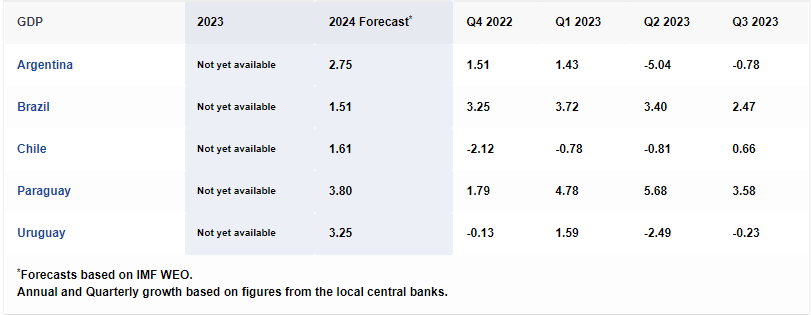
Interestingly, the announcement came despite the fact that Argentina is expected to post negative GDP growth this year, partly as a result of the major macroeconomic adjustment implemented by the Macri administration. The International Monetary Fund (IMF) forecasts that Argentina’s GDP will contract by 1% this year. The Macri government has yet to release official GDP figures since it decided to overhaul the widely discredited national statistics institute (Indec). But a recent poll by local economists conducted by Reuters found that the consensus first quarter growth projection is -1.2%.
However, government officials have repeatedly said that the changes in economic policies will start to produce positive results in the second half of the year, as the initial shock of the economic adjustment measures subsides. That the bond buyback announcement came a day before Indec is due to release its new quarterly economic figures, suggests that the government is confident that these will be positive.
But there are few signs elsewhere that Argentina’s domestic economy has stabilised. Last week, on 23 June, the value of the Argentine peso against the US dollar fell by 2.6% to trade at Ar$14.45/US$1. This was mostly explained by the general volatility currently gripping international financial markets as a result of the uncertainty produced by the United Kingdom’s vote to leave the European Union. This has forced the central bank (BCRA) to intervene in the local currency market to try to manage the volatility.
But the net effect of all this is inflation-inducing and is contributing to Argentina’s domestic inflation rate remaining high. The Indec’s brand new official inflation figures, released on 16 June, came in at 4.2% for the month of May. The high level of inflation is one of the main drivers behind the public discontent as it continues to eat away at the public’s purchasing power. Indeed the government’s decision to conclude the collective salary negotiations ahead of the second half of the year, which resulted in average increases of 40% compared to an average increase of 30% in the first half, has left some trade unions dissatisfied.
The 40% average increase is higher than the 20%-25% increase advocated by the government. But still unions led by the Central de Trabajadores de la Argentina (CTA), headed by Pablo Micheli, staged demonstrations on 28 June to demand additional salary increases. Meanwhile oil workers’ unions in eight of the country’s 10 oil-producing provinces began a strike on 27 June in demand of additional salary increases. This backdrop has helped to push Macri’s disapproval rating up. A national poll by Poliarquía Consultores, released on 26 June, found that Macri’s disapproval rating had increased by 18 percentage points to 43% in June since Macri assumed office in December 2015, while his approval rating fell by 15 percentage points to 56%.
- FPV desertions continue
In positive news for Argentina’s President Mauricio Macri and the ruling Cambiemos coalition, more national legislators elected for the Frente para la Victoria (FPV, Kirchneristas) hard-line faction of the main opposition Partido Justicialista (PJ, Peronists) have decided to desert the party this week in the wake of ever growing corruption scandals implicating prominent figures from the previous FPV administrations. Three federal deputies and a senator quit the FPV last week in the wake of the arrest of the former deputy public works minister José López (2003-2015) [WR-16-24]. On 23 June they were followed by six other federal deputies, who announced that they would now form the ‘Peronismo para la Victoria’ bench. The FPV has now lost 21 federal legislators since February.