In this section we will consider the provision of utilities such as water, sanitation, and electricity, as well as progress in the energy transition.
Latin America has made great progress in improving access to water and sanitation services in the last 20 years, but issues remain. While access to running water has improved, far fewer people receive piped water into their home, and access in general is far lower in rural areas. Access figures for sanitation services are lower than for running water, but notable success stories in recent decades include Chile moving from 21% waste access in 2000 to 100% in 2012, and Mexico improving from 23% to 63% for the period. However, the proportion of the region’s wastewater that is actually treated is lower even than waste access, at just 30-40%. This contributes to high levels of water pollution that affect the amount of usable resources that remain.
Persistent shortfalls in water and sanitation services contribute to high rates of inequality in the region, which remains the most unequal in the world. Some 36m people still lack piped water to their homes, and 15.9% of businesses report insufficient water supplies. In addition, 60m people only have limited access to sanitation services. To achieve the UN Sustainable Development Goal (SDG) number 6, which guarantees safe universal access to drinking water and sanitation services, by 2030, the region needs to build US$256bn in new infrastructure, according to the IDB.
Water stress is also an increasing concern. Despite possessing around 30% of the world’s freshwater resources, Latin America is suffering increased water insecurity due to factors including mismanagement and climate change. Sixteen of the largest 20 cities in the region are facing water stress, with notable examples including Lima, São Paulo, and Mexico City. Water-related issues have already sparked protests in various countries and been linked with increased emigration from Central America’s Dry Corridor, while a 13-year megadrought in Chile has seen entire lakes dry up. These issues are forecast to worsen due to climate change, meaning that governments need to build more infrastructure to make better use of the available resources.
Electrification is another key area, and one in which LAC has made strong progress in recent decades compared with peer developing regions. Most countries in the region now have electricity access rates of more than 90%, with Peru, Nicaragua, Honduras, and Bolivia making particularly impressive gains in the last 20 years. However there is still work to be done in rural areas, which also tend to have lower quality access through decentralised solutions, such as small solar arrays, that can only power a few appliances and do not provide power around the clock.
Another concern is the robustness of electrical grids, which suffer more interruptions than in developed nations, leading to significant disruption for households and businesses. More than 30% of businesses said that blackouts are a “prime difficulty”, causing annual estimated losses of 2.3% of total sales. Central America is an interesting case study in this regard, with energy distribution governed by a 1996 framework treaty integrating systems throughout the subregion. However transmission systems aren’t strong enough to deal with faults in the 1,800km Central American electrical interconnection system (Siepac), leading to frequent blackouts. Fixing the issues would require huge infrastructure investment, and such is the dissatisfaction with the system that Guatemala triggered a 10-year notification period to leave the regional electricity market in July 2021.
For the region as a whole, the IDB estimates that US$577.1bn in investment is needed to guarantee universal and sustainable access to electricity as stipulated by SDG 7 by 2030.
LAC countries are also working to shift their energy matrix towards renewables as part of commitments to reduce greenhouse gas emissions under the Paris Agreement. The region has the potential to be a renewables powerhouse, with abundant solar and wind resources, and its renewable energy markets are among the most dynamic in the world.
As things stand many countries in the region are highly dependent on hydropower, with Brazil, Chile, Colombia, and Peru particularly standouts. This reliance causes issues when conditions are dry. For example, Brazil experienced one of its worst droughts on record in 2021, reducing electricity generation at hydropower plants and necessitating the use of expensive and environmentally-damaging thermal power plants to ensure electricity supplies. Colombia currently generates almost 70% of its electricity from hydropower, and is working to diversify its energy matrix.
Countries throughout the region are attempting to do so, and much of the forecast capacity growth will be generated by renewables. Chile is a shining light, aiming to generate 70% of its electricity from clean sources by 2030 and be carbon neutral by 2050. Last year thermal plants contributed 55% of energy generation as severe drought affected hydroelectric plants, but 4GW of non-conventional renewable capacity was added to the system and a further 4.5GW is expected in 2022-2023. This will help the country achieve plans to shut down eight of 28 existing coal plants in the next five years.
Chile is also positioning itself as a regional leader in developing green hydrogen technology, publishing its national green hydrogen strategy in November 2020. Paraguay is another nation betting on the technology, with a pilot project expected to produce 450kg of green hydrogen per day from April 2023. In Colombia, Ecopetrol, the largest energy company in the country, is working with Promigas and the national government on a pilot project. Argentina, Brazil, and Uruguay are also working on green hydrogen projects. The International Energy Agency (IEA) believes that the fuel has the potential to reduce emissions; decarbonise transport, in particular heavy-duty and public transport; and eventually bring in revenue through exports. The agency has called for regional cooperation to maximise opportunities.
One notable exception to the regional trend towards clean energy is Mexico, where President Andrés Manuel López Obrador has doubled down on fossil fuels. Since coming to power in December 2018, López Obrador has pushed through the construction of the Dos Bocas/Olmeca oil refinery in Tabasco state, which will reportedly start operating in 2023, and moved to shore up ailing state-owned oil company Pemex. He has also prioritised the state-owned utility Comisión Federal de Electricidad (CFE), which has low renewables penetration despite abundant natural resources, disincentivising private investment in renewables projects. Despite this, renewables share of total electricity generation increased from 18% in 2019 to 20% in 2020 and 24% in 2021, and more renewables capacity is expected to come online through private companies over the next couple of years.
Panama’s plans to solve water scarcity
Panama may receive the second-highest amount of rainfall of any country in the Western Hemisphere, and boast freshwater resources of almost five times the global average, but the country remains at risk of water insecurity.
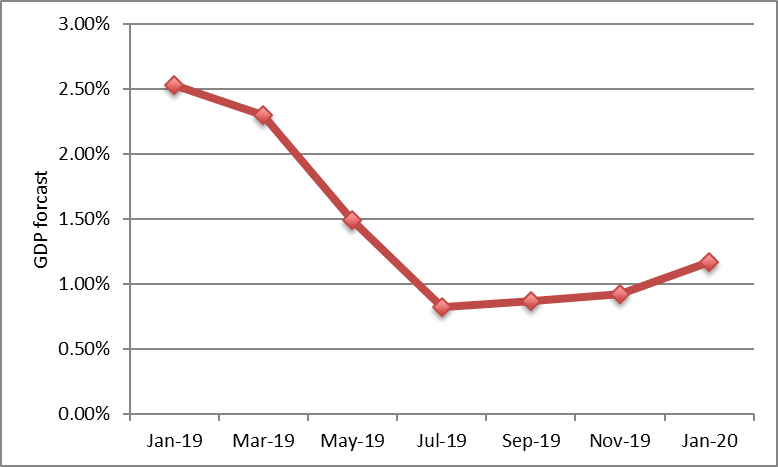
One issue is that many people live in homes without access to running water, relying on deliveries from tanker trucks to meet their daily needs, and another is that the country has been affected by droughts since 2019, which was the fifth-driest year in seven decades. In fact, a January 2020 press release from the Panama Canal Authority (ACP), the government agency that administers the canal, noted that rainfall in 2019 was 20% less than the country’s historic average, while water evaporation levels increased by 10% due to a 0.5- to 1.5-degree Celsius rise in temperature. This poses problems for the continued operation of the Panama Canal, a hugely important contributor to the national economy, as falling water levels in the lakes that fill the canal’s system of locks affect navigability, as well as affecting agricultural production.
The response to such a complex issue is multifaceted. In 2016, the government published its national water security plan 2015-2050, which aims to provide running water to every Panamanian; restore and maintain river basins; maintain functioning water and sewerage infrastructure; and develop a culture of responsible water use. The document mentions that only around a quarter of Panama’s freshwater supply is used, and therefore problems arise due to mismanagement of resources. Then in 2021 the government published a national drought plan, which promotes better monitoring of hydrological resources; the development of new and alternative sources of water; water conservation programmes; and legislation and planning around land use. In addition, the government has embarked on a well-digging programme on agricultural lands, and moved to improve water supplies in urban areas under a US$225m plan financed by the Inter-American Development Bank (IDB). And in June 2021, President Laurentino Cortizo sanctioned a law establishing Panama’s meteorological and hydrological institute (IMHP), an autonomous entity which he said would enable Panama to begin a “new path towards climate resilience”.
The ACP is also incredibly important in terms of water supplies. Not only does it manage the passage of ships through the canal, the agency controls dams and water-treatment plants that supply freshwater. In September, the ACP announced that work to enlarge the Mendoza water-treatment plant would start in Q3 2023, increasing its production capacity from 40m to 60m gallons per day. Increasing water stress has seen the ACP introduce a number of water-saving measures, including the suspension of energy generation at the Gatún hydroelectric plant; the elimination of hydraulic assistance at the Panamax Locks, which use high levels of water to ease vessel passage; the use of water-saving basins at the Neopanamax Locks; and the use of tandem lockages, which allow two vessels to pass the canal at the same time. Other measures include a freshwater surcharge on vessels over 125 feet, adjustments to the booking system for all shipments, and a vessel handling fee.
Panama now has plans in place to save water where possible while making better use of its existing resources. The issue is of primordial importance to the country’s economy, given the huge contribution of the Panama Canal to the national budget, with forecasts predicting direct contributions to state coffers of a record US$2.5bn in fiscal year 2023. With that in mind, it should come as no surprise that authorities are being proactive in searching for solutions to water insecurity.