All Categories

Subcategories

  • Risk pointers

    LatinNews 01 May 2013 Hits: 459

    *** Uighur rebels in Pakistan.  China’s Xinjiang province, home to the downtrodden Muslim Uighurs, has suffered periodically from attacks from the independence-seeking East Turkestan Islamic Movement (Etim).  Pakistani intelligence sources were quoted this week as admitting that there are between 300 and 400 Etim fighters in Pakistan’s Waziristan.  China made allegations about Etim connections in Pakistan after attacks in Kashgar in July 2011.  According to Chinese investigators, the Etim attackers had learnt their trade in Pakistan.  This amounted to unprecedented criticism of Pakistan from China, and the Pakistanis were quick to reassure Beijing of their seriousness in tackling the issue.  The latest revelations, along with the release of an Etim training video of Uighur rebels training in Waziristan, will raise difficulties once again between Islamabad and Beijing.

    *** Reaction against China in Africa.  There have been violent demonstrations in the Niger town of Diffa against a Chinese oil firm operating in the region.  The cause of the unrest by local youths is the employment practices of the China National Petroleum Corporation (CNPC).  The youths have been demanding the immediate employment of 5,000 workers from the Manga region, an increase in salaries, and the release of mining royalties and the allocation of 15% of the income from oil to 12 local communes.

    *** Desperate measures in North Korea.  South Korean government sources revealed on 26 April that Pyongyang has been destroying villages along the border with China on the Duman River to prevent defections.  A government source said: “North Korea has been forcibly relocating villagers along the Duman River to places further from the border.”  In one village, Omsong, around 100 houses are said to have been demolished.  Omsong is a popular crossing point because the Duman narrows in this section.

    *** Israeli warning on Syrian chemical weapons.  Former Israeli Defence Minister Binyamin Ben-Eliezer said on 29 April that Syria has begun to transfer chemical weapons to Hezbollah in Lebanon.  He said: “The process of weapons transfer to Hezbollah has began.”

    *** China says Japan can’t split Russia from China.  Following the meeting between Japan’s Prime Minister Shinzo Abe and Russia’s President Vladimir Putin on 29 April, a number of Chinese media outlets carried commentaries on the “impossibility” of Japan recruiting Russia to any ’contain China’ policy.  As an example, Feng Yujun, director of the Institute of Russian Studies at the China Institutes of Contemporary International Relations, was quoted as saying that it was “absolutely impossible” for Russia to cooperate with Japan due to its “balanced diplomatic strategy in the Asia-Pacific region”.

  • BOLIVIA: Morales prepares for victory

    LatinNews 09 October 2014 Hits: 3163

    Last minute attempts by the opposition to cast doubt on the electoral process itself are ultimately unlikely to have any impact ahead of the 12 October general elections. The latest poll by Ipsos published on 2 October showed President Evo Morales and his ruling Movimiento al Socialismo (MAS) for the first time taking all of Bolivia’s nine departments.

    The Ipsos poll, which was carried out between 8 and 23 September, showed the MAS, which currently controls seven of Bolivia’s nine departments (excepting Santa Cruz and Beni in the east of the country) with 70% support in La Paz, 63% in Oruro, 62% in Potosí, 59% in Cochabamba, 54% in Pando, 52% in Chuquisaca, 50% in Santa Cruz, 44% in Beni and 43% in Tarija.

    Overall, the poll showed Morales unchanged at 59% of voting intentions, while his main rival, Samuel Doria Medina of the centre-right Unidad Demócrata (UD), fell four percentage points to 13% compared with the previous month. This decline has been attributed in part to the damage to Doria Medina’s campaign caused by allegations of gender violence which emerged as an unexpected campaign issue (see box).

    Meanwhile former president, Jorge Quiroga (2001-2002), who is running for the Partido Demócrata Cristiano (PDC), is third with 8%, up four points on the August poll; support for former La Paz mayor (2000-2010), Juan del Granado of the left-wing Movimiento Sin Miedo (MSM), also remained unchanged on 3% while indigenous resistance leader, Fernando Vargas of the Partido Verde de Bolivia, is bringing up the rear on 1%.

    Important defections

    While President Morales’ re-election for a third consecutive term appears all but certain, the performance of the MAS in the bicameral national legislature – where all 130 seats in the lower chamber and all 36 senate seats are up for grabs – is less of a given. The ruling party’s main objective is to recover its two-thirds majority in the legislature which was lost after a handful of indigenous candidates broke ranks over the government’s plan to build a controversial highway through an indigenous territory and national park, Isiboro Sécure (Tipnis), in 2011.

    Yet there have been some significant defections to the MAS from other parties – not least the return to the fold in August of Morales’ former water minister Abel Mamani (2006-2007) who had defected to the MSM in 2010 following the rupture of its alliance with the MAS. Since Mamani’s return, a further 500 members of the MSM – which had emerged as Bolivia’s second largest party following the April 2010 municipal elections – have since followed suit together with six MSM legislative candidates.

    The ruling party also continues to win over members of the Right. One notable example of this shift in support was the announcement on 2 September by the MAS spokesperson in Santa Cruz, Saúl Ávalos, that more than 600 former members of the traditional right-wing Acción Democrática Nacionalista (ADN) (which lacks a legislative presence) had switched to the MAS.

    • Gender violence

    Gender violence has emerged as an unexpected campaign issue, following the brutal murder of a 26-year old woman in Santa Cruz [WR-14-34], forcing some high profile candidates to step aside. These include Jaime Navarro, a UD legislative candidate, who on 2 September was forced to withdraw his candidacy after the local media leaked an audio recording in which Samuel Doria Medina could be heard pressuring Navarro’s former partner, Jimena Grock, to reach a deal with Navarro, whom she had accused of physical abuse.

    After a second audio was released on 4 September, in which Doria Medina told Grock not to be an “imbecile” and strike a deal with Navarro, the UD presidential candidate himself was compelled to issue a public apology. The issue has also had an impact on the ruling party, where a MAS senate candidate Adolfo Mendoza, was forced to step aside in July after allegations emerged that he too had physically abused his partner.

    • Electoral concerns

    On 30 September the presidential candidate for the left-wing opposition Movimiento Sin Miedo (MSM), Juan del Granado, complained that the names of two dead people were not only still on the official electoral register but that they had been designated as polling station officials in the general elections. Wilma Velasco, the president of Bolivia’s electoral court (TSE), admitted the mistake – which she blamed on the relatives of the deceased for failing to present the necessary documents to remove them from the register although she sought to downplay fears of electoral fraud. Velasco also told reporters that she had requested that the Organization of American States (OAS) audit the electoral register although she has acknowledged that this will only be possible after the elections.

  • BRASIL: Comisión de la verdad aboga por la revisión de ley de amnistía

    LatinNews 12 December 2014 Hits: 258

    La comisión nacional de la verdad de Brasil (CNV) entregó el 10 de diciembre su informe final sobre sus investigaciones relacionadas a los abusos de los derechos humanos ocurridos durante la última dictadura militar del país, a la Presidenta Dilma Rousseff. En una ceremonia en Brasília, Rousseff,  quien fue ella misma tomada prisionera y torturada durante el periodo de gobierno militar, dijo que los brasileros “merecen conocer la verdad” acerca de lo ocurrido durante ese tiempo. Mientras Rousseff fue cálidamente aplaudida por su emocional discurso, lo que vendrá ahora será incluso más difícil. El gobierno ahora tendrá que decidir si sigue o no la recomendación de la CNV y procesar a los más de 190 torturadores que aún siguen vivos. El promedio de edad de los mismos es de 82 años.

    El informe de 1.300 páginas elaborado durante los últimos años por los seis miembros de la CNV, detalla los abusos que tuvieron lugar después del derrocamiento del Presidente João Goulart en 1964 y hasta 1985. Identifica a 434 personas que fueron asesinadas por agentes del Estado durante este periodo, de los cuales 210 aún están desaparecidas, e incluye testimonios de la sádica violencia utilizada sobre los activistas de Izquierda. “Conocer la historia es fundamental para comprenderla mejor. La verdad no significa venganza. La verdad nos libera de todo lo que no se ha dicho. Revela todo lo que estaba oculto”, dijo Rousseff.

    En el informe se mencionan 377 nombres, como siendo directamente responsables de torturar o asesinar. De ellos, alrededor de 190 aún están vivos. En su conclusión, la CNV alega que estas personas deberían ser responsabilizadas por sus delitos, y que no se les debe otorgar inmunidad bajo la ley de amnistía de 1979, que protege de ser procesados a los oficiales militares acusados de torturas y a los guerrilleros de izquierda acusados de violencia. La comisión alega que la ley de amnistía es “manifiestamente incompatible” con la Convención Americana sobre Derechos Humanos, y que no debería ser un obstáculo para la investigación de serios abusos.

    Pocas altas figuras de las fuerzas armadas testificaron ante la CNV, ya que ésta no tenía el poder de citar a testigos. Un ex coronel, Paulo Malhaes, le dijo a la CNV en detalle, y sin arrepentimiento, cómo él torturó y mató a muchas víctimas, pero pocos de sus colegas han cooperado. El día en que el informe fue difundido, el club militar de Rio de Janeiro difundió una lista de los nombres del personal militar muerto en la lucha contra las guerrillas de Izquierda. Uno de los mencionados en el informe de la CNV, Nilton Cerqueira, dijo que él tenía una sola pregunta acerca de los hallazgos de la CNV. “Si soy yo quien seguía la ley, ¿quién violaba los derechos humanos? ¿Y qué acerca de los terroristas? ¿Qué ha pasado con ellos? ¿Qué acerca de la terrorista quien es presidente de este país?”.

    Cualquier intento de alterar la ley de amnistía es probable que encuentre una feroz reacción en ciertos sectores de la sociedad brasilera, que aún recuerda nostálgicamente el periodo del régimen militar. Demostraciones de una insignificante, pero ruidosa, porción del electorado regularmente piden el retorno del régimen militar en respuesta a la “dictadura del Partido dos Trabalhadores”. El entrante congreso federal, que debe asumir el próximo año, es mucho más conservador que el actual parlamento, con una significativa agrupación de ex oficiales militares, la llamada ‘bancada da bala’ o ‘banca de las balas’. Un juez de la corte suprema ya ha dicho que la ley de amnistía debe permanecer.

    • Bolsonaro bajo presión

    Jair Bolsonaro, un diputado de Derecha y militar de reserva, podría afrontar una investigación ética luego de sus comentarios hechos acerca de María do Rosario, una diputada del Partido dos Trabalhadores y ex ministra de derechos humanos. Siguiendo a los comentarios de Do Rosario sobre el sistemático uso de los militares de la violación como método de tortura, Bolsonaro dijo en el congreso: “ella no merece ser violada”. Esta es la segunda vez que Bolsonaro hace esta clase de comentarios sobre la diputada; el primero fue en el 2003. Por otra parte, Bolsonaro recibió más votos que cualquier otro diputado federal en las elecciones generales de octubre.

  • HAITI: UNSC votes on Minustah’s future

    LatinNews 17 May 2017 Hits: 796

    Haiti’s new foreign minister, Antonio Rodrigue, recently sought to provide reassurances that the country was “in a position to guarantee security”. His remarks followed a vote which took place last month by the United Nations (UN) Security Council (UNSC) to extend the UN Stabilisation Mission in Haiti (Minustah) for a final six-month period. The mission, which has been in Haiti since 2004 following the rebellion which ejected former president Jean-Bertrand Aristide (1991; 1994-1996; 2001-2004), will be replaced by a smaller successor peacekeeping mission to be known as the UN Mission for Justice Support in Haiti (Minujusth).

    In line with recommendations made by UN Secretary General António Guterres [RC-17-03], the vote, which took place on 13 April, to draw down Minustah’s military component during the next six months, with its final withdrawal set for 15 October, was not a surprise [RC-17-03]. In a report published on 16 March, Guterres had hailed the “major milestone” Haiti has achieved “toward stabilisation following recent elections with the inauguration of Jovenel Moïse as president on 7 February, marking the restoration of constitutional order”. As of January this year, Minustah is comprised of some 2,343 military troops and some 2,434 police personnel in total.

    New mission

    According to a UNSC press release dated 13 April, the new mission, Minujusth would be mandated to assist the Haitian government to “strengthen rule of law institutions; further support and develop the National Police; and engage in human rights monitoring, reporting, and analysis”. Minujusth would comprise up to seven formed police units (FPUs), or 980 FPU personnel, and 295 individual police officers, for an initial six months, from 16 October 2017 until 15 April 2018. The new mission would also be authorised to “protect civilians under imminent threat of physical violence, within its capabilities and areas of deployment, as needed”. Minustah’s current military component would withdraw fully by 15 October.

    As regards the current progress of efforts to strengthen the national police, Guterres’ March 2017 report notes that “the goal of training at least 1,000 new police officers annually was achieved, and following the graduation of the twenty-eighth promotion at the end of 2017, the national police will reach the minimum target of 15,000 officers, with 9% women.” The report also notes that with “the 2016/2017 budget of the national police amounting to US$132.5m the Government now spends 7.2% of its budget on the police. This represents a significant increase compared with the 4.77% figure in 2012-2013”.

    Human rights concerns

    The UNSC’s vote nonetheless comes amid continued concerns about the state of human rights in Haiti. According to Guterres’ report: “Limited progress was made in the field of justice and human rights sector reforms. Of the 12 seats on the Supreme Court, 6 remained vacant and the status of the sitting head of the judicial branch of power remained unresolved, given that his term as President of the Supreme Court and, by extension, President of the Superior Council of the Judiciary, expired in December 2015”.

    Also stoking human rights-related concerns has been President Moïse’s decision announced in March to discontinue the mandate of the Independent UN Expert on the situation of human rights in Haiti, Gustavo Gallón. The post was created following a resolution adopted in 1995 by the UN Commission on Human Rights, and is tasked with providing assistance to the Haitian government in this area, to examine the development of human rights in Haiti, and to monitor Haiti’s fulfilment of its obligations in this field.

    • Crime

    According to the 16 March report by UN Secretary General António Guterres, crime statistics collected by the national police and Minustah for the period 1 September 2016 to 28 February 2017 indicated 546 reported homicides in the country, compared with 510 between 1 March and 31 August 2016. The same report notes that nearly 75% of homicides (407), often resulting from gang violence, remained concentrated in the metropolitan area of the country’s capital, Port-au-Prince. In 2016, 32 killings of police officers were registered, the highest number recorded since 2006. A total of 20 kidnappings and 220 cases of rape were reported, compared with 29 and 265, respectively, between 1 March and 31 August 2016.

  • EL SALVADOR: Gang crackdown extended

    Patrick de Courcy 28 April 2022 Hits: 4335

    The crackdown on suspected members of mara gangs in El Salvador is continuing apace, sparking concerns of human rights violations. In an extraordinary session on 24 April, the government-controlled legislative assembly extended the state of exception in the country for a further 30 days at President Nayib Bukele’s behest.

    Deputies rubberstamped the government request to renew the state of exception, which suspends until 27 May the constitutional rights to free association, legal defence, seeing a judge within three days, and the inviolability of private communications. They did not request a report into the results of the previous month’s state of exception, which was set to expire on 27 April, still less discuss whether to call for an investigation into scores of allegations of arbitrary arrests.

    • Arbitrary arrests

    “Nobody has been arrested without evidence. Nobody,” Deputy Suecy Callejas of the ruling Nuevas Ideas claimed this week. But social media is alive with stories of the relatives of people arrested arbitrarily, with no links to the gangs. Long queues of family members from several different departments around the country have formed outside the prosecutor general’s office (PGR) in the capital San Salvador. The national daily La Prensa Gráfica also reported on 21 April that four people arrested in the recent crackdown had died from blows received in Izalco prison in San Salvador or for not having been able to take daily medication.

    “This work cannot be completed in 30 days,” Gustavo Villatoro, the security and justice minister, said. He added that the wave of homicides in El Salvador in late March, when there were 87 gang-related murders in the space of three days [WR-22-13], had been brought under control, but that the number of gang members “at liberty” jeopardised “the advances that have been made”.

    Villatoro’s figures suggest there are 56,000 prisoners now, an increase in the total number of inmates in the country of 41% in just four weeks. And that number keeps rising. “Second consecutive day with more than 1,000 terrorist arrests. More than 18,000 in just 31 days,” President Bukele tweeted on 26 April. It is not clear how prosecutors and judges will cope with the unprecedented numbers or where those arrested will go given notoriously overcrowded prisons.

    The populist ruling Nuevas Ideas and its right-of-centre ally Gran Alianza por la Unidad Nacional (Gana) appear intent on extending the state of exception every time it comes up for renewal. “It should be indefinite unless the last terrorist disappears from this country, but we will extend it as many times as necessary,” Deputy Guillermo Gallegos, the leader of Gana, said.

    The political opposition is powerless to prevent this, and the press could be increasingly reluctant to criticise it given the passage of a law through the legislative assembly criminalising gang reporting [WR-22-15]. Erika Guevara-Rosas, Americas director at the NGO Amnesty International, accused the Bukele administration of having “trampled all over the rights of the Salvadoran people” and creating “a perfect storm of human rights violations”.

  • CHILE: Lithium and trade on Boric’s Beijing agenda

    Patrick de Courcy 19 October 2023 Hits: 2408

    Chile’s President Gabriel Boric met Chinese leader Xi Jinping in Beijing on 17 October, with both men pledging to step up bilateral trade and cooperation while valuing their country’s “independent choice of pathways to development”.

    President Boric was visiting China, his first official trip to the country since taking office in March last year, to attend the Chile Week China trade fair – a series of trade promotion events in different cities – as well as to participate in the third Belt and Road Forum for International Cooperation, focused on China-backed global infrastructure projects. He taught a class at Sichuan University in Chengdu, before inaugurating the trade fair, also in the capital city of Sichuan province, on 14 October, and visiting the technological centre for agricultural innovation. Boric subsequently held private meetings with President Xi, Premier Li Qiang, and the chairman of the national people’s congress, Zhao Leji.

    Boric was following in the footsteps of a succession of Chilean heads of state who have sought over the years to promote different themes in the relationship with Chile’s top trade partner. The list includes Ricardo Lagos (2001, promoting Chilean agri-food exports), Michelle Bachelet (2017, cooperation with Belt and Road), and Sebastián Piñera (2019, technology and telecommunications). The main thrust of Boric’s visit this week appears to be a determination to diversify the trade relationship and make it less dependent upon copper.

    The latest available data (from 2001) shows that bilateral trade in that year stood at US$63.4bn, with Chile exporting US$36.6bn and importing US$26.8bn. Chile’s exports to China were largely dominated, however, by copper ore, amounting to US$20bn. Copper has been Chile’s top export to China for more than a decade. Chile is the world’s second largest lithium exporter after Australia and is facing a challenge from currently third-placed Argentina.

    In a joint communiqué with Xi, Boric invited Chinese companies to participate in new areas such as developing the country’s lithium mining industry and green hydrogen projects. Boric used the trip to announce a decision by China’s Tsingshan Holding Group to build a US$233.2m plant in Chile to produce lithium iron phosphate (LFP) for electric vehicles. The plant will create an estimated 668 jobs and fits well with the Boric administration’s aspiration to move further up the mining value-added chain. The deal includes provisions to train Chilean technicians.

    Boric has a reputation for speaking out on human-rights issues, and on insisting that they should always take precedence over any ideological affinity. While he has openly criticised repression in Nicaragua and Venezuela, however, he seems to have chosen a more discreet narrative in the case of China, which does not take kindly to any perceived external interference in its internal affairs, given the strategic nature of the trade relationship.

    While both governments are opting for pragmatism, Beijing clearly remembers the 2022 report published by Bachelet, the-then United Nations High Commissioner for Human Rights, which said China had abused Uighur communities in the Xinjiang region and may have committed crimes against humanity.

    Although Boric did publicly criticise human rights in China when he was a member of congress, as head of state he has remained silent. Interestingly, two prominent members of the Partido Comunista de Chile (PCCh) formed part of Boric’s entourage for the visit to Beijing: the minister secretary general, Camila Vallejo, the official government spokesperson, and Karol Cariola, a former student activist and member of the lower chamber of congress.

    Before departing for China, Vallejo said human-rights issues would be raised with the Chinese government in private and not through public declarations, while insisting that “this does not mean it is being omitted or [Boric] doesn’t want to broach the matter”.

    Foreign policy

    In response to the Israel-Gaza crisis, Chile has condemned acts of terrorism and called for an end to the indiscriminate bombardment of civilians, a position not too far off China’s own stance calling for a cessation of hostilities. On Ukraine, however, the two countries are clearly on opposite sides with Chile condemning aggression by Russia, a close China ally.

    Fernández visits China

    Argentina’s President Alberto Fernández also set off for China, like his Chilean counterpart, on 12 October. Fernández was visiting in order to attend the Belt and Road Forum, but his last significant international trip before transferring power on 10 December also had another priority: securing a new currency swap deal. Argentina’s peso has been haemorrhaging value in recent days as electoral uncertainty heightens and the central bank (BCRA) has been burning through scant reserves to try and prop it up. The BCRA announced on 18 October that China had agreed to make available US$6.5bn through a currency swap line, US$1.5bn more than Fernández had initially requested.

    Divisions over 18-O

    Partisan politics remained at the forefront as Chile marked the fourth anniversary of the ‘social explosion’ that broke out on 18 October 2019 (known as “18-O”). Some 200 people demonstrated in Santiago; 20 were arrested after clashing with police. There were also at least two cases of attempted looting.

    The day before in congress, right-wing opposition parties tabled resolutions describing the protests four years earlier as an “explosion of criminality” and even as an attempted coup d’état. Left-wing supporters of the government accused the opposition of trying to re-write history. In their eyes, despite “excesses”, 18-O was a social upheaval that opened up a legitimate and necessary debate on constitutional reform.

  • CHILE: Whale deaths raise biodiversity concerns

    Patrick de Courcy 29 November 2024 Hits: 976

    The Chilean branch of international environmental NGO Greenpeace has accused salmon-farming companies of being responsible for the deaths of two humpback whales in October. While the impacts of salmon farms on marine biodiversity have been long-time concerns for environmentalists in Chile, Greenpeace has celebrated that this is the first time that a Chilean court has accepted a case regarding alleged infractions of rules in the criminal code regarding protected areas.

    Although authorities had not confirmed the precise cause of death, the whales are believed to have died in late October, with their corpses discovered between 29-30 October in the south of Chile. One whale was found in the Parque Nacional San Rafael, in the southern region of Aysén, while the other body was discovered in the country’s southernmost region Magallanes y la Antártica Chilena, on the indigenous reserve of the Kawésqar people. Both the national park and indigenous reserve are legally protected areas. The Kawésqar community have joined Greenpeace Chile in filing criminal charges against the companies which operate fisheries near the protected areas.

    Former president Michelle Bachelet (2006-2010, 2014-2018) signed the decree in 2018 to create the legally protected indigenous reserve for the Kawésqar community. The decree granted protection to 2.84m hectares (ha) of land, but the Kawésqar have called for an expansion of the protected zone to include more marine areas. The indigenous community sent a formal request in 2022 to President Gabriel Boric, himself born in Magallanes, to declare the seas near the Kawésqar reserve a protected conservation area, but a decree heeding this request has not been signed.

    In a press release issued on 12 November, Greenpeace Chile announced that it had filed charges against Canadian seafood company Cooke Aquaculture, allegedly responsible for the death in Aysén, and Chilean company Australis Mar, the salmon farms of which allegedly caused the death of the whale found in Magallanes. According to Greenpeace, this is not the first time that Australis Mar’s fisheries have allegedly harmed marine wildlife, as a whale entangled in the nets of one of the company’s farms in Aysén was found dead in 2020 – an incident which was registered as ‘accidental’. 

    The investigations into the cases of the whales will be overseen by courts in cities of Puerto Aysén and Punta Arenas, in Aysén and Magallanes provinces respectively. Prosecutors will seek to gather evidence to prove whether salmon-farming companies violated Law 21,595, which pertains to economic and environmental infractions. Promulgated in August 2023, this law updated the criminal code and states that anyone found guilty of damaging a national park or reserve could face a prison sentence. 

    The Greenpeace statement cited Leticia Caro, a representative from the Kawésqar community, as highlighting that humpback whales were not only a traditional source of “subsistence” for the indigenous people but also held great spiritual and cultural significance, with whales featuring a prominent role in Kawésqar ceremonies as well as songs and folklore. The decree signed by Bachelet which created the reserve also makes clear reference to the importance of water in Kawésqar culture. The reserve was created on the site of former Alacalufes park, but the decree demarcated 2.63m ha of canals, estuaries, and other bodies of water beyond the bounds of the former park to be recognised as part of the indigenous territory.

    CAF marine biodiversity funding

    At the United Nations biodiversity conference in the Colombian city of Cali (COP16), the Latin American Development Bank (CAF) announced an initiative on 24 October to set up a marine biodiversity financing programme for the Patagonia geographical region of Chile. In a press release, the CAF stated that this will be the first such programme in Chile to give financial incentives for local communities in Patagonia to manage their marine ecosystems sustainably. The pilot programme for the financing mechanism will be launched in the legally protected coastline of Pitipalena-Añihue, Aysén region, and will be carried out in partnership with Chilean NGO Fundación Patagonia Azul.

  • VENEZUELA: Maduro stages another election

    Abbi Dicker 19 December 2024 Hits: 1465

    As controversy continues over the deeply flawed general elections of 28 July, the government led by President Nicolás Maduro has presided over another election, held on 15 December, and designed to select 15,000 ‘communal peace judges’ around Venezuela.

    Many Venezuelans were unaware that elections were being held at all, and turnout was thought to be extremely low (no official figures were given but the closing times of polling stations were extended). The government, nevertheless, hailed the poll as a major success and an exercise in direct democracy. It involved electing just under 15,000 so-called ‘communal peace judges’ and their deputies.

    President Maduro said the election was “a step towards genuine democracy that goes beyond superficial representation”. Robert Longa, from the El Panal commune in the working class 23 de Enero neighbourhood in Caracas, also maintained that the election of peace judges would allow Venezuela to step away from “all the frameworks of bourgeois liberal democracy”. Longa likened the communes to the Soviets, worker and peasant councils created during the Russian revolution.

    Existing legislation, such as the recently updated ‘Organic Law of Communal Peace Justice’, establishes that the job of these judges, who will receive six months training by the ministry for communes, will be to resolve family and community conflicts, offering “resolution pathways” that avoid formal judicial proceedings. It is envisaged that they will focus on tenancy rights, land ownership, debt issues, and child support issues.

    The entire communal structure has been designed by the Partido Socialista Unido de Venezuela (PSUV) and approved by the national assembly which the ruling party dominates. The judges themselves are ostensibly not supposed to be affiliated with any political party.

    In practice, the justice system is completely politicised and a pliant appendage of the Bolivarian government. Maduro owes his position in no small measure to the co-opted supreme court (TSJ), which most recently upheld his ‘victory’ in the presidential elections on 28 July in spite of the failure of the national electoral council (CNE) to publish voter tally sheets which the opposition claims would have demonstrated unequivocally that its candidate Edmundo González comprehensively defeated Maduro.

    Opposition parties, who are still fighting for recognition that González was the true winner of the election, dismissed the entire 15 December exercise as no more than a gimmick. Andrés Velásquez, a former governor of the south-eastern state of Bolívar (1989-1995), said that it was “a desperate attempt to turn the page on the 28th of July” and no more than a “political control caricature”. Former deputy Juan Pablo Guanipa, of the opposition Primero Justicia (PJ) party, said the election of communal peace judges was a “farce” comparable to the “committees for the defence of the so-called revolution”.

    The immediate focus is now likely to be presidential inauguration day on 10 January, when the opposition parties are likely to mount protests against the swearing-in of Maduro. The incumbent for his part seems to be planning more pliable elections where the PSUV can attempt to claim legitimacy. Maduro has said that there will be a new “popular consultation” on “communal projects” on 26 January.

    No interest

    Independent Venezuelan news website El Pitazo said it used reporters from Caracas and the states of Miranda, Portuguesa, Zulia, Lara, and Táchira to assess the impact of the election of the communal peace judges. Alongside photos of empty polling stations, its conclusion was that “lack of knowledge and interest, along with distrust, won the election”.

  • ECONOMIC HIGHLIGHTS

    Abbi Dicker 13 November 2025 Hits: 592

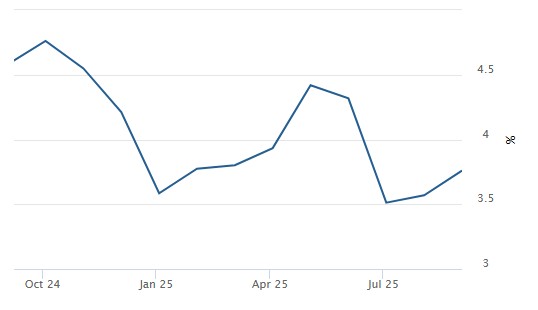
    MEXICO | Banxico cuts interest rate again. On 6 November Mexico’s central bank (Banxico) lowered its benchmark interest rate by 25 basis points to 7.25%, following two rate cuts of the same size in September and August. In a statement explaining its decision, Banxico noted that economic activity contracted in the third quarter as compared to the previous quarter and that an “environment of uncertainty and trade tensions continues to pose significant downside risks”. It noted that between the first two weeks of September and the first half of October, headline inflation decreased from 3.74% to 3.63%, while core inflation dropped marginally from 4.26% to 4.24%.

    MEXICO | Remittances continue to drop. On 3 November Mexico’s central bank (Banxico) announced that remittances sent to the country in September totalled US$5.21bn, representing a year-on-year decrease of 2.7%. This followed yearly drops of 8.3% in August, 4.7% in July, and 16.2% in June. Accumulated remittances received between January and September 2025 totalled US$45.68bn, down 5.5% on the US$48.36bn received in the same period of 2024. Remittances from the US have come under pressure from a new remittance tax of 1% and the hardline anti-migration measures of the government of President Donald Trump.

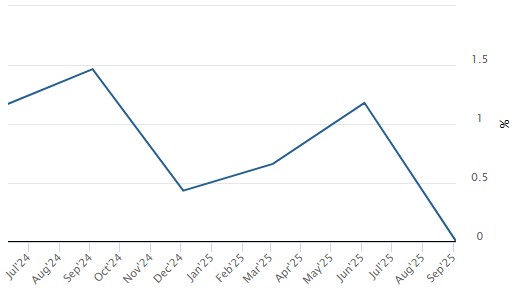
    MEXICO | GDP contracts in Q3. On 30 October Mexico’s national statistics institute (Inegi) released preliminary figures on the country’s economic activity in the third quarter of 2025, estimating contractions of 0.3% in both yearly and quarterly terms. This followed two consecutive quarters of GDP growth. In Q3 2025, activities in the primary sector (agriculture) were up 3.2% in quarterly terms and those in the tertiary sector (services) were up 0.1%, while those in the secondary sector (manufacturing) dropped by 1.5%. In yearly terms, primary activities were up 3.0% and tertiary activities were up 0.9% while secondary activities fell by 2.9%.

    Mexico: GDP growth
    Percentage variation (year-on-year)

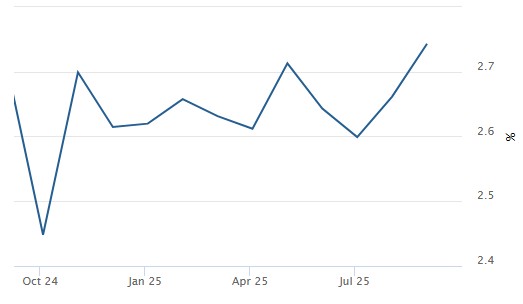
    Mexico: unemployment rate
    Economically active population

    Mexico: inflation rate
    Percentage variation (year-on-year)

    Source (all graphs): National Statistics Institute (Inegi)

  • NICARAGUA: Campaigns officially launched

    LatinNews 02 September 2011 Hits: 1519

    The supreme electoral court (CSE) last month announced the official start of the campaign period, ahead of the 6 November general elections. While President Daniel Ortega marked it with the handover of 1,239 property titles to impoverished families in Managua, this clear appeal to the left-wing roots of the ruling Frente Sandinista de Liberación Nacional (FSLN) belies the fact that much of his campaigning efforts have focussed on attracting foreign direct investment (FDI) and shoring up ties with the private sector, serving to fuel what is now a common accusation of dissident Sandinistas such as Monica Baltodano: that his government is little more than “savage capitalism… dressed in leftist garb”.

    In the days prior to the 20 August campaign kick-off, the national investment promotion agency, Pronicaragua, hosted a high-profile investment forum which served as an implicit endorsement of the Ortega government by the private sector. Inaugurated by José Adán Aguerri, the president of the leading business lobby Consejo Superior de la Empresa Privada (Cosep), the event saw the participation of key business figures such as Carlos Pellas (Pellas Group), José Antonio Baltodano (CISA-Café Soluble) and Ramiro Ortiz (Grupo Promérica). Underlining Nicaragua’s appeal for FDI, which is forecast to more than double this year, from US$500m in 2010, government representatives were able to point to other evidence of the country’s positive business climate such as the strength of the export sector, which was worth US$1.4bn in the first seven months of 2011, a 25% increase on the same period of 2010.

    With the harmonious state of relations between the government and local private sector evident in the implementation of the second stage of the minimum wage increase (see sidebar), Ortega’s interest in attracting foreign capital also no doubt stems from uncertainty over the health of his chief benefactor, Venezuela’s President Hugo Chávez, and with it, the future of Venezuelan cooperation, which reached US$1.59bn between 2007,when Ortega took office, and end-2010. One sign of government success with respect to wooing other foreign investors was the recent signing of a letter of intent with the Brazilian construction company, Andrade Gutiérrez, for initial feasibility studies for the proposed deep-water port at Monkey Point, on the Caribbean coast. Budgeted at US$250m-US$300m, the project – the second by the Brazilian company, following the new 250MW Brito hydroelectric project on the San Juan and Brito rivers - ties in with government plans to build an oil pipeline joining the Caribbean port with a refinery currently under construction on the Pacific coast. This would cut the cost of shipping oil from Venezuela to Nicaragua by an estimated 40%, since the boats would no longer have to use the Panama Canal.

    The lack of significant differences between Ortega’s electoral platform and those of his main right-wing rivals, Fabio Gadea (Unidad Nicaragüense por la Esperanza, UNE) and former president Arnoldo Alemán (1997-2002, Partido Liberal Constitucionalista, PLC), also contributed to this sense of Ortega’s apparent alignment with the private sector. Inevitably, both of his rivals flag up the dubious nature of his candidacy (which violates both the constitutional ban on presidential re-election for incumbents and those that have previously served two terms), particularly Gadea who is positioning himself as the “anti-pact candidate” (a reference to the power-sharing arrangement between Ortega and Alemán) and as the choice between democracy and autocracy [RC-11-03]. Yet Gadea is also pledging to continue current government projects which are successful; retain initiatives such as the Venezuela cooperation scheme (albeit while making it more transparent by including the funds in the state budget); and prioritise poverty reduction – a core plank of the FSLN platform. Alemán similarly is echoing Ortega’s insistence on the need to boost job creation and improve infrastructure through projects such as the planned Monkey Point port.

    Echoes of 2006?
    One controversial aspect of Ortega’s campaign has been his use of religious rhetoric and symbols, which has riled the Roman Catholic Church, particularly given a 19-page internal FSLN document leaked to the local press which reportedly urged party supporters to exploit religious festivals for political gain. Church-state reconciliation was crucial to Ortega’s electoral victory in 2006, after which the FSLN backed the criminalization of therapeutic abortion and the appointment of Cardinal Miguel Obando y Bravo as head of Ortega's truth, justice, reconciliation and peace commission. While Obando y Bravo remains a staunch Ortega ally, the FSLN’s use of campaign slogans such as “Christian, Socialist and in Solidarity” has angered other prominent Church leaders. Abelardo Mata, the bishop of Estelí and vice-president of the Episcopal Conference of Nicaragua (CEN), dubbed the strategy a cynical ploy to win the support of the more than 80% of the population that belong to Christian groups (according to the 2005 census), of which 58.5% are Catholic.

    • Minimum wage increase

    The Ortega government announced in August a further 6% increase in the minimum wage, in line with the overall 13% annual increase agreed earlier in the year. Luis Barbosa, the leader of the Central Sandinista de Trabajadores (CST-José Benito Escobar), said the union would respect the agreement because it was an “electoral year” but would lobby for a higher increase next year. With this adjustment, the average minimum monthly salary rises to US$140, ranging from US$89 in the agricultural sector to US$202 in construction, finance and insurance. According to the local press, a basic food basket for six people costs US$424 a month.

  • ECONOMIC OVERVIEW: NICARAGUA

    LatinNews 08 August 2012 Hits: 1739

    Boosting tourism: Last month the inaugural flight by the newly created Nicaragua Airways, in alliance with the Italian air carrier Blue Panorama, took off - the first service to provide a direct connection between Nicaragua and Europe. It follows the start of a new service, which began in May, by Nicaragua’s La Costeña airlines between Managua and a newly constructed airport in the remote southern Caribbean jungle town of San Juan de Nicaragua — formerly known as Greytown. The new airport, which cost some US$13m to build according to government figures, is part of President Daniel Ortega’s efforts to boost tourism on both ends of the San Juan River. The flight lasts an hour and 20 minutes, compared with the previous nine hours it took between the capital and San Juan de Nicaragua. Last April Ortega announced that another airport, La Paloma, located on another popular tourist destination, Ometepe Island, was 90% ready, following an investment of US$10m.    

        The government-aligned online publication el19digital.com reported that in recent years the ruling Frente Sandinista de Liberación Nacional (FSLN) government has invested some US$65m in strengthening airport infrastructure, including improvements to the capital’s Aeropuerto Internacional Augusto C. Sandino (with some US$15m) and the construction of a new airport in the North Atlantic Autonomous Region (Raan), with some US$35m, among other improvements.

    •  Tourism up

    Nicaragua’s national tourism institute (Intur) recently reported that tourist numbers were up 15.7% in the first quarter of the year over the same period of 2011, to total 300,000. The report did not provide any updated revenue details. According to government calculations, Nicaragua received one million tourists overall in 2011, with an average daily spend of US$44. According to Intur, 12% of the 8.5m tourists that travel to Central America every year visit Nicaragua, a proportion the Ortega government is seeking to boost to 15.5% by 2020.

  • ARGENTINA: ‘Wealth tax’ comes into force

    LatinNews 19 February 2021 Hits: 2393

    A one-off 3% asset tax targeting Argentina’s wealthiest residents came into force on 1 February, sparking a mix of praise and complaints.

    The asset or “solidarity” tax, approved by the senate in a 42-26 vote in December 2020, applies a roughly 3% levy to everyone holding domestic assets of over Ar$200m (US$2.3m), ranging up to just over 5% on assets held overseas. It is estimated that around 12,000 of the country’s richest individuals will have to pay the tax, and that it will generate around US$3bn for the treasury.

    The leftist Peronist government of President Alberto Fernández says that 25% of the money raised will fund natural gas production, 20% will be used for medical supplies, 20% will go to help small businesses recover from the coronavirus (Covid-19) pandemic, another 20% will fund educational scholarships, and the final 15% will be earmarked for urbanisation work in shantytowns. The idea is to mitigate some of the impact of the pandemic, which in Argentina has been particularly severe, with mortality approaching 50,000, the economy slumping by double digits last year, and as much as 40.9% of the population now estimated to be living below the poverty line.   

    Reactions have been mixed. The centre-right right opposition coalition Juntos por el Cambio (JxC) has described it is a “confiscatory” measure. Business leaders say it amounts to a tax on production. The Sociedad Rural, which represents Argentina’s largest agricultural exporters, has expressed fears that rather than a one-off, the tax will end up becoming a permanent feature. However, Oxfam, the international poverty and development lobby group, praised the tax. In a 79-country survey of the way the pandemic has increased poverty and inequality, it said “A tax on the excess profits earned by corporations during the coronavirus pandemic could generate US$104bn – enough to provide unemployment protection for all workers, and financial support for all children and elderly people in the poorest countries”.

  • MEXICO: Tensions over plan to ban imports of GM corn

    Patrick de Courcy 18 January 2023 Hits: 4473

    A trade dispute with the US was averted on 16 December after Mexico’s government proposed to delay a ban on the import of genetically modified (GM) corn planned to commence in 2024.  Imports of yellow corn – which is a key input for animal feed and the agro-industrial sector - from the US will now continue until 2025.

    Mexico’s federal agriculture minister, Victor Villalobos, has said that should Mexico be unable to become self-sufficient in corn production by the time the ban comes into place, a new agreement will be sought. He added that details will be addressed by officials from both countries, possibly in late January, when they will seek to resolve the issue fully. While commercial production of GM corn is banned in Mexico, imports are allowed. According to local press reports, between 2002 and 2018, Mexico allowed the import (for both human consumption and the food industry) of 72 types of GM corn tolerant to herbicides (mostly glyphosate).

    However, the current administration has not given any permits for the import of new types of GM corn. On 31 December 2020, President Andrés Manuel López Obrador issued a decree which established the gradual elimination of glyphosate and GM corn from foods for human consumption in the country, which established the eradication of both by 2024. Although the decree does not refer specifically to imports of yellow corn, its provisions were vague enough to cause uncertainty to companies that could be potentially affected on both sides of the border.

    These concerns increased in late 2022, after Mexico’s agriculture ministry (Sader) announced in October that one of the main Mexican buyers of corn from the US was planning to cut its imports in half by 2024. Sader added that Mexico would make up for the reduction by increasing domestic production and seeking imports of non-GM corn from the US or from other producers, such as Argentina and Brazil (although in these two countries, GM grain also accounts for the majority of corn produced). In November, the government rejected an offer to buy GM yellow corn from the US, saying that it was not interested in GM foods. However, nothing was said about stopping private purchases.

    While Mexico is self-sufficient in production of white corn for human consumption, it relies on imports of yellow corn for animal feed. Between June 2021 and June 2022, the country imported 17.3m tonnes (t) of yellow grain, of which 16.9m t was from the US. Mexico is the main destination of US production of yellow corn, most of which (90%, according to the US-based National Corn Growers Association) is GM or biotechnological. US imports also cover three quarters of Mexican agroindustry’s demand. This explains the opposition to the decree from both domestic agroindustry representatives and producers in the US, who claim the ban violates provisions within the US-Mexico-Canada Agreement (USMCA) on regional trade. 

    According to Juan Carlos Anaya, head of local agricultural consultancy Grupo Consultor de Mercados Agrícolas (GCMA), maritime transport costs make importing grain from the US cheaper than moving domestic corn by road. He welcomed the decision to look for a new proposal, although noting that much still needs to be defined. Similarly, importing non-GM corn would be up to 20% more expensive for Mexico according to Ken Dallmier, president of Clarkson Grain, a US producer of organic grains quoted in local press reports.

  • NICARAGUA: Purge of judiciary continues

    Sarah Sheldon 28 May 2024 Hits: 943

    The purge of the Nicaraguan judiciary which began in late October 2023 as part of efforts to shore up support for Vice President Rosario Murillo [SSR-24-02] has been ongoing, according to local media outlets such as Confidencial. In early April Confidencial reported moves against the vice president of the 16-member supreme court (CSJ), Marvin Aguilar, who since the purge late last year (which local commentators considered indicative of divisions between factions of the ruling Frente Sandinista de Liberación Nacional [FSLN], loyal to Murillo and to President Daniel Ortega) had taken over as the CSJ’s “acting president”. Along with Aguilar, the president of Managua’s court of appeals, Octavio Rothschuh, and other political allies of Néstor Moncada Lau, a national security advisor to Ortega, are reportedly facing an uncertain future.

    Aguilar took over as acting president of the CSJ in November 2023, during the first round of purges related to efforts to cement control by Murillo. The younger of the presidential couple (at 72, Murillo is six years younger than her husband), the first lady is widely tipped to take over from Ortega ahead of the next elections due in 2026, and since 2018 has assumed control of spheres such as the police (PNN). Under the purge of the judiciary in late 2023, which was carried out by retired general commissioner Horacio Rocha, a presidential adviser with ministerial rank, following a restructuring in early 2023, and Fidel Moreno, the FSLN organisational secretary, CSJ president Alba Ramos was removed, along with over 900 staff, including judges, magistrates, and administrative staff.

    According to a Confidencial report published at the start of April, however, in February 2024 Aguilar was subjected to police interrogations in the notorious Managua prison, El Chipote, in relation to a corruption investigation. According to Confidencial, while not officially removed from his position, Aguilar is “now in a state of limbo” and “no longer has any decision-making authority” in the CSJ. Confidencial also reports that in March Rothschuh was interrogated in El Chipote and was released but has been stripped of his judicial powers.

    Confidencial and other outlets such as Divergentes, which like Confidencial is now operating from exile in Costa Rica, highlight that Aguilar’s dismissal indicates that Moncada Lau’s influence in the country’s judicial system is waning. This at a time when the judiciary itself has been weakened, with legislation passed for example in January removing oversight of all national registry documents from the courts to the attorney general’s office [SSR-24-02]. The recent purges leave at least ten vacancies in the CSJ (not including Aguilar), which are likely to be filled with Murillo allies. With the CSJ now paralysed for over five months, the so-called “Murillo List” of replacement magistrates is expected to be presented for approval in the next few months to the 92-member unicameral legislature which, like all other institutions in the country under the authoritarian government, is controlled by the FSLN.

    Aguilar

    In 2019 Aguilar took over the crucial post of national political secretary of the FSLN leadership council after former CSJ magistrate Rafael Solís, Ortega’s political operator in the justice system, stepped down in protest at the government repression that began in 2018 in response to social unrest. In 2020 he was designated by the US Department of the Treasury’s Office of Foreign Assets Control (Ofac) for “assisting in the Ortega government’s effort to undermine Nicaragua’s democracy”.

    Rothschuh

    Rothschuh has been a prominent figure in Nicaragua’s judiciary. He announced the decision to release 222 political prisoners and expel them from the country in 2022 [SSR-22-04] as well as sentencing Catholic Bishop Rolando Álvarez, an outspoken critic of the Ortega government, to over 26 years in prison in February 2023 which prompted widespread outrage and precipitated the severing of Nicaragua’s relations with the Vatican. In April 2023 Rothschuh was sanctioned by the US Department of the Treasury’s Office of Foreign Assets Control (Ofac) in relation to the Managua appeals court’s decision to deport the 222 dissidents. 

  • TRACKING TRENDS

    Abbi Dicker 08 May 2025 Hits: 1925

    BRAZIL | Industrial production up in March. The national statistics institute (Ibge) released the industrial production figures for March on 7 May, which showed a 1.2% monthly rise in production and a 3.1% year-on-year rise. The accumulated production level in the 12 months until March 2025 was also up 3.1% from the preceding 12-month period.

    Of the 25 product categories measured by the Ibge, 16 saw a monthly rise and 18 saw yearly rises in production. The highest monthly increases were registered in pharmaceutical products (+13.7%) and furniture (+5.6%). The greatest year-on-year increases were in textile products (+12.4%) and pharmaceuticals (+11.7%).


    BRAZIL | Government projects rise in coffee harvest. The Companhia Nacional de Abastecimento (Conab), the logistics arm of Brazil’s agrarian development ministry, released is latest annual coffee harvest forecast on 6 May, projecting a total of 55.7m sacks of coffee (one sack = 60kg) for the 2025 harvest, which would mark an annual rise of 2.7%.

    In terms of regional variation, the south-east of the country is projected to be the main coffee-producing region, with a forecast of 48.4m sacks, which would be up 1.3% in yearly terms. In terms of coffee varieties, the robusta harvest is projected to total 18.7m sacks (+27.9%), while arabica is forecast to yield 37m sacks, which would be down 6.6% from the previous harvest.

  • PERU: Anger over Boluarte’s salary hike

    Abbi Dicker 10 July 2025 Hits: 3217

    On 2 July Peru’s cabinet voted in favour of increasing President Dina Boluarte’s salary by more than double, a move widely condemned by opposition political parties.

    The government has decreed an increase in President Boluarte’s monthly salary to PEN35,568 (US$10,000), from PEN15,600 previously. In percentage terms that is a 128% raise. Amid widespread public criticism, officials have deployed various arguments to justify the hike. Finance Minister Raúl Pérez Reyes said the decision had been taken by the civil service body, Autoridad Nacional del Servicio Civil (Servir) and was in line with this year’s budget, and it had been duly approved by the ministerial cabinet.

    To determine the size of the increase officials say they assessed 12 Latin American president’s salaries, measured in dollars on a purchasing power parity basis, which showed Boluarte coming in as number 11, higher only than the Bolivia’s President Luis Arce. Account had also been taken of the fact that Peru’s presidential salaries have been frozen for two decades. Prime Minister Eduardo Arana pointed out that even after the increase some officials such as supreme court justices earn more than the president, arguing that the presidential salary should reflect the importance of the position and the responsibilities involved.

    All this went down like a lead balloon. Many analysts pointed out that Boluarte’s popularity is currently at rock bottom – she had a 2% approval rating in May, according to an Ipsos opinion poll, sparking speculation over whether she could be the world’s least popular elected leader. Although the economy has recovered, poverty rates remain high at around 30% of the population. Many have pointed out that her new salary is 31 times the minimum wage, a massive differential. Deputy Juan Burgos, of the conservative Podemos party, condemned the president’s “vanity” and accused her of breaking Article 39 of the constitution, which sets out criteria for presidential renumeration. Arturo Alegría of the right-wing Fuerza Popular (FP) said “I would have expected that a presidential pay increase should come into effect at the beginning of the next government, not be paid to a president whose authority is questioned on multiple fronts”, Jaime Quito, of the far-left Perú Libre (PL), said the increase was “a joke at the expense of the Peruvian people, a prize for incompetence, lies, and rejection by the people”.

    Boluarte herself said comparatively little about her pay. Having been under pressure over various corruption scandals including allegedly receiving gifts of Rolex watches and taking unauthorised absences for plastic surgery, this year she has avoided talking to the press almost entirely. Journalists complained in May that she had given no interviews or press conferences for more than 200 days.

    That silence was partially broken on 6 July when Boluarte said she would always talk to “the people” on her tours around the country but would restrict conversations with the press to relevant national issues, not personal matters. However, on the specific issue of her salary she was not particularly forthcoming, saying the issue was covered by the 12-year old Law on Public Service and that various pieces of legislation on public service pay need to be consolidated.

    Informal miners block highways

    Informal miners have been blocking highways in various parts of Peru in protest at a government decision to close a register allowing them to remain active pending the formalisation of their operations. There have been rumours that as many as 50,000 miners might be excluded from the Reinfo register meaning they will become illegal and potentially lose their livelihoods. According to transport operators, on 9 July there were seven blocked transport points in four regions of the country: Ica, Arequipa, Cusco, and La Libertad. They said the blockades were beginning to have a negative impact on local businesses and tourism.

  • PARAGUAY: A return to the fold

    LatinNews 22 January 2013 Hits: 1265

    Date: 21 April

    Type: Presidential, legislative & local.

    Main contenders: Asociación Nacional Republicana- Partido Colorado (ANR-PC), Partido Liberal Radical Auténtico (PLRA), Frente Guasú (FG), Unión Nacional de Ciudadanos Eticos (Unace) Avanza País, Partido Patria Querida (PPQ), Partido Democrática Progesista (PDP).

    The upcoming general election represents Paraguay’s chance to return to the regional fold after it was politically ostracised upon the lightening impeachment of former president Fernando Lugo (2008-2012) by a hostile congress in June 2012.

    Lugo, a leftist former bishop who in 2008 managed to unite the political Left and forge an alliance with the traditional centre-right PLRA to unseat the ANR-PC, which had ruled Paraguay for over 60 years, was unable to hang onto power after losing the PLRA’s political support four years into his five-year term. The impeachment resulted in Paraguay’s temporary suspension from the main regional bodies - the Southern Common Market (Mercosur) and the Union of South American Nations (Unasur) -  whose members considered that the impeachment represented a “break in the democratic order” and as such a violation of their respective democratic charters. The two bodies said that the suspensions could be lifted upon the staging of clean, transparent and democratic general elections and an orderly transfer of power.

    In this context, the 2013 elections will be crucial for consolidating the peaceful alternation of power in Paraguay, a hallmark of a healthy democracy; but now must also show that it is able to withstand intense international scrutiny of its electoral process. If before the main concern was whether after only just one presidential term the ANR-PC would manage to return to power, which many believed would represent a setback for Paraguayan democracy, now the main concern is whether Paraguay can hold exemplary elections and have a peaceful transition of power in order to quickly restore its international standing.

    This situation means that the main goal of the main political actors is now to ensure the country’s political stability, with the reformist agenda for change that dominated the 2008 election taking a back seat once again.  As such, local politics have returned to type, which in itself is a setback.

    Reverting to form

    After Lugo’s experiment with the PLRA ended in such dramatic fashion, the now president, Federico Franco (of the PLRA and Lugo’s former deputy), has opted against re-forging a broad alliance with the Left. He has refused to enter into an electoral alliance with the FG, the coalition of leftist parties that coalesced around Lugo. Instead the PLRA’s presidential candidate, Efraín Alegre, has sought to seal an alliance with the moderate Left by choosing Rafael Filizzola, the leader of the small Partido Democrático Progresista (PDP), as his running mate. Both Alegre and Filizzola were popular members of Lugo’s cabinet until they were ordered to hand in their resignations in 2011 after it emerged that both harboured presidential ambitions.

    The popularity of both is such that Alegre, who as soon as he left government approached Filizzola to build a joint political project, was chosen as the PLRA’s consensus candidate at the party’s national convention back in August 2012, after he received a majority of votes in a popular consultation process.  He subsequently swept the PLRA’s 16 December primary, with over 80% of the vote.

    Despite Alegre and Filizzola’s public popularity, neither man is currently the favourite to win the presidential contest. That position is currently held by Horacio Cartes, the ANR-PC’s candidate. The ANR-PC still has the largest party affiliation in the country by far, with 2.8m affiliates (of a total population of 6.2m) and it boasts the only truly national party machinery, the product of decades uninterrupted at the helm. Its candidate is always a strong favourite provided that he/she can unite the party. Divisions within the ANR-PC played an important role in the party’s disastrous defeat in 2008 and knowing this the Colorados this time are determined to field a strong candidate they can all rally behind. They seem to have found just the man in the wealthy magnate, Cartes, who has made a meteoric rise in the party since formally joining it in 2009 (sometimes attributed to his sizable wealth). Cartes won an emphatic victory in the 9 December ANR-PC primaries, defeating his former close ally, Javier Zacarías Irún, with over 60% of the vote, to Zacarías Irún’s 34%. Zacarías Irún quickly conceded defeat and threw his weight behind Cartes, dispelling opponents’ hopes that a messy internal battle might accentuate divisions and weaken the Colorados. At the end of the day however, the Colorados are political pragmatists and will (temporarily) subordinate personal interests to the common goal of getting back into power. It is not entirely clear, though, that everyone will wholeheartedly back the newcomer Cartes.

    Divisions are also once again affecting the Left, which before the creation of the FG in 2010 had never been able present a united front. In the midst of the uncertainty as to whether Lugo, the FG’s honorary president, would be able to stand for presidential re-election (expressly forbidden by the constitution) or whether he would seek a senate seat, the FG splintered under pressure in October 2012. A group of six FG members broke away from the coalition after Lugo withdrew his backing for Mario Ferreiro, a local TV personality, as the FG’s presidential candidate after Ferreiro questioned Lugo’s insistence on seeking an elected position. The breakaway group registered as ‘Avanza País’ with the local electoral authorities (see sidebar) and Ferreiro duly launched his candidacy with its support.

    Lugo eventually gave his backing to Aníbal Carrillo Iramain, a paediatrician, as the FG’s presidential candidate. All this has badly fractured the Left. Both the FG and Avanza País were the last to hold internal primaries on 13 January. Carrillo and Ferreiro were confirmed as the respective presidential candidates and both insisted that there would be no alliance.

    Ferreiro, who is more of a moderate, has also ruled out seeking an alliance with the PLRA for the moment, which means that the ANR-PC will face a very fractured multi-party opposition in April, which should work to its maximum advantage.

    Congressional contest

    Lugo’s experience made it clear that a president needs to be able to count on political support in congress. The battle to control congress in April will also centre on the ANR-PC vs. the PLRA. Currently, the ANR-PC has a small majority in the 80-seat chamber of deputies, where it has 29 seats to the PLRA’s 26. The small but influential right-wing party Unace, led by the controversial former general and regular presidential candidate Lino Oviedo, has 16 seats and while it is more ideologically aligned with the ANR-PC it tends to act as king maker, offering its support as it sees fit. The even smaller PPQ, which is more identified with the PLRA, has only three seats, with the remainder shared among the Left, including one seat currently held by the PDP’s Desiree Masi, Filizzola’s wife. The situation in the senate is similar. The ANR-PC has a majority of 15 seats in the 45-seat chamber, while the PLRA has 14; Unace 9; PPQ 4; and the Left the remaining three, one held by the PDP and two by FG.

    Congress is elected via proportional representation, on the basis of lists decided by the party leadership. The final composition of congress thus depends largely on the performance of the presidential candidates. At the local level, deputies are elected in accordance with the gubernational results in each of the 17 departments.

    Unlike the presidency, indefinite re-election in congress is permitted. This allows congressional posts, particularly those in the senate, to be used as political favours for party leaders. In this sense, the rate of ‘renewal’ will be low. The PLRA only has one new face on its senate list, with the rest all seeking re-election, while electoral analysts calculate that in the best case scenario only half of the ANR-PC senators could end up being new to the post. Even in the smaller parties such as FG, Unace and PPQ, all which have a higher proportion of new faces, including Lugo who tops FG’s senate list, there are still those seeking re-election tend to appear higher up in the lists than their ‘inexperienced’ colleagues.

    • Avanza País

    On 25 November  the electoral tribunal (TSJE) registered ‘Avanza País’, a group of six political parties that broke away from Frente Guasú (FG) in October, after former president Lugo withdrew his backing for Mario Ferreiro as the FG’s presidential pre-candidate. Ferreiro, who topped a poll of potential FG candidates, was questioned by more radical FG members, who wanted either Lugo or his close aid, Sixto Pereira, to head up the presidential ticket. Avanza País will instead run its own slate in the 2013 race.

    • Kuña Pyrendá presents indigenous women candidates

    On 13 January a new political movement Kuña Pyrendá, which seeks to empower female politicians, held primary elections to chose its candidates ahead of the general elections. It chose Lilian Soto as its presidential candidate, along with seven indigenous women from the Nivaclé, Ayoreo, Enlet and Manjui tribes of Guaraní peoples as candidates for the local legislature in Boquerón department. While there are 110,000 indigenous people in Paraguay, they have no representation at all in any of the country’s legislatures.

  • ECONOMIC HIGHLIGHTS

    Patrick de Courcy 20 May 2022 Hits: 1779

    MEXICO | Monthly job creation plummets. On 5 May, Mexico’s national social security institute (IMSS) released a new report which showed that 5,490 jobs were created in the formal sector in April. This was far fewer than the 64,566 jobs created the previous month and even further below the 178,867 created in February. The IMSS attributed the fall in the number of new jobs to a traditional slowdown in job creation during the month in which Semana Santa Easter festival falls. As of 30 April, IMSS had registered a total of 21.01m jobs, with 391,194 new jobs created so far this year.

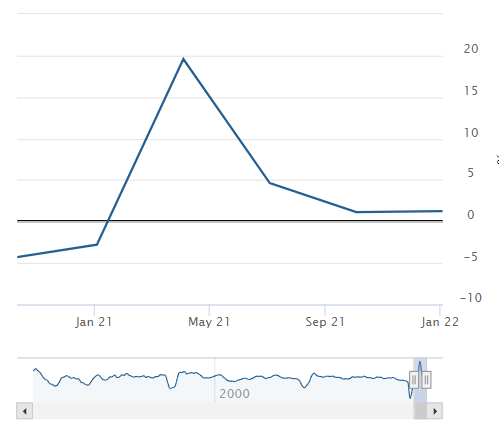
    MEXICO | Quarterly GDP growth. On 29 April, Mexico’s national statistics institute (Inegi) released its timely estimate of GDP growth for the first quarter of 2022, which showed that the economy grew 0.9% in Q1 2022 as compared to the previous quarter. This was the first quarterly growth since Q3 2021, following no change in Q4 2021 and a contraction in GDP in Q3 2021. Inegi noted that these figures may change when it reports its final quarterly GDP results on 25 May. This came as private sector experts surveyed by Mexico’s central bank (Banxico) reduced Mexico’s 2022 economic growth forecast to 1.73%, down from a forecast of 1.76% the previous month.

    MEXICO | Inflation ticks up again. On 22 April, Mexico’s national statistics institute (Inegi) released its latest figures on the national consumer price index (INPC) which showed that inflation in the first two weeks of April rose 0.16% as compared to the previous two weeks. This brought annual inflation to 7.72%, up from 7.45% at the end of March. Victoria Rodríguez Ceja, the governor of Mexico’s central bank (Banxico), has warned that the inflationary pressures will continue in Mexico due to the ongoing impact of the coronavirus (Covid-19) pandemic and the conflict in Ukraine. Banxico does not expect inflation to meet the target rate of 3% until early 2024.

    Mexico: GDP growth
    Percentage variation (year-on-year)

    Mexico: unemployment rate
    Economically active population

    Mexico: inflation rate
    Percentage variation (year-on-year)

  • BRAZIL: Machismo, corruption, and the economy kick off debates

    Anna Grace 01 September 2022 Hits: 3477

    Neither of the two frontrunners in this year’s presidential race did particularly well in the first debate held by television network TV Globo on 28 August. President Jair Bolsonaro stumbled over his own machismo and frontrunner Luiz Inácio Lula da Silva (2003-2011), the leftist former president, showed signs of battle fatigue.

    Winning over female voters is perhaps President Bolsonaro’s only chance to close the gap on Lula and have a shot at being re-elected. For weeks he, but mostly his wife Michelle, had tried to soften his misogynist past and put a milder, less aggressive, face on the former army captain. But then he committed a cardinal sin that has dogged Brazilian presidential candidates for decades: attacking and insulting a woman with chauvinistic language during prime time television, not once but twice.

    Out of the blue Bolsonaro lashed out at the debate moderator, journalist Vera Magalhães, who had chosen him to comment on a reply given by another candidate, Ciro Gomes, of the leftist Partido Democrático Trabalhista (PDT).

    “Vera, I think you sleep thinking about me. You are passionate about me. You can’t take sides in a debate like this,” Bolsonaro said in the debate organised by four media outlets, including television network Rede Bandeirantes (Band). “You’re a shame to Brazilian journalism,” he blasted without Magalhães having confronted him or even asked him a question.

    Senator Simone Tebet of the Movimento Democrático Brasileiro (MDB), and other candidates, defended Magalhães and accused Bolsonaro of misogynist behaviour. That is when the president lost the script for the second time, telling Tebet that a woman needed to defend herself and not receive help just for being a woman. “Enough of being the victim, enough of being a cry baby,” he said.

    To make matters worse Bolsonaro tried to deflect attention by pointing the finger at Gomes, who himself had a high-profile episode of machismo 20 years ago. That backfired when Gomes took the punch out of it by admitting that having grown up in a macho environment, he had unfortunately reproduced macho culture. “I learned that, but you never learn anything. You’re a person who has no heart,” he told Bolsonaro. The short of it is that Bolsonaro took a bad hit and may have undone weeks of campaigning. The president is now considering skipping future debates and focusing on media exposure in more “controlled settings”, several local media outlets reported. 

    • Bolsonaro’s image damaged

    Various focus groups, even those tracked by President Bolsonaro’s own campaign, confirmed that his image was tarnished. According to one tracking study conducted by Datafolha of undecided voters, Bolsonaro was the clear loser of the debate. The winner was Senator Tebet, one of the women attacked by Bolsonaro.

    Lula, who had looked at ease and smart in the first campaign interview with television network TV Globo last week, also had a lacklustre performance in the debate, failing to provide a convincing reply when asked about corruption during the 14 years that his left-wing Partido dos Trabalhadores (PT) governed the country.

    In fact, the 76-year old former union leader looked a bit slow on his feet, as if weeks of intense campaigning had taken their toll. “Can’t they understand that Lula is getting weaker every day, physically, psychologically and theoretically, to face the bloodthirsty [political] right?” Gomes tweeted after the debate. “You start to see that it’s not just his face, or his voice, or his gestures that have aged, but also his ideas”.

    Either way it was the first and maybe the last debate in which all candidates participate. Bolsonaro and Lula had already been reluctant to go because, as the two frontrunners, they were going to be the most likely targets of attack and criticism. After a relatively poor showing for both, the incentive to go to the next will be smaller. In addition, the next scheduled debate is hosted by the Conferência Nacional dos Bispos do Brasil (CNBB), the Catholic Bishops Conference. Bolsonaro abhors the CNBB, ever since it took a critical stance vis-à-vis the president, saying he neglected the poor, and ignored health, education, diplomacy, and culture.

    With fewer debates, candidates will have to rely more on their campaign advertisements to sway voters. Ever since 26 August when campaigning on radio and television began, Bolsonaro and Lula have been bombarding each other with negative advertisements, many of them on well-known topics. Recalling the 700,000 deaths during the coronavirus (Covid-19) pandemic and a sharp rise in poverty during the Bolsonaro administration, Lula, in one of his ads, pledged to increase the minimum wage above inflation every year to recover the purchasing power of the most needy.

    Bolsonaro in one of his ads admitted that Brazilians had been through tough times but blamed that on the pandemic, the war in Ukraine and a drought that caused food prices to rise. Now the country is back on track, the economy is growing and unemployment is falling, Bolsonaro said in the television spot, pledging to keep the cash-transfer program at R$600 (US$114) next year, even though it has not been budgeted for.

    To what extent advertisements or the debate really influenced voters, either directly or through their select repackaging on social media, remains to be seen. Different opinion surveys show all sorts of shifts from one segment of the electorate to another. In an Ipec poll published on 29 August Lula lost six percentage points among those that earn one minimum monthly salary of R$1,212 or less, but gained seven percentage points among those who earn between two and five minimum salaries. At the same time, Bolsonaro gained significantly in state capitals, jumping five percentage points, while the former union leader lost six points in those cities.

    Poder360, which published its poll on 31 August, says that Bolsonaro is almost in a tie with Lula amongst those voters who already saw or heard a campaign ad on TV or radio, with 41% against 43%. Amongst those who have not seen any ads, Lula is ahead 47% to 29%. Other polls show significant shifts in voter intentions between evangelical and Catholics as well. But when all is said and done, the big picture does not seem to have changed much at all in recent weeks. The same Ipec poll on 29 August showed Bolsonaro trailing Lula by the exact same margin compared with two weeks before - 32% against 44%. A Genial/Quaest poll on 31 August showed the same 12-point lead for Lula, unchanged from two weeks earlier. If anything, it showed a marginal increase of support for the outsiders in the race: Gomes and Tebet.

    Indeed, so far there seems little that can dramatically alter the balance in what is essentially a two-horse race with very few voters who remain undecided. This despite Bolsonaro launching the biggest spending plan ever in an election year, waging a religious battle for the support of the evangelical Christian vote, and rekindling fears of communism should Lula return to power (see next article).

    Perhaps Lula was tired during the debate or perhaps it was his strategy to lay low. Sticking your neck out when you are ahead in the polls implies just as much risk as it does potential gain. In the end, it is Bolsonaro who needs to go on the offensive to close the gap. Lula just needs to hold his ground to become the first politician in Brazil to move into the Pálacio da Alvorada, the presidential residence, for a second time.

    Lula’s health

    Stories about Lula’s health started reappearing in the local papers after the debate, mostly addressing an increasingly hoarse voice and asking if it had anything to do with a laryngeal cancer for which he had successfully been treated over a decade ago. O Globo daily reported that Lula has neglected his voice therapy and that increased reflux from poor eating habits during the campaign made the hoarseness worse.