All Categories

Subcategories

  • URUGUAY: Election campaign takes new twist

    LatinNews 18 September 2014 Hits: 1206

    Just as opinion polls are suggesting that Luis Alberto Lacalle Pou, the presidential candidate of the centre-right opposition Partido Nacional (PN, Blancos), could deny the ruling left-wing Frente Amplio (FA) coalition a third straight term in power, a strange incident is threatening to damage his chances. At the tail end of last week Lacalle Pou was at the centre of an unedifying spat with Pedro Bordaberry, the leader of the second main opposition party Partido Colorado (PC), whose endorsement he would require to triumph in an inevitable second round run-off in November.

    Uruguay’s current affairs weekly Búsqueda reported a confusing incident on 11 September which prompted Bordaberry to accuse Lacalle Pou of trying to “bribe” his running mate Germán Coutinho, the intendant (governor) of the northern department of Salto. Coutinho apparently informed Bordaberry that he had received a phone call from Lacalle Pou appealing to him to tone down the PC’s attacks on the PN in exchange for the PN voting for a trust to be set up for Salto which the intendancy is proposing for funds owed by the State. Bordaberry tweeted extensively about the episode. Lacalle Pou claimed he had been misrepresented and that while he expected some rhetorical fencing during the campaign the allegation of bribery was “very serious”.

    In the days leading up to this episode Bordaberry had shown that he was not simply resigned to finishing third, and decided to concentrate some of his firepower on Lacalle Pou. Bordaberry criticised the PN for abandoning its support for the plebiscite his party is organising to coincide with election day on 26 October on whether to lower the age of sentencing to 16 from 18 for crimes such as rape and homicide. He also criticised Lacalle Pou’s proposal of a new ‘prison law’ to guarantee the separation of inmates according to the severity of the crimes they perpetrate.

    This ‘friendly fire’ did not go down well with the PN, not least because it has been better targeted than some of the scattergun criticism of the PN by the FA.

    Lacalle Pou’s inner circle made his displeasure known, pointing out that he and Bordaberry would need to sit down and talk after the first round of elections on 26 October to forge some form of deal ahead of November’s run-off. It was at this point that the Búsqueda piece emerged, which a fuming Bordaberry corroborated.

    Lacalle Pou insists the whole episode was a misunderstanding and that he had called Coutinho merely to find out more details about the proposed Salto trust before committing PN votes. Conscious that a sordid tale of political bribery would be detrimental to his candidacy, and that he would have to court the PC vote in a run-off against Vázquez, Lacalle Pou sought to nip it in the bud by visiting Bordaberry’s house. How far this visit has defused tension is unclear. Bordaberry confirmed that the two men had looked into each other’s eyes – but he did not say what he saw there. What is clear is that the murky incident will play into the hands of the FA, which has been wrestling with a number of corruption cases.

    Lacalle Pou finally tables campaign proposals

    Meanwhile Lacalle Pou has sought to regain the initiative by presenting the PN’s plan of governance this week. He is the last candidate to present his party’s campaign proposals, a delay which the FA had used to depict him as a political lightweight with no clear policies or ideals and, as such, a dangerous liability to be at the tiller of State.

    Lacalle Pou elaborated on the somewhat vague ‘strategic guidelines’ presented by the PN after its party convention on 26 July. He outlined 10 main proposals contained within a 187-page programme:

    create a national guard;

    eliminate the income tax for social security assistance (IASS) which, he said, would reduce the tax take by some 2%;

    devote US$200m a year over 10 years to eliminate squatter settlements; increase family support for the poor through ‘Plan Estamos Contigo’; enhance teacher training;

    create autonomous budget oversight institutions;

    provide incentives and bonuses for the most productive public sector workers;

    de-politicise the diplomatic service;

    and cut wasteful public sector spending, which the PN calculates could save as much as US$500m a year.

    Lacalle Pou concentrated on public security (see sidebar) and education. He said he was prepared to give credit where credit was due and Vázquez’s FA administration in 2005 had helped address a “social emergency” after the banking crisis of 2002, but he insisted that there was now an “education emergency” and a “public security emergency”. He received loud applause when he said that the interior minister should be “the first policeman”.

    • National guard

    The national guard proposed by Luis Alberto Lacalle Pou would be dependent on the interior ministry, with jurisdiction across the whole country; a “highly trained and well-equipped force” to tackle crime hotspots. The mooted creation of this force is a clear response to public disillusionment with the government’s failure to get a grip on rising insecurity in Uruguay. The national guard’s size and the timescale for its creation are not yet clear.
  • POINTERS

    LatinNews 02 July 2015 Hits: 743

    CHILE | Radical Mapuche militancy ‘spreading’. In late May the director of Carabineros, General Gustavo González, acknowledged that, as business leaders had been claiming, violent acts presumably committed by radical Mapuche militants have been spreading southward from Araucanía into the adjoining region of Los Ríos. ‘There has indeed been a displacement, albeit minor,’ he said. ‘So far this year we have had three cases in the region of Los Ríos: the torching of machinery, a building and the most recent one [an arson attack against a rural estate in Malalhue, Lanco].’ In 2012, he noted, there had been 12 acts of violence; in 2014, three.

    In the latest incident the attackers left no leaflets alluding to the Mapuche cause, but they were present in another recent one which took place in Loncoche, just across the regional boundary in Araucanía.

    Rodrigo Lavín, director of the business association Multigremial del Sur, had drawn attention to what he described as an ‘escalation of violence spreading from Araucanía to Los Ríos’. He said, ‘The government has told us that it has every intention of ensuring the observance of the rule of law, but regrettably we are not seeing this in practice. There is a certain degree of impunity when it comes to terrorist attacks linked to the Mapuche cause.’

    This elicited a response from interior minister Jorge Burgos: ‘There has been no order, nor will there be any, for Carabineros not to punish criminal offences in any part of the country. The protocols for actions against these illegal acts, beyond specific circumstances, are clear: there are preventive measures, there are prior rational measures and, also, the possibility of reacting.’

    PARAGUAY | ACA members captured. In two separate operations in June, two members of the Agrupación Campesina Armada (ACA), ostensibly a splinter of the Ejército del Pueblo Paraguayo (EPP) were captured. The first operation took place on 15 June in Villa Paraguaya, a district of the Argentine city of Rosario, Santa Fe, where Argentine police arrested Silverio Acosta Zacarías (‘Chive’).

    The second took place in Colonia San Isidro Labrador, San Pedro, where police officers and agents of the antidrugs secretariat arrested Lidió Ramón López Jara (‘Alexis Rodríguez’). The Paraguayan authorities had offered a reward of G/100m (US$19,360) for the capture of López Jara, well known because of his appearance in several videos circulated by the ACA.

    These two arrests raise to eight the number of ACA members under arrest. With nine others killed, if the authorities’ estimates are accurate [SSR-15-05], there must be only six ACA members still active. Among those still at large is the man thought to be the group’s leader, Alfredo Jara Larrea.

    ARGENTINA | Drone use regulated. In late May Argentina’s directorate of personal data protection issued regulations that make all photos and videos taken by drones subject to personal data protection rules ― which means that they can only be used with the consent of the persons whose images have been recorded. These norms do not apply ‘when the images are collected during a public act’ or when they involve an event ‘about which a general interest for the public can be assumed’. They do not apply either to the use of drones within private property or when they are used by the state in cases of emergency.

    URUGUAY | Joint effort against violence. After a meeting on 15 June with President Tabaré Vázquez, the leader of the opposition Colorado party, Germán Cardoso, announced that he was willing to convoke all opposition parties to a joint effort against violence. The government has submitted to congress four draft bills addressing the issue.

  • COLOMBIA: New Farc ceasefire begins

    LatinNews 23 July 2015 Hits: 1936

    On 20 July the Fuerzas Armadas Revolucionarias de Colombia (Farc), Colombia’s main guerrilla group, began a new unilateral ceasefire. This is the sixth unilateral ceasefire called by the Farc since the launch of its current peace talks with the Colombian government in Cuba in late 2012. It will either hold for four months after which, if sufficient progress in Cuba has been made, Colombia’s President Juan Manuel Santos will declare a bilateral ceasefire, or it will fail, along with the peace process. If the tough recent rhetoric from Santos is not enough to convince the Farc of the peril the process faces, the plummeting public support for the talks is clear for all to see.

    In announcing the unilateral ceasefire, the Farc said that it would only endure for one month but it is expected to extend this, particularly as Santos responded by announcing a reduction in the intensity of military operations to ‘de-escalate’ the internal armed conflict. There is always the danger that another serious incident in the internal armed conflict could impact the talks again, as in recent months, not least because the Farc made clear that all of its guerrilla units would be able to exercise “legitimate self-defence” if they come under attack from the military. But both sides are now fully conscious of just how precarious the prospects for peace have become. Public confidence in the process is at an all-time low, falling away sharply since Farc guerrillas killed 11 soldiers (it claimed in ‘self-defence’) in April, during its last unilateral ceasefire [WR-15-15].

  • Rising extortion in Mexico City

    LatinNews 01 August 2019 Hits: 1097

    In Mexico City (CDMX), the lucrative crime of extortion has increased in the first five months of 2019, with February being the worst month. A considerable threat to businesses of all sizes, extortion in CDMX ranges from more small-scale practices such a loan sharking, to more violent forms that sometimes may also end in murder.

    In a 3 July interview the president of the CDMX chamber of trade, services, and tourism (Canaco), Nathan Poplawsky, commented that “crime is the most profitable business in the country” and that growing insecurity and extortion are major concerns for business leaders. Mexico, like many other countries in Latin America, is wrought by crime and violence, and while in recent years there have been efforts to tackle things like kidnapping and extortion, they have not been sufficient. In CDMX this is reflected by growing levels of organised crime-linked violence, but also in the rise of extortion of businesses, which is damaging consumer confidence, investment, and tourism in the city.

    According to Poplawsky, in recent months extortion in the capital has registered a 20% increase. Figures from the national public security secretary (SESNSP) indicate that extortion ranks fifth among most-reported crimes. In the first five months of 2019, 394 examples were reported to authorities, a 95% increase on the same period last year. Meanwhile, the latest figures from the national alliance of small businesses (Anpec) show that 37.2% of small businesses have complained that they have been victims of extortion (or corruption).

    The rise in extortion is partly a consequence of the growing diversification of organised crime. The major extortion groups in CDMX include La Unión de Tepito and its rival Anti-unión de Tepito, both minor drug trafficking organisations (DTOs), and the Cártel Jalisco Nueva Generación (CJNG) and La Familia Michoacana (LFM), major DTOs. Common actions by these groups are assault on businesses and stores, robberies, and loan sharking using the ‘gota-a-gota’ (‘drop by drop’) method, which involves demanding small regular repayments but at very high interest rates, violently threatening (and even murdering) those who do not comply with their demands, amongst other racketeering actions. A lot of this violence has been reported to occur near the historic centre of CDMX, especially in the Tepito neighbourhood.

    In his interview, Poplawsky also expressed doubts that the deployment of the newly created national guard (GN) to CDMX to help combat criminality will really help to improve the situation. “From what we understand the national guard is not going to act in the crime of extortion,” Poplawsky said. However, the federal government says the aim of the GN is to improve public security in general, and in particular to tackle criminal groups dedicated to ‘high impact’ crimes such as extortion. As President Andrés Manuel López Obrador commented, “we have to try to protect citizens so that there is no extortion, no corruption”. However, Poplawsky said that in his opinion the roll-out of the GN will not result in extortion being stamped out in the capital, as it will not be deployed to all 16 CDMX municipalities.

    Nevertheless, the GN formally began operating in CDMX on 4 July. That day the CDMX head of government, Claudia Sheinbaum, said that initially 450 GN offices will be sent to the municipality of Iztapalapa to carry out operations under the coordination of the CDMX police. Sheinbaum pledged that her government will redouble efforts to combat extortion and other crimes that affect small and medium-sized businesses. The CDMX government has made a hotline available to anonymously report extortion but fear of reprisals on whistle-blowers remains high. However, some experts have warned that the CDMX authorities must find new ways to tackle extortion, lest individuals and businesses resort to creating vigilante groups to deal with the problem, which could lead to more violence in the capital.

    • Well-founded fear

    The murder of CDMX small business community leader Raymundo Pérez López has emerged as a clear example of the dangers involved with reporting extortion to the authorities. In April, Pérez and a group of 240 local businessmen sent a letter to the CDMX attorney general’s office about the extortion they have been subjected to by La Unión de Tepito and complaining about the local authorities’ inaction in the face of the numerous police complaints they have filed. A few weeks later, on 4 May, Pérez was shot dead.

  • THE BAHAMAS: Digital sand dollar making progress

    LatinNews 19 July 2021 Hits: 1554

    The Bahamas central bank governor John Rolle recently gave an update on the island nation’s central bank digital currency (CBDC), the sand dollar.

    Launched in October 2020 following a pilot in 2019, the sand dollar is a digital version of the traditional Bahamanian dollar, which differentiates it from cryptocurrencies such as bitcoin, which are made to be free from ties to central authorities. The sand dollar made The Bahamas a global leader in digital currency, coming into use six months before China’s “digital renminbi.”

    Rolle, who has been central bank governor since 2016, told Bloomberg in an article published on 20 May that the aim of the sand dollar is to improve access to banking across the complicated geography of the island nation, where some bank branches still haven’t been rebuilt following Hurricane Dorian in 2019, and accelerate the move to digital transactions. In the interview Rolle said there were 200,000 sand dollars in circulation, a number which is likely to increase rapidly in the next few months, and he also forecasts growth in user numbers as people become more familiar and comfortable with the idea of digital currency. “What we want is - for anyone who today is making a payment by writing a check or having to withdraw cash - that they can accomplish the same through this new payment channel,” said Rolle.

    The Eastern Caribbean Central Bank (ECCB) also launched a digital currency pilot called DCash on 31 March, and Rolle said The Bahamas had shared expertise during the development process. The ECCB covers the Eastern Caribbean Currency Union (ECCU), which includes eight islands, but the DCash pilot will cover four: Antigua and Barbuda, Grenada, St Kitts and Nevis and Saint Lucia. Rolle also mentioned that several other Caribbean nations are also exploring CBDCs. “I think part of the excitement for the region is the possibility of exploring technical cooperation that will eventually lead to regional payment platforms,” he said. “There are some constraints, because it depends on the level of interregional trade, and typically we trade a lot in US dollars. But once you move beyond that, there is some room for an interregional mechanism.

    Experts say CBDCs could present a threat to payment firms and banks if people shift to using them instead of credit and debit cards. This would reduce their income from transaction fees. In an article published in December 2020, news agency Reuters spoke to a small business owner in The Bahamas who cited avoiding these fees, in their case around 4% of sales, as a positive in adopting the sand dollar. However The Bahamas has teamed up with Mastercard on a prepaid card which allows customers to instantly convert sand dollars to Bahamanian dollars and pay for items at any business which accepts Mastercard. The company is also developing a platform that will assist central banks in developing digital currencies.

    The Bahamas has been hailed as a success story as other countries around the world wake up to the potential of CBDCs. In June Andrew Bailey, the Governor of the Bank of England (BoE), hailed the digital currencies as potentially “one of the most fundamental innovations in the history of central banking” which will “move us into a new era.” And The Bahamas is at the forefront of the movement, with British consultancy firm PwC ranking the country first in the world for retail CBDC development in an April 2021 report, as almost 25% of sand dollar pilot programs are now at the implementation stage. With a warm reception from early adopters and increasing familiarity with digital currencies, it seems likely that the sand dollar will continue to go from strength to strength.

  • ECONOMIC HIGHLIGHTS

    Patrick de Courcy 20 May 2022 Hits: 1573

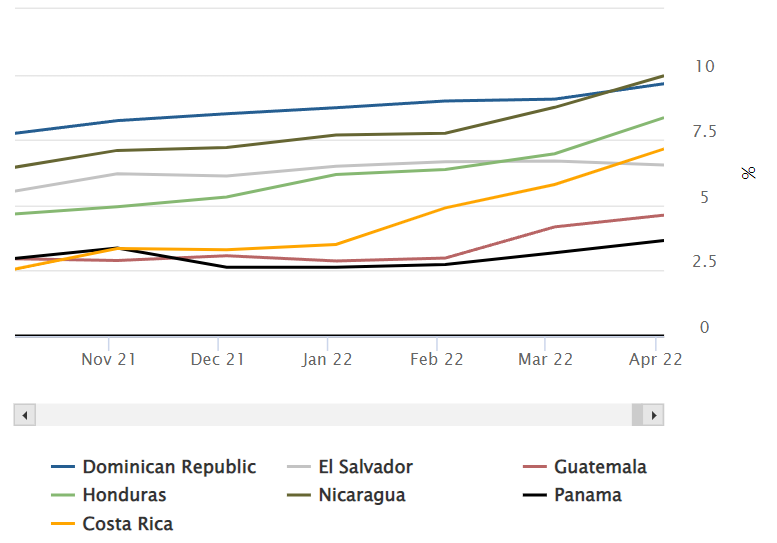
    NICARAGUA | Boosting ties with Iran. On 6 May, Iran’s oil minister, Javad Owji, floated the possibility of Iran investing in Nicaragua’s Supremo Sueño de Bolívar oil refinery, a mega-project first agreed with Venezuela’s late president Hugo Chávez (1999-2013) in 2007 which has yet to materialise. Owji made his comments during a recent visit to Nicaragua where he and Nicaragua’s President Daniel Ortega also reportedly signed a Memorandum of Understanding and contracts in the areas of oil and agriculture, the details of which have yet to be made public. Without specifying quantities or conditions of the agreement to supply oil to Nicaragua, Owji was cited by local media outlet Confidencial as saying that Iran will make its “best efforts to guarantee the supply of fuel” to Nicaragua. He also said that upon receipt of documentation related to the refinery, “we will decide on the participation of our country in the continuation of this project”. He said “we will do our best to be able to participate in that refinery and in future refineries in the country. We hope that a mixed, shared investment from Iran, Nicaragua, and Venezuela can be made to complete the refinery.” This is the second high-level visit by an Iranian delegation since Ortega took office for another term in January 2022.

    GUATEMALA | Talks over trade agreement with Israel. On 25 April, a Guatemalan delegation visited Israel with the objective of establishing a trade agreement. This is the second round of talks following the first round which took place in 2019 in Guatemala. According to figures from Guatemala’s central bank (Banguat), Guatemalan exports to Israel totalled US$22m while imports from Israel reached US$41m.

    Central America & Caribbean: inflation rate
    Percentage variation (year-on-year)

    Central America & Caribbean: GDP growth (%)
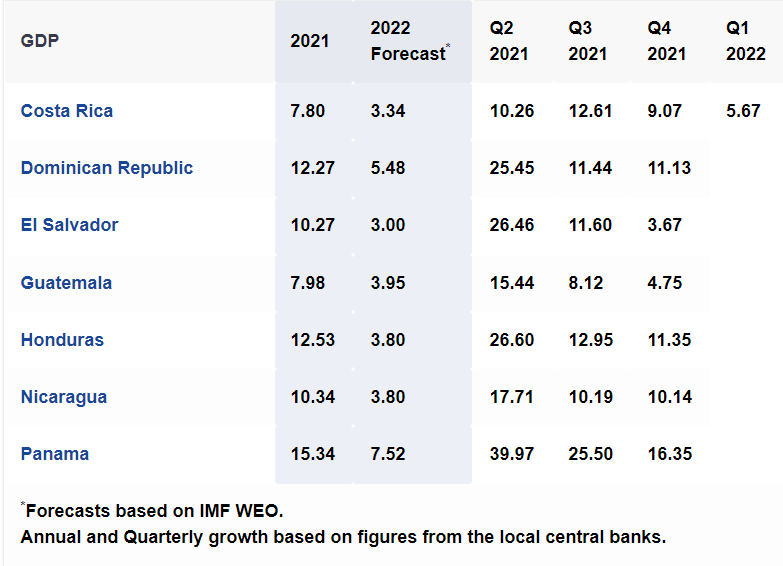
    Quarterly figures are year-on-year growth

  • VENEZUELA: Lake Maracaibo goes the wrong kind of green

    Patrick de Courcy 27 July 2023 Hits: 3527

    On 24 July, Venezuela’s President Nicolás Maduro announced a “special plan” to clean up Lake Maracaibo, one of the world’s largest inland lagoons, which has been suffering the combined effects of oil spills, plastic rubbish dumping, and the spread of a bright green algae known as ‘verdín’. Despite the rhetoric, environmental experts believe the government lacks the resources or political will to reverse decades of neglect.

    President Maduro described the clean-up as a major government initiative. “I’ve prepared a plan I want to activate, a special plan to decontaminate and recover Lake Maracaibo,” Maduro said. A team had been assembled, led by General Néstor Reverol (minister for electric energy), and including the minister for eco-socialism (the name given to environmental protection under the Maduro government), Josué Lorca, as well as the oil minister, Pedro Tellechea, and fishing and aquaculture minister Juan Carlos Loya. The taskforce also includes the mayor of Maracaibo and the governor of Zulia state (the latter is the only member of the team aligned with the political opposition). Maduro said he would give the taskforce “all the support necessary” despite the limitations caused by US economic sanctions and what he described as Washington’s “trade blockade”.

    It is not clear whether Venezuela’s central government is taking environmental issues more seriously than in the past. Because of mismanagement and sanctions there has been little investment in maintaining oil and gas facilities, many of which are concentrated in the Maracaibo area, and which tend to break down frequently, triggering oil spills and gas leaks.

    In 2021 Lorca gave a typical response saying oil spills “are not a big deal because historically all oil companies have had them”. At the time Lorca admitted that the government lacked the resources to address the issue. Maduro, for his part said last year that Venezuela is responsible for only 0.4% of global greenhouse gas emissions, suggesting that the responsibility for cleaning up lies firmly with the wealthier countries.

    That said, the government has begun to face questions about the awful state of Lake Maracaibo. The lake has been at the centre of Venezuelan oil and gas development for decades and is reputed to be crisscrossed by 28,000km of ageing underwater pipelines.

    A New York Times investigative report published on 25 July highlighted how local residents have spent the rainy season living under a black oily film that has been gradually killing farm crops and fisheries. It also noted that Venezuela ranks third worst in the world for methane emissions per barrel of oil produced.  The country is notorious for flaring large quantities of gas, adding to air pollution.

    According to the Venezuelan lobby group Fundación Azul Ambientalista, green algae has now spread to cover 70% of the lake which has a surface area of 13,000km². Studies by Universidad del Zulia suggest the algae is formed by a mix of nitrogen and phosphorus from sewage, human and animal fecal matter, and agricultural fertilisers, all mixed in with oil leaking from rusted underwater pipelines.

    Concern has also increased over the number and volume of oil spills. A major spill occurred in June, presumed to be from an underwater pipeline leak in the lake, but the precise source has yet to be found. According to another NGO, the Observatorio de Ecología Política (OEP), there were 86 oil spills in Venezuela last year, up from 77 in 2021. Of that total, the largest number (31 spills) happened in Zulia state, followed by Falcón (29) Anzoátegui (14) and Monagas (5). OEP also reported that there were ten fires or explosions last year in facilities operated by state oil company Petróleos de Venezuela (Pdvsa). Pdvsa does not release any data on accidents and oil spills. 

    The state company does not want to appear totally inactive or unconcerned. In late June, it announced it was beginning clean-up work in Lake Maracaibo, and published photographs of activities around the coastline on its Instagram account. Yet there was little detail on the extent of the oil spills and on exactly how they were being contained. Announcing the taskforce, President Maduro also sought to tell a ‘good news’ story, saying that work will begin in the next few weeks on a “great monumental park” and holiday resort near Maracaibo, which would have the capacity to hold rallies for up to 1.4m people as well as housing sporting events, walks, and other activities. As part of the project the government would, he claimed, “reforest the entire eastern zone of the Maracaibo”.

    Health risk

    The algae is presumed harmful for human health, given fears that local fish used for human consumption may be contaminated. According to Fundación Azul, “in any other part of the world this would be described as a state of emergency”.

    Recession

    The Observatorio Venezolano de Finanzas (OVF), an independent economic think tank, announced on 26 July that Venezuela has entered a recession following two quarters of negative growth. According to the OVF’s figures, there was a quarterly contraction of 6.3% in economic activity in the second quarter of 2023, which followed a 7.6% contraction in the first quarter.

  • GUATEMALA: Moving on a key pledge

    Abbi Dicker 06 September 2024 Hits: 1917

    In late July Guatemala’s national council for food security and nutrition (Conasan), the inter-ministerial body that leads policy direction on food and nutritional security, approved its annual operative plan for 2025, which earmarks funding of Q$14.2bn (US$1.84bn), up 33% on the 2024 budget. Addressing food insecurity – an issue which successive governments have declared a priority but failed to tackle – is a key pledge of the left-of-centre government led by President Bernardo Arévalo which took office in January, promising to reduce malnutrition by 10%. An April 2024 update by the World Bank highlights that Guatemala’s child malnutrition rate was 47%, putting Guatemala among the worst ten countries in the world.

    Long attributed to structural inequalities, the issue of food insecurity in Guatemala, where 55.1% of the 17.4m population lives below the poverty line on World Bank data, has been exacerbated in recent years by the continuing impacts of Hurricanes Eta and Iota in late 2020, the coronavirus (Covid-19) pandemic, rising prices of energy, fertiliser, and agricultural inputs as a result of Russia’s war in Ukraine, and the impact of climate change, among other factors.

    The gravity of the situation was recently highlighted by the Famine Early Warning Systems Network (Fews Net), a leading provider of early warning and analysis on food insecurity, in a report released on 31 July. The report, which warns that crisis outcomes will persist from June to September 2024, notes that irregular rainfall and high temperatures damaged staple grain crops from at least three past cycles, which will affect the availability of food, labour demand, and income sources of poor rural households.

    Fews Net also estimates that the population in need will be between 2.0-2.5m people for this period, highlighting that while year-on-year inflation, which was running at 3.78% in July, has slowed, food prices remain above average. It reports that maize and bean prices remain at between 10-25% and 25-45% above the five-year average, respectively, given the distortion of seasonal trends due to the recurrent climate shocks since 2019/2020.

    Meanwhile a report by the United Nations World Food Programme (WFP) published on 30 June warns that the humanitarian crisis in Guatemala is intensifying as a result of the impact of the La Niña weather phenomenon, including heavy rainfall, landslides, and floods. The WFP warns the situation is particularly critical in the departments of Alta Verapaz, Chiquimula, Huehuetenango, Sacatepéquez, and Sololá, where 30-45% of the population requires food assistance – a situation expected to escalate in the coming months due to persistent climate-related challenges. Highlighting that, as regards acute malnutrition rates for children under five years, Guatemala reported a cumulative record of 16,384 cases in the first half of 2024, WFP warns that increased food insecurity stemming from climate-related impacts is likely to exacerbate Guatemala’s already severe malnutrition situation.

    Against this backdrop, since taking office, the Arévalo government has indicated its intention of addressing what remains a major priority. In Conasan’s first meeting in late March, the secretary of food and nutritional security (Sesan) of the presidency, Mireya Palmieri, highlighted the importance of addressing malnutrition. She cited the need to reprogram the annual operational plan for food and nutrition security (Poasan) and update the national food and nutritional security policy (Polsan) and institutional initiatives such as the strategic food and nutritional security plan (Pesan) and institutional strategic plan (PEI).

    Palmieri also said that efforts were being carried out involving different institutions such as the health ministry (MPSPAS) to address the nutrition component in the government’s planning model. She said that as of 22 March, 14.60% of the budget for Poasan 2024 had been executed – worth Q1.5bn which she said would seek to define the “physical goals and financial resources assigned to those issues which impact on food and nutritional security”. Palmieri also revealed plans to carry out the first national maternal and child health survey (ENSMI) in ten years, in conjunction with the education ministry.

    Since then, on 30 April President Arévalo unveiled a multidimensional initiative entitled ‘Mano a mano’ (Hand to hand), with the objective of eradicating malnutrition and poverty, which aims to reach 114 of the country’s 340 municipalities over the next four years. Led by the social development ministry (Mides) and Sesan, it involves other institutions and seeks to provide comprehensive assistance in areas spanning infrastructure, health, education, and agriculture. 

    Private sector efforts

    Efforts to address malnutrition in Guatemala are also taking place through the private sector. In 2022 a local business conglomerate, Castillo Hermanos, announced a US$15m investment in a five-year social initiative, ‘Guatemaltecos por la Nutrición’, to address malnutrition in the country. At the time, José Silva, the initiative’s executive director, said it would be rolled out in Quiché and Huehuetenango, two of the departments most affected by food scarcity. Silva said the initiative would include mobile clinics and is based on five components: attention to primary health, nutritional support, water, and environmental sanitation, strengthening the family economy, and access to food. Since then it has expanded. Most recently on 22 July, Castillo Hermanos announced that it would be rolled out in eight municipalities in Guatemala department.

    Other measures

    The government has also sought to address poverty in other ways. On 31 May Arévalo announced that the economy ministry would intervene to stabilise supplies of rice, maize, and beans and to reduce price speculation. The same day he announced electricity subsidies for households which consume up to 100 KWh, which he said would reduce electricity bills by up to 80% and would benefit some 3m households.

    On 10 June he then unveiled two cash transfer initiatives to help “ease the high cost of living for buying food in Guatemala”. He said that the targeted cash payments, which would cost the government Q150m and would begin on 1 July, would “mitigate” and “alleviate” the cost of living for vulnerable families in the capital and rural areas.

    He said that the first initiative would constitute a monthly payment of Q250 to some 50,000 low-income families, benefitting some 250,000 people in total, who reside in 17 municipalities in Guatemala department.

    Under the second scheme, 100,000 families living in extreme poverty in rural departments, who lack any connection to the electricity grid, would receive a one-off payment of Q1,000. 

  • ECONOMIC HIGHLIGHTS

    Abbi Dicker 16 April 2025 Hits: 3805

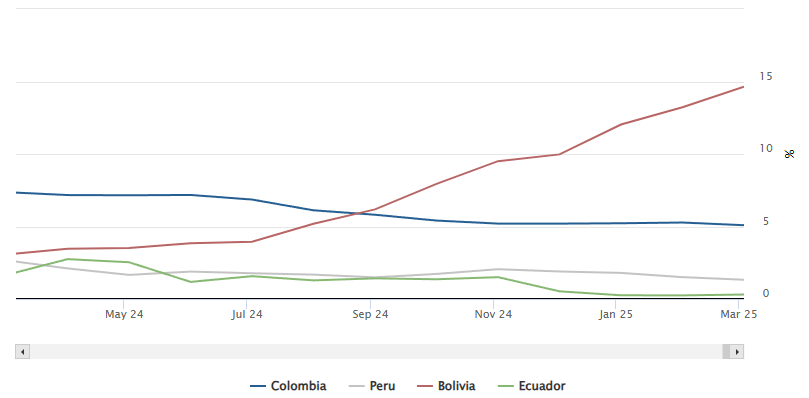
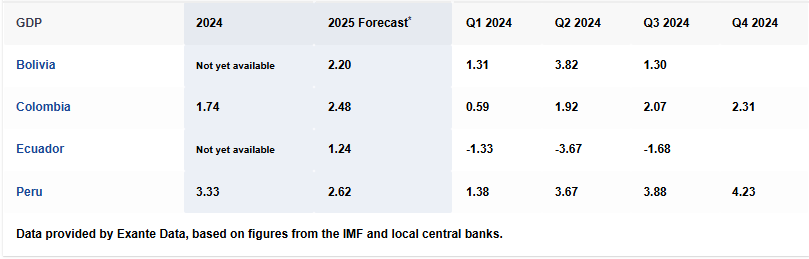
    PERU | IMF praise. On 27 March, the International Monetary Fund (IMF) highlighted Peru’s economic recovery in 2024, with GDP expanding 3.3%. Peru’s economy contracted 0.6% in 2023, with the IMF attributing this to the “social unrest at the beginning of the year and climate anomalies”. The IMF said growth in 2024 was supported by “a robust recovery in primary sectors, rising private consumption, and strong public investment”. The IMF expects growth to moderate to 2.9% in 2025 amid “global policy uncertainty and pre-electoral tensions” ahead of April 2026 general elections. The IMF also highlighted that inflation, which was running at 1.50% in annual terms in February, was “firmly within the target band” of 1-3%. While noting that international reserves remained at a “comfortable level” of about 27% of GDP, the IMF highlighted that the fiscal deficit rose to 3.5% of GDP, far above the revised fiscal rule deficit target of 2.8% of GDP, due to “lower tax collection and higher public investment execution”.

    ECUADOR | Record remittances. Ecuador’s central bank (BCE) announced on 5 April that the country received a record US$6.54bn in remittances in 2024. This was up from US$5.45bn in 2023 and US$4.74bn in 2022. In the fourth quarter of 2024, remittances totalled US$1.79bn, up from US$1.75bn in the previous quarter and US$1.5bn in the fourth quarter of 2023. The US was the largest source of remittances in 2024, accounting for US$4.8bn, followed by Spain (US$1.02bn), Italy (US$163.2m), and the UK (US$99.5m).

    BOLIVIA | A new role in the gas trade. The president of Bolivia’s state-run hydrocarbons company, Yacimientos Petrolíferos Fiscales Bolivianos (YPFB), Armin Dorgathen, said on 2 April that Bolivia will earn up to US$200m per year by transporting Argentine natural gas to Brazil via Bolivian pipelines. Argentina stopped importing Bolivian gas in September 2024 due to increased domestic production in Argentina and Bolivian difficulties meeting export quotas. Bolivia has sought to retain some income from Argentina by offering the use of its pipelines for Argentine gas exports. The first such gas shipment began on 1 April, with 4.5m cubic metres of Argentine natural gas transported through YPFB’s pipelines to Brazil.

    Andean countries: inflation rate
    Percentage variation (year-on-year)

    Andean countries: GDP growth (%)
    Quarterly figures are year-on-year growth

  • COLOMBIA: Farc strikes as coal protests end

    LatinNews 21 March 2013 Hits: 1097

    The Fuerzas Armadas Revolucionarias de Colombia (Farc) blew up a section of the railway track linking Colombia’s largest coal mine, Cerrejόn, to the coast on 14 March, as a freight train was passing, derailing 17 wagons laden with 1,870 tonnes of coal. Just 24 hours earlier the government had managed to reach a deal with the coal miners’ union Sintracarbόn to end the strike at Cerrejόn, located in the northernmost department of Guajira, which was costing the economy an estimated US$3m a day.

    This was the Farc’s third attack on Cerrejόn in 2013. The army also thwarted a fourth attack on 17 March. The track should be up and running again before the end of this week although exports are continuing from stockpiled coal.

    The strike at Cerrejόn lasted 32 days. It ended after Sintracarbόn accepted an offer from the company to sign a three-year agreement including a one-off bonus of Col$9.6m (US$7,000) for miners and a pay increase of 5.1% for the first year and increases of inflation plus 1.5% and 1.7%, respectively, over the following two years. Miners will also be provided with better transport to the mine, housing bonuses, improved health insurance, and education benefits for their children.

    Shortly before the accord was struck, the government managed to end the other major strike in the country – with the coffee sector. The strike had lasted for 11 days. Under the accord, the government promised to provide US$450m of support for coffee producers in the form of a Col$145,000 (US$80) subsidy for each 125kg ‘load’ of coffee to be applied if prices fall between Col$480,000 (US$266) and Col$700,000 (US$388) per load. The measures entered into force on 18 March.

  • In Brief- Bolivia

    LatinNews 19 September 2013 Hits: 1316

    SECURITY | New gun control law. On 18 September Bolivia’s President Evo Morales promulgated law 400 on gun control. Defence Minister Rubén Saavedra pointed out that this is the first time Bolivia will have such a law in place, as part of the government’s efforts to tackle citizen insecurity. In late June, on the sidelines of a national security summit, Interior Minister Carlos Romero admitted that the national homicide rate was on the rise, reaching 11 per 100,000 inhabitants in 2012. According to latest available data from the United Nations Office on Drugs and Crime (Unodc), Bolivia’s homicide rate was 8.9 per 100,000 in 2010. Saavedra explained that the new law requires people to have a licence to carry a weapon and sets a 180-day deadline (from 18 September) for gun owners, who are meant to be registered, to obtain a licence or hand over their firearms. It also establishes prison sentences of between 10 and 30 years for arms trafficking; the maximum sentence applies to police and military officials.

  • Uruguay leading the charge on 5G

    LatinNews 19 September 2019 Hits: 640

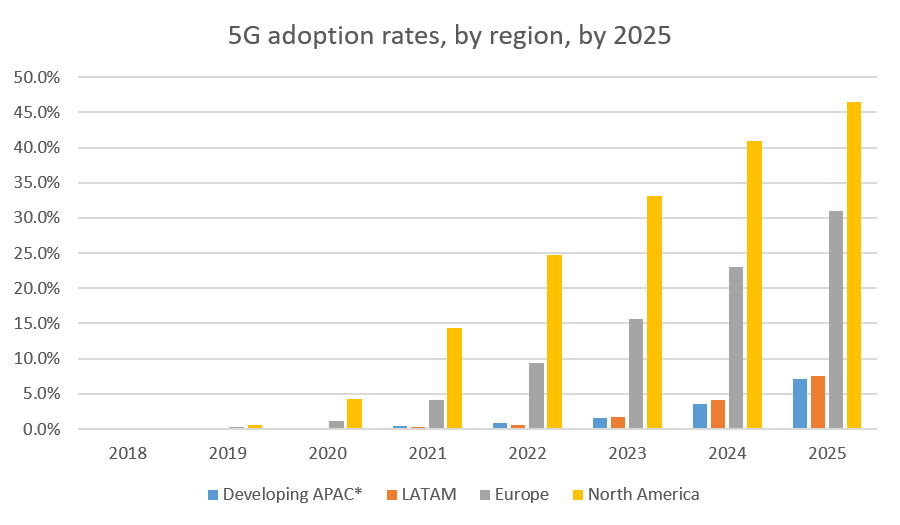
    At a relatively slow pace Latin America will begin to switch its mobile networks to 5G, with the new technology expected to spread in 2020-2025 to the big markets in Brazil, Mexico, Colombia, Chile, and Argentina. Smaller Uruguay appears to have slipped ahead, with the first, limited use of a commercial 5G network registered in April this year, and a technical cooperation agreement signed with Chinese telecommunications firm Huawei in August.

    5G uptake is quite slow across the region, for various reasons. One is that many countries are still trying to complete the build-out of 4G networks, and operators want to recover at least some of their investment outlays before upgrading again. Another is that governments have been slow to allocate spectrum. The International Telecommunications Union (ITU) has recommended that 1,300MHz be allocated to 5G, but by the end of last year only about one-third of that had been auctioned. 5G take-up will depend on three factors: macroeconomic growth trends (still relatively muted), the life that is still in 4G, and government policies to promote investment (including service and device tax rates). Mobile devices are still relatively expensive in the region: in Brazil they represent 2% of per-capita GDP, compared with 0.1% in the UK. Latin America’s take-up will likely lag compared with other regions of the world, with an 8% adoption rate by 2025 predicted.

    But Uruguay has got an early start. In April, in partnership with Finnish firm Nokia, state-owned telecoms operator Antel launched limited commercial services using two new 5G base stations in Barra de Maldonado, Maldonado department and in Nueva Palmira, Colonia department. A further two base stations are following in neighbourhoods of the capital, Montevideo. Nokia said it is able to connect up to one million devices per square kilometre at speeds of over 1Gbps. Ursec, the country’s telecoms regulator, says it is preparing a new auction for the 1.8GHz, 2.5GHz, 29GHz, and extended AWS spectrum.

    5G adoption rates by region

    Source: GSMA

    With a centre-left government (albeit one that faces a general election in October) Uruguay appears untroubled at the prospect of partnership with China’s Huawei, the company criticised as a security risk by US President Donald Trump. In August minister of industry, energy and mining Guillermo Moncecchi travelled to Shenzhen and signed a memorandum of understanding with Huawei, to work together on 5G, artificial intelligence (AI), the Internet of Things (IoT), and cloud computing. Huawei has been operating in Uruguay since 2005 and is the main supplier of telecom networks and hardware to Antel.

    • Huawei’s extraordinary offer

    In an interview with the New York Times Huawei’s chief executive, Ren Zhengfei, proposed selling the company’s current 5G operation to a Western firm to address security concerns voiced by the US and others. Ren said the buyer would be free to “change the software code”, which would obviate any threat from supposed backdoors that could allow spying by the Chinese state (the US and Australia have banned their networks from using Huawei’s equipment on these grounds and the UK is still weighing a decision). It is unclear, however, who would be interested in purchasing Huawei’s know-how, as tech companies such as Eriksson and Nokia have already developed their own offering.

  • BRAZIL: Still fawning over Trump

    LatinNews 06 February 2020 Hits: 3969

    Brazil’s President Jair Bolsonaro is partial to romantic relationship metaphors, often referring to the image of a courtship, an engagement, or a marriage to describe his government’s diplomatic relations. In the case of Brazil’s ties with the US, unrequited love might be the most apt comparison. 

    Last week saw yet another example of Brazil’s rather one-sided relationship with President Donald Trump’s government, wherein unquestioning support and generous concessions have rarely been acknowledged, let alone reciprocated. Following the announcement of Trump’s much-criticised proposed solution to the Israeli-Palestinian conflict, Brazil’s foreign ministry (Itamaraty) gave Trump its decisive support. “The Brazilian government welcomes [Trump’s] plan of peace and prosperity,” a 29 January Itamaraty statement read, describing it as a “promising vision” and “a document that is at once realistic and ambitious.”

    Yet that same day, the US Department for Homeland Security (DHS) announced that it would begin deporting Brazilian asylum-seekers to Mexico under its Migration Protection Protocols (MPP – also known as ‘Remain in Mexico’ programme). Widespread human rights concerns regarding the return of migrants to Mexico under the MPP are heightened in the case of Brazilians, who do not speak Spanish, but the Bolsonaro government has not publicly reacted to this news.

    The deportation of Brazilian asylum-seekers from the US seems to be one of the many issues on which the Bolsonaro government has easily bowed to the demands of the US. After 50 Brazilians were returned home on a US-chartered flight in late January, Bolsonaro indicated that this was not an issue he would be bringing up with his US peer (Bolsonaro has previously shown himself to be aligned with Trump’s immigration policy). Ken Cuccinelli, the DHS deputy acting secretary and an immigration hard-liner, highlighted on 27 January that Brazil is a cooperative partner on the repatriation of migrants (although he added that the US still hoped for more efforts).

    Energy cooperation

    The US has been less than reliable on its promised support for Brazil’s bid to join the Organisation for Economic Co-operation and Development (OECD); however, other deals agreed between Presidents Trump and Bolsonaro, when the latter went to the US last March [WR-19-11], have gone forward as planned. This is the case with the US-Brazil Energy Forum (Usbef) which seeks to increase energy cooperation through technical, regulatory, and policy collaboration between the two countries, and which US Secretary of Energy Dan Brouillette launched during a visit to Rio de Janeiro on 3 February. Brouillette also signed a memorandum of understanding with Brazil’s mines & energy minister, Bento Albuquerque, on increased nuclear cooperation.   

  • REGION: Mottley renews her call for debt relief, others look for reform

    LatinNews 19 July 2021 Hits: 1815

    Perhaps not surprisingly given the level of debt carried by her government (148.9% of GDP), Prime Minister Mia Mottley of Barbados continues to be the strongest advocate for debt relief for the Caribbean. In her most recent intervention, speaking at forum on ‘Sustainable Island Futures’ staged by the University of the West Indies (UWI) on 21 June, Mottley argued that there was “something fundamentally immoral” in the system of global governance and she called for a debt-repayment programme for the Caribbean that would be analogous with the concessions granted to indebted Europe at the end of World War II.

    This is not a new call, and in July last year, Mottley linked her demands for debt relief to the long-standing campaign for reparations for slavery. She told a Caribbean Community (Caricom) Reparations Commission (CRC): “Economic transformation and growth depends on an international compact for the Caribbean…The combination of the appropriateness of the reparations argument, as well as the reality of the economic implosion that has taken place as a result of the global pandemic, requires urgent conversations to begin to understand that a world that was rooted in immorality or a world that was rooted in people profiting from crimes against humanity runs counter to the very things at the democratic level that we have asked both small states and large states to be able to reflect”.

    The other linkage that is increasingly being invoked in the argument for debt relief is climate change. On 22 June, for instance, at an event co-hosted by the government of Belize and the Commonwealth Secretariat, the government of Belize put forward its case for a “debt-for-climate/nature” swap mechanism. Belize is another of the most heavily indebted countries in the region, with a debt-to-GDP ratio that is heading towards 135% this year. The deputy secretary-general of the Commonwealth, Arjun Suddhoo, supported the call, saying: “A multi-faceted challenge requires a multi-faceted solution. Debt-for-climate and nature swaps can help address the public debt levels while at the same time provide resources to help countries build resilience to climate change.

    The problem is genuine and immediate. As the table below shows, every country in the Caribbean has seen its debt-to-GDP ratio deteriorate since 2019.

    Figure 1: General government gross debt, percent of GDP

    Country 2019 2020 2021 2022 2023 2024 2025 2026 Estimates after
    Antigua & Barbuda 81.8 103.1 111.8 103.1 98.1 92.7 88.7 84.4 2020
    The Bahamas 58.8 68.6 88.6 88.2 86.3 84.4 82.7 81.1 2020
    Barbados 126.8 148.9 143 130.9 122.4 115.3 108.6 101.8 2020
    Belize 97.5 127.4 134.6 132.1 130 130 130 130 2019
    Dominica 91 97.1 96.4 91.5 87.7 82.6 77.3 71.3 2021
    Grenada 59.7 70.6 74.5 73.4 69.1 64.9 58.8 52.7 2019
    Guyana 39.8 43.9 41.4 38.2 36.3 38.3 39.7 40.9 2019
    Jamaica 94.3 105.6 96.5 84.8 75.1 68.7 63.8 59.4 2020
    St. Kitts & Nevis 56.3 65.5 72.5 69 66.2 64 63.2 62.5 2020
    St. Lucia 61.3 84.4 88.4 87.6 89.9 89.4 88.9 88.2 2020
    St. Vincent & the Grenadines 75.1 87.2 91.8 90.2 90.9 89.7 87.6 84.8 2020
    Suriname 92.5 165.8 157.4 153.3 153.4 156.8 161.6 165.7 2019
    Trinidad & Tobago 46.5 59.4 62.1 65.7 69 72.6 76 78.9 2020

    Source: IMF's World Economic Outlook database, April 2021

    These calls for debt relief for the Caribbean are sure to continue but to what extent they will be heeded is very uncertain given the global nature of the crisis. However, debt relief is not the only game in town. A paper published in Columbia University’s Journal of International Affairs in April this year argued that the “unprecedented shock” of the pandemic crisis offered an opportunity for the Caribbean countries to rebuild their economies “in ways that help mitigate vulnerabilities to future shocks” and that help “accelerate growth in years to come”.

    The paper argues that with “smart stimulus” the governments of the Caribbean have an opportunity not just to return their economies to pre-pandemic growth levels but to “reorient economies to enable faster productivity growth”. The paper argues that, if done right, “the post-Covid. period could represent a new era with the potential to usher in faster, more inclusive, and increasingly durable growth”. But how?

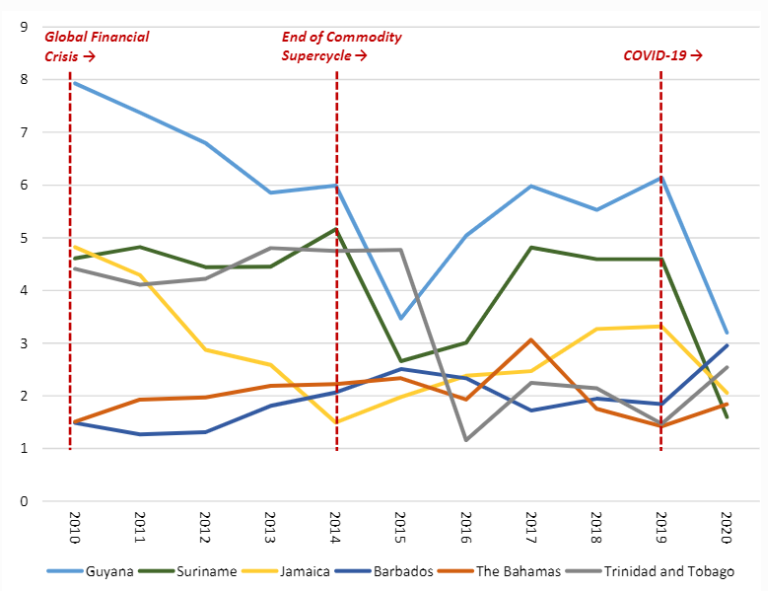
    The first area of attention, the paper argues, should be public investment in infrastructure which, it argues, has “considerable potential for both near-term stimulus and long-term development impact”. Caribbean countries, it is argued, are particularly well placed to benefit from increased or accelerated public investment because of the region’s track record of underinvestment, particularly over the past decade following the global financial crisis in 2008-2009 and the end of the commodity supercycle in 2014 (see Figure 2 below).

    Figure 2: Public investment in selected Caribbean economies (percent of GDP)

    Source: Mooney, Henry, and David Rosenblatt. 2020. ‘A Pandemic Surge and Evolving Policy Responses’, IDB

    Another area for attention is improving financial access for local firms, many of which, research indicates, have financing gaps that suggest local credit markets are not meeting their needs. The paper sees this financing gap as “a key deficit that has prevented inclusive growth for decades”.

    Ways to improve financial access include improving property rights and insolvency procedures, increasing competition through regulatory and other reforms, and the promotion of financial technology.

    Another area of focus should be accelerating the development of digital technology. The paper argues: “Developing countries, including the Caribbean, have long suffered from important gaps in technological infrastructure. These deficits will be even more consequential for growth and social development prospects in the years to come”.

    The author of the paper, Henry Moore, is an economics advisor with the Inter-American Development Bank (IDB). He views the current crisis as a “once-in-a-lifetime…opportunity to transform the Caribbean by addressing legacy deficits while laying the foundation for the future”.

  • TRACKING TRENDS

    Patrick de Courcy 04 May 2023 Hits: 3123

    NICARAGUA | Remittances surge. Remittances totalled US$1.0bn in the first quarter of 2023 – up 61.3% on the same period in 2022 - Nicaragua’s central bank (BCN) reported on 28 April. The main source country was the US which accounted for 81.2% of remittances, which were up 87.2% on the same period in 2022. This was followed by Costa Rica (7.7%, up 14.2%), and Spain (6.4%, down 6.3%). This surge reflects continued record migration from Nicaragua as President Daniel Ortega cracks down on dissent. As of 2020, more than 100,000 Nicaraguans had fled the country, according to the United Nations High Commissioner for Refugees (UNHCR). By 2022, that number approximately doubled.

  • URUGUAY-REGION: Lacalle Pou lashes out at Mercosur summit

    Patrick de Courcy 06 July 2023 Hits: 2538

    Uruguay’s President Luis Alberto Lacalle Pou refused to sign a joint statement of heads of state of the Southern Common Market (Mercosur) on 4 July at the end of a summit in the Argentine border city of Puerto Iguazú. One of the main issues discussed during the summit was the free trade agreement (FTA) between Mercosur and the European Union (EU). But in a symbolic show of frustration with what he views as Mercosur’s laggardly approach to foreign trade deals and failure to remove internal trade barriers, Lacalle Pou pointedly refrained from putting pen to paper.

    President Lacalle Pou’s decision was signposted the previous day when his foreign minister, Francisco Bustillo, expressed the Uruguayan government’s disillusionment with the lack of progress over the FTA with the EU during Argentina’s six-month presidency of Mercosur or any deepening of ties between the bloc’s member states. He rebranded Mercosur as “Zocosur”, a southern common zone rather than a market, blasting a proliferation of “intra-market barriers”. But Uruguay’s main, longstanding, gripe is over the refusal of fellow Mercosur states to allow a relaxation of the rules to permit the country to pursue bilateral trade deals, notably with China.

    Lacalle Pou’s criticism comes as the rotating presidency of Mercosur passes to Brazil. Mauro Vieira, the foreign minister of Brazil, expressed his government’s commitment to completing the FTA with the EU, which was signed in 2019, but his emphasis on the need to “update” it in the wake of the coronavirus (Covid-19) pandemic and the war in Ukraine suggests the protracted negotiating process could be reopened.

    FTA with EU

    Brazil’s President Luiz Inácio Lula da Silva said that ratifying the EU-Mercosur FTA was a priority during his country’s rotating presidency of the bloc, while calling for “a swift and forceful response” to the environmental annex attached to the FTA earlier this year by the EU. The Argentine foreign minister, Santiago Cafiero, was also critical of the annex. “The text on the environment presented by the EU places new obligations on us in terms of climate change, deforestation, and biodiversity that go even beyond those agreed in multilateral forums,” Cafiero said, “but omit to make reference to modes of implementation”.

  • URUGUAY: Latest poverty rates aren’t much to celebrate

    Patrick de Courcy 19 June 2025 Hits: 3874

    Uruguay, which had long prided itself on being one of the most equitable and prosperous countries in Latin America, delved into collective soul-searching when the rate of poverty began rising in recent years. So, when the Instituto Nacional de Estadística (INE), the national statistics bureau, published its latest report on poverty in May, it was scrutinized for any insights that could be gleaned to help shape policy and put the country back on track.

    The headline poverty figure of 17.3% for 2024 threw off many people at first because it was more than double the rate that had been anticipated. However, there had been a significant change in methodology and the new figure represents a decrease from 19.7% in 2023 and 23.3% during the coronavirus (Covid-19) pandemic in 2020, once the historic series is adjusted accordingly.

    President Yamandú Orsi, who had made child poverty one of his flagship campaign issues last year, said the new, higher numbers seemed to better reflect the reality of the country and underscored the need for more decisive government action. “This is closer to what anybody who moves about in our country can see,” Orsi said. “The government invests a lot but it doesn’t seem to bear much fruit, so in some ways, we’re failing as a state.” The president said that the government was now analysing how to improve its ‘transfer mechanisms’ and that it had become clear that a few, isolated measures weren’t enough but that a multi-disciplinary approach involving various branches of the government was needed. 

    The latest report shows considerable geographic inequality within the country. The levels of poverty and extreme poverty increase the further north you go. While four of the southernmost departments of the country have household poverty rates of under 8.9%, the rate exceeds 24% in four of the northernmost departments. In the country’s capital, Montevideo, the same holds true. Neighbourhoods along the seashore, like Punta Carretas, have poverty rates of under 4%, while the outlying municipalities further north check in at above 19%.

    But the most concerning data was the high level of child poverty. According to INE, nearly one in three children under the age of six lives in poverty. “Those numbers hurt your eyes,” Orsi said. A fortnight after the report came out, the president called a meeting of top government officials on the issue of poverty and neighbourhood public security. Most immediate measures focused on helping homeless people over the winter and setting up community centres and agents to help combat violence. Social Development Minister Gonzalo Civila said the cash transfer programmes Tarjeta Uruguay Social and Bono Crianza would be increased as part of the next national budget.

  • PARAGUAY: Disputas sobre el presupuesto ponen en riesgo la estabilidad económica

    LatinNews 28 November 2011 Hits: 119

    El Presidente Fernando Lugo está amenazando con vetar el presupuesto para 2012, como resultado de una gran enmienda hecha por los diputados en la cámara baja del congreso. Lugo dijo que los enormes incrementos salariales para los trabajadores del sector público incluidos por los diputados ha vuelto “impracticable” el presupuesto. El obtuvo el apoyo de una misión visitante del Fondo Monetario Internacional (FMI), que advirtió de un significativo deterioro en las finanzas públicas como resultado del incremento propuesto para el presupuesto.

    La propuesta original del presupuesto enviado por la administración Lugo a la cámara baja implicaba un incremento de 7,5% sobre el presupuesto de 2011, un déficit de US$256m, o 1% del PIB. Sin embargo, los diputados hicieron un enorme incremento de G$5,1bn (US$1,19bn) al presupuesto original de G$46bn (US$10,37bn) enviado por el gobierno. Los diputados aprobaron incrementos salariales de 20% para los trabajadores del sector público, y más para los maestros, trabajadores de la salud, la policía y los militares. El ministerio de finanzas afirmó que la toma fiscal debería haberse incrementado en 13,5% a 18,1% del PIB para cubrir el gasto extra aprobado por la cámara baja, que el ministerio dijo que era “imposible de lograr en sólo un año”.

    Un equipo del FMI en una misión de observación de una semana de duración a Paraguay expresó preocupación por el alto nivel de gasto propuesto, afirmando que si las reformas se mantuviesen, eso elevaría el gasto público al equivalente de 2% del PIB, causando un significativo déficit por primera vez desde el año 2003. También alegó que resultaría en un salto en la inflación, reduciendo el poder de compra de los pobres.

    Significativamente, el FMI también cuestionó la negativa de los diputados de expandir los recursos para proyectos de infraestructura  y servicios sociales, especialmente su rechazo de un fondo especial que Lugo había requerido para usar parte de los US$360m adicionales por año que el Paraguay recibirá de Brasil por la energía proporcionada por la represa hidroeléctrica binacional de Itaipú para asignar más recursos al esquema de transferencia condicionada de dinero para las familias pobres.

    Los diputados de la oposición sospechan profundamente de cualquier propuesta que suene a populismo de izquierda que podría fortalecer el apoyo a Lugo. Exacerbando el problema para Lugo en el congreso es el hecho que él está enfrentado con el ala conservadora de su más grande socio en la coalición, el Partido Liberal Radical Auténtico (PLRA).

    Los diputados también rechazaron la propuesta del gobierno de adelantar la introducción del impuesto a la renta personal. El congreso aprobó un impuesto a la renta personal (IRP) en noviembre de 2010, pero el principal partido de la oposición, el Partido Colorado, y el partido Unión Nacional de Ciudadanos Eticos (Unace) pospusieron la introducción del impuesto hasta el 2013, cuando Lugo deje el poder.

    La oposición está decidida a restringir  el poder de gastos de Lugo e impedirle usar el impuesto para atraer apoyo para su sucesor. El gobierno, mientras tanto, acusó a los diputados de la oposición de motivaciones electorales y de poner en peligro la estabilidad económica aprobando el enorme in cremento salarial para los trabajadores del sector público a fin de ganar el favor con los votantes ante las elecciones primarias del partido dentro de un año.

    El presupuesto, que aún debe ser aprobado por el senado, debe tener la aprobación para el 20 de diciembre.

    • Pobreza y desigualdad

    El Presidente Fernando Lugo afirmó esta semana que la reducción de la pobreza y la desigualdad eran las mayores deudas que el Estado paraguayo tiene con sus ciudadanos. Él dijo que ese fue el más grande desafío de su gobierno para progresar en esa área para ubicar al Paraguay más próximo a cumplir los Objetivos de Desarrollo del Milenio de la ONU. Uno de los principales objetivos es la erradicación de la pobreza extrema o indigencia, en su totalidad. La pobreza aflige en Paraguay a 35% de la población, pero la mitad de ese número vive en la indigencia.

  • Risk pointers

    LatinNews 21 March 2012 Hits: 170

    *** Lavrov’s selective logic.  On 20 March, Russia’s Foreign Minister Sergey Lavrov used a famous quote from Germany’s historic ‘Iron Chancellor’ Otto von Bismarck to justify continued Russian opposition to the US’s missile-defence plans in Europe.  Having conceded that Nato has no intention of attacking Russia, he quoted Bismarck as saying: “In military affairs, the most important thing is not intentions but capabilities.” On the very same day, however, he argued against Israel attacking Iran’s nuclear facilities on the grounds that he is “absolutely convinced” that Iran would never use nuclear weapons against Israel.  He argued that Iran’s “foreign political rhetoric” is aimed “at achieving domestic aims and aims in the Islamic world” and its threats to destroy Israel should not be taken seriously.  Israel is more likely to heed Bismarck’s advice – it’s the capabilities, not the intentions, of a potential adversary that must dictate a nation’s actions.

    *** Indonesian coup warning.  On 18 March, Indonesia’s President Susilo Bambang Yudhoyono (SBY) issued an opaque warning about a possible coup when speaking to activists of the Democratic Party.  He said: “There is another weird movement that essentially believes that the SBY government must be brought down before 2014 on the basis of fabricated reasons.  It is a group that is unwilling to struggle on the democratic path, for instance, through a political party.  There is a group that does not want to make every effort and move in the constitutional corridor; it just wants the presidency and the vice-presidency...Currently I am the target.  There are quite many who pray for me, but there are also quite many who threaten my security to overthrow me during my term.”

    *** Stark warning from WHO.  The director-general of the World Health Organization, Dr Margaret Chan, has issued the starkest warning yet about antimicrobial resistance.  Speaking in Denmark on 14 March, she said that for patients infected with some drug-resistant pathogens, mortality has been shown to increase by around 50%.  In practical terms, this means that of the 650,000 people who have contracted multi-drug resistant tuberculosis (out of a total of 12m TB cases worldwide), “even with the best of care” only slightly more than 50% will be cured.

    Chan added: “If current trends continue unabated, the future is easy to predict.  Some experts say we are moving back to the pre-antibiotic era...In terms of new replacement antibiotics, the pipeline is virtually dry...Prospects for turning this situation around look dim...A post-antibiotic era means, in effect, an end to modern medicine as we know it.  Things as common as strep throat or a child’s scratched knee could once again kill.  Some sophisticated interventions, like hip replacements, organ transplants, cancer chemotherapy, and care of preterm infants, would become far more difficult or even too dangerous to undertake.”

  • TRACKING TRENDS

    LatinNews 28 June 2012 Hits: 2102

    VENEZUELA | Positive unemployment signs. Venezuela’s national statistics institute (INE) reported on 20 June that the unemployment rate among the economically active population fell from 8.6% to 7.9% between April and May. INE president, Elías Eljuri, pointed out that while the statistic means that some 1.2m Venezuelans are out of work, the figure reflects the “sustained recovery of the national economy”. According to INE data, the unemployment rate progression in Venezuela since the beginning of the year has been: 10.3% in January, 9.2% in February, and 8.6% in March. Eljuri also highlighted the fact that the percentage of the economically active population that is in formal employment now stands at 59.1%.

        Perhaps too aware of the fact that the electoral campaign in Venezuela is about to start officially, Eljuri commented that in May 1999, just months after President Hugo Chávez first came to power, “formal employment was at around 46.3%, so it has increased by 12.8 percentage points” since then. Moreover, Eljuri also said that informal employment in May 1999 was approximately 53.7% while it now stands at 40.9% of the economically active population. According to Eljuri, this means that some 3.7m people “have joined the labour force”.

        While viewed in this light the Chávez administration’s record of job creation and reducing informal unemployment seems positive, the reality is that some of its regional neighbours have fared much better during the same period. In fact the regional average unemployment rate last year was 6.8% and Venezuela’s rate still remains above it.

    PERU | Rural sector revival. According to a recent study conducted by the Peru Institute, and presented on 27 June, in the last five years Peru’s rural areas have seen economic growth rates of over 5%, well above the average rate of just 1.5% it had registered in the past. Peru Institute director, economist Richard Webb, explained that after conducting face to face interviews with rural dwellers in the 215 poorest provinces of the country it found that there was an important jump in the average rural wage from PEN8.00 (US$2.95) in 2001 to PEN21.00 (US$7.76) in 2011.

        Webb explained that this increase in wages could be explained by the increase in public spending in infrastructure by regional and municipal governments which allowed for better transport links to rural areas which in turn has made agricultural activity more profitable. The report points out that in the last decade 50,000kms of rural roads were built, roughly the same amount build in the 50 years prior to 2001.

        “If before it took a rural dweller 13 hours to get to the closest city, today it takes him only five hours,” Webb explained. This has allowed agricultural producers to become more productive to the point that now three out of every four Peruvians are no longer involved in agricultural production. Significantly, the report found that given this situation the value of agricultural production has increased by as much as 121.1% in the last decade and this is what has driven the growth in rural areas. Peru’s agriculture minister, Luis Ginocchio, who was present at the report’s presentation, said that the government’s aim was to contribute to this process by providing more loans to small producers. 

    ECUADOR | Courting new Asian partner. On 23 June President Rafael Correa met his Indonesian counterpart, Susilo Bambang Yudhoyono, in Quito where they signed a number of cooperation agreements aimed at strengthening the commercial ties between both countries. After the meeting Correa said that the 250m Indonesian market offered Ecuador the opportunity to diversify its export markets. He pointed out that bilateral trade stands at US$40m, and has increased by 40% between 2010 and 2011 (the vast majority of trade, US$36m, corresponds to Indonesian exports to Ecuador). 

        In addition, Correa pointed out that Indonesia has the capacity to invest in “strategic sectors”. Correa said he had proposed that the Indonesian government invest in projects such as the Coca Codo Sinclair hydroelectric plant, the Esmeraldas oil refinery and other mining projects. Previously Ecuador has sought and obtained funding for all these projects from China. President Bambang Yudhoyono did not express any concrete interest in investing in any of these projects, but said that Indonesia was eager to contribute to Ecuador’s Yasuní-ITT environmental initiative.

    • Conga

    On 21 June Peru’s President Ollanta Humala said that US mining firm, Newmont, responsible for the controversial US$4.8bn Conga gold and copper mining project, had accepted the new set of conditions imposed on the project by his government. “We made Newmont a number of proposals about the project and we welcome that they finally agreed to our proposals,” Humala said. Humala’s comments came a day after the president of Buenaventura mining, Newmont’s local partner, Roque Benavides, revealed that the US company had agreed to make an “additional effort to provide more water” to the neighbouring areas of Cajamarca region, where the mine is to be located. According to Benavides, the company will now “first construct all the artificial lagoons, the reservoirs which will allow much more water into the watershed, and then construct the mine itself”.