All Categories

Subcategories

  • In Brief - Chile

    LatinNews 20 November 2013 Hits: 3310

    ECONOMY | Deal reached with municipal workers. On 19 November the government of President Sebastián Piñera announced a deal to end the strikes of municipal sector workers’ unions that have been ongoing since 21 October. Led by the Asociación de Empleados Municipales de Chile (Asemuch), the unions took the action over pay-related demands. Asemuch wants the base salary for municipal workers to be brought in line with that of other public sector workers. Yesterday Interior Minister Andrés Chadwick told reporters that the new deal provides for a 25% pay rise for municipal workers by year-end 2013, increasing by a further 50% in 2014 by a full 100% in 2015. The government has yet to reach an agreement with the main workers’ union confederation, Central Unitaria de Trabajadores (CUT), which has held two 48-hour strikes in the last two weeks. The CUT is calling for an 8.8% general salary increase and a 10% increase for workers earning less than C$750,000(US$1,437) a month. Yesterday the government offered an increase of just 4%.

    SECURITY | New head of Chilean army. On 19 November President Sebastián Piñera announced that Humberto Oviedo Arriagada would take over as the new head of the army on 9 March 2014, when General Juan Miguel Fuente-Alba’s term ends. Oviedo is currently a divisional general and head of military education and doctrine. His brother Carlos, a former army general, is one of 25 former officials being tried for acts of homicide and unlawful coercion in the city of Temuco in 1973.

  • RASTREANDO TENDENCIAS

    LatinNews 09 December 2013 Hits: 564

    CHILE | Cambiando el enfoque de Argentina a Brasil. El directorio de relaciones económicas extranjeras (Direcon) de Chile, informó el 2 de diciembre que Brasil ahora se ha convertido en el mayor receptor de inversión chilena, superando a Argentina por primera vez. Históricamente las empresas chilenas han ten ido lazos cercanos con sus vecinos a través de los Andes, pero de acuerdo con Direcon, desde el 2000 hubo un giro hacia una incrementada inversión en Brasil en vez de Argentinas. Los datos compilados por Direcon desde 1990 muestran que las Inversiones Extranjeras Directas (IED) chilenas en Brasil en el periodo 1990-1999 representaron el 16% de todo el flujo de IED chilenas, mientras que en el periodo 2000-2009 esta cifra se ha incrementado a 31%. Es más, en el periodo 2010-junio 2013, las IED chilenas en Brasil representaron más de la mitad del flujo exterior total (53%). Para ponerlo en contexto, Direcon señala que desde 1990 las IED en Brasil representan unos US$21,9mm acumulados, representando el 25,4% de todas las IED que van a Brasil. En comparación las IED chilenas en Argentina durante el mismo periodo fueron de US$16,8mm, o 19,5% del total. Destacando el hecho que la inversión chilena no está concentrada en un solo sector, sino que ha sido dirigida hacia varios sectores, encabezados por la industria (35,8% del total), y servicios (32,4%), Direcon dijo que la inversión fue instrumental en la promoción del desarrollo económico de Brasil. De acuerdo con el estudio, la inversión chilena en Brasil ha generado 83.858 empleos, 67,6% directos y 32,4% indirectos, durante ese periodo. Comentando sobre los hallazgos del estudio, el presidente de Direcon, Álvaro Jana, señaló: “Brasil es un socio comercial muy importante para Chile en la región […] es un mercado con gran potencial de crecimiento […] y es un atractivo destino para el capital chileno.

    URUGUAY |  Baja confianza de los inversionistas. La cámara industrial de Uruguay (CIU) difundió el 3 de diciembre el último fascículo de su sondeo anual sobre la confianza de los inversionistas, en el cual el 44,2% de los entrevistados dijo que ellos esperan invertir significativamente menos en el país en el 2014, comparado con el 2013. De acuerdo con la CIU, este es el más alto porcentaje de inversionistas que expresan un negativo panorama para las inversiones en Uruguay desde que la CIU comenzó a hacer encuestas en el sector, en el 2004. Igualmente, 29,1% de los entrevistados dijo que esperaban incrementar sus inversiones el año próximo, la más baja proporción hasta ahora. Esto será causa de preocupación para el gobierno liderado por el Presidente José Mujica. De acuerdo con las últimas cifras del instituto nacional de estadísticas (INE), la producción industrial en los 12 meses hasta noviembre cayó 0.1% año en año, la primera caída en la producción industrial desde el 2010. La CIU  señaló que los inversionistas citaron una serie de factores internos que pesan en sus decisiones, incluidas las actuales restricciones en el mercado y la incertidumbre sobre las relaciones laborales locales y otras medidas de política económica. El crecimiento del PIB real de Uruguay fue de sólo 3,9% el año pasado, una significativa declinación del 6,5% registrado en el 2011; y se espera que baje aún más a 3,5% este año, debido a la débil demanda interna y externa. La baja demanda interna fue identificada como un factor limitante de la inversión por 60% de los entrevistados en el sondeo. Por otro lado, 59% identificaron las inciertas relaciones laborales como un factor limitante. El gobierno de Mujica no ha sido capaz de llegar a una conclusión en las negociaciones colectivas tripartitas de salarios (entre el gobierno, líderes empresariales y sindicatos de trabajadores) para establecer los niveles salariales del año próximo. Las conversaciones no lograron producir resultados ante de la fecha tope del 30 de septiembre, y aún están en marcha. Concluir las negociaciones es importante para la coalición de izquierda gobernante del Frente Amplio, puesto que trata de apuntalar la confianza del inversionista y de convencer al sector privado que puede revertir la tendencia de lento crecimiento económico antes de las elecciones generales del próximo año. Por cierto, el 47% de los entrevistados en el sondeo de la CIU dijo que la incertidumbre política ante las elecciones era otro factor limitante.

    • Facebook en Guaraní

    Laura González-Stefani, gerente latinoamericana para el crecimiento de Facebook, anunció el  3 de diciembre que el último empuje promocional regional de la firma, verá su sitio web traducido al guaraní –el lenguaje indígena hablado en Paraguay, y partes de Argentina, Brasil y Bolivia. Haciendo el anuncio en Asunción, González-Stefani dijo que la firma había forjado una alianza estratégica con la compañía de telefonía móvil, Tigo, para ofrecer acceso gratis a Internet temporalmente vía Facebook a todos los suscriptores de Tigo en la región, incluido el uso de la nueva interfaz en lenguaje Guaraní. González-Stefani dijo que el objetivo de Facebook es convertirse en el primer punto de acceso a Internet para millones de latinoamericanos que no tienen conexión con Internet pero sí posee teléfonos móviles. De acuerdo con Facebook más de la mitad de sus 230 millones cuentas latinoamericanas tienen actualmente acceso vía teléfonos móviles.

  • BRAZIL: To the north-east in search of votes

    LatinNews 15 May 2014 Hits: 2421

    This week President Dilma Rousseff and her leading rivals for the presidency, Aécio Neves, of the Partido da Social Democracia Brasileira (PSDB) and Eduardo Campos of the Partido Socialista Brasileiro (PSB), have been in the north-east of Brazil, a comparatively poor region that accounts for 27% of the electorate, second only to the south-east (where 43% live). In 2010, Rousseff won 61.6% of the votes in the north-east; a recent poll found that only 52% now intend to vote for her in October. To ensure victory, she needs to shore up her support base in the area.

    Over the past few days President Rousseff has visited the states of Ceará, Pernambuco and Paraíba; on 16 May she is due to return to Paraíba and Piauí, where she is due to open a social housing project. Neves and Campos, meanwhile, have been in Bahia, where they had to share dominance of the local media with former president Lula da Silva (2003-2010), campaigning on Rousseff’s behalf. Marina Silva, Campos’s popular candidate for the vice-presidency, has been in Fortaleza, the capital of Ceará.

    Rousseff’s problem is that she is a known quantity in the region, and therefore may not pick up many undecided voters. Indeed, her priority appears to be stopping the slide in her support there. A recent commercial by the ruling Partido dos Trabalhadores (PT) warns voters of the possible consequences of an election victory by the opposition. “The employment of today can’t be allowed to turn back to the unemployment of yesterday. We can’t listen to false promises. Brazil does not want to go back,” the advert claims.

    Campos, a former governor of Pernambuco, accused the government of using fear in its electoral messages. “Bolsa Família [the successful conditional benefits programme] is not the achievement of any one party; it’s the triumph of the Brazilian people, which no-one can take away. Let’s stop with this terrorism, with this lack of respect that wants to discuss Brazil only with threats and scaremongering,” he said. Neves echoed Campos’s criticism.

    Campos is still not well known outside his home state, but he is hoping to present himself as the true heir to Lula, in whose government he once served. Lula, like Campos, is from Pernambuco. Neves, grandson of Tancredo Neves, the president-elect who died just before taking office, is better known nationally than Campos, though as a mineiro (from the south-eastern state of Minas Gerais) offering the most right-wing agenda of the candidates, the north-east is not his natural habitat.

    Most political analysts continue to note that it is very early in the election cycle to read much into the opinion polls. Nevertheless the latest Datafolha poll shows Rousseff haemorrhaging votes. Published on 9 May, the poll put Rousseff on 37%; Neves on 20% and Campos on 11%.


    Senate inquiry into Petrobras underway

    On 14 May the senate began its official investigations into allegations of corruption and mismanagement at the state-owned oil company, Petrobras. Opposition senators boycotted the first session of the inquiry, angered at the decision to grant precedence to the senate inquiry (controlled by government sympathisers), and not to the full mixed congressional inquiry (which would be dominated by the opposition). The mixed inquiry is due to begin two weeks’ time.

    • Health insurance plans scrapped

    On 14 May, the national health agency (ANS) temporarily suspended the sale of 161 different health insurance plans from 36 different companies. Currently 1.7m Brazilians use one of these schemes. The companies are effectively being punished for poor service provision.

  • PERÚ: El congreso toma medidas para enfrentar la corrupción regional

    LatinNews 31 October 2014 Hits: 253

    Sólo en cuestión de semanas después de las elecciones regionales y locales en Perú, el congreso nacional aprobó un exhaustivo proyecto de ley que establece que los presidentes regionales y los alcaldes tendrán prohibida la reelección consecutiva. Las encuestas de opinión sugieren que ésta es una medida muy popular. Pero, el punto decididamente discutible es ¿cuán efectiva será en realidad esta ley, si es aprobada, para combatir la corrupción y la ineficiencia?

    Además de prohibir la reelección consecutiva, el proyecto de ley, que también reforma la política regional y local, también verá a los presidentes regionales reducidos a ‘gobernadores regionales’ y estipula que ellos podrían ser convocados por el congreso nacional, ante el cual deberán rendir cuentas. El proyecto de ley también retiene la provisión del referéndum revocatorio, tal como el que enfrentó Susana Villarán, la saliente alcalde de Lima, el año pasado. El proyecto de ley fue aprobado por 97 votos a favor y cero en contra, con 10 abstenciones. Debido a que la ley reformaría la constitución, también necesitará ser aprobada en la próxima sesión legislativa que se inicia en marzo del 2015, a fin de que entre en vigencia, pero dado que ningún diputado se ha opuesto, esto no tendría complicaciones. Los cambios entrarían en efecto a tiempo para las próximas elecciones regionales y locales en el 2018.

    El presidente del Jurado Nacional de Elecciones (JNE), Francisco Távara, felicitó al congreso, sobre el cual dijo que había dado el primer paso hacia “la reforma que el pueblo está exigiendo”. Távara dijo que “aliviaría la tensión política provocada por la excesiva ambición de aquellos que tratan de imponer su reelección a través de medidas antidemocráticas”. El JNE también pidió al congreso que apruebe una nueva ‘ley de partidos políticos’ y una ley sobre los derechos de participación.

    Marisol López Tello, una diputada por el conservador Partido Popular Cristiano (PPC), explicó que su partido se había abstenido de votar a favor de los cambios debido a que no sentía que la reforma llegaba hasta las raíces del problema. “La corrupción debe ser perseguida, y la reelección no es la solución”, expresó Pérez Tello. Ella tiene algo de razón. De los 100 presidentes regionales electos entre el 2002 y el 2014, solamente 12 fueron reelectos, esto indica claramente que la reelección no es la única causa de la corrupción y la ineficiencia a nivel regional y local en Perú. La reforma no aborda el problema de que cientos de candidatos que afrontan cargos penales, algunos por corrupción, narcotráfico e incluso terrorismo, se hayan registrado para competir en las elecciones a inicios de este mes.

    Las autoridades electorales también han hecho sugerencias al congreso de reformar las reglas y las regulaciones para el registro de movimientos políticos locales y regionales, y para fortalecer los partidos nacionales, con fuertes penas para aquellos que no logren cumplir con los estándares establecidos de transparencia financiera, o si los candidatos del partido son declarados culpables de algún delito. Los diputados nacionales han evitado aprobar reformas que podrían crear instituciones nacionales fuertes, que proporcionen una supervisión más eficiente sobre los partidos y mejorar la calidad de los candidatos.

    El presidente de la sureña región de Puno, Mauricio Rodríguez, devolvió el golpe al congreso nacional diciendo que la reelección de los diputados nacionales también debería ser ilegal.  Él afirmó que la reforma no tiene base legal pues la reelección debe ser decidida por medio de la voluntad popular. Si embargo, el congreso estaba respondiendo a un sentimiento del público cuando aprobó la reforma: una reciente encuesta hecha a nivel nacional  por Ipsos Perú, muestra que el 72% del público peruano aprueba la propuesta de prohibir la reelección inmediata de presidentes regionales y alcaldes. Si la encuesta hubiera incluido la reelección en el congreso, el resultado probablemente hubiera sido bastante similar, pero los diputados nacionales alegan que como ellos no manejan un presupuesto como los presidentes regionales, no pueden caer en el mal uso de los fondos públicos, de la misma manera que los presidentes regionales y los alcaldes.

    • Medida popular, impacto limitado

    El presidente de la asociación de alcaldes para la región metropolitana de Arequipa, Omar Candia Aguilar, criticó el proyecto de ley del nacional congreso prohibiendo la reelección a nivel regional y local, alegando que eso no era garantía contra la corrupción. “Alguien que es corrupto siempre tomará ventaja de su posición, incluso aunque sea sólo por cuatro años. La diferencia está en que ahora ellos lo harán más rápidamente” dijo Candia. Otros alcaldes se quejaron de que muchos de ellos sufrirían por el pecado de unos pocos, y que las nuevas medidas pondrían en peligro la continuidad de las politicas llevadas adelante por alcaldes eficientes y competentes.

  • ECONOMIC OVERVIEW: NICARAGUA

    LatinNews 10 February 2016 Hits: 1206

    IMF report: On 28 January, the Executive Board of the International Monetary Fund (IMF) concluded the Article IV consultation with Nicaragua and issued a report which noted that “economic developments in 2015 have been broadly positive.” According to the IMF press release, after reaching 4.7% in 2014, growth is expected to moderate owing to the effects of a drought and the decline in commodity prices; real GDP grew by 3.9% in the first half of the year. Inflation declined to 3% in October, mainly reflecting declines in food and transportation costs. Core inflation remained stable at around 6.5%. The IMF press release notes “that the consolidated public sector deficit widened to 2% in 2014 (1.3% of GDP in 2013), largely due to a decline in grants originating from the oil collaboration with Venezuela. Nevertheless, the public debt ratio declined to about 41% of GDP in 2014 from 43% in 2013”. The IMF explains this improved fiscal position in terms of a “better performance at the central government level that has compensated for the deterioration in the fiscal balance of state-owned enterprises”. The IMF also highlights a sharp decline in poverty, citing the 2014 household survey as revealing that 29.6% of the population lives in poverty (42.5% in 2009), and 8.3% in extreme poverty (14.6% in 2009). It also notes that per capita consumption increased by 33%, helped by a fall in the average household size and a rise in per capita remittances. However, the IMF press release warns that education attainment remains a drag on growth and despite some improvement in primary school completion rates (from 74% in 2005 to 80.4% in 2010), “surveys of private firms suggest that labor skills remain a bottleneck to growth”.

  • PANAMA: The fight to restore the forests

    Sarah Sheldon 16 August 2022 Hits: 719

    Panama’s environment ministry (MiAmbiente) has launched a new initiative to incorporate various sectors into its reforestation efforts and meet its commitment outlined in the 2015 Paris Agreement on climate change to restore 50,000 hectares (ha) of forest by 2025 in line with carbon emissions reduction targets. This comes amid other claims by the Partido Revolucionario Democrático (PRD) government led by President Laurentino Cortizo that it is taking efforts to tackle deforestation seriously.

    According to a 9 June MiAmbiente statement, the initiative, dubbed ‘Club Nacional de Restauradores’, aims to introduce a certification stamp for reforestation work carried out by private companies, NGOs and other groups. The certification scheme is in line with Panama’s national forest restoration programme (PNRF) 2021-2025 which launched in 2021 and is committed to focus reforestation efforts.

    This follows various measures by the Cortizo government (which claims forest coverage increased by 3% in 2021, bringing the total national coverage to 68%), to stem forest losses and combat the resulting climate impacts as part of efforts to maintain Panama’s position as carbon negative. The country is currently one of three globally to claim that status, along with Bhutan and Suriname. In his 2019 manifesto, President Cortizo pledged to “prevent illegal logging” and in his first year in office, the legislature convened an investigating committee on illegal logging and deforestation in the Darién Gap, Darién province, to streamline protection efforts. In September 2019, two months after the Cortizo government took office, Environment Minister Milciades Concepción stated that between 2012 and August 2019, 20,784.5ha of forest had been lost in the Darién province alone. At the time he was cited by the media as saying that 90% of this loss was due to illegal logging, an issue which, according to specialist website Insight Crime, has been increasing thanks to a growing market in China for cocobolo, a tropical hard wood (see sidebar). In September 2019, MiAmbiente introduced an “electronic tracing system using chips to store origin information … of the forest product being transported” with the goal of improving forest management.

    The forestry sector has also been included in other general initiatives such as a national carbon footprint government programme branded “Sustainable Panama: Reduce Your Footprint” launched in June 2020, the overall objective of which is to encourage public and private organisations to cut their carbon emissions - for example through energy efficiency programmes and the use of renewable energy resources such as wind or solar power – and to support them in doing so. As well as covering the forestry sector, the programme is designed to cover government ministries, the Panama Canal, organisations in the logistics, construction, agriculture, tourism and hospitality industries among others. More recently, in February 2022 Cortizo signed into law an initiative recognising the rights of nature and the obligations of the state to protect those rights.

    Yet local environmental groups and indigenous communities have voiced concerns over perceived contradictions in the government’s reforestation policies. During the COP26 climate change conference in Scotland in November 2021, a local NGO Fundación Panamá Sostenible (Pasos), accused the government of hypocrisy, pointing to metal mining contracts that it was continuing to negotiate, including one which “would destroy more than 13,000 hectares of forest” in the Mesoamerican Biological Corridor (MBC), a regional conservation programme established to protect endangered species, seas, forests and rivers and address issues of sustainable development.

    •  Illegal timber trade

    Despite a 2013 government resolution that only cocobolo that has fallen naturally can be exported, local media outlets have reported that Interpol and national police have repeatedly intercepted containers filled with cocobolo logs at Panama’s ports. National daily Crítica reported one such case in March 2022 where Panamanian police seized two containers at ports in the city of Colón, Colón province, which harbours the Atlantic opening of the Panama Canal, with US$700m of cocobolo wood destined for Shanghai, China.

  • ECONOMIC HIGHLIGHTS

    Patrick de Courcy 13 September 2023 Hits: 1740

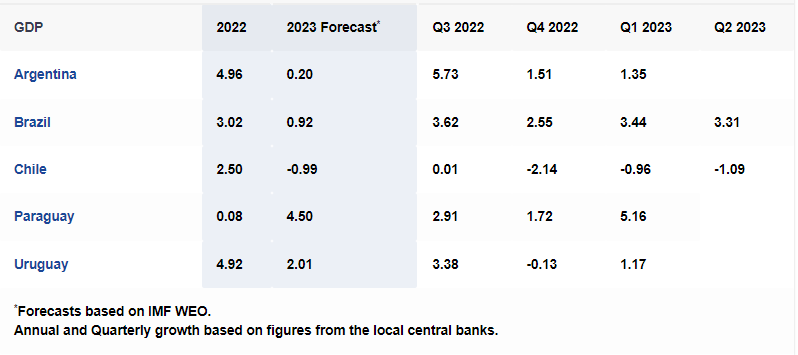
    CHILE | No growth on the horizon this year. On 6 September, Chile’s central bank (BCCh) revised down the 2023 growth forecast for the country in its September monetary policy report. Where the June edition forecast GDP growth somewhere between -0.5% and 0.25%, the revised projection sees negative or null growth this year, between -0.5% and 0%. The revision comes on the back of a series of negative economic indicators: industrial production fell 1.7% year-on-year in June, the unemployment rate rose 0.9 percentage points in the annual comparison to 8.8% in the rolling quarter ending in July, and the economy shrunk in the second quarter. BCCh figures from August show GDP contracted 0.3% in Q2 compared with Q1 and 1.1% year-on-year. Meanwhile, the United Nations’ Economic Commission on Latin America and the Caribbean (Eclac) projects -0.3% growth for Chile this year, below the South American average of 1.2%. The BCCh notes, however, that growth is expected to pick up against next year thanks to the performance of non-mining activities.

    PARAGUAY | Peña’s first moves. Shortly after taking office on 15 August, Paraguay’s President Santiago Peña announced a reduction in prices of fuel and gas sold by the state-owned oil company Petropar. According to the government the price cut, announced on 23 August, amounts to savings of G$600 (US$0.08) per litre in the price of diesel and petrol, and of G$1,500 per kilogram of gas. On social media, Peña said that the wellbeing of Paraguayans is his priority and that this move to cut fuel prices would be the first “of the many measures we are going to take so that Paraguayans can have more money in their pockets and be better off”. The president also announced that he had promulgated a law to create an economy and finance ministry, which fuses the finance ministry with the secretariat for economic and social development planning (STP) and secretariat for public administration (SFP).

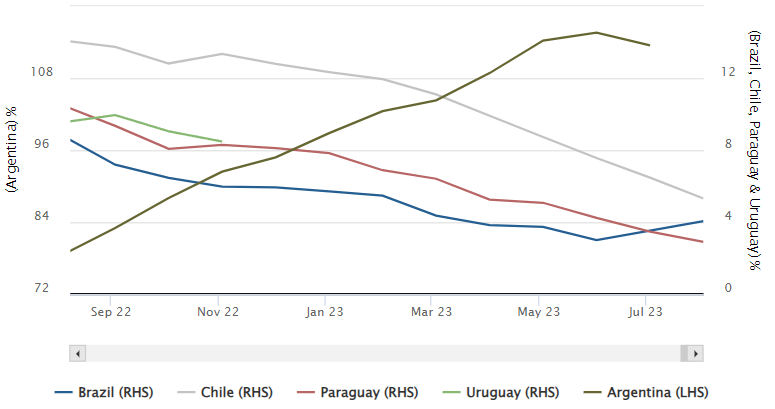
    Brazil & Southern Cone: inflation rate
    Percentage variation (year-on-year)

    Brazil & Southern Cone: GDP growth (%)
    Quarterly figures are year-on-year growth

  • HONDURAS: Public finances healthier than expected despite impacts of Covid-19 pandemic

    Sarah Sheldon 14 November 2023 Hits: 411

    While local think tank Foro Social de la Deuda Externa de Honduras (Fosdeh) has said that the Honduran economy is still being negatively impacted by the effects of the coronavirus (Covid-19) pandemic, international credit ratings agency Standard & Poor’s (S&P) has published a more optimistic assessment, citing lower than expected fiscal deficits.

    The Honduran economy still hasn’t recovered from the shock of the pandemic, Fosdeh director Mauricio Díaz Burnett told EFE news agency in an article published 11 October. GDP growth plummeted from 2.7% in 2019 to -9% in 2020, before spiking to 12.5% in 2021 and falling back to 4% in 2022, on figures from the International Monetary Fund (IMF). Díaz highlighted as cause for concern the fact that the Honduran economy is heavily reliant on remittances sent home by migrants living abroad. Their share of national GDP has increased rapidly since the turn of the century, from 6.1% of GDP in 2000 to 25.3% in 2021, according to figures from the central bank (BCH). In 2022 remittances were worth US$8.68bn, a 17.8% increase compared to 2021, said the BCH. While this situation is common among Central American countries, it means national economies are vulnerable to fluctuations in exchange rates, as well as raising concerns over a lack of growth driven by economic activity in Honduras.

    Díaz was speaking at a forum in Tegucigalpa alongside Leana Corea of international NGO Oxfam, who called for increased tax collection to enable more investment in healthcare and the fight against corruption. Improving education and healthcare is “a big challenge” and to face it those who “earn most have to pay taxes,” Cora told EFE. In recent decades Honduras has been known for offering generous tax exemptions, a situation which President Xiomara Castro is currently attempting to remedy via a proposed legislative bill, the ‘Ley de Justicia Tributaria’, which aims to phase out these exemptions.

    • Ley de Justicia Tributaria

    The proposed legislative bill, ‘Ley de Justicia Tributaria’ will phase out tax exemptions such as free trade zones, among other things. While the bill was sent to congress in May, there is currently no fixed date for it to be discussed by legislators. However, if it is approved it will boost tax collection and give the government more money to invest. The law is supported by the International Monetary Fund (IMF) but is facing significant opposition from business leaders who have benefited from generous tax exemptions under previous governments.

    A more optimistic analysis of the country’s economic prospects came from Standard & Poor’s (S&P), which revised its outlook for Honduras to stable from negative on 29 September, citing contained fiscal deficits. “We think Honduras’ fiscal deficits are likely to be lower than we previously expected, which will help stabilise public finances and the government’s debt burden,” said S&P. “The stable outlook incorporates our expectation of moderate GDP growth, continued good access to official funding, and a fiscal policy that contributes to stable net general government debt in the next two years.”

    The credit ratings agency predicts that GDP will grow by 3.0% in 2023 and 3.6% in 2024, while “bolstering GDP growth prospects remains key to achieving the administration's development objectives”. 

    S&P adds that it expects to see a fiscal deficit of around 2.4% of GDP in 2023, below the 4.4% deficit approved in this year’s budget, and a gradual strengthening of public finances. Net government debt will sit at around 46.8% of GDP for 2023-2026, said S&P, which also predicts that the government will “maintain good relationships with multilateral institutions and keep access to credit lines,” citing a recent deal with the IMF. This refers to an agreement made in September for US$822m in funds for Honduras under the Extended Fund Facility (EFF) and the Extended Credit Facility (ECF). According to an IMF statement, these arrangements “provide support for the Honduran government’s economic and institutional reform agenda over the next three years”.

    Challenges cited by S&P include political polarisation and divisions in congress, where President Castro only has some 50 votes in the 128-member unilateral legislature. The agency believes that this will make it difficult to pass reforms, although it does expect a new law to reduce tax exemptions (‘Ley de Justicia Tributaria’) to be passed by December this year.

    S&P also cites progress in strengthening anti-corruption efforts, such as improving the anti-money laundering framework. Further progress could be made by establishing a long-promised International Commission against Corruption and Impunity in Honduras (CICIH), but progress in doing so has been slow, according to S&P. “In our view, a continued commitment to fighting corruption is key to strengthening the Honduran justice system and improving investor confidence,” it says. 

    Another issue is the energy sector, in particular the state electricity company Empresa Nacional de Energía Eléctrica (ENEE), which posts losses equivalent to around 1% of GDP each year, according to S&P figures. President Castro has taken steps to try and address this drag on public finances by enacting significant reforms in the sector, including a May 2022 law which enabled the renegotiation of contacts with private generators to reduce costs [EB-23-07], but S&P expects transfers to ENEE to continue. The agency also raises concerns over the country’s exposure to extreme weather events and limited physical infrastructure as constraints on economic growth.

    Looking ahead, President Castro has approved the 2024 state budget proposal for L406.58bn (US$16.58bn), up from L392.52bn in 2023. Finance Minister Rixi Moncada warned that the country remains burdened by the “onerous debt” inherited from the previous Partido Nacional (PN) government led by former president Juan Orlando Hernández (2014-2022) which she said exceeds US$20bn. The budget must now be approved by congress, but the draft version contains several interesting changes compared to the 2023 budget. For example, under the proposal, the energy ministry would receive 43% less funding compared to last year, while the infrastructure and transport ministry would receive an 87% increase and the president’s office would receive 93% more funding than last year, according to a Fosdeh analysis.

  • TRACKING TRENDS

    Abbi Dicker 23 January 2025 Hits: 2723

    PERU | Mining GDP up. Peru’s mining GDP increased by 2% in the first 11 months of 2024 compared with the same period in 2023, the Sociedad Nacional de Minería, Petróleo y Energía (SNMPE) reported on 20 January. Mining investment over the same period, however, increased by just 0.4% to US$4.18bn.

    Mining exports in the first 11 months were up by 10% year-on-year to US$42.76bn (63% of Peru’s total exports), principally as a result of the high value of gold, which generated US$3.74bn more, copper (US$269m more) and tin (US$193m more).


    ECUADOR | Oil revenue. Ecuador’s oil exports in 2024 generated US$8.18bn, according to figures released by the state oil company Petroecuador on 22 January.

    Petroecuador exported a total of 120m barrels of oil in 2024, of which over half (67m barrels) was made up of Oriente light to medium crude oil and over a third (46m barrels) of Napo heavy crude.

  • ARGENTINA: Milei receives IMF fillip

    Abbi Dicker 31 July 2025 Hits: 3252

    The Argentine government led by President Javier Milei received a boost on 24 July after reaching a staff-level agreement with the International Monetary Fund (IMF) on the first review of the US$20bn Extended Fund Facility (EFF) arrangement it concluded in April. The successful review should unlock access to US$2bn for the government, which is wrestling with currency volatility amid, inter alia, pre-electoral disquiet from investors [WR-25-28].

    The IMF said the EFF programme had got off to “a strong start despite a more challenging external backdrop - disinflation and growth have continued, poverty has fallen further, and Argentina has re-entered international capital markets ahead of schedule”. There is a strong indication, however, that the markets are waiting for the mid-term congressional elections on 26 October amid signs of defiance by opposition legislators hostile to President Milei’s harsh economic austerity measures and deep spending cuts.

    Milei’s ruling far-right La Libertad Avanza (LLA) has been frantically stitching together an alliance in congress to try and resist an attempt by opposition parties to overturn presidential vetoes of congressional approval of increased pensions for retirees and disability benefits. Milei made it emphatically clear that his government could not tolerate these spending increases as they would break its commitment to a fiscal surplus.

    Six estranged deputies from the opposition Unión Cívica Radical (UCR) joined the LLA-led coalition in the lower chamber of congress on 29 July after being invited to a barbecue with the president of the lower chamber, the LLA’s Martín Menem, last week. The deputies said they were motivated by a desire to preserve the country’s present economic trajectory under the Milei administration. One of their number, Mariano Campero, told the national daily La Nación that the six-strong group had decided to join the coalition to “strengthen the shield that President Javier Milei needs in the face of permanent attacks by the opposition to upend the fiscal balance”.

    The addition of the six former UCR deputies brings the LLA-led coalition to 46 seats which, added to the 35 seats in the hands of the right-of-centre Propuesta Republicana (PRO) of former president Mauricio Macri (2015-2019), its most trustworthy ally, and three for the Movimiento de Integración y Desarrollo (MID), ensures it of a total of 84 seats in the 257-seat lower chamber. This is just three votes shy of the “87 heroes” (one-third of the chamber) Milei has called for to block an opposition vote to overturn a presidential veto.

    87 heroes

    It is likely that President Milei will find his “87 heroes” to protect any vetoes that he issues in the face of spending increases approved by congress between now and 10 December, when legislators elected in the mid-term elections on 26 October will take their seats. Investors are waiting to see, however, just how many deputies and senators Milei’s LLA can pick up in the elections. The LLA is the best-performing party in recent electoral surveys, but it is hampered by the fact that only half of the seats in the lower chamber and a third of those in the senate are up for grabs.

  • Bolivian opposition campaigns for blank vote

    LatinNews 22 July 2011 Hits: 547

    Development: On 21 July several opposition parties announced that they would campaign for blank votes in the scheduled 16 October elections for judges.

    Significance: The government is threatening to make blank voting a criminal offence. The opposition argues that a blank vote is the proper way to express rejection of the way the list of candidates for judgeships was handled.

    Key points:

    • The judicial elections are the key electoral contests this year. There are 118 candidates for 56 posts. The ruling Movimiento al Socialismo (MAS) allegedly held primaries to pick its candidates.
     
    • The country’s vice-president, Alvaro García Linera, said on 21 July, contradicting other members of the government, that voters should have the right to vote blank, but if they did so they were missing a historic opportunity to reshape the country’s judiciary.

    • President Evo Morales has seen his opinion poll rating recover in the past month. According to pollsters Ipsos Apoyo Opinión y Mercado, he is now on 48% up from 42% in June and 32% in March. His disapproval rate is now below his approval rating, at 45%, down from 50% in June.
     
    • The Unidad Nacional (UN) whose leader is a businessman, Samuel Doria Medina, is leading the blank vote campaign. It is possible that the Movimiento Sin Miedo (MSM), formerly a MAS ally, might join the UN in the blank vote initiative.

  • EL SALVADOR: Tax reforms loom

    LatinNews 15 December 2011 Hits: 366

    The Inter American Development Bank (IDB) broadly supports the government’s plan to reform the income tax system to increase revenues.

    The government argues that it needs more money to improve the public health and public education systems and meet the growing demands for better security. The tax take is 13.6% of GDP which is well below what the IDB calculates is the average for Latin America of 18% of GDP.

    El Salvador also needs money to pay off the debt incurred by its countercyclical economic policies of 2008 and 2009.

    The government’s fiscal reform will raise about 0.8% GDP in each of the first two years after its implementation. The IDB is also pushing for a more tightly focused subsidies programme. It has made detailed suggestions about the way the subsidy on propane is delivered: the IDB suggests that a lot of the money is wasted because cheap propane is smuggled into Guatemala and Honduras. 

    The IDB is not, however, pushing for an increase in VAT. It argues that an income tax reform should take precedence and once this has been done then perhaps the government should think about a VAT reform.

    Inflation: In November monthly inflation was 0.1%, bringing the lagging 12 month rate to 5.1%.

  • HAITI: 'A step forward despite some incidents'

    LatinNews 09 September 2015 Hits: 1961

    The international community and local authorities declared satisfaction with the first round of legislative elections held on 9 August for two-thirds of Haiti’s 30-seat national senate and the newly expanded 118-seat lower chamber of congress (previously 99-strong). That the long overdue election took place at all is considered a step forward for Haiti, which is still struggling to recover from the devastation of the 2010 earthquake. A second round run-off will take place on 25 October, concurrently with a first round presidential election. However, since the August vote, doubts have grown as to the legitimacy of the process.

    With the legislature inoperative since mid-January last - after the terms of all national deputies and ten senators in the upper chamber (in which a third of seats already were vacant) formally expired - the United Nations (UN) Secretary-General Ban Ki-moon on 7 August hailed the forthcoming election as “a major milestone for democracy in Haiti”.

    Even though 26 voting centres (of 1,508 nationwide) were forced to close due to clashes, and there were mutual accusations by political parties of fraud and ballot-stuffing, the president of the provisional electoral council (CEP), Pierre Louis Opont; the police chief, Godson Orelus; and the prime minister, Evans Paul, all described polling day as “acceptable”. Sandra Honoré, the head of the UN Stabilisation Mission in Haiti (Minustah), issued a statement on behalf of the UN and the ‘Core Group’ (the ambassadors of Brazil, Canada, France, Spain, the US, the European Union and the OAS Special Representative) hailing the organisation of the first round, which, the statement said, reflected “the efforts by the CEP, government and national police…in creating an appropriate framework for them to take place”.

    Results

    On 20 August, the CEP released preliminary results, according to which just eight of the 1,621 candidates competing for the lower chamber avoided a second round run-off, while a ninth also looks set for a first-round victory after his rival was excluded for engaging in electoral violence. None of the senate candidates won in the first round. Turnout was just 18% of registered voters across the country, down on the record low of 22.8% recorded in the last electoral cycle in 2010.

    CEP member Néhémie Joseph announced that the court would hold new elections in any constituency in which fewer than 70% of the ballot papers had arrived at the voter tabulation centre – meaning that elections will be restaged in 25 constituencies. The CEP caused some tensions with a decision to exclude a total of 17 candidates for (alleged) electoral violence. The candidates affected were from a range of parties including President Michel Martelly’s Parti Haïtien Têt Kalé (PHTK), Verité, the new party launched by former president René Préval (1996-2001; 2006-2011), and FL.

    Several opposition parties already have rejected the preliminary results. As we went to press on 9 September, Verité announced that it was withdrawing from the second round, claiming it was subjected to violent attacks on polling stations in Port-au-Prince and in some 50 of 1,500 voting centres around the country on 9 August. That other parties might also boycott the run-off is not unthinkable.

    Presidential poll

    The first poll ahead of the presidential election was taken by a private think-tank, Bureau de Recherches en Informatiques et en Développement Economique et Sociale (Brides), and released on 31 July. It put Jude Célestin (Ligue Alternative pour le Progrès et l’Emancipation Haïtienne) in first place with 15.1% of voting intentions. Formerly head of the state-owned construction company, Centre National des Équipements (CNE), Célestin previously ran in the 2010 presidential contest for Préval’s Inité party, before controversially being excluded from the second round. Célestin was followed in second place in the Brides poll by Jean Charles Moïse (Pitit Dessalines), on 9.6%, while the PHTK candidate, mechanical engineer Jovenel Moïse, a relative unknown, was third with 6.1%, below the 7.8% who said they could give ‘no response’ as to which presidential contender they would vote for.

    • Civil society reports

    On 25 August three civil society groups – RNDDH, the Conseil National d’Observation des Elections (CNO) and the Conseil Haïtien des Acteurs Non Etatiques (CONHANE) – published their electoral observation report. The three organisations – which between them sent 1,500 observers to polling stations in all 10 departments, covering 48% of the 1,508 voting centres – reported incidents of “violence, interruption of the voting process and direct pressure on voters” in 391 of the 728 voting centres it observed, and alleged “massive fraud” in 104 centres. The report also noted incidents of violence between 9 July and 2 August in the run-up to the election. These included five assassinations, two attempted murders and 18 cases of gun-related violence.

  • TRACKING TRENDS

    LatinNews 07 July 2016 Hits: 2960

    COSTA RICA | GDP growth. Costa Rica’s economy picked up speed in the first quarter of 2016, thanks to an increase in goods and services exported, according to figures released by the central bank. The economy grew by 5.4% year-on-year in the first quarter, following a 4.5% expansion in the final quarter of 2015. Exports increased by 17.5% year-on-year to US$2.473bn, while domestic consumption grew by 2.3%.

  • Assumption 4: Bilateral relations should be conducted in an atmosphere of mutual respect

    LatinNews 05 September 2017 Hits: 126

    Mexico and the US have a long political and diplomatic history including notable moments of collaboration, but also some of outright conflict. Some Mexican nationalists argue that throughout its history the country has suffered at the hands of US imperialism. In 1845 the US annexed Texas, which had been considered part of Mexico; in the subsequent Mexican-American war (1846-1848) Mexico lost a large swathe of territory including present-day California and New Mexico. The Mexican revolution in the early part of the 20th century rejected both capitalism and foreign intervention. US oil companies were nationalised in the 1930s. However, successive Mexican governments stopped short of full-scale nationalisation and state control: over the years the country has maintained a relatively strong private sector, and one which has grown in significance since the country joined NAFTA. There has nevertheless been an ongoing contrast between the economic power and the high living standards enjoyed in the US on the one hand and the comparatively less developed Mexican economy on the other, although the gap between the two has narrowed somewhat. The US remains the world’s largest single economy, while Mexico is currently ranked 14th.

    What all this means is that although successive Mexican governments have sought and enjoyed close relations with the US, they remain highly sensitive to the tone and language used in bilateral diplomacy, and to the symbols and rituals of government-to-government interactions. Any behaviour that is seen as being arrogant, disrespectful, or an inappropriate intervention in the country’s sovereign affairs has a very negative impact, not least because it places the Mexican government in an embarrassing position in the eyes of its own domestic public opinion. This requirement for mutually respectful diplomacy has not always been met, but in the pre-Trump era it had become a shared assumption of both the Mexican and US political elites.

  • ECONOMIC HIGHLIGHTS

    LatinNews 16 September 2020 Hits: 793

    Falling investment: On 6 August Mexico’s national statistics institute (Inegi) released figures for May on gross fixed capital formation (GFCF), according to which investment in fixed capital goods such as machinery and equipment fell by 38.4% year-on-year, and by 4.5% compared with April. A breakdown of the figures reveals a 43.8% year-on-year drop in spending on machinery, and a 33.1% drop in construction spending. Inegi president, Julio Santaella, noted that this decline brought GFCF to its lowest level since 1997, which he attributed to the impact of the coronavirus (Covid-19) pandemic. Meanwhile the economy ministry (SE) has reported that incoming foreign direct investment (FDI) for the first half of 2020 totalled US$17.97bn, a 0.7% drop compared to the same period in 2019. The manufacturing sector accounted for 43.2% of this total, followed by financial services & insurance (15.4%), transport (14.1%), trade (6.6%), and mining (4.9%). As regards sources of FDI, the US accounted for 38.6%, Canada 19.1%, Spain 11.2%, and Germany 6.8%.

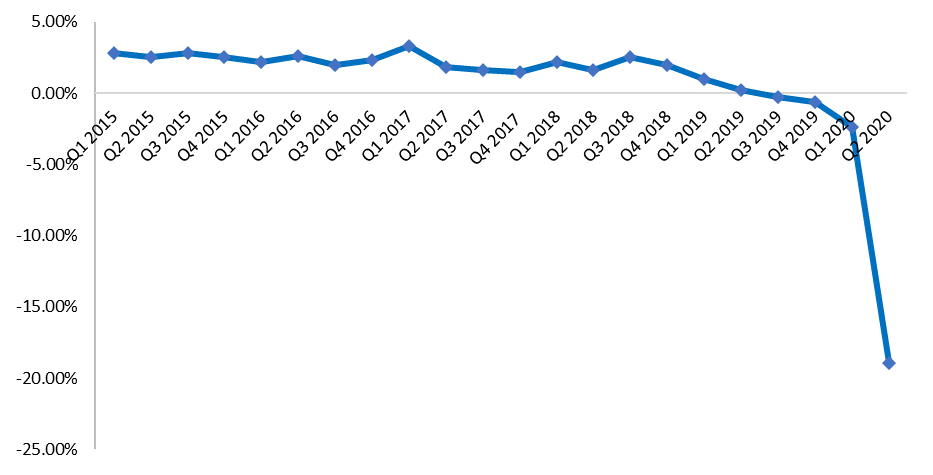
    Industrial activity: On 11 August Mexico’s national statistics institute (Inegi) released its latest index on industrial activity, which shows that industrial production in Mexico fell 14.1% year-on-year in the first six months of 2020. Activity in the construction sub-sector saw the biggest decrease, dropping 20.9%, followed by manufacturing industries (-16.2%), and electricity, water and gas generation and distribution (-5.1%). The mining sub-sector was the only one to record a positive result in January-June, with a 0.1% year-on-year variation driven by a 2.5% increase in oil & gas extraction and 7.2% increase in services related to mining (metallic and non-metallic mining excluding oil & gas fell by 11.2%). The monthly industrial activity index (Imai) saw a positive variation in June compared with May, growing 17.9% after the return to a ‘new normal’ and the reopening of the Mexican economy, following containment measures taken to tackle the coronavirus (Covid-19) pandemic. However, this year’s June Imai fell by 17.5% compared with June 2019.

    Mexico: GDP Growth
    Percentage variation (year-on-year)

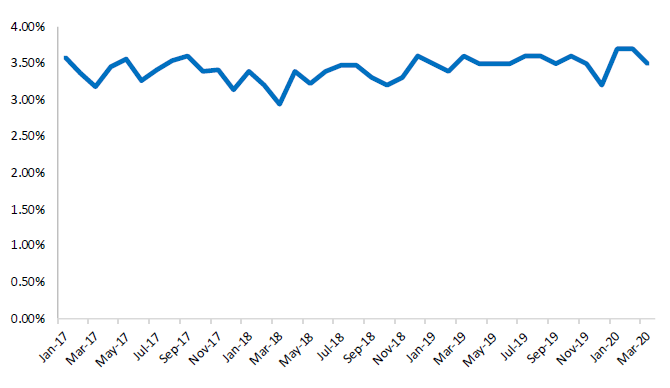
    Mexico: Unemployment Rate
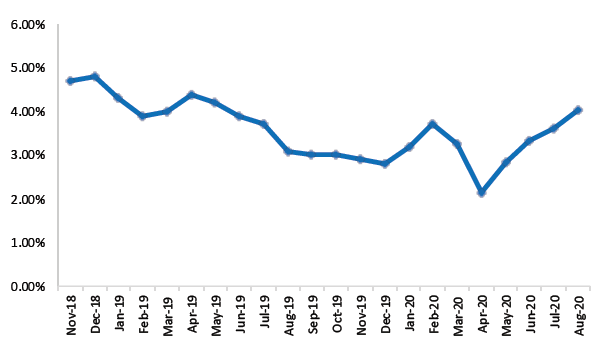
    Econimically active populationMexico: Inflation Rate
    Percentage variation (year-on-year)

  • TRACKING TRENDS

    Abbi Dicker 20 June 2024 Hits: 1637

    MEXICO | Steel sector strike continues. Mexico’s national iron and steel chamber (Canacero) issued a statement on 17 June stating that a strike at facilities run by steel producer ArcelorMittal in Michoacán state was “deeply impacting the economic development of the region”. The strike action began at the end of May, with workers affiliated with the mining union (SNTMMSSRM) protesting over the annual profit distribution to employees that the company had decided for 2023.

    Canacero called on authorities to intervene to resolve the conflict and stated that, while it would always defend workers’ rights, it “rejects these rights being used as a pretext to legitimise unjustified aims”. ArcelorMittal told newswire Reuters on 17 June that the strike had held up an estimated 300,000 tonnes (t) of steel and claimed that labour authorities had not endorsed the strike.

  • NICARAGUA: Voluntary police force gains constitutional recognition

    Abbi Dicker 07 March 2025 Hits: 4006

    “A lawless, repressive army that has been given constitutional status”.  This was the response by exiled Nicaraguan opposition writer Gioconda Belli to recently approved changes to the constitution which create a voluntary police force. Approved in late January by the 92-member unicameral legislature, which like all institutions is controlled by President Daniel Ortega’s Frente Sandinista de Liberación Nacional (FSLN), the changes are in line with the constitutional reform package that he unveiled in November 2024 [SSR-25-01]. Critics consider the new force little more than an institutionalisation of the paramilitary FSLN shock groups which played a key role in helping the police (PNN) suppress dissent as part of the government crackdown which began in 2018 in response to social unrest.

    While the legislature approved the changes on 21 January, authorities began swearing in the first 2,504 members of the volunteer police force six days earlier. With their faces concealed by black balaclavas, 1,204 voluntary police members were sworn in in Madriz department and 1,300 in Estelí department on 15 January, in ceremonies presided over by Francisco Díaz, the general director of the national police (PNN), whose daughter is married to Ortega’s son. Díaz is one of various senior officials blacklisted by Washington: the sanctions against him unveiled in 2018 were attributed to the fact that under his watch, the PNN had “engaged in serious human rights abuse against the people of Nicaragua, including extrajudicial killings”. This was an allusion to the PNN’s brutal crackdown on unrest following the 2018 protests, as directed by the Ortega government which a United Nations expert panel found in 2023 had committed crimes against humanity [SSR-23-04].

    With PNN Inspector General Jaime Vanegas telling the local media on 17 February that over 50,000 people had been sworn in as members of the voluntary police, and First Lady and Vice President Rosario Murillo announcing on 25 February that a further 30,000 new members would be signed up, the changes have drawn concern from activists such as Juan Carlos Arce, of human rights NGO Colectivo de Derechos Humanos Nicaragua Nunca Más who warn that these represent a formalisation of parastate groups, known as ‘shock groups’. Indeed a 2021 report by the Organization of American States (OAS)’s Inter-American Commission on Human Rights (IACHR) identifies such groups, which were formed in late 2007 and early 2008, as crucial to the suppression of dissent by the Ortega government [SSR-21-12].

    Contempt

    The ruling by the Inter-American Court of Human Rights (Corte-IDH) regarding President Ortega’s 2011 re-election is unlikely to have much impact on the Nicaraguan government: in 2023 Nicaragua formally withdrew from the Organization of American States (OAS), accusing the OAS of meddling in the country’s domestic affairs. This followed condemnation by the OAS, along with much of the international community, of the controversial election in November 2021 which produced a re-election for Ortega but was widely slammed as a sham. In November 2022, the Corte-IDH declared the Nicaraguan government in contempt of court for having refused to heed earlier Corte-IDH rulings.

    Corte-IDH rules against Ortega’s 2011 re-election

    On 23 January the Costa Rica-based Inter-American Court of Human Rights (Corte-IDH), another arm of the OAS, ruled that the State of Nicaragua had violated the right to participate in government, judicial guarantees, and judicial protection, of Fabio Gadea Mantilla during the 2011 presidential elections. In that election Ortega defeated Gadea, of the Partido Liberal Independiente (PLI), by 62%-31%. Ortega, who had served one term (1985-1990) and was in the process of a second (2007-2012), was not eligible to run again due to a prohibition in the constitution (Art. 147) on presidents serving consecutive terms or more than two terms non-consecutively. However, in 2009 the supreme court (CSJ) controversially lifted the ban on consecutive presidential re-election (a move widely slammed as illegal given only the legislature was authorised to amend the constitution), thus enabling Ortega to run again.

    In its ruling, the Corte-IDH concluded that “the lack of integrity of the electoral process” favoured Ortega’s reelection. In addition, it concluded that the CSJ and the electoral authorities (CSE) “showed bias and did not guarantee an effective judicial remedy to review decisions that questioned the irregularities of the proceedings”. 

  • BRAZIL: Opposition rages over Lula Carnival tribute

    Patrick de Courcy 19 February 2026 Hits: 1445

    One of Rio de Janeiro’s samba schools, Acadêmicos de Nitéroi, used its float at the Carnival parade on 15 February to pay a grand tribute to President Luiz Inácio Lula da Silva. Political statements are often expressed by Carnival performers, but this particular display of support for Lula has faced a fierce backlash from the opposition. Given that Lula is running for re-election in the presidential race in October, right-wing figures, such as Senator Flávio Bolsonaro, who is currently expected to be Lula’s main rival in the election, have condemned the Carnival float as an illicit act of electoral propaganda.

    From 13-15 February President Lula visited three cities to take part in local Carnival celebrations – Recife, Salvador, and Rio. These cities have some of the best-known Carnival festivities in Brazil, and it was always expected that President Lula would use the events as opportunities to boost his publicity and meet potential voters. However, at no point did Lula make a direct call for votes. The official campaign period does not begin until mid-August, after all candidates have been registered and the names on the ballots have been finalised, so any direct campaigning before then would be a violation of electoral rules. Brazil also has rules on campaign financing which require donations and other funding sources to be declared, and the superior electoral court (TSE) is due to decide in the coming months what the spending limits should be for election campaigns.

    The float of Acadêmicos de Niterói featured a large figurine of Lula, as well as a smaller figurine dressed as a prisoner, which lampooned Flávio’s father, former president Jair Bolsonaro (2019-2023), who is currently in prison after being convicted last year for plotting a coup to overturn his 2022 election defeat. In the evening of 15 February, Lula was in the audience of Rio’s Sambadrome watching the parade, and the following day he posted on social media to praise the Rio Carnival and gave a special mention to several samba schools, including Acadêmicos de Niterói.

    Meanwhile, conservative politicians fumed at the Lula tribute. Right-wing officials such as São Paulo’s governor, Tarcísio de Freitas, and the governor of Minas Gerais, Romeu Zema, described the float as a disrespectful gesture towards Brazil’s conservatives. De Freitas said it was inflaming polarisation and promoting “divisive discourse”, while Zema described the float as a corrupt act of “open-air vote-buying”. On 16 February Flávio Bolsonaro said that he would take legal action at the TSE. Opposition figures have claimed that Lula’s left-wing Partido dos Trabalhadores (PT) had used the Rio Carnival as an unauthorised campaign event, although the PT has since insisted that the performance was not funded by the party.

    In the days before the parade, right-wing parties Novo and Missão petitioned the TSE to ban Acadêmicos de Niterói from performing their Lula tribute at the Carnival parade, but the requests were denied. In a statement published on 12 February, the TSE argued against pre-emptively censuring a performance on the grounds of a potential breach of electoral rules, saying that the performance should go ahead and be reviewed afterwards on whether it constituted a premature call for votes. Legal experts cited in the press expressed mixed opinions on whether the float broke the rules. Although the performance did not include a direct call to action to vote, Rio’s samba schools do receive financial support through cultural programmes run by federal and local authorities, which the opposition could highlight to back up allegations that the government was abusing its power to boost Lula’s profile.

    Neutral in Pernambuco

    President Lula attended the Carnival celebrations in Recife, the capital of Pernambuco state, on 14 February. He was accompanied by both the centre-left mayor of Recife, João Campos (Partido Socialista Brasileiro, PSB), and the centre-right governor of Pernambuco, Raquel Lyra (Partido Social Democrático, PSD). The decision to appear alongside both officials seems to suggest that Lula is trying to avoid signalling who he might endorse in the Pernambuco gubernatorial race this year, with Campos being one of the favourites to challenge Lyra’s re-election bid.

    Carnival tourism

    According to estimates released by Brazil’s tourism agency (Embratur), on 13 February, international visitors are expected to contribute approximately US$185.7m to the economies of Carnival host cities this year. This represents a 9.6% rise in foreign spending over the previous season. Furthermore, the agency noted a significant surge in travel, with international flight arrivals for the 2026 festivities increasing by 21% year-on-year.

  • NICARAGUA: More signs of strengthening ties with Moscow

    Sarah Sheldon 20 July 2026 Hits: 146

    A Nicaraguan delegation headed up by Laureano Ortega Murillo, a son of authoritarian co-presidents Daniel Ortega and Rosario Murillo and a presidential adviser on investment, paid a recent visit to Russia where various bilateral cooperation agreements were signed. The visit is the latest sign of burgeoning ties between Moscow and Managua, which, in the wake of Washington’s military incursion in Venezuela in January, and amid pressure on Nicaragua’s other key regional ally, Cuba, appears increasingly out on a limb.

    The Nicaraguan delegation visited Russia to attend the 3-6 June St Petersburg International Economic Forum. According to both governments, they inked various agreements, spanning areas such as health, biotechnology, nuclear medicine, trade, investment, science, education, communications, and technology, as well as a memorandum of understanding on biological security, an extradition treaty, and a treaty on the transfer of convicted prisoners. The previous month, on 2 May, Russia’s state news agency Tass announced that President Vladimir Putin had signed a comprehensive military cooperation agreement with Nicaragua, formalising an initial deal inked on 22 September 2025 at a meeting in Moscow between Russia’s Defence Minister Andrei Belousov and Nicaragua’s army commander, General Julio César Avilés. According to Tass, the agreement provides for “the joint training of troops; exchange of experience and information in countering the ideology of extremism and international terrorism; cooperation between military educational institutions; and cooperation in research on military issues.”

    A Tass report released on 22 October 2025 provided more details. It said that “in particular, the parties agreed to share experiences in implementing national military doctrines, building, reforming and manning their armed forces, and combating international terrorism and piracy”. It added that they would “also cooperate in the field of radiological, chemical and biological protection” while “joint work will be carried out in the field of cybersecurity and mutual assistance in dealing with the aftermath of natural and man-made disasters [while] the two counties’ relevant agencies will establish a working group in order to implement the agreement”. It added that “a military cooperation program will be developed annually.”

    The prospect of closer military cooperation between Russia and Nicaragua continues to attract attention, particularly following the March 2024 decision by Nicaragua’s legislature to authorise Russia to finance and build a police training centre in Managua. While a Russia-Nicaragua anti-narcotics training centre had already been inaugurated in Managua in 2017, in line with a bilateral agreement inked in February 2012 to combat drug trafficking and organised crime, the training centre inaugurated in 2024 proved controversial. A March 2024 report by Costa Rica-based Nicaraguan investigative outlet Confidencial cites experts as warning that its scope was much broader. They questioned the fact that it would carry out its activity under the “general direction of the head of the diplomatic representation of the Russian Federation in Nicaragua” – seemingly ceding authority to the Russian government [SSR-24-06].

    Costa Rican concerns

    Addressing the 56th General Assembly of the Organization of American States (OAS) which Panama hosted from 22-24 June, Costa Rica’s foreign minister, Manuel Tovar, was cited by the media as saying that “Costa Rica views with great concern the persistent and recent presence of Russian military forces in Nicaragua”. This prompted a response on 24 June from Russia’s embassy in Costa Rica which said that it believes his words “do not fully reflect the reality of the facts….and the concerns expressed are unfounded”.

    • Russian response to Costa Rica’s concerns

    In its statement in response to Tovar’s claims, the Russian embassy cited “reliable information” as indicating that “there is currently a group of Russian military advisers and specialists in Nicaragua whose activities are related to the exchange of experience, personnel training, and assistance in carrying out humanitarian tasks, as well as search-and-rescue operations in cases of emergencies and natural disasters”. It adds that “a Russian military contingent may be invited to… Nicaragua on the same legal basis as military contingents from the US, Mexico, Cuba, and Central American countries…. As is well known, the corresponding authorisation is issued twice a year by presidential decree and approved by Nicaragua’s national assembly”. It said that, as with the other aforementioned countries, the authorisation is aimed at facilitating “international cooperation programmes of a humanitarian, educational, rescue, and other nature.”