All Categories

Subcategories

  • TRACKING TRENDS

    LatinNews 17 December 2015 Hits: 234

    BRAZIL | Inflation. Brazil’s 12-month inflation rate rose to 10.4% for November, the highest level in 12 years since November 2003, when it reached 11.02% during the first year in office of former president Lula da Silva (2003-2011). The consumer price index rose 1.01% in November, according to the national statistics agency (Ibge). This higher-than-expected figure for consumer prices was driven by an increase in food and fuel prices. The high inflation rate will pressure the central bank monetary policy committee (Copom) to increase the Selic benchmark interest rate in its first 2016 meeting on 19-20 January.

  • Region: Corporate Radar

    LatinNews 06 September 2017 Hits: 569

    Pemex denies Odebrecht bribes: In Mexico, former Pemex chief executive Emilio Lozoya denied taking bribery payments from the Brazilian construction company Odebrecht and channelling them President Enrique Peña Nieto’s 2012 election campaign. The claims were made by the Brazilian newspaper O Globo, citing Odebrecht executive Alberto de Meneses Weyll, who said the company had paid Lozoya US$10m in bribes to secure a US$115m contract for work at the Tula refinery. Lozoya, who left Pemex in 2016 said he “categorically denied” the claims; they were also rejected by Eduardo Sánchez, chief spokesman for President Peña Nieto.

    New Mexican stock exchange: Mexico’s main financial regulator has approved the launch of a new stock exchange, to be called the Bolsa Institucional de Valores (BIVA), which is to operate alongside and compete with the existing Bolsa Mexican de Valores (BMV). The BMV has only 144 listed companies (less than half the number in Brazil or Chile). Santiago Urquiza, president of brokers Central de Corretaje (Cencor), is launching the new venture, which he says will use Nasdaq’s X-stream Trading platform. Urquiza says BIVA will seek to attract companies with annual sales of between MXN500m and MXN1bn (US$28056m), as well as a new wave of start-ups. Overall, it is targeting a 30% increase in the number of listed companies in the country over the next three years, to take the total up to over 200.

    Petrobras in China deal: On 2 September, Brazil’s state-owned oil company Petrobras said that it had signed a strategic agreement with the China Development Bank (CDB) allowing it to explore opportunities on China’s financial markets. Newspaper Valor Económico said that the agreement, signed by President Michel Temer during a visit to China, would allow the Brazilian company to raise finance and use the second half of a US$10bn credit line opened by CDB in 2016 and guaranteed by Brazilian oil exports. Areas of collaboration would include the financing and leasing of oil platforms. Petrobras has a heavy debt load and has been hard hit by corruption scandals. The current management is seeking to sell assets and cut spending as part of a recovery plan.

  • Region: Corporate Radar

    LatinNews 10 November 2017 Hits: 369

    Pemex announces big find

    State oil company Pemex has announced what it describes as its most important onshore discovery in the last 15 years. The Ixachi-1 well, 72kms south of Veracruz, is estimated to hold total 3P reserves of around 350m barrels of light oil and gas equivalent (boe). Officials say the find is particularly valuable because it is close to existing pipeline infrastructure and can be brought into production relatively rapidly, by 2018 or 2019. The announcement came as Pemex production levels continue to fall. In September (a month affected by hurricane damage), output slipped to 1.73m bpd. Average output for 2017 is expected to be around 1.9m bpd, significantly below the 2004 peak of 3.4m bpd.

    Chinese bid for Oi?

    A Reuters report that China Telecom Corp could bid up for BRL20bn (US$6bn) to acquire control of Oi, Brazil’s troubled mobile telephony company. Oi declared bankruptcy in mid-2016 and its future remains subject to debt rescheduling negotiations with its creditors. A creditors’ assembly was due for 10 November, to discuss a plan to restructure Oi’s total debts of around BRL65bn (US$19.9bn)

    Ecuador taps up bond markets again

    Ecuador placed US$2.5bn in sovereign bonds in late October. A finance ministry statement said the 10-year bonds offered a yield of 8.87% and were oversubscribed, with demand reaching US$8bn. Institutional investors from the US, Europe, Asia and other Latin American countries were among the purchasers. Separately, the ministry announced that it had also secured a US$500m loan from Goldman Sachs.

    The funds raised by the bond issue and the loan will be used to finance priority investment projects in the 2018 budget. In a new audit report, the national planning and development secretariat (Senplades) and the transport & public works ministry (MTOP) listed 640 incomplete projects inherited from the previous administration.

    Originally valued at US$2.1bn, some US$4bn has already been invested in these schemes, with another US$1bn needed to complete them. Explaining that projects have not been completed for various reasons, including termination of contracts, lack of funds and technical failures, the head of the MTOP, Paúl Granda, said that 111 projects remained active.

    Antofagasta going green

    Chilean mining company Antofagasta is seeking to renegotiate its long-term energy contracts so as to shift the balance in favour of renewable resources such as wind and solar energy. Chief executive Iván Arriagada said renewable energy prices had become more competitive.

    The company’s Los Pelambres copper mine now relies on renewable energy for 45% of its total needs. Other Antofagasta mines in northern Chile, such as Centinela, Antucoya, and Zaldivar are still using electricity from coal-fired plants, but were looking to move towards renewables.

    “Going forward, we will prefer non-conventional renewable resources, and it wouldn’t surprise me if we passed 50%, though we don’t have a specific goal”, Arriagada said.

    Banorte merges with Interacciones

    Grupo Financiero Banorte on 25 October said that it had signed an agreement to merge with Interacciones, one of its top 10 rivals in the Mexican banking sector, for an undisclosed sum. Banorte, led by Carlos Hank González, is the fourth largest bank in the country. Interacciones, led by Carlos Hank Rhon, is smaller, and specialised in funding Mexican states.

    The merged bank will be the second largest in the country, with 15.46% of total assets, placing it second to BBVA Bancomer with a 23.19% share. The merger is subject to regulatory approval by the Comisión Federal de Competencia (Cofece).

  • URUGUAY: Abortion issue comes back to haunt the FA

    LatinNews 27 March 2013 Hits: 2122

    In its two consecutive terms in power, Uruguay’s ruling leftist coalition, the Frente Amplio (FA), has managed to introduce a series of progressive reforms to economic policy, public health and social policy. It has achieved this by heavily relying on its congressional majority, believing that this has given the party a strong mandate to pursue such changes. However, in the last couple of months there has been a backlash against some of these reforms, with some of them successfully challenged in Uruguay’s supreme court. These successes have emboldened the fractured political opposition, which is now uniting to present the biggest challenge yet to the current FA administration led by President José Mujica - a national referendum on the controversial new October 2012 law legalising abortion.

    The legalisation of abortion had been in the pipeline in Uruguay for over 10 years. It has always been backed by FA on the grounds that it should be considered an important public health issue. In contrast it was staunchly resisted by the two conservative traditional parties, Partido Nacional (PN, Blancos) and Partido Colorado (Colorados, PC). Slowly but surely, the political situation began to change during the first FA government led by former president Tabaré Vázquez (2005-2010). The FA’s first term in power was such a resounding success that it was returned to power with President José Mujica in 2010, in the process securing narrow majorities in both houses of congress.

    In October 2012, after years of an intense and divisive political and public debate, the ‘sexual health and reproduction law’ was approved by congress, making Uruguay only the third country in Latin America besides Cuba and Guyana to have legislation in place to allow women to terminate an unwanted pregnancy. The legislation only de-penalises abortions carried out before 12 weeks by a medical institution; and after a woman seeking to terminate her pregnancy has received appropriate counselling. No sooner did the law obtain approval than PN political leaders such as Deputy Pablo Abdala announced that they would launch a campaign to collect the necessary 52,000 signatures (or 2% of registered voters) to request that the law be put to a national referendum.

    The referendum campaign was quickly backed by pro-life groups in the country; but it appeared to move slowly at first. However, after the new law went into effect in January, and the first legal abortions began taking place, it swiftly picked up momentum. The fact that many physicians in the country decided to conscientiously object to conducting abortions on ethical grounds, as permitted by the law lent weight to the campaign. According to some local press reports, up to 30% of all doctors are conscientious objectors. Indeed, the government and more specifically the health ministry (MSP), found itself with a growing problem on its hands, as the prevalence of these conscientious objectors meant that the law had effectively become dead letter in many interior areas, where women seeking to terminate a pregnancy were unable to find a doctor willing to assist them. In fact the MSP had announced that it was considering introducing modifications to the legislation so that it would be harder for doctors to object to practising abortions.

    According to the local estimates some 200-300 legal abortions have taken place since January, a figure that further raised alarm amongst pro-life groups and large swathes of the population. (It is unclear whether all of these women were Uruguayan citizens). By 21 March the pro-life campaign led by Abdala had submitted a petition to Uruguay’s electoral court calling for a national referendum. The petition had 67,000 signatures, well over the minimum requirement. The electoral court now has 45 days to verify the signatures and then another 45 to put the proposal to popular consultation, whereby the proposed referendum question must obtain the support of 25% of all registered voters so that it can be put to the country in a full national referendum.

    • Abdala celebrates

    Partido Nacional Deputy Pablo Abdala, one of the main proponents of an abortion referendum, celebrated the fact that the pro-life campaign had managed to obtain the necessary signatures to begin the process. Abdala explained that the abortion law was the result of “a very quick debate, in which I think everyone acted too hastily, and we believe that the issue deserves an intense, serious, mature and responsible debate”. He added “Life is a fundamental human right that precedes the State and democracy itself, it cannot be subjected to majorities or minorities and the State must guarantee its defence”.

  • REGION: Trade and investment stagnation

    LatinNews 28 November 2014 Hits: 637

    New data from the United Nations’ Economic Commission for Latin America and the Caribbean (ECLAC) shows that Foreign Direct Investment (FDI) in the region has basically stagnated this year. The same is true of trade between the region and the rest of the world – mainly because of lower commodity prices. Equally noteworthy is the fact that intra-regional trade has contracted by 5%-6%.

    In a late October update to its annual regional FDI report (published in May), the ECLAC noted that net FDI to the region in the first six months of 2014 amounted to US$84.6bn, about 23% less than in H1 13. Much of the US$25.7bn drop in inflows could be accounted for by two transactions in Mexico: Anheuser Busch InBev’s US$13.2bn purchase of the local brewer Modelo in H1 13, and AT&T’s sale of its stake in América Móvil in H1 14. This meant that the figure for the first half of 2014 was always likely to be lower; in the event it was down by US$4.2bn.

    As chart 1 shows, Argentina registered a net FDI outflow of US$55m in the first six months of 2014. However, this included a US$4.23bn outflow associated with Repsol’s divestment of Yacimientos Petrolíferos Fiscales (YPF).

    Chart 1: Foreign direct investment (FDI) flows (US$m)
    Total 2013
    H1 13 H1 14 Variation
    11,353 Argentina [3] 5,878 -55 -5,933
    2,030 Bolivia 863 852 -11
    63,996 Brazil [1] 38,976 42,001 3,025
    20,258 Chile [1] 12,286 10,367 -1,919
    16,199 Colombia 7,698 8,452 754
    2,714 Costa Rica 1,358 1,075 -283
    140 El Salvador 76 25 -51
    1,309 Guatemala 693 713 20
    1,060 Honduras 537 542 5
    39,172 Mexico [2] 28,784 9,733 -19,051
    4,654 Panama 2,045 2,575 530
    9,298 Peru 5,729 4,680 -1,049
    1,991 Dom. Republic 982 1,175 193
    2,754 Uruguay 1,439 1,568 129
    7,040 Venezuela 3,790 1,761 -2,029
    183,968 Total 111,134 85,464 -25,670

    1. Figures for first eight months of 2013 and 2014
    2. H1 13 figure boosted by US$13,249mn purchase of Modelo by Anheuser-Busch InBev
    2. H1 14 figure reduced by AT&T's sale of its stake in América Móvil for US$4,495mn
    3. But for Repsol's sale of its YPF stake, the H1 14 figure would have been US$4,289mn

    Source: ECLAC

    Even excluding these deals, FDI in the region in the first half of 2014 still would have been about 4% lower than in the year-earlier period. Lower minerals prices contributed to falls of US$1.0bn and US$1.9bn in FDI flows to Peru and Chile respectively. However, the US$3.3bn purchase of Chile’s energy company CGE by Gas Natural of Spain should ensure that FDI in Chile actually rises for the year as a whole. The deteriorating economic environment in Venezuela is reflected in a US$2.0bn drop in inwards FDI, to US$2.2bn.

    The absolute size of Brazil’s economy means that foreign corporations continue to see it as one they cannot ignore. Inwards FDI rose from almost US$39bn in H1 13 to US$42.0bn in H1 14. It may well be that FDI in Brazil in 2014 exceeds last year’s US$64bn. A rise of US$754m in FDI in Colombia in the first half means that, there too, the total for 2014 should match last year’s figure. Other significant increases in the first six months of 2014 took place in Uruguay (US$129m), the Dominican Republic (US$193m) and Panama (US$530m).

    Trade flows with the rest of the world slow

    The stagnation in regional FDI inflows has coincided with a small decline in trade in goods between the region and the rest of the world. According to ECLAC, exports contracted 0.3% in the first half of the year relative to H1 13. Imports contracted 0.6%. In spite of the respectable growth rates still being achieved by China and much of South East Asia, exports to Asia only managed growth of 1.6%. Exports to the US, meanwhile, grew by 2.6%. However, growth to Asia and the US was more than offset by a 0.5% drop in exports to the European Union (EU). Interestingly, imports from the EU also fell significantly; by 6.0%. This was due to a sharp drop in EU sales to Argentina (10.9%), Venezuela (21.7%) and Chile (20.6%). Against this, regional imports from the US and Asia rose by 2.7% and 1.8% respectively.

    Lower commodity prices have been a challenge for many exporters. The 0.3% fall in exports from the region in H1 14 was the result of a 5.5% drop in prices, which offset a 5.2% rise in volumes shipped. The impact of lower prices appears to have been greatest in Argentina and Peru, whose total exports in the first half of the year contracted by 10.1% and 10.2% respectively. Lower commodity prices (and, possibly, discounting by suppliers of manufactured goods) had an impact on imports too. ECLAC’s data indicates that, across the region as a whole, import volumes rose by 2.2%, while prices dropped by 2.8%.

    As chart 2 shows, Mexico’s exports increased by 4.2% in the first half of the year: this was due overwhelmingly to a 5.8% rise in exports to the US. Other countries posting good growth in exports during the first six months of 2014 included Nicaragua (8.2%), Ecuador (9.7%), Paraguay (9.2%) and Uruguay (8.2%).

    Chart 2: Year-on-year growth (%) in foreign trade in goods, H1 14

    Exports Imports

    Intra-regional Total global Intra-regional Total global
    Lat. America & Carib. -5.6 -0.3 -5.2 -0.6
    Argentina -16.1 -10.1 -18.8 -7.5
    Brazil -12.7 -3.4 -10.1 -3.8
    Venezuela -1.3 -0.9 20.8 -5.9
    Colombia -11.1 -4.4 -6.0 6.1
    Peru -2.8 -10.2 -5.6 -1.1
    Central America [1] 4.8 1.7 -8.7 2.2
    CARICOM [2] 8.8 -5.3 2.4 2.0
    Mexico -6.6 4.2 2.0 3.2
    Chile -1.3 0.1 -8.4 -8.8

    1. Costa Rica, El Salvador, Honduras, Guatemala, Nicaragua, Panama
    2. Antigua & Barbuda, Bahamas, Barbados, Belize, Dominica, Grenada, Guyana, Haiti, Jamaica, Montserrat, St Kitts & Nevis, St Lucia, St Vincent & Grenadines, Suriname, Trinidad & Tobago

    Source: ECLAC

    Import trends by country were quite varied. The sluggish growth (or worse) in Argentina, Brazil, Chile and Venezuela led to a fall of imports of between 6% and 9% in H1 14. Conversely, Colombia’s imports rose by 6.1%, while Mexico’s grew by 3.2%. In both cases, the growth was driven by higher demand from the US and Asia.

    Trade within the region also declines

    However, a standout feature of the first half of the year was the contraction in trade within Latin America and the Caribbean. Reported exports to other regional markets dropped by 5.6%, while imports fell by 5.2%, according to ECLAC. Given the general improvement in the ease of doing business in the region (as we discuss elsewhere in this edition), the fall in intra-regional trade is mainly attributable to the weakness of the larger economies. The double-digit fall in Argentina and Brazil’s intra-regional exports and imports, for instance, is a reflection of the (near)-recession conditions in both countries.

    Brazil’s problems also explain much of the 11.1% fall in exports from Colombia to the rest of the region. Elsewhere, Chile’s imports from the region fell 8.4%, and Peru’s 5.6%, indicative of the slippage in commodity prices and also the fall in FDI in those countries.

    Looking forward, ECLAC expects regional export growth to accelerate to 1.9% year-on-year in the second half of the year, giving overall annual growth of 0.8% for calendar 2014, as chart 3 shows. Most of this will be driven by increased export sales to the US from its main regional suppliers. By far the most important of these is Mexico. ECLAC expects Mexico’s export growth to rise to 5.8% year-on-year in the second half, up from 4.2% in the first. Other beneficiaries are Central America and the Dominican Republic. By contrast, ECLAC expects exports from Chile to grow slowly.

    Chart 3: Year-on-year growth rates (%) for foreign trade in goods: ECLAC's projections

    Exports Imports

    2013 H1 14 H2 14 2014 2013 H1 14 H2 14 H2 14
    Latin America & Caribbean -0.4 -0.3 1.9 0.8 2.6 -0.6 -0.6 -0.6
    Mercosur [1] -1.4 -3.6 -0.9 -2.3 3.9 -4.5 -2.6 -3.6
    Andean Community [2] -3.0 -2.6 -0.5 -1.5 3.2 2.6 0.3 1.4
    Central America [3] -0.6 1.7 6.2 3.9 1.9 2.2 3.6 2.9
    CARICOM [4] -10.3 -5.3 -3.2 -4.3 -2.1 2.0 -5.1 -1.6
    Mexico 2.5 4.2 5.8 5.0 2.8 3.2 1.5 2.3
    Chile -1.6 0.1 1.4 0.8 -1.2 -8.8 -5.3 -7.0
    Cuba -2.3 6.9 2.0 4.3 -0.3 -3.3 12.3 4.4
    Dom. Rep. 6.4 2.3 4.1 3.1 -7.1 3.7 -4.6 -0.6

    1. Argentina, Brazil, Paraguay, Uruguay, Venezuela
    2. Bolivia, Colombia, Ecuador, Peru
    3. Costa Rica, El Salvador, Honduras, Guatemala, Nicaragua, Panama
    4. Antigua & Barbuda, Bahamas, Barbados, Belize, Dominica, Grenada, Guyana, Haiti, Jamaica, Montserrat, St Kitts & Nevis, St Lucia, St Vincent & Grenadines, Suriname, Trinidad & Tobago

    Source: ECLAC

    ECLAC is far less optimistic about the prospects for exports from other countries. In the Southern Common Market (Mercosur), exports from Argentina and Brazil are expected to decline by 0.3% and 2.7% respectively in the second half. Having contracted by 0.9% year-on-year in the first half, ECLAC expects Venezuela’s exports to shrink by 0.8% in the second. And in the Andean Community, Peru’s exports are expected to contract by a sharp 10.9% in the second half, marginally more than in the first six months of the year.

    Regional imports are expected to continue contracting at an annual rate of 0.6% overall through the second half. This is due to falls in Argentina (5.8%), Brazil (2.6%), Chile (5.3%) and Peru (3.6%). Imports are expected to grow on a year-on-year basis in Colombia (1.9%) and Ecuador (2.3%), as well as in much of Central America. ECLAC expects Venezuelan imports to rise by 0.7% in the second half, having contracted by 5.9% in the first. However, given the well documented problems in Venezuela’s economy, imports may in fact continue to contract through the second half as well. As we note in the box, Cuba appears to be something of an exception.

    In summary, latest regional FDI and trade data are fairly uninspiring. The decline in inwards FDI in the first half of this year needs to be considered in the context of ECLAC’s expectations that, globally, FDI will grow by 10% overall in 2014. The fall in commodity prices has had an impact on both imports and exports. The general weakness of Brazil and Argentina has also been a challenge. More worrying, though, is the decline in intra-regional trade. Regional integration has been a key aspect of the rapid growth of the Asia-Pacific over the last 30 years. Notwithstanding the continued political rhetoric in support of regional integration in Latin America, it does not seem that much progress has been made in 2014.

    Cuba – A new trade and investment hotspot?

    ECLAC projects that Cuba will increase its imports by 12.3% in the second half of 2014. This would be consistent with substantial growth in domestic demand and investment which, however, does not seem to be the case at the moment. The Cuban government is looking to boost annual inwards FDI to US$2bn year in a bid to stimulate economic growth, in part through the new Special Development Zone at the newly upgraded port of Mariel (ZEDM). Official delegations from the UK, Chile and Uruguay, among many others, were in attendance at the recent (early November) 32nd Havana Fair to discuss trade and investment opportunities, where Cuba’s minister for foreign trade, Rodrigo Malmierca Díaz, announced a list of 246 potential projects requiring an estimated US$8.6bn in investment. The director-general of the ZEDM office, Ana Teresa Igarza, suggested that the government would shortly green-light the first investment projects in the ZEDM; in sectors including biotechnology, construction, food-processing, light industry, logistics and renewable energy. But despite the optimistic official tone, these projects will not be delivered immediately.

    Nonetheless, there are tentative signs that Cuba’s access to foreign markets and capital is likely to improve. One is the fact that the country is hosting the Colombian peace talks in Havana. Cuba is one of just four countries on the US State Department’s list of state sponsors of terrorism (the others being Iran, Sudan and Syria). Cuba’s long inclusion on the list has been due mainly to its links with the Fuerzas Armadas Revolucionarias de Colombia (Farc), Colombia’s main left-wing insurgent group. However, even the State Department’s 2013 overview of state sponsors of terrorism notes the role of the Cuban government as the host of the peace negotiations between the Colombian government and Farc. The overview also observed (repeating past observations) that ties between the Cuban government and the Basque separatist group Euskadi Ta Askatasuna (ETA) have become more distant.

    On 24 October 2014, the Financial Action Task Force (FATF) noted that Cuba (along with Argentina, Ethiopia, Tajikistan and Turkey) would no longer be subject to the FATF’s ongoing global anti-money-laundering and anti-terrorist finance (AML/CMT) compliance process. The FATF noted that Cuba had established a legal and regulatory framework which addresses the deficiencies identified by the FATF in early 2013. This too is notable, as the US State Department has used Cuba’s inclusion on the FATF list as justification for leaving the country on its list of states that sponsor terrorism. The FATF change could facilitate flows of funds to Cuba, particularly if the US finally removed it from said list.

  • Peru: Troubled times for Pluspetrol

    LatinNews 02 March 2015 Hits: 11307

    A confrontation on 10 February between local police and the community in Pichanaki, (province of Junín), could have major implications for oil and gas production in Peru. According to the government, around 500 people invaded Peruvian army barracks temporarily leased to Pluspetrol, an Argentine oil company with a licence to explore nearby Block 108. Police used tear gas to clear the area: violent clashes broke out, leaving one student dead from bullet wounds, along with 37 civilians and 30 police officers injured. The protestors say that not one but three people were killed in the clashes.

    A number of other key facts are contested. According to Carlos Echevarría of the Frente de Defensa de Pichanaki, Pluspetrol has polluted the local environment. “For us there is nothing to negotiate: it is just a question of this company leaving the area, and nothing more”, he said. In contrast, Daniel Guerra, a Pluspetrol manager in Peru said, “this is a very basic piece of exploration work, we haven’t drilled, we haven’t contaminated anything, and we can’t spill any oil because we are not producing any”.

    Wider issues are involved. Some experts say Block 108 could hold gas reserves equal to, or larger than, the massive Camisea deposits (believed to total about 13.4trn cubic feet), which have given the Peruvian economy a major boost since they were discovered by Shell in 1986. Pluspetrol is one of the main partners in the Camisea operating consortium, along with Hunt Oil Co., SK Corporation, Repsol, Tecptrol and Sonatrach. And Peru’s extractive sector, including oil and gas plus mining, has been facing rising opposition from local communities. It is estimated that as much as US$60bn worth of mining and energy projects are stalled because of local opposition and environmental approval issues.

    At the government’s request, Pluspetrol began to withdraw from the area later in the same week. Energy and Mining minister Eleodoro Mayorga initiated a dialogue with the local residents, saying that in view of local feelings the authorities would review the situation. Pluspetrol was awarded the licence to explore Block 108 in 2005, a rectangular piece of land of around 1.2m hectares. Local people generally make a living by from coffee and cocoa crops. The Argentine company says it has observed all the legal, environmental and social terms of its licence, and in doing so has consulted with 34 local communities, held 268 information workshops and reached individual agreements with over 2,000 local farmers. It says it has also funded a local health programme and school libraries.

    Pluspetrol also faces opposition in another part of the country, in oil block 1-AB in Loreto, in the northern jungle. There at the end of January, members of the local Achuar indigenous community stopped the company’s exploration work by blocking roads and seizing riverboats in a dispute over compensation payments. Pluspetrol has been operating in 1-AB since 2001, and with production of 3,100 barrels per day, it is Peru’s largest single oil producing block currently. The protestors are demanding compensation for the use of their lands and the installation of a local sawmill; they also want a community-owned company to be given a services contract. Pluspetrol has countered that the community should not receive compensation because it is outside the area of direct influence of oil operations.

    The 1-AB licence expires in August, and the government may ask for bids to continue operating it. Pluspetrol has said that depending on the terms, it might seek to stay on. According to Guerra, “we’ve definitely got a lot of experience in 1-AB, we’ve been working there for 15 years, it will depend on the government’s tender terms, but in principle we are interested”. He also noted that some of the environmental and compensation issues pre-date Pluspetrol’s arrival, going back to the 1970s, when Occidental Petroleum was active in the area. The government has declared environmental emergencies in various parts of 1-AB in recent years, because of pollution linked to past spills and leaks. Pluspetrol, Guerra said, had spent roughly US$100m on environmental amelioration measures. Other oil companies have also expressed interest in 1-AB if the government invites bids for a new operating licence.

    Perupetro, the hydrocarbons regulator (not to be confused with the state oil company Petroperu) has said that under existing regulations it cannot call for new bids for 1-AB until the outstanding social issues are resolved. “Since it is already producing, it is an attractive block. You come in and already have revenue”, noted Perupetro president Luis Ortigas. Ortigas added that a call for bids for a further 25 blocks (19 in the Amazon and six offshore) might be postponed because of the current fall in oil prices. “With the drop in the price of crude we have to think again. Maybe we have to delay or reprogramme… we could reach the conclusion that it’s not convenient now to launch bidding,” Ortigas told news agency Reuters.

    Peru’s business community is troubled by the implications of Pluspetrol’s difficulties. Carlos Gálvez, president of extractive industry lobby Sociedad Nacional de Minería, Petróleo y Energía (SNMPE), said that events in Pichanaki could raise questions about the rule of law and the enforceability of commercial contracts. “This could be seen as a break point, after which concession contracts signed by the state and companies are seen as not being fully respected in the future, that would be worrying” he said.

  • RASTREANDO TENDENCIAS

    LatinNews 01 May 2015 Hits: 664

    ARGENTINA | Exitosa venta de bonos. El 21 de abril Argentina vendió alrededor de US$1,4mm en bonos denominados en dólares a bancos e inversionistas institucionales locales. El ministro de economía, Axel Kicillof, afirmó inmediatamente que la venta “entierra la idea de que nadie quiere invertir en Argentina”. Aunque el gobierno pagará una alta tasa de interés, del 8,75%, en los bonos a 10 años, el hecho que fue capaz de atraer compradores es una noticia bienvenida para el gobierno. El juez de distrito de EU, Thomas Griesa, ha convocado una urgente reunión con representantes de la Argentina y de los llamados ‘fondos buitre’ para abordar la decisión del país de emitir bonos de la deuda denominados en dólares.

    CHILE | Acuerdo fiscal Chile-China. El ministro de finanzas de Chile, Alberto Arenas, dijo el 21 de abril, que después de 11 años Chile ha concluido sus negociaciones técnicas con China para el establecimiento de un acuerdo para eliminar la doble aplicación de impuestos. Arenas dijo que los equipos negociadores de los dos países se habían reunido en Beijing y elaborado un borrador de acuerdo, que podría ser firmado el próximo mes. Según Arenas, el borrador del acuerdo finalizado en Beijing cumple con el modelo de acuerdo establecido por la Organización para la Cooperación y el Desarrollo Económico (OCDE), y los más altos estándares internacionales para prevenir la doble aplicación impositiva y la evasión fiscal. Arenas agregó que todo esto era una “muy buena noticia para Chile”, pues una vez que el acuerdo esté vigente ayudará a “profundizar las relaciones comerciales con China”.

    URUGUAY | Inversión pública-privada. El ministro de economía de Uruguay, Danilo Astori, ha revelado que el presupuesto nacional para los próximos cinco años en que el gobierno del Presidente Tabaré Vázquez estará en el poder se concentrará en las asociaciones pública-privadas para garantizar los proyectos planeados por el gobierno. “Los desafíos que tenemos en términos de inversión sobrepasan las posibilidades que el Estado sólo puede proveer”, dijo Astori. “Esta es la razón por la cual haremos un esfuerzo especial para llegar al sector privado interno y del exterior”, agregó.

    PARAGUAY | Bajo rendimiento de la soja. El 27 de abril la Cámara Paraguaya de Exportadores y Comercializadores de Cereales y Oleaginosas (Capeco) informó que la cosecha de soja del país del ciclo 2014/2015, ha rendido 8m de toneladas (t), 16,2% menos que durante el ciclo de cosecha anterior (2013-2014). El resultado es un golpe para la economía paraguaya pues el país es el cuarto mayor exportador de soja del mundo y la oleaginosa es su principal fuente de ingresos. Un informe de Capeco expresa que el rendimiento menor de lo esperado fue el resultado de las altas temperaturas y las bajas precipitaciones que afectaron los cultivos de soja plantados tempranamente (aquellos que se plantaron entre agosto y septiembre del 2014), lo que llevó a una significativa caída en el promedio del rendimiento por hectárea (ha). De acuerdo con el informe, el área total plantada de soja en el ciclo de cosecha 2014/2015 fue de 3,3m ha, levemente más elevado  que el área total plantada de 3,2m ha registrada en el ciclo 2013/2014. Sin embargo, el rendimiento promedio para el ciclo 2014/2015 fue de 2,4t/ha, sustancialmente menor que el de 2,8t/ha registrado en el ciclo 2013/2014. El director técnico de Capeco, Luis Cubilla, dijo que el año pasado muchos productores de soja comenzaron a plantar mucho más temprano de lo normal (octubre-noviembre), con un tercio del cultivo total plantado temprano en medio de temores de insuficientes lluvias más tarde en el año. Sin embargo, esta estrategia no dio resultado pues los niveles de las precipitaciones fueron bajos en agosto-septiembre del 2014. La caída en la producción se produce en momentos en que los precios internacionales de la soja han caído un 32% en las semanas recientes. En febrero de este año, el Departamento de Agricultura de EU, calculó que Paraguay produciría 8,5m t de soja en el ciclo de cosecha 2014/2015. Capeco ha puesto el costo de no haber alcanzado esta meta en US$1mm-US$1,2mm en pérdidas de ingresos por concepto de exportación para el país, lo que “impactará negativamente el crecimiento económico de este año”.

    CHILE | Inversión de Codelco. El 28 de abril la Corporación Nacional del Cobre (Codelco), la compañía minera de cobre del Estado Chileno y la mayor productora de cobre del mundo, anunció que haría una inversión de US$3,95mm este año, una cifra más alta que los US$3,37mm que la firma invirtió en el 2014. El presidente ejecutivo (CEO) de Codelco, Nelson Pizarro, dijo que los planes de inversión se concentrarán en una revisión general de las minas viejas, en un esfuerzo por incrementar la producción mientras que al mismo tiempo reducir de manera significativa los costos de producción. Oscar Landarretche, el presidente de la junta de directores de Codelco, dijo que el plan de inversión sería financiado con contribuciones de capital por parte del gobierno, de alrededor de US$800m y a través de una reestructuración o emisión de nueva deuda.

    • Sube el desempleo en Brasil

    El instituto nacional de estadísticas (Ibge) de Brasil ha difundido datos que muestran que el desempleo se ha elevado al 7,4% en los tres meses que llegan e incluyen hasta febrero. Esta cifra es más alta que la del 6,8% para el trimestre que finalizó en enero. Los datos del sondeo de Ibge están basados sobre una amplia muestra nacional de 211.344 hogares en 3.500 municipios.


  • HONDURAS: Getting guns off the streets a major challenge

    LatinNews 10 August 2016 Hits: 485

    The homicide rate in Honduras continues to fall, but is still running at almost 14 murders a day. Four-fifths of all homicides are committed with a gun.

    According to the security ministry, there were 2,917 murders in Honduras in the first seven months of the year, a fall of 5.5% year-on-year over the same period of 2015, when there were 3,097 victims. The daily homicide rate thus averaged 13.6 in January-July, down a point on the year-earlier period (14.6). The most violent month to date this year was April, when there were 483 registered homicides and the ‘least violent’ was February, with 353.

    The most violent cities remain the capital, Tegucigalpa, and the second city and main business hub, San Pedro Sula, in the north of the country, with 541 and 469 murders respectively in the first seven months. Also very violent are Comayagüela (north of the capital), Choloma (the third largest city, in the department of Cortés [also home to San Pedro Sula]) and La Ceiba (Atlántida department), a port on the Caribbean coast notorious for drug trafficking. On official data, there were 5,092 homicides overall in the country in 2015. This is the tally for officially-recorded homicides, and is therefore likely to be an underestimate, as some murders go unrecorded. The Violence Observatory at the Autonomous University of Honduras (OV-UNAH) put the homicide rate at 60 per 100,000 people in 2015, down from a peak of 92 in 2011 (then the world’s highest).

    While young men remain the most vulnerable to violence linked to street gangs, organised criminal gangs and drug trafficking, Honduran women also suffer undue violence. This mostly stems from domestic abuse, but there is also a severe problem with femicides in the country, including political femicides. As we reported last month [RC-16-07], it is estimated that a woman is murdered every 13 hours, amounting to over 4,018 deaths in 2014-2015, on data jointly compiled by local NGOs, OV-UNAH and United Nations (UN) Women.

    Honduras is awash with guns and over 80% of local homicides are carried out with a gun, according to the Small Arms Survey, published annually by the Graduate Institute of Geneva. Migdonia Ayestas, coordinator of OV-UNAH, estimates that there are more than double the legally-registered number of guns circulating in the country. The registered number is about 400,000 – meaning that there are at least 1.2m firearms (and probably more) on the streets of a country with a population of 8.1m – meaning one gun for every seven people.

    In the US, there are at least 75 civilian guns per 100 people, according to the Small Arms Survey; but in the US, these guns are more likely to be registered. Elsewhere in Latin America, there are 30-50 guns per 100 people in places like Mexico and Venezuela, according to the Small Arms Survey. As in Honduras, these countries have a big problem with unregistered illegal circulation, and so the true number is almost certainly higher.

    Since 2004, the OV has been monitoring decommissioning efforts. As part of its efforts to improve internal security, the government led by President Juan Orlando Hernández, in office since January 2014, has stepped up these efforts. The inter-institutional security force (Fuerza de Seguridad Interinstitucional [Fusina]) decommissioned 6,700 firearms in 2014-2015, with a further 1,400 removed from circulation to date this year, according to Ayestas. This amounts to just six weapons a day on average – a drop in the ocean compared to the 800,000-plus illegal weapons floating around the country. Meanwhile the weapons being decommissioned are ever-more high calibre. In the first seven months, Fusina decommissioned 9mm, 38mm and 44mm handguns, AK-47, AR-15 and M-16 automatic rifles and Uzi submachine guns. Fusina estimates the value of the total arsenal seized since 2014 at over HNL100m (US$4.37m).

    • US State Department updates travel warning

    On 4 August, the US State Department issued an updated travel warning for Honduras, noting that kidnapping, crime and violence remain “critically high”. The Department notes that the US embassy in Tegucigalpa has recorded 37 murders of US citizens since 2011, with three since January 2016. US citizens are advised not to travel to Gracias a Dios at all, noting that the embassy has restricted US government personnel travel to the remote Caribbean coast department “due to credible threat information against U.S. citizens by criminal and drug trafficking organizations”. Tourists are also warned of the dangers of kidnappings, car-jackings and sexual assault.

  • CUBA: Cool response to mooted US policy changes

    LatinNews 14 June 2017 Hits: 592

    Human rights activists were among those to object to proposed US changes to policy on Cuba hinted at by US Secretary of State Rex Tillerson in senate hearings.

    Addressing the senate foreign affairs committee on 13 June, Tillerson strongly hinted that President Donald Trump intended to fulfil his election pledge to roll back some of the policy liberalisation measures introduced by his predecessor Barack Obama (2009-2017). Trump is expected to make an announcement in Miami on 16 June. While the White House does not seem minded to break off diplomatic relations – restored to global acclaim in December 2015 – the secretary of state suggested that new limits were being considered on US investment and travel rules in an effort to exert pressure on the Cuban government over its record on human rights and fundamental freedoms.

    Various US media sources report that the Trump team is looking at renewed restrictions on US travel to the island, as well as restricting business between US companies and entities with ties to the Cuban military, a powerful economic player, including in the fast-growing tourism industry. Punitive measures aimed at cutting off financial flows that benefit the Cuban military could be framed under the terms of the 1996 Helms Burton Act, and the president, moreover, can simply use executive measures – as Obama did – to amend Cuba policy. On the travel front, for example, the US government is considering re-introducing tighter guidelines obliging US travellers to formally explain (possibly in writing) how their travel to Cuba under 12 licenced categories benefits the Cuban people (and the US). US authorities may also increase scrutiny of individual travellers and monitor the frequency of their trips to Cuba (which might affect family visits in particular). Companies potentially affected include those with hotel partnerships in Cuba such as the Sheraton Group, whose Cuban partner has military links. Others include the leading US airlines and cruise ship operators now flying/sailing directly to Cuba (these include American Airlines, Delta and Carnival Cruise).

    But Cuban people themselves may not benefit either, say some rights activists. In a 13 June statement, the US-based NGO Human Rights Watch (no friend of the Cuban government), said that reversing the Obama administration’s changes in US policy toward Cuba would not improve respect for human rights on the island. “The previous administration was right to reject a policy that hurt ordinary Cubans and did nothing to advance human rights,” noted Daniel Wilkinson, managing director for the Americas at HRW. “The fact that Obama’s approach hasn’t led to political reform in Cuba after just a few years isn’t reason to return to a policy that proved a costly failure over many decades.”

    Wilkinson argued that restoring restrictions on travel and commerce would unlikely lead to improvements. For more than half a century, he noted, “the embargo has imposed indiscriminate hardship on the Cuban population as a whole. It has provided the Cuban government with an excuse for its problems, a pretext for its abuses, and a way to garner sympathy abroad with governments that might otherwise have been willing to condemn the country’s repressive practices”.

    “Insisting on human rights progress as a precondition to a new policy is unlikely to bring about change”, he continued. “Given the Castro government’s longstanding determination to control virtually all political activity on the island, it is very unlikely that such a quid-pro-quo approach would have yielded any more results than it has in the past. Instead it would merely have prevented the rapprochement and left intact the geopolitical dynamic that has inoculated the Cuban government from international pressure for decades”.

    • Pressure

    “International pressure on the Cuban government is needed to help create conditions for change,” stated Daniel Wilkinson of Human Rights Watch. “But to be effective, this should be multilateral pressure brought alongside other governments in the region.”

  • CHILE: Boric offers business an olive branch

    Patrick de Courcy 26 May 2022 Hits: 2234

    Widely seen as a radical leftist during last year’s election campaign, the pressures of office and the balance of forces in congress seem to be pushing Chile’s President Gabriel Boric in a more familiar social-democratic direction. This week he opened the door to dialogue with the country’s top business leaders.

    On 23 May Boric invited Juan Sutil, leader of the Confederación de la Producción y del Comercio (CPC), the country’s leading business association, to attend the Cuenta Pública (a key presidential address to congress due on 1 June) and to be part of the Chilean delegation to the Summit of the Americas in Los Angeles from 6-10 June. This was noteworthy because it suggests that business leaders are now on the ‘invitables’ list – Sutil did not get invitations to Boric’s inauguration on 11 March, or for his first overseas trip to Argentina. Remarking on the change, Boric said there had been capacity limits at the previous events, but that he looked forward to building convergence and understanding with the private sector.

    Relations between the two have been guarded, with business leaders wary of Boric’s more radical proposals during the election campaign to build a welfare state, step up environmental regulation, increase spending, and raise taxes. Boric has not backtracked on that agenda but he does seem committed to including business leaders in the search for a consensus on necessary reforms. Sutil told the national daily La Tercera that Boric had made an initial “mistake” by “failing to approach all stakeholders, including the business community”, but was now correcting it.    

    Mapuche attacks ratchet up pressure on Boric

    Three or more hooded assailants fired shotguns and military-grade rifles at a bus carrying around 25 workers employed by logging company CMPC near Capitán Pastene in Chile’s troubled southern region of La Araucanía on 24 May, according to the regional prosecutor. One worker was killed, and four others wounded.

    On the same day as the bus ambush, another group of hooded men attacked a detachment of militarised police (Carabineros) guarding a property in Arauco, a province in neighbouring Biobío, which was also placed back under a state of emergency by President Gabriel Boric last week [WR-22-20].

    Izkia Siches, the interior minister, said the government was committed to finding the origins and causes of Mapuche discontent, but above all would not tolerate the activities of “criminal groups which are putting our workers at risk”. She added that the government would work non-stop to “recover peace and wellbeing” in the southern regions of the country.

    Unknown assailants

    The radical Mapuche militant Coordinadora Arauca-Malleco (CAM) normally wastes no time in claiming responsibility for acts of violence and arson in the region, but it swiftly denied having had anything to do with the minibus ambush. No other Mapuche group has claimed responsibility for the attack either. 

  • ECONOMIC HIGHLIGHTS

    Patrick de Courcy 14 February 2023 Hits: 3407

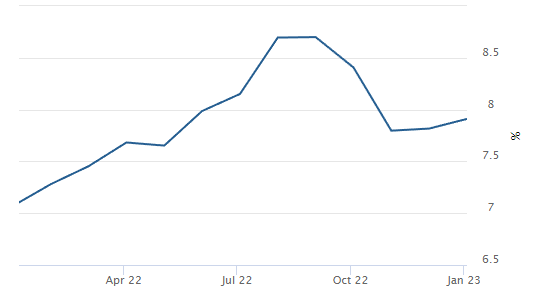
    MEXICO | Inflation and interest rates on the up. On 9 February, Mexico’s national statistics institute (Inegi) released figures showing that headline inflation rose 0.68% in January in monthly terms, bringing annual inflation to 7.91%. Core inflation increased by 0.71% in monthly terms and stood at 8.45% in annual terms. Both headline and core inflation were above levels recorded at end of last year. This came the same day as the central bank (Banxico) raised interest rates from 10.5% to 11%, citing “the dynamics of core inflation”.

    MEXICO | Monthly job creation increases. On 7 February, Mexico’s national social security institute (IMSS) released a new report which shows that as of 31 January, it had registered a total of 21.48m jobs. According to the same report, in January, 111,699 jobs were created in the formal sector, a monthly increase of 0.5%. In the last twelve months, the IMSS says it registered an increase of 722,176 jobs, equivalent to a yearly increase of 3.5%.

    MEXICO | Record remittances in 2022. On 1 February, Mexico’s central bank (Banxico) released new figures which show that the country received US$5.35bn in remittances in December 2022, up 12.8% on the same month in 2021. This brings the total amount of remittances received in 2022 to US$58.49bn, up 13.4% on the amount received in 2021 (US$51.58bn).

    MEXICO | Trade deficit up in 2022. On 27 January, Mexico’s national statistics institute (Inegi) released new figures showing that Mexico registered a 2022 trade deficit of US$26.4bn, a significant increase on the US$10.9bn deficit reported in 2021. This was due to a decrease in the surplus of the balance of non-oil products, which dropped from US$13.7bn in 2021 to US$8.5bn in 2022, and a larger deficit in the balance of oil products, which went from US$24.6bn in 2021 to US$34.9bn in 2022.

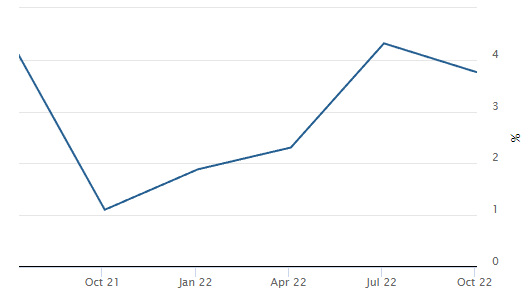
    Mexico: GDP growth
    Percentage variation (year-on-year)

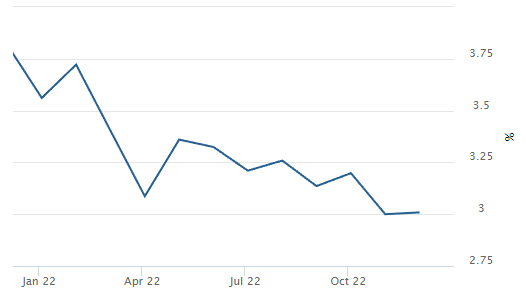
    Mexico: unemployment rate
    Economically active population

    Mexico: inflation rate
    Percentage variation (year-on-year)

  • ECUADOR: Booming

    LatinNews 27 October 2011 Hits: 1133

    In the second quarter of the year the economy grew by 8.9% year-on-year, according to the central bank president, Diego Borja. The second quarter figures followed surprisingly strong first quarter growth of 8.6% and suggest, as Borja claims that the economy will grow at a similar rate for the year as a whole.

    The central bank, nevertheless, is sticking to its 5.1% GDP growth forecast for 2011. This would be the arithmetical result of growth falling to zero in the final two quarters of 2011.

    The central bank said that investment was strong, rising 17.2% in the second quarter (y-o-y) thanks to credit from China. Household consumption, however, was up by only 6.9%, again suggesting that growth, in fact, could accelerate in the final two quarters of 2011.

    What is clear is that the government, through its spending on infrastructure, is driving the economy. The government’s opponents argue that such a model means that if government spending falls, the growth rate quickly withers.

    The other key variable for the government is oil prices. These have held up this year and, more importantly, the state oil company Petroecuador, has increased output.

    The fastest growing sectors are electricity (up 35%, y-o-y); construction (up 26%); financial services (up 13%); other services (11.9%) and commerce (6.8%).

    The most tangible sign of growth has been the creation of new jobs. Despite the jump in unemployment in Spain (which has been a key destination for Ecuadorean expatriates seeking to better themselves), the official unemployment rate has dropped from 7% in the first quarter to 6.4% in the second. The biggest demand for labour has come from construction, commerce and, somewhat surprisingly, manufacturing.

    In 2012, the pending maintenance work on the Esmeraldas refinery will hit the oil industry’s GDP contribution. The trade account will also be affected because imports of oil products will have to rise.

    Inflation: In September the scorching pace of GDP started to push up inflation. The monthly rate was 0.79%, bringing the rate for the past 12 months in this dollarised economy to 5.4%, according to the Instituto Nacional de Estadísticas y Censos (Inec). The central bank had been forecasting 3% inflation for 2011, but in the first nine months of the year the consumer price index has already risen 4.3%. The Inec reckons that the cost of the canasta familiar básica (an average family of four’s monthly spending on staples) which includes food, housing, travel and recreation was US$567 while the same average family’s monthly income was US$493.

    The Inec reported that producer prices were up by 0.14% in September and have risen by 6.7% in the past 12 months.

    Monopolies: The Asamblea Nacional approved (by 67 votes to 23 against with 34 abstentions) a law on 29 September which gave the authorities the power to correct “market abuses”, named the Ley de Regulación y Control del Poder del Mercado. The government claims that it is designed to prevent companies acting as monopolies. The law also forces banks to sell all but a 6% stake in any media companies they own.

    Oil: The state oil company, Petroecuador, said that in September China bought 54% of the country’s oil exports and that the country’s next two biggest oil markets were Venezuela and Uruguay which combined took the remaining 46%. Petroecuador said that no oil was now being sold to the US. Until a couple of years ago the US imported 75% of Ecuador’s total exports (which then included non-Petroecuador production). In September Ecuador exported just under 9m barrels of oil (so an average of 300,000 bpd), according to Nilsen Arias, Petroecuador’s international marketing manager. The country produces around 510,000 bpd of crude oil.

    China has lent Ecuador US$7.8bn most of which is secured against oil exports to China. Ecuador promised, in 2009, to supply China with 130 barrels of oil by the end of 2015. 

    The arrangement with Uruguay and Venezuela is that Ecuador supplies them with crude oil and they supply Ecuador with refined oil products.

  • In Brief - Peru

    LatinNews 15 August 2012 Hits: 1184

    SECURITY| Sendero Luminoso sighting in Huancavelica region.  On 14 August the Peruvian press reported that a group of 35 armed people, believed to be members of the Sendero Luminoso (SL) insurgent group, entered the town of Aucapiñan in the Colcabamba district, Huancavelica region, where they held a rally. Press reports highlight that the group hung flags and distributed revolutionary material in an attempt to rally the local community to their cause. The area in which the incident took place has been identified by the authorities as a possible drug-trafficking route but SL presence had never been recorded, much less acts of this kind. A Peruvian military commando group from the nearby Villa Sur military base has already arrived in Aucapiñan to reinforce security in the area.

  • RASTREANDO TENDENCIAS

    LatinNews 06 June 2014 Hits: 679

    GUATEMALA | Se abre el mayor parque solar de Centroamérica. El 28 de mayo funcionarios guatemaltecos inauguraron una nueva granja de energía solar de US$14m con una capacidad instalada de 50 kilovatios (KW). El llamado ‘Parque Sibo’ es la mayor instalación de su clase en Centroamérica, sobrepasando al parque solar de Miravalles de 10KW de Costa Rica.

    Sibo está ubicado cerca de Estanzuela, en el departamento oriental de Zacapa. Es una empresa conjunta entre la firma local, Grupo Green, Gran Solar de España, y el fondo de inversiones de Suiza, Grupo Ecos. Sebastián García-Prendes, un ingeniero del Grupo Green, explicó que la topografía local y los niveles de temperatura (que regularmente llegan a más de 30º C) fueron instrumentales en decidir la ubicación de la planta.

    Al inaugurar la nueva planta, el presidente Otto Pérez Molina dijo que el “histórico”  proyecto ayudará a Guatemala a “avanzar hacia la energía renovable” y que “con proyectos como este estamos seguros de que la economía del país se mantendrá creciendo a fin de ayudar a muchas familias que hoy viven en la pobreza”. Pérez Molina también remarcó la rapidez con que la planta fue construida, en un tiempo “récord” de cuatro meses (enero-abril del 2014).

    La planta está contratada para proveer energía durante los próximos 16 años a una línea de distribución de energía administrada por la firma local, Energuate. Se calcula que la planta Sibo proveerá de electricidad a aproximadamente 24.000 hogares. En abril, Dimas Carranza, un miembro de la junta de Energuate, dijo que él creía que la energía producida por Sibo proveería una alternativa viable para la que se produce usando el carbón como combustible, debido a un menor precio promedio por unidad.

  • TRACKING TRENDS

    LatinNews 30 July 2015 Hits: 3187

    ARGENTINA | Minimum wage up

    Argentina’s wage council increased the minimum wage by 28.5% on 21 July, pushing it from Ar$4,716 to Ar$5,588 (US$515 to US$610, at the official exchange rate). The increase is in line with what most trade unions were expecting. It means that Argentina now has a higher minimum wage than Uruguay, Chile and Brazil. Around 113,000 workers are paid the minimum wage each month, according to the national statistics agency (Indec).

    BRAZIL | Government cuts fiscal surplus target

    On 22 July the Brazilian government reduced its primary fiscal surplus target for 2015 from 1.2% of GDP to 0.15%. Until recently, Brazil maintained primary surpluses above 3% of GDP, but with tax revenues falling sharply, the government’s goal for this year is now just R$8.7bn (US$2.7bn), down from R$66.3bn. Tax revenues in 2015 are expected to be R$46.7bn down on those originally forecast. Spending, meanwhile, is R$11.4bn more than anticipated.

    • Economic recession

    In yet another sign of Brazil’s economic recession, the central bank released data on 22 July showing that spending by Brazilian tourists overseas was down by 23.4% in the first half of 2015 compared with the same period in 2014: US$ 9.9bn versus US$12.4bn.

  • URUGUAY: Vázquez se retira de Tisa

    LatinNews 11 September 2015 Hits: 471

    El Presidente Tabaré Vázquez anunció el 7 de septiembre que Uruguay se retiraba de las negociaciones internacionales relacionadas con el acuerdo internacional sobre el comercio y los servicios (Tisa, por sus siglas en inglés). La decisión que fue promovida por la votación en la coalición gobernante de Izquierda, Frente Amplio (FA), ha dejado consternada a la comunidad empresarial del país.

    La ampliamente exitosa experiencia de Uruguay con los gobiernos de izquierda –ahora por más de una década– ha funcionado sobre la base que existe un grado de autonomía entre el gobierno, por un lado, y la gobernante coalición política del FA, compuesta de Comunistas, Socialistas, y muchos de otras corrientes políticas, por el otro lado. Precisamente, cuánta autonomía funciona mejor está abierto al debate. Pero en el espacio de los últimos 10 días, el Presidente Tabaré Vázquez se estará preguntando a sí mismo si, en los primeros días de su segunda presidencia, si había hecho bien.

    Huelga de maestros

    El 3 de septiembre, una desordenada huelga de maestros apoyada por los sindicatos alineados con el FA, llegó a un fin condicional. Durante la huelga sobre salarios y otras demandas, el gobierno había declarado a la educación como un servicio público esencial (un decreto que prohíbe las huelgas) solamente para ser ignorado por los muchos maestros quienes de todas maneras continuaron con su huelga. En un embarazoso retroceso, el gobierno ha dejado sin efecto el decreto.

    Esto ocurrió sólo cuando el gobierno amenazó con cancelar el planeado incremento salarial de este año y gastarlo en cambio en la infraestructura de la educación (el gobierno ha ofrecido incrementar gradualmente los salarios durante los próximos cinco años) que los maestros decidieron retornar al trabajo. Oficialmente, los sindicatos de maestros  aún se oponen a la oferta salarial del gobierno, y por tanto existe un peligro que la disputa puede reavivarse una vez más.

    Comercio en servicios

    Apenas se asentó el polvo sobre la disputa de los maestros cuando el gobierno sufrió otro revés. Reunido el 6 de septiembre, el pleno del FA votó con una abrumadora mayoría (117 votos a favor y 22 en contra) para recomendar que Uruguay se retire de las negociaciones relacionadas con un acuerdo internacional de comercio y servicios (Tisa).

    La retirada de las negaciones fue apoyada, entre otros, por el Partido Comunista de Uruguay (PCU) y el Partido Socialista (PS), el Movimiento de Participación Popular (MPP –vinculado con el ex presidente José Mujica [2010-2015]), y Lista 711 (leal al Vicepresidente Raúl Sendic). Los opuestos a la retirada incluyen a Asamblea Uruguay (del cual el ministro de economía, Danilo Astori, es un miembro prominente) y Alianza progresista (vinculada con el canciller Rodolfo Nin Novoa).

    Muchos en la Izquierda han visto el Tisa con particular sospecha. En junio de este año, Wikileaks difundió documentos que sugerían que las versiones elaboradas del acuerdo podrían forzar a los firmantes a consultar con corporaciones multinacionales de una manera que podría verse como restringiendo la soberanía nacional.

    El gobierno previamente había defendido tomar parte en las conversaciones Tisa sobre una base exploratoria, pero el Presidente Vázquez optó por aceptar la posición del FA y decidió retirar a Uruguay de las negociaciones. La decisión no fue bien recibida ya sea por la oposición política o el sector privado (ver abajo). La primera acusó al gobierno de elevar las preocupaciones partidarias por encima de los intereses nacionales; el último, de proveer una ventaja a los competidores de Uruguay.

    • El sector privado se expresa

    Carlos Caetano, presidente de la Cámara Uruguaya de Tecnologías de Información (Cuti) dijo, “como economía somos costosos, y tenemos algunos problemas de competitividad. Hay países como Costa Rica que permanecen en las conversaciones Tisa, y ya están exportando más software per cápita de lo que hacemos nosotros”. El sector de softwares de Uruguay está compuesto por alrededor de 500 compañías, con ventas anuales de alrededor de los US$1mm.

  • COSTA RICA: Colombian drug gang disbanded

    LatinNews 02 December 2015 Hits: 365

    Costa Rican authorities dissolved a group of Colombian drug-traffickers on 24 November, responsible for smuggling cocaine from their native country through Panama to be sold in the Costa Rican market. The drug control police (PCD) and the unit of the attorney general’s office responsible for combating organised crime, carried out seven separate operations across the country, arresting four people, including the leader of the gang.

    The security minister, Gustavo Mata, described the operation as “a heavy blow against drug-trafficking structures” in Costa Rica. Mata said it was striking that the cocaine was being smuggled from Colombia for sale in Costa Rica and not for onward transit to the US. The attorney general, Jorge Chavarría, said the Costa Rican authorities had acted in response to a tip-off from the US Drug Enforcement Administration (DEA).

    The different operations across Costa Rica, which took place in San José, Corredores, Heredia and Desamparados, resulted in the arrest of the gang leader, whose surname, Góngora Quiñones, was released, as well as another Colombian and two Costa Rican nationals. A total of 49 kilos of cocaine, ₡13m (US$24,000) and US$14,000 in cash were found on Quiñones’s person and US$13,000 was confiscated from the house of his Costa Rican girlfriend (also arrested), whose surname was Crespi Guzmán. Another Colombian member of the gang was arrested on 22 November and a Salvadorean last October.

    Costa Rica’s security ministry has seized 14.3 tonnes (t) of cocaine, 4.5t of marijuana and 29 kilos of heroin so far this year, in addition to ₡140m (US$260,000), US$3.6m and 152,000 euros (US$162,000) in cash.

  • GUATEMALA: Gov’t faces renewed prison crisis

    LatinNews 14 June 2017 Hits: 744

    Guatemala’s interior minister Francisco Rivas last month was forced to dismiss the head of the prison service (DGSP), Nicolás García Fuentes, who had been in the post less than a year. His sacking followed the escape on 10 May of high profile prisoner Maritza Lemus, alias ‘La Patrona’, who was being held in jail at the Mariscal Zavala military base, in the capital, Guatemala City. García’s deputy, Antonio Santos, was named as his interim successor although he quit after just two days in the job. While Santos has since been replaced, again on an interim basis, by Mirna Fajardo, the DGSP head of human resources, and ‘La Patrona’ has since been recaptured, the high-profile prison break – and instability at the helm of the DGSP – serves as the latest reminder of the ongoing prison crisis facing President Jimmy Morales and his conservative Frente de Convergencia Nacional (FCN-Nación) government.

    According to the local press, Lemus had received a prison sentence of over 94 years in 2015 for heading up criminal gangs which operated in three of the country’s departments – Jutiapa, Santa Rosa, and Escuintla. Legal action against eight individuals – including Walter Hernández Méndez, the head of security at the prison – has since been announced in relation to the escape of Lemus who was then recaptured on 25 May in El Salvador’s Ahuachapán municipality, the capital of the eponymous department. Rivas attributed her recapture to the work of the trinational task force installed last year by President Morales along with his counterparts from El Salvador (Salvador Sánchez Cerén) and Honduras (Juan Orlando Hernández) – see box.

    García’s himself had replaced Carlos de León Zea, who was fired in July 2016 along with his deputy, Ninfa Gómez, and Norberto de Jesús Ortega Barco, the director of El Pavón prison which is located outside Guatemala City. The dismissals were in response to a shoot-out which took place that month in El Pavón which resulted in 14 deaths – including the country’s most famous prisoner (Ret) General Byron Lima Oliva (see sidebar). Even before the shoot-out which had cost De León his job, President Morales had already acknowledged the need for prison reform, floating the possibility of constructing new facilities in order to reduce overcrowding in the country’s 22 existing prisons. He also revealed plans to increase the salaries of the country’s 3,600 prison guards and install equipment to prevent arms and drugs trafficking into jails.

    International concerns

    Institutions such as the Office of the United Nations High Commissioner for Human Rights (OHCHR) and US State Department have long flagged up concerns regarding the state of the prison service in Guatemala. In a report released in January 2017, the OHCHR highlights the “urgent need to address the structural problems of the penitentiary system, including chronic overcrowding (currently at 219 per cent), inadequate infrastructure, and failure to ensure the security of those detained, which has led to 54 violent deaths within the penitentiary system as at October [2016].”

    Meanwhile, in March 2017, the US State Department released its annual human rights report which also highlighted as a key problem “harsh and sometimes life-threatening prison conditions”. The US State Department report cites figures from the prison system registry which show that, as of 6 September, there were 20,743 inmates, including 1,974 women, held in facilities designed to hold 6,742 people. Noting that of these prisoners, 46% were in pretrial detention, the same report also highlights that while the law establishes a three-month limit for pretrial detention, authorities regularly held detainees past their legal trial or release dates.

    Regional cooperation

    Interior Minister Rivas was quick to attribute the recapture of Lemus to the work of the trinational task force – involving officials from Guatemala, Honduras, and El Salvador – which seeks to target criminal organizations and prioritises the fight against local ‘mara’ street gangs, the illicit trafficking of firearms, drug trafficking, and people trafficking, among other things.

    The task force was established in November 2016, as part of the Plan of the Alliance for Prosperity (PAP), launched in 2014 in coordination with the US government, aimed at addressing the root causes of the Central American unaccompanied child migrant crisis.

    While likely to be well received by the US government led by President Donald Trump, the latest signs of regional security efforts come as the future of US cooperation in the sub-region remains uncertain. On 23 May, the US administration submitted its 2018 draft budget to the US Congress which proposed a 39% drop in economic, humanitarian, and security assistance to Central America from 2016 to 2018.

    As regards the three countries in question, assistance to El Salvador would drop 39% from 2016 to 2018 to reach US$46.3m; Guatemala would see a drop of 39%, to US$80.6m in 2018, and Honduras would see a drop of 31% to US$67.9m in 2018.

    • Lima

    Lima was convicted in 2001 of one of the most notorious crimes committed during the 1960-1996 civil war – the 1998 murder of Bishop Juan Gerardi, the head of the local Roman Catholic Church’s human-rights office (Odhag). Gerardi was murdered two days after a report was released which accused the Guatemalan military of civil war atrocities. Lima had most recently made headlines in 2014 when he was charged with running a multi-million-dollar criminal network from prison [RC-14-10]. At the time, he was serving a 20-year prison sentence for Gerardi’s murder, but he was due to be released on parole in September 2014.

  • Brazil: Guedes warns against watered-down pension reform

    LatinNews 21 March 2019 Hits: 2083

    Brazil’s Economy Minister Paulo Guedes has warned that a watered-down version of the government’s much-vaunted pension reform would present a threat to future generations.

    The government had outlined plans that would save 1.2 trillion reais (US$314 billion) over the next decade, but Guedes says that a diluted reform would deliver less than half of those savings. According to Reuters, Guedes said social security reform needs to bring savings of at least 1 trillion reais over the next ten years if the government is to succeed in transforming the state-based pension system into one that uses personal retirement accounts.

    “We need 1 trillion [reais] so we can have the financial muscle to fund the transition toward a system of individual retirement plans,” Guedes said at a ceremony to mark the swearing-in of Roberto Campos Neto as the new head of the central bank in Brasilia on 13 March. “But if Congress dilutes that to only 500 (billion), you end up condemning your children and grandchildren, there’s no individual retirement funds, and the old system stays in place,” he said.

    Brazil’s public finances are on shaky ground and President Jair Bolsonaro believes that pension reform is necessary to reduce the social security deficit and deliver a boost to the economy. Bolsonaro believes that this will improve investor confidence in the country, but analysts have questioned the amount of savings that the reform will deliver. Two major investor surveys found that median savings are more likely to be around 700bn reais over the next decade.

    The proposed reform, presented to congress on 20 February, targets failings of the current system such as the lack of a set retirement age, minimum contribution periods which can allow for retirement as young as 50, and a scheme which critics say is overly generous to public sector workers. Under the proposed new system, women can retire at 62 and men at 65 after at least 20 years of contribution. The reform would establish different criteria for rural workers and public sector workers, and for professions such as teachers and members of the security forces. It also includes a shift to an individual capitalisation system.

    Analysts back reform but political negotiations look tough

    The reform will require a constitutional amendment, dependent on a three-fifths majority in both upper and lower houses of the Brazilian parliament with two rounds of voting in each. This is a fairly high bar to clear, especially given the fact that Bolsonaro’s ruling Social Liberal Party (PSL) only holds 10% of seats. As a result, passing the reform will require a lot of negotiations.

    According to Carlos Caicedo, Senior Principal Analyst at IHS Markit, the pension reform is necessary to cut Brazil’s “unsustainable” fiscal deficit, which stands at around 7.5% of GDP, and slow continued rapid growth in public debt of around 74% of GDP as things stand. Annual economic growth figures released on 28 February by the national statistics institute (Ibge) show that while the economic recovery that began in 2017 is continuing, progress is painfully slow. Brazil’s GDP grew by a sluggish 1.1% in 2018, the same rate as in 2017, while quarterly growth totalled a meagre 0.1% for October-December 2018. Annual growth was driven by the services sector, which grew by 1.3%, while the industrial sector rose 0.6% and the agricultural industry, which had driven the country’s economic recovery with 13% growth in 2017, advanced by a mere 0.1%. The figures only underline the challenges facing Bolsonaro, and added extra urgency to calls for pension reform.

    For his part, new central bank head Campos Neto has promised to improve investor confidence, facilitate access to credit for small businesses, and encourage the development of fintech firms. Campos Neto also said that he wants to continue the monetary policy path of Ilan Goldfajn, his predecessor in the role, which has seen interest rates of a record low 6.5% for nearly twelve months.

  • Latinobarómetro on institutions

    Patrick de Courcy 10 November 2021 Hits: 1318

    The role of the military is often determined by civilians, in more ways than one. Political divisions in civil society can create an ‘entry point’ for different types of military influence or intervention. During the long history of 20th century military coups, it was often the civilian leaders of different lobby groups who, seeing their cause frustrated or blocked under the democratic rules of the game, decided to break those rules, invite military rulers to intervene, and deliver a different outcome. In countries like Argentina, representatives of business, farming groups, exporters, or even labour unions, were said to be on a constant lookout for a ‘friendly colonel’ or general who might favour their cause.

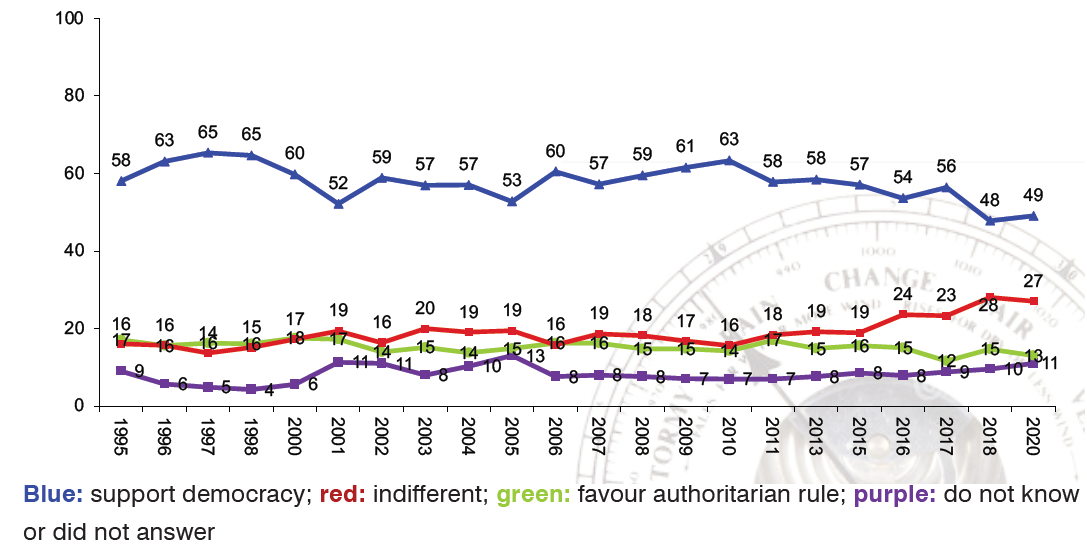
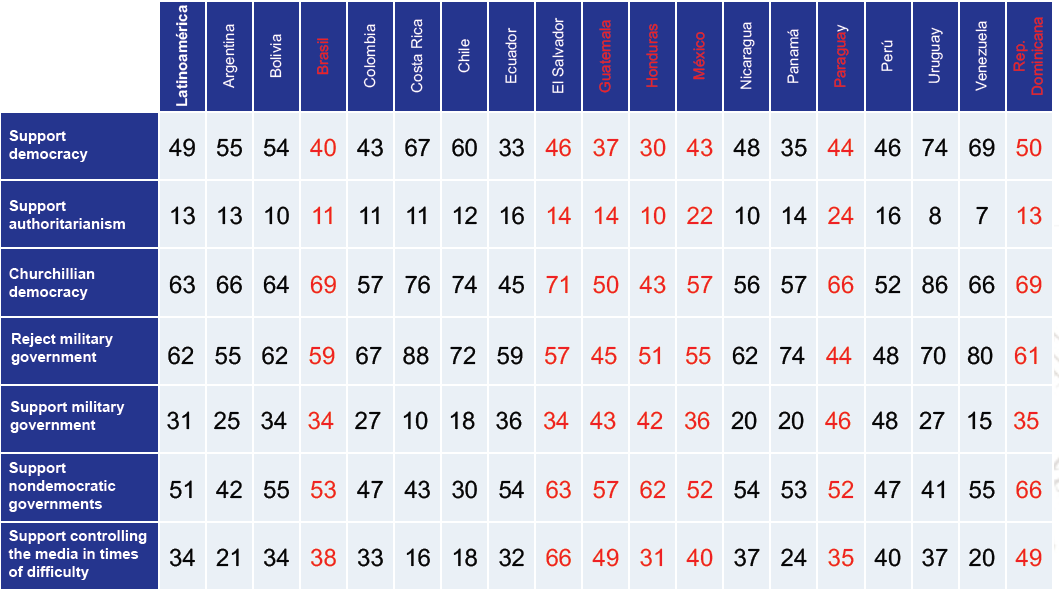
    While coup d’états may be a thing of the past, the role of the military is still deeply influenced by the state of civil society and the relative success or failure of civilian politicians. One interesting and concerning snapshot of this state of play is provided by the Latinobarómetro surveys of public opinion conducted every two years across 18 Latin American countries. The latest report shows that support for democracy has been on a fairly steady downward trend since 2010, when it had peaked at 63%. It then reduced steadily across each subsequent two-year interval down to an average of 48% in 2018, with a marginal recovery to 49% in 2020. The overall regional picture shows a three-way split – 49% supported democracy, 13% specifically favoured authoritarian rule, and 27% were indifferent to the form of government in their country (a further 11% did not know or did not answer).

    Support for democracy over time

    Source: Latinobarómetro

    The over-arching narrative of this fall is that the commodity boom of the first decade of the 20th century, which had enabled significant improvements in living standards, reductions in poverty, and redistribution of income, began to peter out after 2012, introducing a much more difficult period in the second decade of the century, dominated by falling standards of living, rising worries over crime and corruption, and the emergence of anti-government street protests in a number of countries. Going into the 2020s the Covid-19 pandemic added a further ingredient to this cocktail of problems.  

    In the 2020 survey democracy was held in highest esteem in Uruguay (74%), Costa Rica (67%), and Chile (60%), while remaining little-loved in Panama (35% support), Ecuador (33%), and Honduras (30%). Worryingly, support for democracy is also low in the two biggest countries in the region, Brazil (40%) and Mexico (43%), which currently have populist leaders. What seems to be happening is that democratic governments are failing to solve the big problems: poverty, economic inequality, crime, and corruption. Marta Lagos, the Chile-based founder of Latinobarómetro, says the situation was already bad before the arrival of the Covid-19 pandemic last year and has now become “consolidated”. No less than 70% of respondents say they are dissatisfied with their governments. On the other hand, support for authoritarianism has fallen off a bit, down to 13% from 15% last year. 

    Support for democracy in different circumstances

    Source: Latinobarómetro

    Lagos also issued a warning. She says the 2020s, the third decade of the 21st century, could turn out to be “a decade of protests” with many countries experiencing waves of popular anger, of the type seen in Chile, Ecuador, and Colombia over the last two years. There will be demands for more social and civil rights. The protests were put on hold during the pandemic, but the lockdown also saw an intensification of the region’s underlying socio-economic problems. As countries return to more normal conditions, she expects the protests to resume. Sixty percent of the respondents said they were prepared to take part in demonstrations to further demands for better health, education, and other basic services. Lagos believes the risk of populism is higher than that of military coups.

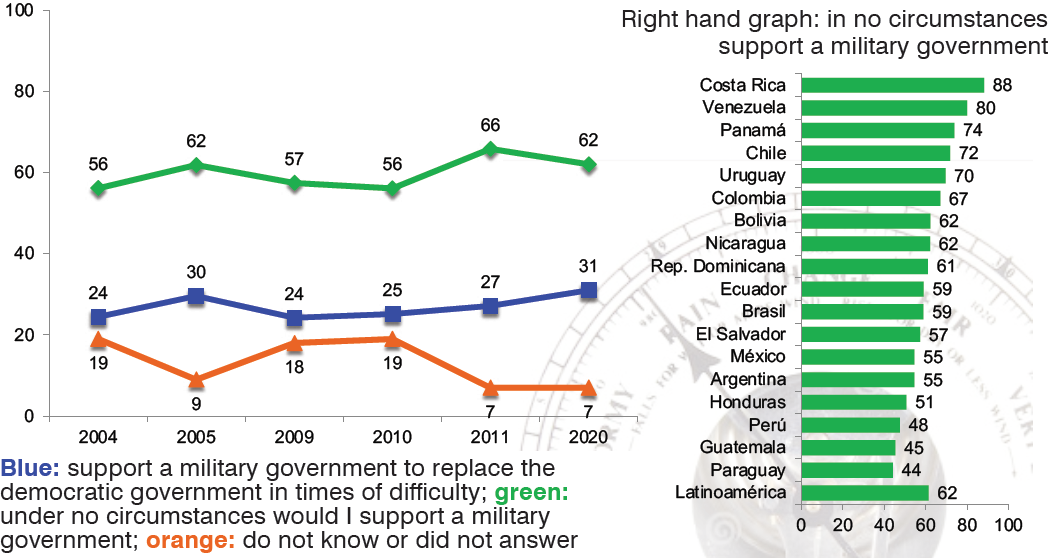
    The Latinobarómetro data suggests that, while still concerning, indifference to democracy and support for authoritarianism is not surging ahead. Indifference to the form of government had trended down to 16% in 2010 but increased steadily since then to peak at 28% of respondents in 2018, dropping to 27% in 2020.  Support for authoritarian institutions on the other hand, stood at 15% in 2010, and had gradually edged down to 13% of respondents by 2020. Those who would oppose a military government “in all circumstances” stood at 62% of respondents in 2020, down from 66% in 2011. A preliminary conclusion seems to be that public support for authoritarianism is changing only very slowly over time, and that despite concerningly high levels of support for authoritarianism, democracy still shows signs of resilience.

    A country-by-country summary of the Latinobarómetro findings confirms this rather mixed picture. Support for democracy averages 49% and is strongest in Uruguay, Costa Rica, and Chile (countries currently under democratic rule) as well as in Venezuela (which is ruled by an authoritarian left-wing regime). Support for authoritarian governments stands at 13% and is highest in Paraguay and Mexico. Support for ‘Churchillian democracy’ (where respondents are asked if they agree with the statement that democracy is the “least-worst” form of government) averages 63% with highs in Costa Rica, Chile, and Uruguay. On average 62% reject military governments against 31% who support them. Support for military government is highest in Peru (48%), Paraguay (46%) and Honduras (42%). Support for “nondemocratic governments” - a wider definition which includes forms of populist rule – stands at 51% with highs registered in the Dominican Republic, Honduras, and El Salvador.  

    Summary of attitudes

    Source: Latinobarómetro